56.1 F
Davis

Davis, California

Friday, December 19, 2025
Home Blog Page 2

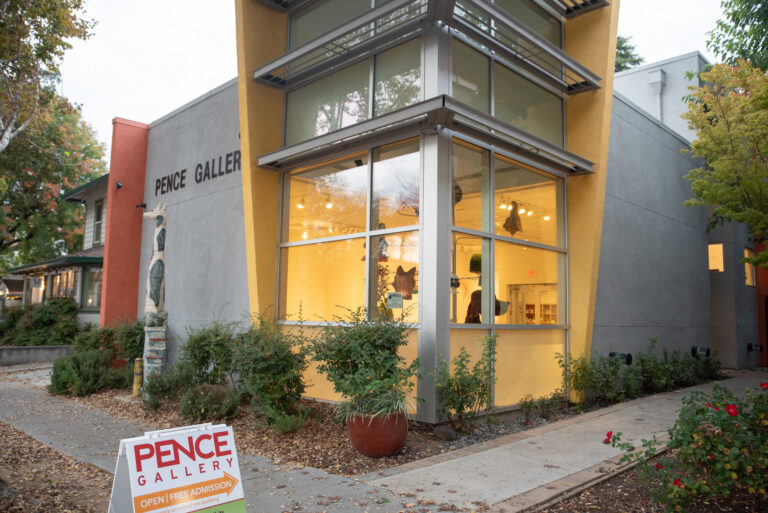
Pence Gallery opens 50th anniversary season with sculptures by Robert Ortbal

0

The exhibit blends humor, community engagement and everyday materials to challenge viewers’ ideas about identity

By ALMA CULVERWELL city@theaggie.org 

The Pence Gallery has launched its 50th anniversary programming with a wide-ranging exhibition by Emeryville-based artist Robert Ortbal, known for transforming everyday materials into imaginative sculptures that blur the boundaries between human, animal and abstract forms. 

The show brings together several of Ortbal’s ongoing series, including his Daffodil graffiti works, his mask heads, his Samaritans figurines and his barter-based performances at local farmers markets. 

Ortbal is an art professor in the Sculptural Department at Sacramento State University, with a career that spans major exhibitions and which has garnered national recognition. He has presented solo shows at the Oakland Museum of California, 911 Media Arts Center in Seattle and Boulder Museum of Contemporary Art in Colorado. His work has also appeared in group exhibitions at institutions such as the University of California (UC) Berkeley Art Museum and Pacific Film Archive, the Bedford Gallery at the Dean Lesher Center for the Arts and The Lab in San Francisco. 

More recently, Ortbal was included in the 20th anniversary exhibition of the San Francisco Museum Of Modern Art (SFMOMA) Artists Gallery. His awards include the Leff Davis Foundation Grant, a residency at the Skowhegan School of Painting and Sculpture and a research grant from the College of Arts and Letters at Sacramento State. 

Natalie Nelson, the Pence Gallery director who developed the exhibition over the last several years, explained how she first became intrigued by Ortbal’s work. 

“I was interested in his work following a studio visit to his place in Emeryville,” Nelson said. “He proposed including several series in the exhibit, including his Daffodil graffiti, his trading at Farmer’s Markets, the mask heads and the Samaritans, a series of tiny figures and matching cases.”. 

Nelson recalled her experience participating in one of his past performance events at the Davis Farmers Market. 

“I was really interested in how he used events as a means of engaging the community,” Nelson said. “So, I put on a bunny head and participated in one of his events at the Davis Farmer’s Market in spring 2024. I really enjoyed the experience, especially how the public seemed to be delighted by the interactions with his costumed players. It’s a novel experience when a normally dressed person from the neck down puts on a giant bunny, cat or dog head; his heads are a marvel to see.”

Nelson explained how Ortbal’s materials are intentionally ordinary.

“People are amazed that most of the materials Robert uses are everyday materials — paper, cardboard, wire. It’s his inventive transformation that really is remarkable, where the figure merges into an animal, object or plant-like form.”

The installation at the Pence Gallery rises nearly 15 to 20 feet, using conduit as a framework to suspend Ortbal’s sculptural heads throughout the gallery. Nelson commented on the messaging behind Ortbal’s work on display in the exhibit. 

“I think the artist wants [us] to question our own identity, our own species and its ability to morph and shift into other forms,” Nelson said. “And [he wants us] to laugh; he uses parody and humor as a means of making us question social constructs. For example: Why do we trade money for an object? What if we went back to barter? Who decides what is a valuable unit of trade?”

As the first exhibition in the Pence Gallery’s 50th anniversary schedule, Nelson noted that Ortbal’s work felt like the “right way” to begin. 

“We wanted to start with a different type of exhibit for us,” Nelson said. “One that is really widespread and connects to the community in a different way.”

Nelson also hoped that visitors leave inspired; not only by Ortbal’s creativity, but also by the accessibility of his approach. She also hoped the exhibit will draw more community members into the gallery throughout its anniversary year.

“I hope that people will take away from the exhibit the idea that art can be made out of everyday materials, and that anyone can be a force of change,” Nelson said. “Humor and satire can be a means of provocation and can be disruptive in a way that other modes of communication just [aren’t]. And, of course, I hope that they come back to the Pence, where admission is always free and the exhibits are always changing.” 

By Alma Culverwell— city@theaggie.org 
Students and advocacy groups express disappointment following veto of SB 509

Governor Newsom recently vetoed the bill that would have aimed to address transnational repression

By KHADEEJAH KHAN — campus@theaggie.org

With activists facing stalking to threats of violence, transnational repression (TNR) has been on the rise throughout California’s Central Valley. For UC Davis members of the Sikh Punjabi diaspora like Harshpartap Dhillon, a second-year biological sciences major and ASUCD senator, advocating for diaspora students is an action that is more essential than ever. 

“We need to instill within our community the importance of organizing and mobilizing, and how important it is to actually understand these bigger things going on in the world,” Dhillon said. “Our liberty and rights are never guaranteed. They have to be acquired and worked toward.”

The FBI defines TNR as cases of foreign governments extending beyond their borders to intimidate, harass or silence members of their diasporas or exile communities. Transnational repression has impacted various diaspora communities, including the Sikh Punjabi community.

California is home to 250,000 Sikhs, with the majority residing in the Central Valley — comprising roughly 40% of the Indian American diaspora population in the state. In India, Sikhs are a minority, making up less than 2% of the population.

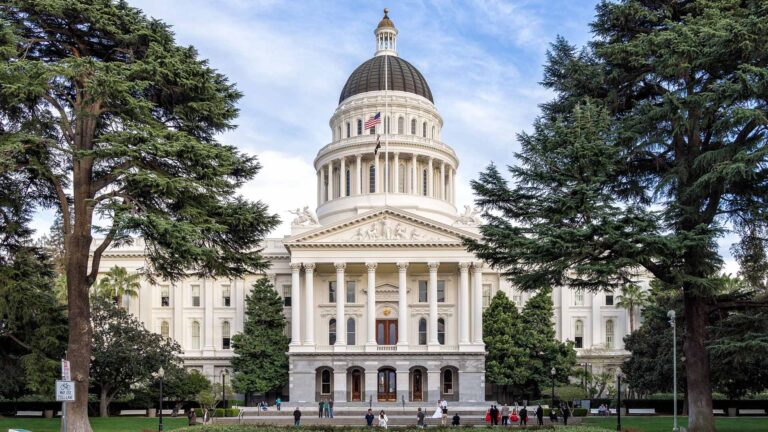
At the statewide level, SB 509, a bill aimed at addressing transnational repression, was vetoed by Governor Gavin Newsom in October. SB 509 would have provided training to California law enforcement to recognize and respond to TNR. It would not create a new class or type of crime, but rather provide ways to respond to TNR.

The bill was supported by various advocacy groups, including Sikh American Legal Defense and Education Fund, Sikh Coalition and the Jakara Movement. Prior to the veto, SB 509 passed the California Assembly by a unanimous vote of 47-0. 

In a statement explaining the veto, Newsom expressed his belief that federal authorities working alongside state administrators are best equipped to address TNR, citing that the bill could impede on the state’s flexibility. 

“While I appreciate the author’s intent to enhance the state’s ability to identify and respond to transnational repression, this issue is best addressed through administrative action in coordination with federal agencies,” Newsom said. “By codifying definitions related to this training, this bill would remove the state’s flexibility and ability to avoid future inconsistencies related to this work, especially since no unified federal definition exists.”

Prior to the veto, ASUCD passed SR #2 in support of SB 509 in an effort to encourage Newsom to sign. The resolution was co-authored by Senator Dhillon. 

For ASUCD President Amrita Julka, a third-year political science major who co-sponsored SR #2, passing the senate resolution felt like a recognition of not only the Sikh Punjabi community at UC Davis today, but the community’s historical role in California.

“The Punjabi Sikh community has been on the Davis campus for a very long time,” Julka said. “But it’s a community that does not often get a lot of recognition. For us to recognize [transnational repression] — I think it is really impactful for those students whose lives are impacted by it, especially students from the Central Valley.”

With TNR impacting the community on a statewide scale, Dhillon believes the veto of SB 509 represents how students often have to protect one another during times when the state cannot.

“We passed a resolution through the Senate emergency resolution, encouraging Governor Newsom to sign the bill, but he didn’t,” Dhillon said. “I think it shows me that we can’t rely on these systems to come in and protect us, because a government is supposed to protect the rights and the liberties of its citizens. I think sometimes, as minorities, we don’t feel that we are being protected.”

SB 509 emerged as a reintroduction of a similar assembly bill, AB 3027. The former was authored by Assemblymember Jasmeet Bains following the June 2023 killing of prominent Canadian Sikh activist Hardeep Singh Nijjar outside a gurdwara, a Sikh place of worship, in British Columbia.

Nijjar’s activism was part of a movement to create an independent Sikh homeland called Khalistan. Following the incident, then-Canadian Prime Minister Justin Trudeau announced that Canada was investigating “credible allegations” of Indian government agents being involved in the murder.

The impact of Nijjar’s killing rippled into California, with The Sacramento Bee reporting that Sikh activists in the Central Valley received threats just days after the shooting.

The Sikh Coalition, a nonprofit advocacy group, expressed disappointment after the bill’s veto, which followed community support and solidarity by Iranian, Muslim, Kashmiri, Japanese and other diasporic communities who have supported this advocacy. 

“This is not the end of our advocacy work on Indian transnational repression, whether in California or elsewhere,” the Sikh Coalition wrote in a statement. “We are committed to continuing to support bills to combat transnational repression at the state and local level, but also to investing in non-legislative options like law enforcement training, policymaker briefings and more.”

As students like Dhillon look to the future of community activism, the veto doesn’t signal an end to advocacy, but rather, a point to mobilize in the future. 

 “I wouldn’t say it’s a defeat for us,” Dhillon said. “If anything, it just gave an impetus to our cause and to the community. It just encourages the community to do more to mobilize, to unite and to not rely on a single person or a single politician, but to rely on the power of the community and the power of the people as a whole.”

Written by: Khadeejah Khancampus@theaggie.org

Metal-organic frameworks, unexpected tunnels and a clever FOX

A Summary of the 2025 Nobel Prizes in chemistry, physics and medicine and the science behind them

By NAREN KRISHNA JEGAN— science@theaggie.org

Recently, the Royal Swedish Academy of Sciences announced the 2025 Nobel prize in physics, chemistry and medicine. From sugar-sized cubes that could trap water from the driest of deserts to uncovering the way our immune system fights off diseases like cancer, here is an explanation of the winners’ groundbreaking work.

Chemistry: 

The 2025 Nobel Prize in Chemistry was awarded to Richard Robson, Susumu Kitagawa and Omar Yaghi “for the development of metal–organic frameworks.” A metal-organic framework (MOF) is a hyperporous material that is made by linking metal ions or clusters with organic molecules to form ordered, 3D networks. UC Davis Professor Ambarish Kulkarni and Ph.D. student Sudheesh Kumar Ethirajan actively study MOFs at UC Davis, sharing the importance of this work.

“The most fascinating aspect of MOFs and why it deserved a Nobel Prize (despite no large scale industrial uses yet), is the fact that this discovery bridges the distinction between a molecule and a crystal,” Kulkarni said. “By showing that porous solids could be engineered and put together much like Lego, Omar Yaghi opened up entirely new dimensions in synthetic organic and inorganic chemistry.”

 Although Yaghi remains one of the most recognizable chemists for the coining of the term “metal-organic framework” and for the creation of MOF-5 — the first stable, permanently porous MOF — this work goes far beyond him.

“Richard Robson pioneered the idea of using molecules, not just atoms, as building blocks for extended frameworks,” Ethirajan said. “In the 1970s-80s, he designed the first large, open crystalline structures originally called coordination polymers that revealed how metal ions and organic ligands could form stable networks with internal cavities. Susumu Kitagawa advanced the field by developing robust, stable and flexible frameworks. He demonstrated that these materials could act as molecular sponges, capable of absorbing and releasing gases. Kitagawa also introduced the concept of ‘MOF generations,’ foreseeing ever-more complex and multifunctional designs.”

MOFs have been explored for various uses such as catalysis, energy storage and filtration. A few years ago, Yaghi shocked the world with the power of MOF-303, which was able to extract clear water from arid deserts without any electricity. 

“The key challenge moving forward is to identify the millions of MOFs that can be synthesized in the lab, which ones should be synthesized at scale and at what cost,” Kulkarni said. “This requires finding applications where MOFs have distinct advantages — several are possible, we study a few computationally — and ensuring that they’re not too expensive compared to cheaper, more mature alternatives such as zeolites.”

Physics:

The 2025 Nobel Prize in Physics was awarded to John Clarke, Michel H. Devoret and John M. Martinis “for the discovery of macroscopic quantum mechanical tunnelling and energy quantisation in an electric circuit.”

If you throw a ball at a wall, you wouldn’t expect the ball to phase through the wall; you’d rather expect it to bounce back at you. This expected behavior works for objects that are larger relative to atoms, and is studied in classical mechanics. When we perform the same experiment in the atomic and subatomic scale, we operate on a new set of rules given by quantum mechanics. However, these three laureates asked: At what size of a system would these special rules be allowed to take place?

Physics Today Editor-in-Chief Richard Fitzgerald worked in this field in the 1990s, when some of the crucial discoveries were made. 

“[What the three physicists did] is taking the scale of something that we can’t see, we can’t touch, we can’t feel and bringing it up to the scale of something recognizable and make it something you can build upon,” Fitzgerald said.

In quantum mechanics, electrons behave both like tiny particles and like waves. When they reach a wall of energy that should stop them, their wave-like nature lets part of them “leak” through. This means that, instead of bouncing back, there’s a chance the electron will suddenly show up on the other side — as if it had slipped through a solid barrier. This strange effect is called quantum tunneling and was studied extensively by these physicists. 

The laureates created a small electrical circuit on a chip that acted as a racetrack for electrons. Using materials called superconductors which would allow electrons to race with each other, as well as insulators which would cause the electrons to crash, the laureates found that despite this barrier, the electrons would still propagate through and generate an electric current.

Chairman of the Nobel Committee for Physics Olle Eriksson praised the discovery during this announcement of the prize. 

“There is no advanced technology today that does not rely on quantum mechanics,” Eriksson said. “Examples are easy to find […] mobile phones, computers, cameras and the fiber optic cables that connect our world.” 

The findings marked one of the first experiments that took theoretical physics into tangible systems that could be studied and applied. Using this tunnelling phenomena, the groundwork of these three laureates set the foundation for the development of quantum computing, sensing and communication. 

Medicine and Physiology:

The 2025 Nobel Prize in Medicine and Physiology was awarded to Mary E. Brunkow, Fred Ramsdell and Shimon Sakaguchi “for their discoveries concerning peripheral immune tolerance.”

The immune system is similar to an orchestra, wherein each instrument (the many types of immune cells) has its own role to play in protecting the body. When they’re in tune, the performance is powerful and precise, defending against infections while leaving healthy tissues untouched. However, if one section starts playing too loudly or at the wrong time, an autoimmune response is elicited.

The laureates sought to understand what keeps this biological symphony in balance. Sakaguchi discovered a special group of cells called regulatory T cells (T-regs) — the conductors of the immune orchestra. These cells guide and restrain the other immune players, ensuring that their activity stays harmonious. Sakaguchi specifically found that malignant T cells could be eliminated by regulatory T cells, due to the presence of the CD25 surface protein. Later, Brunkow and Ramsdell identified the key gene FOXP3, which acts like the conductor’s score. Without it, the T-regs lose their ability to keep order, leading to dangerous autoimmune diseases such as Type 1 diabetes and multiple sclerosis.

Adrian Liston, professor of pathology at the University of Cambridge, commented on the discovery.

“Regulatory T cells keep most of us from having autoimmunity and allerg[ies] […] By having a strong system of brakes present, we are able to have stronger and faster immune reactions — the same way that a car can have a better accelerator if it has good brakes,” Liston said. “It really is an essential part of the immune system and leads to early fatal disease in childhood if it is broken.”

Their work revealed how the immune system maintains tolerance to the body’s own tissues, preventing the body from attacking itself. This discovery opened new possibilities for treating autoimmune disorders, improving organ transplants and even fine-tuning immune responses in cancer therapy — teaching the body when to stay quiet and when to play its strongest notes.

2025 marked a momentous year for the University of California (UC) system. Across these three disciplines, five laureates have ties to the UC: Yaghi to UC Berkeley; Ramsdell to UC San Diego and UCLA; Clarke to UC Berkeley; Devoret to UC Santa Barbara; and Martinis to UC Santa Barbara. This year also marks the second time an all-UC Nobel in the sciences was awarded: The first was in 1939 to Ernest O. Lawrence from UC Berkeley.

These innovations represent a fundamental attribute of science — the continual pursuit of truth and curiosity. Where there is a question, there’s an answer that may change how we think and what we do.

Written by: Naren Krishna Jegan— science@theaggie.org

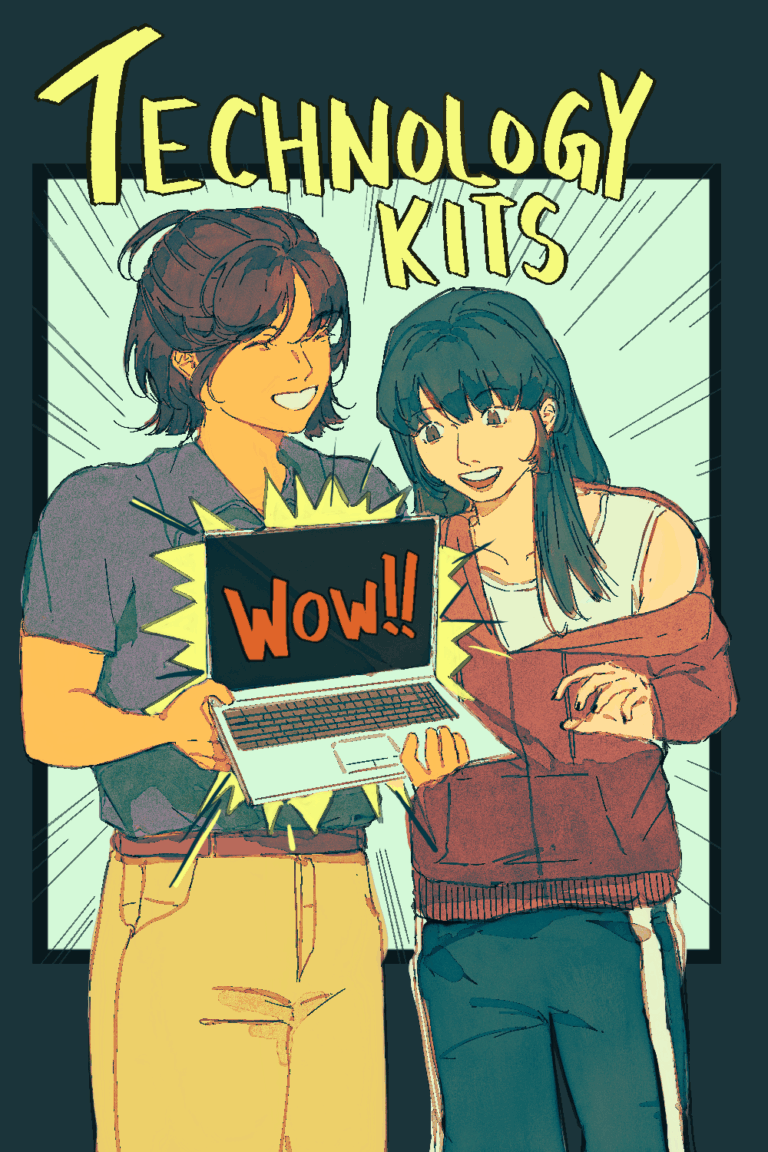
Sacramento’s Digital Equity program allocates technology kits to the community

Kits include computers, internet access and hotspots

By JOANNA ABRAHAM— science@theaggie.org

Despite Sacramento’s proximity to Silicon Valley — which is the home of multi-billion dollar tech companies and countless startups — several communities in the Sacramento region remain underserved in their access to technology and digital literacy education.  

To mitigate these disparities (collectively termed the “digital divide” or “digital exclusion”), Sacramento implemented the Digital Equity program. In June 2025, the program distributed over 200 technology kits to students, residents and local organizations, including the La Familia Counseling Center, Stanford Settlement Neighborhood Center and the Digital Literacy Navigators branch of Asian Resources Inc. These kits included a laptop, a mobile hotspot and two years of pre-paid internet access. 

The Digital Literacy Navigators (DLN) branch of Asian Resources Inc. currently provides digital literacy courses and services to underserved elderly residents of Sacramento and Lemon Hill. Courses offered by this organization cover a variety of relevant skills, including a course on the informed use of search engines and artificial intelligence in finding telehealth services or local clinics. DLN was one of the several local organizations that directly benefited from the Digital Equity program. 

Asian Resources Inc. is also partnered with and supported by California State University, Sacramento (CSU Sacramento), which received a $3 million grant in 2024 from the California Emerging Technology Fund (CETF) to support local projects that aim to bridge the digital divide. 

Zong Vue, an assistant program manager of the DLN program, commented on the implications of these resources in an interview with CSU Sacramento.

“It’s very beneficial for [students of DLN’s digital literacy classes],” Vue said. “A lot of them are seniors. They’re always looking for something to do and are very interested in learning new things.”  

Beyond providing older individuals with skills to navigate the digital landscape, access to digital literacy education has been shown to be vital in maintaining a high quality of life for older adults. 

“Technological competency was regarded as a determinant of quality of life” during the COVID-19 pandemic, according to Dr. Finkelstein et al. in an article published by the National Institute of Health. Even in a post-pandemic era, such competency is “necessary to stay connected and capable of receiving health and social services.” 

In addition to its service to the elderly community, the kits provided by the Digital Equity program also benefit students and working-age adults. 

Vice Mayor of Sacramento Karina Talamantes commented on these kits in an interview with the Sacramento City Express.

“These technology kits are opening doors for students and families who need reliable tools to succeed in school, find jobs, or stay connected,” Talamantes said.

For instance, 50 technology kits went to students enrolled in the College of Business at CSU Sacramento, according to the Sacramento Bee.

In terms of helping working-age adults, Connecting Minority Communities Pilot Program (CMCPP) offers services such as resume-building and cover-letter workshops. The CMCPP is another organization supported by the Digital Equity program as recipients of technology kits. It also connects eligible residents to long-term and low-cost internet access programs, such as the Affordable Connectivity Program (ACP).

Not only do these programs equip underserved residents with tools to thrive in an increasingly digitized world, they also provide opportunities for students and motivated residents to give back to and become more involved in their communities. CSU Sacramento and Asian Resources Inc., for example, allow interested students to volunteer their time as instructors for the Digital Literacy Navigators class. Similarly, the Sacramento Regional Consortium for Digital Equity trains over 100 local undergraduate students each winter. Post-training, these students serve as interns in local community-based organizations such as CMCPP. 

Ultimately, the Digital Equity program’s initial investment in technology kits and support of organizations such as CMCPP and Asian Resources Inc. has led to a slowly-growing number of digitally literate communities in the Sacramento and Lemon Hill regions. It has also provided opportunities for interested individuals to become involved in giving back to their communities, supporting the program’s overall goal of mitigating the digital divide.  

Written by: Joanna Abraham —science@theaggie.org

Dark matter detection and its significance

What is dark matter, how do we detect it and what does it mean for our understanding of the universe?

By EMILIA ROSE — science@theaggie.org

 How much of the universe do we know about? Everything we can touch, see or even imagine — from the smallest particles to the largest stars —  makes up only around 5% of our universe. Roughly 27% is something that we cannot even see: This substance is aptly named “dark matter.” 

To further explore this mysterious substance, we must first evaluate what it means “to see.” Typically, when we see something, it is due to visible light bouncing off an object’s surface and entering our eyes. Some objects, like our sun, are even able to emit their own light because of the amount of energy they contain. 

Now, what about dark matter? Can light reflect off it, or can it emit light itself? The answer is no. Dark matter is, quite literally, dark. In fact, scientists hypothesize that dark matter doesn’t interact with any form of light at all, making it invisible to the human eye. Given that dark matter is so elusive, and yet makes up so much of our universe, how do we know it’s there and how do we measure its existence in the wider cosmos? For scientists, one of the main forms of detecting dark matter is through gravitational waves. 

Gravitational waves can be thought of as ripples in space-time caused by extreme cosmic events like black holes merging. Similar to when you throw a rock into a lake, these waves extend radially outwards. 

Large observatories like the Laser Interferometer Gravitational-Wave Observatory (LIGO) use machines with extremely long lasers to detect these ripples in space-time. When a gravitational wave passes through, the lasers distort in an incredibly small amount of distance (smaller than a proton), known as a strain. From this distortion, scientists can find the source of the wave and the dynamics of the gravitational event.  

Yet when we look at this event, the gravitational effects we observe don’t match the amount of matter we see. From this, we can infer that there is some unaccounted mass altering the dynamics of the system. This is the implied existence of dark matter.

However, this method has a glaring weakness. Here on Earth, instruments are constantly affected by interference. We have air molecules throughout our atmosphere, minor shifts in the ground with tectonic activity and stray particles coming from outer space. Even with advanced filtering, these disturbances can disrupt readings.

Recently, a research team from the Universities of Birmingham and Sussex designed a new, much smaller detector that counteracts these problems, according to their newly published paper. Giovanni Barontini, a member of this team, commented on the mechanics of their proposed design.

“Due to [the detectors’] compact size, they are marginally sensitive to Newtonian and seismic noise, which are the main sources of noise for km-scale interferometers,” Barontini wrote in the paper.

An interferometer is an instrument that uses light or other waves to make extremely precise distance measurements. In other words, a “km-scale” interferometer would be something like LIGO. This new detector works roughly the same way LIGO does but on a much smaller scale, calibrated to detect gravitational waves at a frequency we have not been able to observe yet.

This is a groundbreaking achievement because it replaces massive, noise-prone machines with a compact device that can see in ranges we haven’t touched, while remaining more resistant to disruptions. 

Centuries ago, humans started out using just their eyes to observe the cosmos. Now, we are working to observe the things our eyes cannot see. But, could there be a limit to how much our detectors can advance?  

Matthew Citron, a high-energy physicist at UC Davis, explained his perspective on the matter.

“I think fundamentally, there are limits to how good a detector can be,” Citron said. “There are certain types of noise that are almost impossible to remove entirely. And, there are certain backgrounds that are impossible to remove as well.”

Jacob Steenis, a UC Davis graduate student in high-energy physics, commented on the idea of a theoretical limit. 

“I do really admire how physicists often find clever ways to sidestep the impossible,” Steenis said. “I have the utmost confidence that — even where limits are found, theoretical or otherwise — physicists will continue to sidestep through indirect methods of measurement. To me, it really is amazing.”

 Imagine two galaxies, both inconceivably massive, orbiting each other at incredible speeds. They circle each other over and over again until they become one. Their collisions are some of the most monumental interactions in our universe; yet when their effects reach us, their influence is almost undetectable. Like ripples fading as they spread across a pond, gravitational waves weaken as they travel vast distances. 

Even with our most precise detectors, parts of our model of the universe still elude us. The existence of dark matter may one day be confidently confirmed, or it may remain something we can only infer through its effects. 

Written by: Emilia Rose — science@theaggie.org

Culture Corner

The Arts Desk’s weekly picks for music, movies and more

By SOPHIE LIN — ncsalter@theaggie.org

Album: “LIL FANTASY vol. 1” by CHAEYOUNG (2025)

On Sept. 12, Chaeyoung, a member of the sensational K-pop girl group TWICE, released her debut solo album. Chaeyoung’s sound is undeniably her: a crisp blend of genres that truly resonate with her eccentric artistry — slow indie, synth-funk, R&B and melancholy bedroom pop — and are not often seen in Korean artists who so often tailor their image to the K-pop mainstream. Most notably to me, “AVOCADO,” featuring Gliiico, a Japanese indie rock trio, further adds to the almost psychedelic, hazy sounds that surround this album. By collaborating with underground artists and staying true to her artistry, her sharp personality shines through in “LIL FANTASY vol. 1” from start to finish. I feel as though I’m transported into an alternate universe of artificial bubblegum and the first sizzle of soda on my tongue within the first listen — something unapologetically bold and sweet all at once.


TV Show: “Yellowjackets” by Ashley Lyle and Bart Nickerson (2021)


As the days get darker and daylight saving time kicks in, I find myself gravitating towards thriller television shows such as “Yellowjackets,” which was recently recommended to me by a friend. “Yellowjackets” follows the narrative of a talented high school girl’s soccer team that survives a deadly plane crash in the Ontario wilderness. The show flips between the moments leading up to the plane crash and the present, highlighting the character connections and coming-of-age moments through the main character Shauna’s perspective. The show deeply explores the complex trajectories of trauma that carry on into adulthood. As “Yellowjackets” gains popularity and becomes a cult classic on the Internet — with a recently announced final fourth season — this is your sign to catch up on this thriller TV series. 


Book: “The Memory Police” by Yoko Ogawa (1994)

Dystopian novels are an eerie and jarring exploration of the world we know. “The Memory Police,” by Japanese writer Yoko Ogawa, explores an alternative reality in a quiet, gentle way. The plot follows a universe in which knowledge of things — hats, ribbons, roses and birds — routinely disappears from every human’s memory. The few who can still recall those objects live in fear of The Memory Police: those who ensure what’s forgotten remains hidden. The main character, an unnamed female novelist, is driven by her need to hide her editor, one of the few people still able to remember. Ogawa’s writing is straightforward and gentle, leaving room for imagination all the way to the finale. The lack of flashy theatrics makes the novel’s atmosphere all the more unsettling and hypnotic, creating an inquisitive and enjoyable read.

Song: “Milk Choco Quik” by RIO (2025)

Ever since the K-drama craze began in 2021, I’ve found myself curious about the artists behind the original soundtracks of my favorite shows. I instantly fell in love with RIO, a South Korean singer-songwriter featured on the soundtrack for the show “Nevertheless.” Every listen was a reverberant and airy dance, with elements of dreamy R&B and indie. With an almost siren-like, soothing vocality, I was utterly captivated by her music. Her new song, “Milk Choco Quik,” released on Oct. 28, carries no less of her signature, therapeutic sound. The title alludes to the chocolatey drink mix, Nesquik, and its iconic mascot, Quicky the Nesquik Bunny. This imagery immersed me in a sweet, nostalgic melancholy, reminding me of my favorite childhood drinks and snacks. In the song, the narrator describes her desperate hold on the memory of a loved one she calls a “sweet bunny.” Central to the song’s emotion is the painful acknowledgment that “time was running all out,” ultimately conveying a feeling of a fleeting yearning. I find myself imagining drinking a cold glass of chocolate milk while listening to “Milk Choco Quik,” which, just like all of RIO’s songs, is filled with delicate imagination.  

Written by: Sophie Lin — arts@theaggie.org 

‘ODDITY’: The Basement Gallery’s first show of the school year

The student-run art gallery explored ‘the uncanny’ with fall quarter display

By HANNAH OSBORN — arts@theaggie.org 

This October, in the basement of the Maria Manetti Shrem Art Hall, students were hard at work preparing their very own art exhibition. On Oct. 24, The Basement Gallery (BG) at UC Davis — a student-run and undergraduate-focused art space on campus — held a reception for their first show of the 2025-2026 academic year. 

Open from Oct. 27-29, the show featured more than 20 student artists working in different mediums: print, ceramics, photography and even digital collage. The gallery gave students a space to show their work and experience what it’s like to be involved in the curation process.

The BG selects a theme for each show, which helps guide student artists when making submissions. This fall, the gallery selected the theme ‘ODDITY,’ which aimed to explore “the uncanny, the peculiar, the eccentric and everything that lives in between fascination and fear,” according to the Instagram post announcing their art call. 

The directors began planning for the late October show in August, intending for a prompt that would allow them to lean into the fall season.

“When you think of oddities and curiosities, you probably envision vast collections of taxidermy, bugs, bones, etc.,” BG Public Relations and Design Director Cassie Ngo, a fourth-year design major, said. “Of course, these things are odd to the human eye, but the word ‘oddity’ isn’t confined to just these types of grotesque images. ‘Oddity’ is personal and can be self-defined, which is why we thought it was a perfect theme for people to dance around the line between what is ordinary and what is odd.”

The gallery received works exploring oddities in many directions, from thought-provoking twists on grocery store scenes to depictions of creatures who appear in dreams. 

“We also saw students use the theme as a vessel to explore subversive themes like orientalism and queer identity,” Ngo said. “The Basement Gallery truly embraces these subversive forms of expression, as we are an alternative space dedicated to giving student artists a platform to speak their truths.”

Morgan Strong, a fourth-year art studio and design major, had work featured in previous BG installments and contributed three works for “ODDITY.” Large paired pieces “Dionynus” and “The Common Cold” are both monotypes on kozo, a textured paper, while “Reclamation” is a ceramic sculpture. 

Strong noted the importance of the gallery’s mission in giving students a place to experience working within an exhibition space, discuss displays with gallery preparators and learn what it’s like to have their art on view professionally.

“It’s a big job — it’s out of care and love, and to continue things for the future,” Strong said. “It’s good practice for everyone.” 

Abby O’Sullivan, a fourth-year art studio and cinema and digital media double major, is the co-lead director and lead preparator of BG. She discussed how students running BG also gain experience as they turn the space into unique shows each quarter.

“When it comes to deciding the final layout and hanging up the pieces, we think mostly about how the different works will interact with each other, conceptually and aesthetically,” O’Sullivan said. “First we pick out the microthemes present in the art pieces. What do the different submissions have in common? How will the works conceptually benefit from being next to each other? What story can a wall full of art tell? 

O’Sullivan noted that BG members also gain experience thinking not only about the thematic value of the works, but also their visual harmony as a whole. 

“In terms of aesthetics, we think about spreading out mediums, sizes, and colors of works so that no part of the wall feels unbalanced,” O’Sullivan said.  “We consider symmetry and asymmetry and what those can also bring to an entire wall. Honestly, it’s a lot of play with the space and the works within it. It’s a fun process of learning and creating as each submission gives us something new to explore and consider.

As The Basement Gallery plans more events for the year, the directors aim to bring in more of the UC Davis community to share the space, inviting other student organizations to help bring new shows to life.

“Art is a diverse form, and the gallery isn’t a space that is limited to paintings on walls and sculptures on pedestals,” Ngo said. “We want moving bodies, dancers, music: whatever we can do inside these four walls.”

BG Co-Lead Director Shaelyn Smith, a fifth-year art studio and design major, noted that the directors are in the process of planning future events for the gallery, both for this quarter and the rest of the coming school year.

“Currently, we’re planning on hosting an installation from a studio art class later this quarter, as well as fitting in a social or two before,” Smith said. For Winter, we’re hoping to reimagine some themes from last year’s collaboration show with the Davis Pole Dance Club, ‘Real Sex,’ particularly focusing on connecting body and movement to art.”

For updates on their activities, follow the Basement Gallery Instagram account, @ucd_basement_gallery.

Written by: Hannah Osborn — arts@theaggie.org 

Review: Yorgos Lanthimos’ ‘Bugonia’ may just be his best film yet

Starring Emma Stone and Jesse Plemons, ‘Bugonia’ explores class tension and alien conspiracies

By BELLA PETERSON — arts@theaggie.org 

*Note: This review is spoiler-free! 

Yorgos Lanthimos has been on nothing but a roll recently. Following the back-to-back releases of Academy Award-nominated “Poor Things” (2023) and “Kinds of Kindness” (2024), Lanthimos debuted his latest film, “Bugonia,” on Oct. 31. While he’s not new to the scene, the Greek filmmaker has certainly been gaining more and more momentum over the past couple of years, after beginning a close working partnership with actress Emma Stone. 

Lanthimos’ work with Stone began in 2018, when he released “The Favourite,” a witty historical comedy about Queen Anne’s court. Immediately after, he approached Stone with his concept for “Poor Things,” which took years to develop but paid off in solidifying his style — outrageous, dreamlike and centered around themes of power and control. 

“Bugonia” details the story of a man named Teddy (Jesse Plemons), who abducts Michelle Fuller (Emma Stone), the chief executive officer (CEO) of the pharmaceutical corporation he works for alongside his cousin Don (Aidan Delbis). In doing so, he hopes to reveal her as the alien he believes her to be. 

Lanthimos is known for his eccentric approach to storytelling: one that isn’t always everyone’s cup of tea. Depending on the crowd, you may hear people say he’s one of the greatest directors of our time or that he’s the exact opposite. This polarity reveals the truly experimental nature of each shot, character and line he creates. Lanthimos’ fresh eye for filmmaking is exactly what Hollywood needs in a time of live-action remakes and Blockbuster sequels. 

“Bugonia” is Lanthimos’ interpretation of the 2003 South Korean sci-fi comedy “Save the Green Planet!” created by Joon-hwan Jang. “Bugonia” was created using remnants of its predecessor, but still manages to reflect Lanthimos’ own unique perspective that has been shared in his previous films. 

As for its intriguing name, “Bugonia” actually holds a specific meaning for Lanthimos: the Greek origins of the word represent the myth of bees being born out of the carcass of a dead ox.

The film “Bugonia” is a closely knit project, made up of only five main characters in total. Due to this intimacy, each scene feels like a character study, masterfully allowing each actor to play to their strengths at different times. It’s no surprise that Stone, who has previously starred in three other Lanthimos films and won an Oscar for her lead role in “Poor Things,” brings the heat with this project. There’s a chemistry between her and Lanthimos that is undeniable and reflects gorgeously on screen — Stone comes to life as Michelle Fuller, taking on a demanding and otherworldly persona. 

When it comes to performances, it is essential to mention the absolute powerhouse that Jesse Plemons is as the main character, Teddy. Plemons’ emotions are completely raw in the movie, as he depicts a paranoid conspiracist that is dead-set on finding out the truth about Stone’s character. How do you get someone to reveal themselves as an alien? Plemons’ character discovers the answer to this question in multiple ways, all of which leave the audience gasping, laughing or in absolute silence. 

Aidan Delbis, who played Teddy’s cousin, Don, proved incredibly impressive in his first feature film. The young actor — who is also on the autism spectrum — demonstrated how important young talent and autistic representation is in mainstream media.

With Don also being a character on the neurodivergent spectrum, it was important to Lanthimos to have an actor that would bring authenticity to the role. Not only is his role in the film stunning, but Delbis’ ability to carry a scene alongside actors with such decorated careers showed his bravery and confidence.  

The story in “Bugonia” is not very easy to digest; it may be the type of film that requires multiple viewings in order to form a proper takeaway. There can be themes found in the film of environmentalism, class conflict, the modern day dilemma of what’s real, what’s fake and what’s believed to be “acceptable.” It’s thematically heavy and doesn’t shy away from brutal imagery. Many moments across the film take drastic turns — leaving audiences’ jaws on the floor — but the film certainly doesn’t present a needless kind of gore.

Pacing is always a unique factor in each of Lanthimos’ films: you never know if you’re going to get an audacious, fast-paced tale or a slow burn that gives you time to meditate on the material. When it comes to “Bugonia,” Lanthimos seems to find a middle ground, as the earlier parts of the film take on a normal pacing until the film reaches its rapid third and final act. The conclusion allows for audiences to finally breathe as they take in the coalescence of consequences that came with each character’s choices. 

Overall, “Bugonia” is the perfect reflection of Lanthimos’ experimental talents. After displaying all of his strengths, critics are already speculating that the film will be a strong contender for many upcoming awards. Considering Lanthimos has finally decided to give himself a break from back-to-back films, now might be the perfect time to watch not only “Bugonia,” but his entire strange cinematic universe. 

Written by: Bella Peterson — arts@theaggie.org 

From Beatlemania to Swifties: Historical misogyny in the music industry

0

What women love, the world will hate — that is, until they love it  

By VRITI SHAH — features@theaggie.org

The music industry has dominated popular culture for centuries, from iconic artists like Elvis Presley, The Beatles and Michael Jackson to newer artists like Justin Bieber, BTS and Harry Styles. 

As these artists achieved their claims to fame, they all shared one thing in common: women. Each of their fanbases are significantly dominated by women.

However, as quick as women are to join fanbases of many upcoming popular artists, the media is equally as quick to shame them and categorize their “fangirling” into “obsession.” 

“Specifically, females tend to identify with many of the more marginalized fandoms, while males comprise a fair amount of the more socially accepted groups,” an article from the New York University’s Applied Psychology Opus reads.

Lucia Holmboe, the co-director of events at Partridge Records, a local music store in downtown Davis, commented on the judgement women face for their music choices.

“Today, women are still getting made fun of for their interests, musical or otherwise,” Holmboe said. “Some of the most popular musicians of our day — like One Direction, BTS, Taylor Swift and more — are looked down upon and not seen as being ‘real music’ due to having a predominately female fanbase, despite any of their successes or achievements. If these same artists had predominantly male fanbases, I’m almost certain they would be taken much more seriously.”

When the Beatles were first rising to fame, it was predominantly women who cheered them to their peak. However, before the Beatles had established their right to fame, women were ridiculed for fangirling over the band, hence creating the term “Beatlemania.” Now, looking back at the Beatles’ career, most would agree that their fame and quality of music is a no-brainer. In fact, many think of the Beatles as “certified dad rock”: providing a masculine, classic edge to the band. 

It’s even become a common phenomenon for male Beatles fans to “test” the knowledge of a female Beatles fan.

“Personally, as a female Beatles fan, I’ve had men of all ages question whether or not I was a ‘real’ fan and question my knowledge, just because I am a woman,”  Holmboe said.

Another, more recent, example of misogyny toward women in music fandoms can be found in Taylor Swift fans, also known as “Swifties.” For decades, Taylor Swift fans have been ridiculed, harassed and stereotyped for enjoying her music. 

“It is especially harmful to young girls, as we are teaching them to be ashamed of their interests and expressing themselves,” Holmboe said. “This can have a larger impact later on in life, over time making them apprehensive to express themselves on various matters throughout their lives. We should be celebrating all women and their passions, and teaching young girls that it is a good thing to express yourself, about music or otherwise.”

In fact, Swifties were ridiculed online for their excited behavior at Taylor Swift’s The Eras Tour, with online critics comparing the noise to that of an “exorcism.” Comparably, when sports fans — a widely accepted “more masculine” fandom — are screaming at athletic games, they are praised as a reason for a team’s win.  

“I think that girls being excited over music isn’t a crime,” Mia Hadrich, a first-year environmental policy analysis and planning major, said. “I think that it’s something that needs to be celebrated. And, no matter what music it is, you’re always going to have very joyous and happy people at concerts [and things], especially at Taylor Swift concerts.”

For many, this may call into question why we’re seeing this backlash toward female fandoms in the music industry to begin with.

“There’s historical precedent that I think can inform us [on the backlash Swifties face for screaming at concerts] if we look at like, have you heard of, hysteria?” Sarah Elizabeth McCullough, the associate director of the Feminist Research Institute, said. “Around the early 1900’s, [women] would sometimes get labeled hysterical — this was a medical diagnosis that could be many things, but [was] oftentimes kind of mapped onto women not really fitting into social norms and expectations […] While we don’t necessarily have that [hysteria] as a medical diagnosis anymore, I think that the legacy is still with us.” 

McCullough continued to describe the medical diagnoses of hysteria towards women portraying emotions.  

“We still often deem women who are having an excessive emotion as hysterical — in other words, there’s something wrong with us,” McCullough said. “[Saying that] this is not a ‘natural outpouring of emotion’ ridicule[s] and pathologize[s] [women] and, you know, that includes women’s pleasure, passion, excitement over music.”

McCullough also called for the importance of reflecting on our past to create a change in our present. 

“One of the most important things that we can do is to understand how the present moment is informed by the past, particularly by histories of oppression,” McCullough said, “That historical element [is] helping us to understand, like, ‘Oh why is this happening now?’ […] It’s because we haven’t actually fully dealt with our past. We haven’t fully dealt with biases of the past that are still impacting our present.”

Written by: Vriti Shah — features@theaggie.org

A much-needed movement for more ethical farming

0

The Real Organic Project strives to provide a higher standard for American farms

By SAGE KAMOCSAY— skamocsay@ucdavis.edu

The Real Organic Project (ROP) is a movement that aims to raise the standard of what constitutes “organic.” Though other organic labels for food products exist — the most common being the United States Department of Agriculture (USDA) Organic labels — ROP seeks to create a label with more selective requirements. Food with their label is certified with USDA Organic, but must also meet ROP’s higher standards. 

Organic food — grown without certain chemical additives, pesticides or growth. hormones — has been around for a while. For animal meat, certain living conditions must be met to qualify as “organic,” such as grazing on pasture. Real Organic only offers a label for “organic” food. On the contrary, food classified as “Made with Organic” — a term meaning that only 70% of the ingredients within the product are organic — does not meet the standards of the ROP. Therefore, you can be sure that the food you see with the ROP label is at least 95% organic. 

To get a seal from the ROP, farmers must adopt a number of safe and ethical practices, ranging from how they manage their soil to how they treat their workers. These regulations ensure the safety of their livestock and employees, and they give consumers peace of mind, in addition to helping protect the environment from pollution and farmland expansion.

Under ROP guidelines, farmers are prohibited from performing unnecessary and painful surgeries on animals, such as tusk removal, tail docking, beak trimming and face branding. These provisions, which are not required by the USDA organic regulations, help to ensure that animals are treated ethically. Other provisions require animals to be kept outside year-round and given appropriate housing. These standards ensure that livestock can live as painlessly as farmers can manage — something of a rarity when 99% of the world’s animals are raised in factory farms. 

Farmers are also barred from using synthetic herbicides, pesticides and fertilizers on their crops. Synthetic chemical soil additives have a documented association with increased risk for cancer and neurological issues in later adulthood; food grown without these types of chemicals, therefore, is safer than food farmed with them. These provisions also have profound environmental effects — runoff from synthetic nitrogen and phosphorus fertilizers can cause algal blooms in nearby bodies of water, leading to the collapse of ecosystems in those regions. 

Soil management is also an important condition of the ROP’s certification: Practices like crop rotation, composting and safe tilling keep soil arable and fertile. This allows for more sustainable farming, where the same land can be used for longer periods of time without need for expansion or nutrient pollution. It also means that crops are more nutrient-dense, yielding healthier and more satiating veggies — a win for the environment and a win for your plate.

The ROP also provides important protections for farm workers — safe working conditions, housing and tools must be provided by the farm owner. Workers are also required to have freedom of movement and association, meaning they are free to travel to and from the country and allowed to organize unions as they see fit. Practices like document withholding and blackmailing of migrant workers are strictly prohibited. and workers must be given clear pay stubs and documentation of their rights in their native languages.

While organic food may be more expensive than conventional meat and produce, the ethical practices behind them are worth the extra money. The safety of all parties involved — plants, animals, farmers and eaters — are prioritized and protected. When you buy food with the Real Organic label, you know that the farms are sustainable, animals and workers are not abused and that the food on your plate is nutritious and safe; you can rest assured that your money is going to farmers who believe in treating the environment with respect. 

The next time you see an ROP sticker on a bundle of veggies, consider supporting the cause — a few extra dollars out of your pocket is a worthwhile price to pay for a healthier meal and a brighter future.

Written by: Sage Kamocsay— skamocsay@ucdavis.edu

Disclaimer: The views and opinions expressed by individual columnists belong to the columnists alone and do not necessarily indicate the views and opinions held by The California Aggie.

You don’t like fashion: You just like to buy stuff

0

The fashion industry has long advertised itself as a frontier of individualism, but is this really a valid presentation?

By GEETIKA MAHAJAN — giamahajan@ucdavis.edu

Our society is predisposed to buying much more than we actually need, which rings especially true when it comes to clothing. Practicality might be able to answer for some of our consumption, but over the past few decades, people have been investing in their style to an extent that far surpasses their basic needs or common sense. 

Carrie Bradshaw’s complaining in “Sex and the City” that “I will literally be the old woman who lived in her shoes” wasn’t just funny because of its absurdity. Even in the early 2000s, before the era of relentless fast fashion, people could relate to a character who spent so much money on shoes that she could no longer afford her rent. 

In a culture of mass-consumption, Shein hauls and TikTok shopping, it’s easy to click and collect outfits, accessories and personalities like groceries. If you like what someone on your social media feed is wearing, you can shop their entire closet because they’ve linked their Amazon storefront to their profile. Anyone can completely change their style to reflect whatever new aesthetic is trending that week. Consequently, brands must be focused on anticipating consumer wants rather than cultivating their own identity. 

Fashion, and to a broader extent, beauty, has never existed within a bubble — it’s always been about signaling something to the outside world. In the past, this form of communication had been somewhat authentic; “copying” someone else’s style meant trying to imitate their makeup or find a leather jacket that looked like theirs. Today, it’s more about wanting to be a “Blair-Waldorf-coded-older-sister-academic-weapon” or an “Alexa-Chung-rockstar-girlfriend” and attempting to completely emulate such an archetype; the markets have also shifted to reflect this. 

Fashion houses and their designers used to display their clothing as works of art. Alexander McQueen was so invested in the theatrics of his fashion shows that he originally planned to commit suicide on the catwalk after one of his last shows. Whether it was John Galliano’s reconstructed, grandiose rendition of the French Revolution or the sculptural coherence of Issey Miyake, the houses thought of their designs as more than just consumables: They were part of a visual language that was unique to the brand. 

Consequently, brands became symbols that were as much reflections of subculture as creators of it. The most important part of maintaining authenticity within the branding was that it was based on individuality and integrity, not just on catering to as many people as possible. This is what allowed fashion to categorise itself as an art form, not just a productive industry. 

To be interested in fashion — to be dedicated to it in a way that transcends just wearing what you saw someone online wear — you need to consider everything except what’s sellable. This is what allowed Vivienne Westwood and John Paul Gaultier to go beyond just being designers, but instead, being shapers of the art world. By incorporating aesthetics and designs from the fringes of the fashion arena, they were able to establish themselves as a unique brand. 

Fashion has always been a consumer-based art form, but the focus on profit has novel effects. Brands no longer display this kind of interest in the world around them, and consequently, the conversation around fashion becomes much more limited. Instead of reflecting the art and politics of the current moment, our clothing choices simply reflect everything we want to buy.

Written by: Geetika Mahajan — giamahajan@ucdavis.edu

Disclaimer: The views and opinions expressed by individual columnists belong to the columnists alone and do not necessarily indicate the views and opinions held by The California Aggie.

The modern cigarette

0

You’re not locked in — ultra-processed foods may be why

By NEVAEH KARRAKER — nakarraker@ucdavis.edu

The “Curious George” books, first published in 1941 by H.A. Rey and Margret Rey, depict George as a lively monkey always getting into mischief, all with a pipe between his lips. During the mid-20th century, smoking tobacco or cigarettes was normalized — and even perceived to be beneficial — to the point where it was acceptable to advertise them to children.

Today, however, we know just how inaccurate that belief was. With long-term consequences of chronic lung damage, cancer and reduced life expectancy, that image would never fly in modern media.

As new research unfolds before the public, the acceptability of the products we consume rapidly fluctuates. Our generation hasn’t been exempt from this ignorant tolerance — just as smoking is no longer deemed harmless, other things we consume are damaging us without our knowledge.

One of these is the consumption of ultra-processed foods (UPFs). The main side effects of these foods are well-known and evident. Oily foods, rich in saturated and trans fats (as many UPFs are), can manifest not only in daily appearance such as acne or poor hair quality, but are directly linked to inflammation, difficulty maintaining concentration, a weakened immune system and numerous diseases. And, oddly enough, those same tobacco industries, like Philip Morris and R.J. Reynolds, have driven the surge of UPFs through acquiring companies such as Kraft and Nabisco in the 1980s — they’re selling the same unhealthy habits, yet masked by different products.

Beyond these easily observable consequences, there are even more insidious and urgent effects that are considerably less well-known. In September 2023, Harvard published a study on the eating habits and mental wellbeing of over 20,000 middle-aged women. The results indicated that the more ultra-processed food was consumed, the higher the risk of depression — by as much as 50%. 

Another study determined that the consumption of these types of foods is associated with a decreased volume in the mesocorticolimbic brain network, linked to reward processes that can cause addictive, habitual behaviors along with other mental health conditions. Most of these symptoms were stimulated by artificial sweeteners common in UPFs. The British Medical Journal also published similar findings of metabolic, mental and mortality issues.

The growing prevalence of mental illnesses has transgressed into a national health crisis. Depression, anxiety and other mental conditions are all real, tangible and dangerous, but also more common now than ever before, especially in youth populations. While a multitude of reasons contribute to this — including personal trauma or grief — another huge factor is the diet we maintain and the substances we readily consume.

When we replace whole, nutritious foods with UPFs full of chemical imitations, we suffer significant impacts on our neurodevelopment. Since UPFs are more affordable and popular, the prevalence of whole foods has dramatically declined in favor of UPFs as a primary food source for adolescents and pregnant women, which has indirectly contributed to the mental health crisis. 

Yet, our approach to treatment reveals deep flaws in our society. To be clear, advanced medicine is not inherently harmful and medical treatment is often necessary. But alongside that, we have developed a cultural norm of overprescription. Nearly a quarter of elderly United States citizens have been overprescribed antidepressants, according to a National Institute of Health study. Controlled substances that alter brain chemistry, like benzodiazepines acting as antidepressants and anti-anxiety drugs, are commonly handed out — even just for mild symptoms. 

Receiving therapy or being vulnerable wasn’t culturally acceptable in previous generations, and, as a result, most mental illnesses went severely undiagnosed. Even so, this pattern of overprescription continues to reinforce the idea that mental illnesses should be chemically eliminated, rather than understood, empathized with and treated at the source. 

UPFs are not the root cause of the mental illnesses, but they are likely a massive contributor. Whether it’s food or medicine, the things we choose to consume affect us in more long term ways than we may expect. It’s a silent parallel to the tobacco Curious George munched on: we normalize convenience — packaged foods and quick fixes — before discerning how they might affect us. We must choose with caution what our culture normalizes, and we must analyze the products we consume before the consequences take hold of us.

Written by: Nevaeh Karraker — nakarraker@ucdavis.edu

Disclaimer: The views and opinions expressed by individual columnists belong to the columnists alone and do not necessarily indicate the views and opinions held by The California Aggie.

Gen Z: The generation that time travels

0

Exploring how people perceive themselves in time

By VIOLET ZANZOT— vmzanzot@ucdavis.edu

Perhaps the present pandemonium about the future is all a response to the past. If we believe ourselves to exist at the end of history, life may continue on as we know it simply because we have evolved enough as a society. Maybe it’s because dystopian media has been so popular with our generation, but whatever the cause may be, people seem to think a clear fear of an imminent future is written in stone — or, more aptly, permanently coded in artificial intelligence. 

It’s almost comical how this seemingly constant anxiety about the future diametrically opposes the nostalgia that exists in popular culture. In movies, fashion and music alike, there is a general gravitation towards the past. Amidst trepidation about the future and longing for what used to be, our generation is caught between eras. 

It seems that as society has progressed into late-stage capitalism and the age of technology has taken over, anxiety about the future has overwhelmingly increased. Despite this, we have also seen a cultural shift toward idealizing the past. This growing sense of nostalgia not only reflects back on earlier generations, but is also reminiscent of our own childhoods — such as the rise in biopic films and “show yourself five years ago today” trends on Instagram.

It is not necessarily that the increased prevalence of technology and hyper-globalization has a greater magnitude than any other revolutionary time; the difference is that today, these anxieties (while possibly man-made), seem to circumvent human control. It’s unclear where the stopping point of growth is and what that means — there is no certainty that what we know as reality today will still feel so real a month from now. 

At the same time, however, technology allows us to access the past in ways we’ve never been able to before. It’s never been so easy to see ourselves constantly through a camera lens, let alone to look back on what we once were. Further, we’re now able to immediately view the past as a living history more than we ever could. We use culture and media to personify the endless facts about the past that we only now have access to — just think about every recent movie, show, song or fashion piece that harkens back to an earlier era. 

What are the implications of all of this? Could it possibly be good that we’re caught between two vastly different imaginations of time? The world is constantly spinning so fast and far away from us that it can feel impossible to keep up. At the same time, there are so many parts of society that feel irretrievable; it’s sad to think we can never band together and put on Live Aid or go out for dinner without a phone to keep us safe and properly distracted. By many appearances, much of the past seems kinder, safer and more open to change compared to today.

But, it’s not all hopeless. Our generation is becoming something new; although sometimes it seems we haven’t yet had the agency to call it the present culture. We’ve been scared to take ownership of the present moment, but there are still ways in which we seem to be regaining control. We can make an impact on the present. We can speak to the happenings of today, not just yesterday or tomorrow. 

Politicians like Zohran Mamdani, Abigail Spanberger and Mikie Sherrill, along with Proposition 50 and the “No Kings” marches, are awakening a modern political pushback. I’m so proud to be part of a generation that is trying to combat the tug-of-war between the past and present that we’ve been subjected to. Time is not the villain — but allowing it to rule our lives is. It may do us some good to learn from the past and think of the future, while living in the present.  

Written by: Violet Zanzot— vmzanzot@ucdavis.edu

Disclaimer: The views and opinions expressed by individual columnists belong to the columnists alone and do not necessarily indicate the views and opinions held by The California Aggie.

We should not be afraid of aging

0

Modern beauty standards have perpetuated a fear of growing older: Let’s change that

By SABRINA FIGUEROA — sfigueroaavila@ucdavis.edu

A couple of weeks ago, I had a conversation with my oldest sister. She brought up how the skin on her face was beginning to form jowls — sagging folds of skin typically on the jawline. She expressed feeling the need to get Botox to get rid of them, along with other wrinkles forming on her face.

By the way she had been talking about herself, you’d think she was about 25 years older than she actually was. While I, as a younger sibling, would usually be inclined to agree just to get a reaction out of her, I didn’t see the point in perpetuating a beauty standard that makes us (and especially women) ashamed of getting older.

This concept — however modern it may seem due to its prevalence on social media — has been around for centuries. Ancient Greek women used to dye their gray hair with henna to make themselves appear younger, and both men and women in 18th-century Europe wore thick, sometimes tall wigs as symbols of status and health. 

Facelifts — a type of cosmetic surgery that lifts sagging facial skin to make it appear tighter — have also been around since ancient times. However, it wasn’t until the emergence of Suzanne Noël, the first female plastic surgeon, that facelifts were seen as a feminist act, empowering women in the face of the beauty standards that told them wrinkled skin decreased their value as people.

Today, women go under the knife for facelifts and similar procedures at increasingly young ages. While they have been common among people over the age of 60 for decades, the American Academy of Facial Plastic and Reconstructive Surgery found that 32% of facelifts are now performed on patients ages 35 to 55. The use of Botox and other “anti-aging” products, from face creams to retinol, has also been promoted toward younger audiences in recent years: a stark change from conventional marketing tactics.

As much as we mask “anti-aging” procedures and products behind female empowerment, they provide merely an illusion of freedom from societal beauty standards. The more these procedures are performed, the more we perpetuate plump, bouncy, youthful skin as a societal standard — fueling our collective fear of aging. 

This is not to say that we should shame women who feel the need to “fix” their insecurities, but rather, that we should think about why we feel the need to do anything to alter our appearances in the first place. Beauty is subjective, yet an ever-changing, strict definition of it has been used to assign morality and value to us throughout all our lives. 

Although aging is scary, the beauty of it all is knowing you’ve lived. Smile lines and crows feet are evidence of the smiles and laughs you’ve had in your lifetime, wrinkles on your forehead are reminiscent of all the expressions you’ve made from anger to sadness to fright — your face is a display of what makes you human.

When I think about the older women in my life, a majority of them still dye their hair to hide their grays and some pick apart their skin in the mirror. It only reminds me that the ever-shifting beauty standard — and the lack of empathy for ourselves because of it — never goes away, and no one is immune to it. It’s not a war we can win unless we begin to truly empower ourselves in ways beyond our external physiques.

Life can be ugly, but that doesn’t make it meaningless. When society deems you “ugly” for simply living, revel in it. Your worth is not defined by beauty standards, nor material possessions — it comes from simply being human. 

Written by: Sabrina Figueroa — sfigueroaavila@ucdavis.edu

Disclaimer: The views and opinions expressed by individual columnists belong to the columnists alone and do not necessarily indicate the views and opinions held by The California Aggie.

Davis Chamber of Commerce hosts Día de los Muertos celebration

0

The event was open to the public and included live entertainment, a community ofrenda and vendors

By KATYA OKS — city@theaggie.org

On Saturday, Nov. 1, the Davis Chamber of Commerce hosted a celebration for Día de los Muertos at the G Street Plaza.

 This is the second annual installment of the celebration, and included partners such as the Davis Phoenix Coalition, UC Davis Mexican Graduate Student Association and Ethnic Studies YOLO Academy. 

Día de los Muertos, or the Day of the Dead, is a holiday that celebrates the reunion of the dead and living. The celebration is divided into three distinct parts: Midnight on Nov. 1 marks the “Día de los Angelitos” where the spirits of children are reunited with their families, midnight on Nov 2. marks the “Día de los Difuntos” where it shifts to celebrate and honor the lives of adults who have died and finally, noon on Nov. 2 celebrates all deceased loved ones. 

The celebration also maintains many traditions. Families often create “ofrendas” — altars decorated with photos of the departed, their favorite foods and drinks and yellow marigolds — which are believed to encourage the spirits to visit. 

For the second installment of the Día de Los Muertos celebration, the Davis Chamber of Commerce began with a community ofrenda that was available from noon to 7 p.m. 

Live entertainment at the event included Woodland Folklorico, Mariachi Puente and the band La Vaquita Sonora. 

Before live entertainment began, Carlos, one of the leaders of the UC Davis Mexican Graduate Association, discussed some historical background on the holiday.

“This is a celebration for thousands of years of pre-Hispanic culture,” Carlos said. “This [celebration] is not a sad day for us, it’s a day to party. We celebrate the [connection] between living and the dead. […] Our ancestors who left are coming back to see us.”

At the event, vendors set up booths at 4:30 p.m. These included local artists, organizations and event sponsors; Davis Phoenix Coalition, a group that advocates for marginalized communities in Davis — founded in response to an anti-LGBTQ+ hate crime that occurred in 2013 — had their own booth at the event that discussed their mission and purpose. 

Hyacinthe Raven, a fiber artist who creates needle-felted art, had a booth at the event as well. Raven noted her thoughts on the Día de los Muertos celebration and the importance of hosting such celebrations.

“This may not be my cultural background, but I still think this is an important celebration,” Raven said. “I think of [this time to] honor my ancestors that have passed, and, in particular, my pets that I’m really close with. I appreciate that this is a celebration day, and not like a mourning day. I think it’s super important to have these celebrations, one, be open to the public and not be like a closed-off event, but also be very publicized, and bring together a lot of different people together.” 

Additionally, Raven shared how many community members can take advantage of such events. 

“Events like this are a really good way to share different cultures and to foster community,” Raven said. “When you have a school like UC Davis, where there’s a lot of international students who might be in the country for the first time, these events are a really good way to share culture and make it collective; we’re all a community, and we’re all celebrating.”

For more information on future events, visit the profile of the Davis Chamber of Commerce Instagram

Written By: Katya Oks — city@theaggie.org