55.7 F
Davis

Davis, California

Monday, December 22, 2025
Home Blog Page 220

‘Break the cycle of generational poverty’: Yolo County begins allocating basic income to families in poverty

As part of project YOBI, families living in poverty and people experiencing homelessness have begun receiving monthly checks from Yolo County

By CHRIS PONCE  — city@theaggie.org


The 2020 Census revealed that 28.4% of the people from Yolo County have an income below 150% of the poverty level. The poverty rate in Yolo County is at 20.9%, according to a 2022 press release. Experts and researchers from UC Davis have weighed in on the rising crisis of poverty in Yolo County, emphasizing the need for county action.

Dr. Catherine Brinkley, a faculty member of the College of Agriculture and Environmental Sciences and member of UC Davis Center for Regional Change, weighed in on Yolo’s County’s poverty numbers in regards to the rest of California’s. 

“This is critical in California because the Central Valley of California has some of the Nation’s most entrenched poverty levels,” Brinkley said. “Deeper than Appalachia, which is kind of the bench mark of poverty. So if Yolo County, the county with the third highest poverty rate in California, can demonstrate an impact, then there is real hope.” 

Jacob Hibel, the co-director for UC Davis’ Center for Poverty & Inequality Research, made a statement via email on the need to address the poverty crisis.

“Even before the Covid-19 pandemic, Yolo County families were struggling economically, with about 1 in 5 households being below the poverty threshold, which is nearly the highest level of any county in California (https://www.ppic.org/publication/poverty-in-california/),” Hibel said via email. “Poverty hurts us all – not just those individuals who are directly experiencing financial hardship —  and in that respect, the need to address poverty (and child poverty in particular) is more urgent here in Yolo County than just about anywhere in our state.”

On April 1, the Yolo County Board of Supervisors began sending out monthly income to families in need to address the poverty crisis in the county. The pilot project titled Yolo County Basic Income (YOBI) will oversee monthly checks of $1,200 to $1,500 sent out to families in need. Nolan Sullivan, the Yolo County health and human services agency interim director who has helped run the pilot project, highlighted the differences between YOBI and Universal Basic Income (UBI).

“We’re calling ours more of a TBI,” Sullivan said. “It’s a super targeted basic income pilot.” 

While Sullivan referenced the importance of UBI, he said it is important to understand how YOBI differs in its specificity.

“It’s not just like randomly distributing wealth amongst a group of people,” Sullivan said. “We are laser focused on one particular group in Yolo County and really trying to break the rule of generational poverty for some of our most at risk families and youth in Yolo County.”

YOBI will be available for people experiencing homelessness and families on CalWORKS with children under the age of six. The county will determine the amount of money allocated by looking at every individual family’s income and allocating them enough income (on top of the CalWORKS Grant) to put them one dollar above the California Poverty Measure according to Sullivan. The 54 families that fit this criteria have already been identified and have begun receiving monthly payments.  

UC Davis will be evaluating studies on the YOBI pilot program in order to determine the long term effects it will have on the county. Some fields that the study will monitor include early childhood development, scalability, stress, education and career attainment, spending trend data, financial literacy and health outcomes, according to Sullivan. Brinkley, who will be heading this study, spoke on the cost-benefit effects this YOBI will have. 

“Basic income is just another opportunity to give cash to families, particularly low income families who are facing a whole bunch of different stressors,” Brinkley said. “A lot of the social service programs can be cumbersome for families because you have to re-apply for [them]. A guaranteed program gives these families the flexibility to make different decisions about where they buy food, how they buy food, staying housed [and] childcare.”

Brinkley also responded to criticism that is often made about UBI and direct relief. 

“The big fear with programs like this is that families won’t know how to spend the money or they will spend it irresponsibly,” Brinkley said. “That has just not formed out in the studies that have been put out.”  

The YOBI Pilot Project is making attempts to bring the poorest families in Yolo County out of poverty over a projected two year duration. Yolo County Supervisor Don Saylor spoke and discussed a timeline of the project and its goals for the future of the county.

“We’ve got the program set up to last until March of 2024,” Saylor said. “So it’s two years of getting the folks to the point where they’re just above the poverty line. So it’s really quite interesting commentary that with Public Assistance Programs people remain in poverty, and in fact it’s so challenging for them to get out of that situation. Because of anything they do, let’s say they seek employment, they find a job [and] if they get paid just a little bit more they lose their benefits. What we’re trying to do is break the cycle of generational poverty by giving people this two year window of relief.”

Written by: Chris Ponce — city@theaggie.org
 

Medical equipment, preferred insulin not entirely covered by insurance for some students, two UC Davis graduate students say

Some UC Davis students are paying high costs out of pocket or accumulating thousands of dollars worth of debt for their medications and medical equipment 

By MARGO ROSENBAUM — campus@theaggie.org

This is the second installation of The California Aggie’s two-part series on the struggles of students, faculty and staff in receiving coverage for some medications and medical equipment by UC health insurance plans.

Victoria Watson-Zink, a Ph.D. candidate in the Department of Evolution and Ecology at UC Davis, was diagnosed with type 1 diabetes in seventh grade and has used Novolog insulin and an insulin pump almost ever since. Recently, Watson-Zink has not been able to get this brand of insulin approved through her student insurance plan. 

When Jonathan Eisen, a professor with appointments in the UC Davis Department of Evolution and Ecology, the Genome Center and the Department of Medical Microbiology and Immunology, tweeted about his difficulties with his UC insurance plan last month, Watson-Zink shared her experiences on the Twitter thread. 

“I’ve been using Novolog since middle school but all of a sudden, no matter what I do, I can’t get Novolog approved under the UCD health insurance,” Watson-Zink said in a tweet. “Had to switch to Humalog on a day when I was on my last few units of Novolog — NOT OK!” 

OptumRx is the pharmacy benefit manager for the UC Student Health Insurance Plan (UC SHIP) and manages their prescription drug benefits and costs. The UC SHIP plan has not been changed recently and OptumRx has been the pharmacy benefit manager for the plan since the 2015-16 academic year, according to ​​Margaret Trout, the executive director of health and wellness for Student Health and Counseling Services (SHCS). 

The recent switch to Navitus Health Solutions as the pharmacy benefit manager only impacted UC retirees and employees, such as Eisen, on Anthem Blue Cross preferred provider organization (PPO) plans — and did not impact students on UC SHIP — but some students, including Watson-Zink, have also faced their own challenges with coverage of medications and medical equipment. 

Watson-Zink said she has always experienced “a lot of difficulty” with getting Novolog insulin covered by her graduate student insurance, and since the beginning of 2022, she cannot get it covered at all, and is not entirely sure why.

Novolog is listed in the OptumRx formulary as needing a prior authorization, or more information from the prescriber for coverage, according to Trout and Todd Atwood, the administrative services manager for SHCS. They said UC SHIP has worked successfully with students to complete the prior authorization process.

Watson-Zink said that her doctor was previously able to write a prior authorization for her Novolog prescription, and within a couple of days, she was usually able to fill it. Yet, since January, she said that no matter what her doctor does, she cannot get Novolog covered. Watson-Zink said she was told she must have a documented severe allergy to the generic forms of insulin for her prior authorization to be approved.

“They’re not going to cover the one that I’ve been using since seventh grade, which is difficult because all insulins aren’t created equal [and] all bodies don’t react to insulin in the same way,” Watson-Zink said. 

UC SHIP is administered through the UC Office of the President (UCOP) with UC Health providing medical oversight. According to Trout and Atwood, the UC SHIP plan provides “comprehensive” prescription, medical, vision and dental coverage to UC students and eligible dependents. All UC campuses, except UC Berkeley, use UC SHIP with an average enrollment of approximately 135,000 members, as of fall 2021. 

UC SHIP is made to meet the needs of students, Trout and Atwood said. The UC SHIP Executive Oversight Board (EOB) governs the plan, and student voting members decide on the plan’s design and benefit changes. Trout and Atwood stated that students are the most important members of the EOB. 

“UC SHIP is created for students and run by students!” Trout said via email.

Students and professors say they are unsatisfied with UC SHIP

Yet, not all students are content with the care they receive from UC SHIP. 

Some students have to pay high costs for their medications and medical equipment or do not have access to all of the medications and care they need, according to Elisabeth Forrestel, an assistant professor in the Department of Viticulture and Enology at UC Davis, who was diagnosed with type 1 diabetes when she was a 1-year-old.

“Students have not had access to all the medications they need,” Forrestel said. 

With a son who was also diagnosed with type 1 diabetes, Forrestel understands firsthand the high cost of insulin, which has tripled in the past decade in the U.S.

“Insulin is the poster child for a medication that you need to live,” Forrestel said.

Watson-Zink uses an insulin pump and said she recently received a bill for $800 for a three months supply of sensors for the pump. She said she was sent another bill for $250 for the sets that deliver the insulin, which is “a lot of money on a grad student stipend.” Per month, she spends on average about $1,080 on medications, equipment and care for her mental and physical health needs.

“I’m still paying out significant out-of-pocket expenses for my supplies and the surgeries I’ve had and mental health insurance,” Watson-Zink said in an interview with The Aggie. “It’s just been really expensive and it’s not ideal.”

As a result of her difficulties in receiving coverage for Novolog, Watson-Zink had to switch to Humalog insulin in January. 

“There’s actually a reason why I was on Novolog, and why I’ve been on Novolog, and just switching it because this insurance doesn’t want to cover it, for reasons that are beyond my understanding, is outrageous,” Watson-Zink said.

Watson-Zink said her glycemic control has “taken a bit of a dip” since her body is not used to the new brand of insulin. While she does not have a documented severe allergy to Humalog, she said it takes longer to work and is not as effective, so she has to take more of it.

“Yeah [my glycemic control] has definitely taken a dive since switching but they said they won’t cover Novolog again unless I have a ‘documented severe allergy’… but suboptimal glycemic control is fine with them,” she said in a tweet on Eisen’s thread.

Watson-Zink said she has several pre-existing conditions in addition to type 1 diabetes, including congenital hydrocephalus, a neurological condition that affects the structure of her brain and has led to three brain surgeries in the past two years. As a result, Watson-Zink said she requires “a lot of support in terms of health care.”

“I think my time at UC Davis has been difficult just because I haven’t always felt like I’ve gotten the kind of insurance support that I’d need to survive with these conditions on my own, because I don’t have familial support for dealing with these conditions and so just doing it on the graduate student stipend has been very difficult,” she said.

Watson-Zink said that managing her expenses to maintain her physical and mental health on a graduate student stipend has been a challenge. After her grandmother passed away from COVID-19 last September, she required “significant mental health support” to get back on track and ready to finish her Ph.D. 

“It’s been very difficult for me to try to coordinate care for my physical health and my mental health just based on the graduate student stipend and the insurance, because the insurance doesn’t cover enough, and I think it’s just ridiculous that we have to pay so much out of pocket to have these supplies covered when it’s essential to my survival,” she said.

Jennifer Statham, the director of communications at OptumRx, said she understands the financial difficulties people face with chronic medical conditions, like type 1 diabetes. She said pharmacy benefit managers like OptumRx work to provide access to affordable medication. OptumRx negotiates lower costs of prescriptions and helps to determine a medication’s placement on the formulary. 

OptumRx, which is the pharmacy benefit manager for UC SHIP, is unable to provide any insight or look into insulin medication without a signed Health Insurance Portability and Accountability Act (HIPAA) form for OptumRx members in reference, Statham said. 

Kelsey Brewer, a Ph.D. candidate in the soils and biogeochemistry graduate group, conducts research on the agroecosystem functionality of integrated crop-livestock management (Kelsey Brewer / Courtesy).

Increasing debts for student’s durable medical equipment

Other graduate students said they have faced similar challenges with getting their medications and medical equipment covered. Kelsey Brewer, a Ph.D. candidate in the soils and biogeochemistry graduate group, has type 1 diabetes and is hypoglycemic resistant, meaning he does not experience physical indicators when he has low blood sugar. As a result, he is reliant on a continuous glucose monitor, which he said the university does not substantially cover. 

Brewer commented on Eisen’s Twitter thread, saying that his student insurance has not covered his insulin for over two years, nor his continuous glucose monitor. Brewer graduated with a B.S. in plant sciences from UC Davis in 2016 and said he has seen declines in the quality of student health insurance. He used to be on Novolog, which stopped being covered for him about three and a half years ago. 

Now, Brewer is on Lantus insulin, which the student health insurance covers, and a generic form of Novolog insulin, he said. Lantus is a sub-optimal form of insulin for him, and he has a “substantial copay” of about $150 out of pocket every month, he says. 

Since April 2021, Brewer says he has accumulated $8,500 in medical debt for his continuous glucose monitor, which is considered a durable medical device and is not fully covered by his insurance. 

“By the time I finish my program, I will be lucky if I don’t have $12,000 in medical debt, and the only reason I stayed is because I see the finish line and I need this degree to lift myself out of poverty,” Brewer said.

Brewer said he had to advocate for himself to qualify for the continuous glucose monitor.

“​​I had an incident when I was camping in which I almost died from low blood sugar and it was like a huge wake-up call,” he said. “That was really the only thing that got me qualified, which is very frustrating.”

Trout and Atwood of SHCS said that glucose monitors are covered as durable medical equipment at 80% after a deductible is met under UC SHIP. Trout and Atwood said that Anthem is the medical benefits provider for UC SHIP and covers durable medical equipment needs.

In Brewer’s experience, he said that UC SHIP has not covered his continuous glucose monitor at 80% and has not offered him any help in getting it covered. Between January to March 2021, Brewer said he ordered his continuous glucose monitor directly from Dexcom, the manufacturer of continuous glucose monitors.

Dexcom has since outsourced to Edgepark, which bills the monitor as a durable medical equipment device instead of a prescription, which has resulted in Brewer’s medical bill spiking, he said. When Brewer went through Dexcom, they billed his insurance as a prescription, which has a different coverage under UC SHIP.

With in-network durable medical equipment, Brewer said, the UC will pay 80% after a $100 deductible, but when it is out of network then the UC only pays 60% after a $200 deductible. Further, out-of-network durable medical equipment has an “out of pocket maximum” of $6,000 per benefit year. Brewer said this means that he has to pay up to $6,000 per year before UC SHIP would cover 100% of his durable medical equipment.

“It honestly brings me to tears; it’s really sad,” he said. “I tried to work with the insurance at UC Davis […] I tried to work with Edgepark and Dexcom to bill it as a prescription rather than a durable medical equipment device, and nobody does anything about it.”

Brewer said he is not sure if Dexcom was considered in-network with UC SHIP, but his out-of-pocket expenses were much lower for those initial three months in 2021. Dexcom was contacted for comment by The Aggie but had not responded as of April 5. 

Dexcom used to act as a pharmacy, but now they do not process their own orders. The company’s website states: “Dexcom is no longer processing or fulfilling Dexcom [continuous glucose monitor] orders directly online. If you’re in need of immediate supplies, please order through your assigned medical supplier or pharmacy.”

Trout said she cannot confirm any student claims history because that is protected health information, but she provided insight into the durable medical equipment coverage process. She said that supplies for people with diabetes fall under durable medical equipment in the UC SHIP benefit plan but there is also coverage for these items as a prescription under OptumRx. Coverage will depend on whether students purchase supplies from a durable medical distributor or a pharmacy. 

For durable medical equipment, she said the best coverage in-network is 80%

“They can shop for the supplier or pharmacy they like best, but always be sure to ask if they are in-network to get the best coverage,” Trout said via email.

Trout said there are other Dexcom suppliers that are in-network for UC SHIP, such as Bedard Pharmacy, which she said she called and confirmed that they are in-network with the Anthem PPO plan, which is UC SHIP’s plan.

For pharmacy, the highest copay a student might have for a 30-day supply is $40. If the continuous glucose monitor can be found at either a durable medical equipment supplier or a pharmacy, Trout said she recommends purchasing continuous glucose monitors through a supplier that is in-network and bills as durable medical equipment if the price is less than $200.

“I would encourage any student that finds their diabetic supplies are suddenly out-of-network to contact us for help in switching to an in-network supplier or pharmacy,” Trout said via email. 

Graduate student stipends not sufficient to cover medical bills

On average, graduate students in the U.S. earn $36,390 annually, according to the most recent data from the Bureau of Labor Statistics. With rent, transportation, food and other basic living expenses, some students do not have a significant amount of funds that can go toward high medical bills.

“Once a month, we get a check from whatever appointment you have, that is used to cover most of your living expenses,” Watson-Zink said. 

UC graduate students are paid through a number of appointments, such as tutors, teaching assistants, researchers and fellowships. Pay for UC graduate students varies on their position and “step,” or level of research as set by their department,” Brewer said. 

Soils and biogeochemistry graduate students like Brewer are paid at Step VII, which amounts to $68,492 a year, until they take a qualifying exam, which moves them from being a Ph.D. student to a Ph.D. candidate. Brewer said the exam is usually done around the end of a student’s second year, and can only be taken if the student has completed all of their classes.

After passing the exam, soils and biogeochemistry Ph.D. candidates are paid at Step VIII, which the UC Davis Graduate Studies website says is $73,941 per year. Brewer said, however, that graduate students are usually paid 50% of the full amount of their step.

In Brewer’s case, he gets paid 46.9% of the $73,941 annual pay, which means that his department is expecting that he works 19 hours a week, he said. In reality, he said he works around 40. 

“If it were to be paid 100%, the pay is actually ok,” Brewer said.

Brewer said the 50% pay levels are usually justified by saying students are taking classes in addition to working, but after completion of a qualifying exam, Brewer said graduate students have completed all of their classes and are no longer considered students, but instead as candidates who work at the university. 

“I haven’t taken a class at UC Davis in over two and a half years,” Brewer said. 

Both Brewer and Watson-Zink attribute some of their challenges with medical expenses to their low pay as graduate students. Brewer said the UC could greater support graduate students with disabilities and from marginalized backgrounds by increasing their pay.

“It wouldn’t be an issue here if I had more money to pay this,” Brewer said.

When Watson-Zink was on the base graduate student stipend, she said it was challenging to have enough money for food, rent, car insurance, bills and her medications. She used the Pantry in the past when it was “very difficult” to have enough money for medication and food. 

“Being able to have enough to eat every month was a struggle that I was facing,” she said. 

She talked to her advisor and told him about her “unsustainable” situation with low pay and high out-of-pocket expenses for her medications and equipment. Luckily, she said he was able to find external sources of funding for her. 

“It’s not sustainable to be paying almost $1,000 out of pocket for mental and physical health expenses on the graduate student stipend with such low care or coverage from health insurance,” Watson-Zink said.

Health care challenges for people with chronic conditions 

In Forrestel’s experience, health care throughout the U.S. does not cover enough expenses for people with chronic conditions. Forrestel does not use health care through UC Davis; she uses Health Net which she gets through her husband’s insurance. 

“I was paying thousands and thousands of dollars a year to have health care, just for my medical supplies and then on top of it, my son’s medical supplies,” she said.

After hearing from students about their struggles to get insulin and other medical equipment covered by their student insurance plans, Forrestel said she recently elevated the issue to Helene Dillard, the dean of the College of Agricultural and Environmental Sciences.

“If you don’t know what it’s like to have a chronic condition where you can’t get help and health care, there’s generally not awareness and it’s a huge equity [and] inclusion issue,” Forrestel said. “If you can’t afford health care, if you can’t afford to pay for medications you need to live, that’s a huge problem.”

Dillard said via email that as soon as her office was made aware of the issue, they “immediately” started working with the central campus human resources department and health services to alert UCOP.

“We will continue to work closely with campus leadership to ensure our students, faculty, and staff receive the care they need,” Dillard said via email.

Trout and Atwood said they encourage students who are having issues with insurance coverage to contact them or others who are a part of Insurance Services. They said they would work with students to ensure that they can access the benefits of UC SHIP. 

Students, even those not enrolled in UC SHIP, can access the Health Equity Fund, which is supported by the SHCS Health Fee Oversight Committee and UC SHIP, if they have difficulty paying for health care, according to Trout and Atwood. 

Brewer said he emailed a representative multiple times about the Health Equity Fund but received no response.

Graphic by Kellie Lu / The Aggie

Health care said to be part of systemic bias in system of academia

Disabilities are one of the biggest barriers to the attrition rate of people moving on to different phases of academia, Forrestel said. 

Research shows that students with disabilities have lower graduation and retention rates in college than people without disabilities. Students with disabilities are underrepresented among Ph.D. graduates in fields associated with science, technology, engineering and math (STEM). In the U.S., 25% of adults have a disability, but those with impaired hearing or vision earned 4% of Ph.D.s in STEM, and those with a mobility limitation earned 1% of STEM Ph.D.s.

According to a 2016 study, 1 in 433 people under the age of 20 have diabetes and over 53,000 students with type 1 diabetes attended college across the U.S. that year. 

The Student Disability Center (SDC) at UC Davis regularly accommodates students with diabetes, according to Jennifer Billeci, the director of the center. While disability type is recorded by the SDC, Billeci said she does not have a number specifically for diabetes. Billeci said she encourages anyone who is encountering problems to check in with their specialist. 

“Typically, students are very satisfied with services,” Billeci said via email. 

Brewer said it is “morally” reprehensible for the university to not take care of people with chronic illnesses or to let them go into the kind of debt he is experiencing. A lot of the change related to diversity, equity and inclusion that he has seen at the UC is “very surface level” and “not leading to substantial changes for marginalized communities.”

“I’ve tried to agitate and disrupt around this a lot because it’s it’s an accessibility issue, it’s a [diversity, equity and inclusion] issue, it is ableist, and there have been moments in which I’ve had to almost make a choice to like quit my program in order to not go this deep into debt,” he said. 

“Diabetes distress,” which is a negative emotional reaction to the experience of living with a chronic condition requiring 24/7 attention and lifestyle changes, is high among college students, and can negatively affect their quality of life, according to a 2019 study from Ohio University

“I have diabetes, and so I have to have a sense of ownership over that and a sense of responsibility, but it should be really noted, and I think this is the case with a ton of chronic illnesses, but diabetes is not a joke,” Brewer said. “It’s like an extreme, extreme amount of stress and concentration on a day-to-day basis.”

In managing his expenses and care for his diabetes, in addition to being a Ph.D. student, Brewer said it can be overwhelming. 

“The stress of managing diabetes alone, in addition to the stressors of our normal lives, means that when I have all these things associated with medical gatekeeping or blocking me from access, or all of the financials associated with it, that it just becomes extremely overwhelming to have access issues and resource issues associated with this thing that already is an all-consuming management consideration for my day-to-day life,” he said. 

Because diabetes takes “really strict management,” Forrestel said there need to be greater integrated mental health resources for students with chronic illnesses like diabetes.

“It’s 100% discrimination, saying that someone who isn’t healthy doesn’t deserve to be here, at Davis,” she said.

Coming from a single-parent household, Watson-Zink said that inequities in health insurance illustrate systemic bias in the system of academia. She said she conversed with her advisor about these challenges. 

“We’re thinking that there might be systemic bias in how that plan works and who it’s made for and how it doesn’t cover all the needs that students have nowadays, especially if they’re coming from backgrounds that are historically excluded in academia,” Watson-Zink said.

Watson-Zink is graduating from UC Davis at the end of May and is starting a postdoctoral program at Stanford University. She is just trying to “ride out the clock” until she can change to Stanford’s health care, she said. Watson-Zink will be given the same health insurance options as Stanford employees, which she said seem to be “a lot more comprehensive” and “not so much out of pocket” in comparison to her current student health insurance. 

“[UC SHIP] is really great for students who have no existing medical conditions, who have financial support from their parents or some sort of other resources that they use, but for students who don’t have resources like that, it’s just not enough coverage,” Watson-Zink said. “It’s not enough care for students.” 

Written by: Margo Rosenbaum — campus@theaggie.org

The UC must communicate health insurance changes with its employees

Lack of coverage of essential medications causes undue stress for employees and students

On Jan. 1, pharmaceutical coverage for UC employees and retirees on Anthem Blue Cross PPO insurance plans switched. Previously covered by Anthem IngenioRx, the plans’ pharmaceutical and medical benefits were decoupled and pharmaceutical benefits were taken over by Navitus Health Solutions. This switch — which was not effectively communicated to impacted employees until March — has left some with essential medications or care no longer covered.

While it is not uncommon for employer health insurance to change medical and pharmaceutical benefit providers, this specific mishandling of such a change points to larger problems people face dealing with the health insurance industry. Jonathan Eisen, a UC Davis professor affected by the switch, explained that because his preferred insulin brand was no longer covered through Navitus, he might have been forced to pay between $8,000 and $10,000 a year for essential medication if he did not go through the laborious process of requesting, and obtaining, an exemption. 

Navitus does cover some insulin brands, but the change left Eisen with two options: change brands, which would require learning an entirely new insulin delivery method and dealing with possible side effects of adapting to new medication, or jump through hoops spending hours on the phone and filling out tons of paperwork to apply for, and maybe get, an exemption that would grant him coverage of his current medication. 

This points to a larger issue many patients face when their healthcare changes. After dealing with discomfort or physical illness, going through the process of identifying a diagnosis, finding a treatment plan that helps manage that diagnosis and health insurance that pays for some of it, patients may then find themselves scrambling just to maintain that regimen when their employer changes health insurance providers or their health insurance provider changes its coverage. 

Putting this burden on UC employees without proper notification and transparency is not okay. Eisen, like many affected employees, did not receive notice of the pharmaceutical benefit manager change’s impact on the coverage of his medication, which took effect on Jan. 1, until March. 

As the pharmaceutical benefit company, Navitus is responsible for communicating with its new members about their coverage, but it is still the UC’s responsibility to look out for its employees by holding Navitus accountable and ensuring that all necessary information is sent to impacted individuals in a timely manner. Given that many have speculated that the switch was done to save the university system money, the UC has a responsibility to be communicative and transparent to ensure a smooth transition for changes that affect its employees. 

Navitus states on its website that it offers cost-effective alternatives and generic brands in order to keep costs low, but some UC employees say that this is at the expense of their ease and quality of care. 

Unlike employees, UC Davis students who have healthcare through the university are not given multiple plan options. All students are eligible for one insurance plan: an Anthem Blue Cross Blue Shield preferred provider organization (PPO) plan called UC SHIP. Some students have reported that through this coverage, they are unable to acquire their preferred insulin, or have struggled to have a high enough percentage of their medications or care covered to afford it.

Though UC SHIP was not affected by the switch to Navitus, many students responded to a Twitter thread Eisen had posted of his experience, bringing to light that both students and employees face problems with their respective insurance plans through the UC. 

Obviously, these patients’ struggles are not the fault of the UC alone. Some medications, like insulin, are egregiously expensive because both manufacturers and pharmaceutical benefit managers know that individuals need to purchase them regardless of the cost. A vial of insulin can be roughly $300 — 30,000% more than the original $1 patent price. If the insulin patients’ need is not covered by their insurance, some may not be able to afford critical medication.

It also goes without saying that the health insurance system itself is confusing to navigate. The process of finding out your benefits, understanding deductibles and copays, managing co-insurance, getting referred for out of network coverage and then filing for refunds for that coverage can be a lot. For patients like Eisen, who do need to get an exemption for their medication to be covered by their insurance, scheduling an appointment to see a doctor to write to the insurance company detailing the necessity of this exemption and then waiting for that exemption to be approved or denied can take months due to long wait times. In these months, costs can add up and the stress of potentially not getting an exemption and being responsible for those costs can be devastating.

But while the structural issues within the healthcare system are not easy to address, and neither individuals nor the UC can be expected to do so unilaterally, the university system can and should do more to provide the best support they can for employees and students. Students should have multiple plan options to choose from to address their differing health care needs and the university system must clearly and transparently communicate with their employees and students about their health insurance options and prioritize providing them with stable, quality care. 


Written by: The Editorial Board


Race for Yolo County District Attorney’s office heats up

Incumbent Jeff Reisig challenged by candidate Cynthia Rodriguez

By RACHEL SHEY city@theaggie.org


The Yolo County primary election race is on June 7. Voters will be choosing two county supervisor seats, the sheriff and the district attorney’s seat. The current district attorney, Jeff Reisig, is campaigning for re-election against Cynthia Rodriguez, president of the West Yolo Democratic Club and an attorney of 40 years. Rodriguez is campaigning on a slogan of “Safety and Equal Justice.”

My vision is that we are a community office,” Rodriguez said. “Our community should feel welcome to come to our office and tell us about their concerns about crime and safety in the county, so that we have a real place for people’s voices to be heard, so that we have a place that victims and families and community members can come to share with us what they want done on their behalf.”

One of the major issues of the campaign is mental health. Rodriguez placed a focus on doing “positive things” for the community instead of doing things in “anger or to get back at someone.” Both she and Reisig mentioned approaching the issues that face the district attorney’s office with science-based evidence. 

“We try to find the root cause of the criminality,” Reisig said. “What is it that is driving this person to commit a crime? If it is mental illness, then there’s an assessment done by professionals that confirms that.” 

Reisig emphasized that the district attorney’s job is not to treat mental illness but to divert people to the appropriate location. 

 “We partner with Health and Human Services, and they are the expert,” Reisig said. “The district attorney is the chief law enforcement officer.”

Rodriguez believes that Reisig isn’t doing enough and is only “paying lip service” to mental health. She stated that the mental health court is not serving nearly enough people, and pointed out that a year in prison is more expensive to taxpayers than a robust mental health program. 

“All people with mental health issues who become involved with the criminal court should be steered towards mental health services,” Rodriguez said. “The DA has a mental health court which only serves 32 people every year and a half to two years. This does not make a dent in the thousands of people with mental health issues who come to his court. Instead he forces pleas, takes this very small number, and says he can’t afford to do more, but as we all know, a budget is a statement of priorities, and he has not prioritized services to mental health.”

Reisig disagreed with Rodriguez’s statements, saying that they were merely campaign rhetoric. 

“One of the things she keeps repeating is that the programs have barely helped anybody,” Reisig said. “It’s an opinion, and it’s an incendiary statement, and it ignores the fact that we’ve helped hundreds of people through the mental health diversion program, thousands of people through our restorative justice diversion programs, that have really robust community engagement, and then our addiction intervention courts, which are dealing with people who are seriously addicted.”

One of the more divisive events that has occurred in the course of the campaigns so far has been an accusation from Reisig that Rodriguez accepted donations from child molesters, according to an article in the Davis Vanguard. Rodriguez said that the accusation was irrelevant to the important issues of the campaign. 

“I thought that was a remark meant to distract,” Rodriguez said. “It wasn’t about the issues of the campaign, the issues of the campaign have been public safety and the ability of people to live in Yolo County with freedom from fear or danger, and the ability of the county to deal with the issues of drug and alcohol abuse, mental health issues, crime, homelessness.”

Written by: Rachel Shey — city@theaggie.org


Virtual conference explores use of art experiences to reduce burden of pain

The conference, co-hosted by a UC Davis assistant professor, opened a conversation between scientists, museum and healthcare professionals and individuals living with chronic pain

By SONORA SLATER — science@theaggie.org

Have you ever insisted to your best friend that when you listen to your favorite song you feel less anxious, less depressed or less lonely? Or have you recommended someone a book that you loved because it made you feel understood for the first time? 

For generations, we’ve instinctively turned to the arts to distract us and support us through hard times. But, as it turns out, there’s scientific backing for using the arts to relieve pain. 

On March 11, a free virtual conference titled “The Analgesic Museum” explored this idea by hosting several panelists to discuss the different ways the arts can “reduce the burden of pain,” according to a recent press release.

The event was co-hosted by Ian Koebner, an assistant professor in the Division of Pain Medicine at the UC Davis School of Medicine, and had 157 registrants from 22 countries.

In the conference introduction, Koebner described the collaborative nature they hoped to inspire through inviting a diverse group of speakers to the event.

“The intention of this conference is really to seed an interdisciplinary, international network of scientists, of museum and healthcare professionals, of individuals living with pain and of artists committed to exploring the aesthetics and impact of museum engagement to reduce the burden of pain,” Koebner said.

The conference sought to cover three main areas of interest, according to Koebner: exhibition development, arts experiences and practices and research and creative scholarship. They hosted speakers from each of these areas of interest, and the presentations were followed by moderated discussions.

Koebner explained that, in the past, there has been a disconnect between art organizations like museums and public health.

“This social standing is likely multifactorial,” Koebner said. “The result of an ‘art for art’s sake’ view that wishes to divorce true art from any intended function or purpose, or maybe a public that is hesitant or even derisive of the notion that institutions, many of which were originally designed to house privileged artifacts of the elite or that currently house collections taken through colonialism and imperialism, can help to heal anything.”

However, he went on to say that in recent years this has started to change, as initiatives have emerged to examine the intersection of art and health, and scientific scholars have developed a body of research that “supports the role of the arts in promoting health.”

Manon Parry, a professor of medical history at Vrije Universiteit in Amsterdam and one of the speakers at the conference, noted during her presentation a couple of things to which this change could be attributed.

“[Museums] increasingly recognize that visitors are often seeking out spaces to engage with ideas about […] what’s deemed normal or abnormal, or healthy or unhealthy,” Parry said. “There’s also a growing recognition that addressing disabled audiences doesn’t mean reaching only a small minority and that, in fact, addressing these topics helps all of us because we’re all affected by ableist ideas about what wellness is and by the stigma that can accompany illness.”

Still, Koebner said in the conference that the work done on these topics is limited.

“[The question is], why should we devote creative, financial and intellectual resources to considering how the arts can reduce the burden of pain in particular?” Koebner said.

To begin with, these resources would be appropriately used because chronic pain affects more than 30% of people worldwide, and in the U.S. alone, an estimated 100 million Americans live with persistent pain, according to Koebner. Also, in the U.S., long-term pain costs approximately $600 billion a year in medical expenses and lost productivity. 

Despite the fact that a lack of participation in social activities is associated with higher pain intensity and distress, a survey of healthcare providers and pain clinics revealed that 89% believed “patients’ social health was not relevant to their clinical practice or was outside their scope of practice,” according to Koebner. 

“It is important because individuals living with pain say so,” Koebner said during the conference. “Satisfaction with social roles and relationships may be a more salient predictor of emotional well-being than physical functioning in patients with chronic pain.”

Koebner believes that museums can be one place to provide this necessary sense of connection and belonging. 

“Museums and art spaces can […] be restorative environments,” Koebner said. “[They can] provide opportunities for learning and acquiring new skills, calm and reduce anxiety and provide new and novel aesthetically strange experiences that may be inspirational and meaningful.” 

Melissa Menzer, a senior program analyst for the National Endowment for the Arts, spoke during her presentation on music, another aspect of arts experience. Music is the most researched medium of art and healing, according to Menzer.

“Music listening was shown to reduce post operative pain, chronic pain and the need to take pain medication,” Menzer said during the conference. “Music was also shown to improve readiness and motivation for substance use disorder treatment and to reduce cravings.”

Christopher Bailey, the Arts and Health Lead for the World Health Organization and a speaker at the conference, used his interactions with his father-in-law, who was a pianist his entire life before being diagnosed with advanced Alzheimer’s, to illustrate the impact of art on suffering.

“He would walk around during the day with a state of anxious confusion, not knowing where he was, why he was there,” Bailey said during the conference. “When he would approach the piano, sometimes he wouldn’t recognize what a piano was. He would forget that he knew how to play. But once his hands were placed on the keys, the motor muscle memory began to take over and he began to play — not perfectly, but fluently, and […] he would have an extended three, four minutes of pleasure.”

Bailey emphasized that this wasn’t a cure; it didn’t reverse the progress of the disease. However, it did offer his father-in-law “moments of relief.”

“How many moments were they not in a state of anxiety?” Bailey said. “How many moments was there a social interaction? How many moments was there a memory that was elicited? These are like gold for a dementia patient because these are the very foundations of our taken-for-granted normal existence that they lose. It had a profound effect — maybe not prolonged, but those moments are essential.”

Koebner concluded his introduction by presenting the conference as the first step to what he hopes will become a larger conversation and movement.

“For some, pain is a clinical problem to be solved,” Koebner said. “For others it is an integrated part of a thriving life. Some attempt to frame it in biomedical terms, others as a social justice issue. And, of course, it is all of these and more. I imagine that not all of the approaches discussed today will resonate with everyone, and so please accept this conference as a first step of first conversation to critique and build upon.”

Written by: Sonora Slater — science@theaggie.org

The legacy of the Davis Varsity Theatre

The Varsity Theatre has been a staple of the City of Davis for over 100 years

By SOFIA BIREN — city@theaggie.org

The Davis Varsity Theatre is over a century old; it opened in 1921, 38 years before UC Davis officially became its own campus. Throughout the decades, the movie theater was sold, remodeled, unoccupied for brief periods of time and through it all served the population of Davis.

The Varsity Theater is a staple of student life at Davis. Shkula Amadi, a second-year biology major, said that the Varsity Theater was the building that stood out the most to her when she first visited downtown Davis. 

“I remember going into downtown when I was visiting Davis for the first time and I just fell in love with the architecture of the building,” Amadi said. “It looked like something that would be in ‘Grease’ or ‘Leave it to Beaver.’”

The architecture of the building was intentional and meant to be futuristic when it was remodeled in 1949. According to the Varsity Theater website, the theater “is a late example of what is known as Streamline Moderne, a style related to Art Deco, which was influenced by 20th century manufacturing techniques.” 

         Despite its almost landmark status among the student body, the Varsity has experienced instances of turmoil. The Varsity Theatre website states that “By 1990, [it] was no longer able to keep up with the demands of mainstream film distribution.”

During this time, the two theaters in the Varsity were not nearly enough to keep up with the prominent presence of the film industry in the nineties, thus it was proposed that larger theaters be constructed. 

         Between 1990 and 2005 the Varsity ceased its operation as a movie theater and the building was proposed to be converted into a variety of different functions. Some of these included office buildings and a building dedicated to the performing arts.

         In 2006 the Varsity opened its doors again as a movie theater. It currently shows a mix of blockbuster and indie films. Its most recent showings included the Oscar nominated director name film, Licorice Pizza. Its foreign titles include the Norwegian film The Worst Person in the World, which was a critic and fan favorite at the Cannes Film Festival.  

         The theater caters to both the movie aficionado and the casual viewer. It has two theaters, which is a product of the 1976 remodel. The theater originally only had one screen, however, to increase the variety of movies shown the single screening room was split into two.

In the current film market where streaming has increasingly become a medium of choice, the Varsity Theatre is far from becoming obsolete.

Merly Maldonado-Puac, a second-year mechanical engineering major, said that she loves the environment that the Varsity Theatre provides. 

“The Varsity is my go to theater,” Maldonado-Puac said. “I find it super charming and love how they show mainstream and indie movies, which has really broadened my taste in movies”

Today the architecture of the Varsity is no longer considered modern by some, and the theater is by no means large, but it is still attracting a new generation of moviegoers. The small box office in the front reminds Amadi of her favorite episode of ‘Leave it to Beaver’ and the letterboard arched over the building itself reminds Maldonado-Puac of the simpler times that she never lived through. 

Written by: Sofia Biren — city@theaggie.org

‘Elden Ring’ should not have an easy mode

Discussions about the game’s brutal difficulty may be misleading

By JACOB ANDERSON — arts@theaggie.org

As “Elden Ring” whips gamers into a frenzy, topping sales charts and likely raising the risk of carpal tunnel for millions across the globe, discussions about the uncommon difficulty of it and its predecessors have once again returned. Since difficulty options in single-player games have been standard for over a decade, their absence in the Souls series remains a conspicuous design choice even 13 years after “Demon’s Souls” first release and one that some have deemed outdated.

These arguments invariably take the same form: One side cites the games’ difficulty as a fundamental element of the experience they offer, such that asking for an easier Souls game would be akin to asking for a more lighthearted Slayer album. The opposing side points out that the presence of an easier difficulty option would make the games more palatable to inexperienced players without having any effect on the core experience of those seeking a standard “Dark Souls” challenge. At this point is where the argument loses focus, typically eliciting some notes of “the games aren’t really that hard anyway” or “typical gatekeeping Gamergater” — something in that class. But there’s always some important point that’s missing, responsible for the unceasing urge the series’ fans have to push back against any suggestion of an easier option in these games. One viral response suggests that an easier Souls game would be fundamentally different, like asking “Animal Crossing to add combat.” While this is mostly true, it does little to counter the stance that the addition of an easier option does not affect one’s ability to play the game at its intended difficulty. So, then, what does? 

I submit that the addition of an easy mode to “Elden Ring” and future Souls games would be detrimental because the unique experience of Souls games is a product not just of the games being difficult in an era in which almost every game released by a triple-A studio is trivially easy in order to maximize sales, but of that difficulty being a mandatory, nonelective part of the games.

Depending on your skill level (and what type of character you build), certain “Elden Ring” bosses can require an hour or more of dedicated effort to defeat. First-time players especially are bound to come across some moment in which progressing any further seems impossible. While “Elden Ring,” in contrast to earlier Souls games, allows players to explore other parts of a titanic open world to grow stronger before facing mandatory bosses, this remains a principle experience of the game. If such an experience sounds frustrating and unfun, there’s a good chance you haven’t seriously tried a Souls game — the tangible danger and power lurking throughout the world gives the player’s interactions with it more weight and comprises a substantial part of what makes the games so addictive. 

“Elden Ring” selling 12 million copies in under 3 weeks should be evidence enough that these barriers don’t ruin the game. But an important part of that barrier remaining tolerably frustrating rather than just painful is that a given boss isn’t hard because the player picked an arbitrary option at the beginning of the game but because the boss, on an essential level, is strong. 

That isn’t a meaningless distinction: The appeal of most video games lies in the completion of a goal. Usually, this means beating the game. But like most things in life, a game in which the completion of that central goal is too easy isn’t capable of producing meaningful satisfaction. If there’s no chance of failure, the task becomes arbitrary. And if you’re trying to complete a goal, what incentive is there to make it more difficult? Confident and experienced players tend to play on harder difficulties because as they improve, the easier options stop being stimulating. New players, however, when given the option, tend to modify difficulty to the point at which they’re able to complete the game with only moderate effort. If that possibility is removed, the challenge becomes real.

The Souls games present an obscure, abstruse world in which failure is not just guaranteed but a necessary and expected part of progression. Its dangers and secrets are so enticing because they remain out of the player’s reach. If you tear away that layer, the game is just hitboxes and collision planes like everything else. How boring is that — a set of finely-tuned, 3D boxes whose integers sometimes change. It’s the illusion of a digital world that turns the logic underneath the game into something with verisimilitude, capable of actually reaching a player, and that world needs to be kept at a distance for the illusion to survive. 

Of course, one might say that all difficulty in video games is elective on the basis of it being the player’s choice to play the game rather than do something else, like spending time with friends or a significant other. There might be some merit to that objection, but probably very few people invested in a discussion about video game difficulty want to think about something like that: such a consideration might prompt them to realize that they’ve put in, say, 100 hours since release. Wouldn’t that be something?

Written by: Jacob Anderson — arts@theaggie.org

New noisemaker used to ward off geese at The Green

The non-lethal cannon is fired multiple times per day in a field near The Green

By SYDNEY AMESTOY — campus@theaggie.org

A noisemaker was recently installed in a research field off of Hutchinson Drive near The Green at West Village. According to a press release from the university courtesy of News and Media Relations Specialist Andy Fell, the noisemaker is designed to scare away migratory geese from disturbing the different studies on grain conducted off of and around Hutchinson and Olive Drive.

The Canadian geese flock to this region as part of their migratory patterns, land and destroy crops in these fields, the press release states.

The noisemaker, a propane-powered cannon, is common in agricultural settings and uses propane to create a non-lethal boom to scare off the geese. Installed at the beginning of March, it has been firing multiple times a day from 7 a.m. to 7 p.m. and will continue through the end of spring quarter. 

           The process leading up to the installation of this propane cannon involved many meetings with environmental and wildlife experts to determine the best solution without impacting too much of the surrounding habitats, according to the press release. However, UC Davis researchers are still investigating the environmental impact of the cannon, and its usage — including the hours it is operated — could be subject to change.

Residents at The Green at West Village received an email informing them of the disturbance.

“I haven’t really noticed it because I’m never really home, so the hours don’t really bother me,” Melissa Garcia, a second-year human development major said.                                                   

Second-year biopsychology student and resident of The Green Clara Morales offered a similar view to Garcia. 

“It’s very difficult to not notice the noise every now and then, since The Green and Davis itself are very quiet,” Morales said. “[However,] the noise is so minimal that it’s worth the small price of silence every now and then for the knowledge being gained from the research conducted.”

Written by: Sydney Amestoy — campus@theaggie.org

Davis celebrated César Chávez Day on March 31

This annual holiday honors the late activist and his push toward social and economic justice

By SOFIA BIREN — city@theaggie.org


Content Warning: This article contains descriptions of violence and racism which some readers may find disturbing. 


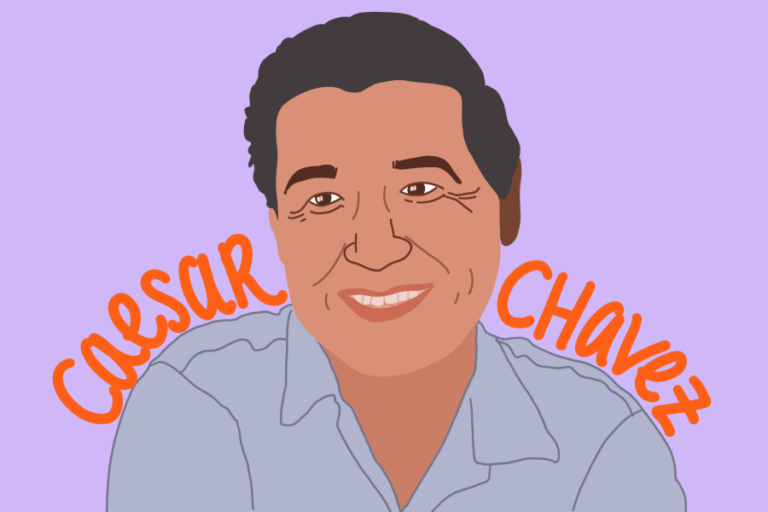
César Chávez Day on March 31 marked the late activist’s 95th birthday and the 60th anniversary of the founding of the United Farm Workers (UWF), the organization that he founded with Dolores Huerta. In 2014, President Barack Obama officially declared March 31 a holiday. Although it is not a federal holiday, it is celebrated in ten states including California. 

César Chávez is known for founding the UWF, which fought for racial equality for Mexican-Americans vis-à-vis improving the status and treatment of farm laborers, many of whom were Mexican-American and Latinx. Elsa Lopez-McCleod, a former farm laborer in California, remembers working in the fields with her parents on her summer breaks. 

“I remember as a child back in the ‘70s we would accompany our parents to do seasonal summer jobs in the Central Valley,” Lopez-McCleod said. “One of the biggest seasonal jobs in the summer was picking table grapes. We would get up at around four in the morning, get dressed, have breakfast, and we were out in the fields by 5 a.m. You had to be out early because you were at your most productive from 5 a.m. until 11 am before the long hot summer sun beat down on you and slowed you down.”

These conditions were only part of the backdrop of the Chicanx experience. Other aspects that are often forgotten includes the lynchings of Mexican-Americans and discriminarory laws modeled after the harsh Jim Crow laws in the south, nicknamed Juan Crow. There was segregation for Mexican-Americans in public places, including schools where students were not allowed to speak Spanish and were americanized. While in school, Chávez was given the American name Cesar, because his birth name Cesario was considered too “Mexican”. 

Chávez’s movement which advocated for better wages and conditions for the Mexican-American workers is credited with being the birth of the Chicano Movement. Lopez- McCleod, now a retired elementary school teacher, says that she can’t imagine supporting a family on the wages and conditions that were and still are commonplace to a certain extent.

“We have to credit César Chávez for making changes that improved the lives of farmworkers,” Lopez-McCleod said. “It was common practice to have farm workers work long hours without breaks, no bathrooms or even drinking water to be provided to them. César Chávez’s union negotiated for improved wages and work benefits for many farmworkers throughout the years and he was able to garner large national support for his causes”

Chávez died in 1993. The UWF still exists today, and Dolores Huerta, the co-founder of the UWF, is still active in social justice work.

Today, Chávez is an important figure within the Chicano community and the country. In 2008, Obama said, “We should honor [Chavez] for what he’s taught us about making America a stronger, more just, and more prosperous nation.” In 2014 the former president inaugurated March 31 as César Chávez Day. Before 2014, other states had already celebrated César Chávez Day. 

The late activist’s legacy is especially present in the surrounding region because of Davis’ proximity and affiliation with the agricultural industry. Spencer Bowen, a communications manager and policy analyst for the City of Woodland, said in an email that “Woodland and Yolo County are at the heart of California food and ag economy and our area’s agricultural bounty is fueled by the farmworkers that Chávez and others worked tirelessly to protect.” 

In honor of César Chávez Day, Bowen is happy to share that “The City [hosted] a celebration in Heritage Plaza at 5:30 PM on Thursday, March 31. The celebration [included] speakers, music, and singing to honor Chávez’s legacy and accomplishments.”


Written by: Sofia Biren — city@theaggie.org


NeuroFest celebrates 30 years of neurological research at UC Davis

The festival commemorated the 30 year anniversary of the UC Davis Center for Neuroscience

By ISABELLA KRZESNIAK campus@theaggie.org


On March 12, the UC Davis Center for Neuroscience hosted NeuroFest 2022, a free event where faculty and graduate students shared neuroscience research with the public. The event took place at the UC Davis Conference Center and marked the center’s 30-year anniversary. It also coincided with Brain Awareness week, a campaign organized by the Dana Foundation to bring attention to neurological research.

The festival featured four keynote speakers whose respective fields, according to Center for Neuroscience Director Kimberley McCallister, highlighted the strengths of neurological research at UC Davis. The presentations covered neurodevelopmental disorders, mental health issues, memory and brain-computer interfaces. 

“The event was this really nice community-centered learning opportunity,” said Christina Kim, a keynote speaker and an associate professor for neurology. “Neuroscience-related faculty gave a really broad overview of their respective fields and what advances we’ve made in understanding over the past 30 years, how their research is trying to fill in existing gaps and envisioning what the next 30 years are going to look like.”

Kim’s research is centered on imbalances in neurochemicals and neural activity and how these can contribute to mood changes. She prefaced a discussion of her current research with a history of discoveries in pharmacology, as they relate to neuropsychiatric disorders. Kim said she enjoyed presenting to both community members and scientists. 

“Typically, when you are training to be a scientist, you don’t get much practice in giving these kinds of talks where you’re speaking to the public and figuring out the best way to distill your research in a way that’s understandable and interesting,” Kim said. “The majority of presentations that we normally give are geared more toward purely scientific audiences, so it’s a big change to give a public talk.”

David Segal, a keynote speaker and a professor of biochemistry and molecular medicine, spoke about his work with gene therapy and treating rare neurological diseases such as Angelman Syndrome, which results in a host of cognitive impairments and communication issues. Despite the relative infrequency of a given rare disease, these diseases as a whole affect more people than cancer and AIDS combined, according to Segal.

“The government can’t fund research for these rare diseases and companies aren’t as interested in trying to develop therapies for this, so I think there’s an important role for an academic center for interventional genetics that we put together here at UC Davis,” Segal said.

The festival also offered interactive booths organized by graduate students for attendees to learn about neurobiology. The booths, which were available throughout the event, featured activities that ranged from monitoring one’s brain activity to observing neurons on a microscopic level.

The event also featured NeuroBlitz, a competition where graduate students presented their research and audience members voted for the best presentation.

“NeuroBlitz challenges our graduate students to sum up their research in a succinct talk, similar to an elevator pitch, that is geared toward a general audience,” Kostas Zarbalis, an associate professor of pathology and laboratory medicine who worked with the contestants, said.

Neuroscientists were also invited to submit art that represents their research. The NeuroFest Committee selected the eight best submissions, displayed them at the event and invited attendees to vote for their three favorites.

“The NeuroFest concept is really unique, and it’s not something that I had an opportunity to participate in at any other institution I’ve been at,” Kim said. “Other universities don’t really have this kind of openness, and I appreciate this blend between Davis community members and Davis researchers.”


Written by: Isabella Krzesniak — campus@theaggie.org


UC Davis medical students train in Central Valley

Third-year medical students in the REACH program relocate in an effort to eliminate healthcare inequities

By ISABELLA KRZESNIAK campus@theaggie.org


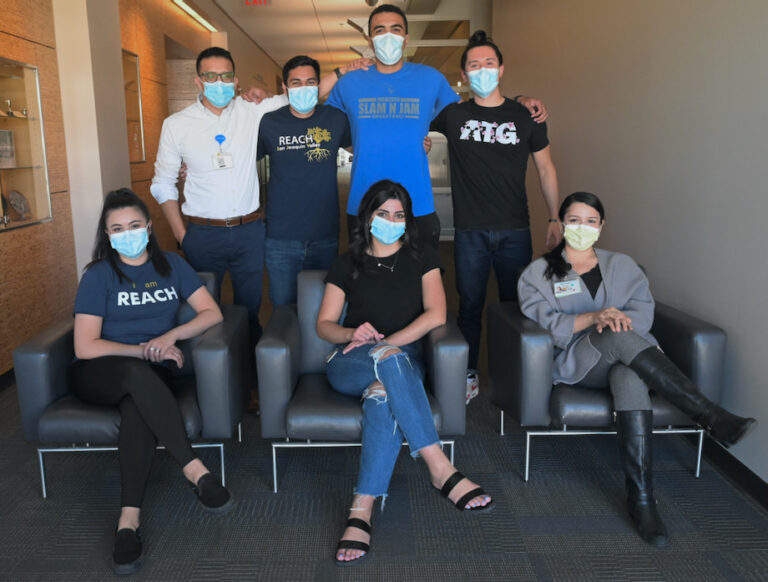
Seven UC Davis medical students part of the Reimagining Education to Advance central California Health (REACH) program relocated to the Central Valley for the 2021-2022 school year. The program encourages medical students to practice in the Central Valley in order to make up for inequities in healthcare.

It’s extremely important for UC Davis to continue that commitment to the communities of the Central Valley because we have a significant responsibility to train the future physicians who are eager to address the inequities in distribution of care,” said Alicia Gonzalez-Flores, a UC Davis internal medicine physician. 

REACH requires that students gain clinical experience in the Central Valley during their third year of medical school. Gerardo Tellez, a third-year medical student part of the REACH program, is one of the seven individuals who relocated. Like many of his peers, he is originally from the Central Valley.

“Our training is in the Central Valley and a lot of  us are familiar with this population and the patients,” Tellez said. “Being able to train here with clinicians who are here helps patients connect with us, and the patients are actually educating us on what a good clinician is.” 

The students work with Kaiser Permanente physicians who share the intention of bridging inequities in healthcare.

“Kaiser Permanente has been a long-standing partner in medical education at UC Davis,” Gonzalez-Flores said. “When students are trained at the largest integrated health system in California, they benefit from the skills, insight, tools and expertise needed to provide their future patients with the care they deserve.”

According to the California Health Care Foundation, there is a shortage of physicians in the San Joaquin Valley despite recruitment incentives, and the onset of the COVID-19 pandemic exacerbated these existing issues.

“The Central Valley, that’s one of the most difficult places to recruit physicians because when you have places like S.F. and L.A. so close by,” Tellez said. “The allure to go to one of these places is really high.”

The clinical training that these students receive in the area encourages physician retention, according to Tellez.

“The Central Valley doesn’t have enough training facilities to meet the demands, but the need [is there],” Tellez said. “The solution is training your own. People who are from the Central Valley, the likelihood of them staying is a lot higher.”

As someone from the area, Tellez believes that he is able to have a greater, positive impact on his patients.

“As I am doing my training, I’m seeing patients that look like my family, that look like me, and I’m not just talking about ethnicity — I’m talking about educational background and the life experience I had growing up,” Tellez said. “Being able to connect with these patients creates a different type of bond because you’re not just an outsider coming in.”


Written by: Isabella Krzesniak — campus@theaggie.org


Review: Contending with a coming-of-age culture clash in ‘Turning Red’

The film demonstrates the difficulties puberty presents within a teen’s journey of self-discovery

By SUN YIE — arts@theaggie.org 


This article contains spoilers about the film “Turning Red.”


Pixar’s new film, “Turning Red,” follows 13 year old Chinese-Canadian Mei as she learns to navigate her world with the help of her friends and her well-intentioned, albeit overbearing, family after experiencing startling bodily transformations. Domee Shi, the director of “Turning Red,” and her all-female creative leadership team weave together a variety of ideas, like familial relationships, Asian culture and the horror of puberty and periods, and frame them in a way that is still a novel and refreshing coming-of-age story. 

To demonstrate, “Turning Red” takes a progressive plunge forward in normalizing periods and depicts this through a poignant and yet humorous scene between Mei and her mother, Ming, who asks, “Did the… did the red peony bloom?” after Mei, locked behind the bathroom door, refuses to go to school — unbeknownst to Ming, Mei’s real reason for missing school is because she has a much bigger problem at hand, as she’s transformed into a red panda!

Though the scene provokes a laugh at Ming’s overbearing character, as she barges into the bathroom with an armful of pads, ibuprofen, vitamins and a warm water bottle, it also embraces an open and direct conversation about periods and puberty that isn’t found in any other Pixar coming-of-age film.

Periods are still relatively stigmatized, especially in Canada, in the sense that some people still regarded them with disgust and shame, leaving girls to feel alone in navigating their new and uncomfortable bodily transitions, which is why Mei and Ming’s bathroom scene in “Turning Red” is so significant.

Shi confesses that this film pitch to Pixar was her “weirdest one” and elaborates on the significance of Mei and Ming’s conversation in an Uproxx interview, saying, “It’s so weird because it happens to every woman, every girl, but you don’t just hear about it or talk about it… but we all go through it… but in that moment you feel so alone.” 

Though I found the film’s approach in destigmatizing periods to be quite compelling, I was admittedly more captivated by Mei’s pubescent struggle to reconcile her culture with her character growth and her newfound identity. 

In the beginning, Mei and Ming seem to be an impenetrable mother-and-daughter duo, sharing both temple responsibilities and strong opinions about their favorite Chinese drama. Their open conversation about periods serves as a testament to their bond, especially considering how most Asian families struggle to discuss topics surrounding womanhood and sexuality with their growing children. 

Though there are moments where the audience can see Mei disagree with her mother, such as when her mother confronts Devon, the cashier at the Daisy Mart convenience store, after discovering Mei’s scandalous sketches about him, she remains silent in an effort to stay in her mother’s good graces and to follow her mantra of honoring her parents, a lesson ingrained in her since birth. 

As the film continues, Mei reveals her transformation to her friends who reassure her that they love her, “panda or no panda,” while Ming believes she should lock her “unruly beast” away by partaking in an ancient cultural ritual, and the two begin to drift apart as a result. In order to raise tickets to see “4Town,” a famous boy band that makes Mei and her friends swoon, Mei commercializes her panda and even learns to love herself in the process, but this distances her even more from her mother, who must perform their usual temple responsibilities alone. 

Mei’s struggle with bridging her heritage with her new identity becomes even more evident when her grandmother and aunties visit from Florida to help her perform the ceremony on the same night of the “4Town” concert. Though she agrees to perform the ceremony to make her family happy, she grapples with indecision, and the film even depicts this struggle as a physical one, as Mei begins to convulse while she levitates during the ceremony. 

Mei and Ming’s tumultuous relationship reaches its climax when Mei decides she not only wants to keep her panda, a decision that already horrifies Mei’s mother and the rest of her family, but also wants to attend the concert. Ming is so hurt by Mei’s decision that she unlocks her own red panda and follows Mei, terrorizing the “4Town” concert in the process of lecturing her daughter. 

Mei and Ming hurl their grievances at each other at the concert while everyone else is evacuating, and Ming’s own cultural trauma comes to light in the process. Ming roars, “I never went to concerts! I put my family first. I tried to be a good daughter,” echoing the “Family First” sentiment that is all too common among Asian families. Mei, enraged by the implication that her decision to attend the concert means she’s failed to be a “good daughter,” strikes her mother unconscious and then participates in the ceremony to help her mother transform back into her human form. 

The most poignant scene of the film occurs when Mei finds herself in the spiritual world once more, except this time, she is with her mother. Ming has reverted to her younger self, presumably the version that hurt her own mother, as she sobs, “It’s all my fault… I got so angry, and I lost control. I’m just so sick of being perfect! I’m never gonna be good enough…” This scene is reminiscent of Mei’s own feelings of inadequacy in her journey to bridge her cultural heritage with her changing identity, and it was one that moved me the most in my reflection of this film. 

The fear of not living up to my parents’ expectations plagued me in my teen years. Like Mei, I found myself involved in extracurriculars not because I enjoyed them, but because I was desperate to earn my parents’ approval; likewise, I found myself pretending like I hated other activities, like painting and writing stories, because I knew my parents deemed them a waste of time. Like Mei, I was afraid the search for my own identity would cause me to lose my parents, and by extension, my family, and I acted out in other ways because I didn’t know how to express myself in a way that would have been acceptable for them. 

But “Turning Red” suggests that losing old parts of ourselves as we grow is inevitable. The fundamental takeaway of the film is that it’s important to honor your parents, but not to the extent where you neglect yourself. In the spiritual realm, Mei makes a final stand against Ming as they stand on opposite sides of the portal and declares, “I’m finally figuring out who I am, but… I’m scared it’ll take me away from you.” 

This scene depicts the first time Mei is able to disagree with her mother and make a decision that doesn’t involve pretense or passive aggression. She understands that losing her old connection with her family might be an inevitable consequence of her growth, but she also recognizes that the change in her family dynamic doesn’t mean she’s lost them forever. 


Written by: Sun Yie — arts@theaggie.org


A guide to trivia nights in downtown Davis

Employees and UC Davis students share trivia tips and their favorite events

By MONICA ROBERTS — features@theaggie.org


UC Davis students are no stranger to bar “trivia nights” — student friendly nightlife in the form of competitive brain games. Trivia night advertisements plaster downtown bars and customers walking in on trivia night might even struggle finding an empty seat at some of these venues. Tipsy brainiacs clink their glasses and laugh with friends while they wait for the games to start. So what makes trivia so successful and why are college students so drawn to it? 


Woodstock’s Pizza

Woodstock’s Pizza, a four time Best of Davis “best pizza” winner, offers trivia nights with promotions such as $9 beer pitchers after 9 p.m. Trivia at Woodstock’s is every Thursday night at 9 p.m. and is open to all ages. As you enter the bar area of Woodstock’s, scan the QR code located on the front table to direct you to the King Trivia app.

Five minutes before trivia begins, the MC will announce the member ID. Each group is allowed one member to access their phone as each answer will be submitted on the app. Resident quizmaster Cody shouts each question in his microphone as they also appear on teams’ phones, making Woodstock’s Pizza have the only trivia in Davis that is entirely digital.

First place winners earn a $50 Woodstock’s gift card as second and third place earn $25. 


University of Beer

The self-pronounced “pup-friendly” brewery, University of Beer (UOB), hosts their trivia every Wednesday at 9 p.m. UOB also has a proclaimed “trivia MC,” but senior shift leader at UOB, Gabby Pejovich, often hosts trivia nights when their MC is unavailable. She said that she always participates when she can, since she believes UOB’s trivia is the best in town.

“Trivia night is very busy here,” Pejovich said. “ I think we have the best trivia in town because of the interactiveness of it and our categories have something for everyone.” 

UOB’s trivia categories include music, current events, history and features a new category thrown in weekly. Pejovich said that although they encourage all (21+) participants, tensions can be high to win that prize. 

“It’s kind of competitive,” Pejovich said. “Actually last night we had a tie for second place so we had two teams send out a representative and they both had to chug a beer to see who would win.”

The prizes awarded are a $15 gift card for third place, $20 gift card for second place, and $25 for first place. The only (potential) downside of UOB’s trivia is that the Davis location does not serve food, but customers are permitted to bring outside food as long as they clean up.


G Street Wunderbar 

A watering hole for regulars and an older crowd, G Street also offers trivia every Wednesday night, at 8 p.m. Players answer questions on an answer sheet given by the trivia master, which includes general knowledge questions and pop culture with slight gravitation towards movies and music. The questions are slightly less academic than trivia at other Davis spots as the bar itself is not student-centered. Trivia nights at G street tend to be busy but not crowded, and those who aren’t playing trivia can shoot pool or mingle in the back. 

Prizes vary. Winners may receive vouchers for free drinks, shirts, mugs or shot glasses. 


Three Mile Brewing Co.

Despite the name, Three Mile Brewing Co. invites people of all ages to participate in their weekly trivia. Trivia starts at 6 p.m. every Sunday night. 

Like at Woodstock’s, groups first sign in as a team on the King Trivia app and answer questions on the answer sheet provided by the trivia master. Three Mile employee, Claire, recommends showing up early to guarantee a spot, since they usually fill up fast. 

“Trivia nights are when we’re the busiest,” Claire said. “It can sometimes be impossible to find a spot.”

Claire explained that trivia categories vary. Questions can range from general knowledge to solving anagrams to artists’ names. Prizes for first place are a $15 gift card and any trivia participant is qualified to enter in a raffle at the end of the game with no purchase required. 


Sophia’s Thai Bar and Kitchen

Sophia’s Thai Bar and Kitchen hosts their trivia every Tuesday night at 9:30 p.m. The popular Thai restaurant has been unofficially named best trivia in Davis by multiple locals and UC Davis students. Owner Kevin Won proudly agrees with the title. 

“We were the first bar in Davis to do trivia night,” Won said. “Sophia’s has been a downtown Davis staple since 2001 and began their trivia in 2005.”

Won said that he writes all 30 weekly trivia questions himself.

“It’s a weekly process,” Won said. “If I’m watching something on TV or having a conversation with someone I’ll hear something and think ‘Oh that’s a good trivia question!’ and I’ll write it on my notes app.” 

Won said that he tries to make trivia questions student-centered and tend not to be too hard — but he urged people to make teams with a variety of knowledge.

“Invite your friend who’s really good at geography, one friend who’s good at movies and one who’s good at history,” Won said. “The fewer members in your group, the less likely you are to win.”

Although having a diverse team increases your chances of winning, all groups must have a maximum of six participants. Additionally, all trivia goers must be 21 years of age and order a minimum of one drink to participate. Any member of your team who is seen with a phone or laptop during trivia has immediately disqualified the entire team. 

The team that scores first place wins $20 for each member of the team; Second and third place each earn $10 per person. Won said that non-winners can also earn prizes, like a bottle of wine or pack of beer for answering a bonus question, receiving a median score or even receiving the third lowest score. 

“We want to give everyone the opportunity to walk away happy,” Won said. 


Written by: Monica Roberts — features@theaggie.org


Visiting assistant professor of Russian promotes art over violence concerning war in Ukraine

Professor Victoria Juharyan emphasizes peaceful protest and the power of creation over destruction through art

By KAYA DO-KHANH — campus@theaggie.org


UC Davis Visiting Assistant Professor of Russian Victoria Juharyan stresses the power of art over violence regarding the crisis in Ukraine in her courses. She taught the course RUS 143 this past winter quarter, which focused on Chekhov, the late 19th-century Russian playwright and short-story writer. 

Before Russia invaded Ukraine, the class was discussing Chekhov’s play “Uncle Vanya” and the character Dr. Astrov who was concerned with how future generations were going to view current generations. 

After the invasion, the class considered Chekhov’s characters in relation to contemporary topics. Juharyan also shifted the final project from a traditional academic paper to one that allowed students the creative freedom to write a short story, play or to create art that dealt with current issues and channeled Chekhovian spirit.

Some of the students’ works were displayed in Juharyan’s interactive art exhibit titled “Faces and Voices of Interrupted Life and Unfinished Artworks” that was held at the Two Rivers Cider Company in Sacramento on March 13.

“The freedom that she gave us made me be able to connect to the war in a very personalized way, which is a lot more powerful, because if it was just a cut and dry essay where I had to pick a certain prompt, there would be a sort of distancing from myself and that distance would be applied to the current events,” fifth-year English major David Cruz said. 

According to Juharyan, the final project had students producing manifestos, creating their own literary movements and writing poems that they did not know they had the ability to produce.

“Instead of just writing papers to get a grade or show some kind of superficial understanding of the texts we’ve studied, there are ways that they can create pieces that will live on both in their own lives and in the lives of others,” Juharyan said. “The work that they are doing is not just for me and the class, but for themselves and humanity.” 

In her class, Juharyan talked with her students about the destruction of art and historical archives in Ukraine as a result of the war and the need to preserve such pieces. 

She has been writing poems and painting since her childhood, and in her youth, she was concerned with the idea of knowing how to describe what has been lost. 

“I hope this conflict […] is going to end up being a wake up call,” Juharyan said. “Maybe humanity somehow can realize that instead of destroying everything, we should be creating. We have those creative powers.” 

Third-year psychology major Isabella Balboni’s creative final project was inspired by an incident related to the war that was discussed in class. A Ukrainian woman approached armed Russian soldiers and offered them sunflower seeds, as sunflowers are the national flower of Ukraine. She said, “Take these seeds and put them in your pockets, so at least sunflowers will grow when you all lie down here.” 

Balboni created a drawing for her final project which portrays cupped hands holding sunflower seeds. The hands are dripping blood, chained at the wrists and the Russian flag peers out of the chains. 

“The blood that’s dripping along with the reddened, bloody sunflower seeds are the people of Ukraine,” Balboni said. “These hands are trying to take something that doesn’t belong to them. […] The cupped hands of Russia represent not Putin but the Russian people […] — people who do not want this, it was not their choice to do this.” 

Balboni expressed that she had not drawn in a long time and that nothing had inspired her to pick up a pencil and start creating as much as this project and the topics discussed in class. 

“I would have not been able to truly understand the depth [of the war] and been given the creative freedom without her gift of a moment,” Balboni said. “It was truly a great moment, because I have not had a professor do that before.”

Written by: Kaya Do-Khanh — campus@theaggie.org

MLB lockout’s end brought free agent frenzy

What once looked unlikely, the agreement on the CBA brought a flurry of big moves and left one huge favorite heading into the 2022 MLB season

By OMAR NAVARRO — sports@theaggie.org


The cancellation of the second week of MLB’s regular season on March 9 was a gut-punch to everyone, as an agreement seemed less likely with each meeting between the Players Association and the owners. Just the next day, the long, grueling Major League Baseball collective bargaining agreement (CBA) negotiations finally came to an end on March 10 and from there on, it was full steam ahead. 

It wasn’t always a given that the negotiations would end. With both sides unable to come to an agreement on major issues and MLB owners not negotiating until 43 days after the lockout began, many questions arose about whether the owners actually wanted to negotiate or just have things their way. Aside from raising the Major League minimum salary, there were a multitude of new rules that will go into effect this season. For starters, the designated hitter will now be in both the American and National League. The fight was a long time coming — all teams will now have to shift their strategy and add in another hitter. In addition, the postseason will look quite different as there will now be 12 teams instead of 10. In order to deter teams losing to get a high draft pick, the 18 teams that do not make the postseason will have a lottery system to determine the top six picks.

Throughout every year of the CBA, the minimum salary for the majors will go up, starting at $700K this season. One of the bigger fighting points in this negotiations was that of the Competitive Balance Tax, which taxed the higher spenders. The tax is now at $230 million and will get up to $246 million after the CBA expires in five years. Other rule changes like the banning of the shift, larger bases and more won’t make its way into the league until 2023, but regardless, the end of the negotiations was a time to rejoice for everyone in baseball — and it also meant it was time to unleash the free agency madness. 

With players like Max Scherzer, Corey Seager, Marcus Semien and others all signing before the lockout, it was almost easy to forget which players were still available. Freddie Freeman, Carlos Correa, Trevor Story, Kris Bryant and Nick Castellanos were all still available and would make an impact on any contender or team needing a star player to make that leap. 

The first major move came as a surprise, as the Atlanta Braves acquired star first baseman Matt Olson from the Oakland A’s in exchange for a massive haul. Subsequently, both sides agreed on an eight year, $161 million contract extension to lock him in with Atlanta for the long term. This move meant that the defending champion Braves would almost certainly not bring back their franchise star Freddie Freeman, so the Freeman watch was on. 

One of the teams in the Freeman race was the New York Yankees, but their move of acquiring 3B Josh Donaldson and SS Isiah Kiner-Falefa from the Minnesota Twins in exchange for catcher Gary Sanchez and 3B Gio Urshela signaled to everyone that the Yankees might not be making any big moves. Donaldson is owed $50 million over the next two seasons and with former MVP Aaron Judge due an extension soon, any big money moves was something that seemed unlikely, much to the dismay of Yankees fans. Their signing of first baseman Anthony Rizzo almost certainly put another team out of the Freeman race.

The A’s were not done getting rid of talent; however, as they traded Matt Chapman to the Toronto Blue Jays for prospects. After narrowly losing out on an AL Wild Card berth last season, the Blue Jays have added more talent with Chapman and adding right hander Kevin Gausman before the lockout. Their offseason was a success, but their ‘aggressive pursuit’ of Freeman could’ve made this a homerun. 

As the Freddie Freeman sweepstakes continued, one thing for certain was that the longtime face of the Braves franchise would not be going back. In a lengthy Instagram post, Freeman expressed his thanks to the team and the city of Atlanta — almost like a goodbye post. With the team still in question, another star went off the board.

Kris Bryant agreed to stay in the NL West — but not with the San Francisco Giants. After being traded to the Giants in the middle of last season, questions arose whether he would be back. Ultimately, the Colorado Rockies, a surprise team in the running for Bryant, agreed to a seven year, $182 million contract. This move was a great get for the Rockies but at the same time, very confusing. In an effort to save money, they traded their All-Star third baseman Nolan Arenado prior to last season. Now with the signing of Bryant for big money, one might ask what was the point, and where the Rockies plan on going from here. 

The news on March 16 was not over, as the race for Freddie Freeman came to an end. The superstar first baseman agreed to a six-year $162 million deal with the 2020 World Series Champion and powerhouse Los Angeles Dodgers. The 32-year old will now step into an already loaded lineup with four former MVPs, Freeman, outfielder Mookie Betts, Cody Bellinger and Clayton Kershaw — who they also re-signed. The Dodgers are looking to continue their reign over the National League and get back to the World Series, and Freeman can do just that. He will step in for the injured Max Muncy who will now likely return from injury as the second baseman. Although the Dodgers lost reliever Kenley Jansen to the Atlanta Braves, health, depth and firepower has them as major World Series favorites heading into the season. 

With other moves being made, three big names remained — Nick Castellanos, Carlos Correa and Trevor Story. Castellanos was the first to get off the list, as he agreed to a 5-year, $100 million contract with the Philadelphia Phillies. With big names and contracts on the books, the Phillies are looking to finally get some return on their investment this season. After falling off in the Wild Card race last season, a reworked Phillies team hopes to make major noise, and a hitter like Castellanos will surely help the cause. 

Not too long after, another major move struck down and this was a shocker. Carlos Correa agreed to a three-year, $105.3 million contract with the Minnesota Twins — a team that came out of nowhere. Many expected the Houston Astros to retain Correa, but after the Twins cleared up a lot of money, they had the ability to make a move like this. With opt-outs after every year, Correa has the ability to maximize his money while also helping a team win now.

Finally, the last major domino remaining was Story, who had many teams looking to sign him. Ultimately, he ended up in Boston, as the Red Sox agreed to a six-year $140 million deal that includes an opt-out after the fourth year. After a bounce back year for the Red Sox, they will hope to continue the momentum with another big bat. With them, the Yankees, Blue Jays and Tampa Bay Rays all in the division, it will be one of the most fun races to watch this MLB season. 

There was always some doubt that we would even get to this point. With the CBA negotiations seemingly going nowhere and the cancellation of two weeks of baseball, the hope was hard to find. In the end, it came, and with Opening Day set for April 7, teams have retooled and are ready to start this long season. Whether it is one of the big name favorites in the World Series or a team that got hot, the amount of player movement this offseason will be a treat and cause for intrigue for fans across the country, as a lot of teams feel that they have the ability to be there until the very end. 


Written by: Omar Navarro — sports@theaggie.org