52.4 F
Davis

Davis, California

Tuesday, December 23, 2025
Home Blog Page 226

UC Davis electrophysiologist performs minimally invasive novel pacemaker procedure in children

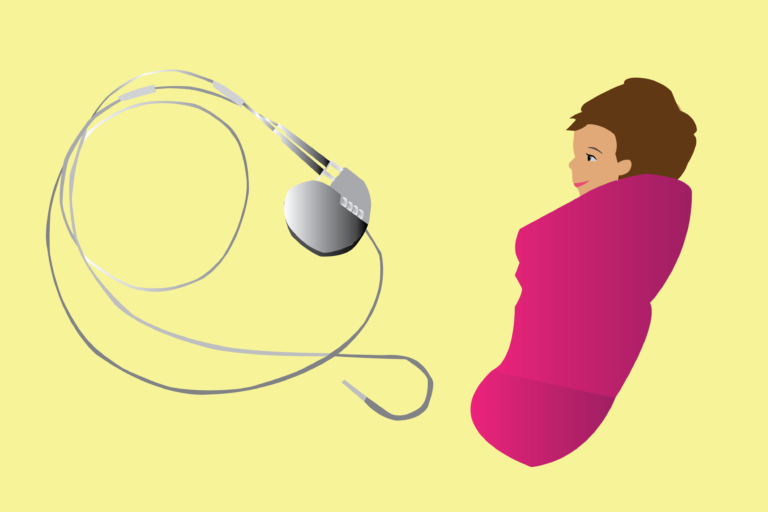
The Micra is the smallest leadless pacemaker in the world to be implanted in children as young as two years old

By BRANDON NGUYEN — science@theaggie.org 

Congenital complete heart block, a rare condition that disrupts rhythmic electrical conduction responsible for regular pumping of the heart, affects about one in 15,000 to 22,000 children. Owen Clark’s 10-year-old daughter Avery was affected by this condition as a result of a rare mitochondrial disorder, requiring medical attention and the implementation of a pacemaker to restore rhythmic, physiological heart pumping. 

Dr. Daniel Cortez, a pediatric electrophysiologist at the UC Davis Medical Center, offered the Clarks two types of pacemakers: the traditional pacemaker and a small leadless pacemaker about the size of a battery. 

“The choice was pretty straightforward,” Clark said. “We wanted the smaller one, without all of the leads and cords. It could be implanted directly into her heart without surgery.”

The small leadless pacemaker created by Medtronic, also known as the Micra, is the world’s first leadless pacemaker and was first approved by the Food and Drug Administration in 2016. According to Medtronic’s website, “Micra’s accelerometer detects mechanical atrial activity and uses this information to deliver AV [atrioventricular] synchronous ventricular pacing. [The Micra] delivers an estimated average battery longevity of 8–13 years, depending on the patient’s degree of AV block.”

Cortez made notable comparisons between the traditional pacemaker option and the Micra. 

“For a super active kid, the problem with traditional pacemakers is that the wires break all the time,” Cortez said. “Even if you’re able to place it through sort of a regular adult way, which is through an incision in the chest and putting wires into the heart connecting to the battery, children still deal with issues like erosion of the skin and tissue because it’s just so big for a little kid. And the little kid is going to grow, so their wires are going to get stretched out, and they’re going to break.” 

Replacing the leads or wires connected to the pacemaker right underneath the skin can be a dangerous procedure. Cortez said that lead extraction, which involves surgically opening the patient’s chest, has a risk of death, as high as one in every 100 people.

Fortunately, with the Micra, the procedure is minimally invasive, involving the threading of the small pacemaker with an IV tube through a blood vessel before eventual release inside the right ventricle of the heart. 

“Recently, we had to get a little more creative, so there’s actually a handle mechanism that involves a little cup in the tube that you use to push it out, so the pacemaker sits in a little container as part of the catheter,” Cortez said. “A bending mechanism that I do with my hands three feet away from the patient holding the tubes helps push the pacemaker out. The pacemaker actually has a line, so it’s essentially like a fishing line that it’s [the Micra] still connected to after you deploy it. That’s a retrieval and so if you need to get it back, you just have to align the cup to the back of the device and then put the larger sheath over it.” 

Cortez is the first physician in Northern California to insert the pacemaker through a neck vein, as most typically thread the pacemaker through a leg vein. In pediatric patients like Avery, on whom Cortez operated, the leg vein is too small for the Micra pacemaker and risks rupture of leg veins. Though the leadless pacemaker presents advantages in terms of size and its lack of cords, Cortez did provide insight into some of its current disadvantages. 

“So one issue is really retrieval, where we know we might have to abandon the device and there are studies, where if you abandon the device for several years, nothing really happens, and the heart just goes around it and encapsulates it,” Cortez said. “But if it presents problems, we have to go in and open up the chest to extract the pacemaker, which is why I don’t use it all that often. The other thing is it’s hard to do physiologic pacing or the normal conduction system with the Micra compared to the traditional pacemaker with leads.”

Nonetheless, the leadless pacemaker is an alternative to traditional pacemakers, especially in the right patients who present potentially shorter life spans or serious heart conditions. 

Following her procedure, Avery has been able to resume normal physical activities. The pacemaker will last her for the next 12 to 20 years before a follow-up procedure with the traditional pacemaker, depending on how often her heart requires synchronous pacing. Cortez is able to monitor pacemakers remotely to ensure they still work in between routine checkups.

“For a minimally invasive pacemaker procedure where patients can come in the same day, I put one stitch on the neck afterwards; I take that stitch out the next day; they go home and that’s the whole procedure,” Cortez said. “There’s no risk of infection here and no big incision where they don’t have to have their chest cut open. I think the Micra will help push forward the safety and ability to use these leadless pacemakers in different ways that had been traditionally thought.”

Written by: Brandon Nguyen — science@theaggie.org

UC Davis community weighs in on Wordle craze

Wordle’s popularity sparks conversation about community and cognitive benefits of word games

By MAYA SHYDLOWSKI — features@theaggie.org 

In six guesses of five letters, people can test their linguistics skills daily thanks to Josh Wardle and his internationally-played word game, Wordle.  

Similar to a crossword puzzle, players are given six rows of five blank letter tiles. They guess a five-letter word, receive feedback about whether the letters they chose are present in the word of the day and repeat that process until they guess the correct word — or use up all six guesses, after which they must wait until the next day for a new puzzle. 

Originally, Wordle was designed by software engineer Josh Wardle for his partner, Palak Shah. According to a New York Times article, Wardle created a prototype of the game in 2013 that didn’t pass his friends’ standards, so in 2020, he re-coded the game after spending a lot of pandemic time playing the New York Times Spelling Bee and crossword puzzles. Wordle was first released on the internet in October 2021 and now has over 300,000 daily players and a seven-figure worth, since being purchased by the New York Times earlier this year. 

Wordle’s popularity has inspired many “copycat” games with the same general outline but different rules and themes, like Absurdle and Letterle. The Davis community even has an Aggie-themed iteration: Dwordle.

The UC Davis Student Affairs Marketing and Communications (SAMC) team launched its own version of Wordle that strictly uses Davis-affiliated five-letter words like ‘barns,’ ‘dairy’ or ‘exams.’ The Davis Wordle, or Dwordle, was launched on Feb. 10 after the team noticed how big the original game was getting on social media. Justin Ling, the associate director of SAMC, was in charge of coding the site.

“After deciding this might be a fun thing to do, I found an open-source Wordle clone package on GitHub as the base code,” Ling said. “From there it was just a matter of people in SAMC brainstorming the list of words, rewriting some of the code, designing the layout, swapping the colors and then testing to make sure everything worked.”

For anyone interested, Ling said the code of the clone package and its author are referenced on Dwordle’s “About this game” link. 

The game has gained steady popularity since its release. Via email, the SAMC team said that as of Feb. 23, the game has had about 24,000 cumulative visits, about 90% of which have been from mobile devices. The site averages about 2,000 visits per day, but the team said there is usually a small decline in numbers the day after a particularly difficult word. Their hope is that Dwordle provides students and other Aggies with a fun and challenging short break in the middle of their busy days that is specific to the Davis community.

Although Wordle does require a bit of luck, a strategy and wide vocabulary can help. Some studies even claim that these types of brain games can improve memory and attention, but that isn’t always the case, according to Joy Geng, a professor in the Department of Psychology, who explained how games like Wordle affect the brain.

“It’s not that the games don’t give your memory and attention a workout, but the question you have to ask is, ‘In what way do they improve memory and attention and relative to what?’” Geng said. “A lot of brain training games make you better at that game, but very few, or none, improve memory and attention across the board.”

These games, she said, are like workouts for the brain — as long as they’re challenging. Doing activities that are mentally challenging is like playing an instrument or even a video game; they use your brain like a muscle. When people “work out” their brains, the cells don’t get bigger like muscles do during physical workouts, but they do form new neural connections.

“When you are challenged by something, your brain has to work hard to make an outcome happen,” Geng said. “Doing so will force your brain to make new connections.”

Geng said that different areas of the brain process different challenges, like mathematics, linguistics or even motor skills. When doing word games, you “call upon” a specific region of the brain and build connections there. Geng said that the best way to keep a brain sharp is to have new experiences and differing challenges, which unfortunately means that merely doing a Wordle every day won’t keep brains mentally sharp.

It is yet to be seen whether Wordle — and Dwordle — will retain their popularity or fade away like past internet fads, but for now, many students are enjoying playing the games. 

Nicole August, a fourth-year psychology student, said that she plays Wordle daily, despite her opinion that it has gotten more challenging in recent weeks.

“[Wordle is] something fun to look forward to day after day, but the New York Times has made it harder than the original creator intended,” August said. 

Many students have expressed that both Wordle and Dwordle words seem to be of varying degrees of difficulty, but Christina Randall, a fourth-year neurobiology, physiology and behavior major, said that the harder Wordles and Dwordles are what keep the games interesting.

“Some of the word choices are funny, but they can also be so hard,” Randall said. “It’s satisfying to guess the right word on the first couple of tries, but the challenging words are what makes it fun. Plus, my friends and I share our results, so it’s funny to hear everyone complain about the extra tough days.”

Written by: Maya Shydlowski — features@theaggie.org

Davis Art Market: a bold example of artist empowerment

But the future of the art market is uncertain

By CORALIE LOON — arts@theaggie.org

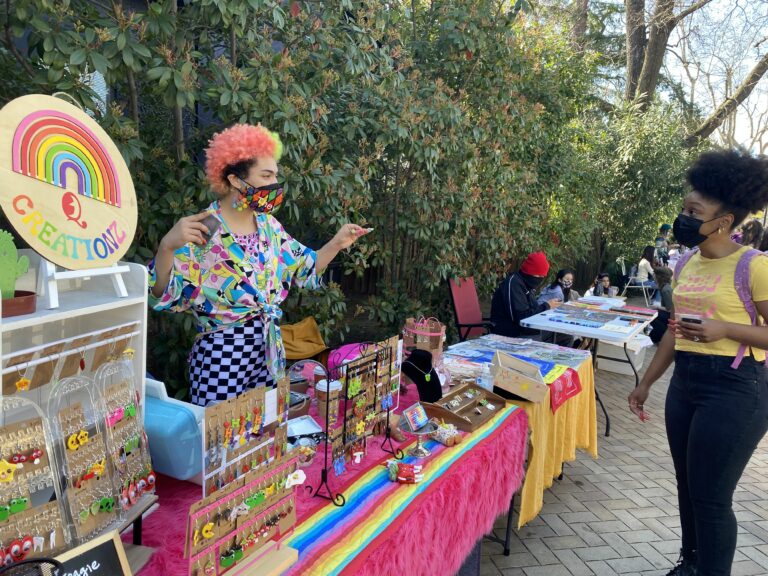
The Davis Art Market is a community-organized street vending market that takes place every Saturday on 3rd and B street. A block away from the more “formal” Davis Farmers Market, local artists, students and creators set up every weekend to sell paintings, jewelry, tarot card readings, clothes, stickers, music, zines and more. But in the past few weeks, the future of the well-loved community has been uncertain.

The Art Market started a year and a half ago when Heron Rana, its current facilitator and social media manager, decided to spontaneously sell art with her friends on the street. After that day, she said, “it just boomed and more people kept showing up. A lot of new artists would show up every week.” 

Amber Parks (@feralgaycrafts on Instagram), a UC Davis evolutionary anthropology alumn, started making and selling animal bone jewelry at the market last year, and is now beginning to sell their products on Etsy. The Art Market has been a big inspiration for them.

“When I was a student, I never did anything creative… because at the time I didn’t think that I could,” Parks said. “But then I was talking to other people that sold there and they were like, ‘Yeah, you can just start doing whatever and people will like it and vibe with it.’”

For Parks and many others, the Art Market is about finding a creative community that will support you. Independent artist Q Ezekiel (@q.creationz on Instagram), who has sold colorful accessories and “wearable art” at the market since last year, reflected on the people who sell at and visit the market. 

“That’s one of my favorite things, is to see people who I would just want to know,” Ezekiel said. “They’re not just customers, you know.”

The self-sustaining and community-organized quality of the market is what makes it stand out from similar markets: There’s no one to ask permission from, and there’s no need to pay fees or sign up weeks in advance. The market’s spirit can be summed up in three simple words: Just show up.

This is why, according to Rana, when the Davis Business Association threatened the market due to complaints from the Farmers Market and local businesses a few weeks ago, many vendors and artists were concerned. However, California State Senate Bill 946 (SB-946) protects vendors selling on sidewalks, which means that the city has no legal precedent for shutting down the market.

Still, Rana said that the Davis Business Association wants to “work with” the Art Market by making it an official event, which would mean restrictions, permits and location and time changes. The Davis Business Association was contacted on Feb. 21 and did not respond for comment as of Feb. 27.

Toni Rizzo (artifulworld.com), a local artist who sells acrylic pour paintings and stickers at the market and online, has gone to other markets but appreciates the freedom of this one. 

“I love doing any market, but there’s all these fees and permits and things that you have to do, and it can be really hard, especially when you’re just getting started selling art or if it’s not your full-time job,” Rizzo said. 

Despite SB-946, Rana’s recent conversation with the Davis Business Association revealed that there are ways they may try to work around the law and force the market to comply, although the specifics of such regulations have not been discussed.

While she is willing to move forward with an open mind, to Rana, the magic of the market rests in its lack of formal organization, in the fact that it happens simply because people decide to show up. In her eyes, the market is often misunderstood as profit-based, “and that’s not what it’s about,” she said. “From my perspective, we are building community, and we’re supporting each other.”

For now, the Art Market continues to fill Davis with vibrance and creativity every Saturday from 10 a.m. to 2 p.m. More information can be found on their Instagram (@davis_street_market).

Written by: Coralie Loon — arts@theaggie.org

Humor: An open letter to people wearing sweatshirts with the names of better schools on them

Just go to Harvard and stop blocking the bike path

BY ANNABEL MARSHALL — almarshall@ucdavis.edu 

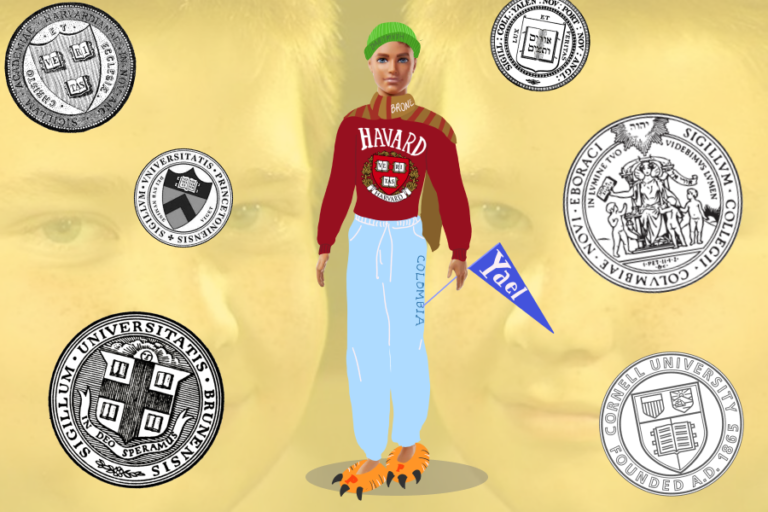
I’m not here to fashion-bash nor trend-defend. I have a simple question. People here who wear clothes emblazoned with other schools’ names on them: Do you know where you attend college? It’s UC Davis. UC, like “you see”. Juicy without the “j”. Davis as in “Daviscardia,” the famous genus of moths. That’s an easy trick to help you remember. 

I see a lot of confused people on campus every day who don’t seem to remember where they go to school. I know you mumble the “D” in UCD when you talk to your Ivy League friends, but this is not Los Angeles. They have fewer cows. But probably the same amount of Machete Men. 

That’s why whenever I see someone wearing merch from a better school, I yell, “No!” and spell out “University of California, Davis” with my arms. Yes, including the comma. Unfortunately, I often get confused and start doing the YMCA, which really sends mixed signals. At this point, the person has usually just walked past me, and locals start offering me coins for what they assume is an interpretive dance performance. Obviously, I take them, but it’s not what I wanted.

Look, I’m not saying that Princeton (average graduate income $72,700) is in any way better than UC Davis (average graduate income $42,600). I would never imply that there is any noteworthy difference between Brown (5.4% acceptance rate) and UC Davis (49% acceptance rate). Columbia (ranked No. 2 by U.S. News) has literally nothing on UCD (ranked No. 38). I know this because at least twice a quarter, a professor who went to Stanford tells me not to worry about the fact that I’m not at Stanford, even though I had expressed no worries about not being at Stanford. I was just asking about the syllabus. Please grade my Week 3 midterm. Please.

I’m just saying if you want to wear a UPenn hoodie on your way to failing a psychology midterm, please incorporate a sense of irony. Also maybe don’t, because UPenn merch is mostly ugly. 

Think of your peers. I have very poor spatial awareness and directionality, so I might get confused and think I’ve walked to Pennsylvania instead of the CoHo. And you don’t know me like that, but being in Pennsylvania is actually my nightmare. 

Having a sibling who went to that school is not a valid excuse. You are your own person, even though your mom calls their name, your other sibling’s name and the dog’s name before she remembers who you are. Having a parent who went there is definitely not an excuse and not because I’m bitter about not having an Ivy League legacy. 

From now on, I will only be accepting the following:

One: fictional schools and companies. But let’s get some deep cuts going. Yeah, Dunder Mifflin and Greendale Community College are cool. But what about South Central Louisiana State University from Adam Sandler’s 1998 smash-miss, “The Waterboy”? A 33% on Rotten Tomatoes, y’all. And how come I’m not seeing more references to the lost-but-not-forgotten UC, UC Sunnydale of “Buffy the Vampire Slayer”? I think it’s near Santa Barbara. Less UCLA, more ULA (University of Los Angeles, “The Fresh Prince of Bel-Air”). 

Two: misprints. Give me Harvart. Yail. Stanfart. That’s something we can all get behind. This could bring the nation back together, honestly. Congress would get so much more done if they spelled it “Cogeress”. Just a suggestion. 

Three: UC Davis merch! Where did your Davis pride go? Did it leave when you tried to make an advising appointment and they had nothing available for the next two months? Or when a Unitrans driver made full eye contact with you as you were running toward the bus stop and drove away one minute before the scheduled time? Yeah, me too. Just because I’m doing the YMCA at a full sprint doesn’t mean I don’t deserve to ride the bus.

Written by: Annabel Marshall — almarshall@ucdavis.edu 

Disclaimer: (This article is humor and/or satire, and its content is purely fictional. The story and the names of “sources” are fictionalized.)

A case for taking notes by hand

Handwritten notes can help cut down on study time

By OWEN RUDERMAN — opruderman@ucdavis.edu 

Like many students, I despise studying. I’ve looked up every trick in the book to try to help me stay focused and motivated, but to no avail. I always end up being sucked into the YouTube rabbit hole or doom-scrolling endlessly on my phone. But it turns out that you don’t have to do all of your studying after your lecture, back at your distraction-filled home. Instead, you can fight half the battle right in the classroom. And it starts with taking notes by hand.

I understand the appeal of taking notes on a laptop, trust me. It was so much easier and more convenient to take notes on the computer during the Zoom era of schooling. And it’s so much faster to type than it is to handwrite notes (at least for me). Also, I can easily access Canvas or my files if I have my laptop with me, and I can easily search the notes that I’ve written for key words or phrases. 

But the thing is, writing notes on a laptop is a dangerous game. It’s so much easier to be distracted when you’re taking notes on a laptop. I can play a game or watch a video in class instead of taking notes, just like I do at home when I should be studying. And because it’s so much easier and faster to type on a laptop, I find myself simply transcribing what the lecturer is saying and copying down what appears on the slides, instead of actually engaging with the material. 

This is where handwriting your notes comes into play. According to a 2014 study, students who took notes by hand ended up learning more effectively than those who took notes on their laptop. This research says that taking notes by hand allows students to summarize and organize information in their own words, ensuring a more organic understanding of the material. Because it’s harder to write fast, and because the physical action of writing with your hands requires you to actively condense and summarize, handwriting notes forces you to absorb the information in your own way and compress it into the core concepts.

Of course, taking notes by hand is not an option for all students. And everyone learns differently and has methods for taking notes that work best for them. It’s entirely possible that the best way to take notes for some is on a laptop. The main idea behind the research is that improvements in learning result from engaging more personally and intentionally with the material. For me personally, I’ve found that taking notes by hand has improved my ability to do that.

Since coming back to in-person classes, I’ve personally experienced the benefits of taking notes by hand. I bought notebooks for each of my classes, and forced myself to physically write. I noticed that handwriting notes made it much easier for me to study. I had already begun memorizing and understanding the material during the lecture, instead of having to go back and review notes that I mindlessly transcribed from slides.

I’m not saying you have to rule out all technology when it comes to note-taking, though. In fact, I think there is a better alternative to writing on paper that strikes the perfect balance between writing by hand and using a laptop: tablets. I haven’t seen this discussed anywhere, but it seems like common sense. If it’s the physical act of writing notes by hand that improves learning, then it shouldn’t matter what surface you write the notes on. And it’s always handy to be connected to the internet to bring up any readings or to answer any questions. All you need to do is download a free note-taking app and you’re good to go. 

Tablets come with a variety of benefits but can be cost-prohibitive for many students. Cheaper tablets go for around $150, but higher quality tablets like iPads go for anywhere between $500 to $900. And if you want to take handwritten notes on an iPad, an Apple Pencil will cost you another $130. In light of this, UC Davis should implement a tablet loaner program for students, similar to their laptop loaner program in 2020. 

Everyone should give physical note-taking a try, especially if they are struggling with comprehension or studying. However, everyone learns differently and for some, the benefits outweigh the costs. It just doesn’t work for me. The core thing to take away here is: handwritten notes or not, engaging thoughtfully with the material is what matters.

Written by: Owen Ruderman — opruderman@ucdavis.edu 

Disclaimer: The views and opinions expressed by individual columnists belong to the columnists alone and do not necessarily indicate the views and opinions held by The California Aggie.

Homeless Hiring Tax Credit passed in an effort to alleviate homelessness in California

Governor Gavin Newsom signed a bill that will pay businesses to hire individuals experiencing homelessness

By SOFIA BIREN — city@theaggie.org

The Homeless Hiring Tax Credit (HHTC) was passed last year, became effective on Jan. 1 and will continue until Dec. 31, 2026. This initiative, passed through California Assembly Bill 150, outlines a system in which employers will be granted a tax credit if they hire an individual experiencing homelessness.

Through this program, employers can get anywhere between $2,500 and $10,000 annually in tax credits. The exact amount of the tax credit is dependent on how many hours the employee works. According to the California Franchise Tax Board, a maximum of three individuals experiencing homelessness may be employed each year, and employers can therefore be granted a maximum tax credit of $30,000. 

The state has set an annual budget of $30 million for the HHTC. Any employer who wants to participate can do so as long as they meet the criteria to hire an eligible employee. However, the program is designed in a way that the $30 million acts as a threshold for the number of employers who can sign on. In other words, employers are able to participate until  employers have collectively received $30 million in tax credits. 

Every year, employers can opt to continue the program, and if they choose not to, any extra credits can roll over to the following year. Furthermore, new employers can choose to participate in the HHTC every year until the $30 million threshold is reached. 

The tax credit benefits more than just the employer. In order for the employer to participate in the program, they are required to pay the employee at least 120% of state minimum wage. Housing Policy Manager for the City of Sacramento Danielle Foster said that the tax credit is an exciting initiative, not just for the Sacramento area, but for the whole state. 

“It’s really to provide a bridge from the training programs that we do in the homeless community to getting some more job experience or reentry experience into the workforce so that they can move on to the next thing or maybe move up with that same employer,” Foster said.

According to the California Franchise Tax Board, a person experiencing homelessness is eligible if they are “currently or recently homeless (within 180 days of hire) or [will] be receiving services from a homeless services provider” and be verified by a participating organization. 

The HHTC relies on “certifying organizations” to connect the potential employee to an employer. These establishments are government or community organizations that can connect people experiencing homelessness with a variety of resources. Their role is to confirm the person’s living situation, guide them through the process and finally connect them with an employer. 

The implementation of the tax credit coincides with the labor shortage in the country. HSA Coordinator for Yolo County Erica Johnson said that the tax credit came at a time when it can be beneficial to both parties.

“I think [this is an] opportunity where you have the ability to put two groups together to be able to benefit from each other,” Johnson said. “Job seekers will be able to benefit from working with an employer and also employers will be able to benefit from getting employees and hiring from the unhoused community. It’s a win-win for everybody.”

Since this is a fairly new program, many employers are still not aware that the tax credit exists. Both Yolo County and the City of Sacramento have been holding webinars for interested employers to learn about the benefits available for them.

As of 2019, the population of individuals experiencing homelessness in Yolo County was at 655, with 29% residing in Davis. According to statistics from the county, this is a 34.4% increase from 2009. 

Foster and Johnson both believe that the HHTC is a promising initiative that will benefit people experiencing homelessness and will give businesses an incentive to hire individuals experiencing homelessness and pay them above the minimum wage. 

Written by: Sofia Biren — city@theaggie.org

Chancellor May hosts three UC presidents at winter colloquium

The panelists discussed topics ranging from college accessibility to the role of the UC president

By CAROLINE VAN ZANT — campus@theaggie.org

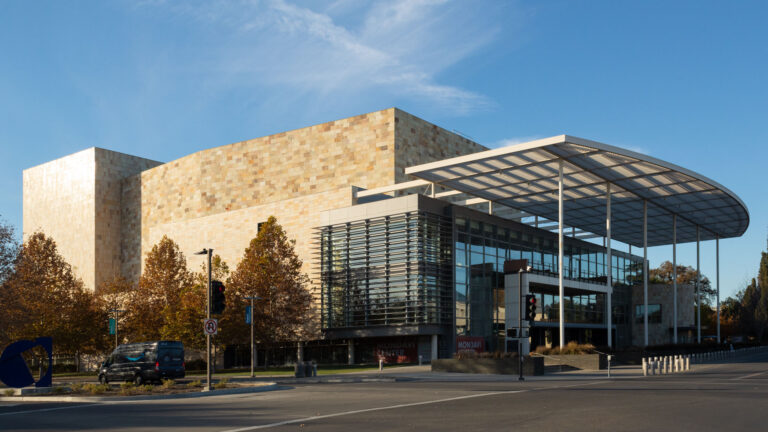
UC Davis Chancellor Gary Mary hosted current UC President Michael Drake as well as former presidents Janet Napolitano and Mark Yudof at his quarterly colloquium on Feb. 24. The current and former UC leaders discussed college affordability and accessibility, COVID-19, the value of a college degree and the UC president’s role in addressing police on campus, climate change and other pressing social issues of the day.

May acted as a moderator for the panel and began by asking his guests to introduce themselves. Yudof, who has a background in constitutional law in addition to experience serving as president of the University of Minnesota, served as UC president from 2008 to 2013. Napolitano became UC president in 2013 after serving as Secretary of the Department of Homeland Security under President Barack Obama. Her successor, Drake, has previously served as the president of the University of Ohio and the chancellor of UC Irvine.

During the introductions, a member of the audience stood up and projected the words “Free Palestine” onto the curtains behind them. The protester was promptly escorted out of the room by a Mondavi Center employee. 

Next, the panel discussed college affordability. Napolitano noted that in her tenure, she had only raised tuition by 2% and noted that one third of tuition dollars go toward financial aid. Yudof discussed the Aggie Blue and Gold Opportunity Plan, which covers tuition and fees for students whose families have an annual income of less than $80,000. Drake explained why he supported a proposal by the UC regents to increase tuition for the 2022-2023 school year. 

“As we raise more tuition we actually have more money that goes into financial aid actually lowering the debt burden on those lower income families,” Drake said. 

May brought up a survey conducted by the American Association of Colleges and Universities which found that 40% of Americans are skeptical about the value of the college degree. All three panelists championed the value of a college degree for economic and social development. 

“I don’t want to be crude about it, you probably will make more money, but you’ll probably live longer, you’ll vote more often, you’ll know more about culture and art, and the history of the country, religion, philosophy […] those are important things too,” Yudof said.

Next, the panelists were asked what role they believe the UC president and the UCs themselves have to play within a larger social context. 

 “A university ought to take on some of the big issues of the day […] it should engender discussion, debate and dialogue, but at the forefront it should be thinking about how to prepare the next generation to deal with these issues,” Napolitano said.

May then shifted topics and asked the panelists to advise those who may be interested in becoming a UC president. Addressing the students in the room, Drake said it is important to work hard and remain open to all the possibilities, rather than hyperfocus on one specific career goal.

May asked the panelists to name their proudest accomplishments as UC presidents. Drake listed navigating COVID-19, increasing diversity on campus and reinventing campus safety. Napolitano said her proudest moment was suing the Trump Administration over its infringement of DACA, a program which she pioneered during her years in the Obama Administration. Yudof, who served at a time when the UC system was reeling from the Great Recession, said that even though the UC raised tuition and cut pay during these years, the institution survived. 

May concluded the event by asking the panelists what makes them hopeful for the future. Drake pointed to increases in diversity and accessibility at the UCs as well as scientific advancements like the COVID-19 vaccines and CRISPR technology. Yudof and Napolitano shared similar points of view about the character of the UC community.

“We should allow ourselves to take some pride in the immense amount of talent at the university, from students, to staff, to faculty […] it is the kind of community that I think will permit our country to keep moving forward,” Napolitano said.

Written by: Caroline Van Zant  — campus@theaggie.org

Couch Concert: Carpool Tunnel

Meet the San Francisco-based band with a laid-back Californian quality, complemented by an indie-rock sound 

By CLARA FISCHER — arts@theaggie.org

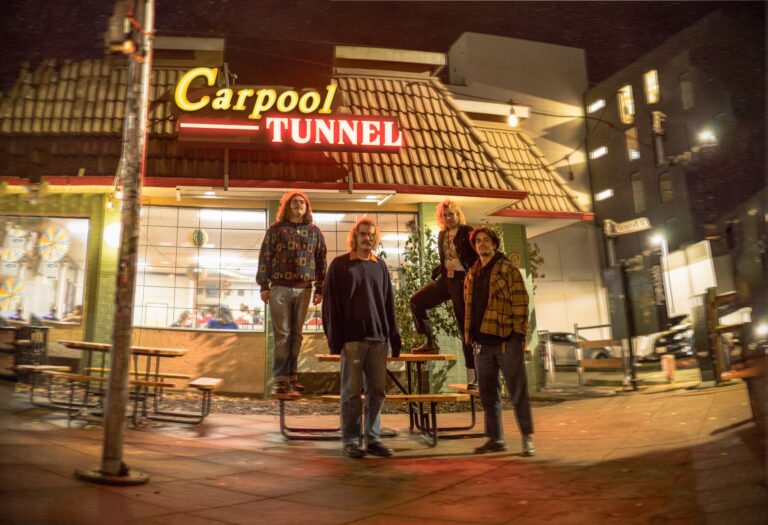
Carpool Tunnel’s career began like any great modern love story —  on Tinder. Well, not exactly Tinder: The group initially met on the app Vampr, which lead singer and rhythm guitarist Ben Koppenjan described as a “Tinder for musicians.” 

One van and a clever name (courtesy of a friend in Santa Barbara’s whiteboard crowded with ideas) later, the band has made waves in the music scene with a laid-back sound described by lead guitarist and backup vocalist Bradley Kearsley as “a blend of modern and vintage, like classic 70’s rock… very California.” 

The group is composed of Koppenjan, Kearsley, bassist and high harmonist Spencer Layne and drummer and backup vocalist Junior Reed. 

“We kind of clicked instantly,” Koppenjan said. “[We] started focusing on Carpool Tunnel, came up with the name within a week, and then within a month or two we had already bought a van and played our first couple shows.”

His statement about the band’s cohesive nature isn’t self-righteous, either. Even over Zoom, the chemistry between the bandmates was clear to see, and their collective laughter and apparent delight at each other’s stories testified to the fact that they actually have a genuinely good time together. 

More than just a natural fit, though, Carpool Tunnel has put hard work into their journey to get where they are today. 

“We would drive to San Diego just to play one show and drive back the next day to go to work,” Kearsley said. “The best way to grow as a band is to play as much as possible.”

As far as the creative process goes, finding the perfect sound can vary in difficulty. “The toughest thing sometimes is just finding inspiration, especially during times when it’s just hard for us,” Koppenjan said. “At the beginning of the pandemic, we all went to Brad’s grandma’s house in Santa Cruz, and [being in] a really beautiful house with beautiful nature all around us, songs came really easily to us because we were trying to shift our focus away from everything that was going on in the world.” 

Kearsley agreed, building on Koppenjan’s point and describing his personal process. 

“Sometimes I’ll just be feeling something for a couple of weeks and it builds up inside to the point where I have to sit down and just play some music and something usually comes out of that,” Kearsley said. “Music is a comfort for us — to write a song about something is to get it out of your head and put it into the real world and have it be its own thing.”

When asked about the expectations versus reality of being on tour, the four shared a laugh. 

“Growing up, you kind of think of bands touring as this glamorous thing, but there’s definitely cheap hotels,” Koppenjan said. “But it’s so worth it when we get to a new city that we’ve never been to before and there’s people that show up to see us play music — that’s the most amazing part about it and makes all the other stuff in between worth it.”

They all joked about the abundance of John Denver being played on the journeys through mountain passes, proving that there are still plenty of good times on the road. After a lengthy story detailing a typical day in the life on tour (including frozen windshield wipers, a broken hotel sink, a cockroach in a Taco Bell crunchwrap and — naturally — more John Denver) all the members agreed that life on tour has been treating them well so far. 

“It’s the ultimate highs and the ultimate lows, and at the end of the day, it’s just a great experience,” Kearsley said. 

One of the aforementioned ultimate highs of their time with Carpool Tunnel has been putting their records on vinyl. 

“I tried so hard to get our music on CDs, and I have literally hundreds left because nobody bought them,” said Kearsley with a laugh. “So to be able to have vinyl and also sell has been really cool.”

It’s easy to see why seeing a physical representation of their hard work is so important to Carpool Tunnel. The foursome cited The Eagles, The Strokes, Wallows and more as some of their musical influences — all highly-acclaimed groups that made their way onto vinyl as well. 

Even though Reed has only recorded one single with the band (their most recent, “I’m Always Thinking About You”), he says that their 2019 hit “Better Now” is one of his personal favorites.

“There’s something about the original recording they did in their house that is so charged, and everyone’s working together in a tighter way than previous to that,” Reed said. 

And that’s exactly what makes Carpool Tunnel such a compelling musical act: They have undeniable chemistry that shines through the speaker. Their sound is reminiscent of rock days already past, while still pulling themselves forward in a new direction for the modern age — a blend of old and new that’s perfect for the ever evolving, historically reverent city of San Francisco. 

When asked further about the city, Reed, a San Diego local, says that the music scene in San Francisco is “unlike anything I’ve seen.”

“People are just super hungry in such a condensed area,” he said. “It’s a big community.”

For readers in Davis, the band recommends going to concerts at Turtle House, a collective that often hosts shows with local artists, where they’ve played themselves. 

And to any aspiring musicians out there, local or not, they have one thing to say: keep trying. 

“A lot of people are going to tell you not to,” Kearsley said. “People still tell us not to — but we’re still going!”

Carpool Tunnel will be featured in an upcoming Couch Concert with The California Aggie. You can find out more on our Instagram page, and a video of the performance will be posted to our YouTube channel.

Editor’s note: Due to unforeseen circumstances, the Couch Concert was canceled until further notice.

Written by: Clara Fischer — arts@theaggie.org

Keep wearing a mask if it makes you feel safe

As mask mandates relax in California, it is important to continue practices that make you and your community comfortable 

Sometimes it’s hard to remember a time when we did not wear masks in populated spaces. With two years passed since the start of the pandemic, grabbing a mask on our way out the door has become a part of many of our daily routines. 

This could soon change with California’s latest mask mandate revision. As of March 1, California no longer requires unvaccinated individuals to wear masks in indoor public settings. Additionally, by the end of the day on March 11, masks will no longer be required by the state of California in K-12 and childcare settings. The California Department of Public Health, however, still “strongly recommends” individuals to keep wearing masks in these indoor settings even when the universal requirement ends, regardless of vaccination status. 

Yolo County is aligning with these guidelines, as the mask mandate at K-12 schools and childcare facilities will switch to a strong recommendation on March 12. But some other school districts have not followed suit: San Francisco public schools announced “no changes” to their indoor mask regulations for the month of March.

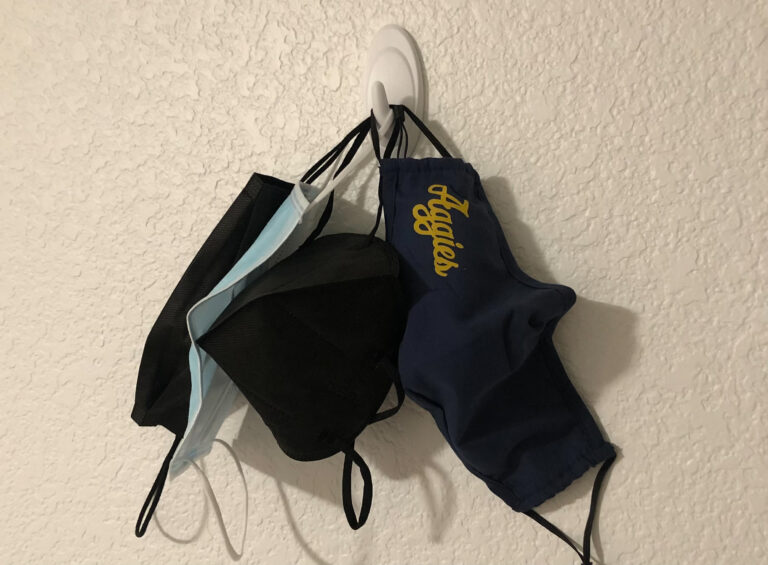
UC Davis announced this week that the indoor mask mandate will be lifted for “most indoor settings” on both the Davis and Sacramento campuses on March 19. To follow federal, state and local guidelines, masks will still be required on public transit and in clinical settings. Public health officials and UC Davis still “strongly recommended” wearing masks for both vaccinated and unvaccinated individuals, and UC Davis has stated their support for anyone who wishes to continue masking indoors.

While the “maskne” benefits to ditching face coverings do sound enticing, some people are probably not quite ready to bare their naked faces once again in classrooms, grocery stores, gyms and other public places. Many have come to trust and find security in the protection that masks provide us — as proven by science.

When the majority of people in public settings are correctly and consistently wearing masks, the transmission of COVID-19 is slowed. Wearing masks, especially tight-fitting N95s and KN95s, reduces the chances of infection by 83%, according to a study published last month by the Centers for Disease Control and Prevention. It’s these benefits that make some people — including members of the Editorial Board — hesitant to forgo masks in some situations, especially indoors. 

Also, this isn’t the first time that mask requirements have been removed from most indoor settings. While it’s true that circumstances are different now, let’s not forget about June 2021 when California attempted to lift indoor mask mandates to allow its economy to fully reopen. Now, almost a year later, we all remember how that went: Cases surged over the summer. A universal indoor mask mandate was reinstated six months later in Dec. 2021 when a new, extremely transmissible variant emerged in California.

With that in mind, it’s reasonable to feel hesitant about removing masks right now. While we trust health officials to make the best decisions for the safety of the community at large, individuals can make their own decisions for when they are ready to remove their masks (while continuing to follow health guidelines, of course). And they should not feel judged by their decision to keep wearing masks in places they are no longer required. People’s comfort levels may differ, so remember not to judge others as long as they’re following guidelines. 

It’s also necessary that people respect others around them. If businesses or schools are still requiring masks, people must still wear them. By entering public spaces, individuals are agreeing to whatever rules are set in place. But regardless of the regulations, we encourage everyone to be thoughtful of those around you. Even if masks are not required at a certain place, consider putting on a mask if those around you are uncomfortable by your lack of face covering.

Let’s not forget that masks are still strongly recommended in all indoor spaces. In the end, it’s your decision as to whether you feel comfortable taking off your mask inside, but don’t take this as a cue to make unsafe decisions. We must continue being considerate of everyone around us to ensure we all stay safe.


Written by: The Editorial Board


Editor’s Note: This article has been updated since its print publication on March 3 to reflect the update UC Davis released on March 2 regarding indoor mask rules.


UC Davis primate lab sued to release documentation of Neuralink experiments

The Physicians Committee for Responsible Medicine filed a lawsuit against the university over its treatment of primates in relation to Elon Musk’s Neuralink project

By ISABELLA KRZESNIAK campus@theaggie.org


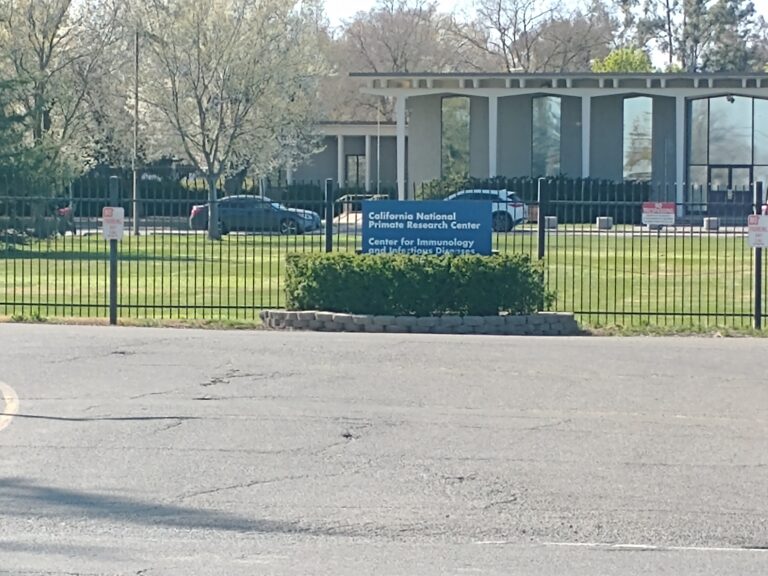
On Feb. 10, the Physicians Committee for Responsible Medicine submitted a complaint to the U.S. Department of Agriculture (USDA) against UC Davis for allegedly violating the Animal Welfare Act in its research with Neuralink, a company owned by Elon Musk. Additionally, the Physicians Committee filed a lawsuit against the university with Yolo County to release documentation related to the research in accordance with the California Public Records Act (CPRA) on the same day.

From 2017 to 2020, Neuralink worked with the university at the California National Primate Research Center (CNPRC) and experimented on primates to develop technology that would enable users to interact with computers using their mind. The Physicians Committee previously filed a lawsuit for the release of research documentation for these experiments in 2021, and the committee based its USDA complaint this year on the information that the university disclosed following this initial suit.

The Physicians Committee is requesting documentation from experiments in which 23 monkeys were said to be mistreated in the committee’s press release. According to the lawsuit, researchers implanted electrodes in their brains, removed parts of their skulls, used unapproved substances on them and did not provide sufficient veterinary care.

People for the Elimination of Animal Cruelty through Education (PEACE), a club at UC Davis that advocates for animal rights, stated that the university should take responsibility for its actions. In 2019, ASUCD approved PEACE’s Sentience Resolution, which called on the university to recognize animals as conscious beings.

“UC Davis and the CNPRC should take accountability for their violations and admit how they are disregarding the Sentience Resolution,” PEACE said in a statement on Feb. 20. “The CNPRC needs to be reformed to end their cruel experiments on non-human animals and utilize modern methods of experimentation, valid in the twenty-first century.”

According to the Physicians Committee’s most recent lawsuit, UC Davis is withholding information in order to prevent a “chilling effect” on future academic research. Amanda Banks, the president of the California Biomedical Research Association, said that research prospects could experience a dampening effect as a result of the empathy that people feel for primate test subjects.

“The general public has a sense of familiarity and love for primates, but it also creates a real sense of unease about the use of primates in medical research,” Banks said. “It’s really going to make the general public uncomfortable with the idea of research, which can affect research funding and can affect how people react to primate research in general.”

According to PEACE, the university is using this effect as a pretext for animal abuse.

“The ‘chilling effect’ the university claims to be concerned with is simply an excuse to hide the horror that has gone on behind closed doors,” the PEACE statement reads. “Releasing some visual information to the public at the very least should not invalidate or halt any research.”

Third-year sustainable agriculture and food systems major Emma Talbot, who has worked with non-primate animals for her courses in the past, said the university’s lack of discussion of these events seems secretive. 

“This could really ruin a school that prides itself on animal science and being very connected with animals,” Talbot said.

The Physicians Committee argues that since the university is a public institution, all animal research documentation is public pursuant to the CPRA. According to Andy Fell, the news and media relations specialist at UC Davis who responded on behalf of the CNPRC, the university fully complied with the CPRA in response to the Physicians Committee’s request.

“Additional materials have been supplied to the Physicians Committee since the conclusion of the research agreement with Neuralink,” the university said in its official statement.

Banks said she believes the university is a model for sharing research.

“The university has been very transparent,” Banks said. “I certainly don’t think they’re hiding anything.”

According to the Physicians Committee’s second lawsuit, Neuralink has consistently shared their research. During Neuralink’s time at the CNPRC, they released footage of primates, including a monkey named Pager, who played the video game “Pong” using its mind.

Regarding the treatment of primates, in its official statement, the university said that all animals were provided the best possible care.

“UC Davis staff provided veterinary care including round-the-clock monitoring of experimental animals,” the statement reads. “When an incident occurred, it was reported to the [Institutional Animal Care and Use Committee], which mandated training and protocol changes as needed.”

Every research institution has its own Institutional Animal Care and Use Committee (IACUC), which reviews all proposed experiments using animals. The research that took place from 2017 to 2020 was approved by the UC Davis IACUC.

“Ethical questions are considered all throughout the animal research process,” said Jim Newman, the director of strategic communications from Americans for Medical Progress.

“In short, the research community constantly asks itself whether the benefits of the information we are trying to obtain outweigh any negative impacts on animals.”

In Banks’ view, animal research is often the subject of public scrutiny.  

“If it’s sensational or horrific, it gets more press,” Banks said. “Certainly, we don’t know enough now, and the USDA is investigating. The loss of animal life is tragic, but sometimes it’s necessary as part of research.”


Written by: Isabella Krzesniak — campus@theaggie.org


Yolo County changes mask guidelines for vaccinated people; masks still recommended indoors

UC Davis continues to require masks in indoor settings for vaccinated individuals


By SHRADDHA JHINGAN city@theaggie.org


In a press release published on Feb. 28, the State of California changed masking requirements to a strong recommendation for vaccinated and unvaccinated people to remain masked in indoor public places. This announcement signaled the ending of the mask mandate, but as of March 3, masks are still required in “health care, long-term care, correctional, childcare and K-12 school, emergency shelter, and public transportation settings.” The mask mandate will be lifted for childcare and K-12 school settings on March 12, though they are still strongly encouraged.

These changes in guidance amended the requirements recently implemented in Yolo County on Feb. 15, when the universal face covering requirement ended in certain settings to align with guidance on masking indicated by the state of California, according to a press release on Feb. 9.

“Universal masking shall remain required in only specified settings, including public transit, K-12 schools, childcare, healthcare, correctional, shelter, and long-term care settings,” the press release from Feb. 9 read. “Only unvaccinated persons are required to mask in all indoor public settings. Fully vaccinated individuals are recommended to continue indoor masking when the risk may be high.”

With the updated guidelines as of Feb. 28, masking requirements are the same for both vaccinated and unvaccinated individuals in public settings: strongly recommended. Both of the press releases mark a shift in public health guidance from requirements to recommendations.

Public Information Officer for Yolo County John Fout explained the changes that the mask mandate adjustments would bring. According to Fout, because the number of COVID-19 cases is still considered high by the Centers for Disease Control and Prevention (CDC), masking indoors is still recommended. As of Feb. 25, the weekly trend for COVID-19 cases in Yolo County indicated 24.9 daily cases per 100,000 people. 

The State of California has introduced four tiers for “masking guidance depending on risk.” These include “required, strongly recommended, recommended, and optional.” According to the press release, the transmision of COVID-19 has been decreasing in Yolo County as of late, but any changes in this trend may lead to mask requirements being instituted again.

In a press conference on Feb. 17, Governor Gavin Newsom and other officials discussed the next steps forward for California’s pandemic response. Dr. Mark Ghaly, the secretary of the California Health and Human Services Agency, discussed the use of masks. 

“Let’s not just talk about optional versus required, let’s talk about recommended and strong[ly] recommended,” Ghaly said. “In California, we strongly recommend you decide to keep your mask on when you’re in indoor high-risk places, and that’s going to continue until we see the signals that it’s okay to recommend it and then make it optional, so it’s not just a single level.”

According to the press release, people are recommended to wear a tightly fitting mask.

“The end of a masking requirement does not signal that masks do not work,” the press release reads. “Masks work. We recommend that anyone who feels unsafe in any situation wear a mask that fits and filters well, such as an N95, KN95, or KF94 respirator or double mask with a cloth mask over a surgical mask.”

Fout said that with the changes in the mask mandate, most universities, including UC Davis, will continue to require masks as masking helps prevent the spread of COVID-19, particularly in settings such as indoor classes. 

“So yes, in this case, so UC Davis is sort of a unique case in a sense because obviously there are a lot of indoor classes,” Fout said. “[…] Many students have masks and there’s HEPA filters, it still could be a situation where it just makes more sense for the moment to maintain masks, particularly with transmission of high levels. So UC Davis certainly can choose how they want to mask separately, most colleges and universities are following that to continue the masking.”

Dr. Daphne Darmawan, a pediatrician at UC Davis Children’s Hospital, explained ways to reduce transmission indoors at home in a video, such as opening windows, minimizing visitors and more.

“90% of COVID-19 transmission occurs indoors [….], so it’s really important to improve the ventilation in your home, especially when you’re having visitors,” Darmawan said.

Fout also explained that this change was possible since there are less hospitalizations and more vaccinations.

“But the reality is that something different has happened that we haven’t seen before,” Fout said. “With the Omicron variant, […] we saw a decoupling between cases and hospitalizations. So while we hit all time highs for cases and broke through our all time high for a previous surge very easily, we actually had fewer hospitalizations.”


Written by: Shraddha Jhingan — city@theaggie.org


Five dead after fatal shooting in Sacramento church

Authorities report that a father opened fire resulting in the death of his three children and unknown victim near the Arden Arcade area

By CHRIS PONCE  — city@theaggie.org

Content Warning: This article contains descriptions of a fatal shooting and violence which some readers may find disturbing.

On Feb. 28, local Sacramento authorities stated in a press conference that five people had been shot and killed at a church in Sacramento. The church was in the Arden Arcade area. Sergeant Rod Grassman, representing the Sacramento Sheriff’s Department, said that they received a call at approximately 5 p.m. regarding the shooting according to a broadcast clip posted by CBS Sacramento.

“At 5:07 p.m. this afternoon we received a call,” Grassman said. “There was a shooting inside the church.”

Authorities reported that five people total were killed, including the gunman. The Sacramento County’s Sheriff’s Department has not yet named the shooter. Authorities have announced that the suspect was a 39-year-old man and the victims included his three children and one currently unknown victim. 

Grassman stated that the children were all under the age of 15; they were 9, 10 and 13 years old. 

The suspect, after shooting his three children and the unknown victim, killed himself. The sheriff’s department is currently considering the shooting a domestic violence incident. 

Details on the fifth victim were limited, but Sacramento County Sheriff Scott Jones said the man was supervising the visit between the gunman and his children. It was not clear if the victim was a member of the church.

The reason the family was at the church is currently unknown. However, the officer at the press conference said that it is likely they were members of the church. The entire incident was contained to the church grounds and none of the victims or the suspect were transported by ambulance after the shooting, according to Grassman.

Grassman also reported that there were other people at the church during the incident. It is currently unknown if these people were members of the church or staff and leadership, according to Grassman

Grassman stated that they expected authorities to be present for the night of Feb. 28. On Twitter the Sacramento Sheriff’s Department warned that roads would be impacted and to avoid the area. 

“Howe and Ethan and Howe and Cottage have a large police presence due to a shooting , [sic] please avoid the area,” the tweet read. “The Sheriffs Office PIO will be at the command Post located at the Home Depot on Howe and cottage.”

This shooting is the 10th mass shooting in California this year. Governor Gavin Newsom made a statement on Twitter around 7 p.m. on the day of the shooting. 

“Another senseless act of gun violence in America – this time in our backyard,” the tweet read. “In a church with kids inside. Absolutely devastating. Our hearts go out to the victims, their families and their communities. We are working closely with local law enforcement.” 

This story is developing. Please check back for future updates. 

Written by: Chris Ponce — city@theaggie.org

Pinterest takes the stress out of social media

The app focuses on creativity, not comparison

By CLARA FISCHER — arts@theaggie.org


Picture this: It’s Sunday night and you’ve been mindlessly switching back and forth between Instagram and TikTok for four hours as you ignore the essay that you swore would be drafted over the weekend. Your head aches and your eyes burn, but you stay glued to the screen for at least two more hours before you eventually rip yourself away and go to bed.

This might sound a little dramatic, but I’ve found myself in a similar situation more times than I’d like to admit. Social media apps can be highly addictive, given that they’re designed with algorithms that are meant to engage users and keep them hooked on their phones. 

But what do you do when the Sunday scaries hit and you need something to distract you from the weekend’s questionable actions? Save reading a book or doing yoga, how are you supposed to effectively procrastinate without compromising your mental health in the process?

Enter Pinterest — the least social media-like social media I’ve ever come across.

For those who have never logged on, the layout of the app comes across as fairly standard on paper. Users create an account complete with a customizable username, bio and profile pic, and they can then create “boards” with pictures they either found on the app or uploaded themselves.

Pins come in a wide variety, with everything from baking recipes to crafts to manicures to pictures of a beach sunset found on varying boards. There is truly a niche for everyone, which goes hand in hand with a tailored feed for a user-friendly experience.

The app has evolved a bit over the past couple of years as a reflection of the changing trends; what was once all the rage (e.g. infinity scarves and EOS lip balm) is now deemed “cheugy” and has been replaced by strategically posed, oh-so-casual captures of farmers markets, nights out in New York and cowboy boots with long, flowy dresses. 

Though similar to other photo-sharing apps such as Instagram in the sense that users can upload their own pictures, Pinterest differs in the central way that it delivers content. While the main focus of Instagram is the community aspect, with your feed being curated with posts from users that you follow, Pinterest is much more about the individual aesthetic of the shot and less focused on the user who took it. 

That’s not to say that there aren’t some faces that are more recognizable than others on Pinterest — there are still plenty of people who have been pinned to more boards than others and enjoy successful social media careers (think Matilda Djerf and Devon Lee Carlson). However, these women didn’t gain their influencer status because of Pinterest. Their pictures consistently go viral because they already have a platform, but pictures that capture a similar vibe are equally as likely to be pinned to a board, just so long as it fits into the aesthetic the user is looking for.

Another key difference between Instagram and Pinterest stems in their underlying purposes. Instagram (whether inadvertently or not) pushes users to curate the appearance of a “perfect life” and amass a massive amount of likes while doing so. The lines between reality and posed pictures blurs, which can be straining on mental health, but Pinterest boards are so obviously made for the purposes of the aesthetic that they don’t place as much pressure to constantly be perfect. Boards are so highly curated that most users can’t internalize it as reality.

The real triumph of Pinterest is the stress-free environment it has created on social media. Logging on and getting to look at pretty pictures while daydreaming about a romanticized future brings me joy in ways that other social apps bring me insecurities. Each user can completely tailor their experience for themselves and curate aesthetically pleasing boards — however that looks for them.

Written by: Clara Fischer — arts@theaggie.org


UC Davis research project with ties to Elon Musk brought up in public discussion

Vice President Juliana Martinez Hernandez and senators agreed to draft a Resolution regarding the alleged mistreatment of monkeys in UC Davis primate research project 


By KAYA DO-KHANH — campus@theaggie.org


On Thursday, Feb. 17, at 6:10 p.m., Vice President Juliana Martinez Hernandez called the Senate meeting to order and recited the UC Davis Land Acknowledgement. 

Leslie Kemp, the director of the Aggie Compass Basic Needs Center, gave a presentation and navigated through the center’s website to provide information about where one could submit assistance requests for housing, food and other support. The center recently worked with Eat Well Yolo to provide free meals, which comes to campus on Tuesdays from 2 to 4 p.m. on the MU South Patio.

Next, Provost Mary Croughan gave a presentation about recent improvements, such as the Aggie Launch Program, which is focused on career preparation and exploration for undergraduate and graduate students. Croughan went on to discuss and answer questions about accommodations and academic flexibilities for learning during the pandemic. 

Next, Hibah Shafi, the chairperson of the Student Health and Wellness Committee, provided a quarterly report. Shafi discussed the election of new sub-committees and projects such as Wellness Wednesdays, which consists of activities to promote mental health. In terms of social media, the committee has regularly posted campus updates and policies regarding the pandemic on its Instagram.

The Environmental Policy and Planning Commission provided a quarterly report. The Environmental Justice Team has been working to create a survey to gauge environmental justice needs, and the Styrofoam Recycling Team is working on a way to recycle styrofoam to labs on campus. The social media and website team has been posting about on-campus sustainability efforts, and it plans to provide information about a clean-up competition the day after Picnic Day. 

Next, the senators moved to committee chairperson confirmations. 

Yoanna Soliman was confirmed as the STEM Committee chairperson and Tanya Chettri as the vice-chairperson with no objections.

Senate President Pro Tempore Radhika Gawde gave an update on the Student Advocate Office (SAO). Fourteen new members were recruited, and the office’s staff now totals 21 people. Chair of the Internal Affairs Commission Kabir Sahni brought up concerns about SAO’s hiring process, as applications were accepted via a Google Form rather than through the ASUCD Vacancy website. 

Marcos Lopez, the Aggie Housing Advocacy Committee chair, gave a Housing Presentation and explained the Housing Element, an eight-year housing plan outlining land use.

The senators transitioned into elected officer reports and gave updates on their weekly progress and then moved on to Public Announcements. 

Jackson Gould, a volunteer captain with CALPIRG, gave an update about the organization’s pledge drive. Gould said they are close to meeting their goal of 1,000 new pledges. CALPIRG is working on their Beyond Plastics Campaign and recently introduced AB #226 into the state assembly.

Vice President Juliana Martinez Hernandez then shared that ASUCD is working on launching a newsletter. 

In Public Discussion, Hernandez brought up the UC Davis primate research project funded by Elon Musk that is currently being sued over alleged mistreatment of monkeys. Hernandez voiced her sadness about the alleged mistreatment and said that she thinks the ASUCD Senate should take action. Hernandez and a few senators agreed to begin drafting a resolution.

SB #45, which will establish an ASUCD Board on Engagement and Outreach and implement noncontroversial formatting cleanups, passed unanimously. 

SB #52, which allocates $297.39 to the Gender and Sexuality Commission for an Identity based Open Mic event, passed unanimously. 

Martinez Hernandez adjourned the meeting at 10:27 p.m.


Written by: Kaya Do-Khanh — campus@theaggie.org


During Black History Month, The Aggie recognizes Black alumni

Leola Calzolai-Stewart discusses her new film, “The American Diplomat,” and encourages people to explore more diverse accounts of history 


By MAYA SHYDLOWSKI — features@theaggie.org 


This article is the fourth in a four-part series in honor of Black History Month in which The California Aggie interviews a few of the many distinguished African American UC Davis alumni. These alumni discuss their achievements, share how they’re uplifting underrepresented communities and offer their wisdom to Davis students. 


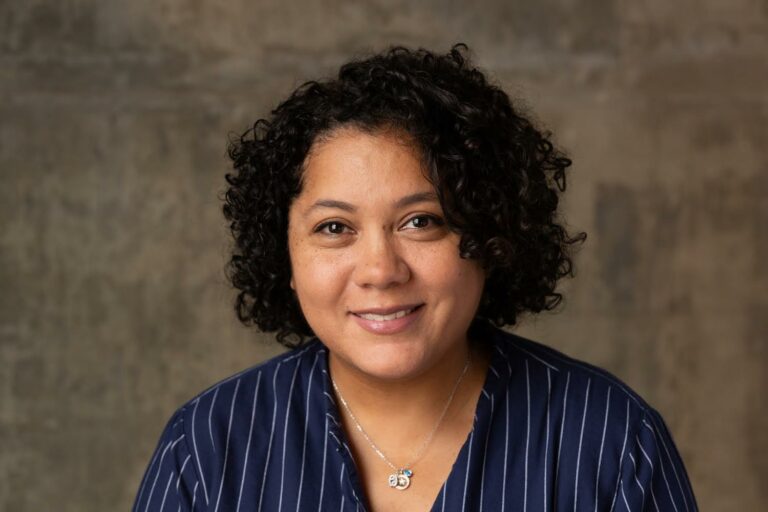
UC Davis alumna Leola Calzolai-Stewart can now add director to her list of roles that already includes editor, producer, mother and diplomatic spouse. 

Although she has always had a passion for film, Calzolai-Stewart did not initially plan to be in the industry. As a student at UC Davis, she studied international relations and worked as an international relations undergraduate student advisor, through which she developed a list of opportunities — including grants, internships and fellowships — for students of color pursuing careers in international relations. 

After graduating from Davis in 1997 with a bachelor’s degree in international relations and a minor in Italian, Calzolai-Stewart went on to earn her master’s in public international law and comparative political and developmental analysis from The Fletcher School at Tufts University, supported by the Public Policy and International Affairs Fellowship

It wasn’t until she moved to South Africa with her husband, an American diplomat, that she decided to revisit her love for film production. She studied film and video production at Tshwane University of Technology in Pretoria, South Africa, where she earned a certificate in motion picture production in 2004. 

Since then, Calzolai-Stewart has worked as an editor, producer and now director of documentary films that focus on historical and contemporary societal issues. 

For me, coming into film was a career shift, and I was a little older,” Calzolai-Stewart said. “By the time I started studying film and working in the industry, I was in my late 20s. Post-production often felt like a young, white male space. I wanted to be an editor — which is part of post-production — so sometimes, I definitely felt like an outsider.”

Luckily, she said, she made key connections early on in her second career with organizations geared at supporting female and Black, Indigenous and people of color (BIPOC) filmmakers. She attributes her perseverance in the industry to these communities that welcomed her. Calzolai-Stewart is a member of Brown Girls Doc Mafia, which aims to uplift the voices of women of color in nonfiction filmmaking. She was also named a Documentary Lab Fellow in 2019 by Firelight Media, another organization that supports people of color in filmmaking. 

“It was more than helpful,” Calzolai-Stewart said. “It has been vital and critical — especially in the past couple of years — in developing myself as a filmmaker and developing this [recent] project, having the support of other Black and Brown filmmakers [and other] filmmakers of color.”

For her most recent film, “The American Diplomat,” Calzolai-Stewart and her team received funding from Firelight Media as well as the National Endowment for the Humanities, Virginia Foundation for the Humanities, the public radio station GBH and Black Public Media’s 360+ Incubator project. Calzolai-Stewart said that all of these organizations were instrumental in not only funding the project but creating a community.

“Being able to share space with other BIPOC filmmakers to discuss our projects, discuss our challenges, uplift one another and be a resource for one another,” Calzolai-Stewart said. “I can’t stress enough how important that is, especially in filmmaking, when you often feel kind of isolated, to have connections in the community that understand what you’re trying to do and allow you to tell your stories in the media the way that you want them to be told.”

In 2015, Calzolai-Stewart co-founded FLOWSTATE Films with two other women, Rachell Shapiro and Kiley Kraskouskas, to produce films for nonprofit organizations and universities, as well as independent projects. “The American Diplomat,” a one-hour documentary on three African American diplomats in the mid-1900s, is their most recent project and Calzolai-Stewart’s directing debut. It can be found on PBS online as of Feb. 15, 2022. 

This film has been an opportunity for Calzolai-Stewart to merge her passions for film and international relations. The documentary follows the lives of three groundbreaking Black American diplomats during the Cold War era who struggled with being the faces of the U.S. abroad while facing Jim Crow laws and racial discrimination back home. 

Calzolai-Stewart said that she chose to focus on diplomats, drawing from her own experience being in a diplomatic family abroad.

“We’ve been in the foreign service community for about 20 years now,” Calzolai-Stewart said. “When we go overseas, we’re often one of the few Black families at post, and after a while, you want to understand why that’s so.”

Calzolai-Stewart said that after reading “Black Diplomacy” by Michael Krenn and hearing her husband’s stories about the first African American diplomats, she decided that she wanted to tell their stories. She brought the idea to her fellow co-founders at FLOWSTATE Films, and they started developing the project together. 

“We thought that this was a fantastic opportunity to try to tell a story and hopefully create conversations around representation, diplomacy […] and why inclusion is important for American foreign policy and American diplomacy,” Calzolai-Stewart said.

She believes that this film has the potential to be a platform for change and hopes that it inspires young people of color to pursue international relations and represent the U.S. around the world. 

Calzolai-Stewart said she was excited to use the power of film to reach a wider audience to share the largely unknown history of African American diplomats.

“When you’re a visual storyteller, I think there’s also more of a possibility of being able to connect with an audience and draw them in,” Calzolai-Stewart said. “You can create empathy and create connections between the viewer’s life and the life of the protagonist on screen.”

Calzolai-Stewart has also done this with other films that she has contributed to, like the film “Dear Walmart,” which tells the story of a movement for Walmart workers’ rights. The film follows a handful of individuals who were involved in the movement for better pay and working conditions that ultimately led to wage increases and policy changes within the company in 2015.

 Calzolai-Stewart also edited “The Last Song Before the War,” a film about the annual Festival in the Desert, a celebration of music and Mali culture that took place in the northern Mali desert, and why it has not happened since 2012. 

  As advice for underrepresented students in institutions of higher education and in the film industry, Calzolai-Stewart said to follow your instinct. 

“Our voices matter,” Calzolai-Stewart said. “Find the path where you want to make a difference and want to add your voice. Stay persistent and build that community around you that you need to help sustain yourself in that project, in that field, in that space. When you leave Davis, that’s just the first step of what is going to be a long path toward purpose.” 


Written by: Maya Shydlowski — features@theaggie.org