52.4 F
Davis

Davis, California

Tuesday, December 23, 2025
Home Blog Page 238

The Golden Globes might not air this year

The ceremony’s humiliations might be leading toward an equally humiliating end

By JACOB ANDERSON — arts@theaggie.org

The bourgeois game of Hollywood award shows is in a sad state: with the Oscars’ plummeting year-over-year ratings and the Emmys facing annual accusations of racism, the Golden Globes fits right in with its ever-ballooning rap sheet of nepotism, structural racism and unpopularity, topped off with a despicable incorrigibility. 

Following the revelation earlier February of last year that the Hollywood Foreign Press Association (HFPA), which is responsible for the show, is comprised of absolutely no Black people, as well as various other accusations of self-dealing among member journalists and studios that resulted in a number of high-profile boycotts from Netflix and WarnerMedia, NBC has decided not to air the ceremony.

Given that the Globes have been the habitual target of ridicule by comedians and actors and social commentators for years already, the HFPA’s tepid attempts to placate its critics with new diversity policies (only for the organization’s diversity consultant firm to quit) have been unsurprisingly rejected by observers, which was the primary impetus behind NBC opting to break their 25-year agreement.

But even as the nominees for this year’s awards are announced, it’s unclear whether the HFPA will be able to secure a broadcast agreement with another network, which could leave the show online only or perhaps unbroadcasted altogether.

On top of the show’s issues with even getting aired, prominent nominees have been ignoring the event entirely, with a sparse number even acknowledging its existence. It’s tempting to view these optical nightmares as one of many portents for the apparently oncoming death of the Hollywood award show, but the HFPA’s situation is uncommonly egregious, even within the onanistic world of industry awards. 

The HFPA has also attempted to resuscitate their image by contracting Snoop Dogg to read the nominations on Dec. 13, 2021, a move so transparent as to be humorous — doubly so given Dogg’s repeated failures to correctly pronounce nominees’ names. It’s clear that the HFPA believes such sycophantic moves will convince the celebrities and onlookers who have all but completely abandoned them to return, but if anything the situation only appears to be getting worse.

The awards remain scheduled for Jan. 9, but given the tumult both in and out of the organization, the precise details of the event remain evasive. The HFPA seems to believe that a return to the earlier glory of the Globes isn’t an impossibility, but even somewhat more reputable events such as the Oscars remain on an unprecedented decline without controversies of comparable magnitude. 

It could be that the Globes are on an intractable downward course even without their current embarrassments, and that there are huge cultural movements taking place that are invalidating it and similar events such that these are funny little bumps, extra humiliations on the ineluctable path toward irrelevancy. In either case, it would be in the Globes’ best interest to give Dogg some more prep time before future speaking engagements.

Written by: Jacob Anderson — arts@theaggie.org

COVID-19 omicron variant emerges in Yolo County

Scientists and health officials advise Yolo County residents to be cautious and exercise prevention measures

By LEVI GOLDSTEIN city@theaggie.org

On Dec. 9, 2021the Yolo County Public Information Office issued a press release confirming the presence of the COVID-19 omicron variant in Yolo County. 

According to Project Scientist at the UC Davis Genome Center David Coil, the center uses genotyping on each COVID-19 positive test in Yolo County to determine which mutations are present, which designate the variant of the COVID-19 virus. 

The first individual who tested positive for the omicron variant in Yolo County was quarantined immediately. Since then, an outbreak of the variant occurred at River City High School in West Sacramento, according to a Yolo County press release on Dec. 16, 2021. It is unlikely that the infections were connected.

Dr. Aimee Sisson, the Yolo County Health Officer, commented on the outbreak.

“The detection of an Omicron outbreak at a Yolo County school is not surprising because we already knew that Omicron was present in Yolo County,” she said in a statement for the Dec. 16, 2021 press release. “This outbreak illustrates that the Omicron variant is circulating in our community and is not just a risk for those who have traveled. Omicron is here, and Omicron can spread quickly.”

According to Sisson, as of Dec. 22, 2021, 81% of new COVID-19 cases in Yolo County were omicron. In addition to its high transmissibility, Sisson is concerned about omicron because those who were previously infected and those who are vaccinated do not have immunity. 

However, Sisson said that this does not mean that vaccines are unimportant or ineffective. 

“The vaccines are still very protective against really bad outcomes,” she said. “I don’t want people to get the idea that [because] omicron has immune escape, there’s no point in getting vaccinated. You may still get infected, but it’s very unlikely that you’ll end up getting very sick or dying from omicron if you’re fully vaccinated.”

According to new studies, omicron seems to have less severe symptoms than other variants, but this doesn’t mean it isn’t dangerous for other reasons. 

“It appears initially, based on reports coming from other countries, that omicron causes less severe disease on the whole,” Sisson said. “I think the concern that I and many other public health leaders have is that there’s going to be so many people infected overall that that could mean that we have more people requiring hospital care than we actually have hospital beds.”

Yolo County plans to focus new COVID-19 policies on additional protections for the most vulnerable population, according to Sisson. All existing COVID-19 policies and procedures will stay in place. 

Coil said that existing protection measures are efficient in stopping the spread of omicron. But he is also anxious about whether people will continue to do the right thing. 

“Now is not the time to get lax,” Coil said. “Now is not the time to have big holiday parties. We have to be really careful and get through this wave.”

Sisson and Coil both said they urge Yolo residents to get vaccinated, get their booster shots and continue wearing high-quality masks in order to slow the spread of COVID-19. 

Concern about omicron has led to the UC system implementing varying plans for remote learning and additional safety measures. Learn more about COVID-19 procedures at UC Davis at https://www.ucdavis.edu/coronavirus. The California Aggie is also regularly updating a breaking news story with UC Davis plans for winter quarter. 

Written by: Levi Goldstein — city@theaggie.org

UC President, chancellors submit letter to support a stronger DACA program

UC administrators expressed their support of DACA in a letter on Nov. 22

By GABY SAINZ-MEDINA — campus@theaggie.org

On Nov. 22, a letter was submitted to Andria Strano, the acting chief, Office of Policy and Strategy, Division of Humanitarian Affairs, on behalf of the regents of the UC in support of the Biden Administration’s efforts to strengthen the Deferred Action For Childhood Arrivals (DACA) Program. 

“The thousands of DACA participants who have enrolled at UC as students, worked at UC as employees, and represented UC as graduates have brought irreplaceable perspectives and talents to the University,” the letter reads. 

The DACA program allows people who were illegally brought to the U.S. as children to attend college and obtain jobs without fear of deportation. 

The letter was written after a proposed rule by the Biden Administration that would fortify and protect the DACA program.

“UC submits this comment to affirm its strong support of DACA and the proposed rulemaking, and to offer factual information that should be considered in assessing the benefits of the program,” the letter states.

On top of stating its support, the letter goes on to list ideas for “improving the proposed rules by altering the date- and age-based eligibility criteria, and by adjusting the proposed application fees.”

According to UC Davis Chancellor Gary May, he supports the DACA program and has spoken about it on multiple occasions. 

“I have been a strong supporter of the DACA program for many years and am eager to see the program strengthened,” May said via email. “I spoke on behalf of our undocumented community at a Capital Hill news conference with members of Congress and academic leaders in October 2017. I also have called Congress to pass bipartisan legislation that would provide a pathway to citizenship for our students.”

May said that those who are a part of the DACA program contribute great value to the university.  

“These students — many of whom are the first in their families to attend college — contribute to our rich diversity of cultures and perspectives that is integral to our success as a global university,” May said. “They are paving a future for themselves and their families so they can give back to our society.”

Written by: Gaby Sainz-Medina — campus@theaggie.org

Students, staff need to be flexible during an uncertain winter quarter

Instructors should be prepared to record lectures and teach remotely

Temporarily returning to online instruction isn’t ideal for some students, but caution and flexibility are important for reducing the COVID-19 transmission rate  in the UC Davis community as we return from break. This first week is an opportunity for UC Davis to catch any post-holiday cases before everyone interacts on campus. 

Many of us were excited to continue in-person learning and want things to be as normal as possible, so the return to virtual learning can feel confusing and discouraging. It’s almost been two years since UC Davis first went online in March 2020, and even though we’ve made so much progress since then, there’s still a large amount of uncertainty and risk surrounding the pandemic. 

The Editorial Board appreciates UC Davis’ communication about this first week of distance learning and its commitment to collecting data before making any final decisions. We support the continuation of the biweekly testing policy as well as the recent mandate of the booster COVID-19 vaccine. 

Despite these precautions, many more students and staff may contract COVID-19 once we return to in-person learning. Both students and instructors may need to quarantine at home throughout the quarter, so it’s important for departments to help instructors plan for recording in-person lectures, offering online exams and teaching remotely. 

In particular, large lectures should have virtual options since many students and staff might not be comfortable in tightly-packed lecture halls with hundreds of people. Students shouldn’t need to decide between their grade and their health, so it’s important to offer flexible options. We understand it’s extra work for instructors and not all lecture halls are equipped with video recording technology, but instructors can offer an audio recording of their lectures as a virtual option. Not only is this helpful during a pandemic, but it is also a necessary step to increase accessibility.

Everyone’s COVID-19 risk level is different, and the university should encourage instructors to be as accommodating as possible. Scientists have found that the omicron variant causes less severe disease on average in the U.S., but it still causes hospitalizations and deaths. Members of the UC Davis community, especially those who are at high risk for serious illness from COVID-19, should be able to access accommodations if they’re concerned about their health.  

UC Davis staff are doing what they can to provide students with a quality education under the safest conditions possible. We need to do our part to decrease community spread as well by getting our booster shots, masking up and exercising caution in social settings. Even though 98% of the UC Davis campus is vaccinated, our vaccines might not be as effective against omicron as they were against previous strains, so consider skipping out on large gatherings and indoor parties. 

Although the temporary return to virtual learning may feel discouraging, it’s important to respect public health decisions and continue to follow COVID-19 guidelines. We’re all in this together, and we need to be flexible as we start an uncertain winter quarter. 

Written by: The Editorial Board

UC Davis researchers create a non-melting, non-molding ice cube

This sustainable ‘jelly’ ice-cube is reusable, compostable and recyclable

By MONICA MANMADKAR — science@theaggie.org

UC Davis researchers have developed a new sustainable ice cube that does not melt or grow mold. This new type of cooling cube can transform the way food is shipped and kept cool. 

According to a UC Davis article, the idea sprouted from seeing the amount of ice used to keep seafood cool and fresh. When the ice melts, the water can be a carrier of microbial bacteria and cause contamination through runoff or other products. Plastic-free, compostable ice cubes help reduce cross-contamination and are anti-microbial.

“Dr. Luxin Wong, an associate professor in the Department of Food Science and Technology, noticed the issue of cooling seafood and potential contamination,” Dr. Gang Sun, a professor in the Department of Agricultural and Biological Engineering and the co-principal investigator of the project, said. 

Additionally, Sun noted the amount of mold that grows in the ice packs students take in their lunchboxes to school. Wrapped in plastic, the coolants in these ice packs are non-biodegradable and non-compostable. 

These new cubes are 90% water with the rest filled with stabilizing components. They can be used for 13 hours at a time and then can be re-frozen for their next use. Soft to touch and malleable, the cubes can be fitted for any use.

“In addition to being sustainable, the reusable cubes can be cut to any shape or size that is needed,” Jiahan Zou, a Ph.D. graduate student in the Department of Agricultural and Biological Engineering, said. “We hope that this will reduce the waste and make them more versatile.”

Zou has been working on this project for the past two years. The team of researchers designed them for repeated use. The cubes can be used several times before they need to be disposed of, and promote plant growth when composted in soil.  

“We can simply clean them with some regular water to clean the surface dirt,” Zou said. “And once we drain the water, they can go back to the freezer, and they will be ready for the next time of use.”

The researchers filed a patent in July for the design and concept. This new technology is a better alternative to the regular ice cube, which could possibly reduce water consumption and offer a stabler coolant to companies. 

For the future, the researchers hope to use recycled agricultural waste or byproducts as coolant material instead, hence making it even more environmentally friendly. They would also like to license it to other companies. 

“We are positive that more and more stuff can be found by the future and would love to make it more environmentally friendly,” Zou said.

These new cubes are just the first wave of advancements that this team foresees in this project.


Written by: Monica Manmadkar — science@theaggie.org

Lush leaving social media could mark the beginning of a new trend

The ethically-focused cosmetic company cites concerns over negative mental health impacts as their reasoning behind the decision 

By CLARA FISCHER — arts@theaggie.org

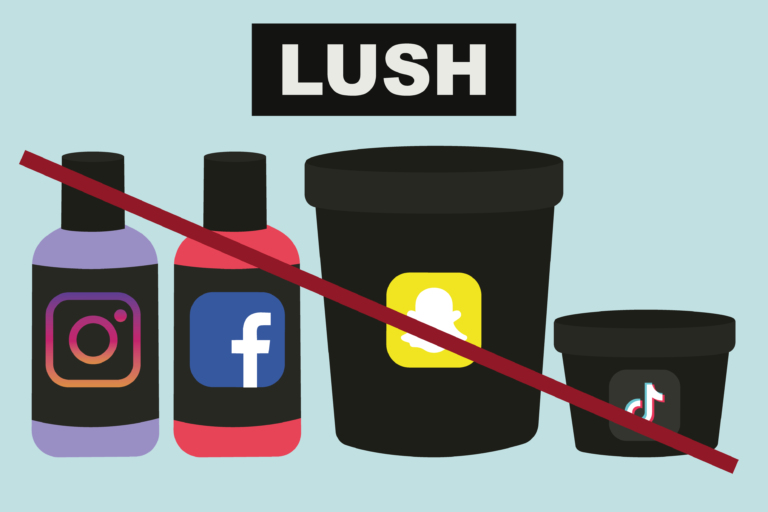
Prominent body and skincare company Lush Cosmetics recently made the decision to almost entirely remove their corporate presence from social media. In a statement released on their website, the brand revealed that as of Nov. 26, they would be leaving Facebook, Instagram, Snapchat and TikTok.

The accounts haven’t been deleted, so social media users can still scroll through content that has been posted prior to the company’s departure from the aforementioned apps. In a story highlight posted to the Lush Cosmetics Instagram account, the brand informed followers that “[they] will remain active on channels that have shown a willingness to change or adapt their practices to prioritize the safety of their users, like Youtube, Twitter and Pinterest.”

 The move has been met with mixed feedback — some commend the brand for showing their dedication to the issues they promote, while others are less convinced and see it as a strategic move on the businesses part. 

It’s worth noting, however, that the move does genuinely seem aligned with the brand’s core values. Lush propagates practices built on ethics, and is well-known for being politically involved

“Over recent years especially, people are looking for authenticity in a brand and more transparency. Most brands are political in some way but keep it hidden,” said Simone Constantine, head of buying at Lush, in an online interview with The Guardian.

Most also know the cosmetic company for its emphasis on environmentalism, clean ingredients, transparency surrounding supply chains and commitment to ending animal testing. Clearly, the brand is not shy with its political views, and has even made them a part of their business model. The shift away from social media seems to make sense for them (even when considering that they are estimated to lose about $10 million in sales), but will other, less outwardly socially conscious companies be bold enough to follow their lead?

“People are looking for brands living their values and prioritizing the right kind of relationship with customers rather than any relationship for easy bucks,” said Sabrina McPherson, senior MD and management consultant lead for consumer products at Publicis Sapient, in an article written for Vogue Business. 

It’s certainly possible that other brands will follow Lush’s suit, though it’s hard to say who will be the first to make the risky move. Leading brands in the fashion world have already started turning away from marketing powered by social media hype, but it remains to be seen how many will hit the ground running on the anti-social-media front.

Instagram and Facebook have come under heated scrutiny recently for research that supports the idea that the platforms specifically have a negative impact on the mental health of teenage girls. In a presentation slide formulated by The Wall Street Journal, it was reported that among teenagers who reported suicidal thoughts, 13% of British Instagram users and 6% of American Instagram users traced these desires back to the app. 

“There is now overwhelming evidence we are being put at risk when using social media. I’m not willing to expose my customers to this harm, so it’s time to take it out of the mix,” said Mark Constantine, co-founder and CEO of Lush Cosmetics, in the company’s electronically published social media statement

With new research coming out at an increasing rate, it seems critical that companies stick to their guns, especially if they claim to have ethical values at heart. Lush is sending a clear message to anyone listening — they’re tuned in to social issues, and don’t seek to promote a facade of activism without sparking action behind it.

Written by: Clara Fischer — arts@theaggie.org

(Some of) the best music videos of 2021

It was a big year for music, and with it came some extravagant, show-stopping music videos

By ANGIE CUMMINGS — arts@theaggie.org

While they can often go overlooked, music videos are a huge part of an artist’s brand, helping them solidify themselves as entertainers and creatives for all their fans (not just the ones who get to see them perform live). There was a definite dip in music video quality over the past few years, but over the course of 2021, it has become clear that many artists are dedicating themselves to raising the music video bar. Because there was such a plethora of videos to choose from this year, and since so many of them are vastly different from each other, this list is randomly ordered and in no way entirely comprehensive.

  1. “Wild Side” by Normani (feat. Cardi B) 

Everything Normani does is just pure art, and this entire music video is no exception. The song being only one of her first couple singles since going solo really just solidifies her future as a superstar. This music video pulls out all the stops, from the top-tier wardrobe and set design to incredible camera work and choreography. I realize I said this ranking is not in any particular order but this music video is definitely one of the top 3 of the year. 

  1. “MONTERO (Call Me By Your Name)” by Lil Nas X

There is no list of top music videos without Lil Nas X’s extraordinarily controversial video full of biblical references alongside explicit lap dances. Of course, this was met with quite a lot of outrage from the conservative Christian community, prompting many to say Nas X is a follower of the devil and is intentionally “corrupting children.” While it is obvious that this video was purposely made to be controversial, the use of Christian imagery to visualize queer experiences in dating, hookups and love is a powerful tool that Nas X has wielded perfectly since coming out in 2019. This wonderfully campy and primarily CGI music video is one of the most unforgettable releases of this year. 

  1. “good 4 u” by Olivia Rodrigo

What made this music video an instant hit was undoubtedly the director, Petra Collins, who has been a verified “it girl” since the mid-2010s (mainly on Tumblr) for her notable dreamy and feminine-oriented visuals. This music video is the perfect visual homage to teen-girl angst and the “badassery” possible when that angst is unleashed. Complete with a reference to the cult classic “Jennifer’s Body,” this music video tells a twisted story with Rodrigo front and center deviously smiling right at you for most of the song. This is just a great music video regardless of your opinion on Rodrigo, or pop music at all, since its production value feels much more akin to that of an experimental indie movie. 

  1. “Thot Shit” by Megan Thee Stallion

This music video is one of those amazing short films reminiscent of Lady Gaga’s iconic “Telephone” video. Every video Megan has released this year could have easily made this list, but this passionate embrace of doing “thot shit” takes the cake for many reasons. Not only is it thoroughly visually appealing (it’s Megan, she always looks amazing) but the whole narrative of her essentially tormenting a misogynistic old politician is just an incredibly fun way to take a jab at all the people like him who attack Megan (and many other women) for immodesty, or just being hot and having fun. 

  1. “Kiss Me More” by Doja Cat (ft. SZA)

This song and music video are still one of the great collaborations of the whole year — a perfect introduction into the magic of “Planet Her” (Doja’s album that was released a few months later) and the level of amazing visuals we have come to expect from Doja. The premise of the video is giant alien versions of SZA and Doja Cat dancing in silks and flowers as they trap a human man in one of their test tubes — there’s just no way this couldn’t be a great video. The looks are amazing, the story is fun and the song is still so incredibly catchy.  

  1. “Family Ties” by Baby Keem and Kendrick Lamar

It might be more appropriate to deem this a piece of video art than simply a music video because watching it is such a powerful experience. Every single aspect of its creative direction, editing and choreography is absolutely sublime. It has been a long-accepted fact that Lamar is a rap legend, so it is only fitting that his first feature in over a year has a legendary visual. There are countless beautiful technical aspects in the video, from beat-aligned layering to amazing camerawork and fine art level compositional balance in many scenes. If you’re into the visual arts and video editing, or just cool music videos, I would highly suggest checking this one out.

  1. “All Too Well” (10 Minute Version) (Taylor’s Version) by Taylor Swift

I feel the need to preface this by saying that I am not a Swiftie, but I still consider this music video/short film to be one of the most important pop culture events of the entire year. As everyone has probably heard ten times over, this song is (rumored to be) about Swift’s relationship with the (now hated) actor Jake Gyllenhaal when she was 20 and he was 29 years old — and this video depicts that in all its utter creepiness and heartbreak. It’s pretty common to be enthralled from the first second to the very end of this 15-minute long video, and while this might only loosely count as a music video, every part of its narrative and visual qualities make it deserving to be on this (extremely important) list.

  1. “Need to Know” Doja Cat

Apologies, I couldn’t keep myself from including two Doja Cat videos in this list (I easily could have added more), so I’ll keep this one brief. This video depicts five alien ladies (including Doja Cat and Grimes) having a night out and meeting some cool blue-haired alien-boy. Just like “Kiss Me More,” there is simply no denying that this is an awesome concept for a music video regardless of its other positive aspects. Perhaps Doja Cat is simply the reigning queen of music video concepts? Hard to say, but if she keeps dropping videos on par with those from “Planet Her,” she will definitely be a top contender. 

  1. “Transparent Soul” by Willow Smith (ft. Travis Barker)

Willow Smith’s mastery of the entire pop-punk genre of music was made clear with the release of this song, and when she dropped the music video in April it was set in stone that she belongs in the grunge hall of fame. In the video, we follow Willow into a dark and grunge-y concert where none other than Willow (now with shorter hair and red face paint) is performing. We are then greeted with a mysterious silver being that Willow (version one) tries to escape. It should be clear by now that the actual premise of the video doesn’t really make sense but I do believe that is part of its appeal. You’re left guessing as to what’s going on and what might happen next, and the only things that are for certain is that Willow looks cool while freaking out in the club’s bathroom and that we would all be lucky to be in the crowd of that show.

10.“LUMBERJACK” by Tyler The Creator

At this point, some people might know Tyler more for his visuals (including his clothing line) than his music. With the release of his album from this summer came five top-tier music videos, and while this might be one of the shortest videos of the entire list, it is the most powerful. Even though the video is just a little over one minute long, the fantastical world we see and outfits donned by Tyler make this one of those music videos you can return to again and again just to be reminded of its beauty. I honestly could have easily included any of the music videos from “CALL ME IF YOU GET LOST” for all the same reasons, but this one just seems to stand out. 

  1. “Working for the Knife” by Mitski 

I’ll admit it — this one might be a slightly personal addition, but Mitski is in no way an underground artist (if you have never heard of her, sorry). Not only is the first fifth of this whole video full of references to her previous albums, but contains some of Mitski’s iconic interpretive dancing (interpretive movement is perhaps a better description). As the queen of sad indie music’s first single in three years, a symbol-filled expression of her struggle with being in the spotlight is the perfect way to announce her next album. It’s confusing, and it’s slightly uncomfortable to watch all the way through… which is the whole point. 

  1. “Ungodly Hour” Chloe x Halle

Last, but certainly, not least is the long-awaited music video to the title track of Chloe x Halle’s flawless 2020 album. The music video was released in February of this year, and 100% did this incredible song justice. In line with their other videos, there are several breathtaking looks throughout the video, along with choreography that makes you think that is exactly how you should dance to their song. This sister duo never disappoints with their visuals, and if this list was ranked in an actual order, best believe this video would be incredibly high up.  

Written by: Angie Cummings — arts@theaggie.org

Culture Corner

0

The Arts Desk’s weekly pick of movies, TV shows and music


By ANGIE CUMMINGS — arts@theaggie.org


Movie: “House of Gucci” dir. by Ridley Scott

I’ll preface this by saying this isn’t exactly a recommendation, but more an opportunity to discuss the faults of this film; after reading, you might just be intrigued to see them for yourself. This was perhaps one of the most memed movies of the year — before and after its release — so I can’t say it was a total loss. It’s not that this big-screen version of “The Assassination of Gianni Versace: American Crime Story” promised to be some beautiful and poetic piece of cinema, but I at least expected to be entertained. There were about four or five times throughout the film where I was sure it had to be nearing the end, but I was wrong — and when the end did come, there was a complete and utter lack of satisfaction. I left this movie with a couple of questions. First, why did they not cast any actual Italians for this movie about an Italian family in Italy?! Lady Gaga does not count (she’s Italian-American, and from New York), and no matter how much I love her as an artist, her accent was off and honestly throughout the entire movie I just saw Gaga walking around bossing Adam Driver around. The actor who played the patriarch of the Gucci family, Jeremy Irons, was fully speaking in his natural British accent with random hints of Italian-esque words — how did no one catch this? This brings us to my next question: Did the movie ever go through editing? Due to the huge oversight of the inconsistent accents, a complete lack of on-screen chemistry between the two main characters (played by Gaga and Driver) and the inclusion of so many useless scenes, I thoroughly believe the answer is no. If you have absolutely nothing to do for about 2 hours and 40 minutes, you could go watch this movie, just to see what all the fuss is about, and to see Gaga in the wedding scene where she is dressed exactly like the mouse in the wedding from “Zootopia.”


TV Show: “Succession” 

In all honesty, I started watching this show because I couldn’t avoid seeing tweets and TikToks about it almost every single day for the past few months. I gave in, and as so often happens with popular media, it ended up being really good. While I might not know half of what they’re talking about, since the premise of the show is a family running a massive media conglomerate, I still have a good time watching. It is important to note, for any remaining skeptics of this show’s entertainment value, that it is in fact a comedy-drama, emphasis on the comedy. Every single character is, at their core, a horrible person. They all exist in this elusive bubble of the upper-upper 1% of America, flying in helicopters from their highrises in NYC to their mansion in the Hamptons, going on restorative retreats in the desert and silencing everyone beneath them with thick manila envelopes of cash. I think the script for this show is what makes it so great, because it all seems just too believable, with many scenarios being pulled right from semi-recent headlines, and normal-seeming family dynamics surrounding some incredibly not-normal circumstances. We see three siblings with complicated and unhealthy relationships with both of their parents (and almost everyone in their lives) competing to see who will win their father’s affections (meaning who will take over his multi-billion dollar company). If not for the stellar writing and performances, give “Succession” a chance for the harmless, airhead cousin Greg, the only semi-likable outsider who found his way into the family’s inner circle.


Song: “Modern Love” by David Bowie (1983)

This is just a really great song regardless of how much or little you care about David Bowie. I personally only know about six of his songs, but for some reason, this five minute reflection on finding solace between love and religion in the modern age has stuck with me (and many others). I was recently rewatching one of my many guilty comfort movies, “Frances Ha” (2012) and noticed this song playing not once but twice during the film, making me think how great of an addition this song would be in so many soundtracks. Of course, I had to do my due diligence to see what this song has been included in, and I was not surprised to see it has been a part of some of some really solid pieces of media, from the season 1 soundtrack of the hit TV show “New Girl,” to off-kilter romcoms like “Adventureland” and “Sleeping with Other People.” I think the common thread is that this song is added to the soundtrack of narratives with highly dysfunctional and unlucky in love characters. All in all, this song is a great one to bounce around to with some friends, or to listen to on repeat in your headphones on a long walk (maybe you’ll feel like you’re a character in a movie who’s just about to discover the true meaning of love, or maybe you’ll just walk a little faster, on tempo with the song).


Album: “Whipped Cream & Other Delights” by Herb Alpert and the Tijuana Brass (1965)

This word-free, upbeat jazz album is wholly enjoyable. As the title alludes to, each song is a composition according to different earthly delights; its two top songs being “The Taste of Honey” and “Ladyfingers.” I have racked up several-hundred streams of this album just by playing it on repeat while writing or studying, but I would argue it is pretty ubiquitous. Individual songs can be added to playlists as a nice intermission to all the lyrics while still perfectly blending in with a nice vibe. On a personal note, I can say for certain that the reason I even gave this jazz album a chance in the first place was because I judged it by its cover. To me, the hazy green album cover with a woman dressed in a mountain of whipped cream next to that classic 1960s typography is basically an American icon. Running at just 28 minutes, “Whipped Cream & Other Delights” is a quick and easily-consumable snack of an album.


Written by: Angie Cummings — arts@theaggie.org

UC Davis community members share their favorite holiday traditions

0

From religious to cultural to secular festivities, the winter months are a time of celebration for many

By KATIE DEBENEDETTI — features@theaggie.org

As fall quarter and 2021 come to an end, many students and professors are ringing in the holiday season and preparing for the new year. Here’s how some of them celebrate this special time and the traditions they look forward to continuing this year.

Ryan Cometa, a third-year human biology major, said that as a Catholic, he loves the Christmas season in part because of the duality of the holiday as both a secular and religious one for many people. 

“I like the idea that the secular holiday has brought, where it’s just kind of a time for families to come together,” Cometa said. “It’s the holiday season, everybody’s done in school and people are finishing up their work for the year, so it’s a time for everybody to come together. Then, there’s the Catholic tradition where we celebrate the birth of Jesus Christ and […] we’re celebrating the birth of the newborn child who becomes the Savior according to our religion, so that is also [a celebration of] family coming together.”

Cometa said that a big part of the celebration of Christmas — which marks the birth of the son of God in the Catholic church — is the Advent season, a four week preparation period during which the community gets ready for Jesus’ birth.

“The Advent season, I think, is really underrated, especially nowadays,” Cometa said. “It’s giving us this four weeks just to prepare for His coming and the Christmas season. And then even past that, once the Christmas season does come, we celebrate — at least liturgically for us Catholics — not just on the 25th, but we celebrate it all the way until [Jesus’] baptism, which is in mid-January.”

Cometa said that by celebrating the Advent and Christmas seasons with the community at UC Davis’ Newman Center, an on-campus Catholic community, he has gotten to experience the ways that different cultures celebrate the Catholic holiday. He said that members of Newman have held Our Lady of Guadalupe celebrations, a Mexican tradition that takes place on Dec. 12, before the Christmas season begins, during which Catholics travel to the Basilica of Guadalupe in Mexico City to celebrate Jesus’ mother, Mary. The day celebrates Catholics’ belief that Mary appeared to Juan Diego in the 1500s, and has become a day of religious and cultural celebration in Mexico. 

Cometa said that Newman has also celebrated Simbang Gabi, a Filipino Christmas tradition that is special to him, as much of his family lives in the Philippines. Cometa explained that while in the Philippines Simbang Gabi is traditionally celebrated by nine masses in the days leading up to Christmas Eve, at Newman, it and other cultural traditions like Our Lady of Guadalupe have been adapted by students in the community who celebrate them at home. 

Shachar-Lee Yaakobovitz, a fourth-year psychology and theatre and dance double major, also said that celebrating religious holidays like Hanukkah with her Jewish campus community is one of her favorite parts of the winter season. 

“I’m not always with my family [for Hanukkah], so I generally like to celebrate with my friends but also celebrate on campus,” Yaakobovitz said. “Something that I really like to do when we’ve had the opportunity to be in person is go to candle lightings happening on campus. That was really enjoyable because it brought together the Jewish community at Davis kind of all in one place to have one big celebration and allow everyone to enjoy the light, literally, together.”

Yaakobovitz said that Hanukkah is not one of the major Jewish holidays, so it is mostly celebrated by visiting family, eating traditional foods and lighting the menorah, which is a candelabra with eight candles, each representing one of the eight nights of the holiday. She said that growing up in Israel, her family’s celebration of the holiday was quite different than it is in the U.S.

“In Israel, it’s just kind of just another holiday,” Yaakobovitz said.  “It’s just another party for everyone to have, [and for] families to get together, friends to get together. It’s more about spending time with your loved ones, […] whereas here in the United States, there’s a bigger emphasis on giving gifts and receiving gifts.”

Yaakobovitz said that even after her family moved to the U.S., they kept their same Hanukkah traditions, so they have never exchanged presents during their celebrations. Instead, she said that the tradition she and her family keep is cooking together during the eight days of Hanukkah.

“One thing I really like to do is make latkes with my mom, that’s something that we try to do,” Yaakobovitz said. “Or we try to make sufganiyot, which are jelly-filled doughnuts, but they can be filled with other things like chocolate. We try to cook together as a family during the holidays and that’s probably my favorite tradition.”

Food is a common thread in holiday traditions, and Professor Milmon Harrison, an associate professor of African American and African Studies at Davis, shared that it is central to his family’s Kwanzaa celebration as well. 

“There’s the feast part of [Kwanzaa] that’s supposed to come at the end, but we just kind of continue feasting from Christmas all the way through New Years,” Harrison said. “Our family is from the South and so cooking southern food is a big part of our tradition, especially in that week after Christmas. Foods like black eyed peas and cabbage and greens — that’s not specifically a Kwanzaa thing, but that’s kind of a southern thing.”

Harrison said that in addition to cooking, he and his family take time during Kwanzaa, which is a celebration of African American culture that takes place from Dec. 26 to Jan. 1 each year, to reflect on the year that’s coming to an end and plan for the year about to begin.

“I start getting very introspective and start journaling a lot and start planning,” Harrison said. “And I start talking to my wife, my children [about] what we want to focus on for the next year and write those things down. Not just what sort of goals do we want to achieve, but […] how do we want to be better people in the year to come?” 

Harrison said that Kwanzaa is not a religious holiday but a cultural one that celebrates African heritage and tradition, guided by seven core principles, each represented by a candle on the kinara.

“It’s a time for reflection on [the principles of] unity, self-determination, collective work and responsibility, cooperative economics, purpose, creativity and faith,” Harrison said. “Because Kwanzaa […] is the last week of the year, we get really reflective on those sorts of things and ask ourselves the question: where are we relative to those principles, and how can we get back to living out those principles in the year to come?”

No matter what religious, cultural or secular holiday you celebrate during the winter season, many of the themes are universal. The season is a time to reflect, prepare and celebrate with loved ones. Harrison explained the important themes of Kwanzaa — and that they boil down to many of the same ones celebrated during Christmas, Hanukkah and the end of the year in general. 

“I think the emphasis on family and community is such an important part of this particular season,” Harrison said. “During Kwanzaa, the emphasis is on getting together with your family and with your loved ones, and with your community. [It’s about] taking some time to think about where we have come from, not only in this year, but where we’ve come from in our history, and where we want to go and what we want to do better next year, and that we want to be thinking about how we can uphold and build upon our ancestors legacy in the history and in the years to come.”

Written by: Katie DeBenedetti — features@theaggie.org

MLB lockout has both sides standing firmly

Everything to know about the new CBA negotiations in baseball and what both sides are looking for in this round

By OMAR NAVARRO — sports@theaggie.org

When the Atlanta Braves closed out the Houston Astros to win the World Series on Nov. 2, it culminated the first full season after last year’s shortened year. With the lockout now underway, the threat of another shortened year looms across Major League Baseball (MLB).

On Dec. 2, the collective bargaining agreement between MLB and the players expired and after long negotiations, the owners chose to lock out the players and stop labor peace. This became the first time since 1994 that there was a work stoppage in baseball, and with many issues to cover, the negotiations will most likely be lengthy ones. With the lockout now in full effect, that means that the busy offseason, that saw many big free agents move, must come to a halt until this is solved. 

“Today is a difficult day for baseball, but as I have said all year, there is a path to a fair agreement, and we will find it,” said commissioner Rob Manfred in an open letter to fans. “I do not doubt the League and the Players share a fundamental appreciation for this game and a commitment to its fans. I remain optimistic that both sides will seize the opportunity to work together to grow, protect, and strengthen the game we love. MLB is ready to work around the clock to meet that goal. I urge the Players Association to join us at the table.”

Since the pandemic began, issues had risen between the Player’s Association and the owners when it came to money, among other topics. One of the more pressing issues aside from the competition issues is the fact that revenue for the league has gone up over the years, yet the average player salary continues to decrease. When a player comes into the league, the team holds their rights for six years but at the same time, manipulates the system in a way where they can keep players underpaid for longer periods of time as a way to save money. This is one of the more pressing issues that stands in a negotiation where neither side is willing to budge.

“It was the owners’ choice, plain and simple, specifically calculated to pressure Players into relinquishing rights and benefits, and abandoning good faith bargaining proposals that will benefit not Just Players, but the game and industry as a whole,” the MLBPA said in its statement. “These tactics are not new. We have been here before, and Players have risen to the occasion time and again — guided by a solidarity that has been forged over generations. We will do so again here.”

So what do the players want in these negotiations? Aside from a larger share of the growing revenue, there is a competition issue among some teams that does not sit right with players. Teams like the Rockies, Pirates and many others have taken advantage of the absence of a salary floor and remain uncompetitive because they are unwilling to spend on players. This diminishes the market for players since some teams are not looking to compete and are incentivized to just lose games and get a high draft pick. In these negotiations, the player’s hope to implement some sort of way to discourage a team from losing on purpose by perhaps adding a salary floor that teams must follow. 

In addition to this, there are a lot of issues when it comes to younger players as they navigate their way through the minor leagues. As it stands, teams purposely keep players in the minors for a certain amount of time as a way to keep them under a cheap contract as well as exhaust all options before they let a player hit free agency. The players hope to eliminate this in some way to allow players to hit free agency sooner rather than later. Currently, players must accumulate six years on an MLB roster before they hit free agency, but the players are looking to reduce that number — something the owners want to avoid. 

And what do the owners want? In short, almost nothing of what the players want. Both sides have their feet firmly planted, which makes the negotiations an interesting one. One of the main things owners are looking for is expanded playoffs. 

Since teams get 100% of the TV revenue in the playoffs, more playoff teams means more money and larger TV deals for the league in addition to the concessions and ticket sale revenues. As a way to try to convince the players of this, they have offered to reduce the season from 162 games to 154 as well as implement the universal designated hitter — both things that the player’s have wanted for a while. Still, this looks like a one sided deal, since the ones who will benefit the most from this exchange would be the owners and their teams since the revenue would increase even more with an expanded playoffs. 

In addition to these issues, the league is looking to lower the luxury tax threshold, something that penalizes teams that spend over a certain amount. As it stands, the threshold is at $210 million per team. The owners have offered to raise it gradually up to $220 million but it would come with harsher penalties while the player’s want to raise the luxury tax as a way to encourage the big spenders to spend even more. 

“We already have teams in smaller markets that struggle to compete,” Manfred said of the MLBPA’s stance. “Shortening the period of time that they control players makes it even harder for them to compete. It’s also good for fans in those markets. The most negative reaction we have is when a player leaves via free agency. We don’t see making it available earlier as a positive.”

With the league having concerns about how these proposals could hurt small market teams, MLBPA has doubts about that and are looking for a more fair Collective Bargaining agreement than the one they got in 2016. 

“When you look at how the 2016 CBA agreement…has worked over the past five years, as players we see major problems with it,” New York Met and an association player representative on the MLBPA’s Executive Subcommittee Max Scherzer said. “Specifically, and first and foremost, we see a competition problem and how teams are behaving because of certain rules that are within that. And adjustments have to be made because of that in order to bring up the competition. So, as players, that’s absolutely critical to us to have a highly competitive league and when we don’t have that, we have issues.”

With pitchers and catchers set to report to Spring Training on Feb. 15 of the new year, the clock is ticking for both sides. After last year’s shortened season and losses due to the pandemic, there is urgency on both sides to get something done. Still, neither side will agree to something they aren’t comfortable with just to play baseball. While a cancellation or shortening of a season looks unlikely at this current moment, it is not 100% out of the realm of possibility. But, a lot would need to happen — or not happen — between now and the start of the season for that to occur.

These negotiations are more than just revenue sharing, new rules or anything else. It is the players looking for some fairness in a system that highly favors MLB franchises. This new collective bargaining agreement is a chance for players to gain some of the power they lost. A great deal for the players in this negotiation could go a long way not only for players in baseball, but in other league’s as well. 

Written by: Omar Navarro— sports@theaggie.org

Experts share tips for recycling, disposing of holiday waste

0

The conservation coordinator for the City of Davis and waste zero specialist discuss the best ways to reduce waste with local resources

by ELLIE LEE — elelee@ucdavis.edu

Americans dispose of 25% more trash during Thanksgiving to New Years in comparison to other days in the year, according to Peninsula Sanitary Service, Inc (PSSI). They said that 2.65 billion Christmas cards used in America each year could cover 10 stories of a football field. Additionally, if every family in the U.S. reuses materials to wrap three presents, enough paper would be saved to cover 45,000 football fields.

Jennifer Gilbert, the Conservation Coordinator for the City of Davis, emphasized the importance of sorting waste, discussing data released by California as part of the SB 1383 regulations.

“Twenty percent of the methane emissions from California are coming out of landfills because of organic waste decomposing in the landfill,” Gilbert said. “Organic waste is very easy to recycle here in Davis.”

Gilbert said that a large portion of waste is cardboard and paper, and everyone in the city of Davis has unlimited free recycling opportunities. Taking the extra two seconds to put waste in the bins accordingly creates a big difference. When purchasing holiday products, she said that individuals have a lot of buying power and can affect change based on their purchases.

“Go for the thing that has less packaging,” Gilbert said. “Go for the thing that is recyclable. Packaging waste is a huge portion of our waste stream.”

Gilbert explained why people should avoid the purchase of singing greeting cards.

“They don’t usually continue to go back to that card and continue to enjoy it and yet there is toxic waste included in that battery,” Gilbert said. “The card ends up in the trash or in the recycling bin, leading to environmental contamination.”

She also discussed how taking time to care for oil or grease can help prevent clogs and environmental concerns. 

“If it’s a lot of grease or oil, save it in a container, let it cool and then bring it to the Yolo County Central Landfill on a Friday or Saturday during their household hazardous waste  events,” Gilbert said. “We really don’t want folks to pour that down the drain.”

She said that it can clog the pipes in the house or even underneath the streets, which can cause backups and concerns. Gilbert said that hot water would not be very useful to flush the lines, as it will cool quickly. 

Waste Zero Specialist for Recology Sarah (Benedict) Zuniga added to the conversation on recycling and disposing holiday waste in the city. In the recycling center at 2727 Second St. in Davis, people can sell their bottles and cans for California Refund Value (CRV). She referred to plastic bottles, aluminum cans and some glass bottles, where people can sell them for five or 10 cents CRV during buyback hours.

“Also, we have containers outside of our buyback center in the parking lot, and there are various metal bins that are there to collect various types of recycling,” Zuniga said. “These things can be recycled at all hours.”

Zuniga said that the center has other services, such as motor oil recycling and disposal of hypodermic needles. People would bring in the needles in a sealed rigid plastic or metal container; they would tape it shut at the top and have the word “sharps” written on it. She also talked about waste hauling services for the city. 

“People’s trees can be placed in the street, as long as they’re less than five feet,“ Zuniga said. “Another option is they can be cut up and placed directly into the brown-lidded organics cart. The trees must have everything removed from them and must be real trees.”

Those interested for more information can click “Collection Calendar” under the section “Helpful Resources” to find the street pickup day on the Recology Waste Zero Website. Zuniga said the best use of waste materials is to be made into something else. Like Gilbert, she emphasized methane gas being produced in the landfill.

“Not only by composting your holiday trees you get something more value made, such as compost or mulch, but you’re also reducing greenhouse gas emissions,” Zuniga said.


Correction: A previous version of this article misquoted Zuniga as saying “mold” instead of “mulch”. The article has been corrected to reflect the correct quote. 

Written by: Ellie Lee — city@theaggie.org

‘The Sex Lives of College Girls’ cast tells it how it is

The California Aggie and other college campus publications met the show’s four protagonists over Zoom to discuss underrepresented truths of the female experience in college

By ALLIE BAILEY — arts@theaggie.org

Warning: The following contains spoilers about the TV show “The Sex Lives of College Girls.”

Quotes from the interview have been edited for length and clarity.

The final episodes of “The Sex Lives of College Girls” premiered on HBO Max on Dec. 9, concluding a season full of navigating friendships, heartbreak, social stigma and of course, sex. 

From an inexperienced yet sex-positive daughter of conservative parents to a closeted, emotionally unavailable rich girl, the show delves into the personal lives and the sexual desires of four young roommates from various backgrounds. Each is entering freshman year with their own set of ambitions and hardships, making for a captivating, if slightly exaggerated, depiction of what it’s like for young women to start college. 

The title, while perhaps jarring at first, is blunt for a reason: It reminds us that in the media, we don’t see complex, intelligent collegiate women who are also sexual for purposes other than pleasing men. What’s missing, as is the case with most other topics on screen, is a look through the female gaze, where the sex lives of college girls transcend sexed-up sorority sisters and drunken, barely-consensual nights out. 

And the cast agrees. When The Daily Bruin asked about changing the status quo around discussing women having sex, Renee Rapp, who plays Leighton, said “I think it starts the conversation, whether that be a positive conversation or not,” she said. “There are so many different conversations around sex and around identities and how those coincide. I love the fact that there’s so much more room to keep going [on the show].”

Alyah Chanelle Scott, who plays Whitney, shared how a show like this could help young people build healthier relationship with sex: “I think also just demystifying the idea of women having sex and young women having sex and not oversexualizing us just because we’re women having sex — we’re people,” she said. “And just removing the shame around it… I wish I had been able to see something like this growing up to help me deal with that. Take the shame out of it, and let it be sex.”

In answering a question asked byThe Massachusetts Daily Collegian about how expectations differ from reality in sexual situations, Scott said, “There’s so much shame and embarrassment and lack of information surrounding sex at that age that you go into it with false expectations.”

Rapp continued: “For the longest time, when I was having sex, I never felt empowered to [say] ‘this is me in this space, this is what I want and need’… and I always [felt like] I needed to sit back and hope that the other person [was] happy… now that’s changed, just by nature of getting older and understanding a lot of the times what we see about sex is to service a very specific evil.”

The show also doesn’t shy away from some the hardest topics to discuss when it comes to sex. Notably, one of the main characters experiences sexual assault and harassment by someone in a club she’s a part of. The Aggie asked about why it was important to include that in a show about college women’s sex lives, and what the cast hoped people could take away from the depiction of that experience. 

 “I think what’s beautiful in Bela’s journey is that in this situation, what she’s experiencing is gray; it’s in the gray area,” Amrit Kaur, who plays Bela, said. “That can often be challenging because there’s so many triggers and history and traumas related to that… I thought it was sensitive and very brave of the writers to explore the gray area.”

In response to the idea of the assault falling in this gray area, Rapp added: “I like that it’s acknowledged that it is sexual assault on the show,” she said. “To see it called out as what it is is very powerful.” 

Pauline Chalamet, who plays Kimberly, also shared thoughts on the differences in how people can react to an assault. “There are so many nuances in the aftermath of sexual assault,” she said. “We accept it as assault, but then the nuance comes in — what does it mean for this character to be going through this? That’s one of the things I love most about the show, is that predicament.” 

Through their willingness to share personal experiences about sex and how they relate to their characters, the cast proved to be as open as the show was in discussion these topics, contributing to the greater goal of destigmatizaiton of women’s sexuality. Between the storyline, the characters and the actors themselves, “The Sex Lives of College Girls” is paving the way for a shift in how we view women and sex, starting with an authentic perspective, straight from the source. 

“I could hear the female writers in the writing,” Kaur said. “It’s nice to have [them] writing about female sexuality, that’s empowering the female voice.” 

Written by: Allie Bailey — arts@theaggie.org

UC Davis switches to online classes for the first week of winter quarter

The university is planning for remote learning from Jan. 3 to Jan. 7 to allow students, faculty and staff to secure negative COVID-19 tests

By JENNIFER MA — campus@theaggie.org 

On Dec. 21, UC President Michael Drake emailed campus chancellors about the UC’s response to Omicron. All campuses are permitted to choose their preferred response, and UC Davis administration has decided to implement one week of remote learning at the start of winter quarter.

Additional changes for winter quarter include the maintenance of the testing mandate from fall quarter. Those who are fully vaccinated must get tested every two weeks and those who are unvaccinated are required to be tested every four days. 

The last change is a systemwide mandate for a booster vaccine. Everyone who is currently not exempt must upload proof of a vaccination booster by Jan. 31. 

Updates on housing and dining will be directly sent out to students.  

While other universities have slightly different approaches to the new variant, Provost Mary Croughan emphasized in a message sent out to all UC Davis students that as of Dec. 20, that UC Davis case rates have stayed “remarkably low.” In fall quarter, 706,024 tests yielded 918 positive results. Additionally, 99% of UC Davis students and 95% of employees are vaccinated. 

“Davis will likely remain one of the healthiest places in the United States,” the message states. 

Written by: Jennifer Ma — campus@theaggie.org 

The devastating effects of major college football head coaches leaving suddenly

0

Recent head coaching bombshells in college football highlights big problems in the sport

By OMAR NAVARRO — sports@theaggie.org

When high school athletes get recruited to a university to play a certain sport, they decide to go somewhere for a variety of reasons. Whether it be location, success or a feeling that the head coach had their best interest in mind, the decision of where to continue their playing career is one of the biggest decisions they have to make. So what happens when a college head coach decides to abruptly leave to another school? It leaves many players now with buyers remorse, among a lot of other things, since this is not what they signed up for. 

Specifically when looking at college football, news has rocked the headlines ever since the end of November. It began with former Oklahoma head coach Lincoln Riley leaving the Sooners to move to Southern California and accept the USC head coaching position. In a stunning move, he caught everyone off guard — including people at Oklahoma as well. This move sent shockwaves through the college football world, as one of the best young coaches who was seemingly an Oklahoma staple was on the move. 

“Everybody feels hurt and betrayed,” Jeff Stewart, who owns O’Connell’s Irish Pub, an OU institution, told the Los Angeles Times. “You can’t have that kind of thing happen that quickly. The final decision, yes, but there’s a lot more to it. I feel like it may have started earlier in the season, where maybe his mindset was more on the upcoming job.” 

As if that wasn’t enough, another longtime head coach switched places. Now former Notre Dame head football coach Brian Kelly surprised everyone when he accepted the position at LSU after a long tenure with the Fighting Irish. The move rubbed a lot of people the wrong way, as players found out about the news through social media.

Finally, the last major move of college football in recent weeks was the move of Oregon head coach Mario Cristobal to Miami University. According to Oregon, the University of Miami did not reach out to ask for permission to talk to Cristobal, as the news once again culminated the very busy head coaching market. 

All of these shocking moves had something in common — money. With coaching contracts on the rise, the temptation to move has done so as well. While an official figure was not reported on Riley’s move, the expectation is that it was over $9 million annually. For Kelly, his move down to Louisiana included a 10-year, $95 million contract, and for Cristobal, it was reported to also be a 10-year deal worth $8 million a year. With the high dollar figure offered, it’s no wonder these coaches just got up and left situations that many thought they would never leave.

While earning more money is beneficial for the coach and their future, the question arises — are these sudden changes ruining college football? Since the introduction of huge money into college football, it has become more of a bidding war than anything else. 

The era of longtime tenured head coaches at school has now changed into the threat that anyone can leave at any moment. The problem with this is that a head coach leaving affects the players who they recruited to go to the school. A big factor in the decision of picking which school to play for is the head coach. With moves becoming so volatile, these moves can ruin the college career of student-athletes as now they are placed in a situation that they weren’t expecting or must transfer in the middle of their college career. 

Abruptly leaving a program while possible in college sports is iffy. When Kelly left Notre Dame, they still had a chance to make the College Football Playoff. His move and the timing of it was met with heavy criticism, as it is just another example of how much of a business college football has become. 

“By making this move now, Kelly should be a pariah in his profession, never thought of the same way again,” said Dan Wolken for USA Today. “He doesn’t care at all about those players, and whatever respect he had earned for his stewardship of the Notre Dame program over the last dozen years has been flushed down the toilet.”

Not only is leaving suddenly shocking for the players, it leaves the coaches and recruiters in an awkward position. Since recruiting is a year round pursuit, Kelly, Riley and Cristobal had still been recruiting for the university even before the move, selling the players on what eventually was lies. Kelly was at a recruit’s house on a visit for Notre Dame when the news of his move to LSU broke, leaving the family unable to wrap their heads around what happened. One of Kelly’s Notre Dame assistants was exiting a recruits home when he found out the news and expressed how he felt after he had just basically told the recruit lies. 

“The news broke when I walked out of the house, so I look like a f—– a—–e.”

In Riley’s case, his move caused shockwaves as now many recruits and players at Oklahoma announced their transfer. In what looked like a quick process, Riley left the program and player’s shocked by this move — something they certainly did not see coming.

“They were, of course, blindsided — they were in shock,” now interim Oklahoma head coach Bob Stoops said. “They were very respectful of coach Riley as he addressed them. Some even clapped for him as he left, but in shock.”

In the aftermath of all the coaches leaving, the universities have lost players who were committed to the school as well as players already there. It has created a ripple effect as players look for new homes.

“Their precise motivations differ, but the rattling decisions Riley and Kelly made were united by an overarching cause,” Adam Kilgore said in the Washington Post. “An infusion of money into the sport, through both mammoth television contracts and wealthy donors, has distorted the terrain and amplified the imperative to win immediately and constantly. Even coaches at flagship programs may have a wandering eye, and even schools that recently won national championships may boot the coach who won it.”

While moving to situations that are the best for a person is something they are encouraged to do, there is a lot wrong with the current changes in college football. No other league allows teams to openly negotiate with another team while still under contract, so this precedent set in college football is dangerous for everyone involved, since anyone can just up and leave. Although the transfer rules now allow a player to leave easier, it is still a hard transition to a place they thought was their second home.

There have already been more head coaching changes this year than the previous, and players now have another decision to make. Whether or not it works out for the coaches that move, one thing is clear — when it comes to major college football programs, it has become harder to trust those in charge, since they can leave so suddenly and leave the program in the dark. 

Written by: Omar Navarro — sports@theaggie.org

UC Davis Health Digital CoLab joins Cloud Innovation Centers program by Amazon Web Services

The initiative kickstarts with goals of collaboration and healthcare equity 


By CHRISTINE LEE — campus@theaggie.org


UC Davis Health Digital CoLab launched the first Cloud Innovation Center (CIC) based at an academic medical center, in partnership with Amazon Web Services (AWS). This initiative will work to address problems within digital healthcare operations.

The CIC program within UC Davis Health was created to promote healthcare equity and open collaboration with healthcare institutions, both within and outside of UC Davis. It will focus on challenges related to digital healthcare that community members, healthcare workers and patients identify.

“This cloud innovation center program is very specific,” Dr. Ashish Atreja, the chief information officer and chief digital health officer at UC Davis Health, said. “It’s an open innovation program where we will launch challenges, and the challenges will come from our community through the UC Davis campus, UC’s health system, and all across the world.”

After working to create solutions to the challenges submitted, the CIC team plans to make them publicly available.

“We’ll create teams that will work on prototypes to address those challenges,” Atreja said. “We plan to run about 10 challenges in a year and then publish, share that work and also make that code open-source so anyone can then take those solutions and build off it.”

UC Davis Health’s CIC is among the 13 globally established centers with the AWS CIC Program. Amazon will commit personnel and resources to UC Davis Health in its work toward health innovation.

“We are excited to be working with UC Davis Health to help healthcare leaders at the institution continue to innovate,” Katie Herritage, the global leader of worldwide public sector customer cloud innovation and acceleration programs at AWS, said via email. “Our goal in working with UC Davis Health is to support the institution on its digital transformation journey to improve healthcare services, and provide the power of the AWS Cloud to help find new solutions around healthcare that are equitable, inclusive and accessible.”

In addition to promoting equitable digital healthcare, the team aspires to make its work beneficial to the greater healthcare sector.

“When I was a UC Davis student at the School of Medicine, I really saw first hand how dedicated we are to the mission of reducing health disparities and how committed we are to the mission of delivering health equity,” Dr. Keisuke Nakagawa, the director of innovation at UC Davis CoLab and the executive director of UC Davis Heath ClC for digital health equity, said. “And now with the digital layer on top of that, we are in such a great position to address bold challenges around health equity from the lens of digital health.”

With working on digital health, according to Nakagawa, a challenge will be to create universal access to these virtual resources.

“As things get more technologically complex, it gets harder and harder to make sure that no patient gets left behind,” Nakagawa said. “All of our innovations have to be continuously thinking about how to be more inclusive and more equitable so that we are increasing the accessibility of healthcare — not decreasing it.”

Another main goal for the project is to bring in medical professionals and community members to work with the CIC team to provide feedback on their work, according to Digital Experience Lead at UC Davis Kate McLoughlin.

“I think that we’re going to hear insights that we maybe have never heard before,” McLoughlin said. “You can really only gather so many insights through a survey or a focus group, so having real personal stories to connect to and help shape the road with where we’re going with the different challenges really really excites me.”

The team that will be collaborating with healthcare professionals was created with diversity in mind, according to Melissa Mercer, the senior project manager for CoLab.

“The biggest thing we recognized early on as far as the makeup of the team is that really in order to come up with diverse and equitable solutions, your team has to be diverse,” Mercer said. “So as we’re building our team, we’re being mindful of making sure that we get a diverse group of resources with all sorts of nationalities, backgrounds as far as their experience, all sorts of genders and identities.”

Beyond the innovation of creating a CIC in an academic medical center, there are also plans to work with other CIC projects. Arizona State University’s CIC, Smart City, works to make citywide resources more available with fewer barriers to entry. Partnering with their project, as well as other CICs, and integrating their solutions to surrounding problems to healthcare is an opportunity to bring more equitability, Mercer said.

The team emphasizes the importance of collaboration with community members and students to create meaningful innovation, according to Nakagawa.

“We really feel like UC Davis students and students, in general, are going to play an instrumental role in the success of the CIC,” Nakagawa said. “I think that the UC Davis students have such a great perspective on how to be innovative and how to actually develop some of these solutions. We really hope that the CIC spans both campuses and really allows us to work together as a health campus, undergrad campus and graduate campus.”

The team plans to solve problems in the healthcare world with patients’ and healthcare workers’ experience in the growing digital space in mind, according to Mercer.

“For CIC, I hope that the message is clear that really anybody and everybody should be submitting ideas for how we can make healthcare equitable, whatever equitable means to them,” Mercer said. “Wherever the disservice is happening today, you don’t have to have a solution just bring us what the challenge is and what the opportunity is. We’re going to pick the ones we feel we can make movement on, and we really look forward to partnering with people, both inside UC Davis and outside to see if we can revolutionize the way that healthcare is done today.”

The CIC initiative will be delivered through UC Davis Health Innovation Technology Division.


Written by: Christine Lee — campus@theaggie.org