54.1 F
Davis

Davis, California

Tuesday, December 23, 2025
Home Blog Page 318

Class of 2024 adjusts to college amidst pandemic

1

 UC Davis freshman share experiences meeting new people and starting college remotely

Every year, the freshman class arrives on the UC Davis campus ready to take on an exploratory year in the dorms together. Due to the COVID-19 pandemic, the class of 2024 began their college career dispersed: residing in dorms, apartments or their hometowns. The flexibility of the new reality of remote instruction has allowed students to make their own decisions regarding where to live this quarter. 

Alexandra Ochoa, a first-year biochemistry and molecular biology major, decided to move into the dorms this quarter in hopes of gaining some form of a freshman experience. 

“I feel like it’s one of the things that I am not missing out on with the situation right now,” Ochoa said. “So it’s been exciting, it’s been nerve-wracking meeting a lot of new people, getting the hang of remote learning from the dorm, using the bathrooms that are shared. It’s definitely different, […] but I’m really happy about it.”

In order to prevent the spread of COVID-19, students reside in their own dorm rooms without any roommates. Combined with the countless other restrictions enforced to keep the students safe, freshmen are challenged to come up with creative ways to meet people in the dorms. For Ochoa, this means a quick greeting outside of her hallmates’ rooms, with both parties wearing masks. In addition, Ochoa makes use of social media and the occasional outdoor interaction to make new connections with her peers. 

In terms of adjusting to college given the circumstances, Ochoa recognizes that this year will be different, stating that it will be more difficult than the conventional freshman year experience, but remains optimistic for the future. 

“I’ve heard already from other students that for them, just adjusting to the quarter system on its own was really tough,” Ochoa said. “But I do have hope. I do think that we’re capable and more with all the resources that they’re still providing online. I’m hopeful and I think I can do it.” 

Alexis Avila, a first-year animal science and management major, chose to move into an apartment in Davis this fall. Aliva made this decision in fear of dorms being shut down because of COVID-19 concerns, and because of the potential difficulty meeting people in the dorms while living in a single. 

Although the pandemic has added obstacles to defining a social circle, Avila has found ways to create connections. For example, she has also taken to social media in order to meet new people this year, particularly on her year’s Facebook group. 

“The UC Davis class of 2024 group on Facebook has been a great way to meet fellow

students,” Avila said. “Although many are staying home, I have been able to reach and hang out with people with similar interests or studies. Since living off campus, my roommates and I have also biked to campus to meet other freshmen living in the dorms.”

Despite the strides she has taken to meet people, Avila admits her experience thus far as a freshman has not lived up to her previous expectations.  

“Before Covid, I expected to be moving into the dorms with one to two roommates, eating at the dining hall, going to class and meeting with my professors, meeting new people and more,” Avila said. “But what I am experiencing is moving into an apartment complex, going grocery shopping, cooking meals for myself, meeting new people over social media and staying cooped up in my apartment. All of which I didn’t expect to do [until] next year.”

Far from the cows of Davis, Rachel Huerta, a first-year environmental toxicology major, started her freshman year at home. Many factors contributed to Huerta’s decision, but learning that she wouldn’t have a roommate was a turning point. 

“After they cancelled that option, I really didn’t want to be alone in my dorm for long periods of time, because all my classes were online anyway,” Huerta said. “So I thought it’d be really hard to socialize and just do a lot of the normal, first-year activities, and I really didn’t want to pay for a dorm if I wasn’t going to get the same experience.”

Although she is confident that the decision to stay at home was right for her, Huerta has faced difficulties meeting new people when the only option is virtual. This distance from campus life even reaches academics; Huerta shared her abnormal experience starting college classes virtually from home. 

“It’s really, really surreal,” Huerta said. “I feel a little bit of a disconnect from my professors and again, from other students, just because there is an aspect to it, where it’s like,’is this actually real?’ This is so disconnected from reality that it doesn’t feel like it’s an actual thing.”

Huerta hopes to move into the dorms in the upcoming quarters, and while she hopes to gain a semblance of a freshman experience in Davis one day, Huerta acknowledges and accepts the uncertainty of life plans during a pandemic.

“I’m definitely considering moving back Winter Quarter,” Huerta said. “I really want to have some sort of experience as a college freshman living on campus. But who knows? I never thought I’d be in the situation where I am right now, so I can’t really say that it’s certain. And if winter quarter doesn’t work out, hopefully I’ll be there [in the] spring.”
Written by: Nora Farahdel — features@theaggie.org


Taylor Swift’s genre-hopping music evolution

Reviewing the singer’s discography after a recent return to her country roots

With Taylor Swift’s most recent performance at the Academy of Country Music Awards (ACM Awards), people might wonder “how did she get here?” In her most recent years she’s switched over to pop, baffling most of her long-term fans with the sudden switch from her usual country genre. This dive into all of her albums will show you where she started and how she found her way back home. 

Taylor Swift (2006)

The self titled album was released in 2008 with Big Machine records when Swift was 16. She hand-picked songs that she wrote in the beginning of her freshman year of high school. The album held a steady ranking on the Billboard 200 chart for 200 weeks, debuting at No. 19 and peaking at No. 5. Swift’s debut album broke charts, but didn’t gain enough traction to win many awards. It was, however, enough to light a spark that would last for her entire career. The 16-year-old singer-songwriter would move on to break multiple records and become a ten time Grammy award winning artist. 

Fearless (2008)

Fearless” brings nostalgia everytime I see her curls on the cover. The 2008 studio album won the Grammy award for Album of the Year, Best Country Album and the Academy of Country Music Award for Album of the Year. Swift received her first Grammy award at the age of 20, which made her the youngest artist to be a solo winner of album of the year (now replaced by Billie Eilish). Her second album was a stark contrast to the recognition she gained from her EP, bringing her a small taste of the fame that she would soon be receiving. 

Fearless” has classic hits that everyone seems to know, as most popular Swift singles go. But timeless songs like “Love Story” and “You Belong With Me” will forever be ingrained in our generation’s memory. In this era, Swift was also working on the “Hannah Montana: The Movie” set and co-wrote “You’ll Always Find Your Way Back Home” and “Crazier,” both songs featured in the movie. She was slowly inching her way into the catchiest songs of our childhood and we didn’t even know it was her. 

Speak Now (2010)

Speak Now” won two Grammys with Best Country Song and Best Country Solo Performance, both due to her song “Mean,” a song written about a music critic that wrote nasty things about Swift. As the sole writer of this album, she stuck true to her country roots, but it was the last album that fans would see Swift focus solely on country.  

The enchanting lyrics and playful vibe created my favorite album of the early Swift albums. “Speak Now” was the album where people started to realize that this 20-year-old would write songs about her past relationships and absolutely crush them. I was here for it; I sang along to “Better than Revenge” like I was the one who got cheated on and dumped over a 27 second phone call. “Long Live” consistently brings fans to tears when she sings it in a concert, knowing it was written for them. “Innocent” was the first song that Swift wrote about the Kanye West incident, forgiving him for taking the microphone from her 19-year-old self. This era displayed her songwriting skills and brilliantly made her past experiences relatable. This era, while I didn’t fully comprehend it at the age of 11, was when I started to love her artistry and was anxiously looking up theories on who each song was about. 

Red (2012)

“Red” is categorized as Country Pop. It was the first transition where fans saw Swift dwindling away from her country roots and exploring new alternatives that still fit in with her genius songwriting. During this time Swift wrote “Safe and Sound,” a song for “The Hunger Games” soundtrack and won the Grammy for Best Song Written for Visual Media. The album was the start of her transition to a pop artist—featuring a flood of pop that wasn’t exactly seen before in previous albums. While her songs normally had country with a mix of pop, “Red” songs had pop with hints of country. Despite this, Swift won the Billboard Music Award for Top Country Album and the American Music Award for Top Country Album. “Red” was robbed of all Grammy nominations and didn’t receive the recognition it deserved.

The album that invented the Fall season for Swifties will forever be a fan favorite. “Red” allowed a 14-year-old me to grieve a heartbreak that I never experienced because the lyrics were simply that powerful. 

1989 (2014) 

1989” is a stark contrast to Swift’s early albums. Her lead single “Shake It Off” sent fans backwards, wondering where this new Taylor came from. But this also became a pivotal point in Swift’s career. “Shake it Off” became Swift’s second No. 1 single to hit the Billboard Hot 100. The 2014 studio album won album of the year at the Grammy’s and for good reason. Her new music featured ingenious productions such as using her heartbeat as a drum beat in her songs.

“1989” was the fun album that transitioned her from the Southern country artist we all knew and loved to pop Taylor Swift. With classic dance songs and theatrical music videos (See: “Blank Space”) it was hard to not pay attention to the young singer-songwriter. During this era Swift gained a lot of her fame. While she previously wrote about what it was like to effortlessly fall in love and dream of a playful romance, she now spoke of the pressures that the media pushed onto her and her love life, a new side of Swift that fans hadn’t seen before. 

Reputation (2017)

This era focused more on pop with some elements of rock, winning Swift the American Music Award for Favorite Album Pop/Rock and Billboard Music Award for Top Selling Album. During this era Swift took the initiative to write her own articles and do her own interviews instead of someone writing them for her, taking complete control of her narrative. 

Reputation” was truly Swift’s rise back to fame. She hid herself from the public for two years after the Kimye scandal so when fans first saw the “Look What You Made Me Do” music video with her literally rising from the dead, it was the perfect entrance to a sell-out stadium tour that critics assumed would fail. But fans were more than happy to take back this “new” Taylor, or rather, her fans never left. They stood idly by her side as she hid in luggage bags to avoid paparazzi and fell in love with the treasured Joe Alwyn. Compared to previous eras of light and airy tours, Reputation was filled with black outfits and snake-themed merchandise. The dark themes were the beginnings of a new, fiercer Taylor and a break from her whimsical character. But of course, opening the album with “Look What You Made Me Do” and including the line “oh, she’s dead” didn’t indicate that Swift’s old songs were truly gone. With dance pop songs like “Gorgeous” and “Call it What You Want,” it became clear that while her single attested to her old self being dead, her other songs sat in the lyrical beauty of all Taylor Swift classics. 

Lover (2019)

The continuation of the pop genre that she previously stuck with was not a shock to fans. This album came with many overlooked hits that deserved more attention, such as “The Man” where Swift finally writes a song that perfectly describes how the music industry would treat her if she were a man. Or songs like “Death By a Thousand Cuts” where she got her inspiration from the movie “Someone Great,” making a full 360 circle between the movie and Taylor Swift (the movie itself was inspired by Swift’s song “Clean” from “1989”). “Lover” won the American Music Award for Favorite Pop/Rock Album and the ARIA music award for Best International Artist. The album broke multiple sales records, including the pre-sale record at Target.

Lover” was another beautiful transition and is underappreciated even among Swift’s fans. While “Reputation” was more of a cathartic era for Swift and allowed fans to revel in the bitterness that she tasted the previous two years, “Lover” showed us the light that she found at the end of the tunnel and that light is Joe Alwyn. “Lover” has pages ripped straight out of her diary. Songs like “Cruel Summer” and “Paper Rings” were created for fans to tear it apart, line by line and find the hidden meaning and backstory behind the relationship; a wonderful addition to what Swift fans are used to doing now as she frequently hides Easter eggs in everything she does. It was also beautiful to see the “Taylor Swift Productions” at the bottom of music videos after the unfortunate mess involving Scooter Braun and Swift’s long-time disappointment of a manager, Scott Borchetta. 

Folklore (2020)

“Folklore” is something fans have been waiting for since we heard Swift sing “Eyes Open” and “Safe and Sound” on “The Hunger Games” soundtrack. The mystical vibes that we once received were a sort of longing for many, craving a sound from Swift we never fully got. For people that weren’t fans, the indie alternative album gave them something they never knew they needed. This album, and aesthetic, has something for everyone. “Folklore” really emphasized that Swift isn’t just a beautiful lyricist, but a storyteller. Songs like “Last Great American Dynasty” portray the story of the past owners of her Rhode Island home. She also created a teenage love triangle using the song “Betty,” “Cardigan” and “August” where each song is told from a different point of view. The whole album consists of different stories, some of which aren’t even Swift’s, compiled into a beautiful album that grabbed the attention of many. 

But what got the attention of the ACM Awards is the love triangle in Swift’s story-telling. “Betty” is a country song, something fans haven’t heard from Swift in years. While some fans craved Swift’s old sound again and others fell in love with her pop songs, “Betty” earned it’s attention for the storytelling of the undeserving James who is singing a song to his ex-girlfriend. This song brings Swift back to where she started: writing a country song and singing with an acoustic guitar. Where she once feared that fans would get sick of her, the public embraced this album in the middle of a pandemic. Swift has reinvented herself multiple times throughout her career, but fans clearly know what’s next: her re-recording her albums. The only thing left to wonder now is how she will sound on her old albums without her once adored southern accent. 

Written by: Itzelth Gamboa — arts@theaggie.org

MLB playoffs in full swing

0

 In what once looked like a disaster, the MLB looks to finish off a wild season

Unable to create a bubble-type experience like the National Basketball Association (NBA) due to the large number of individuals on one team, Major League Baseball (MLB) took its chance and held its regular season in each teams’ home stadiums. There were still major changes, but having no control over the player’s actions outside of the stadium proved to be a difficult challenge that the MLB almost couldn’t overcome.

After officially announcing the return to play in July, MLB laid out their plan. Shortening the season to just 60 games compared to the normal 162 was one of the biggest changes. Other changes came later in the month, as the MLB approved the expansion of the playoffs to 16 teams compared to the normal 10. Having postponed the season during their spring training back in March, the league gave players about three weeks to complete their team training in their home stadium before the July 23 start of the season. Upon arrival, they were tested for COVID-19 and would be tested every other day throughout the season. Temperature is checked twice a day and antibody testing was administered once a month. In the case of a positive test, the player or staff member must quarantine and have two negative test results before they are allowed to return.

The MLB maneuvered with an abundance of caution, as the ongoing pandemic has proved to be a dangerous time in the world. In addition to testing and making the use of masks mandatory everywhere except the field of play, the league instituted many new rules that would change a lot of longstanding baseball norms. For example, there were no celebratory fist bumps, hugs or high-fives allowed under any circumstances. This created a rather awkward scene during home runs or even walk-offs. While they were allowed to chew gum, the chewing or spitting of sunflower seeds and/or tobacco was not allowed. The MLB made it known that any eating of that nature was not allowed in the dugout. In addition, once a ball had been touched by multiple players, it would be thrown out and replaced with a new one. 

Many saw the protocols the MLB instituted as too much, but it has to be understood that there could be no room for error on the field of play or in the team’s clubhouses. On paper, these rules seemed fine, but less than a week in, MLB would be tested. 

In a roadtrip to start the season, a total of 18 players and two coaches of the Miami Marlins organization tested positive for COVID-19 and the team was forced to quarantine in a Philadelphia hotel for a week. All of their games during that week were canceled and upon return, they were missing all 18 players. According to Marlins CEO Derek Jeter, many of the players let their guard down as were getting together in groups and not wearing masks. 

The Miami Marlins was not the only team to make these errors, as the St. Louis Cardinals seemed to follow in their footsteps when 16 players tested positive for the virus but the majority remained asymptomatic. Another outbreak for MLB led to commissioner Rob Manfred telling the MLB Players Association that if players continued to let their guard down, he would have to cancel the season. In the end, it ended up not being canceled but they were tested immensely. 

The regular season felt as if it went by very fast, as the usual 162 game schedule that ranged from the end of March to the end of September was now cut to less than half. As opposed to the NBA asterisk argument, the MLB argument was one that took some more thought. The season was cut drastically, almost no ways to improve a ballclub and above all, no fans in attendance. While some can argue the legitimacy of this World Series title, seasoned veterans know that this year will be a good kind of special. 

“It’s been a grind and it feels like a regular 162-game season, but we’ve just concentrated on ourselves and trying to do the best we can,” said Cardinals longtime catcher Yadier Molina. “It’s a weird year, but we hope it’s going to be a special year and we’ll be the COVID World Series champs. It would be very special, maybe more special in some ways.”

Playing at a professional level is hard enough, but that coupled with the added stress of a pandemic has been something that many players have had to endure during this abnormal season. As New York Yankees general manager Brian Cashman put it, it might even be the hardest championship ever. 

“You could [also] argue this might be the toughest World Championship to ever win, given the circumstances we’re dealing with—not the Yankees, I am talking about the industry,” Cashman told SiriusXM MLB Network Radio. “And then the level of playoffs [you have to] navigate, to get there to be the last team standing, it’s going to be quite the accomplishment. Somebody’s going to be really well deserving to be proud of whoever happens to win that thing.”

As the league has now reached the final stretch of the season, the teams still alive in their postseason journey must do so on a neutral field. The final three rounds of this year’s postseason will be held on neutral sites where the entire series will be held there. Creating a bubble-type environment, the National League will play their games in Houston and Arlington while the American League will play in San Diego and Los Angeles. The World Series will be held at the brand new Globe Life Field in Arlington, Texas. Due to the location of the stadium in Arlington, the MLB announced that fans would be allowed for the NLCS and the World Series at a limited capacity of 28%, equaling 11,500 fans. 

What once looked like a disastrous season has almost reached the finish line. There were many obstacles that MLB had to overcome and, to their credit, they did. Despite the skepticism of being able to complete the season, it seems like they are just about to do it. As for the play on the field, people will always question the legitimacy of this season, especially due to the major changes all year. Maybe one could make the argument that statistical categories could be looked at differently, as numbers may be skewed. But, whoever is crowned champion will deserve it as much as those that came before them due to the current nature of the world and the added stressors never before seen.

A championship is never easy, and this one is no different. 

Written by: Omar Navarro — sports@theaggie.org


Adaptive Recreation Program offers social connection, despite ongoing pandemic

In-person, virtual events allow participants to build friendships while following social distancing guidelines

The City of Davis recently announced that its “Adaptive Recreation Team will offer programming this fall season with new virtual and socially distant options,” after a hiatus during the spring and summer due to COVID-19, according to a news statement published on Sept. 16. 

Jillian LeDuc, the community services program coordinator at Adaptive Recreation and Reasonable Accomodations, explained that the program gives adults with disabilities a space to socialize and have fun.

“Adaptive Recreation is a program that provides opportunities for adults with developmental disabilities to socialize and recreate,” LeDuc said, via email. “This Fall we are offering a mix of virtual and in-person programming.”

All programs being offered are compliant with guidelines from the county and state for group gatherings. The release describes that recreation groups have a limit of 12 people, occur outdoors with mandated masks and must maintain six feet of distance between participants. 

“Due to safety guidelines and protocols, participants must  be able to provide their own transportation to and from the event as the City of Davis is unable to provide transportation to participants at this time,” the press release reads.

Despite the current pandemic, the Adaptive Recreation program offers a way for people to connect with each other, both online and in person. The weekly virtual Social Hours consist of crafts, enjoyable conversations and games, according to LeDuc. 

“Our in-person events are local activities to meet with intention,” LeDuc said. “That intention is to do something small but mighty. With all the limitations, less is more right now.”

Examples of events that have been held so far include “a Socially Distant Ice Cream Social, bocce ball hangouts, and an afternoon stroll to enjoy the outdoors and some frozen yogurt,” according to LeDuc. 

Future events include a cemetery history walk in October for Halloween, a trip to the pumpkin patch, a harvest picnic in November and more bocce ball, while continuing to comply with safety rules and regulations. 

LeDuc also explained how the idea for the program originated. 

“Adaptive Rec has provided 45 years of programming for community members with intellectual or developmental disabilities,” LeDuc said. “In the past, the program has offered weekend trips, weekly bowling sessions and other special activities. With the addition of the Americans with Disabilities Act of 1990, the program expanded as reasonable accommodations in Parks and Community programming was legally mandated. The City of Davis has a commitment to inclusiveness and making a difference.”

Due to COVID-19, Adaptive Recreation has had to find ways to operate differently, according to LeDuc.

“We are doing what we do best, adapting,” LeDuc said. 

A calendar for the events can also be found on a web page for Parks and Community Services.

“The landmark Americans with Disabilities Act (ADA) expands protection and choices for individuals with disabilities,” the website reads. “Many opportunities are available that may enhance the quality of life through the pursuit of leisure activities. The City of Davis is proud to offer both inclusive and separate recreational activities to ensure that community members have choices while in search of these goals.”

In addition, LeDuc also explained she hopes the program is a positive outlet for people to meet up safely. 

“[…]We are keeping the goals simple: Take advantage of the small things we haven’t been able to do,” LeDuc said. “The goal is to provide the opportunity for friends to get together and look forward to something each week.”

Some of the friendships span decades, and the goal of the program is to continue to grow these friendships while forming new ones, according to LeDuc.

“My biggest hope is to be able to hug participants again!” LeDuc said. “Moreover, to eventually have big Friday night parties with karaoke and go on the big trips that Adaptive Recreation has been known for. That might take some time, but we hope to roll with the hurdles and obstacles.”

Despite the challenges caused by COVID-19, the program offers a way for participants to connect with each other.

“Regaining a sense of community and togetherness is crucial now more than ever,” LeDuc said via email. “Getting together has offered a connection that has been missing from our resident’s lives.”

Written by: Shraddha Jhingan — city@theaggie.org


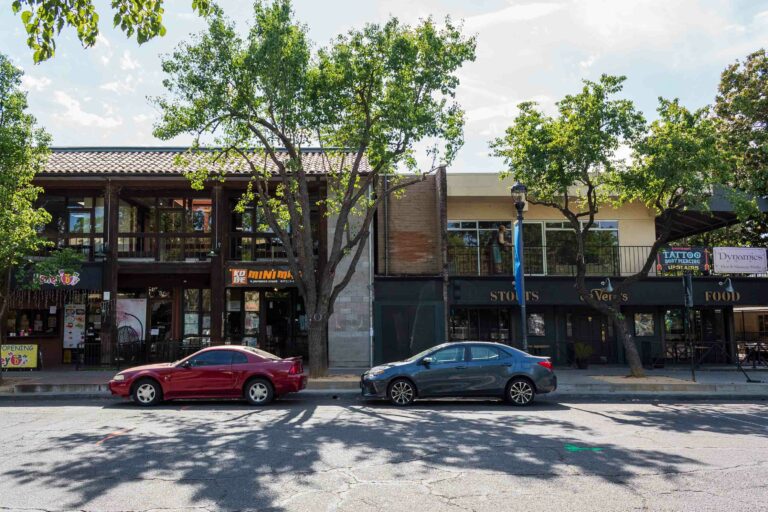
City official, local employees provide insight into the state of small businesses

0

Davis council members, business owners and employees discuss current state of small businesses and the help the city is offering 

Due to decreased student patronage of small businesses in Davis over the past few months, local establishments have had to change how they interact with customers and devise ways to remain functioning. Students leaving Davis to attend school from home have created a large gap in the usual seasonal traffic. According to Davis councilmember Dan Carson, businesses haven’t needed to adjust to challenges like this in the past.

“They’re used to a lot of the students being gone over the summer,” Carson said. “What they’re not used to is the fact that things shut down for the spring, then quiet for the summer and then many people [are] gone for the fall as well. We’ve already lost some businesses. We’re really nervous that we could lose more if this persists.”

Kate Bartschat, a Three Ladies Cafe employee and recent UC Davis graduate, said that the lack of students has led to a dramatic slowing in the cafe’s activity. 

“Students are a really big part of our customer base, so we’ve had a really big reduction in a lot of people coming in every day,” Bartschat said. “We have a lot of slow days.”

The City of Davis has implemented a more lenient policy for commercial tenants who aren’t able to pay rent on time by allowing them to pay rent and taxes on their own time. Additionally, the city adopted a moratorium, or legal suspension, of commercial evictions in March. 

“State law, the state constitution, doesn’t allow us to waive away what people owe us for their utility bills, but it does allow us to suspend [them],” Carson said. “Basically saying, if you have to pay us late because you don’t have the money, we’re not going to impose any penalties on you for doing so, and we’re not going to set any set deadline for you to pay taxes.”

Alyssa Bulfer, owner of Let Them Eat Cake, has made adjustments such as reducing store hours and operating with a staff of just herself and one other employee. Although her business isn’t in danger, she expressed her gratitude for having a sense of security in knowing she won’t be evicted.

 “We are super thankful that we have an accommodating landlord,” Bulfer said. “They have been working with us to see how they can help. But also, I don’t think, as far as my personal situation, that it would ever come to that point. But it’s comforting to know we’re not going to be evicted.”

With limited store hours, choosing a busier time of day for store operations is essential for both Bulfer and the customers.

“So on the weekends when we’re open, we’re only open Saturday and Sunday from 10-2, I feel like that is kind of a prime time and I feel like people know that’s the only time when we’re open, so both of those days we’re kind of slammed the whole day with people coming in and picking stuff up,” Bulfer said. “The nice thing is it’s a pretty short period of time. So it’s something that we can handle. It does get a little hectic with just the two of us.”

Unlike Let Them Eat Cake, some businesses aren’t allowed to operate at all. Movie theatres such as Davis Varsity Theatre haven’t been able to open their doors since the beginning of the year, and are being limited to using methods like renting out movies that can be streamed from home. The city has made special accommodations for Davis Varsity Theatre, as it has proven to be a hub of the downtown area, according to Carson. 

“Just a meeting or two ago, we re-negotiated the agreement we had with the Varsity Theater downtown, which, you know, when things are good, has been a terrific anchor […] and so we sharply reduced their rent because they are not under the shelter in place orders—they’re not allowed to operate,” Carson said. “And so rather than stick to our agreement that we had for them to pay money they didn’t have, we’ve given them new terms that we think will allow them to exit the other side of this.”

The Davis City Council has also offered help by recruiting a third party to give free counseling to businesses who seek it and free permits from the city that allow businesses who find it difficult to operate indoors to set up outdoors, in parking lots and streets.  

“We have two streets where this is going Friday through Sunday and we’re thinking it’s going to go on for October and maybe even beyond, depending on how this goes,” Carson said. “It’s been fairly successful, but we’ve tried to cut through the red tape to let folks do so.”

The Coronavirus Aid, Relief and Economic Security (CARES) act, passed in spring, is one of the federal programs that offers relief to workers and small businesses due to the impacts of COVID-19, but excludes cities with smaller populations. The City of Davis received some aid, but the funds have been focused on the city’s more pressing needs like emergency services. This is why free consulting provided by The Greater Sacramento Small Business Development Center (SBDC) has become one of the options the city has made available to businesses.        

“Because we got left out of that federal bill, it doesn’t put us in a position to do all we would like to help folks,” Carson said. “But what we were able to do for our business partners was we helped support a program that provides business assistance, including counseling on how to get Small Business Administration [SBA] loans. We’ve got folks who can provide free expertise and counseling to any small business that asks for it.”

According to Carson, the city has had to take action to deal with a projected 20 million dollar loss of city revenue, mainly from sales tax and hotel taxes, because of the impacts of the current recession. 

“We know we still have a very important responsibility to help our businesses to survive this and of course, more directly to help those persons who become unemployed or underemployed as a result of what’s going on,” Carson said.

Written by: Lyra Farrell —  features@theaggie.org 


UC Davis Health participates in research consortium to answer COVID-19 questions

Teams of researchers from 12 health systems, 202 hospitals, use novel data collection methods to collaborate on research 

UC Davis Health is collaborating with many other health systems in a data consortium aimed at answering specific questions about COVID-19. Researchers, clinicians and the general public are encouraged to submit their questions to COVID19questions.org, where teams of researchers evaluate their questions and collect data to make informed responses. 

The goal of the program is for researchers to have access to large amounts of data for their studies, beyond what could be obtained from one hospital or health system. The answers to these questions are then shared online so that the general public can stay informed as an understanding of COVID-19 evolves. 

Katherine Kim, a UC Davis associate professor at the Betty Irene Moore School of Nursing and the School of Medicine, Department of Public Health, is lead investigator for the team evaluating data from the UC Davis Health system—one of the 12 health systems, or sites, participating in the study. Each team is made up of professionals from a diverse array of backgrounds, according to Kim.

“We have data analysts and programmers at each site that actually run the software and pull the data to answer the question—run the statistics,” Kim said. “Then we have several other members who may have clinical backgrounds—our doctors and nurses—or have some public health expertise, so that when we answer these questions we have the experts also verifying what we’ve done to make sure that it’s all right.”

One unique aspect of this data consortium, called Reliable Response Data Discovery (R2D2), is that it allows hospitals to maintain control and security over their data, while still sharing it with outside researchers. Kim explained that the standard method for most studies that use widespread sources is to compile the data centrally.  

“The real difference is most studies have a centralized database of all this data,” Kim said. “They either asked hospitals to give it to them or they’re using data from public health sources like the CDC and they’re running analysis on data that they have put together all in one database.”

When data is collected and kept in a central location, there is an increased risk of it being compromised or hacked. Many hospitals are wary of this potential breach of privacy which can hinder studies requiring large amounts of data. To tackle this challenge, researchers developed another method for receiving this information which relies on every hospital utilizing the same data model, according to Kim. 

 “Every hospital data stays at their hospital, and what we do is we send out this software packet that has what are the requirements, what kind of data do we want to include, what’s the actual analysis we need to do, how do we need to structure it,” Kim said. “That piece of software gets sent out to every hospital and they can run it against their data and return the results.”

By running the software at each individual hospital, researchers are able to compare COVID-19 cases with health data from those admitted for other illnesses, allowing for a wider breadth of analysis.  

Some of the questions on the site include several patient variables; for example, one question asks “For patients with COVID-19 related hospitalizations, what is the average length of stay for those hospitalizations (in days) stratified by race, ethnic group, age group and gender?” The R2D2 network includes data from “not only academic health systems in wealthy metropolitan areas, but also small community hospitals, safety net hospitals and the VA,” which helps diversify the patient population, according to a press release

Misty Humphries, a vascular surgeon and associate professor of surgery at the School of Medicine, Department of Surgery and the director of Research Experience in Surgery, was able to use data from R2D2 to study why COVID-19 patients were experiencing arterial thrombosis, or clotted arteries, and were unresponsive to standard treatments like blood thinners. She mentioned that R2D2 reduces exposure risk for those collecting COVID-19 data.

“Sometimes […] drawing blood from these patients or being around these patients is dangerous because you subject the person that is taking care of them to the virus,” Humpries said. “People that come in to draw the blood are also subjected to the risk of obtaining the virus if they’re not appropriately gowned and everything, so we try and minimize interactions.”

She added that “the electronic medical record is a tool that has not been fully capitalized on in health care,” but that standardized and accessible patient records for clinicians and researchers is a step in the right direction to provide comprehensive and better care for the general public. 
Written by: Madeleine Payne — science@theaggie.org


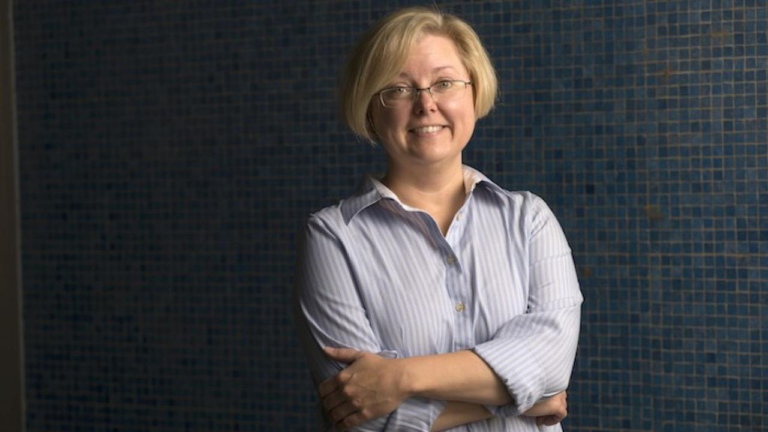
Women leading COVID-19 research at UC Davis: Cristina Davis, professor and department chair of mechanical and aerospace engineering

 In an effort to highlight the work of UC Davis’ researchers, The California Aggie is showcasing a series featuring women who have been contributing to a better understanding of COVID-19

Although the current nasal swab used to test for COVID-19 has proven to be effective, one might wonder if there could be a more comfortable way to detect this virus rather than inserting a Q-tip into the nasal cavity. Cristina Davis, a professor and department chair of mechanical and aerospace engineering, and her team might just have the solution.

Davis has proposed a device that collects metabolites—small molecules created in the process of metabolism—in the breath of patients. These metabolites can then be run through a diagnostic platform to detect the presence of the virus, and although they are at a lower concentration in the exhaled breath than in the bloodstream, the metabolites are detectable to distinguish someone’s health status.

“When you’re healthy, your metabolites have one profile, and when you get sick or if something changes about your health, some of those metabolites change,” Davis said. “And so our question was, could we try to detect what metabolites change with COVID-19?”

As exhaled breath is easily collectable, this method would be less invasive and potentially yield faster test results in the future than the current PCR method. According to Davis, the PCR tests used in tandem with nasal swabs are reliable, but the reagents needed to run it are in short supply. Since different materials are used for the exhaled breath diagnostic method, this means there is a potential that more tests can be administered throughout the country with less restrictions on who can receive one.

Currently, Davis and her team are collecting breath samples from patients at the UC Davis School of Medicine who have had the Sars-CoV-2 infection in addition to patients with other respiratory diseases as Richart Harper, a professor in the division of pulmonary and critical care at the UC Davis Health, explained. In theory, patients may be able to collect their own samples from home without medical supervision in the future.

“The goal is to have something where you don’t have to stick a swab down someone’s nose or in their throat or do blood tests,” Harper said. “You could just have them breathe into a device and then it could tell you whether or not there’s a virus present.”

Davis explained that, as they continue to collect samples, they are creating a library to compare the samples of healthy patients, COVID-19 patients, patients with other respiratory infections and so on. Through these comparisons, she hopes that they may be able to figure out if there are any correlating factors as to why some people get more sick than others. 

Michael Schivo, an associate professor of internal medicine at UC Davis Health, added that they may also be able to track the progress of patients receiving different treatments by sampling their breath. 

As an engineer, Davis believes that all engineers are inspired to help humanity and become inspired by new challenges they can tackle to help others. She also explained that oftentimes, when these big problems arise, people from different expertise need to come together, demonstrating the power of interdisciplinary research. With this current project, Davis is working closely with clinicians and clinical research scientists such as Harper, Schivo and Nicholas Kenyon, the division chief of pulmonary, critical care and sleep medicine.

“Cristina is a fantastic example of somebody who extends her knowledge, her productivity and her lab well beyond her immediate circle,” Schivo said. “She’s been a really good example of somebody who reaches out to multiple different groups representing multiple different disciplines to really create some fantastic products.” 

For students interested in going into the research field, Davis advises to keep an open mind regarding the trajectory of one’s career. She stated that someone once gave her advice that one should not be working on the same problem for 20 or 30 years, but rather look towards the next problem to tackle.

“Don’t be complacent. Try new things,” Davis said. “Sometimes they don’t work out; that’s okay. Sometimes they do work out; that’s really exciting. But you have to always be trying new things. I think that’s a key part of success.” 

Written by: Michelle Wong — science@theaggie.org


What does food delivery really look like?

The other side of the screen isn’t as simple as you’d think

Deciding to order food from a delivery app is simple. You try to rationalize the extra cost and tap a few buttons to place your order. The process is so streamlined that from the customers perspective, it seems like a quick and easy—albeit expensive—process. But the other side of the screen is more chaotic than the app would like you to believe.

As a way to earn extra money and just get out of the house more during the summer, I began Doordashing with my two sisters. We work as a three person operation, each vital to the intricate structure that makes up a Dash. One driver who stays in the car the whole time. One navigator who types in the addresses as quickly as possible. And one app navigator/runner, who fields orders and goes into establishments to collect food. 

Everything about Doordash is done through its Dasher App. To begin your Dash you have to first choose an amount of time you want to be available for. Once you have your slot, your app shows nearby hotspots. These areas will usually have a 2-3 dollar boost to their base pay. The amount might seem small, but in the long run factors largely into your overall earnings. Once an order is placed, you will get a notification. Your screen will show you the restaurant name and the amount the dash is worth, usually in the six to ten dollar range. From the moment you accept the order, the clock is ticking. 

After the order is secured there are three steps. Each of these sections is given an expected time range that is almost impossible to achieve without speeding. First, going to the restaurant and getting the food. This part normally goes smoothly. Every order has a number you can show to vendors, but if you tell them you’re from Doordash they mostly just hand it over. Additionally, Doordash provides all of its drivers with a Dasher activation kit which normally only consists of a red hot bag to keep the food warm and a card to pay for orders if a customer requires. Recent bags also come with custom Doordash hand sanitizer and a bright red mask that communicates to restaurant workers that you’re a Dasher better than words ever could.

Once you get the food, you confirm with the app you are onto the next portion. You aren’t able to see the customer’s home address until after you have already picked up the food. Meaning, if you got an order from a restaurant five minutes away and the address is 20 minutes in the opposite direction, there’s nothing the driver can do about it at that point. This is how we ended up driving 35 minutes for a five dollar delivery (and a one dollar tip). After the delivery you take a photo of the food on the doorstep, confirm with the app it was delivered and drive around until you get a new order or finish driving.

From the inside, the flaws of the app-based food delivery industry are extremely apparent. The time expectations given to drivers are very difficult to meet if anything in the process is off, even if it is at the fault of the restaurant. (This is how we ended up getting a critical error on one of our first deliveries.) The interface of the app is so confusing that even after a month of dashing, there are features I still struggle with. I dash in a group; the job alone along with the time expectations and customer service is an extreme amount of work for one person, only to be paid so little by the app.

The job relies on tips. Doordash offers the best base pay of any delivery app but that still averages out to five dollars or less depending on where you live, and gas is not paid for. Because of the simplicity of ordering, people usually forget the driver on the other end. Delivering an 80 dollar P.F Chang’s order to a small mansion to be tipped three dollars is soul crushing. Being a delivery driver is a difficult and unexpectedly high-stress job. Next time you open the app, remember the person on the other side.

Written by: Livvy Mullen — arts@theaggie.org

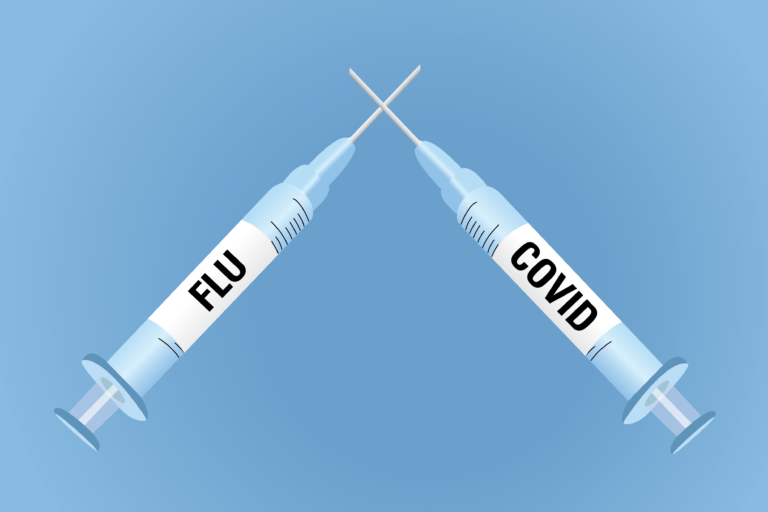
How to approach flu season during a pandemic

Health experts give advice on how to mitigate the effects of influenza and COVID-19

Several factors will affect how this flu season will unfold, according to Dean Blumberg, the chief of pediatric infectious diseases at UC Davis Children’s Hospital. On one hand, Blumberg expects there to be an increased transmission of the coronavirus starting in the fall and extending into the winter since SARS-CoV-2 is a winter respiratory virus. With the current masking and social distancing protocols in place, however, there may be decreased transmission of influenza, meaning a milder flu season. 

Blumberg explained that evidence of this was seen in several places in the southern hemisphere, like Australia, during their respective flu season. Daniel Colby, an assistant professor in the department of emergency medicine at UC Davis Health, added that although it is still important to consider other factors that influenced this phenomenon, these cases give him hope that the U.S. will also have a mild influenza season. 

It is important to minimize the spread of influenza to make sure healthcare systems are not overwhelmed, Colby said. If there is a surge of both COVID-19 and the flu simultaneously, this could stress the system to its capacity.

“A big concern is that we want to make sure that healthcare systems’ capacity is available to treat everybody who needs to be treated,” Blumberg said. “So that’s why we are strongly continuing to recommend the social distancing and the mask wearing as well as everybody getting the influenza vaccine this year. If there’s a surge of either COVID or influenza patients it may fill up the ICUs and we may not have care available who need it.”

In order to minimize the influenza spread, Blumberg advises all citizens to get vaccinated as soon as possible, as it takes two weeks to develop immunity after receiving the vaccine, which lasts for six months. He explained that since the most common month for the influenza season to hit its peak is February, getting immunized now will make sure people will have immunity until then. 

Although it is known that coinfections of COVID-19 and influenza are possible, Colby explained that there is not enough information about the coronavirus to determine what will happen if a patient contracts both viruses. This is something that can only be known once the flu season hits. 

“Honestly, in my opinion, no one in the world is truly a COVID expert still because the disease is too new,” Colby said. 

Despite the uncertainty of this upcoming fall and winter, the Department of Public Health Sciences is setting up programs such as the Aggie Public Health Ambassadors and Healthy Davis Together to continue to help UC Davis students and the larger Davis community navigate the pandemic. Bradley Pollock, the associate dean for public health sciences explained that the student ambassadors will be helping with COVID-19 screening on campus. In addition, he hopes that they will be able to reach students living off campus by setting up testing kiosks in communities in the future. As Colby explained, distinguishing flu symptoms from COVID-19 symptoms is very difficult, so it is important that people get tested even if they experience influenza-like symptoms.

“People don’t know a lot about propagation of the virus, but one person gets infected and you have this exponential spread,” Pollock said. “You get this incredible one case turns into a huge number of people, so [we’re] trying to break the chain of that propagation.”

Pollock hopes that by properly educating the ambassadors about COVID-19, their efforts along with the city’s efforts through the Healthy Davis Together program will help control the spread of COVID-19 and incentivize others to continue practices such as social distancing and masking. Colby added that students should continue to listen to public health experts and science as we progress into uncertain circumstances.

“I know we’re all tired and would like this to be over, but I think with the change in season, it’s more important than ever for people to take scientifically proven actions that we know will decrease transmission, and that’s the social distancing and wearing a mask,” Blumberg said. “Those are the most important things that we can do to decrease risk of transmission and keep us all healthy and so that we can eventually return to our normal way of life.” 

Written by: Michelle Wong — science@theaggie.org

Sports in a pandemic: The MLS

0

The Aggie gets an inside look at the current era of sports

Since March 2020, sports have not been the same. After a three-month long hiatus, sports returned. And with the NBA, MLB, NFL and many more leagues currently playing, there has been a variety of sports to watch. But, the majority of teams from all leagues currently share the same experience: no fans. With the exception of some outdoor teams having limited fans in states like Texas, Florida and Missouri, the new reality includes noise being pumped in through the stadium speakers to avoid the awkwardness of silence in a big arena. 

Major League Soccer’s approach to return took the form of an NBA-type bubble. Hosting an “MLS is Back” tournament closed off to the public, the league decided to hold the tournament inside Disney World in Orlando, Florida. After initially struggling to make it work due to some positive tests from teams, the tournament was held and the Portland Timbers were the eventual champions. 

After the tournament concluded, the MLS became the first league to go from playing in a bubble to playing in their home markets and stadiums. The league released their plan to return to an additional 18-game regular season throughout November, culminating with the playoffs and the championship game on Dec. 12. Major League Soccer was one of the few leagues that had not begun their season before the sudden pause of sports back in March. Although they will hold fewer games, the structure of their season is about the same as it would have been without the pandemic.

As for health protocols, the MLS learned from their tournament that social distancing and the commitment to wearing masks were key to a successful regular season. Working closely with the league’s infectious disease advisors, they developed a plan to ensure the health and safety of all teams. All players, coaches and staff are tested every other day as well as the day before a match. They are also given guidelines to follow for when they are outside of the facility in order to limit the spread of COVID-19. For travel, teams take chartered flights or buses to their destinations and arrive on the day of the match. In most cases, they will also leave shortly after the match is finished. Aside from those guidelines, there are many more that teams must follow inside their own facilities and on matchday.

The Aggie had an opportunity to witness firsthand what it was like to experience a live MLS game during the COVID-19 pandemic. On Sept. 23, the Los Angeles Football Club (LAFC) hosted the Vancouver Whitecaps at Banc of California Stadium in Downtown Los Angeles, California. 

A section of the stadium’s parking lot was blocked off and served as a COVID-19 testing site. In the parking lot, cars were parked in every other space to avoid close contact between people getting out of their cars. As you get closer to the stadium, each media member holds a separate entrance in order to avoid a large number of people at one entrance. Masks were a major part of the entire experience as one had to be worn at all times except when eating. 

Before one can enter, a COVID-19 questionnaire must be completed. It included questions about possible contact with the virus and whether one has felt any symptoms recently. Upon completion, every person’s temperature is taken and if it fits the criteria, they are let in. Hand sanitizer stations can be seen at almost every turn, as it is something that LAFC and the MLS have emphasized the importance of, especially for the media members. If an elevator has to be used, it is limited to four people per trip and the designated spots of where to stand are in each far corner. Social distancing is enforced and a key part of their set up on game day. 

As for the working space, since it is an empty stadium, members are given a suite usually reserved for companies or people who rent them out for a given game. The limit is two people per suite and there is much space to socially distance, inside and outside where one has a clear view of the field. While inside the stadium, the team does not allow eating of any kind but instead dedicates a section located outside that serves as a designated eating area.

The anticipation leading to the start of  the game itself feels more like an amateur park league game rather than a professional football match. Since there is nothing other than music playing up until game time, the speakers play loudly in a lonely arena. To cover up the view of empty seats, large banners with the teams’ logos and sponsors are put up. Even when the players take the field ready to start the match, there is an awkward, silent feel.

As the match begins, LAFC, like many other clubs across all sports, are allowed to pump in crowd noise to drown out the silence and try to make it as normal as possible. There are instances when there is no sound and there is simply silence. The type of silence that makes you feel like you are in the stadium alone. Even though the stadium is in the middle of one of the biggest cities, the silence brought upon is one that feels like you are isolated. When goals are made, a loud sound bite is played throughout the stadium and the lights flash, similar to what you would see in a regular LAFC game with fans in attendance. The sound is normal, but the feeling is not.

Although the field of play can’t be socially distanced, the benches and those on the sidelines are required to wear masks and sit separately. Rather than the usual ball person that gives the players the ball when it goes out of bounds, there are stands that hold the ball where the players can walk up to and get the ball themselves. 

As for the game itself, LAFC won comfortably by a score of 6-0, even breaking an MLS record, scoring four goals in 14 minutes. Coming off a brutal loss in Seattle the game before, the feeling of being at home, even with no fans, was one of comfort. 

“We love playing at home,” said LAFC defender Dejan Jakovic in his postgame Zoom press conference. “Unfortunately, we’re not able to play in front of our fans but we know they’re back home cheering us on.” 

Although they are unable to play without the extra adrenaline of fans, playing in a stadium in which they are comfortable and a stadium that they know so well can work wonders, even in the current era of sports. 

“It’s a special place to play,” Jakovic said. “You can tell that we’ve always been a difficult team to beat at home.”

The circumstances of playing are not ideal, but it is the current state of all sports for an indefinite amount of time. It is better than the alternative of no sports, but it still takes some getting used to. Every team can add in and simulate crowd noise, but nothing will ever beat the rush of thousands of voices cheering on their team. 

Written by: Omar Navarro — sports@theaggie.org

“I refocus energy into myself”: The turn to energy crystals

Students practice crystal healing in efforts to stay positive, supplement other religions and expand cultural understanding

Healing crystals have made an impact on student culture, with their popularity steadily escalating as traditional religious practices undergo a change with college students.

Crystal stones are believed to have many different uses and are typically described as having holistic healing properties. Practicers believe that it is done through energy garnered by the energy one emits, the Earth and the greater universe.

There are many ways in which students have learned to harness the energy in this type of practice—often through meditation and prayer, or with just having the crystals’ energies in close proximity and turning to them for specific purposes when needed.

Because of the varied and often personalized uses of healing crystals, it provides both an alternative and an addition to traditional religious practices. 

“My appreciation and practice with crystals, specifically jade, is rooted in how I practiced Buddhism growing up,” said Victoria Cao, a fourth-year wildlife fish conservation biology major. “Over time, I’ve learned to take what I can from traditional practices and incorporate it into my personal daily ritual.”

This is a sentiment shared by many students who have often strayed away from the practices they may have inherited from their parents or family members growing up. Cao also believes that the personalized way in which you can shape crystals’ use is important in allowing oneself to grow, and in turn, transforming the energy within oneself and the community around them. 

There are also ways in which this practice can supplement more common religions like Catholicism. A large part in why students fall out of touch with this particular religion is their increased understanding of colonized history through education in ethnic studies. Fifth-year mathematical analytics and operations research major Kyrene Gutierrez found this practice recently and has incorporated it into how she already practices religion.

“It is how I decolonize the way I pray and talk to God,” Gutierrez said. “At the same time, I refocus a lot of the energy into myself and the space around me rather than an intangible figure.”

Prior to its emergence in popular culture, this practice has been viewed as an antithesis to more common religions, when in fact, there are many ways it can be used tangentially with other practices. Yet there are many ways in which this practice can overstep indigenous uses when treated casually, and can cause harm to those who hold it sacred. Because of this, Cao has also started a small business that is foundational in sharing this practice more accessibly and well-researched for her community through @crystals_by_sunrise on Instagram. 

Crystals are important for remaining positive, especially for students living in a time when social interactions are limited and there are many details that may cause instability in their lives. Because it is often used to ward away negativity and invite cleansing energy, it is especially important in maintaining an intrinsic sense of positivity and understanding of one’s self and the natural world.

Throughout the isolation period the pandemic has ensued, students use crystals and their shared interest in this type of work to feel a sense of calm and contentedness within their communities. Its flexibility and personalized nature allows students of different cultures to adopt this practice in any way they would like to use it in their lives.

Aubrey Guevara, a recent Davis graduate in anthropology, talks about how differently the effects of crystal use manifest.

“I don’t feel any immediate physical effects like some do,” Guevara said, “But I do feel the energies coming from the crystal and after meditating with them, I feel improvements in my self-love, forgiveness and connection to my spirituality.”

She connects this to the origins of the crystal and how they come from underground. “They’re untouched and spend so much time in the Earth that I believe it provides energy we can tap into.”

Students should be able to find comfort in all the healthiest ways they can, and through the energy of healing crystals, many have found solace and positivity during a time in which numerous uncontrollable factors can heavily impact one’s mental health.Written by: Mariah Viktoria Candelaria –– arts@theaggie.org

Engineers Without Borders’ Bolivia project adjusts to remote work

How the team plans to continue their construction from a distance

The coronavirus pandemic has forced much of our lives to be reimagined digitally, and in addition to classes, meetings and clubs, the members of UC Davis’ Engineers Without Borders’ Bolivia project have had to find a way to do construction from across the world. 

The Bolivia Project is a branch of UC Davis’ Engineers Without Borders, which is a non-profit student organization established to help developing areas worldwide with their engineering needs, while involving and training internationally responsible engineering students, according to their website. The project, which began in 2018, aims to improve sanitation in the Parque-Colani community in Bolivia by building sustainable latrines for households in the community. Katie Nelson, a fourth-year biotechnology student and the current co-lead of the project, explained the end goal for the Bolivia project.

“Our goal is to construct 18 latrines and repair six existing ones for the community members there,” Nelson said.

As is the structure of all Engineers Without Borders projects, the Bolivia team was planning to take five trips to the Parque-Colani community to see out this project. Their first trip, an assessment trip, took place in the summer of 2018. In the summer of 2019, they built their first sustainable latrine in the community center. 

When the pandemic hit in early 2020, the team was gearing up for their third trip, set to take place over the summer. They’ve had to re-imagine this year’s trip. 

“We’re doing a remote implementation and we’ll be either one of, or the first team nationwide to hopefully complete a remote implementation,” Nelson said. 

Without the possibility of being in the community this year, the team had to come up with a new implementation strategy. Luckily, the team has a contact in the area, Poncho, who was their driver throughout last year’s trip and is going to be their construction manager during remote implementation. Nelson said that the challenge, then, is going to be getting the community members to do much of the heavy lifting that project members would have done if they were on the ground in Bolivia. 

“Basically, the community members are going to be the ones doing construction, [Poncho] is just going to be overseeing,” Nelson said. “He’ll be the one with the construction manual, knowing what to do, but in terms of actual building and collecting materials, [the community members will] be [working]. So it’s a challenge of how you get a group of people […] to come together. It’s a little tricky.”

The other new hurdle that the team will have to jump through while working remotely is how to make the usual split-second adjustments that are so common in these types of projects, from across the world. Kathryn Tarver, a fourth-year biological systems engineering major and the construction lead, explained that even with a firm plan, the implementation is far more reliant on Poncho and the community members to make these adjustments than if the team were on the ground. 

“We have a design, we have a budget, we have a timeline, all that jazz,” Tarver said. “Now can we get it so that it actually works out and be built effectively without us there?”

The team is going to start with just one latrine, and if building runs smoothly, they hope to build four or five more during this round of implementation.

Although the remote model of the project makes it more challenging in some ways, Nelson said that it has also made some aspects easier. 

“It was kind of nice because we have a lot of freedom,” Nelson said. “This has never really happened before, and even now, Engineers Without Borders nationals have a lot more say on the remote implementation. When we started this back in April, there was really no direction, so it was tricky at first. But once we realized [that] we have freedom and control to do what we want, we completely redesigned our whole team, we elected all different positions and got to completely redefine our team how we saw fit.”

Even though the remote strategy has been great in giving the team freedom and flexibility, Alyssa Estrada Marquez, a fourth-year civil engineering student and the co-project lead, explained that it does limit the real-life experience that students usually value in the Engineers Without Borders program.

“Students aren’t getting the hands-on experience that they usually have,” Estrada Marquez said. “Our team members will have to find other ways to learn how to pour concrete and learn what building the forms are for the concrete, because it just won’t happen this year.”

Tarver elaborated on this concern, mentioning that the knowledge that students gain about the specific communities, from the people there to the types of soil on the ground and materials that are available, is also imperative to the success of these projects, and much of it could be lost in the upcoming years.

“One of the challenges that we’ve encountered is that it’s probably going to be a couple of years until we are able to travel again which means that all of our seasoned travelers who have that institutional knowledge are going to be graduating out,” Tarver said. “It’s going to be a challenge just recording all of that institutional knowledge, and we’re trying to figure out how we are going to make sure that future generations of engineers are able to draw on what we already know.”

Despite all of these changes that COVID-19 has caused for the Bolivia project, according to Tarver, it has been an amazing experience to be able to spearhead this new project model, and has been a testament to the incredible things that can be accomplished remotely that they didn’t know were possible before.

“It’s kind of a perfect concept,” Tarver said. “We’re trying to demonstrate that you can implement a composting latrine remotely without any of our members being there.”

Estrada Marquez echoed Tarver’s statement.

“It’s been really fun,” Estrada Marquez said. “I think it’s cool to get to set the standards and get to make your own rules and define how you want to exactly run this project.”

Written by: Katie DeBenedetti — features@theaggie.org


Yolo Interfaith Immigration Network raises $40,000 for immigrant families in Davis community

 Local organizations provide resources to immigrant families, who face unique challenges during pandemic

While COVID-19 has widely impacted communities everywhere, immigrant communities have faced added difficulties unique to their situation. 

Yolo County Supervisor Jim Provenza noted that for many farmworkers and immigrants in Yolo County, the COVID-19 pandemic may have resulted in a significant decrease of work hours or in job loss entirely. Undocumented immigrants have faced additional problems because many were unable to qualify for government aid or resources, and they also struggled with finding legal representation. 

Co-chair of Yolo Interfaith Immigration Network (YIIN) Ignacio Alarcón stated via email that “COVID-19 shaped immigration broadly in many ways, such as with travel bans, border closures, asylum limits, pausing refugee resettlement, and more.”

Alarcón further explained that immigrants make up about one-sixth of the 156 million person civilian workforce, and also make up greater proportions of healthcare workers and other frontline roles such as restaurant workers, hotel workers, cleaning services, etc. 

“They are faced with significantly elevated COVID-19 risk as a result,” Alarcón said. “Disastrously paired with an elevated likelihood of lacking health insurance compared to U.S.-born peers.” 

Supervisor Provenza further commented on how immigrant workers can experience less safe working conditions. 

“They’re working in situations where there isn’t necessarily the same protection,” Provenza said. “Sometimes, the rules aren’t enforced at the workplace […] and having somebody who can help them through the [reporting] process is really essential.” 

The Director of the UC Davis AB540 and Undocumented Student Center, Laura M. Bohórquez García, explained that COVID-19 increased demand for grants at the center. 

“We saw an increase in emergency grants because there [were] a lot of students and families who were losing their jobs,” García said. “They didn’t have the types of jobs that provided health insurance or didn’t have access to resources.” 

Alarcón explained that Yolo Interfaith Immigration Network started the ApoYolo Program. The official website described ApoYolo as “a team of culturally competent, trained bilingual volunteers to identify and work with families with undocumented members to assist them with obtaining available services from the Yolo Food Bank, Empower Yolo and local clinics.” 

Alarcón further described this initiative. The initiative provided basic needs to immigrants, largely due to “community donations, bilingual volunteer support, and chief stewardship of the ApoYolo initiative by Anoosh Jorjorian.” $20,000 in funds were initially raised from community contributions and grant writing. This $20,000 amount was matched by the Travis Credit Union Foundation, which resulted in a total of $40,000 for immigrant families in the Davis community. 

García addressed how the center was able to further extend their help. Due to an increase in need from the immigrant community, the center was able to increase their budget on emergency grants, as well as increase one-on-one meetings with students. 

“The biggest role right now for the center is to continue to build that community and share those resources,” García said. “It really is taking a larger institutional commitment for [undocumented students] to be able to graduate from UC Davis.” 

Supervisor Provenza further emphasized the importance of organizations such as Yolo Interfaith Immigration Network, calling the work they do “essential.” 

“If things got worse, the immigrant community would be the first to suffer—and suffer more,” Provenza said. “Having them available is really important so that we can adjust what we do to try and help better as well.” 

Alarcón commented about community-based fundraisers that can fill in funding gaps for immigrants left by the federal government.

“YIIN is important because our Immigrant communities continue to be [under-resourced] and unacknowledged by our federal government at large: xenophobia continues to serve as foundational bedrock for the United States’ policies and resource allocation […]” Alarcón said. “Being able to validate the concerns and experiences of our county’s Immigrants while addressing the material injustices at play right now is vital for our community’s well-being.”

García further commented on the strength of the immigrant community, despite the pandemic and economic crisis. 

“Our community is very bold and courageous—and very willing to do collaborative and collective work,” García said. “I definitely am very hopeful for all of the ways that our community has engaged so far.” 

“The future will continue to be shaped by the ways our Immigrants continue to advocate with cultural wealth, community-based connections for support, and solidarity with movements prioritizing social justice,” Alarcón said. “I look forward to our continued engagement combatting systems of inequality that disproportionately affect our community.”

Written By: Jelena Lapuz — city@theaggie.org

Meet the Editorial Board

Aggie editors reflect on the value of student journalism and our personal experiences

The California Aggie, as we are quick to tell family, friends and strangers around campus (who may or may not have asked), is a student-run and independent publication that is the best hands-on experience for students interested in reporting and aspects of newspaper design and production. 

In that elevator pitch, it can be easy to understate just how crucial student journalists are on college campuses. As full-time students pursuing degrees—and often multiple degrees or minors as well—student journalists carve time out of already busy schedules to produce quality content to inform the community. Though not all plan to pursue careers in journalism after graduating, student journalists demonstrate a commitment to journalistic ethics and relentlessly tackle relevant issues skillfully and with an understanding of their role. We hold organizations, including university administration, accountable through thorough reporting and nuanced writing. 

The Editorial Board consists of The Aggie’s nine editors. We produce two weekly editorials, in which we reflect on issues we think are important for the Davis community to engage with. We are honored to lead our newsroom, albeit remotely, and look forward to continuing to serve as a reliable news source during a time in which accessing trustworthy information is critical. 

Anjini Venugopal, Editor-in-Chief

I have always found myself attached to spaces, especially those that cultivate a strong sense of community. When I joined the staff of my high school’s newsmagazine, I would be in room A111 nearly every lunch to transcribe a lengthy interview, to finish editing a late story or just to nap. After joining The Aggie in my first quarter at UC Davis, I found myself spending Friday afternoons in Lower Freeborn after having finished my work, conversing with peers and mentors over CoHo bagels and one too many cups of cold brew. Last week, I donned a mask and grabbed hand sanitizer as I entered The Aggie’s new office for the first time since becoming the editor-in-chief. I was even given a key to my own office, the prospect of which had thrilled me initially. But more than any excitement, the silent conference room and cobwebs in the corner by the front door reminded me that this office would remain unoccupied for the foreseeable future.

Since September, we have fallen into a rhythm—it is somewhat choppy, as is my internet as I log onto Zoom call after Zoom call, but it is a rhythm nonetheless. I miss working in Lower Freeborn, but even though we are not all in the office, I know how committed we are to The Aggie and I look forward to working with our entire team in the new office whenever that may be. 

Margo Rosenbaum, Managing Editor

Ever since I joined The Aggie, I have become more aware of the significance of student journalism—not only in educating the next generation of reporters, but also in amplifying voices and recognizing experiences in our community. We are storytellers, record keepers and, maybe most importantly, advocates for the truth. After hearing multiple personal stories of inequality while working on an article covering the experiences of students with disabilities in the animal science department, I came to understand the unique role we have in holding our university accountable. In my previous capacity as The Aggie’s assistant science editor, I gained an appreciation for reporting on research. Translating scientific works into language that all audiences can comprehend is incredibly important—especially as speculation of science circulates our political climate. In my new role as managing editor, editing all The Aggie’s content has escalated my respect for the meticulous reporting of students; we are experts of our student body and best equipped to report upon its news.

Sabrina Habchi, Campus News Editor

I am quick to tell prospective students and visitors to campus about The California Aggie when I give tours. I point out the red brick building The Aggie used to call home, some of the several newspaper stands around campus of which I have woken up at 5 a.m. to distribute newspapers to and what the organization means to me. The Aggie means I can go from having virtually no reporting experience to interviewing UC Davis Chancellor Gary May and other administrators. The Aggie means I can listen to voices that often go unheard at picket lines, union contract negotiations and survivors. It means a group of supportive people—many of whom I am lucky enough to call friends—working to inform UC Davis students and the surrounding community about stories, ideas and ongoings through well-researched articles. 

Eden Winniford, City News Editor

During my first quarter at The Aggie, I interviewed a homeless woman living in a tiny house community in Seattle over the phone. She read me a poem she wrote about the hope her home brought her, and we both started crying halfway through. Since then, I’ve listened as complete strangers shared their proudest accomplishments and most difficult struggles. They trusted me with their stories and believed in my ability as a journalist to use these stories to educate and help others. To me, journalism is about relating the experiences of individual people to big issues like homelessness and immigration. As a student journalist, my role is to present other young people with the facts that will help them decide how to cast their first votes. I believe student journalism is important because it reminds students that the news isn’t just some abstract concept—it’s the highs and lows that real people confront in their everyday lives. 

Calvin Coffee, Opinion Editor

I had no idea The Aggie even existed before I started seeing newspaper stands around campus three years ago. But I now know The Aggie as a place where voices are informed and honest, and where curiosity is celebrated. Working at The Aggie I’ve learned that student journalism provides an ambitiously curious perspective on the world around us. It is where I find myself surrounded by people who actually care about what happens in the hectic world and community we live in. On the Opinion Desk, I’ve discovered how important it is to challenge what you and those around you believe. By doing so, we can better understand the nuance in the stories we hear and can decide for ourselves where reality lies. In a time when truth is obscured more than ever, The Aggie provides a platform and perspective that is shining. 

Sophie Dewees, Features Editor

For my staff writer interview at The Aggie, I tentatively walked into the office in Lower Freeborn and took in the room. The stacks of newspapers, the weather-beaten couches, the signatures on the walls from previous staffers and, of course, the smiling face of our former managing editor, Hannah, made me feel completely at home. Since then, I’ve met so many incredible journalists at The Aggie and have been able to interact more meaningfully with the Davis community. As a staff writer and assistant editor last year, I covered everything from innovative art to polarized politics and was able to learn and report on issues that students care about. For me, student journalism is fundamentally about engagement like this: meeting others whom I might never have even spoken with before, sharing their stories and highlighting the uniquely diverse community that I’m lucky enough to call home.

Allie Bailey, Arts & Culture Editor

Some college newspaper staffers have always known they’d write for a university publication. For me, it took a somewhat random decision to apply to The Aggie to realize the undeniable value in student journalism. Writing for the Arts Desk became the best part of my week, long desk meetings and late nights both contributing to my love for The Aggie, and soon, all forms of journalism. The urgency of topics may differ on this desk, but we care just as much as the next writer about fulfilling our goal: delivering credible, relevant information to our community. That is, to me, what journalism is, and the group of talented and hardworking students that are committed to this ideal at our student publication is one of the few things keeping me optimistic about the future of rigorous journalism and this country as whole. 

Omar Navarro, Sports Editor

Starting at The Aggie with zero journalism experience also came with a lot of questions. The majority of it was how my work was going to be perceived, as I was just starting out and in the field of sports, I was by far the youngest. There is a certain disadvantage that many think student journalists carry due to their inexperience, but as I learned quickly, we have a unique opportunity of doing our jobs as well as learning something new as we go. There is no better way to practice producing quality content for the community than by doing it. The point of view and writing from a student journalist is one that can only be experienced, and I am forever grateful for the opportunity to do so. 

Maddie Payne, Science Editor

Last March, in the basement of Mrak Hall, surrounded by camera crews, local news reporters and UC Davis officials answering calls from CNN and the LA Times, I attended a press conference for the very first time. Sweaty from the ARC and surrounded by journalism professionals, I felt intimidated and a bit out of place, not sure if I had something valuable to contribute while national news organizations were covering UC Davis’ very first cases of coronavirus. But as I began taking notes and listening to the questions being asked, I realized that these journalists, though skilled and well-intentioned, didn’t know what it was like to be a student at Davis, especially during a time of fear and uncertainty when many of us were worried about the health and safety of our community. Learning from this experience, I recognized that one of the most valuable aspects of local, student-run journalism is that it provides student perspectives on issues impacting us the most. I am so grateful for The California Aggie for giving me these experiences that I can learn and grow from and teaching me how to best serve our community as a student journalist. 

Written by: The Editorial Board

UC Davis must supply students with easy access to testing for COVID-19

The university is not ‘campus ready’ until all students have the opportunity for testing

With our relatively late start in September, UC Davis should have been more than ready to welcome students back to campus. While other schools on the quarter system started earlier so students could go home for Thanksgiving and not come back, we stuck to our previously decided schedule with the hope that our later start would give us time to learn from other campuses back in session. 

Not only has UC Davis risked students spreading the virus to their families when they go back home for Thanksgiving break and to the Davis community when they come back, but also the upside of starting later has been undermined by the fact that UC Davis does not appear to be as ready as claimed. The lack of testing for students living off campus—the majority of UCD students—ensures that students carry the burden of finding a way to COVID-19 testing in addition to managing their courses and any symptoms they may have. 

UC Davis is currently only offering testing to students who are asymptomatic living in Student Housing residences, The Green at West Village, firefighters and EMTs living on campus and those living in sorority or fraternity houses. Students who do not fit this description must find testing at facilities in the community, some of which require physician referrals. The students outside of the subset who have access to testing may be accessing campus facilities, have classes on campus or work on campus. Although UC Davis and Yolo County have many measures in place to prevent students from becoming infected, the possibility of infection clearly remains. Without easy access to testing for all students, students who are unknowingly infected or who are unsure when experiencing some of the long list of symptoms for COVID-19 now put their instructors, housemates and other workers at risk.

The university has had enough time to plan for students to get tested and alleviate some of the anxiety students already face about potentially being infected with the virus, and the lack of testing available to most students is unacceptable. Furthermore, it is irresponsible. UC Davis has a responsibility to its students and the larger Davis community its students regularly interact with to provide easy access to COVID-19 testing for all Davis residents.

Students rely on their campuses to keep them safe. The best way to do so is to offer testing that students can easily access when concerned with a potential infection. Failing to offer easy access to testing for students acts as a deterrent to students who may not have the means to go to an off-campus testing site or may be overwhelmed with the massive amounts of information in regards to COVID-19 that they receive. 

This increases the risk that students who are infected will continue interacting with facilities on and off campus and will spread the virus to other students, staff and workers at UC Davis and members of the community. The health and safety of UC Davis affiliates and the larger Davis community is reliant upon the administration’s ability to provide all students with easy access to COVID-19 testing.

Written by: The Editorial Board