55.5 F
Davis

Davis, California

Tuesday, December 23, 2025
Home Blog Page 317

Los Angeles: city of champions once again

0

Lakers win 17th title in franchise history, bringing an end to the eventful NBA season

In what turned out to be a season long and the first of its kind, the Los Angeles Lakers captured their 17th title in franchise history, tying the rival Boston Celtics for the most wins in NBA history. After almost a full year since the season tipped off last October, the pandemic turned this NBA season into one never seen before. Taking place inside the bubble located at the ESPN Wide World of Sports in Orlando, Fl, the NBA completed a successful three month journey through their playoffs. 

Coming into the bubble, the Lakers held the best record in the Western Conference and, being led by Lebron James and Anthony Davis, were determined to make a championship run. Having a team of veterans and older players, many doubted the Lakers ability to get it done. Having Lebron James wasn’t enough for some and being the first seed in the west didn’t change that. The Lakers did not help their cause entering the playoffs, as they went 3-5 in the seeding games leading up. Having matched up with the Portland Blazers that made a scorching run into the playoffs, many believed that the Lakers had their hands full and could possibly even lose the series. Those voices were only amplified when the Blazers stole Game 1. The pressure was on (or so they thought), but a 23 point Game Two win got the ball rolling for the Lakers and they never looked back, winning the series comfortably, four games to one. 

The Lakers’ second round opponent, the Houston Rockets, have had their fair share of playoff disappointment, but after acquiring Russell Westbrook in the offseason, they had their sights set on changing the narrative. After opening the series with a convincing 15 point win over the Lakers, many began to believe that this was the year for the Rockets and that they were a great matchup scheme wise for the Lakers. But, like we saw in the Portland series, the Lakers put their foot down and proved that the first game was a fluke, winning the next four games convincingly and advancing to the Western Conference Finals, where they thought they were convinced they knew their next opponent. 

 Many minimized the Lakers ability to get it down—even after their dominant performances in the first two rounds—and preferred their same-city rivals, the Los Angeles Clippers. Both seemed to be on a collision course for the Western Conference Finals and was expected to be one of the most anticipated playoff matchups in a long time. From the beginning of the season in mid-October 2019, this was the series everyone wanted to see. After taking a 3-1 series lead and leading by 16 in Game 5, the Clippers were a quarter away from that coming true. Instead, they blew that lead, and went on to shockingly blow the 3-1 series lead to the Nuggets. 10 years after their last battle, the Lakers and Nuggets met again in the Western Conference Finals.

The Lakers came out firing from the start, winning the first game by 12 but with the Nuggets on the verge of tying the series, Anthony Davis hit a buzzer-beating three that won the game for the Lakers and changed the direction of the series. Although the Nuggets won Game Three, the Lakers never looked back and a marvelous performance by Lebron James down the  stretch of Game Five wrapped up the series, sending the Lakers to the NBA Finals for the first time since 2010. 

On the Eastern Conference side, the Miami Heat began their run as an under the radar team that many saw can give a battle, but very few thought they would get to where they did. Led by their big free agent signing Jimmy Butler, the Heat swept the Indiana Pacers in the first round and set up a date with the team with the best record in the NBA, the Milwaukee Bucks. 

A convincing win over the Bucks in Game One and a win in the final seconds in Game Two put Milwaukee on the brink of losing control. With the back-to-back MVP and Defensive Player of the Year, Giannis Antetokumpo, the Bucks knew they had to win Game three. They responded well through three quarters, holding a 12 point lead heading into the fourth quarter. But, a complete collapse in the fourth quarter that saw Milwuakee score only 13 points got lost them the game, and eventually the series. 

The Heat shocked the world and knocked out the Eastern Conference favorites in only five games. Their toughness and elite shooting kept them in every game, and the only team that stood in front of them and another NBA Finals berth was another young and hungry team: the Boston Celtics. The Celtics came into the series focused and tested in close games. That, however, was not on display in the Eastern Conference Finals, as many Celtics collapses down the stretch allowed the Heat to take a 3-1 series lead. Boston bounced back in Game Five, but a determined Miami team finished the job in Game Six, making their first finals since 2014. The matchup was set, a fiery Miami team going up against the dominant duo of Lebron James and Anthony Davis. 

The Lakers were out to make a statement in the opening game, winning in blowout fashion. The loss proved even costlier, as Miami lost Goran Dragic, their playoff leading scorer, and Bam Adebayo to injury. Adebayo returned in Game Four, but Dragic suffered a torn plantar fascia, subsequently ending his ability to make a significant impact in the series. An all time performance by Jimmy Butler in Game Three and Five gave Miami some hope, but in the end, the Lakers were too dominant, closing out the series in six games and winning another NBA Championship. 

After winning his fourth Finals MVP and becoming the first player in NBA History to win that award with three different teams, Lebron James reminded everyone why he will go down as one of the greatest (if not the greatest) players of all time. The theme on the Lakers side was that they never got respect. No matter how many games they won, what seed they were in or who they beat, it seemed like it was never good enough. After every positive, a negative had to be mentioned and they were always picked apart, making it seem like their wins were lessened. Now standing at the top of the NBA, the Lakers now hold something that no one can take away from them: the Larry O’Brien trophy. 

“We just want our respect,” James said in the postgame celebration. “Rob [Pelinka] wants his respect. Coach [Frank] Vogel wants his respect. Our organization wants their respect. Laker Nation wants their respect.”

“And I want my damn respect, too.”

As of now, there is little known about the next NBA season. There is no start date and no timeframe, but according to Commissioner Adam Silver, the start of the season will be sometime in the beginning of next year. The hope is that they can hold a full 82 game regular season and a full playoffs. The possibility of fans is something the NBA hopes can happen, but everything as of now remains unknown. The one true date the league has set is the NBA Draft, taking place on Nov. 18. Aside from that, free agency, training camps, salary cap and opening night are still up in the air. 

This season will go down as arguably the most memorable and unforgettable season in NBA history. From the hype coming in about the competitiveness of the league, to the tragic passing of NBA legend Kobe Bryant and from the pandemic stoppage to the NBA bubble, to the year long season left, it left many moments that will be impossible to forget. The league handled the pandemic in a perfect fashion, totaling zero positive COVID-19 tests in 172 games over three months of play. How this year’s championship Lakers are remembered remains to be seen, but the toughness and dominance they showed throughout this tough stretch, given the circumstances, will mark them down as one of the greatest champions ever. 

The NBA deserves massive amounts of credit for the way they handled everything throughout the season. They showed the world that it is possible to play professional sports and keep everyone involved safe and healthy. The sacrifices taken by the league, players, staff and everybody involved in the bubble will not go unnoticed and will not be forgotten. While there is not much known about next season, the NBA has shown enough to gain the benefit of the doubt that they will handle it to the best of their abilities.

Written by: Omar Navarro — sports@theaggie.org

Students return to Davis for fall instruction, boon for businesses but parties pose risk

Clubs cancel Halloween parties, find safe ways to have fun events

The first fall quarter at UC Davis since the COVID-19 pandemic has begun, which means more students have returned to Davis. Although roughly 50% of undergraduate students are predicted to live in Davis this quarter, the increase in students has still impacted Davis.  

City of Davis Mayor Gloria Partida noted how the return of more students would leave a positive impact on downtown Davis. 

“Most of the businesses downtown operate at a deficit during the summer and make most of their profit during the school year when students are here,” Partida said. “There was quite a relief when it was known that some students would be returning.” 

President of Friends of the Davis Public Library Rory Osborne explained that Logos Books will most likely still have less business because fewer students will be returning to Davis. While Logos Books did not have any concrete plans for the upcoming year, the ideal plan would be to eventually return to normalcy.  

Before the pandemic, Osborne described how customers who came to Logos Books often drifted over from nearby shops, making downtown feel more “open.” After COVID-19, they put in more safety measures before reopening to the public. Osborne considers the bookstore a mental haven for many, especially now from the stress of the pandemic.

“There’s so many people who are sort of mentally down and out with all the stuff going on so the bookstore gives them a respite,” Osborne said. “A lot of people just enjoy being in a bookstore—whether they buy something or not.” 

Osborne further explained why Logos Books was a staple to downtown Davis and its contributions to the Davis community in general.

“We give 100% of everything that we make,” Osborne said. “100% of everything that we make goes to the public library reading programs, immigrant reading programs, [and] all sorts of various things that they are able to do because of the money that we give them.” 

Despite benefitting the business community, Mayor Partida revealed that the community at large was concerned due to anecdotal evidence that gatherings and parties were still occurring. 

To help combat this, an initiative called Healthy Davis Together was launched by both the city and the university to address the increase in COVID-19 cases seen by other college towns after the return of more students. 

“We are really hoping that we have learned from lessons elsewhere and have a really good handle on students being safe and getting the awareness out,” Mayor Partida said. “We are trying to be as proactive as possible.”

Sydney Hamren, president of Ski or Snowboard Club at UC Davis, explained how Ski or Snowboard Club was notorious for throwing one of the most popular parties during Halloween weekend before the pandemic. 

Known as the Halloween Crawl, partygoers would purchase pre-sold tickets and dress up in costume the night of the party, which would usually span a few different houses. Unfortunately, Hamren stated that they are unable to host this event this year due to COVID-19 restrictions. 

“Our club is really about inclusion and being social,” Hamren said. “It was kind of a hard hit [from] the pandemic because pretty much every single event [had] to be canceled.” 

Although the annual Halloween Crawl is canceled, Ski or Snowboard Club has adapted in other ways. Hamren described how they have adapted from in-person meetings to Zoom meetings. They are also planning for contactless events this fall such as free ski tune-ups and a drive-in ski movie premiere that involves a Red Bull partnership. 

Despite everything, Hamren added a note of positivity for the upcoming school year. 

“I do hope people aren’t deterred by the pandemic,” Hamren said. “[…] We do have a lot of fun stuff planned this fall and we are adapting.” 

Mayor Partida also expressed hope that the upcoming Halloween holiday would not lead to large gatherings of people as it typically has prior to the pandemic. 

Mayor Partida added a final comment about the return of more students to town. 

“[Students] are a big part of our community, and we are quite sincerely hoping that we can maintain their safety and that they are participants in that effort,” Mayor Partida said. “We hope that they are successful in their educational endeavors and that we can all get through this pandemic together safely.”

Written By: Jelena Lapuz

Police logs

Stop screaming and dancing outside!

September 25

“Customer found a small baggy of what appears to be drugs.”

September 26

“Male was sawing at his 2nd story balcony.”

September 27

“Unable to open windows due to neighbors smoking pot in backyard.”

“Party complaint. Several females outside screaming and dancing.”

October 1

“Respondent requested more meat protein in his diet.”

October 2

“Leaf blower violation.”

October 4

“Respondent went to the carwash, carwash is broken so she went inside for her money. The employee threw the money at her and cursed at her several times.”

“People playing football without masks.”

Our healthcare system has failed those they deem undiagnosable and untreatable

0

The healthier everyone is, the more we all benefit

Last Spring, I enrolled in a sociology class called Society, Culture and Health. Part of our final for the class was to watch a documentary and write a lengthy research paper. After much deliberation, I picked a documentary that demonstrated the challenges of living with medically undiagnosed illnesses. Though  my original intent was to complete the assignment to the best of my ability and move on, I quickly became invested in the messiness that is our healthcare system and the lives it affects. 

There are many physiological needs, like water, food, shelter and sleep, that are essential for our survival. Luckily, most of the time we are able to access those resources easily. However, resources that can be life-saving such as doctor’s visits, MRIs and medication are less readily available for the majority of the US population. 

Unfortunately, there are quite a few barriers to receiving proper health care. Most establishments won’t schedule an appointment without a silly, plastic insurance card. A card that proves you have insurance and that ensures establishments receive money for their services. Not to mention, it’s become increasingly apparent that factors such as race, gender, weight and ethnicity determine the quality of medical attention you recieve. 

If you’re lucky enough to have a doctor’s appointment, it’s not guaranteed you’ll receive the answers for which you were looking or any answers at all. There is an abundance of individuals who live with symptoms that are undiagnosable and sometimes untreatable. They receive countless negative tests and quickly get lost in the sea of unknown. After multiple unsuccessful doctors visits, these patients lose hope and so do their medical professionals––creating a tumultuous relationship that further prevents proper care.  

This is not to say that all experiences are negative and that all doctor’s actions or beliefs  are the same. I realize how much work, time and effort goes into the profession and I am grateful for all they do. I do, however, think many people have been swept under the rug and haven’t received the attention they deserve. 

I may be biased, but I, like many others, have been left with no answers and no hope for a solution. It doesn’t take an expert to see there is a clear problem with how our healthcare system operates. It is a basic human right to have access to health care, yet the majority of people are not receiving the care they are promised or even the care they need. It’s not fair that something that is necessary for life can be so unattainable.  

This problem is not an easy fix. There’s a reason it’s a topic of debate and so many people are divided on this matter. We need to look at the big picture and see that the healthier we all are, the more we all benefit. That’s because health doesn’t just affect the individual, it affects communities and the world at large. To have a functioning society, you need healthy individuals who will build social capital. We can’t have healthy individuals in a society without proper and accessible health care.

Written By: Kacey Cain –– klcain@ucdavis.edu 

Yolo County Moves down into Red Tier for COVID-19, some indoor services including dining allowed

Despite progressing into Red Tier, public officials urge residents to continue following safety guidelines

On Sep. 29, the State of California moved Yolo County from the Purple Tier for COVID-19 down into the Red Tier. This action allows restaurants, gyms, movie theaters and other businesses to operate indoors with a reduced capacity. 

Yolo County was able to move down a tier after maintaining a positive test rate of 4.2% and a daily case rate of 4.7. Yolo County Supervisor Jim Provenza explained that this action demonstrates the county’s success in confronting the pandemic.  

“The main thing is that it shows we’re making progress on reducing our numbers of COVID-19 cases and the positive test results in the county,” Provenza said. 

Despite this progress, a Yolo County press release urges people to continue adhering to COVID-19 safety guidelines. 

“Everyone has a role to play in keeping our communities safe and healthy, including wearing a face covering, social distancing, and not gathering with others outside their household,” the press release reads. “Older adults and individuals with underlying medical conditions should continue to stay at home as much as possible.”

Provenza echoed this sentiment, cautioning that the county can move back into the Purple Tier if people don’t continue following restrictions. 

“We have to be very careful because those numbers can be reversed quickly and there’s still a lot of people in the community who are infected,” Provenza said. “We have to continue to double down on wearing masks, social distancing and avoiding large gatherings.”

Davis City Councilmember Dan Carson explained that it’s possible for Yolo County to move into the Orange Tier less than a month after entering the Red Tier if residents and students stay cautious. 

“If the numbers bear out, it’s theoretically possible that within three weeks of our going to the Red Tier that we can move down another tier,” Carson said. “But it’s really hard to know whether that will actually happen or not. We’ve got our fingers crossed, but we know with UC Davis back in some operation, that there are now more students back in town.”

In an effort to keep cases low in the dorms, UC Davis has introduced a testing and tracing program for students living on-campus. There is currently no UC Davis testing in place for students living and working off-campus, however. 

Provenza said that although UC Davis doesn’t yet have the testing capacity for all students, the county and city are urging the university to ramp up testing quickly.

“The university plans to expand testing off-campus, and we want that to happen as soon as possible,” Provenza said. “They’re rolling out a new testing program that will enable them to test more people at one time and get the results back quicker.”

Although there is some worry over students sparking an outbreak in Davis, Carson asserted that any community member could spread the virus, so everyone has to be careful to protect each other. 

“Of course there’s a risk of an outbreak happening in the dorms, but there’s also a risk of an outbreak happening in Davis among our residents,” Carson said. “We don’t want to sound like we’re lecturing students, because it’s everybody in our community that has a responsibility to act appropriately. We’re saying everyone has to observe these rules. Nobody is immune from this virus, so we’re trying to work together on all fronts.”

Carson also expressed that this move into the Red Tier will greatly help Davis businesses keep their doors open through the ongoing pandemic and economic downturn.

“Every step we take along this path back to normalcy will help our businesses to survive this,” Carson said. “A lot of our businesses are used to having a quiet summer, but having a quiet spring, summer and fall is very hard for many of them.”

Written by: Eden Winniford –– city@theaggie.org

All there is to know about facemasks

Experts compare the efficacy of different masks in blocking particles

Although wearing masks in public has been common in some countries since before the pandemic, it was not until recently that masks have become a staple item in the U.S. Considering both the COVID-19 pandemic and the unhealthy air quality due to the recent wildfires in California, there are a myriad of masks to choose from that can mitigate both threats. Here’s what to consider when deciding what mask to wear: 

N95 masks

N95 masks block 95% of particles up to 0.3 microns in size, according to You-Lo Hsieh, a professor in the department of biological and agricultural engineering. Compared to surgical masks, N95s have added filtration materials which provide further protection. Hsieh stated these masks block vapor droplets produced by humans when breathing, speaking or sneezing; these droplets can vary from small aerosol particles to much larger particles, up to hundreds or thousands of microns in magnitude. Santiago Barreda, an assistant professor in the department of linguistics, stated that there is variation among people as to how many particles they expel during these processes.

“The louder people talk, the more particles they put out,” Barreda said. “One way to help [reduce] the spread of coronavirus might simply be everybody just don’t talk so loud.”

Christopher Cappa, a professor in the department of civil and environmental engineering, emphasized that N95 masks are efficient due to their tight fit sealing around the face. If not worn properly, used in the wrong size, or worn with facial hair, the full potential of these masks cannot be realized.

Surgical masks

Hsieh stated that although N95 masks protect others as well as the wearer, the purpose of surgical masks is to mainly protect others, such that the particles a surgeon expels do not infect the patient while operating. Although N95 and surgical masks are made of the same fine synthetic fibers, surgical masks are less effective due to their looser fit. 

“[For N95 masks], everything goes through the material rather than when you wear other face masks,” Hsieh said. “Homemade or surgical, a lot actually leaks around so they’re not as effective.”

Despite being less effective than N95 masks, Hsieh stated that surgical masks are still more effective than cloth masks because they are made of less-permeable fibers.

Cloth masks

In a recent study comparing the emission of particles while wearing different masks, Cappa found that it was difficult to determine the efficacy of cloth masks because they would shed additional particles from the material of the mask itself. In looking at cloth masks of differing material, Cappa stated they were highly variable in the amount of particles they shed.

“Especially for cloth masks, we want to be aware that material might come off of the surface of those masks as well, and so we want to be careful when we’re handling the masks,” Cappa said. “Especially if we’ve been wearing them in a very populated place where they might have gotten contaminated. We want to be careful, not shaking them around or just in general not touching the front of your masks as well.”

Although it is difficult to compare cloth masks, Hsieh stated that in general, more layers are better to increase filtration of particles. That being said, cloth masks are only able to block large particles because the pores of the material are large enough to let smaller particles through. For example, in terms of wildfires, cloth masks may be able to deal with ash particles, but cannot defend against the larger concern: PM 2.5. These particles are 2.5 microns or less in magnitude and can cause harm to the lungs. In addition to the material of cloth masks, the increased airflow along the sides of the mask suggest it is the least effective option. 

While Cappa encourages people to continue to wear masks properly, he emphasized that they are not the only measures necessary to address pandemic concerns.

“Masks contribute to helping. They’re helpful, but they’re not 100% helpful,” Cappa said. “We have to wear masks while still practicing social distancing, both inside and outside. We can’t forget [to limit] the number of people who we come in contact with in general [and] limit time inside of crowded spaces. Masks contribute to the overall picture, but by themselves aren’t a perfect solution.”

Written by: Michelle Wong — science@theaggie.org

UCD Football hopeful for spring season

0

With the FCS playoff scheduling being released, the spring season takes shape

Right about now, the UC Davis Football team would be in the middle of their season, battling to win their second Big Sky Conference title in three years and capture their second playoff appearance in program history. After what was a lackluster season last year, the team was ready to bounce back and be better this year. However, the ongoing COVID-19 pandemic has put a pause on the football season for the Aggies. 

As we got closer to the would-be season in August, the talk began about whether the season would even happen. After all, a lot of the conferences were located in states where gatherings, like a football practice, were not allowed. As time ticked on the season, conferences began to pull out, deciding to go in a direction of a spring season. Conferences like the Big Sky and the Pioneer Football League opting for spring meant that a bulk of the FCS playoff contenders would not be participating and they would be unable to field 50% of the teams needed to hold a playoff, thus, leaving the NCAA with no choice but to move the season and playoffs to the spring. 

There was always skepticism, even outside of the FCS, that college football would take place this year. The teams took a big hit when the Pac 12 and Big 10 conferences decided to postpone their season to the winter. Those were two of the biggest conferences in college football and doubts continued to creep in. Conferences like the Southeastern Conference, BIG 12 and Atlantic Coast Conference, however, remained adamant that a season would occur. In the end, both the Pac 12 and BIG 10 decided to eventually come back for the fall and the season continues as close to normal as possible. 

It was an easier decision for those conferences to return to play because they had a lot more to lose. FBS schools, specifically the nation’s best, had to take into consideration the major revenue losses and consider whether the cost to keep the athletes safe was worth it. They decided that it was, and they are trying their best to keep everyone as safe and healthy as they could be with many protocols and continuous testing. While it may have been in the best interest of everyone involved to postpone the season, there were major contributing factors that appear in the FBS that don’t apply to the FCS. Still, with not much known about the FCS spring season through mid-September, they received a huge boost. 

On Sept. 22, the NCAA Division I board of directors approved an FCS playoffs made up of 16 teams set for late April. This brings down the number of teams to 24, adding even more pressure for the teams involved to win their conference. The board is leaving the scheduling and the start date of the season up to the conferences. 

A lot can change from now until the start of the FCS season, but for UC Davis football, the upcoming months will be crucial. The program is still awaiting news on the scheduling from the Big Sky and it is expected to be released in the month of October. Being located in a state like California comes with stricter restrictions than other states, but the hope is that there can be Aggie football in the spring. 

“Our football team looks forward to its season in the spring,” said UC Davis athletic director Kevin Blue in a statement to The Aggie. “We will continue to work with campus and public health officials to ensure that the team is able to safely prepare for the season. The game schedule is being finalized by the Big Sky Conference, and we expect games to begin in late February.”

As mentioned, there are a couple hurdles to overcome not only because of the state, but from the county as well. For example, student-athletes are not allowed to share equipment at this time. This includes contact drills and even the passing of a ball. Factors like fans and media are still works in progress, as they are determined by what is allowed at the time of the games. The hope is that restrictions can be loosened between now and the start of the season in February so that the team will be able to practice normally before the games. It helps that the playoffs are scheduled in April, as this gives officials more time to see if any changes to the guidelines can be made.

Many things remain to be sorted out not just for UC Davis, but for the entire FCS. The release of conference schedules will help a great deal, as there will be an exact timeline to work under. The coming months will be crucial for all programs and there will be a better understanding of where the season stands as we inch closer to the start of the season. 

Written by: Omar Navarro — sports@theaggie.org

Very clever Facebook dad calls Donald Trump a “cheeto”

0

You’ve really done it this time, Dave. 

Dave was tired.

The presidential debate on Tuesday night was nothing short of pure, unbridled trash. Dave watched it alone and much to his personal chagrin, without his cellphone (which was being repaired after he dropped it in the toilet while laughing hysterically at why the universe was punishing him); a good, upstanding 50-something who just wanted to livetweet his debate experience to his four followers (his seventeen-year-old son, his brother and two scantily clad Twitter bots). 

As the debate went on, Dave grew angrier and angrier. He was furious at what the nation had come to. President Trump was the arbiter of this category five crisis and, at that moment, he felt powerless to do anything about it. 

“I’ve done it all. I’ve posted the black square on Instagram. My first cousin three times removed went to a protest. I even donated twenty bucks to a charity one time!” Dave announced to no one, his La-Z-Boy groaning under the sheer weight of Dave’s passionate political fervor. “There’s only so much to do, I mean, we’re in a pandemic after all.” 

When Donald Trump refused to condemn white supremacy, Dave saw red. This racist, bigoted, downright sorry excuse for a President couldn’t even do the bare minimum. He couldn’t say: “I condemn white supremacy.” It was infuriating. 

As the moderator began his closing statements, Dave rushed upstairs to his study with laptop in hand. His fingers preceded his mind as he logged into his Facebook account. 

The “Write a post” button was beckoning him, winking at him, seducing him. It was simply begging for Dave’s astute political commentary. His posts were almost always liked by someone which, in Dave’s mind, meant he had a “platform to utilize.” 

“It’s my duty, as a white man with more privilege than anyone else, to use my platform to enlighten people,” Dave said. He’d practiced that line in the mirror many times, almost always struggling at the “privilege” line. 

 Dave knew what he had to do. He racked his brain, desperate to find the words to describe the horrors he had just witnessed. Racist? Bigot? Imbecile? A threat to democracy? 

“I don’t know what to say, honestly, but I know I have something to say. I’m gonna lay it on thick tonight,” Dave muttered to himself. There were so many offenses he could point out: the innumerable coronavirus deaths, the racist rhetoric, the empty promises. Finally, his eureka moment was upon him. Smiling, he carefully typed his well-worded, eloquent takeaway that would encapsulate all of his frustrations from the debate and 2020:

“Ugh. Stupid Cheeto man.”

Perfect.

Written By: Isabella Chuecos –– ifchuecos@ucdavis.edu 

“Fads are just a fad, will go away eventually,” experts warn

0

People love fads, but not enough to keep them around, apparently

Our top reporter R.E. Porter is back from his summer cavation. No, not vacation, and not a staycation. A cavation. He spent the entire summer sitting in a cave, thinking. Despite repeated efforts to get R.E. Porter to report, he was reportedly suffering from Reporter’s Block, a condition in which reporters from the Fake News Media struggle to come up with good ideas that they can spin into entertaining and dramatically satisfying news “stories.”

Luckily, after drawing inspiration from the New York Times’ brilliant fictional investigation of President Trump’s taxes, R.E. Porter has emerged from his cave and put his imagination back to work, fabricating a fascinating news story about fads.

Even from within the social isolation of the coronavirus lockdowns, the latest fad has taken a bored and easily-distracted nation by storm (especially white people for some reason, but that’s a story of its own). But is The New Fad destined to suffer the fate of all fads and futile fixations that came before it, fizzling out into obscurity where it will be forgotten forever? Reporter R.E. Porter spoke with several fad experts to find out.

R.E. Porter: Hello, I’m here for a socially-distanced panel with fad experts Tim Prairie and F.M Earl, as well as several random millennials and zoomers who are obsessed with The New Fad. Anyway, I’d like to start with this question: how long will The New Fad last?

Tim Prairie: Well, despite a meteoric rise in popularity over the last few weeks, we anticipate that interest in The New Fad will soon drop dramatically. In fact, if The New Fad fails in as major of a way as our predictive models suggest, then it could spell big danger for all fads in the long run, which is quite concerning.

R.E. Porter: That’s certainly disappointing for people who are really enjoying this fad, but not unexpected given that it’s just a fad. Why is this something we should be worried about? Aren’t fads, by definition, temporary and ephemeral?

F.M. Earl: Yes, that is true. But we are observing two trends that make us increasingly alarmed that fads themselves are just a fad that will go away eventually and disappear forever.

Millennial 1: No! We don’t want fads to go away! We always love being “in” on all of the latest fads and trends!

Tim Prairie: You have to be careful not to confuse fads with trends. Trends rise slowly, have a large scope and reflect a need to fulfill a practical and/or emotional purpose; fads quickly surge and tank in popularity, have a narrow scope and typically fulfill no need for people other than the desire to be “in” on the fad. 

R.E. Porter: I see. So what are these two concerning fad trends you referred to?

F.M. Earl: Firstly, young people’s attention spans are getting shorter and shorter by the microsecond, which is making fads last for shorter and shorter periods of time. And secondly, fads are becoming stupider and stupider. This concerns us because in combination, these two trends could allow for a paradoxical situation in which increasingly stupid and short-lived fads come to permanently define more and more aspects of our culture. 

Tim Prairie: In other words, nothing new will stand out and garner widespread popularity for only the blink of an eye, because EVERYTHING will garner widespread enthusiasm and popularity for only the blink of an eye.

R.E. Porter: Wow. And I always thought that the seemingly endless cycle of new, exciting and novel fads and trends rocketing in popularity only to quickly disappear forever would never lose its novelty! Well now I’d like to bring the millennial and Gen Z perspective to this discussion of fads. To do that, we’re thrilled to be joined by Ensley, Paisleigh, Ridge, Raylee, Jurnee, Jaxxon, Oaklynn, Oaklyn, Kynlee, Kannon, Kashton, Kai, Kaylee, Kaleigh, Kayleigh, Kaylie, Kayly, Kayley, Kaily, Kaley, Kyng and Queeen. So, do y’all think that The New Fad will stick around, or do you see yourselves soon growing tired of it?

Ensley, Paisleigh, Ridge, Raylee, Jurnee, Jaxxon, Oaklynn, Oaklyn, Kynlee, Kannon, Kashton, Kai, Kaylee, Kaleigh, Kayleigh, Kaylie, Kayly, Kayley, Kaily, Kaley, Kyng and Queeen [in unison (?)]: NOT AT ALL! We totally LOVE The New Fad. There’s no way we’d ever get bored of this! Just like that last fad, that was so cool and fun, too! What was it called again? Oh yeah, The Old Fad! Wow we forgot all about that! It’s been like a month, that’s like SOOOO long! We could go back to that, but why bother when we have The New Fad now? It’s so hard to make sure we’re up to date with all the newest fads and trends LOL.

F.M. Earl: Again, there’s a difference between fads and trends. For example, there was once a fad in which stunningly white parents gave their children extremely bad names, but instead of dying out like fads are supposed to, we began to experience rapid “fad waves” as a trend in which the names have to become progressively stupider in order to actually stand out due to the fact that higher levels of stupidity are constantly being normalized. 

Tim Prairie: Exactly. Stupid short-term and short-lived fads, like abhorrent white baby names, are becoming long-term trends, making the concept of a fad lose all meaning. And this is happening with everything in our culture, at this very moment.

Ensley, Paisleigh, Ridge, Raylee, Jurnee, Jaxxon, Oaklynn, Oaklyn, Kynlee, Kannon, Kashton, Kai, Kaylee, Kaleigh, Kayleigh, Kaylie, Kayly, Kayley, Kaily, Kaley, Kyng and Queeen [together, as a chorus (???)]: No, this is all so wrong! Names like ours aren’t just a fad! Our parents gave us all such CUTE and UNIQUE names that are so TRENDY and POPULAR right now! Everyone’s doing it!

Tim Prairie: Yeah that’s kinda the problem…..

F.M. Earl: Wow. Y’all are so white you’d re-blind a blind man….

God: Funny how “cute,” “unique,” “trendy” and “popular” don’t always have positive connotations, isn’t it?

Written by: Benjamin Porter— bbporter@ucdavis.edu

Study abroad and off-campus programs adapt to function virtually

0

Programs continue to offer students opportunities and growth through remote platforms

While a majority of students spend the entirety of their college careers in Davis, many choose to participate in programs abroad and spend a duration of time learning in a new location. In the past, this might have meant learning beside the Eiffel Tower, the Lincoln Memorial or enjoying Italian gelato in between classes. Today, off-campus programs have switched to a new reality of remote functioning during a pandemic to create the same impactful experience from the comfort of each student’s bedroom. 

Despite the inability to conduct study abroad in person, the Global Learning Hub has provided students with a number of alternative programs to continue this learning and growth. For example, they have provided students with virtual internships and have introduced a Global Career Development Series. Zachary Frieders, the executive director of the Global Learning Hub, explained that the adjustment to remote learning has been an ongoing pursuit of adapting with the times. 

“At the start of the pandemic, our priority was to be as responsive as possible to needs and interests in this new environment,” Frieders said, via email. “We surveyed several thousand UC Davis students and received a strong response: students told us they were interested in remote internships, continuing to develop soft-skills, engaging with free opportunities, and continuing programs for credit.”

Despite changing circumstances due to the pandemic, the Global Learning Hub continues to offer students the chance to develop a global knowledge and understanding of the world, academically and professionally. While in-person study abroad will return when health directives deem it to be safe, Frieders encouraged students to take advantage of the programs that are available now remotely.   

“We encourage students to look at the full array of opportunities for global learning and think about what their objectives are,” Frieders said. “So many opportunities are not limited or diminished by remote work. We’ve seen across the board that it’s possible to continue work, life and learning in remote context. We see, daily, the creative and innovative ways that communities are using to connect with each other despite the pandemic and remote interactions.”

The UC Center Sacramento has also transitioned to operating remotely with virtual courses and internships. Cindy Simmons, UCCS associate director, describes the center’s perseverance and commitment to continuing the program effectively. 

“During this pandemic, UC Center Sacramento has not paused our programming,” Simmons said, via email. “We are committed to offering our UCCS students the same amazing experience whether it be in-person or virtual. We have now been offering our program on a fully virtual platform for [three] quarters and our students continue to have a great experience at our Center.”

By providing services to students virtually, the UC Sacramento Center aims to prepare students for life after college. According to Simmons, the remote internships allow students to gain real experience in the workforce, which is becoming increasingly virtual with the pandemic. 

“UC Center has been able to arrange for remote internships for 100% of our UCCS students in the same offices that were hosting students in person pre-COVID,” Simmons said. “Participating in internships (whether they be in-person or remote) is a great way to gain professional experience, build skills that you can use in graduate school or in your professional career and network.”

The UC Washington Program has also quickly adapted to the circumstances of the pandemic by shifting online with remote internships, classes, mentorships and events. 

Being remote also means expenses like housing and transportation are no longer applicable, leaving students only responsible for the costs of tuition and creating a more affordable opportunity for all students. In fact, Cheryl Purifoy, the director of the UC Davis Washington Program, shared that it has doubled their number of students participating through this remote period. 

“We’re recognizing that, […] by having it remote, more students are not only interested, but more students are finding it an equitable and inclusive program for them now,” Purifoy said. 

As professional life everywhere continues to shift virtually, with Zoom calls replacing in-person interactions, the program has also shifted their teachings to remote skills, such as soft skills and team building as well as offering special experiences like a dynamic speaker series. As a word of advice to students who are hesitant in participating in a remote, off-campus program, Purifoy emphasized the importance of gaining experience outside of the classroom.  

“I would say to students, whether it’s the Washington Program or study abroad program or UC Sacramento program, they need to get some hands-on experience to be able to enhance their learning and to be able to make good career decisions,” Purifoy said. “The best way for them to do that is to take advantage of all that UC Davis has to offer in terms of extracurricular activity and experiential education.”

Written by: Nora Farahdel — features@theaggie.org

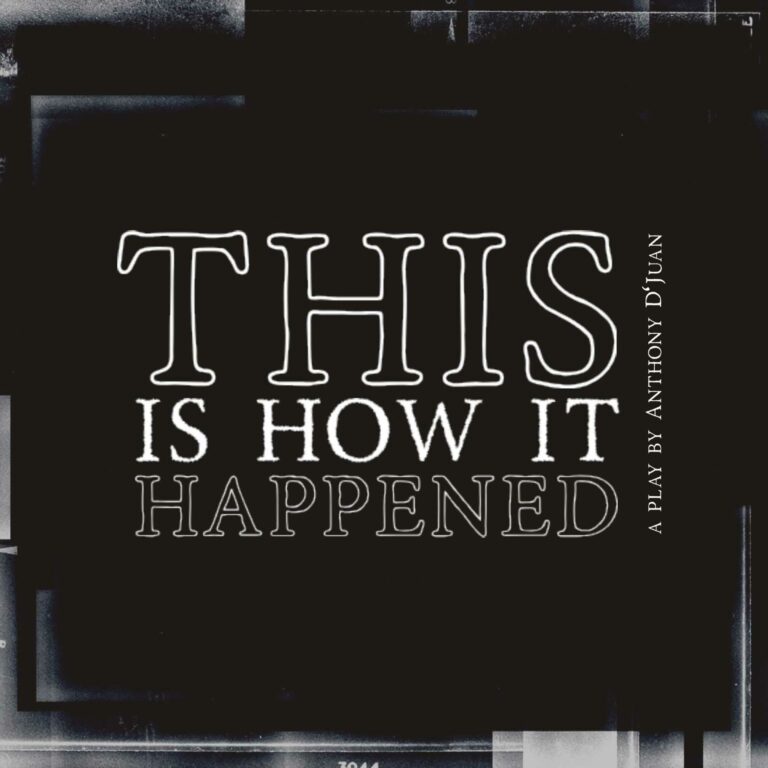
Catalyst Theatre will premiere ‘This Is How It Happened’ online

The one-act show discusses relevant topics of race and police brutality

Catalyst: A Theatre Think Tank will be premiering the one-act show “This Is How It Happened” written by playwright and actor Anthony D’Juan. The free show will be streaming on Catalyst’s website, where anyone can register to watch on Oct. 15 and Oct. 16 at 5 p.m. “This Is How It Happened” was recently accepted into Catalyst’s catalog of plays for its chilling reflection of reality. The show focuses on the aftermath of a White police officer killing a Black man.  

Director Lyndsay Burch brings the words of this script to our screens for a short and never before seen showing. Professional actors Peter Story, Rob Karma Robinson and Danielle Moné Truitt portray their characters at home, practicing social distancing, but nevertheless are able to bring their characters to life by using new technology. 

“People involved in theater are just naturally creative,” said Tiffany Nwogu, the assistant director. “If you give them a stick, they’ll work with it. I don’t think this medium is any different. I think that this medium is just laying the groundwork for more possibilities to see what’s possible or what works and what doesn’t. So everything is a work in progress. But what comes out of it is putting everyone’s creative mind together. And that creates the finished product, the art form.”

With the recent Black Lives Matter protests and the unjust killings of Black men continuing, a play like this has the potential to hit society close to home. For actress Danielle Moné Truitt, who plays Alyce, this play spoke to her personally. 

“I have put together my own productions and things that speak to the misuse of police force,” Truitt said. “I protest a lot and use my voice to bring awareness to what is happening. And so this play definitely speaks to that. We get to uncover and talk about a lot of different issues and mindsets that people in this country have in regards to these situations. Anything that can help people think differently about the world that we’re in and about our laws and what is really right morally, I’m always very excited to be a part of.” 

Truitt’s character, Alyce, works for the police department. Alyce’s job is to devise a story for the public that will make a police officer seem innocent after killing a Black man. The story is one that the American public is all too familiar with. Truitt’s task was putting herself into the head of a morally questionable character where she could never see herself.

“That was very hard for me when I first read the play and when I first did a reading of the play, because I’m the complete polar opposite; I would never do that,” Truitt said. “I’ve had the opportunity to really spend time with that character and think about what could really be going on in her mind. Maybe, she’s just doing this job because it’s a job and maybe when she gets in the car, she cries or she drinks a lot to numb herself.”

While presenting D’Juan’s impactful story online isn’t preferable, everyone has worked together to make this situation have the best possible outcome. 

“Being an actor, or being involved in theater, you have so much energy in life that you want to bring [it] into whatever you’re working on,” Nwogu said. “And that type of energy just bleeds through the screen. With a story like this, we try even harder to make it come across.”

The first-time showing of “This Is How It Happened” comes with high hopes for playwright Anthony D’ Juan, whose friends hold the utmost respect and belief in his work. 

“I’m looking forward to Anthony getting his work out into the world,” Truitt said. “He is my dear friend, and he’s so talented, and he’s written so many things that are just really phenomenal. I’m just so happy that UC Davis is taking it upon themselves to shed light on his work and give it a good production, give it a good cast, and promote it.” 

“This Is How It Happened” will be filmed using technology called Open Broadcaster Software (OBS). Using OBS, actors are able to have a green screen and microphones in their home, and the finished product will make it look like they are in the same room together, talking to each other and producing a live-action show that mimics what we usually see on stage. Except this time, it’s right through our computers. Catalyst has embraced this new technology that has saved public plays as an art form and will continue to use it throughout the year as they produce performances and provide everyone the art form that the pandemic has made them crave. 

“It’s a very, very challenging way of working,” said Mindy Cooper, a theater and dance department professor and co-founder of Catalyst. “It takes a bit of some of the organics out of it. But for the audience, it’s pretty exciting in this day and age where a lot of us are just hungry for a play that looks like a play and feels like a play. So OBS has helped us greatly to embrace feeling like we’re back in the theater.”

This new technology has most certainly changed the way theater is produced and enjoyed. Accepting this new medium as an art form comes with a loss of many aspects that live theater thrives on; it lacks the heart of the audience and the connection that is created by the actors and those sitting ten feet away from them. But it also has its benefits—especially with as serious a story as the one D’Juan has written. 

“We can’t afford to not tell important stories right now,” Cooper said. “If we were to say, ‘Nobody needs to produce theater right now, let’s not do this; let’s just wait,’ then a year or a year and a half goes by and really important stories that need to be told today have missed their potent mark.”

This new medium allows for the continuation of storytelling, but also keeps students and actors sane, as Cooper recalls on the past seven months of pure online teaching and the necessity to stare at a screen and be productive for hours on end. 

“Right now a lot of us need the arts in our lives, whether you know it or not,” Cooper said. “I like to say, imagine the last seven months of your life without movies on Netflix, without your favorite Miles Davis song that makes you cry, a good cry. Without your favorite novel, without all of the arts. Imagine these last seven months without the ability to find yourself transported by an artist or a medium of some sort. We have the ability right now to continue to tell stories.” 

“This Is How It Happened” was accepted into the Catalyst festival back in July. With a first-time showing and the availability of it to reach across the nation, it has the potential to reach a wider audience that it normally would have not received had the play been on stage. Cooper hopes that with this first showing D’Juan gets to workshop this play around the nation at different stages. 

“You know, I read a lot of plays every year, whether it is for the festival or my own work,” said Cooper. “I’m attracted to ones that suck me in and jump off the page and I can see them, I can feel them, I can hear them immediately. This play did that for me. And I can’t wait to see how this director has envisioned it coming to life.” 

Perhaps when envisioning his play come to life, D’Juan never imagined it would be in an online setting, but instead on a stage before a crowd that filed in as the sun set. But the play itself still holds the message that he wanted it to carry when he wrote it, and the actors still portray the characters as they would in a live, in-person performance. The audience will have time to ask questions afterwards and provide insight on what they saw. 

“Art is a great way to promote activism and to get people to change their mindset about what they see in the world and how they might experience it,” Truitt said. “I think that’s one of the beautiful things about artistic expression: It causes people’s hearts to change.”

For those who miss the live viewing experience, registration to see the play is open now.

Correction: The original version of this article misspelled Danielle Moné Truitt, Rob Karma Robinson and Lyndsay Burch’s names. The article has been updated to correct the errors.

Written By: Itzelth Gamboa — arts@theaggie.org

Three positive COVID-19 cases emerge from on-campus housing

Testing currently offered to students living in housing managed by Student Housing, sorority or fraternity housing, The Green at West Village, student firefighters, EMTs 

The university confirmed that three students living on campus had tested positive for COVID-19 for the week of Sept. 28, according to CBS Sacramento and KCRA. When recently asked about these students, Associate Vice Chancellor for Housing, Dining and Divisional Operations Mike Sheehan said via email that “there were no positive cases found last week and there is now only one person still in isolation on campus.” 

Sheehan neglected to comment on why the broader UC Davis community was uninformed about these students, and said that Student Housing and Dining Services “outreach to possible contacts and determine the level of risk for spread.”

Students living on campus “can be expected” to complete weekly testing throughout the quarter. These tests are conducted at a COVID-19 screening kiosk in the Pavilion parking structure, where a saliva sample or nasal swab is collected. Results are texted or emailed within 48 hours. 

According to the UC Davis website, “everyone — students, employees, visitors — must complete a Daily Symptom Survey before entering a university-managed facility.” Individuals are expected to provide a screenshot or a print-out of their survey results, as it dictates whether they are approved to enter campus facilities or not. 

UC Davis is launching a rapid screening and testing program in response to COVID-19. At the moment, however, testing is available only for certain students and employees who are asymptomatic. Students displaying COVID-19 symptoms are encouraged to contact Student Health and Counseling Services or their doctor, while employees are urged to contact Occupational Health or their doctor.

At the ASUCD Senate Meeting on Oct. 1, Chancellor Gary May said that a recent student survey revealed that out of approximately 23,000 to 25,000 students, around half of undergraduates and 70% of graduate students said they were planning on living close to campus or on campus. 

More specifically, about 2,650 students are expected to live in campus housing this fall, with about 1,800 students residing in residence halls and 800 in student housing apartments.

“We have increased safety measures in place for those living on campus,” May said at the Senate meeting. “This includes increased sanitization procedures, monitoring symptoms on a daily basis, testing, contact tracing, isolation and quarantine. We’re hiring a team of undergraduates […] to provide community education and outreach on campus.”

Data from the week of Oct. 5 states that 1,919 COVID-19 tests have been conducted on campus. This number is defined to be “the total weekly count of asymptomatic COVID-19 tests conducted through the Davis campus COVID-19 Screening Program,” according to the UC Davis website

Written by: Aarya Gupta — campus@theaggie.org 

University must maintain its financial support of the PE program and the teacher-coach model

0

While you still pay full fare, the University has been doing less and less of what it is supposed to do

On Sept. 25, campus administration quietly and unilaterally decided to eliminate physical education (PE) instruction starting Winter Quarter 2021. While the elimination of PE classes that can help to improve and de-stress the pressurized lives of students would be a highly questionable move in normal times, it is a truly terrible decision right now. But that’s only part of it. Did you know that PE instruction also serves as the critical link between UC Davis Intercollegiate Athletics (ICA) and the University’s academic mission? It’s true. Everyone knows NCAA Division I sports is a big business. With media rights and NCAA and conference distributions on the line, not to mention egos and name recognition, for universities across the D1 landscape, it’s all about winning. And when winning is everything, rules become optional, ethics become artifacts and the perceived worth of sports not named football and basketball goes to zero. It is also true that only a handful of Division I programs operate in the black. The vast majority lose money.

Avoiding the “business model” of intercollegiate sports is precisely why far-sighted UC Davis students have voted on multiple occasions over the past 30 years to approve, subject to certain assumptions and conditions, the collection of fees associated with the Student Activities and Services Initiative (SASI), the Facilities And Campus Enhancement Initiative (FACE) and the Campus Expansion Initiative (CEI). They, and previous campus administrations too, recognized that UC Davis needed to follow a different path. These days, students contribute over $23.5 million every year to support UC Davis’ uniquely chartered and supposedly protected ICA program. Yes, that’s a lot of money, but you get what you pay for––or at least you should. Because in exchange for your fees, the university was not going to let bad things happen to your, yes, your, ICA program. 

But starting during the days of the Katehi era, and apparently even today, while you still pay full fare the university has been doing less and less of what it is supposed to do. In this case, that means maintaining the PE program. Because just as there are student-athletes, at UC Davis there are also teacher-coaches who are qualified as instructors and who must adhere to the faculty code of conduct. All of this is what separates UC Davis from the rest. Students pay to secure the coaching portion of teacher-coach salaries and the university, through the PE program, pays for the teaching portion to secure the program’s instructional foundation. This is the implicit partnership that was established beginning with SASI in 1994 and which underpins the FACE and the CEI as well which were passed by UC Davis students later on. But soon that will no longer be the case. 

By removing it from its foundational teacher-coach model, the administration is not only casting the Aggie ICA program adrift, it is arguably putting itself in breach of its longstanding partnership with students. Don’t let anyone take you for “suckers and losers.”  Don’t let your Aggie forebears down. Don’t let your successor students down. And don’t buy the false choice that it’s either drop PE or cut sports––as that, too, would constitute a breach of at least the CEI. Instead, insist both directly and through your elected ASUCD representatives, that the University must hold up its end of the partnership upon which the SASI, FACE and CEI are all based and maintain its financial support of the PE program and the teacher-coach model. And if the administration refuses, then demand that each of these initiatives be re-voted upon by the entire student body with that in mind.

Written by: Paul Medved

Paul Medved is a UC Davis alumnus and parent of a former Aggie student-athlete.

UCD launches ‘public phase’ of $2 billion fundraising campaign

The campaign has raised $1.2 billion since its start in 2016

Last week, UC Davis effectively ended the “quiet phase” of its $2 billion fundraising campaign that began in 2016 and entered its “public phase” that will continue until 2024. The campaign has already raised $1.2 billion during the first four years and plans to address issues such as “pandemic response, climate change, public safety and more,” according to a UC Davis press release.

Of the $1.2 billion raised, $180 million has been specifically raised for student scholarships and fellowships for graduate students, according to Vice Chancellor for Development and Alumni Relations Shaun Keister. Keister said that there is not a particular dollar goal for student scholarships because of the campaign’s donor-centered approach.

“When we talk with donors, we find out what areas of the institution they want to impact the most, and if they say scholarships, of course, we pursue that,” Keister said. “If you think about the fact that we’re halfway through the campaign and we’ve raised $180 million to date, it’s not to say that we would double that, but we will clearly raise a significant more amount for scholarships and fellowships in the second half of the campaign.” 

Many UC Davis alumni who have chosen to donate do choose to create student scholarships or fellowships, both of which Keister called primary focuses of the campaign.

“It’s actually something a lot of our alumni want to do, because they themselves, having been students here, understand that our students can use that type of financial support,” Keister said.

In regards to climate change, funds from the campaign will support key areas of climate change identified by a group of faculty and Smart Farm, an effort to make farming more efficient to feed a growing population, according to Keister.

“This campaign specifically looks at addressing climate change and there is a very broad group of over 100 faculty across different disciplines on campus who have come together and identified some very key areas where we are the leading researchers in the nation, in the world,” Keister said. “With philanthropy, we can really have a huge impact on these specific areas of climate change.”

Keister said the quiet phase is important for establishing an infrastructure for the rest of the campaign.

“We go to many of our donors who we know very well and who have supported us in the past,” Keister said. “During [the quiet phase], you’re testing different ideas, seeing if they resonate with donors, recruiting volunteers—we have over 600 alumni, parents and friends who are serving as volunteers for the campaign.”

The public phase is intended to reach a broader number of alumni, parents and friends of UC Davis in order to raise the remaining $800 million of the campaign’s goal. This will be done through much outreach, according to Keister.

“Our staff, university leaders, faculty are engaged in reaching out to donors and prospective donors around the world who might have an interest in supporting UC Davis,” Keister said. “The volunteers are advocates for us as well in their communities around the world in reaching out to fellow Aggies that live near them or that they know through their networks. It’s a matter of really getting the word out and getting more donors to support the campaign.”

Written by: Sabrina Habchi — campus@theaggie.org 

UC Davis student kills two and wounds one before killing himself in Sacramento grocery store shooting

Hassibullah Shams Hassib was a third-year international relations major at UC Davis

Students can schedule individual counseling from the SHCS by calling them at 1(530)752-0871. 

The number for the 24/7 National Suicide Prevention Lifeline is 1(800)273-8255; the number for the 24/7 Crisis Text Line is 741741; the number to speak with a trained counselor through The Trevor Project, available 24/7, is 1(866)488-7386 and the number for Yolo County’s 24-hour crisis line is 1(530)756-5000 for Davis callers.

Hassibullah Shams Hassib, a third-year international relations major at UC Davis, shot and killed two people and injured another person before taking his own life in Sacramento last week, according to The Sacramento Bee

Andy Fell, the Associate Director of News and Media Relations, confirmed that Hassib, 33, was a student at the university. 

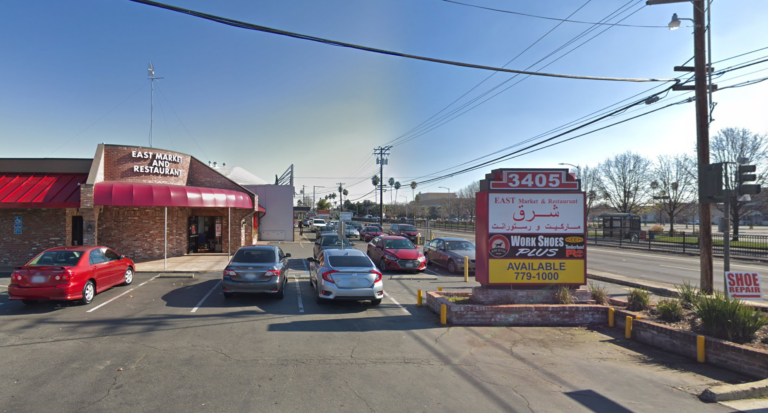
Hassib reportedly began firing his gun at the East Market and Restaurant-Sharq on El Camino Avenue, near Arden Fair Mall.

Among the victims were Shujauddin Omar Kheil, 27, the father of a four-year-old—who witnessed the shooting—and a six-month-old, and 19-year-old Mobin Andishman. The third victim, 30, survived and is expected to make a full recovery. 
Written by: Rebecca Bihn-Wallace — campus@theaggie.org