55.5 F
Davis

Davis, California

Tuesday, December 23, 2025
Home Blog Page 316

Viticulture and Enology department begins quarter with remote instruction, new wine-selling abilities

0

 Instructors explain positive changes within the program

The UC Davis Viticulture and Enology department usually functions in vineyards, surrounded by greenery and grapes, as students get hands-on learning experience from instructors who are quite literally in the field. Along with adjustments relating to the COVID-19 pandemic, the department is also adapting to a recent change in legislation which allows UC Davis to sell the wine produced onsite.

Like many other courses at UC Davis, remote viticulture classes involve online lectures with powerpoints and discussions via Zoom, among other things. For classes involving labs, however, professors have used alternative methods to allow students to virtually visualize the once outdoor experience. David Block, a professor, and Marvin Sands department chair of Viticulture and Enology, described how instructors have worked to create a semblance of what students were provided in the past. 

“The instructors have videotaped all kinds of footage explaining stuff in the vineyard, and students are able to watch those videos and then sit in on discussions and ask questions with instructors in real time,” Block said. 

Hildegarde Heymann, a distinguished professor of enology, is teaching the Wine Production and Wine Production Lab courses this quarter. Heymann shared that, while important parts of the course such as safety, sanitation and wine styles are able to be taught through lectures, she wanted to give her students the closest experience to a wine production lab. To accomplish this goal, Heymann gave old wine data to students to mimic a lab experience. 

“Each student was assigned a wine,” Heymann said. “They get the grape information, the grape parameters that the wine would have had, the permutation, what was added, why and when it was added, what the temperatures were, what the books curves were, I mean the whole process. So they’re entering that data on a daily basis like you would normally.”

Heymann explained her willingness to experiment and be flexible with techniques, potentially even finding long-term teaching methods along the way.  

“If something clearly doesn’t work this year, and I have to do it again next year, then I will find another solution to that problem,” Heymann said. “If something works spectacularly well, and we ever get back to teaching in a classroom, I may incorporate some of what I’ve learned now under these conditions into face-to-face teaching.”

In addition to adjusting to teaching in a pandemic, the department has also faced a change regarding new legislation. In the past, it was forced to dispose of all the wine produced in classes and research, but with the help of State Senator Bill Dodd, a recent law was signed to change this. The legislation sets up a separate entity that can legally accept the wine from UC Davis’ winery and sell it. According to Block, the program will start functioning in approximately six months.

Although the department will not depend on the revenue generated from wine sales, this new legislation offers opportunities for growth and success for students and faculty, Block explained. 

“If there is some kind of return on all that investment of growing the grapes and making the wine, that’s money that [can] go back into our programs to make our program stronger for students, for the industry and so forth,” Block said. “I think it’s something that’s really important to us for both environmental reasons and fiscal reasons.”

Overall, Block is grateful for this change and looks forward to the potential benefits for the department. 

“It’s really great to see our local legislators really being interested in what’s happening at UC Davis,” Block said. “We’re very appreciative of everything Senator Dodd [has] done recently for us.”


Written by: Nora Farahdel — features@theaggie.org

COVID-19 leaves negative impact on mental health, increased calls to suicide hotlines, experts say

Sustaining mental health remains important despite challenges posed by COVID-19, experts say

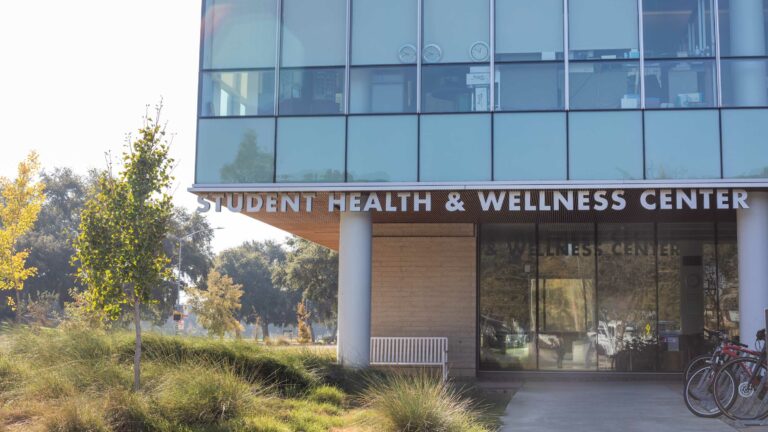
Any student can schedule individual counselling sessions with the Student Health and Wellness Center by calling 1(530)752-0871. The phone number for the 24/7 National Suicide Prevention Lifeline is 1(800)273-8255 or text RELATE to 74174 to confidentially chat with a Crisis Counselor. Speak with a trained counselor, available 24/7, through The Trevor Project at 1(866)488-7386. Yolo County’s 24-hour crisis line is 1(530)756-5000.

The COVID-19 pandemic has impacted daily life. Maintaining good mental health can be difficult when pandemic safety guidelines make it necessary to socially distance.

UC Davis Mental Health Initiative “houses both the UC Davis Mental Health Conference and UC Davis Mental Health Awareness Month,” the official Facebook page states. “Two major events which aim to engage students in [de-stigmatization] and education efforts, prompt attendees to organize around mental health issues, and offer them the opportunity for self-reflection and healing through mental health discourse.” 

Resource and Research Coordinator for UC Davis Mental Health Initiative, Alexandra Damian, explained how COVID-19 has taken a toll on mental and emotional health over the past few months. 

“In general, mental health plays a role in everyone’s lives through every single lens that you look at life,” Damian said. “So to think that a global pandemic is being layered on top of every single choice you make—there’s no doubt in my mind that COVID-19 and mental health are intertwined.” 

The Yolo County Suicide Prevention and Crisis Services’ official website states that its mission is to give county residents constant access to mental health assistance.

“The mission of Suicide Prevention and Crisis Services of Yolo County is to provide crisis prevention and intervention, education and community outreach services to the residents of Yolo County […]” its website reads. “Today, SPYC is among the oldest suicide prevention crisis lines in the nation and operates 24 hours a day, 365 days a year.”     

Executive Director of Suicide Prevention of Yolo County (SPYC) Diane Sommers explained that SPYC operates a 24-hour crisis line, provides education and prevention programs for schools and offers support groups for those who have lost a loved one to suicide.

Sommers described how the COVID-19 pandemic brought out increased feelings of anxiety, fear and uncertainty in people. 

“No one could really imagine that this would have such a dramatic and life-changing [effect] upon our families, our neighbors, our friends, our community,” Sommers said. “COVID-19 impacts all of us, but some more than others.”

Sommers further explained that since the pandemic began seven months ago, SPYC has responded to over 5,400 contacts, which is about 2,000 more contacts than the previous year. She stressed the importance of reaching out to others during this time, especially when people have much deeper feelings of depression, loneliness and anger. 

Macy Mehdioun, a third-year UC Davis neurobiology, physiology and behavior major and psychology minor, explained via email how the COVID-19 pandemic impacted her life as a student, as it has caused a negative shift in her mental health. 

“Spending all day cooped up inside of my house was not good for me and I miss those days where I could use walking to class as my main form of exercise,” Mehdioun said. “My social interactions dropped significantly and I had a hard time feeling like the interactions I was having online were with real people on the other side of the screen.”

Damian further explained that the hardest part of taking care of one’s mental health is reaching out for help. 

“As soon as you are aware that you need help, you are moving towards the right direction, even if it does not seem like it,” Damian said. “Any little step towards the right direction is a huge step.” 

Mehdioun reflected on ways to better cope with the COVID-19 pandemic while still following social distancing guidelines. 

“I personally think that finding your personal coping strategy is the best thing you can do,” Mehdioun said. “Whether it be podcasts, mindfulness activities, yoga, going out for walks, scheduling Zoom games with friends, playing video games, journaling, socially distanced hang outs, family game nights, cooking or just venting out your feelings.” 

Sommers encouraged anyone experiencing mental health concerns right now not to be afraid of calling the helpline.

“It is really essential that people understand that the 24-hour crisis line is really available to anyone, and not only is it a way to support people, but it really helps them deal with the ever-changing landscape of their lives,” Sommers said. “We will continue to be here, to act in the best interest and the wellbeing of our community. We hope that people will reach out and call.” 

Mehdioun gave a word of advice to other students like herself about finding inner peace during these troubling times. 

“We will get through this together, and you are not alone when it comes to these feelings of lost motivation, isolation, fear, anxiousness and loneliness,” Mehdioun said. “Check in on your fellow friends, because they may be feeling the exact same things you are.”

Damian left one final message for those experiencing mental health concerns right now. 

“Just know that you are not the only person struggling,” Damian said. “Be aware of what you need, don’t be afraid to reach out, and just find what makes you happy and hold on to it.”

Written By: Jelena Lapuz city@theaggie.org

GSA letter challenges university to seek equitable solutions for remote learning

The letter asks the administration to offer fully asynchronous courses, solutions for inconsistent internet access on and off campus

The Grad Student Association (GSA) teamed up with the leadership from ASUCD to craft a letter aimed at addressing inequity intensified by remote learning during the pandemic. 

“I think at first we thought about it like, ‘How are grad students going to benefit from this?’” said Jonathan Minnick, the president of the GSA. “But, we all also had the idea that a rising tide lifts all boats.”

The letter advocates for improving students’ access to the internet, citing a lack of reliable connection both on and off campus.

Gwen Chodur, the external vice president of GSA, said the issue hits home to her because she too has experienced difficulties with her internet connection as a teaching assistant (TA).

“I was in the middle of a meeting, it went off just after nine and didn’t come back until five,” Chodur said. “It was an entire day-long outage.”

Minnick said that one way to address the lack of reliable internet off-campus is to provide personal hotspots following in the footsteps of a program offered by UC Berkeley.

“There is always this underlying assumption that everyone has internet access,” he said. “I think that we learned very quickly that that’s simply not true.”

Renetta Tull, the vice chancellor of diversity, equity and inclusion, said in her experience, there were students who relied on on-campus internet as an effective student resource.

“I’ve had the opportunity to speak with a couple of students that said that they’ve actually come from different areas where they didn’t have internet at home,” Tull said. “They came to campus because they knew the WiFi would be better.”

Although some students may come to campus to utilize the WiFi, UC Davis has had connectivity issues in the past with the campus WiFi Eduroam, and students may be living far from campus without the ability to travel on the weekdays for stable internet. The major issue with providing access to hotspots is knowing who needs them, which the university has tried to resolve with multiple surveys about needs, said Maria Martinez, the external vice president of ASUCD and co-signer of the letter.

“I think we definitely have the funding to do so, at least in the tech department of the university,” Martinez said.

The letter requests fully asynchronous lectures and discussions for every course through Canvas. ASUCD President Kyle Krueger said connectivity has caused concerns for international students who are juggling different time zones.

“There wasn’t time to put together a fully asynchronous program with all the faculty and all the classes, knowing that there are thousands of classes and professors covering many of those classes,” Tull said. “There wasn’t time to do that for the Fall Quarter, but my understanding is that the provost and the senate are looking into it and taking the concerns very seriously.”

Provost and Executive Vice Chancellor Mary Croughan said in an email that she was unavailable to be interviewed in time for publication. 

“I don’t usually like to jump straight to memos or resolutions, so I did email some members of the Academic Senate, just in a more conversational context originally,” Krueger said. “Overall, there needs to be a little more of a push to get the students’ voices heard in this particular area.”

Some of the students who are coming to campus are having their first remote college class this quarter, Minnick said.

“I think it would be quite unfair to expect them to try to thrive in this situation,” Minnick said. “We have to take a lot of grace for ourselves; we have to take a lot of grace for our students.”

Universal closed captioning was requested by the ASUCD leadership and GSA intended to assist students with disabilities who are navigating fully remote courses without standardized procedures in place.

The concerns detailed in the letter have existed long before the pandemic, but have been heightened due to the remote quarter, Chodur said.

“This is the drum that I will beat about COVID,” she said. “All of these issues existed beforehand, they’ve just been magnified by what is happening now.”

The extension of pass/no pass and drop deadlines are also highlighted in the letter, which Martinez said should be made available until all students return to campus after the pandemic is over.

“I think that getting an ‘A’ last Fall Quarter and getting an ‘A’ now are completely different circumstances,” Martinez said. “If students don’t have the resources to get those letter grades, it becomes kind of an incomparable task.”
Written by: Kathleen Quinn — campus@theaggie.org


Instructors and students need to respect each other and each other’s time

All involved must be flexible and communicative to optimize learning this quarter

It has been over 30 weeks (bar finals, that is the number of weeks in an academic year) since instruction became remote, and everyone should understand that calling this a “new normal” will not force any sense of normalcy to this quarter. 

Students and instructors may run into Wi-Fi issues or PG&E outages and may be in different time zones, to name just a few struggles this quarter, and these are crucial to consider and plan around. On top of that, a survey from the Centers for Disease Control and Prevention (CDC) identified that young people aged 18 to 24 are experiencing rising levels of anxiety and depression.

Some professors have responded to the circumstances of this quarter by being communicative about relaxed deadlines, Zoom lecture recordings and 48-hour windows for exams, among other accommodations. Others, however, have not only foregone that added level of consideration but are making the quarter even more challenging for students through a failure to communicate and a reluctance to be flexible. 

Prior to COVID-19, avoiding Canvas was, at best, a quirky trait that set some professors apart from their counterparts, but now it is actively detrimental to students’ ability to stay organized and plan their work. Students can and should be organized, but instructors have a responsibility to provide a comprehensive syllabus that compiles all assignments in an accessible location. 

There is much more to be said about the cost of a college education, especially during a pandemic—the fact remains that it is not inexpensive to attend UC Davis. Students should not be paying tuition to watch lectures recorded in prior academic years. And although asynchronous courses are effective in that they are more readily accessible to all students than live lectures with required attendance, they can be isolating and it can be difficult to focus if there is no dedicated time for the course. 

When asynchronous lecture videos are longer than official instruction time, it becomes even more draining to get through a week of work. Instructors must respect their students’ time, provide lecture material and assign work that aligns with expectations for traditionally in-person classes. This includes setting intuitive deadlines and scheduling extended exam windows that correspond with official class times. 

Being respectful is not, and should not be, a requirement just for instructors. Wi-Fi permitting, students should keep cameras on when professors request that they do. Students should not spam Zoom chats and should create groups on other platforms to facilitate communication and provide a less formal forum for questions. Everyone should be vigilant to prevent accidentally hitting the unmute button in the middle of a lecture.  

Taking breaks to prioritize mental and physical health is important, and professors must be flexible and understanding—always, but especially during a pandemic. Students have a responsibility to maintain their integrity, and it is unacceptable to inappropriately take advantage of accommodations provided by professors.

In a letter to the academic senate, provost and chancellor on Sept. 28, leadership of ASUCD and the Graduate Student Association requested attendance from courses or discussions at specified times not be mandatory, that exam attendance not be mandatory, that all academic video learning contain closed captioning, computer labs be open on a rotating basis and that all content is available asynchronously. All of these requests are vital to foster a more equitable academic environment.

Ideally, though, the Editorial Board feels that instructors should try to offer optional meetings during the time scheduled for the course. Be it a synchronous lecture or even a small discussion section, it is easier to engage with instructors and peers at a designated time and can be less intimidating than one-on-one Zoom office hours. 

As the first round of midterms rolls around, we urge professors, lecturers, TAs and students to be thoughtful and respectful of the time and money that is going into this educational experience. We know firsthand that it is not easy to be a student right now and acknowledge that it is not easy to be an instructor right now either. There is clearly no one way to perfectly navigate university via Zoom, but being flexible and being proactively communicative are the bare minimum to alleviate the strain on all of us. 

Written by: The Editorial Board


Review: Emily In Paris

Disappointed by the characters in the TV show, yet will watch season two

There are TV shows that we watch that are immeasurably good. They’re entertaining, they’re funny, they check off all the boxes. Shows like “Never Have I Ever” and “Stranger Things” that are undeniably perfect. But then there are shows that you watch for the aesthetic, shows that you watch just to watch. “Emily in Paris” is one of those shows. 

“Emily in Paris” is a comedy-drama Netflix series that follows Emily (played by Lily Collins) as she makes her way through a new job at an unwelcoming marketing firm in Paris. There’s just a couple of holes in Emily’s plan to bring her American perspective to the firm: they don’t want her there and she doesn’t speak French. She doesn’t even know how to say the words “I don’t speak French” in French. She moves into a run-down apartment and works all season to get on her boss’ good side as she deals with multiple romance flings, finds new friends and makes Paris her home. 

As someone who’s never visited any country other than Mexico, my only dream is to travel and see all of the beautiful wonders of the world. When shows like “Emily in Paris” come around that give me a glimpse of what Paris could possibly be like, how could I not want to watch it? And with Lily Collins as the protagonist, I was going to binge it. 

As every Instagram comment has reminded me, the Paris depicted in the show is completely unrealistic and that has led to much criticism. But I’m not watching a show about a social media strategist whose life gets uprooted in Paris for the reality of it. I’m watching it because I want to see the impressive outfits and cringeworthy drama. I’ve seen the show get a good amount of attention and I had a good time watching it. It had its moments. To cut it short, I will be watching season two if it gets renewed. Not because it was particularly good, but because they left off on the worst cliffhanger possible.

Let’s start off with the show itself; any Netflix show has to make me feel like I watched something worthwhile, like I didn’t just sit on my bed all day for nothing. I like to feel that I completed something after binge watching a ten-episode series. But I didn’t get that feeling after finishing “Emily In Paris.” I felt incomplete and not in a good way; the show simply didn’t feel finished. It was a grand mess of an ending.

Along with any TV show I’ve ever reviewed, my main frustration is due to its characters. If a show has obnoxious characters that are completely unrelatable, I won’t continue watching it. Characters are what make something worth watching, so I’m going to start by ripping the main characters to shreds. 

When we first met Emily, I loved her. She was bubbly and determined to do well in her job. We are so often given the broody character to love that it was refreshing to have the main character be the most optimistic one, albeit naive as well. Optimists haven’t received much of a spotlight in recent years and with Gen Z being known for their nihilism, that’s understandable. But Emily had a can-do attitude that I’d love to see more often. She did make some questionable choices throughout the show, but there wouldn’t have been a show without them, so there isn’t too much of a fight there. 

A character trope that I’m tired of is the mean boss. I hate the idea that when women finally climb to the top of a business, they become cold and snotty to other women instead of uplifting them. I never understood this portrayal of women in the media when I was younger and it’s one that I’ve grown to hate. It’s exhausting for women in college to have to fear that this trope may be true. Sylvie (played by Philippine Leroy-Beaulieu), Emily’s boss in Paris, is a powerful woman who isn’t welcome to new ideas and pushes Emily down at every opportunity she has, and it’s exhausting. It’s time to ditch this type of character and move on, because I would love to see more empathetic and helpful women bosses (See: “The Bold Type.”)

Emily’s main love interest is the boy next door. Literally. He lives one flight down from her and he is the most bland character I’ve ever seen as a love interest. This is absolutely devastating because I watched this show solely to fall in love with characters, but instead I only fell in love with the scenery. He’s the type of character that you’re supposed to love, the one who you’re supposed to be rooting for the whole season. I’ll admit, I liked him for the first two episodes. Then it all went downhill because he is one of the worst men on the show. I can’t fathom what was going through the director’s and writer’s heads when they were creating this character; did they really think that he was going to be likable to the public?

For my final criticism: every single one of Emily’s love interests is white. There was one recurring Black character and he was the token side character without a backstory and that’s the biggest disappointment throughout the whole series. It’s boring to only see white men pictured as the romantic partner in a series. 

Now that you’ve read me bash all of the main characters, you might come to ask, so did you actually like anyone? Of course I did, three people to be exact: Camille, Pierre Cadeau and Mindy. Camille should have been the star of the show; she had more personality than every other main character. She was kind to a fault, an actual angel and helped out Emily when she didn’t deserve it. The only reason I’ll be watching this show for season two is in hopes that Camille gets the ending she deserves: a better friend than Emily and a better boyfriend than Gabriel. 

Pierre Cadeau was the dramatic fashion designer whose sanity held on by a thread and I loved it. They gave him a personality and that’s all I wanted in this show. This was the lowest bar as well—I was already invested in the idea of the show, I just needed the characters to have actual character traits and other than these three, everything fell flat. The last character that I liked was Mindy, Emily’s first best friend. We get to see Mindy’s character develop throughout the season as she grows out of her stage fright and pursues her dream of becoming a singer. 

I had a lot of critiques about “Emily in Paris,” but that doesn’t mean that I regret watching it, mostly because I’ll watch anything that Lily Collins is in. It was disappointing and although I enjoyed the views of Paris, we were robbed of something that could have been perfect. But instead, it’s being called out for its French stereotypes and boring characters. 

“Emily in Paris” is a form of romantic escapism and I’m always here for that, it just didn’t quite meet the bar that “Monte Carlo” set for me when I was 11. But as always, you can enjoy something and still be critical of it. 

Written by: Itzelth Gamboa — arts@theaggie.org

Aggies anticipate upcoming election without usual on-campus morale

Polling places at the MU will no longer be open, but students and UC urge voting through other avenues

While the federal primary elections ignited political activity and prompted accessible polling booths on UC Davis’ campus in February, the upcoming November presidential election demonstrates a drastically different scene on the desolate campus.

“In terms of actual, physical voting, there is no polling place at the Memorial Union this year,” said Aurora Schunemann, a third-year international relations major and the president of Davis College Democrats. 

While in-person voting is unattainable on campus, Schunemann said the recently passed Voter’s Choice Act allows for increased ballot drop off locations in California. 

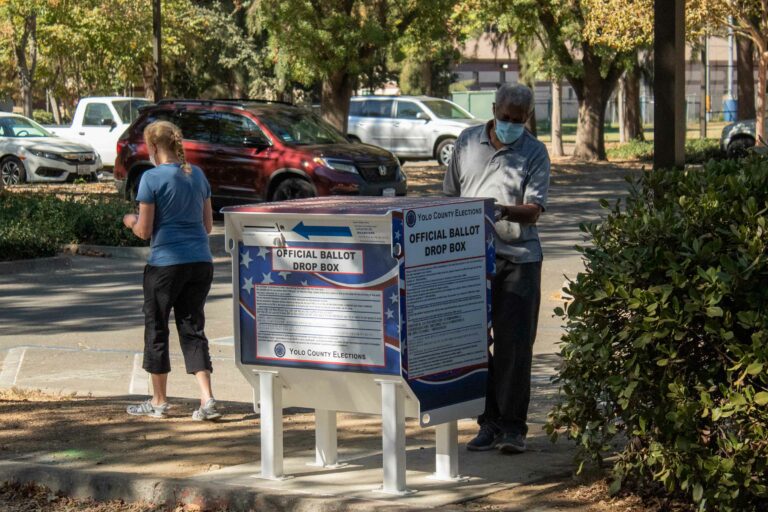
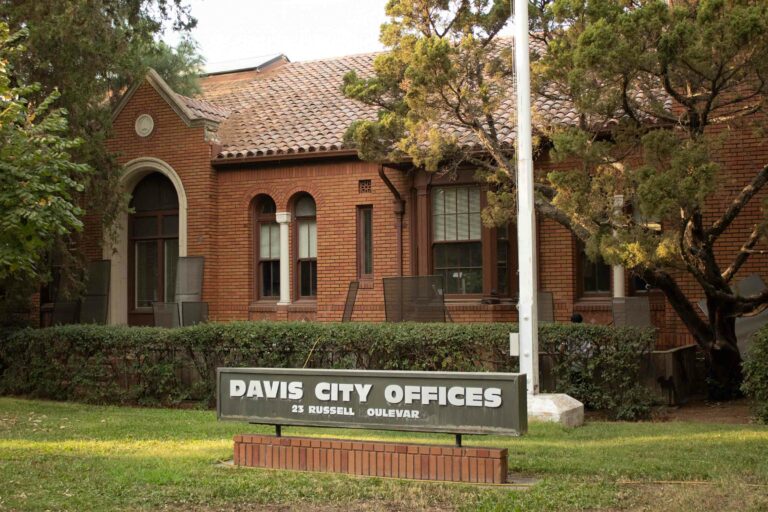
“California was already working towards having more ballot drop off locations available, and having vote centers be open for voting three days before the election as well,” Schunemann said. “It’s definitely less convenient than having a ballot drop off box at the MU, but in Davis we have four ballot drop off boxes [at] both Nugget markets, and there’s one right outside of City Hall.”

Absentee, or mail-in ballots, are encouraged as the primary voting mechanism for this election. 

“You should mail out your ballots as soon as you possibly can,” said Dylan Chicorel, a fourth-year political science and English double major. “With everything that’s going on […] it’s important to get your ballot out there once you adequately research and come to a decision about the proposals and the candidates of your choice.” 

Chicorel is a staff writer and the copy editor for Davis Political Review (DPR), a nonpartisan political commentary magazine at UC Davis.

The University of California and UC Davis have encouraged students to vote through emails and UCweVOTE coalitions.
“A number of our members are a part of the Aggie Vote Coalition,” Schunemann said. 

The University of California approved the coalition’s idea to place a virtual tile on “myucdavis” and on Schedule Builder in an effort to direct students to voter registration guidelines. The Aggie Vote Coalition is coordinating with ASUCD to include voter registration during new student orientation, Schunemann said.

“I feel like the University of California, alongside Davis, has encouraged students to vote to the extent that they encourage the significance of what it is to vote as a youth,” Chicorel said. “However, they haven’t done everything that they could, but, then again, there’s a lot of limited opportunities. The pandemic is preventing them from providing more opportunities to students to more easily vote.”

On a local scale, canceling classes and academic responsibilities at UC Davis on Nov. 3 would encourage more students to vote.

In the past, the quad and Memorial Union proved essential for student involvement and political activism. Transitioning to virtual instruction has limited the accessibility and essential role of the student hub.

“We [DPR] no longer have the opportunity to directly talk to our fellow peers about the opportunities that are available to them in terms of expressing their own voice and opinions,” Chicorel said. “We have to use social media platforms and the platforms of existing members of DPR to properly reach out to the student body and other interested parties.”

Blake Pariseau, a third-year communications major, said that tabling at the Memorial Union for Davis College Republicans (DCR) was a primary recruiting source for previous years and transitioning to virtual recruitment proves challenging. Pariseau holds the position of Sergeant at Arms for DCR.

Despite barriers to in-person political participation this year, students understand the overwhelming saliency of Nov. 3.

“I’ve seen within the past few months that there is a priority on social media, YouTube and the media to go out and register now more than any previous election I’ve been alive to witness,” Pariseau said.

Chicorel addressed the importance of this election and the turnout of college students and other youth who are eligible to vote but historically do not register or cast ballots.

“This particular election is critical in the U.S.’s lasting democracy.” Chicorel said. “The results can really shape future generations of educated students. The most important thing is youth and college students standing up to vote. We are one of the lowest turnout groups that there is. If we want our voices heard, we have to start by actually voting.”

The deadline to register to vote in California is Oct. 19, and voters are encouraged to mail their ballot by Oct. 22 to ensure it reaches the election office in time. More detailed information about voting assistance throughout Davis can be found at https://studentaffairs.ucdavis.edu/news/vote

Written by: Hannah Blome — campus@theaggie.org

Shop sustainably: Fly Dye

0

Students inspired by UC Davis course start clothing business using non-toxic and plant-based dyes 

The California Aggie spoke to Gracie Globerman and Juliette Connolly as part of our Shop Sustainably series, which highlights a green business local to Davis each month.

Spring of 2020 was full of many fads: Tiger King, Tiktok and, of course, tie dye. Two UC Davis students, in particular, decided that they could find an environmentally conscious way to stick with the trends and start a business in the process. 

Juliette Connolly, a third-year human development major, and her friend and housemate Gracie Globerman, a third-year sustainable environmental design major, co-founded Fly Dye after Globerman was inspired by one of her classes. 

“During spring quarter Gracie was taking ANT 104 which is a culture, politics and the environment class that was mostly toxicology focused, and she was explaining to our housemates how many toxins are in clothing dyes and products that we don’t always know about,” Connolly said. “We decided to try and make our own dyes that were non-toxic and also natural […] it was something that she shared with us and it eventually became a passion project.”

Globerman added that this course taught her a lot about the many toxic chemicals in clothing and other everyday items that are not banned by the EPA. She said that learning about the danger of these chemicals—and encouraged by quarantine boredom—led her and her housemate to attempt making their own dyes. 

“It started as a quarantine fun project,” Globerman said. “We shouldn’t be wearing clothes and accessories that are dyed with toxic dyes, and we shouldn’t have that close to our bodies and be breathing it in all the time so we found ways to make our own dyes.”

Once they started successfully dyeing their own clothes, Connolly and Globerman decided to start Fly Dye to sell their non-toxic dyed products. Early on, they released a line of upcycled shirts, which Connolly said has been one of their more interesting projects. 

“One of our most fun projects was that we went to the Goodwill in Woodland and picked up a bunch of white shirts, tank tops and long sleeves so we did an upcycled line,” Connolly said. “We posted them as white shirts and people commented which ones they wanted and what color dye they wanted.”

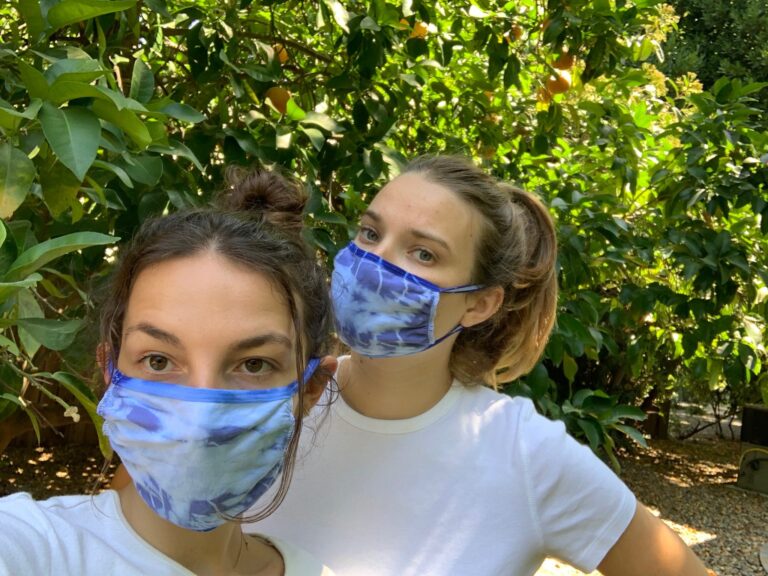
Although they did sell premade pieces when they were getting started, now they mostly produce custom orders. People will send them a piece and a color or design preference and Fly Dye will customize it with their dyes. They set up an Instagram page, where their custom shirts, masks and other products can be purchased through direct message. Connolly believes that Instagram has played an integral part in Fly Dye’s success. 

“Social media has been our best friend,” Connolly said. “We started an Instagram and followed people we thought would be interested, and then those people posted [Fly Dye] on their stories so more people saw. We don’t even have a website or anything, we’ve only sold through Instagram.”

Globerman emphasized that she’s learned how impactful developing relationships with customers can be for small businesses, since satisfied customers often want to share Fly Dye and continue purchasing from them.

“Building relationships with customers is really important,” Globerman said. “It’s so easy to order something on Amazon, and it’s maybe cheaper, but when you create a customer relationship, people want to continue buying from you.”

Ali Wildman, a fourth-year international relations major, has done exactly that. She said that she heard about Fly Dye through friends, and has since made multiple purchases.

“I loved that they were so sustainable and used all natural ingredients and flowers for their dyes so I wanted to check them out,” Wildman said. “I bought a t-shirt when they were dying thrifted items. I especially loved that it was thrifted because of the environmental impact of fast fashion and that shirt is my favorite thing I own now. It’s so soft and smells so amazing because they dyed it with indigo flowers. When they started making masks I got two for my mom and I and then we got more because we loved them so much.”

In addition to being a fairly new small business, Fly Dye is committed to using sustainable materials in their products, which makes their process more labor intensive and time consuming. 

“[Using sustainable materials] definitely makes it more hands-on, because we’re not just dyeing things,” Connolly said. “For example, we use avocado pits and peels that our households have eaten and are food waste […] that is definitely a hands-on process, making the dye. We use a lot of waste, like old coffee grounds. The sustainable part comes in a long process but a fun pay-off.”

In addition to the added time it takes to use sustainable dyes, it makes the process more expensive.

“We could so easily just buy bad ingredients because they’re cheaper, but that wouldn’t align with what we believe in,” Globerman said. 

Though they have committed to using sustainable materials to make their products, they hope to continue making their business as a whole even more environmentally friendly. 

“Another goal in the future is to switch to compostable packaging,” Connolly said. “Right now we do a lot of local delivery so we wrap our products in twine and throw a business card in there so it’s very low waste packaging. When we do ship, we use the USPS packaging so a goal would be to switch to something more sustainable.”

Globerman and Connolly hope to continue growing Fly Dye via Instagram and possibly an Etsy online storefront to sell their masks. Eventually, they’d even like to team up with other local sustainable businesses to collaborate on products. Globerman says that overall, they are committed to making sustainable and equitable products.  

“A lot of the time when you find brands branded as sustainable they’re so expensive and really not attainable, so sustainable fashion becomes only attainable for wealthy people,” Globerman said. “I think our prices are pretty fair and competitive. [Our goal is] to create and promote sustainable and healthy fashions and to do that at a very socially equitable [price].”

Written by: Katie DeBenedetti — features@theaggie.org


October marks Filipino American History Month

Commemoration is through education, America’s history of oppression in the Philippines continues to be prevalent today

Filipino American History Month (or FAHM, as it’s widely known in the Filipinx-American (FilAm) community) is celebrated in October to commemorate the first recorded presence of Filipinos in the continental U.S.

Many organizations hold events to bring attention to the significance of this month and educate the community on the history of FilAm people.

Although this month celebrates the beginnings of what is now one of the U.S.’ largest ethnic groups, it is mainly an opportunity for people to seek out information on their cultural background and the struggles of what the FilAm community has faced. 

One of the most repressed narratives in FilAm history comes from how the U.S. was (and still is) complicit in the erasure of Filipino communities and culture, while refusing to truly recognize those effects. 

The U.S.’ heavy-handed influence stems from the aftermath of the Philippine Revolution against Spanish colonialism. While the U.S. had originally offered their support for Philippine independence, after the war the U.S. claimed sovereignty over the Philippines and overthrew the rising government.

Additionally, the U.S. government offered Filipinos American citizenship and land if they enlisted in World War II, but once the war ended, they were denied those things and were not recognized as veterans. Despite having used the islands as a warzone, the U.S. also refused to help rebuild the Philippines lands and economy, instead creating an imperial rule that mimicked the U.S.’s own system of government under the veil of democracy.

This bureaucracy still exists as the primary form of authority in the Philippines with its current president, Rodrigo Duterte, working closely with Donald Trump. 

Much of the history is oppressed to hide the effects of colonization in the islands that continue to exist and to deter people from rising up against the current government. This is seen in the implementation of U.S. education in the Philippine school systems and by consequence, its erasure of indigenous history, which would reveal how the people have repeatedly fought against oppression through multiple revolutions.

Students learn the English language in their classes and more about the benefits of the U.S.’ influence rather than the indigenous peoples, called the archipelago, and their languages.

The use of the word “history” in FAHM is very intentional in that the purpose of the month is not just to celebrate Filipino culture, but also to recognize the struggles that the Filipino people have faced. 

Saira Singh, a recent UC Davis graduate in biological sciences with minors in education and human development, currently works as an ethnic studies educator for Pinoy/Pinay educational partnerships and sheds light on more of the advantages and limitations of this commemoration.

“It isn’t just about the culture, like the food, music or art. It brings light to issues and provides educational programming or publications that are beneficial to the community,” Singh says, “it’s about the history, the struggles, and the people.”

“America has a ‘heroes and holidays’ approach to commemorating history and groups of people when the best way to honor these groups is through integrated education of ethnic studies in history and recognition of America’s part in oppressing these groups.”

For those interested in learning more, UC Davis’s Mga Kapatid, Kappa Psi Epsilon Sorority, INC., BRIDGE, and other UCD FilAm organizations have educational opportunities for students to learn more about FilAm cultural history.

Written by: Mariah Viktoria Candelaria — arts@theaggie.org

Fighting Zoom fatigue this virtual Fall Quarter

The Editorial Board shares the little moments and activities keeping us upbeat while at home all day

As week two comes to a close, with midterms around the corner and asynchronous lectures piling up, many of us are trying to find a routine amid constant Zoom meetings and the technological challenges of a virtual quarter. Though contracting coronavirus is our first worry, catching a case of Zoom fatigue is not far behind, with symptoms including screen-induced exhaustion and endless unproductive days in front of a computer.

Due to uncontrollable factors, uncertainty and anxiety permeate our daily life, in addition to the constant glow of our computer screens. Three weeks away from a presidential election and seven months into an indefinite quarantine, it can be hard to keep anxious thoughts at bay during this time of unprecedented stress, particularly while self-diagnosing your headache as coronavirus.  

We, The Editorial Board, know first-hand that being a student in 2020 is anything but easy. Since we feel your pain, we wanted to share with you some activities we’ve been doing to stay positive amid the craziness of this quarter. Here are some of our small moments that make Zoom classes a little more bearable and our days at home a little brighter. Hopefully in writing this, we can add a bit more joy to your day as well, even if it’s only through a computer screen. 

Anjini Venugopal, Editor-in-Chief

About a month ago, I rediscovered the absolute joy of playlists when I reconnected with a friend I hadn’t talked to since high school. Hours into our conversation, we somehow decided that all One Direction songs fit into one (or more) of three very specific categories and made collaborative Spotify playlists to define them. Since then, I have created more than 15 playlists for very specific moods. As an incredibly indecisive Gemini, it is now challenging to pick which playlist to listen to, but I feel an almost vicious sense of glee in listening to a playlist curated specifically for standing in the kitchen microwaving my leftovers. After a particularly stressful day last week, I asked my friends for songs that sparked joy for them and created a playlist with the responses. They covered a huge range of music—from Michael Bublé’s “It’s Beginning to Look a Lot like Christmas” to “Sk8er Boi” by Avril Lavigne and from Lorde’s “Green Light” to “Always” by Andy Grammer. Even though it has been a while since I’ve seen these friends in person, knowing these songs make them happy forces me to smile in the face of a pandemic and an overwhelming amount of uncertainty. 

Margo Rosenbaum, Managing Editor

As someone who already overthinks everything to the point of becoming unnecessarily anxious, it is all too easy right now to feel overwhelmed by the jumbled thoughts in my head. Recognizing little moments that spark joy helps me get through my day. As much as I can, I check in with family, reach out to old friends or see new ones (outside, with masks on and from a safe distance). Laughing—whether it is about weird reality shows with my housemate, videos of dogs playing musical instruments, satirical memes sent in group chats and disfiguring Snapchat face filters—is also always a perfect distraction. Focusing on my own mental sanity helps to ground me. While studying, I light incense and play soothing instrumental music on my record player. On days where I find myself spending too much time on my laptop, I escape to the outdoors. Hiking in nature, petting my horse and caring for my plants are enjoyable, calming activities. It is okay to recognize that none of us are living normal lives right now; try to find little moments to help you stay healthy and happy.

Sabrina Habchi, Campus News Editor

I cannot stress enough that endorphins are a real thing. I started doing a mile run each day to at least get some activity during quarantine, and if the quarantine blues hit and all I want to do is watch New Girl in bed all day, it makes me feel as though I at least accomplished one thing that day. As someone who used to exclusively study at coffee shops, this pandemic has been a real adjustment, but my new thing is parks: I’ll take my work that I can do offline with me or use my personal hotspot if I need to get online. It’s a great way to people-watch in a very scenic atmosphere while still getting work done. For my fellow extreme extroverts reading this: Figure out a way to see your friends safely, outside and with masks on.

Eden Winniford, City News Editor

I’ve reached a point where I don’t even want to play video games or watch TV anymore to destress, since anything on a screen is exhausting. I built a picnic table over quarantine, and I like to sit outside and read a book or eat lunch. Calling my parents and grandparents is also a highlight of my week—I try to make them laugh with stories about Zoom awkwardness, the giant cockroaches that prowl the Davis streets at night and our neighbors who scream and howl until 2 a.m. on Tuesdays. Even though I’m awful, I’ve started playing tennis with friends because it’s an easy way to get some socially-distanced exercise. And when I get home, I bake peanut butter cookies with my housemates and eat way too many while playing board games. It can be hard to stay positive during midterms and a pandemic, but I’ve found that stealing little moments to feel the sun or connect with the people I love goes a long way. 

Calvin Coffee, Opinion Editor

At this point in the pandemic, walks around my neighborhood have become a reliable way to ease my often-anxious mind. Barring smoke or falling ash, walking around my corner of Davis is an easy way to clear my head and connect with the world beyond my screens. Other than outdoor strolls, “Fortnite” is my main escape from the monotony of UC Zoom. Yes, I still play “Fortnite.” With an endless supply of updates and game modes to play, “Fortnite” maintains its relevance by continuously evolving, more than three years since its launch. On top of that, it’s still free. Add in some spooky skins and a Halloween-themed map and “Fortnite” is doing everything it can to prove it’s the only game I ever need to play. 

Sophie Dewees, Features Editor

At the end of a day filled with recorded lectures, Zoom meetings and online quizzes, one activity that always makes me feel a little bit better about the world is making dinner with my roommates. Whether we’re cooking spicy noodles or tofu for the fifth time that week, this simple, routine activity never fails to put a smile on my face. Chatting together (as we put too many red pepper flakes on our food) about our hectic days that were simultaneously uneventful and stress-inducing helps me decompress and evaluate what’s important. Because, in the end, this situation is temporary, and having good people in your life to get you through it is what really counts.

Allie Bailey, Arts & Culture Editor

The uncertainty of a pandemic, an impossibly deteriorating news feed and now the hours of online lectures and assignments have all been making life feel absurdly hectic. I know there are plenty of productive, or at least active, ways to destress, but my preferred way to chill-out is to do just that: chill. Stop working, stop reading, stop thinking. I am lucky to have a house full of incredible roommates—there are seven of us—and going downstairs to see them is my favorite way to unwind. They all offer me so much: an ab workout of a laugh, a thoughtful conversation, a comforting hug or simply a buddy to sit on the couch and watch TikToks or TV with. It’s easy to take for granted the random time you spend with someone, whether it be an in-person interaction or a FaceTime call with someone far away. But during my days that seem to all blend into one long, mundane Zoom call, the little moments that let me forget about the state of the world are the respite I rely on to maintain well-being in 2020. 

Omar Navarro, Sports Editor

If this topic was asked a couple of weeks ago, my only answer would’ve been watching the NBA. Being a huge fan of the game and of LeBron James, that was the one thing I would look forward to and it would be the highlight of every afternoon. But alas, the season has ended, so I must look deeper than that. Something that I’ve found myself doing now is trying new things to cook. I don’t consider myself a good cook at all, but trying new things or something challenging is something that has kept me afloat during these times. Another thing that has helped during this online Zoom era is listening to new music. Having stuck with a genre for years, I have finally begun to listen to new artists and have found myself liking some that I never expected. Finally, I found that the best thing I could do during this time is stay active. Whether it’s working out or going on a run, setting a goal and trying to achieve it has served me as a great way to remain engaged while helping me remain somewhat physically healthy. 

Maddie Payne, Science Editor

As this quarter has been getting busier and more stressful, I’ve been trying to spend a few minutes in the morning off any screens before Zooming away to class and studying for midterms. While my Major Dickason’s is brewing in the kitchen (can’t start my day without caffeine), I open up all the blinds in the house, position my succulents on the window sill for optimal sunlight, and throw my bed back together so it looks a bit more presentable in Zoom calls later. If I have enough time, I’ll make a TikTok-inspired bowl of oatmeal with coconut flakes and agave (otherwise, just your average bowl of Cheerios), and sit on the porch for a couple of minutes before my first class. Though these feel like simple things to do, I find that having a morning routine where I can get a bit of fresh air and connect with life outside my apartment, even if it’s just appreciating that the fall leaves are changing colors, makes me more motivated during the inevitable Zoom classes and constant screen time that takes up the rest of my day.

Written by: The Editorial Board

The 2020 election is about more than the presidency. Get out and vote!

UC Davis should postpone mandatory lectures, exams on Nov. 3 so students can focus on voting

Young people are told to vote every election, but this year it really is important to fill out our ballots, send them in and make our voices heard. The next president will be decided in November, but there are also local propositions, measures and other elected officials that will affect everyday life, where each individual vote has a greater impact on the outcome. 

The Editorial Board urges UC Davis to take this into consideration and make voting easier by preventing professors from holding mandatory synchronous lectures or scheduling exams on Election Day. 

Since Nov. 3 is the last day in California to mail or drop off ballots, this action will allow students to focus on delivering their ballots to election officials. And if they procrastinate—as college students notoriously do—it will give them extra time to research the candidates and propositions to make the most informed choices possible. 

In Yolo County, a seat for the U.S. House of Representatives is open, and Measure B could establish a new research facility and more affordable housing units in Davis. The propositions in California this year have the power to end the ban on affirmative action in public institutions, change Uber and Lyft gig drivers from independent contractors to employees and give voting rights to parolees and, in special cases, 17-year-olds. 

Register to vote here if you haven’t already done so—the deadline is Oct. 19 in California and varies by state. Voter registration status can be found here, and track where a California ballot is in the mail if it still hasn’t been delivered. You may need to reregister if you have moved or need to update your information. 

Compare all of the candidates at once by typing in your voting address at ballotready.org. This site gives a condensed explanation of the California propositions—but remember to read each measure carefully on the ballot. Some are written with double negatives, so a vote “No” could actually mean “Yes.” 

Completed ballots can be mailed to your county’s election official in California. For California voters, ballots will count as long as they’re postmarked by Nov. 3 and arrive within 15 days of the election. Sealed ballots can also be dropped off in any of these Davis locations by 8:00 p.m. on Nov. 3. 

There’s a lot of information about voting, and it can seem like a daunting amount of research—especially on top of schoolwork, jobs and clubs. Young people have the lowest turnout rates for any age group, and they reference schedule conflicts and a lack of free time on Election Day as reasons for not voting. 

Young adults historically have the lowest turn-out rates in elections, even though the results impact them for the longest amount of time. Not only should we vote, but we also have to tell our friends who “don’t care” about politics that our votes have real impacts on our counties, states and country. And as college students, we’re more likely than non-university students to vote, so we can’t forget to remind our non-university friends as well. 

Even if the fractured state of U.S. politics today is demoralizing, remember that this election isn’t just about two white males over the age of 70. No matter where you live, local elections will have lasting impacts on everyday life for years to come.

By voting in November, we’ll form good voting habits and set a precedent for future generations. This year, we can learn how to make informed, unbiased voting decisions—rather than relying on only one news source for all of our opinions. More importantly, we can prove that young people have the power to sway elections and change the political landscape.

A strong youth turnout in 2020 can inspire even more young people to vote in 2024, and then the ballot could reflect the diversity and ideals we believe in. But we can’t change our country if we don’t take action, and voting is a great way to do so. Register to vote, fill out your ballot and turn it in by the deadline.
Written by: The Editorial Board

Understanding both sides: What to know before voting on Measure B

0

Davis students and activists discuss how the measure may help or harm the city

Everyone registered to vote in Davis for the Nov. 3 elections will see Measure B on their ballot. The measure proposes that a new campus, the Davis Innovation and Sustainability Campus (DISC), be built on the northeastern corner of Davis, covering about 200 acres of land. For those in favor of the bill, the goal of the proposed development is to attract innovation, contribute to Davis’ affordable housing and improve city amenities. It will use “100 percent renewable energy” in the process, according to the Yes on B website. Some in support of the measure, like Gwen Chodur, a fifth-year nutritional biology PhD candidate, believe that the new campus will provide a space for students who want to expand their research. 

“My vision of Davis with Measure B […] is a place where there is a pipeline for industry and innovation from the university,” Chodur said. “And so graduate students specifically can build on the work that they’ve done during their dissertation and bring it to market.”

Jonathan Minnick, a third-year musicology PhD candidate, believes that UC Davis is currently lacking what Measure B might provide, and that leading universities set an example for what Davis could look like if the DISC were built.   

“Many of the world’s top universities have a similar campus to what is proposed by the DISC, and it works so well because of the proximity,” Minnick said, via email. “It allows for innovation and opportunities that are currently unavailable to Davis students and researchers.”

 A main topic of consideration when looking at the DISC is its promise of environmental sustainability. Minnick sees the proposal as addressing concerns the community might have relating to global warming, and becoming a place where climate research could eventually take course.    

“The focus on sustainability is also critical—we are facing a huge problem with climate change, worldwide and in California, and finding ways to address it is the only way we can truly think about the future,” Minnick said.

Others, like Alan Pryor, the current chair of the local Sierra Club Yolano Group and member of the City of Davis Natural Resources Commission, have expressed concern around the possible carbon emissions of vehicles traveling to and from the DISC, and how this relates to the city’s goal of reaching carbon neutrality by 2040.

“The only way they’re going to get to neutrality, because 80% of the CO2 emissions are directly related to traffic, is to take a huge bite out of the traffic that’s going to or from the project,” Pryor said. “We’re living in a world now where we’ve seen the largest fires ever in the Pacific Northwest, Siberia, Australia and the Amazon, and we’re seeing the greatest number of ice melts ever in Antarctica and Greenland. And we’re sitting here talking about increasing the city of Davis’ carbon footprint by 8% for this one single project. It’s simply unacceptable. It’s madness.” 

In addition to his concerns about climate change, Pryor expressed his belief that Mace Boulevard, the major roadway that would lead to the development, wouldn’t look the same after its construction. 

“I see the entire Mace Boulevard corridor being hopelessly congested,” Pryor said. “They really haven’t proposed any significant mitigation for that in terms of either expanding Mace Boulevard or its capacity.”

Minnick, however, believes that the benefits of Measure B outweigh possible traffic backup, which he says can be fixed.  

“The traffic issues that people bring up are fixable, and if we only approved projects based on traffic, the town would not grow or change whatsoever from what we see today,” Minnick said. “It totally ignores many of the benefits that Measure B brings to our town.” 

Roberta Millstein, a philosophy professor who is also affiliated with the UC Davis John Muir Institute of the Environment, rejects the notion of sustainability the measure puts forth, saying that a lack of public transportation would be problematic for levels of carbon emissions. 

“The supposed ‘green jobs’ that the DISC would produce are based on empty promises,” Millstein said, via email. “Any project that plans on 5,600 parking spaces without any good public transportation options—clearly a commuter-oriented venture—cannot be said to be providing green jobs.”

Despite the arguments against Measure B, for Chodur, the potential construction of the DISC would create the possibility of a lasting, beneficial space that would encourage students to remain in Davis after graduation.  

“As a graduate student, I want [DISC] to be in Davis because this is a way for students to be able to stay in the community to really build a community,” Chodur said. “Having this new option for what will be very high skill jobs speaks to the potential to keep students here who want to stay here and […] to continue to maintain the community that they’ve built, but then also to be able to give something back to the city that a lot of us really care about.”

Written by: Lyra Farrell — features@theaggie.org 

Culture Corner

The Arts Desk’s weekly picks for movies, books, music, television shows

Book: “Big Little Lies” by Liane Moriarty

If you are a fan of the hit HBO show “Big Little Lies” (which if you read my last Culture Corner article you would know boasts a “stacked cast, incredible editing and possibly the best title sequence of all time”), the book opens a new door to the BLL experience. The novel is strikingly similar to the show with a few key differences. It is set in Moriarty’s native Australia and a few characters are axed, but besides that, very similar. Rather than comparing them, the show and book work together in a way other adaptations do not. There were specific moments in the miniseries that felt empty, or a little unexplainable. With the aid of the book, those gaps are filled. The characters you love in the show are given a much more in-depth motive: their actions and reactions make more sense. This is especially obvious in Jane (played by Shaline Woodley), whose character was the least developed in the show. If you haven’t watched yet, the novel is a fun, easy read that keeps you engrossed from the first page to the last. It might be because it was the first book I read in maybe nine months, but reading “Big Little Lies” was an experience that stayed with me. 

Movie: “Scooby Doo 2: Monsters Unleashed” Dir. Raja Gosnell

If I had a time machine I would go to the night “Scooby Doo 2: Monsters Unleashed” premiered in theaters and watch it the way it should be seen—on the big screen. The 2004 film is perhaps the only good live action adaptation ever made. Following the events of the first movie, Mystery Inc. is almost torn apart by a scandal that tarnished their name. Through the course of the movie, they take down monsters and explore their group dynamic. If you suspend your criticism and embrace the campiness, it really is so good. The set design and outfits are amazing, some standouts are the bright pink and orange 70’s inspired interior of the gang’s office and Velma’s forever iconic orange leather jumpsuit. It’s so well cast. Despite being high profile actors in a children’s movie, they really gave it their all. Everyone matches their 2-D counterpart perfectly, especially Mathew Lillard’s Shaggy and Linda Cardenelli’s Velma. It outshines its predecessor while making you laugh and feel genuine emotion. I predict in at least 10 years it will be added to the Criterion Collection. And please, if you have the time, take a moment of silence for the third live action Scooby Doo movie we never got because this one absolutely bombed.

TV Show:Unbreakable Kimmy Schmidt”

Recently, the final season of Netflix’s “Unbreakable Kimmy Schmidt” aired, and I was able to look over the show in its entirety and try to comprehend what it was. Over the course of its four seasons, we watch the antics of Kimmy’s life in NYC through a cartoonish and absurd lens. Kimmy Schmidt’s strongest asset is utilizing a type of comedy that is completely unique to the show. It teters the line between and silly and completely unhinged. This is only pulled off by its amazing cast, who fit their characters so well it’s impossible to imagine anyone else playing them. Even though sometimes it feels like they put a quota on jokes per minute, the humor stays with you. I often find myself revisiting specific jokes (like the season four opener where they changed the theme song’s lyrics to “Little girl, big city this is the show now/little girl, big apple, it’s a fruit that’s bigger than people”). The show fluctuates in quality, sometimes losing its footing and diving headfirst into truly terrible takes (there is an episode that tries to take on cancel culture that gives me physical second-hand embarrassment). But throughout its four-season run, it never stopped being truly funny and entertaining. 

Album: “Ungodly Hour” by Chloe x Halle

I am incredibly lazy, to the point where making playlists is too much effort. When I want to listen to music, I click on an album and skip. Sister duo Chloe x Halle’s “Ungodly Hour” feels more like a curated listening experience than an album. Each track is engrossing, from the more upbeat dance songs (“Do It” and “ROYL”) to the slower, intricately produced tracks (“Don’t Make it Harder on me” and “Ungodly Hour”). It’s hard to define the gene of “Ungodly Hour” because Chloe x Halle have the rare artistic ability to take pieces from various types of music while having it remain cohesive. They utilize their voices as instruments. Older sister Chloe grounds the songs with her strong, controlled vocals while younger sister Halle’s floats atop the tracks. You can hear the meshing of their artistic abilities; the dynamic produces unique music while keeping the sound uniform. The production is what takes their music to the next level, and it is heightened knowing how involved the sisters were in the process. One of the album’s best tracks, “Tipsy” was produced solely by Chloe. Not only is the music amazing, but through promotion, the duo has proved they are the best performers on the scene right now. They have given live performances on various shows, each time with new elaborate sets and outfits all fitting within the constraints of pandemic performing. Chloe x Halle’s “Ungodly Hour” has a song for any occasion. Nine months in and I can confidently say this is the best album of the year. 

LIVVY MULLEN — arts@theaggie.org

561 cases of COVID-19 have been reported by employees and 138 by students

UC Davis marks the fifth-highest number of COVID-19 cases among UC schools

There have been 561 reported COVID-19 cases by employees of the university and 138 reported cases by students, according to the UC Davis website as of Oct. 5. Of these reported cases, 54 employee cases and 30 student cases were positive. There are also 18 active employee cases and six active student cases, meaning that “cases are being monitored or managed by Occupational Health or Student Health.” 

Reported cases are “all the cases that have been notified to [UC Davis] since March,” Andy Fell, the associate director of news and media relations, said via email. Once a report has been filed, it is reviewed within 24 hours by the Student Health and Counseling Services if the case concerns a student, and by Occupational Health and Risk Management if the case pertains to an employee.

“Positive cases are those that were reported, and that also had a positive lab test or physician’s diagnosis,” Fell said via email.

According to the COVID-19 Reporting Response document, “UC Davis Medical Directors coordinate response with Yolo County Public Health,” and individuals who reported symptoms may be given orders to isolate and quarantine. Following this, affected areas will be isolated “as needed and guided by Student Health and/or Occupational Health.” Finally, pending review by Student and/or Occupational Health, the individual may return to campus or work.  

In addition to these medical responses, “Office and Campus Counsel, HR and Custodial Services may be notified,” according to the COVID-19 Reporting Response Document. 

According to the New York Times COVID-19 tracker for colleges and universities across the U.S., as of Oct. 9, UC Davis has had a total of 84 COVID-19 cases. 

In comparison to other universities within the UC system, UC Davis has the fifth highest cases. UC San Diego has a total of 332, followed by UC Berkeley with 220, UCLA with 199 and UCI with 120, according to the New York Times. 

UC Riverside follows UC Davis with 68 cases, with UC Santa Cruz, UC Santa Barbara, and UC Merced trailing behind with 19, 10, and four cases, respectively. 

Written by: Aarya Gupta — campus@theaggie.org 

City will lease empty apartments to members of homeless population during upcoming winter

Creative solution will shelter residents from cold, decrease spread of COVID-19

On Sept. 22, the Davis City Council voted to lease 25 apartments for six months—from October until March—to 40 members of the homeless community. This program is primarily for those with an underlying health condition or people over 65 years, according to an article from the Davis Enterprise

The city of Davis has 190 unhoused people as of the latest Point-in-Time count in 2019, according to a staff report for the meeting. The city already has a number of programs to support and house members of the homeless population, including Project Roomkey—which currently houses individuals in 39 local hotel rooms—and more. 

In the past 13 years, the Interfaith Rotating Winter Shelter (IRWS) has provided shelter for people in different properties, due to the cold weather. This winter, however, the program will not be possible due to the COVID-19 pandemic. 

“The COVID pandemic has made provision of services more complicated and costlier, and the community needs a solution to house people during the upcoming cold weather season,” the staff report reads.

Instead, IRWS and the City of Davis “have been working with together with other stakeholder partners to develop a solution to allow the community to safely house unsheltered individuals in a non-congregate setting, which greatly reduces their risk of contracting COVID-19 and/or transmitting it throughout the community,” the staff report reads.

This program is in “partnership of Interfaith Rotating Winter Shelter, City, CommuniCare, DOVe and Yolo Food Bank,” according to the presentation presented at the meeting.

During the meeting, Assistant City Manager Kelly Stachowicz explained that there are many empty apartments in Davis since UC Davis classes are mostly online. 

“Normally the vacancy rate for rental units in Davis is near zero,” Stachowicz said. “Right now, with UC Davis mostly virtual there are many apartments that sit empty.”

The program will aim to shelter approximately the same number of people as IRWS did in previous years. 

“The program is estimated to serve approximately 40 people per night,” Stachowicz said. “That’s the max number that the IRWS was able to serve through most of their placements in a regular year.”

Leases and medical services will be paid for by the City from their Community Development Block Grant (CDBG). Additionally, IRWS will use some of their regular CDBG funding for the program’s coordination and some of the case management.

Councilmember Will Arnold also commented that the program will reduce strain on local healthcare by proactively keeping the homeless population safe.  

“Ensuring the health and safety of our fellow community members, I mean that’s our most important job,” Arnold said. “And this includes protecting vulnerable populations, but also minimizing the strain on our healthcare system during this pandemic. And in the absence of a congregative shelter as an option, we found a creative solution in housing those in need during the winter.”

This program will also include wraparound services, such as “food, health checks and working to get folks into permanent housing,” according to Arnold.

Councilmember Dan Carson also expressed his support towards the program during the city council meeting. 

“We have to work together as a community to help [the homeless population] and to help our community as a whole,” Carson said. “So I’ll be supporting this.”

In addition, “the intent is to move participants out, into permanent housing, if possible,” according to the presentation.

Ultimately, the program will help to house vulnerable members of the homeless population during the upcoming cold winter months, despite the challenges presented by COVID-19 in providing shelter.

Written by: Shraddha Jhingan — city@theaggie.org

Chancellor May responds to concerns by senators about potential COVID-19 spread on campus

The university prepares for COVID-19 outbreaks by setting aside a 400-bed facility to house quarantined students

The Oct. 1 ASUCD virtual special senate meeting was called to order at 5:56 p.m by Vice President Emily Barneond.

Chancellor May kicked off ASUCD’s first meeting of the academic year by addressing COVID-19 outbreak prevention on the campus, as other universities throughout the country experience an uptick in cases.

A roughly 400-bed facility located at Primero Grove will work as quarantine and isolation for students who test positive for the virus, said May.

Senator Hunter Ottman asked what the threshold would be to change mitigation plans if an outbreak occurs.

“I would say if we get anywhere close to the 400 beds at Primero Grove, I think we need to be doing something else,” May said. “But we’re still working out at what levels we take different actions.” 

There are a total of 35 courses being taught in-person on campus, with the remaining remote for fall. Approximately 2,600 students are in residence halls or other student housing for this quarter, May said.

“We’re trying to be very transparent about who’s being tested on campus,” said Kelly Ratliff, the vice chancellor of finance operations and administration. “And then we’re also tracking cases for people in our community, even if they might be working remotely.”

The UC Davis safety services dashboard shows 84 confirmed cases between faculty and staff with 24 considered active as of Oct. 11. 

A mobile-friendly daily symptom survey is required for anyone entering the campus, but it relies on self-reporting.

“Just as with wearing masks and distancing, the daily symptom survey relies on the honor system and everyone doing their part to help prevent the spread of the virus,” May said.

COVID-19 testing is currently only being done at one location, however, May said that they are looking to expand to another location close to the Mondavi Center.

Ratliff said the administration is adapting their strategies as they learn more, but up until this point, it has worked better to combine multiple smaller testing into one site at the Pavilion parking garage.

The ASUCD proposed budget was presented by Senate Controller Alexis Eduardo Lopez-Perez. The presentation reviewed potential cuts to programs related to events and on-campus services to balance the budget as revenues fall due to the ongoing pandemic.

“We don’t want to be the cause of the COVID-19 outbreak, even if we were allowed to do in-person events,” Lopez-Perez said in reference to the elimination of events that the ASUCD would normally host.

The “Basic Needs and Services Referendum” passed in Winter Quarter was used to recoup approximately $2 million in losses the senate sustained in Spring Quarter when the pandemic caused a sudden shutdown of the campus, Lopez-Perez said.

The proposed budget was referred to the Business and Finance Commission for review.

Senator Mahan Carduny questioned the chancellor on how students are being compensated for the closure of recreational facilities on campus and change in the traditional format for courses.

“I mean, I have a professor this quarter reusing lectures from spring quarter, and it just doesn’t seem necessarily fair,” Carduny said.

Currently, there is an ongoing lawsuit related to refunding fees that were charged for on-campus services students were unable to take advantage of due to pandemic closures.

May relayed to Muhan that the state mandates tuition and that he does not have the authority to affect the cost of tuition. 

“I will say this, setting aside the one professor you mentioned, the vast majority of your instructors and faculty are working probably harder than they have ever worked to deliver the remote instruction in a reasonable way,” May said.

Fees, which are not regulated by the state, are bundled in a way that makes it difficult to assess reductions and maintain facilities, May said.

“It’s not like you paying for a service; it’s not like you buy a movie ticket to go in,” May said. “It’s bundled with several other services, it’s bundled with the debt service to pay for facilities, so it’s not easy to pull that out and separate it.”

Written by: Kathleen Quinn — campus@theaggie.org