55.7 F
Davis

Davis, California

Monday, December 22, 2025
Home Blog Page 315

UC needs to consider these alternates for the SAT, ACT

They’re not much better, but hey, why not?

Last month a judge ruled that UC must suspend SAT and ACT scores in admissions and scholarship decisions. Apparently, there is little data to show that standardized tests are an effective way to predict academic success in college. Yes, you heard that right; the ability to correctly complete odd analogies between words you never use doesn’t determine how smart you are.

While the ruling has been stayed temporarily, colleges across the country, including the UC system, have been slowly moving toward making the SAT and ACT irrelevant to college admissions decisions. This has only been accelerated by the COVID-19 pandemic, which has caused cancellations of these tests.

I am an opponent of the SAT and ACT for completely objective reasons that definitely don’t stem from the fact that my sister did better than me on these tests. I do believe, however, that part of a holistic approach to college admissions should include a test that is a poor predictor of future success. Below are some of my suggestions for alternative tests for the UC to use for admissions. 

This One Buzzfeed Quiz: This quiz is titled “If You’ve Eaten 28/36 Of These Foods, You’re Potato’s Number One Fan.” I have met too many people at this school who claim to be potato’s number one fan and I know they aren’t. You may be wondering how in the world a preference for potatoes is related to academic success. In fact, there have been no studies done on this topic, so let’s just go with it. 

Rice Purity Test: If I was running an institution of higher education, would I like to know the sexual experience of my prospective students? Absolutely. I would like to know whether or not a prospective student has committed an act of bestiality. We don’t want that here. Lord knows what they’d do to the cows… or the turkeys… oh God.

Emergency Broadcast System Test: If you are willing to sit through that god-awful noise that comes through on your radio without changing the station, your soul is dead and you’re ready for the college experience.

Pregnancy Test: This, to me, might be the best alternative. What did you do in high school? Oh you were in the high school play? Oh, what instrument did you play? The flute, cool. Do you happen to create the miracle of life? We want miracle workers at our institutions.  

Now at this point I know many readers are saying, “What on God’s green earth are you thinking? You can’t be serious.” To answer that question. I’m not. This is the humor section, however, and wouldn’t it be funny if you didn’t get into a college because of some arbitrary test?

Written By: Ean Kimura — etkimura@ucdavis.edu

(This article is humor and/or satire and it’s content is purely fictional. The story and or names of “sources” are fictionalized.)



In case you missed it, here’s what happened at last week’s presidential debate

The moderator was incredibly good and there was actually some substantive debate, but the candidates repeated certain phrases and sentence structures WAY TOO MANY TIMES

Trump: If you look at what’s happening we have amazing testing that gives us more cases. 47 years, he’s been there 47 years and he hasn’t done anything! Why didn’t you do it when you were there for 8 years 4 years ago with OBAMA?

Biden: We’re now in a situation where these are the facts and this is the situation: this is a guy who doesn’t have a plan, I have a plan, number 1. Number 2: Come onnnnn! Are you serious?

Moderator: Alright, I’d like to ask another question abo—

Trump: Um excuse me, I’d like to respond to that. 

Moderator: Okay you have 30 seconds, but I’d like to move on to our next top—

Trump: If you look at what’s happening, we have coyotes pouring across the border and we threw hundreds of coyote pups in cages. But who BUILT the cages??? More testing gives us more cases. 47 years, he’s been there 47 years and he hasn’t done anything! Why didn’t you do it when you were there for 8 years 4 years ago with OBAMA?

Biden: I’d like to respond to that. 

Moderator: Okay you have 30 seconds, but I’d like to move on to our next topic.

Biden: We’re now in a situation where these are the facts and this is the situation: this is a guy who doesn’t have a plan, I have a plan, number 1. Number 2: Come onnnnn! Are you serious?

Moderator: Alright, I’d like to ask another question abo—

Trump: Um excuse me, I’d like to respond to that.

Moderator: Okay you have 30 seconds, but I’d like to move on to our next top—

Trump: If you look at what’s going on, I’m maybe the best president for blacks since Abe Lincoln. He wants SOCIALIZED MEDICINE! And the coyotes are bringing their children! But who BUILT the cages??? More testing gives us more cases. 47 years, he’s been there 47 years and he hasn’t done anything! Why didn’t you do it when you were there for 8 years with OBAMA?

Biden: I’d like to respond to that. 

Moderator: Okay you have 30 seconds, but I’d like to move on to our next topic.

Biden: We’re now in a situation where these are the facts and this is the situation: this is a guy who doesn’t have a plan, I have a plan, number 1. Number 2: Come onnnnn! Are you serious?

Moderator: Alright, I’d like to ask another question abo—

Trump: Um excuse me, I’d like to respond to that.

Moderator: Okay you have 30 seconds, but I’d like to move on to our next top—

Trump: If you look at what’s going on, I’m not corrupt, Joe is! Joe’s climate plan is just AOC plus three. I want money from the biggest polluters but please give me clean water. I know so much about wind! I’m basically Abe Lincoln. Joe wants SOCIALIZED MEDICINE! Watch out for the coyotes! But who BUILT the cages??? More testing gives us more cases. 47 years, he’s been there 47 years and he hasn’t done anything! Why didn’t you do it when you were there for 8 years with OBAMA?

Biden: We’re now in a situation where these are the facts and this is the situation: this is a guy who doesn’t have a plan, I have a plan, number 1. Number 2: Come onnnnn! Are you serious?

Trump: I know so much about wind! 47 years, he’s been there 47 years and he hasn’t done anything! Why didn’t you do it when you were there for 8 years with OBAMA?

Biden [with a pointed answer, finally]: Because there was a REPUBLICAN CONGRESS!

Written by: Benjamin Porter— bbporter@ucdavis.edu 

Petition calling for a transformed energy system garners more than 3,700 signatures

Two UC Davis professors endorse petition

The Green New Deal climate action group at UC San Diego and the UC Green New Deal Coalition recently sponsored a petition through the Action Network to directly address the UC Office of the President and the chancellors of all 10 UC campuses. 

This petition is “demanding a revolution of the UC’s energy system” and requests that “UC develops a detailed plan for true decarbonization of its energy regime for 10 campuses, with appropriate backups for outages.” 

Three unions have endorsed this petition already: University Professional and Technical Employees (UPTE), United Auto Workers (UAW) Local 5810 and UAW Local 2865, according to the petition.

Among other UC professors in fields related to earth and climate science, social science and energy systems, UC Davis Philosophy Professor Roberta Millstein and Human Ecology Professor Stephen Wheeler endorsed this petition, according to a document of endorsements linked to the petition. 

Millstein said that acting on the climate crisis is “an ethical imperative,” and called for decarbonization, according to the document. Drawing inspiration from the writings of Aldo Leopold, the 20th century ecologist, Millstein emphasized the interdependence of humans, animals and plants and abiotic factors like soil, water and air, via email. 

“It’s important that we remember that we must take action to prevent global climate change from worsening,” Millstein said via email. “We must protect our land communities.”    

As of Oct. 16, 3,785 signatures have been collected, out of a target goal of 5,000. Specifically, approximately more than 350 affiliates of UC Davis have signed, according to data last updated on Oct. 12. 

“The University of California is a large contributor to the production of greenhouse gases that are causing global climate change,” Millstein said. “So, what we do matters for the planet and its inhabitants. We can also set an example for other universities and entities to follow suit.” 

Similarly, Wheeler, who is also the UC Davis representative on the UC-wide Faculty Education and Engagement Task Force of the Carbon Neutrality Initiative, said that the University of California “has an opportunity to lead this shift by getting rid of natural gas on its campuses in the next several years,” according to the document of endorsements.

Camille Kirk, the director of sustainability and campus sustainability at UC Davis, said that UC Davis continues “to find ways to lead on sustainability in [its] solutions and projects” via email. 

“We have invested in energy efficiency projects over the past dozen years, to reduce heating needs, and we have implemented electricity-powered systems (all-electric buildings) in many of our recent construction projects, including our West Village student housing,” Kirk said. “We have invested heavily in renewable electricity generation sources, such as the 16.3 MW solar power plant on campus to provide renewable energy to campus.”

The circulating petition accentuates UC’s dependence on natural gas. According to the Annual Report on Sustainable Practices of 2019, one policy goal of UC overall is for “at least 40 percent of natural gas combusted on-site at each campus and health location [to] be biogas” by 2025. 

Wheeler said via email that a group of 15 faculty members and 10 student leaders had a meeting on Oct. 14, with Chancellor Gary May, Provost Mary Croughan and other university leaders “to deliver the petition and ask for this expanded leadership on climate and sustainability issues.” 

Both the Chancellor and Provost “were supportive of [their] ideas, and it is likely that a task force or steering committee will be established soon,” Wheeler said. 

UC Davis has been named the “No 1. ‘most sustainable’ university in the United States and No. 3 globally” by the GreenMetric ranking for the past three years, according to the UC Davis website

While Kirk said that UC Davis’ annual greenhouse gas inventory for 2020 will be calculated next year, she said she believes that UC Davis is “really close” to meeting the university’s 2020 policy goal to reduce its emissions to 1990 levels. 

“UC Davis is one of the UC campuses that has developed a climate action planning model that does include major electrification efforts,” Kirk said. “We’re on track to meet the Carbon Neutrality Initiative by 2025, using a combination of mainly direct actions (like the Big Shift, the on-site and off-site solar green buildings, biogas, etc.), and some carbon offsets. 

UC Davis is also the first UC campus to measure its nitrogen footprint, according to the Report on Sustainable Practices of 2019.  

“I think it’s important that UC Davis take a leadership role, given our emphasis on environmental sustainability and our expertise in those areas across the curriculum,” Millstein said. “As a tenured faculty member who works on issues in environmental ethics, I think it’s important to stand up and say, this is something that we need to do now.” 

Wheeler said that while “UC Davis has done many good things already to address climate and sustainability issues,” the university “needs to do more to truly be a global leader on these topics.”

Wheeler said he suggests that the university sets a deadline to eliminate the use of

natural gas and establish a UC Davis-wide task force on Climate and Sustainability Initiatives.

 “The whole UC has sustainability goals set by the UC Policy on Sustainability Practices,” Kirk said. “So, UC Davis is working towards those goals, such as carbon neutrality and zero waste.”

Written by: Aarya Gupta — campus@theaggie.org


BREAKING NEWS: Local freshman is invincible to COVID-19

“I’ve just been doing all this stuff, and I haven’t gotten sick”

In this series of investigative pieces, The California Aggie investigates how the COVID-19 crisis has affected the lives of individuals in our community.

“Tell it to me one more time,” I say, clicking my recorder on.

“Alright. Now?” replies Chris Boyd, 18.

“Now,” I nod.

“Well, I used to be like you. I was in lockdown for basically all of quarantine. Then, I moved into the dorms. I saw no one and no one saw me. My life was a hermit’s existence until I figured it out.”

He stops. “Do you mind if I take off my mask?”

“Well, actually…”
He slips off his mask from behind his ears.

Boyd sits across the table from me in an empty Dos Coyotes for our interview. I sigh and then ask him what it is he’s figured out.

“I,” he begins, “am invincible.” He sits, waiting for my response.“I know it’s a lot to take in, so let me know when you’re ready.” He resumes eating his burrito.

“What do you mean by invincible?” I ask.

  “I’ve just been doing all this stuff, and I haven’t gotten sick. It’s the only explanation—I am invincible to COVID-19,” he claims. 

Since moving into the dorms in late September, Boyd has had no less than 18 visits to friends, 20 brunch plans, 16 dinners, three kickbacks, two ragers and a “tastefully sizable orgy.”

“You’ve got to be tasteful about the size though,” he adds. “There are still people who aren’t invincible and I’d hate to rub it in.”

Despite his behavior, Boyd has yet to contract COVID-19. 

“Are you afraid you’ll get sick?” I ask.

“It hasn’t happened yet,” he says, “Ergo, I must be invincible. Ergo, I don’t worry about it.”

“What else have you been doing?”

“I’ve been making travel plans. National parks, anywhere that’s not shut down. Last week, I went to a local gym just to breathe in the circulated air.” He takes a long swig of his horchata. “I’m immortal.”

His phone rings. “Mind if I take this?” he asks. I nod.  “Hey? Grandma? Yeah, I’m still coming by later. See you soon.” He hangs up. “I have to fix her oxygen tank,” he shrugs.

When I ask Boyd what he will do now that he is invincible, he responds “First, I’m going to mail these samples to the CDC.” He produces a cardboard box from under the table. He shakes it for effect and it makes an eerie sloshing noise. “Then, I’m going out to celebrate!”

I thank Boyd for his interview. As I stand up to leave, he stops me, and reaches into his bag. “Here,” he says, and hands me an N95 mask. “Be careful about the smoke from the wildfires. That stuff’ll kill you.”

I reached out to Chris Boyd for a second interview, but he has not returned any of my calls.

Written By: Matthew Simons — mrsimons@ucdavis.edu

Disclaimer: This article is humor and/or satire, and its content is purely fictional. The story and the names of “sources” are fictionalized.

Cowtown Closet goes virtual with clothing swaps

0

How UC Davis students are continuing to promote second-hand shopping in the midst of the COVID-19 crisis

The California Aggie spoke to Cowtown Closet, a clothing donation and upcycling store, as part of our Shop Sustainably series which highlights a green business local to Davis each month.

Since the start of the pandemic, people have turned to online shopping more than ever for essentials, normal seasonal shopping and even quarantine boredom-induced splurges. Because of this uptick in online consumption, sustainability and upcycling initiative groups have had to find new ways to get people to look for more sustainable shopping practices. Inspired by the Aggie Trading Post, a club on campus that promotes sustainable fashion, a group of UC Davis students have created Cowtown Closet to continue the reselling, upcycling and swapping of clothes in a world where physical interaction has been diminished. 

Frankie Veverka, a third-year human development major and sustainability minor, and the financial chair of Cowtown Closet, explained that, when the pandemic hit, she wanted to continue what the Aggie Trading Post had been doing with its quarterly clothing swaps.

“Cowtown Closet [is] an organization that some of us who were involved in Aggie Trading Post brought up so we can still promote sustainable fashion in the times of COVID without any physical interaction,” Veverka said.

The club members came together when classes went online to brainstorm ideas so that they could continue to cycle clothes in and out of students’ closets. Zoe Slipper, a third-year international relations major and the president of Cowtown Closet, said that the format of the organization was inspired by a trading post at UC Santa Barbara. 

“The Isla Vista trading post in Santa Barbara […] actually started a trading post before us, and that was a huge influence on us for doing something virtually,” Slipper said. “Basically we just took their idea. It’s something that a couple different campuses are doing right now.”

Cowtown Closet, which publicly launched this Fall Quarter, shares the same mission as the original Aggie Trading Post clothing swaps last year, Slipper explained. 

“Cowtown Closet [is designed for] upcycling clothing and giving people the opportunity to trade out clothing that they don’t use, in order to promote a healthier alternative to engaging in fast fashion,” Slipper said.

The closet operates by selling clothing in incremental posts on Instagram. They post a handful of items bi-weekly at generally $2-5 a piece, and their products are sold on a first come, first serve basis. Followers of their Instagram account can directly message the account to request a piece. Once the transaction goes through, customers are given a pickup location and time, where their item will be sitting on a table outside, labeled, so that no face-to-face interaction occurs.

According to Fran Neill, a third-year plant sciences major, the pandemic has forced them to adjust their practices in ways that have made it a more time-consuming process. She also said that, because they are continuing their clothing swaps virtually, they have had to rely a lot more on social media to get people involved, which has been difficult. 

“It’s a lot more work in certain ways,” Neill said. “Also, just because we are starting something new with the closet, we have very few followers. We had more people attending the in-person things and that’s going to come with time, but we can’t sell stuff if people aren’t following the page. That’s our biggest obstacle at this point which I’m sure everyone who’s starting [a business] faces.”

  Slipper agreed with Neill, sharing that it has been harder to get as many people involved with the virtual swaps. She said, however, that one way they have changed their practices—transitioning from a clothing trade to a clothing purchase—has actually been helpful to the community.

“We changed it up a little bit so that we were able to make donations,” Slipper said. “Last year it was all free, which I totally support because I like it when there’s no money involved and we can just do things to help our environment and community, but we realized it is going to help our community even more if we get contributions.”

The closet is committed to donating 100% of proceeds from the clothing to a local charity, currently Empower Yolo, which “provides services for individuals and families affected by domestic violence, sexual assault, stalking, human trafficking and child abuse.” They plan on changing their organizations throughout the year.  

Veverka said that, at the end of the day, they want to continue their clothing swaps to help the community and promote sustainable fashion in Davis, making the extra work worthwhile. 

“When we were first sorting clothes we had so many and I just wanted to donate these to Goodwill and get in new stuff but the whole point of this is that we want to give people on campus a place where they can get clothes from other people on campus so it’s more of a college scene,” Veverka said. “Going into Goodwill there’s a huge array of clothes and it’s very overwhelming versus walking into Cowtown Closet. There’ll generally be clothes that are closer to your size and the trends.”

Slipper reiterated this point, emphasizing that the goal of the closet is just to make sustainable shopping more accessible and appealing to college students. She shared that the mission of the closet, at its core, is to help teach people how to shop in more sustainable ways. 

“We try to fight fast fashion, and our mission is to be sustainable for the health of our environment, which is something that takes time,” Slipper said. “We aren’t just selling something to get money, we’re doing this to make a change. We want our community to understand that what they’re doing by buying from us and donating to us is making a bigger difference.”

Written by: Katie DeBenedetti — features@theaggie.org


Drilling is bad, actually

Gov. Newsom recently issued an executive order outlining a ban on the sale of fossil fuels by 2035, but is this enough? Newsom’s administration itself has issued nearly 1,700 oil and gas permits this year alone 

Earlier this month, millions of Americans tuned in to the vice presidential debate to watch Mike Pence, Kamala Harris and a fly argue for the soul of America. After a fairly unsatisfying exchange on climate change, both Harris and Pence vehemently opposed a ban on fracking. 

Fracking is often portrayed as a complicated issue, so let’s stick to the facts. Multiple studies have found that fracking can cause earthquakes. For example, Oklahoma has seen a significant increase in earthquakes, both in frequency and magnitude. The U.S. Geological Survey (USGS) has conclusively linked this to fracking and other oil extraction activities. Additionally, fracking fluid often contaminates groundwater. For instance, Chromium Hexavalent, a carcinogen found in fracking fluid, was found at roughly 21 times the national average in my hometown of Pleasanton from 2012-2017.

Biden’s refusal to stand up to fossil fuel companies on fracking, as the current face of the Democratic Party, sends the wrong message to both public officials and citizens across the country. Fracking is bad for public health and the environment and oil drilling is even worse. California is often advertised as an environmental leader, setting the standard for the rest of the country. California, however, is also the seventh largest producer of oil in the nation. 

Recently, oil has been on the forefront of many Californians’ minds as climate change has contributed to the intense fire seasons over the past few years. The governor even signed an executive order in September proclaiming a ban on the sale of gas vehicles by 2035, but Newsom’s record with Big Oil has been spotty at best and this act of good faith means nothing without action.

“Gov. Newsom is hurting our climate and health by supporting dirty oil extraction,” said Kassie Siegel, the director of the Center for Biological Diversity’s Climate Law Institute, via email”He has rubber-stamped permits to drill more than 1,700 new oil and gas wells this year alone. He is allowing Big Oil to spew dangerous pollution near where people live, work, and play, particularly in low-income areas and communities of color. That’s why more than 750 organizations are demanding that Newsom demonstrate real leadership by stopping the approval of new wells, ending neighborhood drilling, and committing to phase out dirty oil drilling through a just transition to clean energy.”

Newsom’s executive order is not enough. Strict enforcement is also necessary to ensure compliance by corporations like Chevron. For instance, Chevron’s GS-5, an inland oil spill or “surface expression,” near Bakersfield has flowed since 2003, spilling between 50-84 million gallons of oil. As a point of reference, that’s more than the Exxon Valdez Spill which is widely considered one of the worst crude oil spills in history.

Last year, California passed a law which created a zero tolerance policy towards surface expressions, allowing the California Geologic Energy Management Division (CalGEM) to fine companies up to $25,000 per day for spills. Despite the threat of hefty fines, a small loophole exists that allows “low energy seeps” or slow spills that are mostly contained, whose qualifications are left up to the supervisor of the site. Since the regulations were implemented in April 2019, a multitude of spills have occurred but only one fine has been issued––which was never paid. The enforcement of these regulations have been spotty at best, with companies still profiting millions of dollars from inland spills and challenging any fines in court. Despite its environmental repercussions, the oil industry provides hundreds of thousands of jobs, especially in oil rich Kern County, the site of many of these inland spills. In fact, according to Aera Energy, in 2017 alone, oil and gas companies pumped $152 billion dollars into California’s economy and provided roughly 350,000 jobs. 

The question I pose to you is, at what cost? When the pandemic hit, many of those employees were laid off due to plummeting gas prices. California has been drilling oil since the Gold Rush and eventually it’s going to run dry. The momentum for shifting towards a greener economy has never been so important. It is time to reject fossil fuels using both your ballot and wallets. If you’d like to learn more about this issue, I’d recommend ProPublica and Desert Sun’s investigative pieces from last month which really go in depth on inland oil spills and the Newsom Administration. An organization you can get involved with is Last Chance Alliance, who have a campaign specifically focused on California’s Oil Crisis.

Written by: Joe Sweeney — jmsweeney@ucdavis.edu 

Disclaimer: The views and opinions expressed by individual columnists belong to the columnists alone and do not necessarily indicate the views and opinions held by The California Aggie.

Three interim senators confirmed, ASUCD Senate President Pro Tempore elected at last week’s Senate meeting

The first female international student to serve on the table was confirmed as one of the interim senators

The Oct. 8 ASUCD Senate meeting was called to order at 6:10 p.m. by Vice President Emily Barneond. Senator Fong and Commission Chair Alec Pitts were absent.

The meeting moved into the Senate President Pro Tempore Election. Senator Boudaie nominated Senator Gandhoke, and Senator Ibarra-Rodriguez nominated himself. Senator Gandhoke was confirmed as Senate President Pro Tempore in a 4-3-2 roll call vote. Senator Fong was absent and Senator Malik abstained.

“Senator Gandhoke has shown the table that he is articulate, passionate and ready to push past party politics in favor of the student body and our association,” Boudaie said. “I would like to nominate Senator Gandhoke.”

During the Healthy UC Davis presentation, Hoda Soltani, the organization’s project manager, revealed the addition of a diversity and inclusion committee to its priority areas.

President Kyle Krueger introduced three interim senator candidates for confirmation.

The first candidate, Annoushqa Bobde, is a third-year applied mathematics major. Bobde is the second international student to serve on the ASUCD Senate table, and the first female international student. 

“I want to represent and advocate for the international student community because I believe there are certain steps that we can take to make the transition from in-person to virtual instruction,” Bobde said. “I myself have faced the problems posed by the different time zones, and I am currently in India with my family. I have had to wake up at 3 a.m. and 1 a.m. for classes and exams.”

Bobde worked for the Picnic Day committee and wants to serve as a liaison between ASUCD and the STEM-major student community. Bobde was confirmed as an Interim Senator.

The second candidate, Erika Valle, is a fourth-year political science major. As a transfer student from Sacramento City College, Valle wants to serve as a connection between ASUCD and the transfer student community. 

Valle interned with the Yolo County Democratic Party and the UC Sacramento program. She addressed internet and technology accessibility issues as a goal for her term. Valle was confirmed as an Interim Senator.

The third and final candidate, Michelle Lester, is a second-year communications major. Kreuger described Lester as “the best communicator out of all the applicants.” Lester was a marketing intern for the Aggie Reuse Store, an ASUCD unit. She wants to ignite more student outreach to get more students involved in ASUCD. Lester was confirmed as an Interim Senator.

The meeting then moved into unit and committee adoptions, in which all the senators expressed interest in the different ASUCD units and committees to adopt, after which unit directors can approve the adoption. 

Senator Elizalde expressed interest in adopting The Pantry and ASUCD Gardens, along with Senator Youedon, who also was interested in adopting Campus Center for the Environment/Project Composit, Reactive Media, Housing Advising for Undergraduate Students, The California Aggie and Unitrans. 

Senator Gandhoke indicated interest in adopting the Coffee House, Picnic Day, The California Aggie and the Pantry. 

Senator Rodriguez-Ibarra expressed interest in adopting Picnic Day, The Pantry and Unitrans, and Malik did so for Housing Advising for Undergraduate Students, Refrigerator Services and The Pantry. 

Senator Boudaie said she wanted to adopt the Bike Barn, Coffee House, Housing Advising for Undergraduate Students, KDVS, Office of External Affairs Vice President, The California Aggie and Unitrans.

Senator Carduny expressed interest in adopting the Bike Barn and the Coffee House and Senator Velasco did so for Coffee House, Office of External Affairs Vice President, Picnic Day and The Pantry.

Senator Lester indicated wanting to adopt the Campus Center for the Environment/Project Composit and Creative Media and Senator Valle did so for the Entertainment Council and Office of External Affairs Vice President.

Finally, Senator Bobde expressed interest in adopting Housing Advising for Undergraduate Students, KDVS and Picnic Day.

The Gender and Sexuality commission leader, Elena DeNecochea, nominated Jane Casto to replace her on the committee. Casto addressed her efforts to maintain community despite virtual operations.

Vice President Barneond moved the meeting into Picnic Day confirmation. Caitlyn Liu, a fourth-year English and communications double major, applied to be the Picnic Day chair. She has been on the picnic day committee since freshman year.

“Right now we are working with a plan A and a plan B. Plan A is a small on-campus livestream without guests,” Liu said. “Our plan B is how we can implement a virtual Picnic Day. The goal behind the virtual Picnic Day is to maintain the relationships that Picnic Day has made with on-campus partners, departments, off-campus partners, sponsors.”

The meeting moved into Judicial Council confirmation for one available seat. The table confirmed Mikka Vapor, a fourth-year international relations and economics double major. 

Vapor was confirmed with a unanimous vote.

Senator Youedon introduced Senate Bill #2, designed to create an Aggie mentors program. Senator Velasco introduced Senate Bill #3 to start a STEM committee within ASUCD.

President Krueger passed Senate Bill #1.

The meeting adjourned at 9:48 p.m. 

Written by: Hannah Blome — campus@theaggie.org 

Correction: The original version of this article used the spelling ‘Lui’ instead of ‘Liu,’ did not clarify that Senators can only formally adopt units after they are approved or confirmed by the units’ directors and did not capitalize “Picnic Day.” The article has been updated to correct these errors.


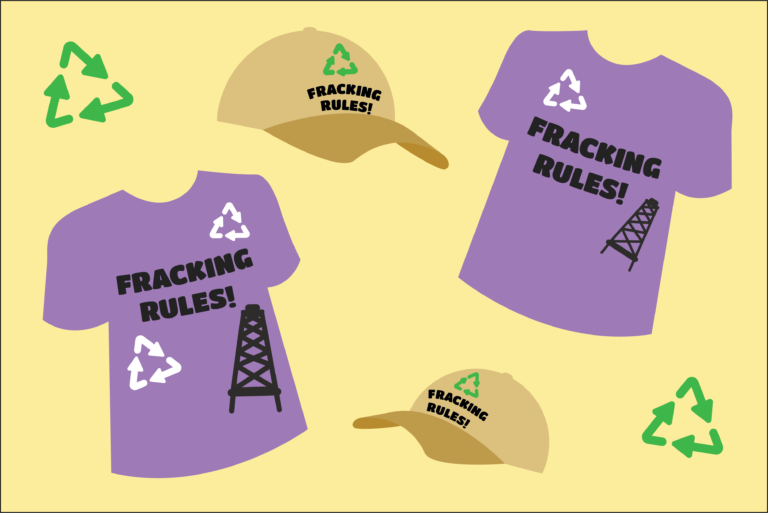
DNC, RNC partner up to debut new ‘Fracking Rules!’ merchandise

Finding the middle ground, underground

We all know how divisive politics can be these days. From the economy, foreign policy and whether literal human beings deserve basic human rights, there always seems to be contentious arguments that break out from political discussions.

In an astounding show of democratic compromise, however, the DNC and RNC have decided to forgo their ideological differences and unite on one of the most important issues of our time: fracking. 

“It is imperative that we dig down into our souls, that we tap into our humanity, and rig ourselves up for the future. That future is fracking,” Senator Kamala Harris announced after the vice presidential (VP) debate against Vice President Mike Pence. The VP candidates were linking pinkies to show solidarity. 

Vice President Mike Pence did not comment, but instead began to molt his skin (as most reptilians do once a month), and revealed his very own “Fracking Rules!” T-shirt. Senator Kamala Harris was visibly disturbed, but “not surprised.” 

Former Vice President Joe Biden was also seen wearing a purple “Fracking Rules!” T-shirt, a fashion choice that was surprising to both him and his supporters: old white men who simply wouldn’t be caught dead in purple. 

The “Fracking Rules” campaign is run by some sort of amalgamation of people with names rhyming with “Brevron” and “Shmexxon Shmobil.” Who these people are or their experience with merchandising remains unclear at the moment. 

Meanwhile, in a galaxy far, far away, President Donald Trump weighed in on the new campaign, showing rare support for the opposing team. 

“The Democrats, I gotta hand it to ‘em, with their government handouts and welfare, and their Antifa… they’ve finally come to their senses about something! Fracking does rule! I’ve been saying it for years! I even took an ad out in fake-news Times about it 10 years ago!” President Trump told a group of his supporters.

Hope Hicks––who rose to fame in her role as coronavirus patient-zero in the White House––emerged from quarantine after the remarks and handed the President a T-shirt cannon, which he then used to absolutely obliterate a bunch of “loser, mask-wearing, fake news people.” The president claimed that his “astonishingly good aim” was merely a coincidence. 

In addition to the T-shirts, the “Fracking Rules!” campaign has launched a variety of fracking-centric merchandise, including “Fracktastic” tote bags, “Frackophile” socks and limited edition “Frack Juice,” a sort of DIY fracking liquid that comes complete with all 700 different toxins, sand and water.

When asked about fracking and climate change during his town hall “debate,” Mr. Biden was quick to make his views clear to the public:

“Let’s face the facts, folks: what’s a little fracking gonna do in the grand scheme of things? My plan doesn’t even have us reaching net-zero until 2345! It’s all a bunch of malarkey.” 

Written by: Isabella Chuecos –– ifchuecos@ucdavis.edu 

(This article is humor and/or satire, and it’s content is purely fictional. The story and/or names of “sources” are fictionalized.)



Wear a mask: the dangers of politicizing healthcare and safety are taking lives

Masks protect the health of you and those around you

The current political climate of our country has been one of the many contributing factors of this ongoing pandemic. Despite the obvious health benefits of wearing a mask, many have opted out of this precaution as a tribute to their political party. By not wearing a mask these individuals are taking a political stance––or so they think. In reality, they are harming their health and the health of those around them. 

Although many have tried, no one can deny that COVID-19 is a serious matter. Millions of people are getting sick, and sadly, hundreds of thousands of people are dying. Mandating masks is our state’s best attempt to collectively prevent the spread of the virus. The onset of COVID-19 has disrupted the normal lives we used to live: attending sports games, throwing parties, eating out, etc. Masks, however, help restore some normalcy as we are able to engage in some of our regular activities once again. Without masks, we’d be right where we started, isolated in our houses for weeks on end––something no one wants to experience again. 

The power masks hold should not be allocated to a political stance. There are many other ways to state your political views. There aren’t, however, as many ways to protect yourself from this virus. Wearing a mask is simple and is something we can all do (unless you have a medical condition that says otherwise). It may not be comfortable, but for the sake of our health and the health of others, it’s worth the trouble. 

Rather than a political stance, wearing a mask should be viewed as an act of kindness––something our world needs more of. Walking around with a mask shows that you care about those around you. Additionally, it demonstrates that you recognize the unprecedented times we are in and that you are committed to being a part of the solution. 

The dangers of politicizing healthcare and safety are becoming increasingly evident. There is a correlation between increases in cases and states and counties that don’t enforce masks or encourage it. The states and counties that are adamantly against masks are often governed by those who identify with the same political party as our president––Republican. When the leader of our country won’t participate in an important health mandate, many of his supporters won’t feel obligated to do so either.  

Although being an individualist country has many perks, our current individualistic habits are failing us. The freedom and autonomy we have in our daily lives is hard to find elsewhere, making me grateful to live in the U.S. But, when our individualistic tendencies allow us to go against the grain without any true repercussions, it prevents us from coming to a consensus on a course of action to stop a roaring pandemic. 

Today, if you looked into a crowd of people, it would be easy to spot who is a liberal and who is a conservative. There are many issues that the people of this country are divided on but a threat to our health shouldn’t be one. American people are dying. That is all we should care about at this point in time, not what our mask says about the political party to which we belong. 

Although I discussed politics in depth throughout this article, it is not meant to be politically charged or spark a debate. Instead, I encourage the exact opposite. Eliminate the politics that are involved in this pandemic and focus on the science. Find a mask that matches you and wear it proudly, because it says you care about your well-being and that of others. And if you still insist on taking a political stance, then find a mask that does just that. At least in this case you achieve your purpose in a much healthier and safer way. 

Written by: Kacey Cain –– klcain@ucdavis.edu 
Disclaimer: The views and opinions expressed by individual columnists belong to the columnists alone and do not necessarily indicate the views and opinions held by The California Aggie.

Students and community members should work toward living more sustainably

Corporations and institutions like the university must be proactive in setting and meeting environmental goals

After spending weeks inside, whether it be because the air quality index is over 200, the temperature is over 100 degrees or because of the global pandemic, it’s not surprising that many college-age students complain about 2020. In fact, some are quick to label it the “worst year” (a title previously held by 2016). However, doing so makes events such as the wildfires seem like something abnormal, or unlikely to occur again, which is simply not the case. It’s been said before, but it bears repeating––the fires and high temperatures well into October are tied to climate change. To quote from a New York Times article about the wildfires, climate change is “smacking California in the face.” 

Corporations have a huge impact on greenhouse gas emissions; in 2017, 100 firms were responsible for 71% of emissions worldwide. Furthermore, universities, including UC Davis, have a duty to their local communities to enforce environmentally-friendly regulations. While UC Davis has taken great strides towards creating a sustainable campus, it fell short of meeting its zero-waste goal for 2020. California has the fifth largest economy in the world, and the UC system, as a state institution, can and should make efforts to reduce waste. 

While actions by major corporations and institutions more directly impact the acceleration or deceleration of climate change, it is important to remember that our actions matter. As students, we may not have the financial ability to install solar panels on our rented apartments or buy an electric car, but through simple actions every day, we can live more sustainably and decrease our carbon footprint.

Now that we spend most of our time at home, running the air conditioning all day is a regular occurrence, especially during a heat wave. By consequence, electricity bills might be much higher now than in a typical year. Air conditioners account for about 12% of home energy use in the U.S. and can range from 2-27% of a household’s energy costs, varying by region, according to a 2018 report by the U.S. Energy Information Administration. Therefore, making an effort to limit air conditioning, even by just increasing the minimum temperature on AC settings, can have a positive impact on both monthly fees as well as the environment.

Eliminating our use of disposable masks can also make a significant difference. COVID-19 has caused a monthly estimated use of 129 billion face masks and 65 billion gloves globally, leading to increased pollution and waste. If we stitched together every disposable mask produced and projected to be produced in 2020, they alone could cover Switzerland. Increased production of single-use plastics as a result of the pandemic has also caused greater ocean pollution, hurting sea animals. Sea turtles often mistake plastic waste (as well as masks and gloves) for jellyfish, and birds can easily get caught in the straps of a face mask. Cutting the straps or switching to a reusable mask is a simple way to help wildlife.

Making conscious consumer choices is also important for leading an eco-friendly lifestyle. In Davis, especially, sustainable shopping is relatively accessible with the many local second-hand stores and the farmers market. Patronizing eco-friendly businesses or thrift shopping can decrease your contribution to waste that occurs in the fast fashion industry, and reducing your consumption of red meat can cut your carbon footprint in half, according to National Geographic

While we acknowledge that it might be challenging to implement all of these suggestions into your routine, we urge you to consider your impact on the environment and to make conscious decisions to live more sustainably. As the election approaches, voting for representatives that support science and understand the gravity of climate change is one of the most impactful things we can do to contribute to creating a greener planet.

Written by: The Editorial Board


Culture Corner

The Arts Desk’s weekly picks for movies, books, music, television shows

Movie: “Coraline” dir. by Henry Selick (2009)

This movie was released years ago, but this is a film that I never get tired of revisiting, especially around this time of the year. Based on the identically-named novella by Neil Gaiman, “Coraline” is a stop-motion animation film that follows a young girl’s venture into a parallel universe behind a small door in her new home. While this idealized world seems perfect at first, Coraline slowly discovers its malicious side. Not only is this movie beautifully animated, but its slightly spooky nature makes it an all-time favorite of mine. 

Book: “Her Body and Other Parties” by Carmen Maria Machado

Machado’s “The Husband Stitch” takes on a new spin to the classic short story, “The Green Ribbon,” while keeping the original chilliness of the tale. As a whole, this collection of short stories feature horror, comedy, science fiction and more, all through a queer, feminist lens. Her tales are haunting and employ elements from classic American Gothics to relay a woman’s experience in a fatally sexist world in both a refreshing and disturbing, abstract way. 

Album: “American Idiot” by Green Day

Although this album was released in 2004, its message on the effects of the U.S. government on lower middle-class adolescents serves as a call to action against the oppressive, patriarchal bureaucracy of the U.S.’ society that still persists today. Categorized as a “Punk-Rock Opera,” this album also served its time on Broadway in its prime. From start to finish, it depicts a story of the main character “Jesus of Suburbia” rising against the backdrop of a failing government.

Television Show: “The Haunting of Hill House” dir. by Mike Flanagan (2018)
Based on the supernatural horror novel by Shirley Jackson, this Netflix series adaptation depicts the lives of a family that has been haunted by supernatural presences throughout their lives. It juxtaposes the narratives of each family member between the present and the past, leading up to the death of a family member in both timelines. 
Written by: Mariah Viktoria Candelaria –– arts@theaggie.org


For the love of God, stop calling me a ‘content creator.’ I’m not at all content!

And don’t even get me started on heteronyms!

When I sit down to write articles like this one, I do so under the impression that I am a “writer.” I was recently informed, however, that I am not in fact a “writer.” No, no, no, I don’t mean that I was fired. I mean that apparently, I should be called something else instead of a writer. 

Does this mean I still am a writer? Was I ever a writer before? Given the fact that I use my brain’s lifelong accumulation of linguistic and lexicographic understanding to weave words into meaningful prose, I always assumed that what I’ve been doing all this time is “writing.”

But I was wrong. This is NOT writing and I am NOT a writer, a shocking revelation almost too abstract to abstract. What do I actually do and what it is that I should call myself? Perhaps just “writer” is too general of a term….. Am I in fact a humor writer? A satire writer? A humorist? A satirist? A columnist?

No! Too specific! Too hyper-specialized! Too conventional! No, no, no, I am now aware that I have a far superior and much more modern and important sounding job title than any of those: I am a “content creator.” Alright, great. Now what on earth is a content creator? That could mean just about anything! Would I still be writing, or is content creation something else entirely?

I first assumed that they wanted to give me a new title because they needed me to do something different. So I began an exhaustive and exhausting quest to determine exactly what this new title meant. I hoped it wouldn’t involve math—I couldn’t be any number to numbers. Best to leave that to people who really love math—the “numbers people.” 

But I had a good feeling that my new title as a “content creator” wouldn’t involve any math since numbers don’t have to be created, at least not if they’re real numbers. The only people who actually do create numbers are golfers who lie about their handicap, businessmen who lie about their income to cheat on their taxes and politicians who lie about the numbers relating to crowd sizes, the coronavirus and “fraudulent” mail-in ballots. In other words, number people, by which I mean people who are a bit more numb and indifferent to reality than the most.

I’m neither a numbers person nor a number person and I don’t golf, so I’m never planning on putting putting ahead of trying to progress progress. So there’s no way “content creators” are numbers people—could they be “words people” like me, perhaps? Let’s see…. religion involves lots of words being used for the creation and fabrication of extremely large amounts of content. Luckily, I learned that my work as a learned content creator doesn’t have to involve religion. This is great because incense incense me and I object to having to subject myself to a project whose object is to project certainty on subjects where science and reason offer only hypotheses and questions. Thus, it would not be appropriate to appropriate religion’s misleading strategies when it comes to creating content for my job.

At this point, I was told that my job would not change and that I’d still be doing the same tasks. Yet, I was not any closer to figuring out what “content creation” actually means. If the job was different in name only, my first guess was that I was considered a “content creator” for creating a spirit of contentment amongst my supposed readership. Reading is supposed to make people content, right? Well, here we run into another problem. My readership is composed largely of left-leaning Americans and I often write about politics, meaning my content likely makes them even less content with the current political situation. Meanwhile, reading on religious subjects tends to make religious subjects highly content, but we’ve already determined that religious leaders are not content creators. But it sure sounds like they are….

The only other idea I can come up with is that content creators are expected to actually be content all the time. But why the hell would you name a job based on how the person doing it feels? Do I have to be content all the time? Or only some of the time? Are they assuming that I’m already content? Or are they attempting to forcibly impose contentment upon me? Because I must say, I’m not at all content! Far from it! And having an employer that does the latter sounds pretty dystopian and totalitarian to me! (Wow, it looks like religion has this type of content creation covered too!)

How many more of these mood-based job titles must we put up with? What’s next? A Blithesome Butcher? A Perturbed Proctologist? A Zany Zookeeper? A Distraught Dentist? A Pervy Priest? (Looks like religion has a third type of content creation covered too….) 

After all this worrying and speculating about my “new” job, I eventually learned that it was all for nought because the “content” refers to the writing that I’m creating. As Wikipedia puts it, “Content creation is the contribution of information to any media and most especially to digital media for an end-user/audience in specific contexts.” Well of course, that seems so obvious now. “Contributing information” to “specific contexts”…..DUH! But again, isn’t that what just about everyone does in some form or another?

So then….. Why can’t I just be called a WRITER? It’s more specific despite having fewer words and syllables! But people really insist on calling me a “content creator.” I don’t get it. This gives me a headache. Whoever came up with this whole “content creation” thing sure was a top tier tier of knots in one’s brain. I can feel my intellectual muscles tearing and my eyes tearing up. If it wasn’t clear, I think all of this is as absurd as a fever dream about having to consort with and bow down to a consort of bow tie-wearing, bass-playing bass just because they bravely managed to concert all of their energy to play a concert of fish music while holding their breaths above the water.

Labeling anyone who does any meaningful work something as general, vague, empty and meaningless as a “content creator” is just a way to make people feel more important; meanwhile, the people who are really running the internet slowly dehumanize actual writing and and other truly thoughtful “creative content” to the point that it blends in and stops taking attention away from abundance of lifeless consumer product-related “content” filling our ad banners. If all this fancy merchandise that Big Tech is trying to merchandise as it exploits our creative exploits deserves labels more specific than “content,” why doesn’t writing?

But enough complaining from me. It is now close to “the close” of the article. “The close” confines my content thoughts and my thoughts on content to the close confines of my brain until I put pen to paper to “create content” again.

Written by: Benjamin Porter— bbporter@ucdavis.edu 

(This article is humor and/or satire, and it’s content is purely fictional. The story and or names of “sources” are fictionalized.)


UC Davis researchers study viability of drug used to treat President Trump

 Trump’s tweets show how media consumption affects our understanding of COVID-19 

After being treated at Walter Reed National Military Medical Center for COVID-19, President Donald Trump took to Twitter, claiming to have been “cured” by a cocktail drug created by Regeneron Pharmaceuticals. While some Americans may believe this drug can put an end to the pandemic, Timothy Albertson, a distinguished professor and chair of internal medicine at UC Davis Health, stated that it is not necessarily the case.

“The reason you do clinical trials is because you can’t [produce statistically significant data] from one person,” Albertson said.

Albertson has been examining multiple medications for a potential COVID-19 treatment since July, one of which is the same drug President Trump received. He explained that Regeneron’s drug is a cocktail of monoclonal antibodies, which are antibodies made by bacteria that are detected by the immune system to be human antibodies. When injected, these antibodies can be directed at specific sites, such as the spike protein on the SARS-CoV-2 virus. If all spike proteins can be inhibited, this could prevent the virus from replicating.  

Although Trump’s condition has improved after treatment, Albertson explained this doesn’t say anything as to whether the drug worked or not. There are multiple other factors that may have helped his condition, one of which being the fact that in addition to Regeneron’s drug, Trump also received steroids and Remdesivir during his stay. According to Albertson, Remdesivir is a semi-approved antiviral drug for hospitalized patients that appears to be working to some extent for treating COVID-19. Since Trump took multiple medications, it is difficult to determine which one worked for him.

In addition, Albertson explained there are many genetic factors to take into consideration which vary from person to person. This is why it is important to establish equipoise, he stated, where groups being studied and compared are made to be as equal as possible with only one variable—in this case, the drug. Such conditions can be created through clinical trials, but not through one person’s testimony. Albertson’s study is currently conducting randomized clinical trials with Regeneron’s drug on COVID-19 patients. He will not know whether the drug works or not until the end of the trials since the experiment is blind and controlled. 

“I think people need to be thinking about clinical trials and how important they are for themselves and for humanity in terms of understanding whether a new treatment has potential or not,” Albertson said.

Furthermore, Trump’s tweet telling people to not be afraid of COVID-19 and that he “feels better than [he] did 20 years ago” may cause more misunderstanding about the pandemic as a whole. Magdalena Wojcieszak, a professor in the department of communication at UC Davis, explained that Trump received the drug through compassionate use, which is where unapproved drugs can be used to treat patients in special cases. She stated that those who are less informed may not be aware that the drugs used to treat Trump are not easily accessible to the majority of Americans.

The tweets by the President, “may create this false sense of security that COVID in fact doesn’t need to be taken seriously or that that kind of cutting edge treatment may be available to everybody even though it’s absolutely not,” according to Wojcieszak.

Wojcieszak explained that it is important to consider that a large majority of the American population do not read the news in depth, but rely more on social media, such as Facebook or Twitter, for information. Therefore, most people likely only know this basic sequence of facts: President Trump had COVID-19, was hospitalized, received a treatment and is now fully recovered. With the presidential election approaching and dominating most media, people are less likely to be fully informed of Trump’s exact treatment and may perceive the sequence of events leading to his complete recovery as normal for all people who contract COVID-19.

“Even those who do tune in to more traditional media [or] go online [for news] engage in what communication scholars call ‘selective exposure,’” Wojcieszak said. “Which means that if you’re more liberal, you go to the New York Times or you go to CNN.com. If you’re more conservative, you go to Fox or to other [conservative] publications or directly to the president’s Twitter, which means that different groups within American society have very different realities of what’s happening politically in general and especially with COVID.” 

This difference in the type of media Americans consume is heavily reflected in people’s attitudes towards COVID-19. According to a poll by Pew Research Center, 83% of Republicans who only follow news outlets with right-leaning audiences thought the media was exaggerating the risks of COVID-19, whereas 53% of Democrats who only follow news outlets with left-leaning audiences shared the same opinion. In addition, Wojcieszak explained that because the President has repeatedly expressed skepticism in scientific experts, this may have contributed to the lack of compliance with CDC guidelines by a portion of the public.

“If the most powerful man in one of the largest countries [gave] such messages, naturally his supporters [did] not take the situation as seriously as they could have or should have or as people in some other countries did,” Wojcieszak said.

Wojcieszak stated that people should be aware that a lot of the information “circulating on social media is circulating there precisely because it is sensationalist or hyped in some ways.” In addition, all media consumers should know that the sources they rely on are not necessarily objective and may be consistent with people’s pre-existing biases. According to Wojcieszak, because the U.S. does not have a form of public broadcasting that is seen as neutral and the country is largely split into two political parties, it is difficult to prevent the creation of different realities. 

“No matter what happens, no matter what information the media puts out there, no matter what you write or what I study, we [are likely to] have [a] very divided society in which different groups of people live in different realities, consume different [news] media, if they consume [news] at all, and have very different responses to COVID and to what’s safe and acceptable,” Wojcieszak said.
Written by: Michelle Wong —science@theaggie.org


NFL encounters COVID-19 testing challenges

0

With COVID-19 cases going up in the NFL, the pressure is on

The 2020 NFL season has been anything but normal thus far. After starting out the season with three straight weeks of uninterrupted football, it seemed like even with the ongoing COVID-19 pandemic, the league would be able to make it work. They were already ahead of their baseball counterparts, who encountered a rapid team spread less than a week after they began their season in late July. Aside from a couple players testing positive before Week 3, there had been a clean slate and no mass spread that had deterred the season. But, the end of the honeymoon phase led the NFL into a rude awakening, and they will now try to maneuver around the damage that continues to occur. 

Following their Week 3 matchup against the Minnesota Vikings on Sept. 26, the Tennessee Titans suffered a massive blow, as a total of 16 members of the organization tested positive for COVID-19. It is uncertain where the spread began, but none of the Vikings players or staff tested positive for the virus after their game with the Titans. As the list of positives grew to 19, and the NFL was forced to move the Titans’ scheduled game against the Pittsburgh Steelers in Week 4 to Week 7 (Oct. 25). This forced both teams into an unexpected bye week, with hopes to hold their Week 5 game as scheduled. 

With the team currently closing all facilities, they were forced to move everything remotely and over online video chats. The unexpected bye week and suspension of all activities however, brought some reckless actions by some players, as a group of 15 gathered at a nearby high school to workout, even after the spread. The team came under fire, as this irresponsible act came with the possibility of endangering even more individuals. 

“Guys just don’t work out for fun this is for their [livelihood], their family, their opportunity,” tweeted Titans’ offensive lineman Roger Saffold in response to the reports of the unauthorized workout. “Say what you want but I’m standing up for my team always.”

While Saffold’s argument is understandable and players in the workout tests came back negative, the actions could be seen as dangerous given the circumstances surrounding the team. This coupled with an NFL investigation into the spread could lead the Titans into never before seen punishments by the league. 

“The Titans already faced a potentially significant punishment for alleged protocol breaches that fueled an outbreak of COVID-19,” said Pro Football Talk’s Mike Florio. “Given the news that the team apparently gathered to practice last week after expressly being told not to do so, the Titans could be facing a consequence the likes of which the NFL has never seen.”

The NFL has been taking COVID protocols seriously and enforcing harsh penalties for infractions, so it would not come as a surprise if the punishment is bigger than many expect. 

After a 16 day absence, the Titans made their long awaited return to football on a rare Tuesday night matchup against the Buffalo Bills. After only three practices since their last game against the Vikings, the Titans came out motivated, dominating the Bills by a score of 42-16 and remained undefeated. Their long, controversial battle with COVID seems to have come to a close, at least for now. But, as the Titans move forward, other teams begin their battles.

On the Saturday morning before Week 4, it was announced that New England Patriots starting quarterback Cam Newton had tested positive for the coronavirus. With their game against the Kansas City Chiefs being scheduled the next day at 4:25 p.m. ET, many believed that this would become the second game of the week that was moved. That changed however, as all other tests on both teams came back negative. Subsequently, the game was moved and became an impromptu Monday Night Football game the day after. 

The Patriots had hoped that they would be able to put everything behind them and start fresh, but more bad news came the next day. Reigning Defensive Player of the Year Stephon Gilmore tested positive for the virus following Monday Night’s game against the Chiefs. This led to their game against the Denver Broncos to be pushed back a week, putting both teams in a bye week. The Patriots facility shut down and luckily avoided a mass spread like what happened to the Titans. They returned to practice on Oct. 14 and welcomed back Newton and Gilmore to the team following back their absence. With all eyes looking toward Denver, it seemed like they would finally be able to focus strictly on football. But, after only practicing for two days, the Patriots facility was shut down once again, citing another positive test. 

The rapid increase of cases in the NFL has caused the league to make adjustments to its protocols. The closing of facilities and postponement of games will continue to be on a case by case basis. The enforcement of masks at all times will continue and limited contact is necessary even if all have tested negative. Leading up to Week 6, the league announced that any members of an organization who is experiencing any symptoms of illness will be sent home, even if they have not tested positive. When they are able to return will be a decision made by team doctors and NFL disease experts. Tests were being administered everyday except the day of a game, but part of the slew of changes was the addition of game-day testing. 

The constant testing could help with stopping a spread before it occurs. But, what has now been learned is that these tests can also be false. False positive results from rapid testing has brought this method into question. Both the New York Jets and Indianapolis Colts have experienced these false positives and were forced to close their facilities, only to find out that the tests were negative. This has not only been an issue in the NFL, but with others who use these rapid tests. As much as it is convenient and beneficial to have the results as soon as possible, these incorrect tests can end up costing some players, as they might have to miss a game when they didn’t need to.

In what has already been a frustrating NFL season due to injuries, it seems that positive tests will continue to rock the league. As teams now begin to go on their regular scheduled bye weeks, rescheduling will become a bigger issue for the NFL. The possibility of adding another week is still on the table and with the pace that these positive tests have come, it seems like it will have to be done. But as of now, the NFL believes that they will be able to finish off the season without it. Plans of an NBA-like bubble, even for the playoffs, are not in play as of right now, as the number of members in an organization makes it hard to go through with this plan. 

As we approach the midway point of the season, the NFL continues to be tested week in and week out. As of now, there is no major threat that would cause the league to halt their season, let alone cancel it. That, however, is dependent on how many positive tests appear weekly. Only time will tell if the NFL will be pushed to a breaking point, but regardless of how careful the league is in enforcing their rules, at the end of the day it is out of their control. For now, they can only hope that it does not push their season to the brink.

Written by: Omar Navarro— sports@theaggie.org

Why milk alternatives? Three students share their thoughts

How environmental consciousness edges out the dairy industry

When asked her thoughts on cow’s milk, Joelle Page, a second-year psychology major, said: “It’s disgusting. All I can think about is the pus and blood and dirt, God, I can’t believe I ever drank it. And I know how the process is, like all the steps it goes through to make it edible. But that doesn’t mean I avoid it. It’s hard to not eat cheese and yogurt and dairy products, but milk is disgusting.” 

It’s no secret that milk’s popularity has been on the decline for a while. With the public’s increasing emphasis on sustainability paired with growing diet consciousness, milk has been declared the enemy. More and more people remove it from their diets every day. Eager to fill the hole milk has left, a booming new industry has popped up. Three students explain why they explore dairy alternatives. 

“I was always a little lactose intolerant,” said Sarah Gougeon, a third-year plant science major, as she ruefully recalled the moment she knew her diet had to change. “In junior year of high school, I went to Ecuador and got a parasite. Then I was really lactose intolerant.” 

Despite her unusual circumstance, she shared similar experiences with the other interviewees. Savannah Pluma, a second-year engineering and biological sciences major, cites a cocktail of lactose intolerance and budding veganism as the reason she dropped milk.

 “I experimented with alternatives for a while, but educating myself about veganism pushed me to really […] make the change,” Pluma said.

While much of their reasoning for making the switch was the physical (bolating, gas, nausea) aspect, all three said that ethical considerations were their driving force. 

“I watched this documentary that called milk ‘baby cow growth fluid,’” Page said. “If you think about it, it’s really not meant to be consumed by humans.” Gougeon, who is not vegan, shared similar thoughts. “It’s easy to forget, they forcibly impregnate the cows to steal their milk. It happens their whole lives.” Pluma looks at the dairy industry as a small part of the bigger picture. “Regular milk is delicious. It might be really good in coffee, but this is the future of our world. I’m trying to prioritize the earth.”

One of the more difficult factors of adapting to milk alternatives is figuring where and how to incorporate them into one’s diet. Some, like Page, see it as a full on substitute. 

“You can use it in pretty much anything you would use regular milk in,” Page said. “Like smoothies or cereal.” 

Simple dishes that don’t require baking are common places to try milk alternatives, helping new consumers adjust to the altered taste. Gougeon is more particular with how she uses the alternatives. She explained her detailed process: 

“Anyone who knows me knows this: almond milk for cereal, soy milk for cooking, oat milk for coffee,” Gougeon said. 

Pluma is more experimental with her decisions. 

“I go through phases, right now it’s been months since I had soy milk, but now I need that sweet taste, other times I want some yummy thick liquid (oat milk), sometimes I want that watery deliciousness of almond milk,” Pluma said. “I’m a layered woman.” 

With so many types of milk alternatives available, picking the drink you enjoy is critical. There is a process of trial and error in figuring out what works for you. Ethics plays a large role, but so does nutrition and price. 

“I used to pick based on nutritional values, so I drank a lot of soy milk because it has so much protein. Now, I just drink whatever’s around me. I like milk that tastes good, I don’t really care if it gives me nutrition or not,” Pluma said. 

For Page and Gougeon, the price tag is more of a deal breaker than the nutrition label.

There are obvious struggles when you take milk out of your diet, but with non-dairy options increasing in popularity so rapidly, it’s easier to adjust. Pluma gave some encouraging advice for newcomers: 

“Sometimes it’s hard to find milk in public, in coffee stores and what not. Now, obviously, everyones drinking it—you know Dunkin just added oat milk to their menu,” Pluma said. “Big things!” 

Page shared that it “gets easier with time.” 

The transition from cow’s milk to a milk alternative may seem daunting, but these students agree the pros outweigh the cons. Invest in a more environmentally conscious way to eat and drink.

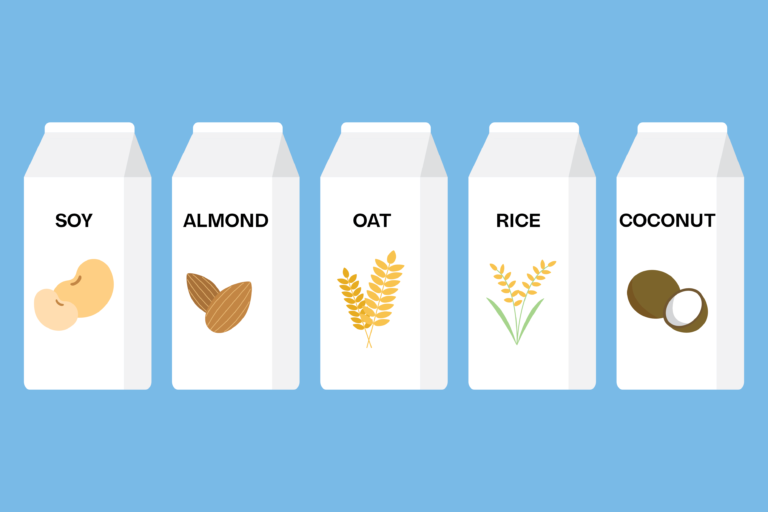
Overall interviewees’ milk alternative rankings:

SOY: ★★★½ 

ALMOND: ★★★

OAT: ★★★★½

RICE: ★½

COCONUT: ★

Written by: Livvy Mullen — arts@theaggie.org