57.9 F
Davis

Davis, California

Monday, December 22, 2025
Home Blog Page 314

UC Davis will no longer offer for-credit PE classes starting Winter Quarter 2021

Petition circulates to keep PE courses indirectly funded by student fees from the SASI referendum passed in 1994

A petition has been circling around social media platforms that protests UC Davis’ recent decision to terminate physical education (PE) classes. 

“On Sept. 25, 2020, UC Davis made the sudden decision to eliminate the entire Physical Education program effective Winter Quarter 2021,” the petition reads. “This is a direct violation of the spirit of the SASI referendum and the understanding and intentions of the students who passed it in 1994.” 

After budget cuts reduced funding for athletics, recreational sports and recreational services at UC Davis in the 1990s, ASUCD sponsored a referendum for a $34 student fee increase per quarter. The Student Activities and Services Initiative (SASI) was passed during a special election in 1994 after students voted to continue the fee as a temporary fund for Intercollegiate Athletics (ICA) and other recreation programs, according to the UC Davis Council on Student Affairs and Fees. The initiative also allocated funding for intramurals and sports clubs, recreation programs, the current Pavilion, the Equestrian Center, the Cross Cultural Center, the Women’s Resources and Research Center and Student Health Services. 

In exchange for money diverted to ICA, students were promised for-credit PE classes. Students can enroll in physical fitness and sports courses paid by tuition, and can earn academic credit for their enrollment, rather than paying an additional fee for fitness classes. A report of the Academic Senate Special Committee on Athletics on April 17, 2012 outlines the cooperation between ICA coaches and the PE programs.

“[The physical education program] is an academic program in the College of Letters and Science,” the report reads. “It offers lower- and upper-division courses including the PE 1 activities courses and PE 6, the course associated with participation in intercollegiate athletes. Through the UC Davis teacher-coach model, the ICA coaches teach both of these courses.” 

In response to a concerned student, Chief Campus Counsel Michael Sweeney wrote in an email that “no campus-based student fees are used to fund PE, and the elimination of the PE program will not affect the recreational offerings provided through Campus Recreation.”

Although funds from the SASI directly fund ICA and other recreation programs, Sweeney did not address the fact that funding ICA indirectly funds PE courses, because ICA coaches—whose salaries are at least partially funded by the SASI—teach PE courses.

“It’s not about student opportunity anymore, it’s about money,” said Paul Medved, a UC Davis almunnus who graduated in 1978 and father of a UC Davis swimmer who graduated in 2009.

Medved continued to explain the unique teacher-coach model of PE and club athletics at UC Davis.

“The UC Davis Intercollegiate Athletics program is very unique,” Medved said. “It is based on this teacher-coach model, and it involves a partnership with student fees and the university’s support of physical education. Coaches have master’s degrees and [qualify] as instructors and have to subscribe to the faculty code of conduct. Soon, that will get severed and replaced by mercenary coaches. It has nothing to do with the academic mission anymore.”

Medved explained that UC Davis ICA coaches who double as lecturers and PE teachers are subject to losing the coaching aspect of their salary if the PE program is cut. Medved has connections within the alumni association and involvement with members of UC Davis athletics who have received layoff letters. He noted that non-tenured professors are not likely to speak out.

“Everybody on the coaching staff is going to be subject to losing 30% of their salary,” Medved said.

Chancellor Gary May explained the reasoning behind the decision to eliminate PE classes in his “Thursday Thoughts” Instagram story series on Oct. 22.

“Well, first, I should say that the curriculum really belongs to the faculty and not to the Chancellor,” May said. “But, I do support the decision on PE, and here’s why: I think we should not look at it as something being taken away necessarily, because the only thing being taken away is your ability to earn credit for the activity—earn academic credit. We still plan on having a very robust portfolio of activities: physical activities, wellness activities [and] mental health activities available through campus recreation.”

Students will continue to pay the SASI student fee, but the fee will no longer indirectly fund unit-earned PE courses.

“I’d like to have a Business Degree for undergraduates, for example,” May said in his post. “I’d like to have Data Science for undergraduates, for example. And we can’t do these things with finite, scarce resources. We have to make some choices in order to be able to do all those things.”

Petition organizers argue this is unfair considering the 1994 ASUCD Senate intended the funds from the SASI referendum be allocated specifically to PE courses. 

Claire Klyver, a third-year neurobiology, physiology and behavior major who organized the petition circulating on social media, is concerned for her PE teacher amid the budget reallocation plan.

“I am confused why the student body wasn’t told initially that the program was ending,” Klyver said. “ASUCD should be the liaison between the administration and the students.”

Written by: Hannah Blome — campus@theaggie.org 


The 2020 Election is closer than you think

1

 Polls show a commanding lead for Biden, but other trends point to a repeat of 2016

Nov. 3. is four days away and millions of Americans have already cast their vote for the next president of the U.S. But even with non-stop media coverage, many are left wondering just who has the advantage going into Election Day. Lucky for us, we have years of data available to reveal what trends might define 2020. 

This race is closer than you might think. Here’s what we know so far:

President Donald Trump is gaining with voters of color but losing college-educated white voters.

In 2016, Trump rewrote the Republican path to the White House by winning a shockingly disproportionate amount of non-college educated white voters. The general liberal consensus was that Trumpism served as a sort of proxy for white identity politics, culminating in a grand “whitelash” that acted as the dying, final resistance to a rapidly diversifying America. Like Ruy Teixeira before them, commentators have routinely followed up this argument by stating that four more years of demographic change would be enough to prevent another Republican victory in 2020. 

Now that theory is under fire. 

As the Republican Party (GOP) hemorrhages support from college-educated white voters, both suburban and urban, the Trump campaign appears to be making in-roads among minority voters. Polling consistently finds Trump hovering in the mid to low 30s among Hispanic voters, with some polls recording his support as high as 38%. This compares to exit polling in 2016 which found that just 28% of Hispanics voted for the New York businessman. Hispanic support for the president is also split along stark age and gender lines, with young Hispanic men more likely to favor President Trump than young Hispanic women.

The president’s support among Hispanic voters is likely due in part to the enormous wage growth experienced by the group under his administration. Hispanic household income grew twice as fast as the national average did in this timespan. Not to mention other factors like record low pre-pandemic unemployment, staunch anti-communism and socially-conservative tendencies among certain religious demographics, particularly among Protestant Evangelical Latinos.

Trump’s gains among Hispanic voters are also especially pronounced in key swing states. In Florida, multiple polls have the president leading former Vice President Joe Biden by several percentage points among Latino voters, with some even finding Trump winning an outright majority. For reference, former Secretary of State Hillary Clinton, bested Trump among Hispanic voters in Florida by about 36% in 2016, and still lost the state.

Trump’s new coalition is potentially reflective of a larger Republican transformation as a whole; the future of the GOP looks increasingly more like a national populist project than the fiscally conservative party of yesteryear. In this evolution, the GOP would offset declines among suburban whites by increasing their monopoly over rural, non-college educated whites, while also bringing significant portions of the working class Hispanic (and to a lesser degree, Black) electorate into the fold. 

For a test run of this strategy in 2020, look no further than California’s neighbor to the east: Nevada. A majority-minority state that Clinton won by just over 2% in 2016––a margin less than former Libertarian candidate Gary Johnson’s 3.3% share of the state vote. Nevada appears increasingly competitive despite its 2020 polling. Both President Trump and his surrogates have made multiple appearances in the last several weeks, just as Democrats are working to quell anxieties about the state’s potential apathy towards Biden. While non-Hispanic whites make up just 48% of the state’s population, a disproportionate share of this demographic consists of rural and non-college educated whites; the president’s personal appearances in the more communities of Carson City and Minden suggests that the campaign’s strategy is focused around increasing turnout from this group. If Trump can increase rural white turnout and ride higher Hispanic support to close the gap in Las Vegas and Clark County, then Democrats could be looking at a shock in the southwest in the coming weeks.

Of course, Trump’s gains among minority voters, Hispanic voters especially, will have differing effects in terms of his potential path to victory. For one, his increased approval among Hispanic voters is not a national trend, but is rather heavily subjected to regional and ethnic identification. First generation Mexican-American voters in a state like Arizona, for example, likely have wildly different political tendencies than eighth generation Tejanos in Texas or Cuban exiles in Florida. Trump’s Hispanic support is likely to be disproportionately felt in Texas and Florida, while Biden will likely enjoy heavy advantages among the demographic in the remainder of the southwest.

Meanwhile, older Black voters still overwhelmingly support Biden, while Trump has seen increasing support among young Black male voters. But that doesn’t necessarily mean it will directly benefit him nationally. Black support for modern Republican candidates has been so paltry that even if Trump does manage to win historic numbers of the group, it will likely have very little impact in the grand scheme of things. The more concerning issue for Democrats is depressed Black enthusiasm for Biden.

Further, white voters make up a disproportionate share of both the national electorate and states that most directly impact the electoral college tally. This means that Trump’s increases among Hispanic and Black voters are probably not enough to offset losses among white voters, especially if Biden manages to cut into non-college educated white voters.

Polling heavily favors Biden. But other indicators point to another surprise Trump victory.

It’s no secret that Biden is ahead in the polls. As of Oct. 29, the RealClearPolitics average has Biden a 7.7-point advantage nationally, while FiveThirtyEight places him at a 8.9-point lead. Even the friendliest of Trump pollers like Rasmussen have the incumbent president’s best performances at two or three points behind Biden, potentially enough for an electoral college victory, but still far from comforting. 

Skeptics will point to 2016 as evidence of poller’s widespread fallibility. But to simplify like this would be wrong. For one, even though polling in 2016 heavily favored Clinton, there were still significant periodic shifts in the data. In late May, for example, Trump led the former Secretary of State by 0.2 points, before Clinton regained a commanding lead. Trump eventually closed this gap as the polls tightened in late October and early November, which suggests that at least some firms were closer than they’ve been given credit for. This year, there have been no such lead changes, and Trump has only moderately cut into Biden’s lead. Even now, with the conclusion of the presidential debates and any October surprises out of the way, Biden still enjoys a larger national lead than Clinton did at this same point four years ago.

But there are still a number of trends that point to another Trump victory in November.

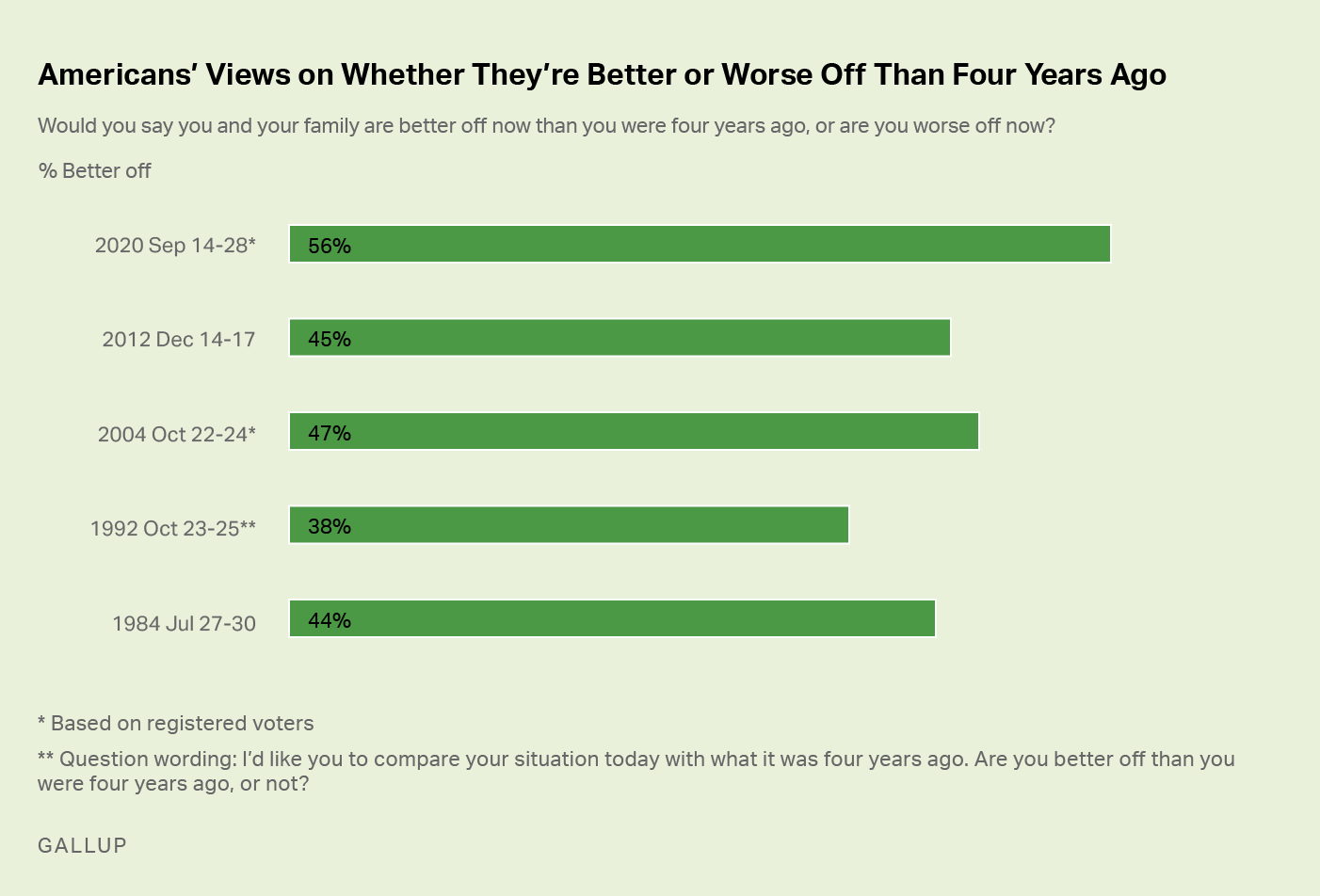
For one, Trump’s polling averages in a number of key battleground states are higher than they were at this point in 2016, when he narrowly defeated Clinton in Michigan, Pennsylvania and Wisconsin. Trump also enjoys an enormous enthusiasm gap, with one Pew Research poll finding 66% of Trump supporters say that they “strongly support” their candidate, in contrast to just 46% of Biden supporters saying the same. And when it comes to that infamous question then-candidate Ronald Reagan asked American voters in 1980—Are you better off today than you were four years ago?56% of Americans say they are, the most since Gallup first began asking the question in 1984.
Voter registration is also shifting in favor of the president, especially among a number of key states. In Arizona, Florida, North Carolina and Pennsylvania, Republicans have out registered Democrats over the past several months. Their gains in these states have also expanded beyond just rural districts, with the GOP garnering net gains in heavily-Latino districts like Miami-Dade County in Florida and Maricopa County in Arizona. Predicting electoral outcomes based purely on registration trends, however, can be troublesome, and the problem may be particularly apparent for the Trump campaign given that many of the new Republicans may merely be traditionally Democratic Rust Belt voters who voted for Trump in 2016 and are just now adjusting their registration.

And finally, Trump’s approval rating within the GOP remains astronomical. Pew Research places his intra-party approval rating at 87%, the highest for any president since Dwight D. Eisenhower in the ‘50s (Trump is also the least favorable ever among the opposition party). Meanwhile, resistance from within the GOP has primarily come from establishment, neoconservative types, like those at the Lincoln Project, who enjoy billionaire connections and favorable media coverage, but who also have very little traction among standard Republican voters. And with all due to respect to former U.S. Rep. Joe Walsh, there were no serious attempts at primarying Trump à la Buchanan vs. Bush ‘92.

So what does it all mean?

Unsurprisingly, most election aggregates see Biden as the clear winner this fall. As far as these aggregates go, The Economist puts Biden’s chance of victory at 95%, while FiveThirtyEight gives the former Vice President an 87% chance. Betting websites, which tend to be more friendly towards Trump’s odds, still have Biden as the favorite by about a 2:1 ratio. These models aren’t infallible, but they do reveal just how much Biden is dominating traditional data metrics.

That said, many of these forecasts don’t account for factors beyond pure polling results or economic data. As noted before, the structure of the electoral college, as well as differences in regional voter tendencies, are likely to favor President Trump. Combine this with a potential shy voter phenomenon, empty college campuses, disproportionately-Democrat rejected mail-in ballots and heavy Republican insistence on in-person, Election Day voting, and Americans could be waking up to four more years of Donald J. Trump.

Written by: Brandon Jetter –– brjetter@ucdavis.edu 

Brandon Jetter is a senior at UC Davis double-majoring in Political Science and History. He was formerly a weekly columnist for The California Aggie.

Munch brings Filipino desserts to Davis students

The new student-run business hopes to brighten your day with authentic desserts

Munch is a new student business run by Andrei Garcia and Jose Cardenas. The duo splits up their duties to make the magic work. Along with managing finances, Garcia, a third-year communication major, uses his family recipes to create leche flan and coffee jelly, the two options on the small business’ menu. Cardenas, a fourth-year communication major, focuses on marketing and promoting their brand. 

The idea for this small business started when Davis entered lockdown for the COVID-19 pandemic. The pair of friends pitched ideas on their brand’s vision and when would be the best time to sell. 

“We both are still students,” Cardenas said via email. “We had to find a way to sell without it affecting our studies, which is why we decided to sell through pre-orders. Usually, our pre-orders have a deadline, and this lets us know how many orders to make the day before delivery.”

This student duo sells their leche flan for $8.25 and their coffee jelly for $4.75. While they are currently using disposable plastics, they hope to switch to biodegradable packaging in the near future. Their creation of the two specific desserts was strategic; only having two options gave them the chance to run a small business without being overwhelmed by too many products. 

“[Selling two things] allowed us to manage our time between school, work and our business since it is only the two of us managing it,” Cardenas said. “But we do plan on having limited-edition holiday desserts and we may incorporate a few more desserts in the future.” 

They plan on selling once a week and with the help of everyone who has been supporting their business, they are persevering through the hardships of COVID-19. Whether they are selling through delivery or pick-up, they adhere to the guidelines to ensure a safe experience for their hungry customers. 

“We knew we wanted to focus solely on Filipino desserts, but we didn’t want to name it something common,” Cardenas said. “Instead, we focused on the act of eating itself. When you love a certain dish, you’ll keep munching on it because your taste buds are attracted to the flavor. And since Filipino desserts carry a ton of flavor, we found it fitting.” 

The decision to start Munch wasn’t a last minute impulse in light of more free time during the pandemic—the pair had considered the idea for a while. 

“My friends would jokingly say that I should start a small business because they loved my desserts,” Garcia said via email. “After much thought, I realized that there wasn’t representation in Davis in terms of Filipino cuisine, and as a proud Filipino who emigrated to the U.S. when I was 12, I wanted more students or the Davis community in general to taste a piece of my culture.” 

Cardenas always dreamed of having a small business and is finally living that reality. 

“Having a small business has been rewarding not only by seeing our customers’ excitement, but also by realizing that our dreams are possible,” Cardenas said. 

Throughout the entire process, neither partner had any doubts or worries. They were completely confident in each others’ abilities and trusted that they would work well together, even amid unprecedented times, they both explained.

“Having a partner is helpful because we can lean on each other for support and we both have our strong suits,” Garcia said. 

The pair is looking forward to seeing their business grow along with their loyal Davis following. They hope to one day see their small, at-home business grow into an actual store. 

“What I am most excited about in this business is seeing where it takes us and being able to grow both of our skills in the process,” Cardenas said. 

At the start of the quarter, with everything going on, the duo forced themselves to keep up with their responsibilities in order to keep their grades up and their customers happy.

“My feelings were everywhere because it was in the middle of the week and I had homework to do and errands, but they were good feelings,” Garcia said. 

That first sale was a surreal experience for the pair and as they relive it, they can recall the busy first day of orders pouring in. 

“It started to set in that I have a small business,” Cardenas said. “It became reality.”

Both parties have gone through the business with an outstanding amount of support; they thank their friends and family for the support through these times as they chase their dreams. 

While some friends offer emotional support and others buy the products, the friends of Munch celebrate this small business by sharing their posts through Instagram.

“My friends have been super supportive and I’m appreciative of them sharing our business on their social media,” Cardenas said. 

Garcia’s family reacted well to the idea of using family recipes for his new business. 

“My parents were very supportive and said that they hope that I do well,” Garcia said.

The small business has triumphed through lock-ins and hurdles alike, but this is the norm for them, as this is how they started. Nothing stops this team from making food to keep other people happy during a bit of a dark time as some students are far from home and embrace food as a source of comfort and familiarity. Students have found solace in this small business as the owners try to give them a smile through a sweet package. 

“I’ve always enjoyed making food and baking and watching people’s faces brighten up after they take a bite,” Garcia said. 

Munch sells their foods through their Instagram (@munch.davis) with weekly pre-orders. 
Written by: Itzelth Gamboa — arts@theaggie.org

Behind the club: UC Davis men’s rugby

0

As the club continues to grow, team hopes more support grows as well

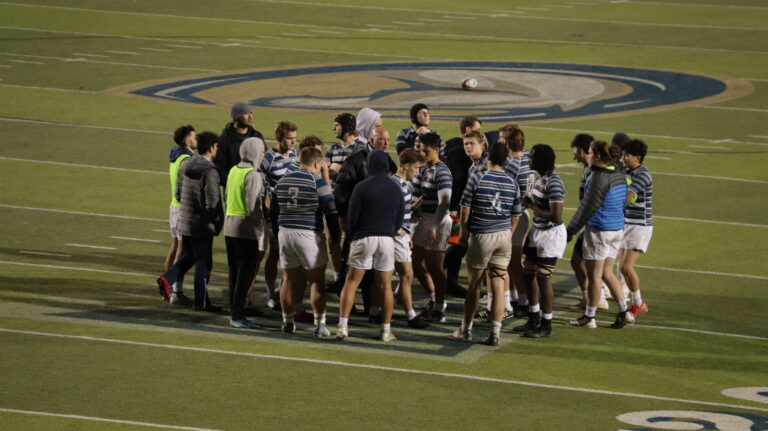
Often overlooked due to the multitude of Division I sports offered at UC Davis, sport clubs have been a crucial part of the college experience for many students. With 39 clubs being offered in Fall Quarter 2020 alone, it is easy to see how they can go under the radar. Still, these clubs carry the same work ethic and competitiveness that you can find on any team and among their members, there is no lack of passion. For the UC Davis men’s rugby club, the journey to get where they are today has been one that has taken a lot of work and commitment by all players and staff involved. 

Players on the UC Davis men’s rugby club range from those who have played their whole lives to those who just discovered the sport upon arriving on campus. Split into the A side and B side, the club fields both teams, one for those just starting and one for those more advanced or more familiar with the game. 

“I like to describe it as, in high school you have the varsity team and the JV team,” said Thomas O’Brien, the UC Davis Men’s rugby captain and fourth-year civil engineering major. “We have the A side, which are the 15 best players and the subs and the B side are the other players not in those 15. Although you are not in the starting 15, you can still get a lot of games in.” 

But, in contrast to junior varsity and varsity football, the support from the teammates, regardless of which side they are on, is always there. 

“What’s great about after playing an A side game is that whether you are on B side or not, you get to sit there and watch your teammates play,” said Jordan Naumburg, the President of the men’s rugby club and third-year mechanical engineering major. “I think that’s awesome because the B side players see that the older guys do care about them. Having [them] watch you, supporting you and cheering you on really gives you that sense of community.”

The supportive atmosphere that surrounds the club is one of their major keys to success. Being unable to give out scholarships, the recruitment process can be a tough venture for all clubs. 

“That’s our biggest challenge as a club level [team],” O’Brien said. “There’s a few teams that have scouts and can give out scholarships. Our recruitment process is basically just face-to-face interactions, friends and just telling others about the club.” 

Meeting with people face to face, tabling or telling a friend are all ways that they recruit, and while that may be a disadvantage in terms of acquiring elite talent from across the country, there is some benefit with that close interaction. 

“You get to meet people on a personal level,” Naumburg said about the recruitment process. “You get to enjoy your teammates. I think this is something that we have that others don’t, because we go out and meet people. Some of my best times in college have been with [this team]. To have those [teammates] you reach on a personal level makes the dynamic of the team much better.”

Although they are a club sport, they compete at the Division IA level which allows them to play elite teams like Saint Mary’s, Santa Barbara and Grand Canyon University among others. After winning back-to-back Division IAA national championships in 2015 and 2016, the club made a jump to the top division, playing in the DIA California Conference. Now in the highest possible division, they hope to compete at their highest level possible, even if they don’t have the resources the other schools may have. 

“With one word to describe us: underdog,” Naumburg said. “I feel like we walk into a lot of these places that have all these fancy stadiums, funding and we just play with our hearts out. We play with everything.”

In a normal year, Fall Quarter serves as a preseason, as they begin practices, get new players up to speed and play games that will not be officially counted, but are helpful for getting in practice reps. The winter is when they begin their competitive league games, scheduled every one to two weeks. The spring marks the beginning of playoffs and if they qualify, they work their way up to the National Championship. If they do not qualify, they all get together and wind down the season, playing scrimmages among each other and finishing off the year. 

This has been anything but a normal year, however, and the rugby club, like all others, have felt the effects of the ongoing COVID-19 pandemic. All activities for the fall have been cancelled and the club is not allowed to practice. Whether practices are to resume and games are to be played in the winter, all depends on safety guidelines. This is a big blow to the team, but although they cannot meet in person, they are trying to find ways to get new players involved. They currently hold film sessions twice a week over Zoom, showing the basics of rugby, as well as getting new players up to speed about the game. With everything being brought to a halt, the county’s recent move to the “red tier” has given them hope that maybe some in-person activities with strict guidelines can be held in the near future. 

“We’re trying to push for conditioning workouts without equipment,” O’Brien said. “[Obviously] be socially distanced, follow all of the guidelines. But still, meet in person and we can all see each other. I think that’s how you get the most out of club sports.” 

Taking this year out of the picture due to the circumstances, the club has grown tremendously over the years. As they continue to gain more experience at the highest level and develop, they hope that one day this program can reach new heights with support from the Davis community and build a base to improve the club for the seasons to come. 

“The level of interest and knowledge about rugby is something to get up,” O’Brien said. “It’s a wonderful game. I just want to build that community around the sport and build the amount of guys we can get involved to experience it. To build our club, we need people. To build a good base about recruitment and knowledge of the game is one of our main goals.”

Support from the community can help the team in the future, Naumburg said.

“Just them knowing about UC Davis rugby [can help],” Naumburg said. “I feel like a lot of people don’t know about our schedule in general, so getting more people there at our games would be awesome as well as [seeing improvement] in five to 10 years when I come back to visit. [..] the equipment they get to use, the coaching staff, lifting with the DI trainers is the improvement we want to see overall.”

*if you would like to contact the team for more information, please visit www.ucdavisrugby.com.  

Written by: Omar Navarro— sports@theaggie.org


Senator Mike Lee clarifies controversial Tweets by ignoring their context

The Utah Republican says “Democracy isn’t the objective” in America, so we got his opinions on the actual objectives of some other misunderstood topics

A few weeks ago, Utah’s Republican Senator Mike Lee set off a controversy by tweeting, “We’re not a democracy.” He followed-up this tweet a few hours later, posting, “Democracy isn’t the objective; liberty, peace, and prospefity [sic] are. We want the human condition to flourish. Rank democracy can thwart that.”

Senator Lee responded to the controversy with a very logical and well written article explaining the political theory behind why we technically are a republic, not a democracy, while also managing to totally ignore why his comments are extremely dangerous at this particular moment in U.S. history.

So in response, we decided that it might be valuable to see what Senator Lee thinks about the actual purposes and meanings behind several other things as well. But having carefully observed and marvelled at the senator’s ability to take his own quotes entirely out of the political context in which he made them, we decided to take his strategy a step further by taking individual words that he’s said at some point or another out of the context of the sentences in which he said them, placing them in new contexts that make his words take on entirely new and highly-concerning meanings.

If this bothers you, Senator Lee, well I guess now you know how we feel! Live long and prospef, you! You know what the “f” stands for.

Senator Mike Lee (R-Utah), on the aim of laws against operating a motor vehicle while under the influence of alcohol and other controlled substances: “Keeping people safe on our roads isn’t the objective; preventing the people who review the photos of drunk drivers taken by traffic cameras from being exposed to what is essentially a free product placement advertisement for alcohol—which good Mormons like myself should not drink—is.”

On the purpose of Utah’s wondrous forests and beautiful public lands: “Absorbing carbon dioxide, producing oxygen and providing pristine habitat and recreation areas are not the objectives; fossil fuel exploration, land development and cutting down trees to make paper money that can be used to donate to my campaign are.”

On criticizing the Green New Deal by showing on the Senate floor a poster of Ronald Reagan firing a machine gun while riding a velociraptor: “The irony of showing a painting of two dead dinosaurs in order to destroy any genuine attempts to prevent the human species from joining them wasn’t the objective; getting a chance to share this amazing piece of artwork with the world was.”

On taking “the scenic route” to liking President Trump despite casting a protest vote against him in 2016: “When I say I took the scenic route to liking Trump, I don’t mean that discovering the beauty and unconventional wisdom of the man is the objective; figuring out whatever I need to do to not get voted out of office is.”

On not wearing a mask at the confirmation hearings for Amy Coney Barrett despite having been recently infected with COVID-19: “Keeping my colleagues safe isn’t the objective, getting Amy Coney Barrett on the Supreme Court as fast as possible to ensure that we can overturn Roe v. Wade, Obamacare, gay marriage and ensure that Trump has an ace in the the hole if the question of whether or not we should actually count millions of mail-in ballots that come in after election day is appealed all the way to the Supreme Court are.”

On this photo of President Trump giving him a back massage: “The calming and stress-relieving effect of the back massage isn’t the objective; Trump’s efforts to demonstrate normal human affection and clearly assert his position over me as the alpha male while making me feel like a loyal and obedient little boy are.”

On voting: “Actually giving people a say in who their leaders are and how their country is run isn’t the objective; making people think they have a say in who their leaders are and how their country is run is.”

On the fact that it is correct to say that the U.S. is not a democracy, but a republic, despite the fact that in modern political discourse we typically refer to the U.S. as a “democratic republic” and use the term “republic” to contrast with “monarchy” and “democracy” to contrast with “authoritarianism,” as in a “democratic monarchy” like the U.K., an “authoritarian monarchy” like Saudi Arabia, or an “authoritarian republic” like Russia: “The fact that I’m technically correct in saying that the U.S. is not a democracy is not the point; the fact that I’m making this argument in the context of a president who has openly refused to commit to a peaceful transition of power is.”

Written by: Benjamin Porter— bbporter@ucdavis.edu 

(This article is humor and/or satire, and its content is purely fictional. The story and the names of “sources” are fictionalized.)


Political club leaders express their opinions about the upcoming election

0

Members from DCR and DCD discuss mail-in voting, voter suppression and registration and voting as a college student

This November, many college-age students are voting in their first presidential election ever. Members of Generation Z—people born after 1996—make up 10% of eligible voters in the U.S. this fall, according to the Pew Research Center. With a voter turnout of less than half the undergraduate population—48.3%—in the U.S. in 2016 and lower morale on campus this fall, The California Aggie reached out to leaders of the Davis College Democrats Club (DCD) and the Davis College Republicans Club (DCR) to discuss their outlook on the upcoming election. For this project, The Aggie interviewed Evan Cragin, a fourth-year political science major and the executive director of DCD and Aurora Schünemann, a third-year international relations and environmental policy major and the president of DCD, on Oct. 19 and Casey Felton, a third-year cognitive science major and the political director of DCR, on Oct. 26.

Below is a transcript of the interviews that has been edited for length and clarity.

The California Aggie: Hi, everyone. I’m Sophie Dewees, the features editor for The California Aggie, the student-run newspaper at UC Davis, and this is the first installation of The Aggie’s new project to spark conversations about the elections with community members. Joining me today is The Aggie’s, new media manager, Sierra Jimenez and two leaders of the Davis College Democrats Club, who I will now let introduce themselves.

Aurora Schünemann: Hi there, I’m Aurora. I’m the president of Davis College Democrats. 

Evan Cragin: Hi, my name is Evan. I’m the executive director of Davis College Democrats. 

TCA: Could you also say your majors and grade?

AS: Yeah, I’m a third-year international relations and environmental policy major. 

EC: I’m a fourth-year political science major. 

AS: I use the she/her series.

EC: And I use the he/him. 

TCA: Thank you so much. So, my first question is about 24 million members of Generation Z are eligible to vote this November. And they make up about 10% of all voters, according to the Pew Research Center. As members of Gen Z, and club leaders on campus, what are the issues that are most important to you in this election?

AS: I think there’s a lot of issues kind of from the local to the national that are super important. I think, an issue that’s kind of always in the background, and is a very dire threat to all of us is the issue of climate change and taking steps at the national level towards climate mitigation in terms of greening the economy and the energy sectors, in particular. I think, though, that in this election, in particular, when it comes to the national level, we’ve experienced over the past four years a degradation of so many aspects of the national government, both the political and the bureaucratic structures, that at this point, I think the fragility of our democracy [has] really become obvious. And so I think this election is really, absolutely imperative that Joe Biden gets elected so that we can start to repair and reconstruct some of the institutions. Even, you know, now we’re seeing the CDC, which used to be like, the most respected public health organization in the entire world, [it] has been completely undermined. There were stories this week about how Trump has been installing political operatives in the CDC to basically manage the information that is being sent out. And that is not just an issue of politics because there’s always a new election, there’s always, you know, differences between administrations, whatever else, but this is like a very life and death situation. There are over 200,000 Americans that have died due to this pandemic, and the absolutely catastrophic mismanagement of it at a national level. 

TCA: How when you two evaluate the presidential and vice presidential debates so far?

AS: It was like little children, kind of arguing and just profoundly unprofessional. You just didn’t really get any sense of what either candidate was trying to talk about because there were so much interruption and name calling and antics.

EC: Well, the vice presidential debate was nice to watch.

AS: Yeah, it was, I think the fly, you know, was really the most memorable aspect. No, I think the VP debate was normal and it was fine. I think it just kind of, you know, it was nothing especially interesting. You know, I think we’re both giant politics nerds, and we’re actually housemates, so like our house, watched it together. And it was just like a normal debate watching experience.

TCA: How do you think the election will be different this year? And/or how do you think COVID-19 might affect the election results?

EC: Well, I mean, I think it’s been obvious with how much early voting, how that’s going to affect how we perceive how the election is going to be won. Like we don’t know if we’re going to know on election night. We don’t know if we’re going to have a Bush 2000 where we don’t know for weeks. I think we just need to be ready […] to face the unexpected.

TCA: Yeah, kind of going off of that, so President Trump has pushed a lot of disinformation about voter fraud in regards to mail-in voting, and should it be a close election like you were talking about, do you have concerns about the possibility of Trump refusing to concede on the basis of these claims?

AS: Potentially, as Evan was just saying, because there’s so much more voting by mail happening this election and the election in some states have gone on for weeks now. In California, for example, like today is the last day that you can register to vote but a lot of us received our ballots at least two weeks ago. I think that there’s a possibility that on Nov. 3, we will see like in person, because there’s a lot of states that only start counting mail in ballots on election day. So it’s possible that that day, the returns that will be coming in will be only from in-person voting. And it is possible that Trump will declare victory on Nov. 3, based only on those numbers. But I think that realistically, from everything that we’re seeing, it looks like there are a lot of votes by mail that will be counted in the following days, and hopefully will be a clear enough victory that it will be impossible for Trump to claim that he has won. But as you said, it’s also possible that it will be a situation where, you know, where it will come down to the Electoral College, as it often does in this country instead of the popular vote. And so it might end up being decided by the Supreme Court. I do have faith, though, that, the Supreme Court, and our institutions, as a country will be able to determine the results of the election and that Trump is not going to lose the electoral college and remain in office.

TCA: Definitely, and then Evan, do you have anything else to add?

EC: I think we worry more about his threats than we do that there are institutions in place that protect certain aspects of American politics.

TCA: Voter suppression is an issue that’s come up quite frequently in the news during this election. Do you think that this will play a significant factor in the election this fall?

EC: Yes. I think voter intimidation is one we’re seeing start right now. I was reading an article last night about how a sheriff in a certain state, one of the swing states, was worried […] about people bringing guns and open carrying to voter poll places that were voting early and on Election Day, to intimidate people. But he was also worried about police presence being intimidating to people that were going there because it was an urban center with a large minority population. So there’s really, there’s definitely ways that voter intimidation and voter suppression will play a part. If you want to speak on voter suppression.

AS: Yeah. Obviously, voter intimidation is a very big factor. But I think voter suppression is as well. I mean, even here in California, we were talking yesterday, like Stanislaus County only has to ballot drop-off locations in the entire county. And that’s, that’s here in California, where we are a national leader when it comes to early voting, in particular, but voting in general. And so we’re seeing you know, in Texas, for example, there was like that court case that kind of struck down the governor’s ruling sort of that they were allowed to only have one ballot drop box per county. But what we’re really seeing is that, you know, voter suppression has existed consistently throughout U.S. history, particularly when it comes to suppressing votes of folks of color and poor people. But we’re seeing that […] with the rise of this, new form of voting due to the pandemic voting early and voting by mail, we’re seeing new ways for them to be able to intimidate voters. But there’s also encouraging signs like in North Carolina, they started early voting, and there were people waiting hours and hours in line to be able to vote. They shouldn’t have to wait for hours, but the fact that early voting is becoming more of an option so it’s not just on a Tuesday in November, but it’s that there’s an option for you to go and vote, weeks before the election, even in person,

hopefully, is going to be a good thing. But the issue of voter suppression is a consistent theme and is something that I think […] new legislation would definitely need to come out at a national level, as we hopefully take back the the presidency and the Senate and keep our hold on the on the House that there’s going to be national legislation to regulate, I think, voter registration and voter eligibility laws.

EC: And restoring the Voting Rights Act.

AS: Absolutely.

TCA: Yeah, kind of going off of voter registration, so I read an article, today actually, in The New York Times about how there have been Republican gains in voter registration in three critical states: Florida, North Carolina and Pennsylvania. So how do you think increased voter registration might affect the election results this fall?

AS: So I was actually listening yesterday. They were talking about this exact issue on a podcast that I listened to. Yes, there have been, they were specifically talking about Florida and Pennsylvania, yes, there have been gains in sheer numbers of people registered. However, there are also a lot of polling that indicates that the Republicans are losing support among already registered suburban voters. So it’s like ok, so the Republicans register one new voter does that mean that they are also going to be keeping every single one of the voters in the suburbs? Not necessarily. So it’s not really like a like-for-like comparison. There are a lot of new people registering to vote for the first time. That is true and that is a positive thing. The more people that are voting, the better it is. I don’t think that they necessarily seeing larger numbers of Republicans being registered for the first time is necessarily a cause for concern because I believe that the president’s behavior over the past four years and everything that has happened, you know, in 2020, in particular, means that he has lost a lot of support, and that there is a lot of people who voted for him in 2016, who are no longer going to be supporting him this time around.

EC: Trump so narrowly won in three different states that decided the election last time that just small changes after the four years can make a huge difference in the electoral outcome. And in 2016, he was running against someone who a lot of people in those states didn’t like, support, whatever. But in this one, he doesn’t have the same attacking points. And he just is not gaining any more new votes. […] He’s losing a lot of voters that were on the edge.

TCA: And then what advice would you give to members of the Democratic Party who are hoping for a more progressive presidential candidate this fall?

EC: Ok, I mean, I supported Warren in the primary. […] And I’m always hoping the Dem party can be a little more left because I think in a lot of places, we need more direct, critical action on things like climate change and criminal justice rights. But I think right now, Biden is a good mediator and transition. He’s not everything we might want, but he is good in most areas. He will transition from Trump’s chaos into something where I think Congress will have the power to actually enact progressive legislation. And, in the end, I do think Biden will sign most progressive legislation in. I’m not too worried about that. I think I think next election, we can have a better shot at maybe getting a more progressive candidate. But we do have to restore the institutions that are currently under attack before that can be a reality.

AS: You know, obviously, there was a degree of disappointment, you know, and the nature of a primary is that you have candidates from, you know, kind of, we live in a country that really, functionally only has a two-party system. And that means that each party has to […] be a very big tent. And so in the primary, we did see candidates who were significantly more to the left than Joe Biden, although still by global standards very much centrist. But I think the thing about Joe Biden is that, you know, as Evan said, like he does, he will actually be able to get things done. I think the other thing that we don’t talk about enough, as the left, is that his platform is extraordinarily progressive. And so many of the things that Bernie brought into the conversation in 2016, for the first time into the mainstream political discourse, are crucial aspects of Biden’s platform. Biden, I think, Biden and Harris, both of them, kind of struggle with talking about their policy. But they have absolutely amazing policy, like their economic policy, if they are able to implement it, there are […] estimates that show that child poverty in the United States would be decreased by 70%. And that’s not some like centrist far right, like, oh, boring, stupid, uninteresting policy, like that is a legitimate thing that as the left we should be absolutely excited about and really supportive of, and I think that we have such an obsession with candidates as individuals. But I think when it really comes down to it, that platform is an extraordinarily progressive platform for this country. And I’m very, very excited about it. And I think the idea of disappointed, I get the disappointment and I understand so many young people who this is […] both of our first presidential election? No you voted in 2016.

EC: I voted [for] Hillary.

AS: Ok, this is my first presidential election, and I know that this is many people our age’s first presidential election, and we had, you know, so many hopes, but the idea that like, oh, my candidate, Bernie in particular, didn’t win the primary means that I’m not going to vote strikes me as so, it is so frustrating to me because it is hypocritical and it is privileged and it is […] like setting your ideological purity at a much higher level than the actual, real lives that will be impacted by this election. You know, there are very concrete numbers. More than 200,000 people could be alive if we had had someone as president who could have managed this pandemic. And that’s not an opinion that is very factual, right? And this obsession with ideological purity on the left, I find very frustrating because the policy is there and this is real and this is not about politics it’s not about purity, ultimately, it’s about getting things done. 

EC: If you told me during the primary that I would be excited by October, by August, honestly, to vote for Joe Biden, I would not have completely believed that. But seeing his climate actions, seeing his minimum wage increases, seeing the amount of poverty he could cut if his economic plans are passed, is genuinely exciting because it will help real life people. It’ll increase the safety net so much and it just [has a] very direct real world impact on a huge amount of [the] American population.

TCA: Yeah, so you kind of already touched on this, but young adults have, like historically have had, a lower voter turnout rate. So what would you say to voting age students who might be listening to this?

AS: Vote. […] We kind of were talking about voter suppression earlier, there are a lot of structural barriers that exist to young people voting, like the fact that normally we have school or work on a Tuesday and are not in economic positions where we can take a day off of work or not go to class. But I think that this election really does present an opportunity because for example, in California, like everyone who is registered to vote is going to be mailed a ballot. You can find 10 minutes to fill out about at home, you can. And […] in Yolo County, in particular, like we are extraordinarily lucky that we have a lot of ballot drop boxes that have been already set up. We have four in Davis alone, and there’s going to be vote centers set up, as well, for the four days before the election. So this is not a time to say that you don’t have the time, that you don’t have the energy, that you can’t do it, you can. And there’s a lot of resources available online. I think through social media, just like for the first time posting about what certain propositions mean, I think like people are engaging around this election a lot more than they have in the past. And that’s really exciting. And, you know, this is our opportunity to prove all of the old people wrong who say that young people don’t care and that we don’t want to do anything because we do. And […] young people are passionate about this and we do want to turn up, and we just […] need to show up. 

TCA: Awesome. Evan, did you have anything to add to that? 

EC: I know some young people, like especially because we live in California, are discouraged on federal elections because it is, for the most part, statewide elections are like [a] one-party system. Like the democrats are just going to win. But your vote can have such direct impact on local elections from the county to your congressional district because there’s still a lot of swing districts in California that can go either way and that will have a bigger impact than your federal election vote. But it […] still requires you to go and vote the whole way.

TCA: Yeah, definitely. Well, thank you so much, again, for joining me. I think that’s all of the questions that I have. But like Sierra was saying, we really appreciate you guys taking the time out of your day to speak with us. This is definitely a really important election. It’s one for the history books, so we really appreciate it.

[End of DCD interview]

TCA: And this is the second installation of The Aggie’s election project. Joining me today is the Aggie’s new media manager, Sierra Jimenez, and a leader of the Davis College Republicans club or DCR. And I will let them introduce themself now.

Casey Felton: Hello, everyone. My name is Casey D. Felton. I am the current political director of the Davis College Republicans. I’m a junior, though I’ll be graduating this year. My major is cognitive science, and I use masculine pronouns. 

TCA: Awesome. Thank you so much. So, as I’m sure you know, many members of our generation, Gen Z, will be voting in their first presidential election this fall. We actually make up 10% of all voters, according to Pew Research Center. As a member of Gen Z and a club leader on campus, what are the issues that are most important to you this election? 

CF: So, speaking as a representative of the club, as opposed to myself, the issues that are most critical for the folks that I interact with in the club are one, the economy, two, I would say foreign policy is pretty big. In fact, I think that’s one of the biggest distinctions they draw between current front runner candidates. And then three, they’re very concerned about corruption, and that kind of thing within Washington. So there’s, and I’m speaking specifically on issues that would generally tend to divide members of the club DCR from the more general student populace, of course, tons of us are concerned about Coronavirus, obviously, but that doesn’t tell you much about us if they say that. The economy is big because there’s a huge amount of econ majors in our club, and, as a result, there’s a strong feeling that capitalism and free market economics is the way forward for the country. So hearing policies like socialized medicine, like increased government spending, is usually something that’s going to drive club members away from a candidate. When it comes to foreign policy, there’s definitely more of a hawkish trend in that we tend to be more concerned with countries like China that are flexing their power in their region, and making sure that we counter that power with American power, which we generally see is more freeing and beneficial for people, especially considering, you know, there’s Uyghurs in camps right now and people in Hong Kong who are fighting for their rights. There’s a general feeling that certain candidates would be easier on China than other countries, and certain candidates might be easier on Iran and North Korea than other candidates.

TCA: Ok, awesome. Thank you. And what is your opinion on the presidential and vice presidential debates? Was there anything that particularly caught your attention? Surprising to you? What did you think of them?

CF: Personally, I thought the first one was a national tragedy, and I think that was a feeling that was shared with many club members. All told, I don’t think any American voters got much productive information out of either debate. All candidates seemed to dodge every important question that was asked to them. And any of the information that we would actually want to know, such as, you know, [information] about Donald Trump’s taxes or information about Hunter Biden or court packing at the first debate, though of course, Joe Biden has released his stance on that before the second debate, were just, you know, artfully dodged by the candidates. Though, I think the general feeling is that the second debate was much more civil and presidential, and that the addition of the mute button was probably a beneficial choice. 

TCA: Ok. And then voter suppression is an issue that has come up quite frequently in the news this election. Do you think that this will play a significant factor in the election this fall?

CF: I think it could. But just knowing what I know about the way elections are won, voter suppression has always been used, and will continue to always be used by all parties, frankly. And things like ballot harvesting, which is literally driving around picking up ballots from people who you know will vote for your party, is used extensively. So I don’t actually think that voter suppression is going to change this election any more than it has changed any other election. I’m happy to see that people are more aware of it and on top of it. As for the club opinion, I think there’s a general consensus that voter fraud is a, you know, a larger concern than perhaps people who are more left leaning. But I wouldn’t say that that’s something that all Republicans or all conservatives are concerned about. There’s a general feeling that mail-in voting is safe and that enfranchising as many people as possible is a good thing. I just think that no major political party is in the business of enfranchising people. It just wouldn’t be logical for them to do so. I think everyone should have access to voting, and it’s great to get people registered. In fact, we as a club literally go out and register people every year. But I think that politicizing, let’s just say, unfair election tactics, which is what is currently going on is saying there’s a narrative in the media, essentially, that the Republicans are suppressing votes and trying to rig the election, when every single party has rigged every single election since the 20s. Before the 20s, Muckraking, right? I mean, the whole political machines, and I think it’s unfair to point that at one side, when everyone wants people to vote. Everyone wants people to be able to vote freely.

TCA: Yeah, okay. And then going off of that, you kind of mentioned voter fraud already. But, there have been so many articles about President Trump, and, you know, his tweets about voter fraud and the disinformation that he’s been pushing in regards to mail-in voting. So, should it be a close election, what do you think might happen? Do you think there’s a possibility of Trump refusing to concede on the basis of these claims? What are your thoughts? 

CF: So this is something that we’ve actually discussed extensively as a club, and that there are a lot of people that are quite concerned that the results election night will not reflect the ultimate results of the election, as a result of mail voting, simply because it’ll take a couple days to count all the votes.

TCA: Exactly, yeah.

CF: And in that situation, there’s a general feeling that there’s a very possible, excuse me let me phrase myself better, there’s a feeling that it’s very likely that the case will go to the Supreme Court. And there’s hope that the Supreme Court will rule in an even fair way instead of ruling partisanly.

TCA: Do you think the recent appointment of Amy Coney Barrett will affect that?

CF: It’s possible. I really can’t say. At the club, and myself as well, do tend to think that traditionalist judges who just read the law for what it is, are more likely to just read the law, than those who interpret the Constitution as a living document, in which case, you know, the law really becomes what they’d like it to be as opposed to what it is. But yeah, it is a concern. And in fact, just today, we had a discussion about how, even though this is a win for conservatives, appointing Coney Barrett, we don’t want the court to feel politicized. And there’s a very real concern that if there’s a large number of Republican appointees like eight, or even nine, that that’s not going to be a court that the American people can accept or support. And that’s not an end result that any of us want.

TCA: Interesting. Yeah. And then, you did discuss voter registration a little bit, but kind of going back to that topic, The New York Times recently published an article about Republican gains in voter registration in three critical states: Florida, North Carolina and Pennsylvania. So do you think the voter registration that we were discussing might affect the election results in a significant way?

CF: It is a very, it’s a very real chance. The states that you’re mentioning, the battleground states, like Florida, are going to be what decide this election because there is no chance that Donald Trump gets remotely close to the popular vote, nationally. But you know, he’s trailing by the margin of error, essentially, in a lot of swing states. So the increase get out the vote effort could help him. My gut feeling is that it will not.

TCA: What advice would you give to more moderate-leaning voters within the Republican Party who may have been hoping for, I mean, obviously, Donald Trump was very, very likely to be re-nominated, as he was the incumbent president, but who were maybe hoping for more moderate candidates, or a more moderate Republican candidate?

CF: You know, that’s something that a lot of club members, myself included, have really run up into. You know, there were very few of us who were on the Trump train from day one. I mean, I can say, personally, I’ve been supporting Dr. Jo Jorgensen, this election, the Libertarian candidate, and I believe that about a quarter to a third of the club is as well as an almost protest vote. So I would say look into the Libertarian Party if you’re unable to vote for Trump.

TCA: Yeah, that’s very interesting. And then, as my final question, just general advice for college students because young adults have, historically, a very low voter turnout rate. The Aggie actually recently published a story about low morale on campus in regards to the elections. So what would you say to any voting age college students who might be listening to this?

CF: I’m going to go ahead and toe party line here and say, you should get out there and vote and that your vote matters. You should be voting on the California propositions, you should be voting on Measure B in Davis. And, you know, vote your conscience. It’s easy to get jaded when you’re involved with the political system, and you see the games that go on. But, you know, especially on those local issues, especially on those propositions, your vote really does matter. And it’s not worth thinking, oh, well, California is going to go blue no matter what, so I’m not going to vote. You should still vote on the props, you should still cast the ballot.

Written by: Sophie Dewees — features@theaggie.org

Edited by: Sierra Jimenez — newmedia@theaggie.org


UCPath errors persist one year after legislation preventing UC ‘wage theft’ exemptions

0

Another wave of payroll and benefit errors causes UAW 5810 to file new grievances against the UC

Over the last few years, the UC system has been rolling out its new payroll system, UCPath, which was designed to make payroll more unified and efficient across the UC system. Since the beginning of this already time-consuming and expensive process, issues with payment and health benefits have been prevalent across UC campuses. In October 2019, Gov. Newsom passed Senate Bill No. 698, stripping the UC of its previous immunity to “wage theft law” under Section 220 of the Labor Code. This bill makes it illegal for the UC to pay employees in an untimely fashion and withdraw their health benefits without warning; but in the past year, these problems have persisted. 

Neil Sweeney, vice president of UAW 5810, said that despite this legislation, issues with benefit cancelations have continued. 

“We’re seeing that a lot of our members are getting their benefits canceled without any warning,” Sweeney said. “This has affected people who are about to have a baby, or about to have a medical procedure and there’s also the pandemic, of course, so it’s really stressful and scary.”

In addition to benefit cancelations, Sweeney added that many employees are being routinely underpaid by the UC which was the case even before the new payroll system, but has been exacerbated by the transition to UCPath. According to him, some UC Davis employees are being underpaid about $2500 each month.

“In terms of being paid, under our union contract, people get a salary increase every year that they work, so every month a different set of employees will get a pay raise because they’ve passed a year,” Sweeney said. “The university routinely fails to increase [wages] on time, but for campuses that transition to UCPath, we are seeing a doubling of problems with making sure people get these annual increases.”

Just within the last year, one UC employee, Gwen Chodur, a graduate student at UC Davis, has had three separate incidents of being underpaid via UCPath. Chodur, who works as the external vice president of the graduate program at Davis and president of the UC Graduate and Professional Council, explained that in just the past four months, she has encountered multiple issues with UCPath. 

“In this year alone, I’ve had several [problems],” Chodur said. “On July 1, my first paycheck included deductions for something that wasn’t supposed to be taken. I was one of almost 2,400 students at Davis who had that problem. Our paychecks were short somewhere between $300-700. On August 1, I was not paid for my 50% appointment position, one of my jobs, and my pay wasn’t included. Thankfully, in the second week of August I got my refund from the incorrect deduction in July, and that was the only reason I was able to pay rent that month.” 

She was paid incorrectly again in September, not receiving her appropriate pay for August and September until the middle of the month. Chodur stressed that these systematic mistakes have had a financial and emotional price. 

“I’ve bounced checks, I’ve accrued late fees because I wasn’t able to pay my phone bill and experienced the stress of not knowing because there’s no communication from [UCPath],” Chodur said.

In a press release in early October, President of UAW 5810 Anke Schennink echoed Chodur’s experiences, emphasizing the extreme burden these errors put on employees, especially in this already stressful time.

“These errors are particularly painful in the COVID era, as it is more important than ever to have health benefits coverage, […] as many people are experiencing increased economic stress,” Schennink said. “We are disappointed but not surprised that these issues continue to persist—UC has not done enough to correct these problems or prevent them from happening in the first place.”

Furthermore, Sweeney emphasized the importance of these issues being resolved quickly and efficiently.

“[Money] is a precious resource for the university and that should go towards teaching primarily,” Sweeney said. “Having to spend all this money on a payroll system […] and to spend all our time as a union and a university resolving these issues is a big waste of resources.”

Chodur said that, ultimately, these issues should not be occurring, and she emphasized her dissatisfaction towards the UC’s lack of action on this issue.

“It’s really frustrating because it seems like you don’t matter and this is the money that I need to live on,” Chodur said. “There’s no acknowledgement of the fact that you might have gotten late fees, or you might have had to put things on credit cards and now accrued interest. Those costs are borne by the person who’s on the receiving end of the UC’s mistake.”

Written by: Katie DeBenedetti — features@theaggie.org

UC Davis alumnus Charles Rice wins Nobel Prize in Physiology or Medicine

Professor of virology recognized for discovery of the hepatitis C virus

When Charles Rice, a professor of virology at The Rockefeller University, heard his landline ringing at 4:30 a.m., he figured someone from his laboratory was pulling a prank on him. But when the voice on the other end of the line mentioned the names of his co-Laureates and hepatitis C, Rice’s initial irritation turned into shock and disbelief. He had won a Nobel Prize. 

“It’s not something you can readily go back to sleep after hearing,” Rice said.

After years of work in the field, Rice has been honored with the Nobel Prize in Physiology or Medicine for the discovery of the hepatitis C virus. As explained in an article by The Rockefeller University, Rice was responsible for finding the missing sequence on the hepatitis C genome and demonstrating that this virus was sufficient enough to cause hepatitis C in animals. He also developed a way for the virus to replicate in cells without producing the disease itself, allowing researchers to develop drugs inhibiting replication using his technique. 

James Letts, an assistant professor in the department of Molecular and Cellular Biology at UC Davis, explained that hepatitis C is a chronic infection, which leads to serious conditions such as liver cancer or cirrhosis. 

“Especially these days with the pandemic, we really understand how devastating these viruses can be and it’s very rare to actually be able to cure one,” Letts said. “[Rice’s] work really paved the way to develop these types of treatments that can essentially clear the virus from the system from a human being.” 

Before his involvement with virology, Rice studied zoology at UC Davis as an undergraduate student. Even now, he still has fond memories of his time at Davis: working in the library, sitting on the lawn in the Quad when the weather was nice and living with his close friends on Rice Lane. According to Mark Winey, the dean of UC Davis’s College of Biological Sciences, Rice had mentioned in previous interviews that participating in research during his early academic career at Davis helped him to see himself as a scientist.

“That hands-on experience and the opportunity to work in a lab or do field work is really important in helping students find their path,” Winey said.

Rice’s interest in viruses was sparked when he was placed in a virology lab during his graduate studies at the California Institute of Technology. According to Rice, he was looking to be placed in a developmental biology lab using sea urchins, as he served as an undergraduate researcher in a similar laboratory at UC Davis, but was placed into this lab by chance. 

“I might have ended up, if I’d gotten placed in a different lab, doing something completely different,” Rice said. “It was kind of a random event.”

As he continued his career in virology at Washington University, Rice conducted genetic analyses on the yellow fever virus, which is part of the Flaviviridae family. When research in 1989 came out about the genome structure for non-A, non-B hepatitis—now known as hepatitis C—his lab discovered that the genome sequences were very similar to that of a flavivirus. Rice recalled that when he first began working with the virus, hepatitis C research was unpopular due to the inability to grow the virus in a culture in the laboratory. But by the end of the 1990’s, interest in the virus grew and most of his laboratory came to work in this field. 

Since then, Rice has opened his own laboratory of virology and infectious disease at The Rockefeller University researching the mechanisms of flaviviruses. Although Letts only worked there for three months when he was a graduate student, the two still keep in touch. Letts said that Rice has always been supportive of him and his career at Davis, and even wrote him a recommendation letter for his current job. Alison Ashbrook, a postdoctoral fellow currently working in Rice’s lab, also spoke of Rice’s encouraging spirit, stating he pushes people to hold their own convictions and to be independent. 

“One of Charlie’s best attributes is how much he values students and educating the next generation of scientists,” Ashbrook said via email. “He sees limitless potential in anyone with the curiosity and discipline to solve the scientific mysteries that lurk around every corner. Whether you’re in Charlie’s lab or another, if you’re passionate about science, he will always root for you!”

Ashbrook became aware of Rice’s work after discussing a publication from his lab during graduate school. It was through this paper that she formed her initial opinion that Rice was an authentic and rigorous scientist. Inspired by the precision of the study and the integrity of reporting an unexpected result, she went on to read more of his papers and was amazed by the quality and breadth of his work. 

“Charlie, first and foremost, is a scientist,” Ashbrook said via email. “He eats, sleeps, and breathes science. He is one of the most curious scientists I know and is excited by almost any scientific question, which is evident by the really diverse projects ongoing in the lab.” 

For undergraduate students who are currently pursuing a career in research, Rice advised that you have to love what you are doing. He described it as ‘mind-boggling’ that researchers are lucky to be able to explore the things they are interested in while also pursuing it as a career. Similar to how he experienced many obstacles between the time in the mid-1970s when word of the virus began to spread, to the 2010s when there is now a cure for hepatitis C, he encourages students to enjoy the journey despite its ups and downs, rather than focusing on the endpoint.

“I think you just have to love it. You just have to,” Rice said. “If you find something you really have the desire to do and the passion for, you’re going to do the best job. You’re going to be thinking about it all the time. You’re going to be unstoppable when you encounter obstacles, which is true in research.” 

Written by: Michelle Wong — science@theaggie.org


The best Halloween movies for the spooky season

Three categories of Halloween films to get you in the spirit from Hulu, Netflix and Amazon Prime

If you’re looking for a good range of movies to spook or thrill you for Halloween, this list covers films from three popular streaming platforms: Hulu, Netflix and Amazon Prime. Within each, the movies are categorized under “Classic Halloween,” “Horror” and “Family-Friendly,” to give you variety in choosing your preferred spooky mood. 

Hulu Classic: “Children of the Corn” dir. by Fritz Kiersch (1984)

Based on popular horror novelist Stephen King’s work, “Children of the Corn,” this movie reminds us why kids can be terrifying despite their (sometimes) cute exterior. This movie follows a young couple who is stranded in a strange town run by a dangerous cult of children who believe that anyone over the age of 18 must be killed. On a spooky scale of 1-10, with 10 being nightmare-level terrifying and one being not scary at all, I would rate this a level 5. There is a minimal amount of gore with most of the fear factor coming from the suspense of how and if the couple will escape the clutches of these sadistic children. A lot of King’s works, like “It” and “The Shining,” are regarded as classics and this is one that has continued to put adults on edge for years. 

Hulu Horror: “Books of Blood” dir. by Brannon Braga (2020)

As part of Hulu’s newly released line of horror movies, “Books of Blood” is one worth checking out. Content warning: there is a fair amount of gore in this film so if you are highly uncomfortable with it, I recommend staying away from this one. The graphics are not very high quality so the gore is bearable, but I also felt uncomfortable with some scenes. Based on the anthology series by Clive Barker, the film follows three stories from the collection, each leading to its ultimate connection to the famed “Books of Blood.” Although some parts are a bit cliché, the concept of the film was one that kept me on my toes, and I would rate this a 7 on my spooky scale.

Hulu Family-Friendly: “Halloweentown” dir. by Duwayne Dunham (1998)

If you grew up in the early 2000’s, this film is likely familiar—but did you know it was on Hulu? This Disney Channel Original Movie is a throwback for a lot of us and is part of the Halloweentown series. It details a young girl’s discovery of her family’s history of witchcraft. Her curiosity leads her and her siblings to follow her grandmother to Halloweentown, where other witches, creatures and monsters reside. The problem is, they have no way of getting home until next Halloween. 

Netflix Classic: “The Evil Dead” dir. by Sam Raimi (1981)

This series is one that screams “classic Halloween horror,” with the synthesizer-heavy 1980’s music playing throughout the film and the style of the fashion, directing and graphics. I would rate this a 6 on my spooky scale, mainly because the lower-quality graphics make a difference in how effectively horrific it could be. “The Evil Dead” (not to be confused with the more modern adaptation “Evil Dead” that is also on Netflix) depicts a group of friends that find an old book that they don’t realize has the power to awaken the dead. 

Netflix Horror: “Creep” dir. by Patrick Kack-Brice (2014)

On the spooky scale, I would rate this an 8—not because it is really that scary or gorey, but the connections to the real world is what really haunts me. Shot in the “found footage” style of directing, it depicts a videographer who has been hired to travel to a remote cabin location. His client, Josef, explains that he would like to record a video diary for his unborn child. Throughout the day, the videographer grows more and more suspicious of Josef’s behavior, which effectively adds to the suspense. I highly recommend this film because it’s not conventionally scary and it has a tinge of humor that almost diffuses the suspense. 

Netflix Family-Friendly: “The Addams Family” dir. by Barry Sonnenfeld (1991)

This film is a combination of classic and cute, making it one of the most iconic Halloween movies. It shows how the Addams family copes with the return of their long-lost Uncle Fester. This man, however, is actually not their dear uncle, and is working with someone to steal the family’s fortune. Because he is wildly different from the man they knew him to be, the mother of the family, Morticia, starts to notice how suspicious things have become. The family, which originally served as a satire to the “nuclear family” concept, is fascinating due to their fixation of the macabre. They are happily unaware of how bizarre or unusual they are to others. 

Amazon Prime Video Classic: “The Crazies” dir. by George A. Romero (1973)

Another classic that was later readapted in the 2010’s, “The Crazies” ranks at a level 7 on the spooky scale. It follows a town’s descent into chaos after an Army plane crash-lands near the town. The bio weapon being transported via the Army plane infects the water supply and drives its citizens to become homicidal and insane. Hitting a little close to home due to current events, the town is forced into quarantine as martial law is declared and the military comes in an attempt to control the disease. If you’re looking for something that resembles a horror-dystopian version of our current pandemic, or you’re feeling a little cabin fever crazy yourself, “The Crazies” is a good one to check out. 

Amazon Prime Video Horror: “Hereditary” dir. by Ari Aster (2018) 

I’m not going to lie—some scenes in this film still haunt me when I try to sleep at night. Ranking at a 9 on my spooky scale, “Hereditary” is one of the most disturbing movies on this list. It’s storyline details a family coping with the recent loss of their grandmother and the aftermath of her lost presence. Soon, things turn from tragic to terrifying as their coping methods turn toward the worst, and more family tragedy occurs. I would recommend watching this if you’re ready for something that will keep you up at night. This movie is a bit graphic with some elements of gore, but is emotionally scarring more than anything. Aster’s other popular work “Midsommar” is also available on Prime Video and holds the same air of emotionally-scarring content with brilliantly-directed storytelling. 

Amazon Prime Video Family-Friendly: “Labyrinth” dir. by Jim Henson (1986)

Another Halloween family classic, “Labyrinth” stars young Jennifer Connolly and late pop icon David Bowie. Connelly portrays a teenage girl who struggles to understand her parents and home life, often being taken away from her personal time to care for her baby brother. In a tempered fit, she wishes that the Goblin King would take away the baby and to her surprise, he does. Understanding the gravity of her wish and regretting it, she has to face the Goblin King and find her way through his labyrinth to save her brother. While some parts do rub me the wrong way, namely the stubborn and infuriating nature of a young teenage girl, it has beautiful music and imagery that will continue to enchant for generations. 

Written by: Mariah Viktoria Candelaria –– arts@theaggie.org


UC Access Now demands change in disabilities services, rights for people with disabilities at the UCs

UC Davis students and Student Disability Center director discuss accessibility, inclusion for people with disabilities on UC campuses

 UC Access Now, a coalition for disability rights, was initiated by a UC Davis graduate student and currently includes members from five UC campuses. Megan Lynch, a graduate student of horticulture and agronomy, organized this campaign and its “Demandifesto,” published in July 2020, that outlines goals and demands for UC campuses and facilities. 

This year marks the 30th anniversary of the Americans with Disabilities Act (ADA). Enacted in 1990, the ADA prohibits discrimination against people with disabilities and ensures that they have the same rights and access to opportunities as non-disabled people. The Demandifesto refers to issues with UC campuses’ infrastructure and demands the UC “make a serious attempt to retrofit buildings still in use or take the opportunity to demolish them or build new ones that are not just up to ADA standard but beyond.” Lynch echoed that sentiment and said that UC Davis and the UC need to meet the ADA’s standards and go beyond the minimum requirements to demonstrate a commitment to protecting disability rights. 

“Even [with the] ADA, itself, […] people are treating it as ‘Well, we’ve met ADA, that’s the end of what we need to do for you disabled people here,’” Lynch said. “That shows that what you care about is that the law is forcing you to treat us as equals, and the moment the law stops forcing you to do something, you don’t actually care to treat us as equals, you don’t care whether we have access, you don’t care whether we’re included in the campus community.”

The demands of UC Access Now include establishing disability as a part of diversity efforts, bringing campus buildings up to, and beyond, ADA standards and including people with disabilities in decision-making processes. 

Jennifer Billeci, the director of the UC Davis Student Disability Center (SDC), also sees the ADA as a minimum requirement and said that improving accessibility is an ongoing goal for the SDC. 

“I agree that the Americans with Disabilities Act [is] a starting point,” Billeci said via email. “The Student Disability Center actively pursues opportunities to expand services and enhance support for students with disabilities and all students regardless of their association with the Student Disability Center.”

Efforts like UC Access Now that aim to improve accessibility for people with disabilities at UCs are a historically common occurrence. In 2011, a UC Santa Barbara student filed a lawsuit against the UC system because he allegedly was denied a job on the basis of his disability. Five years later in 2017, a former UC San Diego undergraduate student sued the university, alleging that the staff had failed to accommodate his disability. Earlier this year, a student cited issues with accessibility and accommodations in the animal science department at UC Davis. Last month, a judge ruled that the UC must suspend the use of all SAT and ACT scores, citing that allowances for test-optional applications puts students with disabilities at a disadvantage.

One in four adults in the U.S. have some type of disability, according to the CDC. According to Lynch, the UC system, as a publicly-funded entity, has a duty to provide the opportunity for education to every member of the California public, not just non-disabled members.

“I am a lifelong Californian, [and I have] every bit as much right to have a first-class educational experience here that is accessible to me, as anyone else does,” Lynch said. “This is my right. You are denying me my rights—and not just me, loads of other people.”

The Autism and Neurodiversity Community at UC Davis took part in writing the Demandifesto. According to Erica Mineo, a fourth-year biological sciences major and the vice president of the Autism and Neurodiversity Community, disability stigma is present on the UC Davis campus among undergraduates, graduate students and faculty.

“It’s more of a way that disabled students are perceived,” Mineo said. “It’s really telling when, say, you have the wheelchair accessible entrance out in the back of a building along with the trash and the freight. I think that just says it all. I guess some say that our campaign might be a bit too radical. But I would argue that change needs to start somewhere, and you don’t necessarily need to seek to have everybody agree with you in order to make change.”

In terms of accommodations, Mineo mentioned the problems that can arise from having one solution for the variety of needs that people with autism or disabilities might have. According to Mineo, although she appreciates the efforts to accommodate her needs, whether accommodations work for an individual is subjective.

“I feel like they’re kind of lumped under a one-size-fits-all type of thing,” Mineo said. “A one-size-fits-all solution like these ‘reduced distraction’ testing environments. What is reduced distraction, compared to a really noisy lecture hall where if I were to take an exam there, I would be on the verge of a panic attack versus, say, maybe a slightly smaller room with a few people? It could still be distracting, but it’s reduced. That might not be the right accommodations for some people.”

This month, UC Davis received a $2.1 million grant to establish a four-year program for students with intellectual disabilities, including autism. The Supported Education to Elevate Diversity (SEED) will be the first scholar program in California to provide these kinds of services and opportunities for students with disabilities throughout their pursuit of higher education.

One way to improve student services is to employ more people with diverse disabilities at the SDC, as they would have a firsthand understanding of living with different disabilities, according to Lynch.

“It would be important that they be staffed by people […] with a variety of disabilities,” Lynch said. “I, with my disabilities, am not going to spot something that somebody with autism has, for instance, and would be concerned about.”

According to Billeci, 44% of the SDC staff has disclosed one or more disabilities and similar representation can be found among student staff.

“Disability is a crucial element of diversity,” Billeci said via email. “Disability is also uniquely individual. To fully achieve representation, it’s important to recognize that input from many is required to create equitable access. The Student Disability Center prioritizes opportunities to widen staff representation in all areas of diversity—we know that a diverse staff makes […] our efforts most effective.”

For Mineo, the most difficult part of the campaign has been increasing awareness and gaining support from the community.

“This campaign needs more visibility, and we need more neurotypical, abled allies expressing support,” Mineo said. “It can’t just be us because I think it just needs to be a more unified effort.”

Furthermore, Lynch said that broader support and including disability rights in larger issues could have a positive impact on not only the UC system, but also other universities and workplaces.

“If we could, while we’re talking about how we’re [going to] reimagine the world, get this issue in there as well, because it is an intersectional issue, and every group has disabled people in it,” Lynch said, “We could do so much to make the world a better place.” 

Written by: Sophie Dewees — campus@theaggie.org


Worried about Amy Coney Barrett’s confirmation to the Supreme Court? Vote.

Vote for the people who can’t and for those whose rights and lives are on the line

It is easy to feel helpless in the wake of Amy Barrett’s speedy confirmation to the Supreme Court of the United States (SCOTUS)—a confirmation that would not have occurred under the U.S. Senate’s past rules for confirming Supreme Court justices. Prior to the confirmation of Neil Gorsuch, a supermajority vote of 60 votes was required to end debate over a SCOTUS nominee. Senate Majority Leader Mitch McConnell, however, pushed through a rule in 2017 that lowered the required vote count needed to end debate and confirm a nominee to 51, which has paved the way for the political party in control of the Senate and White House to make lifetime appointments of increasingly ideological judges.

This rule has led to the confirmations of Neil Gorsuch, Brett Kavanaugh and, most recently, Amy Barrett to the Supreme Court despite the sexual assault accusations against Kavanaugh and more extreme ideology and the relative lack of qualifications of Barrett, who has only served as a judge since 2017. 

Courts in the U.S. operate on the basis of precedents set by earlier decisions, particularly those written by Courts of Appeals and the Supreme Court, though these precedents have been overturned at pivotal moments in history. Barrett’s appointment to the Supreme Court has paved the way for precedents like Roe v. Wade, which guarantees a constitutional right to abortion, to potentially be overturned as the Court continues to hear cases regarding abortion rights and healthcare.

To be clear, not all populations will face the consequences of a Barrett appointment equally. 

Although she has not ruled specifically on abortion before, her comments on abortion have been ambiguous, and she dissented to a case that threw out an Indiana law requiring abortion providers to bury or cremate fetuses, which would have put additional costs on individuals receiving abortions. Any rulings on abortion that Barrett may be part of will not affect all American women the same. Those who have the means to access safe abortions and reproductive care in certain states will likely be able to continue excercising their rights while impoverished people in areas who already have limited access to reproductive rights will be further disadvantaged. 

People who can afford private insurance will not be as impacted as those who rely on the Affordable Care Act for basic health needs if Barrett’s vote swings the Court against upholding the provisions of the act. Barrett has already criticized previous rulings upholding the Affordable Care Act, which is of significant concern given that the Supreme Court is scheduled to hear a challenge to the law on Nov. 10.

Barrett has walked through all the doors that trailblazers like Ruth Bader Ginsburg have opened for her, only to potentially shut them for generations of women to follow. As a lawyer, Ginsburg argued case after case to ensure federal statutes were applied equally on the basis of sex, and her win in Reed v. Reed in 1971 was the first time the Supreme Court ruled a law unconstitutional because of gender discrimination. As a judge, her famous dissents spurred Congress to create laws to combat discrimination. 

It is incomprehensible that representatives––whose decisions affect all Americans––have chosen to replace her with Barrett. The fact that Barrett identifies as a woman does not mean she will uphold and expand women’s rights; in fact, her rhetoric indicates otherwise. Her comments and writings have suggested her future rulings will infringe on the rights generations of women have fought for and continue to defend. 

In all honesty, we’re scared. Women’s reproductive rights are on the line. Providing healthcare for those who cannot afford private insurance may soon be deemed unconstitutional. SCOTUS Justices Clarence Thomas and Samuel Alito recently criticized Obergefell v. Hodges, a landmark decision which ensured same-sex couples had the consitutional right to marry—a decision that could potentially be overturned with Barrett’s addition. Literal lives are in peril, as Barrett’s own nomination ceremony turned into a superspreader event for COVID-19.

This is not the end. Although these issues may seem too large for citizens and college students to tackle, you can use your vote to make a difference, and it truly can impact the system. 

Only 46.1% of eligible voters aged 18-29 voted in the 2016 election. You can be part of the generation that changes this number. It is Congressional members who write reformative legislation and Senators who confirm appointees. Yes, voting for the president of the U.S. is incredibly important, but voting for legislators who will pass laws and reforms to safeguard your rights is just as important.

Please, protect yourself and those around you, and vote like your rights depend on it—because, in all likelihood, they or those of someone you care about do.

Written by: The Editorial Board 


Institutional, motivational barriers to voting are still present, experts say

Although researchers say “overt suppression” tactics have ended in California, historically underrepresented groups still show lower turnout in voting and registration

As the Nov. 3 election approaches, election talk seems to consume every aspect of daily life—ballot boxes dot sidewalks, “I voted” selfies fill social media feeds and advertisements for state propositions stream on TV. 

While California is currently seeing the highest voter registration rate since 1940, much work still needs to be done to ensure all individuals have equal opportunities to vote, according to Christina Fletes-Romo, a voting rights attorney for the American Civil Liberties Union of Northern California. Despite efforts by states to make voting accessible for all, suppression tactics and practices continue to be prevalent today. 

“Voter suppression is an effort to prevent people from voting with the goal of manipulating a political outcome and silencing the voice and political power of certain communities,” Fletes-Romo said via email. “The targets of voter suppression are most often Black, Latino, Indigenous and other voter[s] of color, as well as students, and people with disabilities.”

Voter suppression has a long history in the U.S., such as through poll taxes and literacy tests, according to Fletes-Romo. Voter suppression continues to be prevalent today, taking shape both institutionally—through voter ID laws, gerrymandering and felony disenfranchisement—as well as motivationally—through poor education, unequal access to language assistance and rhetorical tactics used to confuse or avert voters. 

Many of the barriers present throughout U.S. history stem from a struggle for achieving and maintaining power, according to Ellen Hartigan-O’Connor, a UC Davis associate professor of history and the associate dean of graduate studies in the department of history. 

“Your vote is about how your voice is represented,” Hartigan-O’Connor said. “A person’s vote is their power and their demand that their considerations be heard.”

Voting systems in the U.S. were built on intersectional racial and gender hierarchies, explaining many of the barriers present for traditionally underrepresented groups, Hartigan-O’Connor said. 

“A more inclusive voting population is a challenge to inherited racial power,” Hartigan-O’Connor said. “The vote is certainly one form of political participation and it’s central to American history. The idea that the vote is how we are represented in our forms of government, and that that representation is a way that we then hand over certain kinds of power to the government.” 

INSTITUTIONAL BARRIERS

The structure of the voting system poses barriers for certain individuals in terms of voter eligibility. In the U.S., only citizens over the age of 18 can vote. Individuals also must be residents of the state in which they are registered to vote in. Undocumented immigrants and those who hold Permanent Resident Cards (green cards) also can’t vote. 

Individuals in prison or on parole are also unable to vote in California. Proposition 17, which is on California’s 2020 ballot, proposes granting individuals on parole the right to vote. People in California still have the right to vote while being held in jail, either when awaiting trial or doing time for lower level misdemeanor convictions, according to Benjamin Weber, a UC Davis assistant professor in the department of African American and African studies. This right is taken away, however, for those serving longer felony sentences in state prisons. 

“Barriers to voting in jail and felony disenfranchisement laws are part of larger histories and current practices of racist criminalization which disproportionately suppress votes from Black and Brown communities in particular, and people who are lower income in general,” Weber said via email. 

Currently, there are about 50,000 Californians on parole who cannot exercise their vote, according to Fletes-Romo. When California’s first state constitution was written in 1849, felony disenfranchisement was included as a tool to suppress the political power of historically-underrepresented groups. 

“Because of system[ic] inequalities in the way Black, Brown and other communities of color are policed and disproportionately incarcerated, felony disenfranchisement continues to overwhelmingly impact Californians of color,” Fletes-Romo said via email. 

In California, individuals may vote after completing a felony sentence and when they are no longer on parole. The “Restore Your Vote” section of the California Secretary of State website allows individuals with prior felony convictions to get their voting rights back. 

“[…] while California still bars people from voting while they are serving a felony sentence or on parole, people can get their right to vote back afterward,” Weber said via email.  

Individuals deemed “mentally incompetent” by the judicial system also may not vote in California. For instance, Britney Spears isn’t allowed to vote because she’s in conservatorship, according to the Free Britney movement.

In terms of voter registration, the U.S. is the world’s only established democracy that places the burden of registering on voters themselves, according to Mindy Romero, the director of the Center for Inclusive Democracy at the USC School of Public Policy and a former student and professor at UC Davis. This discourages many from participating, especially young people. 

Additionally, because registration is tied to an address, it could disproportionately affect very mobile young people, especially college students, or homeless individuals, Romero said. 

“Generally speaking, if you haven’t registered when it gets close to election day or you think you are but you aren’t, you’re out of luck,” Romero said.

In many states, there are additional state laws keeping many individuals from voting. Certain laws create voting disadvantages for historically underrepresented groups, Romero said. 

“We know that the way our political system engages with different voter groups serves to encourage or discourage them to participate,” Romero said. 

In South Carolina, voters need a witness to sign their ballot; in Texas, only one ballot drop box is allowed per county, even in counties with millions of people; in Missouri, ballots must be notarized in order to be counted; in Georgia, the political parties of candidates are not listed on ballots, according to Valerie Morishige, a voting rights advocate. 

In California, Morishige views suppression tactics more as voting barriers faced by historically underrepresented groups, rather than overt suppression like what is seen in other states.

“I feel like suppression [involves] someone actively trying to keep you away from voting, and we know this is happening in other states,” Morisigue said. 

California has done a lot of work in the last few years to make it easier to register and vote—including same day voter registration—however, it’s still not widely used, according to Romero.

“We don’t have guards at the gate stopping people,” Romero said. “People generally don’t have to worry about being beat up or paying a poll tax, what we think of [as] overt forms of voter suppression.” 

Despite these steps made to increase voting accessibility, voter suppression still exists in California, which is illustrated in voter participation statistics. While California “looks good on paper” with regard to voter suppression, Romero said that the state should be working “above and beyond” to make voting accessible for everyone. 

“Everything in the books and in the law makes it sound like we have really accessible voting here in California, but in practice, we just aren’t aren’t doing that well,” Romero said. “In practice, we can do a lot more about getting funding for our local election officials so we are not just doing the bare minimum that’s legally required.”

MOTIVATIONAL BARRIERS

In addition to the institutional aspect of voter suppression, researchers—like Romero—study the question of what motivates people to vote or not to vote. 

“On that motivation question, [California is] doing a really terrible job,” Romero said. 

Motivational barriers toward voting largely differ among people on the individual level, Morishige said.

“[People] might be motivated because it’s just not convenient,” Morishige said. “They really also need to have self efficacy around feeling like they’re able to make an informed vote. I think that trips up a lot of people.”

In California, all voters were sent absentee ballots for the 2020 election, however, that does not make voting accessible for all, Morishige said. For example, individuals who may not understand English may not know they can request a ballot in one of 13 different languages depending on the county.

“California has failed to achieve a truly multilingual democracy,” Fletes-Romo said via email. “Language access is absolutely crucial in a state like California that is home to millions of individuals who are limited-English proficient.”

Additionally, those who are visually impaired are not able to use an absentee ballot, Morishige said. 

“It’s amazing that we’re all getting absentee ballots but then we forget like there are certain people where that’s still not accessible for them,” Morishige said. “It seems like it’s accessible, but if you really think about it, there are certain groups that are being left out.”

Especially for vulnerable populations, the COVID-19 pandemic has created challenges for those who must go vote in person at a polling place—for language assistance and disability modifications, among other reasons—and many counties have reduced the number of polling stations available. 

Resource allocation is important for ensuring that everyone has an equal opportunity to participate. Access to language assistance or audio should be ensured for those with disabilities, Romero said. Additionally, the information provided in different languages on voting websites is not updated as frequently, so those voters might not be reading the most up-to-date information. 

Efficiency is also important in ensuring everyone votes. Having enough polling locations is important for those who choose to vote in person, Romero said. 

“You want to have something that’s easy and convenient and close by to you, and you want to make sure that they are also staffed at the appropriate levels,” Morishige said.

Historically, some Native American voters on tribal lands may have had to travel long distances to cast their votes. Today, non-profit organizations like The California Native Vote Project combat these inequalities by engaging Native American communities across the state, according to Kathleen Whiteley, a UC Davis assistant professor of Native American history. Additionally, some Native American individuals who live on tribal lands that do not have formal addresses, which are often required for a state-issued ID.

Rhetorical tactics that strive to confuse and avert voters can also be seen as voter suppression, according to Romero. In our current election, these tactics have included the spread of misinformation about mail-in ballots, suggestions of voter fraud, placements of fake ballot boxes in California and threats of voter intimidation at polling places. 

“Any kind of conversation around voter fraud I argue is a form of voter suppression because it’s really designed to turn off voters,” Romero said. “In this election, we’re worried about things like voter intimidation at the polls, potentially could happen.” 

Historically, education about voting has been poor, which could affect young people’s motivation to register to vote, according to Romero. Young people are disproportionately impacted by not receiving adequate outreach and they sometimes do not hear issues that they care about being discussed in a campaign, which can all contribute to reduced voter motivation. 

“We’re not really serving young people very well when it comes to civics education, and giving them the nuts and bolts background and the training and the practice that they need to be confident voters when they turn 18,” Romero said. 

Education itself is not sufficient in providing the necessary skills to become an informed voter. Encouragement toward voting, as well, should be taught in schools in order to build excitement in young voters, said Davis Mayor Gloria Partida. 

“If you’re not being proactive about educating people or helping people who may need to get into the system and become regular voters, that in itself is a form of not encouraging voting, which is suppression,” Partida said.

In particular, additional barriers are present for youth of color. A 2018 poll by Power California found that youth of color do not receive the same amount of communication about elections. Specifically, youth of color are contacted at lower rates by political campaigns and other outreach groups, according to Fletes-Romo. 

Morishige has seen that young people often lack places to find trusted information about voting, in terms of who to vote for or how to turn in their ballot. Sometimes, individuals think they must fill out the whole ballot in order for it to be counted, so they give up when they lack information about who to vote for judges or school boards, for example. 

Candidates rarely reach out to people that are not a likely voter as they feel it is not worth the investment of their campaign funds, Romero said. Some individuals may feel like candidates never visit their towns while campaigning, so the candidates do not care about them. 

“The fact that our campaigns and candidates do most of the outreach in a given campaign, they’re responsible largely for the turnout patterns that we see, not completely, but in terms of how everybody needs to be reminded to vote,” Romero said.

Others may feel like they have been shut out by the voting system or targeted for voter suppression or gerrymandering, which could influence their motivation to vote. Historically underrepresented groups are often left out of the conversations around the election.

“It disheartens them so much that they don’t think their voice is going to be heard, or they voted in the past for people that have made big promises but then nothing came out of it,” Morishige said. “That just really discourages them, so I think it runs the gamut on why certain individuals don’t vote. 

Because some people don’t think their vote matters or lack trust in the government, they feel discouraged from voting. Election officials and community-based organizations play a critical role in voter education and outreach to help build that trust and keep election officials accountable, according to Fletes-Romo. 

“Because of the long history of voter suppression in the United States, many people, especially people of color, have valid reasons to feel distrustful,” Fletes-Romo said via email.

LOCAL BARRIERS

The reasons why people vote are not specific to Sacramento and Yolo Counties and decisions not to participate in voting in these counties are largely mirrored throughout the state and country, according to Romero. Romero added that elected officials of Sacramento and Yolo counties are doing a lot to address institutional barriers to voting. 

“I wouldn’t call us a hotspot of issues, Sacramento and Yolo [Counties],” Romero said. “But again, if you look at the [voter turnout] numbers, in both counties for young people, it’s still much lower than older age groups. There’s still a lot of work to be done on the turnout aspect.”

Sacramento County adopted the California Voter’s Choice Act in 2016, which worked to modernize elections by providing greater flexibility and convenience for voters including: mailing every voter a ballot, expanding in-person early voting and allowing voters to cast a ballot at any voting center within their county.

According to Partida, the city of Davis works to make voting very accessible. After having lived in Davis for 30 years, Partida said she has always found it easy to vote. 

“I always know where my polling station is; it’s just it’s never been an issue for me,” Partida said. “I don’t see any practices in our city that are suppressive.”

In comparison to surrounding cities, Davis has a higher voter turnout rate. In the 2018 election, Davis had a total turnout (both vote-by-mail and precinct) of 51.2%, whereas for the same year the turnout was 35.0% in West Sacramento, 38.0% in Winters and 41.4% in Woodland. 

In Yolo County from 2010-2014, 48.8% of voters were classified as white, 31% of voters were Latinx, 13% of voters were Asian, 3.8% were two or more races, 2.3% were Black, 0.5% were Native American, 0.5% were Pacific Islander and 0.2% were classified as other. 

“We don’t have a hundred percent turnout and we certainly see significant disparities in turnout by race, ethnicity, age, income, educational status and so forth,” Romero said. “The outcomes are showing us that there are people that have a harder time having a voice at the ballot box.” 

In Davis, according to the 2017 State of the City report, relying on the census estimates from 2015, the registered voting pool is 77.4% white. Asian individuals represent 21.7% of the population, however, only 9.8% of registered voters. Latinx individuals represent 13.4% of the population, but only 10.6% of registered voters. 

 “We tend to be a very engaged group of voters, but again, that is skewed towards certain populations in our community,” Partida said. “I’d like to see more people of color, younger voters come out and vote.”

The Assessor / Clerk-Recorder / Elections department (ACE) in Yolo County reached out to Partida to ensure the city had proper means of registering voters and placing ballot boxes throughout the city.

“We were very happy to commit some of our staff time to that effort because we believe that we should make it as easy for people to vote as possible,” Partida said. 

Yolo County Chief Election Official Jesse Salinas also helped Partida provide support and reach out to marginalized communities, mainly historically underrepresented groups “who are not the typical voters.” Partida said the city of Davis was “happy to help.” 

In order to engage all voters in Yolo County, more information about voting should go out to Spanish radio and news outlets in Yolo Counties, Partida said. As requested by Partida, the city of Davis sends out press releases about voting and other important issues to these news outlets. 

“I think the congregations are really underutilized resources for not just voting, but [also] for other city issues,” Partida said. “Our congregations are increasingly becoming involved in political issues and issues around giving access to all people and I think that that’s really exciting to see as well.”

Across the U.S., young people illustrate low voter turnout percentages, which UC Davis students also fall into. More than two-thirds, or 2 million, of California’s eligible young adults failed to vote in the 2012 general election, according to a UC Davis study

Helping students understand why voting matters is crucial to motivating more young people to vote, Romero said. 

“There’s always a battle with the campus [providing] access to voting for students,” Romero said. 

With the 2020 election and most UC Davis classes held remotely, it is easy to feel disconnected from campus, which is typically a place where students can get engaged about elections, Romero said. In other elections, candidates, like Bernie Sanders, have held rallies at UC Davis in hopes to motivate and mobilize voters. 

“We’re not seeing that because of COVID, so that is a challenge,” Romero said.

Additionally, many students at UC Davis are not registered to vote in Yolo County, and instead, are registered to vote in their hometowns, Partida said.

“We always have trouble getting students to register in Yolo County and vote in Yolo County,” Partida said. “That’s unfortunate because there’s a lot of issues that pertain to students. We feel that [students] should have a voice in their community.

In 2019, UC Davis enrolled 39,629 students, which was over half of the population of Davis that same year, 69,413. Although, of course, not all of these students live in Davis, most undergraduates and graduates choose to.

“[UC Davis is] a super elite school in a tiny, tiny county, and students [would be] the biggest voting block if people were voting in Yolo [County],” Morishige said. “[Students] are one out of three voters.”

Partida said that Davis students and community members should vote in local, state and nation-wide elections as a way to express what change they want to see. 

“It’s a part of democracy; it’s making sure that all voices are represented in our community,” Partida said. “It’s one of the most powerful tools that we have for saying what we want our community to be like.” 

THE FIX

Morishige remains hopeful for the future; there are ways to reduce both institutional and motivational voting barriers in our country, she said. 

“[Historically underrepresented groups] definitely face barriers and those are things that we can actively try to get rid of in the future,” Morishige said. “Maybe it’s not this election but that’s definitely something that we all have to keep fighting for in the future.”

Although individuals make their own decisions about why and for whom they are voting, increasing conversations about voting will help others feel comfortable and motivated to also participate, Morishige said. 

Also making voting feel “fun” and “like a group activity,” helps encourage others to participate, according to Morishige. Putting “I voted” selfies on social media creates constant reminders to others in one’s social network that they should vote. It also provides opportunities for those with questions to know which friends to reach out to because they saw that they voted.

For young people especially, Romero says that “peer to peer contact” is the most powerful way to mobilize and encourage young people to vote. Romero recommends that young people make a voting plan; knowing where, when and how to vote helps reduce confusion. 

 “Society throws on young people that they’re not qualified; that they’re not ready to vote; that they’re better if they just kind of wait,” Romero said. “Their voice matters.”

Partida agrees with Morishige and said that for all voters, any way to talk with neighbors, friends and family about voting and elections helps normalize conversations about the issue. People can get together and talk about the ballot, propositions and measures. 

“Continue to have those conversations with people that you know and ask if there’s any way that you can help,” Partida said. “Maybe you have an elderly neighbor, maybe you have a neighbor who has children who might need some help with registering.” 

Even though historically voting has excluded many individuals, Lisa Materson, a UC Davis associate professor of history, explained it is up to the U.S. government to make sure voting is accessible for all. It should not be left to just a few privileged individuals to have their voices heard, Materson said. 

“Historically, a few have decided who’s going to be in the party system [and] who’s going to be in government for the majority,” Materson said. “The idea of one person, one vote is the idea that we should all have roughly the same amount of voice, or participation, or political weight in our government. Some people shouldn’t count more than others.”

Providing all individuals equal access to voting—by reducing both institutional and motivational barriers—will allow for officials to be elected, as well as laws, measures and propositions to be passed that represent the desires of the general population, Morishige said. Despite the work done to reduce suppression tactics, Morishige said additional improvement is possible. 

“Voting is a right and we really need to make sure that we keep our officials accountable and we keep our local election officials especially […] mindful about how they’re doing this and that they have equity on top of their minds,” Morishige said. 
Written by: Margo Rosenbaum — city@theaggie.org


UC Davis must be more proactive in preventing sexual assault

The high rate of sexual assault on college campuses makes rape culture seem normal. It is not.

Most colleges in this country are required to provide students with information about sexual assault, from consent speeches to pamphlets on safe sex practices and online trainings that outline how to avoid dangerous situations. But there’s a problem with these attempts at sexual assault prevention: They’re not working. 

One in five women is sexually assaulted in college. It is a concern that college students face constantly, whether they’re navigating a typical weekend social scene or going on a first date. Young people, especially women and LGBTQ+ individuals, are at risk in our community. And rather than being assured that the people who most often commit these acts are taught not to, and are held accountable when they do, the highly-targeted groups are told to use the buddy system and not drink too much. 

Workplaces and college campuses alike have implemented methods like those mentioned above to fight against assault. But why, after so many years of these practices with little to no impact, has the system not been updated? Any other aspect of an institution that was failing this badly would be heavily funded and completely revamped—any aspect that an institution cared about, at least. The message being sent is loud and clear: The people with power in the education system do not think this is a serious problem. 

Title IX, the law that protects students from sexual assault and requires universities to investigate acussations, was recently modified to increase protections for the accused, relieve schools of prior legal obligations and make it more difficult for victims to feel comfortable reporting. The changes only increase the need for the university to take matters into their own hands for the sake of students’ safety. 

UC Davis does provide commendable support and resources to survivors through the Center for Advocacy Resources and Education (CARE); however, the fight against sexual assault should not solely be focused on helping victims after the fact, but on preventing rape and assault from happening altogether. The university has perhaps succeeded in creating a space for victims to heal, but that isn’t a solution to the issue plaguing universities across the country. If anything, having these resources established gives administrators the chance to increasingly put energy into preventative, rather than reactive, work on and around campus.

There is no getting around the fact that this is a hard problem to solve. But one mandatory speech in four years about why consent matters isn’t going to cut it. 

A good place to start is Greek life. All members of that community at UC Davis must attend at least one presentation on sexual assault and consent anually. But there’s an important difference between the members who attend these events: fraternity men are three times more likely to commit rape than other groups on college campuses. The power inbalance, the mentality around partying and hookups and the entire social fabric of fraternities prop up and contribute to rape culture. There needs to be a focus on combating egregious acts committed by members of these and similar organizations, both by the university and by members of fraternities themselves. 

Over the past year, multiple fraternities at UC Davis have been reprimanded for hazing members. Practicing hazing has long been outlawed on campus, but so has sexual assault. Why is it that a single account of hazing can get an organization kicked off campus, but several reports of assault isn’t something the university has the power to reprimand one for? In most cases, it takes a group of sororities refusing to affiliate with a fraternity for the men to take appropriate action, proving what the stakes need to be for them to care.

The unfortunate truth is that members of the groups that often perpetrate these atrocious acts don’t tend to side with the victim. As students, especially anyone who is involved in a larger social community, we must also do better at holding each other accountable for damaging behavior. In fraternities and similar groups, individuals need to take the time to learn why it is that sexual assault is so rampant among them and teach themselves and others how to prevent it (i.e. stop assaulting people). 

We hear about it so often that we become desensitized to discussing the traumatic experience of assault. It is indeed so normalized that it is expected. The reason we see Band-Aid solutions that put the responsibility of prevention on potential victims rather than on perpetrators is that sexual assault is so ingrained in society that it’s considered inevitable. And when individuals make decisions that don’t align with prescribed methods of avoiding assault, it opens the door to victim-blaming—survivors are told they shouldn’t have been drinking or wearing particular clothing instead of assailants being told they shouldn’t assault others. The Editorial Board would like to make one thing very clear: Sexual assault is not normal. The belief that it is is the result of a rape culture that is upheld by the university’s unwillingness to take action against the accused. 

The bottom line is that UC Davis has an immense responsibility to counteract sexual assault on and around campus, and they are failing to rise to the occasion. Students have been knowingly sent into a perilous campus climate for years, and it’s time for campus officials to reject the notion that they can’t keep us safe from assault. As a first step, let’s stop letting students get away with it. 

We are living during a time when student interaction has decreased substantially. We recommend the university take this time to think long and hard about how they plan to implement truly preventative measures when students eventually begin to mingle as campus reopens. 
Written by: The Editorial Board


Culture of sexual assault at UC Davis discussed by CARE, administrators, Greek life members

CARE staff comment on sexual violence, harrasment reporting process 

Students can access free and confidential support services by reaching the CARE office at (530) 752-3299, the Women’s Resources and Research Center at (530) 752-3372 or the LGBTQIA+ Resource Center at (530) 752-2452. Students can also schedule individual counseling from the SHCS by calling them at (530) 752-0871. 

As victims of sexual assault navigate the complex system of checks and balances the university has in place, the campus office of the Center for Advocacy, Resources and Education (CARE) provides counseling as well as advocacy for sexual assault victims.

The process for reporting a claim of sexual assault includes Harassment and Discrimination Assistance, Title IX, Judicial Affairs and sometimes the campus police department.

Chief Compliance Officer Wendi Delmendo from the Office of Compliance and Policy said that she appreciates the role of CARE in assisting to explain the reporting process.

“It’s very complex,” Delmendo said. “That’s why CARE is such a valuable resource for individuals who have experienced sexual harassment or sexual violence. They can explain this in multiple ways, and hopefully ways that make more sense.”

With a staff of five, CARE supported 139 students who reported incidents of sexual assault between July 2019 and June 2020, and also assisted in 194 other incidents related to stalking, partner violence and sexual harassment. It is one of the smaller offices in terms of the campus population, according to Sarah Meredith, the director of CARE.

Victoria Choi, a fourth-year English major who recently used CARE and pursued an alternative resolution with the university, which forgoes a formal Title IX investigation and does not assign guilt, discussed her experience with access to resources and the process.

“CARE was extremely effective,” Choi said. “My advocate was pivotal in helping me heal and navigate this process. I didn’t want to have hearings and meetings and investigations and witnesses, evidence. I didn’t want to do all of that to prove that this happened to me. I didn’t feel like I needed to prove that. I just wanted the situation to be resolved in a way that would make me feel safe.”

All the counselors at CARE are licensed rape crisis and domestic violence counselors, which prevents them from disclosing information to others without written consent, Meredith said.

Recent Title IX changes that took effect in August include increased evidential requirements. It also requires the person testifying at the hearing to see and be seen by the accused, said OSSJA Director Donald Dudley via email. 

“It makes the process more difficult for the people reporting; it places a lot more benefit of the doubt on the people being accused,” Choi said. “I didn’t want to have to deal with the potential of being invalidated by being questioned in the process of a Title IX investigation.” 

Delmendo said that the UC system remains minimally impacted by the changes, but noted that some changes resulted in increased due process for the accused.

“Largely, it’s not changing the way we work with people who make reports to our office,” Delmendo said. “I think the UC system did a really good job of accounting for the new regulations in our process while trying to retain all of our prior processes.” 

Meredith said she understands the importance of a thorough investigation, but said she also understands how hard it is for survivors to relive that experience as they go through the process of being questioned. 

“It’s very common that folks will reach out to us after some time, whether that’s a few days, a week or months,” Meredith said. “Sometimes even years.”

Apeksha Kanumilli, a fourth-year psychology major, and the president of Davis Panhellenic, said she considers CARE to be the best place for survivors of sexual assault to start.

“They know a lot more of the ins and outs [of] specific processes than we do,” Kanumilli said.

The system is designed to provide survivors with multiple options on how to proceed, though the process itself can be retraumatizing for some.

“They’re weighing what their outcome is going to be with what they feel like their capacity is for going through any sort of process,” Meredith said.

Nate Kushner, a third-year global disease major and president of the Interfraternity Council, said his organization refers survivors to CARE as well as OSSJA, and utilizes an anonymous complaint process to encourage its members to speak up about sexual assaults in its chapters.

“Lately, with all these cases coming forward,” Kushner said, “We want to make sure that we hold ourselves, the chapters and individuals accountable.”

Kanumilli said she thinks the university responds to claims well about half the time, but wishes that it had policies to address toxic cultures within Greek Life chapters.

“Besides the people who are assailants, the biggest problem that contributes to this culture of sexual assault is rape apologists—people who make excuses for people who commit sexual assault,” Choi said.

Kanumilli said Panhellenic has reached out to CARE to ensure that Panhellenic practices what it preaches when it comes to women’s empowerment and supporting survivors.

“There are individuals who take it seriously and the reality that we struggle with is that they are put into environments or into cultures of organizations that maybe don’t take it seriously,” Kanumilli said. “That’s where the disconnect between an individual who had the education and knows what consent is can get led astray.”UC Davis has more confidential resources than any other UC campus, including the Women’s Center and the LGBTQIA Center, Meredith said. 

The Annual Clery Report, which tracks incidents of sexual violence on campus, only reflects cases which fall under ‘Clery geographies.’ This means it does not count sexual violence that occurs in places that are not owned or operated by the university, and it does not count sexual harassment at all. 

“So, they might happen in apartments,” Delmendo said. “We wouldn’t count that for Clery.”

Though the 2019 Clery Report reflects only 16 cases of rape at UC Davis, Title IX reflects a total of 209 complaints of sexual violence and other ‘prohibited behaviors’ in their 2018-2019 report, most commonly reported by responsible employees and related to undergraduate students.

One way the university discourages sexual assault and harassment on campus is by requiring mandatory training on sexual assault and bystander intervention for all incoming students. Meredith said, however, these trainings are typically not enough to affect the attitudes and beliefs of those who complete them.

“You don’t change attitudes and beliefs in a one-hour presentation, and you don’t change attitudes and beliefs sitting down and doing online training,” Meredith said. “Not for most people anyway.”

Written by: Kathleen Quinn — campus@theaggie.org


UC allegedly admitted 64 students due to connections with staff or donors, audit asserts

UC Regent Richard Blum, who was named in the audit, said he recalled sending letters of recommendation to the UC Davis Chancellor’s office

An audit issued by California state auditor Elaine Howle on Sept. 22 concluded that four UC campuses—UC Berkeley, UCLA, UC San Diego and UC Santa Barbara—unfairly admitted 64 students due to their social connections to staff or donors. 

In an official statement, President of the UC Michael Drake promised a “zero-tolerance” approach to the concerns raised by the report.

“I take the findings and recommendations very seriously and will do all I can to prevent inappropriate admissions at UC,” Drake said. 

Howle’s audit said that, among the 64 students who were unfairly admitted, there was an applicant who babysat for a colleague of a former director of undergraduate admissions; an applicant whose family was friends with a regent at the UC; the child of a high-level university staff member; the child of a notable alumnus; the child of a major donor; and an applicant whose family had promised a significant donation to the university. 

“The university has not made adequate changes in response to the national college admissions scandal,” a heading in the audit said, referring to the 2019 FBI investigation, called Operation Varsity Blues, which found that numerous affluent individuals, celebrities among them, had bribed tutors and coaches to aid in their children’s acceptances to prestigious universities including UCLA and UC Berkeley.

In the audit are excerpts of emails between development office officials, coaching staff and UC donors, who appear to have pushed for unskilled applicants rejected in the regular admissions process to be accepted from the waitlist or be considered under the student athlete admissions process, among other things. 

According to the L.A. Times, U.S. Senator Dianne Feinstein’s husband, Richard Blum, was named in the audit as one of the individuals involved in these activities.

Blum’s representative confirmed that Blum is the regent named in the audit, which accuses him of contributing an “inappropriate letter of support” for a UC Berkeley applicant. The applicant—who was on the waitlist—was later accepted at the university.

Blum apparently wrote numerous letters of recommendation for friends and family members outside of the regular college admissions process. The Board of Regents prohibits such activities, according to the San Francisco Chronicle

Blum said that the recipients of his recommendation letters included chancellors at UC Berkeley, UC Irvine and UC Davis. Neither UC Irvine or UC Davis, however, were mentioned in the audit.

“I saw Regent Blum’s comments, but I do not recall receiving a letter of recommendation from him during my tenure as Chancellor,” Chancellor Gary May said via email. “Either he was generalizing […] or he sent such letters to previous chancellors.”

Director of News and Media Relations at UC Davis Melissa Lutz Blouin said that the university does not use letters of recommendation as part of the admissions process since it is prohibited in policies previously outlined for the regents. 

Blouin did not comment on whether any UC Davis chancellor had ever received or used such a letter from Blum, when asked if the UC Regent’s actions occurred under former Chancellor Katehi or current Chancellor May. 

UC Board of Regents Chair John Peréz said that an investigation of Blum’s alleged activities would be carried out over the course of 90 days, in accordance with Board policies. The allegations will first be investigated by a Complaint Resolution Officer (CRO) employed by the Board. 

The CRO will work independently to ascertain whether the allegations are substantiated and whether such allegations have violated Board policies. If they have, the CRO may hire another independent investigator to pursue the allegations. After the second investigation, the CRO will recommend whether sanctions or other measures should be applied. 

This is not the first time that the UC has come under fire for its admissions practices. The national college admissions scandal previously revealed unfair admittances at UCLA and UC Berkeley.

The UC conducted an audit in response to the scandal. It also proposed phasing out the use of the SAT and ACT in admissions decisions after finding that standardized test scores were often unfairly affected by race and income.

 An Alameda County Superior Court ruling last summer demanded that the requirements be halted at once, which the UC plans to challenge, requesting more time to implement these changes. 

Still, the audit stated that campuses accepted 22 of the 64 unfairly admitted students under the guise of being student athletes, even though the students actually lacked the athletic qualifications to participate in university sports. 

Thirteen of the unfairly admitted student athletes were accepted at UC Berkeley; four were accepted at UCLA; one was accepted at UC San Diego; and four were accepted at UC Santa Barbara. Only UC Berkeley and UCLA require that student athletes play on their designated team for at least a year.

The audit surmised that there may be more students accepted under false terms, since it reviewed only a portion of accepted athletes on sports teams.

“In some cases, the campus appeared to admit the applicants in exchange for donations to the athletic department,” the audit said. “A UC Berkeley coach facilitated the admission of an applicant as a prospective student athlete, even though the applicant had played only a single year of the sport in high school and at a low level of competition. After admission, the applicant’s family donated several thousand dollars to the team.” 

Of the 64 students implicated in the audit, UC Berkeley admitted 42. According to the audit, these students lacked sufficient academic qualifications for admittance, thereby “[depriving] more qualified students of the opportunity for admission.” 

It also asserted that 17 of the 42 accepted students were accepted on the basis of connections to donors or potential donors to the university. 

These applicants had received “uncompetitive ratings” from admissions officials, making them unlikely to be accepted at the university. 

The audit further emphasized a lack of consistency in the application reading process, and said that the UC Office of the President (UCOP) “has not safeguarded the university’s admissions process.” 

Written By: Rebecca Bihn-Wallace — campus@thaggie.org