


Drawn by: Rushi Tawade –– rntawade@ucdavis.edu
(This cartoon is humor and/or satire, and its content is purely fictional. The story and names of “sources” are fictionalized.)

Drawn by: Rushi Tawade –– rntawade@ucdavis.edu
(This cartoon is humor and/or satire, and its content is purely fictional. The story and names of “sources” are fictionalized.)

What were we thinking?
Now that we are seven horrid months into the COVID-19 pandemic, it’s time to revisit one of the strangest occurrences that happened at the outset of this saga. It’s an event that has been overshadowed by all the other evidence that we are in a sadistically-run Sims game. It’s time to break down the toilet paper panic.
What was the reason for hordes of people rushing to the toilet paper aisle? It was the fear of a pandemic caused by an airborne virus that is spread between people in close proximity.
You remember the panic. It seemed like everyone was lactose intolerant and preparing for the aftermath of a milk-drinking contest. That would have been a much better reason for buying that much toilet paper. There are only three other reasons you should buy that much toilet paper: you dress like a mummy everyday, you really enjoy collecting the processed remains of dead trees or you’re a shill for big toilet paper.
I don’t mean to be too hard on people just trying to be prepared for the worst, but what was the plan here? The nocturnal, flying-rat plague ravages the globe, society collapses and in a post-apocalyptic world, I’m definitely going to die. No question.
Who will the survivors be? The people who can hunt and forage for food? The clever? The psychos who were just waiting for an opportunity to kill people? No. Apparently most people assumed it was those of us who stocked up on the most toilet paper––a product they could only use to wipe.
Still, I do wonder what the toilet paper one-percenters are doing now. Most reasonable people would slowly utilize all of that over a lifetime, maybe pass some down to their next of kin. But these are not reasonable people we’re talking about. These are gluttons, flaunting their four-ply toilet paper. These are entrepreneurs who are now probably waiting for the Center for Disease Control to approve the use of toilet paper masks. These are the idiots still trying to get rid of all that toilet paper.
Written By: Ean Kimura — etkimura@ucdavis.edu
(This article is humor and/or satire, and it’s content is purely fictional. The story and or names of “sources” are fictionalized.)

The videos game’s musical projects defy expectations
You’ve probably heard of “League of Legends.” Either you play it, know someone who plays it or get those horrible animated Youtube advertisements telling you to play it. Created by the studio Riot Games, it has cemented its reputation as one of the most popular multiplayer games in the world. “League” works in teams of five. Players (called champions) aim to destroy each other’s bases with calculated attacks. The action-strategy game uses lore and intense competition-based gameplay to hook players.
Its global popularity has only grown since its 2009 debut. As a result, it boasts the largest Esports tournament in the world. The League of Legends World Championships, (commonly referred to as Worlds), had over 100 million viewers in 2019, more than the Superbowl. The winners received a cumulative prize of $6.5 million. Despite its unprecedented success, none of this is odd for the Esports business model. Team-based strategy games and large competitions are the foundation of the industry. What sets League apart is its inclusion of game-sponsored music.
Music was no doubt introduced as a way to spice up Worlds. So much relies on the competition in terms of funding and recruitment, and Riot is willing to pull out all the stops. There is a yearly Worlds anthem released to the public to promote the championship. The artist switches each year, with past songs featuring popular musicians like Imagine Dragons and Zedd. They vary in quality and lyrical content, but all follow the hard-hitting, bass-heavy, orchestral model to create the perfect dramatic gaming anthem.
“Legends Never Die ft. Against the Current” from 2017 is the best example of what a Worlds song should be. It should feel silly listening to a song glorifying an elementary video game. And with lyrics like “legends never die/they become a part of you/can’t you hear them screaming out your name,” the song isn’t exactly shy about how highly it regards League of Legends players. But the song builds so intensely and invokes such a feeling of competition that you lose yourself in it. The vocals are so engrossing that you forget your surroundings and zero in on the feeling of success.
The other reason music has incorporated itself into League is to sell skins, the costumes players can wear during the game. The first band created for this purpose was PentaKill, a virtual heavy metal band debuted 2014 that released two albums, the second going number one on the iTunes metal charts.
PentaKill did well, but K/DA is without a doubt Riot Games’ most successful musical endeavor. The four person girl group debuted with the talents of American singers Madison Beer and Jaira Burns as League champions Evelynn and Kai’Sa, and K-pop girl group (G)-IDLE members Soyeon and Miyeon and Akali and Ahri. Their debut song POP/STARS was a massive success, as were their line of skins. The song grew past the domain of gamers and reached the general public, topping the Billboard world music charts and garnering over 380 million YouTube views.
POP/STARS is honestly one of the best pop songs ever made. It feels like it was an accident. A song meant to act essentially as background music, technically not sung by real people, suddenly became a phenomenal hit. It evokes a feeling of power that all League songs seem to embody. Each voice is unique and encourages you to sing along. The backtrack is loud but still feels intricately put together. Upon its release, it went viral several times on Twitter, and once you hear it, you become addicted. The song is so good that people who don’t listen to K-Pop or play League still have it in their playlists.
Two year later, K/DA is back. They released their pre-release single “The Baddest” with a slightly different lineup. Their upcoming EP features the vocals from various stars like K-pop super group TWICE and German pop star Kim Petras. Based on the quality of their previous music, it will be something to look forward to.
It’s easy to understand music as a device simply to promote League—an easy entrance point for newcomers. But because the music is genuinely good, and listenable to individuals who don’t even play the game, the impact changes. What began as a marketing endeavor has forever changed the way music and gaming intersect.
Written by: Livvy Mullen — arts@theaggie.org

With the integration of new environmentally-conscious buses, Unitrans strives to make a sustainable impact on campus
Unitrans buses can be seen all around Davis, transporting students to and from school, marking the town with their red and black colors. While these buses normally run on natural gas, Unitrans recently received a federal grant to introduce new battery-electric buses. For now, this means a slow process of replacing 11 of the older buses.
Given the expenses, the complete switch to electric buses will take time, as acquiring additional funding will be necessary for a complete transition away from fossil fuel use.
“Our goal right now is to never buy a fossil fuel-based bus ever again,” said Jeff Flynn, the general manager of Unitrans. “But we have a fleet of about 50 buses, and to replace all 50 of those is going to take probably about 12 to 15 years, so it’ll be a long transition period. But gradually, every year, we hope to be adding more and more electric buses and retiring more and more fossil fuel buses.”
In order to prepare for the electric buses, the bus parking facility or “The Pad” is currently under construction. Consequently, bus drivers need to park in the Mondavi Center for the time being. Kate Linenbach, a second-year psychology major and Unitrans driver, shared their excitement for this environmentally-conscious change, despite the inconveniences that come with it.
“We’re not super thrilled about The Pad being under construction for so long, but we definitely all recognize the necessity to become more environmentally sustainable, especially with public transportation,” Linenbach said. “The work that we do in terms of preventing climate change is huge. So we all know the importance of what we’re doing, even if things might be a little bit of a mess right now.”
This change not only affects the Unitrans staff but also the greater UC Davis community. Flynn explained that the shift to electric buses aligns with the community goals of Davis.
“Both the City of Davis and UC Davis have really strong progressive carbon neutrality goals,” Flynn said. “So this will help move our city and our campus communities closer to that goal. The buses are quieter, they’re cleaner and they’re a great fit for what our community desires.”
The shift to electric buses provides many benefits, while also moving UC campuses towards the goal of becoming carbon neutral by 2025, as laid out in the Carbon Neutrality Initiative. Camille Kirk, the director of sustainability and the campus sustainability planner at UC Davis, explained the impact this change has, serving as another stride toward greater campus sustainability.
“Every time a unit or department on campus makes a decision to advance campus sustainability, like Unitrans has with electrifying, and invests resources in implementing that decision, we improve our own campus sustainability performance,” Kirk said via email. “And though Unitrans’ greenhouse gas emissions are a small amount of the overall campus emissions, every bit of action helps us meet our carbon neutrality goal by 2025.”
While these buses are creating progress, Kirk shared that they are still not environmentally flawless due to battery usage.
“Electric buses, like electric cars, use batteries that are charged with electricity,” Kirk said via email. “Electric buses are positive steps forward, but they do still need batteries, which have some environmental impacts in their production and disposal. So it is great that we have researchers across the UC system working on figuring out better battery technology.”
According to Flynn, the electric buses should be ready for use sometime in fall 2020. Looking forward, Flynn described his high hopes for Unitrans’ sustainability and growth, working as a resource for students and community members.
“Our hope is that the future [of] Unitrans […] is one that is increasingly cleaner and greener so that we’re always looking for the best and the most reliable, safest clean energy technology to fuel the buses,” Flynn said. “And we hope that over time, the fleet gets cleaner and better for the environment. We also hope that through funding partnerships with the city and the university and others, like the state [and] federal government, we can work towards offering more bus service, having better convenience and less crowding for everybody as well.”
Written by: Nora Farahdel — features@theaggie.org
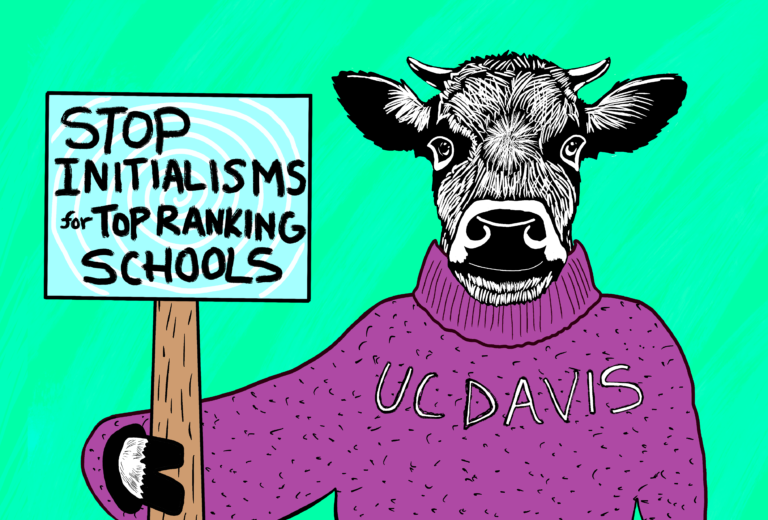
A PSA to UC Students from the Davis community
Three months ago, the UC community on Reddit was sent into a frenzy when a UC Berkeley student requested all UC schools not refer to their school using its initials, “UCB,” as it cheapens the incredible prestige associated with Berkeley.
As an incoming UC Davis student, I was already the brunt of bad cow jokes and warnings of the Tercero stench. If all my school is going to be associated with is cows, why does UCB get to control something so insignificant?
Fuming, I headed to UCB’s merch store to dismember UC Berkeley hoodies to say “UCB,” gnawing out the remaining letters with my teeth and seeking out UCB students to tell them I’ve never heard of their school.
Then, I had an epiphany. One person does not speak for the entire UCB community. My rampage against the entire school was misguided. This attitude is reminiscent of a larger problem: the inequality in education and problematic attitudes of elitism.
But when I got home and found out The Wall Street Journal ranked UC Davis third among the UC schools and fifth among public universities—exactly a spot behind UCB—I realized that protecting the prestige of your school is not insignificant at all.
With that, I’d like to write my own PSA to UC students from the Davis Community:
Recently, UC Davis and UC Berkeley have found themselves in close proximity in Wall Street Journal’s rankings, something many students are not aware of.
With this new knowledge, please do not refer to UC Davis as “UCD.” This is not the proper way to refer to UC Berkeley’s original University Farm.
As the UC system’s third-largest university and home to alumni such as “Patriot Act’s” Hasan Minhaj, we feel that it is important to honor our new rise in popularity. We feel that “UCD” not only cheapens our brand, but leads to confusion in reference due to “UCD” sharing the same initials as University College Dublin and University of Colorado Denver.
While it may be acceptable for other UC campuses to use initialisms due to their lack of up-and-coming status, that is not acceptable for a rising college such as UC Davis.
Despite our meteoric rise, however, UC Davis wants to maintain that we are still humble. Therefore, we will be providing similar PSA templates for any other UC campuses who may experience such a rise. Until then, it is requested you stay in your lane.
To the UC Davis students who are unaware, in an effort to show greater Aggie spirit, alternative naming suggestions include “UC Davis: Wall Street Journal’s Fifth Ranked Public School.” It is essential we publicize our rankings as the Wall Street Journal has a paywall and thus limits the audience we can brag to about our new rankings. How will your judgemental extended family and high school classmates know that you attend a top-ranking institution such as UC Davis if you don’t publicize it? Failure to do so is essentially an Aggie hate crime.
To the original Reddit poster, I’d like to offer an olive branch. It isn’t easy being at the top, but us top-rankers have got to stick together!
Written by: Renee Wang — reswang@ucdavis.edu
(This article is humor and/or satire, and its content is purely fictional. The story and the names of “sources” are fictionalized.)
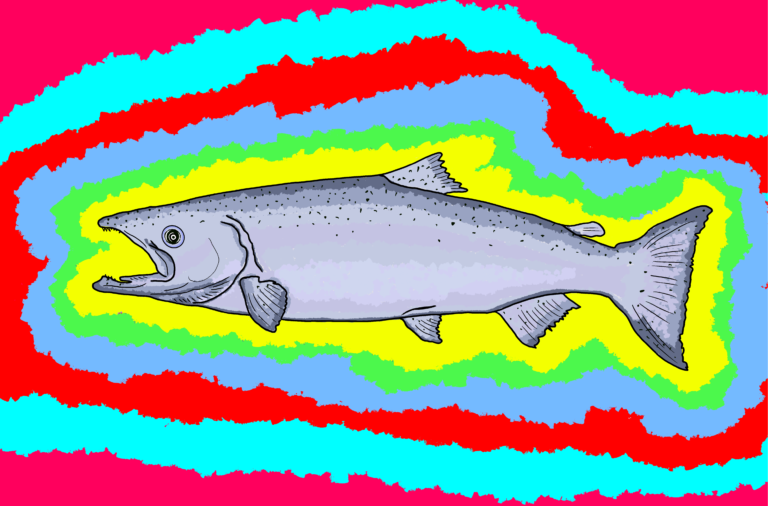
The Bureau of Reclamation has tried to push through a proposal to raise the Shasta Dam many times over the past decade, despite its environmental and cultural implications
The Bureau of Reclamation has once again proposed raising Shasta Dam, which is already the largest reservoir in California, after several proposals in the past decade. Each time, it has faced fierce public opposition from state government, environmentalists, locals and Native Americans. The Bureau of Reclamation claims that the project would significantly increase the water storage capacity of the dam. It would also improve the reliability of the water reserve from the dam for agriculture and debatably increase chances of survival for many native fish through better temperature control at a cost of $1.4 billion. Besides being exorbitantly expensive, this proposal also has a laundry list of problems which likely contributed to the Westlands Water District backing out of the project after the Supreme Court of California ruled that their involvement was illegal.
This proposal is blatantly illegal under both federal and state laws. Under the Wild and Scenic Rivers Act of 1972, the McCloud River is protected from any project that could potentially flood protected areas. Additionally, it does not have the proper permits in accordance with the Clean Water Act and violates the Endangered Species Act.
In his letter of opposition to the Bureau of Reclamation, Xavier Bercerra, California’s state attorney general, wrote, “In sum, Reclamation misapprehends and ignores the fundamental environmental protections that apply to its effort to raise Shasta Dam. The draft supplemental EIS Environmental Impact Statement (EIS) further fails to comply with the National Environmental Policy Act’s (NEPA) basic environmental disclosure requirements.”
Additionally, there are several obvious environmental repercussions of this proposal. The Bureau of Reclamation fails to mention in their EIS what the seismic risk of raising the dam is, which is built near a fault line. In fact, the Bureau didn’t even finish its latest dam safety evaluation last year.
Raising the dam would be detrimental to several endangered and rare species, including the Chinook Salmon, Delta Smelt and Shasta Salamanders. Despite claims that raising the dam would actually help salmon populations, the U.S. Fish and Wildlife Service (USFWS) actually found that funding a variety of other methods, like restoring floodplain habitat and improving the dam’s temperature control device, would actually be more beneficial to salmon populations than raising the dam.
The proposed raising of the dam is not just harmful to the environment, but would destroy important cultural sites to the Winnemem Wintu tribe. Sometimes referred to as a “Ghost Tribe,” due to their lack of federal recognition and small numbers, the Winnemem Wintu people vehemently oppose raising the dam. When the Shasta Dam was originally constructed, the Winnemem Wintu people watched 90% of their sacred sites slowly disappear. The proposed raise would likely destroy the majority of the remaining sites, including sacred burial grounds.
“My tribe was displaced, we were homeless,” Chief Caleen Sisk said during a scoping meeting for the project in 2018. “We lost our land, we lost our salmon. We lost so many things under that 26 miles under Shasta Lake. There is a little bit that’s still accessible to us, these sacred sites that we use right now. The Winnemem people have nowhere else to go to become Winnemem people. We can’t move to Hupa to become Winnemems. We have to have that river, and there’s so little of it left.”
The government is intentionally perpetuating the cultural extermination of the Winnemem people. For what exactly? A 13% increase in the dam’s capacity, and that’s just in years where it actually fills. This hypothetical extra water also wouldn’t benefit locals; it would instead go towards several water-rich districts in the Fresno area. The bottom line is that this plan was and will always be a bad idea. It doesn’t matter how hard the Trump Administration tries to push this through.
This issue is a microcosm of the Trump Administration’s blatant disregard for the most fundamental environmental laws and insistence on perpetuating archaic industries. The year isn’t 1920, it’s 2020. The era of big dams is over. There are more effective ways to address California’s water crisis that wouldn’t be such a blatant attack on our cultural and natural resources. The proposal’s $1.3 billion budget could be better put to work by investing in river restoration and other restorative water projects to increase natural aquifer recharge and storage.
So what can you do to help? There are several organizations that are rallying against the proposal, including the Hydropower Reform Coalition and Caltrout. There is a petition organized by Save the California Salmon. California Trout has a letter writing campaign which you can participate in. Finally, there is a sample letter to your local senators which you can use on the California Wilderness Coalition’s website here. The government can’t just pick and choose which laws it follows, and it’s our responsibility to hold them accountable. Administrations come and go, but California’s rivers are forever, and personally, I like rivers a lot more than politics.
Written by: Joe Sweeney — jmsweeney@ucdavis.edu
Disclaimer: The views and opinions expressed by individual columnists belong to the columnists alone and do not necessarily indicate the views and opinions held by The California Aggie.

Lab and co-working space to open early 2021, adding more research positions to the region
In September, AgStart, a “nonprofit incubator” that helps increase the growth of food tech and agricultural companies and “strengthens the region’s innovative ecosystem,” announced the creation of Lab@AgStart.
An AgStart press release described Lab@AgStart as “a unique, broad-based public-private collaboration to fund a new, shared-use innovation incubator in Woodland supporting innovators and startup companies” in the fields of health, food and agriculture.
Woodland Business Engagement and Marketing Manager Stephanie Burgos explained via email that Lab@AgStart will have almost 4,800 square feet of lab space including a food and wet lab as well as co-working space.
“The location and amenities associated with this shared-use innovation incubator will fill a longtime and growing need for lab space within the Sacramento Valley,” Burgos said via email.
The collaboration with Yolo County, the City of Woodland, the U.S. Economic Development Administration, the Yocha Dehe Wintun Nation and other private donors will have the potential to support many innovations, according to the press release.
“Examples of innovations that the Lab@AgStart could support include environmentally-friendly biocontrol products for agriculture, new drought-resistant crops, and new food-as-medicine ingredients,” the press release reads.
Lab@AgStart will be able to open in early 2021, according to John Selep, the president of AgTech Innovation Alliance, a nonprofit organization and sponsor for AgStart.
“When it opens in early 2021, the Lab@AgStart facility will be the largest shared-use wet-lab facility for startup companies in the entire Central Valley region,” Selep said. “Construction on the improvements necessary to outfit the lab will commence this fall and the Lab@AgStart should be ready for occupancy in the first quarter of 2021.”
The idea for Lab@AgStart originated two years ago due to a shortage of research facilities in the Sacramento region, according to Burgos.
“A front-page article in the Sacramento Business Journal two years ago had triggered conversations about the lack of available lab space to support innovative startups and their commercialization efforts,” Burgos said via email. “Conversations with Federal Economic Development Administration officials began in earnest starting in April 2019. Detailed conversations with startup entrepreneur stakeholders, economic analyses, and formal proposals, began soon afterward.”
Lab@AgStart will allow scientists, researchers and entrepreneurs to innovate in the health, food and ag fields, while also demonstrating “what Woodland and Yolo County have to offer,” according to Burgos.
AgStart’s website describes that innovation in the fields of food technology and agriculture “drive high-value jobs and economic growth in the Sacramento region despite increased energy, environmental and labor regulation, water and labor shortages, and changing consumer preferences.”
Burgos described the importance of Lab@AgStart’s communal facilities, which will encourage researchers to work together.
“A key component of the Lab is that it is a SHARED space, meaning that occupant businesses will have the unique opportunity to interact and collaborate with other innovators,” Burgos said via email.
The main goal of the program is to support innovators and startups in these fields. A long-term goal of Lab@AgStart, however, is also to show that there is demand for more lab spaces to justify expanding Lab@AgStart and other such facilities.
“Through The Food Front—our City of Woodland-led initiative—we make it a priority to celebrate the sustainable, local, and innovative actions of our existing 190+ food and ag businesses,” Burgos said. “Within this same mission, we also support actions such as the Lab@AgStart, which will foster opportunities to help existing companies expand their operations and welcome in new innovators.”
Ultimately, Burgos explained that the collaboration will help increase innovation in the fields of food, agriculture and health.
“We look forward to seeing these innovators thrive and benefit from our existing network of ag leaders and bring new ideas to the table to accelerate innovation within our region,” Burgos said.
Written by: Shraddha Jhingan — city@theaggie.org
Confirmation of commissioners and unit directors among items completed
The weekly virtual ASUCD Senate meeting on Oct. 15 was called to order at 6:10 p.m. by Vice President Emily Barneond.
After ex-officio and elected officer reports were delivered, Samantha Veres, a fourth-year cognitive science major, and Aparna Manoj, a third-year neurobiology, physiology and behavior major, were confirmed as commissioners for the Mental Health Initiative.
“I was really drawn to [the Mental Health Initiative] because I wanted to learn how to be a better ally for my friends when it came to mental health,” Veres said. “I found that as I’ve been in this organization, I’ve been able to not only help my friends, but actually learn how to better help myself and now our community.”
Like Veres, Manoj joined the Mental Health Initiative as a first year on campus.
“Initially, I was drawn to [the Mental Health Initiative] because of experiences I had working with other mental health organizations back in high school,” Manoj said. “But, over the years, with the Mental Health Initiative, I have learned a lot of skills [including] how to talk about various intersections with mental health as well as how to connect people to different resources.”
Following Mental Health Initiative confirmations, Tianna Ching, a fourth-year cognitive science and English double major, and Samantha Wah, a fourth-year design major, were confirmed as unit directors for the Whole Earth Festival.
“I have been a part of the Whole Earth Festival for the entirety of my college career, so it’s something that I really enjoy and look forward to at the end of the year,” Ching said. “Even though it’s going to look a little different this year, I’m still really excited to help bring people […] something a little happier.”
Building off of Ching’s statement, Wah said that she was excited to be more involved with the Whole Earth Festival to work on her leadership and organizational skills.
“Even though it’s really disappointing not being able to see the festival in its true, big form because of the pandemic, I’m excited to see how we can brainstorm different ways to implement it virtually,” Wah said.
Six students were confirmed as commissioners for the Ethnic and Cultural Affairs Commission (ECAC): Kabir Singh, Mariann Lactaoen, Jimena Calderon, Dalya Issa, Devin Santiago-Vergara, Fauziya Faruk and Kunga Yangzom.
“I’m thrilled to be part of a commission that acknowledges [the intersections of gender norms and queerness with minority mental health] through the lens of ethnic and cultural groups, especially in our current social and political climate,” Lactaoen said. “I’m really excited to see what the ECAC can do this year with the rest of the ASUCD.”
Calderon echoed similar sentiments, emphasizing her passion for the work that she does through the ECAC.
“I’ve always been an advocate for my community and other communities on campus,” Calderon said. “I thought that I would take on a new role to better support marginalized communities on campus. I am really excited to work with the rest of the commissioners to best support and foster a safe space for underrepresented communities.”
Finally, the External Affairs Commission Confirmations (EAC) confirmed three commissioners: Steven Le, a third-year psychology and philosophy double major; Simran Chahal, a second-year political science major; and Tyler Chan, a third-year economics and psychology double major.
“A reason why I joined EAC is because I love the [UC] Davis community, and I want to give back and make sure that all students are treated fairly,” Chan said.
Followed by the confirmation of commissioners and unit directors, public discussion ensued, dominated by a dialogue about ASUCD Senate Resolution #25.
ASUCD Senate Resolution #25 was presented to urge the UC Regents to divest “from corporations that aid in the Israeli occupation of Palestine and illegal settlements in Palestinain territories,” according to the Senate Resolution itself. It passed at the June 4, 2020 meeting and was vetoed the next day by President Kyle Krueger.
“It’s important to remember that nothing we do here at ASUCD carries any weight in the international body, world,” former ASUCD President Michael Gofman said. “ASUCD is not about injecting ourselves into an international conflict at a time where so many other countries are finally accepting the right of the Jewish people to exist in their homeland. It is silly, ridiculous, insulting and anti-Semetic that we here at ASUCD have decided to revisit the topic deciding whether or not this body has the right to tell the Jewish people whether or not they have the right to live in their historic home.”
Senator Samantha Boudaie said that the Jewish community was not consulted “before, during, or after the veto,” as far as she knows.
Nina Al-Mesih, a UC Davis student, said that “passing [ASUCD Senate Resolution #25] is essential to make the entire population of Palestinian students here at UC Davis feel as if they actually attend a school that recognizes their community.”
The ASUCD Senate meeting then transitioned to reviewing the status of previous legislation, introduction of new legislation and consideration of old legislation.
Kreuger introduced ASUCD Senate Bill #4, which is “an ASUCD Senate Bill to further delineate how members of an interviewing committee are chosen,” according to the Senate Bill.
ASUCD Senate Bill #2, proposed by Senator Youdeon, and Senate Bill #3, proposed by Senator Velasco, were tabled.
ASUCD Senate Bill #5, authored by Senator Karolina Rodriguez and introduced by Senator Boudaie, was passed. Senate Bill #5 will “temporarily change the amount of signatures needed for declaring candidacy […] to 75 for the Fall Quarter 2020 elections,” according to the bill itself.
“Because of the pandemic, I do not think [getting 125 signatures] is possible,” Rodriguez said. “I’m more thinking of transfer students and first years that are barely getting into this institution and actually know nobody. I’m really concerned about students who want to get involved, especially transfer students, they only technically have a year to run. Having 125 signatures is really a boundary that won’t allow them to get involved.”
Finally, the veto to overturn the presidential veto for the ASUCD Senate Bill #25 did not pass in a 6-3-3 vote. Barneond adjourned the meeting at 11:08 p.m.
Written by: Aarya Gupta — campus@theaggie.org

This is not a humor article!
Well, Election Day is almost here. The news reports are aflutter with ledes like, “soon, we will know who America’s next president is.” This is misleading because we already know who the next president will be, and his name is Donald Trump. ***(Editor: “this is hilarious! can you imagine how crazy that would be?? are you writing this through the satirical voice of a Trump supporter who thinks Trump will win? or is this just sarcasm?”)***
No matter whether Former Vice President Joe Biden wins by 3 million votes like former Secretary of State Hillary Clinton, or even as many as 6 or 7 million, we have to stop kidding ourselves about the idea that Trump will concede; he WILL NOT CONCEDE. Biden will win the popular vote by a lot, but he will only actually become the president if Republicans ALLOW him to, because the Republicans hold all the cards. And they will only ALLOW Biden to become president if the margins are so large that it would be totally untenable and potentially long-term political suicide for them to pull the dirty tricks that they are currently planning to pull. We live in a reality where a narrow win for Democrats is actually a win for Republicans, and unfortunately, we do not know how much Democrats have to win by in order to actually win. ***(Editor: “sorry, I don’t really follow this paragraph at all. I know you’re trying to be funny and provocative, but this is just a bit absurd. i mean after all, we live in a democracy!”)***
Trump has already refused to commit to a peaceful transition of power and essentially said that he needed to get Amy Coney Barrett on the Supreme Court as fast as possible because of mail-in voting, constantly spewing obscurantist blatherskite and conspiracy theories about mail-in ballots being fraudulent. On his desire to swiftly fill Former Associate Justice of the Supreme Court Ruth Bader Ginsburg’s seat before the election, Trump said, “Yes, I think it’s very important, I think this will end up in the Supreme Court.” This has been interpreted as a clear signal that he intends to litigate in many or possibly all of the swing states in which mail-in ballots that are counted after Election Day tilt the vote in Biden’s favor. If this is appealed all the way to the Supreme Court, Trump may now have his ace in the hole with Barrett on the bench. ***(Editor: “yeah maybe, but an election’s an election. if he loses, he’s a coward and he’s not really gonna pick a fight like that, would he?”)***
Court decisions could change the vote tallies—and consequently, the winners of swing states—by tossing out mail-in ballots, which I’ll discuss more later. But this is complicated by the fact that it is not actually written down anywhere that a state legislature must send electors to the Electoral College who will actually cast their electoral votes for the winner of that state’s popular vote. Republicans control both legislative chambers in every crucial swing state (OH, MI, GA, WI, TX, FL, NC, AZ, PA). If it is even remotely close and these legislatures are feeling ballsy enough, they may not honor the popular vote in their states. A Trump campaign legal advisor said as much to The Atlantic: “The state legislatures will say, ‘All right, we’ve been given this constitutional power. We don’t think the results of our own state are accurate, so here’s our slate of electors that we think properly reflect the results of our state.’” ***(Editor: “damn! that sounds pretty intense! how’d you come up with that quote? like, it sounds so authentic and real yet is obviously just totally ridiculous and unthinkable that that would happen. nice job!”)***
Before Barrett was sworn in, the Supreme Court ruled 5-3 that mail-in ballots received after Election Day in Wisconsin cannot be counted. But other states have different deadlines, meaning whether your vote is counted is a function of where you live and how fast your mail-service is, but Trump has admitted to actively sabotaging the Postal Service because of mail-in voting. If there is unresolved confusion in other states regarding which ballots to count and which to ignore, we could see a flurry of crucial court decisions in the next few months, giving us Florida 2000 times 6 or 7, which could result in the electoral votes in one or multiple states being changed from one candidate to the other or voided entirely. ***(Editor: “This is all great and really spooky, so it’s just perfect since it will be published around Halloween! Maybe add some sort of Halloween Florida Man joke? That could be funny!”)*** This could prevent any candidate from earning 270 electoral votes, in which case the U.S. House of Representatives elects the president. ***(Editor: “ha! didn’t something like that happen in the show ‘Veep’? sorry, spoiler alert haha. you might want to make sure you aren’t plagiarizing that from ‘Veep’ and come up with a more original scenario.”)***
While Democrats control the House and 8 million more Americans voted to elect Democrats rather than Republicans to the House in 2018, each state’s House delegation receives only one vote––meaning that 26 votes wins. And Republicans currently control the House delegations from 26 states. This process is technically Constitutional, but it’s essential to remember that we’d only find ourselves at this point if the Judiciary (where Trump has packed hundreds of arch-conservatives into seats that Senate Majority Leader Mitch McConnell refused to fill during Former President Barack Obama’s second term) and the Supreme Court (now featuring Barrett in a 6-3 conservative majority) end up collectively deciding to disenfranchise potentially tens of millions of tax-paying Americans who voted legally. ***(Editor: “strong words. is that supposed to be taken seriously? sounds a bit alarmist don’t you think? you might want to reword this because some readers might not know that you’re joking here. just a thought!”)*** And how do we react if Fox News and other conservative media outlets start calling the outcomes in swing states on election day, misinforming millions of viewers with inaccurate results before potentially millions of mail-in ballots have been counted? It would be difficult to turn back from that position.
When considering all of this, I don’t think it’s at all unreasonable to suggest that we are looking at a real possibility of a second Trump term, won through what is nothing less than a procedural coup. ***(Editor: “again, you don’t want to confuse people who are just trying to escape by reading the humor section. how about you make it a little more obviously absurd by predicting that while Republicans are publicly spreading false claims of fraudulent mail-in ballots, they are actually making millions of fraudulent mail-in ballots behind the scenes that will deliver victory to Trump and force the Democrats to totally flip-flop on mail-in voting! that would be really crazy and it would make it more apparent to the readers that this article is just a joke!” Writer: “HELP! i’m trapped in the newspaper’s humor section and i can’t get out!”)***
Comment Section:
James Howard (a suburban, ex-Republican, slightly out-of touch, Biden-voting dad): “Stop worrying about the election, everything is going to work out just fine. This is America!”
Jefferson Lee (armed member of a white nationalist militia group that is currently “standing by”): “Stop worrying about the election, everything is going to work out just fine. This is America!”
Written by: Benjamin Porter— bbporter@ucdavis.edu
(This article is humor and/or satire, and it’s content is purely fictional. The story and or names of “sources” are fictionalized.)
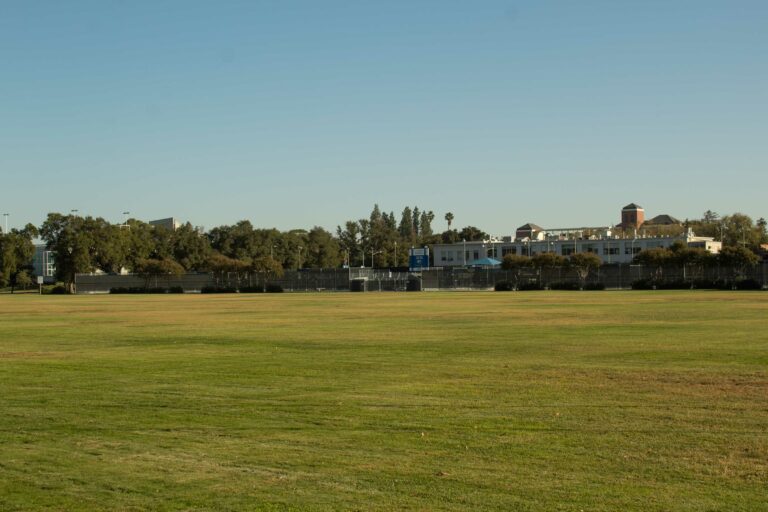
Scheduled courses offering exercise will be missed by many students
In a year filled with surprises, UC Davis added another as they announced plans to eliminate the physical education (PE) courses at the university after the conclusion of the current fall quarter.
Founded in 1947, the UC Davis Department of Physical Education offered physical education courses to all students at the university. They offered a minor in “Coaching Principles and Methods” as well as other classes like “Healthful Living” and “Sociology of Sport” in addition to the regular activity and sport courses. Regardless of if the class involved physical activity or not, it was a great way for students to destress in a healthy manner and learn something new in the process, according to many students.
Taught by many coaches at UC Davis, these classes offered an experience to its students that could not be found elsewhere. Being instructional by design, insight from someone very familiar with the topic created an atmosphere that was unique for all students, according to assistant director of the physical education program Stephen Bronzan.
“The PE Program has a long history at UC Davis,” Bronzan said. “The coaches at UCD have always been teachers and the students benefited from having an athletic program that provided an opportunity for an intimate connection with the student body as a whole. It is unfortunate that the students will no longer be provided the opportunity to play, grow, interact and heal in a fun, positive and nurturing environment that no other part of the campus can provide to such a level of expertise.”
Before all classes shifted to remote learning in response to COVID-19, these classes were popular among students and would enroll nearly 8,000 annually. When normal activities resume on campus, the hole left by this departure will have to be filled by something else.
“I am saddened that we are losing this program that has served tens of thousands of Aggies over the years,” said PHE/ICA Courses Coordinator Nancy Wright. “This is especially unfortunate at a time when the promotion of exercise and health for our undergraduates’ physical and mental well-being is so necessary.”
For some first-year students coming in, these classes were crucial in building some sense of normalcy in the college adjustment process. For Ryan Cohen, these physical education classes helped him get more comfortable with the school and also figure out how to fill his once sports-packed schedule.
“I played sports my whole life growing up,” said Cohen, who is now a third-year communication major. “Coming up to Davis, I had no structured form of running around and getting some energy out. Freshman year when I did [flag football], you can totally feel the difference. Even just an hour of [being active], it changed my day. I was always in a better mood in the rest of my classes. It brightened my day up by being able to get outside a little bit in the morning.”
Being able to set the tone for the rest of the day is huge, especially for college students. Having a jam-packed, stressful schedule can take a lot out of students, and taking these classes helped some destress from their long days.
“I took three classes [my first year],” said Hayley Jacinto, second-year political science major. “I saw [them] as stress relieving. I would choose my PE classes first thing in the morning so I would go to my [other] classes in a good mental state. It made me do better and [allowed me to] focus more.”
Abraham Lee, a third-year civil engineering major, took an aikido class in spring 2019.
“I was able to learn a new martial art and it was great to go and do some type of physical activity,” Lee said. “[When] working out, I didn’t want to think about my classes, which helped me destress.”
Many students agree that these structured exercise classes were very valuable.
“I think students will miss the opportunity to not only meet people inside the classroom environment but also in an outdoor environment,” Jacinto said. “When I was in these classes, I was able to socialize with everyone and was more encouraged to [participate] than just sitting in class.”
The common theme echoed among students is that PE classes gave them an opportunity to have a scheduled class that allowed them to work out in a variety of different ways. Whether it was to unwind and get their mind off things, sharpen a skill or just learn a new activity, many students said these are things that will be irreplaceable when the program comes to an end.
“There’s something valuable about knowing you have that class,” Cohen said. “It makes you get up out of bed, it makes you do it, then [when you do], you feel good the rest of the day. The [structured] aspect of it is what I think will be missed the most.”
Written by: Omar Navarro — sports@theaggie.org
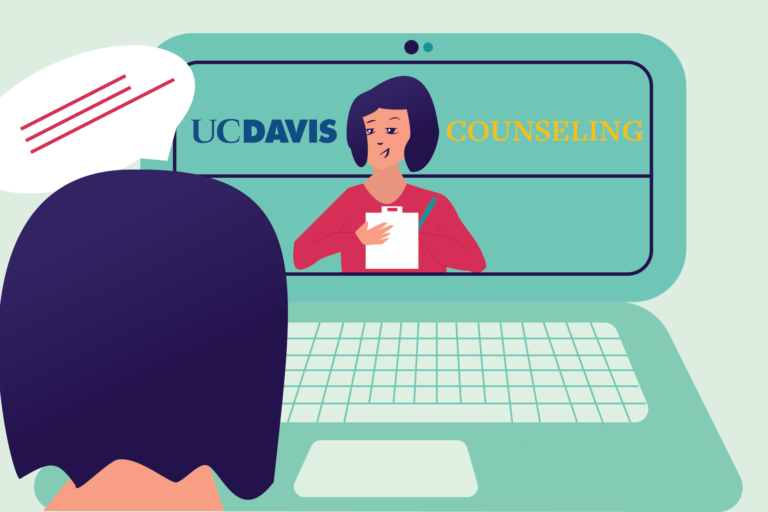
Discussing the reality of remote mental health counseling from the perspective of students and SHCS counselors
The Student Health and Counseling Services (SHCS) has transitioned completely to meeting with clients either by phone or video call.
Some students who receive counseling from SHCS over Zoom or another platform have said they feel like the experience of addressing their mental well-being from their home environments is helpful toward recollecting things they want to discuss. Others, however, feel stifled by the constancy of remaining in a personal space, no matter the occasion and a perceived lack of privacy. Katherine Huang, second-year animal science major, says she’s experienced this feeling, and constantly worries that her counseling sessions will be interrupted by family.
“It is sometimes suffocating to sit in a space where my negative emotions have just been uprooted from a counseling session and then immediately having to attend a Zoom class in that same space,” Huang said via email. “I am always afraid someone will enter the room amidst my session, discouraging me from being completely honest which in turn contradicts the progress I may have made previously.”
Aleshia Rose, a second-year communication major, feels as though being at home during sessions stimulates her memory toward topics she wishes to bring up with her counselor.
“On one hand, doing it from home means that I’m in an environment that more accurately reflects how I feel on a day-to-day basis,” Rose said. “I’m looking at the wall that I normally look at. I’m next to my bed, it feels more homey and more comfortable. And in that way, I think it’s easier for me to recall things that I want to talk about.”
Similar to Huang, she said that she experiences a constant feeling that her conversations are being overheard.
“The couple of meetings I did have living here, I felt really uncomfortable because even though my actual roommate left the room, there was a lot of underlying anxiety that everyone could hear what I was saying,” Rose said.
In Huang’s experience, the fear of being overheard, coupled with a lack of understanding within her home, puts a constraint on her ability to fully open up to her counselor.
“My family isn’t necessarily the most understanding or sympathetic when it comes to mental and emotional health,” Huang said via email. “Consequently, I limit what I say and share very vague assessments of my actual well-being for fear of receiving backlash or a dismissal of my concerns if someone were to overhear my conversation during counseling.”
Hillary Alejo, a licensed clinical social worker for SHCS, said she’s had clients with parents who may not be understanding or supportive of therapy and will leave their homes to do the sessions from a car or a public park.
“Sometimes we have students that are back at home where therapy’s not really even accepted or would be really strange for a family,” Alejo said. “So we just try to establish comfort levels and a plan. I have some students that take walks and we do the therapy while they’re walking or I’ve had some that sit outside by a park or wherever they’re at with headphones.”
Dr. Katie Cougevan, a psychologist and the clinical and associate director for SHCS, highlighted some ways in which counselors work with students to re-establish a sense of security during sessions.
“The counselors are very mindful about confidentiality and work with their clients on ways they can find a secure place for sessions,” Cougevan said via email. “Some examples include identifying a ‘code word’ they can use if someone suddenly comes into the space, finding an open space outside using headphones, or pausing the session for a moment until they have privacy again.”
While some feel that being in a home environment is harmful in making progress toward mental health, others have valued the ability to seek counseling services from their phones or laptops, according to Cougevan.
“There are some students who have said they would not have sought out treatment before, and that telemental health has made it much more accessible and reduced their feeling of vulnerability they would have had in person,” Cougevan said via email.
Despite the challenges online counseling can create, according to Cougevan, the demand for mental health services has increased this quarter, including a higher number of first-time visits and on-going sessions. Among the available services there is an option for group counseling.
“We are also finding that students are very interested in participating in our many Group therapy and Group workshop offerings as they give students an opportunity to connect with each other,” Cougevan said via email. “We have increased our [online] offerings, podcasts, classroom presentations, and information on the website as well.”
According to Alejo, while students often struggle with adjusting to online counseling, working with them on this interface has also provided a new window into students’ lives.
“New things have opened up, like they showed me their room or their animals or things like that,” Alejo said. “Sometimes they’re in their family home or they’re using outdoor space. And, you know, it’s been a different way to connect with people. So I can’t say it’s worse. It’s just different.”
SHCS is open for appointments Mondays, Tuesdays, Thursdays and Fridays from 8 a.m. to 4:30 p.m. and Wednesdays from 9 a.m. to 4:30 p.m.
Written by: Lyra Farrell — features@theaggie.org

A community struggles to render justice and to not make it weird
Over 60 white Black Lives Matter activists met in Davis Central Park last Sunday to protest the deaths of unarmed African Americans by police departments across the nation. The event culminated in the ceremonial name-saying of the latest victim of police brutality, an unarmed African American father in Ohio. From The California Aggie, this is CITY NEWS.
The sun beats down, it’s high noon on the protestors in Davis’s Central Park. Through their masks, organizers shout chants of “ACAB,” “Hold Them Accountable” and “No justice, no peace.” The crowd is predominantly white, with a few Asian Americans in attendance. All of them wear BLM shirts. A few even hold signs.
A microphone rings to life and Sandra Tawny, a community activist, climbs onto a stage in the middle of the park. Tawny is a tall, white woman in her 40s, and she walks with a seriousness to her stride. A large projection screen looms in the background.
“Thank you for coming,” Tawny said. She stands before a wall of white protestors. “My name is Sandra Tawny, and today we’re here to call others in our community to justice—to show our community where we stand. Today, we show everyone that Davis gives a damn about Black lives.” Cheers and whoops rise from the audience.
“We’ll march through the streets!” she continues, picking up volume. “We’ll knock on doors!”
“We are NO DIFFERENT than the men and women affected by police brutality.” Her skin sheens in the light of the sun. “NO DIFFERENT, than the African American man who died in Ohio. Say His Name!”
“Say His Name!” the audience replies.
“SAY HIS NAME,” she repeats, waving her arms.
“SAY HIS NAME,” they reply.
She motions to her partner who turns on his laptop and begins the slideshow. She clicks her remote and throws her fist in the air. A picture and a name flash onto the screen. The protesters are now at a fever pitch.
“We are the same as…” she turns her head to look at the name and freezes. So does the crowd. A silence comes over Central Park. A single cough rings out through the audience.
“How do you say that name?” yells a protestor in the front row. Polite whispers skitter through the audience.
“Come on guys,” says Sandra Tawny. “It’s not that hard.” She shifts her weight from side to side. “So who wants to say it?” she offers.
A white woman from the front pipes in with a suggestion.
“I don’t think that’s right,” frowns Sandra Tawny.
“Now I have had plenty of Black friends…” the white woman starts. A collective groan erupts from the audience.
“Alright, everybody on the bus. We’ll figure it out on the way there. Black lives matter,” she says raising a fist.
“Black lives matter,” the audience replies, casually.
As the crowd disperses, a single Black student, Aaron Mathis, 19, stands alone on the lawn with his mouth agape. His fellow protestors leave for their bus, but his eyes remain fixed on the name on the screen:
Jim Brown
#SayHisName
“How the f*** did they miss that?” he mutters.
Written By: Matthew Simons — mrsimons@ucdavis.edu
(Disclaimer: This article is humor and/or satire, and its content is purely fictional. The story and the names of “sources” are fictionalized.)

I mean, thanks I guess?
Little Katie Raz’s first year at UC Davis is unsurprisingly uneventful.
This all changed two nights ago when Katie felt a looming presence in her room. She was certain that she had locked her door, and yet she knew there was something in the room with her. Katie slowly reached over to her desk to turn on her lamp. As light began to fill the room, the being became clear to Katie.
One of UC Davis’s very own egghead sculptures had been laid in her room, upside-down, laughing at her. Initially, she thought she was having one of those weird sleep paralysis hallucinations, but as she became more lucid, it became clear that the egghead was no farce.
First-years aren’t the only ones who’ve been receiving eggheads. Preston Li, a third-year student, was also accosted by the bookhead egghead in his living room at an untimely hour.
“I understand the sentiment, but I was in the middle of a breakup with my girlfriend,” Li said to a reporter for The Aggie. “She thought I was trying to win her back with the egghead. She was like, ‘Aw, Preston, you shouldn’t have!’ It worked, but I wish I could’ve won her back by my own merit.”
After a few weeks with the eggheads in residence, the Davis Isolation Committee (DIC) asked students how they felt about their new roommates.
“I’ve kinda gotten used to it, I guess. My crippling loneliness hasn’t really been fixed, but at least I feel like I’m not in some sort of random prison experiment,” Katie said, smiling at her rotund sculpture. “Now, it just feels like I’m in a Davis prison experiment.”
When questioned about the incident, a spokesperson for DIC (not pronounced “dick”), was quick to assure students that it was not an accident, but a gift.
“We noticed the first-years were lonely! So we thought, why don’t we take that tuition money, and just put it somewhere else! There’s no cure for loneliness like an egghead!” the overly enthusiastic spokesperson said. “Also, can you make sure to add that the acronym isn’t pronounced ‘dick’? It’s just not good for our brand.”
Written By: Isabella Chuecos –– ifchuecos@ucdavis.edu
(This article is humor and/or satire, and its content is purely fictional. The story and the names of “sources” are fictionalized.)
It’s more like being a good friend
Unless it’s required for a job, most people aren’t well-versed on first aid procedures. Although certification training is excruciatingly long, it prepares you for emergency situations and, more importantly, it saves lives. Less widely known, the effects of psychological first aid (PFA) can last a lifetime.
Prior to the pandemic, mental health in the U.S. was already on the decline. But after weeks of quarantine filled with uncertainty and fear, our mental health took even more of a hit. A recent Washington Post article suggests that the pandemic “proves we should all know ‘psychological first aid.’”
While medical first aid involves tending to injuries of the body, psychological first aid incorporates employing techniques that aid and support a person’s mental state, rather than their physical state. Typically, psychological first aid is used by first responders to prevent post-traumatic stress disorder in post-disaster scenarios. It’s clear that psychological first aid can be used in our everyday lives and not just in a crisis situation.
PFA is something everyone should know. Unlike medical first aid, PFA doesn’t require dealing with cuts, blood or even more serious procedures like CPR––making it less nerve wracking to use.
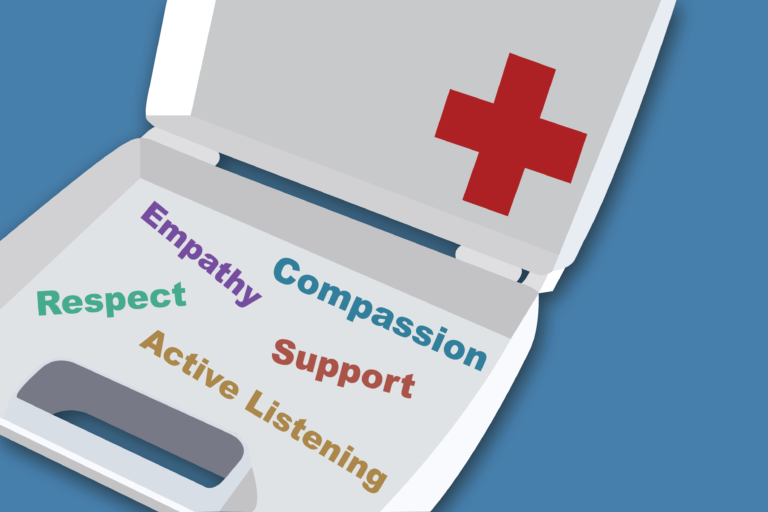
It’s more like being a good friend. It calls for compassion, active listening, creating a feeling of safety, connecting and being hopeful. Even though this seems like something we can do without proper instruction, there are training courses that can teach us to use these techniques properly and effectively.
Sadly, it’s taken a pandemic for some to realize that many of us struggle with mental health issues. Now, not only do we have to find a way to survive a pandemic, we also need emotional damage control, so that people can make it through the pandemic emotionally and mentally. The healing must start now––not when the pandemic is over.
Start by paying attention to those around you. If you notice someone struggling, have a conversation with them and immediately start PFA. Make them feel safe, let them know you are listening and give them hope. You may not have the time to take a training course, but you always have the time to help someone in need.
In addition to the COVID-19 pandemic, we are living through a mental health epidemic––both are running rampant through the U.S. and ruining lives. Unfortunately, no vaccine or medication can knock out a mental health epidemic. Knowing about psychological first aid and how to use it is the first step to repair and prevent emotional damages.
In any circumstance, it’s important to know how to help those around you, but especially the one we are living in right now. There will never be a time where first aid, medical or psychological, is irrelevant. We should all be required to know both.
Written by: Kacey Cain –– klcain@ucdavis.edu
Disclaimer: The views and opinions expressed by individual columnists belong to the columnists alone and do not necessarily indicate the views and opinions held by The California Aggie.
More entities allowed to reopen under Red Tier, sense of “normalcy” slowly returns to Davis
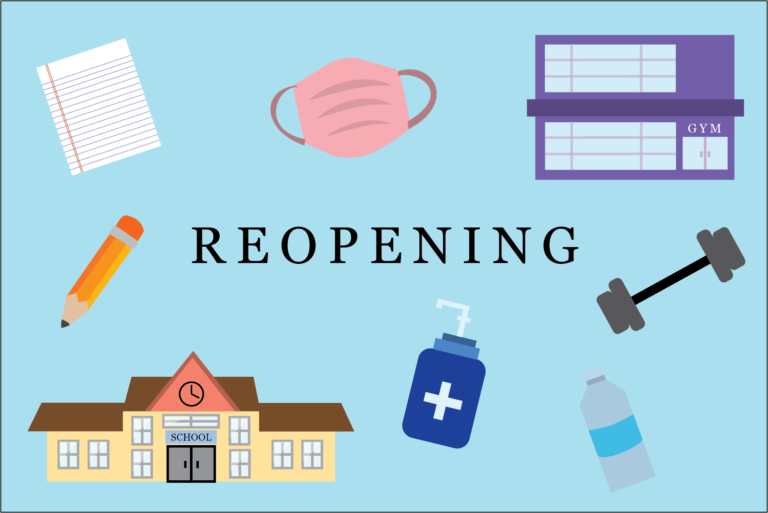
Yolo County’s movement into the Red Tier for the COVID-19 pandemic has allowed some entities to begin planning for new ways of operation. The Davis Joint Unified School District (DJUSD) has started preparing for a hybrid learning plan while the UC Davis Activities and Recreation Center (ARC) is planning to gradually reopen later this year.
Superintendent John A. Bowes of DJUSD released an official statement regarding the district’s upcoming plans.
The statement explained how Yolo County was placed down into the Red Tier from the Purple Tier for COVID-19 infection rates. As a result, the DJUSD plans to observe if the county can stay in this tier for two weeks consecutively in order for schools to begin restricted in-person learning.
“I want to underscore the incredibly serious nature of this situation, and how critical a moment this is for our District and our community,” the statement reads. “We must get this right and we are moving cautiously and deliberately to make plans and decisions around classroom and school health and safety protocols, health checks and contact tracing, staffing plans and formalizing collective bargaining agreements.”
Public Information Officer of DJUSD Maria Clayton provided some insight on the importance of socializing for students.
“I think that living through a pandemic is difficult for everyone and we are really trying as a school district to serve students in all ways,” Clayton said. “In addition to making sure we can have the best academic program, we are also very conscientious of the social, emotional and mental health needs of students.”
Bowes further described in his statement that the DJUSD will take “a measured, phased-approach to the gradual return to campus.” The district plans on working with the Yolo County Public Health Department and the Yolo County Office of Education, as well as introducing new “stakeholder outreach” for families, staff and students.
“As we carefully monitor the County COVID-19 rates, we are developing plans for Phase 3—a hybrid model that includes [an] on-campus instructional component,” the statement reads. “The timeline for reaching Phase 3 is still unknown and depends on County COVID-19 numbers, collective bargaining agreements with our labor partners, and the successful implementation of Phase 2 of our Return to Campus Plan.”
Clayton added that while plans are constantly changing, the district is adapting to put the students’ best interests at the forefront.
“In this environment, there really is no perfect solution,” Clayton said. “We are just trying to do the best we can for all students with the data that we have each day, and that continues to evolve.”
Bowes added a final comment about his hopes of maintaining a hybrid model through the rest of the school year.
“There is still a long road ahead with the potential for many bumps, twists and turns,” the statement reads. “We are preparing for the rest of the school year by planning ways to offer a hybrid model that includes an on-campus instructional component while also providing for the health and safety of students and staff.”
The UC Davis ARC is also allowed to reopen under the Red Tier, and will do so on November 1st for students with 10% maximum occupancy.
Associate Director of UC Davis Campus Recreation Andy Ramirez provided more insight via email on the long process to reopen the ARC.
Ramirez explained via email that the ARC closed mid-March due to the pandemic, but reopened briefly over summer before having to close again after two weeks due to a state mandate.
“After closing mid-March, our staff worked hard to adjust to fast changing best practices for recreation facilities throughout the country,” Ramirez said via email. “We adjusted our protocols to mitigate risks where we could.”
Ramirez further noted via email that this short opening helped the staff prepare for the upcoming reopening in November by introducing new modifications, which include, but are not limited to, a requirement to wear a mask, complete a symptom survey and socially distance six feet apart. Students will also need to reserve a time slot in advance in order to follow proper social distancing guidelines, as well as follow other guidelines.
Ramirez added a final comment regarding the importance of recreation “to the physical and mental well-being” of students.
“Wellness and exercise is really important during these times, and our number one priority is student safety,” Ramirez said via email. “To help keep our Aggie community healthy, we ask that students follow university guidelines and protocol when visiting our facilities.”
Written By: Jelena Lapuz — city@theaggie.org

©2021, ASUCD. Designed by Creative Media.