55.5 F
Davis

Davis, California

Tuesday, December 23, 2025
Home Blog Page 312

Self-proclaimed anarcho-communist Kayleigh Smith rushes Sigma Numa Numa despite ideological conflicts

Peter Kropotkin would TOTALLY be a SigEp

Sigma Numa Numa, a well-established sorority at UC Davis, recently had the pleasure of virtually welcoming its 2020 bid class. Among the flurry of smiling faces and feather boas is Kayleigh Smith, a first-year, who hopes that her admission to the top-ranked sorority will provide her with future career and party connections. 

There was only one problem. As of two days ago, Kayleigh had been “radicalized,” earning the  title of UC Davis’ very first anarcho-communist sorority sister. 

“It’s taken a lot for me to come out as lefty. Lots of girls just gave me weird looks when I told them. I mean, to be fair, they were totally blacked, so I don’t really think they understood me,” Kayleigh told The Aggie.

Smith explained that her radicalization began on TikTok when she began to get the “p***y communist, it read theory” sound on her For You page. 

“I think at that point, I kinda just knew. Like, I officially crossed over into radical TikTok. I immediately put the little moon and stick symbol in my Instagram bio. My Russian grandma heard about it somehow and started yelling at me on the phone, but I don’t speak gulag, so I just hung up on her,” Kayleigh said.

Greek life, albeit fun for the few people who can afford it, doesn’t really lend itself to leftist theory, but this hasn’t stopped other members of panhellenic organizations across campus to “come out” as anarcho-communists. Second-year Todd Daniels has finally taken strides to accept himself as a lefty, altering his “Saturdays are for The Boys” flag to say “Saturdays are for the Comrades.” He also quit his job as a Trader Joe’s cashier recently, claiming that “TJ bosses are just The Man in a Hawaiian shirt.” 

“Yes, Zigwa Maga Tonga is the ‘top’ frat. And yes, I do take a lot of pride in that. But that doesn’t mean we shouldn’t want to strive to demolish well-established social hierarchies. I mean, when Zete Yeet Teet got suspended, we like, took over the means of party production, which I think is really reflective of my beliefs,” Daniels told The Aggie. 

Other brothers and sisters aren’t so willing to lean left, though.

“I mean, sure. Abolish the police. All they do is roll our darties anyway. But like, this raises the question: Who do I call when Kyle from Zete Yeet Teet starts getting all creepy? And who do we call to get the GEEDs away from the house when we’re trying to turn up?” Rebecka Long, a fourth-year Greek life member, said. “I just don’t know if I feel comfy, like, taking away that support system.” 

  In partnership with the Davis College Communists, Kayleigh and Kyle have decided to start their own Greek house named Alpha Beta Gamma Delta Epsilon Zeta Eta Theta Iota Kappa Lambda Mu Nu Xi Omicron Pi Rho Sigma Tau Upsilon Phi Chi Psi Omega. 

Kayleigh Smith created the name of the house in order to promote “equal standing of ALL Greek letters.” Her vision for the house?

“We’re hoping our house, AlphaBet…Omega, will be the highest-ranking house in all of Davis! But, uh, social hierarchies don’t matter, obviously. Unless it’s bid day.” 

Written By: Isabella Chuecos –– ifchuecos@ucdavis.edu 

(This article is humor and/or satire, and its content is purely fictional. The story and the names of “sources” are fictionalized.)



Chancellor Gary May’s latest email

Can he really say that?

In this series of investigative pieces, The Aggie investigates how the COVID-19 crisis has affected individual lives in our community.

The following letter was posted via Chancellor May’s UC Davis page, then abruptly deleted from all records. Here at The Aggie, we obtained the letter from an unnamed source. Here is that letter:

Checking in with Chancellor May: We’re so f****d.

To the UC Davis Community:

I’m done writing emails, guys. Seriously. I’m locking myself and my bottle of Arb Water in my office at the top of Mrak Hall until COVID-19 is over. This is the last one.

And let me tell you WHY.

Today was terrible: A retrospective

Hold on, I just had a shot to unwind after today. Today started off with just an awful Zoom meeting. If you think Zoom classes are bad, try Zoom meetings with 80+ staff, where everyone wants to talk about their weekend plans. WHERE are you going this weekend, Linda??? No one can go ANYWHERE. I get it we have to run a university here. I just miss when I could miss those meetings by hiding in my office and hoping they were too lazy to find me. Nope. ZOOM. I should have never mass bought those licenses. We should have given everyone a Discord. It’s what you guys use anyway, right? And hold on that brings me to my next thing—we’re f****d.

Nobody on campus is wearing a mask, three students have COVID-19 and I can’t find my favorite pen anywhere––god DAMN it. I bet Pablo took it. 

Seriously, why is it so hard to get you guys to be safe? Stop going to each other’s dorms, stop having parties with “just a couple of people,” stop eating out on patios with a bajillion people, stop, stop, STOP IT.
Why is it SO hard to stop you guys? Why can’t I do it? Is it me?…Am I a bad chancellor?

[Arb Water Shot #4]

I don’t wanna be chancellor, give it to the guy who does the Gunrock mascot. I’m the chancellor, I can pass it on to whoever I want.

[Arb Water Shot #7]

Just finished a call with HR. Not only can I not do that, but I’m “not supposed to be at work if it’s 11PM, Gary, go home.” 

Damn you, HR. But you know who can’t go home? This full handle of Don Arboreto Water. We’re finishing this thing tonight and getting our students safe.

[The next few pages are unintelligible rambles about the stress of being a Chancellor and Star Trek: First Contact.]

…Anyway, I just don’t think they should have used Data like that. It was weird for the audience. Everyone I know seems to be lukewarm to that scene at best.

Why is it so hard to talk to my daughter?

Like nothing’s really wrong, but sometimes it’s just hard to connect with her. Like I used to be her hero, guys. I played pretend with her every time she asked, and I got to be the king during princess tea time. The KING. Now, I feel like I have no idea what’s happening in her life. She’s a college kid, right? What do college kids like? Do you guys like anything? If anyone has advice, hit me up on Instagram @therealgary. 

It’s almost morning guys, it’s been fun, but I gotta go. Family’s waitin’ for me. But this helped, I think. I feel much better with everything off my chest. I feel like I can do this whole “Chancellor” thing again. Thanks everybody.

You know what, next week’s email will be on “Perseverance.” Yeeeeeeeah.

Written by: Matthew Simons –– mrsimons@ucdavis.edu 

(This article is humor and/or satire, and its content is purely fictional. The story and the names of “sources” are fictionalized.)

Davis Farmers Market continues during pandemic, attendance increases due to return of students to Davis

Safety modifications keep high volume of shoppers healthy 

The Davis Farmers Market has been a staple attraction in the Davis community for over 44 years. When the COVID-19 pandemic began, several modifications were made to ensure that this essential business could continue to provide fresh and healthy produce options for Davis residents. 

Executive Director of Davis Farmers Market, Randii MacNear, provided a statement on the official website for the market.

“Since mid-March, the market has been in a back-to-basics mode,” the statement reads. “At our core, we’re here for local farmers to sell safe, healthy, farm-fresh produce directly to the consumer.” 

Wendy Weitzel, the marketing and public relations director of Davis Farmers Market, described a shopper’s typical experience at the market before the pandemic. Weitzel detailed how the majority of the shopping was underneath the pavilion and vendors were packed closely together since no one was worried about social distancing at the time. Customers could taste or sample items and could often pick and touch the produce before purchase. 

Director of Community and Business Engagement for the city of Davis Diane Parro reflected on the city’s relationship with the Davis Farmers Market.

“The city has had a very, very long-standing positive relationship with the Davis Farmers Market,” Parro said. “We think of the [Davis] Farmers Market as a very positive and healthy activity—as well as organization—in Davis. We feel very lucky that it’s here.”

Weitzel further explained how several new modifications were made to comply with social distancing regulations at the start of the pandemic. Modifications for customers included wearing a mask at all times, social distancing six feet apart from anyone not in the same household and having to shop “eyes first.” 

Additionally, vendors spaced their booths six feet apart, wore masks and gloves and bagged produce chosen by customers, handing it to them directly. Hand-washing stations and an automatic hand sanitizer station were added to the venue as well. 

MacNear’s statement added a positive note to the situation as well.

“This pandemic has brought so many challenges,” the statement reads. “But I’m an optimistic person, and I’m seeing a lot of positive[s] come out of it as well.” 

In terms of positive changes to the market, Weitzel noted that the return of more UC Davis students to town increased the attendance of customers to the market.

“We have seen an uptick in attendance and students coming to the market,” Weitzel said. “[…] We’ve actually seen a really big increase in shopping at the market because it’s such a healthy place to shop.”

Parro commended the students for excellent compliance with wearing masks, but recommended that students visit the market in smaller groups. She also praised the farmers and vendors at the market for their hard work during the pandemic. 

“The farmers and vendors at the market have been phenomenal in the way that they have responded [to the pandemic] and we like to see them supported so we want people to come to the market,” Parro said. “We want them to keep getting the healthy, fresh, wonderful abundance from our farmers.”

Weitzel also commented that students should be complimented on supporting the market and following the safety rules. She additionally reminded shoppers to not stop and chat with people and encouraged them to eat and drink food and beverages on the lawn instead of in the pavilion. 

“[The market] is also known as a social setting, and it really shouldn’t be seen like that right now,” Weitzel said. “We ask that students [and customers in general] don’t congregate in the middle of the pavilion.” 

Parro added one final comment in regards to the future of the Davis Farmers Market.

“The market has—via the state and county guidance—always been considered a safe and appropriate place to get essentials,” Parro said. “We’ll get through this, but it’s always a little trickier now.”

Written By: Jelena Lapuz — city@theaggie.org

We should look at beauty labels the same way we do food labels

 Knowing the intentions behind the products we consume is necessary to living a healthy lifestyle

From a young age, I was taught to pay attention to the nutrition labels on food––not to count calories, but to monitor the list of ingredients. A rule of thumb I live by is if you can’t pronounce it, then you probably shouldn’t eat it. Over the years, as I tried to find a solution to my sensitive skin, I started to apply a similar concept to the beauty products I use. If I’m not willing to put unpronounceable food in my body, then I shouldn’t be putting unknown chemicals on my body either. 

Nowadays, many of our products consist of different harsh chemicals. To name a few: parabens, phthalates and phenoxyethanol. Not only are these a mouthful to say, they also happen to be harmful ingredients in a lot of the products we use such as shampoo, lotion and perfume. These chemicals, in addition to others, can cause allergic reactions, disrupt hormone levels and raise many other alarming conditions.

Unfortunately, some brands have caught on and started to put “clean ingredients,”  “paraben free” and “phthalate free” on their bottles––making it seem as though they truly are a clean brand. But this is not always the case, as there are thousands of other damaging chemicals that sneak their way onto the labels of our products.

Obviously, I am no expert in this area. Meaning, even when I do look at labels, I’m not always sure what ingredients are bad and which are considered good, besides the ones mentioned above. That is until I started thinking dirty. Although this seems slightly inappropriate and a bit out of context, it’s not. 

Think Dirty is an app that allows you to scan the barcode on any product to reveal a cleanliness rating from zero to ten––zero being the cleanest and ten being the dirtiest. It also provides a list of ingredients along with an explanation as to why certain ones are harmful. 

Chemicals and other damaging ingredients are not the only things you should look out for on product labels. Investigating the intentions of the company as well as how the product was made are also crucial to living a healthy lifestyle. Personally, I buy products that are cruelty-free, and I like to know that the brands I buy are environmentally conscious and are committed to using eco-friendly material when they can.

This is not to say you should purge all the products you have and start over, because if you were to look in my shower or on my bathroom counter, you would see some beauty products that are not the cleanest––I promise I’m not a hypocrite. I, however, am a college student that lives on a budget. 

Unfortunately, clean products tend to be very expensive and hard to find, and are often not as accessible or convenient as the products you can buy at Target. But I highly encourage you to do your own research on different ingredients and brands––education and awareness are just as important as buying the products themselves. Right now, it may not be financially possible for you to shop for clean, naturally-derived products. But at least you will have the knowledge to make better decisions when you are able. 

A couple years ago, someone educated and inspired me to change the way I look at the products I use. Hopefully I have just done the same for you. 

Written By: Kacey Cain –– klcain@ucdavis.edu 

Disclaimer: The views and opinions expressed by individual columnists belong to the columnists alone and do not necessarily indicate the views and opinions held by The California Aggie.


Film and TV show comparison of Nurse Ratched

“Ratched” should be a prequel to “One Flew Over the Cuckoo’s Nest,” but ultimately fails to deliver\

To begin, it’s important to preface that if I had not known going in that “Ratched” was supposed to serve as a prequel to the film and novel “One Who Flew Over the Cuckoo’s Nest,” I would have perhaps enjoyed this show more.

“Ratched,” as a series without the weight of it’s preceding film, is confusing and at times disturbing, in a way that is typical of show’s developer Ryan Murphy’s style. Murphy is best known for his other series “American Horror Story,” which also stars actress Sarah Paulson in several seasons.

While watching “Ratched,” I could not help but draw comparisons between it and “American Horror Story: Asylum,” which also takes place in a mental institution around the same time period. As my favorite season in the series, I did enjoy watching the classic Murphy style of disturbing scenarios and soft gore translate into “Ratched.”

Perhaps it’s Paulson’s role in both series that influences this comparison, or perhaps it is the evident Murphy-esque qualities that make the show seem like it was straight out of “American Horror Story” itself. In any case, it served more as a spin-off lightly dedicated to “One Who Flew Over the Cuckoo’s Nest” rather than a prequel.

It did accomplish the goal of shedding light on Nurse Ratched’s persona and the origin of her wickedness. It does so, however, in a confusing way because there is no indication of these particular qualities in the film.

Without giving too much away, the series covers Nurse Ratched’s gruesome upbringing in the foster care system, leading to the heinous plot that lands her employment in the facility in collusion with her brother. 

It goes into tangents, however, on other plot points that are unrelated to Ratched’s direct storyline. While I understand that these plot points are meant to highlight the disturbing and inhumane nature of conduct in psychiatric institutions at the time, from lobotomies to gruesome experiments, it effectively confuses the audience.

The series also shows Ratched constantly switching up her ideals. Not only does she switch from helping the leader of the ward with lobotomies to the patients’ side by helping them escape, Ratched also takes the side of the random assassin that is targeting an employee, all while following her own personal evil agenda.

If the purpose of the plot was to highlight the humanizing aspects of the cold and detached Nurse Ratched by bringing awareness to the horrific upbringing that led to her ultimate cynicism and cold-heartedness, it fails to do so. It does, however, provide an interesting aside to Nurse Ratched’s origin that draws some sympathy from the audience, but does not do so in a way that is excusable for her behavior.

“Ratched” fails to demonstrate a solid connection to “One Flew Over the Cuckoo’s Nest.” While the film only shows the subtle aggressions and techniques Ratched uses to keep her patients sedated and under her rule, it does not at all indicate any of the origin story that is depicted in the series. The violence and first-hand criminal activity that Paulson’s portrayal of the character has is one that is much more rooted in Ryan Murphy’s created world of grisly scenes. 

In general, the film does a good job of keeping the audience impartial to the main character, McMurphy, due to his off-putting and demeaning behavior, while slowly amping up the tension between him and Nurse Ratched. 

If you watch the series, try to approach it by allowing it to stand alone without comparing it too heavily to the film it is supposed to precede. It’s more likely that, if you are a fan of “American Horror Story,” you will find this series worth watching, but if you are a fan of the original film and novel, you may be disappointed.


Written by: Mariah Viktoria Candelaria –– arts@theaggie.org


Aggie alumnus Alex Lee wins seat in California State Assembly

 Former ASUCD president handily defeated Republican in East San Jose’s 25th District

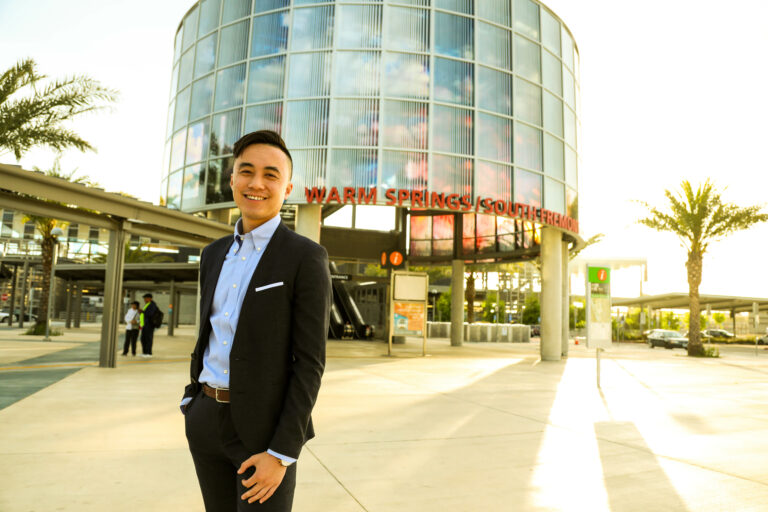
When Alex Lee ran for ASUCD in 2014, he touted his ability to get boba into the Coffee House on campus. Now, as a state assemblymember-elect, he plans to take on affordable housing.

“ASUCD was the first time I worked in an elected position,” Lee said. “You learn to work with other people to achieve policy goals with the same political dynamics that exist at any level of government.”

Lee graduated from UC Davis with degrees in communication and political science, after serving as student body president for one year.

During his tenure as ASUCD president, he said he was concerned about the affordable housing in Davis and how students were being left out of the conversation.

“Students often did not have any say in land-use decisions and anything about housing,” he said. “But they were disproportionately affected by the shortage of housing, the high cost of housing.”

When Lee was president of ASUCD from March 2016 to March 2017, he said the UC Davis campus was riled in controversy due to its previous Chancellor Linda Katehi, facing a thawing tuition freeze and still reeling from the recent election of President Donald Trump. 

“It was a very tumultuous time, and knowing how to represent and effectively advocate for the voice of 30,000 students at UC Davis was incredibly heartening,” Lee said.

Lee’s new position claims a lot of firsts. He is the first openly bisexual state legislator in Califonia, and at 25 years old, he will become the youngest Asian-American assemblymember in the state’s history.

“There’s tons of crises and scandals we have to deal with, and I think that made me a strong leader and more adept to lead than perhaps some older politicians,” he said.

Previously, Lee worked at the Capitol, where he said he helped write and pass two state laws as a legislative policy advisor.

“I knew the state legislature was the place to make some pivotal change,” Lee said. “However, I think that the Democratic supermajority—we were not fulfilling our promise that our constituents like to see.” 

Though Lee considered himself as an underdog in the race, with his Republican opponent far outspending him, he was endorsed by previous Presidential Candidate Andrew Yang and Vermont Senator Bernie Sanders.
“It was incredibly exhilarating to be endorsed by Bernie Sanders,” Lee said. “I credit him as fostering the modern progressive movement that we know today.”

Lee’s campaign voluntarily refused to receive monetary contributions from corporations, fossil fuels, real estate developers or police unions.

He said that his time at UC Davis helped him learn how to balance a budget and advocate for students. 

“A lot of the things I learned at UC Davis are the foundations I bring to being a representative of the state assembly,” Lee said. “Really, I think any Aggie could do it, they just have to find the right place for them to make a difference.” 

Written by: Kathleen Quinn— campus@theaggie.org


Five students weigh in on the best Trader Joe’s frozen food

Variety, price and simplicity make Trader Joe’s a valued market choice, according to many college students 

Trader Joe’s is a staple of the UC Davis community. It’s known for healthy and affordable options that cater to college students. The grocery store has managed to rise above frozen food’s less-than-great reputation. Five UC Davis students discuss their go-to’s from the frozen food aisle.

Leela Srinivasan, a third-year math major, endorsed Kung Pao Tempura Cauliflower. 

“It’s so good,” Srinivasan said. “It’s pretty hefty because cauliflower is kinda large.”

The cauliflower is more laborious than other frozen options. The dish’s instructions say to make it in the oven. Srinivasan values this aspect with an acute observation. 

“What I like about Trader Joe’s is that some of it is microwavable, which is easy, but this is different,” Srinivasan said. “You use the oven. It doesn’t just feel like something microwaved and gooey. It definitely feels like something you would get out: quality.”

A common sentiment is that frozen food is worse, but Srinivasan views it as an opportunity to expand her palate. 

“I don’t know if I know how to properly batter cauliflower and I don’t know what goes into the sauce,” Srinivasan said. “I do enjoy cooking, so for certain foods I want to make them, but it’s nice to switch it up with something you know you can’t make yourself.”

She also subscribes to the idea that Trader Joe’s options may have health benefits. 

“It also somehow feels healthy even though I don’t actually know if it is,” she said.

Isabel Rodriguez, a second-year psychology major, leans towards the popular Chicken Tikka Masala. As a busy student, she values efficiency.

“It’s my go-to,” Rodriguez said. “[I] don’t usually go to Trader Joe’s, but if I happen to be there, I’ll get it every time. It’s a quick and easy thing I can pop in the microwave. But it’s really good, better than most frozen foods.” 

Though she doesn’t frequent the store, she praised its options. 

“I think they have a pretty good selection, honestly,” Rodriguez said. “I feel like there’s a lot of choices and it’s not the type of food you’d see at normal grocery stores, which I like. There’s a lot of variety.”

The third recommendation comes from Caroline Hopkins, a second-year history major. She chose a more unconventional option. 

“I love their Mac and Cheese Bites,” Hopkins said. “It’s a mac and cheese pasta with cheese sauce covered in fried breadcrumbs.” 

Though Hopkins enjoys several frozen meals, she has some reservations. 

“I find it kinda weird when some of the frozen foods have frozen pieces of sauce,” Hopkins said. 

If you are a regular Trader Joe’s frozen food consumer, you’ve probably tried their Mandarin Orange Chicken. Juliette Taylor, a first-year linguistics major, vouched for the popular dish. 

“It’s basically just like normal orange chicken,” Taylor said. “It’s breaded and crunchy on the outside, and it comes with some sauce. All you have to do is put it in the oven. It’s really good, kinda tangy.”

Unlike the other interviewees, Taylor doesn’t rely on it as a staple of her diet. 

“At this point, I eat it once every one to two months. I have to space it out so I don’t get tired of it,” Taylor said. 

Overall, she feels positively about the options at Trader Joe’s. 

“I think they have a really good selection, I like that there’s lots of different kinds of food,” Taylor said. “I also like that there’s a lot of vegetarian options.”

The frozen foods are not limited to meals. Anusheh Abdullah, a second-year mechanical engineering major, raved about their dessert options. 

“The Green Tea Mochi is incredible,” Abdullah said. “They just do a really good job with the flavor and the texture. Like, the mochi wrap and ice cream have different flavors, but they really complement each other. Honestly, the decision to buy it was life changing.”

Abdullah is a die hard patron of Trader Joe’s, with good reason. 

“I exclusively go shopping at Trader Joe’s, I would say,” Abdullah said. “And I’m not very good at cooking, I haven’t really done that for most of my life, so I think it’s really great for college students. And they have a really wide variety of cultural foods and homey American comfort foods.”

All the interviewees agree that Trader Joe’s variety, price and simplicity make it a valuable choice for college students. And if none of these options sound good enough for you, the Fettuccine and Mushroom Pasta, the Mac and Cheese and the Vegetable Fried Rice were also popular among the interviewees. Next time you find yourself in the store, utilize the opportunity to expand your palette.

Written by: Livvy Mullen — arts@theaggie.org


California’s confusing ballot measures highlight need for clarity on the ballot

Despite the challenges voters face, do not underestimate the power of your vote and continue to fight for change 

As deciding votes are still being counted in key states across the country, many Americans are focused on the outcome of the tight presidential race between former Vice President Joe Biden and President Donald Trump. But in California, where 74% of the votes have been counted as of Thursday morning, outcomes from the twelve contested and often confusing ballot measures have emerged, sparking a discussion about some of the unexpected results. 

While a few measures are still too close to call, Californians were very decisive on issues concerning the criminal justice system. Proposition 20, calling for harsher sentencing laws and stronger parole restrictions for those convicted of misdemeanors, failed by roughly 25 points—the second largest margin for a proposition on this ballot. At the same time, Californians reinstated the voting rights of tens of thousands of formerly incarcerated individuals through the passage of Proposition 17, a major step in the right direction for criminal justice reform. 

Yet Proposition 25, which proposed a risk assessment system to replace the money bail system, failed by 10 points. Though this would have eliminated some of the economic burdens placed on poorer individuals in the justice system, the criteria for how risk would be determined by a computer-generated system remained unclear in the short explanations on the ballot. 

This highlights one of the larger issues with California’s ballot measures system. Voters often have to spend extra time independently researching measures to gain a deeper sense of the implications of their vote beyond the summaries found in the Official Voter Information Guide. For instance, voters might be surprised to learn that Proposition 21 is supported by the Democratic Party but opposed by Governor Gavin Newsom and that rideshare companies like Uber and Lyft spent a record $205 million dollars to promote the passage of Proposition 22. 

For first-time voters and voters whose first language isn’t English, this can be a very intimidating and time-consuming process, particularly when your decision might hinge on the nuanced connotation of a word. 

Even the initial summary of the propositions—theoretically the most neutral aspect of the ballot followed by the “What Your Vote Means” and “Argument” sections—can be frustratingly vague and misleading. The highly controversial Proposition 22, which passed with about a 17 point margin, was framed as a classification difference that “provides independent-contractor drivers other compensation, unless certain criteria are met,” without explaining the details of the criteria or how the terms independent contractor and employee are defined by the state.  

Additionally, the initial summary of each proposition always includes the direct fiscal impact that the proposition will have on the state, but leaves the deeper implications of how this will affect individuals and their rights to the impartial arguments section or the voters’ own research. If the initial summary of Proposition 22 was more comprehensive in explaining how rideshare drivers would lose their right to unionize if classified as independent-contractors, Californians might have voted differently. Even if it addressed the deeper fiscal impacts for the state beyond the “minor increase in state income taxes”—like a potential increase in state healthcare costs for drivers who are not provided insurance through rideshare companies because they are not classified as employees—voters might have had a better understanding of how their vote would impact Californians. 

While The Editorial Board encourages everyone to exercise their right to vote, we understand that it is not as accessible or clear of a process as it should be, and we commend the 11.8 million Californians whose votes have been counted so far in this year’s election. 

While California has some of the best voter protections in the country (i.e. same-day voter registration and allowing mail-in ballots to be received several days after an election), the state could do more to provide comprehensive and accessible voting information for those who face barriers in understanding the nuances of ballot measures and may not be able to research them on their own. Especially during the pandemic, when resources like internet access at libraries and in-person events have been limited at best, it is important to note that voting is not an easy task for everyone; but this election has shown us that when we do vote, our voices are just as powerful, despite the challenges we may face. 

Californians have passed some groundbreaking progressive reforms during this election, but certain measures that have seemed fairly straightforward, like Proposition 16, have failed. We share your frustration and want to remind students that progress towards fighting injustices is not always immediate, even when it should be. Just like the presidential votes being tallied across the nation, we encourage everyone to be patient and diligent and to continue to fight for what’s right through voting and other forms of activism. 

Written by: The Editorial Board


Pandemic associated with increase in violence concerns and firearm purchases

UC Davis study links COVID-19 conditions to safety issues

A recent UC Davis study reveals that, aside from the inherent dangers, the COVID-19 pandemic is also prompting safety concerns from an increase in firearm purchases. Nicole Kravitz-Wirtz, an assistant professor in the department of emergency medicine, explained that after looking at the intersections between violence, firearms and the pandemic, she observed an increase in both violence concerns and firearm purchases. 

“Even early on, it was clear that the pandemic had worsened many of the well-established underlying conditions that contribute to violence—things like poverty, unemployment, lack of resources, as well as social isolation, hopelessness, and loss—and we posited that these risks would be further compounded by what appeared to be emerging evidence of a surge in firearm purchasing,” Kravitz-Wirtz said via email.

According to Julia Schleimer, a research data analyst at the UC Davis Violence Prevention Research Program, the study used a statewide survey of California adults, which asked them questions concerning “exposure to violence, worry about violence, firearm ownership, firearm purchasing and civic engagement.” 

Kravitz-Wirtz elaborated that the study was designed to capture the lived experiences of violence within the context of the COVID-19 pandemic. 

“The pandemic has exacerbated long-standing injustices rooted in systemic racism and other oppressive systems of power that contribute to the underlying conditions—for example, poverty, unemployment, lack of available resources—that elevate risk for, and compound the consequences of, community violence,” Kravitz-Wirtz said via email.

Examples of such instances included the use of law enforcement against protests and increased frequency and severity in cases of domestic violence. Specifically concerning domestic violence, Garen Wintemute, the director of the UC Firearm Violence Research Center, said that the stay-at-home orders are associated with an increase in intimate partner violence. 

Given the increase in overall anxiety, and knowledge that gun purchasing is historically driven by a desire for self protection, Schleimer explained that such motivations translate into an increase in firearms purchases. 

“[Violence] concerns increase at any time of increased social and economic stress,” Wintemute said via email.

In order to counteract the fear of violence stemming from these factors, Kravitz-Wirtz emphasized the importance of securely storing firearms, and storing them separately from ammunition. In addition, since many acts of violence are impulsive, she suggested temporary firearm storage outside of the home. 

Schleimer said that it may also be beneficial to address misconceptions of health risks and benefits associated with firearm ownership, in addition to conducting community-based interventions.

“I think that addressing people’s sense of collective trust in security will be helpful rather than stoking fear and concern,” Schleimer said.

Schleimer hopes that as the pandemic dies down and its health effects can be properly treated, the social and economic disruptions may be resolved along with it. 

Wintemute added that working together to address COVID-19 and its consequences would help decrease these fears. 

As public health researchers and practitioners, Kravitz-Wirtz said that their study raised many areas of concern that need to be addressed.

“We also want to look to addressing and reimagining the systems that create the conditions that contribute to violence by expanding the concept of public safety to include not just law enforcement, but also things like housing security, living wage jobs, youth empowerment programs and the like,” Kravitz-Wirtz said via email. 

Written by: Michelle Wong — science@theaggie.org

Correction: The original version of this article misspelled Julia Schleimer’s name. The article has been updated to correct this error.

14-year-old Tiara Abraham begins her first quarter as a music major

0

The musical child prodigy discusses her pursuit of vocal performance

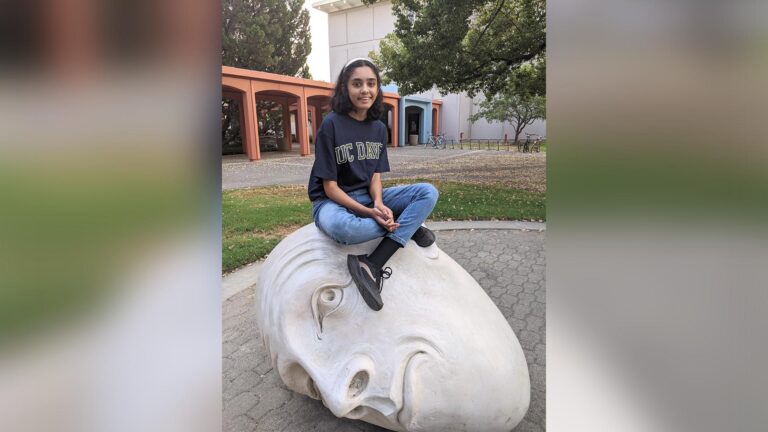
While many might find performing in front of crowds of over 20,000 people daunting, Tiara Abraham, a 14-year-old third-year music major at UC Davis, has conquered stage fright through a myriad of performances. She has showcased her talent at Carnegie Hall twice and has even sung the national anthem for the San Francisco Giants. 

While this is her first year at UC Davis, she is graduating with the class of 2022. Her brother, Tanishq Abraham, also attended UC Davis as a 14-year-old, and graduated in 2018 with a degree in biomedical engineering. 

Tiara started at Davis this quarter and is pursuing a degree in music, though she first started to sing when she was about four years old.

“When I turned seven, I realized that I loved music and I loved to sing, and it was something I was truly passionate about, so I found a voice teacher who was willing to train me and I began to learn the right techniques and healthy habits early on,” Tiara said.

As a vocalist, Tiara finds something special in all genres of music. Whether it’s classical or jazz, she finds a way to add a unique spin on the works she performs.

Over the past two years she has also been a part of the UC Davis chorus, which is open to community members as well as students and faculty. Although she is one of the youngest members of the choir, she explained how the age difference does not faze her. 

“I have been taking college courses on campus since I was seven, and I have been surrounded by people who are two or three times older than me,” Tiara said. “But, after a while, you get used to it and it doesn’t feel weird anymore. Plus, if anything, people are supportive of having young students around.”

The soprano one singer explained how she truly feels in her element as a solo artist. 

“In every choir or chorus you are alway asked to blend in your voice with others because you don’t want to hear distinct voices in a choir,”  Tiara said. “For me, that’s a little more difficult because I like to sing to my fullest extent and add in my own style, but that is not always in the best interest of the chorus as a whole.” 

Throughout her musical career there have been many people who have supported her, but every so often she receives criticism regarding her intended career choice. 

“My voice teacher and my family have always been really supportive, but I learned through this journey that there are always going to be those naysayers that tell you to focus on something else,” Tiara said. “But singing is my passion, and that’s something my brother, Tanishq, always emphasized. It’s important to do something that you enjoy and that makes you happy, and music is something that makes me really happy.”

Tiara said that as an Indian-American, there are many stereotypes that she has defied throughout her journey. 

“You don’t really see a lot of Indian-American opera singers, and it definitely surprises a lot of people that I want to pursue music as a career and not just a hobby,” Tiara said. “Especially when they hear about a child opera singer they think of the typical ‘America’s Got Talent’ performances, but it’s definitely a different reaction when you are a minority pursuing an art field versus something like science or engineering.”

Tiara’s mom, Taji Abraham, echoed her daughter’s sentiments.

“As a parent, it is a little concerning when your child wants to pursue a field that is a little more difficult to make a profession out of,” Taji said. “Especially coming from an Asian community, there is this expectation that future generations will become doctors and engineers, but having music as a side hobby is considered more ‘acceptable.’”

Furthermore, Taji added that it is not uncommon for people to compare her two children. 

“Even within the people of our community, there is a difference in enthusiasm when they talk about Tanishq going into engineering or medicine versus when we say that Tiara is majoring in music,” Taji Abraham said. “There is a different response and I don’t think a lot of people really realize how difficult it is to actually pursue the academic side of music because it’s like a totally different language.” 

Although Tiara has focused on developing her skills as a vocalist, her musical expertise has helped her learn other instruments such as the piano and violin. 

“In my orchestration class, I have learned all about the instruments and how to use different or similar techniques on different instruments,” Tiara said. “In the future I would also like to be able to compose my own music, but learning new instruments helps with that process.” 

Eventually, Tiara hopes to perform in opera houses. She cited the MET Opera House, the Sydney Opera House and the La Scala opera house as the top three performance halls she hopes to sing in some day. 

For aspiring musicians and music majors, Tiara offered some advice.

“There are a lot of aspiring musicians that go straight into the music making process or start creating content, which is great, but I do believe that there is value in getting a proper music education,” Tiara said. “The most important thing is that you should pursue something that you are really passionate about, because it will make you work harder and forget about the people who might put you down.”

Written by Sneha Ramachandran — features@theaggie.org


COVID-19 Rental Assistance Grant Program supports Yolo County residents at risk of being displaced, unable to pay rent

Low-income households in Davis can receive grant of up to $4,000 if eligible

Yolo County announced a COVID-19 Rental Assistance Grant Program to support Yolo County residents in a press release published on Oct. 16. The program will help individuals who have a higher risk of being displaced due to not being able to pay rent as a result of the pandemic, and to “offset corresponding lost revenue that landlords need to provide housing services.”

The program, which consists of a “one-time rent and utilities grant,” will be provided to tenants who are low-income and have not been able to pay rent fully due to the hardships caused by COVID-19. These include an increase in childcare or medical costs, a decrease or loss of wages and employment and a “loss of childcare.”

The types of assistance provided are security deposits and rent assistance, in addition to  utility costs and utility deposits.

Students, however, are not eligible for the program unless they meet certain exemptions. For example, they may be eligible for the program if they have dependent children, are over the age of 24, are a veteran of the U.S. military or are married.

Colleen Brock, the senior management analyst at Yolo County Housing and the program’s administrator for the City of Davis, explained via email that emancipated young people or those who have aged out of foster care could also be eligible. 

More information regarding the exemptions students need to meet in order to be eligible for the program, as well as information about general applicant eligibility and the process of applying, can be found on the Yolo County Housing website.

Public Information Officer at Yolo County Jenny Tan described the goal of the program. 

“The program provides a one-time rent relief grant directly to landlords on behalf of low-income tenants to reduce burden on tenants and ensure landlords receive the revenue needed to maintain housing services,” Tan said via email. 

People will need to apply for the program in order to receive the grant, according to Tan.

“Tenants must apply,” Tan said via email. “It’s on a first come, first served basis and when the funding runs out, the program will end/close. The application is pretty simple but tenants do need to show proof of their economic impact and they must be very low income tenants or low income tenants with high rent burden.”

Information about what qualifies as “very low income” and the application can be found on Yolo County Housing’s website.

For example, very low income tenants can have up to 60% of the Area Median Income (AMI) and low income tenants can have up to 80% AMI with a high rent burden (at least 30%). 

Stimulus payments such as Economic Impact Payments and the $600 per week Federal Pandemic Unemployment Compensation from the CARES Act, however, are not counted as part of income in determining someone’s eligibility for this program.

There is also a cap to the amount that can be allocated to each household.

“The program caps each household to a one-time grant of $4,000 in the City of Davis or $3,000 everywhere else in Yolo County,” Tan said via email. “The City of Davis is a bit more because they received some additional funding for this program.”

A news statement from the City of Davis further described the scope of the program.

“The program bridges the gap between what the tenant can afford and the tenant’s actual rent,” the statement reads. “The required tenant’s share of rent is 10% of adjusted gross monthly income. The share of monthly rental assistance will be the difference between the actual rent and the tenant payment.”

Ultimately, Gary Sandy, the chair of the Yolo County Board of Supervisors, said in the press release that the program is meant to support residents who may have been financially impacted by the pandemic and thus unable to afford rent. 

“This grant opportunity provides rent and utilities relief to those who have been financially devastated by the COVID-19 crisis,” Sandy said in the press release. “Given that these funds are allocated on a first-come, first-served basis, it is imperative that renters move rapidly in applying.”

 Written by: Shraddha Jhingan — city@theaggie.org

Uncertain future for student-led fees lawsuit

Students sued the UC system for charging fees for facilities and services not being rendered due to pandemic closures; the administration offers alternative view

UC students filed a class-action lawsuit in federal court claiming the UC system violated the Takings Clause of the constitution when it accepted fee payments from students intended for on-campus facilities and services which were closed due to the pandemic.

Noel Garcia, an attorney at Cowper Law representing Claire Brandemeyer, the UC Davis student who filed the lawsuit, said students are entitled to recoup almost all of the fees paid in  Spring Quarter.

“Students at the UC Davis campus in particular, being on the quarter system, never stepped foot on campus during Spring Quarter of 2020,” Garcia said.

The lawsuit was originally filed to include only spring fees, but Garcia said she hopes they can amend the claim to include current and future fees assessed as pandemic closures continue.

“We would try to add new quarters for the continuing violations of taking fees from the students,” Garcia said. “We would also add new claims in order to get around the motion to dismiss.” 

After a hearing on Oct. 5, the Northern California District Court was inclined to dismiss the case, citing sovereign immunity. The UC system claimed that, because it is an arm of the state, it cannot be sued in federal court.

The current campus-based fees are approximately $676, with an additional $376 paid in student services fees per quarter.

Vice Chancellor of Finance, Operations and Administration Kelly Ratliff said that the fees students pay have some malleability in the way that they can be used once allocated to a specific budget.

“Even though the fee was set up with amounts per student per activity or program, there’s a certain amount of flexibility in the language,” Ratliff said.

Kuvin Hayer, a third-year economics major, said he understood why certain services and facilities have closed during the pandemic, but wants answers about how his student fees are being used.

“I just want transparency on what’s actually happening to the fees we’re paying now and where it’s actually going,” Hayer said.

The administration has made an effort to retain as many employees as possible and has kept temporary COVID-19 related layoffs under 30, Ratliff said. 

“We’re trying so hard to keep everyone employed,” Ratliff said. “The services, while they’re different, are still being maintained.”

Vice Chancellor of Student Affairs Pablo Reguerin said, as the pandemic continues, many of the services previously provided in-person have moved online in the form of what Student Affairs has coined “Virtual UC Davis.

“People have had to rethink how we serve students in a very short period of time,” Reguerin said. 

Many buildings remain closed on campus, with a few facilities operating at reduced capacity.

“The one that I really miss is the ARC, because I spent probably a good portion of my days there while I was on campus,” Hayer said. 

Fees for facilities like the Activities and Recreation Center (ARC) are not solely used for current operations, Ratliff said.

 “A lot of that money is used to actually pay for the building,” said Ratliff. “We borrowed money to build it, we still have to make—in essence, the mortgage payment.”

Reguerin seconded this sentiment, adding that the university is “paying that debt service whether someone is swimming there or not.” 

The ARC has been re-opened to students starting Nov. 1 for appointment-based usage, Reguerin said, but fluctuating guidelines in Yolo County make the continued operation uncertain. 

On Aug. 20, Ratliff and Reguerin issued a joint statement that student fees would not increase; however, both said they did not expect the fees to decrease either. 

“I certainly understand the perspective of, ‘Why are the fees staying the same?’ and I know I’m the voice that says, ‘Well, they are and they need to be,’” Ratliff said. “But, I do want folks to know that we take really seriously the stewardship of the funds and that they are student funds.”

The lawsuit headed by Brandemeyer was combined with another lawsuit, Ritter v. Regents of the UC, that included tuition reimbursement. That suit is currently in limbo awaiting a response on whether they can submit an amended complaint.

Brandemeyer did not respond to a request for comment. 

Though the future of the suit against the UC system is uncertain, the debate about what students are owed when it relates to fees is ongoing.  

“What we really want is an injunction to get the school to stop taking fees from all of you going forward until they can actually provide the services,” Garcia said.

Written by: Kathleen Quinn — campus@theaggie.org


Dodgers win the World Series, breaking 32-year trophy-less drought

0

Feeling like 1988

For the second time in 16 days, the city of Los Angeles welcomed home a champion. 

After the Lakers clinched their NBA title earlier in the month, the Dodgers held their own, snapping their 32 year World Series drought in a six-game series over the Tampa Bay Rays. It became the second time that both the Dodgers and Lakers won in the same year, the first in 1988. To this day, Los Angeles remains the only city to have both their MLB and NBA teams win a title in the same year and it became the first city to win those two in the same month. For the Dodgers, this long-awaited championship brought an end to the narratives that surrounded them and many of their players. 

After losing in the World Series in 2017 and 2018, as well as suffering a heartbreaking loss to the Washington Nationals last year, many believed the Dodgers’ reign over the National League would come to an end. The team knew that it needed to make a major move in order to get over the hump and that they did. In February of this year, they acquired former American League MVP Mookie Betts in a trade with the Boston Red Sox. Betts has been largely considered one of the best players in baseball over the last couple of years and the Dodgers hoped that this would be the move to finally make them champions.

After the coronavirus pandemic delayed the MLB season and the shortened 60 game season came to a close, the never-before-seen playoffs began. They were expanded to 16 teams from 10 and made every team play a best-of three Wild Card Series. Under the new format, every round’s games up to the World Series would be played on consecutive days. This added a new element to the postseason, as managers now had to account for the lack of rest day when it came to managing their bullpen. 

Going 43-17 and clinching the best record in the National League once again, the Dodgers first-round opponent, the Milwaukee Brewers, limped into the playoffs after a disappointing year that saw them go 29-31. LA beat them soundly in back to back games and advanced to their eighth straight National League Division Series, where they went up against the young and fiery San Diego Padres. The Padres were coming off a year where they broke a drought of their own, advancing to the postseason for the first time since 2006. After winning the first game comfortably and narrowly escaping in Game 2, the Dodgers, one win away from their fourth National League Championship Series in five years, unleashed the floodgates in Game 3, beating the Padres 12-3 and finishing the sweep. 

The only team that stood between the Dodgers and another National League pennant was the rising Atlanta Braves. Having suffered a crushing defeat in last year’s postseason, the energetic team finished with a 35-25 record, clinching the National League East once again. Led by MVP candidate Freddie Freeman and young star Ronald Acuña, the Braves took the first two games of the series. It took a record-setting performance in Game 3 that saw the Dodgers score 11 runs in the first inning, the most in a single inning in postseason history, to get them back in the series. But in Game 4, Atlanta soundly defeated the Dodgers by a score of 10-2, leaving LA one win away from another disappointing postseason exit. 

With their backs against the wall in Game 5, the Dodgers exploded in the sixth inning and won the game by a score of 7-3, keeping their season alive. In Game 6, the Dodgers scored three runs in the first inning, and that proved to be all they needed as their starting pitcher Walker Buehler went six innings without allowing a run, setting up his bullpen nicely to secure the win and tie the series. In the winner-take-all Game 7, we saw a tightly contested, back-and-forth matchup where the Braves led entering the sixth. But, Kiké Hernandez’s solo home run in the bottom half of the inning tied the game. As the game winded down, the pressure was at an all-time high. With 2019 NL MVP Cody Bellinger up at the plate in the bottom of the seventh, he delivered an iconic home run, giving the Dodgers the lead and eventually the win.

“This year is our year,” Dodgers manager Dave Roberts said during the trophy presentation. “This is our year!”

Holding the best record in the American League at 40-20, the Tampa Bay Rays entered the playoffs on a mission. Having suffered a brutal defeat to the Houston Astros the year prior, the Rays were focused on reaching their first World Series since 2008 on the backs of their low-cost team driven by under the radar player acquisition and development of talent. Despite being the best team in the American League, their lack of big-name stars meant they were often overlooked when it came to World Series predictions. In the opening Wild Card Series, the Rays matched up against the young Toronto Blue Jays team and comfortably put them away in two games. In their American League Division Series matchup, they faced off against the prohibitive American League favorite, the New York Yankees. 

Splitting the first four games of the series, the Rays went into the decisive Game 5 against the Yankees hoping for one of the biggest wins in franchise history. With New York starting their best pitcher and big-name free agent acquisition Gerrit Cole, the task would be a great one. Going down 1-0 in the fourth inning, the Rays responded with a run of their own in the fifth and as it got closer to extra innings, pinch hitter Mike Brosseau took Aroldis Chapman deep, delivering the knockout blow to the Yankees.

Hoping to get revenge for their exit the previous postseason, the Rays faced the Astros. Winning the first three games by a combined six-run difference, it seemed as if Tampa Bay would cruise into the World Series comfortably. But, the Astros did not stop fighting, winning Game’s 4 and 5 by one run. In Game 6, the Rays tried everything in their power to not lose grasp of their almost insurmountable 3-0 lead, but a late explosion by Houston forced a Game 7. With Tampa’s ace and former Astro Charlie Morton on the mound, the Rays felt confident that they would not fall victim like the Yankees did in 2004, in which they blew a 3-0 lead to the Boston Red Sox. Morton gave them 5.2 scoreless innings and after taking a two-run lead in the first inning, they never looked back, advancing to their first World Series in 12 years.

The World Series between two of the biggest analytical teams in Major League Baseball would prove to be a chess match. Being the first Fall Classic since 2013 to see the two best teams from their respective leagues, this matchup was the best baseball had to offer this year. With the longtime ace on the mound for the Dodgers, Clayton Kershaw silenced many as he threw six innings allowing just two hits and one earned run. The Dodgers would cruise to a Game 1 victory, but in Game 2, they started rookie Tony Gonsolin who only lasted 1.1 innings. It became a bullpen game for them and the Rays took advantage, going on to win Game 2 by a score of 6-4.

With Buehler back on the mound for the Dodgers, his six-inning gem was too much for the Rays to handle as Tampa Bay accumulated just four hits in the entirety of the game. The following day, in what was arguably the best game of the World Series, the Dodgers and Rays went back and forth, exchanging runs. Up 7-6 and one strike away from going up 3-1 in the series, Dodgers closer Kenley Jansen gave up a hit to Rays’ Brett Phillips and two fielding errors by LA’s position players caused mayhem to ensue. The Rays scored two runs and walked it off, tying the series at two games apiece.

This kind of crushing loss is one that can demoralize a club, so many watched Game 5 for an indication of how the Dodgers would respond. Right out of the gate, LA scored two runs and never looked back, leaving them one win away from the World Series title that had been eluding them for years. The Rays, however, would not go away without a fight, as they answered and took a one-run lead in the first inning. This lead would carry them into the sixth inning, still ahead. But, a questionable call by Rays’ manager Kevin Cash left many scratching their heads. Starting pitcher Blake Snell was being pulled after just 5.1 innings and 73 pitches. He was virtually unhittable in Game 6, but the Rays’ philosophy of not letting a pitcher face a batter three times was more important to Cash. After Snell was pulled, the Dodgers took advantage and took the lead on a Corey Seager hit scored by Mookie Betts. Betts himself added another insurance run in the bottom of the eighth and Julio Urias closed out the game with a hitless 2.1 innings, handing the Dodgers their first World Series in 32 years. 

Years and years of heartbreak and disappointment came to a close for the Dodgers in this wild year. The conclusion of the season still came with some controversy, however. After being pulled in the sixth inning due to what was later announced as a positive COVID test, Dodgers’ third baseman Justin Turner came back on the field and celebrated with his teammates, hugging them and oftentimes not wearing a mask. This sparked heavy criticism on MLB and the Dodgers and there is an ongoing investigation by the league to see whether they will penalize all parties involved. 

This year was a bumpy road for Major League Baseball, from start to finish. Having just concluded this season, the league is looking into what they plan to do for the 2021 season. They released their schedule back in July, but with much uncertainty about the status of the pandemic in the country on April 1, MLB will need to develop a plan that will fit under all circumstances, or easily adjustable on the fly. It’s unknown whether there will be a minor league baseball season in 2021 and after canceling this year, it would be another huge blow to the already underpaid players in the farm systems. 

The hope for Major League Baseball at the moment is to hold a 162 game regular season in 2021. If possible, they also hope to have at least some fans, as it is estimated that they lost about $3 billion this season alone. Another season with no fans would have a brutal financial impact on these clubs and many would enter a stage of uncertainty.

As of right now, MLB is working as if their schedule will remain the same. Spring training is scheduled for Feb. 27, but is also “subject to change.” Not much is known about the major changes to the year and dates that are available at the moment are not ones that give a lot of certainty. The conclusion of this season gives MLB a chance to exhale, try to improve next year and hopefully set up a more successful season than this year. 

Written by: Omar Navarro — sports@theaggie.org

The Editorial Board meets with Chancellor May, UC Davis administrators

May, administrators discuss COVID-19, sexual assault policies and student fees

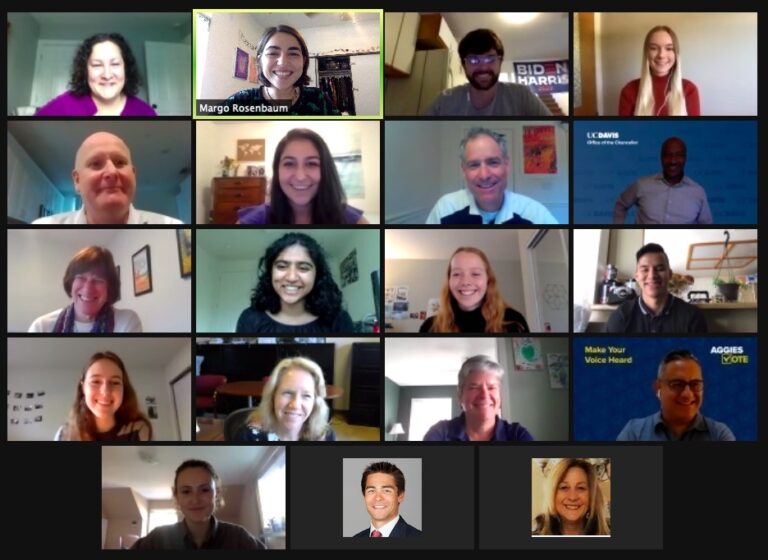
The California Aggie’s Editorial Board had a Zoom call with Chancellor Gary May; Provost and Executive Vice Chancellor Ralph Hexter; Vice Chancellor for Student Affairs Pablo Reguerín; Vice Chancellor of Finance, Operations and Administration Kelly Ratliff; Chief Campus Counsel Michael Sweeney; Director of Athletics Kevin Blue and Chief Marketing and Communications Officer Dana Topousis to talk about COVID-19 plans for next quarter, how the university is addressing sexual assault and student fees. 

Below is a transcript of the meeting that has been edited for length and clarity

Pass times were released today and students are planning their courses for Winter Quarter. What is Winter Quarter going to look like in terms of remote instruction and when can students expect to know more information?

Gary May: I think Provost Croughan is best to answer that question, but you’ll know very soon as we were just discussing today.

Mary Croughan: So the expectation Winter Quarter is that there will be a few more courses offered in person than were offered this Fall Quarter, but that means the vast majority will still be offered remotely––especially for undergraduates. We were doing quite well on the COVID case numbers for Yolo County and Sacramento County, so we had hoped we might be able to ramp up a little bit further but unfortunately we’re sliding back a little. We always have to be in compliance with the county public health guidelines. At this point, it’s still going to be a pretty limited number, around 50 to 54 courses offered in person for undergraduate and graduate students. All of it will be noted in Schedule Builder by Nov. 9 with the first pass.

When can all asymptomatic students on and off campus expect to have access to free and easy COVID-19 testing? How is UC Davis ensuring that testing services for the Yolo County community are not being overburdened by off-campus students who are not able to get a test through the university?

Gary May: I’ll begin by saying, our first order of business with testing was to get the on-campus housing residents regularly tested and you can think of concentric circles expanding out to various other populations, until we get not only to the entire UC Davis community, but also the city of Davis community through our healthy Davis Together program.

Kelly Ratliff: I’ll start by focusing on asymptomatic students. For students that have symptoms, you should always go to Student Health and Counseling Services and testing is available and is free if you have symptoms. If somebody has symptoms, call Student Health and Counseling, testing is available for everybody regardless of where you live or where you’re at. For the asymptomatic screening program, the campus started this program back on Sept. 14, focused first on students living at the residence halls and West Village. We’ve been slowly progressing, just last week, the saliva test was validated and as of last Wednesday, all testing done on campus has been a saliva-based test, also free. There’s a new county health officer in Yolo County and she is just starting this week. We meet with her tomorrow and once we have a chance to brief her, the expectation is we will ramp up. Right now there are about 3,200 or so folks who are participating in the program. Students living on campus, Aggie public health ambassadors, students who work as Aggie hosts, our employee groups, first responders. We will next add all students who are living in public-private partnership housing on campus, so any of the other properties on campus will be working on adding. There’s about another 5,000 ready to invite by next Monday and then the plan is for the following week to open it up for everybody. All students, all faculty, all staff who are in or around Davis will be able to start participating in the testing program at that time. It will be mandatory for folks who are using or accessing campus facilities.

Amid the recent allegations that have been publicly brought forth against the fraternity TKE, how is the university addressing the issues of fraternities that stand by members who commit sexual assault?

Pablo Reguerín: All of the fraternities and sororities go through training in their advising process in order to be recognized and to sustain their recognition. They have to go through a significant amount of training that’s targeted at awareness, but also developing a culture where students are clear and the activities are centered around safety. There is some general training and they also work directly with our advisors. We are trying to clarify the rules but we’re also really trying to make sure students are thinking critically about the activities and the culture of their organizations. That’s not limited to Greek life organizations but overall I think those are critical pieces that set an important foundation. 

Wendi Delmendo: In terms of the process that we would use to address the kind of behavior you referenced, as you probably know that sexual violence and sexual harassment policy is primarily focused on misconduct by individuals and all of our adjudication framework are aimed at taking corrective action including imposing discipline on individuals. Group conduct poses more of a challenge for us, which is not to say that we don’t have tools to address it. You  probably recall last year the campus addressed allegations of misconduct involving the band. This falls into a similar category. Individuals from my office and student affairs including SJA and Greek life met recently to start discussing how to address these allegations. We are definitely mindful of them and working on it. The question focuses on how come we address the issue of fraternities that stand by their members and I think that gets back to what Vice Chancellor Reguerín said about trying to address the cultural aspects and the education that we provide. You’re probably aware that there were recent regulatory changes for Title IX. The UC system revised its policy as a result and really tried to keep as much of the prior policy as we could because the Title IX regulations only addressed a slice of the conduct that had been previously prohibited by our policy so we are still addressing everything that was prohibited before. I don’t think the regulations would prohibit us from responding to allegations in this case. 

Pablo Reguerín: I think not just what activities and what is promoted in these organizations, but ensuring that students feel comfortable reporting. What we can do is directly related to the information that is provided. Making sure that students feel comfortable and safe reporting information. That allows us as a campus to be responsive to the reports and to go into investigations. It’s not just within the organizations, I think it starts there, but setting up a safe and comfortable process for reporting and being responsive to those reports. 

Wendi Delmendo: I really want to highlight that because the campus can only respond to information that we receive. As has been the case in the past, we have received reports of misconduct involving fraternities where we haven’t received specific information. We hadn’t learned what happened, who was involved, and that really makes it difficult for the university to respond so the more information the university can get, the better. There’s been several individual allegations against fraternity members where the campus has had that information, has been able to investigate and has substantiated the allegations and has taken action. 

Michael Sweeney: If I can add one piece––within the last year, organization conduct cases have been transferred to the office of Student Support and Judicial Affairs. The same office handles individual conduct, whether academic or social misconduct, will now also be handling organizational conduct cases as well. 

We understand the Title IX process. Often times, fraternities have several members who are accused of sexual assault. Even if it’s not an individual, it’s a group of individuals from that fraternity. Is that different than if it’s just one individual? Because then it’s more of a reflection of the organization. 

Wendi Delmendo: The way we’ve approached it, is to treat each case individually. If there’s four fraternity members accused of sexual misconduct, then we would investigate those cases separately. If you remember the band situation from last year, we decided to do a climate assessment because we didn’t have specific accusations of individuals. That was better useful to understand the culture of the band and the university was able to take group related actions as a result. I’m not saying that is what we’re going to be able to do with this fraternity issue, but we’re certainly trying to come up with a good approach to address that so that we can hold the fraternity accountable. 

Michael Sweeney: The hazing process is not entirely different. There’s a very comprehensive sexual harrasment and sexual violence policy. Hazing is a much simpler policy. But, allegations of hazing by an individual are handled from a due process standpoint, very similar to the Title IX process. For group conduct, it would also be very similar. We would collect the evidence through a comprehensive investigation through reliable information. It’s easier for us to take action against a group than an individual because of due process. 

Pablo Reguerín: Somebody can submit a report online, be interviewed or call. They would submit their report and then proceed to an investigation based on the information. Our ability to respond and address issues is directly related to the evidence we are able to collect. The quality of information that we receive largely dictates what we are able to do and what type of response and to understand what kind of case it is, whether it’s a pattern. All those things are important. The office would work with the complainant to make it as easy as possible. The quality and comprehensiveness really matter and we want to make sure the community and students understand that.

Michael Sweeney: When we’re on notice of concerns, we do outreach, but sometimes people aren’t compelled to answer back. They control that agency and may prefer to go through the CARE office instead. 

Changing gears up a little bit here, we understand that the university plans to eliminate PE courses at the end of this quarter and beginning in winter. It could result in almost 30 lecturers losing their teaching positions. We were curious, who made this decision? Who did you consult on this decision? And why was it justified? What PE alternatives does Davis have going forward? 

Gary May: There had been a number of reviews over the years about PE that led to the recommendation that we discontinue the program. We have not made this decision because of COVID. However, before COVID started, the university was already facing about a 2 hundred million dollar problem over the next five years that we need to solve. That has only been compounded by the 200 million dollar problem that COVID has caused. If you look around the country, some of our sister institutions have discontinued entire departments and other drastic measures. We’re in a situation here where we are trying to minimize damage. Students don’t want their tuition to go up, staff doesn’t want salaries to be cut, nobody wants to be laid off or furloughed. We have to make some changes to try to maintain our level of efficiency. As I said, we didn’t make the PE decision because of that, but it certainly contributed to some of the thought process. 

Mary Croughan: It’s been 13 years that this has been considered. The last major report was issued in January 2020. It was an analysis from the whole budget framework analysis committee, institutional analysis group, that looked at enrollment of students in PE activities over the years and how significantly those numbers have declined. That was a major aspect of looking at it. Also, there had been a coach/teacher model over the last couple of years and I think that is the area of confusion around most people because it is not 30 lecturers. 12 of those people are coaches that will be going back to 100% coaching. The people who are losing their positions with the program closure are lecturers who are not members of the academic senate and most importantly, these are not academic senate approved course work, even though students get an academic unit for taking other courses that have been offered through PE. Looking at what we can do with two and a half million dollars in the budget that was spent on PE, a portion of that will go to paying full coaches salaries. The remainder of that will be used for academic programming on campus including some additional funding to campus recreation activities at the ARC. The one student request I have received was that the martial arts program on women and self defense offered through PE was 10 weeks, more extensive than the self defense course offered at the ARC. So, we will now have a 10 week self-defense program offered at the ARC to ensure that that training continues to be offered. There will be increased opportunities for financial aid for any program that has a fee associated with them at the ARC. With the removal of the PE programs in Winter Quarter, students who declared or were preparing to declare a minor, will be allowed to complete and the College of Letters and Science will ensure they can complete those courses this year.

Pablo Reguerín: Our recreation program will be doing assessments, student surveys and  broadening their offerings to make sure they expand their student offerings. We’re looking for an opportunity to expand and beef up some of our offers to the recreational program as well. 

Gary May: The goal is that the only thing that gets lost is the academic credit part of physical activity. You will still have on-campus rec and we will still encourage fitness and wellness and mental health activities. The only thing that will happen is that you won’t be able to earn the one credit for it. 

On the topic of tuition and fees, why are students paying more in student fees this academic year when they may not be receiving the same services during the pandemic?

Gary May: I don’t think anybody is paying more unless something happened that I don’t know about. In general, tuition is paid because everything about tuition is still happening. Courses are being offered, people are earning credits, graduating, getting degrees, all of that is still happening. With respect to campus based fees, I would encourage you to look at the COSAF website for descriptions of all our fees. Most of our fees are not paid as you go. They are bundled together. The only fees that do not fall into that category are housing and dining, which have been refunded for students who are not present. 

Kelly Ratliff: Tuition and student services fees are held flat. Campus based fees were all held flat. There were two fees that the students voted for that were implemented in fall. The ASUCD and increase in Unitrans voted on by students that were planned for Fall 2020, were implemented. Everything was held flat and those fees were started in fall. Many services are being offered virtually. There is a whole webpage dedicated to our services. In many cases for students that aren’t in the area, there are other programs available throughout student affairs. We tried to put programs and services in place. Medical services, mental health services, all those things are still being offered virtually so even if you can’t be here, a lot of work has been done to include the provision of services. This is an area we are continuing to try to do more. In addition, the fees in many cases pay for staff. We’ve been very careful to manage layoffs as a very last resort so staff time has been redirected to support both programming here and virtual-type programming. 

Pablo Reguerín: Our campus fees have a 25% return to aid, so 25% of those fees are going to financial aid for students to offset those fees. We try to find as many of the fees that the students might encounter and try to offset them to mitigate the increases. We took a broad and comprehensive approach to looking at fees that students would experience in this new environment.

What advice do you have for first-years and transfer students who are new to Davis and may feel disconnected from the campus community during this time?

Gary May: The connections that are online allowing students to get together, network and meet. It is important to not isolate yourself and become so wrapped up in what needs to happen because of your studies. You need emotional, social and mental health outlets as well. We got the tents outside, grab and go, meet your friends, stay six feet apart with your masks on except when you’re putting the food in your mouth. I would just encourage students to find each other and more importantly, find help and not wait until you’re too stressed out. 

Mary Croughan: There is the strong need to reach back to family, other friends, people you might’ve grown up with or others in your social network that you can stay in touch with and help you get through this. Everyone’s facing this, so reaching out makes a big difference too. Virtual dinners, where everyone can meet together and have a meal at the same time. If you’re over 21, virtual cocktail parties or pizza and beer. Things like that have made a big difference. For our outdoor yoga classes, we’ll figure out how to move those indoors when the weather gets bad. Talking to some of the students I’ve met who are living here on campus, they’ve found things like developing reading groups have been helpful.

Pablo Reguerín: For students that are feeling isolated, applying to work with a tutor can help. You don’t need a lot of help to simply meet with a tutor. I highly encourage studying with somebody and if you don’t have anyone to study with, apply for a tutor. 

Regarding Thanksgiving Break, what is the university doing to minimize the spread of COVID-19 post-break for off-campus students? Are they going to be offered testing before and after the break like on-campus students?

Gary May: As Kelly just said, within the next two weeks we expect all students to be able to participate in the testing program. We’ve talked about two tests the week before Thanksgiving for all students and two tests the week after they return. We are considering making every class, including the ones that are currently in person, remote after Thanksgiving for the rest of the quarter. 

Mary Croughan: We have such a small number of people doing the courses in-person. Even when they are doing them in-person, in some courses there’s only about two weeks where they are in-person and they are remote the rest of the time. When the chancellor says we’re considering whether all classes after Thanksgiving should be remote, it might truly just be that everything just stays as it is because the Engineering Senior Capstone projects are the only ones that had already planned to meet in person. We are going to take a look, but I think we are going to be fine keeping everything on schedule. The testing will be the most important part and everybody wearing face coverings. 

What criteria must be satisfied before campus is reopened for in-person instruction?

Gary May: Most of the criteria has to do with, as Mary alluded to, the county guidelines and whatever guidelines the state imposes. Our posture is to do as much as we can within the envelope that the county and the state allow. 

We’re glad that training was brought up as a tool to combat sexual assault. However, since assault is still happening in the years that this training was implemented, is there anything else that the university is doing to prevent sexual assault on and off campus and also educate students, particularly those who are in these organizations that we’ve brought up where it often occurs?

Gary May: The key word you said was education. I think training and education starts from the beginning once students arrive on campus for orientation and have various mechanisms throughout the stay on campus. I personally meet with victims and with victims’ parents, which is reactive not proactive. But we do participate in various activities like Take Back the Night and all other social events. 

Pablo Reguerín: Having services that are responsive for students who are victims, whatever process they want to go through. The CARE office provides support but also education more broadly which is critical. They partner with different offices, they educate staff members who can have an influence on student activities and programming advising. It really is about being proactive culturally across our offices and services. But those forms of training are essential. All the staff are required to report directly to Wendi’s office so the individual training, the organizational culture and then the communication are within the offices to coordinate. Those are the areas that we try to make sure we’re clear about and constantly reconnecting to make sure things don’t fall through the cracks. 

Wendi Delmendo: We’ve also engaged in a number of awareness campaigns over the years and Pablo mentioned reporting and I know this is a reactive, not proactive measure, but the campus does promptly respond to all reports of sexual violence and sexual harassment we recieve. We make our case statistics publicly known. Individuals who go through the investigation process are informed of the outcome and discipline, if any, is received so I think that transparency also goes a long way in informing the community of the consequences of sexual harassment and sexual violence and hopefully helps to prohibit it as well. 

The university seems to have cracked down on hazing — AEPi being a recent fraternity to have its registration revoked earlier this year. Given that numerous women have sexual assault allegations against members in other fraternities, why has the university seemingly made cracking down on hazing a priority but not sexual assault?

Gary May: I just want to push back a little bit on the question. I think it would be wrong to say we prioritize hazing over sexual assault. The challenges in discipline to organizations versus individuals in this domain and there’s issues of policy, confidentiality and law that often impede things that we like to do. But, there’s due process for the accused as well, so there’s many challenges in this area.

Wendi Delmendo: It goes back to the quantity and quality of evidence that might be available in a given matter. We get a lot of vague reports regarding sexual harrasement and sexual violence so we aren’t always able to follow up because we don’t know who the complainant is, who the accused is, or we might not have enough information about what actually occurred. It could be that in instances involving hazing, we have a lot more access to evidence in order to be able to take action. 

Pablo Reguerín: There is definitely a sentiment of beyond compliance around sexual assault. Hazing is also an issue that is treated very seriously and we also look into information as we get it. We don’t consider one to be more important than the other. They are different issues but how they are looked at, beyond compliance approach is definitely an aspect to how we approach our work as practitioners. 

Gary May: From a personal standpoint, I have someone very close to me who is a sexual assault survivor, so I take these issues very seriously. Don’t think we don’t prioritize proactive education as well as the reactive consequences of such behavior. 

I know you mentioned that the processes are a bit different for hazing and sexual assault. Can you describe what the differences are between those two processes?

Michael Sweeney: It’s easier to describe the differences between an allegation versus an individual, as compared to an allegation against an organization. Allegations against individuals: individuals have due process rights and those due process rights are clearly spelled out in the law. So when Wendi is investigating a Title IX complaint against an individual or OSSJA is investigating hazing by an individual, that individual has all kinds of rights. They have a right to hearing, a right to know the complainant, the allegations and they get a right to have a lawyer and a decision and an appeal. With group conduct, they don’t have due process rights. Sometimes it is easier to take more severe and swifter action against an organization because of their status than against an individual. 

How is the university working to protect and support students who experience sexual assault off campus and hold establishments where it takes place accountable?

Wendi Delmendo: If the person who’s accused of engaging in this behavior is a student or an employee, then our policy would still cover that conduct. Of course, CARE would still provide resources regardless of where the instances occurred. 

Michael Sweeney: I can think of circumstances where we have precluded internships, establishments or put them on the “do no call” list because we have decided that this is not a safe place for our students or employees. 

Pablo Reguerín: A lot of it depends on the site, the situation and their level of cooperation. We would have to be convinced that there is a future risk for injury of students. Multiple factors have to be looked at before we continue a relationship with an internship. If any of those are not met, we would discontinue it. Our focus is on protection of students first and foremost. 

UC Access Now, a coalition for disability rights, has recently published demands for a change in disability services at the UCs. Do you think UC Davis can do more to improve accessibility? Is the university taking steps to work towards a more accessible and inclusive campus? 

Gary May: The short answer is yes we can always do more. We’ve been on a long term plan to increase accessibility on campus for many years. As you can imagine, it’s been many renovations over a period of time. By and large, the campus does reasonably well in accessibility, but we are not perfect. There are some measures that we still need to take. 

Wendi Delmendo: We have a couple of committees that are devoted to improving disability access on campus. One is the Disability Issues Administrative Advisory Committee which is managed through our University Equity and Inclusion Department. We also have a committee that receives some funding to improve physical accessibility on campus. That committee meets regularly and we either fully fund or share in funds for physical improvements on campus. Of course, we have disability and management services to help employees get accommodations if they need them. 

Pablo Reguerín: This past summer, there was a permanent funding investment made in the testing center. We are revamping for students who have a testing accommodation. The testing center is being developed, furnished and better designed. That will result in better student  experience overall. This is an ongoing issue to continue working at. We have a mindset of looking at the assets and trying to approach it from that perspective.

What guidelines are in place for professors and TAs to follow regarding remote learning? Are there any guidelines regarding leniency, deadlines, lecture length and whether classes will be held asynchronously or synchronously over Zoom?

Mary Croughan: Number one, allow remote instruction because otherwise the rule is everything has to be in-person. We also had to get permission from our accrediting body WASC to allow remote instruction for the rest of this academic year as well, so that’s one aspect. The senate is encouraging faculty to offer courses asynchronously. Unfortunately, that’s not something that can be mandated by me or the chancellor or anyone else on campus. But certainly faculty are strongly encouraged to do that, including offering exams and office hours at different times to accommodate our international students. We have students that are on the flip side and 1 p.m. offering here is 1 a.m. offering for them. Trying to make accommodations for that has also been strongly encouraged as well as the same accommodations for pass/no pass or satisfactory/unsatisfactory and quite honestly allowing some greater leeway for students. There’s a lot of stress that people are under right now between the elections and COVID numbers going up and so forth––people learning remotely and sometimes being under more chaotic and challenging circumstances. So asking the faculty to be more compassionate is probably a good way to phrase it towards students and thinking about the different circumstances under which students are trying to learn right now has been a component request from this office and from the academic senate. 

Gary May: Just so you know, ASUCD has also made similar requests and I think are actively working with the senate leadership. I believe there is a meeting going on right now to see what kind of accommodations can be made and take place during the remote instruction period. 

How are basic needs and services being prioritized this quarter? How has the pandemic affected the distribution of relevant funds?

Pablo Reguerín: Aggie Compass is open and operating and they have added a Zoom reception desk to have the ability to connect to our services. The key is we have been trying to be as responsive to issues as they develop. We added some funding to the ASUCD program that allows students to have legal consultation so they could have legal support. We increased the number of slots and times per slot. It’s been an area of investment. We haven’t reduced our investment. It has definitely been an area of expansion and rethinking the delivery of our services. 

Written by: The Editorial Board


Police logs

Take your dog to poop somewhere else!

October 7

“Respondent’s dog defecated on neighbor’s lawn. As respondent was picking it up, the resident began yelling at the respondent.”

October 8

“Vehicle parked in plot, is displaying nude pornographic magazine images over the window.”

October 9

“Respondent heard large animal outside her door eating in her front yard. Concerned it could be a bear cub.”

October 12

“Home was egged.”

October 13

“Loud party and no social distancing.”

October 14

“Respondent’s son banging on the door currently intoxicated with pants down, requesting he be removed.”

October 17

“Group of teenagers congregating and smoking pot.”