55.7 F
Davis

Davis, California

Monday, December 22, 2025
Home Blog Page 398

Forensic proteomics research provides new tools for crime investigations

Research in protein analysis uncovers new ways to learn new information regarding crimes 

Police officers, detectives and investigators arrive at a crime scene. All the evidence seems to be gone except for a couple of human teeth and a few strands of hair. Thanks to the work of Glendon Parker and Robert Rice, professors in the department of environmental toxicology, and their teams, even scarce evidence like this could help link perpetrators to a crime. Using proteomics, researchers have discovered new ways to identify people from hair, teeth, skin and ancient bone samples. 

“The joint effort of both the Rice and Parker labs have resulted in sex estimation from teeth, human identification from skin, human identification from hair, and even work with ancient bone,” said Zachary Goecker, a fifth-year doctoral student from the pharmacology and toxicology program in the department of environmental toxicology, in an email.

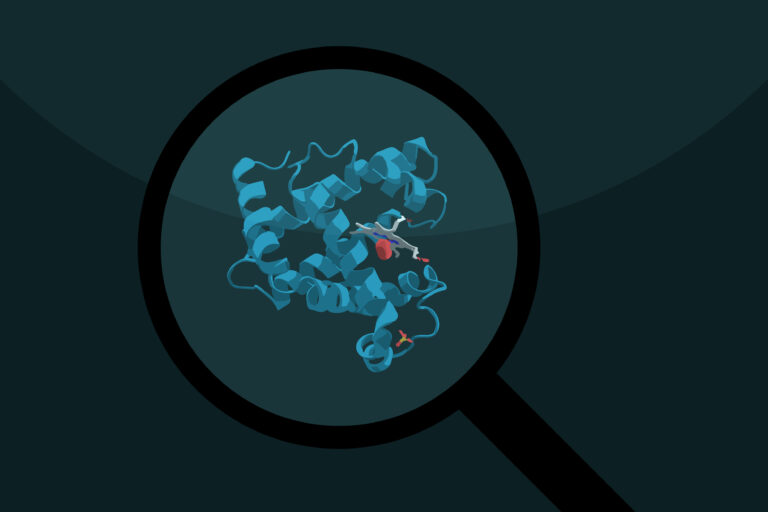
Proteomics involves the large-scale analysis of the protein component of a cell, tissue or an organism, said Julia Yip, a UC Davis class of 2018 graduate from the forensic science graduate program, via email. To study proteins, researchers break down proteins from a tissue, then analyze the sample through mass spectrometry, a technique that measures the mass-to-charge ratio of ions.

“What we do is we discover, characterize and work at ways to detect a certain set of peptides that change as a result of someone’s genetics,” Parker said. “These are single amino acids that are swapped out. Then we can get a pretty big chunk of information that should have been in their DNA.”

Proteomics can be applied to a variety of aspects in forensic science. Human identification, ancestral classification, and body fluid identification are some of the more developed research topics, Goecker said. 

One goal of the research is to give the forensic community an alternate method when traditional DNA method fails, according to Yip. 

“For the Parker lab, we are specifically looking at the use of proteomics in scenarios where it might be challenging for traditional forensic analysis to obtain usable results,” Yip said. 

According to Parker, traditional forensic anaylsis cannot always dechiper information obtained from hair, degraded bone, fingerprints, teeth and sexual assault cases, so that is why the lab focuses on these types of evidence. 

“As hair is made, it shreds up its DNA, so that means it’s now less useful to get these profiles using DNA,” Parker said. “For degraded bone, if it’s in a certain environment, it will often have a lot of DNA, but it also may not. For fingerprints, they’re very variable since we are in contact with people all the time, dust is in the environment, and you are more likely to get mixtures and it’s really hard to interpret. With sexual assault evidence, you have mixtures and the victim’s DNA dominates.” 

According to Rice, hair used to be widely used as evidence when investigating crimes. 

Investigators used to try to link suspects to hair found at crime scenes. Experts used to analyze hair under microscopes, but that is now understood to be ineffective. 

“There have been a lot of people convicted of crimes because their hair looked the same as the hair found in the crime scene,” Rice said. ”It turns out many of those people have now been exonerated. Those hair identifications, nobody believes them anymore, and so you have a substantial amount of people who should not be imprisoned.”

Since teeth are the hardest and most robust skeletal tissue, they often preserve the best, said Jelmer Eerkens, a professor in the department of anthropology, via email.

Eerkens helps Parker develop research techniques and figure out how to apply it in real-world settings. His main interest is in applying the proteomics techniques to historic cases, rather than forensic ones.

“Back in 2017, there was a small child found buried in the backyard of a house in San Francisco,” Eerkens said. “It turns out the house is built on an old cemetery dating to the 1800s, and when the cemetery was moved in the 1930s, they missed some graves. We used a range of different techniques, including proteomics, stable isotopes, and ancient DNA, to identify the girl. We now know her name is Edith Cook, and she died in 1876 of disease when she was about 3 years old. We were also able to find a distant living relative.”

Without these “archaeoforensic” techniques, researchers would not have been able to figure out the young girl’s identity, according to Eerkens.

Goecker’s role so far in the lab has been to optimize the chemical processing of human hair for proteomic analysis, develop tools for automated searches and the calculation of random match probabilities and determine ancestral classification. Additionally, Goecker has presented this research at meetings including the American Academy of Forensic Sciences, International Symposium on Human Identification and the Green Mountain DNA conference. 

“One of our goals is to help provide the field with easy-to-use tools to get started with proteomic genotyping,” Goecker said. 

Yip was involved in the development of the proteomics based method on estimating sex of an individual using teeth enamel for her master thesis. She applied Parker’s method to teeth  and was able to develop a framework for estimating sex. 

“Male teeth had peptides from a Y-chromosome protein,” Yip said. “Female teeth had only the X-chromosome form so we depended on a calibration curve we developed that could give an estimation of female sex.”

Funding for the research comes from the National Science Foundation, according to Eerkens. 

“The research is ongoing and has many hurdles to leap before becoming forensic practice,” Goecker said. “The findings of our research have been very exciting so far. Recently, we have reported obtaining random match probabilities of up to 1 in 624 million from a single hair less than an inch in length. We are hoping to break the 1 in a billion barrier soon for a single hair.”

Written by: Margo Rosenbaum — science@theaggie.org 

NFL yearns stable, long-term health for former players

0

National Football League taking steps toward concussion, CTE awareness, prevention

In Physics, The Law of Momentum Conservation states that when two objects collide in a closed system, the total momentum of the two objects before the collision is the same as the total momentum of the two objects after the collision. The momentum of each object may change, but the total momentum must remain the same. Essentially, when two objects collide, the momentum of one object can transfer its momentum to the other object upon collision, sending the collided-upon object back in its initial direction with a much greater force. 

At most levels of football, athletes of the same level produce similar amounts of power and momentum — regardless of the differences in size. And as football season is currently in full swing, there seems to be weekly instances of players suffering terrifying blows to their head. It’s no wonder that, in 2017, a study conducted by Boston University detected evidence of chronic traumatic encephalopathy (CTE) in 110 of the 111 brains donated to them by deceased former NFL players, showing just how grave of a problem CTE truly is. 

CTE is described as a neurodegenerative disease caused by repeated head injuries. Symptoms may include behavioral problems, memory loss, aggression, depression and risk of suicide. Symptoms typically do not begin until years after the injuries and often gets worse over time. 

The movie “Concussion”, which was based on a 2009 exposé written by Jeanne Marie Laskas and published by GQ magazine, tells the story of Dr. Bennet Omalu, the man who first identified CTE in football players and who has been a volunteer associate clinical professor for UC Davis health. While the film does dramatize Omalu’s story, it does contain an interesting quote:

“All of these animals have shock absorbers built into their bodies,” explains Omalu, who is portrayed by Will Smith in the film. “The woodpecker’s tongue extends through the back of the mouth out of the nostril, encircling the entire cranium. It is the anatomical equivalent of a safety belt for its brain. Human beings? Not a single piece of our anatomy protects us from those types of collisions. A human being will get concussed at sixty G’s. A common head-to-head contact on a football field? One hundred G’s. God did not intend for us to play football.” 

The NFL continually preaches that it is doing everything under its power to make the game safer as a whole. But the fact that the league didn’t keep any sort of data on concussions before 2012 is an incredibly worrisome trend. The NFL’s prior denial of the issue was certainly a reason why 99% of the Boston University study tested positive for CTE. Dr. Bennet said after research, he concluded Mike Webster, the first ever professional football player to be diagnosed with CTE, suffered “more than 70,000 blows to the head.” 

Nevertheless, the league is constantly implementing changes in attempts to rectify its past. In addition to sculpting the league-wide form tackling model into more of a behind-the-body, rugby-style tackle, rather than thrusting the helmet and shoulder pads in front of a sprinting ball carrier, the NFL and its intertwined helmet companies have began to spend more money on helmet research. 

Last season was the first season since 2014 in which the NFL’s concussion total went down, dropping a rather impressive 24%, from 281 to 215. The total rose from 2012 until 2014, dropped to 206 in 2015, but increased yearly after that until 2018. This sudden drop in traumatic head injuries is likely correlated with the league cracking down on helmet discrepancies — most notably in regards to weight and age. 

This offseason, former star wideout Antonio Brown made headlines for wanting to play in a helmet that had been discontinued in 2014 and the league specifically outlawed this year — the Schutt Air Advantage. The helmet’s manufacturer, Schutt, even went as far as to say that the Air Advantage was discontinued “because current helmet technology had moved past it.” 

The age of the helmet is the primary reason the NFL wouldn’t allow Brown to wear it, but the helmet also had a minor problem: its ultra-light weight. The Air Advantage was designed for skill position players, weighing in at barely over three pounds with a facemask on, while other helmets such as the Riddell Revolution Speed Pro weighs over double at seven pounds. The Air Advantage featured lightweight foam padding, while all current helmets are integrated with TPU (thermoplastic urethane) Cushioning, which absorbs significantly more impact across a wider variety of temperatures than any other helmet on the field. 

Ten years ago, the nicest of helmets cost no more than three hundred dollars, and even that was a stretch for most companies and consumers. Now that the world, and especially the football community, is aware of the extreme risk that head injuries pose, helmets are costing up to $2,000. As of this year, Riddell is custom 3-D printing helmets to mold perfectly to the individual’s head, which go for around $1,700 each. 

For the relative bargain of $950, the VICIS Zero1 is a “multilayered, highly engineered” new helmet that is being described as the safest in NFL tests. It has fancy polymers and a deformable shell that’s said to absorb shock like a car bumper. 

In the beginning of the 2018 season, only 41% of the NFL used helmets deemed “high-performing” while 17% wore models the NFL warned of being “low performing” or almost prohibited. By the end of the season, 74% of players used the high performing helmets, while only 2% continued to use their longtime models that the league didn’t recommend. As evident by these numbers, it’s clear that the attention given to helmet science has thus far paid off. Although the prices of helmets are steep for non-professional athletes, hopefully the research and technology implemented into the new helmets continues to pay off for.

Written by: AJ Seymour — sports@theaggie.org

Culture Corner

The Arts Desks’ weekly picks for movies, books, music and television shows

TV: “Bonding”

It isn’t often that I sit down to binge watch a TV show — I’m more of a YouTube kind of guy. But there’s something about the Netflix show “Bonding” that has kept me coming back. I have watched the series’ seven episodes all the way through three times, just because my next little group of friends needs to enjoy the absurd humor that this show presents. The dynamic protagonists Tiffany (a.k.a. Mistress May), a professional dominatrix, and her gay high school BFF Pete (a.k.a. Master Carter) keep me coming back for more as they navigate their alternative lives as sex workers. Let’s hope Netflix doesn’t axe this wonderful show, like they’ve done to so many other great ones in the past.

Movie: “Ex Machina”

Nature versus nurture. Classically, this has been the debate about raising children. Is a person’s inner process something they are born with, or is it taught? While most today say that it is a mix of both, “Ex Machina” falls squarely in the camp of nurture. This 2014 movie is a story about creating the perfect artificial intelligence (AI) in humanoid form. Just like humans are bound to repeat the behavior they see, two AIs, Eva and Kyoko, learn how to act from Nathan, their creator. This movie is a great lesson in “treat others how you would like to be treated.” Just like in real life, failing to follow this rule might stab you in the back.

Book: “Final del juego” by Julio Cortázar

“Final del juego,” or “End of the Game” in English, is one of the many compilations of short stories written by Argentine author Julio Cortázar. I first read this book in a Latin American Literature class while studying abroad. I still pick up this collection from time to time to re-read many of the stories it contains. One of the common threads throughout the collection is making the reader question the reliability of the narrator, examining what really happened versus what the narrator said happened. My personal favorite, “Una flor amarilla” (“A Yellow Flower”), expertly succeeds at this. Is the narrator honest, or is he just an old drunk? Many of these stories have been translated into English, but if you can read Spanish, make sure to pick up the original.

Album: “Queen Elizabitch” by CupcakKe

I’d be lying if I said I haven’t been a little bit lost since CupcakKe (Elizabeth Harris) abruptly announced her retirement via an Instagram livestream last month. With her career spanning roughly four-fifths of my college career, I have been following CupcakKe since early in my freshman year. A fearless singer and rapper known most for her sexualized hits like “Deepthroat,” CupcakKe also has a contemplative side, as shown in her single “Picking Cotton,” a song analyzing the effects of American chattel slavery today. One of my favorite of the twelve tracks on her second album, “Queen Elizabitch,” is “33rd.” In this song, she sings, “Waiting for me to fall off b*tch keep waiting, waiting/It’ll be the 33rd of the month I’m just saying, saying.” In 2017, when she released this album, CupcakKe felt invincible — her haters could never take her down; it would never happen. The 33rd day of the month would never come. It’s immensely sad to see that the 33rd of the month finally came and went, and my favorite artist has ended her career. CupcakKe has pledged to remove her music from all streaming services, so make sure to have a listen while you still can.

Written by: Kenton Goldsby — arts@theaggie.org

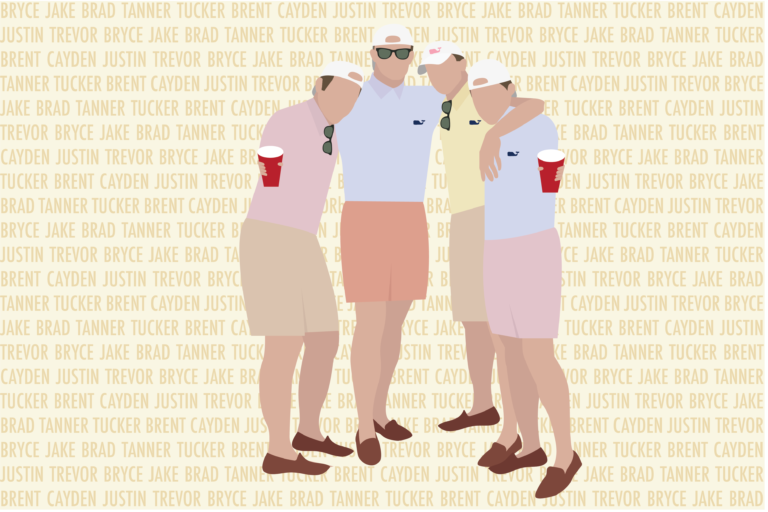
Students weigh in on fraternity stereotypes

0

A closer look into the reality of fraternities behind their stereotypes

Undoubtedly, various stereotypes — including negative stereotypes —  are associated with fraternities, fraternity brothers and even their houses on college campuses across the nation. 

“The experience that I’ve had with guys in Greek life was always pretty good,” Chris Pettit, a second-year political science major said. “Most of the guys are nice and friendly. But I have a friend who doesn’t see frats so positively. He had a negative experience with a few of those guys. He was at a party (he wasn’t rushing) and got into an altercation with a few guys. They were being overly aggressive with him and really intimidated him.”

GreekRank is a website devoted to designating different fraternities to a limited selection of reputations. For example, Pi Kappa Alpha at UC Davis, known as Pike, has been designated by many students as “top house” and also holds a reputation of being the “good looking” and “party animal” fraternity.

“The most common stereotypes are what the media portrays,” Nick Elliott-Smith, a fourth-year political science and philosophy double major said. “Binge drinking, hazing, misogyny, toxic masculinity, […] I think those are the more common ones that I’ve heard. I think there are a lot of tragedies that occurred in recent years and I think that a lot of the times, there is some truth behind [the stereotypes]. There are some horrible people out there that do wear Greek letters and I do not condone that.”

Elliott-Smith is the president of the UC Davis Interfraternity Council (IFC), as of Winter Quarter of 2019 and a member of Sigma Chi. These stereotypes are, more often than not, associated with social fraternities, all of which belong to a single council: the Interfraternity Council (IFC). Most social fraternities at UC Davis, 19 to be exact, belong to the IFC. Davis IFC is governed by their campus executive board, which is in charge of managing fraternity affairs, communications, finance, activities, recruitment and discipline. 

 One of the tragedies Elliott-Smith mentions, as stated above, is the hazing incident at Pennsylvania State University where a pledge died during an intense hazing ritual for Beta Theta Pi. Timothy Piazza, the pledge, drank large amounts of alcohol as a part of the hazing ritual and became unconscious. The other brothers in the fraternity failed to immediately call for medical assistance and, by the time they did, it was too late. Piazza died in the hospital the next morning. Surgeons found that he had a ruptured spleen and multiple brain injuries. 

In a community like Davis, where nothing this severe has happened in recent memory, it may seem like incidents of tragic proportions are rare, however, they do occur. “Eighty percent of fraternity members report being hazed,” according to an article in The Atlantic. “It’s not an aberration; it’s the norm.” 

Elliott-Smith assures that hazing like this does not occur in the Davis Greek life community. According to UC Davis’ Constitution of the Interfraternity Council, “each Member chapter shall develop recruitment events, materials, and activities that are: a. Value based; b. Alcohol-free and illegal substance-free; c. Generally in good taste; d. Not derogatory, degrading, or slanderous.”

“I can’t really say that there is truth behind [these stereotypes] in our community,” Elliott-Smith said. “Davis has a very unique environment. People come here for an academic education, it’s not really a social school. So for a lot of the stigmas attached to the fraternities [here], I really do not find any true value within my own council.”

Michael Bengard, a first-year agricultural and environmental education major and brother of Phi Delta Theta, explained to The Aggie why he joined his fraternity. 

“I felt pretty comfortable there and I liked all the guys,” Bengard said. “It just felt right.”

Bengard comments on the legitimacy of different stereotypes and reputations associated with different fraternities.

“Some houses attract different guys that you could say reflect the stereotype,” Bengard said.

One of the reasons why men join fraternities is to build connections and network with alumni. Fraternities are also meant to benefit members both while they are in school and post-graduation. 

“People see frats as a place to mess around and blow off school, but it’s actually meant to help you with school,” Bengard said. “It’s helped me a lot, and there’s a lot of good things that can come out of it. It’s not all about partying.”

Beyond the brotherhood, IFC fraternities work closely with the Collegiate Panhellenic Association, the equivalent of the IFC for sororities. IFC fraternities and Panhellenic sororities often coordinate various social events with one another, including formals and exchanges. The two organizations also work together on community projects and philanthropy projects. 

“Panhellenic and IFC function as completely separate entities,” said Erin Love, a third-year history and psychology major, who serves as the Panhellenic president at UC Davis. “Due to the friendships between our members, and the similarities of the structure of our councils and the chapters that they consist of, partnering with each other to work on projects expands the scope of people we can reach and sometimes makes events more fun.” 

Some members of Greek Life feel that the community service projects they participate in go unrecognized most of the time. 

“I think that what the media misses a lot of time is the good that we do in society, within our respective communities,” Elliott-Smith said. “A lot of times, what we do for our community becomes completely ignored because there are a lot of horrible people out there that wear Greek letters and they commit these atrocities, and it completely robs the value of what we commit to doing for our communities.”

Love responded to the ‘frat boy’ stereotype, saying based on the fraternity members she has interacted with in Davis, “the stereotypes would not be an accurate description.”

“Stereotypes are tricky because as soon as you say they aren’t true, someone will typically do something that proves to be right,” Love said. “I think that the term ‘frat boy’ has a really negative connotation, which in some cases, it has been earned, but that referring to them as ‘fraternity men’ aligns more accurately with their ideals and helps to promote within themselves that they are better than those stereotypes. The men that I work with/am friends with are hardworking, intelligent and driven individuals and shouldn’t be labeled as anything else simply for joining an organization that encourages those positive attributes.”

Written by: Linh Nguyen — features@theaggie.org

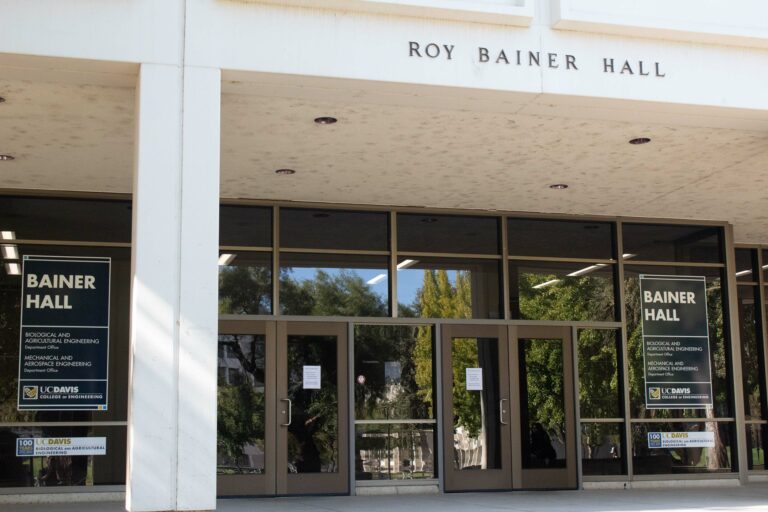
Bainer Hall sees series of burglaries throughout September, October

Occupants of Bainer Hall urged to remain vigilant, help prevent unauthorized entry to building

A string of over a dozen burglaries, which began on Sept. 9 and have continued since, have occurred in Bainer Hall over the last month, according to the UC Davis Dateline

The burglaries have occurred on weekends, and have affected labs and offices in the engineering building. The UC Davis Formula Racing team’s lab was one of the rooms affected by a recent break in, for example.

Numerous types of objects have been taken, including computer monitors, cameras, tools and paint supplies, according to Dateline.

The UC Davis Police Department believes that the perpetrators may be gaining entry to the building through unlocked doors. They also suspect someone might be letting them into the building. Though there were “no signs of forced entry” to the building, “the culprit or culprits forced open doors to labs and offices during weekends,” according to Dateline.

“Our university is not unique in experiencing a rise in opportunistic crimes, such as people stealing valuables left in plain sight or from offices and buildings left unsecured,” said UC Davis Police Chief Joe Farrow in a statement

This past February, an intruder who was living in the UC Davis Art Building was arrested on charges of felony vandalism. He had been occupying a professor’s office in the building for several weeks and allegedly sexually assaulted a student.

In the wake of these most recent incidents in Bainer Hall, the university and police department are warning students and others who access the building to take precautions to prevent unauthorized entry.

“If you see any doors propped open, please immediately close them and do not allow people to ‘tail gate’ or follow you into the building during off-hours,” said Cristina Davis, chair of the mechanical and aerospace engineering (MAE) department, in an email sent to the MAE undergraduate listserv and obtained by The California Aggie.

Davis underscored the severity of the break-ins in another email to various engineering listservs and obtained by The Aggie, which also detailed other affected areas: the foyer to a set of additional labs and Professor Valeria LaSaponara’s lab, which Davis said had been subject to an obvious forced entry. 

“It is clear this is beyond a department issue,” Davis said. “As I mentioned last Monday, we had already escalated this to the College of Engineering and campus. I will be asking their help to implement urgent security measures to keep our department, faculty, staff and students safe.”

Farrow, in his statement, wrote about measures the campus is in the process of broadly implementing in order to improve security. These include improving campus lighting, installing security cameras and adding additional emergency call boxes.

“Also, we are moving forward with a new-generation building access system that when completed will greatly enhance the safety of our campus community,” Farrow said. “Even with our efforts, it is always important to watch out for one another, and notify campus authorities when you see things that seem out of place, unusual, dangerous or otherwise suspicious — always trust your instincts.”

Written by: Kenton Goldsby and Andrea Esquetini — campus@theaggie.org

Students deserve a commencement that celebrates them, not a high-profile speaker

Commencement changes at UC Davis, lack of details leave students unprepared

Last May, UC Davis announced that undergraduate commencements would change starting Spring 2020. Instead of having seven smaller ceremonies divided according to college, about 7,500 students from 28 majors will now be mixed and split across three ceremonies taking place over the weekend of June 12 to 14. 

These larger ceremonies will be held at the UC Davis Health Stadium to accommodate more people, but the air-conditioned ARC Pavilion will still be used to live stream the commencements for those without tickets. As the new venue can only house about 10,000 guests with existing seating and bleachers, students will receive four tickets each compared to the seven given out in years prior. 

The three commencements will begin at 8 a.m. to avoid high summer temperatures and are expected to last until 10:30 a.m. On Oct. 1, three lists detailing which majors will be represented at what commencement were released. Other than this information, no further details have been revealed, such as if the names of graduating students will still be read, if students will be able to petition for more tickets or if students with multiple majors will be able to choose which major they walk with. 

For an event that many students have to plan months ahead for, the fact that decisions are still being finalized leaves soon-to-be graduates feeling frustrated and uneasy about a day they should be looking forward to. Students that planned to receive the usual seven tickets must now make a difficult decision regarding which family members will get to share in their spring celebration. 

UC Riverside’s class of 2020 faces similar unrest with their commencement as campus leadership is proposing to not only hold its commencement in a different city but also to not read the names of graduates during the event. Students should have a say in how they get to commemorate their accomplishments.

In response to the proposed changes announced during an ASUCR Senate meeting on Oct. 14, ASUCR President Julian Gonzalez began a petition arguing that commencement should embrace tradition. And while UC Davis students have been getting more formal updates compared to UCR students, there is still more we need to know about graduation. 

In deemphasizing specific college commencements, the university hopes to unify graduates under the UC Davis name as a whole. This is highlighted as a key reason for the consolidation of seven ceremonies into three, but it seems more like a marketing attempt to make UC Davis look more prestigious as larger crowds might attract more prominent speakers. But the celebrations are for students. A potential prominent speaker likely didn’t spend four years studying in Shields, caring about the campus community or growing as young adults in their time here.

Without more student input moving forward, the university risks alienating graduates who paid thousands of dollars in tuition, put in the time and effort to earn their degrees and helped maintain UC Davis’ status as a top public university. The Editorial Board, all members of which are graduating this spring, demands that the university prioritize its students accomplishments over its perceived public image and prestige.

Written by: The Editorial Board

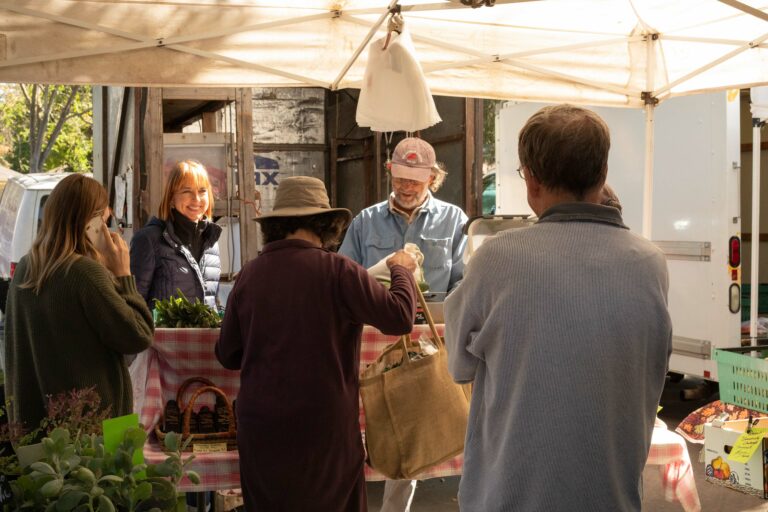
Davis Night Market offers opportunities to reduce food insecurity, food waste

1

Local restaurants including ChickPeas, Village Bakery contribute to weekly Central Park gathering

The U.S. Department of Agriculture (USDA) found in 2010 that the U.S. alone wastes approximately 30-40% of its food supply, equaling almost 133 billion pounds of food. It is also estimated that 40 million people in the US are food insecure, meaning 1 in 8 Americans struggle to find access to nutritious and sustainable food. 

Yet another statistic that might hit close to home for many is Feeding America’s estimate that approximately 28,320 people are food insecure within Yolo County.

To combat these figures, a group of Davis graduate students founded the Davis Night Market, a weekly gathering in Central Park that attempts to reduce food insecurity and waste in Yolo County by collecting donations of leftover food from local restaurants. 

The market started late last Spring 2019, and since then it has welcomed hundreds of community members. Each Tuesday at 9:30 p.m., volunteers unload a variety of donated food from Davis restaurants onto the picnic tables in Central Park for the community to enjoy. In addition to free food, there is also different music and entertainment each week. The event runs until all the food is gone — until roughly 11 p.m. 

Hannah Yu, a fourth-year economics and communications double major, does project management for the night market and oversees its outreach efforts. She explained the vision for the market in a few concise words. 

“Our whole goal was to make sure that nobody goes to bed hungry,” Yu said. “We wanted to do our best to reduce food waste and feed people in need or those who are food insecure. As a whole, we generally tend to waste a lot of food and restaurants especially are always throwing away food that could easily go to people in need instead of making its way into the trash.”

When the project first began, volunteers reached out to local restaurants and asked for food donations and leftovers after hours. So far, the market has acquired seven vendors including ChickPeas, Upper Crust Baking, Dickey’s, Village Bakery, the Food Co-op, the Farmers Kitchen Cafe and the Barista Brew. 

“It’s really heartwarming to see how much the community wants to give back,” Yu said. “I’m from L.A. and I’m not used to seeing that. It’s really awesome to see how the people in Davis want to help each other out.”

Although the gathering aims to provide support to those who struggle with food insecurity, the market still encourages anyone in the community to come by for free food and good company. 

“We want the entire Davis community to feel welcomed and join us,” Yu said. “When we first started the project, our goal was to address the food insecurity problems not only among the homeless population in Davis, but also the students of UC Davis. We have had a lot of students come by and tell us how grateful they were because they don’t feel comfortable going to foodbanks and I am so grateful that they feel comfortable enough to come to the market and not feel stigmatized.” 

Yu mentioned that Upper Crust Baking was one of the first restaurants to donate to the market even before it was recognized as a community event. The Upper Crust owner and manager, Lorin Kalisky, explained why the restaurant chose to donate their baked goods to the night market. 

“We are happy to donate goods to the Davis Night Market and many other food organizations that help feed people that are food insecure,” Kalisky said. “We have a lot of bread and other baked goods that wouldn’t necessarily go to waste, but would be left over or get old, and we try to waste as little food as possible.” 

Kalisky also said that many of the same individuals associated with the market are involved in other “organizations and initiatives in town trying to alleviate food insecurity.” 

“We want to help nonprofits and charity organizations by donating or sponsoring them,” Kalisky said. “We try to be a very active participant in the Davis community and we are always happy to do what we can to support noble causes.”

Sixth-year ecology graduate student Ernst Oenhinger is one of the founding members of the Davis Night Market and has worked on many other on-campus food sustainability projects including the Freedge and the Food Recovery Network. Oenhinger detailed how the market has tried to reach all members of the community, regardless of socioeconomic background. 

“There are several components that we wanted the DNM to address: one was to reduce food waste and food insecurity, but we also wanted to incorporate a social aspect by involving the community through music and hanging out and interacting with one another,” Oenhinger said. “I think that is what kind of brings it all together.”  

In addition to alleviating food insecurity in Davis, the night market also aims to reduce greenhouse gas emissions. Rather than using a car to transport donated goods, the organization uses bike trailers. 

“We try to at least have one trailer for each restaurant,” Oenhinger said. “The trailers usually have some cool LED lights with the Davis Night Market logo as well as a boombox to play music and keep things fun.”

Moving forward, Oenhinger hopes to see more restaurants donate to the program, with a possibility of designating an additional day of the week to hold the market on. He also expressed his hopes for the project on a larger scale.

“We definitely want to have a model that is copyable by any other community,” Oenhinger said. “This is not something that will work in every city, but we want to make it as adaptable as possible. Our goal is to make a platform that is easy to copy — we want to have everything, from how to make the signs to the proper way to ask restaurants for help on a website or google folder that can be accessed by anyone.”

Although the market has helped numerous people within the past couple of months, the initiative has not always been smooth sailing. In 1996, then-President Bill Clinton passed the Good Samaritan Food Act, which encouraged restaurants and supermarkets to donate food to nonprofit organizations while minimizing the liability of the donating party. Yet, many of the restaurants the DNM reached out to rejected the idea of donating their perishable goods.

“When [we were] asking restaurants for donations, I noticed that many of these restaurants had this mentality of fear and liability,” Oenhinger said. “People are scared of getting sued, but luckily we have been fortunate enough to have vendors that don’t adhere to this mentality.”

In addition, Oenhinger explained why the market opted to not brand itself a UC Davis student-run organization. He cited the recent issues that the Food Recovery Network (FRN), a student-run non-profit organization that brings surplus food from campus dining to members of the community, has run into with the university. There is a lack of campus initiative to help the FRN find parking spots for its electric vehicle, which has prevented it from recovering waste from two different on-campus dining commons, according to Oenhinger. 

“[There is] a kind of bureaucracy we would have to deal with if we do things on campus,” Oenhinger said. “Food Recovery Network is doing this service for free, they have a bunch of volunteers come in and do an amazing job of recovering food from the DC and donating it to Davis Community Meals and Solano park and so many other organizations and they ask for help from the DC and they are helping the DC get rid of their waste and DC doesn’t help move a finger for them.” 

Although the Davis Night Market has been successful in addressing and supporting people who struggle with food insecurity throughout Davis, there is still much more that can be done — especially on campus. Oenhinger stressed that the UC Davis administration should collaborate better with students on different food insecurity initiatives. 

“I think in the past five years that I have been at Davis there has been so many more initiatives that target food insecurity and food recovery so we are definitely going in the right direction,” Oenhinger said. “But the problem is still pretty big […] I hope that the Davis community continues to push for these initiatives that promote reducing food waste and food insecurity.”

For those interested in volunteering for the Davis Night Market, Yu and Oenhinger encourage members of the community to reach out via Facebook and Instagram. The Davis Night Market is held weekly on Tuesdays in Central Park from 9:30 p.m. to 11 p.m.

Written by: Sneha Ramachandran  — features@theaggie.org

Ombuds Office welcomes new director Lauren Bloom

Ombuds Office offers members of UC Davis, UC Davis Health communities a safe, confidential space to navigate conflict

Lauren Bloom was recently appointed as the new director of the UC Davis Ombuds Office. Ombuds is a resource for students, faculty, staff and anyone associated with UC Davis or UC Davis Health to help navigate conflict in an informal and confidential space.

Ombuds has moved into two new offices this year, one located on Third Street and the other in Sacramento, which staff hope will better suit their needs for assisting members of the UC Davis community. 

Dana Hinojosa, the associate ombuds, discussed some of the benefits of going to the Ombuds Office when faced with a conflict — whether it is academic, professional, interpersonal or discriminatory in nature or stems from another point of tension.

“When they don’t know where to go, who to talk to, or are afraid of what might happen if they do talk to someone, our office is a totally safe and informal first step to learn what their options are and how to best move forward,” Hinojosa said via email.

While other centers on campus may be mandatory reporters, the Ombuds Office is a completely confidential, off-the-record resource, even in instances of harassment or discrimination. The office keeps everything totally confidential, except in cases where imminent harm or danger is present. 

The Ombuds Office can assist undergraduate and graduate students, staff, faculty and individuals associated with UC Davis or UC Davis Health, according to the website.

While other centers on campus may be able to more directly provide assistance for individuals experiencing conflict, the Ombuds Office is a place where individuals who are unsure of how to proceed can discuss their options in an informal, confidential setting.

The Ombuds Office “can assist by listening to concerns, clarifying issues, identifying policies and resources, and providing coaching and communication strategies,” according to its website.

“We also are informal,” Bloom said. “We can talk about formal processes, everything from a grade dispute to a discrimination claim, but we stay out of these formal processes. We have working knowledge of them and can send them in the right direction. We can talk about what it might look like, advantages and disadvantages, and then [the people coming to us] themselves can decide how they want to move forward.” 

The Ombuds Office also operates independently of any department or office associated with UC Davis. While the office does compile aggregate trends in terms of types of complaints or amount of complaints filed against certain departments, this is utilized as a tool to implement systemic change. No individual cases are shared or discussed. 

In addition to meeting with individuals one-on-one — the office’s most utilized service — Ombuds’ staff also offer between 40 and 60 trainings on conflict management each year for different departments and offices associated with UC Davis. Mediation sessions, presentations, group conflict resolution, department needs assessments and more individualized sessions are all services provided by Ombuds.

Written by: Ally Russell — campus@theaggie.org

Jony Ive: shaping the products of our lives

The story behind Apple’s hidden treasure

The Moscone West Conference Center in San Francisco, Calif. on Jan. 9, 2007. That was where and when Steve Jobs, CEO of Apple Inc., unveiled a sleekly-designed 4.5 by 2.4-inch device— a device that would revolutionize the world and how we interact with it.

This week, I posed two questions to UC Davis students. First, I asked what the most important invention of the last 12 years is. Most responded with the iPhone or smartphone, though I got a few other responses as well: sanitary systems for impoverished countries, ride-share services, 3-D printing and legal cannabis. If they answered iPhone, I asked a follow-up question: who designed what they thought to be such a transformative invention? Almost everyone responded with Steve Jobs or “the Apple guy.” 

For most people, when they think “iPhone,” they think of Jobs. During iPhone mania, Jobs swept up most of the limelight as the company’s media magnet. He was and remains the face of Apple, and because of that, much of the public directly credits Jobs with Apple’s turnaround and the products the company has created. Although the mercurial visionary was crucial to the iPhone’s creation process, he was not the lead designer. That title belongs to Jony Ive, a 52-year-old industrial designer from London, England.

Ive stands in direct contrast to Jobs; he is restrained, introspective and deliberately keeps out of the media storm. One quality he does share with Jobs is the drive of a high-powered locomotive. Ive grew up in the neighborhood of Chingford, in northeast London, where he lived and breathed design. He spent much of his childhood sketching and tinkering alongside his father, a professor of design at the local college. Ive moved into a design career, studying at Northumbria University in Newcastle, England. 

From 1990 to 1992, Ive worked for Tangerine, a London-based company contracted by Apple. While at Tangerine, Ive worked closely on Apple-related products and made the full-time switch in Sept. 1992. At Apple, Ive remained under the radar until he caught Jobs’ eye with his work ethic and fine-tuned design sense. Jobs promoted Ive to head of industrial design and, from there, the team flourished. Under Ive’s leadership, the design team created some of the most iconic products of the last two decades: the iMac, iPod, iPhone, iPad, MacBook and Apple Watch. 

During his academic and professional career, Ive embraced a design outlook shaped by Dieter Rams, the chief engineer for Braun appliances. Ive was also influenced by The Bauhaus, a German design school operational between 1910 and 1930 and home to many famous designers like Marcel Breuer and Mies Van Der Rohe. The “Less is More” mantra, which was taught by The Bauhaus and implemented by Rams, is evident in much of Ive’s work today.

“The quest for simplicity has to pervade every part of the process,” Ive said in an interview with The Telegraph. “It really is fundamental.”

To Ive and Apple, simplicity, or rather removing parts that are nonessential to a product’s goal, is the central goal in the design process (R.I.P. to the aux port).

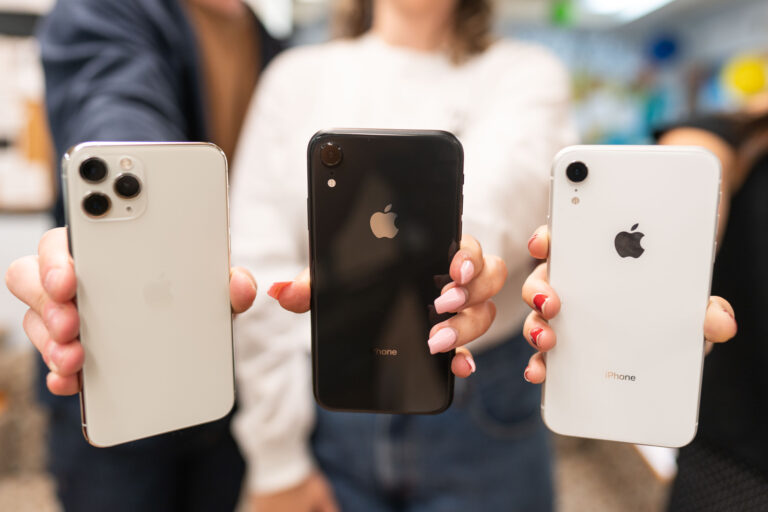
The pièce de résistance in Ive’s design legacy may be the iPhone — the introduction of which made massive strides in the easy-to-use handheld touch interface which many of us have become so accustomed to. The iPhone debuted at the perfect time, providing ingenious technology and an astonishing amount of computing, all of which could fit in your pocket. Even considering all the innovative tech that is packed into the iPhone, it is through the shape and user interface design that the iPhone maximized utility and ingrained itself deep into modern culture. 

Mackenzie Neilson, a long-time iPhone user and fourth-year nutritional biology major, commented on the iPhone’s design and how it stacks up for him compared to the competition. 

“It’s simple to navigate around [with] how the apps are organized,” Nielson said. “The iPhone is a little more intuitive than the Android and it’s a bit more inviting.”

Ive was instrumental in crafting the user interface layout and shaping its form — focusing on the detail of its materials, bezels and feel. Ive and Jobs concentrated their efforts on making a tool that is an extension of oneself — as personally intuitive as speech or movement. 

Ive’s efforts were acknowledged by Time, when the iPhone was named 2007’s Invention of the Year, but the true affirmation comes from the over 1.4 billion active iPhones in circulation today. 

Ive’s contribution to Apple extends past its products. He maintains a steadfast dedication to shaping Apple’s culture and environment. Most recently, he played a key collaborative role with Sir Norman Foster, the British starchitect in the design of ApplePark, Apple’s $5 billion Cupertino headquarters. Reminiscent of an alien spaceship, the hub stands as a monument to the brand crafted by Ive and Jobs — a brand igniting thoughts of detail, sophistication and dominance.

Now, after an almost 30-year tenure of pulling the strings behind the scenes, the Financial Times reports that Ive is stepping down from his position. Ive cited reasons including the end of major projects like ApplePark and optimal timing for forming his own design firm LoveFrom for his decision. 

There was speculation on additional issues implicated in Ive’s decision, according to a report from the Wall Street Journal. People close to Ive contend that he may have been frustrated at management’s decisions to emphasize operations and finance, drawing attention away from product innovation. 

News of Ive’s departure correlated with a 0.84% drop in Apple’s stock price, though the stock price has bounced back since then. Ive’s decision, in addition to Tim Cook’s statement about Apple’s new focus on becoming a service-based company, signals winds of change billowing through the sails of the tech behemoth.

Written By: Andrew Williams — arts@theaggie.org

A scientific explanation behind tornado that hit Davis in unlikely weather event

EF0 rated tornado struck Davis area Sept. 28 due to instability in atmosphere, twisting wind

In an improbable event, a tornado touched down just north of Davis on Saturday, Sept. 28. The tornado formed around 6:40 p.m. and ended at about 6:55 p.m., with wind speeds estimated between 68 and 74 mph, according to a tweet posted by the National Weather Service (NWS) Sacramento. The tornado occurred because the right conditions were present, instability in the atmosphere and a twisting motion in the wind, according to Matthew Igel, an assistant adjunct professor in the department of land, air, and water resources. 

Dani Caputi, a fifth-year graduate student in the department of atmospheric science, said she communicated with a colleague who observed the storm, prompting her to send the information to the NWS to verify the warning already in effect. This information included that the storm began forming about 10 miles northwest of Woodland, and the storm tracked southeast over the course of a couple of hours, strengthening as it moved. When it touched down just north of Davis, observers reported large hail falling. As it kept moving to the southeast, it continued to strengthen into a tornado. 

The tornado is classified as an “EF0” on the Enhanced Fujita scale — the weakest reading that is still considered a tornado. EF0 tornadoes can cause minor damage to structures and signs, as well as knock down weak-rooted trees and branches, according the NWS Storm Prediction Center website

Touching down closer to UC Davis were a series of “gustnadoes,” which preceded the tornado by about 10 minutes, according to a tweet by the NWS Sacramento office. Gustnadoes are different from tornadoes because they are not connected to clouds, making them smaller and weaker.

Although first-year atmospheric science major Ameya Naik did not directly see the tornado, he said he saw it forming. He could tell the storm was in an environment where it might start to rotate and form into a tornado.

“First when it was kind of far away, you could see a tall towering cloud,” Naik said. “You could see the beginnings of a RFD cutout, which is weather lingo for the beginnings of rotation.” 

The tornado occurred in Davis because the two elements needed were present, Igel said. 

“The first thing is some kind of instability, so something to make a cloud to make warm air rise,” Igel said. “It was relatively warm on the surface, since we had high temperatures the week before and there was some cold air above that. That was sort of an unusual set up for Davis, so the air could easily rise and form clouds. The second thing you need for a tornado is some kind of twisting of the wind. That exists in the central valley, and did on Saturday.”

Although this event seemed very unlikely, California does have about 10 tornadoes a year, according to Igel. Usually the tornadoes are classified as EF0s, like the one that occurred last month.

“Tornadoes in Davis are not totally uncommon, but relatively infrequent,” Igel said.

This tornado luckily did not cause any harm, Caputi said. It could have broken some windows or caused some damage to buildings if the tornado had taken a different route. The NWS Sacramento office tweeted out pictures that some trees had been bent over, however no other damage had been reported. 

“It was not a Wizard of Oz case with any houses lifted,” Caputi said. 

When the storm was first detected by radar, the NWS Sacramento office sent out a warning that there was a tornado forming to advise people to take shelter, according to third-year atmosphere science major Alexis Clouser. 

When a warning is sent out, Igel said it is important for everyone to listen and to get updates from local media. 

“General advice from the national weather service is to stay indoors, to stay in an interior room of your house on a lower level,” Igel said. “They aren’t incredibly dangerous, but you wouldn’t want to get caught in one. It’s always best to stay indoors and not to panic, keep a level head and stay out of the storms path.”

Clouser said she saw some people who did not heed the warning and went outside to take pictures. 

“Don’t go out and pretend you are a storm chaser, since unfortunately that is how people get hurt,” Clouser said. 

Tornadoes in other parts of the world, like in “Tornado Alley” in the Great Plains, can get much larger than the EF0s in California and much more damage occurs. The right conditions are present in these areas that allow for stronger, more frequent tornadoes, said fourth-year atmospheric science major Josh Zucker. Vast flat areas allow winds to flow unobstructed. Additionally, when warm moist air coming up from the Gulf of Mexico meets dry, cold air moving east off of the Rocky Mountains, storms can develop easily.

Whether or not climate change affects tornadoes is a topic of debate in the scientific community, Igel said. The lifting of warm, moist air is expected to be more common with overall world temperatures increasing, which could increase the likelihood of tornadoes forming. However, the second ingredient of tornadoes, twisting in the wind, is something that naturally occurs in the air even before a storm exists, so scientists are unsure how that will change with climate change. 

“I would imagine that if you have slightly increased temperatures, that might cause more instability in the atmosphere and more extreme weather events,” Caputi said. “But it is very hard to make a case since there is not a lot of research. In the case of the climate, you really have to put it into a model, and then test different scenarios and see what might happen.”

Davis may not see more tornadoes for a while, so Clouser said people should not take this event for granted. 

“This is kind of a once in a lifetime storm for a lot of Davis and Sacramento Valley natives,” Clouser said. “We might not ever get weather like that, with such magnificent storm structure.”

Written by: Margo Rosenbaum — science@theaggie.org

Aggies keep playoff hopes alive with second straight win

UC Davis withstands late comeback to beat Southern Utah

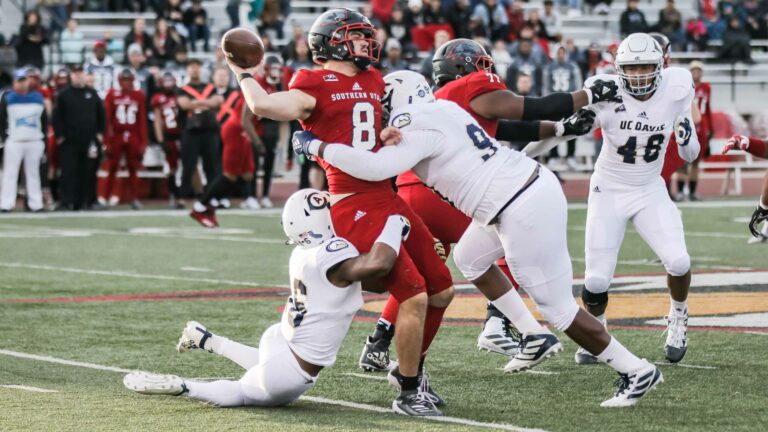
The UC Davis football team hung on to capture its second consecutive victory on Saturday night, slipping past Southern Utah by a final score of 33-25 in Cedar City, UT. 

The Aggies jumped out to a 26-0 lead in the first half but let the home team mount a large comeback in the second half, making the final minutes of the game much more tense than they needed to be.

“I’ve been doing this long enough to know not to walk away from this and feel bad about it,” said UC Davis head coach Dan Hawkins, during his weekly press conference on Monday. “We’re trying to score one more point than the other team and get better. I give our players and staff a lot of credit for winning on the road.”

Saturday’s contest was very similar to last week’s 48-24 win over Cal Poly in which UC Davis led 34-0, but had to make meaningful plays late in the game to avoid complete disaster.

“For whatever reason, our guys are better with their backs against the wall,” Hawkins said. “They do not like smooth sailing. The saying is ‘smooth waters never made a good sailor’ and they like it when the wind blows and the ship starts rocking. I joked that maybe we should spot whoever we’re playing 14 points and then start the game.”

With the victory over Southern Utah, the last-place team in the Big Sky, the Aggies improved their record to 4-4 on the season and 2-2 in conference play, setting up a likely season-defining showdown against first-place Weber State this upcoming Saturday. UC Davis is ranked No. 22 in the nation in both the media and coaches polls, while Weber State is in the top five.

Realistically, UC Davis cannot afford to lose another game this season if it hopes to reach the 24-team FCS playoffs. The team will have to be at its absolute best and exert a complete effort for all four quarters to have a chance at beating the defending co-Big Sky champions. 

Despite the way in which the second half developed against Southern Utah, there were a lot of bright spots for UC Davis on both sides of the football. 

Offensively, the Aggies were simply unstoppable in the first half, scoring touchdowns on four of their five possessions and amassing 306 total yards. Senior quarterback Jake Maier was nearly flawless, completing 18-of-25 attempts for 200 yards and a trio of touchdowns. Late in the second quarter, Maier connected with senior tight end Wes Preece on a 34-yard completion and officially surpassed 10,000 career passing yards — a feat only accomplished once before in school history by J.T. O’Sullivan in 2001. 

Maier only needs 631 more passing yards to break O’Sullivan’s career record and also has an outside shot to top the career passing touchdowns list, needing 15 more. As of now, Maier already holds the school records for completions in a single season and career.  

“It’s great to see him go over 10,000 yards at a place that has a tremendous quarterback tradition,” Hawkins said. “Too see him eclipse that mark is great and it’s obviously a credit to [offensive coordinator] Tim Plough.”

Meanwhile, sophomore running back Ulonzo Gilliam had an impressive first half himself, rumbling for 85 yards and a score on the way to his third 100-yard game of the season. 

With junior running back Tehran Thomas still sidelined with an injury, junior Christoph Hirota and sophomore Niko Harris handled a half-dozen carries each, experiencing some extended play time for the first time in their careers. 

Saturday night was the culmination of a very unique journey for Harris, who previously played quarterback in high school before switching over to a wide receiver and running back role at UC Davis. Harris has been able to overcome a number of injury struggles, most notably when he suffered a knee injury during his senior season in high school but recovered in time to lead his team to victory in a state championship game. 

On defense, UC Davis did not allow Southern Utah to reach the red zone a single time in the opening 30 minutes, forcing three punts and a missed field goal before conceding a touchdown just before halftime. By the end of the night, linebackers Connor Airey and Eric Flowers racked up 10 tackles each. Flowers has been the team’s leading tackler through the first eight games, while Airey follows closely behind in third.   

The Aggies received the opening kickoff and promptly drove 75 yards on just nine plays to score the game’s first points, when redshirt freshman wide receiver Lance Babb made a leaping touchdown catch with a defender in his face. 

On its next possession, the Aggie offense came right back with a methodical 90-yard touchdown drive, capped off when junior wide receiver Khris Vaughn caught an underneath crossing route and scampered 22 yards down the sideline to the endzone. 

Early in the second quarter, the Aggies benefitted from a bizarre string of penalties following a one-yard completion to Vaughn. Two unsportsmanlike conduct calls and a targeting penalty, which resulted in an ejection for the Thunderbird defender, resulted in a 26-yard gain for UC Davis, paving the way for a three-yard touchdown run by Gilliam to make it 19-0. 

On the Aggies’ final possession before halftime, Maier cemented himself into the UC Davis record books and the Aggies tacked on seven more points, with Maier finding Preece in the corner of the end zone for a 15-yard touchdown.

Southern Utah put together a long touchdown drive shortly before halftime, so the Aggies took a commanding 26-7 lead into the locker room.

UC Davis came out firing on its first offensive possession of the second half and crafted a lengthy 85-yard drive of five and a half minutes. Harris found the end zone for the first time in his career on a four-yard run and the Aggies were in total control, holding a 33-7 advantage with under 20 minutes left to play. 

From then on, UC Davis gained just 57 yards on the next 13 plays and gave Southern Utah the chance to chip away at the lead. 

Early in the fourth quarter, the Thunderbirds scored two touchdowns in just over four minutes and suddenly found themselves trailing by only 11 points. 

It wasn’t until Gilliam recovered an onside kick with 59 seconds remaining that the Aggies could finally breathe a sigh of relief and begin to celebrate the victory.  

UC Davis will return home to the comforts of UC Davis Health Stadium to take on Weber State for a 4 p.m. kickoff on Saturday afternoon. The Aggies will aim to snap a three-game losing streak versus the Wildcats and keep their playoff hopes alive, but will need the help of a loud home field crowd to get the job done. 

The UC Davis defense will have its hands full with Weber State running back Josh Davis, who ran for a school record 328 yards in last week’s 51-28 win over Northern Arizona. The Wildcats offense presents a significant contrast in style compared to the Aggies’ previous two opponents.

“It’s another physical game in the Big Sky,” Hawkins said. “You go to three ends of the spectrum facing a triple-option team, a true spread team and now a team that will line up and hammer you. It’s quite a task for our defense to adjust.”

Three of the four remaining opponents on the schedule are currently ranked in the top nine of the FCS coaches poll, but the Aggies are solely focused on improving and playing their best football.

“We know how good the Big Sky is, but we try not to get too hung up in the rankings,” Hawkins said. “It will be lots of really good teams, great opponents and opportunities for us to finish on a great note.”

Written by: Brendan Ogburn — sports@theaggie.org

Record crowd sees Aggies retain Golden Horseshoe

0

UC Davis gets back on track with 48-24 rivalry win

The UC Davis football team put its three-game losing streak to bed after Saturday evening’s 48-24 victory over visiting Cal Poly, winning the Battle for the Golden Horseshoe for a third consecutive year.

The Aggies’ victory on Homecoming weekend was seen by a lively crowd of 11,194, a new attendance record at 13-year old UC Davis Health Stadium and the largest crowd of any kind since a 1982 contest at the old Toomey Field.

With playoff hopes hanging in the balance, the Aggies (now 3-4) came out firing in the first half and scored on each of their first six possessions, jumping up to what seemed like an insurmountable 34-0 lead at the time.

But Cal Poly quickly flipped the script and rattled off 24 unanswered points, threatening to spell complete disaster for an Aggie team that has already been dealt numerous blows in the past three weeks.

In an effort to ignite a stagnant offense in the fourth quarter, Hawkins left the offense on the field for a fourth down play down inside the UC Davis 35-yard line. But the Aggies did not convert, giving Cal Poly prime field position to make it a one-possession game, down 34-24 with over 11 minutes left to play.

Three plays later, redshirt freshman linebacker Nick Eaton made the play that likely saved the season for UC Davis. Cal Poly ran a toss play to the running back, but Eaton broke through the line of scrimmage and intercepted the backwards pitch before sprinting 78 yards for a victory-sealing touchdown.

“On that specific play, they tossed the ball to my side and I controlled the C-gap, stuck my hand out and made a play on the ball,” Eaton said. “I saw the open field and once I secured the ball, I just kicked into high horse and ran as fast as I could.”

It was truly a tale of two halves for the Aggie offense, which amassed a season-high 408 yards of total offense in the opening 30 minutes and moved the ball up and down the field at will. At the end of the night, UC Davis also established season highs with 48 points scored, 194 rushing yards and 588 total yards.

After halftime, the offense went completely silent, racking up just three first downs up until Eaton’s game-changing turnover, before a late garbage-time touchdown.

Sophomore running back Ulonzo Gilliam ran for a career-high 152 yards, including 105 in the first half, and scored twice on a five-yard run and 37-yard catch-and-run.

Early in the second quarter, senior quarterback Jake Maier surveyed the defense at the line of scrimmage and audibled to a different play, freeing up Gilliam for an easy 37-yard stroll to the endzone when Cal Poly blitzed its linebackers and safeties.

Maier also connected with junior wide receiver Khris Vaughn for eight completions and two touchdowns. In the first quarter, Vaughn ran an inside slant and out-muscled the cornerback for the football, before streaking untouched for 55 yards to the end zone.

Vaughn, who set a career high with 148 receiving yards, was the latest Aggie wideout to step up and carry the load. The receiving corps has had its fair share of injury troubles in recent weeks, with junior Jared Harrell forced to sit out last week and sophomore Carson Crawford out for the foreseeable future with a serious ankle injury. Harrell made his return on Saturday and scored a 14-yard touchdown in the first quarter.

“Coach [Tim] Plough knows what these guys [the receivers] do well and puts them in a position to do well,” Hawkins said. “The guys are ready to go and we have full confidence in them. We tell them to quit thinking of yourself as a starter and think of yourself as a contributor. Do something well consistently and then we’ll use you.”

Vaughn is all too familiar with the injury bug, having missed the majority of his first two seasons, but Hawkins absolutely raves about the work ethic and preparation he’s showed in his “hero’s journey” as an Aggie.  

“Nobody works harder or invests more time than this guy,” Hawkins said. “It’s not a shocker that you see him continue to get better. At times when he could’ve moped or felt sorry for himself, he never did.”

“I train like I fight and fight like I train,” Vaughn added. “Obviously being hurt the first couple years is kind of hard, but if you stay in it, it’s just about the details.”

Cal Poly’s second-half surge put a slight damper on what was shaping up to be an overpowering bounce-back performance for UC Davis. The Aggie defense started out doing an excellent job suffocating the Mustang rushing attack, the primary focus of their entire offense, forcing four punts and a turnover to begin the game.

But UC Davis got a little too comfortable stacking the box to stop the run and left itself vulnerable to huge passing gains down the field, which Cal Poly exploited several times to get back into the game. Long pass completions of 36 and 43 yards were the big chunk plays that helped catapult the visitors to 10 straight points just before halftime, closing the deficit to 34-10. Then in the third quarter, disaster struck for the Aggie defense when Cal Poly torched the secondary on passing touchdowns of 51 and 69 yards.

Fortunately for UC Davis, the defense finished strong with Eaton’s turnover and a pair of three-and-out’s to end the game.

The Aggies had more success in the turnover department on Saturday, as junior defensive back Isaiah Thomas grabbed two interceptions along with Eaton’s fumble recovery. Saturday’s game was the first time this season UC Davis did not surrender a turnover on offense.

With the victory, UC Davis kept itself alive in the FCS playoff conversation, but the team will likely have to win its final five games to have a realistic shot at receiving one of the 14 at-large bids reserved for teams that don’t win their conference title. Only one team, Northern Iowa, made the playoffs last year with five losses, so UC Davis can hardly afford any more defeats the rest of the way. But none of that matters to anybody inside the Aggie locker room because Hawkins has cultivated a culture centered around players putting forth their best effort and not focusing on wins and losses.

“Every week we turn the page and just continue to do our job and grind,” Eaton explained. “We don’t look at the results here at Davis. Everything is individual, and you find your role and thrive in your role.”

           UC Davis will hit the road once again this weekend for a showdown with Southern Utah in Cedar City, Utah. The Thunderbirds are currently the worst team in the Big Sky conference with a record of 1-6, but the Aggies certainly won’t take them lightly.

“We’ve got to continue to do the things necessary to achieve what’s possible and relentlessly pursue the details and improvement,” Hawkins said. “If we keep doing that, we’ll be as good as we can be.”

Written by: Brendan Ogburn — sports@theaggie.org

When the facade fades: sorority women highlight reasons for dropping

0

Students discess fundamental issues within Panhellenic organizations

For many students entering college, joining Greek life is a way to get involved on campus. Not only is it idealized in movies and TV, but it has recently become somewhat of a status symbol on social media platforms such as Facebook and Instagram. 

For several students, however, joining Greek life at Davis is a commitment that has not proved to be worthwhile. UC Davis Panhellenic — the umbrella organization under which sororities fall — refused to comment on specifics regarding retention rates and their impact on greek organizations. They did, however, offer the following statemen: 

“Panhellenic as a whole recognizes that women may choose to release themselves from their chapter throughout the course of their four years for various reasons, but as a whole our community works hard to constantly improve retention rates among our chapter members and new members,” the statement said. “That being said, we are always looking for ways to improve our retention and welcome members to reach out to us for suggestions with how things can be improved.”

Regardless of this potential for growth, some women who have dropped their sororities struggle with the fundamentals and core ideals upon which Panhellenic is built. Fourth-year studio art major and education minor Madi Volk spent her freshman year as a member of the Panhellenic sorority Chi Omega. During her time in Greek life, Madi struggled to come to terms with the ideals of sorority culture.

“I don’t think sororities are inclusionary spaces — they lack diversity and room for queer people to thrive,” Volk said. “They also hold men and women to very different standards, leading to mysoginistic tendencies that are not far out of line with rape culture.”

The 2018-19 National Panhellenic Council (NPC) Annual Report mentions diversity only twice in 28 pages. It offers one list of recommendations to ensure diversity awareness in Panhellenic organizations. Out of its six recommendations, three mentioned financial awareness and zero mentioned racial, sexual or gender identity awareness. Additionally, none of these reports included racial demographics within the Panhellenic system. 

There were no racial and socioeconomic demographics statistics made readily available by Panhellenic and Interfraternity Council (IFC) sources at UC Davis. According to a 2014 article by the century foundation, however, a Princeton University study showed that “white and higher-income students are much more likely to join fraternities and sororities — 77 percent of sorority members and 73 percent of fraternity members were white, compared to only 47 percent of the student body.” 

According to Volk, what was most difficult was the lack of ability to reform these fundamental issues. 

“I didn’t feel like an individual who made a difference, I felt like change was really hard to make,” Volk said. “As a newcomer I had a new perspective on these issues and that was continually getting shut down.” 

For many, monetary obligations are a primary reason for dropping. According to the UC Davis Panhellenic website, “The first quarter of joining a sorority is always the most expensive ($700-900), but consecutive quarters are drastically lowered ($300-500).” Annual dues can range from anywhere to $1,000 to $2,000, depending on the house. 

For Sally Ellberg, a fourth-year biological science major and former member of Alpha Phi, the monetary obligation of being in a sorority proved unjustifiable. 

“Ultimately, I was paying a large sum and dedicating hours to something that I would rather allocate elsewhere,” Ellberg said. 

Ellberg feels that joining a sorority can be an effective way to get involved and feel connected to the Davis community. Since dropping Alpha Phi, however, she has found other outlets for social fulfillment and connections.

“In places like UC Davis where we have such a large student body, it can be intimidating and scary trying to find your people and even more so as a freshman or transfer student,” Ellberg said. “[However], I landed an internship on campus in a nutrition lab and joined Camp Kesem — a nationwide organization where college students help children through and beyond a parent’s cancer by providing year-round support and fundraising a week of summer camp —  essentially, Camp Kesem is where I found the most fulfillment and the truest of friendships.”

Furthermore, a sororities initial dues are not the only financial obligations. Members are also fined for missing mandatory events, such as weekly meetings, Panhellenic workshops and recruitment. This raises issues for members who need to work to pay for their membership but are fined when they miss certain events because they interfere with work. 

“There are multiple required commitments that have monetary fines for missing that are higher than the minimum wage,” Volk said. “For my sorority, there was a $20 fine for missing a one hour event.”

Despite her decision to drop, Ellberg is still grateful for what her sorority offered her. 

“I do not want to talk negatively about my sorority because it did give me a sense of belonging and an avenue for making friends at a time I needed it the most,” Ellberg said. “Navigating friendships and social life in college can be extremely difficult to do and it took me two whole years to find where I belong.”

According to members of the Greek community, sororities can be a great place to find community and make UC Davis feel more intimate. As a result of their costly nature, though, some feel that they are inherently exclusionary spaces, prompting a lack of diversity. 

Greek organizations often market themselves to new members as opportunities for advancement and places to make and establish connections. But according to Volk, the high costs inhibit socioeconomic diversity, leading to further advancement of the 1% and hindering minority populations. In order for Panhellenic to become representative of the Davis population — in turn, increasing membership and improving retention rates — it must provide more opportunities for involvement for underrepresented student populations, Volk said.

“I don’t think sororities are equitable to people who struggle financially,” Volk said. “When some people are working minimum wage jobs just for food, water and shelter, how are they expected to participate in extracurriculars that cost upward of $2,000 per year? Having campus involvement cost money is a huge barrier.”

Written by: MIKI WAYNE — features@theaggie.org

Batik Day: traditional Indonesian holiday celebrated in Davis

0

Oct. 5th holiday meant to celebrate traditional garment, culture, community

Taste of Thai, located in Downtown Davis, held a celebration for Batik Day — one of Indonesia’s holidays — on Saturday, Oct. 5. The Indonesian Student Association, known as PERMIAS amongst its members, filled the restaurant’s main dining area dressed in colorful garments to celebrate the traditional holiday.

The United Nations Educational Scientific and Cultural Organization (UNESCO) declared Indonesian Batik as a masterpiece of oral and intangible heritage of humanity in 2009. The organization works to preserve cultures and traditions under the threat of extinction. All cultures that are selected are chosen because they contribute to the “cultural diversity of humanity,” according to UNESCO’s website. The official holiday is Oct. 2, but the Davis community chose to celebrate on Oct. 5. 

Aldi Wibowo, a second-year electrical engineering major, is the president of PERMIAS. This holiday holds a significant amount of meaning for her, and she explained the celebration stands for the day when the UN recognized Batik as a world heritage culture. 

Wibowo, who was elected in May 2019, said the society has continued the tradition of celebrating this day here in Davis as members in previous years have done in an attempt to promote their goals as a society.

“We have three main goals,” Wibowo said. “Our first goal is to gather our members at UC Davis so that every Indonesian can meet and socialize with each other. Our second goal is to interact with other Indonesian student associations, like the ones located in San Francisco and the Bay Area. And our third goal is to promote Indonesian culture and heritage to UC Davis. This is actually one of the only events we have to commemorate our culture; it reminds us of our roots. I think it shows our pride as Indonesians; it is a main part of our culture and in Indonesia it is worn a lot.” 

Batik is both an art and a craft, according to a website dedicated entirely to the creation of the garment. More specifically, it is a unique way in which clothing is decorated. Wax is dripped onto a piece of cloth, which is then colored with dyes. Once the cloth is dry, the wax is peeled off to reveal a distinctive pattern underneath. 

For second-year design major Vania Sutandi, the piece of clothing reminds her of her former home in Indonesia. She commented on the garment’s popularity and explained that because of its widespread recognition, many designer brands are trying to adapt the traditional clothing style for teens. It is not just the creative style that unites people — it is also the meaning behind the clothing. 

“On work days — mostly Friday — everyone wears Batik,” Sutandi said. “It is a celebration of Indonesian art. It is very unique and something you think of when you think of Indonesia.” 

Indonesian pride is something that PERMIAS strives to celebrate at their different events such as Batik day. Moreover, they are seeking to create a community and to bond through their mutual culture. Such is the case for Matthew Kuangga, a third-year computer science major who enjoys being able to see his friends and hang out with them on a day that means so much to all of them.

“You are far away from home and trying to adjust to life here,” Kuangga said. “It is nice to have connections from home. It’s kind of like a secret society of people like us, when we meet each other there are kind of like some indo vibes.” 

For most of the members of the Indonesian Student Association, the Batik Day celebration is not just an excuse to get together with friends and eat out, but as Sutandi puts it, it also means “having a piece of Indonesia, here in Davis.”

Written by: Isabella Beristain — features@theaggie.org

Humor: Meet the smartest guy at UC Davis

Prepare to be shocked 

Alan Markham, clad in ill-fitting blue jeans and helmet hair, opens up the door for me to his West Village apartment. It is utilitarian, even Spartan, in decoration — a UC Davis campus map sits lonely on a coffee table, several alphabet magnets spell out nothing in particular and the freezer has only pizza bagels and ice cubes. He gestures distractedly for me to sit down at the kitchen table across from him, clearly preoccupied by the buzz of thoughts inside his brain. 

I ask him how he feels in order to break the ensuing silence, and he shrugs, not smiling. “It’s weird,” he responds.

 Alan Markham has just been crowned the Smartest Guy at UC Davis, an honor bestowed upon him via survey poll answered by a few of his closest friends and family. “It’s something I have known for a while.”

The third-year student tells me that he began to realize his genius when taking the BIS 2 series, math 21 and chem 2 at the same time. The cementing of his theory occurred when he received As in all of them, which, he tells me, only the Smartest Guy at UC Davis could do. 

“You know, everyone around me was failing. I saw these obscenely low grades and said to myself that there had to be something different about me. I grinded. I got to work in a lab my freshman year, and that only comes if you grind.”

 “The brain is a muscle, you know, you have to work it,” he tells me as if this is a new fact. 

We convene back in the living room where I ask him how his perception of the entire student body has changed since his crowning. He pauses, “I don’t judge people. I really don’t. I know no one here is as smart as me and won’t accomplish anything with their lives. That’s fine. For me, though, I choose to work. I think knowing that I am inherently different than others allows me to be more accepting of plebeians like you.”

I thanked him for his generously donated time and tell him there is truly no one else in the City of Davis — hell, the entirety of Yolo County, possibly the state of California, probably the world — like him.

He waves his hand, altruistically dismissing my entire worldview as myopic. “We have some of the greats here. I may be gold, but trust me, I know some silver and some bronze.”

His comment allowed my mind to travel in mysterious directions. Perhaps the Smartest Guy at UC Davis is an amorphous being. Perhaps he is the philosophy major with one hoop earring, who strokes his chin and pronounces differance like a sneeze. Perhaps he is the rise-and-grind economics major in khakis with a Crest White Strip smile. Perhaps, even, it is you.

Written by: Kelsey Stewart — kcstewart@ucdavis.edu