57.9 F
Davis

Davis, California

Monday, December 22, 2025
Home Blog Page 399

Police Logs

Try having a conversation while riding a bike

October 4

“Male speeding and forcing vehicles into cone area.”

“Vehicle parked facing wrong direction.”

October 5

“Employee set off alarm.”

October 6

“Loud sorority party occurring at this location for the past few days, current complaint of loud music, singing and screaming.”

“Subjects drinking and yelling, loud music.”

October 7

“Three subjects were riding their bikes and shouting at each other as they rode together.”

October 8

“‘Bud Light’ box truck blocking the street, driver is inside eating.”

“Dalmatian dog escaped from dog sitter’s residence approximately 90 minutes ago.”

“Shopping cartful of miscellaneous items on sidewalk.”

October 9

“Subject was drinking in the bathroom, staff kicked him out and he is now hanging out behind the store.”

“House was egged.”
NFL referees throw record-breaking amount of flags

First five games of NFL season have been riddled with infractions

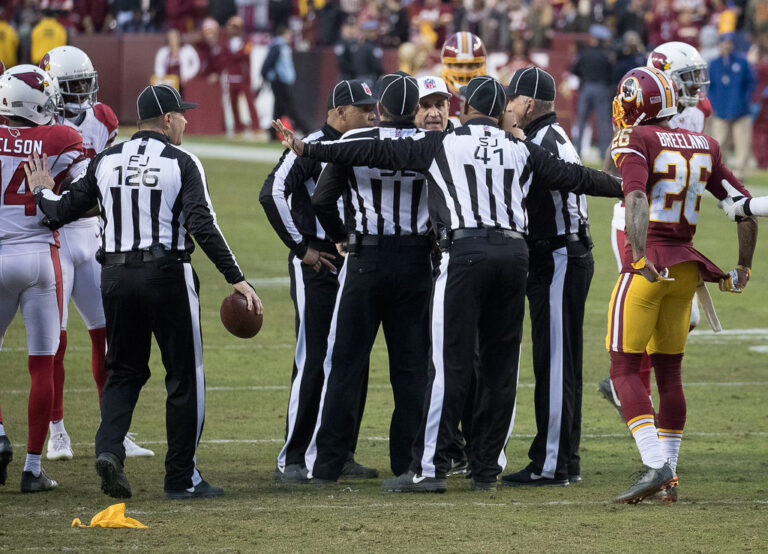
Through the first five weeks of the National Football League this season, teams have combined for a total of 1,458 penalties. That equates to an average of 18.69 penalties called per game, a laughable rate of one penalty for every three minutes and 12 seconds of game time. 

As the NFL continues to make strides toward making the game safer, it has slowed the pace of the game. Through the first five weeks of play last season, there were 1,288 penalties called in 78 games, a previous all-time high. In addition, certain penalties reached record numbers, such as offensive holding, which was called a total of consequently reached career peaks, last season concluding with 555 times last year. Through the first five weeks this year, offensive holding has already been called 218 times. 

As the league continually pushes referees to do everything in their power to protect star players, it has made the game immensely frustrating for fans and players alike. During the week of three Thursday Night Football games between the Tennessee Titans and the Jacksonville Jaguars, the barrage of yellow flags even grew the ire of superstar Patriots’ quarterback Tom Brady, who took to Twitter to vent his displeasure.

“Too many penalties. Just let us play!!!!  #TENvsJAC,” Brady wrote in the first tweet. He then followed with: “I’m turning off this game I can’t watch these ridiculous penalties anymore #TENvsJAC.” 

Most likely stemming from Brady’s tweets, the NFL’s Senior Vice President of officiating, Al Riveron, held a conference call with 17 referees on Saturday night to discuss the frequency of penalty calls, according to ESPN’s Kevin Seifert. Evidently, offensive holding penalty rates since then have been significantly lower. 

This situation is far from the norm, however, as the FOX NFL announcer Troy Aikman put it after seeing Brady’s tweet. 

“He is league royalty,” Aikman said. “And when he makes a statement like that, that should get somebody’s attention. I agree, this is ridiculous — again, this week.” 

Although offensive holding penalties have since gone back to a more reasonable level, it’s intriguing to see that many other penalties, such as defensive holding, defensive pass interference and illegal hands to the face, are all surging as well. Dean Blandino, an in-game rules analyst for Fox Sports, discussed the uptick in penalties. 

“I think you’re looking at a couple of culprits,” Blandino explained. “Offensive holding is up significantly. Defensive holding is up significantly. Defensive pass interference is up significantly. Illegal hands to the face — these are the fouls that have the biggest increases compared to last year.” 

Blandino continued to note that the situation is still murky without an exact course of action to fix said issues.  

“If you [as head of officiating] assign a whole bunch of ‘no-calls’ — those are infractions that should have been called — to an officiating crew after a game, then the next week they’re probably going to call more fouls. That’s just a reality of the evaluation/grading system. And it certainly is a factor as it pertains to these penalty numbers.” 

He added: “I think about how officials are trained and evaluated today, compared to even when I first started at the NFL 25 years ago. It’s night and day. The resources they have — the video, the technology, the reps. Officiating is getting better, as you say.”

In essence, getting penalties called correctly should ultimately be a good thing. But when there’s a monumental, sudden increase, fans are going to notice. 

“Certainly people are noticing,” Blandino said. “Certainly it impacts the game.” 

Another rationale for why there’s been such an uptick in penalties is the marketing aspect of it. Penalties in and of themselves don’t take any time being called, it’s the discussion and possible replay that elongate the game. In calling more penalties, game broadcasts have more TV timeouts, inevitably making the league more money from advertising revenue. Which then poses the question: Is the league calling an obscene amount of infractions purely for profit? Football fans everywhere hope not, but only time and the rest of the season will tell. 

Written by: AJ Seymour — sports@theaggie.org

Humor: Tipsy Taxi to be replaced by horse-drawn carriage

Gunrock, but he’s your DD

As some may recall, Tipsy Taxi was deemed #canceled during a Senate meeting earlier this year in a bloody nine-to-one vote. Like Safe Ride, the ASUCD service provided free rides to partygoers and the like during late hours all across Davis. Unfortunately, due to the Senate’s budget deficit, Tipsy Taxi had to hit the brakes. 

Since the incident, many students have had to pinch pennies for rides home after a night on the cowtown. Luckily, a fairy godmother has appeared.

On Monday afternoon, ASUCD President Dylan Hausman announced that Tipsy Taxi would be replaced by the new and improved service, “Hammered Horsie.” Instead of sending Unitrans vans to each door, students will be getting home by way of horse-drawn carriage driven by Gunrock himself. With tight budgets and gas prices on the rise, ASUCD decided it would be more cost-efficient (and school-spirited) to borrow horses from the UC Davis equestrian center.

Second-year animal science major and horse girl Nicole Drella said she is ecstatic about Hammered Horsie.

“After Tipsy Taxi was axed, I was soo worried about how I was going to get home after an Epsilon Sigma Kappa party. Does the university really think I’m going to pay seven dollars for an oovoo javer?” When we asked her to clarify, she pointed at the Uber app on her phone.

Other students have applauded the sustainability of the new service and UC Davis’ efforts in reducing its carbon footprint.

“I’m just wondering how the university didn’t think of this sooner. I mean, what else are the horses here for?” said fifth-year student Josh Bell. 

Unlike Tipsy Taxi, which was accessible through the Tapride app or by phone call, Hammered Horsie requires prospective passengers to whistle for their carriage to arrive. 

As for hours of service, Hammered Horsie only runs from 8 p.m. until midnight, as opposed to Tipsy Taxi’s 2 a.m. cut-off. When questioned about the early close, Hausman said, “it felt appropriate.” 

“You know how in Cinderella the carriage turns into a pumpkin at midnight?” he stifled a giggle. “We thought it was a cute touch.”

Written by: Julietta Bisharyan — jsbisharyan@ucdavis.edu

(This article is humor and/or satire, and its content is purely fictional. The story and the names of “sources” are fictionalized.)

Discussion ensues over allocation of funds for International Student Committee at Oct. 3 Senate

Changes to ASUCD elections schedule discussed

Vice President Shreya Deshpande called the Oct. 3 ASUCD Senate meeting to order at 6:16 p.m. Senator Victoria Choi was absent.

The meeting started with the election of a Senate Pro Tempore — the official representative of the Senate. Senator Shondreya Landrum was elected unanimously. She said she tries to make a difference wherever she can and talked about working over the summer to “make sure the association stayed afloat.”

Next, the Senate officially approved the rebranding of ASUCD with another unanimous vote. 

A representative for the Council on Student Affairs and Fees (COSAF) also had to be selected at the meeting. COSAF is one of the 12 Chancellor’s Advisory Committees, which also include the Committee of Staff Diversity and the Committee of Disability Issues. COSAF is meant to “provide a more comprehensive oversight of student fees,” according to its website. Senators were asked to volunteer to be the representative and, after a period of silence, Landrum volunteered.

The $15,363,565 budget for the 2019-20 fiscal year passed after a lengthy argument over one line item. A representative for the International Student Committee was present to ask for an allocation of $500 over the course of Fall and Winter Quarters. Esra Hawsawi, the chair of the committee, advocated for its need for a budget. She said the money would be used for workshops meant to teach international students about their rights on campus. The committee has not previously received any money from ASUCD, as they were formed in the winter of 2018. 

Hawsawi explained that UC Davis is “the most diverse university in the country” and that much of that diversity comes from its large international student population.

 â€œThe needs and issues we face are not catered to because we don’t have representation,” Hawsawi said.

She also explained that many international students are not aware of their rights on campus, using the fact that they may not know if they are allowed to participate in a campus protest as an example. Filip Stamenkovic, the newly confirmed Business and Finance Commission chair, questioned the concern that international students need to worry about their rights since they have a visa. Senator Tony Chen, the only international ASUCD Senator, responded by telling a story about a friend of his who was deported and had his visa terminated after getting a DUI. 

“Things are a bit different for international students compared to domestic students 
 when it comes to violating rules,” Chen said later via email.  

Deshpande then mentioned that international students also pay into ASUCD’s base fee and have problems that need to be solved. She brought up the WeHousing scandal that occurred in May as an example.

Stamenkovic, along with Senators Maya Barak and Andre Spignolio, expressed a desire to see an itemized budget before the allocation of any funds. He advocated for a senate bill instead of “blindly throwing money to them.”

Shelby Salyer, the External Affairs Commission chairperson, explained that their Commission also holds workshops and are not asked to itemize their budget and Kevin Rotenkolber, the ASUCD controller, explained that there is a filtering process for the money. 

The money Hawsawi was asking for came from the Senate reserves, which is money that has not already been allocated elsewhere. Stamenkovic explained that he advocated for the International Student Committee to secure funding through a spending bill because that is normally how funds are allocated from the Senate Reserves. 

“This gives the Business and Finance Commission and Senate a chance to review the spending by line items and to make sure that spending is appropriate and transparent,” Stamenkovic said via email. “In this case, there did not seem to be clear spending objectives.” 

In the end, the Senate voted to give the International Student Committee $250 for Fall Quarter with plans to review a request for additional allocations in the winter. With that, this year’s budget was passed.

Last, senators voted to pass Constitutional Amendment 59, which changes when ASUCD elections are held. Currently, elections are held during the seventh week of Fall and Winter quarters. President Justin Hurst’s amendment proposed that the Winter Election be moved to Spring Quarter. This gives newly-elected senators more time to become familiar with the association before they have to pass a budget and it would also match the schedule of other UCs. As a result, senators expected to leave office during the winter would have to consider staying an extra quarter. Deshpande encouraged these senators to do so. 

If the amendment did not pass, Rotenkolber conveyed “fear for the future of the association,” recalling that he was only given 28 days to learn the budget before it had to be done. The amendment passed without objections.

The meeting was adjourned at 8:16pm.

Written by: Andrea Esquetini— campus@theaggie.org

Editor’s Note: A previous version of this article stated that the budget for the 2019-20 fiscal year was $472,225. That is incorrect. The actual budget is $15,363,565. The Aggie regrets the error.

CoHo Aggie Cash conspiracy proves untrue: food service director puts students’ theories to rest

0

Director apologizes to those inconvenienced by the temporary technical error

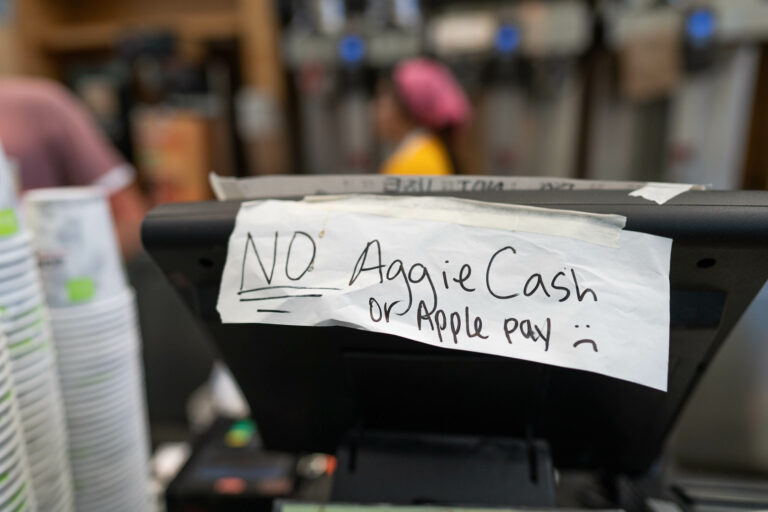
A month before the end of Spring Quarter 2019, the Aggie Cash system at the CoHo crashed, making the establishment unable to accept Aggie Cash as a form of payment. 

Customers were irritated, yet hopeful, that the Aggie Cash system would be back up and running within the next few days. To their dismay, the Aggie Cash system was not fixed before the end of the school year. Some customers suspected that UC Davis might be trying to rob them of the opportunity of spend their Aggie Cash at the CoHo.

Located in the MU, the CoHo is a collection of various food venues, including Swirlz Bakery, Croutons, TxMx Grill, Ciao Pizza and more. The marketplace serves hundreds of students each day, and is one of many on-campus spots where students can use Aggie Cash. 

The variety of food options at the CoHo makes it a favorable option for students to buy food. Additionally, the fact that all restaurants accept Aggie Cash is also an attractive aspect. Customers who spend their Aggie Cash feel as if they aren’t spending “real money,” seeing that Aggie Cash functions like a gift card. Because it can’t be cashed out and does not roll over to the next academic year, students find it important to spend it all within a year to get their money’s worth (only Aggie Cash that comes with a meal plan does not roll over to the next academic year — Aggie Cash purchased separately does roll over).

Customers found the crash in the Aggie Cash system at the CoHo suspicious. Conspiracy theories circulated UC Davis forum sites including Reddit and Wildfire. People on threads wondered if this mishap was an attempt by UC Davis to steal money from students.

One Reddit thread reads, “How long are they taking to fix the damn issue with Aggie Cash. I want to spend my money at the CoHo.” To which a user responded, “This may sound like a conspiracy theory, but I honestly think it’s broken because it’s the end of the year and people are eager to spend their remaining [A]ggie [C]ash so
” Another user responded, saying “F****** that’s definitely true.”

Darin Schluep, food service director of the CoHo, responded to conspiracy allegations in an email.

“[T]he CoHo’s inability to access Aggie Cash (and accept it as a form of payment) was due to a technical error with our point-of-sale system, which is required to communicate with our Aggie Cash servers in order to accept that form of payment,” Schluep said. “An upgrade for the point-of-sale server caused the connection to fail. We worked with our point-of-sale company to address the situation as best we could, and they were able to get the system back up prior to the start of this academic year.”

Customers with Aggie Cash were not refunded any amount nor was their Aggie Cash rolled over to this academic year.

While customers may have suffered due to this failure, the CoHo also suffered a financial loss.

“Financially, the loss of Aggie Cash had a negative impact on the CoffeeHouse operations,” Shluep said. “Aggie Cash accounts for [approximately] 12% of our sales, so not having it available as a form of payment was extremely unfortunate.”

On behalf of the CoHo, Schluep issued an apology via email to all affected customers who were disheartened by the crash. 

“[W]e were very sorry for any inconvenience this caused our customers,” Shluep said. “[I] appreciate the fact that we have a loyal customer base who was disappointed they couldn’t use their Aggie Cash here with us.”

The Aggie Cash system is now fully functional, with the exception of two of the three registers located at Swirlz Bakery. Those registers, however, are expected to be fixed to take Aggie Cash soon.

Written by: Linh Nguyen — features@theaggie.org

Was Jay Inslee’s presidential campaign a failure?

Should environmentalists be encouraged or discouraged by his brief tenure on the national stage?

Even though I’ve now been in California for three years, I’m still a Washington resident; I grew up just north of Seattle. As a proud Washingtonian, I was excited when my governor, Jay Inslee, announced in March that he’d be running for president.

Of course, my fellow residents of the Evergreen State and I can find a fair amount of local-level Inslee news to gripe about, but it was refreshing to have a serious presidential contender from our state, which has never produced a president. What was even more refreshing about Inslee’s candidacy (even when controlling for my Pacific Northwest bias) was his singular focus on climate change. Surely a candidate who made climate change the organizing principle of his campaign would finally be the catalyst to get moderates and progressives on the same page about the urgency of the issue, right?

Well, not really. While Inslee had the donors, he couldn’t even crack the 2% polling numbers needed to qualify for last month’s debate. So, in late August Inslee dropped out of the race. At first glance, that seems like a colossal failure, but that view depends largely on what Inslee’s goals were when he first tossed his hat in the ring.

From his campaign launch, I didn’t think there was much of a chance that Inslee would become the nominee. I believed his presence in the race could be essential in keeping environmental and climate policy at the forefront of the national conversation, holding the other candidates’ feet to the fire. If Inslee didn’t see himself actually winning the nomination, and his primary objective was simply to get the other candidates to take environmental issues more seriously, then he was successful. Many of the other candidates, like Bernie Sanders, have released comprehensive climate change plans, crediting Inslee for elevating the issue and crafting detailed policy proposals.

However, if Inslee’s ego is as big as a career politician’s smile with pearly whites like his, then he probably fancied himself going a lot further than he actually did. This makes it more disappointing that he didn’t have the right people and strategy behind him to propel him forward, communicate his message more effectively and appeal to a broader coalition. That failure to develop a strong base and make a dent in the polls could suggest that his run may have been more about promoting his own image and brand (or possibly auditioning for a cabinet position) than it was about the issue of climate change itself.

The gladiatorial style of the debates certainly did not help him. As the Washington Post pointed out, the inability of a successful, experienced and well-qualified governor to gain any traction with voters points to major flaws in the DNC’s selection and debate process as a whole. The New Yorker suggested that his “can-do, optimistic nature” may not have been the right fit for the younger generation’s approach, which is “bleaker in tone and more transformative in program.” Nonetheless, some of the blame must fall on Inslee for failing to make a better impression on and connection with voters.

Overall, it’s just bad optics that the so-called “climate candidate” of a party that claims to be the champions of the environment could not gain a strong enough following to make it to the third debate, much less the primaries. This points to the discouraging prospect that climate change and environmental sustainability may not matter as much to most Democratic voters as environmentalists and conservationists think it should. In order to actually convince the people who need convincing of the seriousness of man-made environmental problems, we cannot allow this type of story to go through the Fox News IV drip. 

Even so, it’s already been two months since Inslee dropped out of the race, and we are still talking about him and his proposals, which is good. Other candidates have thanked him on the campaign trail, and even though the DNC decided not to have a “Climate Debate,” Inslee did make enough noise for CNN to take the initiative and host a Climate Town Hall. Ironically, Inslee could not participate.

There is cause for optimism. But I don’t think we can declare Inslee’s campaign a success until the biggest headline to come out of future climate debates is about a novel environmental policy proposal rather than the fact that Joe Biden’s eye blew up on live TV.

Written by: Benjamin Porter— bbporter@ucdavis.edu 

Disclaimer: The views and opinions expressed by individual columnists belong to the columnists alone and do not necessarily indicate the views and opinions held by The California Aggie.

Yolo deputies drop off homeless individual in Sacramento, mayor vocalizes his displeasure

Yolo County responds to video recording of homeless individual, reviewing the incident

A video recording released by Public Safety News appears to show Yolo County deputies dropping off a homeless man at a McDonald’s parking lot in Sacramento. Yolo County officials have responded to the video, saying they believe their officers acted “in good faith,” but that county officials would still review the incident. 

In the video, two officers standing in front of Yolo County Sheriff vehicles look on as a man unloads what appears to be his belongings from the back of one of the vehicles. The deputies then leave.  

An accompanying audio clip reportedly captured in an interview between a Public Safety News journalist and the man, depicts the apparently homeless individual as seemingly disoriented and unaware that he had been dropped off by police officers. 

“I’m trying to figure out who they are,” said the individual in the recording. “They’re Transformers, right? And they play other roles?” 

Mayor Darrell Steinberg tweeted a Sacramento Bee article about the video on Sept. 27,  expressing his displeasure. 

“I’m awaiting answers about this incident,” Steinberg said in the tweet. “It is unacceptable to offload a vulnerable person in the parking lot of a fast-food restaurant in @TheCityofSac. All jurisdictions must act in good faith to address our crisis of #homelessness.”

That same day, the Yolo County Sheriff’s Office released a statement to Public Safety News and other outlets, saying their officers picked up the individual in the video after receiving a report of trespassing and possible vandalism. They said the man was found near Clarksburg in a rural area “void of services” and that he requested to be dropped off in Sacramento. 

“The subject requested a ride back to Sacramento and asked to be dropped off where he could find some food (he was offered money from the deputies but declined as he had his own),” the statement read. 

Mayor Steinberg responded to the statement in a letter to Sheriff Tom Lopez on Sept. 27, posted by the Sacramento Bee, expressing dissatisfaction with the explanation.  

“My colleagues and I are very unhappy about the implications of your office’s action in this case,” Steinberg wrote. “We have a serious homeless challenge already and are taking aggressive actions to bring people indoors and enforce illegal behavior. We hear rumors frequently that other jurisdictions are busing people into Sacramento. We are doing more than our fair share.” 

In a 2013 investigation by The Sacramento Bee, it was discovered that Nevada’s primary state psychiatric hospital bussed hundreds of its patients to cities around the country, including to Sacramento.

Steinberg followed the letter with a list of 15 questions “on behalf of [his] city”, interrogating the procedure of the Yolo Sheriff’s department. 

“Is this type of ‘best solution’ determination by your deputies a frequent occurrence?” Steinberg asked in the letter. “How many times have deputies been asked to or determined they should transport transient individuals from your county into neighboring jurisdictions?”

As of this writing, the Sheriff’s Office has not issued a public direct response to Steinberg’s letter. Yolo County issued a press release on Sept. 30, however, addressing the incident.

 â€œThe Yolo County Sheriff is reviewing the incident, including the drop-off of the individual in Sacramento,” the statement read. “At this point, it appears that the deputies were acting in good faith to assist the individual by providing transportation late at night consistent with the individual’s desires.”

The statement also said that the Sheriff’s Office and the Department of Health and Human Services officials would review the incident, and they planned to work with corresponding officials in Sacramento in the near future to “strengthen regional partnerships in this area of shared concern.”

Written by: Tim Lalonde — city@theaggie.org

NFL and domestic abuse: the league can and won’t do more

The NFL is doing next to nothing to limit or punish domestic abusers

October is National Domestic Abuse Awareness Month, and there’s good reason for dedicating a month to this issue. The U.S. Department of Justice estimates that 1.3 million women and 835,000 men are victims of physical violence by a partner every year, with an uncounted number of nonphysical abuse. From 2001 to 2012, twice as many women were murdered by partners or ex-partners than the number of U.S. troops killed in Iraq and Afghanistan in the same time period. Domestic violence is a major issue in our country and the NFL is a hotspot for it — yet they are doing nothing to stop it.

In 2014, Ray Rice received a two-game suspension for knocking out his fiancĂ© in an elevator and dragging her through a hallway — a sentence notably shorter than the year-long suspension that Josh Gordon received for smoking weed. The Rice incident was one that the league and NFL Commissioner Roger Goodell knew about, but suspended him only two games for. Following subsequent backlash when video surfaced of the incident to the public, he was then suspended indefinitely. Nothing changed from what the NFL knew about the incident — it was third-degree domestic abuse all the same. When the incident got into the hands of the people and not the money-gobbling executives in the NFL (of which Ray Rice was a product), the reality of the incident was realized. That video — and the public’s reaction to it — led to minimal changes in the NFL’s domestic abuse discipline policy. 

Following the Ray Rice incident, Commissioner Goodell promised that the league, “can and will do more.” But the NFL has done nothing substantial to limit league-wide domestic abusers in the five years that have followed. The league implemented a new discipline policy that suspends players for six games. Okay, players are covered — barely — but what about coaches and staff?

A recent investigation by USA Today showed that the league does absolutely nothing to vet any assistant coaching hires or team staff, with zero guidelines for hiring. The responsibility of vetting coaches falls entirely on the team, and we know that many teams are just fine hiring players and coaches with a history of domestic abuse in order to win. A cursory internet search for allegations of domestic violence against NFL coaches easily yields alarming results: Vance Joseph, Tom Cable and Rick Slate (who has been arrested three times for domestic disputes). For a league that said it would do more, it looks an awful lot like they did the absolute least. 

Domestic abuse is nothing new to NFL players or personnel — just look at former NFL player OJ Simpson, the most notorious domestic abuser of all time. Every single year cases arise where the NFL seems to have zero clue on how to handle punishments and instances of domestic abuse. This year it was Antonio Brown, who is accused of rape in an ongoing investigation. Just last November, it was Rueben Foster who wasn’t suspended a single game, but was fined two game checks for his third count of domestic violence. Foster was cut by the 49ers and quickly claimed by the Redskins. “We got people who are in high, high, high, high places that have done far worse, if you look at it realistically,” said Redskins executive Doug Williams. If the NFL sends the message that the consequence of domestic violence is only a slap on the wrist and a different million dollar job, how can they claim to be doing anything to fix this problem?

Time after time the league and its teams have done nothing to punish players for incidents of domestic abuse. The only time they ever take action is when videos of players assaulting women are released by TMZ Sports. Otherwise, the league just hopes you’ll forget about it by the time Sunday rolls around and their players make freak plays on SportsCenter. 

In many ways, the NFL exists on a violent level. On nearly every game day this year I’ve seen a player knocked out immoble or unconscious. And it seems to just be status quo with everyone, both on and off of the field. If violence of that nature is just fine with the NFL every weekend, it is no wonder why they have done so little to address domestic violence and abuse. The NFL’s front against domestic abuse is just a public relations facade. One incident of domestic abuse is too many, but the NFL seems to be okay with dozens and dozens.

Written by: Calvin Coffee — cscoffee@ucdavis.edu

Disclaimer: The views and opinions expressed by individual columnists belong to the columnists alone and do not necessarily indicate the views and opinions held by The California Aggie.

Davis PD doesn’t need a $138,000 armored vehicle

Purchase is gross misuse of community funds

At the request of the Davis Police Department, the Davis City Council unanimously approved the purchase of a new $138,000 Armored Rescue Vehicle (ARV) for the department at a meeting on Sept. 24. 

In arguing for a new armored vehicle, Davis Police Chief Darren Pytel stated that it would replace the city’s previous Mine-Resistant Ambush Protected Vehicle which was returned to the federal government. Pytel argued it could also be helpful in certain incidents, like that of rescue and extraction operations, transportation of equipment and personnel, tactical medical support in hazardous environments and active shooter situations. Although Pytel thinks the vehicle may prove useful, he nevertheless concedes that in Davis’s only active shooter case in recent history such a vehicle wouldn’t have prevented the loss of Officer Natalie Corona.

The Editorial Board, however, feels that potential benefits are not a sufficient justification to spend a whopping $138,000 on this vehicle that could instead be used toward tangible benefits to the Davis community. 

So far this quarter, both the campus and the city’s police departments have held several meet-and-greet events in what appears to be an effort to bridge the widening gap between the community and the police department. And while the sentiment is appreciated, direct action is not only noticeably absent, but much needed here.

The Davis PD and the community would be far better off if they invested in addressing the community’s concerns, not military-grade equipment. Putting those funds toward public schools, parks, the city’s solar energy initiative or de-escalation and implicit bias training would be more than just “probably acceptable” — it would be welcomed and commended. 

Ultimately, though, police departments simply should not be militarized. Aside from empirical evidence demonstrating the ineffectiveness of police militarization in protecting officers or reducing crime, militarization also sows discord between communities and officers.

Militarization often results in law enforcement employing higher levels of force against citizens — a fear Pytel ostensibly tried to quell by describing the vehicle as defensive in format, as opposed to offensive. But regardless of how the vehicle is constructed, acquiring such equipment still conveys a message to the community that it needs greater methods of enforcement, which will only stoke the concerns that have grown in recent years regarding excessive use of force by the Davis PD. 

This new ARV may be less military-style in appearance, but its acquisition is still unreasonable. Period. Crime rates in Davis do not warrant an ARV, and the types of crime Davis deals with, most of which are burglaries and thefts, certainly do not justify it. And apart from the stated potential uses, the police chief himself fails to adequately justify the need to spend this money on a new armored vehicle. It appears this purchase will accomplish little more beyond increasing tension between the Davis community and its police department.  

The Davis PD should have consulted with the Davis Police Accountability Commission before going to the city council. But now that people have been given the opportunity to voice their reservations, the police department should give those funds back to the community and address their concerns. The police are only as strong and effective as their community’s support for them, and we are more than willing to give our support so long as the Davis PD is willing to give the same to us.

Written by: The Editorial Board

Nonprofit organization “Hearts for Paws” offers students opportunities to foster pets

0

Organization has permanently rehomed over 700 animals that were set for euthanasia

About 1.5 million dogs and cats are euthanized in shelters each year due to a lack of space and funding, according to the ASPCA. Hearts for Paws, a foster-based 501(C)(3) animal rescue in Davis, was established in 2016 to specifically combat this statistic, helping animals found in kill shelters find their forever homes. The organization has helped find permanent homes for over 700 animals and it continues to provide safe and loving environments for neglected animals throughout California.

Samantha Camarra is the co-founder and current director of Hearts for Paws. She oversees all major operations including rescuing and facilitating the foster and adoption processes for the dogs. Camarra explained her organization’s goals and vision. 

“Our mission is to save the lives of homeless dogs in our community,” Camarra said. “[We] advocate for the rescue of animals and to educate people about adoption and responsible ownership. Hearts for Paws was born from my experiences volunteering at a kill shelter and witnessing just how many wonderful dogs were slipping [through] the cracks and being euthanized simply due to time and space.”

Hearts for Paws offers the community opportunities to get involved by adopting or fostering a pet. While it may be a challenge for students to adopt an animal due to their busy schedules, there are other ways to help out. Camarra encourages students to consider fostering a dog instead.

“Fostering is a great way to directly save the life of an animal,” Camarra said. “For each animal that comes through our program, we need a committed volunteer to care for and love animals like their own until we can place them in a permanent home.”

Prospective foster parents must complete a foster application to be considered by the organization. Throughout the application process, Hearts for Paws also asks for pictures of the applicant’s house and yard, as well as a letter from a landlord. Camarra explained the screening process typically takes a few days and that typically within a week the interested party can start the fostering process. 

“The foster process is only temporary,” Camarra said. “Hearts for Paws covers all costs including food, equipment and vetting. We can help you find a dog for your experience level, activity level and work schedule. Although your ideal dog might be a young lab, if you are a busy student in an apartment we might look to place you with a more laid-back senior with less exercise need, for example.”

Jenna Rutledge, a fourth-year communications major, is a coordinator for Hearts for Paws and is one of several volunteers who helps rescue dogs from kill shelters in Sacramento, the Central Valley and the Bay Area. As a long-time team member, Rutledge detailed her experience working with Hearts for Paws. 

“Our core team has seen it all,” Rutledge said. “We’ve been through some really heartbreaking and challenging things, but I’d say the thing that keeps me going is when I run into my former fosters and rescues in town.” 

Rutledge also addressed the challenges foster parents have to face when saying goodbye to their foster pet.

“A lot of people tell me they don’t want to foster because they think they’d get attached and find it too painful to let the dog go,” Rutledge said. “You definitely miss your dogs when they go, but that’s the most rewarding part! There’s nothing like watching my foster dogs go from terrified in a kennel to spoiled and having the time of their lives in amazing forever homes. And when one goes, we get to save another!”

Several UC Davis students have developed a close relationship with Hearts for Paws and find the fostering process meaningful. Among these students is Sarah Netland, a third-year wildlife, fish and conservation major. Netland is currently on her second year of fostering dogs through Hearts for Paws. 

She explained that as an out-of-state student, she had always wanted to have a pet in college but felt it was irresponsible to adopt due to both the transitional college lifestyle and living far away. Netland detailed why she chose to foster dogs through Hearts for Paws and what she learned through the process. 

“I moved far away from home to go to college and it has been very isolating at times,” Netland said. “I missed my dog and [I] felt like having an animal here would seriously improve my mental health. Taking care of an animal is a big time commitment and it forces you to double-check before making decisions. For example, I can’t stay out too late because I have to make sure the dog gets outside before bed.”

Netland said her experience of fostering dogs has encouraged her to balance out her life as a busy college student. 

“I’m a person who thrives when I have a lot on my plate,” Netland said. “With a dog around, there is no excuse to be lazy at all, there’s always something to do! Instead of sitting and watching a show, I’ll take the dog to the Arboretum for any quick break I have between classes. It keeps my mind and body active and warmed-up for the next task of the day. It’s also incredibly soothing and relaxing for me to be around dogs and so it really helps reduce my anxiety/stress, which often stands in the way of me getting stuff done.”

Netland and her housemates have saved six dogs — some of which were on the euthanasia list — through the fostering program. But despite all the love and fun that comes with having the company of a dog in your home, there are also some challenges potential foster parents should keep in mind. 

“Fostering is incredibly rewarding, but very serious work,” Netland said. “These dogs are being pulled from shelters because they might not be the most adoptable animals and they each come with their own histories and challenges.”

Netland described the challenges she has faced as a foster parent and emphasized that student foster parents should be aware of the potential struggles they may face throughout the process. 

“One of our dogs, Bubbles, would start barking at 4 a.m. to be let out,” Netland said. “My sister and I were the only ones getting up to take her out and I was missing out on a serious portion of sleep. We’ve also had our fair share of ‘accidents’, but that is to be expected of a nervous dog adjusting. Our latest foster Kaya, had four medications — one of which had to be applied every four hours. Fostering is so fun, and it’s appealing to people to have a dog in the house, but it is a huge commitment and students should only be doing it if they are sure that they can handle it.”

For prospective foster parents, she advises making an “honest assessment” of one’s life, home and ability to be a foster parent. Netland said these animals have suffered greatly, making it all the more essential to be confident in one’s choice and ability to foster. She is a huge proponent of the program and encourages potential foster parents to reach out to her at spnetland@ucdavis.org with any questions. 

Written by: Sneha Ramachandran  — features@theaggie.org

Public libraries support and empower local communities

We should recognize the importance of public libraries in the face of nation-wide budget cuts

When it comes to libraries, I like to consider myself one of their biggest fans, second only to Rory Gilmore. My fascination began in the second grade when I was issued my first library card and realized it was a ticket to carry a backpack full of “Junie B. Jones” and “Katie Kazoo” books home. But my perception and love for public libraries took on a whole new meaning when I began to volunteer there at 14 years old. 

I spent all four years of high school volunteering at my local public library. What began as an exciting opportunity to work in a building filled with books became a four-year journey into the monumental and integral role of public libraries in our discourse and democracy.

As many people might already know, public libraries provide important services to the community that go beyond borrowing books. They hold tutoring programs, tax prep services and provide computers and other important technological sources for productivity and information. 

That’s why I was so troubled to learn that the U.S. isn’t doing too well with public libraries. In 2016, the Syracuse University School of Information Studies ranked countries based on the number of libraries per 100,000 residents. The U.S. ranked 62 with only 30.35 libraries per 100,000 residents. 

Libraries are largely funded at the state and local level, with very little contribution from the federal government. In 2014, the state with the highest per capita public library expenditure was Washington, D.C. at $82, with the lowest spending at $16 per capita in Mississippi. Since the 2008 recession, public libraries have seen a drop in funding. Between 2010 and 2012, 23 states reported cuts in funding for public libraries. California’s 2011 to 2012 budget for public libraries saw a 50% cut. It’s shocking that in an age with an inundation of information the U.S. doesn’t allocate more funding and resources for public libraries. The U.S. is lagging behind the global community. 

During my years volunteering at the library I was amazed by all the programs and services that libraries offered, all free of cost for their patrons. But as time went on, I realized that libraries are some of the few physical and accessible spaces left where citizens can see American values and democracy thriving. 

At 14 years old, I signed up to volunteer at the library thinking that my work would largely revolve around shelving books and maintaining a clean and organized space. At some point, I noticed that many of the programs the library offered were actually created and run by the community, not distant library management. I was inspired to see other community members who saw problems — like lack of financial literacy and college application confusion — and decided to take the initiative to fix this. 

At 16 years old, I joined the library’s Teen Advisory Board (TAB) with some of my friends and met other like-minded teens from neighboring high schools. TAB allowed us to finally share ideas and potential projects for the library that we always had in mind. Within a year, we put on our first community talent show. In April, during National Poetry Month, we set up a stand in the lobby for people to display and share their poetic and artistic pieces with other community members. The library was the first place where I was given the opportunity to work with my friends and make the kind of changes that I always hoped to see.

Volunteering at the library allowed me to finally understand the social and cultural fabric of the community in which I had been born and raised. I grew up with a somewhat vague understanding of how unique my community was, but the library instilled a new sense of appreciation in me for its diversity. Whether that be the Spanish storytime or the day-long arts and crafts event for Chinese New Year, the library was where I got to see a beautiful side of my home to which I previously never really paid attention.

Libraries aren’t just buildings created and run by distant management. They’re run by librarians and community members who spend time working closely with, and tending to the needs of others. Those involved in their local library are dedicated to creating a more equitable and just environment for their children to grow up in. Supporting libraries doesn’t just mean supporting access to books — it empowers and supports community members and their grassroots activism.

Written by: Simran Kalkat –– skkalkat@ucdavis.edu 

UC Davis establishes Cannabis and Hemp Research Center in partnership with with DEA-approved company

UC Davis extends cannabis, hemp research for cannabis science 

Along with various other endeavors in agricultural and environmental science, UC Davis also takes part in cannabis research. To extend its research, the school has recently opened a Cannabis and Hemp Research Center and it has partnered with the Biopharmaceutical Research Company (BRC), a Drug Enforcement Administration (DEA) approved pharmaceutical company, according to a UC Davis article

Soon after the Control, Regulate and Tax Adult Use of Marijuana Act (Proposition 64), was passed in 2016, UC Davis researchers came together to discuss plans for cannabis research. The Cannabis and Hemp Research Center was proposed, and it just opened this school year. Two co-faculty directors will be chosen in the near future, according to Cindy Kiel, the executive associate vice chancellor for the office of research. 

“The Cannabis and Hemp Research Center that was just announced was designed to start pulling faculty together that already have these research interests, so we can explore the issues surrounding cannabis from a holistic, interdisciplinary approach,” Kiel said. “It will help us solve some of the big questions still out there about cannabis.”

Currently, the Cannabis and Hemp Research Center is comprised of faculty from various departments, including plant sciences, veterinary medicine and viticulture and enology, according to the center’s website

Due to the university’s strong departments in agricultural, environmental and veterinary science, Kiel said that UC Davis is poised to be a leader in cannabis research. On campus, researchers can study cannabis in all aspects, from its agricultural growth and cultivation, to its use in human and animal subjects as well as its impacts on environmental health and safety.   

“We should be a leader in this area,” Kiel said. “We have all the tools to really push the boundaries of knowledge of what we know about this plant. It’s not just one college, it’s all of the disciplines working together, and I think that is where we will get the real synergy to make things happen.”

Research on cannabis already occurs on campus, according to Kiel. Some of the current research includes growing and cultivating hemp, conducting surveillance-type research into the health-care of cannabis workers and conducting diagnostic research to understand the effects of cannabis on animals.

“My contribution and involvement is to help understand the biochemistry of cannabis,” said Lit Tian, an associate professor in the department of plant sciences. 

Additionally, with the university’s partnership with Biopharmaceutical Research Company, UC Davis receives help analyzing chemical and biological cannabis profiles. By gaining a better scientific understanding of cannabis, researchers think that government authorities can better regulate the substance, and health care providers can discover new treatment methods as well as improve cannabis prescriptions, according to a UC Davis article.

Even though cannabis is legal in California, it is still federally classified as a schedule one substance, so Kiel said their research is somewhat prohibitive — because UC Davis receives federal funding, researchers cannot violate any federal laws in their research.

In order to conduct research on any schedule one substance, including cannabis, a faculty member must receive a license from the DEA for their lab, according to Kiel. The cannabis must come from a DEA-approved source as well, and currently, the only approved cannabis comes from the University of Mississippi. The DEA must also approve the security measures of the research. 

To work in a lab that studies hemp or cannabis, students are required to have a background check to make sure they have not been involved in any drug-related crimes, Kiel said. Students in the lab also must follow the requirements that the professor’s schedule one license entails. 

“I do hope some of the rules about research will change in the future,” Kiel said. “It will enable us to make more progress more quickly if that happens.”

Studying hemp requires less regulations, according to Kiel, since the passage of the 2018 Farm Bill removed it as a schedule one substance under federal law. Hemp is cannabis, but it is a plant that falls below 0.3% THC. It is not used for smoking, but instead is used for creating fibers for clothing, rope and other products. UC Davis can grow hemp as long as the seeds came from an approved source. 

In the future, Kiel said the university plans to research the health impacts of cannabis, such as by looking into concerns about pregnant women consuming cannabis. There has yet to be any research about how cannabis affects the mother or fetus.

“There are over 900 cannabinods in a plant, and only a handful have been studied for what their effects are in humans and animals,” Kiel said. 

For agricultural science, research needs to be conducted to understand the complex plant. Kiel said UC Davis hopes to obtain a manufacturing license to cultivate cannabis that is not hemp. 

“We want to study what kinds of inputs, like soil, water, sunshine and pathogens do to plants, and their CBD and THC levels, because we do not really understand right now how that works,” Kiel said. 

Additional research will be conducted on THC and CBD levels, as well as different varietals of the plant. Right now, only the cannabis from the University of Mississippi can be studied, so research on the different varieties is not possible. 

“The FDA realized it was a problem to have people all over consuming different varieties,” Kiel said. “We do not have the science behind what it means and what does it do to the body and the mind.”

Written by: Margo Rosenbaum — science@theaggie.org


Lila Downs at the Mondavi

A celebratory night filled with colorful Latinx music

Before audience members even stepped into the the Robert and Margrit Mondavi Center for the Performing Arts on Thursday, Oct. 10, the Mariachi Cielito Lindo performed a couple of popular songs for everyone waiting to hear Grammy Award-winning musician Lila Downs. Creating the ambiance for the evening, many audience members came dressed in traditional Mexican attire: colorful dresses, shawls with flower designs and flowers pinned in their hair.

Lila Downs and her band members performed songs from their new album “Al Chile.” The entire evening was centered around DĂ­a de los Muertos, or Day of the Dead, a traditional Mexican holiday celebrated on Nov. 1 and 2. Before entering the hall, there is an altar, or ofrenda, where students and community members can pay their respects to their deceased loved ones until Nov. 2. 

 Downs began her performance with “Son del Chile Frito,” and audience members couldn’t help but clap along and dance. The stage was colorful with not only her music but also the visuals portraying the lyrics on a large screen. Her voice was powerful and rich, bringing emotion to every word she sang. 

As the night continued, she played cumbia, serenatas with the Mariachi Femenil Flores Mexicanas and rancheras. Many of her songs were dedicated to the powerful women she has encountered throughout her life as she paid respect to their histories. With the concert theme being DĂ­a de los Muertos, many of her songs also paid homage to the loved ones she has lost. When performing “Dos Botellas de Mezcal,” she mentioned how she would leave a bottle out at the ofrenda for her grandmother and her father, joking how the dead seem to get more drunk than the living. 

For most of her songs, the group Grandeza Mexicana Folk Ballet Company danced folklorico. Downs mimicked the arm movements of the dancers, picking up her shawl and moving to the rhythm like a paloma, or dove. The dancers’ traditional garb were elaborate and detailed. Dancers dressed in vibrantly colored skeleton clothing.

The audience could not get enough of Downs’ beautiful voice. Their gritos (or celebratory shouts) proved their admiration for her throughout the performance. By the end of the concert, the entire audience was up on their feet, dancing in the aisles. Before she left the stage, the audience began to yell “otra” (another) repeatedly in hopes of at least one more song, to which she complied. 

Nadia Barboza, a third-year community and regional development major, and her friend Ana Sandoval, a third-year sociology major, said they enjoyed the performance. 

Barboza heard Downs perform with other groups and artists before, like Los Angeles Azules and Natalia Lafourcade, and had listened to Downs in her childhood. 

“I honestly didn’t know what to expect but it was really fun,” Barboza said. “We just wanted to dance the whole time. She did a few covers I would listen to growing up like ‘Los Caminos de la Vida’ by Celso Piña.” 

Sandoval enjoyed hearing her favorite songs.

“When she sung my favorite songs, like ‘Cariñito’ I was surprised,” Sandoval said. “It’s amazing when you hear a song that is your favorite and you hear a performer like her sing it; it is just mesmerizing.”

Karewith Casas, a fourth-year studio art and art history double major, shared how the performance related to his heritage.

 â€œI have only listened to maybe a handful of her songs, but my family is from Oaxaca and my dad is always talking about her and [how] her music is world-renowned,” Casas said. 

Bianca Magannam, a third-year psychology and Spanish double major who came to the show with Casas said the concert was “freaking amazing.”

“She had a really good energy and obviously good performance, but you could tell when she put her emotions into her songs and the depth in her voice,” Casas said. “And I really like that people stand after. It was kind of painful sitting down and only clapping. It was great being able to dance after since it’s music that you have to move to.”

“[I enjoyed how Downs] orchestrated the music to go through different types of rhythms and started from high energy and then to a slow energy, taking her audience through a nice roller coaster,” Casas said. 

Downs added the Zapotec language to her songs. Casas found it interesting “how that language can be adapted to fit the music.”

Luis Guzman, the bass player for Downs, discussed his views on the importance of integrating the significance of food in Downs’ music.

“Lila has always respected her themes through her concerts,” Guzman said. “In one of her past records, she dedicated the album to corn and to women who make tortillas from corn. If you go to Mexico, all women make their tortillas in the middle of the day in the kitchen. She focuses on social aspects and transforms them into her music.”

One of Downs’ popular songs references chiles and Guzman explained how “the chile is quite important for our cuisine. It is one of those things that we always have in the kitchen. It is something indispensable. It is important to have chiles in our lives.”

Guzman credits his father as his inspiration for getting involved with music.

“My father is a musician, so we always had music in the home. He had a collection of classic music on vinyl that fascinated me. He had a collection of classic rock and Cuban music. Later, I was influenced by jazz and other music from around the world — Spanish music like flamenco and also Dominican music. Lila’s style is very unique because her time spent living in New York had a revolutionary influence on all of her music. In the beginning, she mixes traditional music like the song ‘La Llorona’ with jazz and Mexican elements to create something different. I think that her music is eclectic, with lots of roots and keys from Jewish, Mexican and Dominican music. She also has the dual influence of the United States and Mexico in her music.”  

Downs brought her modern Mexican music to life with colorful, celebratory movements. Her voice transcends genre and delivered pure emotion with every word.

The interview with Luis Guzman was conducted in Spanish and translated by Arts and Culture Editor Liz Jacobson, Arts Writer Gabriela Hernandez and Campus Editor Kenton Goldsby. 

Written By: Gabriela Hernandez — arts@theaggie.org

Culture Corner:

The Arts Desk’s weekly picks for television, movies, novels and music

Television: “Barry”

One of the greatest things to happen in recent years is the prolific rise of “Saturday Night Live” alum Bill Hader. On top of starring in the second installment of the “It” franchise, Hader created the hit HBO comedy “Barry” in 2018. Hader stars as the titular character of the show, an ex-Marine hitman from Ohio who accidentally joins an acting class and moves to Los Angeles, Calif. to pursue a career in theater. “Barry” is an incredibly dark comedy, blending ridiculous humor with impactful and poignant scenes. With a remarkable cast that includes Henry Winkler as Barry’s hilariously self-obsessed acting coach, it is no wonder that Hader’s creation has received over 30 Primetime Emmy Award nominations in just two seasons. 

Movie: “Booksmart” 

Olivia Wilde’s directorial debut “Booksmart” is a coming-of-age comedy that stars Beanie Feldstein and Kaitlyn Denver. The film follows two high school seniors who decide to go to their first party the day before they graduate. “Booksmart” is quick-witted and intelligent — the chemistry between Feldstein and Denver is a joy to watch and the timing of their comedic banter is impeccable. The characters are relatable and quirky but in an effortless way. Essentially, “Booksmart” is the young, hip sister to the 2007 buddy comedy “Superbad,” balancing raunchy, ridiculous humor with genuine emotions and deeply loveable characters. 

Novel: “Water for Elephants” by Sara Gruen 

Sara Gruen’s 2006 novel “Water for Elephants” tells the story of a veterinarian working for a circus during the Great Depression. Gruen’s writing is beautiful — she captures the vivid imagery of the circus and uses it to create a whimsical yet mysterious atmosphere. The novel locks readers in and transports them to the 1930s. Told through a series of flashbacks as the protagonist sits in his retirement home, the story conveys the pain of having regret and nostalgia for a past chapter in his life. “Water for Elephants” was on The New York Times Best Seller list and was adapted into a film in 2011 starring Reese Witherspoon and Robert Pattinson. 

Album: “The Kids are Coming” by Tones and I 

Australian singer-songwriter Toni Watson (who goes by the stage name Tones and I) is best known for her single “Dance Monkey,” which debuted in May earlier this year. The song rose to number one in 13 countries and is triple-platinum certified. Watson’s music is a refreshing blend of electronic pop and blues. She has a unique, raspy voice that is reminiscent of Amy Winehouse’s. “The Kids are Coming” is Watson’s debut EP and includes six fun and inventive tracks. The standout from the EP is “Never Seen the Rain,” a triumphant and uplifting ballad about taking risks and accepting failure. Only 19 years old, Watson is a breakout star to watch. 

Written By: Alyssa Ilsley — arts@theaggie.org

Student jobs offer not only income, but a sense of community

0

Students share experiences working for Whole Earth Festival, Unitrans, Mikuni

As students begin to develop routines and get back into the groove of school, some may find that they have the time and energy to manage either an on or off-campus job. Some on-campus opportunities may be found using Handshake, the replacement for Aggie Job Link, whereas others can be found on the ASUCD vacancy website. Off-campus opportunities can be found by looking at popular job sites such as indeed.com, the individual establishment’s website or by directly contacting a manager.  

ASUCD employs more than 1,000 students, and 10 different units are currently hiring — one being the Whole Earth Festival (WEF). Fourth-year art history and English major Kennedy Field, unit director for the festival, explained how the event began as an art event for a course in 1969. The goal was to “use art as a transformative experience, focusing on environmental and social justice activism.” After that, it became an annual event — recently celebrating its 50th anniversary in Spring 2019.

“Over the years, the WEF began to expand and expand into what it is now — a giant, kooky, strange and gentle festival,” Field said via email. “The festival has always been run by mostly students, but in the last five years it has transitioned to being entirely student-run.”

Field became involved during their first year because a friend was in charge of nighttime security and needed volunteers who got code names and walkie talkies.

“I volunteered at night and stayed up during the days to enjoy the festival,” Field said via email. “I had always loved UC Davis, but my experience at Whole Earth Festival made me feel like I had found my home and my family.”

Field’s favorite part of WEF is the community it creates, using the word “magical” to sum up the entire weekend. Field recommends that students apply to be part of the staff before the application closes on Oct. 20. 

“WEF gives a unique opportunity [to] the staff members,” Field said via email. “It is not every day that a student is entirely in charge of booking bands for a three-day festival or coordinating over 100 craft booths. WEF teaches really valuable life experience to the staff members and gives students a special kind of autonomy.” 

 Field noted that there have been issues in the past and that they and their co-director have set out to make changes. 

“We hope to stop the festival’s history of cultural appropriation and make the space inclusive to folks of all identities,” Field said via email.

Some students, like second-year clinical nutrition major Samantha Seefeldt, seek jobs off campus. Seefeldt thought it would be helpful to have an income because she noticed expenses piling up and chose to apply to Mikuni in Downtown Davis, in part because she worked at a sushi restaurant in her hometown for two years. 

“It’s a perfect fit,” Seefeldt said. “Mikuni is also expanding its restaurant. It’s staying in a similar area, but they’re just creating more space. And because of this, they’re hiring more people, so I’m hoping to be able to have an opportunity there.”

Seefeldt did not have a job as a first-year student, focusing primarily on transitioning into college. She feels like she is now in a place with a solid schedule and the time to manage a job. 

“I’m most looking forward to hopefully meeting a lot of the employees and having a community there,” Seefeldt said. “It’s always nice to have a nice community at work and having some sort of income to help with college expenses. Even some spending money would be nice.”

Other popular establishments known to hire students on a rolling basis include Burgers and Brew, Third & U Cafe, de Vere’s Irish Pub and Yoloberry. 

Unitrans is also hiring through the ASUCD vacancy webpage, and fifth-year wildlife, fish and conservation biology major Michael Lenihan, the transit driver manager, can be reached for questions about openings. Lenihan was hired in Spring 2016 and has been a transit driver for three and a half years. He also holds the positions of driver trainer and route supervisor. 

“The job appealed to me because it’s on-campus, student-run, very flexible, high-paying and comes with paid training for a very unique skill,” Lenihan said via email.

One of Lenihan’s favorite parts about working with Unitrans is the community. All of the students go through similar struggles, but they also have a supportive atmosphere and take pride in what they do for the community. 

“Another favorite aspect of the job for me is the opportunity for leadership,” Lenihan said via email. “Drivers have numerous opportunities to gain very impressive leadership experience […] It means a lot to me that Unitrans knows the value of its student employees and trusts them with incredible responsibility — responsibility that empowers and prepares all of our employees before and after graduation.”

Lenihan said that a Unitrans job is flexible, fun and unique, but he also emphasized that the job needs to be taken seriously.

“You have to respect how much goes into operating a bus, and you have to put in your part,” Lenihan said via email. “Keeping service running is a massive team effort, and we need team members that we can trust, who will study the material and will show up on time. If you care enough to do that, the job will reward you very generously.”

According to Lenihan, students should not be afraid of the workload. Almost all employees are students, and Unitrans allows students to put their academics first. They make allowances for drivers to step back and focus on school as needed and shifts are built perfectly around class schedules. 

“If you have an hour break between classes, you can just walk to a terminal, drive for 50 minutes, then head to your class,” Lenihan said via email. “Also, learning about buses and transit is fascinating — most drivers started out with no interest in transit, and now we all proudly proclaim ourselves as bus nerds.”

Through the job, Lenihan believes that employees will learn about themselves as workers and team members but also about the city of Davis and its people.

“You’ll be introduced to a community that will absolutely help you grow as a college student,” Lenihan said via email. “It has taught me how to be a student with a job, and all the skills that come along with that, as well as giving me a massive group of co-workers to call friends. It’s completely changed my time in college and made me more well-rounded, as a student, a worker and a person, and I love introducing new faces to our culture and our mission.”

Written by: Anjini Venugopal — features@theaggie.org