55.7 F
Davis

Davis, California

Monday, December 22, 2025
Home Blog Page 400

UC Davis Clery Act disclosure shows increase in reported on-campus rapes, other incidents

Director of on-campus CARE center said new statistics may mean reporting has increased rather than incidents

In accordance with the Jeanne Clery Disclosure of Campus Security Policy and Campus Crime Statistics Act of 1998, UC Davis released its Annual Fire Safety and Security Report the week of Oct. 1. The Clery Act mandates an annual report regarding campus safety. The 2018 statistics reveal, among other things, a slight increase in the number of reported on-campus rapes; in robberies, aggravated assault and motor vehicle theft; and in domestic violence, dating violence and stalking. Other crimes, like arson, weapons arrests, drug arrests and liquor arrests have experienced a slight decrease. 

“It’s also worth noting that the Clery Act does not include statistics on non-violent theft (bicycles, laptops, phones etc) which is in fact the most prevalent crime on this campus,” said Andy Fell of UC Davis News and Media Relations via email. “We do encourage students to take care of personal possessions, lock up bicycles, keep doors and windows closed etc.” 

Of the 16 rapes reported during the 2018-19 calendar year, nine occurred in on-campus student residences, as did five of the nine instances of fondling. Nine of the 13 instances of reported domestic violence happened in on-campus residences as well. But some crimes were less likely to occur in on-campus residences. For example, only two of the five instances of dating violence reported happened in on-campus residences, and just six of the 16 recorded instances of stalking happened in on-campus residences. Other crimes, including robberies, burglaries, motor vehicle theft and weapons, drug and liquor arrests were more likely to happen elsewhere on campus. 

Sarah Meredith, director of CARE (Center for Resources, Advocacy, and Education), an on-campus organization that provides support to rape, sexual assault and harassment victims commented specifically on the number of reported rapes.

In her email, Meredith noted that these new statistics don’t necessarily mean instances of rapes have increased, but that more people have chosen to report them. 

“I do think it’s important to be clear about what these numbers are,” Meredith said. “These data represent the number of incidents that were disclosed during the calendar year to a Campus Security Authority (CSA), and were disclosed to have occurred on campus-owned or controlled property or property adjacent to campus-owned property.”

Additionally, Meredith said the data is not “necessarily reflective of the entire number of sexual assaults that occurred in a given year,” but instead represents the number of victims who “felt they could disclose their experience to someone who happened to be a CSA,” which does not include CARE or counseling services. The assault also had to have occured in a “specific geographical area.”

“As an example of its limitations, Clery, as a [federal] law, doesn’t track incidents that happened in someone’s private off-campus residence even if the victim is a student or affiliated with the University in another way,” Meredith said.

Meredith also described the struggle that victims endure, noting that oftentimes the reaction of the first person they tell may determine how they choose to “move forward” with the reporting process or not. 

“Many victims will never disclose their assault or abuse to an authority,” Meredith said. “My hope is that even if a victim chooses not to report their assault that they might still access support from a confidential resource like CARE or Counseling Services.”

Written by: Rebecca Bihn-Wallace — campus@theaggie.org
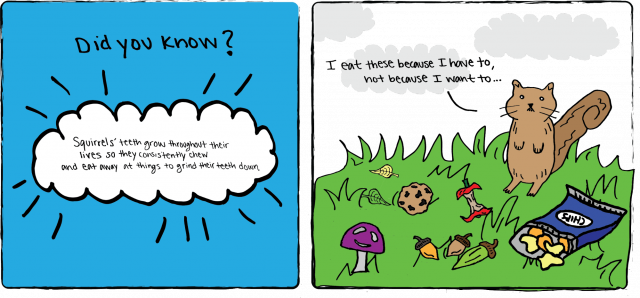
Cartoon: Did you know… about squirrels?

MARIO RODRIGUEZ / AGGIE

By Mario Rodriguez — marrod@ucdavis.edu 

Fanfiction is more original than most people think

Don’t hate on this literary “fad” 

I used to have a personal vendetta against fanfiction in middle school. Key word, used to — I really don’t feel the same way anymore. Some of my friends were avid Wattpad readers, a popular site for fanfiction and other reads, and I couldn’t understand why they took time out of their day to read random, off-hand stories written by other teenagers. 

Despite never giving fanfiction a chance, I found the idea of writing a story based on another book or movie to be unoriginal and uninteresting. Personally, I couldn’t really understand why people bothered with reading fanfiction when there were so many other great books in the library to fall in love with.

I loved reading books in elementary and middle school, and still do, but reading meant something very different to me as a child. Books gave me the tools to craft a spectacular life in my head. I could travel through time, history and the world in “The Magic Tree House.” “Harry Potter” brought much needed adventure into my mundane muggle existence. Books introduced me to some of the most interesting people and showed me marvelous and unreal places. I loved doing fun and artistic activities in class, such as painting a scene from my favorite book or making a magic wand for myself. I was finally able to bring to life all the thoughts, ideas and pictures that were bursting in my head.

In a sense, fanfiction isn’t too different. Whereas I once saw fanfiction as childish and silly, I now view it as one of the most creative literary activities that teens and young adults engage in.

Fanfiction is unique because it allows its writers — who tend to be a younger demographic — to originally mesh together the stories that live in their heads. Writers might base their ideas largely from a book or movie they are particularly fascinated by, but they also draw a lot of their inspiration from the society and culture around them. 

They aren’t focused on simply telling a story for entertainment purposes; these writers craft an imaginative world that reflects not just the unique environment and community they live in, but also their perception of the stories and ideas that enthrall and fascinate them.

If my younger self was encouraged to creatively express a love for stories, then teens and young adults should be given that chance as well. Although much of the inspiration for fanfiction authors comes from other books and movies, it doesn’t mean that their work is unoriginal. Instead of painting a scene out of a book, these young writers use their words to paint a new experience of the stories we know and love. 

By the time I reached high school, I found it harder to continue reading books for pleasure outside of class. Personally, many of the activities and work that went with my readings felt cumbersome and uninteresting. Fanfiction gives many teens and young adults a reason to eagerly dive into books and stories outside of an academic setting. There’s no reason to hate on a creative literary activity that fosters a love for reading and storytelling.

At the end of the day, writers share their stories in order to bring a new idea or world to readers. Fanfiction is proof that young readers care deeply for the stories, ideas and real world experiences that they come across in their daily lives. Nevertheless, the chances of me sitting down today to read fanfiction are very slim. I’m probably not mentally or emotionally prepared to read about “Dramione” or some other fan rendition of the wizarding world. But I can confidently say that my prior annoyance with fanfiction was unnecessary.

Written by: Simran Kalkat — skkalkat@ucdavis.edu

Disclaimer: The views and opinions expressed by individual columnists belong to the columnists alone and do not necessarily indicate the views and opinions held by The California Aggie.

California sets great example with passage of impactful laws

Other states should follow California’s lead

As the 2019 legislative year comes to a close, California Governor Gavin Newsom signed a spree of bills, paving historic advancement for the state. Among these of bills, the Editorial Board believes that four stood out, including the right to access medical abortion through public college campus clinics; the end to state contracts with for-profit, private prisons and immigrant detention centers; the ability to attend school at a later start time and the limitation of purchasing guns per month. 

Senate Bill 24 will take effect in 2023, when public colleges must provide medical abortion. This law is a necessity for students, especially since clinics that provide abortion services may be too far away and out of reach. Without adequate abortion services on campus, many students are left with limited choices, which can include endangering their own health and jeopardizing their education and future. They would have to miss work or class, simply trying to figure out what is best for them to access services. The passing of SB 24 will now lift a burden off of students, so they can privately and safely utilize the services that they need. 

By 2028, California is expected to sever ties with private, for-profit prisons and immigrant detention centers through the passage of Assembly Bill 32. This law will prevent new contracts from forming which is the first step to ending profiting off of others’ humanity. Without a financial incentive to keep people incarcerated, the state can focus on better rehabilitative programs. This law will ultimately be the stepping stone to prevent more individuals from cycling back into the prison system, which has turned into a money-making industry rather than a place to help individuals reintegrate into society. 

The beginning of the 2022–23 school year for both middle schools and high schools will mark a change established later start times with the passage of Senate Bill 328. This law will mandate most public middle schools to begin after 8 a.m. and high schools to begin at 8:30 am or later. Research has indicated that when students have more rest, starting their day later, there is an increase in attendance as well as academic participation. The Editorial Board urges that similar changes should occur for college students as well. To often, students’ schedules could begin with 7:30 a.m. classes and end at 10 p.m. — a wide range that can cut into odd times of the day — preventing students from having regular lunch or dinner times. Cumbersome school schedules have a detrimental effect on the health of students, and such laws are crucial to deciding whether a student can academically perform at their maximum capacity. 

The passage of Senate Bill 61, which will go into effect in 2021, Californians will only be able to buy one long gun per month. This law will still allow one the freedom to purchase guns, just not in bulk. With social unrest and fear over mass shootings, limiting bulk purchases of long guns — which are usually involved in such shootings — will prevent them from potentially harming others in likely events. Normalizing the fear of shootings should not be the case, where children and large crowds are getting hurt. Enough is enough. 

Ultimately, these laws will cause drastic changes in social behaviors — yet they are for the better — addressing the impediments within society. These laws are the first to take on the complex issues that have polarized the country, from abortion rights to gun control. We need to wake up, even if it’s at a later start time. 

Written by: The Editorial Board


City Council approves purchase of $138,000 bulletproof armoured vehicle for police department

Some members of the public present at the meeting questioned whether the vehicle  was best use of city funds

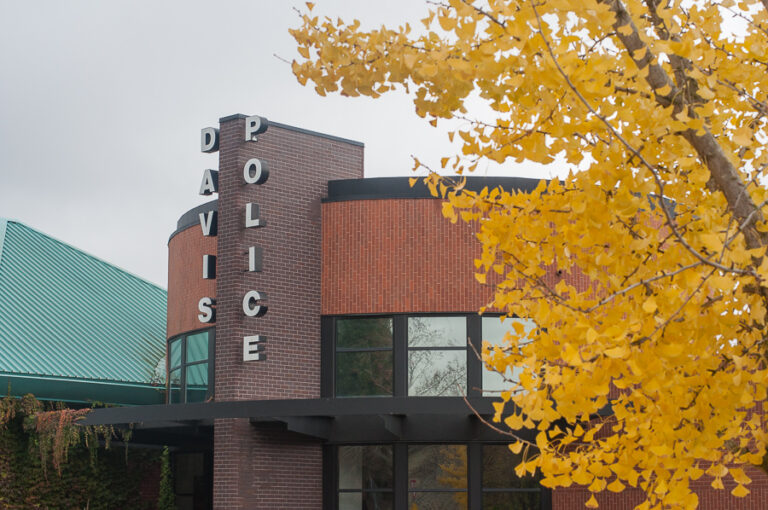
The Davis Police, with the unanimous support of the city council, has been approved to acquire a new Armoured Rescue Vehicle (ARV), which will cost the city $138,000 plus sales tax. Davis Police said that the vehicle will assist them in active-shooter situations and other operations. 

At a city council meeting on Sept. 24, Davis Police Chief Darren Pytel presented his department’s case for funding regarding a new armored vehicle. He began by contrasting the desired ARV with the Mine-Resistant Ambush Protected Vehicle (MRAP) that the department obtained in 2014 from military surplus. The council ultimately voted to return the MRAP to the federal government, citing concerns from the community about local police employing military equipment.  

“Even though there was considerable acknowledgment at the time that having the ability to have armor and offer protection for police use was probably acceptable, really at the time most of the conversation was around the type of vehicle,” Pytel said.  

Pytel said that newer armored vehicles have less of a military-style appearance than past models, comparing the prospective ARV to an Amazon Prime delivery truck in his presentation. Pytel also said that the new ARV would be less expensive than law-enforcement armored vehicles of the past, such as the Bearcat

“There are new versions of armored vehicles — they look quite different and the cost came down considerably,” Pytel said. 

The desired ARV is designed in a “defensive format, not an offensive format” Pytel said, and though it is armor-plated, it lacks gun ports or turrets.  

Pytel outlined several of the intended uses for the vehicle, including rescue and extraction operations as well as tactical medical support in hazardous environments. It can also be used for the transportation of personnel and equipment, he said, in addition to providing ballistic “hard cover” during an active shooter situation. 

Pytel pointed to two recent police deaths from shootings, those of Officer Tara O‘Sullivan in Sacramento and Officer Natalie Corona in Davis, to argue for the usefulness of the prospective vehicle. He noted that while Corona’s death might not have been prevented by the use of an ARV, the Davis PD did utilize an armored vehicle borrowed from West Sacramento PD during the incident. 

During the public comment, several Davis citizens argued against approving funding for an ARV. Dillian Horton, vice-chair of the Davis Police Accountability Commission, questioned the present need for the vehicle and suggested that such a purchase request should have been presented to his commission before going to the council. 

“I just don’t believe it’s impossible for us to see some of the issues before the council does,” Horton said. “I really just want to push for a process that makes that routine.”

Some questioned whether the ARV was the best use of city funds while other commenters suggested that the vehicle, regardless of its appearance, still constitutes the militarization of local police equipment. Councilmember Will Arnold addressed public sentiment against the vehicle.

“I reject the notion that we ought to enhance police accountability by limiting access to purely defensive materials, that strikes me as somewhat offensive,” Arnold said, according to the Davis Enterprise

Mayor Pro Tempore Gloria Partida expressed some reluctance, but pointed to recent racially-motivated shootings as evidence that the ARV was a wise investment for the city. 

“It’s a struggle to say ‘yes’ to this, but I think that unfortunately, it is something that in our day and space we need,” Partida said, according to the Davis Enterprise

The council unanimously voted to approve funding the ARV and to work on new policies dictating the use and deployment of the vehicle with the input of the Police Accountability Commission.

Written by: Tim Lalonde — city@theaggie.org

NFL Referees’ new CBA needs to address glaring labor issue

NFL officials are falling behind in a league that is moving faster than ever

The National Football League and the NFL Referees Association came to a consensus on a new collective bargaining agreement that guarantees compensation and benefits to NFL officials for the next seven years, on Saturday, Sept. 28. It is an agreement we have to hope is much better than past agreements.

Currently, there are very few details of what the 18 months of negotiations have led to, but both sides have made public statements that indicate a win. “We see this new CBA as a partnership with the league that benefits our membership but also seeks to make our game better,” NFLRA President Tony Steratore said. “It is good to get these negotiations behind us.”

Despite all this promise surrounding the new deal, it is impossible to forget that for years the NFL treated one of the most crucial aspects of their product — officiating –– as a forgettable cog in their system. Officiating performance has gone stagnant as the game has moved forward at a rapid pace. 

Recent blowbacks on officiating — like the controversial non-call in the Rams v. Saints NFC Championship game in January — make this CBA the most important agreement. The game is getting faster and faster and the referees are stuck in the slow, archaic way of calling games. This could be a step in the right direction to bring referees into the modern era of the NFL. 

The most influential forces on any given Sunday are not the players or the coaches, but the officials and referees who enforce the rules of the game. Every close NFL game comes down to one or two plays, or one or two bad (or good) calls. Referees are people too. I know that might seem obvious, but they are often treated like the punching bags of the league by players, fans and coaches. It’s such a child-like treatment of rule enforcers. They are relentlessly screamed at by coaches on the sidelines and players on the field, and it isn’t their fault. The infrastructure set up to provide for them and sharpen their skills as officiators is shaky at best. Many officials believe the game might just be too fast for humans to make every correct call. In reference to two of the league’s most well-known referees, The Ringer’s Kevin Clark wrote, “Blandino thinks there are too many exceptions that overcomplicate the rule book. Pereira believes that officials need more practice repetitions.”

There are currently zero full-time referees and minimal training as the league institutes new, controversial rules year after year. NFL referees, and referees in general, are treated unfairly. Beyond treatment from just fans and players, their labor rights have been awful in nearly every CBA to this point. As it currently stands, 90% of NFL referees hold other full-time jobs. Pete Morelli was the president of a high school in Stockton, Gene Steratore owns a sanitary supply company and Walt Coleman is a dairy farmer. How can we possibly expect the NFL officials to live up to their responsibilities when they are splitting time between two lives?

If we take a look at the Rams vs. Saints NFC Championship game last year, the referees were the most talked about figures in the country following the game. The referees’ poor performance were the league’s worst nightmare — all because the officials were underprepared and underdeveloped. There are reasons why officiating has been perceived as so bad at the start of the last few seasons — the league keeps implementing new rules with which current referee crews simply cannot keep up. The new emphasis on calling offensive holding has caused holding calls in the first two weeks of the season to increase from 2.8 to 5.7 calls per game, putting officials in a tough spot when the greatest player of all time calls them out on Twitter. Implementing a new infrastructure to train and provide more support for officiating crews is the only way to correct this issue of overworked and mistreated referees.

The league implements countless new rules each year and just expects their under-benefited and understaffed officials to catch all the blame. The NFL needs better officiating, and the only way to do that is by treating officials what they are worth, based on the influence and value they bring to the league and game. 

Written by: Calvin Coffee — cscoffee@ucdavis.edu

Disclaimer: The views and opinions expressed by individual columnists belong to the columnists alone and do not necessarily indicate the views and opinions held by The California Aggie.

Humor: A message from your forgotten bag of chips

This message was recovered from an unnamed students backpack 

Hi – you know who I am. I’m writing to you from the recesses of your JanSport, your North Face, your Fjallraven Kanken or whatever equipment is now trendy to drag me from place to place. It’s been a long few months for me, as you would expect. Conceived in an Olson Hall vending machine at approximately 4:51 p.m., I have been traipsing alongside you as your faithful companion for weeks and weeks on end. Half-eaten, half-deflated and half-crushed, I am a shell of what I once was. 

Despite my haggard appearance, I have cried with you after you failed your first midterm. I have gone on that weekend trip to Tahoe with you and watched you drink too much watermelon Smirnoff and lose your already questionable dignity. I have kept you company through long lines for the MU bathroom. 

You may think that I must love you by now because of the time we have spent in each other’s presence. You have read about the proximity effect in your psych class and believe you can rely on me for emotional support. The sad fact is, though, I don’t love you. In fact, my demise and my loss of vitality is direct proof of your cowardice.

You are scared of me. I know it because I have heard you say it in quick quips to friends explaining and apologizing for my presence. You say “Oh, I forgot about those” in an entirely dismissive manner with a hint of embarrassment. You act like you don’t remember me, but I can see you peering at me occasionally. You hide me behind your pencil case, glancing at me at the dumpster, as if pondering a course of action. But you’re too embarrassed to eat me.

It all started that fateful day you took me out of the flaming pits of the Olson basement. You were sitting in your discussion when you took a bite and realized, to your absolute horror, that I make quite a crunch. I can’t believe this surprised you. Nevertheless, you noticed a few people glance at you in shock, so you aggressively shoved me away. I have not seen the light of day since.

Despite the gloomy circumstances of late, I have hope. I know you are a forgetful slob. I know you never remember to bring your fictional “healthy tupperware lunch” that is just a figment of your imagination. I know, one day or one night, you will need a quick snack between classes. You will be short on cash and low on energy, so you will not bother to seek a shiny new treat.

You will look for me. And I will be there. Bad news: you forgot to seal me. You will be shocked at the smell alone. I will simply laugh because you have no right to be shocked. Revenge tastes bad.

XOXO

Written by: Kelsey Stewart — kcstewart@ucdavis.edu 

(This article is humor and/or satire, and its content is purely fictional. The story and the names of “sources” are fictionalized.)

Ranking the Jokers that have graced both the silver and big screen

From legendary Ledger to lesser known Hamill

The Joker is the iconic sociopath who exists within the DC Comic universe and serves as Batman’s enemy. He is shrouded in mystery, with no definitive origin story. Anyone who attempts to portray the character has immense pressure from the public to do justice to the mad character. In light of the recent release of the movie “Joker,” starring Joaquin Phoenix as the titular villain, it’s worth reviewing who has dared to don the makeup and become the “Clown Prince of Crime.”  

Jared Leto, “Suicide Squad”

In “Suicide Squad,” Jared Leto used method acting techniques to capture the essence of the Joker. Leto kept his castmates and the crew on edge, even going as far as to send a decapitated pig’s head to every cast member. Even though he tried to invoke fear through his strange tactics, his acting in the film felt off. There weren’t enough scenes to develop the Joker character in the film, and when he was on screen, it felt like he wasn’t needed. Margot Robbie pulled off a great version of Harley Quinn, but because of Jared Leto, the audience couldn’t grasp a genuine connection between their characters. Clearly DC agrees, as Leto will not be featured in the upcoming “Birds of Prey,” which features Harley Quinn terrorizing Gotham on her own.

Mark Hamill, “Batman: The Animated Series”

In “Batman: The Animated Series,” Mark Hamill did a fantastic job with his voice acting, creating a chilling and memorable Joker. Even though we are unable to see Hamill’s facial expressions, his voice alone cultivates the mentally unstable villain who finds humor in inflicting pain and terror in the citizens of Gotham. Hamill is able to keep his voice filled with humor and delight, which is a bit chilling given his career choice, but that shows how much he truly understands the role and motivations of the clown.

Heath Ledger, “The Dark Knight”

“The Dark Knight” allowed Heath Ledger to become the epic Joker everyone needed. Ledger mentioned in an interview with The New York Times how mentally and physically drained he was after one scene where he put in all his energy to create an entirely different Joker. Ledger captured the Joker identity — a villain who is intimidated by nothing and finds everything a joke. Ledger, who passed away before the film’s release, created a version of the Joker that now serves as the bar for every reincarnation. It is impossible to understate the power of Ledger’s performance.

Jack Nicholson, “Batman” 

Jack Nicholson originated the role of the Joker as we know him on the big screen. This 1989 film became a testament to Tim Burton’s directing chops. Burton’s signature dark tone set the standard. Nicholson breathed life into the Joker, carrying over some of the same traits he made popular in “The Shining.” With Burton’s help, Nicholson established the key characteristics the Joker would become known for. If Nicholson hadn’t walked, Ledger wouldn’t have been able to run. 

Written by: Gabriela Hernandez — arts@theaggie.org 

Police Logs

From angsty teen to underage party without parents 

September 26

“Vehicle drove in slowly and quietly and parked on the wrong side of the road.”

“Vehicle parked in bike lane/no parking zone.”

“Unknown number of subjects in bathroom — reporting party advised she can hear a large dog barking.”

September 27

“Loud party. Subjects screaming.”

September 28

“Two poodles loose — running through traffic towards the high school.”

“Underage party. No parents.”

September 29

“Female came to the reporting party’s door stating she can’t locate her car — reporting party isn’t sure if it’s a scam or if she truly needs assistance.”

“15-year-old son is out of control, punching holes in the wall, breaking items, no weapons — mad about her taking his phone.”

October 1

“Male subject seen carrying a table, reporting approached him and tried to engage in conversation/slight language barrier and subject ended up leaving table and left on foot.”

October 3

“Two subjects on bikes  — carrying items on [their] shoulders.”

Hexter to leave UC Davis administration at end of academic year

A long-time college administrator, Hexter has weathered scandal throughout his career

UC Davis Provost Ralph J. Hexter announced his departure from campus leadership, effective at the end of the 2019-20 school year, on Sept. 17.

Though Hexter will be leaving the UC Davis administration, he will remain on this campus as a faculty member. He plans to refocus himself on his teaching and research in classics and comparative literature.

Upon his departure from campus leadership, the provost will have served UC Davis for 9.5 years. During his tenure as provost, he spent a 15-month stint as acting and then interim chancellor during the UC’s investigation into former Chancellor Linda P.B. Katehi. He became interim chancellor following her resignation. Hexter returned to his role as provost after Gary S. May’s appointment as chancellor.

This time spent serving as acting and interim chancellor is a historical marker of Hexter’s time at UC Davis.

“I think Linda Katehi is a fantastic leader,” Hexter said at the time he was appointed to fill Katehi’s role on an acting basis. “I understood why [Napolitano] feels this is the decision she has to make. In my discussions with the chancellor, I think the chancellor expects only an investigation will clear her name.”

In retrospect, the investigation did not clear Katehi’s name from all of the many allegations levied against her during the Fire Katehi movement. 

“The investigation is now concluded, and it found numerous instances where Chancellor Katehi was not candid, either with me, the press, or the public, that she exercised poor judgment, and violated multiple University policies,” UC President Janet Napolitano said in an email sent to the UC Davis community at the time. “In these circumstances, Chancellor Katehi has now offered to resign, and I have accepted that resignation.”

Before coming to UC Davis, Hexter had his own storied past as a college executive. Hexter served as the President of Hampshire College from 2005 to 2010, ending in a large movement toward his ouster from that institution. After his appointment as acting chancellor in 2016 during the Katehi scandal, The California Aggie reported on Hexter’s own administrative woes.

Similar to the Fire Katehi scandal, during which students occupied the fifth floor of Mrak Hall and the location of the chancellor’s office, Hexter’s office at Hampshire College was occupied by 100 some-odd students at the end of his time there.

“[Hampshire] College was on the brink of even existing under his management,” said Ben Saucier, an alumnus from Hampshire College’s class of 2011 featured in The Aggie’s 2016 article on Hexter’s past controversies. “He had a big house outside of campus that he was keeping horses on; he was a socialite — he had parties and he would schmooze up fundraising money, and people kind of felt like he was being [disingenuous] with the student body, like he was saying one thing to them and doing another thing behind closed doors.”

The controversies that Hexter faced at Hampshire College were diverse, Saucier said at the time: Hampshire’s Students for Justice in Palestine challenged his noncommittal stance on the college’s divestment from Israel; Hexter’s on-campus paramilitary group of law enforcers, present for “public safety,” caused student dissent; and his inability to answer questions regarding the whereabouts of certain funds, specifically with regard to Hampshire’s massive budget deficit and plans to relocate several admissions offices all sparked controversy.

In 2016, Hexter explained that he was already planning an “appropriate exit” from Hampshire College, even though his contract had been renewed.

“It is true that on the Internet you will find a lot of dissent and protest,” Hexter said at the time. “But frankly, from my perspective, that was more of a symptom of a realizing on everyone’s part that this wasn’t the perfect match.”

Despite the many periods of controversy that Hexter has weathered, he is receiving praise from many in the campus community as he prepares his exit from campus leadership.

“I want to thank Ralph for his service to the University of California and his dedication to our mission of teaching, research and public service,” May said in the UC Davis News and Media Relations announcement on Hexter’s exit. “Ralph is an extraordinary leader — professorial yet approachable, traditional yet forward-looking, focused on the institution yet global in his thinking. He demonstrates wisdom and compassion on a regular basis, and always has sage advice.”

Hexter’s impact on UC Davis is broad and measurable. All but one of the deans and vice provosts currently at the university were recruited by him, the new associate vice chancellor for enrollment management and, while acting chancellor, the director of athletics, according to UC Davis News and Media Relations.

He has presided over a number of important campus events in the past few years, “including the [openings] of the Ann E. Pitzer Center for music instruction and recitals, the Jan Shrem and Maria Manetti Shrem Museum of Art, the International Center and the Betty Irene Moore Hall of the Betty Irene Moore School of Nursing at UC Davis Health,” according to UC Davis News and Media Relations.

Hexter plans to stay in his role until a successor can be found, and a national search for his successor is soon to be underway.

Apart from serving at Hampshire College and UC Davis, Hexter spent many years at UC Berkeley as chair of the comparative literature department, dean of the Division of Arts and Humanities and executive dean of the College of Letters and Science.

Written by: Kenton Goldsby — campus@theaggie.org

Manetti Shrem invites Doug Aitken to speak on new video installation

NEW ERA captures attention, 

The Jan Shrem and Maria Manetti Shrem Museum of Art welcomed contemporary artist Doug Aitken to speak about his new exhibit “NEW ERA, an installation by Doug Aitken” on Saturday, Oct. 5. The video installation opened on Sept. 26 — the first West Coast premiere of Aitken’s work. The installation has an 11-minute run time and is played on a loop. 

The exhibit was first installed in New York in 2018 and has since been shown worldwide. The exhibition is an immersive experience. The sound is gratifying, almost like sitting in the middle of an IMAX theatre, and the pictures are casted with three different projectors. Where there isn’t a picture, there is a full-length mirror, completely trapping viewers. 

The installation features Martin Cooper, the Motorola executive that made the first cellular phone call. NEW ERA focuses on the generation that we have created through the use of cell phones and new technology that places the world at our fingertips. 

Aitken’s installation differs from other exhibitions the museum is currently hosting. The two exhibits currently being shown alongside Aitken’s work are Colorform by Kathy Butterly and Landscape without Boundaries. The three exhibits are in stark contrast with each other, but the variety and exposure of different stories is what the museum hopes to provide for its viewers.

“That was part of the idea of adding Doug into the mix, to have very different types of experiences on view,” said Rachel Teagle, founding director of the Manetti Shrem. “That’s part of how we select exhibitions, as well. We want different kinds of experiences with the hope of reaching the broadest audience possible.”

In order for the Manetti Shrem to host a different installation or exhibition, it implemented filters and different criteria. 

“We see the museum as having really two parallel purposes,” Teagle said. “One is we’re all about honoring UC Davis legacy. And then Doug comes in. So the two roles we have as a museum is: celebrate our legacy and introduce new voices. In Doug’s case, not only is it new voices, but it’s new media as well.” 

Aitken’s visit to the museum gave those in attendance a new perspective on his past works. He highlighted different pieces of his artwork as well as a future one, currently in the works. Aitken briefly touched on NEW ERA, choosing to let the work speak for itself. But what he did mention about the installation is the moment that he realized the world we lived in was consumed by the devices we are glued to. 

The new media introduced with the NEW ERA installation is a different kind of vibe. It is similar to an ongoing piece of poetry that doesn’t allow for any other distractions. It’s a collective experience where viewers are placed in a world where it is just them, 30 strangers and the words of Cooper reflecting on what he’s created and brought into society. 

“I remember vividly being in [a] cafe and I was sitting there and I looked up from the table, I was alone, and every person I saw was on the phone,” Aitken said. “There’s basically this landscape of communication. So in this moment … looking around, as these people surrounding me in this restaurant, I said, ‘Was a person really involved in this? Did someone actually invented this?’ Because I think when we think about technology, we have this idea that it just happened. It just is, it’s this creation.” 

Shortly after his experience in the coffee shop, Aitken went home to do research and found the story of how the cell phone was created and its repercussions and influence. Aitken discovered Martin Cooper. 

“There’s a series of chapters from the Bronze Age, the Industrial Revolution, all these kinds of moments in time,” Aitken said. “But right now, we’re kind of seamlessly sliding into a terrain that we’re very unfamiliar with. We’re being led by innovation, we’re being led by engineering — it’s the kind of Galapagos, this kind of Darwinistic moment where things click and we use our phones, the idea of connectivity, the idea of internet. But do we really question, ‘How do we see this ethically?’ Do we think about where we’re going, or just where we are today?”

Aitken mentioned the idea of the swift notion that technology was brought in, so swift that some of us don’t remember what it’s like to not have a cell phone in our pockets at every waking moment in time.

The installation has already garnered attention from students at UC Davis and students from different universities. Katie Applebaum, a senior at California State University, Chico drove 90 minutes from Chico, Calif. to visit the installation for the second time and hear Aitken speak. 

“[The installation] is making me more aware of how we are changing without realizing it, and I fixate on that a lot,” Applebaum said. “I work with materials that a lot of younger generations, I don’t think, understand or think about. And I think instant gratification and having a computer on your hip at all times is kind of de-evolving us in a way. So the visceral input of the installation, it plays to our want for that gratification. And I think it also makes us aware of it.”

The installation itself is in a small room and has the capability to take the viewer out of their reality. 

“It was disorienting,” said Alyssa Castro, a first-year biology major. “It was hard to find my way around at first. It was kind of weird to be taken out of such a bright space and be thrown into such a dark space — it was hard to regain my senses. And then once the video started, I really enjoyed the visuals and all the coloring and it was just a really great experience.”

The exhibit forces a reevaluation of art and sense of self. 

“As I get older, [the definition of art is] pretty well aligned with what Doug Aiken was saying, art is absolutely everything,” Applebaum said. “Everything that you do, the people that you talk to, the things that you decide to spend your time with, I personally think is art. Just like what you choose to put on in the morning is a composition, everything is art.”

The Manetti Shrem is open to all, free of charge. The NEW ERA installation will be on view until June 14, 2020.  

Written By: Itzelth Gamboa — arts@theaggie.org 

Review: “Unbelievable”

Netflix’s latest true crime documentary goes beyond 

Netflix released a miniseries based on an article written by T. Christian Miller and Ken Armstrong about a serial rape case in Washington and Colorado on Sept. 13. The series, titled “Unbelievable,” follows the two female detectives who eventually catch the offender, as well as one of the survivors who was accused by police of falsely reporting the crime. 

Critics raved about the phenomenal performances and storytelling in the series. The docu-series received a score of 97% on Rotten Tomatoes.  

Academy Award-winning actor Toni Collette and Meritt Weaver play detectives Rasmussen and Duvall, respectively. In 2011, Duvall investigates a singlular sexual assault incedent that resembles a case Rasmussen is investigating in a different district. Both cases contain similar elements, including a lack of almost any DNA left behind. 

 Under what can only be described as dumb luck, Duvall and Rasmussen learn of each other’s cases and begin working together, searching for an experienced serial rapist. 

Rasmussen and Duvall’s plotline functions as a procedural drama. The incomparable Collette infuses Rasmussen with confidence and passion, making viewers believe her character would be able to solve such an unsolvable case. Weaver’s Duvall is the backbone of the series — the fire that ignites everything else in the plot. Eager and empathetic, Duvall is relentless in her pursuit of finding justice for the survivors. 

These two characters, however, aren’t introduced until the second episode of the eight-part series. The first hour, as well as the emotional core of the story, belongs to Kaitlyn Dever. 

Denver plays Marie Adler, an 18-year-old woman who, in 2008, was raped by the same man Rasmussen and Duvall search for three years later. Unfortunately, the police in Adler’s district find inconsistencies in her story and ultimately charge her with a gross misdemeanor for filing a false report. Adler’s identity is revealed and she becomes a hated figure in the public eye. 

The opening episode of the series occurs mere hours after Adler’s assault, when she first files a report.

This episode is powerful, yet understated. Unlike other shows that abuse graphic content for elements of shock, the painful event Adler experiences is never overtly shown. The real horror comes from the aftermaths of sexual assault, especially on the clinical and bureaucratic end.

Viewers watch as Adler, in shock from trauma, is forced to recount her story over and over again as she is questioned by different detectives and doctors. When she is taken to the hospital, viewers see her poked and prodded by nurses, then photographed from all angles by investigators. It’s hard not to feel like she is being violated all over again. 

Denver is brilliant in this role. She is sympathetic, yet deeply complex. Adler’s anger and confusion builds throughout the series, and Denver portrays this remarkably. 

After the first episode, the series follows these two parallel timelines: the one in 2011 when Rasmussen and Duvall start gaining traction in their investigations and Adler’s as she struggles to cope with what has happened to her. As the two detectives keep getting closer to finding the offender, Adler’s life continues to fall apart. This builds up suspense, as viewers await desperately not only for the rapist to punished but for Adler’s truth to finally be revealed. 

In a previous article, I wrote about the questionable morality of true crime documentaries, and how they tend to glamorize the offenders and their heinous crimes. 

“Unbelievable” is different. There are no explicit or graphic scenes of the crimes — Adler’s assault is only shown through momentary flashes or brief clips of audio. The offender, portrayed by Blake Ellis, does not appear on screen until the seventh episode. This is not the story of a rapist and an exploration of his most brutal crimes. Instead, “Unbelievable” focuses on the hard work of women in law enforcement and the empowerment of survivors. 

Beyond the tremendous performances by the leads, the series has a powerful message about the corruption of the criminal justice system, especially when it comes to women. Unlike other crime documentaries, there is no minimization of the survivors or what they went through in this story. 

In the last episode, after it is revealed that Adler was telling the truth all along, she decides to sue the city for the injustice bestowed upon her. Her lawyer empathizes with what she experienced. 

“No one ever accuses a robbery victim of lying, or someone who says he was carjacked,” the lawyer tells Adler. “Doesn’t happen. But when it comes to sexual assault…”  

This true story is shocking and deeply horrifying, but ultimately comes to a happy ending. The real offender is still in prison today, having been sentenced to 327.5 years. The two detectives have been honored for their incredible work, have remained friends and often speak to panels about their work and the case. The real-life Marie Adler won $150,000 in the lawsuit against the city and is married with children. 

Written By: Alyssa Ilsley — arts@theaggie.org

Humor: Students begin sliding into DMs via Canvas

What if I left you a winky face underneath your Discussion post? Haha just kidding… unless?

Facebook messenger? Outdated. Instagram DMs? Predictable. Tinder? Yuck! Canvas, fellow romantics and newly singles, is the new hot spot for finding love (as well as your class assignments and posted lecture slides) in the rather lonely and fleeting world of UC Davis. Yes, you heard right, you can be checking your grades by day and swinging hot dates by night. And with cuffing season just around the corner, why not shoot your shot on the very platform that shoots you and your GPA down with each passing quarter?

As many already know, Canvas is a useful platform used by students to view assignments, cry over their grades and contact their professors with questions. Conveniently, there is also the option to message other students in your class to collaborate on assignments or share lecture notes, among other things. Recently, this feature has blurred the lines between classmates and more than classmates by serving as a medium for students to exchange flirtatious messages.

Second-year philosophy major Rachel Chair tells us she got engaged to a classmate after only three weeks of messaging him on Canvas. “Our professor had us submit a discussion post on a reading and at least three people had to reply to it and well… let’s just say the rest is history!” Chair made a note to flex her engagement ring multiple times throughout the interview.

 Her fiance, Michael Candor, said he never thought he would find love this way. “Yeah, I just replied with something along the lines of ‘I agree with your interpretation of Plato’s ‘Republic,’ blah blah blah, cool metaphor, blah blah blah, great work!’ To be honest, I don’t know what she was saying, but I just needed to pass that class, man.”

Like Chair and Candor, many students have been deleting Tinder, choosing to dive into the dating pool of Canvas by uploading profile pictures, changing their bios and utilizing the chat tab.

“You know when Canvas hits you with that, ‘Your instructor has released grade changes for Midterm 2’ and your heart just stops? That’s the same feeling I got when Michael would email me…” 

Written by: Julietta Bisharyan — jsbisharyan@ucdavis.edu

(This article is humor and/or satire, and its content is purely fictional. The story and the names of “sources” are fictionalized.)

City of Davis to transition to district-based election system

Under threat of lawsuit, City of Davis revamps council member elections, districts 

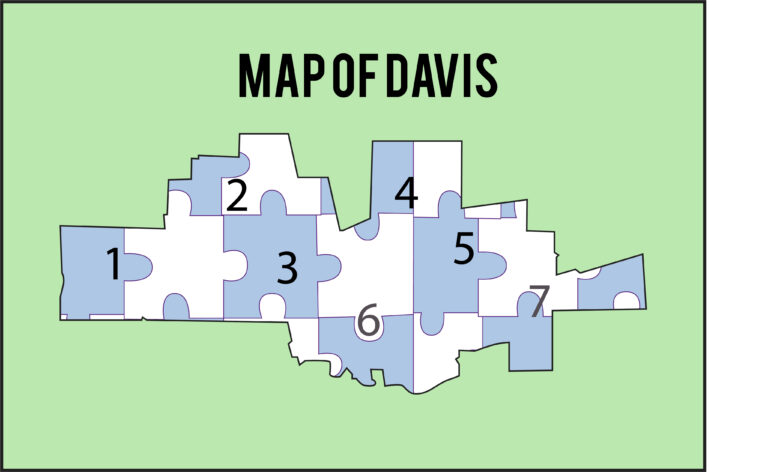
Under the threat of a formal lawsuit, the City Council of Davis voted unanimously to transition from an at-large voting system to district-based elections on Aug. 13. The months-long transition process is slated to finish on Nov. 5, at which time the city will adopt the ordinance and approve a finalized version of several potential district maps.

Modifying the electoral system will change the way Davis conducts city council elections, according to the city’s website. Under the current system of at-large elections, city council candidates can live anywhere in Davis, and all city residents can vote in each member’s election.
In a district-based system, however, the city will be divided into individual geographic districts, each with its own separate city council representative. Councilmember candidates must live within the district in order to campaign, and only residents of that district can vote in their respective member’s election. 

The first election under the new district system will take place on Nov. 5, 2020, according to the city website. Though the next election in Davis will be the March 3, 2020 primaries, city staffers said in a report that the city would not be able to complete the transition to district elections by next March. Consequently, the report recommended that the council should vote to move city council elections to November. 

The council’s decision to reform the city’s electoral system was a response to a demand letter sent by Matt Rexroad of Rexroad Law Firm, dated July 1, 2019, according to the staff report. The letter alleged that the current at-large election disadvantaged minority voters in Davis, therefore violating the 2001 California Voting Rights Act.  

“Voting within Davis is racially polarized, which has resulted in minority vote dilution,” Rexroad wrote. “Davis minority voters have not had proper representation on the city council because of the at-large election system. Thus, Davis at-large elections violate the California Voting Rights Act (CRVA).”

The California Voting Rights Act prohibits jurisdictions with at-large voting systems if the court rules that protected groups are disadvantaged in elections. Yet the city appears to disagree with the claim that their current system uniquely disadvantages minority communities in council elections. 

Mayor Pro Tempore Gloria Partida was singled out in Rexroad’s letter as the solitary example of Latinx representation on the council in “at least the last 20 years.” In the Aug.13 meeting, though, Partida expressed concern that district-based elections may not better represent minority populations. 

“Rexroad claims that our current system dilutes minority vote,” Partida said. “I’m unclear how districts will fix this. Any system in Davis will dilute minority votes because minorities are, by definition, a smaller portion of the population.”

The city’s website further stated that attempts to fight the lawsuit would likely be unsuccessful and could cost the city millions of dollars.

“Not a single jurisdiction has prevailed in litigation under the CVRA; several jurisdictions have paid millions of dollars in out-of-court settlements and all challenged jurisdictions have transitioned from at-large elections,” the site read. 

Following the council’s decision to reform the electoral system, the city began the process of conducting several meetings as well as hearing for public comment. The city is also divided up into districts, with the assistance of a demographer and community input, according to the city website

Ultimately, five prospective district maps were released on Oct. 1, along with demographic data for the potential new districts. The city will release revised district maps on Oct. 15 and will select the final district map in a public hearing on Oct. 22. In the Nov. 5 meeting, the city is scheduled to conduct a final public hearing of this process and adopt an ordinance to transition to districts. 

Written by: Tim Lalonde — city@theaggie.org

Unit directors confirmed at Sept. 26 ASUCD Senate meeting

ASUCD reveals rebranding campaign, 10-year “Going Forward” plan

A special senate session was held on Sept. 26 in the Student Community Center Multipurpose room. Senator Sahiba Kaur arrived late.

President Justin Hurst led a presentation about ASUCD’s rebranding campaign. The presentation highlighted the history of ASUCD, originally the Associated Students of University Farm (ASUF). Since its creation in 1915, the association has continued providing resources and services for students.

During the presentation, Hurst also unveiled the association’s new logo which features five dots representing the four pillars of ASUCD: media, advocacy, service and social. The fifth dot represents ASUCD as one united organization made up of many different parts. The presentation also unveiled the new tagline, “Building tomorrow together.”

The Senate then moved into a presentation from the Student Government Administrative Office (SGAO) that focused on the association’s efforts to move toward “a system of drafting, creating, and distributing legislation that is based entirely online,” according to the powerpoint.

Next, senators began confirmations for different chairperson positions, starting with the Gender and Sexuality Commission (GASC) Chair position. 

Elena DeNocochea, a third-year gender, sexuality and women’s studies major, was confirmed without objections. DeNocochea spoke about her aspirations to expand the number of gender neutral restrooms with diaper changing stations on campus. Over the summer, DeNocochea lobbied Sacramento legislators on behalf of Senate Bill #24 which would provide California college students with access to abortion care.

The table then moved into the confirmation of the Academic Affairs Commission (AAC) Chair. Naomi Reeley, a fourth-year political science major, previously served as AAC Chair in Spring Quarter 2018. Reeley was confirmed without objections.

Next, Filip Stamenkovic, a fourth-year computer science major, was confirmed as the Business and Finance Commission Chair. Stamenkovic brought up former units, such as the Experimental College, that were cut last year as a result of the association’s mounting budget deficit. Stamenkovic cited these cuts, and a feeling among unit directors of being blindsided by the association’s decision, as one of the principal reasons he decided to apply for the position. He was confirmed without objections.

Kennedy Field, a fourth-year English and art history double major, was confirmed as the Whole Earth Festival (WEF) unit director. Field has been working with WEF since her freshman year.

Tianna Ching, a fourth-year English and cognitive science double major, was confirmed as the point director of WEF.

Yasmeen Qursha, a fourth-year environmental policy analysis and planning major, was confirmed as the Campus Center for the Environment (CCE) unit director and the Committee on Committees (COC) chair. Qursha spoke about her plan to help UC Davis meet its zero waste goal for 2020 in addition to making increasing diversity a priority as COC chair.

Fourth-year animal science major Cindy Chen and fourth-year neurobiology, physiology and behavior major Deborah Widjaja were both confirmed as the Mental Health Initiative (MHI) co-directors. Widjaja spoke about her experience with MHI over the past two years and what the initiative means not only to her, but all people.

“Mental health is very intersectional,” Widjaja said. “It ties in with our race and ethnicity. It ties in with our social economic class. It ties in with our gender identity. Whether or not we want to admit it, mental health affects us all.”

Fourth-year statistics major Nicole Deacon was confirmed as Picnic Day chair. Last year, Deacon served as vice-chair of Picnic Day and has been involved with the event since her freshman year. 

After these confirmations, the ASUCD executive team discussed projects they worked on over the summer — one issue they worked to resolve was the existing animosity between ASUCD and different centers on campus, including some in the SCC. 

Since meeting with directors from various centers, the executive team has been working on a proposal to formalize bi-quarter retreats. Co-hosted by center directors and ASUCD, the executive team hopes this will be a positive step towards mending current divisions.

The executive team also debuted ASUCD’s new 10 year plan titled, “Going Forward,” developed in order to implement more long-term continuity within the organization. The plan includes reforms of the association’s business practices, a budget system overhaul and student accountants and student business managers. 

In addition to bringing in students to business positions in ASUCD, the plan includes the development of courses to help students learn “real-life” skills and the creation of new positions, such as the position of student historian. The plan also includes the introduction of in-house counsel and legal compliance training as well as that of a human resources professional, a Creative Media overhaul and the creation of an open-access inventory database that can be utilized by all units.

Written by: Ally Russell — campus@theaggie.org