55.7 F
Davis

Davis, California

Monday, December 22, 2025
Home Blog Page 417

Grand Opening: Burger Patch

“Convenient Consciousness” with plant-based fast food

Sacramento’s newest addition to its vegan utopia is the 100% plant-based burger, fries and shake restaurant Burger Patch. Located on K and 23rd Street and open from 11 a.m. to 10 p.m. on weekdays until 1 a.m. on weekends, Burger Patch is the new Sacramento hotspot. During busy hours, lines stream around the corner and two blocks down.

The menu at Burger Patch offers three different kinds of burgers: the single patch, double patch and barbeque “bacon” patch, all of them using the famous Beyond Meat patty. They rework the Beyond Meat into a 2.5 ounce patty for the single and double patch, while the barbeque patch is molded into a 4 ounce patty. The Burger Patch crew hand press their large patties in-house, which offers Beyond Meat fans a larger portion option than what is traditionally offered at other vegan restaurants.

The menu also offers a chick’n sandwich: The Ranch. It uses Gardein vegan “chicken” and Sweet Earth hickory-smoked “bacon.” Both the burgers and sandwiches use Daiya vegan cheese and are topped with homemade barbeque, ranch and Patch sauce (similar to a Thousand Island dressing, but with a chili-garlic kick to it).

Also offered on the menu are a few “milk” shake options: vanilla bean and chocolate — I highly recommend adding their grilled and salted chocolate chip cookie into the mix too. With their minimalistic yet diverse menu, Burger Patches makes for the perfect, guilt-free lunch and dessert stop.

The owners of Burger Patch Danea and Phillip Horn spoke about their experiences being vegan and how it transcended into owning a restaurant.

“Phillip and I have followed a majority plant-based diet for more than a decade with being 100% plant-based for the past seven years, Danea said. “I love experimenting in the kitchen to recreate recipes that are free from meat, dairy and eggs but taste exactly how I remembered them growing up. One of the meals, especially for Phillip, was a burger, fries and shake. Over time as we toyed with what a restaurant could look like, food scientists were discovering ways to create burgers based on pea protein, coconut oil and beet juice that look and taste just how we remembered.”

Burger Patch started as a pop-up location at Sacramento’s Golden One Center and quickly became one of the most popular food stops in the stadium. Safe to say, they’re meeting the same success at their brick-and-mortar location as they did at their pop-up.

“In 2017, these two ideas intersected, and Burger Patch was the first restaurant to serve the Beyond Burger in Sacramento,” Danea said. “When the line stretched to four hours, we knew that this was something people were craving. We always enjoy showing our friends and community that you can follow a plant-based diet and still indulge with a comforting meal. Burger Patch is modern ingredients with a nostalgic taste.”

The Burger Patch mission statement illustrates their dedication to the theme of their restaurant.

“When you come into the restaurant, you will see the phrase ‘convenient consciousness,’” Danea said. “We know that people are busy, and often finding a quick plant-based meal can be challenging. We want to make it easy for people to eat in alignment with their values in a conscious way that is kind to our bodies, animals and the planet. Oh, and we made it really delicious.”

With the success so far with their Sacramento location, the Horns have fielded several inquiries about potential additional locations and are open to exploring those possibilities in the not-too-distant future.

Burger Patch also plans on adding new menu items during special events, such as the “Pulled Patch.” This burger will make its debut at the BottleRock Music Festival in Napa before it joins the menu at the Sacramento location.

With plant-based foods on the rise, Burger Patch is making great waves in providing a conscious choice for the masses with their gourmet burgers, modern ingredients and nostalgic taste.

Written By: Clay Allen Rogers — arts@theaggie.org

Zero waste lifestyle proves impactful, difficult to achieve for students

Aggies attempt to reduce waste to benefit the planet

Climate change, garbage patches and general pollution affect our earth, society and economy daily. These issues are increasingly relevant to many, sparking a conversation among younger generations about how to initiate progress and change. In the last several years, the UC system established a comprehensive goal to achieve zero waste — or 90% diversion from landfills — by 2020. Zero Waste is defined as “a philosophy that encourages the redesign of resource life cycles so that all products are reused. The goal is for no trash to be sent to landfills, incinerators, or the ocean.” While the university takes steps toward mitigating emission, many students have taken it upon themselves to reduce their carbon footprint by attempting low or zero waste. However, with many of the other stressors associated with student life, maintaining a low or zero waste lifestyle can be a difficult feat.

Second-year wildlife, fish and conservation biology major Breeze Davis practiced low waste for six months and zero waste for two months. She said being low and zero waste helped her find a sense of purpose and fulfillment.  

“Being zero waste means a different thing to everyone,” Davis said. “To me it meant being intentional and not inviting trash into my life. It was nice always having a goal I was working towards and trying to get better at.”

Since the beginning of 2019, however, Davis found it challenging to strike a balance between maintaining her low waste lifestyle, performing well in school and looking after her overall well-being. Although Davis continues to try to lower her carbon footprint, she no longer considers herself low or zero waste.

“It’s really hard to take on a feat like this if you are personally not in a good place or if you’re dealing with a lot of stuff,” Davis said. “For me, it was a strain on my mental health.”

Davis also struggled with the financial aspect the zero waste lifestyle. She said the high cost of sustainable products — specifically bulk items — created a barrier between her desire and ability to accomplish zero waste.

“Expense plays into the stress a lot,” Davis said. “Shopping zero waste can often be more expensive compared to buying in plastic because zero waste products are often times organic or local.”

Fourth-year nutrition science major and low-waste student Tiffany Gonzalez had a different approach to the costs of zero waste living.

“My zero waste journey actually started as a way to save money,” Gonzalez said. “My first year of college, money was very tight and I was looking at what I spent the most on—things like toiletries, makeup and plenty of fast food—and started looking up ways to make them myself or replace them with longer lasting versions.”

For Gonzalez, this practice developed into an ideological passion which inspired her to live a more sustainable lifestyle. Further, Gonzalez utilizes media platforms including Facebook and her blog, theecohoe.com, to help spread her message and inspire others to try reducingtheir waste.

“My goal at the moment is to raise enough awareness for these issues until action is taken by our policy makers,” Gonzalez said. “Whether it’s through posting on my blog or even just picking up trash in the Arboretum on my days off, I want to see the conversation happening and hopefully get people to realize that this is something that is going to affect all of us at some point or another.”

Regardless of her passion and willingness to spread her message, Gonzalez also encounters obstacles when trying to juggle the demands of her low waste lifestyle and the demands of being a full-time student.

“Trying to make every single item you use, whether it’s makeup or even just meal prepping takes a lot of time that most of us just don’t have between midterms and exams every single week,” Gonzalez said.

Regardless, Gonzalez finds solace in the fact that being low or zero waste does not have to mean being perfect. She stresses that having the intention to lower waste is impactful and a good place to start.

“Zero waste isn’t about not generating waste as much as it is being a conscious consumer,” Gonzalez said. “I’m not perfect and I don’t always have time to make everything I need, so when I buy something in plastic I make sure I use it completely and even repurpose the container if I can.”

While there are many obstacles associated with being zero waste, both Davis and Gonzalez emphasize that it is a very enriching way to be intentional and compassionate. Both students found purpose in dedicating themselves to a demanding and time-consuming lifestyle for the benefit of the greater good.

“I would love to try and be zero waste again at some point,” Davis said. “When you’re zero waste you’re doing something for the planet that everyone lives on. It’s not just for you.”

Gonzalez said being accepting of others and allowing space for growth is essential to working together to help save our planet. “Above all, I think this movement really stems from compassion,” Gonzalez said, “We all live on this earth and regardless of our differences, it’s truly the one thing none of us can live without.”

Written by: Miki Wayne — features@theaggie.org

Video Game Orchestra prepares for spring concert: “Out of This World”

Club celebrates video game music and discusses new GE course

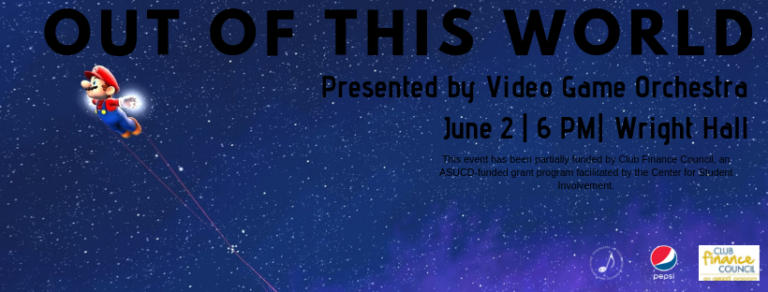
The Video Game Orchestra (VGO) will be holding its spring concert on June 2 in the Theatre and Dance Hall. The concert will feature a lineup of large, well-known open world exploration games with vast amounts of content like “Skyrim” and “The Legend of Zelda: Breath of the Wild” to fit the theme of “Out of This World.” The event is free for all to come and enjoy what video game music has to offer and to witness the important role that music plays in creating an atmosphere fit for any situation on screen.

Ziad Asadi, a third-year biomedical engineering major and current president of VGO, spoke about the club and how it began just over two years ago.

“It started out as just something I wanted to do, which was play video game music with my friends,” Asadi said. “We got together, decided to play and it turned out to be really fun, so we decided to make it a club. We put on our first performance in March of 2018, and it was only nine of us.”

Although the first performance only amounted to about 30 minutes of music, Asadi was proud of the production he and his fellow members were able to put on. The club was able to garner a lot more attention from that event; over 50 members have joined the club since.

“It’s always just been about getting people who love playing video game music,” Asadi said. “Even if they don’t play video games, we encourage people to join because the music is a lot of fun to learn.”

For Asadi, one of the main things he emphasizes about the club is that the music played is not like the traditional orchestral music students are normally exposed to.

“It’s different because the context has changed,” Asadi said. “It’s not something that you’ve been trained to think is great. Our style is also different, but a lot of music from certain games, like ‘Super Mario Galaxy,’ takes inspiration from classical music, so there definitely is influence.”

In addition to the performances of video game music, Asadi also highlighted a special collaboration he and his members are excited to unveil.

“We’re also going to be showcasing our VGO debut game,” Asadi said. “We’ve teamed up with another group, the Game Development and Arts club, and they have been making a game for a while. We had some of our composers create music for it. At our concert, we will showcase the game as we are playing the music for it.”

Asadi expressed great excitement in being able to work with another group and continue expanding the club in such a short amount of time. There is great potential for the future of the club.

Diane Le, a third-year biology major and current event coordinator of VGO, spoke about the growth of the club since joining alongside Asadi, mainly focusing on the course offered through VGO.

“Since this Spring Quarter, we have been a course here on campus,” Le said. “It’s a GE music course. In the course, we have mandatory rehearsals every Friday from 6pm to 8pm.”

The course is offered mainly as an extension of the club activities while offering students the ability to obtain credit for their work. Members involved in either the club or course are still able to frequently collaborate and prepare for the various performances put on by VGO throughout the school year.

Le also explained some of the trials the young group faced during their first performance and how that experience helped her and the rest of the members prepare for this upcoming concert.

“That first concert was very scary,” Le said. “Ziad provided a lot of the music we played, which was a good mix of everything. Even though we had two quarters to prepare, getting off our feet finally was difficult. When things got back to normal a bit entering Winter Quarter, that’s when we started doing a lot more of event planning. That’s always been something I’m comfortable with, so it was easy for me to get everyone focused on the same goal. For me, it’s about planning something well enough so it works and not necessarily planning for perfection.”

Since that first event, Le has been much more confident in being able to coordinate an event that students are sure to enjoy.

Two composers for VGO, Kyle Chuang, a first-year environmental science and management and music double major, and Savita Pereira, a first-year biomedical engineering major, spoke about their experiences composing music for a large scale performance.

“Part of the reason I really wanted to join VGO is because my dream career is to write music for video games and movies,” Chuang said. “Being in a club where I can surround myself with music from video games would be a great way to learn. To be able to write music, alongside Savita, especially for the game being created by [the] Game Development and Arts club, is a great experience because I think her and I have an understanding of the wide range of music video games cover.”

Like Chuang, Pereira was amazed after seeing VGO perform during one of their early events. She was inspired to become a part of the club and help in any way she could, mainly through composing and arranging music.

“After being really interested in movie music and making my own arrangements, I started to make music that reflected a lot of what I was seeing,” Pereira said. “I just became obsessed with the idea of writing music for movies. Being in VGO has allowed me to start that journey. Since joining, I’ve been able to create a medley for ‘Super Mario Galaxy.’”

One of Pereira’s main goals in creating her own music is making sure it matches with the theme of the game to create a full experience for listeners.

“The music for video games really has to be more atmospheric,” Pereira said. “You want it to set the tone for the scene. The music has to be smooth as well and work with what the player is doing. It’s challenging to try and strike that balance, but it’s important for the game overall.”

Chuang shares Pereira’s sentiments about the stressfulness of creating music that captures the essence of a video game but finds enjoyment nonetheless in doing something he knows will be shared on a greater scale.

“When I write music, especially when going off of inspiration, I try to use a variety of songs so I can get an idea of the full genre,” Chuang said. “With the game being created, we were working off of a few songs that the game designer really wanted us to pull from. That was new for me. One thing that helped me was trying to pick apart the different elements that each song presented and how to capture that genre.”

When writing their respective pieces, Chuang and Pereira both described the process as trial and error, continuously playing with what works and finding out the best patterns for their vision.

“In an orchestra, you have to be familiar with so many different types of instruments,” Pereira said. “It’s also about finding what isn’t crazy for certain instrumentalists to play, which sometimes means writing something and having them come back to you like ‘Hey, this is too much, can you change it?’ Since Kyle had a lot of experience in orchestra, he was teaching me along the way, which was really helpful.”

Now that the music has been created and the performances are being perfected, students can expect a strong display of music inspired by some of the biggest names in the gaming industry and also hear original work by young, talented composers.

Written by: Vincent Sanchez –– features@theaggie.org

Recycling is hard and it’s not your fault

We can avoid the headache of recycling if we become more sustainable

We’ve all been there: standing in the middle of the CoHo with trash in your hands and what seems to be a million options on how to recycle the items. It can be intimidating to feel the pressure of “saving the planet” on your shoulders, especially when it seems like everyone around is judging whether you put your trash in the right place.

But don’t worry, there’s no recycling-police or environmental extremist group that’s going to embarrass you if you get it wrong (though I can’t fully guarantee the latter). I’m here to say you’re not alone if you feel confused or overwhelmed. The truth is that most people don’t know how to recycle properly and get it wrong themselves.

Recycling is messy and complicated. Some may wonder if all the headaches are worth it. How is categorizing my trash going to stop climate change?   

You probably recycle more than you give yourself credit for. If you’ve ever reused an old item for a new purpose — like using an old shirt to wash your car — you’re recycling. On a larger scale, recycling can be more beneficial economically and environmentally. Large-scale recycling is when consumer goods are collected by a private or municipal agency and the goods are broken down back into their raw materials and sold to be used for new consumer products.  

While 75% of American waste is recyclable, a Yale University study showed that we only recycle about 21.4% of our waste. We’re not even close to competing with top nations like Germany, which recycles an astonishing 65% of its waste. But the Environmental Protection Agency estimates that if we increase our recycling rates to 35%, we would slash 21.4 million metric tons of carbon equivalents, which is the same annual electricity consumption of 11 million households.

What makes achieving a 35% recycling rate complicated is the inconsistency between recycling methods. Every municipality has its own local agency — sometimes more than one — and each has its own way to recycle with its own nitpicking customs. So while crushing your cans in your old town allowed for more space in the recycling unit, a different recycling stream in your new town could sort it as “paper,” contaminating the batch and costing a lot of hours and energy to fix.

This creates a constant state of confusion for the consumer and stress for the recycling workers. The best approach is to contact your local recycling agency. If you live in the city of Davis, abide by the rules of Recology, a recycling company headquartered in San Francisco. If you live on campus or are recycling on campus, you must follow Sustainable 2nd Century’s rules.

UC Davis is currently trying to reach its goal of zero waste by 2020, and recycling is a big part of that. So while recycling might be confusing at times, it becomes your responsibility to dispose of waste properly once it’s in your possession by following the correct protocol. If you feel like you’re somewhere on campus that’s missing specific recycling bins, take action and send a service request to the Facilities Management’s website.

We’re lucky to be part of a campus that’s very enthusiastic about recycling. The UC system was designated a “Green Power Leader” for 2017 at the EPA’s annual Green Power Leadership Awards, and UC Davis was recognized as a major contributor to the achievement.

Unfortunately, recycling doesn’t necessarily mean we’re in the clear. Recycling doesn’t neutralize the human impact on the environment — it’s just less detrimental to the planet than extracting new materials from it. Recycling is a band-aid solution for the problem of overconsumption that we’ve already created. So instead of risking being busted by environmental extremists, if you follow the first two R’s of conservation — Reduce and Reuse — you won’t have to worry about the third: Recycle.

Written by: Daniel Oropeza — daoropeza@ucdavis.edu

Disclaimer: The views and opinions expressed by individual columnists belong to the columnists alone and do not necessarily indicate the views and opinions held by The California Aggie.

Your white-collar job is not safe from automation

Automation and artificial intelligence are commonly thought of as threats to only blue-collar jobs. That’s simply not true.

In 2013, economists Carl Benedikt Frey and Michael Osborne released a report named “The Future of Employment: How susceptible are jobs to computerisation?” The authors examined the job security of 702 different fields, evaluating how at risk these occupations were to automation. Their findings — that as many as 47% of American jobs could be replaced by mechanization within the next decade or two — shocked many.

Traditionally, automation has been thought of as a threat to the job security of blue-collar fields, such as manufacturing or truck driving. However, recent technological advances show historically white-collar jobs are now in danger as well. Computer programs, for example, currently handle 80% of all trading on the New York Stock Exchange. The Associated Press and Bloomberg News use automated technology to help compose news stories, and by one study’s estimate, artificial intelligence is significantly more effective than human lawyers at deciphering legal documentation. One website even allows you to see the probability of your job being replaced by automation within the next two decades.

Unsurprisingly, the threat posed by automation became an increasingly important issue on the political stage, particularly in the Rust Belt. But for the most part, politicians still largely ignore the very real possibility that white-collar work might be next on the chopping block. With the exception of Democratic long-shot Andrew Yang, who discussed the universal threat posed by automation in his 2018 book “The War on Normal People,” the topic appears to be taking a backseat to more contentious issues.

Job retraining programs and universal basic income are among the most prominent solutions proposed by those concerned with the threat of automation. While UBI, as well as other social welfare programs like universal healthcare, increasingly garner Democratic supporters, it’s unlikely these programs will offset the consequences of a totally new economic evolution. Furthermore, job retraining programs are unlikely to help laid-off blue-collar workers — largely middle-aged, non-college educated laborers — whose experience with menial labor does not prepare them for more highly-skilled fields. Reducing white-collar unemployment will also likely face complications, as there is no guarantee a sufficient number of job opportunities would exist in a technologically-revolutionized economy.

Of course, job loss is more than a purely economic issue. Although many of us would graciously welcome a decreased workload, for some people employment can provide life with necessary meaning and fulfillment. Therefore, a loss of employment opportunities not only threatens the economic security of Americans, but also their mental and physical well-being. Widespread unemployment in the Rust Belt due to deindustrialization resulted in many people exiting the workforce altogether, fueling a modern drug epidemic that deteriorated once-prosperous towns and contributing to the election of Donald Trump.

The exponential nature of technological growth means automation-driven job loss will become less of a class-based affair and more of a universal social ill. Confronting this dilemma will require developing innovative solutions beyond the norm, perhaps ones that may even challenge the orthodoxy that any form of technological advancement is inherently good.

Written by: Brandon Jetter — brjetter@ucdavis.edu
Disclaimer: The views and opinions expressed by individual columnists belong to the columnists alone and do not necessarily indicate the views and opinions held by The California Aggie.

First Davis Girl Scout troop to join Boy Scouts

Davis Troop 1625 is first generation to participate in the Boy Scouts

Since Feb. 12, a Davis troop of girls have had the right to join the Boy Scouts of America. They are some of the first in the nation to receive the same merit badges as the boys.

Amara O’Brien, a 12-year-old active member of Davis Troop 1625, described what she likes about this new change.

“I like Scouts BSA [Boy Scouts of America] because of the ranks, and there’s more like competitions,” O’Brien said. “I want to be the patrol leader for the wolf patrol.”

Officially making history in February, the Boy Scouts of America (BSA) announced girls between the ages of 11 and 17 are allowed to earn the rank of an Eagle Scout and be a part of a previously boys-only troop. This gives the girls newfound access to more physical activities that challenge them to explore the skills they need for the outdoors and their survival. Some of these include pushups, sit-ups, running and anything that will merit them worthy of the position of Eagle Scout. This special occasion marks an important transition because the girls can now follow the footsteps of their fathers and grandfathers before them who were a part of the Boy Scouts as youngsters.

Brian Meux, an Eagle Scout who serves as both the Girl Scout leader and Scoutmaster, talked about the Boy Scout curriculum.

“We like the curriculum in the Boy Scout program a little bit better because it just covers a ton of topics,” Meux said. “It’s very organized and structured — it’s just more easy to wrap your head around — start a fire, learn this first aid skill. And I as an adult male leader of a group of girls, there’s a learning curve for me.”

In order to emphasize its inclusivity, the Boy Scouts of America decided to rename its original scouting program from “Boy Scouts” to “Scouts BSA.” This is just one of the many historical changes on which the BSA has decided to embark, as young girls were also allowed to join the cub scouts program.

“The part that has recently become open to girls was the cub scout program, which is for kids from kindergarten to fifth grade,” Meux said. “So, last year, we had girls start joining cub scout packs. And in that program they are allowing the girls to be in the same unit as the boys.”

The Davis group of girls were a part of Girl Scout Troop 625 for years and are not letting go of their Girl Scout titles and awards. Being involved in the Scouts BSA Troop 1625 does not stop them from continuing on with the Girl Scouts, but rather provides them with additional opportunities to go beyond gendered obstacles that have limited young girls for years. This unique Troop 1625 consists of only girls, and is considered to be the only all-girl Scouts BSA troop in all of Yolo County. Most members originate from Davis, Woodland and other areas.

Audrey Mccurdy, the parent of 11-year-old Girl Scout Miley Healy and part of Troop 1625, commented on the community aspect of the troops.

“They [Scout Masters Brian Meux and Melissa Meux] are amazing — they are so involved and so well rounded and very communicative to where, like, it’s very easy to stay with everything you don’t ever feel left out,” Mccurdy said. “They’re always doing something. Every other week is like a camping trip. They do stuff for the community, it’s amazing.”

Already, the girls have taken advantage of these opportunities, going on a few camping trips, hiking and backpacking. They also engaged in a Camporee, a local gathering for scouts to participate in camping and similar activities that were originally only open to boys until the reformation of its organization, which included dozens of youth participants from the Yolo and Solano counties. This event was especially significant for the brand new Davis troop because they won the highest award for the skills competitions, defeating the all-boys troops.

Ariel Majarccon, a 17-year old Girl Scout who has been with Troop 1625 for 11 years and is the assistant to the Scout Master, described what she likes about Scouts BSA.

“The thing I love about Scouts BSA is the merit badges, and we get rewarded,” Majarccon said. “We don’t just do it for fun anymore because now there are positions of leadership. It comes with a lot of responsibility. I have seen firsthand how the girls have grown more mature than before. The Girl Scouts organization was barely taken seriously, as it wasn’t nearly as highly regarded and well known as the Eagle scouts.”

These girls have gone camping in the snow, learned how to build a fire and discovered a variety of survival skills to assist them in their new BSA journey. Troop 1625 is just one group of the many girls making history for being the first generation given the chance to go head to head with their male counterparts.

Written by: Susana Jurado — city@theaggie.org

50th annual Davis Double Century took place in Lake, Napa, Yolo counties

Students, community members reflect on the milestone ride

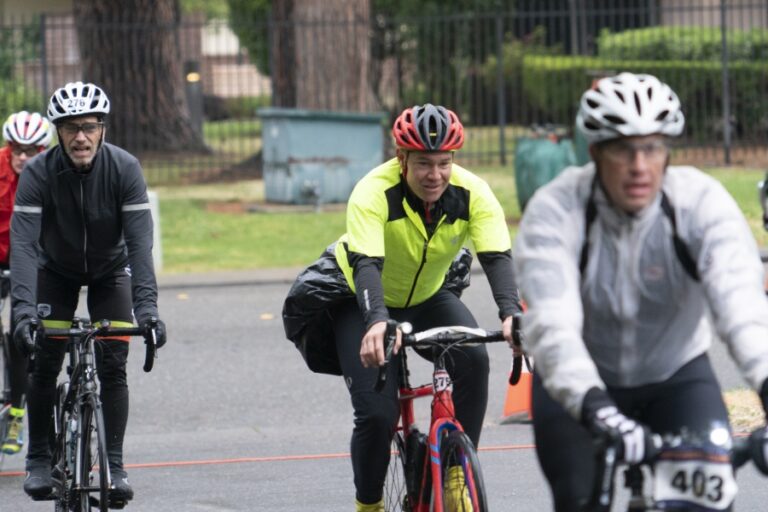
The 50th annual Davis Double Century took place on Saturday, May 18, with bicyclists riding through Lake, Napa and Yolo counties. The race started and ended in Davis and took  place over two days. The first Davis Double Century was in 1969 and the event has been a staple of the Davis community ever since. Preparations have been underway since March, when registration opened for the ride. The terrain covered around 200 miles and varied from flat farmland to hills and even valleys. The race started at the Davis Veterans Memorial Center and ended at the Davis Senior Center.

Stewart Thompson, the director of the event, talked about how he initially became involved in the Davis Double Century.

“Three years ago, I retired from the Bay Area to Davis,” Thompson said. “I had ridden in the Davis Double Century before and joined a bike club here in Davis, which is how I got involved. People [come] from all over to take part in the ride. We have people coming from the Bay Area, Southern California and even a few people coming all the way from Oregon.”

This annual event, according to Thompson, requires coordinators to adapt to the conditions.

“We had planned to have lots of ice on hand to keep riders cool, but with the change in weather, we had to switch to bringing warmer things for the riders,” Thompson said.

Maximilian Cawley, a fourth-year mechanical engineering major at UC Davis, was one of the many participants in the annual ride.

“I completed this ride last year and had an amazing time so I want to do it again,” Cawley said via email. “What originally drew me to it was the challenge of riding 200 miles in one day along with all the support I knew I would receive throughout the race. Also Napa county is a beautiful area, and the perfect backdrop to any epic ride.”

Cawley also took part in the same ride last year.

“Last year I went in quite nervous and actually got slightly dehydrated,” Cawley said. “I had only done my first century the week before this race, and I was not as dialed in on my fitness. I was very focused on maintaining my energy last year; I spent a lot of the time drafting off of my friends.”

Cawley described the experience a cyclist has during the ride.

“The brain can fall into a bit of a lull when riding for so long, but the change of terrain helped me regain my focus and woke me up,” Cawley said. “The people who volunteer for this race are amazing. This ride also gives me the perfect excuse to down as much soda and ginger ale as I want.”

Evan To, a fourth-year civil engineering major at UC Davis, has also participated in the Davis Double Century for the past two years and described his previous experiences.

“It’s all about working on your mental stamina, and you have to remember that it’s not about doing it as fast as you can but to reach the end of the ride,” To said. “Remember to eat and stay hydrated.”

Both To and Cawley are members of the UC Davis Triathlon Team. Cawley described the motivation and support he receives from To and his other teammates when biking.

“Evan’s specialty as an athlete lies in his endurance,” Cawley said. “We always joke and say that he isn’t ever warmed up until the very end of a race or ride. Evan, along with my other teammates that I ride with, are all great people. They make getting on a bike that much more enjoyable. They can also help push and motivate me to perform above what I thought I was capable of. Having a group of friends out on the bike is one of the main reasons why I saddle up for long, early rides.”

Written by: Taylor Martinez — city@theaggie.org

State assemblyman reintroduces SB 328 to push back school start times

Bill was originally vetoed by Governor Jerry Brown in 2018

California lawmakers are reintroducing Senate Bill 328, a bill that pushes back school start times. The revised bill proposes that middle schools start no earlier than 8 a.m. and high schools start no earlier than 8:30 a.m. The bill was first vetoed by former Governor Jerry Brown in September 2018.

There are more than three million public middle and high school students in California. The average school start time in California is 8:07 a.m. Davis Senior High school, which starts school at 8:15 a.m., would have to change its bell schedules if this bill were to pass.

SB 328 was first introduced by California state Assemblyman Anthony Portantino in  February 2017. The original bill proposed to push back school start times of all middle and high schools to 8:30 a.m., except in rural school districts. While the bill was passed in both the California State Assembly and State Senate on Aug. 31, 2018, it was vetoed by Brown in September 2018.

Brown stated that school start times were an issue for each individual school and community to deal with.

“This is a one-size-fits-all approach that is opposed by teachers and school boards,” Brown said in the governor’s Veto Message. “Several schools have already moved to later start times. Others prefer beginning the school day earlier. These are the types of decisions best handled in the local community.”

The bill, however, is now being reintroduced to the state government. Portantino and other advocates for the bill are hoping the recently elected Gov. Gavin Newsom will think differently.

The new bill has two major modifications. In addition to changing the start times of public middle and high schools, the new bill clarifies that “schoolday” be defined “by the school district or charter school for purposes of calculating average daily attendance in order to compute any apportionments of state funding.”

Portantino stated that the bill was reintroduced because later school times will improve the health and education of teenagers.

“As I stated at the end of the last legislative year, I will continue to fight for to change school start time because it is a science based and results driven policy that will save lives and improve academic performance,” Portantino said in a press release.  “The facts and results are unequivocal and clear; our teens are healthier and perform better when school starts later.  I strongly believe test scores will go up and suicidal thoughts will go down. It’s time to embrace this public health issue and put our children’s wellbeing first.”

The bill is supported by both the American Academy of Pediatrics and Centers for Disease Control. According to Portantino’s press release, later start times have resulted in more on-time attendance, higher grades and increased graduation rates. Earlier start times, on the other hand, can create a public health risk.

“Short-term effects of sleep loss on adolescents include the following: irritability, inability to pay attention in class, falling asleep in class and decreased athletic performance,” said Ian Campbell, a researcher for the UC Davis Sleep Lab. “The most severe effect is impaired driving ability that could lead to injury or death from a car accident. Long-term effects are less clear.”

Additionally, school districts would receive more funding, as some school funds are tied to school attendance rates.

“Every year we discuss — as parents, educators and legislators — the best practices for our children and their education,” Portantino said. “The data on this measure is clear and that is starting the school day at a later time improves the quality of education, health and welfare of our children. So let’s do it.”

Despite the benefits of prolonged sleep for teenagers, Campbell does not support the bill. Additionally, the California Teachers Association — California’s largest teachers union — and many school districts across the state oppose the bill.

According to Campbell, there are three reasons why he does not support the bill. Firstly, the scientific research behind teenagers’ shifting circadian rhythms is not yet sufficient.

“[First], the bill is based strongly on the idea that circadian rhythms change in the teenage years, and that prevents teenagers from being able to go to sleep at a reasonable hour […] and we don’t think that the scientific evidence for that is strong enough yet,” Campbell said. “The next reason is that some school districts that have made this change have found out that sleep duration doesn’t increase. All that happens is, yes, kids wake up later, but they go to bed later.”

According to a study published by a district that shifted school start times in Upstate New York — a year after the district shifted start times — the students started going to bed 30 minutes later. Many of them did not use the extra 30 minutes for sleep.

Finally, Campbell, like Brown, does not think it is appropriate for a state to force schools to change start times.

“The third point is that it’s not really appropriate for a state bill that changes the start time for all school districts,” Campbell said. “It may be appropriate for some school districts — the state ought to encourage them to make this change and collect data on this — but for other school districts, it might not be appropriate.”

More information about the new bill can be found on the California Legislative Information website.

Written by: Hannan Waliullah — city@theaggie.org

University welcomes three new administrators to campus

New deans appointed for school of medicine and school of nursing, new associate vice chancellor appointed for enrollment management

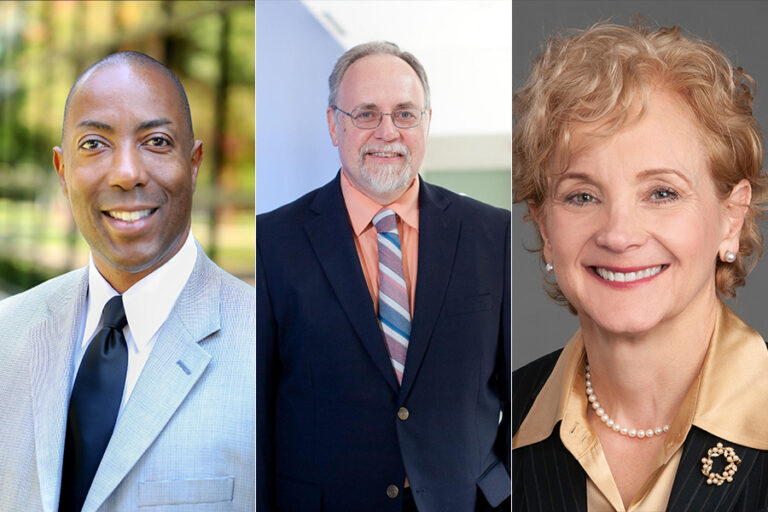
UC Davis faculty have appointed three new individuals to leadership positions on campus. Allison Brashear and Stephen J. Cavanagh will serve as the new deans of the UC Davis School of Medicine and the Betty Irene Moore School of Nursing, respectively. Both will begin their new positions on July 22. Donald E. Hunt was also recently appointed as the new associate vice chancellor for enrollment management.

“The three people who will join UC Davis in these key leadership positions come from very diverse backgrounds, yet they all excel at leadership, collaboration and innovation,” Chancellor Gary May said via email. “These qualities, combined with the professional expertise each of them brings, will help the university continue to be both a great place for students and a top public research institution.”

Brashear currently works as a professor and is chair of the department of neurology at Wake Forest School of Medicine in Winston-Salem, North Carolina. She has more than 30 years of experience working in the medical field. Beyond her international reputation researching new models of neurological care, Brashear also has experience working with health-sector management and has received a Master’s of Business Administration.

As a leader in a male-dominated industry, Brashear has been a lifelong champion for advancing gender equality and opportunities for women in STEM fields, specifically medicine.

“The emphasis on inclusion at Davis, within so many different groups among faculty, staff and students speaks to my lifelong commitment to diversity,” Brasher said in a statement.

As the Dean of the School of Medicine, Brashear will have the opportunity to collaborate with the newly-appointed dean of the UC Davis School of Nursing, Cavanagh.

Cavanagh is known for his work advancing the capacity and capabilities of the healthcare workforce. In the past, he has focused on increasing the accessibility of advanced-care nurses in clinical settings and strengthening the qualifications and education of the next generation of nurses.

Cavanagh’s work has become increasingly relevant in light of the American Association of Colleges of Nursing (AACN) predicting an increased shortage of nurses in the near future.

This shortage “is expected to intensify as Baby Boomers age and the need for health care grows,” according to the AACN website.

Utilizing the largest grant for nursing education in the country, the Betty Irene Moore School of Nursing is uniquely situated to make meaningful advancements in education curriculum development that will help address workforce shortages.

During his career, Cavanagh has successfully generated over $16 million in funding to help develop innovative nursing practice arrangements.

David Lubarsky, the UC Davis Health vice chancellor and chief executive officer, commented on Cavanagh’s recent appointment in a statement.

“Dr. Cavanagh has proven experience and a demonstrated passion for developing a workforce that is both prepared and positioned to serve people where and when they need it,” Lubarsky said. “His perspectives will complement my vision for where we need to grow capacity at UC Davis Health and how team-based education and practice can build the workforce of the future.”

Beginning this summer, Cavanagh will leave his current position as the dean of the College of Nursing at the University of Massachusetts at Amherst and join UC Davis’ team of medical professionals.

A current resident of Northern California, Hunt serves as the associate vice president of Enrollment and Student Services as California State University, Sacramento. On July 1, Hunt will begin his new position at UC Davis as associate vice chancellor of enrollment management.

In his new position, Hunt will oversee a group of departments dedicated to recruiting and admitting the next class of UC Davis undergraduate and transfer students. Hunt will work with undergraduate admissions, financial aid and scholarships, the Office of the University Registrar and enrollment management analytics among others.

Ed Mills, the vice president for student affairs at Sacramento State, worked alongside Hunt during his time there.

“Increasing diversity and student success requires commitment and collaboration across the university,” Mills said. “Don has played an important role for Sacramento State to help us make progress. He will bring that same dedication to UC Davis.”

Hunt has served in various administrative leadership positions at six different universities in the United States and Canada. Along with his work in higher education, Hunt is also a U.S. Army veteran.

Written by: Ally Russell — campus@theaggie.org

The importance of campfires

How campfires and lazy conversation will save our lives

Campfire stories are a strange genre, living in old memories of childhood summer nights. Maybe some people get the opportunity to sit around a fire and tell tall tales with friends a couple times a year, but very few people I know regularly tell campfire stories or have campfires at all.

It’s a bit of a cliché to call modern American life “fast-paced,” but we do live in a world that increasingly runs 24/7, and there’s something to be said for rituals that acknowledge natural cycles and force us to slow down. Campfires do this extraordinarily well. Something about flames is mesmerizing, and when you add cold temperatures, a fire draws people together with irresistible force, creating — for a moment — a circle of people with nowhere else to be.

It’s strange how rare that is in my life, that collective slow-down. Every other ritual that comes to mind for bringing people together — eating, drinking, exercising — offers some sort of distraction from just sitting and talking. But a fire demands either a conversation or a shared quiet, and both are surprisingly powerful.

I’ve been at rowdy campfires with whiskey and guitars; at existential, stargazing campfires; at quiet, tired, relaxing-into-sleep campfires. Sometimes they’re with people I’ve known since I was a little kid, sometimes with people I’d met earlier that day. But I always come away from them feeling a little less alone in the world.

There’s a very particular kind of loneliness that a lot of people go through in college. There are so many reasons for it: moving away from family for the first time, diving into heavier workloads, reorganizing, readjusting, relearning. And honestly, it’s not just college students: Americans are incredibly lonely these days.

I was talking to a landscape manager at the dorms a while back, and he said something that surprised me: The dorms are much quieter now than they were more than a decade ago, when he started working at UC Davis. He put it down to less shouting and rock-throwing to get people’s attention, and that makes sense — texting is the new norm. And there’s just less incentive to loiter in communal space. Might as well just hang out in your room.

I’ve been told to “disconnect,” and while it often feels like it’s coming from a place of patronizing hypocrisy, taking a break from screens and the daily grind is absolutely important for everyone’s sanity.

But it’s not just about going for a run or reading a book for a little bit; it’s just as important to do nothing with other people, to take the time to sit around and have conversations with lulls, to be organic.

Camping means bumping into people and making quick friendships. A shared campfire turns awkward pauses into comfortable lulls and bad jokes into banter, breaking down the awkwardness and normal boundaries that separate strangers. Outside, comfort and familiarity. Inside, the coziness and calm of a fire. And who wouldn’t want that?

The kind of gathering campfires elicit is a dying breed. But making room to share ridiculous stories, tell jokes, talk about the day or sit quietly is as essential to our lives now as it’s ever been, and losing the gathering points where we can comfortably share laziness is incredibly isolating.

As our relationship to technology keeps developing and changing, I hope people keep thinking about not only how to personally challenge encroaching technology but how to carve out places where we can escape virtual connection without being alone.

Written by: Anna Kristina Moseidjord — akmoseid@ucdavis.edu

Disclaimer: The views and opinions expressed by individual columnists belong to the columnists alone and do not necessarily indicate the views and opinions held by The California Aggie.

Humor: Pitch for WORKING TITLE, a disaster movie on the hypothetical threat of “climate change”

Taking pseudo-science fiction to the extreme through the art of cinema

Dear prospective producers and generous investors,

My name is Milton I. Scaps, Jr. Journalist. Thinker. Christian. Conservative. Artist. Intellectual. Man. Almost three years ago, I was fired from my dream job at Breitbart News for making a social media post that was not racist in a subtle-enough way. Oh, wait a second — yeah, sorry it was homophobic. Not homophobic in a subtle-enough way. This forced me to reevaluate my life, take stock of my many skills (all of which are criminally underappreciated by all of my former co-workers, especially the women) and go in a new direction.

This required a great deal of soul searching, but I eventually found my way after looking for guidance from two of my biggest role models at Breitbart. Because of my former colleague James Delingpole, I’ve become passionate about exposing the “global warming” hoax. For years, James has been one of the most prominent voices fighting against the hysteria of the pro-“climate change” alarmismists by carefully cherry-picking data, paraphrasing “scientific” research and providing a unique contrarian take on facts in order to produce insightful articles like “Science Says: Evil Coral Reefs Acidify Oceans” and “Six Reasons You Should Ignore the UN’s Species Extinction Report.” Secondly, knowing that Steve Bannon was never able to make it big in Hollywood always made me want to try my hand at making movies.

So, with James’ skeptical, truth-seeking spirit and Steve’s ambition and creativity, I sat in my local Starbucks and worked on my screenplay for months and months (that is, the months when they didn’t have their treasonous anti-Christmas cups). I’m proud to announce that I’ve just recently finished the script, and in all humbleness, I must say, it is a masterpiece. I’m still deciding on a title, but I’m confident that I’ve done a masterful job of fully utilizing the disaster movie genre to portray the worst-case scenario combining all of the so-called threats of “climate change” and “environmental degradation.”

The movie will include all the craziest wacko predictions from the politically compromised scientists, things that no reasonable person could even imagine, much less have the nightmare of actually experiencing. Ice will actually melt, and rising sea levels will forever alter life in our coastal cities. Changes in precipitation patterns will cause massive floods and extended droughts and intense heat waves. The oceans will acidify and warm, which will kill corals, disrupt aquatic food chains and cause supercharged hurricanes. Perhaps one of these massive hurricanes will leave an entire American city or region without electricity and sufficient supplies for survival for over a year. The warmer climate will cause insect outbreaks and help spread fungi, killing trees and allowing for rapid spread of disease. The food and water supply will be reduced. The movie could feature a coffee shortage! Economic output will take a major hit. The air and water will become toxic. And I think it would be so dramatically effective and satisfying if the film’s protagonist is trying to convince everyone that climate change and pollution are real problems, but they won’t do anything about it. And what if — whoa — I just — holy shit, that’s a great idea — can you imagine a scene in which the protagonist’s town is burning down due to a massive wildfire and they are forced to escape by car in a race for their life through a hellish nightmare of fire and smoke? That would be totally insane! I’m sure viewers will have never seen anything like that before.

The genius of this movie is that it will be able to appeal to people across the political spectrum. The people on the left will eat it up like it’s actually activist propaganda, as if the things in the movie are actually possible! Some of them might even think it’s a documentary! Ha! Meanwhile, the real Americans who aren’t gullible and foolish will love the movie because they’ll be in on the joke that it’s actually just satire! Real Americans know that you don’t have to understand science to be able to listen to your gut and know when the “scientists” are trying to fool you!

Written by: Benjamin Porter — bbporter@ucdavis.edu

(This article is humor and/or satire, and its content is purely fictional. The story and the names of “sources” are fictionalized.)

Is a heat wave coming to Davis? Did it rain in the East Indian Ocean?

New research shows that the notorious heat waves in the California Central Valley are connected to weather events tens of thousands of miles away

Thunderstorms appear overhead in the East Indian Ocean, less than two weeks later a major heat waves strikes California. That is the seemingly strange pattern that atmospheric scientists have uncovered.

In a new study, UC Davis professor Richard Grotjahn and APEC Climate Center researcher Yun-Young-Lee, found a connection between weather in the equatorial region of the globe and the California Central Valley.

“The main finding of this study is that California Central Valley[s] extreme hot weather is possible preceded by tropical region conductive activity,” Yun You Lee said.

The research could potentially help predict when heat waves will hit the Central Valley and give Californian’s more time to prepare for extreme heat.

In the past, heat waves have had a huge impact in California. In 2006, California dairy farmers lost around one billion dollars when prolonged periods of extreme heat swept over the state killing a large number of cows. The weather events also have an effect on millions of people, including the residents of Davis. These impacts, in part, have inspired an investigation into the causes of California Central Valley heat waves.

This latest paper is just a chapter in a much larger story of meteorological causes and effects that Richard Grotjahn and Yun-Young Lee have illuminated in their research.

Atmospheric Scientists understand that heat waves are caused when hot air migrates from a place that is regularly very hot, or when sinking air is compressed, and traps a shallow layer of air near the earth’s surface which the sun quickly warms up. In 2016, Grotjahn and Lee found that California Central Valley heat waves form when a heat wave that originates North of California expands southward, or when a heatwave forms in place over the valley.

“If there is already a heat wave going on in Western Canada it can expand southward to affect our area,” Grotjahn said. “Another way is when the heat wave forms rapidly in place.

Based upon those findings, the research team then asked: what larger global patterns were responsible for the observations? To find the answer, the researchers looked towards the tropics. The area from the Indian Ocean to the Western Pacific is known as the world’s “climate engine.”

“The tropical region is the energy source of the globe,” Yun-Young Lee said. “Huge deep convection there often generates global scale atmospheric circulation, and its impact often reaches to the midlatitudes.”

In the tropics, one of the most important drivers of convection, clusters of rainfall and clouds, is called the Madden Julian Oscillation or MJO. The MJO is a repeating pattern of rainfall that moves along the equator in the tropics in 40 to 50 days. Meteorologists have split the pattern into phases, based on its location. Grotjahn and Young Lee compared the phases of the MJO to the onset of severe heat waves in the California Central Valley over the past two decades. They found a striking correlation.

“It turned out that tropical Indian Ocean and eastern pacific convective motion is evident before the onset of 24 extreme California Central Valley heat wave events,” Yun-Young Lee said.

The correlation indicates that particular phases of the Madden Julian Oscillation are connected to California heat waves.

One of the most important impacts of the study is that it can help build better climate models. When an atmospheric scientist builds a climate model, they compare the model with observational data to determine whether it does a good job of simulating the real world.

“If you are a model designer, you are looking for ways to improve your model, ways to test your model and ways to have more confidence in the projections your model makes,” Grotjahn said. “Where this study could be helpful to such a person, is that we would be giving them another thing to be checking”

A model builder might look for this correlation between weather in the tropics and California to see if the model was actually simulating the incredible interdependent nature of our planet’s climate.

Written by: Peter Smith—science@theaggie.org

UC Davis club lacrosse season recap

Aggies win conference, make nationals for the second straight year

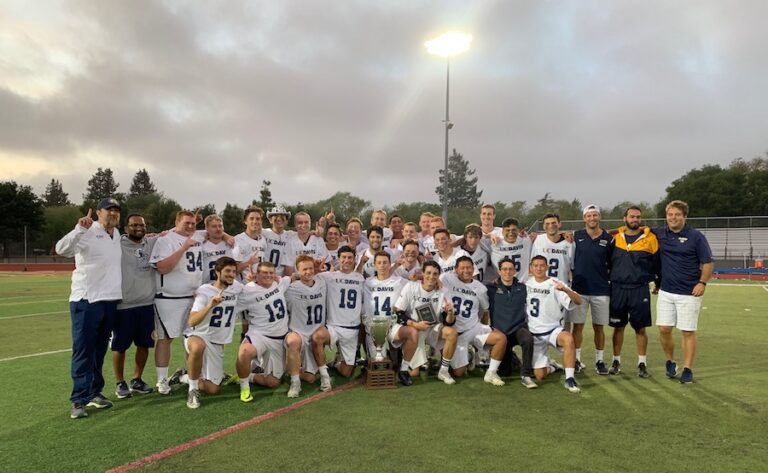
After making the Men’s Collegiate Lacrosse Association National Championship tournament for the first time in program history last year, the UC Davis club lacrosse team once again qualified and made the trip to Salt Lake City, Utah to cap off another successful season. The Aggies finished the year 11-5 — one win better than last year — and swept through their conference with a perfect 4-0 record.

As senior club president and fourth-year economics major Martin Birmingham put it, the team benefited from new players, something that the team lacked in the previous year.

“We got a lot of new recruits, from freshman and a couple of transfer students, which really bulked up our numbers — something that was lacking last year when we played bigger teams that had more people,” he said. “We’d run out of gas at the end of games so that was definitely a big improvement for us [coming into the year].”

Losing only three seniors from the previous year, the team kept most of last year’s players. After starting the year with a home win against Western Oregon, the Aggies lost the next two games, one against Stanford and another against Chico State — a team they had defeated comfortably last year.

“I think everybody was pretty down after we lost to Chico. That was a tough loss,” said second-year neurobiology, physiology and behavior major and first team All-Conference defenseman Liam Condon. “We beat them handily last year. I think at that point everybody just realized that we can’t lose like that. The year before we beat them 10-2 and then this year we lost by one. I think that got us back in the mindset that we needed to try a lot harder.”

It seemed to have worked, as the team won its next four games by an average of almost 12 goals. The team had found its stride and began to play with “some more offensive energy,” according to Birmingham.

“We had always been solid on defense,” Birmingham stated. “But this year the offense had a lot more winning drive.”

Leading the drive was third-year midfielder Nicholas Lombardo, who finished with a team-high of 33 goals. Freshman attacker Will Johnson was close behind with 31 goals of his own. As a team, the Aggies had eight different players record double-digit goals on the campaign.

The season hit a rough patch toward the middle, as the team lost a close one to the University of San Diego and another to Montana in late March. With the conference games rapidly approaching, it was time for the Aggies to once again get back on track. As a young team in the middle of another tough stretch, it was crucial to respond positively if the team hoped to earn a spot in the national tournament once again.

Starting with a 15-2 win against UC San Diego in late March, the team was able to do just that heading into its conference matchups. The Aggies went on to sweep all four conference games and both playoff games to win the Western Collegiate Lacrosse League Division II title for the second year in a row, as well as earning an invitation to Salt Lake City, Utah to play at nationals.

The team’s opening draw in the tournament was against the defending national champions, North Dakota State. The Aggies ultimately lost 12-3, ending another fantastic season.

Looking forward to next season, Birmingham is optimistic about the club’s prospects.

“Of course as always, our goal is to go back to the national championships and make it past the first round, which I think we have a good shot at next year as we keep basically the same team but now everyone having some high-level experience.”

In the offseason and especially over the summer, many players participate in camps that attract athletes from all over the country. With a large number of Division I-caliber players participating in these camps, the heightened competition level gives players a lot of exposure going against “really good lacrosse players,” according to Condon. The club officially starts its offseason practices in September, so these summer camps , along with team-coordinated pickup games, provide ample opportunity to avoid getting rusty until then.

As the squad only had one active senior play this year, next year’s team will likely feature many of the same players, but with the added recruiting class — something that the team sees as exciting and crucial in taking that next step.

“I think that’s a huge advantage,” Condon added. “I think most of the team sees that because we’ve gone to nationals two years in a row with an incredibly young team. That means this third year is incredibly exciting. We have three classes that have now had nationals experience and know how to get there. With everybody coming back, everybody playing over the summer, next season is going to be insane.”

After overcoming some financial struggles just a couple of years ago, back to back historic seasons now opens a new era for the program. A solid foundation, youth and constant improvement has the team looking to get back into Division I play in the near future.

“We used to be a Division I club and then had some trouble and moved down to Division II,” Birmingham explained. “So long term we would like to move back and become a Division I club if there’s an opportunity to do so.”

When asked how the club plans to get back, Birmingham stated that it would continue to build upon its solid foundation, as well as focus on recruitment and improving their future schedule to add higher levels of competition.

Two straight seasons ending in Utah has the club’s sights set on something bigger, something that now seems to be more in reach than ever before. The Aggies hope that the success they have accumulated is only the beginning.

*If you would like to contact the team for more information, please email ucdavislacrosse@gmail.com

Written by: Omar Navarro — sports@theaggie.org

Commentary: The Children’s Books that Define Us

Children books that have had a lasting effect on students

After taking ENL 180 “Children’s Literature” with Professor Frances Dolan, I began thinking critically about how the books we read as children influence the rest of our lives. A child’s introduction to literature is important, especially during such a formative time for the brain. Youth is when we begin establishing thoughts and opinions about the world around us, something books can aid.  

An article in Time Magazine cites titles such as “Where the Wild Things Are” and “Goodnight Moon” as being some of the best and most influential children’s books. But what is it about these books that makes them so important? Why do people have so much nostalgia toward them?

The literature we are exposed to as children leaves a lasting effect on who we are and who we grow up to be. I personally was an avid reader as a child. Because I was so shy, I found solace in burying my nose in a book and turning the characters into my friends.

I learned the power of creativity in Katherine Paterson’s “Bridge to Terabithia” while also learning that sometimes novels can make you cry — a lot. I improved my vocabulary and tapped into my dark side in Lemony Snicket’s wonderfully weird “A Series of Unfortunate Events.”

From Roald Dahl’s classic novel, I related heavily to characters like Matilda: characters who were quiet and precocious and, above all else, book lovers. As an English major, I think it’s safe to say that what I read had a major impact on my life.

This goes for many other students as well. Second-year English major Ariana Green said that “Harry Potter” was one of her favorite series growing up.

“The theme or lesson that I remember learning from ‘Harry Potter’ is the importance of family,” Green said. “One doesn’t have to be related by blood to have a family, which is a lesson that really resonated with me growing up.”

Fourth-year English and theater and dance double major Katherine Halls said that her favorite books included the “Amelia Bedelia” franchise and the “Junie B. Jones” books.

“I think Junie B. Jones resonates the most with me, since the books’ point of view is set through her thoughts in her diary,” Halls said. “She leaves absolutely nothing out, and her perspective on life as a kindergartener is so funny and similar to mine. I whipped through them as a kid.”

Halls carried the messages she received from these books throughout her life.

“I think some important lessons I’ve learned from books like these are it’s okay to be yourself,” Halls said. “You get to choose what you like and what you want to do in life so you should be brave.”

Second-year English major Caitlyn Liu was an avid reader growing up and found the “Nancy Drew” series to be the most relatable.

“The most prominent lesson I learned from reading ‘Nancy Drew’ was to always be prepared,” Liu said. “Nancy always knew what to do, she was resourceful, she had everything she needed with her at all times. I was that third-grader who had dozens of band-aids and packets of Neosporin in my backpack.”

Along with providing her with important emergency readiness skills, Liu continues to see the value in what the novels taught her.

“Reflecting as an adult, reading ‘Nancy Drew’ definitely taught me how to be persistent and observative.” Liu said. “Nancy was always so attentive to everything around her — the atmosphere, the situation, the people she met. She taught me to not trust everyone I meet instantaneously.”

From the wordless pages of “Where the Wild Things Are” to the complex fantasy world of “Harry Potter,” children’s books captivate their past and current readers for generations. Whether we can recognize the impacts explicitly or not, the content we absorbed as children made an impact on us today.

Written by: Alyssa Ilsley — arts@theaggie.org

The Entanglement of Jazz and Hip-Hop

A Musical Love Affair

Jazz, characterized by free improvisation and syncopation with instruments like piano, trumpet, saxophone and drums, has its far-reaching tendrils in much of the music we experience today. Jazz has particularly deep roots in the world of hip-hop. Since the 1990s, hip-hop artists have been paying homage to their jazz roots in bold and mold-breaking ways, blurring the lines between conventional hip-hop and jazz. This musical relationship fostered some of the most compelling and pioneering musical projects of the past three decades.

Both jazz and hip-hop are relatively new art forms that developed and thrived within the margins of society. Luke Mombrea, who studies music composition at the University of California, Los Angeles, commented on their connection.

“I would definitely say one thing that’s very similar is that they are both African American art forms that allow creativity in the sense that they were not in the mainstream and could break a lot of conventions,” Mombrea said.

Some of the early rudimentary features of hip-hop were hinted at in the 1920s when jazz musicians began to scat over their different instrumentals giving more body and life to their music. This method allowed them to reflect the improvisational character of jazz in their singing. The structural bones of hip-hop further developed within the Bronx in the 1970s when Jamaican disc jockey Clive Campbell, also known as DJ Kool Herc, began to ad lib over his records.

Hip-hop and jazz both embrace the power of improvisation, an underlying parallel between them. For jazz, improvisation occurs as different instruments spin off the chord progression to express themselves individually, while hip-hop applies improvisation by delivering off-the-cuff verses known as freestyles.

Jacam Manricks, a jazz musician, composer, arranger, and music professor at UC Davis, commented on this aspect.

“It gives the artist a compositional role in a way because improvisation is composition sped up in real time,” Manricks said. “So it’s exciting, it’s spontaneous, it’s never really done the same. It gives the performer or performers in the band power.”

One of the first hip-hop artists to fully embrace jazz as an integral part of their sound was A Tribe Called Quest, a hip-hop group from the St. Albans neighborhood in Queens, New York, consisting of Q-Tip, MC Phife Dawg, DJ Ali Shaheed Muhammad and MC Jarobi White. In their 1991 critically-acclaimed album “The Low End Theory,” they sampled numerous jazz tracks like Jimmy Mcgriff’s “Green Dolphin Street” and Freddie Hubbard’s “Suite Sioux.” These samples added an unorthodox dimension to their sound, implementing hard-hitting drum lines, deep driving upright bass riffs and brassy cutting horns. The group also actively referenced jazz in their lyrics, aptly asserting “We’ve got the jazz” and “What’s Duke Ellington without that swing?”

Jazz-rap was both a new musical invention and a nod to the group’s African American heritage. “The Low End Theory” set off a cascade effect that rippled through the genre causing many artists to substitute basic repetitive beats for a live jazz sound that added a refined character to their flow. Some notable artists who added their own flavor to the diverse, vibrant rhythms of jazz were Digable Planets and De la Soul.

Mombrea elaborated on the significant benefits that jazz instrumentals can contribute to hip-hop.

“The way jazz instrumentals are used in hip-hop are unique in the sense that you have this more rhythmically off-kilter beat and more syncopated-type instrumental,” Mombrea said. “There’s more area for you to flow onto, so its less rigid. Things that sample jazz are more rhythmically complex so there’s more things you can find. You can get so much variation with jazz, more than any other type of music.”

Jazz got yet another boost into the hip-hop world in the 2000s when rhythm and blues artist D’Angelo came out with his album “Voodoo.” The album featured Questlove, the gifted co-founder of The Roots, on drums.

Mombrea commented on the impact of Questlove’s drums on the hip-hop and music community.

“A really prominent aspect that’s influencing a lot of this jazz and modern hip-hop production is actually a lot of the drumming that was done by Questlove on D’Angelo’s ‘Voodoo,’” Mombrea said. “D’Angelo asked Questlove to play drums as though he was drunk. This meant a super heavy swing, using drums that are slightly behind the beat.”

For hip-hop artists, this originally jazz swing drum technique created new and unconventional grooves that elevated their flow’s rhythmic ingenuity. Mombrea continued to elaborate on the unique freedom this style developed on albums like Kendrick Lamar’s 2015 “To Pimp a Butterfly.”

“One of the things that’s very much prevalent, especially in ‘To Pimp a Butterfly,’ is that these swing-pockets allow artists to create very intricate rhythmic lines over the top,” Mombrea said.

“To Pimp a Butterfly” is a recent landmark in the fusion of jazz-rap. The album itself features prominent up-and-coming modern jazz artists like pianist Robert Glasper, multi-instrumentalist Terrace Martin and saxophonist Kamasi Washington.

Manricks commented on the unique capabilities that jazz artists like these bring to the collaborative process.

“Jazz musicians are very fluent in their particular type of language so when they collaborate with artists like Kendrick Lamar they have a whole lexicon of harmony, melody and rhythm that they can draw upon because the art form [of jazz] is evolving all the time and has taken so many parts,” Manricks said.

“To Pimp a Butterfly” is uniquely groundbreaking because rather than only sampling past jazz albums to piece together beats, the musicians improvised jazz riffs on the spot and let the creative process unfold from there.

Mombrea continued to comment on the intricacies of the album.

“One of the things that I think was unique in Kendrick’s album was that when hip-hop usually uses jazz, it uses a loop so you don’t get the same kind of progression in jazz,” Mombrea said. “But in the Kendrick album, he had this really unique combination of having loops, but also having stuff that really had jazz progressions and live musicians in there. In one respect it was jazz-hip hop, but then it also had its own original jazz.”

Mombrea also noted that hip-hop returns the favor of influence.

“Jazz is getting into hip-hop, but hip-hop is getting into jazz too,” Mombrea said.

When hip-hop artists like Kendrick Lamar, Common and Mos Def work closely with modern jazz artists like Glasper and Washington, they create a melting pot of talent and technique that naturally diffuses itself amongst the group.

Manrick provided some insight into how this diffusion of technique and musical evolution are thoroughly ingrained within jazz’s DNA.

“Jazz has always been a collage and about modernity,” Manrick said. “It’s nothing that is completely original, it all comes from something. One remarkable thing about jazz is that in the short time it’s been around about 100 years, its come the same amount of distance in terms of musical complexity, soaking up other cultures and incorporating other forms of music in 100 years as classical music had done over centuries.”

The adaptive and progressive nature of jazz supplements its relationship with hip-hop. In arms, the two grow in tandem as they draw from each other to move music forward, captivating and delighting listeners all along the way.

Written by: Andrew Williams — arts@theaggie.org