55.7 F
Davis

Davis, California

Monday, December 22, 2025
Home Blog Page 422

Best of Davis: Grad Photo Spot

Winner: The Promenade

Golden light shines through the tree canopies, grazing the tops of bikers’ heads as they head home from class, bouncing off the hammocks and right onto the beaming soon-to-be graduated student, decked out in her navy blue and gold stole and white dress. Anytime between 4:30 p.m. and sundown, during “golden-hour,” many awaiting Aggie-Alumni stand on West Quad Ave, right in front of Wellman, taking pictures. Students voted “The Promenade” as the best place to take graduation pictures.

“It’s an iconic spot on campus with a beautiful scene,” said UC Davis 2016 graduate Ed Ju, who earned a major in managerial economics and has been a graduation photographer for five years. “The canopy of trees seem to hug you from above and make you feel at home.”

According to fourth-year textiles and clothing major, Isabella Sun, who recently took graduation pictures with Ju, she got good standing shots on “The Promenade.”

“I think the trees overlap each other nicely and when it’s ‘golden hour,’ you get good sun in that area,” Sun said.

“The Promenade” is an iconic place in Davis and is a good representation of the trees and lushness that people love about the campus, according to UC Davis 2016 graduate Marisa Morton, who earned a major in design, and also is a graduation photographer. The location evokes many memories for students as it is a common place to walk or bike through.

“For a lot of students, this place really captures the essence of Davis,” Ju said. “You’ve got the bikers, the trees, the classrooms. It’s a walkway down memory lane.”

Additionally, according to Morton, when people see others taking graduation pictures on this street, it makes more students want to take pictures there too. However, the street is pretty busy and this coupled with its popularity make private photo shoots difficult.

“Luckily, with just the perspective of the street, if you are far enough back from [the other people taking pictures], you can fit that entire group behind someone’s head,” Morton said. “My biggest issue is when there’s a dump truck or vehicles parked on that street. Sometimes you can just move to the other side of it, it just depends on the issue.”

Even though West Quad Ave is a popular place to take pictures, students take pictures on other spots on campus as well. Other streets, like Hutchinson Drive near the library, the Silo or Storer Mall near the Science Lab Building, are good places to take pictures according to Morton. Also the Arboretum, especially the west side near the fields and the big Oak trees, is a nice place to get shots.

“[The best to take pictures] depends on what defines you as a UC Davis student and where you want to take photos,” Sun said.

According to Sun, she likes pictures taken outside of Mrak Hall with the Egghead sculpture or by the UC Davis brick wall sign on East Field.

“I’m surprised the most popular spot was not voted the UC Davis sign,” Morton said. “It’s not the best spot, but it does have the word UC Davis written. It’s the perfect spot for lighting because the sun comes from behind.”

To get pictures taken at the UC Davis brick wall, there can be up to a two or three hour wait, according to Morton. There is always a line, so Morton usually tells people to get pictures in this place at another time or just skip the spot.

“To me, the best place isn’t always the most popular,” Ju said. “The best place could be an abandoned corner or a random field. The best place to me would be the place that you spent meaningful time with meaningful people.”

According to Morton, one reason students take graduation pictures is to boost their self perception of themselves and give them confidence in their next chapter of life.

“I take pictures of a lot of women mostly,” Morton said. “I can’t speak to everyone’s experiences, but having a photoshoot can be really good for your view of yourself. It’s nice to have pictures of your smiling self and people who are close to you at that time.”

However the main reason students take these pictures is to commemorate and document their graduation, which is an exciting and big turning point in one’s life.

“Students invest their time, energy and money into their college education,” Ju said. “With the support of family members, graduating college is a victory on many levels. You’re surrounded by the people you love and you’re moving onto something greater. It’s something you want to remember forever and pictures help do that.”

Lastly, taking graduation pictures is a way for students to say goodbye and remember some of their favorite places on campus, according to fourth-year theatre and dance and English major Victoria Casas.

“I also believe its a nice way to say goodbye to the campus that has been our home, by taking some final pictures with your stole at some of your favorite spots,” Casas said.

Written by: Margo Rosenbaum — features@theaggie.org

Best of Davis: Farmers Market Treat

Winner: Apple-A-Day Cider

Every week, hundreds of Davis residents gather at the Farmers Market in Central Park to enjoy local artisan foods and beverages, locally grown produce and live entertainment. Of all the delicacies sold at the Farmers Market, the Apple-A-Day apple juice has been voted Best Farmers Market Treat by UC Davis students.

“It feels pretty awesome,” said Melinda Garcia, the vendor of the apple juice, in response to hearing her grandmother’s family owned business was voted Best Farmers Market Treat. “Honestly, we don’t get too many awards like that. It’s really awesome to hear a lot of people say ‘I grew up on this stuff’ or ‘my friend said I had to try this.’ We really thank the people [for] that.”

Garcia’s grandmother has been running sales of the juice for over 30 years. Garcia said that her grandmother took over for the owners who were selling it in the 1990s.

The popular beverage sells at least a hundred bottles a market. Market goers are attracted by the delicious, natural apple juice, though it is technically cider as the label advertises.

“It sells itself,” Garcia said. “At least two to three dozen people come to me and tell me ‘my friend says I have to try this’ every market, nonstop.”

Garcia says that what makes this juice so special is how natural it is. Under the ingredients label, apple juice is the only thing listed.

“It has unique ingredients and it’s not heavily altered like many other juices,” Garcia said. “We have to pasteurize it because we sell to stores. That is the only time we alter the juice.”

The ranch from which the apples are grown and pressed is Ratzlaff Ranch in Sebastopol, Calif. (about 80 miles from Davis). The only ingredient in the apple juice is apples. Apples are pressed for juice and treated by UV lighting to kill bacteria. According to their website, the hydraulic press used to juice the apples squeezes ‘every drop of juice from the apple.’ This process does not produce as much heat as other methods, so the apples keep more of their fresh nutrients. The label on the bottle specifies that this beverage has no additives and is non GMO.

“I like the apple juice a lot,” said Daniel Gonzales, a fourth-year Chicanx studies major. “I feel like it’s really natural compared to other apple juices. It’s one of my favorite things from the farmers market.”

A Yelp picture caption calls it the ‘best, freshest apple juice.’

“It deserves [Best Farmers Market Treat],” said Noelle Tran, a first-year wildlife, fish and conservation biology major. “It’s delicious. It’s nice to reward myself with a bottle after a midterm or whenever I’m craving it.”

Apple-A-Day apple cider can be found at the Farmers Market in Downtown Davis every Wednesday evening and Saturday morning. Pint-sized bottles are sold for $2, quart-sized bottles for $3, half gallon-sized bottles for $5 and gallon-sized bottles for $8. Whether enjoyed on a cloudy, windy day or a hot, sunny day, this apple juice does not disappoint!

Written by: Linh Nguyen –– features@theaggie.org

Aggies cruise to a Mother’s Day and Senior Day Victory

UC Davis baseball concludes its final home series of season with win over CSUN

UC Davis baseball wrapped up its last home series of the year with a dominant 11-4 victory over the CSU Northridge Matadors on Sunday afternoon. This Mother’s Day contest ended in a special win for the Aggies, not only because of Senior Day, but additionally because every starter got on base at least once. The Aggies, who honored their six graduating seniors — infielders Cameron Briggs and Caleb Van Blake, pitchers Blake Hannah, Chase Lyford and Chris Brown and outfielder Garret Kelly— shined in front of one of their biggest crowds this season, soaking in all the recognition and spring quarter sun.

In his 11th start of the season, Brown got himself into a bit of a rut to start the game, allowing a double and two walks to the first three batters he faced. But Brown was able to settle in and limit the damage on the inning and retired the following three batters. So even with bases loaded and no outs, CSUN was only able to score one run in the first frame on a sacrifice fly to center field.

The Aggie offense was able to pull ahead in the bottom of the second inning, with RBIs from Kelly and sophomore shortstop Tanner Murray. Kelly earned his on a single, while Murray hung in the box to take a fastball to the hip with bases loaded.

Murray put the Aggies ahead 2-1, and he delivered again in the fourth inning. Following a two-out walk, Murray reached easily on a single, putting runners on first and second. Junior left fielder Cooper Morrison then drew another walk, loading the bases for redshirt-sophomore first baseman Spencer Gedestad. Gedestad not only batted in a run with a hit, but in his lengthy at bat leading up to it, the CSUN pitcher threw a curveball in the dirt that allowed the runner on third to score. Morrison was sent home on Gedestad’s single, but was thrown out at the plate, ending the inning with UC Davis on top 4-2.

The fifth inning was Brown’s final inning on the mound, and he ended his afternoon in one of the most memorable ways possible: picking off the runner on first. Brown culminated his final start with two earned runs and five strikeouts, putting himself in a position to earn his third win of the season.

Rounding out the bottom half of the fifth inning, the Aggies had their most explosive half inning of the afternoon. Redshirt-sophomore right fielder Alejandro Lara and Van Blake drilled consecutive hits into left field, which was then followed by a line drive into the right-center gap by Briggs, scoring both runners. After redshirt-junior catcher Logan Denholm picked up one of his three hits, Murray drove in the two runners with a two-out triple to right field. Not only did this triple give the Aggies a six-run lead, but it also gave the number of students in attendance three free tacos from Tres Hermanas restaurant in downtown Davis. As the inning ended 8-2, the home crowd was upbeat and electrified.

The rest of the afternoon was highlighted by Van Blake, who lambasted two doubles on his way to a three for four afternoon, to go along with a drawn walk. Lara reached base on all five of his at bats, going two for two with three walks. Junior pitcher Steve Ouellette closed out the game in the ninth, retiring three straight batters and allowing no hits. Three different players — Murray, Briggs and Kelly — finished the game with three RBIs, while the team as a whole amassed 13 total hits on the day.

After the Aggies defeated San Francisco in walk-off fashion on Tuesday, UC Davis now only has six games left in its season, which include a pair of three-game series on the road at UC Irvine and Utah. As of now, the team sits in sixth place in the Big West Conference, with a record of 9-12 in conference play and 19-26 overall. The team has already matched its win total in both categories from last season, when the Aggies finished with a record of 9-15 in conference and 18-35 overall.

The team was unavailable for interviews after the game.

Written by: AJ Seymour — sports@theaggie.org

How horror films can heal us

In times of constant, pervasive horror, we seek out cinematic incarnations of terrifying realities

I am afraid now, more often and with more potency than in years past. House parties are storm clouds, raining lechery and Rohypnol. Concerts harbor men with rifles around every corner. Fire alarms wail like air-raid sirens. Sunny days are greenhouse gas chambers. It’s not rational — we’re safer now than ever before.

But it is worth noting that my fears are not isolated; Americans everywhere are afraid. Mass shootings, climate change and corruption plague our thoughts like poltergeists, creating a constant feeling of looming, ethereal dread.

Horror films draw from our perpetual dismay. But in recreating and exaggerating casual terrors, they inspire an odd sort of hypocrisy. When John and Jane Doe stroll into the flickering recesses of a cavernous basement (as they inevitably do), we react by yelling “RUN!” into the deaf ears of our movie screens and laptops, often supplemented by an assortment of vulgarities. They never run.

In times of fear, however, we become the protagonists, shoved into Twilight Zones and Upside Downs, Black Mirrors and Sunken Places. Like the idiots we love to berate, we acquiesce to the summons of terror, not at basement doors but at ticket booths. We never run. The response is unintuitive, certainly — but not without precedent.

1956. Whispers of an invasion abound. Rumors of horrid, alien things run rampant, of an infestation, of an America besieged by an invisible enemy, of trusted friends and family becoming marionettes. Cold-War era fears? Yes, in addition to providing the thematic base for acclaimed Red Scare horror films like “Invasion of the Body Snatchers,” “Them!” and “Earth vs. The Flying Saucers.”

2001. Gleaming skyscrapers fall to their knees, the greatest, the richest, the most esteemed city in the world torn to shreds in an instant. Chaos is inevitable, anarchy certain. Post 9/11 cynicism? Of course. The foundation for the 2000’s zombie film renaissance? Refer to the following response from Mark to Jim in “28 Days Later,” widely regarded as the Patient Zero for terrorism-induced zombie horror. Jim, cowering behind the tatters of some forgotten concrete edifice, yells, “There’s always a government! They’re in a… a bunker, or a plane!” Mark shakes his head. “No. There’s no government. No army. No police.”

Modern fears are less overt: monsters of the psyche, reaching out with tenuous fingers to incite terror and desperation before returning to atmospheric dens, leaving victims horrified, stupefied and above all, lost. “The Babadook,” “Us” and “The Witch,” to name a few of contemporary horror’s finest, operate with a profound respect for our universal fear of the dark. Nothing is scarier than that which watches from the shadows.

The American consciousness has coped with monsters of different shapes and levels of necessity: communists, the A-bomb, atrocities of war, terrorism. It is now struggling with less tactile fears: corruption of government officials, air and water pollution, poverty and the death of loved ones round out the top five, according to the 2018 edition of Chapman University’s “Survey of American Fears”. They’re brought to life, as they always are, in our horror films: moving, breathing incarnations of beasts beyond malevolent Punch and Judies.

Yet, we don’t run. The genre is booming, more profitable and popular than at any time in recent history. We jump at the chance to confront our fears, drawn by something that, like the monsters that scare us most, is intangible.

Our waking days, for all their panic and dismay, are not like horror movies — if only they were.

“One student dead, eight others injured after two of their classmates opened fire at a suburban Denver school on Tuesday”.

No heroes to protect us, save those murdered for the crime of selflessness.

“One million animals and plant species at risk of extinction.”

No ex-machina remedies, no Macgyver, no salvation for creatures we’ve watched burn, wither and fade.

“Loneliness is widespread in America, with close to 50 percent of respondents reporting that they feel alone or left out always or sometimes.”

No priests or pastors with holy water and crosses, ready to exorcise inner demons.

The trouble with real life is how truly, terribly hard it is to silence the wails of our quiet desperation. We try every day, and every day we lose. Psychologists have posited that the appeal of the horror film is the catharsis it grants us, the release of “the beast within,” even things as simple as the sensation of an adrenaline rush. It’s likely that each theory has some truth to it. Maybe it’s just nice to win, every now and then.

Written by: Eli Elster — eselster@ucdavis.edu

Disclaimer: The views and opinions expressed by individual columnists belong to the columnists alone and do not necessarily indicate the views and opinions held by The California Aggie.

Tipsy Taxi dissolved in nine-to-one vote at May 2 Senate meeting

Public presents petition with 343 signatures in favor of keeping service

The Senate was called to order by ASUCD Vice President Shreya Deshpande on May 2 at 6:10 p.m.

Senate began with the confirmation of Interim Senator Karolina Rodriguez, a first-year Chicana/o studies and political science double major. Rodriguez will finish out the term of former Senator Noah Pearl through Spring and Fall Quarter. Pearl resigned from the Senate on April 11. With a short time on the senate table, Rodriguez is unsure whether she can effectively deliver on any specific platform promises. Rodriguez previously ran on the BASED slate during the Winter 2019 elections. Rodriguez was confirmed and sworn in without objections.

Before moving on, the table held a minute of silence for the recent victims of the Poway synagogue shooting, students impacted by the North Carolina University Chapel Hill shooting as well as the Sikh family who was recently shot and killed in their apartment in Ohio.

The Senate then moved into member confirmations for several administrative advisory committees. Students were confirmed to the following: the Arts and Lectures Committee, the Disability Issues Administrative Advisory Committee, the Media Board, the Staff Committee, the Status of Women at UC Davis Committee, the Transportation and Parking Administrative Advisory Committee and the Course Materials and Services Fee Committee.

The DREAM Committee, The California Aggie and The Pantry delivered their quarterly reports. The Senate confirmed the new director for Aggie Reuse.

Next, the Senate began discussion of Senate Bill #77, which would dissolve Student Transportation Services (STS)/Tipsy Taxi, a service that offers free, door-to-door, late-night rides for students. Tipsy Taxi has taken measures in the last year to reduce ride cancellation down to 10%, unlike Safe Ride which ranges from 40-60% cancellation rates. However, with the Senate’s growing budget deficit, senators stressed the need to cut some units despite improvements.

Currently, the UC Davis Police Department provides $71,650 to fund STS/Tipsy Taxi services.

“If Tipsy Taxi were to begin charging, even with 5,000 annual riders to cover labor costs that would be $14.33 per person/ride,” according to SB #77. “ASUCD could be better off served by partnering with the UC Davis Police Department and redirected funds toward costs that affect ASUCD budget such as paying for a summer position for the Pantry which is currently not staffed, $14,000 toward paying for security costs for Whole Earth Festival, staffing security on Unitrans buses for late night riders, etc.”

The senate also suggested reallocating STS/Tipsy Taxi funds toward Safe Ride and potentially partnering with companies like Uber or Lyft going forward.

Members of the public presented a petition with more than 343 signatures to oppose the dissolution of Tipsy Taxi. After a lengthy discussion between senators, members of the public and employees of Tipsy Taxi, the Senate voted on the bill.

Senate Bill #77 passed with nine votes in favor of and one against, dissolving Tipsy Taxi. Senator Sean Kumar voted against dissolving the unit while senators Sahiba Kaur and Richardo Zapardiel abstained.

No new legislation was introduced, and the Senate moved into public discussion, public announcements, ex-officio reports and approval of last week’s meeting minutes.

The Senate meeting adjourned at 10:45 p.m.

Written by: Ally Russell — campus@theaggie.org

19th Annual Film Fest @ UC Davis

A review of the night’s best student creations

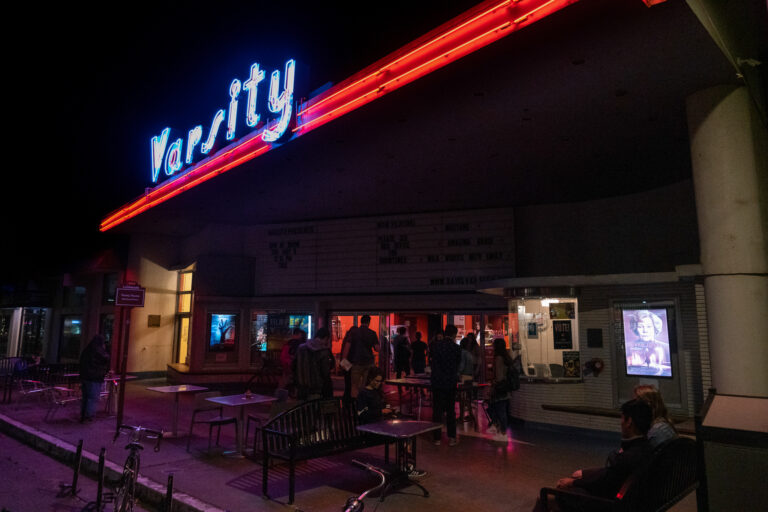
Davis hosted the 19th annual film festival at Davis Varsity Theatre on May 8 and 9. The festival featured student-produced films, accepting 32 of the 91 entries. The short films, each less than 10 minutes long, featured live-action, animation, photography and more.

Going into the festival, I expected a much different experience than the one I received. Expecting all film festivals to only feature obscure films, I was prepared to be confused. But I left pleasantly surprised with an empty popcorn bucket.

At the end of the festival, audiences voted for the best film of the night. I also anticipated being able to easily rate the films from one through 17, with 17 being the worst. Considering a couple of the directors brought their family and friends, this was more of a popularity contest. However, it gave the audience a chance to connect with the directors, a nice change from big-budget box office movies. Unable to rank all of the films, I’ve decided to name my favorites from the Thursday night premiere.

“The Marathon Runner” by Kevin Nguyen

“The Marathon Runner” hit home because it accurately represented my life in college. I don’t know if that’s what Nguyen wanted with his film, but that’s where it took me. It featured a marathon runner running across the galaxy towards something unseen by the viewer. Between the runner’s moments of traversing this galaxy, the film cut to motivational phrases set on a blank background. The sentences told the marathon runner to dig, to push a little further, almost there, catch your breath, break’s over.

From personal experience, I feel like life is constantly on the go. I plan my days two weeks in advance. Around midterm season, it is physically harder to breathe and academia becomes a marathon. And man, do I hate running.

“You Waited Smiling, For This?” by Meghan Shields

When I was taking notes in the pitch black theatre, I tried to rate the movies on a scale of how many times they made me laugh. But I didn’t think I was going to watch a five-minute film that made me cry. This film is a spoken word film. Classic images of nature filled the screen as a woman described her life and how she felt along the way.

The film was relatable. My roommate turned to me a few times to express her understanding. The poem spoke to depression and loneliness. The juxtaposition of the harsh reality of her words and the breathtaking backgrounds filled me with awe.

There was a moment in the film describing someone crying. The person would cry and would be comforted by hundreds of people. And even though they didn’t understand her pain, their love for her was what mattered.

“Better Together” by Simon Santos, JP De Leon, Jasmina Davis and Michelle DeMoss

Better Together” is a charming film about friends who were secretly in love with each other. It began with one friend criticizing the other’s love life. It is one of those quirky films that make you smile from beginning to end. Although simple, this film was worth a mention.

“123 Eyes On Me” by Naveen Bhat

This animated film was about a Youtuber doing an unboxing video per his fans’ request. It was the mystery box challenge, which is essentially a taboo challenge in which Youtubers  order a “mystery box” off the dark web and open it in front of the camera.

The film had quite a few funny moments in it. But it quickly took a dark turn when the Youtuber connected a USB drive to his laptop and realized that people from the dark web had been watching him this whole time. This film was a nice break from the usual hard-hitting and often confusing films. It reflected the scandals that individuals are willing to go through in order to gain fame, yet maintained a playful mood, even when the main character was about to be murdered.

“Black Nursery Rhyme” by Iran Martinez, Cameron Lippert, Jamie Barrario

When I saw the title, I immediately thought this film would have something to do with death. Nursery rhymes often depict gruesome tales, but this film did the exact opposite. It took the gruesome truth of the racist society in which we live and turned them into children’s nursery rhymes.

The nursery rhyme “The Three Blind Mice” refers to three noblemen who plotted to kill Queen Mary. When they were convicted of their crimes, they were sentenced to death and Mary had them burned alive at the stake. In this film, the three blind mice were “three blind whites,” policemen clouded by institutional racism.

The nursery song “The Itsy Bitsy Spider” transforms into one about children. The rhyme mentions the “itsy bitsy child walked up the wrong street,” an allusion to children of color walking into predominantly white neighborhoods. The film cut to videos of police beatings and vigils held for black boys who were killed at the hands of unpunished police brutality.

This film was my favorite. It disrupted the flow of comedy and love that other films portrayed, which was needed. Society needs to be reminded of its flaws, even during a film festival in a small college town.

“Storm Chaser” by Caitlyn Sampley

Although I did not understand what this animated film was about, I loved it. It was beautiful and the most visually pleasing film. It had a dystopian vibe, and I found myself comparing the movie to the book character June from “Legend.” The skyscrapers looked as though a comic book came to life. I was breathless.

“Project Casper” by Victor Yu

Project Casper,” the final film of the night, was perhaps the most thoughtful. It starts with a girl at a party, drinking her worries away when she meets someone dressed as a ghost. The ghost is wearing a simple white sheet with a smiley face drawn on its head. As the night goes on, the girl gets closer to the ghost and after dancing she wants to know who is under the sheet. By the end of the night, the girl is finally able to catch up to the ghost and she pulls down the sheet only to discover another girl. This shocked the audience and everyone gasped at the same time. But the two girls held hands and their eyes rose to meet each other and I only had one word to describe this film: aww.

Written By: Itzelth Gamboa — arts@theaggie.org

Culture Corner

The Arts Desk’s weekly picks for television, movies, books and music

Album: “This Time” by Donna Missal

Donna Missal is a powerhouse singer known for her sultry sound. Her album “This Time” captures her raw yet soothing voice and showcases her flexible vocal range. From growing up in New Jersey to becoming more of her own artist in Los Angeles, Missal brings a new sound to our generation by integrating her music with more artistry and significance in her moving lyrics. Her voice is intense, but soothing; it doesn’t overpower. The album features sultry and soulful rhythm & blues vibes. Her talent shines through in her restraint. “Keep Lying” allows her raspy sound to emerge. Comparable to Amy Winehouse, this album is perfect for summer nights.

Television: “One Day at a Time”

Given today’s political disarray, Netflix’s remake of “One Day at a Time” is a welcoming show where societal issues — including ethnicity, racism and sexuality — are brought to light, yet are portrayed with a comic air. This family sitcom, which focuses on a tight-knit Cuban-American family, is filled with witty banter and touching moments of support. Justina Machado, who plays Penelope the mother and an Army veteran, and Rita Moreno, who plays Lydia, the sassy, sexy grandma, bring such vibrancy and strength to their characters. The family learns to view all aspects of life, whether positive or negative, as an opportunity to reflect on their moral values with an open and humorous perspective.

Movie: “Instructions Not Included”

If you grew up watching Eugenio Derbez’s comedy skits, you know the immense potential that his film “Instructions Not Included” has. This movie focuses on bachelor Valentin, who is left to take care of his child on his own when his past lover goes to pay the taxi fare and never returns. He is forced to sacrifice his old lifestyle to take care of his daughter while dealing with a serious medical issue that threatens the time he has left with his daughter. The film’s smart knee-slapping comedy pairs well with his desire to make sure that both of their lives are filled with life. Extremely well-written, the movie has a twist ending for the audience, providing the chance to reflect on their own lives.

Book: “When Breath Becomes Air” by Paul Kalanithi

When faced with the question of one’s identity and own mortality, it’s hard for us to grasp, but it’s especially difficult for neurosurgeon Paul Kalanithi. When finally gaining the medical prestige he has worked so hard for, he is forced to shift roles and become the patient himself. In his autobiography, we experience Kalanithi’s personal turmoil as he navigates Stage IV lung cancer. While reading his autobiography, the reader feels close to Kalanithi and his struggle and journey, as it’s easy to relate his personal thoughts on the uncertainty of the future.

Written by: Gabriela Hernandez — arts@theaggie.org

City attorney: Judge rules in city’s favor in Lincoln40 lawsuit

Student housing project can now move forward after defeating lawsuit alleging inadequate Environmental Impact review

City attorney Harriet Sterner informed the Davis City Council on April 23 that the lawsuit levied against the proposed student development project Lincoln40 was successful.

Sterner announced to the council during the Tuesday meeting that a Yolo County judge issued the final order in the Lincoln40 case, ending a legal battle that delayed the progress of the new development for the past month.

“I’m glad to be able to formally tell you that the city prevailed in the lawsuit that was brought challenging the Lincoln40 project,” Sterner said. “The court issued its final order, ruling on behalf of the city and the developer on Tuesday.”

A month before, a judge issued a tentative ruling on the case, siding with the city over Susan Rainier, the litigant pursuing the case against the city and developers, according to The Davis Vanguard. The judge found the Environmental Impact report “legally adequate,” and Rainier’s arguments to be insufficient to establish otherwise.

Though the ruling indicated the end of a monthlong case against the development, the matter was not fully settled until the final order was issued by a Yolo County judge, according to Sterner. Now that the lawsuit has been resolved, construction can proceed as planned on the student housing.

“The rest of the case is more or less final now, and a judgement will be filed probably this week,” Sterner said. “The project can go forward at this point.”

In April, Rainier explained to The California Aggie her rationale behind the lawsuit. She felt the project planning stages failed to meet basic environmental impact standards and that new student housing could have a significant detrimental effect on the surrounding neighborhood. She also accused city leadership of failing to conduct adequate review on the project’s impact on the community as whole.

“The City of Davis leadership is incompetent,” Rainier said. “They have not conducted enough analysis of the cumulative effects of mega dorms on city systems and services, such as traffic, noise, circulation, waste water propensity and police.”

The City Council pushed for the Lincoln40 project since unanimously approving it in March of 2018. Both developers and the city have maintained that not only is the environmental impact study adequate, but not legally required in the first place — the report was only provided as a courtesy to the general public.

“‘[T]he environmental analysis was conducted to provide public information about impacts that could occur…,’ but ‘[t]he analysis is informational and not required pursuant to CEQA or local statute,’” the developers noted in the final environmental impact report.

Then-mayor Robb Davis expressed a similar sentiment in a city council meeting in March of 2018, when the project was first approved.

“We chose to make a disclosure when the law of the State of California would not require it,” Davis said. “I think that gets to this council’s willingness to be transparent and staff’s desire to be transparent.”

According to The Vanguard, the court ruling that the city’s case for exemption from Environmental Impact Report was insufficient. The judge also ruled, however, that Rainier’s petition failed to prove the developer’s environmental studies were inadequate.

With the lawsuit defeated, developers are free to prepare for the construction stage of Lincoln40. The proposed student housing will span roughly six acres of land on East Olive Dr., and is slated to provide 130 units with a total of 435 bedrooms, according to a report from city officials. With a mix of two- to five-bedroom units, developers anticipate Lincoln40 will provide 708 new beds for students. According to a project narrative submitted by developers, the project also includes a plan to create a route linking Olive Drive to the Davis Depot, allowing residents better access to transit and the downtown area.

Written by: Tim Lalonde — city@theaggie.org

Fifth annual Davis Pride to take place May 19

Community pride celebrations welcome all

In the year of the Stonewall riots’ 50th anniversary, Davis Pride’s theme is #StonewallStrong, commemorating the 1969 event that helped spark the modern-day gay rights movement. Davis Pride will be held on Sunday, May 19 at Central Park and will consist of the Run/Walk for Equality at 8 a.m. and free Music Festival and Community Fair from 10 a.m. to 4 p.m. A free event, Davis Pride will feature “live entertainment, merchants and community resources, fun zones geared toward children, teens and seniors, food trucks, vendors and dance parties,” according to a press release.

The event is hosted by Davis Phoenix Coalition, an organization that, according to its website, was created to “engage the Davis community in ongoing efforts to eliminate intolerance.” Proceeds from the Run/Walk for Equality will benefit the coalition’s efforts, which include projects such as Yolo Rainbow Families, The Gatherings Initiative, Davis LGBTQ+ Youth Group, Upstander Carnival and other ad hoc projects responding to events in the community and seeking to constructively address problems the community faces.

Mayor Pro Tempore Gloria Partida, who is the co-chair of Davis Phoenix Coalition, began the coalition and the Run/Walk for Equality to honor her son, Mikey Partida — who is a runner — and his recovery from a 2013 anti-gay attack. The run takes the place of a march or parade, with the Music Festival and Community Fair included so runners would have activities to return to after the run, according to Pride Director Sandré Nelson.

Tracey Tomasky, the co-chair of Davis Phoenix Coalition — along with Partida — and a volunteer coordinator for Davis Pride, commented on the significance of the Run/Walk for Equality and encouraged UC Davis students and residents to participate.

“It’s held a special place,” Tomasky said. “Mikey used to and he still does run, and so for Gloria, that was really important to have that run, and to have that in Pride.”

For the Music Festival afterward, Bay Area pop artist Xavier Toscano will headline a lineup of 25 artists, including Cheer Sacramento, Josh Diamonds, Rebel of Oakland, Cathy Speck, the Badlands Sacramento Drag Revue led by “RuPaul’s Drag Race” and season three contestant of the show Mariah Paris Balenciaga, Sacramento Women’s and Gay Men’s Chorus and other musicians arranged by the Davis Live Music Collective.

Both Pride Director Sandré Nelson and Anoosh Jorjorian, the coordinator for youth programs at Davis Phoenix Coalition, said Davis Pride is unique compared to other cities’ celebrations because it is community-based. Nelson emphasizes that the event is free and focuses on making needed resources available, such as suicide prevention and basic needs. Jorjorian said she feels Davis Pride is family-friendly and not as commercialized as other Prides.

In the years since its creation, Davis Pride continues to grow. Nelson estimated about 3,500 people attended Davis Pride last year and said the organizing committee hopes to see an increase to about 4,000 attendees this year.

For Nelson, this year’s #StonewallStrong theme means both recognizing the contributions previous generations have made to fight for equal rights and continuing what was started. Nelson hopes this year’s festival honors those previous generations.

“We picked #StonewallStrong to just remember to stay focused on [the fact] that we would not be here today if there was not this big event that happened 50 years ago at the Stonewall Inn,” Nelson said. “We’ve come a long way, but we’re not where we need to be, and we want to make sure that we can focus and also the younger generation keeps focused on that — that it’s just not handed to us, that there was a fight and there’s still a continuing.”

Going along with this message is a new “Senior Zone,” which seeks to include seniors in an event that is traditionally geared toward younger generations and facilitate intergenerational conversations. Jorjorian said the senior zone will be near the teen zone.

“We’re hoping that [this] set up will encourage a lot of conversations between the senior members of our community and the youth of our community as well,” Jorjorian said. “The young can learn from the elders, and the elders can maybe learn about some of the changes that have happened amongst the younger generations in our community.”

Jorjorian said that youth in the Davis LGBTQ+ Youth Group are excited for Davis Pride, and that she, too, is looking forward to the day.

“I enjoy everyone being out, and there’s just this palpable sense of joy that everybody has, just celebrating being together and showing off their pride,” Jorjorian said.

The event is open to all ages and welcomes all, including UC Davis students. Tomasky encourages students to attend but knows they are often unaware of Davis Pride.

“Pride is a place for them really to have fun, and it’s also a place for them [students] to connect with the community and for the community to connect with them,” Tomasky said. “Because they are an important part of our community, and so the more that we have an opportunity to interact — especially while we’re having fun — that’s most meaningful.”

Jorjorian added that she sees potential for more partnerships between the LGBTQIA  community on campus and in town.

“If there’s anyone on campus who’s interested in doing community-based projects, [Pride] is a really good way to connect with the community, [and] realize that there is a larger LGBTQ+ community in the surrounding Davis area — and in the county — and connect with some organizations who are doing some of that work,” Jorjorian said.

For the Run/Walk for Equality, registration is $37 until May 18, and $40 on the day of Davis Pride.

Written by: Anne Fey — city@theaggie.org

SB 24 would secure access to abortion pills on California public university campuses

Amid nationwide attacks on reproductive rights, California should pass SB 24

The Calif. State Senate Health Committee recently passed Senate Bill 24, which would require all California public universities to provide abortion by medical techniques, otherwise known as the abortion pill, on their campuses by 2023. The bill, which has yet to appear before the Senate Education Committee before it can be put to a vote on the Senate floor, has the potential to alleviate the immense burden on the shoulders of students in need of comprehensive reproductive care.

The Editorial Board believes that, at a time when a pregnant person’s right to make reproductive choices still sparks a contentious and politicized debate, the passage of SB 24 would be a monumental step in ensuring that students’ right to choose stays both intact and protected. Many Democrats, including Governor Gavin Newsom, have openly shown support for the bill.

The bill does, of course, have its fair share of opposition. Former Gov. Jerry Brown vetoed an earlier version of this bill in 2018, downplaying the necessity of the legislation by stating that abortion services were “widely available off-campus.” Others claim that the easy access to abortion pills would result in college students making rash decisions about their bodies.

While clinics like Planned Parenthood do typically provide abortion services, accessibility to these services is often hindered by factors like financial barriers or lack of transportation to sometimes distant clinics. If a student fears judgment and doesn’t wish to disclose their pregnancy, it can be extremely difficult to arrange the trip without depending on others. Students shouldn’t have to feel uncomfortable, navigate their way through unnecessary obstacles or miss class responsibilities for a medical need that could easily and privately be resolved on their college campuses.

The argument that students would make quick and irrational decisions if abortion was made more easily available is heavily laced with misogyny. The argument implies that students can’t manage their own reproductive health without ill-informed legislators and intense regulation molding the way in which they should lead their lives. Elsewhere in the United States, legislators are actively working to strip people of their right to reproductive care. In Alabama, a severe abortion ban, which incriminates doctors who perform abortions and does not offer exemptions even in cases of rape or incest, was recently signed into law by the state governor. Amidst the attacks on Roe v. Wade, California must remain proactive in protecting reproductive rights.

The facts couldn’t be more apparent. Students have sex. Students have unwanted pregnancies. Ignoring these facts will not alter the reality, but providing resources can. Not only does making abortion more accessible uphold the fundamental principles outlined in Roe, but studies also show that the best way to lower the rate of poverty in communities is more accessibility to birth control resources. If students are able to terminate pregnancies that they are not financially ready for and thus prolong the amount of time they spend in school or building a career, they can provide more stable futures for themselves and any potential children.

Providing abortion pills on California public university campuses is, simply put, a matter of reproductive justice. Student health care centers should not be selective about which aspects of health care that they would like to address. Our students deserve convenient, unobstructed and equal access to all medical services, including abortion pills.

Written by: The Editorial Board

Couch Concert: VirgoGabrielle

Young local musician tells a personal story with her music

First-year community and regional development major Gabrielle Reid, also known as VirgoGabrielle, writes her music on an bright blue electric guitar. The scene is striking: a sky blue instrument to complement her bright pink bodycon dress.

“[The guitar] is my baby,” Reid said. “A good friend of mine works at a music store back home. One day after work I saw this guitar on display — she was one of a kind and on sale. I was working really hard at that point in my life, and I told myself I was going to buy this guitar, it’s very beautiful and I deserve it. I play her everyday, and I have written the most true songs on her.”

Her current image — cool, bright and mature — would not suggest that her music writing roots are in rock ‘n’ roll. In high school in San Ramon, Calif. she formed a four-woman, all-female rock group called Novicain Road. She served as lead vocalist.  

“I was really into rock ‘n’ roll,” Reid said. “There was a good rock ‘n’ roll scene where I grew up, so I started an all female rock ‘n’ roll band. That continued all throughout high school. We would play shows all around the Bay Area, we had a few songs recorded. That’s when I started doing music and realized that it is something I thoroughly enjoy […] The writing process is the most different from what I’m doing now because there’s three other people to write with and create the song with. It’s something so different than what an individual would do.”

Now, Reid has taken a musical 180 as she has transitioned into being a solo rhythm and blues artist since the start of her college experience at UC Davis.

“As much as there is going to be a place in my heart for Novicain Road, the sound just wasn’t inspiring me anymore,” Reid said. “It wasn’t truly what I as a person connect to most. The switch to more R&B and jazz was more natural coming [to UC Davis], being older and more in tune with myself.”

Her music, indeed, is much more personal and listens like a journal entry. She sings of romantic situations, longing and confidence to the tune of simple, smooth guitar chords.

“Common themes in my songs now are insecurities, things that hurt the soul in one way or another,” Reid said. “Music is therapy in a way for me, too, so what goes into those songs are more real or a little darker. Now, the inspiration [for my music] is not something I seek out; it just comes to me. When I get in these mindsets, I’ll just sit in my room and write everything down. I’ll start recording a voice memo and free styling. I’ll go back and edit it, see what I like and see what lines I like out of that stream of consciousness. Or I’ll sit down with my guitar and freestyle with my guitar and see what I like.”

To Reid, “R&B is very comforting,” and the relaxed nature of the music makes relaying stronger sentiments approachable to the listener. Due to the form of her music, Reid connects with her audience in a much more personal way.

“I want listeners to understand how these things happen to a lot of people, and they are not uncommon,” Reid said. “When we don’t talk about things, we think we are the only ones experiencing them and there is something wrong with us because of that. I want people to listen to my music and see that no matter who you are these things happen and it’s not necessarily a reflection of who you are as a person. In a way, I am speaking to myself and that sometimes is relatable to the audience.”

Her most recent song, “Losing Sleep, Lucid Dreams,” is her first song to be released online and follows the same musical purpose.

“That song has a lot to do with feeling used and kind of this mindset that a lot of people have that you need be icy and cold and have a guard up all the time,” Reid said. “But that’s not really who I am as a person. So the song has to do with me showing that side to people and them not understanding it or taking it well.”

“Losing Sleep, Lucid Dreams” will be on Reid’s first EP that she plans to release this summer.

“It’s probably going to be four or five songs,” Reid said. “I have most of the songs written, [and they have a] similar vibe for sure. The first song ‘Broken Bones’ is a strange mixture of ancestral pain with insecurities and relationship problems. It mixes the past and present. ‘Girls Like Me’ is a song dedicated to every girl or woman. It talks about insecurities being a woman.”

Reid’s music touches on rather intense topics. And while Reid did not offer specifics about the anecdotes that inspire her music, the mystery is part of her attraction. Perhaps the personal narrative is not as significant as the feeling it creates in response — the shared feeling to which we all relate.

Written by: Caroline Rutten — arts@theaggie.org

Foreign lobbies are controlling what you can say and do on your own college campus

Through a concerted political effort, foreign countries are utilizing extensive financial ties to influence academia

Talk about foreign interference in American politics seems to be everywhere these days.

From allegations of Russian meddling in the 2016 election to debates over the role of  the Israeli and Saudi lobbies in persuading Washington politicians, discussion about the influence of foreign powers in the United States has become increasingly popular  — and college campuses are no exception to this trend.

Last fall, The California Aggie broke a major story at UC Davis on Canary Mission, a website known for doxxing and blacklisting pro-Palestinian students and academics. An investigation by the Israeli newspaper Haaretz further revealed that an Israeli non-profit known as Megamot Shalom secretly funded the Canary Mission. Such Israeli lobbying grew particularly powerful on college campuses in recent years, pushing Hillel organizations towards a heavier pro-Zionist stance and calling for universities to discipline pro-Palestinian faculty. These practices have received criticism from a number of prominent academics who see the trend as an increasing threat to their freedom of speech.

Although people often think of Israel as the prime example of foreign lobbying in the United States, countries like Turkey and Saudi Arabia continue to exert substantial influence on American college campuses. The Saudi government and related institutions have donated some $354 million to 37 different American universities since 2011, according to a report by the Associated Press. Among the biggest beneficiaries were Northwestern University, which received $14 million from a Saudi research center, and UCLA, which collected an additional $6 million from the same organization.

Even with the increased scrutiny placed on Saudi-American relations since the death of Washington Post journalist Jamal Khashoggi last October, the U.S. government continued to pursue expanded relations with the Kingdom, and most American universities refused to reconsider their current funding ties. UC Berkeley refused to review their $6 million investment from the Saudi government, claiming that it represented only a fraction of the grants and contracts issued to university researchers and was thus not worthy of reconsideration.

Despite routinely priding itself on values of inclusion and non-discrimination, certain campuses in the UC system seem bizarrely unwilling to re-evaluate their relationship with one of the most repressive regimes in modern history. Saudi Arabia’s human rights record is routinely ranked among the “worst of the worst” by the watchdog Freedom House, and the country continues to export toxic Wahhabist religious ideology that serves as inspiration to terrorist groups across the globe.

The Turkish government has similarly exercised a great degree of influence upon American academia, utilizing its extensive financial and political ties in the U.S. to dissuade universities from freely discussing the country’s ongoing descent into authoritarianism. Columbia University, for example, suddenly called off a panel on the collapse of the rule of law in Turkey last month. According to a number of panel speakers, the event was likely cancelled due to the inclusion of Alp Aslandogan, a lecturer associated with the Hizmet, a socio-religious movement based on the teachings of Fethullah Gülen. The Turkish government blamed Gülen, an Islamic cleric currently living in exile in the U.S., for allegedly playing a role in the country’s 2016 coup d’état attempt. Critics noted that Columbia, which previously fashioned itself as a bastion of First Amendment rights (once infamously allowing then-Iranian President Mahmoud Ahmadinejad a speaking opportunity in 2007), received a number of major donations from Turkish nationals, including a $10 million investment in 2016 to create a center for Turkish studies.

Previously, Turkey’s primary lobbying efforts in the U.S. were directed against congressional efforts to recognize the Turkish role in the Armenian Genocide. Turkey continues to deny the Ottoman Empire’s role in the mass killing of some 1.5 million Armenians, 750,000 Greeks and 500,000 Assyrians from 1914 to 1923, annually spending millions of dollars on lobbying efforts related to the controversy.

All nine UC campuses, including UC Davis, voted to formally disaffiliate from Turkey based on the country’s continued denial of its part in the genocide. But due to the dangerous precedent set by other universities like Columbia University, the UC system may not be entirely immune to the pressure of foreign powers.

Diaspora politics are an inevitable component of life in a multicultural democracy — and they certainly do have an important role in ensuring adequate group representation. It becomes a problem, however, when such diasporas are manipulated by foreign governments, who care not about their descendants in the U.S., but about accruing their own power and prestige in another land.

Written by: Brandon Jetter — brjetter@ucdavis.edu

Disclaimer: The views and opinions expressed by individual columnists belong to the columnists alone and do not necessarily indicate the views and opinions held by The California Aggie.

UC Davis research team helps small farms in Mozambique, Tanzania

Research examines protection against extreme drought in two African nations

Jonathan Malacarne, a sixth-year Ph.D. candidate in agriculture and resource economics, is in charge of the Mozambique component of a project that studies the “impacts of drought-tolerant maize seed and satellite-based index insurance on small farmer welfare in Mozambique and Tanzania.” The project was originally engineered by three UC Davis professors in the agriculture and resource economics department: Associate Professor Steve Boucher, Professor Michael Carter and Professor Travis Lybbert.

The drought-tolerant seeds were developed by CIMMYT, the International Center for the Improvement of Maize and Wheat and the research project’s biggest partner, to narrow the window of time the maize plant is vulnerable to yield losses due to drought. Malacarne works with the Assets and Market Access (AMA) Innovation Lab at UC Davis, a research group that “conducts and supports research on policies and programs designed to help poor and smallholder farmers worldwide to manage risk, adopt productive technologies and take an active part in economic growth.”

Malacarne discussed many of the challenges associated with making agricultural insurance available to small farmers.

“Whenever you’re in rural Mozambique and rural Tanzania, and the thing you’re trying to insure is one hectare of maize, it’s just not worth the insurance company’s time to send somebody to go check if there was a loss,” Malacarne said. “It’s a really big burden on small farmers to have to try to identify when a drought occurred because it’s kind of this cumulative thing — it’s reversible up to a point, and then it’s not all of a sudden.”

These challenges have resulted in agricultural insurance failing in poor rural areas, according to Malacarne. In contrast, the research project deals with a different type of insurance called “index insurance.” This insurance includes payments that are tied to external indexes, such as the average yield among all farmers in an area, rather than the yields of an individual area.

“So, if average yields in a whole area are low, then everybody gets a payment — you don’t have to report anything,” Malacarne said. “There’s no need to send somebody to your individual plot because what happens on your plot is hopefully correlated with that index.”

Satellites help create statistical models that predict maize yields, which are then used to predict whether a harvest will be of good quality, according to Malacarne. The research project focuses on the manufacturing of an insurance product that is complementary to the protection the drought-tolerant maize seeds offer.

“We let the drought-tolerant maize seed do what it does best, which is protect against moderate drought, and then we use satellites to look for early season drought or really bad rainfall over a full year, and that lets us better protect farmers and do it more cheaply because we’re letting the biology take some of the risk away,” Malacarne said.

Malacarne and his team work with local seed companies “to help them expand their marketing efforts” and get the improved, drought-tolerant seed into the hands of farmers. To prove the efficacy of the seed, researchers randomize the areas that will be given the researchers’ support. This helps validate the findings of the project, which involves collecting household surveys from areas that receive the help as well as those that have not been randomly selected.

“I think our seed company partners have sold drought-tolerant maize seed to something like 6,000 or 7,000 households, [and] probably a little less than half of those purchased the insurance component with the seed,” Malacarne said. “In Mozambique, the years that we were running the project were pretty good years in terms of rain, so they had the insurance, and [the farmers] may have been able to invest a bit more because they knew they were protected, but there weren’t any bad years, so there weren’t any insurance payments.”

Analysis on the insurance component of the project is delayed because there have not been many severe droughts in Mozambique in recent years.

“It’s tough to learn about insurance because you want people to have good years all the time,” Malacarne said. “But, in order to learn about insurance, you need some bad things to happen.”

The Tanzania project is run by Laura Paul, a sixth-year Ph.D. candidate in agricultural and resources economics. The index insurance component is distributed by measuring precipitation to determine if there’s a payout, according to Paul.

“The drought-tolerant maize has this sort of biological resilience to drought, so that feature makes it less expensive to insure,” Paul said. “The hope was that, with this complete protection, farmers would be more likely to adopt the technologies in combination. Previous research has found that, generally, adoption of these two things is pretty low, so this was one way of looking at if we could increase adoption of these two thing[s] that we think will help people’s welfare that don’t really seem to be preferred by farmers when they’re alone.”

Paul and her team experienced “significant buy-in from the Tanzanian government” for the project, a crucial element for the success of the research. The team created partnerships with Tanzanian seed companies and insurance companies and worked on the design of the insurance intended to complement the drought-resistant seeds.

“One major difference between Tanzania and Mozambique was that I never locally sold the seeds,” Paul said. “I trained local seed sellers to sell the seeds or to have access to the seeds. I hired about 15 people every year to collect data for me, who were all people who were affiliated with either the Tanzanian Agricultural Resource Institute or a major Tanzanian university. I was able to actually find people who could sell the seeds — those people didn’t exist in the same way in Mozambique.”

Although both Paul and Malacarne had to overcome many challenges in order to establish a system of getting the seeds in the hands of farmers, the challenge remains of ensuring that the structure built will remain.

“Our biggest issues were ones of building that network and trying to maintain it,” Paul said. “That’s hard to do when I don’t necessarily have someone on the ground who can constantly supervise all the different activities that are happening related to the project, especially when I’m working in 90 villages.”

Aniceto Matias, the field manager of the project in Mozambique, was responsible for the day-to-day operations. The project was a success in Mozambique because many farmers in rural Mozambique “had no access and did not use improved maize seeds, especially the drought-tolerant varieties,” according to Matias.

“In Mozambique the issue of insurance is still a little-used thing even in the rural areas where it has [a] greater number of literate people,” Matias said via email. “The issue of promoting these varieties by selling at a subsidized price has greatly helped small farmers to start using drought tolerant seed. I still get phone calls from producers that show interest in seeing the project continue.”

Written by: Sabrina Habchi — campus@theaggie.org

A Bounce in the Right Direction

New TV deal, injury to one of its biggest stars brings more attention to WNBA in its fight for better pay

On April 22, the WNBA and CBS Sports agreed to a multiyear TV deal that will almost double the exposure of the league compared to last season. CBS Sports Network will air 40 WNBA games this season, and ESPN will air another 16. This new deal appears to be a big step in the right direction for a league that is constantly battling to achieve equal pay — and will help make this deal about more than just the games.

“It’s going to be beyond highlights,” Senior Vice President, Global Media Distribution and Business Affairs for NBA Entertainment David Denenberg told the Star Tribune. “Whether it’s features we develop or CBS develops, we want to do more.”

The new deal adds another layer to the fight for better pay for the WNBA players, who make just a fraction of what their NBA counterparts make. While there are a number of economic factors as to why NBA players earn more money, like jersey sales, tickets and a higher TV ratings share, WNBA player salaries on their own are still astonishingly small for professional ball players.

For example, a player on a maximum contract in the NBA makes about $40 million annually, and this figure is continuing to increase by the millions every year. A max player in the WNBA, however, makes just $115,000, and the max contract only goes up $2,000 every season.

A’ja Wilson was drafted number one overall in the 2018 WNBA draft but has a salary of $53,000, whereas number one overall pick in the NBA that same year, Deandre Ayton, plays on an average salary of $8.8 million a year.

The list of disparities goes on, and last season all throughout the WNBA, players began to speak up. Players like All-Star and WNBA legend Sue Bird began to bring up the notion that this was unjust.

“Look, we’re not over here saying we should be paid the same as the men. We’re realistic,” Bird told ESPN. “We understand that this is a business and that their revenue is insane compared to ours. But there is a bias that exists.”

What players do want is a bigger share of the revenue.

“I’m tired of people thinking that us players are asking for the same type of money as NBA players,” said Las Vegas Aces’ star Kelsey Plum in a tweet. “We are asking for the same percentage of revenue shared within our CBA.”

While the WNBA collective bargaining agreement is not public, there are estimates that suggest the players make only 20% of the league revenue. On the other hand, NBA players make 50% of their league revenue. Because of this, in November of 2018, the WNBA Players Association announced that they voted to opt-out of the CBA, which now expires after the 2019 season. The players association also plans to market around the league’s stars, market the teams more effectively, space out the schedule and improve the travel conditions.

Because players do not earn enough over the course of a regular season, many play in other leagues overseas in the offseason. Abroad, WNBA stars can make around 10 to 15 times more money than they do in the states. But the downside is that doing so taxes the players’ bodies year round and leaves no offseason to recover.

Because of this, injuries and fatigue are common. Breanna Stewart, the WNBA’s Most Valuable Player and Finals MVP in 2019, entered this Spring coming off a dominant season that culminated in a championship for her team, the Seattle Storm. Even she, like many other WNBA players, competed overseas right after the season ended. In last month’s Euroleague championship game, Stewart ruptured her achilles, ending her 2019 WNBA season before it began.

This was a big blow for the WNBA, as Stewart is one of its bigger stars. The injury made waves throughout the basketball world, and NBA players like Lebron James and others showed their support for the MVP.

The NBA is no stranger to showing its support for WNBA players, as it is one of the biggest supporters in the WNBA’s quest for better pay. The NBA has long supported the WNBA, even releasing commercials featuring players such as Steph Curry, Paul George and Isaiah Thomas, among others, expressing their excitement for the WNBA and its players. Other superstars across the NBA commonly voice their enjoyment of the league and share some of their favorite players. Even with WNBA players opting out of the CBA, NBA Commissioner Adam Silver expressed his understanding.

“I wasn’t disappointed at all,” Silver told ESPNW. “My sense from talking to players and listening to what they’re saying publicly is that we seem to be missing a connection, a real engagement between the players and the league.”

With the new WNBA season now just weeks away, there is new excitement to look forward to and a chance to garner more publicity that could surely help the league as it continues to grow. Even offering a league pass for only $16.99 that gives fans access to every game, the WBNA continues to look forward to expanding and ultimately reaching its goal of better pay, which they plan to achieve following the end of the season in the negotiations for a new CBA.

Written by: Omar Navarro — sports@theaggie.org

Food delivery apps help students living in dorms take a break from DC food

First-year students discuss the role of apps like UberEATS, DoorDash

Food delivery services such as Postmates, DoorDash and UberEATS that have started in the past 10 years have become increasingly popular. Although plenty of eateries offer their own delivery services, these apps allow users to easily browse through a multitude of options — and who better to utilize them than tired, stressed students? For first-year students living in the dorms, food delivery apps can be convenient when the Dining Commons are closed, when they don’t have a weekend meal plan or even if they just want a break from DC food.

For first-year biological sciences major Ritika Gupta, who has a five day meal plan (for weekdays only), ordering food can be convenient on weekends. She also said that since the DC closes at 8 p.m. on Fridays, even though she has a meal plan for that day, it can sometimes be more convenient to just order dinner. Gupta has used UberEATS and DoorDash but said that she’s had more success with DoorDash and prefers their options. There are Thai restaurants that Gupta likes, but Red 88 Noodle Bar is Gupta’s favorite place to order from.

“Fun fact, that place is an actual bar, so you can’t get into it unless you’re 21,” Gupta said. “The food is really good though, so you just DoorDash it and it works.”

DoorDash has food from over 130 restaurants in Davis, including many of the 2018 Best of Davis eateries such as Crepeville, Ike’s and Taqueria Guadalajara. Meanwhile, UberEATS offers delivery from around 40 restaurants in Davis. GrubHub, which is most popular in New York and Chicago, according to a 2017 Vox article, offers delivery from around 30 places in Davis. That same Vox article discussed the “fractured market” of food delivery services and indicated how different factors affect what platform is popular in different locations.

First-year managerial economics major Riya Jain used to order from UberEATS a lot more because her dad works for Uber. Since Uber employees are given $200 a month to spend on UberEATS and in addition to Jain’s dislike for the vegetarian options provided by the DC, she ordered a fair amount from UberEATS during Fall Quarter. She tried, however, to cut down during Winter Quarter.

“I personally dislike the Dining Commons,” Jain said. “They have less variation of food items for vegetarians, at least. They have pizza and [vegetarian] burgers, or something. Most of my classes end after 8 [p.m.] […] so I literally only have salad or pizza left [during late night], so I would prefer to go out or order [with] UberEATS.”

Jain says that she found herself spending more money than she wanted to, so after a while, she decided to refrain from ordering on UberEATS. Instead, she and her friends prefer to go out and avoid that pesky delivery fee, or they will order from Domino’s, which gives a lot of coupons.

“[Now] we usually go out, actually,” Jain said. “We walk and we go to KetMoRee, Thai Canteen, Chipotle or Panera.”

First-year animal science major Juan Carlos Guerrero said that he uses food delivery apps “not frequently, but sometimes.” When he does order, it is through UberEATS, and he buys from Wingstop, Panda Express or Davis’ Piñata Mexican Grill.

“I use UberEATS because I’m kinda lazy to go to the [DC],” Guerrero said. “And it’s convenient because they bring it to you and you don’t have to go anywhere.”

Guerrero said that ordering food from outside is, in part, due to the repetitivity of the food at the DC, and on the days that he would prefer not to eat food from the DC, he considers using a delivery app to be far more convenient than going out to eat. There’s probably one thing that is the most important consideration at the end of the day, though, and that is cost.

“[We go with] whatever’s the cheapest option,” Jain said. “I’d say that that’s the optimal method for eating.”

Written by: ANJINI VENUGOPAL — features@theaggie.org