57 F
Davis

Davis, California

Monday, December 22, 2025
Home Blog Page 423

Sol Blume returns for its second year in Downtown Sacramento

Boutique R&B and Soul festival features lineup up of predominantly women and people of color

The R&B and Soul festival Sol Blume returned for its second year of an all day music festival in downtown Sacramento. The idea behind the boutique festival was to create and environment where like-minded people could come together and celebrate music.

The festival was founded in 2017 by two pioneers of the music industry, Justin Nordan and Fornati Kumeh. This year Sol Blume welcomed over 6500 attendees in the historic Cesar Chavez Plaza in downtown Sacramento. Sol Blume is known to be a boutique festival that celebrates young and upcoming artists in the R&B, Soul and Hip Hop genres from diverse backgrounds.

This year’s line up was completely comprised of people of color with more women artists than most musics festivals. Justin Nordon, one of the founders of the festival, explained what inspired him and his partner, Fornati Kumeh, to start Sol Blume.

“In 2017, Fornati and I agreed to follow through with an idea we had for a few years about a music festival that focused on R&B, Soul and a little bit of Hip Hop,” Nordan said. “There are tons of Rock, Rap and Pop festivals but there hasn’t really been a lot of chill Soul R&B festivals, and we wanted to fill that gap.”

Nordon went on to explain what the the festival is fundamentally about and how the line up was chosen.

“Sol Blume is a one day Soul R&B music experience with an emphasis on culture, diversity, music, food, art,” Nordon said. “It’s a place where like minded people can come together and listen to a playlist come to life. We like to think that we have more of a chill and organic feel, we love when the music feels really passionate and organic, and that’s how we come up with our line up.”

Upon entering the venue, attendees were greeted with interactive art installations, a multitude of food options, local apparel companies and several “Instagram worthy” spots for festival goers to share their Sol Blume experience. The festival began at 11 a.m. and ran throughout the day until 10 p.m. with performances from a wide variety of artists including Miguel, Jessie Reyez, J.I.D, Masego and more. Throughout the day the performances alternated between two stages that were in close proximity to each other so attendees would be able to experience the entire line up.

“The venue is pretty small and we did that intentionally,” Nordan said. “We wanted [to] embrace the fact that we are a boutique festival and we wanted it to feel like you are in the backyard listening to good music with your close friends. For festivals like Coachella or Outside Lands you have to pick and choose who you want to see, but we wanted everyone to see all the artists so we chose a smaller venue of the festival.”

In addition to the more well known artist[s] within the R&B, Soul and Hip Hip Hop artists, the line up also consisted of many younger talented up and coming artists including Ivy Sole, Dave B, Parisalexa, Tobi Lou and Jess Connelly. Many of these artists shared their journeys within the music industry and where their passion for music comes from while on stage.

Dave B, one of the performers who broke into the music industry in 2015, detailed what he defines as his genre of music and offered some advice to those looking to pursue a career in music industry.  

“I think my music is a mic of Hip Hop with a little Jazz and R&B injected into it,” Dave said. “I guess it’s a little bit of everything, and I like to try out new styles and see what works. To kids looking to break into the industry I’d say the most important thing is that you believe in yourself and don’t pay attention to the world around you. Your individuality is what makes you great so focus on that and don’t be afraid to express yourself.”

The artist also commented on his experience as a performer at Sol Blume in regards to the diversity of not only the line up, but the crowd as well.

“The line up this year was FIRE, and it’s not really male dominated which is something that I really f*** with,” Dave said. “When we walked into the festival, I noticed a lot of black women and people of color in general, working and attending the festival, which was really cool to see too. […] I’m a really big fan of all of the artists that are here and it’s really cool to see them preform and the energy coming from the crowd in general is just insane, so it’s been a really great time.”

19-year-old Parisalexa, noted her major influences to be big pop stars such as Britney Spears, Ke$ha, Katy Perry as well as Stevie Wonder, Earth, Wind and Fire and Hall & Oates as well as many of the performers at Sol Blume. The Pop R&B artist explained how she made her way into the music industry through her love for songwriting.

“I’m really influenced by a lot of these young female artists that are absolutely killing it right now like Kehlani and Tierra Whack,” Parisalexa said. “I would totally be at [Sol Blume] even if I wasn’t performing. This lineup is so great and I am such a fan of all of these artists. They really touched on young artists and people of color and people who in general are real pioneers of the industry.”

Parisalexa’s latest EP, BLOOM, focuses on her journey of self growth and empowerment. The artist also plans to release her debut album by the end of this year.

“My favorite song I’ve released is Dandelion, because it’s really empowering and I love the idea of falling in love with who you are,” Parisalexa said. “I think just seeing the response and how it’s inspired other women is much bigger than I could have ever imagined. Be yourself because you are beautiful and amazing in your own way.”

Philadelphia based Hip Hop artist Ivy Sole credits her major influences to be the Black Lily movement in Philadelphia, Bilial and The Roots as well as gospel music.

“I like when music is really organic, and every artist I’ve collaborated with has been an very organic experience,” Ivy Sole said. “I love to see a woman centric festival and its been an amazing experience to share with these really talented artists, so it’s nice to be surrounded by good company and good music.”

The artists anticipate to drop a mixtape this summer featuring all female artists as well as begin to start touring along the West Coast. Ivy gave her advice to young musicians and music connoisseurs.

“Focus on the music,” Ivy said. “When the music is good a lot of other things fall into place. [And] I hope the music keeps you really good company because that’s what it’s there for.”

Sol Blume will return for its third year next spring, and students can buy their tickets from Armadillo Music in downtown Davis.

Written by: Sneha Ramachandran — features@theaggie.org

ER patients need feminism, and feminism needs men

“Time’s Up Healthcare” has the potential to smite the patriarchy

The Time’s Up movement is like a hashtagable, outsourced HR nonprofit endeavor. The state of affairs reached an actionable tipping point similar to that of the #MeToo movement when it finally became so apparent that Human Resources departments failed colossally in ensuring safe, equitable workplaces in the advertising, tech, entertainment and healthcare industries. Improving laws and policies and ensuring legal access to those needing recourse due to the harrowing experiences of sexual harassment and discrimination in the workplace is receiving much needed attention.

Which is great. But on principle, it seems wrong that the systemic failure to protect the wellbeing and interests of anyone who is not white, male, straight and gender-conforming in some of our greatest GDP-contributing industries is now receiving its own sweet logo and social media campaign. If the Time’s Up movement is able to achieve a safe, fair workplace better than an HR department, then let’s do it — but I get super salty when HR departments can’t be held accountable for doing their jobs. I know how to fill out a W-2.

The medical industry’s branch of Time’s Up, “Time’s Up Healthcare”, launched on March 1st. It’s no surprise that there are plenty of horrible stories about the treatment of women within the healthcare system. It makes sense that, when a group of silenced people are finally getting the privilege of a long-denied voice, their pain and anger is first to surface.

However, as a movement against the PATRIARCHY, I’m not sure we have the luxury of indulging in wide-scale catharsis, despite deserving it. There are much larger things at stake.

Are women going to be asked to sacrifice something they deserve — a public forum for grief(?) — for the greater good? Because this isn’t just about how female healthcare providers are treated — it’s about the female patients are getting treated. For example, female patients wait longer in ERs to be treated than men and women are more likely to die of a heart attack if their ER doctor is a man. As a former gender studies major, I see how framing our cause in terms of pain and anger shoots ourselves — meaning everyone — in the foot. Feminism beyond “feminism is equality for everybody!” is complex.

My point: Not all men are evil. And when entire movements forget that half the population isn’t horrible, and is, in fact, replete with good people, we are losing allies just as important and powerful as our female ones.

The fast track for improving working conditions for women in healthcare, and improving the quality of care for female patients involves making the education and recruitment of male allies — in an industry that remains male dominated and male top-heavy — of equal priority in empowering the women rising in its ranks. Female leadership is inevitable. It’s happening. We are educated. We are increasingly STEM-ing.

All too often, enabling men to be committed feminists seems to be completely ignored. Just so we’re clear, helping men embrace feminism is empowering them to be more complete human beings (see “Feminism is for Everybody” by Bell Hooks). Patriarchy hurts everyone, yet the F-word is still too often viewed as synonymous to that of man-hating. This is tragic, and until this shifts on a large scale we are all devastated, no matter how many pink pussy hats we knit.

Call me a dirty, dirty optimist, but the future of a more balanced workforce and of greater equity is there — it’s just a matter of time. Nothing is going stop it. But in the meantime, there are women dying in ERs at the hands of male doctors that could be, for lack of a better term, “systematically woke.” The men in the upper echelons of the medical industry are still going to be there for another, what, 20 to 30 years? They are the ones we need on our side — NOW. Imagine the long and many awkward conversations it would take with senior-ranking executives and doctors to conjure the kinds of consciousness shifts we need. I’m not even entirely convinced such a thing is possible, but I’d love for a ton of dedicated social workers, academics, psychologists, doctors, patients and administrators to get together and try.   

It might not be fair to ask for a whole lot of women to do large-scale emotional labor on behalf of the medical industry, but I don’t care. I’m willing to help if I can. I want myself or someday my daughters, my mom, my friends, to be safe should any of us ever find ourselves in an ER waiting room.

Written by: Lauren Frausto –– lrfrausto@ucdavis.edu

Disclaimer: The views and opinions expressed by individual columnists belong to the columnists alone and do not necessarily indicate the views and opinions held by The California Aggie.

Police Logs

Flip flops with socks, a violation

April 25

“Daughter under the influence, throwing items up on the roof, was beating the garage and causing a disturbance. Currently banging on the front door.”

April 26

“Sounds of walking. No sounds of distress.”

April 27

“Request assistance with asking subject to leave, has been told in the past not to use electrical outlets and subject has become agitated/aggressive with staff.”

“Intoxicated male wandering in the street yelling at passerbyers, shaved head, multicolored blue shirt and blue jeans, flip flops with white socks.”

“Ex-wife at the front of house knocking on door and window.”

April 30

“Laundry room had sign with picture of male saying if he is seen to call Davis Police Department — similar looking male inside gym area with multiple bottles of alcohol.”


American children are not being taught their most important lesson: Climate change

Kids have the willingness to take action if given the chance and knowledge

When did you first learn about climate change?

Most of my fellow environmentalist friends first learned about climate change in their AP Environmental Science classes during high school or in community college. I didn’t learn about it until my third year in the U.S. Navy, while watching documentaries during one of my many long nights aboard an aircraft carrier.

If you attended K-12 in a public school in California after September 2013, you were more likely to have learned about climate change in one of your science classes. This is because California adopted the Next Generation Science Standards in its curriculum — a higher STEM teaching standard program set by educators and scientists.

As of today, 21 states and the district of Columbia have adopted the NGSS for their education system. Unfortunately, just because your state has adopted the NGSS doesn’t mean children will be exposed to the program.

While 86% of teachers think schools should teach climate change, only 42% actually teach it. The biggest reasons for this discrepancy — heightened by the fact that teachers are overworked and underpaid — are that climate change is outside of their expertise; they don’t know enough about it, and they don’t have the materials to teach it.

So are parents stepping up and teaching their kids about climate change? According to the same poll, only 45% of parents talk about climate change with their kids. As the older generation and culprits of current climate change, we’re failing our youth and future leaders by not educating them about the biggest problem they will face in their lifetime.

Who’s to blame? Is it parents? Teachers? The education system? The government? Ourselves?

When I was watching my pirated climate change documentaries aboard that aircraft carrier in the middle of the Atlantic, I experienced a whirlpool of emotions. I felt anger, motivation, confusion, curiosity, disillusion and fear — yet also a sense of relief. Tired of the mundane and monotonous long nights, all I wanted during that time of my life was a purpose, a direction, something meaningful to contribute to. Learning about climate change filled that role and changed my life forever.

We are living in a time when children are unwillingly set to be the proprietors of the consequences of our actions and will feel the full wrath of climate change. By failing to educate our youth, we are committing the greatest injustice against them and robbing their chance to find purpose and fight back.

Youth around the world are showing us what they are capable of doing when they are aware of the perils of climate change. Young people from 123 countries are following the footsteps of a 16-year-old Swedish student — Greta Thunberg — and skipping school on Fridays to strike for a climate action.

In the U.S., 21 kids, teenagers and young adults from ages 11 to 22 are suing the U.S. government in the case Juliana v. United States for “supporting a national energy system that emits prodigious amounts of greenhouse gases into the atmosphere, thus stoking human-caused climate change and endangering their futures.” The plaintiffs are arguing that the government is depriving them of their guaranteed rights to life, liberty and property.

When our youth have the most to lose, it’s in their best interest to take action. And they have showed us they will do just that. We know what they are capable of if they are just given the chance to learn. They just need motivation, a direction, something to care about, and they will put their all into the cause.

More than ever before, we need communicators and educators. If you’re a teacher, teach. If you’re a father, enlighten. If you’re a brother or sister, provide guidance. If you’re a friend, inspire change. Give purpose and teach about our most pressing issue!

We don’t need to be experts in the field to raise awareness in our youth. We simply need to plant the seed. Curiosity will feed our eager youngsters, they will sprout and our youth and planet will bear fruit.

Written by: Daniel Oropeza — daoropeza@ucdavis.edu

Disclaimer: The views and opinions expressed by individual columnists belong to the columnists alone and do not necessarily indicate the views and opinions held by The California Aggie.

Ito defies odds, powers back to the floor

After three surgeries, sophomore gymnast Alyssa Ito earns honors recognition

Year after year, collegiate gymnastics progressively gains the attention of sports fans and casual spectators. Though many admire the hard work and determination the athletes put into this sport as well as the difficulty of the routines, some have tuned in due to the increasing realization that gymnastics is an overall tough sport to participate in.

This April, collegiate gymnastics experienced a surge in viewership but not for the reason one might think. Auburn University gymnast Samantha Cerio dislocated both of her knees and broke both of her legs during a floor routine at the NCAA gymnastics final in Baton Rouge, La. Videos of her career-ending injury surfaced across many social media platforms, and the realization of not only the difficulty but the dangerous nature of gymnastics became apparent.

Collegiate gymnastics is a sport in which serious injuries can be common. Sophomore Aggie gymnast Alyssa Ito knows firsthand about these type of complications on the gymnastics floor. After surgery to repair a torn ACL in high school, Ito suffered a tear in her meniscus, leading toa second surgery in her last year of high school. Realizing that her knee was still not in good shape when she first came to UC Davis, a third surgery for a meniscus clean-up was needed, which caused her to redshirt her freshman year.

“It was really disappointing for me,” Ito said. “Talking to Coach, he kept reminding me that I was going to get back and everything was going to be okay. It made me keep those positive thoughts, and I really wanted to get back into competition and do what I have done my entire life.”

It was the support of other injured and rehabbing athletes at UC Davis that gave Ito the mental drive to keep pushing forward.

“I feel like [the rehab process] is more mental because you have to have that motivation to get the help that you need,” Ito said. “Mainly having good people around you that have had similar experiences and hearing their story, I see all of these athletes coming back [from injury], which means I should be able to do it too.”

After an extensive stint in rehab for her numerous injuries, Ito has gone on in her sophomore season to earn numerous awards. She earned All-Mountain Pacific Sports Federation accolades, ranked third in the MSPF beam event with a score of 9.835 and was one of three Aggies to qualify and compete in the NCAA Corvallis Regionals in April. Additionally, Ito earned 2019 All-MPSF second team on the uneven bars and first team on the balance beam. All-MPSF teams are based on national-qualifying scores on RoadToNationals.com. For each of the four events plus the all-around, the top-ranked gymnast from each team earns a spot on the all-conference list, as well as next six gymnasts on the list. From those 12, the top six receive first-team honors and the remaining six make second team.

Ito reflected that speaking to others about her injuries and battling back to the floor offers outsiders a glimpse into the dangerous and difficult nature of the sport.

“I think that there are people that undermine the physicality of the sport,” Ito said. “But I think that there are also people that understand you have to be strong to be able to do all this stuff. There are people that say it is easy but there are also people that realize how much of a physical impact and how serious [gymnastics] can be. Once people ask if I have gotten injured and I tell them everything that has happened they really open their eyes to the nature of the sport.”

Along with her other accolades, Ito was named to the MPSF All-Academic honor roll and received an  “Outstanding Contribution Award” from her team, a testament to the fact that being a collegiate gymnast takes more than meets the eye. Stories of hardship and redemption, like Ito’s, have helped to increase the public’s respect for gymnasts as well as for the sport of gymnastics as a whole.

“Going back to freshman year I didn’t really believe in myself a whole lot and didn’t know if I would fit in or was good enough,” Ito said. “My first year was rough trying to get back into things and getting to compete again sophomore year, it made me want to compete again and want to work harder. Coming back I was even more motivated because I wanted to show that UC Davis gymnastics is better than what people perceive it to be.”

The sport of gymnastics requires a significant amount of hard work and dedication to compete at a high level. The sheer amount of strength and agility that gymnasts must display is impressive in its own right — even without considering the injuries they risk on a daily basis. It isn’t easy being a gymnast, and athletes like Ito continue to show spectators why gymnastics deserve a lot more attention.

Written by: Ryan Bugsch — sports@theaggie.org

Reflecting on the 10th annual A Taste of Davis

Davis Odd Fellows Lodge hosts another successful event

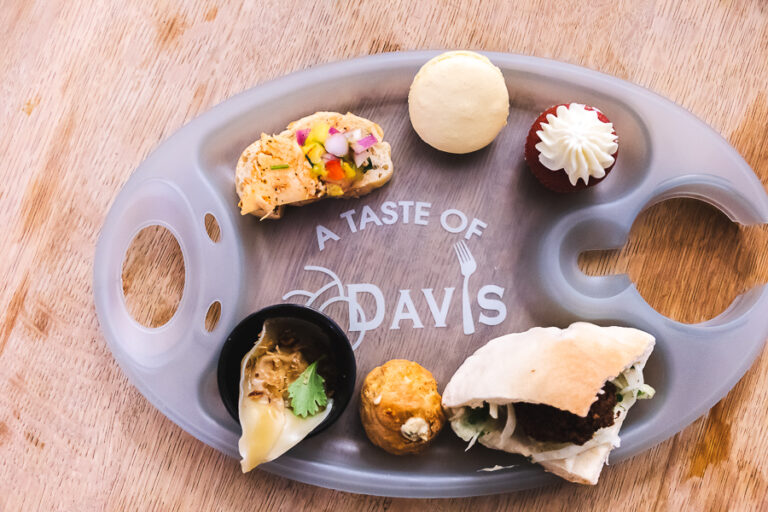
On April 25 from 6 to 8 p.m., the Davis Odd Fellows Lodge reported that its annual A Taste of Davis event brought in hundreds of people from all over and raised a generous amount of money.

“The Taste of Davis started 10 years ago — this year is our tenth anniversary of organizing and hosting this event,” said Dave Rosenberg, co-chair of A Taste of Davis. “It is sponsored by the Davis Odd Fellows Lodge; the Lodge has been in Davis since 1870. It started as another community function of the Lodge, featuring the town’s restaurants, wineries and breweries for the enjoyment of the community.”

The Odd Fellows Lodge was happy with how many people from Davis and beyond came to enjoy the variety of food and drink offered under one roof.

“We had over 200 attendees,” Rosenberg said. “Everyone seemed to have a great time. Our beneficiary, the Yolo Food Bank, was very appreciative. The 19 purveyors enjoyed the interaction with the public, and all of them want to come back in 2020.”

The purveyors at this year’s event included: Chay Corner, Chickpeas, Common Grounds, DeVere’s Irish Pub, Donloe Brewery, The Hot Dogger, Jack’s Urban Eats, Lamppost Pizza, Lazi Cow, Let Them Eat Cake, Matchbook Wine Company, Sudwerk Brewing Company, Sundstorm Wines, Seasons Kitchen and Bar, Three Mile Brewing Company, Turkovich Family Wines, Upper Crust Baking Co. and Water Pig.

A major sponsor of the festivities was First Northern Bank, and a supporting sponsor was theThe Davis Enterprise. A portion of the proceeds will be donated to the Yolo Food Bank.

“I can say that we were very pleased to see the large turn-out on Thursday night and are grateful for the opportunity to further connect the attendees with our mission to end hunger and malnutrition in Yolo County,” said Joy Cohan, the director of philanthropic engagement at the Yolo Food Bank.

Tickets were sold for $20 before the event and $25 at the door. The occasion raised a generous amount of money, and the Yolo Food Bank expressed how grateful it was to be chosen as this year’s beneficiary.

Only 365 days until the next annual A Taste of Davis, and it looks like the purveyors and hosts cannot wait.  

Written by: Lauren Tropio — city@theaggie.org

A closer look at Asian Greek life

Asian American interest fraternities, sororities speak about stereotypes, misconceptions

Asian American interest fraternities and sororities at UC Davis belong to a smaller division of Greek life, known as the Asian Sorority and Fraternity Council (ASFC). There are six organizations that belong to the council: two fraternities and four sororities. The fraternities belonging to this council are Psi Chi Omega and Sigma Kappa Rho; the sororities are Sigma Omicron Pi, Kappa Psi Epsilon, Chi Delta Theta and Alpha Kappa Delta Phi. Asian American interest fraternities and sororities are not just for people of Asian ethnicities.

“We accept everyone and to be honest, joining an organization is mostly about if you like the bro’s or the sisters of the organization, and if you feel like it’s the right organization for you and if you identify with it or not. We absolutely do not discriminate,” said Esther Lim, a third-year pharmaceutical chemistry major and the chapter president of the Epsilon chapter of Chi Delta Theta.

What separates ASFC organizations from Panhellenic, IFC and professional Greek life organizations is that ASFC promotes and nurtures a cultural connection to Asian roots.

“Asian Greek [organizations] are very culturally focused and do well to help their members and the rest of their communities to connect to their culture and heritage as Asian Americans/members of the pan-Asian diaspora,” said Isabelle Perlada, a fourth-year microbiology and Asian American studies major. Perlada also serves as the president to the ASFC.

Like other fraternities and sororities, there are stereotypes and rumors circulating the organizations in ASFC. Many of these stereotypes are centered around the rushing process and alleged hazing rituals.

“Some of the stereotypes I hear about Asian Greek are that we are very scary because our process is very difficult,” Lim said. “People think we ‘haze like crazy’ and there are some rumors that go around about how we physically harm people. And we only allow Asian people into our organizations.”

Like many Greek organizations, other stereotypes include drinking and sexual assault.

The ‘process’ that Lim mentioned is the pledge education program or the pledge process for those who are interested in the organizations to accept and attend.

“It’s a time where one learns how the organization functions and learns about our history, ideals and basics that we were built upon,” Lim said. “The reason behind a process like this is to make sure each member knows our ideals and goals but also so that they do not come into the organization blindly. It’s a way for us to teach them risk management and educate them on how the sorority runs. Because we are small and do not have hundreds of members, people hold multiple positions and one learns what each position and status entails so that they do not just take on a position or status without knowing how it works.”

It is in this process where the alleged hazing occurs in both fraternities and sororities alike. Students who rush for Asian American Greek life have reported having to endure physical tasks, including drinking amounts of alcohol and performing strenuous physical activities.

“ASFC firmly enforces the standards set by the Office of Sorority and Fraternity Life (OSFL) and does not tolerate its member chapters hazing new members,” Perlada said. “Member chapters employ risk management policies that reflect this standard within its own organizations as well.”

Even with this rule in place, however, there are a number of allegations of hazing.

“It’s very difficult to combat these stereotypes or rumors because people like to believe what others tell them and it only makes it worse because these rumors instill fear in them,” Lim said. “When people do actually ask about how Asian Greek works or asks if these rumors are true, we can’t physically prove it and can only tell them that it’s not true and the only way to find out is to actually experience it for themselves. If these rumors and allegations of Asian Greek being scary and difficult are true, the Asian Greek community would not even exist at all. No one would be even a part of the Asian Greek organizations and we wouldn’t even have an Asian Sorority and Fraternity Council. This is where the cliché comes into mind about how you should never judge a book by its cover.”

The California Aggie reached out to the chapter presidents of Sigma Kappa Rho and Psi Chi Omega, but they did not respond for comments.

Much of what happens within Asian fraternities and sororities during the pledging process is kept in secrecy. Most students who were asked by their friends to describe the details of their rushing process cannot answer any of their friends’ questions. Regardless of these rumors, many students still rush every quarter.

“People who decide to go forward with joining Asian Greek really, really like the idea of us being small,” Lim said. “Because we [are] smaller, we know everyone in our [organization] on a deeper and personal level, which makes us more tight knit. You also make a lot of friends and connections with the different [organizations] apart of ASFC. The Asian fraternities have ‘lil sis’ programs where you get a ‘big bro.’ And many people from Asian sororities or non-affiliated people join as well so you get to network and make even more friends. We have our own small community where we all know each other and it’s really nice.”

Lim wants the campus to understand that Asian Greek is not scary.

“We are not intimidating people,” she said. “Talk to a bro or a sister and just get to know us first before coming to a conclusion about our community based on rumors, because that’s just all hearsay. We are just like any other fraternity or sorority part of IFC or Panhellenic. We focus a lot on sisterhood/brotherhood, our philanthropies and community service, etc. We are a very tight and small community and take a lot of pride in it. Everyone should really have an open mind to things and not be afraid.”

Written by: LINH NGUYEN — features@theaggie.org

Guest: The police, again

In light of the brutalization and arrest of Jennifer Michelle Cedeno-Ornelas, professors Seeta Chaganti and Joshua Clover argue for the disarming of UC Davis police

The brutalization and arrest of Jennifer Michelle Cedeno-Ornelas by the UC Davis police on May 6 was harrowing: the gang of cops, the full weight of uniformed bodies on her chest, her restraint in a full body suit resembling modern-day shackles in an event that looked like nothing so much as a slave capture — one of the origins of policing in the United States. Perhaps needless to say, nothing Cedeno-Ornelas might have done or not done in the bookstore could merit such violence. The confabulated claim that she was having some sort of mental health episode was self-evidently a version of “they had a gun”: a dishonest justification for unjustifiable police violence. The claim was debunked swiftly by mental health professionals who examined her, though it is hard to imagine any but the most credulous camp follower of the police would have believed it in the first place.

The UC Davis police chief insisted that this was a “type of event that is very unusual on campus.” Not so much. We have worked here long enough to know this horrifying episode is both extraordinary and familiar within an unending cascade of UC Davis police brutality. In the last decade, we might choose as a mere few examples four cops slamming an undergraduate on the hood of a police cruiser during a tuition protest in 2009 (in classic fashion, they charged her with resisting and assault, obtaining zero convictions); the globally infamous pepper-spraying of students busily sitting on the Quad in 2011 (the university was forced to pay extensive settlements) and the beating and false arrest of the “Picnic Day 5” in 2017.

No surprise here. Policing has always been violent, locating, as we noted, its American origins in the state’s sadistic regulation of dispossessed people for profit. And yet we do not mean to imply any sense of some steady state to which we must simply accustom ourselves. That is because the fear that possesses the police is growing. It is a fear growing in psychic power and firepower because it both reflects and draws from deeper fears that movements which mean to dismantle longstanding law and order structures are gaining traction. These range from the national and international Black Lives Matter movement to our campus movement here to disarm the police, which missed passage last month by the narrowest of margins.

We always knew that people fear cops and fear them with reason. The extent to which cops fear people is becoming increasingly clear. It is clear, for instance, in the ludicrously enormous army of police used to clear a recent sit-in at Johns Hopkins University — against the school’s contract with ICE and against the introduction to campus of a private police. But while people feel fear because the presence of cops renders them powerless, cops’ fear escalates and fuels violence.

Down the road in Sacramento, cops’ fear restrains a tiny 12-year-old and pulls a mesh sack over his head as if it were the extraordinary rendition of a purported terrorist; it murders Stephon Clark in cold blood around a cowardly corner. The sacrifices to these expressions of fear, the targets who draw the fear that is most deadly in its admixture with contempt, will always disproportionately be black and brown people.

Campus police forces in particular intensify our view of what is unfixable about American policing: its fatal cowardice; its white supremacy; its long commitment to producing differential citizenship, expropriation and domination on behalf of what indigenous scholar Glen Sean Coulthard names “settler capitalism.” And so they provide an especially important site at which to intervene against this sustained regime. Campus police forces magnify in our vision the harmful boundaries drawn by law and order to delineate who is part of the community and who is not. As our campus’ Ethnic and Cultural Affairs Commission rightly noted, the aggressive display of police regalia and murderous equipment make unsafe the most vulnerable students on campus. Pro-cop zeal nonetheless silenced their voices.

In the wake of Stephanie Washington’s shooting in New Haven, Joshua Cayetano urged his fellow Yale students to ask themselves: “Is my safety ensured at the expense of someone else’s?” None of us are granted escape from this question. But we would go a step further and suggest that the very assumption of safety as something ensured by police is wrong at its core, a mere ideology of power, and that campus police in truth make the entirety of their communities unsafe. Recently, Yale, Columbia and UC Davis police have magnified the agenda implicit to all policing: within the supposedly peaceable terrain of campus, where we are both compelled to be and expected to share a sense of purpose and community, the truth of the police is brought up close in all its intolerable violence, with black and brown bodies shot at, bent backward, pinned over tables, wrestled to the ground, stifled while screaming.

We have lingered enough on the daily terror, the immanent violence, the spectacle of brutality. We must turn to what is to be done. In some sense it is quite uncomplicated. Surely the treatment of Jennifer Michelle Cedeno-Ornelas will have turned the heart of at least one ASUCD Senate voter, and the measure to disarm the police, developed and argued fearlessly by student-workers, will carry at the next opportunity.

Just as surely it will be clear that the violence done in this most recent episode did not require the use of a pistol or taser, not even a nightstick. These are adjuncts and guarantors of police violence, not the violence itself. Which is to say that we must take our own experiences, recognitions and arguments seriously, take them to their clear conclusion, and demand not just the disarming but the demobilization of the campus police. That too will not be the end of this freedom struggle. It will be a necessary moment along the way.

Written by: Seeta Chaganti and Joshua Clover

Seeta Chaganti is a professor of English and Joshua Clover is a professor of English and Comparative Literature at UC Davis.

Humor: How to tell if your parents are addicted to Crepeville

If you give a mom a crepe

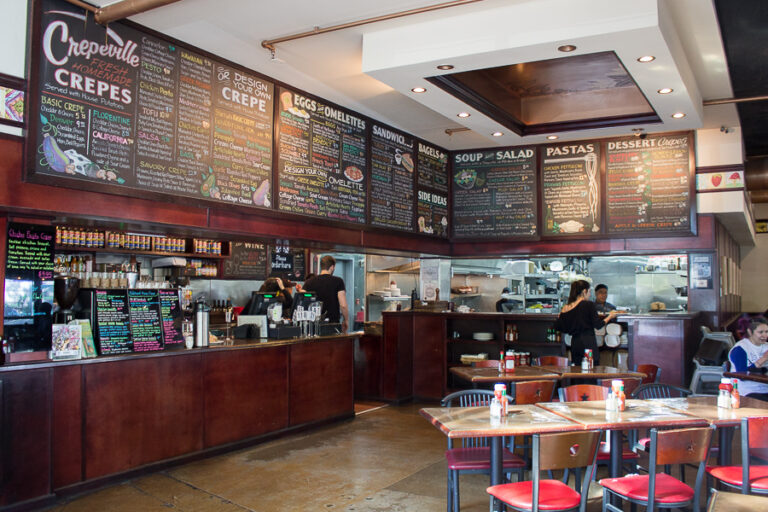
It’s Sunday morning, and your parents want to have a nice meal with you before they leave Davis. You think, “Hmm, maybe I’ll introduce them to Crepeville. There’s something for everyone there.” But I’m going to stop you right there. If you embark down this dark and dangerous path, there is no turning back.

The addiction to Crepeville starts off simple enough.

You take your parents for that initial Nutella banana crepe. You all leave the restaurant, your parents nonchalantly shrugging and saying, “Not bad.” Not a deluge of enthusiasm, but not exactly a critique either.

Fast forward three months. It’s the first time your parents have come back to Davis for a visit since last quarter. You need a place to eat, and your dad casually says, “How ‘bout that crepe place in Downtown? What’s it called…Crepe City?” And you agree because it’s been weeks since you’ve had Crepeville. You leave the restaurant after your second Crepeville outing. Your parents are raving.

“Can we talk about the potatoes?”

“Can we talk about those CREPES, Barb?”

If your parents say something that sounds uncharacteristically Caucasian of them, then you’re too late. The lust for Crepeville has bewitched your parents, body and soul.

A few weeks later, your parents call, emphatically asking if they can visit you. You’re suspicious because they usually complain about making the drive to Davis, but you happily oblige since yah love ‘em. They want to eat at Crepeville again because they “already know it’s good.” You think “For the love of God, there are other places to eat in this town.” But these people give you money for boba, so you keep your bubble tea-lovin’ mouth shut.

Minutes into dinner, you notice something is off. Your parents haven’t even looked at you. They’ve only had eyes for their apple cinnamon crepes this whole time! And that’s when you realize…

They didn’t come to Davis to see you. They came to Davis to eat mediocre crepes.

Before you know it, the pictures of you on your family’s fridge have been replaced with photographs of French pancakes. All your little league trophies have been replaced with “Best Restaurant in Davis” plaques. You are no longer your parents’ child. Crepes are their baby now.

Written by: Madeline Kumagai — mskumagai@ucdavis.edu

Sacramento Republic FC makes effort to become part of MLS

Team secures new funding, releases outline for new stadium plan

In early April, Sacramento Republic FC and the city of Sacramento released a joint term sheet that outlined the makings of a new Major League Soccer (MLS) stadium. The stadium is estimated to be built in the city’s rail yards — but only if the MLS agrees to allow the team to expand to Sacramento. Although the term sheet is non-binding, it demonstrates how the city, the team and the project’s lead investor, Ron Burkle, will be able to work together to raise the funds for the stadium and begin the construction process.

The new stadium plans surround the team’s push to officially become part of the MLS. With city leadership behind them, Sac Republic managers have been working for years to make the move — but so far to no avail.

In 2018, Sacramento was passed up by the MLS for a team in Nashville, Ten. This year though, it appears to be almost guaranteed that Sacramento will finally secure its spot in the MLS in the next few years. In the middle of April, many expected the MLS to announce whether Sacramento or St. Louis would be winning a spot in the league. To everyone’s surprise, instead the MLS announced it would be accepting three more teams into the league at its Board of Governors meeting in Beverly Hills and said it was entering formal talks with Sacramento and St. Louis for two of them.

It is estimated that the entirety of the building will cost $252 million, and the actual construction would generate between 1,310 and 2,639 jobs while the building of the infrastructure would generate between 108 and 245 jobs.

Sacramento Mayor Darrell Steinberg reassured the people of Sacramento that the funds for the project would not be coming out of taxpayers’ wallets.

“The proposed term sheet lays out a package of fee waivers, tax rebates, advertising rights to stadium signage and infrastructure financing,” Steinberg said. “All with variables based on some factors that are yet to be determined — speed of development, advertising revenue, estimated taxes, etc.”

On top of private funding, the new stadium is said to present a significant benefit for the city’s development, especially to the areas surrounding it. The 17 acres it would occupy for the stadium racks up an investment of about $1 billion into the city.

Sacramento City Council Member Jeff Harris commented on the beneficial aspects of the stadium — and not just from a fan’s point of view.

“This MLS stadium will jump-start the railyards and redevelopment of the river district,” Harris said. “So, there is benefits galore for the city, in terms of development, tax money we can raise over time, but also, it just serves the needs our constituents.”

Currently, Sac Republic is a member of the United Soccer League, which is essentially a minor league for the MLS. Having dominated since entering the league in 2014, Sac Republic has a culture unlike most other clubs.

Sac Republic’s home stadium is Papa Murphy’s Park located on the Sacramento Fairgrounds. It’s a newly built, soccer-specific stadium that sells out quite often, fitting just over 11,000 fans. One sellout includes the club’s most recent home match on April 27 versus Phoenix Rising.

The electricity buzzing through the stadium continued ceaselessly for 90 minutes, even without a goal being recorded in the match. The smaller sized stadium might possibly be working in the home team’s favor, considering the sheer volume of noise echoing from the crowd. With the immense money and resources billionaire Ron Burkle has put into this organization, it’s become undeniable that Sacramento Republic FC is rapidly on the come up and will be a prime time Northern California sporting event in no time.

Written by: AJ Seymour — sports@theaggie.org

Aggie Job Link shuts down, university transitions to Handshake

Faculty, employers, students express satisfaction over switch in hopes that it will improve recruitment rates

UC Davis’s job posting site Aggie Job Link will be replaced by the up-and-coming career network site, Handshake. Over 700 universities, including UC Berkeley, Stanford and Princeton already use the platform, and Davis hopes that this switch will boost its recruitment rates.

The new site will make it more appealing for employers to share opportunities with Davis students. Before, companies needed to make a separate Aggie Job Link accounts to interact with individuals, but Handshake has created a one-stop shop where companies only need one account to reach students from hundreds of schools.

Alex Amerling, a member of Handshake’s university partnership team, described the tech company as the nation’s largest early talent career network. He emphasized that Handshake is a true network, in comparison to other systems designed for specific schools.

“Handshake offers the ability for students to learn from one another, for employers to easily join a network of 800+ universities and send messages about potential opportunities,” Amerling said. “All of this aligns with our mission — to help level the playing field for every student across the nation to find a great job.”

The Internship and Career Center is using Spring Quarter 2019 as a “soft launch” for Handshake and officially opened the program for students on April 29. The ICC hopes that all students will be fully transitioned by the upcoming fall. Aggie Job Link is still up and running, but the ICC is currently notifying all users, companies and students of the shift.

Many universities have already been using Handshake for years. Marcie Kirk-Holland, the executive director of the ICC, explained why it took UC Davis over three years to make the switch.

“We’ve been looking at Handshake from when it first launched,” Kirk-Holland said. “There were a couple of issues that were of concern to us. One was the privacy issue, and this idea of who owns the data — it’s a very different model.”

With Aggie Job Link, UC Davis was in control of students’ data. Bringing in this outside site means that this data will change hands, with Handshake storing some of the information.

Amerling and the website’s privacy policy page, however, made it clear that students are in complete control of their data and that Handshake does not sell personal student data.

“For us, student security and safety will always be number one,” Amerling said. “We constantly make improvements to the platform to ensure students are in full control of their data.”

Furthermore, Kirk-Holland emphasized that once the privacy issues were dismissed, it became clear that implementing Handshake would be the best thing for students.

“It got to the point that there was a risk associated with us not being on the platform, because one of the things Handshake does is it aggregates the data, so there should never be a way that any individual could be identified,” Kirk-Holland said. “The data sets then, help inform companies about where to recruit. By not having our data set in there, we could actually end up obscuring UC Davis students from companies’ views.”

She also noted that Aggie Job Link student usage has been on the decline in the past several years. Kirk-Holland hopes that Handshake’s user-friendly format will help attract students seeking career opportunities, and she noted that other universities who implemented the platform saw a 30% increase in student usage.

Both interviewees noted that using Handshake was standard in most universities, with Kirk-Holland mentioning that she’d gotten specific requests for the program.

“There have been a lot of students who have been asking for it,” Kirk-Holland said. “They say their friends or relatives at other campuses are using it, and so there’s some pent-up demand.”

Jack Stafford, a third-year managerial economics major, mirrored this sentiment with an expression of relief over the change.

“Honestly, ever since I’ve gone to college, I keep hearing my friends from home talk about this job site,” Stafford said. “Handshake is what they use to search for jobs or internships, and they’re able to find opportunities outside of their college town. Aggie Job Link definitely had some good stuff, but it sounds like this new program will really help me to find opportunities that aren’t necessarily Davis-specific.”

Students should be expecting an announcement with more details from the Division of Student Affairs in mid-May.

Written by: Claire Dodd — campus@theaggie.org

Paul Hastings

Professor Hastings’ passion and involvement in the field of developmental psychology

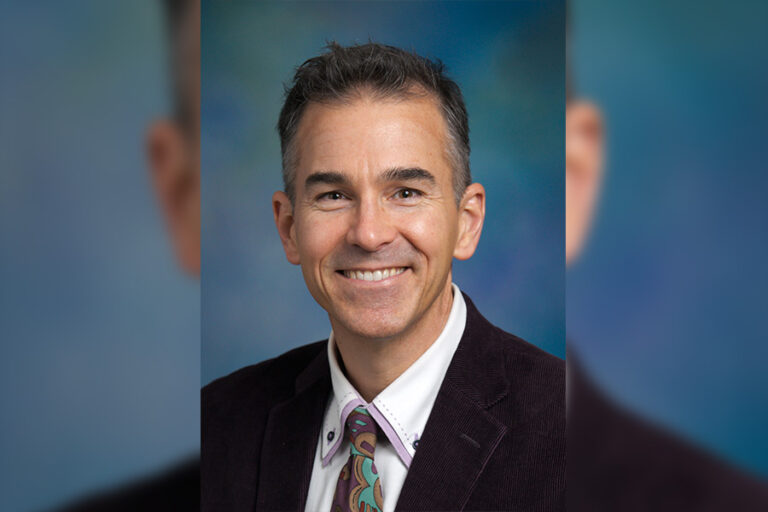
It was not science, but a love for literature that introduced Paul Hastings, a professor in the department of psychology, to the field which he would continue to pursue for years to come.

“What it was about reading and literature and mythology and everything like that that I loved was how the authors created such complex and multifaceted characters and what the motivations were for truly well rounded complex characters,” Hastings said.

With an inclination toward the pre-medical path, Hastings enrolled in the general science program at McGill University. Besides all of the STEM courses he was required to take, he had room in his schedule for two elective classes. Growing up with an interest in the physical sciences, Hastings decided to take a geology class in addition to Introduction to Psychology. He explained that he deeply resonated with the class and became excited at the prospect of studying how and why people become who they are. It was because of this newfound passion that he decided to take an introduction to developmental psychology his second year, which is his current field of interest.

“[That class] really was getting exactly at that question of the becoming, the unfolding,

over time from the roots of life, how people progress through infancy and childhood and adolescence in the context of their relationships with the unfolding of their maturing abilities,” Hastings said. “And that just completely captivated me.”

Through these classes, Hastings was able to realize how the character differences that he loved within literature could be applied to and studied in the scientific field as well. It was then that his infatuation with developmental psychology emerged and it hasn’t changed since.

It was during his undergraduate career that he had heard of Jane Ledingham and Alex Schwartzman’s study, the original inspiration behind Hastings’ recently published study, “Predicting psychosis-spectrum diagnoses in adulthood from social behaviors and neighborhood contexts in childhood,” which he worked in collaboration with the two, in addition to Lisa Serbin and Dale Stack.

Their study, conducted in the 1970s, consisted of evaluating how children’s social behaviors and environmental factors predicted potential mental health issues during adulthood. Having heard of this study during his undergraduate career, he later conversed with Schwartzman at Concordia University about their interest in expanding on his initial research.

“I got me really excited to start to think about examining how these multiple influences on mental health play out not just over months and years, but over decades,” Hastings said. “I saw this as an opportunity to take the kinds of questions I had been examining much further and into an area of work I had never studied before which is psychosis spectrum mental illness.”

Hastings defined psychosis-spectrum mental illnesses to be hallucinations and delusions, which create feelings of confusion in the affected person and requires constant support or medication. He believes it is important to learn about the predictors of these psychiatric disorders in order to attempt to prevent them, as they are hard to treat once developed. As the original study was conducted through a survey of adults, there were various limitations. Therefore, Hastings’ recent study included almost 4000 children where they reported on each other’s social behaviors and related this to the socioeconomic aspects of the environment they lived in.

“I think that the most important findings were the ones that confirmed and further informed the hypotheses that led Schwartzman and Ledingham to design the CLRP (Concordia Longitudinal Research Project,” Hastings said. “We found that children who were raised in more disadvantaged urban neighborhoods were more likely to develop schizophrenia and bipolar disorder with psychosis over the next 30 years, compared to children raised in more economically advantaged urban neighborhoods. The combination of neighborhood conditions and children’s social characteristics also contributed to their risk.”

With this new knowledge, Hastings believes improving school qualities or allocating neighborhood conditions in socioeconomically disadvantaged areas may be able to prevent these diseases from occurring. In addition, children at risk of developing this disorder could undergo cognitive behavioral or other psychosocial treatments.

One topic that Hastings becomes excited about is looking into children’s development of empathy, kindness and compassion. Although many people view psychology in mostly the clinical aspect such as therapy or counseling, Hasting explained that that is but one aspect of the field. Holistically, it is about understanding the human condition from a scientific approach.  

“I think what a lot of people don’t realize until they start to take a psychology course is that most of the work in psychology is really this research oriented approach to understanding thoughts, feelings and behaviors as they make us be the individuals and the social beings that we are,” Hastings said.

Written by: Michelle Wong — science@theaggie.org

Garlic Fried Egg Tacos

Homemade corn tortillas, pickled onions and a seasonal salad make for perfect spring dinner

It’s Tuesday, it’s dinner time, what do you turn to? Tacos, duh. Taco Tuesday is a quintessential American food trend originally devised by the Tex-Mex food chain, “Taco John’s” as a marketing strategy back in the early 1980’s. The company even trademarked the alliterative phrase in 1989, though it hasn’t stopped the event from gaining worldwide popularity. The Wyoming-based chain is known for sending out cease and desist letters to any restaurant who advertises a “Taco Tuesday” special — which is why you’ll often see, for example, “$2 Tacos on Tuesday” rather than using the trademarked phrase. Interesting, huh?

To what might be a slightly contentious opinion, I am here to argue that the Mexican food in Davis is lacking authenticity or any out-of-the-box culinary attempts. While I acknowledge the regular Taco Tuesday goers — and I get it, cheap tacos, margs and friends — I believe if you want truly good tacos, you have to either travel outside of Davis or take initiative in your own kitchen.

I opt for homemade…specifically, garlic fried egg tacos topped with pickled red onions in a homemade corn tortilla with a side salad of seasonal arugula and a creamy cilantro lime dressing — *gasps for breath*.

Different from your average scrambled egg breakfast tacos, the fried egg’s runny yolk serves as a beautiful salsa — salsa as in the direct translation for sauce — but when accompanied by tomato salsa or hot sauce it balances the spice and acidity and gives it body. Eggs are cheap, easy to prepare and can be served for breakfast, lunch or dinner; not to mention they’re a good source of protein and fat. It’s not a traditional or  authentic taco, but you can’t get this at any Davis taqueria.

This is a fancier version of the lunch I have been making every day for the past few months, no exaggeration, every single day… it’s delicious, affordable, quick, and I haven’t gotten sick of it yet. This recipe can be as simple as buying premade tortillas, eggs and avocados and whipping these babies up in 5 minutes, or it can be carried out how I am about to detail below, raising the stakes with homemade corn tortillas, introducing some fried garlic oil and pickling some red onion to go on top. And for the side, I take advantage of superior Californian produce with a seasonal salad paired with a homemade cilantro lime dressing.

Disclaimer, I am not a professionally trained chef, nor do I claim to be a taco expert; however, I am an avid home chef as well as a Southern California native — that is, my taste buds have been attuned to distinguish between the Americanized flavors and the real stuff. And I will firmly say that what makes or breaks a taco, is the tortilla — a Mexican restaurant is not authentic unless it makes its own corn tortillas. Once you eat a real, soft, homemade corn tortilla, there is no going back to the chewy and bland processed ones.

To make the tortillas, all you need is a masa harina mix. I used Bob’s Red Mill organic masa harina from the Davis Co-Op, water and salt. While it’s not necessary, a tortilla press is extremely helpful. I did not have a tortilla press when I embarked on this process, but after researching makeshift techniques such as using a rolling pin or a cast iron pan and elbow grease, I forked out the $13 and ordered a tortilla press on Amazon.

Homemade Corn Tortillas:

I start by mixing the dough according to the package instructions — mix 2 cups masa with ½ teaspoon salt in a large bowl, then slowly add and mix in 1½ – 2 cups warm water (I used 1½ cups of water). The consistency should be firm and springy, not crumbly or sticky. I used my hands — because why dirty up a spoon? Plus, it was an extremely satisfying texture and playing with the dough made me swell with nostalgia. After I had my fun, I formed the dough into a ball and covered the bowl with a towel to let sit out for an hour.

Use this hour to begin to prepare the rest of the meal.

Pickled Onions:

Tart, acidic, fresh, crunchy — this deceitfully fancy and seemingly involved topping is actually quite simple to make. I recommend preparing the pickled onions the night before to let them marinate and break down further in the brine; however, since we are using a quick, vinegar-based method of pickling, as little as 30 minutes will do the trick. Basic pickled onion recipes are fairly consistent across the board no matter where you get it from, I got mine from Bon Appétit.

1 red onion

½ cup apple cider vinegar

1 tablespoon sugar

1½ teaspoons of salt

The onion I picked was abnormally large, so I had to make a half-portion of the pickling liquid in addition to the full portion (a.c.v., sugar, salt), keeping the proportions the same. The key is that the liquid covers, or nearly covers, the onion in whichever vessel you chose to store it in, I used a large mason jar.

Peel then slice the whole onion very thinly. I like to keep the onion whole so I get at least some rings, but halving lengthwise — keeping each half intact with the root — works just the same.

Tip: when cutting onions, keep the root intact as you chop to prevent or lessen crying, putting a cup of water next to your cutting board helps too.

Next, add the apple cider vinegar, sugar and salt to a jar, cover and shake until sugar and salt have dissolved. Add the sliced onion and press down to submerge in the liquid.

That’s it! Cover the jar and let sit for at least 30 minutes. These keep up to two weeks in the fridge. Highly impressive, very delicious and painfully simple.

Creamy Cilantro Lime Dressing:

My favorite base for a creamy, thick salad dressing is tahini — ground sesame seeds, think peanut or almond butter consistency. It has a nutty and subtle bitter flavor, and is a great way to replicate creamy dressings sans dairy.

The principle ingredient in this dressing is the fresh, seasonal cilantro — most herbs are harvested in the spring. Start by roughly chopping a small handful of sprigs, about a half cup packed. Add to a blender along with the juice from 1½  limes, ¼ cup tahini, 1 medium clove of garlic, a ½ teaspoon of salt and pepper to taste. You may have to stop to scrape down the sides a couple of times, each time adding a tablespoon of water to help thin the consistency — I ended up adding 3 tablespoons. Blend until cilantro bits are fine, if you have an above average blender, you can get it pretty close to a homogeneous mixture.

Seasonal Salad:

Light, but not light on flavor. Arugula, otherwise known as rocket, is a cute little leaf with a bitter punch that cuts through the heft of the main. Topped with avocado, radishes (in season) and the creamy, herby dressing, this salad does a delicate dance between fresh and crisp, to astringent and tangy.

Thinly slice or mandolin a few radishes and half, score and scoop one avocado and add to a bowl of arugula. Toss with desired amount of creamy cilantro lime dressing.


GRACE SIMMONS / AGGIE

At this point, your masa should be ready to hit the press. This may be a two-person activity, but if you are a confident and focused multi-tasker, go for it. I opted for some assistance and had a little tortilla date — one on the press, one on the stove.

Begin by cutting a gallon Ziplock bag along its sides so that the bottom is still attached and it is one large rectangular sheet. Orient the tortilla press with the handle on your dominant side — I’m a righty, so handle to the right. Place the bottom seam of the bag in the plate hinge on the left so that each plate is lined with the plastic.

Before pressing, heat a pan or griddle to medium/medium-high heat.

Next, uncover the bowl of masa — the dough should be set and firm — and roll little balls of masa between your hands, slightly smaller than a golf ball. Depending on how thin or thick you like your tortillas, you can adjust the amount of masa or pressure you apply to the press. Place the ball on the plastic lining the bottom plate of the press. Because of the way that the top plate comes down, you want to place the ball off-center to the left because the tortilla will spread closer to the handle. Close the top plate and use the handle to press — put some weight into it. And voilà! Gently peel the tortilla from the plastic and throw on the warm pan or griddle. Cook for around 30 to 60 seconds on each side until they achieve some color. They may puff in the middle, totally normal. Wrap in a kitchen towel to keep warm. Repeat this process until you have used all of the masa — my batch yielded around 15 tortillas.

Now for the star of the show…

GRACE SIMMONS / AGGIE

Garlic Fried-Eggs & crispy garlic chips:

(1 serving = 2 eggs)

Start by heating a generous amount of olive oil in a nonstick pan on low — not enough to completely cover the bottom, but enough so that if you tilt the pan you could fill a large spoon. It is important to heat your oil slowly, on low as to not burn it because we will use this oil to cook the eggs later on.

Once the oil is warm, about two minutes, add 1 to 2 thinly sliced garlic cloves. I prefer slicing them lengthwise, but circular rounds work just the same. They should sizzle and bubble when they hit the oil, but not brown — if they start to brown immediately, the oil is too hot and the garlic chips will burn. Let the garlic chips fry in the oil for about 2 to 3 minutes, until they are golden brown, fishing them out of the pan with a fork and placing them on a paper towel to let cool.

Eggs:

Keeping the garlic infused oil in the pan, raise the temperature to medium-high to let the oil heat further.

Crack two eggs on opposite sides of the pan, avoiding contact if possible — keeping the saucer shape is more for aesthetic reasons, but avoids having to cut them apart later on. When the eggs hit the pan, they should sputter and crackle. After a minute or so, the white should puff and bubble, and the edges should start to reveal some color.

Tilt the pan so that the oil runs to the edge and spoon the hot oil over the tops of the egg whites, avoiding the yolk. The hot oil will help cook any translucent, uncooked bits. Cook for one more minute.

I like to salt and pepper the eggs just before they are done.

They are done once the edges have crisped, the bottom has browned past golden and the whites on top are cooked. Remove from heat and plate.

Lay the crispy fried egg on the bed of the warm tortilla, top with onions, garlic chips, avo, hot sauce, lime juice, go crazy. Serve with salad and devour.

Ingredients

Salad:

1 Bag of arugula

2-3 Radishes

1 Avocado

Creamy Cilantro Lime Dressing:

½ cup (packed) roughly chopped cilantro

Juice from 1½ limes

¼ cup tahini

3 tablespoons water

1 medium garlic clove

½ teaspoon salt

Pepper to taste

Quick Pickled Onions:

1 red onion

½ cup apple cider vinegar

1 tablespoon sugar

1½ teaspoon salt

Garlic Fried Egg and Garlic Chips:

2 eggs

1-2 cloves of garlic

2 tablespoons olive oil

Salt and pepper to taste

Corn Tortillas:

2 cups masa harina mix

½ teaspoon salt

1½ – 2 cups warm water

Written By: Grace Simmons — arts@theaggie.org

Martyrs of Art: The Dangers of Creating a Masterpiece

Some critics ignore controversial art, others require blood

Throughout history, artists have suffered for their work — some by way of their own creatios, and others because of how that art is received by the public. There are some bemusing accounts of artists inadvertently perishing by their own hand, such as Michelangelo Merisi, also known as Caravaggio, who died from lead-based paint poisoning. Then there is the tragic, such as Delbert “Demz” Rodrigues, who was a 21-year-old graffiti artist that died in 2014 after being struck by Detective Michael Cadavid’s unmarked police cruiser during Art Basel weekend in Miami. This was the same weekend during which undercover units were assigned to bust taggers during the festivities. In 2015, when 12 Parisian artists at Charlie Hebdo Magazine published a caricature of the prophet Mohammed they were subsequently met with machine gun fire by an Islamist terrorist group that resulted in their untimely deaths — deaths that carved their names into history as martyrs of art.

These attacks, whether unintentional (according to Detective Cadavid) or intentional, are in some mysterious way a show of honor for the artist. Though violence is not a constructive show of appreciation for art, the artist themselves might welcome their fate if they were given a foresight into the universal call-to-action for progressive change that would follow their deaths.

Murder, of course, is not an adequate response to artistic expression, but all artists would agree that a masterpiece is not meant to invoke passivity, but quite the opposite. The fact that there still exists a culture in which paintings, film, philosophy, etc. are not a harmless commodity creates a threat to creative freedom of artists and puts damper on their imaginations. It poses the questions: is all art dangerous? Is all art controversial? The artist is then left to ask themselves: am I willing to die for my art?

Art is often characterized as obscene whenever it’s deemed controversial, but it’s difficult to think back to a time in history where art hasn’t been considered controversial. Always in the art world, there will be an institution that exists to constrict artists, but these institutions are a testament to the fragile, normative ideological values that aim to censor and not foster creativity. It’s difficult to imagine where our world would be without those daring geniuses that were hellbent on challenging the society they lived in and the rules of that society to which they were forced to adhere.

Socrates is one of the oldest examples of those put to death for their art. Sentenced to death for “corrupting the youth” and “refusing to recognize the gods recognized by the state.” Through his philosophical discourses, he broke the mold of structured intellectualism within his ancient Greek society. Not that the unwritten texts of Socrates and the caricatures of Charlie Hebdo are identical in quality, but they both challenged specific, widespread ideological values which resulted in the death of their architects.

The list of martyrs is not limited to philosophers and cartoonists. In 1952, a massacre known as “The Night of the Murdered Poets” resulted in several significant Soviet Jewish figures being executed in the Lubyanka Prison on charges of espionage, bourgeois nationalism, treason and a “lack of true Soviet spirit.” The group consisted of several Yiddish writers, all of whom were a part of the Jewish Anti-Fascist Committee.

Under the order of Joseph Stalin, the Jewish Anti-Fascist Committee leaders were arrested, tortured, beaten and isolated for three years before being formally charged with said crimes. In court, there were no prosecutors or defense attorneys, only three military judges. Some defendants admitted their guilt, others plead partially guilty and some maintained their innocence. The men received “the severest measure of punishment for the crimes committed by them jointly: execution by firing squad, with all their property to be confiscated.”

After the execution, there was no reference to the men in Soviet newspapers. The defendants’ families were charged with crimes of “being relatives of traitors to the motherland” and exiled in late 1952. They did not learn about the fates of their family members until November of 1955 when the case was reopened.

Then there are those who have died directly at the hand of the system. In the 1960s, Lenny Bruce, a revolutionary stand-up comedian who was leading the way in counter-culture comedy, often integrated rants about his court battles over obscenity charges and other tirades against fascism. Though by today’s standards, Bruce’s stand-up would be considered relatively tame, in the 1960s he found himself blacklisted from almost every club in the country.

The provocative material and frequent use of expletives that Bruce factored into his routines made him both a star and a blip on the authorities’ radar, which led to his repeated arrests. Bruce became bankrupt due to the compounding of his obscenity charges and his lack of employment. With his spirit and career destroyed by his battles with the U.S. justice system, he turned to drugs to cope with the downfall of his career.

“Without Lenny Bruce a lot of us wouldn’t be able to do what we do today,” said Brendon Burns, an Australian comedian, in an interview with the BBC. “He pioneered stand-up about things everyone does and everyone thinks, but it just wasn’t polite to talk about.”

In August of 1966, Bruce died because of a drug overdose in the bathroom of his Los Angeles home. His premature death and professional decline have since led to him to be defined as a martyr of free speech.

But sometimes it doesn’t require a painting or a poem for an artist to be murdered for their genius. In the early 1980s, Jewish radio talk show host Alan Berg was killed by automatic-weapon fire released by four members of The Order, a white nationalist group that was dedicated to the separation of the races and the annihilation of Jewish peoples. Berg made their hit-list not only because he was Jewish but because of his liberal views and his combative on-air persona, which often focused on challenging members of the Christian Identity movement who believed Jewish peoples were descended from Satan.

Anath White, one of the last producers to work with Berg, insists that even if Berg had known how dangerous the people and supporters were of the Christian Identity movement, he would not have canceled or changed his tack for those shows. “He was a person who took risks for his beliefs,” she said in an interview with the Denver Post.

If a posthumous Berg were to look back at the cause of his death, what would he say? An eternal mystery, admittedly, but would he choose to take back his interview and the questions he asked that challenged the dispositions of a hateful organization? Would he choose to die again, as a symbol for all those who wish to diverge from the norm with their art?

According to Plato, Socrates felt the same lack of regret. When the hemlock finally passed his lips and began to numb Socrates’s body, his final words were, “Crito, we owe a cock to Asclepius. Please, don’t forget to pay the debt.”

Written By: Clay Allen Rogers — arts@theaggie.org

Non-binary students find security in pronouns, peer support

Students discuss their journeys toward authentic gender expression

Much of our world is split up into binaries. As a result, our society puts a significant amount of pressure on individuals to demonstrate an identity which fits into a binary standard. With contemporary society’s expanding perceptions of gender, however, many individuals are finding that they do not fit directly into this binary system. The term used to define this identity is referred to as gender non-binary.

The UC Davis LGBTQIA Resource Center defines non-binary as “a gender identity and experience that embraces a full universe of expressions and ways of being that resonate for an individual. It may be an active resistance to binary gender expectations and/or an intentional creation of new unbounded ideas of self within the world.” While it may not be immediately apparent, there are many individuals who attend UC Davis who identify as non-binary. In a 2018-19 student demographic survey, .2% of the UC Davis population marked ‘other’ in the gender category. Compared to the national average — for which non-binary individuals make up .15% of the population — this is quite a significant statistic. This begs the question: is the university doing enough to accommodate this population?

First-year environmental science major Alida Jacobs discovered their gender identity after discussing with a friend the societal norms which place individuals into categories. From their experience, the “female” identity was something they did not connect with, and being referred to by she/her/hers pronouns prevented them from feeling a sense of ownership over their identity and body.

“I realized I was non-binary when I started talking to a close friend about my disconnect between assigned gender and presentation,” Jacobs said. “Especially my disconnect between how the world perceives my gender based on my physical body and how I myself identify.”

Jacobs described feeling a sense of empowerment after their friend began using they/them pronouns for them.

“I physically felt relieved by the feeling of affirmation and the allowance for a third option that my friend’s language allowed me.Then I adopted it all the time for myself whenever it was safe to do so,” Jacobs said.

Similarly, third-year art history major Sedona Patterson-Smith felt a sense of liberation after beginning to use they/them pronouns. They feel that the constraints of gender binary limited their self-expression and a feeling of autonomy over their body.

“I felt like I always had to be compromising part of myself to fit a rulebook for what it meant to be a woman,” Patterson-Smith said.

Patterson-Smith feels that a lot of the restrictions associated with womanhood are based on antiquated gender ideals constructed by society as a form of oppression.

“I now feel less pressure on myself to be accepted by other people,” Patterson-Smith said. “Also, using they/them pronouns has allowed me to feel more included in conversations which address one gender or the other for no good reason.”

The university has some accommodations for transgender and non-binary students, such as gender-inclusive restrooms and various transgender resources. On a classroom-to-classroom basis, however, instructors and professors often take it upon themselves to try and acknowledge non-binary students by asking for students to state their preferred pronouns as a part of their introductions. This practice — while being an acknowledgement of non-binary gender — can be as alienating as it is accommodating. Fourth-year communication major and theater-dance minor Bex Nava-McLellan identifies as non-binary and trans-masc (transgender masculine). He feels as though this practice from instructors and professors puts him in situations in which he feels outed.

“I don’t know if I like it when people are asked to say their pronouns in the beginning of class because I don’t feel comfortable being out to a lot of people,” Nava-McLellan said. “It takes time for me to let people know I’m non-binary, so I either have to come out or lie.”

Patterson-Smith has had a different experience with this practice.

“I think it’s nice when professors ask name and pronouns,” Patterson-Smith said. “Even just that acknowledgement of the presence of non-binary people in your space, really plants that seed to be conscious of others.”

There are many challenges associated with being non-binary that may go unnoticed. According to Jacobs, individuals can alleviate some of this pressure by having a general sense of responsibility to be both cognizant and accommodating of non-binary people.

“I love it when people ask for my pronouns because it shows me that they have done or are willing to do the mental work of categorizing someone by gender not solely on their presentation,” Jacobs said.

Further, Nava-McLellan feels there is a tendency to boil an individual down to their gender identity or expression. He believes that if more people viewed transgender and non-binary people as more than just their preferred pronouns, these identities would be more humanized and normalized.

“When people are exaggerating parts of my life in order to fit some typical narrative that they have of queer people, I feel they are disregarding other aspects of my identity,” Nava-McLellan said.

Jacobs hopes that society will stop making judgements on the identities of individuals based on their outward appearance. They hope that by using they/them pronouns in a public space, they can bring attention to the existence of non-binary individuals and destigmatize transgender and non-binary people.

“I hope that by stating my pronouns and being visible, I can let other people who might be questioning their gender identity know that there is another option, that there is no set androgynous aesthetic that you must conform to in order to identify as non-binary, and that we’re all just ordinary people” Jacobs said.

Written by: Miki Wayne – features@theaggie.org