57 F
Davis

Davis, California

Monday, December 22, 2025
Home Blog Page 424

West Sacramento hires goat herd to clear shrubs throughout city

“#goatcam” video amasses thousand of views on city’s social media

On April 18, the city of West Sacramento published a video from the perspective of a goat running around near the Sacramento River. A video camera was attached to the head of the goat, and for two minutes, viewers could peer into the life of a goat.

The video featured members of a 400-goat herd chewing shrubs along River Walk Park in West Sacramento. Since then, the video of the goat herd has amassed thousands of views on the city’s Facebook and Twitter pages.

Hiring goats to clear weeds has been a Sacramento tradition since 2014. In 2017, the herd followed a similar trail along the Clarksburg Branch Line Trail. In 2018, the goat herd grazed along the Broderick Boat Camp.

Red Bluff’s Blue Tent Farms hired the goats, and the goats will be chewing through weeds until the end of May. According to a press release from the city of West Sacramento, the goats will be grazing throughout various areas of the city.

“The adorable herd will be in West Sacramento through May hitting hard to reach high growth locations like the banks of the Barge Canal, Clarksburg Branch Line Trail, along the river in front of the Barn, near Tower Bridge and the Broderick Boat Ramp,” the report said.

According to Frank Mitloehner, a UC Davis professor of animal science and air quality specialist, the practice of renting out a goat is both environmentally friendly and fairly common.

“There is no livestock species better suited for brush/fuel control than goats,” Mitloehner said via email. “You can now ‘rent a goat’ and clear the area around your fire-prone house or community. People rent a few dozen and these guys do an amazing job. It has always been the way to do that job and I am glad to see a renaissance of it. Using mowers and burn fossil fuel gas? Why would we do that if we have a natural method?”

According to James Murray, a professor and chair of the UC Davis Animal Sciences department, these natural methods allow access to more hard-to-reach areas. Murray stated using goats has different advantages over sheep and cattle.

“Goats are primarily browsers, and sheep and cattle are grazers, and they all can be very efficient ‘mowers’ of two different types of plants and varying landscapes,” Murray said. “The animals have the capability to access areas that are difficult to reach with mechanical mowers; they can cover areas with a minimal amount of human input and are viewed as a more ‘natural’ means to control vegetation, weeds and reduce fire load.”

According to Dan Macon, a UC Davis farm advisor, a similar grazing method is being used near campus with sheep.

“ANS sheep are currently grazing a restoration site west of campus as a way to support the establishment of native perennial grasses,” Macon said via email.

According to Murray, the university uses sheep and cattle to graze around the Putah Creek area and Russell Ranch.

“The Department of Animal Science occasionally has cattle on both of these areas,” Murray said. “Initially, livestock were excluded to make it a natural area. However, after an invasion of noxious weeds and eventually a fire, Animal Science was asked if we [would] use our animals to graze it again.”

The City of West Sacramento website has a schedule of where the goats are munching on weeds.

“The goal is to reduce the risk of fire danger, and they do a great job,” said city spokesman Paul Hosley to The Sacramento Bee. “And heck, our residents think they’re pretty darn cute.”

Written by: Hannan Waliullah — city@theaggie.org

Save the bees!

Hanging bee hives provide art, functionality

Given the recent swarm of bees in Davis, Circle of Bees — a nonprofit that provides education to protect and expand beekeeping culture — has been involved in a number of projects, including an art installation that hung about 77 bee hives in Davis’ Central Park as part of a 100 Hives project. It is also working on future PolliNation Fests to facilitate more awareness about beekeeping.

Christian Coulon, the founder and president of Circle of Bees, noted that he was inspired to create a niche group that cares about bee protection and engages in more education and art surrounding beekeeping to enrich the community.

“There should be a career in city beekeeping somewhere between education and the art and science in beekeeping — there should be a rotation there,” Coulon said.

As swarms of bees come and go, John McNerney, the wildlife resource specialist for the City of Davis, clarified that swarms are inevitable.

“To be clear, swarms happen,” McNerney said via email. “There is no good reason nor feasible way to prevent them. These swarm capture devises will help control where these swarms end up colonizing. Swarms frequently establish permanent hives in precarious locations such as buildings, play structures, trees along bike paths, etc. The goal of the swam capture device installation is to offer temporary shelter to queen/ swarm until a beekeeper can collect them and give them a new, more appropriately located home. I think the blend of art and functionality is a great way to engage and educate the public about the value of honey bees and other important pollinators.”

In efforts to handle honey bee infestations, Coulon incorporated the 100 Hives project, which encompasses the arts as well as functionality through hive installations.  

“100 Hives project is a practical solution to the problem of honey bee infestations in town,” Coulon said via email. “Every spring we get about 50 swarms in town which every beekeeper want. However, a good portion ends up in cavities in walls and chimneys, which nobody wants to deal with. Our swarm capture hives are built to dimensions and baited so that they are more attractive to scout bees than anything else. Therefore they prevent costly repairs and nuisance to humans and extension to bees. And we’ve had good evidence that they work because we captured 4 swarms over 4 days in Central Park last weekend while the installation was up.”

While the hives serve a function, local artists also colored and decorated them so that they are appealing to the eye. Rachel Hartsough, the City of Davis’ arts and culture manager, mentioned the city’s appreciation for the hive art installation.

“Using public art to help tell a story about environmental sustainability and stewardship is a real priority for the city’s arts program, and we are thrilled to be supporting the Circle of Bees project,” Hartsough said to The Davis Enterprise.

“Healthy bees are a vital part of our local ecology, and essential to the California economy, which relies so heavily on agricultural production,” Hartsough said to The Enterprise.

While Coulon has a vision to protect bees, Circle of Bees does not do beekeeping.

“We don’t do beekeeping,” Coulon said. “Circle of Bees is focused on visual or sensory art and education, and we saw that 100 hives could be a culmination of art and education opportunity.”

Since there is not another feasible way to prevent swarms, McNerney indicated that the swarm capture devices, or the hive art installation, is the better alternative.

“Again, there is no reasonable way to prevent this natural dispersal event,” McNerney said. “These swarm capture devices are likely the best available method to guide colony establishment.”

For future projects, Coulon noted that Circle of Bees is looking forward to future PolliNation fests, where it can throw a party for different causes.

“Examples are: Banning sale of Roundup or other toxic herbicides or fungicides in Davis, Star fest: getting the city to turn off all the lights and asking businesses and residents to do the same, for one night so that we can see the stars, [and] rallying to have the city close all of Third Street to personal automobile traffic downtown,” Coulon said.

While PolliNation Fest seems like another Whole Earth Fest, Coulon suggested its differences.

“PolliNation Fest was conceived as We have the PolliNation Fest billed as the scrappy, punky kid-sister to Whole Earth Fest, with less commercial hippy appeal and more experimental, interactive, techno-folk inclusivity,” Coulon said via email.

Written by: Stella Tran — city@theaggie.org
UC Davis raises $2 million on Give Day

Students are not expected to donate to annual fundraiser

A common sight before and throughout the long awaited Picnic Day are the small picket signs nestled into the grass, displaying barcodes and names of certain organizations or buildings asking for donations. But the reason why Give Day exists in the first place and why donations are needed is not common knowledge.

Preparations for Give Day typically start in September, and the event requires nearly a year to properly plan. According to Melissa Lutz Blouin, the director of News and Media Relations for the Office of Strategic Communications, “The Give Day committee is comprised of nearly 60 representatives from across the university who meet monthly,” including all of the colleges and schools, UC Davis Health, the Picnic Day committee, the Cal Aggie Alumni Association, Strategic Communications and even departments such as Student Affairs, the Arboretum and the Manetti Shrem Museum. Lutz Blouin said that this “collaborative effort” is what makes Give Day such a success.

UC Davis was able to raise more than $2 million from about 4,450 donations during this Give Day event, according to Lutz Blouin.

“[These donations are a] remarkable outpouring of support from our alumni, students, parents, faculty and staff and friends,” Lutz Blouin said. “We are grateful for the commitment and generous support of the UC Davis community for students, research, programs and special projects throughout the university.”

What exactly will be done with those $2 million is up to the donors who chose specific funds when making their donations. Lutz Blouin described how each donor chose a certain area of interest to them, which will now allow the “university to benefit scholarships, programs, research and special projects.”

The Graduate School of Management was able to raise $50,000 from 192 gifts which is “twice as much as last year and a great showing from our alumni,” according to Kristy Peterson, the director for the school, via email. Although there were multiple efforts that could be donated to, there were two that were particularly at the forefront: Oustanding Female Leadership & Impact Award and the Student Rainy Day Fund.

Shari Kawelo, the executive director for Development and External Relations for the College of Biological Sciences, disclosed via email that the College of Bio Sci and other colleges on campus “raise funds for college-specific priorities and ask donors to support us through Give Day Challenges (minimum gift of $2,500).” Their efforts were centered on 20 programs, including the Young Scientist Program that “promotes K–12 STEM education” along with the Bodega Marine Laboratory Undergraduate Research Scholarship which “allows undergrads to do hands-on marine science research over the summer at the university’s Bodega Marine Lab.”

The college reaches out to alumni, friends, parents, staff, faculty and students. Students are included due to their ability to publicize the event.

“[Students] can help us spread the word about the college’s needs in a very personal way through their social media channels, acting as ambassadors for the college,” Kawelo said. “[We] greatly understand the financial pressures placed on students to gain their education, [though].”

Lutz Blouin affirmed that the Give Day efforts and the target audience is the “entire UCD community,” specifically reaffirming “the message that Every Aggie Counts.” The small picket signs throughout campus are mostly seen by students, leading to questions as to how much exactly students can be expected to donate due to having the burden of tuition and other costs placed upon them. Donations are voluntary and not every student should feel as if they must donate. In fact, Lutz Blouin stated any size donation is appreciated.

“[A] $5 gift to The Pantry, which is about the cost of a latte, will help several students who are dealing with food insecurity on a daily basis,” Lutz Blouin said.

To give a donation is actually an “opportunity,” Lutz Blouin said — one that lets students “participate and see the multitude of areas across their university that are impacted by philanthropy.”

During this last Give Day at least 150 students self-identified as such when donating gifts.

Written by: Deana Medina — campus@theaggie.org

Play your indie games

Indie games offer thoughtful experiences and support passionate creators who build them

I haven’t played nearly enough indie games in my life. Growing up, I was never exposed to indie games (or even knew what an indie game was), so my experience with them has only come recently. My overall time spent with them has led me to one belief — indie games provide experiences that can be found nowhere else in the industry.

Indie games are special, and my time with them certainly is as well. The Fullbright Company’s “Gone Home” brilliantly subverts the horror genre by letting the player explore the organized chaos of a familiar house and pick up clues that lead to one of the best reveals in the history of storytelling. “Emily is Away” and “Emily is Away Too” perfectly encapsulate what it was like to nervously instant message a highschool crush. Nostalgia will never hit you so hard in your life. And “Florence” artfully depicts the start, highs and lows of a relationship (with a beautiful soundtrack) better than any movie or show I’ve ever seen. These are genres and stories never even thought of on the AAA scale. These experiences are only made possible through the tender care and love that are poured into these titles.

Indie games don’t just offer different experiences to seasoned gamers; they are often the best place to start playing, for new or returning gamers.

Support for independent developers is vital for the long-term health of the industry. Countless major studios in the industry today were once a struggling, independent studio. The beginning of the industry looked remarkably like the state of indie games now. Small, independent developers with less than a dozen members are what make up the majority of the industry. They are the first stages in the life cycle of studios. Look at the best regarded game studios out there –– the Naughty Dogs, Insomniac Games, Sucker Punch, Obsidian Entertainment, etc. –– all of these originated as independent studios. But indie games don’t get nearly as much publicity or attention as major developers because they don’t have the money to pay for it. Thatgamecompany was lucky to have a three-game deal with PlayStation, which gave it the exposure it needed to make “Journey,” a game of the year contender in 2012.

In recent years, the biggest players in the market — Nintendo, Microsoft and PlayStation — have started to notice the capability of independent developers to fill out game catalogs on their platforms and provide plenty of experiences for the player.  

The bloated budgets of massive AAA games often leads to an obtuse experience for the player. These massive AAA games become too expensive to make and encounter so much demand to be made in a timely manner that they lead to massive problems of crunch in the industry. We have seen this issue recently with Rockstar Games and Riot Games, which resulted in 100 hour work weeks.

But, by supporting independent developers and buying their games, you know that your money isn’t going straight to a corporation that will encourage crunch. Sure, indie games take a lot of hard work to make and are ultimately not immune to crunch culture, but a majority of the profit goes straight back to the developer. And the reward for a small studio’s work can be everything. Eric Barone, solo creator of indie hit “Stardew Valley,” has made more than 30 million dollars from one game alone. But that is far from reality for most indie games.

Supporting independent developers is equitable to taking care of the mom and pop shops of America — if we don’t do it ourselves as consumers, there won’t be many others who can. And if locally-run stores aren’t successful enough, they can very easily be run out of business by the giant Wal-Mart corporations of the world. The same is true for independent developers, whose every game could be their last. The next time you go to buy the next big, annual iteration in the same AAA series, take a look at the best indie games available and try to support those who really need it as well.

The only way we can move forward in the industry is by supporting and encouraging unique experiences that differ from what we already know as gamers. Elevating these experiences is what will give us new ones. And we are already seeing hints that some of the major platforms recognize that, with the way that Nintendo and PlayStation have recently pushed for indies on a larger stage. Some of my most memorable experiences in recent years have come from games like “Gone Home,” “Emily is Away” and “Journey” — and the reason they were so memorable was because of the incredibly unique experience they provide through the independent, unsullied lens of their developers.

Written by: Calvin Coffee — cscoffee@ucdavis.edu

Disclaimer: The views and opinions expressed by individual columnists belong to the columnists alone and do not necessarily indicate the views and opinions held by The California Aggie.

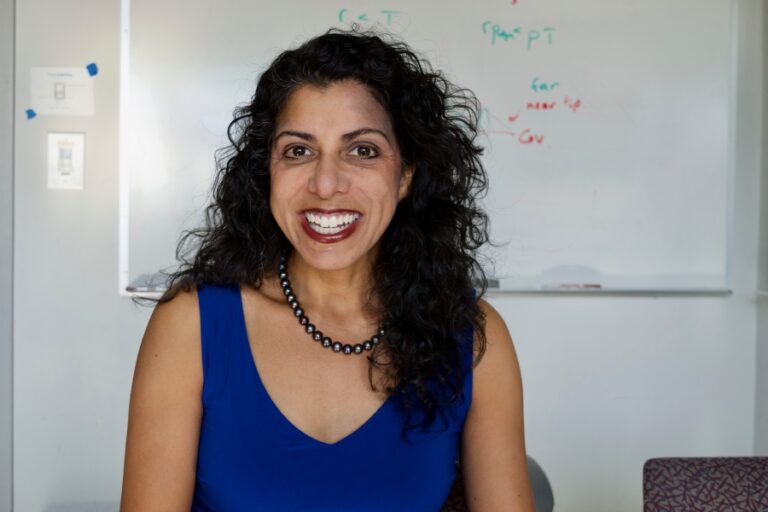
Raissa D’Souza

A UC Davis professor makes revelations about her journey, as well as her research on the complexity of systems

How are monkey societies, power grids and nanomechanical oscillators related? That is one of the questions that Raissa D’Souza, a professor of computer science and a mechanical and aerospace engineering at UC Davis is trying to answer. Scientists often study specific systems, sociologists investigate social networks and engineers study transportation networks. Yet D’souza wants to look at the basic principles which govern all complex systems. These interesting questions have led to one of the most successful periods in her scientific career; she is leading a multi-university investigation into these complex systems. The questions she is asking have been a long time coming.

In her years of high school in the suburbs of Chicago, D’Souza enjoyed logic puzzles and calculus. Her school didn’t offer physics but after studying derivatives and vectors in her math classes, she knew that she was interested in using math to describe the world.

“Seeing how to connect math to something tangible was really exciting,” D’Souza said.

At the University of Illinois Urbana-Champaign, D’Souza studied physics and philosophy. Her choice of study was an early incarnation of the interdisciplinary approach D’Souza has taken throughout her career. At UC Davis she works with scientists from across the academic spectrum.

“Many of the really exciting things in the world around us are highly interdisciplinary,” D’Souza said. “We need sociologists and engineers and mathematicians and physicists, and philosophers and artists all working together to solve problems.

During her summers at college, she interned at Bell laboratories training as an experimentalist. When she finished her undergraduate degree, she thought she would continue down that path at M.I.T. for her doctorate. Yet, when she arrived at graduate school, her plans changed.

“I showed up thinking that I would do what I had done in those research internships which was experimental atomic physics.” D’Souza said. “When I started grad school, I realized I was more interested in the basic fundamental questions than engineering a system to do a specific experiment.”

D’Souza discovered the field of complex systems: an area of physics focused on the behavior of systems that are difficult to model. In particular, she was fascinated by how simple interactions between independent actors could lead to incredibly complex emergent behaviors. A classic example of this phenomena occurs in ant colonies; each insect has limited capabilities and means of communication, yet ant colonies can accomplish incredible feats without centralized direction.

“I got really interested in what are called complex systems; looking at systems that have organized global behaviors that we wouldn’t have predicted which emerge from the interactions of simple microscopic elements” D’Souza said. “I really wanted to understand how I could use the tools that I gained in statistical physics to study emergent behaviors of collections of simple elements.”

At M.I.T she found researchers that were studying these behaviors in rigorous mathematical and scientific ways. She sought out those professors and did her thesis on the topic.

D’Souza’s technical training is not the only thing that informs her research. Her identity and upbringing are also central to who she has become as a scientist.

Raissa D’Souza is a unique name. Raissa is Russian, and D’Souza is Portuguese. The name is indicative of her diverse background and childhood. Her father is from India and her mother from Chile, and she grew up in an Irish neighborhood. According to D’Souza, this great diversity shaped her world view. As a child, she traveled to Chile and India regularly.

“Going to India was very mind expanding to see that most people in the world don’t live in suburban homes going to grammar school across the street,” she said.

Yet, like most non-white, non-male researchers, D’Souza’s background also made it more difficult to fit into the academic world. Still, D’Souza believes her outsider status has been an important aspect of her career.

“I’ve always not fit in, and it’s a little difficult to not fit in, but I think that not fitting in is what gives you that outsider’s perspective and creativity,” D’Souza said. “If we all think the same way we are not going to make progress, so we really need diversity of thought, especially as we are tackling much more challenging global problems.”

After graduate school, D’Souza had the opportunity to go back to Bell Laboratories to study theory, and then work at Microsoft research. Both experiences helped her further refine her interests. Then D’Souza arrived at UC Davis, and today her background, identify and career path have led to her current research query.

“Networks are so diverse, they are so massive, they have so many different realms that they live in, so what we are trying to do with this bigger project is think about; where is the complexity?  Is it in the node, or in the network connectivity pattern, or both?”

Written by: Peter Smith— science@theaggie.org

Instagram posts are ruining nature

Crowds of people taking pictures of the California super bloom has caused damage to the flowers, calling into question the role of pictures and social media in nature

The “super bloom” of wildflowers in California this spring has been gorgeous; it’s undeniably special to see the normally dry, brown hills blanketed with colorful blossoms, especially after the past few years of drought. Their arrival reveals a dark side, though. The widespread news coverage has sparked an overwhelming flurry of tourism in parks like the Anza-Borrego State Park near San Diego, and the attention has not left the flowers unharmed: in search of the best pictures, visitors are wandering out into the wildflower fields, creating new trails and crushing blooms in what USA Today called (a little dramatically) a “super bloom apocalypse.”

People wreaking havoc in the righteous quest for the perfect Instagram shot is not a new phenomenon: stories of people actually dying both in parks and urban areas for a selfie with a bear, a cliff or an oncoming train are shockingly common. These strange, morbid stories are a testament to the weird disassociation we feel when taking a picture — especially when that picture comes with bragging rights.

As social media has taken off in the past few years, more and more people filter their experiences through pictures meant for sharing, especially when they’re outside. Pictures of beautiful places have long dominated advertising, and it’s hard for me not to see the impulse to photograph and share pictures of the outdoors as something of the same thing. It’s a way of cashing in on natural beauty for brand development — in this case, a personal brand.

When my phone dings with a picture my mom took on her last hike, I feel genuinely happy, glad to be included in her experience. But I’ve also been on trips with friends where taking pictures of what we were doing felt more important than experiencing it. The genre of carefully-posed shots on Instagram with John Muir quotes for captions often leaves me feeling a little disillusioned about the whole thing.

I’m over people bagging on technology and social media; that’s not what I’m here to do. In another context, I’d defend they way that social media is getting people outside by sharing the excitement of exploring new places (which it does), and if posts of people looking hot in Lululemons in front of Half Dome makes caring about nature cool (which it does), please show out and fill up your camera roll. If I’m really being honest with myself, I don’t know if I would have ever tried climbing if I hadn’t been seduced by online posts — I still use Instagram to find places I want to go, scrolling through the explore page and then checking location tags to add adventures to my bucket list.

But for every shot of Devil’s Tower that makes me swear I’m gonna make it there this summer, there’s a picture — like the one that Miley Cyrus recently got flak for — of someone intentionally or unintentionally disrespecting the place they’re in for some kind of social caché. In an attempt to associate themselves with somewhere special, people put the picture above the place, undermining and sometimes damaging the place they’re exploring.

I’ve come across a lot of pictures of the California super bloom, on both news outlets and social media sites, taken by professionals and casual observers — even some taken from space. The vast majority were taken from only a few parks close to the California-Mexico border, which strikes me as strange, and a little sad: there are wild blossoms all over California this year, sprouting out of the ground to celebrate the end of a particularly brutal drought, and they’re pretty thrilling even in small numbers.

The idea that a picture with one particular field of flowers is somehow important, worth the traffic jams and environmental destruction, is a testament to the insane way we appreciate nature right now.

Written by: ANNA KRISTINA — akmoseid@ucdavis.edu

This Mother’s Day, remember the holiday’s radical roots

Take action to honor strong women

Mother’s Day is this Sunday, and while flowers or a phone call are lovely ways of letting your mom know you love and appreciate her, it’s also worth remembering that Mother’s Day began as the project of radical social reformers and activists. Long before it came to be associated with brunch or expensive gifts, Mother’s Day was imagined by multiple women as an acknowledgement of the political power of mothers and the necessity of reorienting the nation toward the traditionally maternal values of caregiving, nurturing and building community.

The original vision of Mother’s Day was of a transnational celebration of peace and justice. The abolitionist, suffragist and social activist Julia Ward Howe’s 1870 “Appeal to Womanhood Throughout the World” calls for women to “Our husbands shall not come to us, reeking with carnage, for caresses and applause. Our sons shall not be taken from us to unlearn all that we have been able to teach them of charity, mercy and patience. We, women of one country, will be too tender to those of another country, to allow our sons to be trained to injure theirs.” The other commonly cited root of Mother’s Day is reformer Ann Reeves Jarvis’ establishment of Mothers’ Day Work Clubs in the 1850s to combat poor sanitation and decrease infant mortality. Jarvis’ daughter Anna led the crusade to get Mother’s Day to be an officially recognized holiday, but already by 1920 she was disgusted by its commercialization and distance from her mother’s legacy.

The founders of Mother’s Day were the social reformers of the 19th century who saw firsthand that women, particularly mothers, were at the forefront of abolitionism and anti-war movements; that they were leading the charge for workers’ rights and early labor laws; that they were establishing schools and hospitals and the first women’s shelters. The women who envisioned a day of celebrating mothers had in mind a day to reflect on the enormous political and social power of women, especially of the women who raise us. Some of those reformers weren’t mothers themselves, but they recognized that you don’t have to birth a child to embrace the values and practices of mothering, like protecting the vulnerable, raising a strong community or demanding a better future –– values that seem more important to our survival with each passing day.

It’s high time that we reclaim that heritage and get back to a Mother’s Day that’s less about sending flowers and more about sending a message. If you really want to honor mothers and the other women in your life, call your congressional representative and demand that they support paid maternal (not to mention paternal!) leave. Or take a page out of the book of the Vietnam-era group Another Mother for Peace, which sent thousands of cards to Congress that read, “For my Mother’s Day gift this year I don’t want candy or flowers. I want an end to killing.” Make a donation in your mom’s name –– or in the name of a woman who’s important in your life –– to a charity like National Bail Out and its campaign to free black mothers from pretrial detention, or to organizations working to reunite separated families at the border. Send a girl to school. Join a women’s peace vigil. Become a Raging Granny.

Let’s stop treating Mother’s Day like another consumer holiday and get back to its radical social-activist roots. That would really make Mom happy.

Written by: The Editorial Board

Free menstrual products for students, Whole Earth Festival, and Celebrate Davis: Your Weekly Briefing

Happy Friday Aggies!

One month to go, Aggies. Week 6 has come to a close, hopefully along with your midterms. Whole Earth Festival is this weekend, and so is Mother’s Day — take some time on Sunday to show her you care.

If you’re not already, make sure you hit that like on Facebook and give us a follow on Instagram and Twitter to stay up to date and in the know with all things Davis.

Without further ado, here’s what you need to know this week…

Campus:

CAITLYN SAMPLEY / AGGIE

From pink tax to tampons for all — The ASUCD Senate overwelmingly passed a bill to implement a pilot program to supply bathrooms on campus with free feminine products for students. A survey conducted by the Period Project concluded that 97% of respondents support having free menstrual supplies, 58% acknowledge buying these products to be a financial burden, and 50% reported to having missed work or school due to lack of access to menstrual products. The program is the first of its kind on any UC campus and will begin by supplying high-traffic bathrooms on campus with organic, low-waste applicator tampons as well as pads. Read on.

City:

JAMIE CHEN / AGGIE

Celebrate Davis — This Thursday, May 16 is Davis’s annual event and fireworks show. This year’s celebration at Community Park will feature a walk-through exhibit of the “History of Yolo” along with performances, food, bounce houses, shopping and of course the fireworks show. Vendors include Sudwerk Brewing and Running Rivers Wine, but there will also be city service booths offering residents info about their water bills or on programs happening in the city this summer. The event runs from 4-9 p.m., is free of charge and will be offering a free bike valet service — just when we thought it couldn’t get any more Davis. Read on.

Features:

LUIS LOPEZ / AGGIE

Soon-to-be grads in their stoles wandering campus with a bottle of champagne at golden hour, yup it’s grad photo season — but I’m sure you already gathered that from your oversaturated Instagram feeds. The UC Davis brick wall sign, the eggheads, the avenue between the MU and Wellman are all iconic Davis photo spots. Read on for the full list of popular photo spots.

Arts & Culture:

NICHOLAS CHAN / AGGIE FILE

50th Annual Whole Earth Festival — a celebration of art, music, activism and wellness. Today, tomorrow and Mother’s Day Sunday, the three day event will be hosted on the Quad featuring bangin’ vegan food, vendors such as ceramicists and jewelers, yoga, and music on three main stages. Centered around several educational booths, the festival’s mission is to spread awareness of environmental and social issues such as climate change. Stop by this weekend.

Sports:

DAVIS WHALEN / AGGIE

Soccer rising in popularity in U.S. — MLS expansion. Known as the global sport, soccer attracts 4 billion fans worldwide and is a source of national pride for many countries, not so much in the U.S.. However, with recent expansion of the number of teams in the MLS from 19 in 2014 to 24 in 2019, they plan to expand even further by 2021. Additionally, teams in the secondary soccer league USL, the United Soccer League, such as in Sacramento are putting in expansion bids to the MLS to privately finance their own soccer-only stadiums. Read on.

Science:

CRYSTAL YE / COURTESY

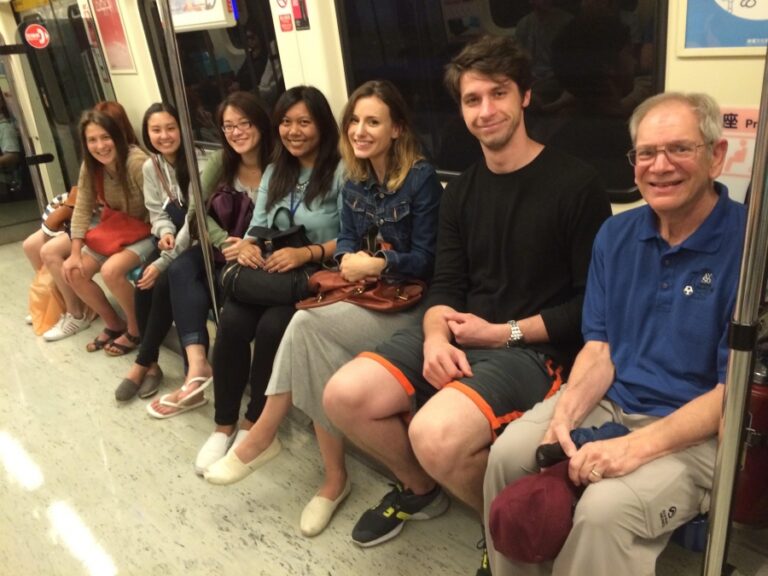
Neil Schore — S profile on a UC Davis chemistry professor of 43 years.

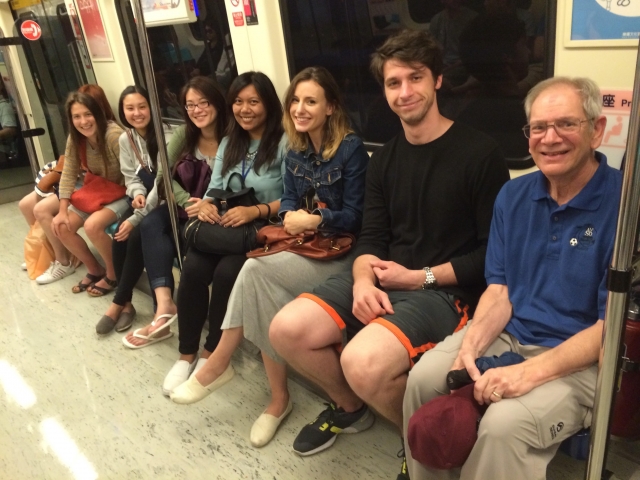
“Schore’s path to chemistry started with a magic show, featuring exciting exploding pennies, at eight years old. As an only child living in one of the 15-story New York City projects, Schore liked to think about science problems at home, looking for science and math self-help books to read. He was especially fond of the “Science for Dummies” series.” Professor Schore will be teaching the Pharmaceutical Chemistry in Taipei, Taiwan Quarter Abroad Program. Read on.

Culture Corner — Alyssa’s Weekly Picks

Television: “Portlandia”

Movie: “Love, Simon”

Book: “I Know Why the Caged Bird Sings”

Album: “A Place We Knew” by Dean Lewis

Read More.

Opinion:

Editorial — “UC Davis should be an active ally to LGBTQIA students, faculty, staff

Humor —  “Humor: National Hockey League using BioBrew cookies as pucks

Column — “Is vertical farming a solution for feeding our growing cities?

That’s all for this week. Check back next Friday.

— Grace Simmons

May is Pride Month at UC Davis

LGBTQIA Resource Center presents “Collective Healing for Liberation” as month’s theme

Pride Month at UC Davis began with a kick-off event on May 2, 2019 and will continue with a host of additional events throughout the month of May. The events will be held at the UC Davis LGBTQIA Resource Center in the Student Community Center, the Student Health and Wellness Center, the Quad and other locations on campus. The theme for this year’s Pride Month is “Collective Healing for Liberation,” focusing on healing within the LGBTQIA community.

Joel Gutierrez, a third-year gender, sexuality and women’s studies and American studies double major and community coordinator at the Center, spoke about this year’s theme.

“This year’s theme is collective healing for liberation,” Gutierrez said. “We are really focusing on healing, and what that looks like for the communities, and how there can be many different forms of healing for people.”

In this effort, the the Center is actively collaborating with the Health Education and Promotion program within Student Health and Counseling Services, according to Gutierrez. During the first week of Pride Month, a series of activities called “Student Healing Week” will be provided in collaboration with HEP, allowing the Center to, “really hone in on [our] theme and make sure that we’re doing programming that reflects that theme.”

Though healing is the overarching theme of the whole month, long-running events will also take place again.

“For example, Pride Kick-Off and Out On the Quad are [events] that are pretty much similar every year and don’t necessarily have to align with the theme completely,” Gutierrez said. “They are ways to celebrate pride.”

A diversity of events are on the docket, including therapy dogs and bug-contact events.

“Something we really worked on is to think about forms of healing that [people] don’t think about right away when you think of healing,” Gutierrez said. “For example, we are doing therapy fluffies like when they have the dogs during midterm season and therapy bugs […] At the Bohart Museum [of Entomology], someone is bringing some bugs from there. That way folks can interact with the bugs. That is healing, so they can relax [with the bugs].”

While animal events are common outside of the Center, events led by other community coordinators at the Center will be prominent as well.

“One of our staff is doing a movement-based healing [and] workshop. One of my co-workers is doing a tincture workshop,” Gutierrez said. “We are also really thinking about how we can heal just by being with community as well.”

To Gutierrez, Pride month is a way to show off the size of the LGBTQIA community at UC Davis to help dispel the “myth that there are not that many LGBTQIA people” and the misconception that the LGBTQIA community on-campus is not as large as many people think.

“I think Pride Month is an example that there are a lot of us,” Gutierrez said. “If someone were to go to every single event, they would see so many different faces and also that people have many different interests. I want to tell the greater campus community that our community is really strong and benefits from being together and really finding connections with each other as well, because all of our communities are so interlinked.”

Lehma Sawez, a fifth-year history and international relations double major, spoke about the importance of the Pride Month Pick-Off event held on May 2.

“Pride Kick-Off is a way for us to start off the month of May in a way where we are able to gather community and celebrate Pride Month,” Sawez said. “It is a way for us to come together to celebrate being community so that we can further plan for the events for the month.”

Out on the Quad will be the largest of the Pride Month events and is planned for May 14 from 12:00 to 2:30 p.m. The event expects a large turnout from the UC Davis community.

“Out on the Quad will be one of our biggest events,” Sawez said. “We [will] occupy the front part of the east quad, and we have tables and events and we give out shirts, and it is just a way for the community to be visible and present here on campus and also to just spend time with each other.”

Kit Phillips, a third-year wildlife, fish and conservation biology major, spoke about what the Pride Month Kick-Off event and other events during Pride Month mean to them.

“It’s not necessarily that it is just this event only,” Phillips said. “Events such as these and spaces such as these are for some people, the only place where people are allowed to safely be themselves [and] to be out as their identify without fear of being rejected by peers. We pride ourselves on being a safe space for that to happen. For people who cannot be themselves outside of this space, this is a really big thing.”

Phillips is also looking forward to the festivities during Out on the Quad.

“I’m really looking forward to Out on the Quad,” Phillips said. “It’s always a highlight of the year for me to go and see all of our centers, clubs and all of our tables and activities that we do not just on a weekly basis here [in the center] but it is showcasing this is who we are, and we are not going to hide ourselves, and engaging in community and having a great time.”

Written by: George Liao — campus@theaggie.org

Gunrock Gaming: Providing students with a new space to game

Games Area coordinator emphasizes the fun pastime and its engaging qualities

Those in the gaming community may recall times in high school when parents would place strict rules on electronic activities. Instead of staying up all night hunting the Covenant in “Halo,” or challenging someone to a quick-scope battle on Rust in “Modern Warfare 2,” they had to be in bed at a certain time or risk losing gaming privileges. The move to college certainly provides members of the gaming community with one assurance: they can game anytime, any day. With the grand opening of Gunrock Gaming, students are encouraged to rally up their friends and indulge in online computer gaming experiences, while also learning valuable information about the technology they’re using to do so.

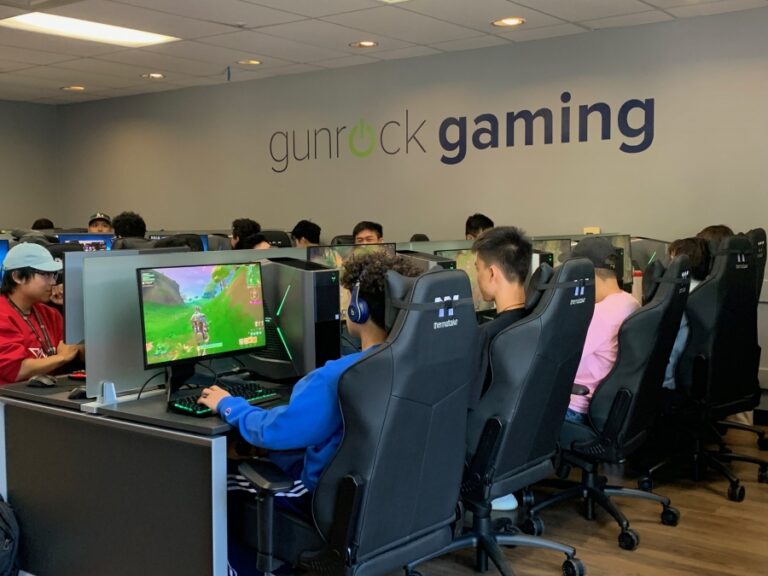
Walk into Gunrock Gaming and immediately you’ll find it’s a gamer’s paradise. From the two TV screens plastered across the wall showing Twitch livestreams of gamers like Herschel Beahm IV, popularly known as Dr Disrespect, to the 28 gaming computers ready and waiting to be played, it has a little something for everyone.

Ferguson Mitchell, the Games Area coordinator who arranged the arrival of Gunrock Gaming, explained how the new gaming area came to be.

“The Tech Hub used to be here, but now it’s moved down to the vacancy that was in the Games Area where we had an extra billiards room,” Mitchell said. “They were looking for the right thing to place here, but nothing really worked. They eventually came across the idea of a PC gaming space, especially since UC Irvine put up an e-sports gaming area on their campus a few years ago, and Berkeley did in the fall too. So they came to me a little over a year ago and asked if I wanted to turn this place into Gunrock Gaming, and I said, ‘I absolutely do!’”

Mitchell explained how his own background in the esports scene helped him find the inspiration to turn gaming into something all students could enjoy.

“In 2011, I was a student here, and I started the ‘Starcraft 2’ club,” Mitchell said. “With our team, we became one of the top teams in the nation. In 2013, our collegiate record was 17-0. After I graduated, I couldn’t be in the club anymore, but I was still interested in professional gaming, so I worked with CSL [Collegiate Starleague], a collegiate esports organization. I became an e-sports journalist, and I still am today. I was also a coach for a ‘Starcraft 2’ team, I’ve commentated for ‘Starcraft 2’ professional matches, I worked for Riot Games doing match coverage, so I’ve done pretty much everything.”

After 14 months of planning and anticipation, the grand opening of Gunrock Gaming was held on April 25, which gave students the first look at what to expect. The “League of Legends” club and Aggie Gaming sponsored the event and helped put on various live matches for the packed crowd to watch.

“We had a casual tournament where people could race across [a] series of games to complete minor objectives,” Mitchell said. “The grand prize was some gaming gear from Viper Gaming, so we were really excited to offer that.”

While allowing students to have a comfortable space to game with their friends is the ultimate objective, Mitchell also expressed interest in working with professors to create an extended learning space for students interested in game design.

Most of the games available through Gunrock Gaming are free to play and multiplayer games, like “Fortnite” and “Apex Legends,” that students can enjoy together to create lasting friendships over a common interest. The possibility for holding other games that cost money is an avenue that Mitchell is still looking into.

“These are games that students play with others, so they talk about strategy, or they simply enjoy watching them together,” Mitchell said. “The expectation is that, eventually, we’ll have guest accounts for people who don’t own the games we feature. Like ‘Overwatch,’ for instance, that costs money, and if some students can’t afford it, they can come here and play it using a shared account. Of course, if you own the game already, you can log in to your own account and play with your personal settings.”

The social scene of gaming is something Mitchell hopes to highlight through Gunrock Gaming, and he hopes to have a space open to any and all players looking to make new connections.

“We’d like to encourage the social aspect of gaming as well, getting students to work together in different ways,” Mitchell said. “For instance, there’s a controller called the Octopad that allows you to play games like ‘Super Mario,’ but each player can only have one button, so one person can jump, another moves right, another moves left and so on, so you have to work together to accomplish the goal.”

Holding more casual tournaments is part of the goal Mitchell has in mind, to allow students to come together, enjoy their favorite games and meet new people under low-stress circumstances. Creating campus-wide teams for tournaments that would be held throughout a quarter is something Mitchell is very passionate about extending to the students. He also hopes to give them the opportunity to explore gaming in a greater sense. Other social activities include the idea of “Fortnite” Fridays, where students can stop by and play “Fortnite” with friends.

Another expansion of Gunrock Gaming that Mitchell has in mind is an idea he calls the “A to Z of gaming.”

“If people have no experience gaming, we could have an intro class of like, ‘What is ‘League of Legends?’’ We can show them how to play it, share advanced tips if they want to become really skilled and then move on to things like skill workshops. We want to try and link with Aggie Gaming to allow students to become coaches for gaming if that interests them so they can be paired with people who want to learn and get better with games.”

While 27 computers in Gunrock Gaming have the same capacities, the 28th one has been dubbed “The Throne” for its advanced playing capabilities above all the rest.

“It’s something I want everyone to have an opportunity to play on because 99% of students do not have the resources to play on something like it,” Mitchell said. “This is something that does look impressive. We want prospective students to show this to their parents and let them know that this is something the campus cares about. Instead of being holed up in an apartment, they can be here, making friends, learning about computers and socializing.”

Mitchell also made a point to stress the various avenues that are available to students within gaming and how it can be more than just a hobby.

“People can do so much with gaming, such as professional commentary or event management,” Mitchell said. “We’re planning a big [Local Area Network] event next month and we’re looking at getting up to 200 people in the MU playing in a number of tournaments and winning lots of prizes. All of that management and coordination, that’s stuff students will be involved in and can put on their resumes. It’s all in pursuit of helping students become well-rounded.”

Now that the new gaming center has arrived, students are encouraged to find out all that gaming has to offer. Whether it is socializing with friends, meeting new people or harnessing professional skills, Gunrock Gaming is here to put games on the map.

Written by: Vincent Sanchez –– features@theaggie.org

Cartoon: Pete

ROSEY MOREARTY / AGGIE

Written by: ROSEY MOREARTY — rosey@morearty.org

A case for forgiveness

Public shaming can only teach part of the lesson on wider issues of prejudice

The age of technology and rise of social media has allowed us to share and interact with others immediately and globally, connecting people and communities all over the world. The immediacy of sharing stories and posts affords many things — keeping up with friends and family, expressing solidarity with others in trying times and even calling attention to issues and practices that have no place in our society. That immediacy also allows for reactionary responses to be shared swiftly and snowball even faster.

Videos, images and scandals go viral all the time — which, without context, can be dangerous. Ridicule is often misdirected, made evident by the mischaracterized incident between a group of students from Covington Catholic High School and a Native American elder. Images of the elder playing a ceremonial drum and the smirking teen in a MAGA hat spread rapidly, but the viral image and partial video of the event failed to capture the incident as it really occurred. Consequently, the teen was subjected to unjustified and borderline immoral ridicule — likened to a school shooter and a symbol for white supremacy. If guilty of anything, it’s disrespect; but disrespect doesn’t warrant this kind of response and, more importantly, this kind of response does little to change that behavior. On the contrary, the amount of ridicule he received from the left more likely solidified the very beliefs that allow him to support a president who many feel is racist himself.

Shaming is a large part of the culture of viral media and can be productive when appropriate, such as in the case of serial sexter and convicted child predator Anthony Weiner or former Missouri Governor Eric Greitens, accused of blackmail and misusing his charity’s donor list for political ends. But shaming doesn’t always work — not everyone is willing to resign and, more to the point, shaming doesn’t necessarily target the culture that cultivates those beliefs and behaviors we find reprehensible.

After spewing abhorrent racism in the House of Representatives for over a decade, Republican Congressman Steve King was finally ostracized by congressional leaders in January, removing him from all committee assignments. While GOP leaders deserve commendation for taking appropriate action, overlooked is the culture that has yielded nine straight election victories for an essentially open white supremacist.

All too often, shaming accomplishes little beyond simple ridicule. Steve King remains the representative of Iowa’s 5th congressional district to the U.S. Congress. Ralph Northam remains the governor of Virginia despite the discovery of him wearing blackface in his medical school yearbook.

Beyond simply thinking twice before sharing a misleading story or partaking in premature condemnation, as a society, we have to ask what our objective is in shaming: is the goal to get people, for example, to just resign or to eradicate condemnable practices at the root? If we want people to simply go away, shaming is great — it got Roseanne Barr off the air. But if we want to target deplorable behavior, making people go away simply won’t do it.

Shaming has effectually become shunning. With technology and media, the face of a scandal becomes instantly recognizable and more easily ridiculed, the inescapability of it all forcing those at the center into hiding. Shaming doesn’t encourage an honest conversation, and honesty is necessary to target issues of belief at their roots. How do we know what we’re fighting, or how to fight it, unless people fess up, say how they’ve contributed to the problem?

In an incredible piece on the culture of shaming done by John Oliver, Monica Lewinsky — unfortunately a public shaming icon — discusses the aftermath of her scandal with former President Bill Clinton. She recalls the inability to escape the scandal as it followed and affected almost every aspect of her life, from dating and familial relationships to employment and mental health. That’s not to say the actions of Northam and Lewinsky are comparable. But there’s something to be said about the practically rampant and inconsequential incidents of politicians in blackface — there are far too many racists to make them all go away. And even if we can force some into hiding, it’ll only encourage others to pretend they don’t partake in a culture of oppressing others.

If we can’t shame people out of behaviors, perhaps it’s time for a new tactic.    

Combatting behaviors rooted in deeply flawed beliefs is futile unless those fallen prey to such misguidance are part of the conversation — and that inherently involves a degree of forgiveness and toleration. In forgiving, we also respect the capacity of those at fault to change, and ultimately, isn’t change what we want to achieve? In order for people to change, they have to believe they can.  

Written by: Hanadi Jordan — hajordan@ucdavis.edu

Disclaimer: The views and opinions expressed by individual columnists belong to the columnists alone and do not necessarily indicate the views and opinions held by The California Aggie.

LeShelle May

How her childhood made her the assertive, innovative leader she is today

One of the first things noticeable in conversation with LeShelle May is that she has a refined sense of objectivity. Whenever anything negative comes her way, she takes a step back and looks at things objectively to understand how to best handle it. She credits this skill to her mother.

“I grew up with a very nervous mother. I was always trying to please her. Anytime she got nervous, I would say ‘Okay, calm down. Look at the big picture.’ That forced me to mature a little earlier.”

May grew up in Harlem in New York City and comes from humble beginnings. When she tells her story, people frequently assume that she was a first-generation college student. On the contrary, both of her parents have undergraduate and graduate degrees. She grew up in a single-parent home where she lived with her mother.

“My mom worked as a social worker. She felt that my high school opportunities would be limited because the parochial school I was in ended after sixth grade. It gave me a strong foundation in math and science which I had a better aptitude for.”

This led to May moving to a predominantly Jewish town in New Jersey for middle school and meant that she would have to travel to New York to visit her father.

“I didn’t visit him that much. He was not a father type figure. But what he would do during the weekends that I did spend with him was teach me how to play chess. I used to be really good at chess. It was just that logic and thinking and that kind of helped.”

In New Jersey, May was able to take classes in AP Physics and AP Calculus and hone the math and science skills she already had an affinity toward. She described herself during that period of time as outgoing but shy. She considered herself a nerd, never the popular girl or the cheerleader type. Most of the students from May’s high school went to top-tier colleges. May wanted to go to Brown.

“I studied at Boston University. But my first choice was Brown, where I was waitlisted. My dad wanted me to go to Vassar for the law but I told him that’s not happening.”

May credits her high school for making the transition to college courses at Boston University easier. Her tough high school teachers made college courses seem a lot easier.

“But then when I started to build into these tough academic courses, your confidence can be compromised. But at the same time, I didn’t have an option B. I knew this was it. My family wasn’t well-to-do so I had to keep a certain GPA to keep my scholarship. That kept me studying harder and working harder.”

LeShelle May has now been working in software development for CNN for over 20 years and is also passionate about health and fitness. She’s also an avid traveler.

Written by: Kriti Varghese — science@theaggie.org

Yolo County Board of Supervisors declines plan to hire attorney for immigrants facing deportation

County supervisors voted against setting aside $50,000 in general funds to hire new immigration attorney for a year

On April 23, Yolo County officials declined to pass a resolution to hire an attorney for the purpose of defending immigrants facing deportation but left room open for future consideration in their upcoming June budget discussions.

The plan, put forward by supervisors Don Saylor and Jim Provenza, would have added $50,000 dollars to the existing $100,000 earmarked by the county for legal aid to immigrants, according to the county officials. The funds would have been used to hire either an outside attorney or dedicated public defender — who would assist in deportation cases — for one year. To pass, four of the five council members needed to approve the resolution during the April 23 Board of Supervisors meeting.

During the meeting, Tracie Olson, a public defender from the Yolo County office, voiced support for the proposal. She spoke at length about the some of the challenges immigrants face in the current national political climate.

“Today what we have is a system where immigrants can be arrested, can be brought into jail and they can be detained for long periods of time,” Olson said. “And we all know that — as of late — the federal system has implemented stepped-up policies aimed at its emission of deportation.”

Olson said that immigrants caught up in today’s immigration courts are often denied proper legal representation and that language and financial barriers often put these defendants at a disadvantage.

“They are crushed by evidence that they can rebut but they don’t know how, and they have no assistance because they’re not entitled in the federal system today to the assistance of legal counsel if they’re too poor,” Olson said.

The budget resolution, according to Olson, would have allowed the Yolo County office to assist detainees as they move through the local system to the end of their case in federal immigration courts. Answering a question from Provenza, Olson said that office is currently unable to represent its clients once their cases were transferred from states to federal courts. In a response to a question from Supervisor Gary Sandy, Olson estimated that the resolution would allow her office to handle 30 to 50 of these cases per year.

When Provenza asked about the detainees’ chances of staying in the country without representation in federal courts, Olson stated they were “dismal.”

Supervisor Duane Chamberlain, however, disagreed with Olson’s characterization of the immigration legal system. He cited some of the legal difficulties immigrants from Mexico whom he employed at his farm had faced in the past, stating that he was able to “get it straightened out” by working directly with immigration officials.

Chamberlain voiced his opposition to the proposal, citing budgetary concerns.

“I’m not going to vote to throw another $50,000 at this,” Chamberlain said. “We’ve got enough budget problems already. You’ve got 100,000 [dollars] to play with.”

Supervisor Oscar Villegas also expressed skepticism that engaging in the current federal immigration system was the best use of the additional county funds.

“I don’t believe that we are equipped to deal with what could become a massive caseload in light of what the federal government is currently doing,” Villegas said. “Yolo County is in no position to be able to withstand the amount of resources potentially being placed in the illegal immigration that are currently pending before our court systems.”

Sandy also came out against the proposal at the current time, saying that he felt federal immigration issues were outside the purview of the county’s responsibilities. He stated would like to see more data and information before he made a decision on the matter.

“I appreciate this proposal very much, but at the moment, it is not sufficiently grounded to move forward,” Sandy said. “We’re dealing with absence of real numbers here, real impacts that I could evaluate and measure in the system, and instead we have to rely on anecdotal evidence to provide backing for this.”

With the majority of the board expressing either disapproval or the desire for further research to back the proposal, Provenza agreed to withdraw his motion to pass the resolution until the council’s June 11 budget hearing.
Written by: Tim Lalonde — city@theaggie.org

Neil Schore

After 43 years at UC Davis, Neil Schore, a professor in the UC Davis Department of Chemistry, still enjoys problem-solving

He was the first person in his family to go to college. He was the first person from his high school to go to the University of Pennsylvania. He chose chemistry as his major, and it became his way to connect to others. As Neil Schore, a professor in the UC Davis Department of Chemistry, prepares for his term to teach students at the UC Davis Quarter Abroad Pharmaceutical Chemistry in Taipei, Taiwan Program, he reflected on the moments leading him to his newest batch of students.

He still manages to steal time away, loading Hearthstone on his phone for a quick game of strategy. His son, Michael, got him into the game but Schore has amassed hundreds of collectible cards, purchasing new collectible cards after each in-game victory.

After a quick game, Schore looks forward to making plans with his students, such as their unanimous decision to see Marvel’s “Avengers: Endgame.” Even though his class eagerly saw the movie already, they are all planning to see it again, together.

This quarter abroad class is a result of Schore and Jacquelyn Gervay-Hague’s efforts to create a study abroad program for the sciences, allowing students to focus on three UC Davis pharmaceutical chemistry courses, or a full year’s curriculum, in one quarter along with a seminar series filled with members of the pharmaceutical industry. The classes are also open to students at Academia Sinica in Taipei.

“Neil Schore is an inspiring scholar,” said Jacquelyn Gervay-Hague, a professor in the UC Davis Department of Chemistry. “Beyond his enthusiasm for science, Neil brings art and music to the learning experience, encouraging students to tap into their own creativity.”

Schore’s path to chemistry started with a magic show, featuring exciting exploding pennies, at eight years old. As an only child living in one of the 15-story New York City projects, Schore liked to think about science problems at home, looking for science and math self-help books to read. He was especially fond of the “Science for Dummies” series.

In a time when the first satellites were launched into space and the United States competed against Russia in the Cold War, Schore knew he liked learning about chemistry, physics, math and astronomy. He liked the kind of science that demanded creativity and tangible solutions. Chemistry created a good match, where one could mix things together and see what happens.

Schore spent a lot of time being lost in college, finding his own way and relating to other students.

During his sophomore year, he found a great teacher and mentor in Madeleine Joullie, who encouraged him and two other students to identify problems to solve, then solve them. Their group of three built a friendship lasting them throughout undergraduate research and college, leading them to successful careers in chemistry.

Above all chemicals he has encountered, Schore’s favorite is Coenzyme Q10, a molecule existing in every person to help the body use oxygen, metabolizing it as people breathe.

Schore plans to retire from his full-time faculty position later this year. Even then, he hopes to continue his 43 years of professorship at UC Davis, inspiring creativity and problem-solving within the next generation of scientists.

Written by: Foxy Robinson  — science@theaggie.org