58.7 F
Davis

Davis, California

Monday, December 22, 2025
Home Blog Page 425

Celebrate Davis returns with traditions, new historical activity

Local businesses, organizations come together to honor city’s rich history

The annual Celebrate Davis and fireworks show, is a celebration of Davis’ prolific business community, residents and student life. The event will be hosted by the Davis Chamber of Commerce on Thursday, May 16.

The gathering is free of charge and set to begin at 4 p.m. It will feature performances, food options, bounce houses, shopping and a fireworks show to conclude the event at 9 p.m. Attendees will gather at Community Park on F Street, which is the same venue as the annual Fourth of July fireworks show.

A new feature to this year’s celebration displays a walk-through “History of Yolo” section, showcasing artifacts from the County’s history.

“Old vehicles and equipment will be on dis from the City of Davis Police Department, Fire Department and Recology, who is our Title Sponsor this year,” said Holly Claus, the director of events & marketing of the Davis Chamber of Commerce, via email. “There will also be old photographs brought out by UC Davis Shields Library for attendees to view.”

The Chamber keeps the event environmentally friendly and tries to reduce traffic by encouraging participants to bike to the event and utilize the free bike valet service, as well as bring their own reusable water bottles to use at fill-up stations, according to Claus.

Some vendors of the event include Sudwerk Brewery and Running Rivers Wine Cellar, while sponsors include A Grand Affair, Nugget Markets, The Kana Company, among others.

According to Bob Bowen, the public relations manager for the city of Davis, the city will partner with the Chamber and have six different booths from various departments –– from public works to the police department. Residents will be able to ask questions about their utility bill or learn more about upcoming summer programs and recreational activities.

“People have an opportunity to find out about some of the city services and the programs that we have or some the projects that are underway right now,” Bowen said. “People are concerned about some of the streets being resurfaced, deciphering their water bills and some of the services provided all across the city.”

In collaboration with the Davis Chamber of Commerce Board of Directors and the Chamber Ambassadors, DJUSD Board Trustee Joe DiNunzio has helped set up the event’s educational booths and family-friendly activities in past years.

“We have hundreds of members participate in Celebrate Davis, through whom we entertain more than 10,000 attendees every year,” DiNunzio said via email. “For me, it is rewarding to engage directly with so many of our community members, Chamber members and civic leaders. It is a great place to meet and connect with people from all four corners of Davis — including UCD.”

In addition to helping coordinate the event, Bowen and DiNunzio enjoy participating in the festivities. Bowen looks forward helping the U.S. Bicycling Hall of Fame with its display, which features an old-fashioned high wheel bicycle.

DiNunzio commented on the welcoming atmosphere and sense of community present in the traditions at Celebrate Davis.

“There are a number of fantastic food and drink vendors, engaging member exhibits and lots of fun games and physical activities for people of all ages,” DiNunzio said via email. “I recommend that people plan to spend a couple of hours to get the full experience and most definitely stay for the fireworks — it is always a great show.”

Written by: Renee Hoh — city@theaggie.org

Four Aggies get a shot at living out NFL dreams

Doss, Moe, Olave, White will participate in rookie mini-camps

A quartet of former UC Davis football players will have an opportunity to continue their careers at the next level after getting the call from four different NFL franchises following last month’s NFL Draft.

Wide receiver Keelan Doss and linebacker Mason Moe both signed rookie contracts and will join their teams as undrafted free agents. Doss will stay very close to his hometown of Alameda and compete for a spot on the Oakland Raiders. He participated in the team’s rookie mini-camp during the first weekend of May, which is a three-day workout all of the 32 NFL franchises hold for their newest players out of college.

Moe, an All-Big Sky Second Team honoree last season, will head east to the City of Brotherly Love and compete for the Philadelphia Eagles. After leading the Big Sky in tackles for loss and sacks last season, Moe plans to finish his American Studies degree this quarter.

Meanwhile, defensive backs Isiah Olave and Vincent White both received invites to participate in the rookie mini-camps, after being notified late last week. Olave, who was second on the team in interceptions and pass break-up’s last season, will head to South Florida to try out for the Tampa Bay Buccaneers. White, the Big Sky leader with 21 pass break-ups last season, will get a shot to play for the Denver Broncos. Both players will try to earn spots on the 90-man rosters this upcoming weekend, in hopes of getting invited back for further offseason workouts and training camps in mid-July.

Doss’ noticeable absence from the NFL draft was a head-scratcher for many fans and draft “experts,” who were expecting a mid-to-late-round selection. As time continued to pass on Friday evening and Saturday morning of draft weekend, it became apparent that Doss, who was watching on television with his friends and family in Alameda, was not going to hear his name called on the big stage in Nashville, Tenn., where the main event was hosted. Evidently, his pectoral injury at the NFL Combine in March proved to be a concern for NFL front offices, and his once-soaring draft stock took a sizable blow as a result.

Nevertheless, he was quickly snatched up by the Oakland Raiders just a couple hours after the conclusion of the draft on Saturday afternoon. Reportedly, there was a grand total of 18 NFL teams lining up to sign the 2017 Walter Payton Award Finalist, but Doss chose to stay close to home and sign with the team that coached him during the Reese’s Senior Bowl in January. During that week of practice with many of the top college football players in the nation, Doss was able to forge a relationship with Oakland Head Coach Jon Gruden, who he had grown up watching and adoring as a kid in the Bay Area.

“We were definitely surprised he wasn’t drafted,” Carmen Wallace, Doss’ agent at Athletes First told The Athletic last week. “But he has a tremendous opportunity [in Oakland]. Plus he has a great rapport with the rest of the staff and felt he had a head start on the offense.”

Doss will have his work cut out for him trying to earn a spot in a wide receiver corps that already includes high-profile free agent signees Antonio Brown and Tyrell Williams, among other talented players in the position. However, Gruden has all the confidence in the world that Doss will be able to rise above the competition and secure a spot on the 53-man roster.

A Sports Illustrated film focusing on Doss and his preparation for the NFL draft, “Next Level,” was recently released, giving viewers a behind-the-scenes look at his experiences at the Senior Bowl, Combine, Pro Day and draft night. The film shows footage of Gruden speaking to Doss shortly after the draft and reiterating his trust and belief in the player’s talent and ability. This was surely a crucial selling point in Doss’ decision to sign with the Raiders.

Given all the obstacles Doss has overcome already, outperforming his teammates and ultimately earning a spot on the Raiders roster is well within his reach. It will take an incredible amount of hard work and determination over the next four months, but Doss has shown time and time again just how gifted he is on the football field.

Overall, all four of these former Aggies played a pivotal role in leading UC Davis to one of the greatest and most memorable seasons in the program’s 100-year history. They formed a large part of the core that dominated opponents throughout the fall, en route to a 9-2 regular season, a first round bye and first Division-I playoff victory in school history.

Each of these young men has rightfully earned their chance to prove himself at the next level. Whatever happens is ultimately up to how well they perform under a small, extremely scrutinized sample size of time on the practice field. If each player is lucky enough to make it past training camp and into preseason football in August, they will have a legitimate shot at living out their childhood dreams of making it to the National Football League.

Written by: Brendan Ogburn — sports@theaggie.org

Senate passes bill to fund free menstrual products in restrooms on campus

Meeting also sees confirmation of new IAC members, discusses upcoming budget hearings

The ASUCD Senate meeting was called to order by Vice President Shreya Deshpande at 6:10 p.m. on Thursday, April 25.

The meeting began with a brief Club Finance Council presentation, which discussed funding for student organizations.

IAC Chair Henry Nibelli then nominated new Internal Affairs Commission (IAC) members. The Senate confirmed Julian Garcia, Hannah Tan, Emily Barneond, Juan Velasco and Jackson Cooney into the IAC. New IAC member Aryushi Chheda was absent.

Senators then had the opportunity to ask the commissioners about their hopes for ASUCD. Commission members spoke about the need for greater campus awareness about the Senate, greater bipartisanship and a more detailed knowledge of the bylaws in order to provide effective policy suggestions for senators.

Senate then considered old legislation. SB #81 was examined, but later withdrawn. SB #82 was not considered because it had not yet reached the Ethnic and Cultural Affairs Commission.

Next, Senate discussed SB #73, a proposal to implement a pilot program for providing tampons and pads in high-traffic university bathrooms.

A survey run by the Period Project on campus indicated that 97% of respondents support having free menstrual supplies in campus bathrooms, and 58% of respondents see menstrual products as being a financial burden. 50% of respondents reported they have missed some work or class at least once as a result of not having access to menstrual products.

“With this bill, we not only aim to curb that kind of inequality — because as we know [with] the quarter system, specifically if you’re a STEM major, you’re not going to make it if you skip class just for something that’s so basic — and on top of that, we aim to be a leader in the UC system by being one of the first campuses to supply these products, not by the administration but by the students,” said Shervin Shahnazi, who worked with Senator Ricky Zapardiel on the bill, to resounding snaps from Senate members.

The only reservations expressed about the bill regarded the financing of the trial period for the program. The Senate also decided that organic, low-waste applicator tampons, as well as pads, will be supplied in high-traffic bathrooms including those in the Memorial Union. The bill was then passed without objections.

During public discussion, ECAC Chair Rina Singh expressed hope that ASUCD will pass a bill regarding sexual assault and harassment.

“I think it’s important for us to be thinking, because harassment has happened, and when that happens, what are the systems in place to address it?” Singh said. “And I think it’s really important to initiate that process. If anybody is interested, I personally want to work with GASC [Gender and Sexuality Commission] and address this.”

Deshpande mentioned budget hearings that will take place this week to address a potential dissolution bill. The bill may include budget cuts for specific units including the Experimental College, due to out-of-date advertising and low membership rates compared to increasing UC Davis student enrollment.

“When it comes to these cuts, you have to ask yourself what you’re prioritizing in terms of what it accomplishes, like what could be considered a luxury relative to other units,” said Senator Alexis Ramirez.  “I think if we make cuts in certain ways, it doesn’t mean we have to make cuts to other units. But units such as Experimental College […] relative to Pantry or other units, are a luxury, in my honest opinion,” Ramirez added.

Deshpande concurred.

Singh noted they felt “conflicted” about some of the proposed budget cuts, especially with respect to the Experimental College.

“I personally think that dissolving these units is not the best way to deal with [this],” Singh said. “We should think about other things, like perhaps reducing [their] budgets or something else […] I think [dissolving them] is a big step and I feel for not only those who work in these units, but the people that they care for.”

Senator Sean Kumar said he had spoken with Police Chief Joe Farrow about the potential cuts to Tipsy Taxi, a ride program for intoxicated students. The police department has expressed interest in funding Tipsy Taxi, Kumar noted.

“A statistic should be considered, which is that on Picnic Day, Tipsy Taxi had 400 rides, which saved 400 lives possibly,” Kumar said.

The Campus Center for the Environment then presented its quarterly report. Other upcoming campus initiatives were also discussed, including sexual assault awareness month and pride month.

Singh also spoke about the student proposal to have Punjabi language classes at UC Davis, but said that those she consulted with were not receptive. She discussed the possibility of a sit-in to raise awareness about the proposal.

Written by: Rebecca Bihn-Wallace — campus@theaggie.org

UC Davis to host Whole Earth Festival

The 50th annual festival will be one for the books

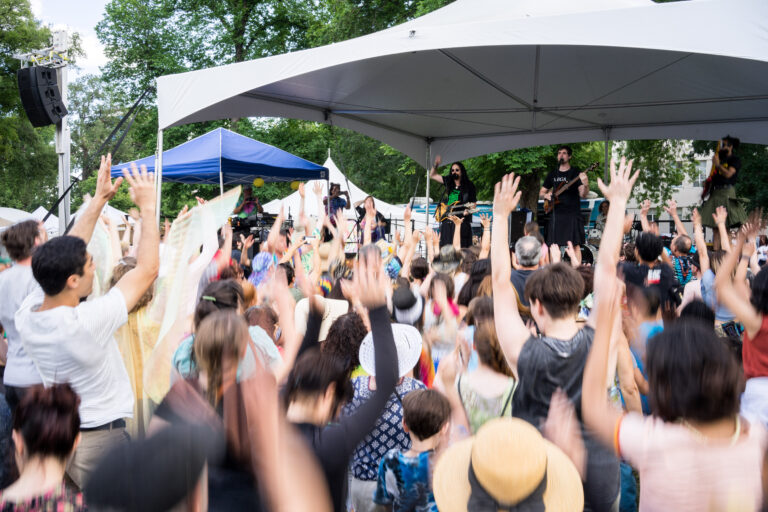
UC Davis’ will host its 50th annual Whole Earth Festival from May 10 to 12 on the Quad. This event will be filled with music, art and a whole lot of lovable hippies, so wear your Birkenstocks and mingle with your friends while enjoying a vegan pizza.

This student-run event was founded in 1969 as part of a small art project for a class on campus called “Art Happening.”

“I decided to become part of the Whole Earth Festival because I volunteered as a freshman,” said Kennedy Field, a third-year English and art history double major and Chaos Control Director for the Whole Earth Festival via email. “I volunteered for Night Keeping, which is our night-time security and I absolutely loved the experience and the people that I met. I genuinely felt at home.”

While the Whole Earth Festival aims to bring everyone a memorable three days, they also call for an environmental change.

“Not only is it a magical 3 day break from the “Real world”, but it is also a great avenue for sharing ideas and creating change,” said Tinka Peterka, a third-year design major and director of the Whole Earth Festival via email. “Our sustainable efforts and education booths are a great way to bring awareness to environmental and social issues in an inviting way for those who have never been exposed to them before.”

Tianna Ching, a third-year English and cognitive science double major and Publicity Coordinator for the Whole Earth Festival, said that while the festival started out as a small project, it has substantially grown since then, but the initial values remain.

“It was just a way to use art to teach people and visitors about activism, wellness, and environment sustainability,” Ching said.

The event will have multiple booths, some children-friendly and others perfectly tailored to college students. Booths will include craft booths, where vendors will sell jewelry or art, coffee booths, where all the proceeds will go towards funding the next year’s festival and food booths, where visitors can fill their stomachs with sustainable, vegan food for the weekend. WEF will have over 140 vendors at their event, but all will follow the sustainable and environment-friendly theme. With each booth serving its own purpose, the festival has something for everyone.

“It is so rewarding to see all the hard work that we all put in come together in one beautiful event,” Field said. “Leading up to the festival, we check in with each other a lot, but we never know exactly what everyone else is doing, so once it becomes festival we get to see how all of our hard work combines and fits together!”

The festival aims to have a wide range of music. Over the span of three days, the Whole Earth Festival will become home to 30 musicians. In previous years, the Whole Earth Festival hosted many performers including Tempest, Big Sticky Mess and Geographer.

Sticking true to its roots, the festival will have an art space. This will serve as an art gallery for community members to showcase their creations. If interested, WEF takes applications every year from January to March for the upcoming festival.

“It’s a very fun, relaxing time,” Ching said. “Especially [because] it’s kind of in the middle of midterms and all that stuff. So it’s really fun to just relax and hear some good music.”

When purchasing food, the Whole Earth Reusables Cooperatives will provide customers with reusable dishes. They will wash the dirty plates for vendors who choose to make this day a sustainable and environmentally friendly experience. The food vendors are required to use reusable, washable dishes to the best of their ability. If their dishes are not reusable then all of the waste needs to be either recyclable or compostable.

“The planning process always gets difficult,” Field said. “But these moments honestly don’t matter that much, because at the end of the day, the festival just happens. No matter who or how we make mistakes, there are other people there to help and support us and things always work out.”

With the Quad being such a big space, the festival will have three main stages. Their Quad stage will be their largest and host many of the musicians. Each day will hold a new headlining artist and following bands. Headlining the festival is Kid Bloom, Y La Bamba and The Dirt Feelin. The bands Beauty Queen, Indigo Elephant and Tempest will perform during the opening and closing ceremonies. The Cedar Stage will have a much different vibe. The Cedar Stage is smaller and will give the audience the opportunity to hear a wide range of performers. From spoken word and EDM, this stage is meant for visitors to stop by, munch on their sustainable snacks and listen to something they have never heard before. The third stage is the dance stage where multiple cultures will share their dance and traditions with the hundreds of people that enjoy the festival.

“The festival has a life of its own and it’s always amazing to see it come to life in ways we could have never imagined,” Field said.

Ching explained that working on a big event like the Whole Earth Festival requires a lot of work, but with a big group of volunteers and staff, it’s hard not to look at the positive side of the situation.

“It’s a little much,” Ching said. “But when you’re working together in this group, and you’re all sleep deprived and so tired, and delirious it is kind of fun. It’s like hanging out and you’re all in this together and you really do bond.”

While the festival ends at 8 p.m. on Sunday night, it continues for the staff of the WEF. The staff and volunteers will stay afterwards to make sure everything is in its right place and all the trash and compost are put in the correct bins. But even as the festival comes to an end, the festival never fails to make long lasting memories for everyone involved.

“We received a letter last year from an elderly man, thanking our staff for working hard to put on the festival.” Peterka said. “He had met his now wife at the festival almost 40 years ago, proposed to her at the festival a year later, and continues to come with her and the rest of his family each year.”

The Whole Earth Festival is open to the public, but parking isn’t free. The festival will take place all day from May 10 to 12.

Written By: Itzelth Gamboa — arts@theaggie.org

Culture Corner

The Arts Desk’s weekly picks for television, movies, books and music

Television: “Portlandia”

This wonderfully weird sketch comedy show was born from the minds of Fred Armisen and Carrie Brownstein, who also star in each sketch. The show focuses on expressing the niche eccentricities of people who live in Portland, from hipsters to feminist bookshop owners. Each sketch is weirder than the next, but with the clever writing and Armisen and Brownstein’s effortless chemistry, the show is undoubtedly hilarious, even for those who aren’t from Portland.

Movie: “Love, Simon”

Although just a romantic comedy, “Love, Simon” left its mark on movie-goers and the teenage romance genre alike. The film centers around closeted teen Simon Spier, who is played by the effortlessly likeable Nick Robinson. This Greg Berlanti-directed flick marks the the first film from a major Hollywood studio to focus on a gay romance between teenagers, and the feedback from critics was overwhelmingly positive. The film deals with Simon’s sexual identity with nuance and, most importantly, normalcy. It does not try to be revolutionary, deep or tragically sad as many other representations of same-sex love often try to be. The film is cheesy and happy, which is the exact depiction the world needed.

Book: “I Know Why the Caged Bird Sings”

I believe that Maya Angelou’s 1969 autobiography is a novel that everyone should read at least once in their life. The book details Angelou’s childhood and what lead her to become the remarkable force of nature that she is remembered as today. Angelou painfully recounts not only her childhood traumas and insecurities, but the steps she took to overcome them. The novel is poignant and filled with lessons that are still applicable today. Despite the hardships she faced as an African American woman growing up in the rural South, Angelou maintains an unapologetic optimism for others and the world around her in her writing.

Album: “A Place We Knew” by Dean Lewis

Australian singer-songwriter Dean Lewis released his first studio album on March 22. “Be Alright,” his first single off the album, was a success on the charts and shot Lewis into the limelight. His soft, passionate voice over his acoustic guitar brought back an Ed Sheeran-esque sound that has been missing from the charts for a while. The album focuses mainly on the bitter-sweet ending of a relationship. His lyrics are beautiful and deeply relatable. Of the new songs featured on the album, “7 minutes” and “Stay Awake” are the stand-out hits. Both songs showcase Lewis’s vocal range and talent as a lyricist.

Written by: Alyssa Ilsley — arts@theaggie.org

UC Davis should be an active ally to LGBTQIA students, faculty, staff

More funds, resources need to be allocated toward LGBTQIA Resource Center, other student services

UC Davis is celebrating Pride Month throughout May, with this year’s theme being “Collective Healing for Liberation: Healing Our Past, Embracing Our Present, Reclaiming Our Future.” Pride Month is “dedicated to bringing visibility, empowerment, and knowledge to our communities,” according to the LGBTQIA Resource Center website. A calendar on the website details various events and activities throughout May, including free anonymous HIV testing, movement healing, community-led sex ed and sound meditation.

Even though UC Davis offers resources — such as the LGBTQIA Resource Center, the Women’s Resources and Research Center and Student Health and Counseling Services — both the number of staff and their times of availability are not adequate for the large number of students attending our university. Institutional policies continue to marginalize communities and threaten the well-being of students. UC Davis needs to do more than simply hang a pride flag or change its Instagram profile picture. Counselors also need to be better equipped to discuss and handle LGBTQIA-sensitive topics, and the university needs to allocate more monetary and structural support to the student staff centers that provide critical resources for our campus community. The Cross Cultural Center, for example, should have more funds allocated toward it rather than face budget cuts. Additionally, the Health Education and Promotion program needs to provide more anonymous HIV testing, as there are only three days per quarter during which it is offered at the LGBTQIA Resource Center.

The university also needs to help transgender people facilitate the process of changing their preferred names on identity documents, including those for FAFSA and scholarships. Students should be able to go to class without fearing being called their dead names or be marked down as a different gender than the one with which they identify. And although UC Davis has some gender-neutral bathrooms — such as in freshman dorms, the Student Community Center and the Memorial Union — it needs to implement more of these around campus so that students don’t feel harassed or threatened by the social stigmas surrounding anything that slightly deviates from the societal norms.

Students, staff and faculty need to be better educated when it comes to inclusive language, as to not be offensive to certain groups of people. Everyone should be able to feel safe and included, no matter how they identify. Actions speak louder than words, and UC Davis needs to make more of an effort in taking concrete, actionable steps rather than merely sending out an email or posting a photo. Last month, Gary May released an open letter calling on the FDA to overturn the restrictions it places on men who have had sex with men donating blood. Although statements of solidarity or support are important, they don’t replace material actions that tangibly improve the lives of LGBTQIA students, faculty and staff.

The Editorial Board commends those advocating for better resources and outreach to students, and demands that the university and top-ranking officials make more of an effort to support its students so that UC Davis can be the inclusive university it claims to be.

Written by: The Editorial Staff

Culture Corner

The Arts Desk’s weekly picks for television, movies, novels and music

Television: Bojack Horseman

“Bojack Horseman” is an animated Netflix show about a washed up ‘90s sitcom actor (who is also a horse) and his life in Hollywood. This comical sitcom is a satire of Hollywood, but beneath the surface it’s a depiction of addiction and depression. The show has five seasons with a confirmed sixth on the way in 2019. If you enjoy slightly darker comedy, this show is perfect for you.

Movies: I Heart Huckabees

Written and directed by David O. Russell, who also wrote and directed “American Hustle” and “Silver Linings Playbook,” “I Heart Huckabees” has been described as an existential comedy. The cast is stacked with Dustin Hoffman, Jason Schwartzman, Jude Law, Naomi Watts and Mark Wahlberg. This 2004 movie is definitely strange, but for those who enjoy movies in the more philosophical realm, this one synthesizes complicated topics with screwball comedy. This movie has received many mixed reviews, most of them negative, but I have yet to watch such an interesting and unique comedy that also explores existential themes.

Novel: Daisy Jones & The Six

Taylor Jenkins Reid’s “Daisy Jones & The Six” was published in March and has received rave reviews from Rolling Stone and the New York Times. The novel is written in interview form, switching between each character, and evokes the nostalgia of old VH1 band documentaries, as it tells the story of the eventual fall of a fictional rock band in the 70s. This book reads as a juicy exposé with elements of romance, rock ‘n’ roll and 70s culture. Everybody tells the story a little differently, but each voice comes together to create an entertaining story. This easy-to-read book is the perfect springtime read for the pool or the Quad.

Album: Some Rap Songs

Earl Sweatshirt dropped “Some Rap Songs” the night after I wrote an article titled “Fall Quarter’s Music: Week by Week” and it has become one of my favorite albums of the year. Sweatshirt’s album comes in at just under twenty-five minutes and Pitchfork credits Sweatshirt as the face of “a new sound and scene that blurs the line between avant-garde jazz and hip-hop.” Because of its unique sound, this album dynamically works both lyrically as an insight into Earl Sweatshirt’s dark and painful psyche or instrumentally as it mixes between hip-hop beats and muffled jazz.

Written By: Rosie Schwarz — arts@theaggie.org

Humor: National Hockey League using BioBrew cookies as pucks

Half-baked idea, or stroke of genius?

Ha Kee Pak, president of the National Hockey League, shocked the hockey fandom this week with his announcement that the league would be changing its regulation pucks to something a little sweeter.

Pak, frustrated by the tendency of traditional pucks to crack after powerful slapshots, made the executive decision to switch to a different manufacturer: UC Davis’ BioBrew coffee shop, located on the first floor of the Sciences Lab Building. Why a coffee shop, you ask? It’s a fact known far and wide among Aggies that BioBrew’s cookies are the hardest material known to man, outranking even diamonds on the Mohs scale.

These cookies seem innocent at first. For $1, hungry Aggies can pick up varieties ranging from peanut butter-chocolate chip to oatmeal raisin. This is quite the deal, especially when compared to the bank-breaking prices of the nearby Silo market and food trucks. But with these cookies, you get what you pay for. And what you’re paying for is a trip to the dentist to get a chipped tooth fixed. UC Davis fourth-year Stheven Lispsky recounts the time he got his just desserts.

“I wehnt to Bio Bwew to owdew shome coffee and get a schnack befow my micwobiowogy wab,” said Lispsky. “I saw a shoogah cookie that wooked pawticulahly dewishious. Next thing I knew, I wahs missin’ my two fwont teef! Gee, if I could onwy have my two fwont teeth, then I could wish you ‘Mewwy Whole Earth Festival.’”

Lispsky’s heart-wrenching story caught Pak’s attention.

“If these maltodextrin monstrosities could lead to $200 of dental work, imagine what they could do in the rink!” raved Pak.

Stanley Cupinsky, a goaltender for the San Jose Sharks, already has some experience with these pyranose pucks. Cupinsky showed off the massive bruises he acquired from Friday’s game against the Anaheim Ducks.

“This one right here,” Cupinsky said, pointing to a pulsating welt, “came from a snickerdoodle! My teammates were yelling ‘Duck!’ And I said, ‘Yes, I know we’re playing the Ducks.’ That’s all I remember. I woke up in the hospital the next day. Prognosis was a concussion caused by a catastrophic confection.”

Other than this minor accident, Pak remains hopeful for the future of the NHL.

“I’d like to thank BioBrew for making these rock-solid cookies. I’m looking forward to the sweet victories ahead.”

Written by: Madeline Kumagai — mskumagai@ucdavis.edu

(This article is humor and/or satire, and its content is purely fictional. The story and the names of “sources” are fictionalized.)

MLS expansion and the new era of U.S. soccer

Soccer is rising in popularity in the U.S., and Major League Soccer is prepared to lead the way

For decades, soccer has been the global game. It attracts an estimated 4 billion fans worldwide, and is a crucial element of culture and national pride in many countries. But in the United States, a country saturated by other well-established sports, soccer has never picked up significant steam — until now. Maybe.

Major League Soccer (MLS) is the sport’s highest, most respected professional league in the United States. MLS played its inaugural season in 1996 with 10 teams and has been working to steadily expand ever since. But the league is fighting what has long been an uphill battle. After soccer’s novelty wore off in the U.S. and attendance and ratings plummeted, the league was forced to fold two teams (and almost ended up folding the entire league). But the MLS gradually clawed its way back up that hill, expanding to 19 teams by 2014.

In 2015, the league added teams in Orlando and New York City. Then in 2017, the league sanctioned expansion to clubs in Minnesota and Atlanta before adding Los Angeles FC to the list a year later. With the addition of FC Cincinnati in 2019, the league now boasts 24 teams with plans to expand more in the coming years. Inter Miami and Nashville FC will join the MLS next year, while Austin FC is expected to follow in 2021.

Additionally, United Soccer League teams (American soccer’s unofficial secondary league) in Sacramento and St. Louis have sent expansion bids to the MLS, with plans to privately finance their own soccer-only stadiums. Their candidacy is currently under review, with an official MLS announcement pending.

“Professional soccer at all levels is thriving in the United States and Canada and we believe there are many markets that could support a successful MLS club,” MLS Commissioner Don Garber said in a statement. “Expansion during the last 15 years has been enormously successful and a key driver behind the league’s continued rise, and we are pleased that some of the top business and community leaders representing great markets in North America are aggressively pursuing MLS expansion clubs.”

And Garber should be pleased. Many of the expansion teams have sprung up in cities with existing professional clubs that want to make the jump to the MLS. But that jump comes with a steep price. FC Cincinnati and Nashville FC each paid $150 million to the MLS to join its ranks. Add that on to the construction of new stadiums (mostly privately funded) and there appears to be clear outside commitment to the MLS from those with the deepest pockets, and those who see opportunity in the direction the league is headed.

In 2018, broadcast viewership of the MLS was up 6% overall and up 5% on ESPN in the 25-54 demographic, while the 2018 MLS Cup reached its highest ratings since the league’s inaugural years with 1.56 million viewers on FOX. Perhaps most telling: a 2018 Gallup poll showed that soccer ranked only second to football among viewers between 18 and 34 in the United States.

Yet only two months into the 2019 MLS season, those numbers are down. In week 8, attendance averages for 20 of the 24 teams were down a hair in year-over-year metrics. Of the remaining four teams, LAFC and Montreal Impact have stayed put in attendance, while D.C. United and the Vancouver Whitecaps are the only teams with increased attendance, growing .03 and .05 percentage points, respectively.

During opening weekend this season, viewership was down 24% on Univision for the Orlando FC-New York City FC matchup, down 13% on ESPN for a match between D.C. United and defending champion Atlanta United FC, and down overall on Spanish-language TV for the third consecutive year. Additionally, MLS suffered its worst ratings of the season on April 14, with the matchup between Sporting Kansas City and New York City Red Bulls reaching only 90,000 people. In contrast, back-to-back Liga MX games (Mexico’s top soccer league) on April 13 and 14 attracted 1.1 million and 1.2 million viewers. So, MLS viewing numbers on the 14th may not be a tell-tale sign of decreasing popularity, but rather a sign of the MLS’s continued lack of popularity compared to other major soccer leagues across the globe.

So far, the MLS has been seen as similar to a retirement league — a place ageing international players are drawn to in their latter years where they can still be the face of a franchise and have an opportunity to make a real impact. Brazilian icon Kaká, renowned scorer Zlatan Ibrahimović and English legend Wayne Rooney represent some of the global stars who have found their way to the MLS on the back-half of their career. Now, the MLS is pushing to flip that script.

In an interview with ESPN, Garber said that the MLS is committed to “being part of the energy that drives the development of young players, the sale of young players, the buying of young players.” Because to gain popularity, you must gain talent.

Before the 2019 season, Atlanta United signed South American player of the year, Gonzalo “Pity” Martinez, after paying a record $14 million transfer fee. New York City FC signed 24-year-old Romanian star Alexandru Mitrita at a $8.5 million transfer fee before the season. Those two clubs aren’t yet meeting expectations in 2019, but their investment in young stars proves their commitment to changing the culture of the MLS.

But there’s still a long way to go. Of the biggest domestic hindrances to MLS growth and talent development is the lack of a clear youth-to-professional pipeline. In the U.S., the professional route is not nearly as strong — or visible — as it is in other countries or for other American sports.

But the MLS is working to change that narrative, too, starting with investments in the sport at the youth level. According to the New York Times, “the move towards compensation and solidarity payments comes as the league’s teams have increased their investment in player development. Last year, clubs collectively spent a record $75 million on their academies, and the additional funds offer the potential to increase that investment.”

For a country that doesn’t live, breathe and bleed soccer — and whose youth don’t grow up idolizing legends like Lionel Messi and Cristiano Ronaldo — the U.S. is making a legitimate push to grow its own brand of soccer via the MLS, which develops young talent and pushes to be compensated for that procurement in one way or another.

“I do believe there is no city in this country that can’t support a Major League Soccer team with rabid fan base, with a great stadium plan, with a committed ownership group, with a community that will get beyond the club,” Garber told ESPN.

While the golden age of the MLS may not be today or tomorrow, it is certainly knocking at the door. Its success will hinge on investment in the process, in the seats of new stadiums, on the TV screens of new fans and on the pitch with the game’s most promising young stars.

Written by: Carson Parodi — sports@theaggie.org

Say cheese: Classic photo locations for graduating seniors

Detailing some of the most popular spots on campus to take graduation photos

UC Davis Signs

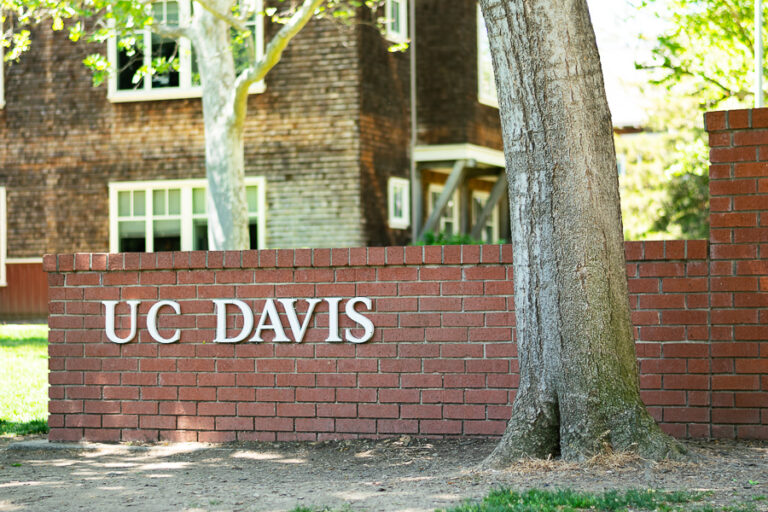
There are two iconic spots for students to take graduation photos that encapsulate UC Davis – the UC Davis sign on A street and on Russell Boulevard. Especially for students hoping to capture a bit of the school in their photo, these spots are some of the best places to take photos. It’s also a great spot to take photos with friends, sitting on or posing near the brick signs.

The Arboretum

The Arboretum spans across the entirety of UC Davis’ campus and is another one of the most iconic spots in Davis to take photos come graduation. There are a multitude of options in taking photos, whether it’s by the river, by blossoming flowers or at the gazebo. In the spring, make sure to head to the arboretum at the appropriate time to catch it in the peak of its bloom.

The Promenade

Most graduating students have trekked up and down this street profusely during their time at UC Davis. It’s one of the most iconic streets to pass going to and from classes and is staged right by one of the most populated areas on campus, sandwiched between the Memorial Union and Wellman. In springtime, the trees arch over the promenade, making it one of the most picturesque spots on campus to grab a few photos.

Campus Eggheads

It’s classic UC Davis tradition to rub an egghead for good luck, whether it’s the egghead by Shields Library, Mrak Hall, the Art Building or one of several others. It may also serve some good luck to add an Egghead to your graduation photoshoot, capturing one of the quintessential Davis oddities in your photos.

Personal Iconic Spots

Understandably by the end of your college career at UC Davis, you may have a few spots in Davis that hold some sentimental value to you. If you’ve spent hours in the library cramming before finals, all of your time at the CoHo drinking coffee or quarter after quarter in the same building for all of your major classes, consider taking some photos at one of those iconic spots that took up so much of your time at UC Davis!

Written by: Alyssa Hada –– features@theaggie.org

Asian American Association Film Festival featuring Mike Bow

Showcasing creativity within the Asian American community

The Asian American Association will host its annual film festival on May 10 featuring Mike Bow, an upcoming Asian American figure in media. The festival will highlight Bow’s personal journey through media and how he has managed to maneuver through the industry and will showcase his independent filmIn Between,” directed by and starring Bow. VIP members can experience an exclusive meet-and-greet once the main attractions conclude.

With nearly 100,000 subscribers on YouTube and appearances in films such as 2014’s “The Maze Runner,” Mike Bow is steadily making waves in the media industry. His YouTube presence dates back to 2013, making independent skits and posting reaction videos to various trailers of prominent films. Bow frequently collaborates with other Asian American YouTube personalities, such as Wong Fu Productions, featured in last year’s film festival. Bow is yet another example of how hard work and determination can make all the difference for anyone looking to chase their goals, no matter their circumstances.

Kevin Ha, a third-year wildlife, fish and conservation biology major and current president of the Asian American Association, defined the club as a social and cultural club that seeks to not only promote the advancement of Asian American students but to also create a welcoming environment for all.

“Our main goal is to provide a safe space for people to come and be part of a community with people who have similar interests and backgrounds,” Ha said. “I know for a lot of students it can be difficult to be at a large campus like Davis and make lasting connections, so we try and change that in our club and foster engagement among students.”

Ha explained how the club implements new ways to keep members interacting with each other, such as ice breaker games and discussion questions in small groups about pressing matters relevant to students.

Since starting as a freshman with the club, Ha has experienced the two previous film festivals, recalling guests like Steven Lim from Buzzfeed’s “Worth It” series and Wong Fu Productions. Ha expressed his excitement for having Mike Bow this year and explained how the event will be handled.

“There will be a Q&A session between Bow and one of our board members discussing his rise as an Asian American in media,” Ha said. “After that, we’ll open it up to the audience to ask him any questions about his film In Between, his life, anything. The VIP members will get a personal meeting with Mike Bow to talk to him, take pictures, all that stuff.”

Through this festival and Mike Bow’s appearance, Ha hopes that the students in attendance will see just how much potential they have knowing that someone like them has been able to achieve their goals and more, so long as they put their mind and passion into it.

“With Mike Bow coming to our event, I hope we can inspire all the audience members and show them that they can do this too,” Ha said. “For anyone trying to be successful through a creative outlet, we hope to show them that they can get there. Mike has a great following, and him talking about his experience will come from a humble background, so I think people will really latch on to that and hopefully expand their horizons too.”

This year, the festival will be a smaller production than in previous years, and Ha explained that he and his fellow officers are emphasizing building a strong community first instead of putting on a large production with only a small turnout of dedicated members.

“In addition to the guest speaker, we used to showcase other independent films throughout the week,” Ha said. “Over the years, it’s been challenging to do that because, right now, we’re placing a bigger priority on the members first and building up. Our goal is to have a much larger community, which means toning down the film festival a bit, but in the future we feel confident that we can bring a larger film festival once again.”

Nathan Kong, a third-year psychology major and public relations officer for the club, also joined in his first year and found his place among the group. Since being an officer, he has the responsibility of organizing the appearances of the guest speakers for the festival, a process Kong described as enjoyable.

“I look up to these people because I watch their content, so it feels great to be able to reach out and have them come to our campus,” Kong said. “You really get to know who they are behind the camera and have genuine conversations, learning about their backstory and how they got to where they are now.”

Along with Ha, Kong said this event can be attributed to anyone that has high aspirations and for those who want to see someone that has already paved a path in their own way.

“We feel that it’s important for people to see these individuals and learn from them since they’ve been in the industry for years,” Kong said. “It’s almost like a teaching experience too. When other minority students specifically can see that one of their own has been able to break the stigma, there is a larger sense of connection.”

Written by: Vincent Sanchez –– features@theaggie.org

Police Logs

Watch out for boyfriends who like Taco Bell

April 17

“Client left canister of marijuana.”

April 18

“Reporting party was trying to connect a device and called 911 to see if her phone was working.”

April 19

“Three bouncers smoking cigarettes in front of business. Reporting party confronted subjects about it and subjects were dismissive.”

April 20

“Female yelling that her boyfriend is on his way to her mother’s address from Taco Bell to destroy property because he is violent and disconnected.”

April 21

“Mail carrier was chased by pit bull, had to run up onto his vehicle to get away from dog.”

April 22

“Reporting party was involved in extensive road rage incident.”

April 23

“Dog barking for four hours.”

Changes to student basic needs services seek to broaden assistance on campus

Aggie Compass sees four pillars of support to help students in need

The Aggie Compass Basic Needs Center at UC Davis is seeking ways to further help students with food and housing security, mental health referrals and financial success planning. The center, located on the first floor of the Memorial Union, has been operational for approximately two years and has expanded its services to include a full-time Yolo County CalFresh representative working onsite to help students with applications and extended collaboration with The Pantry. In the future, the Aggie Compass seeks ways to alleviate the housing crisis in Davis.

Leslie Kemp, the director of Aggie Compass, spoke about her work with the center and how the center was created.

“I was working in communications in 2014 when the call came from Janet Napolitano and the Office of the President to all the UC’s through the Global Food Initiative,” Kemp said. “I was fortunate to be at the table and proposed that we do some research, find out what barriers our students had for access to healthy foods and also if they knew about the resources we did have.”

During the two years that Kemp worked with the University of California Office of the President as part of the Global Food Initiative, four key areas were subsequently identified: food security, housing security, mental health wellness and financial information services.

Kemp did not initially envision the Aggie Compass as a physical space on campus.

“My proposal was to put together a website that was a portal for all the food resources we had on campus — affordable or free resources on campus, off campus and access to the federal Supplemental Nutrition Assistance Program (SNAP) and CalFresh,” Kemp said.

From this initial work, Kemp continued developing resources for the four pillars of basic needs that the Global Food Initiative had identified. Kemp also talked about future projects The Compass was considering.

“We have our most resources because of the Global Food Initiative — under food because that is what we are working on for the [past] four years,” Kemp said. “Housing we will be looking into in this coming year. We are planning some things to provide rapid housing and emergency housing programs.”

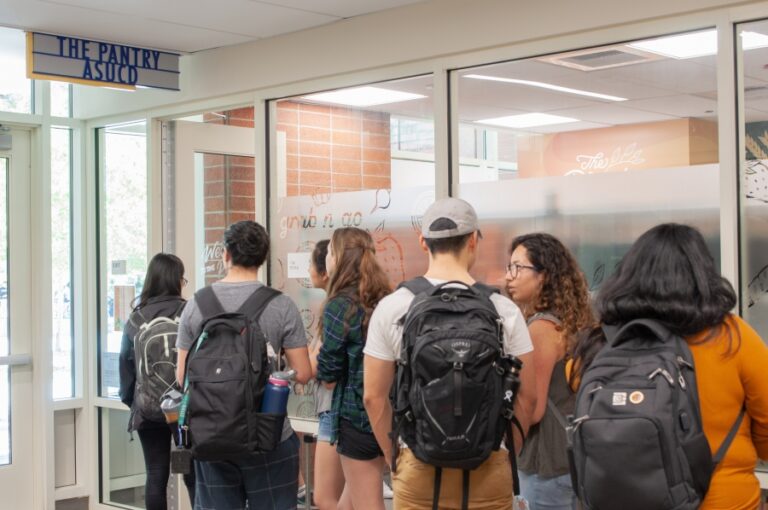
Annie Adachi, a fourth-year biological sciences major and the student unit director of ASUCD Pantry, spoke about the recent relocation of the Pantry to the first floor of the MU and some of the unit’s plans for the future.

“The new location is much more accessible for students,” Adachi said. “When we were in the basement of Lower Freeborn, students would have trouble finding us because we were not visible [and] nobody can see the Pantry. Now that it is at the front of the MU, it is very accessible to students.”

Adachi mentioned that the new location creates a new customer experience for students coming to the Pantry.

“A lot of pantries in the University of California system have students walking in and shopping around like in a store and are retail inspired,” Adachi said. “So that is what the students had wanted for a long time. With this location, that enables us to have a more welcoming experience for students.”

With the move to the MU, the Pantry has seen a growth in the number of students using the Pantry.

“We see about 450 students daily, Monday through Friday, on average,” Adachi said. “Now our goal is we want to identify what the students’ wants are and what they liked most about us.”

Through research, the Pantry found that students were interested in more fresh food, and the Pantry has sought ways to offer this.

“We are trying to increase our distribution of fresh produce and bread products,” Adachi said. “We’ve seen that the students tend to come more often on days that we stock these items. So we are working now with the Yolo Food Bank to provide a greater variety of nutritious foods like that.”

Adachi explained she believes that the Pantry fills a vital emergency role when other resources are not available.

“In my [conversations] with students, they tell us how the Pantry […] was a safety net for them, and it did rescue them when they were in need [during] certain quarters — they had emergency needs,” Adachi said. “But of course, the resources can always be expanded, and I am getting a lot of feedback from the community about different ways it can be expanded.”

The Aggie Compass also has a full-time employee of Yolo County on site to help students with the CalFresh application process.

Max Vaca, a Public Assistance Specialist III for Yolo County and a former UC Davis graduate, is stationed in the Aggie Compass.

“I work for Yolo County full-time, but I am the only CalFresh representative stationed at the UC Davis campus,” Vaca said. “[This] gives me flexibility, because I am not just able to assist people in applying for CalFresh, but I am also able to complete their interviews and help them complete their applications onsite.”

Vaca said the first thing for CalFresh applicants do is set up an appointment with the Aggie Compass staff. This can be done from the Aggie Compass website or at their office. Students will be prescreened and if they appear qualified, students can then apply. Vaca said there are two processes to apply for CalFresh. The first is to apply online and the other is to meet with him at the Aggie Compass where he will provide information on the application process and conduct the application interview.

Vaca said that during the past two years, the number of students receiving CalFresh has grown.

“Obviously, the number of students who know about CalFresh and the enrollment has increased,” Vaca said. “From what I have seen on a day-to-day basis, there has been an increase in CalFresh approval due to the fact that we have partnered up with UC Davis […]  For example, with financial aid, they have included a link on their MyAwards page so students who may be eligible for CalFresh can see that, and they can click to apply online [with Yolo County] or to be sent to the Aggie Compass website where they can get more information.”

Vaca credits the increased visibility UC Davis has provided for CalFresh.

“I think [this increased visibility] is just not happening at UC Davis but all across the University of California campuses,” Vaca said. “Before there was a stigma behind CalFresh, but now I kind of feel that stigma is going away slowly but surely.”

The Pantry is a business unit of ASUCD, and each unit has adopted senators who advocate for the unit.

Rebecca Gonzalez, a fourth-year international relations major and adoptive senator for the Pantry, spoke about her plans for the unit.

“In my personal opinion, it is the most important unit we have,” Gonzalez said. “It provides a vital service for students.”

Gonzalez then talked about what she and the Senate would like to do for the Pantry.

“We want to see if we can fix the issue for summer staffing,” Gonzalez said. “There are also some minor nuances with the budget that we want to fix, so that the Pantry can provide its services as best as possible and be sufficiently staffed. I think that is something that we want to fix internally.”

The reach of food insecurity extends beyond the Aggie Compass. The Food Recovery Network organization on campus collects unused food from the dining commons and from retail markets on campus and delivers the food to the Pantry and homeless shelters in Davis.

Lucero Morales, a third-year biotechnology major, is an executive member of the FRN and spoke about their mission.

“Our goal is to reduce food waste on campus by recovering food and distributing it to homeless shelters and the Pantry [by] reducing that food waste, which is perfectly good food,” Morales said. “We recover two different types of food. The prepackaged food from the retail markets [on campus] are all packaged sandwiches, salads and pastas that are amazing to eat right now. And we deliver that to The Pantry, where students can go and get that sandwich and eat it right then and there.”

Morales talked about large quantities of frozen food they get from the dining commons and deliver to homeless shelters.

“We get from the dining commons frozen foods [such as] cut up vegetables or cut up chicken that can’t be served to students [in the dining commons] because they just made too much,” Morales said. “That we take […] to the homeless shelters because homeless shelters can use that to create nutritious balanced meals […] it is a full meal for them.”

Morales identified the key issues related to the distribution of recovered food.

“There is enough food grown and harvested for people, but there is that transportation issue to get it to the right person, or all the extra food [that] is too expensive to move to a homeless shelter or to the school pantry,” Morales said. “There is a need for a better system of distribution. I think that will happen soon. I think there is a hope that will happen soon.”

Morales said student food insecurity is a persistent problem in need of more awareness.

“I see that food insecurity for students especially in this community is going to be in the headlines,” Morales said. “I think more people will be aware of the issue. There is going to be a neccessity to address it.”

Written by: George Liao — campus@theaggie.org

Guest: What does it mean to be a white supremacist?

Defenses of Blue Lives Matter and Zionism showcase white supremacy on campus

In the past few days we’ve seen a shooting at a synagogue by a white man with direct connections to a mosque burning earlier this year. We’ve seen a school shooting at University of North Carolina, Charlotte — by yet another white man. We’ve seen the murder of four Sikh family members in Ohio, in what appears to be a racially and religiously motivated attack. Amidst all this terror, amidst the onslaught of white supremacist violence facing marginalized communities in the United States, we must each interrogate what white supremacy is and how it operates — not just in explosive moments of direct terrorism by white men, but in everyday actions.

What connects white supremacy, from the extreme to the casual, is the belief that whiteness is categorically superior. Whiteness is not an ethnicity in that it doesn’t constitute a shared set of symbols or cultural practices. Instead it is a category of racial difference — marking out certain populations as biologically different than others (contrary to current science). All of us, white or not, risk upholding this ideology by engaging in practices that benefit whiteness and shore up its privileges. While not every person can be racist, we can all participate in actions that defend and support white supremacy. This is important in our current moment, as so many of us turn to look at these egregious acts of violence and ask ourselves, “How did this happen?” Here, I’d like to turn to acts of white supremacy on our campus, because these larger events emerge from the very normal fabric in which we are already embedded.

Two specific instances of white supremacy have situated themselves on our campus as “marginalized voices”: the Blue Lives Matter movement (and policing generally) and Zionism. This “victimhood” frame is effective only as long as we ignore the power relations and history at work. As a scholar who focuses on white supremacist organizing in the United States, I’ll do my best to avoid anything too abstract, and use two recent opinion articles from The California Aggie to highlight how white supremacy and victimhood is functionally a part of both movements.

The first example of white supremacy at UC Davis is the Blue Lives Matter movement and its defendants on campus and in the ASUCD Senate room. Others, including myself, have already discussed the long history of racism associated with the Blue Lives Matter symbol. Columnist Nick Irvin and former ASUCD Senator Noah Pearl have both participated in defending police from critique, and Pearl has actively participated in attempting to get a resolution passed that uses the thin blue line imagery — the metaphor of a thin blue line between civilization and chaos.* The image of “chaos” is a common racial “dog whistle” for Black and Brown people attempting to live their lives in ways that are dignified and respected. Dog whistles signal race to those in the know, without bringing down direct stigma on those who use them. When people defend the police, you’ll often hear these dog whistles. The Black, immigrant, deviant body is and always has been made criminal through this reading — the chaos the police are supposed to protect good (read “White”) law-abiding citizens from. The defense of the police levied by Irvin and Pearl make them, at best, complicit in white supremacy. Pearl’s direct association and Irvin’s ideological connections with Michael Gofman, the former ASUCD president and Zionist who incited direct death and physical harassment of Black and Brown people on his presidential Facebook page on Jan. 11 by tacitly endorsing rampant anti-Blackness and transphobia, demonstrate that this is not simply accidental white supremacy, but part of a pattern of political behavior.

This brings us to another example of white supremacy on our campus, which emerges in the form of Zionism. Zionism, as a political ideology, advocates for the creation of a settler-colonial ethno-state in Israel. Conversely, anti-Zionism is a political position that decries those same political structures. It is not to be conflated with anti-Semitism, which is structural and interpersonal violence against Jewish people. Anti-Semitism is on the rise across the United States, and we’ve seen a number of incidents in Davis in just this past year.

In a recent opinion piece, Pearl argued that he could not be white supremacist or fascist because of his positionality as a Jewish American. He argues, with no evidence, that “the majority of Jews believe in Zionism”; statistics demonstrate this to be false. A 2013 Pew Research survey of American Jews indicates the community is quite divided on Israel’s place in their Jewish identity, and an overwhelming majority said criticism of Israel was a valid part of being Jewish. People like Rebecca Pierce (Jewish Voice for Peace organizer and speaker at Monday’s Anti-Zionism Week event) strongly condemn Zionism as a settler-colonial ideology. There is a long history of contention, pre-dating the creation of the state of Israel, between various Jewish religious and intellectual leaders on the ethics, necessity and morality of creating such a state. Pearl does a disservice to both religious and intellectual voices by erasing their contributions.

But how does Zionism tie into white supremacy? Pearl, and other Zionists like Gofman, fail to address that whiteness affects Ashkenazim (Jewish people of European descent) and shapes their participation in white supremacist projects. The state of Israel is virulently anti-Black. Miri Regev, a member of the Israeli Parliament, has called Sudanese refugees a “cancer on the body of Israel.” It has sterilized and limited the birth rates of Ethiopian Jews without their consent or knowledge. In just the past few months, there have been uprisings from Ethiopian Jews protesting the police violence they experience at the hands of a Jewish state that prioritizes people who are closer to the white, idealized citizen of Israel. Additionally, far-right supporters of Israel — including Israeli Prime Minister Benjamin Netanyahu — have repeatedly aligned themselves with white supremacists. Zionism bridges the distance between white supremacy here and abroad.

Blue Lives Matter supporters and Zionists both use their manufactured status as “others” on campus in order to claim that they are ostracized and silenced. But the fact is that white supremacy, wherever it is found, must be ostracized. It is our duty to stigmatize it — to rid ourselves, as Michel Foucault says, of the fascism in ourselves and others. Fighting the white supremacy of white mass shooters demands nothing less. Let’s leave the use of “victimhood” to sad little white men and set about creating a world in which white supremacy is impossible to imagine. Let’s make a world that’s strong enough to survive the death knells of nationalism, patriarchy and white supremacy.

Written by: Blu Buchanan

The writer is a Ph.D. Candidate in Sociology at UC Davis, studying white gay men’s participation in conservative social movements. As a Black trans scholar and activist on campus, they primarily work with labor and anti-racist organizations to build community capacity, a strong understand history and an intersectional approach to mutual liberation.

*Editor’s note: At the Jan. 24 Senate meeting where SR#8 was discussed, Senator Noah Pearl voted to divide the house on removing lines from the resolution and votes yes to remove them. He also voted to divide the house on the final vote and abstained during the final vote on the resolution. The official minutes from that Senate meeting can be found here.

Identity politics and the end of history

Nearly 30 years ago, Francis Fukuyama famously declared that liberal democracy would be the final stage in human social development. Now he’s reconsidering.

In 1992, Francis Fukuyama declared humanity reached its final stage in ideological development, an “end of history” moment in which the collapse of the Soviet Union and the triumph of the West had cemented liberal democracy as the final form of government. Nearly 30 years later, Fukuyama is backtracking on this idea, seeing recent global political revolutions as a threat to the security of the traditional liberal order.

Fueled by the growth of left-wing identity politics and right-wing nationalism, Fukuyama’s prediction of the triumph of classical liberalism has disintegrated under the weight of sectarian interests. The very nature of these categorical divides ensured that the demands of these groups cannot be adequately satisfied through economic means. Instead, it requires solutions beyond traditional political appeasement. Center-left political movements, in particular, have moved away from class-based politics toward representing the interests of a variety of different — and sometimes competing — minority groups. This serves as an affront to Fukuyama’s remedy of market-based liberalism, whose solutions transcend the usual lines of identitarian politics.

If identity politics are the leftist antithesis to Fukuyama’s final frontier of liberalism, then right-wing populism, and the creeping authoritarianism that has accompanied it, is its equivalent. The last decade in particular witnessed the rise of nationalist political movements in both the United States and Europe. Countries such as Hungary, Italy and Israel have seen right-wing nationalists make significant political gains, moving from electoral irrelevance to major leadership positions in their respective governments. Much of this evolution is due to the extensive demographic transformation that occurred over the 21st century. Right-wing populism has risen, likely as a result of the influx of new populations into once-homogenous regions, whether via the European migrant crisis or through extensive immigration to the United States.

So while new global right-wing movements may not be nearly as blatant in their endorsement of identity as their leftist counterparts, there still remains a strong element of in-group preference among them. Many of the white Americans who supported Donald Trump in the 2016 election, for example, may not think of their political priorities in an explicitly racial manner, but their voting trends have been shown to correlate with suspicion of immigration and a heightened sense of white racial identity — electoral factors that have become increasingly influential.

Fukuyama has recognized the transition away from class-based politics and toward ethnocentric interests, discussing this evolution in his 2018 work “Identity: The Demand for Dignity and the Politics of Resentment.” In it, he identifies civic nationalism as critical to participation in liberal democracy, a stark contrast to the individual, identity-based politics that he sees as uniquely threatening to the stability of nation-states. Fukuyama claims that full citizen identification and assimilation are the only antidotes to the fault lines created by multicultural democracies, endorsing a universal civil identity based on shared values and civic service.

The fact that Fukuyama has to discuss these issues in detail in 2019 shows the fragility of his initial theory. Other prominent academics are discussing it in detail too — each with different solutions. Political scientist Eric Kaufmann’s “Whiteshift sees assimilation and appeasement as vital in restoring normalcy to democratic politics, while conservative Israeli theorist Yoran Hazony’s “The Virtue of Nationalism argues that nationalism is the only effective method left for protecting citizens’ freedom.

The ultimate conclusion of all these works is that liberal democracy, long heralded as the morally superior, final frontier of human governance, seems to be increasingly threatened by the advent of group-based identity. Accordingly, the response of national governments to such a development can no longer be one of ignorance and indifference. Instead, political leadership must search for viable solutions to the mounting issue of identity politics, a conundrum that is likely to grow amid a diversifying society whose desires cannot necessarily be adequately satisfied through material needs.

Written by: Brandon Jetter — brjetter@ucdavis.edu

Disclaimer: The views and opinions expressed by individual columnists belong to the columnists alone and do not necessarily indicate the views and opinions held by The California Aggie.