58.6 F
Davis

Davis, California

Monday, December 22, 2025
Home Blog Page 429

Envisioning a new New Deal

In the face of America’s crumbling infrastructure, politicians should pursue a bipartisan answer

In spite of a contemporary American political atmosphere marred by increased polarization and neverending legislative gridlock, a chance at bipartisan compromise may finally be on the horizon.

According to White House deputy press secretary Judd Deere, President Donald Trump and House Speaker Nancy Pelosi agreed to meet for discussion on a bipartisan solution to addressing the country’s rapidly declining infrastructure system. Both sides seem keen on providing funding for massive structural overhaul, with the idea being a key component in Trump’s 2016 campaign and with Speaker Pelosi calling for a $1 to 2 trillion infrastructure investment last week. Trump and Pelosi’s convergence on the issue provides a rare opportunity to tackle one of the nation’s most pressing issues from a bipartisan perspective.

Critics claim that a new infrastructure package would be far too costly, especially in the midst of the country’s burgeoning debt crisis. But as things stand, taxpayers already bear the brunt of America’s crumbling transportation system. Consumers pay more for goods whose delivery must be rerouted due to the structural integrity of antiquated bridges, while traffic congestion drives up the cost of commuting and wastes workers’ time. The continued maintenance of decades-old roads and bridges comes with a hefty price tag as well. A 2017 federal estimate placed the backlog of national bridge repair at $123 billion.

In Northern California, America’s crumbling infrastructure crisis is as apparent as ever. Take a drive to any of the rural communities surrounding Davis and you are likely to find deteriorating roads and decrepit bridges — a common occurrence that is hurting citizens’ wallets. According to one 2017 California infrastructure report, driving on damaged roads costs each driver nearly $844 a year, while 5.5% of the state’s bridges are rated as structurally deficient.

Infrastructure shortcomings stretch beyond just transportation issues, with the report finding that some 678 dams are considered to possess high hazard potential. The heavy rainfall during Northern California winters makes structural damage among levees and dams especially dangerous. Just two years ago, the Oroville Dam’s main and emergency spillways were damaged after California experienced its wettest winter in nearly a century. More than 180,000 people were evacuated as a result of this crisis, and although total disaster was averted, it nonetheless served as a reminder of the risks posed by the state’s crumbling water infrastructure.

America’s deteriorating infrastructure not only costs taxpayers billions of dollars through the constant cost of maintenance and replacement, but also puts millions of innocent lives at risk. President Trump’s repeated insistence on infrastructure reform is relatively unorthodox for a Republican president, drawing the ire of more fiscally-conservative hardliners who are likely to balk at the cost of such a major proposal. Consequently, this provides the President with a chance to return the economically populist roots of his 2016 campaign (an essential move if he intends to win re-election) and gifts the Democrats with an opportunity to prove their willingness to approach bipartisan compromise on a major issue.

Additionally, a national infrastructure project would likely aid in bridging the increasingly-apparent divide among urban and rural Americans. Crumbling transit systems have deeply harmed both communities, and pursuing new measures would present a rare opportunity to address their concerns together. As such, American politicians should be willing to cross the aisle in order to fund a new infrastructure overhaul, one aimed at confronting the country’s crumbling transportation and energy power systems. Such a maneuver would not only address one of the nation’s most pressing economic issues, but also provide a glimpse at just how much work bipartisan political action can accomplish.

Written by: Brandon Jetter — brjetter@ucdavis.edu

Disclaimer: The views and opinions expressed by individual columnists belong to the columnists alone and do not necessarily indicate the views and opinions held by The California Aggie.
The City Nature Challenge comes to Sacramento

Competition encourages public to get outside and experience nature in cities

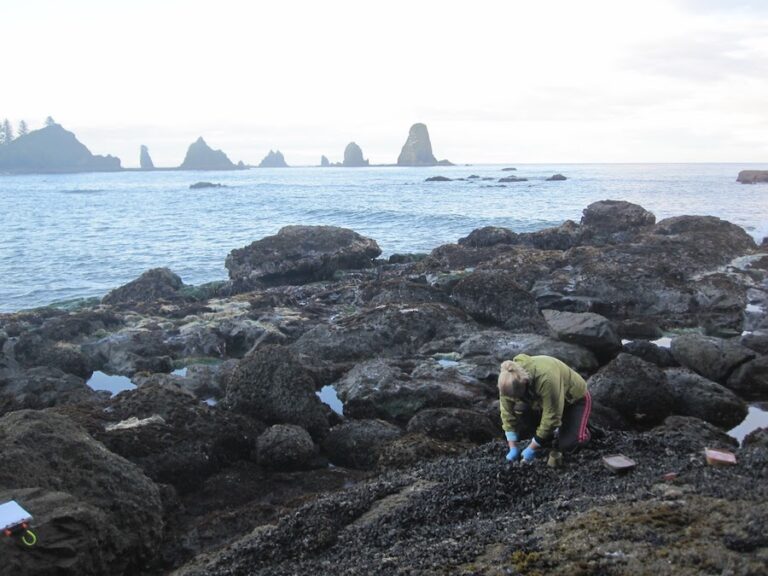
This weekend, residents from over 150 cities across the world will compete in the City Nature Challenge to determine who can find and record the most wildlife species. The Sacramento area will compete for the first time. Anyone in Davis, Sacramento or the surrounding counties can contribute by taking a picture of wildlife, from April 26 to 29, and uploading it to a smartphone app called iNaturalist. Whichever city documents the most nature wins. Organizers hope the event will push people to experience nature that is hiding in plain sight.

“The goal is to get people to notice that there is nature in cities, and urban environments,” said Sarah Angulo, a community education specialist at the UC Division of Agriculture and Natural Resources, who helped organize the Sacramento portion of the challenge. “You don’t have to go far to find nature. It’s all around you in your backyard. It’s on the streets you walk on every day.”

To facilitate public involvement, the challenge will be executed entirely on smartphones. All photographs of species captured for the challenge must be uploaded to iNaturalist, which uses computer vision to help identify what species were captured.

“iNaturalist is an app that’s more of a social learning space than anything,” Angulo said. “You take a picture of something out in nature, or you upload sounds to this app, and you can have their amazing artificial intelligence identify it for you, or you can have experts and scientists from all over the world take a look at it and help you figure out what it is.”

In addition to assisting the public identify nature, the application allows researchers to use the collected data for research.

“The point of iNaturalist is to provide data for scientists about where organisms are, what they are doing, and what times of year and times of day they are active,” said Laci Gerhart, a professor of Evolution and Ecology who helped organize the challenge in Sacramento.

Gerhart said data from the application has been used in scientific studies, and is often used informally by researchers to help guide projects. According to Gerhart, the app is also being used by different organizations to track invasive and rare species.

“Some cities are tracking invasive organisms that they are trying to keep an eye on, or looking for things that are rare,” Gerhart said.

Since the advent of the smartphone, soliciting data about the natural world from the public has become a powerful tool for researchers. Two years ago in recognition of this powerful new way of doing science, the UC Davis School of Education established The Center for Community and Citizen Science which is supporting the Sacramento portion of the event. Ryan Meyer, the director of the center, hopes the event will have multiple benefits for the community.

“We know that when people get outside and engage with nature, there are all kinds of benefits that accrue from that; both in terms of their awareness of their environment, and the concern and care they might have for it,” Meyer said. “Also there is a sense of connecting people to a place in a way that makes them feel proud of it.”

There will be an organized UC Davis Campus BioBlitz on April 28 where students can get together to start identifying organisms.

Written by: Peter Smith— science@theagggie.org

Aggie Air Promotes a Healthier Campus

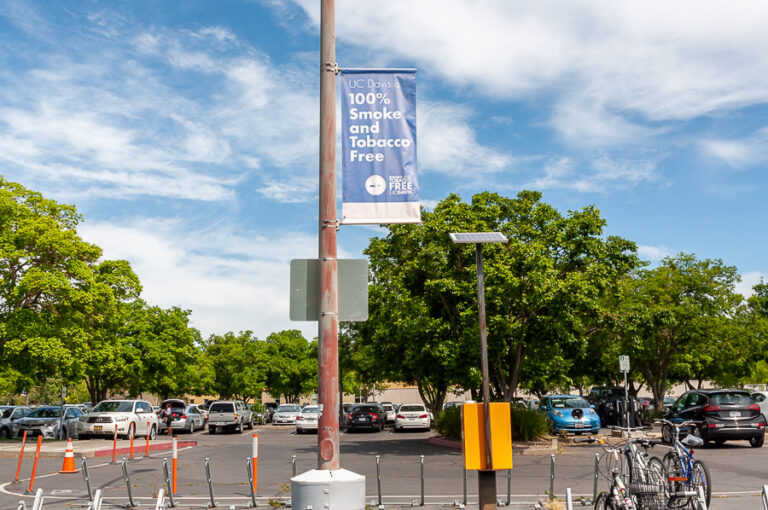
UC Davis Smoke and Tobacco Free Program launches Aggie Air across campus

UC Davis celebrates its fifth anniversary as a smoke and tobacco-free campus with Aggie Air, an online campus engagement tool for the campus community to track litter and smoke and tobacco usage.

“A lot of us want to tell somebody our concerns about tobacco litter, e-cigarettes and environmental concerns,” said Elisa Tong, an assistant professor in the UC Davis Department of Internal Medicine.

By tagging campus areas, students, staff, faculty, neighbors and visitors can take an active role in the campus environment. It keeps the campus clean from smoke and vapor litter, reduces smoking behavior and provides supportive resources for members who use smoke and tobacco products.

The tool works similarly to TherMOOstat, an online tool for UC Davis students, faculty and staff to indicate their temperature preferences for buildings across campus to save energy and comfort.

“The tobacco industry is investing in social media influences,” Tong said. “It’s a new era of how the tobacco industry promotes their products and bypassing regulations. You hear ads. They market and promote to sell multiple e-cigarettes with flavors. It’s a new space for reinvention for them, but it may be just as harmful as traditional smoke and tobacco products, if not more.”

The American College Health Association’s National College Health Assessment found among UC Davis undergraduates, 5.4% use smoke and tobacco products within 30 days while 0.7% use smoke and tobacco products every day.

“Students are excited to come to UC Davis because it’s a smoke and tobacco-free campus,” said Raeann Davis, a health promotion specialist at the UC Davis Student Health and Counseling Services. “It’s a deciding factor.”

Students who do use smoke and tobacco products face stigmatization, leaving them to search for ways to conceal their habits.

“Some students walk far off campus to smoke,” Davis said. “They try to hide their habits.”

The Smoke and Tobacco-Free Program aims to take a positive approach to students, offering quit kits, cessation classes and one-on-one support with student ambassadors and health specialists.

Every year, the program assesses litter across campus over a 48 hour period through Environmental Butt Scans, clearing an area on campus and returning to assess smoke and tobacco usage.

“One of the locations popular for smoking is the bridge near Tercero by the cows,” said Audrey Maskiewicz, a first-year biological sciences major and Spanish minor and student ambassador for the UC Davis Smoke and Tobacco Free Program. “Every time I walk there, there’s someone smoking.”

Students can also participate in the campus cleanups, taking pride in their campus environment and the health of students by showing their support.

“When I did the environmental butt scans, I collected over 700 butts on a Tuesday morning,” Maskiewicz said. “When I returned there on Thursday, there was still about the same amount of butts.”

Aggie Air hopes to serve as a pilot program for other college campuses interested in implementing smoke and tobacco-free policies and engagement strategies.

Written by: Foxy Robinson — science@theagggie.org

Creative Freedom: The Musical Ingenuity of Solo Artists

The bigger the waves, the smaller the band

In 2009, a fourteen-year-old musician named Thebe Neruda Kgositsile (at the time known as “Sly Tendencies”) logged onto Myspace and received a message from a fan, Tyler Gregory Okonma aka Tyler, the Creator, who was interested in linking up to skate and make music. Not long after the Myspace days, Sly came to be known as Earl Sweatshirt and then joined the rap collective “Odd Future Wolf Gang Kill Them All.” Despite the international fame of the rap unit, solo tracks from Earl and Tyler (as well as the other members Casey Veggies, Frank Ocean, Domo Genesis, Hodgy, etc.) began to gain more popularity than expected. This inevitably caused OFWGKTA to split up and thereby allowed Earl, Tyler and other members to flourish as solo artists.

Together, these artists created music. Apart, these artists are creating a movement. OFWGKTA produced classic tracks to vibe to — some you may remember skating and rapping along to while wearing AUX cord headphones, “Yeah we’re swervin’ in the Jeep, while I’m rollin’ up the tree / Litter Life don’t give a f*ck, that’s why we f*ckin’ up the trees.”

Safe to say though, “Litter Life” is dead, and so are the homophobic references in Earl and Tyler’s music. Now, in their most recent albums, audiences can pick up themes of existential insecurities, sexual exploration and racial dilemmas of the 21st century.

In the case of OFWGKTA, the dichotomy between the lyrical integrity of the group versus solo artist is grand, which poses the question: what’s changed? The times, surely. But what causes the lone wolf to grow more aware when it’s separated from its pack? Could it be that all solo artists have more space, time and creative freedom which ultimately allows them to create songs that not only tell a story but tell society’s story? Or is it that creative differences tend to arise more often when a group is formed?

Around the same time of OFWGKTA’s formation, a band called The Dee Dee Drums was in its infancy and circulating its way through the Australian pub scene in 2005. After a few more local sets, the frontman, Kevin Parker, began to write and record his own music, releasing it online under the name “Tame Impala.”

Parker’s lyrics, too, have made a distinct transition from his early music which told stories of unrequited love to his later albums which uphold deeper, existential themes that are akin to human concern. As his name grows in popularity and him in maturity, so does the quality of his music. That’s not to say that his, nor OFWGKTA’s, early music was totally superficial. However, as they grow more comfortable into their solo career, so too does the importance of the messages within their music.

The creative freedom the solo artist has in the creation of their music is undoubtedly a facet of their genius — no expectations to be met by other band members. Only a service to the self is required. Admittedly, this is the story of a plethora of artists: Mac Demarco, Father John Misty, Beyonce, Lauryn Hill, George Harrison and even Elvis Presley. The list is endless. And either these artists have once diverged from their larger group or have focused on their solo career from day one, which has allowed these artists to create the immortal jams we know today.

Maybe an equation has been found for the reason why a number of bands have broken up over creative differences. Everybody has a story to tell. When too many creative minds gather in one place history shows there to be two outcomes: the creation of masterpieces or the division of masterminds (thinking specifically of Rage Against the Machine — a band that planned to change the world through their political message but couldn’t keep it together due to their differences).

Nevertheless, it was required of Rage Against the Machine to split up for frontman Zack de la Rocha to produce his solo album — a 20-song composition on which he speaks freely about his revolutionary politics, thus solidifying his name in rock ‘n’ roll history as a “revolutionary legend.”

Of course, Rage was considered one of the most politically charged bands in history long before Rocha’s solo album, but it was only in that album where he was able to speak to his ultimate purpose in “joining the millions worldwide who have stood up to oppose the Bush administration’s attempt to expand the U.S. empire.”

When an artist is left alone with their creativity, a story of their individuality begins to surface. But what are the chances of other individuals being alive and facing the same sort of story?

Kendrick Lamar, though he has no background of breaking from a group of musicians (being a solo rap legend and all), does well with relaying stories of his upbringing as an African American who grew up on the streets of Compton, Calif.

In his studio album, “To Pimp a Butterfly,” the medley of songs on the album create a powerful visual image of the mass incarceration rate of black Americans by way of his lyrics. He brought to life a visual aesthetic during his 2016 Grammy performance, as he and several other individuals took the stage burdened with shackles and chains, attempting to dance and perform to their fullest potential despite their metallic oppression. All of this was a statement specific to Kendrick’s own vision — his own story to tell but surely the story of others, too. 2.3 million others to be exact.

The solo artists’ story finds its way to the individual — multiple individuals — who can then relate to that story as a petrol to create their own; all of which results in a collective story, a social movement. Of course, a group of musicians can surely create stories that result in the same outcome, but the creative freedom that solo artists have is unprecedented. And considering that musicians, artists, activists, etc. are all humans alike, it goes to show that these stories they tell are likely to be much similar to ours. Maybe this is the reason why we grasp onto these singular artists and build them up as idols and representatives of our deepest dispositions.

2019 is shaping up to be a big year for some of these solo artists, with talks of Kendrick Lamar releasing a new album, as well as Tame Impala, who goes on tour for the rest of the year, starting with Coachella. Plus, Mac Demarco is soon to drop his new album, “Here Comes the Cowboy,” which is confirmed to release in May, around the same time he will begin touring. This year is shaping up to be an important one for the solo-artist… more so for Earl Sweatshirt, not really for Elvis.

Written By: Clay Allen Rogers — arts@theaggie.org

Shrem’s Last Third Thursday of the quarter

Museum ends off with the theme Game On!

The Jan Shrem and Maria Manetti Shrem Museum of Art hosted its final Third Thursday event of the school year on April 18 from 5:30 to 9 p.m. The theme was “Game On” and gave students the opportunity to play videogames with on-campus student organizations. The Game Development and Arts Club, Aggie Gaming, Davis Melee Club and Davis Anime Club were all involved. With Game Truck Sacramento, Shah’s Halal and a photoshop experience, the museum’s final Third Thursday was a fun goodbye.  

Since the Manetti Shrem is relatively new, its has only hosted about 10 Third Thursday events. Each Third Thursday is meant to connect the current exhibit to students, but this event was unfortunately pushed back on the calendar. “Game On!” was scheduled to premiere in November as a birthday party for Shrem. After shutting down the museum due to the Butte County Fire, however, the event was pushed back to April.

“So I decided we’ll take the same theme, bring it back in April and kind of use it as our closing event for Third Thursdays,” said Liz Quezada, coordinator for student engagement at the Manetti Shrem. “This is the last Third Thursday of the school year. So I thought, let’s go out with a bang.”

The themes for the Third Thursday events are decided by a student coalition. General meetings are held every other Thursday from 5:30 to 6:30 p.m. at the Shrem. Open positions are listed on the Shrem’s website.

“It’s really great to look at aspects of [Third Thursdays] and say and think to myself that’s happening because the student coalition is here and the students are wanting to be here and they’re wanting to engage with the museum,” Quezada said.

Even if students are not in the organization and they have an idea for a Third Thursday event, Quezada is always open to suggestions.

One of the main parts of the museum mission statement is that we’re here to be available for students, to have experiences here at the museum,” Quezada said. “So I’m trying to have that student involvement in several different ways.”

While the event’s theme was “Game On,” it was by no means exclusive to those that are video game experts. Student organizations were tabling outside in the courtyard while the movie “The Game Changers: Dreams of Blizzcon” played in the collections classroom.

“I totally didn’t think of video games as a profession,” Quezada said. “And [when] I first saw [“The Game Changers”], I was like, ‘Wow, that is a huge community.’ And I thought it would pair really well with the video game theme and you know, kind of eye opening in a sense as well. Because what if you’re a student who’s studying and really enjoys gaming and doesn’t know that that can be an opportunity for you?”

Some organizations brought their own video games to the event so students could have a chance to not only get a look at what their organization does, but to take a little time off on their Thursday night to enjoy a few rounds of games.

“So many people think games are just coding,” said Sam Lee, a fourth-year computer science and engineering major and the President of the Game Development and Arts club. “It’s the exact opposite stigma. Because it’s a creative thing, it’s how people can express themselves. [People] think games are only Pong or Pac Man or Assassin’s Creed. But they don’t realize there are all sorts like these tiny expressive games.”

With four clubs tabling outside and board games in the center, it may seem intimidating for shy students to reach out to these communities. But Jack Concordia, a third-year communication major and the president of Aggie Gaming, assures students that there is more to lose out on by not attending these events.

“Lots of us are introverted, I think that’s a pretty fair statement to say,” Concordia said. “And as much as I can be outgoing, or as much as anyone else can be outgoing, we still have those moments of ‘Should I actually come up to talk to them? What if I look dumb?’ Everyone gets that. And it’s okay to feel that way. The way that I always look at those situations, though, is what do I lose out?”

Osamu Yasui, a fourth-year biomedical engineering major, says that the only thing lacking with Third Thursdays is student involvement.

“I would like to see more students out here,” Yasui said.

The museum will once again host their Third Thursday events beginning in October.

“I didn’t realize at first that the Shrem Museum had offered such cool events,” Concordia said. “And I felt pretty happy that they reached out to us for a game event, because you know, we’re a gaming club. I thought was pretty cool. And I’m excited to see whatever else the Shrem Museum has to offer.”

Written By: Itzelth Gamboa — arts@theaggie.org

Outdoor Adventure offers California nature as Spring Quarter extracurricular

Campus department offers trips in whitewater rafting, hiking and more

With Spring Quarter comes lots of sun and lots of fun in said sun. Everyone wants to get outside and enjoy all of the activities Davis has to offer. First-year economics major Edita Astaguana spoke about how excited she was to participate in outdoor activities during Spring Quarter.

“Coming from a place where it is always spring and always summer, this quarter makes it feel like I am at a home away from home because I am finally able to try out the outdoor activities I want to do,” Astaguna said.

With over 800 student organizations to join, however, it can be hard to find one where you will fit in and find what you want to do. Outdoor Adventures is a nonprofit organization that operates under the umbrella of the university, specifically under the department of the Memorial Union. OA began at Davis in the ‘70s and has been here ever since.

“In the ‘70s there was a large push [and] a lot of interest for outdoor adventure sports,” said Beck Van Horsen, OA’s assistant director. “They were sort of birthed in the ‘70s, if you talk to any organization they just kind of started then. These students were just sort of interested in starting a program at UC Davis and then there was this conference in Oregon and at the end of the meeting they came up with the OA program.”

OA provides students with the opportunity to get outside.

“OA is a program at the university that wants to get people outside on any adventure that we can pretty much think of,” said Van Horsen.

OA organizes day hikes, backpacking trips, camping trips, teaches students how to paddle-board, whitewater raft and even manages the climbing wall in the ARC.

“All of our trips are designed for the beginner but are fun for people who have done it before,” Van Horsen said. “Our whole mission is to get people outside and have them do things they have never done before by giving them the necessary tools to do it, and take away the barriers that people perceive to going outside like price and equipment. I think often people are nervous that they will come out and not be accepted but this is a space where any type of person who is interested in this will be accepted.”

First-year computer science and engineering major Jiss Xavier is glad that this program exists and cannot wait for the opportunity to get outside.

“It would be a great opportunity to gain a feel for the outdoors found in California, considering I have lived abroad all my life,” Xavier said.

Written by: ISABELLA BERISTAIN — features@theaggie.org

Yolo County seeks applicants for committee overlooking marijuana tax

Applications for Cannabis Business Tax Oversight Committee due late April

The Yolo County Board of Supervisors is in the process of forming a Cannabis Business Tax Citizens Oversight Committee. The purpose of this committee is to review the annual revenue and expenditure of funds generated by the tax on cannabis businesses.

“The cannabis tax is for general governmental purposes and revenue generated from the tax can be spent for criminal enforcement of illegal cultivation, early childhood intervention and prevention, youth development, substance abuse education and treatment for children and adults, rural infrastructure and programs and cannabis research and unrestricted general revenue purposes,” according to a press release from the Yolo County Board of Supervisors.

The proposal for the ordinance was approved on July 24, 2018, according to a report provided by the Board of Supervisors. It was a proponent of Measure K, the marijuana tax. However, the idea has been in the works for longer.

“I don’t have a specific date to offer, but the concept of a committee had been discussed in Board of Supervisors’ deliberations prior to the Board’s approval to put Measure K (cannabis tax) on the June 2018 ballot,” said Beth Gabor, the Yolo County public information officer, via email.

According to the Yolo County website, the tax implemented by Measure K only affects unincorporated areas of the county, not the city of Davis. There is a 4% tax on cannabis and a 5% tax on commercial cannabis products.

The ordinance itself was composed of four actions. The first action was to allow cannabis cultivation for adult use. The second was to amend the Yolo County code to allow cultivation in unincorporated areas of the county. The third action was to establish the oversight committee, and the fourth was to develop a cannabis tax expenditure plan.

The ordinance regarding the creation of the oversight committee was voted in favor by all council members.

“The cannabis business tax ordinance requires the Board, by resolution, to establish a citizens oversight committee to act in an advisory role to the Board of Supervisors in reviewing the annual revenue and expenditure of funds from the tax, including an annual expenditure plan, and reviewing an annual accounting of the previous year’s expenditures,” according to the Yolo County Board of Supervisors’ report.

According to the Board of Supervisors’ public information office, there aren’t any qualifications in the application to send to the board, as long as applicants are familiar with Section 4 of the ordinance.

“There are no qualifications, per se, but the committee is expected to perform the duties articulated in Section 4 of the enabling legislation (ordinance),” Gabor said via email.

According to the report, each supervisor will appoint one member for the committee. The committee itself will then nominate two additional members for appointment. Each committee member will serve two years, and there will be no term limits.

The report states that board members should have been selected by December 2018. However, the application deadline was pushed to March, and eventually further extended to late April.

“The deadline was extended to ensure a robust pool of applicants,” Gabor said via email. “The committee is expected to perform the duties articulated in Section 4 of the enabling legislation.”

Currently, none of the members for the board have been selected. Interested residents can apply on the Yolo County website.

Written by: Hannan Waliullah — city@theaggie.org

Guest: Why I resigned from ASUCD

Senator Noah Pearl argues that anti-Zionist rhetoric forced him out of ASUCD

“Tolerance implies no lack of commitment to one’s own beliefs. Rather it condemns the oppression or persecution of others.” — John F. Kennedy

Even before joining the Senate table, I had heard of the unfettered toxicity within ASUCD. The countless number of resignations over the past two years are a testament to that. I went into the Fall Quarter election open-minded and excited to give back to the school that I love. I wanted to play an active role in something bigger than myself. I felt confident in my ability to remain focused on my goals and work through the unnecessary, petty politics.

During one meeting, a member of the public asked if we were fascists. At an open forum, signs were held up that associated the Unite! slate with white supremacy, despite the fact that the slate is composed largely of Jews and people of color. During a town-hall discussion about policing, a current member of the Senate table proclaimed that the needs of Jewish students have been prioritized on this campus for far too long, ostracizing a minority group with absolutely no provocation.

As a Jewish student whose ancestors were targeted for extermination by fascist white supremacists, these incidents were disheartening and made me scared for the safety of our campus climate for Jews. Furthermore, as someone who has been the direct target of hate speech from actual white supremacists, these assertions are offensive and inane. The same people spreading these absurd claims would join us in the Mee Room to preach about the importance of inclusion, diversity and creating a safe space for all.

I was thankful when the newly elected president and vice president asked me to run for pro-temp, despite being from the opposing ASUCD slate, and I told them that I appreciated their willingness to work with me. But immediately before the first Senate meeting in spring, the vice president told me that members of the “community” were opposed to me serving as the next pro-temp because I attended the American Israel Public Affairs Committee policy conference. I questioned the relevance of my outside political activity to my role as pro-temp. She expressed that she would defend me against such accusations, to which I immediately responded, “Well, I am in fact a Zionist.”

I was essentially told that being a “Zionist” means I am a dirty person unworthy of the same respect given to any other student, someone who should not hold this position for the sole reason that I support the state of Israel. I even had to explain the definition of Zionism and how it generally revolves around the right of Jews as an ethno-religious group to establish their own state. I mentioned the thousands of years of persecution and expulsion of Jews from society, culminating with the genocide of two-thirds of the Jewish population of Europe at the hands of white supremacy just 75 years ago, and how this constant threat of extermination is a main proponent of the Zionist desire for a Jewish state.

I expressed outrage over an attempt to prevent a qualified student from holding a certain position due to their ethnic heritage and religious background. The thought of continuing to sit on a table with people who view a foundational aspect of my Jewish identity as a disqualifying factor in my ability to serve in a leadership position was overwhelming. I finally decided that I would no longer take part in an organization which sought to discriminate against me for one of the pillars of my relationship with Judaism.

The first clause outlined in the ASUCD Student Bill of Rights states, “You have the right to be free from discrimination and harassment on the basis of your race, […] ethnicity, religion, national origin […] or political belief in all activities sponsored or conducted by […] ASUCD.” Opposing any and all Zionists from being active members of our campus community for the sole reason that they identify as such violates this right. The vast majority of Jews identify as Zionists, and to discriminate against Zionists as a whole is to discriminate against Jews. I can no longer pretend to be comfortable working around people who claim to uphold tolerance yet attempt to silence those sharing my identity.

It just so happens that this personal political belief is interlocked with my identity as a Jew, but the culture of silencing those who disagree, no matter how unrelated that disagreement is to the mission of ASUCD, persists beyond just Zionism. ASUCD was established to “create and provide services and activities which its membership shall consider important to fulfilling the experience of being a student,” yet more often than not the true purpose of our roles as student representatives is lost among the pursuit of personal agendas.

As a parting thought, I want to make it known that there are a number of truly amazing students and staff who work in ASUCD, including the current president. Many are welcoming to students of all backgrounds, and I commend them for their continued dedication to improving student life.

Written by: Noah Pearl

The writer is a third-year statistics and political science major at UC Davis. He resigned from his position as an ASUCD Senator on April 11, 2019.

Will Durkee’s Art Show in Review

Fun, weird, psychedelic art on display at Delta of Venus

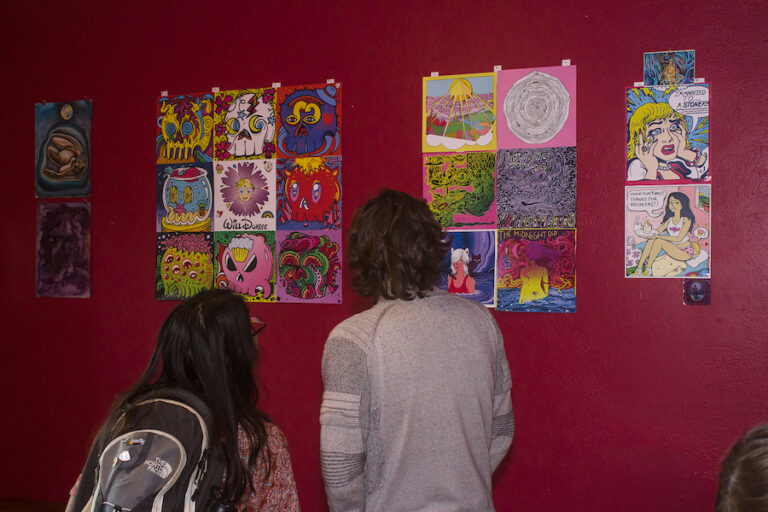
On April 12, Bay Area artist and musician Will Durkee held an art opening at Delta of Venus Cafe. The art on display was an eclectic grouping of some of Durkee’s favorite work, dating back almost ten years.

“I would say it’s a retrospective, but I’m not old enough,” Durkee said.

Durkee has been interested in art since he was a child and drew a lot of inspiration from the cartoons he watched growing up. He developed a passion for playing music when he was twelve and played in several bands in his youth.

In 2016, Durkee completed a custom-built double neck guitar that had the necks of both a guitar and bass. He also painted the body of the guitar in his signature style. This creation gave him the opportunity to join the Mime Troupe, a musical theater and political satire group based in San Francisco. He toured Northern California with the group, playing both bass and guitar on his hand-made instrument.

The art on display at Delta of Venus reflects these interests. His paintings are animated and bright, giving off a psychedelic feel. His portfolio consists of paintings, drawings and prints. Durkee seems to excel in all of these mediums and had an equal balance of them on display.

He also highlighted a collage-based piece, consisting of Durkee’s designs of real and fake album covers. Durkee explained the fake ones were either parodies or homages to other artists, and the real ones are used on covers of his own CD’s.

Durkee also had his first full-length album for sale during the opening. The album, “7ams,” consists of 12 eclectic and experimental songs.

“Its twelve songs are really different sounding,” Durkee said. “Each one has its own genre, from bluegrass, punk rock, jazz [and] folk.”

Durkee also makes all of his own album art and hand prints for each CD. He enjoys the process of combining his musicality and artistic talent.

Durkee’s artistic inspirations include the cartoons he watched as a child, along with psychedelic art of the 1960s

“Anything just really weird” Durkee said. “Just all of the weirdest types of things.”

Durkee’s album “7ams” is available to stream on Spotify and Apple Music.

Written By: Alyssa Ilsley — arts@theaggie.org

Meating and exceeding expectations

UC Davis Meat Lab Team excels at collegiate California Association of Meat Processors’ Cured Meat Competition

Sweet and Spicy Meat Candy. Bourbon’s Revenge. Asian Invasion Jerky.

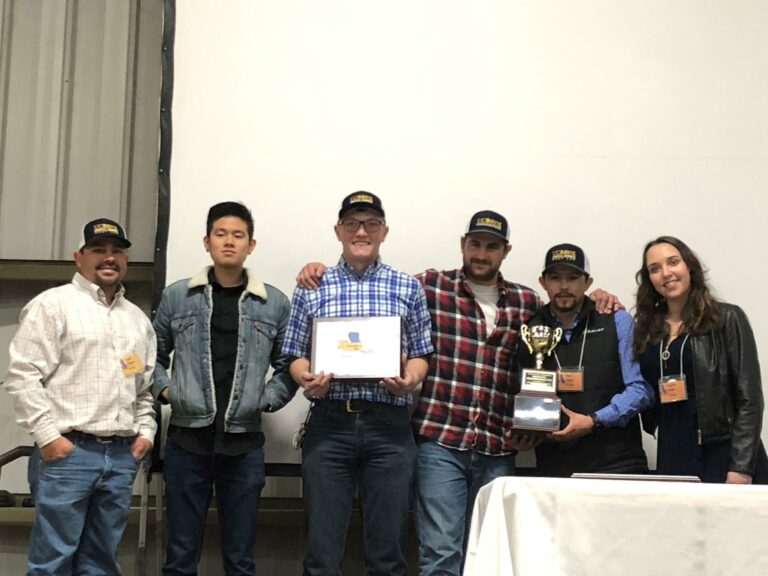
These are just a few of the jerky products that placed at the California Association of Meat Processors’ Cured Meat Competition. These same products allowed the UC Davis Meat Lab team to gain back possession of the Norm Eggin Championship Cup, a trophy awarded to the team with the highest sum of three individual scores. After losing the cup to Cal Poly by 10 points last year, the Meat Lab students struck back by winning first, second, fourth, fifth and eighth place.

While the category for this year’s competition was jerky, last year’s cured meat was one that UC Davis students were much more familiar with: bacon. According to Jared Hickory, a student supervisor at the UC Davis Meat Lab, the students at the Meat Lab had never experimented with jerky since he had begun to work there in 2018. In order to prepare for the upcoming competition, the students went through a continuous cycle of brainstorming, testing and perfecting each of their products from the beginning of December, when the category of the year was released, to the day of the competition in the end of February.

According to Caleb Sehnert, the Meat Lab manager, the recipe ideas are completely in the hands of the students aside from a few pointers and words of advice. He explained that the ideas range from building off of recipes from the students’ heritages to testing completely new ones.

“A lot of my decision was based upon what I thought others would be entering,” Hickory said. “Most college students love spicy food, so I figured they’d be entering spicy jerkies. I decided to go the other route and go with a sweeter bourbon tone with black pepper to give it crisp mouthfeel and heat. I also generally try to take into account what the judges would enjoy and play to the eye of the beholder. A lot of them are professionals that make jerkies themselves and would be looking for something innovative and distinctive.”

Mario Valdez, a fourth-year animal science and management major and meat lab employee, who placed in second with his pastrami jerky, explained that one difficult aspect of the preparation process was smoking the meat in the smokehouse. Sehnert attested to the dedication of the students, as he described how students would come early before class or late at night to take the jerkies out of the smokehouse to test. Sehnert believes that this consistency from the students is what allowed them to excel in the competition this year. After talking to coaches from other schools, he learned that other students brought their jerky to dry at home rather than placing it in a smokehouse.

“I think the fact that our students were coming in here in the middle of the night and testing them out and pulling them out of the smokehouse and really working with consistent [use of the] smokehouse every single night and not doing it at home and part of it here, that’s why they did so well,” Sehnert said.

Having taken first place 10 times out of the 11 times they have competed, returning members of the UC Davis team were determined to win back the trophy.

“The atmosphere was intense,” Valdez said. “We all wanted to win, but wanted to maintain a friendly relationship and have good sportsmanship. In social events prior to the competition, we set our rivalry aside and had a good time. On the awards night, little to no eye contact was made. The only time it did was through the reflection of our gaze in the trophy.”

Valdez believes it was the union and lack of competition between the members within the UC Davis team that led to their success. He explained that everyone contributed to each other’s recipes and shared the collective goal of taking back the trophy regardless of individual placement.

“I think a lot of our success came from us pushing each other to succeed and

put the best product out there that we could,” Hickory said.

According to Sehnert, the continued success of the UC Davis Meat Lab team places a target on their backs that motivates the students pushes the students to work hard and continue the legacy.

“I have to admit that we are anxious to compete next year,” Valdez said. “It was a fun experience and many friendships were made.”

Written by: Michelle Wong — science@theaggie.org

UC Davis MAPS team headed to NASA

MAPS team at UC Davis named finalist in NASA’s BIG Idea Challenge

A UC Davis engineering team known as MAPS was named one of the five finalists for NASA’s Breakthrough, Innovative and Game-Changing Idea Challenge. The MAPS team, a part of the Space and Satellite Systems Club, was selected for the final round along with teams from other prestigious academic institutions such as Harvard and M.I.T.

This year’s challenge was centered around a Martian greenhouse. Participating teams were required to make and demonstrate designs that would be cost effective, have the ability to make it to neighboring planets such as Mars in the near future and be capable of sustaining food production.

As NASA looks to continue space exploration, it first has to find solutions to some of the biggest problems that plague space traveling. One of these is food production. With a trip to Mars being approximated at six months long, it would be too expensive to send spaceships back and forth. With the BIG Idea Challenge, however, NASA is looking to find ways of self-sustainability in regards to food production for its astronauts. The greenhouses that have been designed by these teams are meant to accompany the idea of the Martian habitat that NASA is working on.

The BIG Idea Challenge not only brings prestige to those who are selected as finalists, but it brings various incentives to participate. These range from new knowledge and research skills, to resume building and networking opportunities. However the biggest prize of all is the shot at a summer internship at NASA if selected as the winner.  

The process of building the current UC Davis team was a lengthy one, starting in October of 2018 when a faculty member emailed the BIG Idea Challenge to one of the members of the MAPS team, Cory George. George, the systems engineer for MAPS and a fourth-year aerospace and mechanical engineering major, then got in contact with Duha Bader, MAPS team leader and second-year aerospace science and mechanical engineering double major. They went on to look for members who could complete the team.

“It was quite difficult forming a team because we did not know exactly how to approach a competition like this since it was our first time entering one,” Bader said.

The right people needed to be found to ensure that this project would have the capability of reaching its full potential. Once these conditions were met, a team was assembled and the first general meeting took place in late October.

“That first meeting, we were right there coming up with ideas on the spot no matter how crazy or weird they were,” said Audrey Chamberlin, environmental control and life support systems lead and first-year aerospace science and engineering major. “I don’t even remember some of the things that we came up with, the stuff we thought about for two months then dropped.”

When designing a Martian greenhouse for NASA there are many aspects that must be researched and many obstacles that one must overcome. One of these obstacles that the team took into account was having a design that could withstand the Martian atmosphere. Bader explained there are many key systems that need to withstand various conditions.

“It is about structural design making sure that the greenhouse has very high psi [pounds per square inch] levels, so that way it none of the materials would break or to ensure they won’t sheer from any storm on Mars,” Bader said.

Other constraints they had to take into consideration when building their model was weight. If the project is too heavy, it would be too expensive to take to Mars. Radiation on the planet of Mars is harmful so the team had to think of ways to avoid radiation from affecting the greenhouse, such as their solution of implementing ice cell walls. They also needed to take into consideration what type of plants they would use for the greenhouse, since they had to ensure that the plants they suggested were capable of meeting the nutritional needs of the crew members who would travel to Mars.

Nonetheless, out of the various creative solutions that the team had, none were more interesting to NASA than the idea of the type of soil they were planning to use for the greenhouse and the idea of of bringing earthworms along on the trip to help with various functions such as the fertilization of plants. The team decided that for their design they would not be using soil from Earth but they would be using soil from Mars. This itself came with many questions such as how they would transform the Martian soil to a substance that is useful.

“NASA was really interested in that part [the soil] of the design and they wanted us to research it further,” said Journey Byland, soils lead for MAPS and second-year aerospace science and engineering major. “There are a lot of safety considerations having to do with soil. As long as we make sure it is safe and farmable, once it’s in the greenhouse there are a lot of opportunities.”

The team is very confident about their design for various reasons, including their technology efficiency levels (Technology Ratings Level, or TRL), and the methods that they used to create their greenhouse.

“We put together what works and what is proven to work over many years and because of that we are able to stay confident in our design,” said Jackson Liao, the structures lead for MAPS and second-year aerospace science and mechanical engineering major.

The team did acknowledge the unknown. Though they are using methods that have been proven to work, there are still some components to their design that need more research in order to know if they are truly feasible.

“Although we do have things that have a high TRL, we have things that might not work, such as the earthworms in the soil,” Chamberlin said. “There is not a lot of research about whether or not you could freeze earthworms for six months and have them survive, so that just takes a lot of outside research.”

Along with the MAPS team, there are various prestigious institutions participating in the challenge and many of these universities have various resources at their disposal. A clear example would be the number of faculty members that are participating. While the Davis team has one faculty member, other schools have up to five faculty members. And within some of the schools those members specialize in fields related to this challenge.

Along with the various resources at the disposal of some of these schools, their teams are also composed of graduate students and undergraduate students who are currently in their upper division coursework.

The Davis team, though, consists of one senior with the rest being first and second years, so many of them have not yet started their upper division coursework. Due to this, they have had to do a lot of structural analysis and research on their own to truly understand the concepts that they were applying to their design. As a result they have developed not only a real sense of pride representing UC Davis but an underdog mentality.

“I feel really cool representing UC Davis as kind of the underdogs,” said Lucas Brown, irrigation lead for MAPS and first-year aerospace science and engineering major. “These other groups are upper divisions students with a lot of advisors, and we are going in there [on the] same [level] as everyone else.”

Many of the other team members are also excited to compete against these schools, not only building their own reputation but helping build the reputation of UC Davis.

“It gives a name to how amazing Davis is and a name to the amazing resources that we have,” Chamberlin said.

The team members showed no concern about the opportunity of internships since they are still relatively young compared to those who usually receive internships from NASA. They believe they will have plenty of chances for future internships especially with their new-found experience.

The team will go and present its idea on April 23 and is keeping an open mind about the results that it may face at NASA. The members explained that even if they aren’t able to come home with a victory, they feel that they have already won. The knowledge, skills and recognition they have received for themselves and their university is irreplaceable, as they continue to compete and build on this experience.

“Even if we win or don’t win it was amazing that we made it to this point,” Chamberlin said.

Written by: Alexis Lopez— campus@theaggie.org

Students rate their professors on self-selective website

Through RateMyProfessors.com students can evaluate professors online

“Awesome, Good, Average, Poor, Awful” — all ratings available to assign to professors on a website students know well: RateMyProfessors.com.

Founded in May 1999, the website allows college students to rate professors and institutions from America, Canada and the United Kingdom, according to the website.

To use the site, one can search for either the university and then the specific department to find a professor, or the name of the professor. Individuals can then read reviews left by others or leave a rating themselves. Professors are rated on a scale of one to five, based on overall quality and difficulty. Students can also leave comments about what their opinions were of the professor and the class. Tags can also be added about common traits often seen in many professors.

“Most of the professors here at UC Davis are about three stars and above,” said first-year biochemistry and molecular biology major Katrina Matthews.

Students like Henna Kaur, a first-year undeclared student, said that recurring themes on comments left for Davis professors include the amount of homework and reading, difficulty of tests, how the professor grades or how good of a lecturer the professor is.

Kaur said that like other students at UC Davis, she looks up professors on the website during the process of choosing her classes for the next quarter.

“I want to have a good professor and that will influence what classes I will chose,” Kaur said. “So usually I will look at the ratings and see what people have to say about them.”

Matthews said that she uses the website to find classes with attractive workloads based on the reviews of other students, especially when she is trying to create a balanced schedule.

“I think it is a good tool just because it kind of gives you an idea of what the class is like before you go into the class for the whole quarter,” Matthews said. “Especially if you are taking a heavy load, especially for STEM majors, if you want to pick a GE, you want to pick one of the easier ones if you are taking multiple STEM classes at a time.”

Jaime Fisher, a professor in the German and cinema and digital media departments, said he used to check RateMyProfessors.com more often but does not anymore because he hasn’t received many ratings recently.  

“My ratings are more or less positive, but not perfect, so I don’t worry about it,” Fisher said.

The negative reviews Fisher has found on the website about himself mostly has been about the class rather than his teaching.

“Usually the complaints are about the material, but of course we feel obligated to teach certain types of material,” Fisher said. “If there were more problematic things, I might check it more often.”

RateMyProfessors.com is not a perfect website. According to Fisher, the ratings do not give specific assessments or suggestions about the class material, which would be most helpful to him and other professors.

“It’s much more general of whether the professor is effective or not,” Fisher said.

Also, who chooses to leave reviews is a self-selective process, making it difficult to get a more accurate representation of how all students feel about the class, according to Fisher.

“You may feel like you are more confident in the subject than everyone that is rating the subject, and they may give poor feedback to actually a professor that you would enjoy or a professor that you would understand based on their lecture style,” Matthews said.

According to Peter Wainwright, a professor in the department of evolution and ecology, receiving feedback about a class is best when it comes from a large student sample size.

“Without large samples from classes, it runs the risk of not being representative of student experiences,” Wainwright said. “So one major issue is that, at least in my case, only a very small fraction of students participate.”

As long as enough students write reviews, Wainwright said that he thinks the website can be fairly accurate in providing students with their peer’s impressions of professors.

“As long as you use it that way and there are enough responses, I think it should be an accurate reflection of student impressions and student evaluations of instructors,” Wainwright said.

Another drawback Wainwright has found is that students could use the website maliciously which could be complicated and awkward to back out of.

“I feel like some people go on there after they figure out that they are going to fail the class after the second midterm and then they put a really bad rating for the professor,” Matthews said. “But typically, I think it is pretty accurate in terms of their teaching style.”

For Fisher, he said that he spends more time looking at the actual class evaluations administered by the university at the end of each quarter because he finds them to give more useful feedback that is specific to his classes.

“We do those end of quarter surveys, which are pretty much the same thing just more formally,” Kaur said. “That would be a way to see what students really think.”

Overall, Fisher said that receiving any feedback about a professor’s teaching is important and valuable.

“Transparency about our teaching is good,” Fisher said. “I don’t know whether RateMyProfessors.com is the best vehicle for it. It’s probably a flawed vehicle because of the self-selection problem, but probably some vehicle is better than none.”

Written by: MARGO ROSENBAUM — features@theaggie.org

Resolution to disarm campus police fails at Apr. 11 Senate meeting

Tension mounts between students who feel unsafe with armed campus police and senators who disagree with all or parts of the resolution

The Apr. 11 ASUCD Senate Meeting was called to order by Vice President Shreya Deshpande at 6:10 p.m. Senator Noah Pearl was absent for the meeting.

The meeting began with a cultural humility and allyship training, during which controversy occurred between members of the table and ECAC Chair Rina Singh and Commissioner Yalda Saii, both of whom were providing the training along with Deshpande. Senator Alexis Ramirez voiced concerns over a quote that was in the presentation, while Singh explained that the presentation was a hold-over from the previous ECAC chair. The training covered privilege, historical injustices and racial sensitivity, among other issues.

Following the training, the positions of vice controller and controller were confirmed by the table, with Shambhavi Gupta confirmed to the newly created position of vice controller and Kevin Rotenkolber confirmed as controller.

New legislation was introduced after the confirmations. Senate Resolution #10 was introduced by author and seventh-year sociology graduate student Blu Buchanan. The resolution intended to call for the disarmament of campus police.

“What this resolution is for is to recognize the harm that police do,” Buchanan said. “We are talking about managing and mitigating that harm by making it less easy for police to rely on fatal and illegal weapons instead of using other tactics: de-escalation, using crisis counselors, for example.”

Buchanan cited several other similar resolutions that have been passed by a number of institutions and organizations, including one passed by the student association at the University of California, Santa Barbara. The Graduate Student Association at UC Davis has also passed a resolution similar to the one Buchanan presented.

Buchanan stressed that the resolution was based off data that suggests police disproportionately affect marginalized populations in a negative way.

“What we’re fundamentally asking for is to disarm police [and] come up with other alternatives,” Buchanan said. “We know that those alternatives exist — other places have been doing them.”

Public discussion over the bill continued for several hours, with some audience members and senators expressing concern over the lives of both police officers and students if police are disarmed, and others suggesting that opposition to the resolution indicated the lives of individuals who are part of historically marginalized communities were seen as less important. Those in favor of the resolution also emphasized that it has no power to effectively disarm the police. Instead, proponents of the resolution argued that SR #10 would signal to the UC Regents how the student body feels about armed officers on campus and potentially begin a wider discussion regarding the issue.

UC Davis Police Chief Joe Farrow was present at the meeting and made an effort to let the audience and senators know that this discussion was important and that he would like to work with students to make their experience at UC Davis as comfortable and safe as possible.

“I have a long history of interest in mental illness, and we are trying to be the best department in the nation that can respond to people in crisis and give them help,” Farrow said. “We’re working hard to train every member of our department to understand what implicit bias is, what de-escalation is. The disarmament is a huge step — it’s going to take more than just a resolution, but what I would ask is that if we can concentrate on the things that I’m trying to do to try to make people as comfortable as they can.”

During Farrow’s last two years as Police Chief, there were zero incidents of use of any force by police officers, according to Farrow.

“Under our current instruction, we would be the primary [responders] for any incident that occurs on campus,” Farrow said. “If we’re disarmed, we don’t have weapons, [Davis Police] would be the department that would respond for any type of crimes, shootings, person with guns — they would have to come onto campus. Keep in mind what that means: we’re going through all the training that we’re trying to do to be very contemporary; we’re going to be one of the first departments in the state to be fully accredited with all the policies of the 21st century task force on police.”

Senator Andre Spignolio indicated that he would vote no on this resolution due to feeling uncomfortable with some of the statements made in it.

“There are a lot of things in this resolution that I understand and that I do agree with, but there are a few things in here that I don’t feel comfortable putting my name on,” Spignolio said. “First, the history of racial history and racial terror — that general statement is something I’m not comfortable putting my name on. Essentially, my point is I understand a lot of the arguments and I understand why the police officers on campus may not need firearms, but there’s statements in this resolution that I, quite frankly, just don’t feel comfortable putting my name on.”

Spignolio voted no on the resolution, and was referenced by an audience member after the resolution failed to pass because he did not move to amend the resolution. As a member of the table, Spignolio could have proposed changes to the text of the resolution to make it more acceptable to him.

In response to these concerns, Senator Anna Estrada said that particular statements in the resolution were there, because they “are lived experiences.”

Audience members in favor of the resolution were particularly upset that Spignolio and Senator Maya Barak, who also voted no, said they would like to see the resolution come before the Senate again. Audience members advocating for the resolution were dismayed, particularly because drafting the original resolution required a substantial amount of time and energy — things difficult to find as students with several other engagements. They felt that Spignolio and Barak were dismissive of their efforts and the additional work that would be needed to bring a modified version back before the table.

Senators Alexis Ramirez, Sean Kumar, Rebecca Gonzalez and Ricky Zapardiel voted no, along with Barak and Spignolio. Senators Tony Chen, Sahiba Kaur, Victoria Choi, Shondreya Landrum and Anna Estrada voted yes. The resolution failed six to five. Zapardiel clapped after the resolution failed to pass and both Zapardiel and Ramirez left, without comment, shortly after the resolution failed, although the meeting had not yet been adjourned. Chen also left the meeting, citing the difficult emotions that the resolution evoked for him.

The meeting adjourned at 11:30 p.m.

Written by: Sabrina Habchi — campus@theaggie.org

Ode to Oracle

After 47 years of memories in Oakland, the Warriors bid an emotional farewell to the East Bay

It’s 2009 and I’m at a rare Fan Fest for a slew of Bay Area sports teams. The 49ers, Giants, Sharks, Raiders and A’s are all represented at tables set up in a semi-circle out on a drab, concrete plaza. A few fans press in at some of the booths, but I don’t really pay them any mind. Toward the center there’s a table with a blue tablecloth and a yellow Golden State Warriors logo on the front. Behind it is newly-drafted point guard Stephen Curry.

He’s sitting alone. No fans around, which is a little surprising to me. But then again, it’s 2009, and they should’ve had Monta Ellis there instead. I blow off the other teams and walk up to Curry. We take a quick picture, and I settle down in a chair next to him. It’s hard to see, but I’m starting to notice that he’s got a full beard and looks more like he’s 30 than 21. I smirk and think to myself, I swear I know this guy.

I ask him, how many rings are you expecting to win? “Oh, I don’t know,” Curry says without even looking at me. “I’m just excited to get started and begin my NBA journey.”

What do you think about the possibility of playing with Kevin Durant at some point in your career? He gives me a sarcastic side-eye, like he’s trying to hide something from me and looks away. “Man, Kevin is a great player; it would be great to play with him at some point.”

I suppress a chuckle. How many MVP’s do you think you’re going to win? Curry stops and turns his head and shoots me a wry smile. We both start cracking up, and I playfully slap his chest before getting up and walking away.

Then I wake up.

In my dream, it seemed only Steph and I knew the future — we shared that commonality while everyone else passed him by. But really, in 2009, who knew? Who could have predicted all of his success, and the quench he would bring to a thirsting city, a tired team and a franchise plagued by missteps and seemingly perennial failure? I sure didn’t. Except maybe in my dreams.

For 47 years, the Warriors occupied an arena at 7000 Coliseum Way in East Oakland. On Sunday, April 7, the Warriors played their final regular season game underneath its storied canopy. They still have a playoff run left on its hardwood, but that Sunday was the emotional tip of the cap to an arena that has stood in Oakland for more than half a century. It was a time to pause and appreciate its history and to reflect on all the memories that have been made there since its construction in 1966. To remember the days before the back-to-back Larry O’Brien trophies and five-all-star-lineups; before the MVP’s and 35-foot threes; before We Believe and Nellie Ball; before Run TMC and Sleepy Floyd; before Rick Barry and a 1975 championship; and long before the Oakland Oaks and California Seals.

The Coliseum may not necessarily be the house that Curry built — there’s far too much history within its walls for that to be true — but he certainly has his fingerprints all over the blueprints of Chase Center, the San Francisco arena the Warriors will call home next season. In a way, he is the one who has afforded the organization the opportunity to leave Oracle behind and to privately fund an arena built by and for champions.

But to many long-time, diehard fans, the move across the bay is bittersweet.

From a business standpoint, Chase Center is a no-brainer. Its construction fills San Francisco’s need for a state-of-the-art venue and moves the league’s most illustrious team to a city that is becoming increasingly that — and away from a city that is historically not. And while The City anxiously awaits its shiny waterfront addition, The Town is already lamenting the void.

In a city of hustle and grit, Oracle is something much more dear to the heart of Oakland than a basketball stadium. The Athletic’s Marcus Thompson, an Oakland native, declares it “a symbol of possibility, Oakland’s Statue of Liberty. It was a place where cool things happened, something to work towards. We didn’t have a bustling financial district to soak up, skyscrapers to stare at and dream, a big beautiful university to sharpen our determination.”

“We had the Coliseum.”

In many ways, the Coliseum embodied an entire community’s hope. It stood as the vanguard of what could be. That making it to Oracle was akin to making it out of Oakland. And it was the appetite for such hope that drew sellout crowds during the 13 seasons between 1994 and 2007 when the Warriors never made the playoffs. When they were racking up paltry win records of 21 games, 19 games, 17 games…

As a wide-eyed kid, these are the first Warriors teams I remember. But even in those frustrating, losing years, those games still lived and breathed all of Oracle’s intangibles. To a boy, launching Krispy Kreme boxes out of a pressurized cannon into the last few rows of the upper level was nearly as exciting as seeing Jason Richardson reverse slam an alley oop from Baron Davis. Or watching color commentator Jim Barnett sink corner three’s before a game in a full suit — jacket and all. Or the acrobatic trampoline dunks from the team mascot, ‘Thunder,’ at half time, or the way the crowd would erupt into a frenzy when Andris Biedrins would finally make a free throw. See, at Oracle, it was the game that mattered. Sure, fans wanted to see their team win, but that was secondary to the magic that made an evening at Oracle so exhilarating.

These are memories that fueled Warriors fandom. The days that didn’t hinge on wins and losses as much as they did just being a part of something that was somehow bigger than yourself, but you could never quite put your finger on what that something was. Even in the Days of Suck, the hustle and grit were always there — there was always that thirst to make it.

Which is why the 2007 playoffs are forever burned into the mental retina of Warriors fans everywhere. Because for 13 parching years they existed as a team shrouded in a cloud of perpetual disappointment. Coaches and players came and went (some even choked their way out), draft picks became flops, budding stars were lost, the team couldn’t even tank properly. The heartbreaks are endless. But finally…finally…the Warriors snuck into the postseason in 2007. Poised to face MVP Dirk Nowitzki and the 67-15 Dallas Mavericks in the first round, it was the classic David and Goliath matchup. Only instead of a rock and a sling, the Warriors were armed with the vocal ammunition of more than 20,000 fanatical believers, who wanted victory as badly as the players did — if not more.

I was in fifth grade during this legendary run and remember climbing the stairs to section 209 and finding my seat next to my dad in the very last row of the arena on that May evening before Game Six. With my back against the wall, I crawled into the yellow We Believe shirt that was draped over my chair. On my 10-year-old body, the extra-large tee wore more like a dress than a shirt, but it didn’t matter — nothing mattered that day except for Warrior basketball. Nothing mattered except the possibility of what was previously unthinkable.

The energy inside Oracle was palpable. You could sense what was coming; you could feel it on your skin, in your heart, everywhere around you. It plays back in my mind similar to how that dream with Curry does. It’s somewhat distant like a dream can be, but the whole time I somehow knew what was going to unfold. Everything seemed predetermined by some outside force long before the ball tipped. I spent almost the entire game standing on top of the seat I paid to sit in, straining to take it all in because with every anything — a made basket, tipped pass, block, forced turnover — Warriors fans exploded.

“What emotion and what energy from this crowd here in Oakland,” TNT play-by-play announcer Marv Albert exclaimed into his microphone during the third quarter.

“I think it’s the best crowd in the NBA,” then-broadcaster Steve Kerr responded, “and they deserve what they’re getting right now. It’s been a long time coming for Warriors fans.”

So, two weeks ago, when the current Warriors took to the court and peeled off their warm-up jerseys to reveal the throwback We Believe uniforms underneath — the hairs on my arms stood on end. The moment was electric. It was the amalgamation of new and old; the visible recognition of all those years of struggle and the ultimate victory of hope. And with Curry standing at mid-court, flaunting the throwback logo on his chest a-la-Mac Dre, he seemed to scream, look at all we’ve done, what we’ve made here, how long we’ve dreamed this dream. And this dream is mine. And this dream is yours.

He dreamed it as an undersized, overlooked and under-appreciated player most of his life. And he dreamed it in 2009 when he wore that horrendously classic jersey during his rookie year, before anyone could have genuinely predicted the game-altering talent he would eventually become. In a sense, he has that Oakland spirit in him, too. The one that flouts adversity and doubt, and crafts its cards into winning hands. And, really, those are the best human experiences, aren’t they? The underdog victory that makes the sweetest story. That makes hope come alive and dreams come true.

It’s easy to write off the Warriors move to San Francisco as a business play — and for owners Joe Lacob and Peter Guber, it may be — but in a way, this is often how the story goes for those that do what it takes to make it out; for those that finally succeed. And it might be tempting to cast the organization as sellouts to Bigger and Better. But no matter what, the history that the Warriors made in The Town, and the memories they gave the fans — and that fans gave them — will live on forever. Regardless of area code.

Because no matter how many luxury suites sell, or how many Tesla’s line the parking lot, you will never be able to take Oakland out of the Warriors. Ever.

Written by: Carson Parodi — sports@theaggie.org

Video games change the way we experience stories

Stories are told best through the interaction and experience that video games can provide

I love stories. Storytelling is one of the most fundamental aspects of what it means to be human. Our culture is defined by the stories we tell and what we learn from them.

The natural progression of storytelling has evolved from shared tales around a campfire to the movies we see on the silver screen. And the next step in how we will tell stories is already becoming clear: video games and their interactive narratives.

Video games have only been around in their modern form for about 30 years, and they are finally maturing into their optimal storytelling form. The interaction they provide may not be as relaxing as kicking back and watching a movie, but a lot of times I don’t want relaxing stories. I want stories that’ll make me never want to leave that world. I want stories that will keep me up all night because I just can’t get enough.

When I was first introduced to video games, they immediately captivated me. The idea that I could actually be one of the characters in a digital world seemed too good to be true. Whether I was just a frog trying to cross the street in “Frogger or a clone trooper defending facilities on Kamino in “Star Wars: Battlefront II,” my ability to determine the player’s fate made video games captivating. I was the one who “died” or the one who “lost.” The character on the screen was as much me as I was him or her.

I didn’t realize it at the time, but having agency over my experience made all the difference. I could finally understand all of the motivations of the characters in my control. I could understand the frustration of characters, the struggle it takes to beat a game and that final feeling of exhilaration once winning.

The game that opened my eyes to the full potential of storytelling was Naughty Dog’s “The Last of Us.

I remember my time with “The Last of Us” well. The story of Joel and Ellie’s journey to end a zombie-like outbreak in the post-apocalyptic United States may not sound special, but it most definitely is. It’s a story I’m proud to say I’ve only experienced once — were I to go back and play it again, I fear I would ruin the distinctness of my memories. Still, its impact has stuck with me nearly a decade later. It’s a dark, beautiful story that feels like a permanent part of me. Joel and Ellie’s tale is the baseline for me as I experience new stories across all mediums.  

One moment that sticks out in my mind is the environmental storytelling I came across about halfway through the game, in the form of a boy’s journal. I found myself in tears as the boy told the story of the outbreak: the first signs of chaos, his school being cancelled, his parents arguing with each other. And ultimately, the boy was forced to drive out to the woods, remove the collar from his dog and let him go free because the wild was where he belonged.

Most people who played the game probably didn’t notice these random pages of a boy’s journal scattered across an ordinary house. But I did. And that’s why that moment was so special to me. That’s why it brought me to tears. Those pages didn’t alter the main narrative of the game, but they were a reminder of what the world had become. Those pages reminded me of the deteriorated humanity in that world.

This elevated emotion and immersion is what makes games so powerful. The ability to make games feel like a personal story, like in these delicate moments about a boy and his dog, is why storytelling feels more visceral in games.

Video games give you the freedom to enjoy immersive and interactive stories and play them in the way that you want. You go from a passive observer to being actively involved at the epicenter of stories when you experience and interact with them.

The future of great storytelling is in video games. And it is only getting better. The industry just needs to do a better job of welcoming new gamers to enjoy this groundbreaking ways of experiencing stories.

Written by: Calvin Coffee –– cscoffee@ucdavis.edu

Disclaimer: The views and opinions expressed by individual columnists belong to the columnists alone and do not necessarily indicate the views and opinions held by The California Aggie.