55.4 F
Davis

Davis, California

Monday, December 22, 2025
Home Blog Page 428

Culture Corner

The Arts Desk’s weekly picks for television, movies, books and music

Television: “It’s Alive! With Brad”

Diverging from the norm, I recommend a Bon Appétit YouTube series instead of a television show. The love child of Tasty videos and Food Network cooking shows, this series hosted by the large personality Brad Leone explores the world of cultures, fermentation and bacteria in food. In the test kitchen, Brad semi-scientifically teaches you how to make classic fermented foods from kombucha and sourdough bread to the more unusual like pickled fermented eggs and beet kvass. Apart from the mouth-watering creations and Brad’s charming mannerisms, these roughly ten-minute cooking shows are enhanced with comedic video editing and graphics that dance in the background. Thriving in its third season, this series is guaranteed to satisfy that millennial food lust.

Movie: Tag

Based on a true story, “Tag” is a lighthearted tale about a group of five childhood friends who carry on an annual tradition of playing tag through their adult years. Not just any game of tag, the group designates the month of May to play — even showing up at each other’s places of work and flying across the country unannounced to continue their game, which is 23 years running. The last person to be tagged in the month loses. This star packed comedy — Ed Helms, Jon Hamm, Isla Fisher, and Jake Johnson, to name a few — is a heartfelt depiction of friendship and serves as a reminder to never ignore your childness at heart.

Book: “Born A Crime” by Trevor Noah

This memoir is a riveting account of “The Daily Show” host’s anguished upbringing. Born in South Africa under Apartheid to a Xhosa mother and Swiss-German father, Noah’s light skin — his mere existence — was criminal. Noah lead an anomalous childhood to that of his cousins and neighbors, not being allowed out in public with either of his parents for fear of incarceration. Language became his social currency, switching tongues for social acceptance. The memoir is a mind-expanding view of the world and an inspiring rags-to-riches story filled with anecdotes — both charming and outlandish — with a jaw-dropping ending. And if you are a fan of audio books, Noah narrates it himself on Audible which adds another dimension to his story — plus, hearing the accents and dialects in his voice are entertaining too.

Album: “Ventura” by Anderson .Paak

With “Venice”, “Malibu”, “Oxnard” and now “Ventura,” Anderson .Paak makes his way up the SoCal coast with groovy, feel-good jams. His caramel-like voice accompanied by a strong beat and a funky horn section induces an uncontrollable foot-tapping, finger-snapping response. I’ve been a diehard Andy fan ever since his NPR Tiny Desk Concert graced the internet in 2016. With his suave smile, unique sense of style and immense talent, Anderson .Paak is the whole package. Top songs from the album include: “King James,” the hard hitter with a political message; “Make it Better,” the heart-warming love song; and “Jet Black (feat. Brandy),” the ultimate summer car jam. But the album as a whole has a wavy flow from beginning to end. Truly, you can’t go wrong with any of the infectious beats on “Ventura.”

Written by: Grace Simmons — arts@theaggie.org
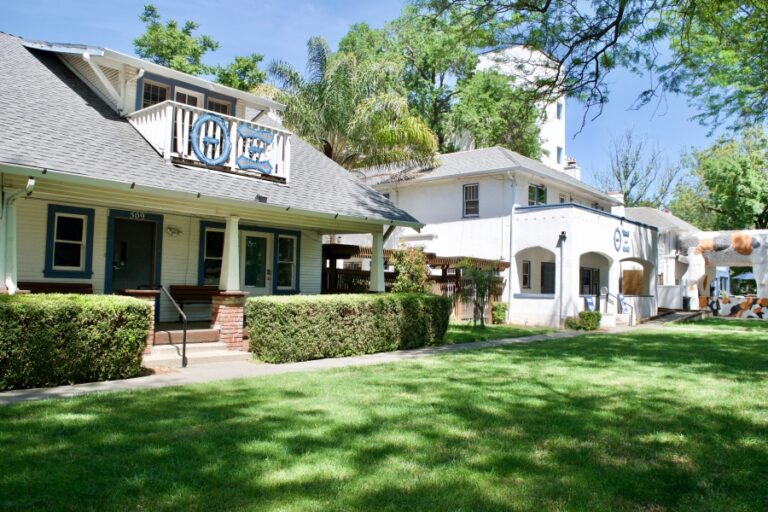
Theta Xi submits plans to demolish Bryson, Jackson houses, build new three-story house on First Street property

Plans to consolidate three Theta Xi frat houses into one currently under review by city planners

The UC Davis chapter of the Theta Xi fraternity has submitted plans to redevelop its headquarters on First Street, which currently spans three buildings. The plans include demolishing two of the fraternity houses and building a new three-story house, according to a notice released by the city on Feb. 25.

The properties marked for redevelopment in the report stand at 503, 509 and 515 First Street Under the proposed plan, the structures at 503 and 509 addresses would be demolished, which includes Bryson House, Jackson House and a parking garage.

Currently, Theta Xi’s headquarters are zoned across three lots, each with its own house.  The fraternity properties span most of the block face located between D Street and the Natsoulas Gallery Art Building at First and E Streets. The plans, however, would merge the three lots, and re-divide the property into two lots of roughly equal size.

Theta Xi plans to keep its Main House intact, which is located at 515 First Street. On the site of the demolished houses, the fraternity plans to build a new three-story building. During construction, according to the project narrative on the City of Davis website, members of the fraternity will continue to occupy the Theta Xi Main House. Once construction is completed, however, the frat will vacate the main house, making it available for new tenants or an outside redevelopment project.

The new headquarters, according to the report, will provide 35 total beds and nine bathrooms. Theta Xi also plans to consolidate its living and study areas into the new building next to a new space for bicycle storage and maintenance as well as a new off-street parking lot.

“The project would also consolidate all living and study areas into the proposed three-story building with partial basement, a detached laundry, storage building, and trash enclosure, and associated site landscaping with exterior meeting and gathering spaces,” the project description in the report reads. “There would also be a dedicated ‘Bike Barn’ with bike maintenance space and a one-to-one ratio of covered and secured bike storage to beds.”

According to the project narrative on the City of Davis website, Theta Xi hopes to address structural issues identified in the Bryson and Jackson houses, noted in a 2016 report by the construction company Pemberton Engineering. The original structures of both houses are over 100 years old, according to the Pemberton report, their construction dating back to the 1910s. Theta Xi’s Main House was built in the 1920s. The fraternity acquired the first of the three buildings during the 1950s.

The project will update the aesthetic of the new building to match the surrounding city architecture while retaining elements of the original “Craftsman Bungalow” style of the two buildings that will be demolished — an architectural characteristic of the early 20th century era in which they were constructed.

“[Demolition] will allow for construction of a more compact, consolidated singular fraternity building that will also create a more urban edge, consistent with city planning goals for the neighborhood,” the narrative read. “The architectural theme recalls the Craftsman Bungalow style of the houses being replaced.”

The Theta Xi redevelopment project is still in the early planning and approval stages, according to Davis city planner Ike Njoku. At the time of publication, the city was drafting environmental impact reports for the development. Once completed, the city will circulate the report and re-open the project for public commentary.

“The Theta Xi Fraternity redevelopment project is at the environmental impact report (EIR) drafting stage,” Njoku said via email. “We are currently drafting the EIR, which we hope would be circulated before end of next month (i.e., May 2019) for the required 45 days comment period.”

Njoku could not specify as to when construction is projected to begin or end for the Theta Xi redevelopment. The California Aggie reached out to members of the Theta Xi fraternity, but did not receive any responses by the time of publication.

Written by: Tim Lalonde— city@theaggie.org

Tenth annual Loopalooza welcomes all

A passport to Davis’ famous 12-mile Bike Loop

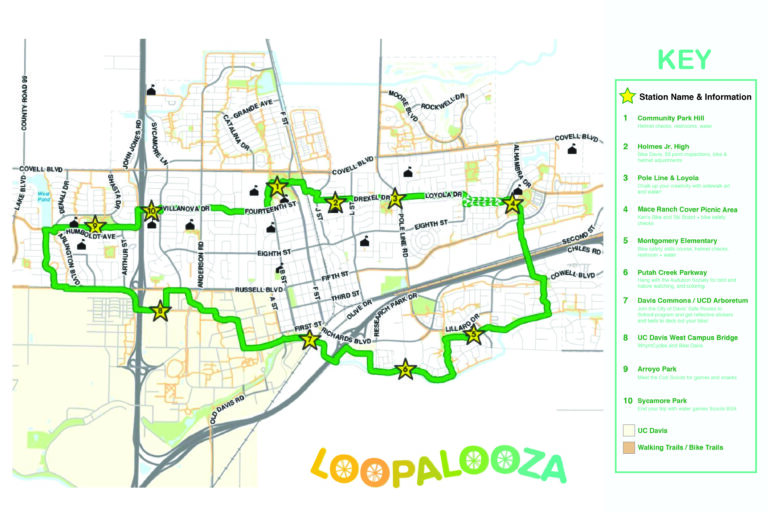
The City of Davis and Bike Davis will collaborate to host the tenth annual Loopalooza event on May 5. The event will feature 10 stations with different activities hosted by local organizations designed to encourage community members to explore Davis on bikes.

The activities range from bike obstacles set up by the Davis Bike Park Alliance to birdwatching with the Audubon Society in Putah Creek Pathway. All of the stations are situated along the 12-mile Davis Bike Loop through local parks and greenbelts.

Last year, the event piloted an interactive passport to encourage participants to visit all the stations, which offer stamps and prizes for completing portions of the loop. This year, the passports were designed by UC Davis student Timothea Wang, according to City of Davis Street Smarts Intern Amber Medina.

“You can flip through the pages, and it has the station activities, the hosts, the locations and the map so they know where their route is,” Medina said. “Each station has a different sticker — and so you get a sticker for each station you stop at — and then, at the end, you get a certificate of completion.”

Loopalooza is one of the city’s many endeavors to encourage active transportation, which includes biking, skateboarding, walking and scootering. Under the city’s Street Smarts Program, other events include Bike Rodeos, school assemblies and participating in National Bike to School Day on May 8. Additionally, the city’s Bike & Pedestrian Program offers a three-hour Biking with Confidence bike education course, which is open to ages 12 and up. Moore expressed that her objective is to bring active transportation to Davis in exciting ways.

“[Loopalooza] is designed as a fun event, but our secret goal is to teach families and community members that they can get from their home, from their school, to a fun park or to a grocery store,” Moore said. “As you ride along the loop, you start to realize your bike paths connect to your community the same way that your roads connect to your community.”

A range of local companies are sponsoring the event, such as Ken’s Bike-Ski-Board, Bike Davis, Davis Bike Collective and Audubon Society to Jump Bike and KIND Healthy Snacks. The event will offer free bike lights and reflectors, as well as point inspections, helmet adjustments and bike checks, at the various stations. Medina shared some events that would appeal to college students, even those who are not in the habit of biking.

“Everyone’s kind of a kid at heart,” Medina said. “There’s chalk art on campus and we have a lot of bike safety, which is really helpful for students who are trying to feel more confident biking.”

Over the past 10 years, Loopalooza has increased the number of stations and the hosts have varied year to year; however, its core goal to make Davis a bike-friendly environment has remained the same, according to Bike Davis Treasurer Sanne Fettinger.

“Christal Waters, Kristen Muir and myself started the Loopalooza event back in 2010,” Fettinger said. “It was started because we wanted to promote the 12-mile Bike Loop in Davis to families with kids to find a way to get to school. The first idea was to have a station at the different elementary schools and junior highs to promote biking to school.”

The event has been a family-friendly event since its inaugural opening, often attracting families and younger children. It will be open to everyone and free to participate in, but the organizers are looking to attract more UC Davis students to enjoy the ride and take advantage of the resources.

“We often have university students, but I think they might not realize it’s for everyone, so pointing out that the opportunity to ride the Davis loop is a great way to learn this community,” Moore said. “It’s a really special community.”

The festivities will take place from 10 a.m. to 2 p.m. on Sunday, May 5.

Written by: Renee Hoh — city@theaggie.org

Chancellor Gary May stands against FDA’s blood donation restrictions on MSM

Restrictions specifically target men who have had sex with men

Chancellor Gary May recently released a statement to the community calling attention to federal restrictions that gay men face when donating blood. May published the letter in response to UC Davis’ regular blood drive that was held on April 16-18 on the Quad.

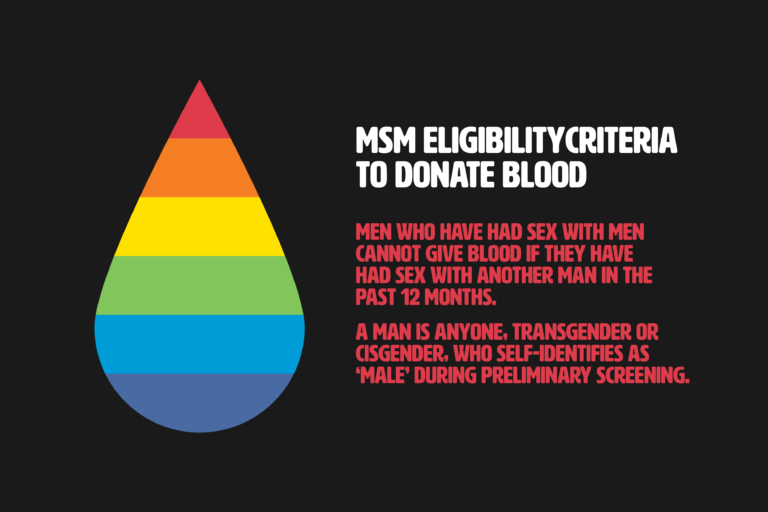
May’s letter addresses existing federal regulations that implement restrictions for men who have sex with men (MSM) when giving blood. Previously, the U.S. Federal Drug Administration enforced a lifetime deferral for MSM.

In 2015 the FDA revised its regulations to limit deferment for MSM to “12 months from the most recent sexual contact,” according to the Red Cross’ website.

With regular blood donations held on campus as well as around the nation, May commented on his decision to go forward with this statement.

“I wanted to send a strong message that UC Davis is an inclusive community,” May said via email. “Some may not know about limitations that are put on some in our community, such as in this instance, and I wanted people to know that I see and hear them.”

Restrictions against MSM began in 1983 during the AIDS epidemic in an attempt to prevent the spread of the disease. Originally, the ban applied to MSM, women who have sex with women (WSW) and transgender individuals considered MSM.

Today, the deferral only applies to MSM. There is no deferral for WSW or transgender women, assigned male at birth, who have sex with men. According to the Red Cross’ website, MSM in monogamous relationships must still observe the 12 month deferment.

Many believe these restrictions are outdated and discriminatory, including May.

“I also want to acknowledge those in our community who would participate, were they not barred by federal restrictions on blood donations by men who have had sex with men,” May said in his statement. “UC Davis — and I personally — stand strongly against all forms of discrimination on the basis of gender or sexual orientation. By using those traits as a proxy for risk, the FDA’s policy unnecessarily prevents some of our fellow students, staff and faculty from joining in this important and generous community effort.”

While all donated blood goes through a process of intense screening, historically there have been cases of blood containing viruses getting through screening procedures. In an attempt to decrease the likelihood of this occurring, because MSM are more likely to have HIV than the general population, the FDA previously deferred any MSM from giving blood.

Today, with tests that can detect HIV within 11 days of infection, many accuse the 12 month deferment period of being outdated and homophobic. Staff at UC Davis’ LGBTQIA+ Resource Center acknowledged the importance of this issue via email, but were unable to provide a comment.

According to an article from the Los Angeles Times, today a patient’s chance of getting HIV from a blood transfusion is 1 in 1.5 million.

Vitalant, formerly Bloodsource, the company that runs UC Davis’ blood drives, is responsible for contributing to “studies that presented the scientific data and testing advances prompting the December 2015 FDA change from a permanent deferral for men who have sex with other men (MSM) to a 12-month deferral since last sexual contact,” according to their website, which May referred to in his letter.

Going forward, more scientists are working to provide evidence-based studies that support shorter deferral periods, including Vitalant.

“The goals of this research are to reduce the deferral period for gay and bisexual men even further — as has been done recently in France and the United Kingdom — and possibly also to develop a more individualized donor risk assessment process — such as is used in Italy and Spain — that ultimately may allow gay and bisexual male donors whose risk for HIV and other blood-transmitted infections has been proven as being acceptably low to donate blood for the general community,” said Chris Gresens, the senior chief medical officer at Vitalant’s North and West Divisions and a clinical professor at UC Davis’ School of Medicine.

Written by: Ally Russell

UC Merced newspaper to lose funding, shut down by the end of summer

#SaveStudentNewsrooms

The Prodigy, UC Merced’s student-run newspaper, is set to shut down by the end of this summer after its funding request for the coming year was denied by the Associated Students of UC Merced. CC Gillespie, the incoming editor-in-chief of the paper, was recently informed in a meeting with an ASUCM representative that The Prodigy is not listed on next year’s budget release form, according to The Daily Cal.

The control that ASUCM has asserted over the The Prodigy endangers the independence of student voices and the ability to keep UC Merced in check. This isn’t the first recent instance of student governments interfering with the autonomy of campus newspapers. At the beginning of April, members of The Daily Bruin at UCLA went on strike after their choice for next year’s editor-in-chief was overruled by the student government’s Communications Board.

Student journalism is a pillar of university life for a number of reasons. Student-run newspapers keep the university and university-related organizations accountable for their actions. In the last year, reporting from The California Aggie has called attention to a lack of mental health resources on campus and accusations of hazing and misconduct within The California Marching Band. We also provide weekly coverage of the ASUCD Senate meetings, which includes how money is being spent and what legislation the student government chooses to pass.

Campus newspapers ensure that students are informed about what’s happening on and around campus. At The Aggie, our staff of over 100 reporters, photographers, editors and managers work around the clock to provide this information to our readers. On the night of the shooting that resulted in Officer Natalie Corona’s death, for example, our city and campus news editors worked together to release a notice on social media about the active shooter situation, reaching nearly 600 students.

Moreover, none of the UC campuses have undergraduate journalism majors, which means that campus newspapers are one of the few ways that students can gain professional training in the field. Hundreds of students across the UC system work for their campus newspapers as a way of developing journalism skills and building up portfolios in preparation for real-world careers in media. Without on-campus journalism opportunities, we risk limiting the number of Californians pursuing journalism careers post-graduation — a further threat to keeping governments, companies and powerful individuals in check.

Campus newspapers like The Prodigy shouldn’t have to rely on student governments for funding. The Aggie is fortunate to have funding from student fees, which allows us to continue to operate — but it hasn’t always been this way. In 2016, we ran a fee initiative campaign to restore weekly printing after losing our main source of funding from advertising a few years prior. In a couple of years, we may have to go through this process again.

The Editorial Board resonates with The Prodigy’s efforts to sustain its presence on campus and supports its fight to continue publishing stories. We encourage our readers to help #SaveStudentNewsrooms by engaging with student journalism content online, in print or on social media, and recognize that it’s readers who keep this important aspect of university life alive.

Written by: The Editorial Board

UC Regent Ellen Tauscher passes away at 67

Tauscher only two years into a 12-year term

UC Regent Ellen Tauscher died Monday after a monthslong fight against pneumonia, according to the Los Angeles Times. She was 67.

Tauscher was a former member of the US House of Representatives, representing California’s 10th congressional district. She went on to serve the State Department under President Barack Obama. She was a specialist in nuclear affairs, serving as the chair of the Strategic Forces subcommittee of the Armed Services Committee while in the house. The committee possessed oversight of the US’s nuclear arms stockpile, the missile defense program and the national nuclear labs. At the State Department, she continued in a similar role as special envoy for strategic stability and missile defense.

“A compassionate leader with utmost integrity, Ellen exemplified a deep commitment to public service, justice, and improving the lives and futures of others,” said UC President Janet Napolitano in a statement. “We were extremely honored and fortunate to have Ellen serve on the UC Board of Regents where her expertise […] helped us navigate complex issues facing the university. Ellen became chair of the Board of Governors of Los Alamos National Security and Lawrence Livermore National Security, and her experience and knowledge helped support our national security mission and critical science initiatives.”

Appointed by former Governor Jerry Brown, Tauscher was only two years into a 12-year term on the Board of Regents.

“Ellen was a close colleague and a dear friend — generous with her knowledge and her time, and a true example of grace under pressure,” Napolitano said. “She was taken from us far too soon and will be sorely missed. My heartfelt condolences go out to her family and countless friends and colleagues who will continue to greatly admire her and remember her fondly.”

Written by: Kenton Goldsby — campus@theaggie.org

Brexit: Experiencing a national embarrassment while abroad

Living in an anti-Brexit city in a pro-leave country

Recently, a reporter from a French radio program approached a friend and me while we were browsing a farmers’ market to ask us about Brexit. We were both hesitant to answer — after all, the extent of my Brexit knowledge was mainly comprised of the Brexit-centric New Yorker issue I read while en route to London. But then she shifted gears away from our own opinions on the topic to ask us what we saw as the opinions of Londoners. So I answered, saying I thought it was a national embarrassment.

My friend was more impartial in her answer, saying that we, as Americans, didn’t have much room to criticize given our own seemingly-unending political embarrassments back home. For a while, I regretted my frank answer, thinking that I’d spoken out of place. Now, however, having spent a month in London and having learned more about the topic, I stand by it, because it seems more true than ever.

Londoners seem to have gone out of their way to make their anti-Brexit stance clear — the city is covered with so many fliers and stickers that their political position is unmistakable. As a city that embraces its diversity and multiculturalism, it shouldn’t be surprising that its residents are so opposed to both the move to leave the European Union and to the mindset and hostilities that have led to the current state of affairs.

While those who voted in favor of Brexit might have had a number of reasons for doing so, including the desire to reclaim British sovereignty or frustration with the EU’s regulations, the concerns over a recent wave of immigration to the UK played a significant role in the final decision to leave the EU.

Between 1991 and 2011, the pace of migration to the UK reached unprecedented levels. Since joining the EU in 2004, an estimated 70 percent of migrants to the UK emigrated from Poland and several other nearby Eastern European countries still experiencing reverberations from the fall of communism. Another significant population of migrants to the UK during this period emigrated from Somalia to seek asylum from a decades-long armed conflict and humanitarian crisis at home.

Just as a rise in anti-immigrant sentiment played a large role in the election of Donald Trump, the same hostilities fueled the success of Brexit. And just as Trump’s election helped normalize the white supremacist and racist ideologies intrinsically linked to anti-immigrant rhetoric that has, in turn, led to an acute spike in hate crimes at home, the UK has also seen an increase in racial discrimination linked to Brexit.

Since my arrival in the UK, people in my program and I have had a number of run-ins with Brexit-related protests — some good, some not-so-good. Over a dozen students in my program attended a pro-Brexit rally with their professor. At the rally, a pro-Brexit protester overheard their American accents and began to curse at one student.

In the City of Bath, located outside of London, a large group of protesters who could only be described as quaint (they were wearing blue felt berets with a circle of gold stars around the brim to resemble the EU flag… adorable, right?) willingly engaged in a friendly chat with us about the topic.

One of the most poignant, Brexit-related instances came from a moment of ignorance. On our second day in London, during a bus tour, a student asked our tour guide about a protest outside the Palace of Westminster. “It’s about Brexit,” he replied. The student paused, then asked, “What’s Brexit?”

Our tour guide initially laughed in response. Perhaps he was shocked or even a bit horrified. Or maybe he was a bit relieved. I tried to think what my reaction would be if someone genuinely asked me, “Who is Donald Trump?” or “What do you mean by ‘Russian hacking?’” I might, for a second, cherish that bit of pure naivete and wish, for a minute, that I could also escape into the innocent land of unknowing, rather than the sort of unavoidable unknowing which now hangs over the heads of people like my gracious tour guide.

This state of unknowing that has hung over the UK like a dark cloud since the vote in 2016 was recently prolonged. Earlier this month, the proposed withdrawal agreement was also rejected for a third time.

Brexit might seem comparable in its significance to our disastrous 2016 presidential election, but while many Americans might not see the immediate effects of the decisions made by a new president in their personal lives, Brexit will likely affect everyday life (in an abrupt manner). There are concerns about a hit to Britain’s economy as well as concerns over potential mark-ups on prices of imported goods, such as produce, medicine and healthcare. Ultimately though, it’s impossible to know exactly what will happen when Brexit occurs.

Although Brexit was supposed to go into effect four days after my arrival in the UK in March, the deadline to reach an agreement was recently extended until Oct. 31. And what’s spookier than Halloween? A “no-deal” Brexit.

Without a withdrawal agreement, there will be no honeymoon phase after Brexit takes effect. This means that in place of a transition period, the UK would part ways with the EU abruptly. This could very well mean the UK leaves the EU without any agreements over the rights of EU citizens in the UK or vice versa and without any sort of agreements in place over minute, mindless details like planes crossing borders.

“Every area of the economy needs to be ready for no deal,” stated one BBC article. “We keep being told that nothing is agreed until everything is agreed. But this could be the biggest gamble of all.”

A no-deal Brexit is not only a slap in the face to those who were in favor of staying but also to those who voted in favor of leaving — those who believed the promises made in 2016 that Brexit would be fast, painless and easy. It’s a national embarrassment.

Written by: Hannah Holzer — hrholzer@ucdavis.edu

Disclaimer: The views and opinions expressed by individual columnists belong to the columnists alone and do not necessarily indicate the views and opinions held by The California Aggie.

Humor: UC Davis plant scientists invent deodorant for smelly white trees

Product has been successful beyond be-leaf

Ahhhh, Spring Quarter! It’s a wonderful time to get outside and witness nature at its finest. The bees are buzzing, the sun is shining and the frat boys are engaging in a game of beer die on their lawns.

And, of course, there’s them.

Those trees with the malodorous, white blossoms.

You know which ones I’m talking about. You may be thinking, “Hey, aren’t you talking about the smelly cu—”

Yes, I am.

That colloquialism, however, is not appropriate for a school publication, so you will have to make do with the euphemism I have chosen. If you have never had the distinct displeasure to cross paths with these odious, odiferous blooms, all you need to know is that they smell like moist mushrooms left to ripen in a middle schooler’s gym sock.

But fear not! The researchers in UC Davis’ top-ranked plant sciences program have found a solution to this putrid perfume.

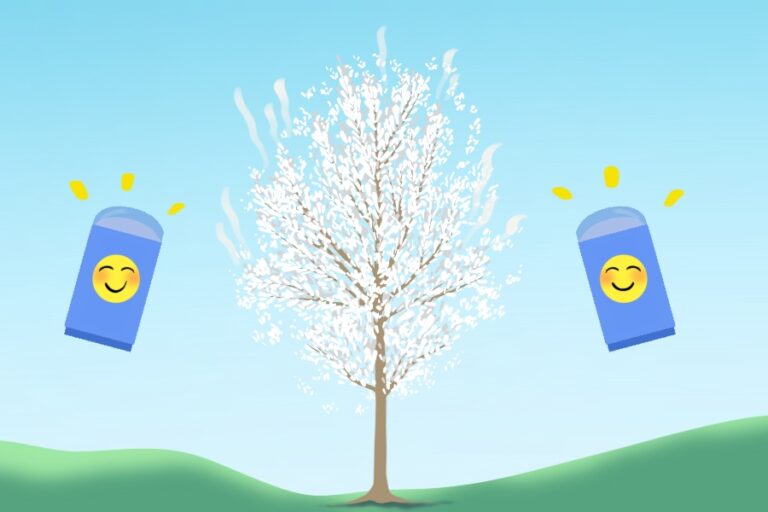
Introducing the new Treeodorant, made in partnership with the brand Axe. If you’re walking to class and start to smell eau de sperme, grab your stick of Treeodorant and rub it on the trunk of the offending tree. The combination of chemicals was specifically designed by plant scientist Dr. Manny Flowers to mask the floral funk.

“It took a long period of testing and many trials to finally perfect Treeodorant,” Dr. Flowers said. “We had to use high-concentration perfumes to mask that, erm, unique smell. It was difficult coming to lab every day. You hate how the blooms smell? Imagine what it’s like sitting in a hot, cramped greenhouse filled with those lil’ white demons. But I made myself do it, for science, and for the good of allergy-ridden Aggies everywhere. The final formula is strong enough to mask the scent of a corpse plant!”

“We’ve also had unpaid suckers — I mean student researchers — test Treeodorant on campus. They all agreed that the product masked the plant B.O. perfectly,” Dr. Flowers continued.

Since the smelly white trees are dioecious, their flowers have both male and female reproductive organs. Treeodorant comes in two varieties, one for the male parts of the flower and one for the female parts. The female Treeodorant costs twice as much and comes in patronizingly pink, floral packaging. You can find Treeodorant anywhere that Aggie merchandise is sold!

Written by: Madeline Kumagai — mskumagai@ucdavis.edu

(This article is humor and/or satire, and its content is purely fictional. The story and the names of “sources” are fictionalized.)

You hate GMOs and you’re so hip — and broke

Research before you eat

Y’all are a bunch of bullies. For one thing, you gang up on gluten, which is great for the rather numerous people with celiac disease because those who suffer from the autoimmune disorder now have actual options when it comes to the food they dine on compared to, say, a decade ago. As a vegetarian with many dietary restrictions, I do not begrudge anyone facing food limitations for the luxury of some additional choices.

On principle, however, for all of you going out to dinner wringing your hands and worriedly asking your waiters and waitresses if your lettuce is gluten-free out of layered ignorance, I get frustrated. You are falling prey to a pointless, alarmist fad. There is nothing inherently wrong with gluten, unless your doctor tells you that you’re allergic to gluten after testing you for celiac disease. I get frustrated because people are profiting off of you and you’re erroneously believing that gluten is bad for you (and apparently, gluten-free foods may be even less healthy than foods prepared in normal, gluten-inclusive fashions).

But where you get really mean and bully-like is when it comes to my friends GMOs. GMO stands for “genetically modified organism,” and they “are created in labs by extracting genes from one species’ DNA and inserting them into another plant or animal that doesn’t naturally possess that genetic material.”

Sure, science is scary. We’ve established that. The mad scientist. Frankenstein. Dr. Jekyll and Mr. Hyde. Jurassic Park — and Killer Tomatoes! I would argue that the 1978 film Attack of the Killer Tomatoes is remarkably, sadly, hilariously, prescient of our present day popular attitude toward GMOs. The thing is GMOs, just like gluten, are not inherently evil. As the world’s second best agricultural school, UC Davis is uniquely situated to spearhead this truth.

Davis, for example, has been feeding livestock genetically modified feed for 30 years and nary a bent feather or misshapen hoof has resulted. Scientifically speaking, no meat unfit or dangerous for human consumption has resulted. In 30 years. But why hede the science of our very own world-renowned academic research institution? After all as students we only back up its credibility and expertise with thousands of dollars of our own debt (don’t want to feed our pooches Non-GMO Project uncertified dog food lest they grow a third ear because a cabal of “expert” bloggers said so).

Poor, misunderstood GMOs. I first encountered a convincing don’t-hate-GMO argument in a Slate article in 2015. This anti-GMO scare (I would say “witch hunt” but that term has been ruined) has been going on for a long time. Slate said, “The World Health Organization, the American Medical Association, the National Academy of Sciences, and the American Association for the Advancement of Science have all declared that there’s no good evidence GMOs are unsafe [for humans to eat].” There are additional arguments against GMOs as they pertain to ecology and the farmers who use the seeds and livestock, but for the purview of this piece I’m going to stick to human health. There is also this article: “With 2,000+ global studies affirming safety, GM foods among most analyzed subjects in science.” It’s important to note that these studies are both independent and peer-reviewed, which means they are not ostensibly funded by parties with biased interests in manufacturing certain results, and the methods of the studies are vouched for by other scientists who are experts in the field. Detractors of GMOs cannot attest the same level of scientific support for their claims that GMOs are bad for our health.

There are horrific concerns that evil scientists are going to splice peanuts into broccoli and, unawares, everyone with a peanut allergy is going to sit down to eat some delicious broccoli and DIE. Well, for starters, we already label products packaged in factories used to process nuts to avoid killing people, so… maybe we are just afraid of our own perceived power to manipulate life. It’s like a Biblical nervousness. I’m pretty sure someone said we’re not supposed to be able to do this and we are waiting for some kind of cosmic genetic colossal slap on the wrist. Or it’s like gossip or a horror movie. We like to be scandalized and get all titillated and afraid on both a macro and micro, global and bio scale. We can all pretend to know something about it and not have to actually know anything about it — because science and fact and truth have long gone out the window — to get in on the juicy, water-cooler conversation.

The bottom line is that the Non-GMO Project is making money off of you. There are $26 billion in annual sales to products that wish to boast its seal, and that cost gets passed on to the consumer in the form of a 10 to 62% price increase. What are you paying for? Fear-mongering.

If you want to be hyper-concerned about what you’re putting into your body, consult a dietician or get a basic blood panel run through your primary care physician if you’re lucky enough to have health insurance and low copays. You might find that you are low on iron and should eat more spinach. If you are affiliated with this school, you have access to millions of peer-reviewed scientific journals. Satisfy yourself and see what the latest research has to say about the food you put in your body. Dig a little deeper on your own before you decide to increase your student debt on unnecessary food costs.

Written by: Lauren Frausto — lrfrausto@ucdavis.edu

Disclaimer: The views and opinions expressed by individual columnists belong to the columnists alone and do not necessarily indicate the views and opinions held by The California Aggie.

Down in Lower Freeborn: Aggie Studios

“Your Source for All Things Aggie”

In the depths of Lower Freeborn Hall, the basement of the MU, lives the creative offices of ASUCD — each a different medium exploring and displaying student life on campus. Moreover, behind the misleading sign reading “AggieTV” (its old name) is Aggie Studios.

Aggie Studios, with a staff of 53 students, is broken up into two sectors: Client Media and Studio Productions. For Client Media, Aggie Studios acts as a resource to both ASUCD and external clients as they are able to create videos pertaining to events, campaigns and more.

“Client Media is all of the external client work that we are paid to do or requested to do via ASUCD,” said Shubah Chakravarty, executive director of Aggie Studios and a third-year communication and cinema and digital media double major. “It is mainly ads, event videos and recaps. We recently did a video for the Sunset Fest campaign, the Unitrans referendum, the Office of the Chancellor. They come to us with a video they want and then we come up with the concept.”

Jillian Nguyen, a second-year communication and cinema and digital media double major, acts as Client Media Director. In her position, she coordinates with Aggie Studios and the client at hand, translating the original client vision to Aggie Studio’s for them to use their creative discretion.

“Every single client we have worked with have trusted us to be the creative professionals,” Nguyen said. “It’s never like, ‘We want a 40 second video and its needs to have these shots.’ Whenever we have the project, we have a lot of creative liberty. Obviously we have to constrain ourselves to what they want in the video. We get to have this creative outlet and give back to the university.”

According to Studio Productions Director Ryan Wong, a second-year managerial economics major, Aggie Studios does not “have to wait for ASUCD to tell us what to do every time. We can go with any direction with any video on the creative end.”  

“Studio production is anything that we personally as a studio choose to create or cover,” Chakravarty said. “This includes, but is not limited to, news coverage, events on campus, any type of highlight we want to do on student life or an event. I see it as the official studio voice through video on campus.”

Each quarter, Aggie Studios produces 10 to 20 videos — a piece of butcher paper charting the progress of each videos hangs behind the door of the Aggie Studios office. Some videos can be finished in a weekend; more complicated ones could require work throughout the entire quarter. Especially this quarter, client videos have been in high demand because “ASUCD has a lot of videos that needed to be made.”

“Our main role within ASUCD is to be their video production unit, so that takes priority over everything else,” Chakravarty said. “We might be seen as a corporate ad, but the videos we make are about Picnic Day, Whole Earth Festival, the CoHo, Unitrans … it is all about students, though.”

No matter the purpose of the video, Aggie Studio’s service to exploring student life takes precedence.

“We always talk about wanting to tell a story,” Nguyen said. “When you are covering an event, you want to know the pulse and rhythm.”

Storytelling through video requires Aggie Studios to be greatly prepared for videos while expecting the unexpected. The process and how much planning can occur depends on each video. According to Nguyen, “it’s a lot of you learn as you go.”

“For something like the Nerf Gun Club video, you don’t have a shot list,” Wong said. “You’re just going in there and trusting your videographers to get the shot and go from there. We can plan what day we are going to be there, how many people are going, what is our vision and what do I want to get, but not this specific shot. Usually it turns out really well as long as we are on the same page.”

The ability for Aggie Studios employees to “think on their feet” becomes essential.

“You need to know how to go out there, find a story and piece it together,” Chakravarty said. “What differentiates a good writer or videographer from an inexperienced one are the people who know how to respond. I’ve been to hundreds of Aggie Studio shoots, and they never go according to plan. There is always going to be some factor that you could not have planned.”

Video storytelling by design can pose great challenges to reporting that Aggie Studios has become accustomed to overcoming. Wong, Nguyen and Chakravarty each quoted a potential or conquered hurdle in the filming process.

“The SD card didn’t work for the recording equipment at the Whole Earth Festival video,” Wong said. “We had to run back to the studio and get this large boom that we only use for in studio and hook it up to the camera.”

“There is lost footage, lost audio,” Nguyen said.

“We were once given the wrong location to the shoot, or the wrong time,” Chakravarty said. “I’ve been in situations where someone starts yelling at me, at more emotionally charged events like a strike. My skateboard has come in handy so many times. I always bring duct tape because something always breaks.”

Despite the challenges that may accompany filming, Aggie Studios has taken the initiative to expand their animation department.  

“Last year, I had a concept to explain how the ASUCD legislative process works,” Chakravarty said. “I went up to Jillian, and I asked her if she wanted to work on this project. I had an idea where I wanted it to be drawn, and charts and branches. We created this video and it was our first animated video. And then this year, when I became Executive Producer, I thought there was a lot we could do for graphics. It’s good for explaining hypotheticals or breaking stuff down. So I made a call out for animators and we had an incredible turn out. We saw their skills, and it was fantastic they were so good.”

The Unitrans video, with over 20,000 views on Facebook, was Aggie Studio’s first dominantly animated video completed by the new animation team. It took an entire month and a half to complete.

“[The Unitrans video] was a leap of faith,” Nguyen said. “When Shubah started the department, we didn’t know how to animate. So when the animators would have their meetings, it was like they had their own language.”

According to Chakravarty, there were five or six animators on the team who took a great lead in the creation of the video.

“They put together mood boards and style boards,” Chakravarty said, “Every single one was in the same style, they picked all the same colors. I think that video was the pioneering force in the animationa realm for us. I also think it set the bar very high. If I could show the ideal process of how to make a video that was it. It was the only video where it came out exactly the way I pictured it.”

Not only did the aesthetics come out according to plan, but the purpose of the video, too, represented the true purpose of Aggie Studios.

“A lot of our videos are about clarifying a concept, telling a story, telling the student body they haven’t heard before” Chakravarty said. “Unitrans is something almost everyone uses, but there is so much we don’t know about it. To make a video that explains it in a few minutes, everyone’s knowledge goes up a little.”  

For Wong, videos like this give back to the university as a whole.

“It represents who we are and what we do for the university,” Wong said. “Some videos have blown up based on viral content, but I think it represents us the most. We are here for you and this is what we do.”

Such vision has even reached national recognition. This year, Aggie Studios entered two of their videos in the American Advertising Federation awards for the first time, taking home multiple awards.  

“I’m so proud of this,” Chakravarty said. “It’s a huge award. We started off in the local level, the greater Sacramento area, and in the student section. We submitted the Sunset Fest campaign and the ASUCD legislative process explanation video. The legislative one won Silver, and Sunset Fest swept and won Gold for Integrated Brand Identity Campaign, and we won Judges’ Choice and People’s Choice. Then we moved onto Regionals, and we won Silver in that, so now we’re going to Nationals. Nationals is the top tier of everyone in the country. The one that hit the most was Judges’ Choice and People’s Choice. The judges were top industry professionals and people were all the people who attended the event.”

With an animation team solidified and awards under their belt, Aggie Studios will continue a trajectory of creating innovative quality videos concerning student life.

“I want to continue representing the student voice, making videos about what it’s like to be a student here and in Davis,” Chakravarty said. “The dorms, the activities, where to eat. Our tagline is ‘Your Source for All Things Aggie,’ and I want to embody that to the max. I want to be a source for students by students.”

Written By: Caroline Rutten — arts@theaggie.org

Sayonara seniors!

Graduating seniors express nostalgic feelings during their final quarter

College is often referred to as the “best four years of your life,” and they go by too soon. In a few short months our seniors will leave the comfort of our quirky campus and make their way into the “adult world,” but before they leave they have a few nostalgic moments they would like to share.

Fourth-year genetics and genomics major Cole Williams has lived in Davis since he was 5. Williams explained why he chose to further his academic career in Davis.

“Both my parents graduated from UC Davis […] so it was kind of a no brainer,” Williams said. “The city of Davis is a perfect college town and I didn’t want to leave. Everyone I knew who went to UC Davis had nothing bad to say about their experience, I didn’t think twice about attending.”

One of Williams’ favorite memories took place during his freshman year.

“It was pouring rain and my friend and I decided to swim in the Arboretum,” Williams said. “ It was actually really clean because it has been raining so much, kinda like swimming in a swimming pool.”

Over the past four years Williams explained how he has gained confidence both socially and academically. Williams elaborated about his time working in various genetic labs and the lessons he learned.

“It sounds cliché, but the most important lesson I learned is to follow your passion,” Williams said. “When you’re passionate about something, it is easier to succeed and it feels better when you do succeed. My sophomore and junior year I was working in a lab doing work I was not passionate about and it showed. Now I work in a lab and am so passionate about my work; it has opened up so many opportunities for me.”

Following graduation, Williams plans to apply to Ph.D. programs in the fall. Williams spoke on his feelings toward leaving the college town bubble.

“I’m excited to graduate and start working,” Williams said. “[But] I am sad to leave Davis, I’ve been here almost my entire life and I feel so at home here. There is truly no place like Davis in the world, so I know wherever I go it will be a new experience, which is both exciting and scary at the same time.”

Williams offered some sincere advice to incoming freshman and returning students alike.

“Don’t do things just because you think they’ll look good on a resume,” Williams said. “Do things that you truly want to do. If you don’t want to do research, don’t do it; if you don’t want to work in a clinic, don’t do it. People are impressed by passion — graduate schools, employers want passionate people, not robots with a laundry list of activities.”

Danielle McCabe, a fourth-year economics major, will be moving to Austin in the fall to work for technology company Box. Although excited for the future, McCabe disclosed her feelings of nostalgia as she begins her last quarter at Davis. McCabe explained how she has changed during her time in college.

“I’ve become so much more aware of myself and what I stand for,” McCabe said. “I was extremely impressionable freshman year and oftentimes I found myself [doing] things everyone else was going even when the situations that weren’t making me happy. As I have gotten older I have realized that I’m someone that likes to have a blast, go out with friends and be a goof, but I [also] sometimes just want a movie night by myself and that’s not something to be ashamed of.”

McCabe’s newfound independence and sense of self is one of the many lessons she learned at university.

“I think to sum it up, I have learned how to honor my feelings and passions,” McCabe said.

When prompted with the question, “What do you think the most underrated thing about Davis is?” McCabe gave a wholehearted answer.

“The people,” McCabe said. “There are amazing humans that walk the campus and I truly believe that this small cow town is full of some of the most kind-hearted, down to earth and driven people. Sure, we may not be nationally ranked for every sport or every academic program, but we have exceptional people and that’s what makes our school a truly hidden gem.”

Written by: Sneha Ramachandran — features@theaggie.org

Police Logs

It’s the bee’s knees

April 11

“Heard faint hello, reporting party unable to hear me.”

“Reporting party tried to get subject to leave. Subject left leaving all of his belongings at the apartment including his wallet. Subject wandered around and then tried to come back inside, reporting party/roommates would not let him in.”

April 12

“Loud party with amplified music/bass; unknown on exact address.”

April 13

“Son playing with phone, negative emergency.”

April 14

“Swarm of bees in the nearby storm drain.”

“Reporting party requesting assistance with cones or barricades of the nearby storm drain because of a swarm of bees that have been aggressive with passing.”

“Bees swarming around a rock near rose bushes.”

April 15

“Dumpsters pulled out from fenced in area, reporting party believes subject sleeping behind them.”

April 16

“Outdoor exercise group making excessive noise by dropping weights since 5:30. Reporting party would like officer contact after situation has been assessed.”

Student housing update: late-night shutdowns, added triples and more

UC Davis Student Housing and Dining Services attempts to keep up with low vacancy rates

UC Davis Student Housing and Dining Services is planning on rolling out several changes in the next couple of years, including limitations on late night dining options, the opening of thousands of additional beds on and off-campus and more.

Many students may be aware of the extensive construction project underway in the Cuarto dorm area. The university has torn down Webster Hall, and in its place will be Yosemite Hall, a brand-new facility set to provide 400 beds for first-years in Fall Quarter of 2019.

The Cuarto area, however, will be nowhere near done with construction after Yosemite Hall opens, the Associate Vice Chancellor for SHDS, Mike Sheehan, suggested.

“The next project in the Cuarto Area will be the replacement of Emerson Hall, which will be demolished this summer and being replaced by by Shasta Hall, a new 800-bed residence hall serving both first and second year students,” Sheehan said via email. “This new hall is set to open in fall 2021.”

Additionally, the university has been expanding the Tercero dorm area for several years, which they felt called for the opening of an additional dining facility on the corner of Tercero Hall Drive and Bioletti Way. Latitude, the new dining commons, opens Fall 2019 and will feature indoor and outdoor seating as well as a retail component.

Sheehan also touched on the closure of late-night hours in certain dining facilities.
“Over the past few years, late night dining (9pm-midnight) has experienced low participation rates,” Sheehan said. “Therefore, during the 2019-20 academic year, SHDS will be piloting a new program that will be consolidated in the central location at the Segundo DC. This new program will be connected with our residential education program intentionally to provide both social and educational elements.”

Lastly, Sheehan noted that all new dormitory construction projects, such as Shasta Hall, Yosemite Hall and the new dorms in Tercero, were constructed to house three people per room, commonly referred to as “triples.”

“All of our new properties have been designed at an appropriate square footage that allows for the ability to configure as triple occupancy,” Sheehan said. “The percentage of triples in our inventory has increased as we have been in construction with new buildings and replacing old buildings. Within our long-term plan, our goal is to provide the appropriate amount of triples to ensure balance of options for students.”

Grant Rockwell, the executive director of real estate for UC Davis, opened up about the ongoing West Village expansion, the continuing housing crisis in Davis and the role the university hopes to play in the new apartment complex.

Rockwell explained that the West Village expansion project is ultimately aiming to combat the housing crisis that both the university and the city are facing. The team hopes that by providing around 3,300 beds for students over the next two and a half years, vacancy rates will improve in residents’ favor.

“As you know, the UC Davis student population increased pretty considerably over the last five to ten years,” Rockwell said. “Housing stock both on campus and in the city just didn’t keep up with that.”

In keeping with the original purpose of West Village, these new apartments will be designated first for transfer students and continuing undergraduates. Rockwell mentioned that transfer students tend to struggle when finding housing, seeing that Davis students sign leases in January or February, while transfer students don’t find out their admissions decisions until April. This gives them little to no time to plan ahead for housing if they’re unaware of what school they’ll attend.

The new West Village apartments will guarantee transfer students housing as part of their acceptance, allowing them a secure housing option in the likely event that all other housing options have been filled by current students.

All day-to-day operations in the new apartments will be carried out by SHDS, including management of student contracts, rent payment and more.

The current West Village properties are far less affiliated with the university than the future ones will be — originally, the existing West Village owners acquired the property from UC Davis, developed the project themselves and were responsible for all marketing, leasing and other operations.

“With the new phase of West Village, it’s going to be considerably different,” Rockwell said. “We have the developer building the property for us, we have a non-profit entity which will technically be the owner of the property, but marking, leasing and program operations will all be run by [UC Davis] Student Housing and Dining Services.”

He speculated that this will change several dynamics of the transfer student experience for the better.

“The upside to that approach is, now you have student housing and dining directly involved with these students lives, which we think is a good thing,” Rockwell said. “Especially for transfer students, who are going to be new to UC Davis and new to the city of Davis. It gives them a level of connection into their housing lives, whereas before they were just doing private housing.”

The developers predict that by Fall 2020, around 1,000 beds will be available for rent, with the rest opening up in the following Fall 2021.

Additionally, according to a press release announcing the start of the West Village project, the university secured funding for the expansion through a bond sale — more specifically, a $575 million dollar sale that marks the largest-ever bond issue for an individual student housing project in the United States.  

“The successful sale of tax-exempt bonds is an exciting milestone and represents a vote of confidence by the financial markets for this ambitious student housing project,” said Kelly Ratliff, the associate vice chancellor for finance, operations and administration, in the release.

More specifics were also included in the press release, including details about the design.

“The new complex will comprise nine four-story apartment buildings along with indoor and outdoor community space and recreational fields, occupying 34 acres,” the release read. “A 10,000-square-foot community building will house a fitness center, multipurpose room and student support services.”

Rockwell commented briefly regarding the status of Orchard Park, another housing development part of UC Davis’s Long Range Development Plan.

“Orchard park is going to be 1,500 beds, geared for single graduate students and students with families,” he said. “As of right now, we’re on track to get that one open in fall of 2022 or fall of 2023.”

Written by: Claire Dodd — campus@theaggie.org

Davis Community Meals and Housing hosts dinner

Davis Odd Fellows offers community support

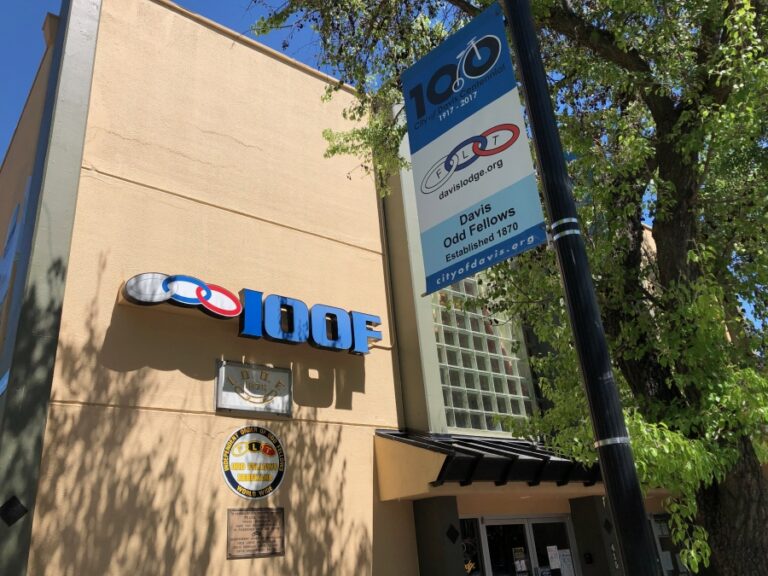
Davis Community Meals and Housing will be hosting a dinner on May 5 to promote and raise funds for its programs. The annual fundraising dinner will take place at 5 p.m. at the Odd Fellows Hall on 415 Second Street.

William Pride, the executive director of Davis Community Meals and Housing, mentioned how the fundraiser will benefit its programs, directed at those who are low income or homeless.

“All the money raised from the dinner will support all our programs to low-income homeless individuals and families of Davis,” Pride said. “We got a meals program, [with an] outreach, resource center and various housing programs — the money will support the costs of such programs.”

Lea Rosenberg, a member of the Davis Odd Fellows, noted that the group is supportive of community events. It dedicates a committee toward allowing the community to hold its events called the community support committee.

“We have a community support committee, where we go through the applications that folks of their agencies would like to do a co-hosted event at the lodge, meaning that they get the lodge for their event at no charge,” Rosenberg said. “Obviously, there are other charges like the outside assistance and whatnot, otherwise they get the lodge for free. We have a couple of standards that always apply.”

Rosenberg expressed how the Davis Odd Fellows support Davis Community Meals and Housing, among other community organizations, allowing it to host its dinner at the upper hall.

“Davis Community Meals is one, and we always let them have the upper hall at their chosen date, and they do their big events, which helps them because they don’t have the cost of renting a big building,” Rosenberg said. “They’re one of the agencies that we typically support every year.”

As Davis Community Meals and Housing is dedicated to serving the community, it aligns with the Davis Odd Fellows’ standards, which hope to give back to the community.

“We started as a nonprofit organization back in 1990, and served our first meal to homeless folks on February of 1991,” Pride said.

In addition, the nonprofit noted that it especially has more programs to offer as it now has a foundation to provide housing.

According to Davis Community Meals and Housing’s event page for the dinner, the group is “excited that [their] long-awaited Creekside project broke ground in November 2018 and will be providing permanent supportive housing to 90 individuals and households by early 2020. Modeled after our successful Cesar Chavez Plaza permanent supportive housing project, we anticipate providing safe, stable housing to many homeless individuals from the Davis community.”

The dinner will celebrate these goals, and Pride added that there will be more activities in addition to local chef Jeff Murphy’s preparation for a festive dinner.
“There will be some entertainment, a silent auction — we’re going to be serving Cinco-de-Mayo-themed food and give a presentation by some of the presidents of the programs,” Pride said.

Rosenberg further praised how Davis Community Meals and Housing has hosted successful events, like many others that have partnered with the Davis Odd Fellows with its events at the lodge.

“Some have attended many of these events — they’re very nicely organized, their publicity shows that it’s co-hosted by the Davis Odd Fellows,” Rosenberg said. “And they all do wonderful setup and decorations, it’s really a beautiful event.”

Written by: Stella Tran — city@theaggie.org

“Our Planet” is the most entertaining and depressing show you’ll ever watch

Netflix and David Attenborough team up to strike the perfect balance between entertainment and environmental alarmism

Free from the conservative shackles of BBC, David Attenborough, notable narrator of “Planet Earth,” takes nature documentaries where they haven’t been before with “Our Planet,” a new series on Netflix — and it works.

BBC is one of the biggest and oldest broadcasting corporations in the world. It has gained the nickname “Auntie,” short for “Auntie knows best,” due to its unwillingness to listen to criticism, advice or requests from anyone. This stubbornness certainly transferred over to its Natural History Unit, the department that focuses on wildlife series.

The NHU, which brought us Planet Earth I, II and many other nature documentaries, has been criticized for its ambiguous stance on climate change. The debate reached its boiling point when BBC controversially brought in a climate change denier for a climate change interview under the guise of a “balanced” discussion.

It should therefore come as no surprise that BBC’s latest groundbreaking nature program, Planet Earth II, had its faults as well.

Despite its beautifully captivating quality, as its images of bobcats leaping through freezing-cold rivers are, Planet Earth II’s actionable activism for conservation falls short. BBC’s response to these criticisms has been to captivate viewers with its footage in hopes they take action. But its goal is too ambitious and shifts the whole burden of taking action onto the viewer, when the responsibility should be shared with the content creators as well.

So when David Attenborough got the call to make a nature documentary series from the independent entertainment giant Netflix, he jumped at the opportunity and held on tight, like a hungry lion clenching his precious prey.

But Attenborough had to be careful. “Every time the bell rings, every time that image [of a threatened animal] comes up, do you say, ‘Remember, they are in danger’? How often do you say this without becoming a real turn-off?” Attenborough said in November 2018.

How do you keep an audience entertained while simultaneously educating them about the perils of climate change?

In the second episode of “Our Planet,” Attenborough takes us to the cold coastal waters of northeastern Russia. Walruses, after having their crustacean and sea cucumber feast, try to find ice sheets to rest on — but come up short.

In the absence of their usual resting habitat, the walruses scramble to their closest land, a rocky, narrow island. The largest gathering of walruses on the planet, over 100,000 of them, is forced to compromise and adapt to their current circumstances. Packed like sardines, the clumsy, two-ton mammals scramble over each other in search of space, killing smaller walruses and resulting in vicious encounters and deadly stampedes.

In the quest for peace and rest, some walruses make it through the crowded mob, only to find a steep rocky incline leading to a heavenly space to rest. The determined walruses use forelimbs designed for swimming to crawl up the steep slope and reach the promised land. But as we all learn at some point in this cruel world, there is no heaven on earth.

After waking up from their lengthy slumbers, the walruses start regrouping and making their way to water for another feast. And the lucky walruses up on the rocky cliff have no intentions of being left behind. But with their lack of agility and poor descending skills, the heavy and ungraceful walruses are stuck on an 80-meter rocky cliff. Hunger leads us animals to great lengths, some never meant to be reached.

With their poor eyesight, the naïve walruses’ desperation proves too great to ignore any longer, and the desire to regroup and aching hunger leads them to take a leap of faith. The walruses fall 80 feet to a rocky end. And as the camera zooms out, we see a pile of corpses, hundreds of walruses, pushed to limits beyond their natural capabilities in order to adapt to their changing environment. The foreshadowing of overpopulation issues and resemblance to climate refugees are hard not to see.

Throughout the series, Attenborough doesn’t shy away from telling us that we are responsible for these issues. But the alarmism is compensated with hope and optimism, showing how the amazing footage you’re watching has been possible because of conservation efforts. The end of every episode always segues to ways viewers can help, and directs them to the series’ website for actionable steps to conserve our planet.  

And that’s “Our Planet,” striking the perfect balance between entertainment and environmental alarmism.      

Written by: Daniel Oropeza — daoropeza@ucdavis.edu

Disclaimer: The views and opinions expressed by individual columnists belong to the columnists alone and do not necessarily indicate the views and opinions held by The California Aggie.