57 F
Davis

Davis, California

Monday, December 22, 2025
Home Blog Page 427

UC Davis ranked second on, ‘Top Colleges Advocating for Mental Health Awareness’, Theta Xi to demolish 2 houses, KDVS Celebrates 50 years: Your Weekly Briefing

Happy Friday, Aggies!

Today we start with some housekeeping:

Best of Davis submissions end tonight at midnight, please fill out the survey here to give your input on what makes Davis great! We are shaking it up this year and have included free response sections, have fun with it.

Next, The Aggie is publishing a Spring Literary Magazine and are currently accepting submissions until Monday May 13th at 5 p.m. Send in a poem, short story, essay, memoir, literary criticism (juicy) or cartoon. No more than 1800 words, cough cough overachievers. Anonymous submissions welcome. Email your submissions to arts@theaggie.org for the chance to be featured.

May is here, spring is in full bloom, midterms have come to a close… all is right in Davis.

Things to look forward to: Lawntopia, Whole Earth Festival, and Houseboats.

And now, this week’s top stories…

Subscribe to our weekly newsletter to get the briefing in your mailbox.

Campus:
LUIS LOPEZ / AGGIE

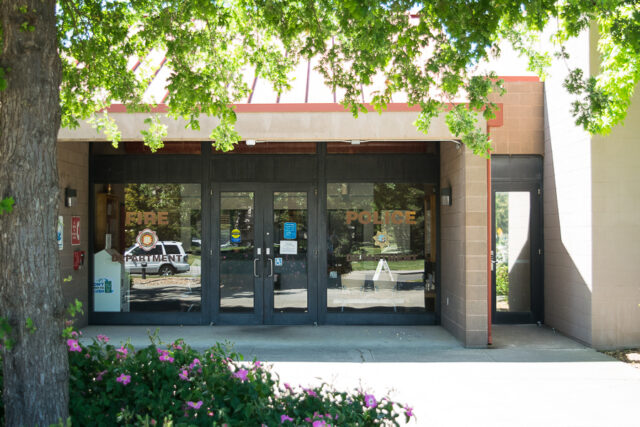
Police disarmament failed to pass — The ASUCD April 11 Senate meeting discussed resolution urging UC Davis Administration to disarm campus police for the betterment of the community as a whole, as well as other minority groups. Those for the disarmament sited incidents of police brutality and the famous UC Davis pepper spray incident, whereas those opposed stressed the importance of the police’s ability to defend students and faculty in the event of a shooting. The meeting drew a large crowd and a long discussion, resulting in a 6-5 vote, failing to pass. Read on.

City:

ALEXA FONTANILLA / AGGIE

Theta Xi to demolish Bryson and Jackson houses after plans were submitted to redevelop two of its three over 100-year-old houses on First Street. The plans, released by the city on Feb. 25, are to redistribute the three lots into two equal sized lots to house a new three-story structure. The fraternity will continue to live in the Theta Xi Main House while construction takes place, then move to the new building and open the Main House to new tenants or an outside redevelopment project. Read on.

Features:

VENOOS MOSHAYEDI / AGGIE

UC Davis places second on ‘Top Colleges Advocating for Mental Health Awareness’ — published by College Magazine. The article stated that “UC Davis recognizes everything wellness entails — both physical and mental,” praising efforts to combat stigma surrounding mental health.

“I think this article speaks to the work that many of the student organizations have been doing,” Emilia Aguirre said, a mental well-being health promotion specialist who oversees Each Aggie Matters. “Each Aggie Matters in particular strives to collectively cultivate mental health as a state of flourishing.”

Aguirre accredits student-run initiative groups for fostering a supportive campus community. Read on.

Arts & Culture:
RAUL MORALES / AGGIE

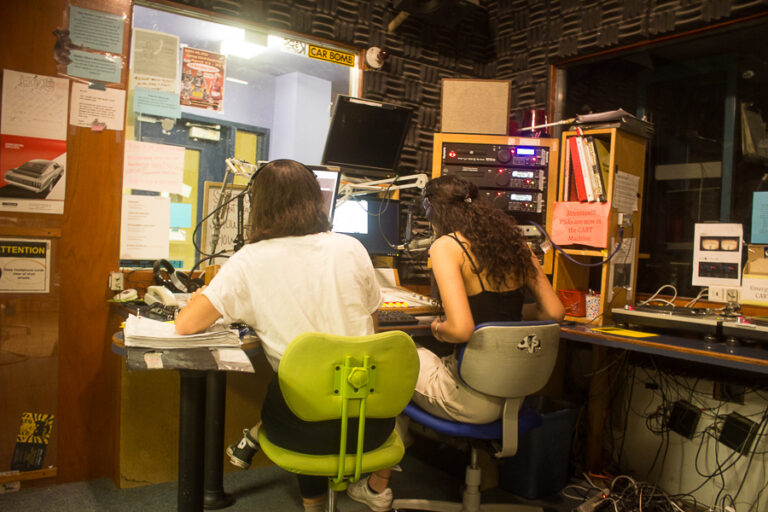
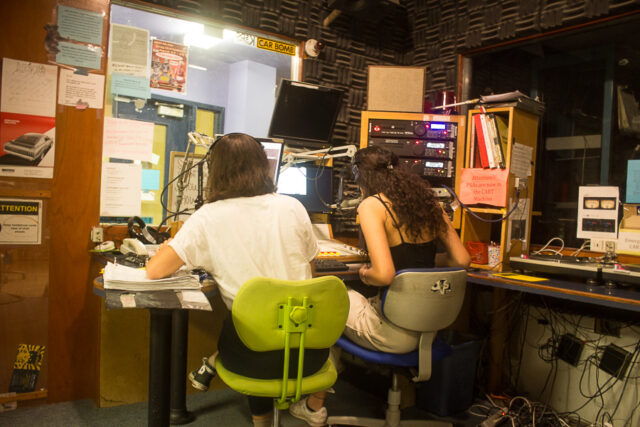
KDVS celebrates 50 years on the air — a weeklong fundraiser. “Freeform Turns 50” included an on air telethon, DJ spotlights and community t-shirt contests, as well as fundraising at local restaurants like Panera, Panda Express, Raja’s Tandoor, Woodstock’s and Blaze. The station came close to their goal of $50,000 and concluded with a Delta of Venus Dance Party as a final celebration and to honor the stations rich history. The station has hosted many hit bands like The Police, who caught their break from performing on KDVS. They even have an autographed picture of Sting, a gift to show his appreciation for the station. Donations are always accepted online at fundraiser.kdvs.org. Read on.

Sports:

JAMIE CHEN / AGGIE

2019 NFL Draft Recap — 254 college players dreams came true. Several picks sparked controversy in the Aggie football fanbase, writes sports reporter Omar Navarro. “Former UC Davis wide receiver Keelan Doss went undrafted, despite being projected to be picked as high as the fourth round. Doss inexplicably fell completely off the board, but signed as a free agent with his hometown team, the Oakland Raiders. Although it wasn’t necessarily the way he wanted, Doss will now get a chance to officially make an NFL roster and show the league why he should have had his name called at the draft.” Read the full recap.

Science:

COURTESY

$1.1 Million grant from the Walt Disney Company to fund “Snap the Gap” program — providing mentorship and tools to 15,000 girls. UC Davis has entered a partnership with littleBits, a tech ed company that provides hands-on learning kits to encourage girls to develop an interest in STEM. Working with local school districts, the California Afterschool Network, STEM Hub, Girl Scout Troops and other girl-serving organizations, their goal is to work towards closing the gender gap in STEM. Read on.

Culture Corner — Grace’s (my) Weekly Picks

“Television”: “It’s Alive! With Brad”

Movie: Tag

Book: “Born A Crime” by Trevor Noah

Album: “Ventura” by Anderson .Paak

Read the review.

Opinion:

Editorial — “UC Merced newspaper to lose funding, shut down by the end of summer

Humor —  “UC Davis plant scientists invent deodorant for smelly white trees

Guest — “California’s chance to break its single-use plastic addiction

That’s all for this week. Check back next Friday.

— Grace Simmons

Guest: California’s chance to break its single-use plastic addiction

Senate Bill 54 would dramatically decrease California’s plastic usage

A few Sundays ago, I went on a trip to the Marin Headlands with my housemates for our quarterly house trip — a day of strolling along grassy cliffs while looking out into the foggy oceanscape and getting surreptitiously sunburned.

Looking down over the railing at Point Bonita Lighthouse, one of my housemates pointed out a black tube-shaped object tumbling in and out along the shoreline with the current. We stared for a moment until somebody realized it was a black rubber rain boot. Seeing it so small and buoyant relative to the towering waves below the massive craggy cliffs felt out of place. After the boot, somebody else noticed an orange blob that turned out to be a frisbee. And then a plastic water bottle. After several minutes of this, it was all we could see. The grandeur of the landscape was overpowered by the tiny, misplaced objects floating far below us. While it may seem inconsequential that we noticed a handful of random things in the water, it served as a reminder of the magnitude of the issue — that nothing is completely protected. Even our favorite childhood beaches. Even on our beloved house trip.

A feeling of helplessness washed over me as I thought about the magnitude of the trash in our oceans. We’ve been hearing for years about the “Great Pacific Garbage Patch” more than twice the size of Texas. Luckily, public awareness of plastic ocean pollution is increasing. Yet it seems that every week there is a news story about the detrimental impacts of ocean plastic pollution on marine life. The laws haven’t kept up with the extent of the issue. Coastal communities in California have historically been the first to ban plastic bags, straws and other single-use plastics, and these laws have significantly helped curb the amount of trash washing up on our coasts. But we need a comprehensive, statewide action to truly reduce the amount of ocean plastic and save thousands of sea animals from entanglement or death.

Luckily I’m not the only one thinking this. Senate Bill 54 would require 75% of single-use plastics produced in the state to be recyclable or compostable by 2030. After 2030, 100% of our single-use packaging produced in the state must be recyclable or compostable. Comprehensive legislation to curb the production single-use plastics is pivotal for California to do our part in reducing the amount of plastic that entangles, chokes and kills marine life.

We’ve become societally dependent on the cheap convenience of single-use plastics at the expense of marine life and human health. Our reckless disregard for the health of the natural environment is compounding, and we are rapidly approaching the limits of damage our ecosystem can handle before hitting extinction thresholds and detrimental human health effects. It is well-known by now that plastic in the ocean never fully biodegrades; it simply breaks down into smaller and smaller particles called microplastics that slowly release toxic chemicals, eventually making their way into the irrigation water used on crops and thus completely infiltrating the biosphere with microplastics. These chemicals are known to cause increased risk of cancer, birth defects and developmental disorders in children.

California has a history of leading the nation with innovative, ambitious environmental policy and setting precedents previously considered unrealistic. Regulations such as the plastic bag ban (SB 270 of 2014) have been in place for years along with the recent straws-upon-request law (Assembly Bill 1884 of 2018). When these bills passed, it proved that Californians are willing and able to sacrifice the temporary convenience of single-use plastic in order to reduce the amount of plastic pollution choking marine life and tarnishing our iconic coastlines. It’s time for California to once again pave the way for holding plastic producers responsible and for all of us to end our contributions to an issue of already-disastrous scale.

Written by: Marina Franceschi

The writer is an intern with Environment California, an environmental advocacy group in Sacramento.

Guest: Canary Mission is only part of the issue

The long history of Palestinian repression

Created in 2014, Canary Mission is a blacklist that serves as a response to the Boycott, Divest and Sanctions (BDS) Movement that started in 2005. Led by Palestinians, BDS is a movement that seeks to end the occupation, colonization and oppression of Palestinians and their land Israel with the support of the international community.

BDS has three demands: the return of Palestinian refugees who were displaced in 1948 as mentioned in UN resolution 194, the dismantling of the apartheid wall and full equality for Palestinians, who are subject to discrimination, expressed by Israel’s current president, Benjamin Netanyahu, who does not consider them full citizens.

Although BDS is a nonviolent movement that seeks to end the oppression of Palestinians, it has met backlash not only from Canary Mission, but from other pro-Israeli organizations as well, including the American Israel Public Affairs Committee and the Anti-Defamation League. These organizations conflate the BDS movement and anti-Zionism rhetoric with anti-Semitism in order to justify targeting professors and students who speak out against Israel’s violence, colonialism, genocide and human rights violations.

Canary Mission is not the first organization to harass and derail Palestinian activism, however. Multiple organizations have stooped to dirty tactics in order to silence those who stand in solidarity with Palestinians. For example, in the San Francisco Bay Area, the Jewish Community Relations Council (JCRC) has attacked organizations that show solidarity with Palestinians.

One group that was targeted by JCRC is San Francisco Women Against Rape (SFWAR), a nonprofit that works to support survivors and prevent sexual assault with a focus on women of color. In 2003, SFWAR had held a teach-in to educate its members on Islamophobia, in which Zionism’s role in white supremacy was discussed. The group also placed Zionism on its  list of oppressions. In reaction to this, the JCRC attacked and harassed SFWAR. The JCRC successfully lobbied the city of San Francisco to freeze SFWAR’s funds, forcing it to waste time and resources on a legal battle to reverse it.

Censorship and surveillance among pro-Israeli groups is not surprising. The Israeli government has a long history of repression and McCarthyesque practices towards many vulnerable populations, particularly towards Palestinian people. Since its creation, Israel has employed surveillance methods such as “population registries, identification cards, land surveys, watchtowers, imprisonment, and torture” on Palestinians in Palestine, including the occupied territories of West Bank, Gaza Strip and East Jerusalem. More recently, Israel has adopted Orwellian surveillance practices using the technologies of CCTV, electronic monitoring and biometric data collection.

Surveillance and oppression even follow Palestinians who have left the area. Persecuted in their homeland, Palestinians are unable to escape repression and violence even in countries like the United States. Most recently, U.S. immigration denied the entry of Omar Barghouti, co-founder of the BDS movement and human rights activist, despite having a valid visa.

Organizations like Canary Mission and JCRC are only one part of the much larger systemic discrimination Palestinians face across the globe. Those who support anti-Zionism are accused of anti-Semitism, even though there is a marked difference between “Jewish people everywhere” and the state of Israel. By doing so, these organizations discredit organizations like Students for Justice in Palestine, accusing them of spreading hate across campuses — despite the main mission of these organizations being to oppose all forms of oppression, including anti-Semitism. If we want to fight against all forms of oppression, including anti-Semitism, it is our moral obligation to address the repression that Palestinians continue to face as part of our collective struggle.

Written by: Justine Tsai

The writer is a third-year community and regional development major and member of Students for Justice in Palestine at UC Davis.

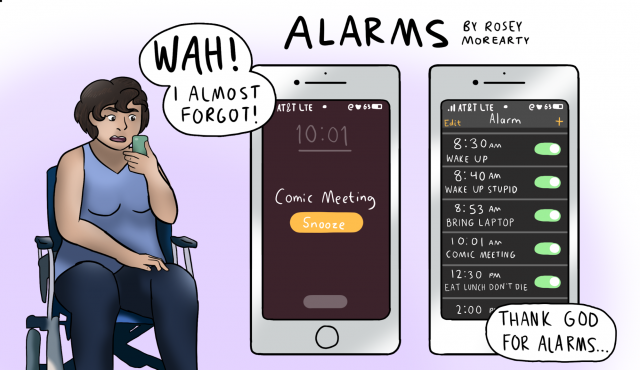
Cartoon: Alarms

ROSEY MOREARTY / AGGIE

Written by: ROSEY MOREARTY — rosey@morearty.org

Google’s CAPTCHA-ring all your data

AI developments detect Parkinson’s from your mousepad and won’t tell you

If you’ve ever gone on the internet you’ve probably encountered CAPTCHA — an intelligence system that uses tests like identifying pictures to prove users aren’t robots. You may have also noticed the CAPTCHA system has evolved; now, users only need to check a box labeled “I’m not a robot,” all thanks to Google.

But have you ever wondered how Google can distinguish bot from human with one simple click? It’s easy — Google already knows you’re human before you even click anything.

Google’s simplified CAPTCHA — ironically called “No CAPTCHA reCAPTCHA” — uses Botguard technology and employs encryption to conceal its activity. Here’s how it works: Botguard determines whether a user has a Google cookie on the machine. It then proceeds to drop its own Google cookie into your browser and extracts personally identifiable information like screen resolution, date, language, browser plug-ins, Javascript objects, IP address, CSS information and mouse movement patterns. Java itself, embedded in almost all web pages, can track a user’s keystrokes and the position of their cursor without making any kind of visual display; all of this information is being pulled in the background unknown to users.

So what is Google doing with all of this personal information? Why are they asking you to click on anything when their tech already knows you’re a human and not a robot? Google is most likely doing exactly what it’s done with its reCAPTCHA system in the past: finding a way to profit massively and discreetly.  

When Google bought CAPTCHA in 2009, we thought that in answering the security questions we were proving we weren’t a robot — in reality, we did far more than that. The blotched words and numbers we typed helped Google’s AI system transcribe a variety of documents, from books to addresses. In doing so, Google made millions off its users under false pretenses, and it’s geared to do it again.

Researchers at Stanford reported in March 2018 how digital tracks left by a computer mouse may reveal involuntary tremors or shakes, most commonly attributed to Parkinson’s disease. Eric Horvitz, one of the researchers, believes this information, along with other user web search data, could help diagnose Parkinson’s in people before they’re even aware of it. Or, Google could indirectly raise premiums by alerting that individual’s insurance company.

In reference to the newly advanced and simplified CAPTCHA system, Vinay Shet, product manager for Google’s CAPTCHA team, revealed that human users can be discerned by using subtly ingenious clues, like a user’s mouse movements in the brief moments before flagging themselves as human. With the new ability of AI to detect Parkinson’s via mouse movements, it’s within Google’s interest and capacity to move toward a disease-detecting CAPTCHA. Much like it has done in the past, Google will try and sell that information to the highest bidder: your insurance company or maybe even your employer.

Insurance companies would undoubtedly pay top dollar to predict their clients’ future health risks, proceeding to either raise premiums or drop clients entirely, and they would never have to disclose why. Our searches, mouse patterns, IP addresses are all inextricably linked with us in a personal, distinguishable way. Google already knows who you are, but now it can know details and characteristics about you which you may never know yourself.

Google may know you have a life-changing disease before you do, and it will make money off your medical data while keeping you in the dark.

When Google was planning to go public in 2004, its code of conduct included the words “don’t be evil” — they have since been removed from Google’s corporate philosophy. By its own silent admission, it’s not a question of whether Google will use this technology against us, or even when. It’s a question of how.  

Written by: Hanadi Jordan — hajordan@ucdavis.edu

Disclaimer: The views and opinions expressed by individual columnists belong to the columnists alone and do not necessarily indicate the views and opinions held by The California Aggie.

Animation’s peculiar crossroads

The same tools assisting visionary animators may incite animation’s downfall

Animated cinema diverges at a rather peculiar crossroad. The genre’s potential for varied artistry permits a visual infinity, from embroiled ocean vistas that, at first glance, appear ripped straight from the depths of the Pacific, to the illusory motions of a hand-crafted Sasquatch, slave to Geppetto’s zealous descendants. Its unique propensity for invention lends itself to a form that facilitates even the most fanciful visions. Modern technology has realized this aesthetician dream to an extent exceeding the wildest fantasies of any cinematic, let alone artistic, contemporary.

Tools of the latter-day dreamer permit movies like “Kubo and the Two Strings,” “Fantastic Mr. Fox” and “Wall-E” to, in short, exist. Had CGI and motion capture not been contrived and advanced to the astounding reaches available to present animators, films noted for their charm, beauty and reverence would have remained reveries relegated to the rainy-day sketches of wishful composers.

But tools, framers’ intentions be damned, must act at the behest of the hands that wield them. A daydream, realized with a dreamer’s will, is just that — a dream, a story. But for an expedient few, stories become more — aspirant fantasy inflated beyond the screen to store shelves and lunchboxes. An artist, in charming reveries and rainy-day sketches, sees a world. A businessman sees a brand. In this diverging vision, we discover our peculiar crossroads, the fork in a genre ripe for both vibrant storytelling and lucrative empires.

The intersection of art and profit, despite critics’ oft-repeated accusations of corruption and capitalistic duplicity, kickstarts a vital conversation regarding the artist’s role in a commercially-oriented society. Animation’s very best responses straddle the line between consumerism and elegant aesthetics, with “The Lego Movie” and its franchise brethren serving as paragons of an art-business hybrid that, when done well, furthers the reach of corporate marketing while maintaining an indisputable sense of creative integrity.

When these films succeed as art and the shadow of motives remain ephemeral, the question of whether intentions bear relevance upon their artistic virtue is an entirely different debate. But in most cases, the shadow is overpowering, a stifling force at the muse’s throat.

Via the same technological godsends assisting genuine craftsmen, studios can now engage in animated production with ease. Sights that marvel casual audiences are produced with limited budgets and, all things relative, rather mediocre animators. These newfound faculties allow corporations to sponsor and produce what are in all but name feature-length commercials. Some, like the aforementioned “Lego” franchise, stand on their own as movies. But these triumphs comprise a short list. More often than not, audiences are left with the likes of “Boxtrolls,” “Angry Birds,” “Minions” and “Smurfs”; films created to expand pre-existing commercial empires or to catalyze future conquests. Reveries, dreams and fantasies are strangled and spat upon, left to shiver in the rain by focus groups, calculations and algorithms.

Hyperbole aside, audiences do continue to reward imagination at the box office, allowing the eternal brilliance of studios like Pixar and Dreamworks to shine. Notably eccentric efforts in recent years, namely “Spiderman: Into the Spiderverse,” “Isle of Dogs” and “Missing Link,” have received vast critical acclaim in tandem with marked commercial success.

Art-business hybrids that emphasize efficiency over imagination are troubling, to say the least. But the dreamers, year after year, continue to dominate mercenary interests with masterfully realized efforts that serve as odes not just to animation, or to film-making, but to art. For the time being, profit remains a mere counterpart to beauty.

I am reluctant to derive some mangled sense of optimism from this trend. At some point, corporations will achieve the same level of artistic competency as the romantic visionaries we hold so dear. The bell tolls three, for dreams, for fantasies, for revery.

Yet, despite my skepticism, doubts and hesitancy, there is something comforting in imagination’s triumph, however fleeting. There is some console in our shared fondness for dreams.

I imagine that the passing years will bring upon us a scourge of men in suits cramming tired stories down our throats. Yet, greed falters in the face of imagination. Men in suits, for all their posturing, will never have that. They will learn to produce an efficient, profitable caricature, some Lazarus of beauty long past. But the dreams will endure in spite of our failings. They will defy the spectres of corporate expediency, conjuring for us visions of ragged seas and puppet strings, idiot oracles that we are.

Written by: Eli Elster — eselster@ucdavis.edu

Disclaimer: The views and opinions expressed by individual columnists belong to the columnists alone and do not necessarily indicate the views and opinions held by The California Aggie.

2019 NFL Draft Recap

Kyler Murray drafted number one overall, Doss goes undrafted

The NFL Draft took place from April 25 to 27 in Nashville, Ten., where 254 college players saw their dreams of becoming an NFL player come true. Usually, as the draft get closer, the public and sources around the team with the first pick have the number one pick essentially decided, but this year’s first pick was much more uncertain.

The Arizona Cardinals held the first overall pick in the draft after posting the league’s worst record last season at 3-13. After firing Head Coach Steve Wilkes after just one season at the position, the Cardinals hired former Texas Tech Head Coach Kliff Kingsbury to try and reinvigorate the franchise with a new system and a new look. In October 2018 while still at Texas Tech, Kingsbury was asked a question about Oklahoma quarterback Kyler Murray prior to Tech’s matchup against the Sooners.

“I’d take him with the first pick in the draft if I could,” Kingsbury told Texas Tech communications staff. “I know he’s signed up to play baseball, but he’s a dominant football player. I would take him with the first pick.”

At the time, that statement was not given much national attention. Murray however, was making headlines as he would eventually go on to win the Heisman Trophy after throwing for 42 touchdowns and running for 1,000 yards on the season. Murray, who had been selected ninth overall by the Oakland Athletics in the 2018 MLB Draft, was thought to have originally planned to play one more year of college football and then return to playing baseball. But after his dominant season on the football field, Murray had many questioning whether or not he would enter the draft. On Jan. 14, Murray announced on Twitter that he would officially declare for the NFL Draft.

Almost immediately, scouts and experts questioned whether Murray could play in the NFL due to his height and small frame. In the NFL, it is rare to see a quarterback under six feet tall, let alone 5 foot 10 inches.

At the same time, Kingsbury’s comments about Murray were brought up once again after he was hired by the Cardinals, which began speculations of whether or not the Cardinals would draft the quarterback despite having taken a quarterback just a year earlier, when they selected Josh Rosen in the first round of the 2018 draft. Rosen struggled last season and it was hard to ignore the connection between Murray and Kingsbury, which dated back to when the quarterback was recruited by Kingsbury out of high school.

After months of rumors and uncertainty, the Cardinals did, in fact, choose Kyler Murray number one overall. The next day, they traded Josh Rosen to Miami for a second-round pick. While many doubted that it was going to happen, it was inevitable given the new coach and how well Murray fit the system Kingsbury likes to run. The pressure is now on for both Kingsbury and Murray to succeed.

Following Murray, the San Francisco 49ers selected defensive end Nick Bosa from Ohio State and the New York Jets selected defensive tackle Quinnen Williams from Alabama. The first surprise of the night came when the Oakland Raiders selected defensive end Clelin Ferrell from Clemson. While Ferrell was a projected first-round pick, a lot of experts believed that the Raiders reached for a player who was a mid-round talent at number four. With linebacker Josh Allen and defensive tackle Ed Oliver still on the board, the Raiders caught everybody by surprise.

Along with the fourth overall pick, the Raiders also held the 24th and 27th, which they used to select Alabama running back Josh Jacobs and Mississippi State safety Johnathan Abram. Jacobs was regarded as the best running back available in a draft that was thin at that position, while Abram became the second safety drafted to come off the board. There was a tremendous amount of pressure on the Raiders to get these three picks right after trading two of their stars in Khalil Mack and Amari Cooper last year, and there will be even more pressure on these players to make an immediate impact on the game.

The team that seems to have disappointed the most and a “loser” of the draft to many was the New York Giants. With the sixth overall selection, Ohio State quarterback Dwayne Haskins was still available. The Giants were looking for a quarterback and Haskins was a lifelong fan of the team, so it seemed like a no brainer for G-men to take him.

Instead, the Giants chose Duke quarterback Daniel Jones to the dismay of fans and analysts nationwide. In the overall player rankings, Jones was ranked 59th according to ESPN.

Haskins ended up going to one of the Giants’ division rivals, the Washington Redskins, at number 15. Haskins will get two chances each season to make New York pay for not selecting him. For the Giants, they’ll have to find a way to compete under tough criticism from the media and fans after this draft and the trading of superstar wide receiver Odell Beckham Jr. earlier this offseason. Jones will likely be compared to Haskins for the rest of his career and be forced to live up to the high expectations of the New York fanbase.

While these and several other picks sparked controversy, the absence of one pick in particular disappointed many in the Aggie football fanbase. Former UC Davis wide receiver Keelan Doss went undrafted, despite being projected to be picked as high as the fourth round. Doss inexplicably fell completely off the board, but signed as a free agent with his hometown team, the Oakland Raiders. Although it wasn’t necessarily the way he wanted, Doss will now get a chance to officially make an NFL roster and show the league why he should have had his name called at the draft.

Written by: Omar Navarro — sports@theaggie.org

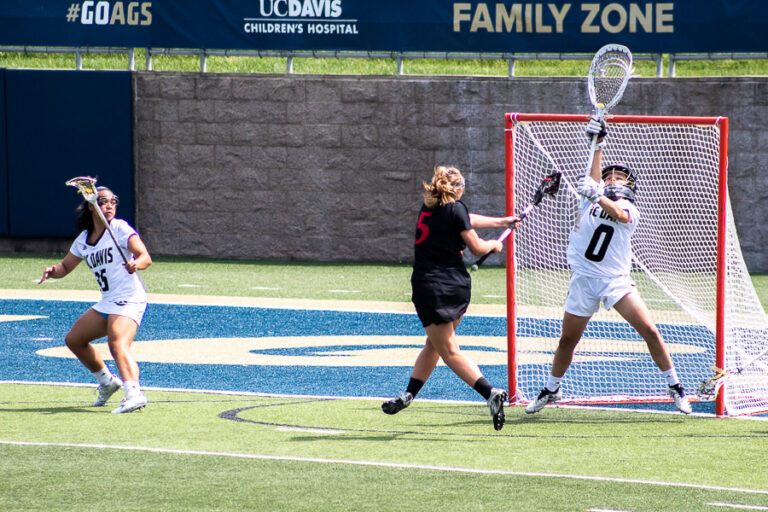
Women’s lacrosse falls in MPSF championship

Aggies lose second straight title game, but future remains bright

For the second consecutive season, the UC Davis women’s lacrosse team fell to San Diego State in the Mountain Pacific Sports Federation championship game, this time losing by a final score of 15-7 on Sunday afternoon at Aggie Stadium.

The Aggies actually fired seven more shots than their opponents and created more than enough opportunities on the attacking end, but simply could not finish off these chances the way they wanted to.

“I think our effort was there, but our execution was not,” said UC Davis Head Coach Suzanne Isidor. “We played great defense, but then everytime we got the ball we didn’t handle the pressure well and had turnovers. When you out-shoot a team by [seven] and lose by eight, that says a lot about where the game was.”

The Aggies started out hot in the opening minutes of action but soon fell behind and found themselves playing catch-up for the rest of the afternoon. Following a 3-3 start to the game, San Diego State promptly pulled ahead with three goals before halftime and added another just after the intermission to take a 7-3 lead.

The pace of play started to ramp up as UC Davis, led by sophomore midfielder Mar Alvear, stormed back with a trio of goals to suddenly cut the deficit to 8-6. Alvear scored twice and assisted on another goal by junior attacker Sorana Larson, with the Aggies making long attacking runs from one end of the field to the other.

Immediately following Alvear’s score that made it at two-goal contest, junior midfielder Maddie Myers controlled the draw and made a beeline toward the San Diego State net, but her shot was denied by an excellent save from the Aztec goalkeeper. This moment marked a shift in momentum and allowed the visitors to regain their composure before scoring five unanswered goals in the ensuing eight minutes of action to put the game out of reach.

Sunday’s result was a far cry from last year’s 11-10 overtime thriller, which the Aztecs claimed on their home turf, but Isidor felt that the team might be more equipped to handle the big stage after going through a learning experience last April.

Isidor has now led UC Davis to back-to-back appearances in the MPSF title game in her first two years on campus. With a final record of 9-8 in 2019, she’s also led the Aggies to a winning record for the second straight season. This is a feat that the program hadn’t previously accomplished since the 2011 season. To add to the list of back-to-back accomplishments, last week Isidor was once again named MPSF Coach of the Year, an award that is only a small testament to the dramatic positive impact she’s had on this program in such a short period of time — even suffering a pair of heartbreaking championship losses won’t do much to change that.

“It’s one game and it doesn’t define our season, as much as it hurts,” Isidor said. “It doesn’t take away from anything we did this season and how well the seniors have led.”

One of those seniors, attacker Taylor Cuenin, finished her career with 151 goals, which is tied for the second-most in school history. Cuenin, who was honored last week as the MPSF Player of the Year for the second season in a row, will leave campus this Spring as one of the greatest players in UC Davis women’s lacrosse history. Her efforts, along with the four other seniors on the roster, have helped catapult the program to a completely different level than where it was at when they enrolled as freshman four years ago. At that time, UC Davis was coming off one of its worst seasons in team history, in which the team managed to win just four games.

“They’re leaving this program better than they found it and that’s what you want,” Isidor said. “As much as this one stings, we’re going to be okay and be back here next year stronger.”

Written by: Brendan Ogburn — sports@theaggie.org

Freshmen choose to dropout of college before completing their first year

Students elaborate on why they chose to leave in the early stages of university or return later

For many young adults, entering college is the first time that they will be out on their own. Being thrust into this fast paced environment with harder classes, jobs, tons of extracurriculars to join and just having to learn adult basics is stressful to say the least. Without a typical support system this process is made even harder. Some college freshman find that this experience will become too taxing and they may proceed to drop out.

Former first-year managerial economics major Adam Sorrell explained why he decided to drop out.

“My desired career path changed and a degree isn’t necessary for it […] I don’t regret it at all but I do plan on going back when I’m older and financially independent,” Sorrell said. “If I didn’t know what I wanted to do, and if I didn’t have to worry too much about the cost, I would definitely stay in school to figure something out.”

Another reason besides the financial issues that arise with the steep cost of college tuition or major studies problems, is that individuals may not like the college environment they are in. Third-year biotechnology major Arielle Zur had a unique experience when it comes to this phenomena that surrounds university campus’ across the nation. She took a gap year after high school, attended Tulane University in New Orleans, Louisiana, dropped out, went to community college in California and then transferred to Davis this year.

“I decided to take a gap year because I had worked really hard in high school and I wanted to have a small break before having to work even harder,” Zur said. “I really didn’t want to return back to Tulane and all application cycles for the schools I wanted to attend were closed. I also know that of I went to a community college I could much more easily get into a UC as UCs take like 90% of their transfers from community colleges.”

Homesickness plays a large role in deciding whether to drop out of a university. Third-year pharmaceutical chemistry major Mary Westover, like Zur, attended a four-year private institution before attending Davis: Seattle University in Seattle, Washington.

“I realized at the end of my freshman year that I wanted to major in chemistry and do research,” Westover said. “Although I loved Seattle, I was a little homesick, Davis is a research school and much bigger […] I wanted to have more opportunities to explore my career interests.”

She also touched on the fact that she believes that if she attended a big public school, like Davis, in her freshman year then she might not have been able to handle everything as well as she can now, due to her past experiences.

“I think I would have been intimidated and too overwhelmed to get involved on campus,” Westover added.

First-year psychology major Maria Almaraz spoke about her choice in deciding to stay in a four-year public institution.

“I do feel like this was a more stressful choice because there’s more responsibility and financially there’s the pressure of doing better since you’re paying for what you’re taking,” Almaraz said. “I chose a four-year institution instead of community college because it had always been a goal of mine, and it was what I feel would make me look the best when looking for a job in the future.”

Written by: ISABELLA BERISTAIN — features@theaggie.org

Students aid in springtime animal livestock breeding program

Spring brings new babies to animal facilities on campus

Foals, calves, piglets, lambs, kids, chicks — there’s nothing cuter than baby farm animals. Young animals like these are taking their first breaths on campus at various animal facilities this Spring Quarter.

Breeding occurs at all of the animal facilities on campus, which include goats, horses, swine, dairy cattle, beef cattle, sheep, laboratory animals and avian species.

Breeding seasons vary depending on the animal, according to animal facilities coordinator Dan Sehnert. Some, such as swine, give birth year round, but goats, sheep and horses are seasonal. Beef cattle are “calved” in either the fall or spring.

“Springtime is usually sheep and horses,” Sehnert said. “Right now, we just finished up with sheep. I think we have just a handful of goats left to kid out. We still have some horses left to foal.”

UC Davis has breeding programs because they need animals for teaching in the animal science department, doing animal agriculture outreach, holding clinics for members in the industry and completing animal agriculture research, according to Sehnert.

Students who want to become involved in the breeding process can take part in internships at the animal facilities or take animal science classes. Students can take classes in the ANS 049 series, where each class learns about a different animal at one of the various facilities, according to Sehnert.

“The class is very hands on and is a good way to expose yourself to a lot of animal facilities and animal agriculture,” Sehnert said.

At the horse barn, students can take part in a foal-management internship that lasts six months over Winter and Spring Quarter. Students put in 20 hours each week working with the foals born in the previous year. At the end of the internship in June, students put on a foal auction where the foals are sold to the public.

According to first-year animal science major Caroline Ong, who had an internship at the goat facility Winter Quarter and has an internship at the horse barn this quarter, the foals are big, playful and very enjoyable to work with.

“They’re born with the same length of legs that they are going to be,” Ong said. “They’re playful, but they don’t realize how big they are I think so they’ll get in your face. They’re really mouthy because they’re still in that stage where they are nursing so they want to bite everything.”

Before the kids are born at the goat facility, students help check their tattoos, trim their hooves, clean their pens and take inventory, according to Ong. Once the goats start “kidding,” as the goats give birth, students catch the kids in buckets, mark which dam the kid came from, cut the umbilical cord and give each kid an ID number. Then students take care of the kids by feeding the babies and marking how much each one eats.

“Feeding the baby goats was the best part,” Ong said.

At the beef facility, students help artificially inseminate the cattle to breed them. Once the calves are born, students help with cattle checks, where they see which cows have given birth or are almost ready to give birth. Students tag the calves of cows that have “calved,” give the calves vaccinations and take their birth weight, according to first-year animal science major Shelby Dunfee, who lived at the beef unit last year and has an internship at the Sierra Field Station this year.

“[Calving] is such a neat thing and a special part of life we get to see happen,” Dunfee said. “That has really made me appreciative [of] this whole industry in general. I love to see brand new calves stand up for the very first time, or see when [their] mom and them finally bond and that’s just a part of mother nature that is really neat to see.”

According to Dunfee, breeding is a long process that requires a lot of hard work and effort to keep the cows healthy. The process begins in January with ensuring the breeding cows are fed enough to keep them in the best condition.

“It’s a lot of work on them to calve and so we really take pride in making sure our animals are in top shape here and that a lot of work goes into the whole process,” Dunfee said.

According to fourth-year animal science major Allie Carmickle, who has worked at the beef facility for two years, for beef cattle, most of the bull calves are kept and turned into steers, which are neutered males, and eventually sent to slaughter. Females are kept as replacements of older cows to breed or are sold.

Carmickle said she loved the opportunity to see the progress of the long breeding process, from breeding then nine months later to the calf being born, to the adult cow growing up two years later and then finally to the meat product in the end.

Depending on the type of animal, the young animals end up in different places. According to Sehnert, swine and lambs are used for teaching, research or end up in the animal science meat science laboratory.

For students interested in learning more about the baby animals without taking a class, Sehnert said anyone can visit the animal facilities. Students can go talk to the facility managers or students who live at each facility and receive information about the animals, get tours of the facility or see the babies.

“[Students] are more than welcome to stop in at those animal facilities and visit if they just want to see baby animals,” Sehnert said.

Written by: MARGO ROSENBAUM — features@theaggie.org

UC Davis ranks second on ‘Top Colleges Advocating for Mental Health Awareness’

College Magazine praises UC Davis’ efforts to promote wellness

On April 11, an article was published in College Magazine naming the “Top 10 Colleges Advocating for Mental Health Awareness.” UC Davis came in at number two on the list and was described as the top of its class in combating the stigma surrounding mental health. In particular, the article stated that “UC Davis recognizes everything wellness entails—both physical and mental.”

One organization that was mentioned several times in the article is the UC Davis branch of the National Alliance on Mental Illness (NAMI). Fifth-year linguistics major and President of UC Davis NAMI Ty Miles described some of the initiatives which were mentioned in the article.

“NAMI offers mental health first aid training free of charge to students and alumni twice a quarter,” Miles said. “This training helps you support a person in crisis until you can get them to the proper care, teaches you a little bit about different mental health conditions and helps inform you what you should do in situations when you suspect a mental health crisis or someone comes to you with one.”

While NAMI is the primary organization mentioned in the article, this is just one of the many mental health advocacy initiatives on UC Davis’ campus. Other than NAMI, there are several other organizations that strive to destigmatize mental illness such as the UC Davis Mental Health Initiative and Each Aggie Matters. Milly Judd, a fourth-year animal science major and the director of the UC Davis Mental Health Initiative (MHI), is grateful to attend a school where mental health advocacy is a priority. She described feeling a sense of improvement during her time as a student regarding mental health awareness.

“I do believe that we’ve significantly progressed in terms of mental health on our campus, even since I was a freshman, and I think a lot of it has to do with the students,” Judd said.

Judd believes that destigmatizing mental illness is a large feat that can only be accomplished through collaboration. Therefore, MHI works with other student-run organizations to host a mental health conference every January as well as mental health awareness month in May.

“Mental Health Initiative collaborates with a lot of other student organizations on campus to talk to administration about mental health on campus,” Judd said. “We go to meetings about every other week to get more resources on campus as well as better access to already existing resources.”

While UC Davis has many programs and resources in place to raise awareness for mental illness, a significant aspect of mental health in college has to do with campus culture. The College Magazine article specifically mentioned that attending UC Davis gives students the opportunity to “bask in the Vitamin D that the California sun gives you almost every day.” While any student who has survived Winter Quarter knows that this isn’t always true, according to first-year communications major Kayla Confetti, on-campus wellness initiatives are in fact, an everyday occurance.

“I’ve utilized the Therapy Fluffies, which is when dogs are brought on campus during midterms and finals week to help relieve stress,” Confetti said. “Today I was walking through the quad and I walked right past a booth that was passing out flyers and stickers for mental health awareness. Even when I go to the gym I always see a table labeled ‘Free Nutrition Advice’ for students.”

Emilia Aguirre, a mental well-being health promotion specialist, oversees Each Aggie Matters, an organization which unites students and faculty members in order to raise awareness for and de-stigmatize mental illness. Aguirre credits student-run mental health initiative groups with fostering such a wholistic and supportive campus environment.

“I think this article speaks to the work that many of the student organizations have been doing,” Aguirre said. “Each Aggie Matters in particular strives to collectively cultivate mental health as a state of flourishing.”

For organizations fighting for mental health awareness and advocacy, this article provided a sense of appreciation. Miles is grateful for the attention that NAMI received, but believes other mental health awareness organizations deserve equal acknowledgement.

“I think it is great recognition the energy [NAMI] put into mental health awareness and education, as well as all the other mental health and wellness organizations,” Miles said.

Judd feels this article is bringing issues of mental health to the surface. She believes that UC Davis can serve as the example and hopes it will inspire other campuses to establish initiatives of their own.

“To me, it just means that all of our hard work is paying off and that we are making a positive impact in the community, which is all we really want at the end of the day,” Judd said. “Hopefully, it will also inspire other schools to put on similar programs to the ones at UC Davis in order to increase mental health awareness on their campuses as well.”

Written by: Miki Wayne — features@theaggie.org

New “Snap the Gap” Program to Mentor 15,000 Young Girls

$1.1 million grant from Walt Disney Company given to UC Davis

UC Davis has partnered with littleBits to create the “Snap the Gap” program. LittleBits is an educational technology company that provides hands-on learning kits to make STEM engaging for young girls. The new Snap the Gap program will provide mentorship and tools to 15,000 11-year-old girls as part of an effort to close the gender gap in STEM, where gender differences are already visible in K-8 education and become more apparent in higher levels of education.

“Girls appear to lose interest in STEM subjects with age, and lower levels of participation are already seen in advanced studies at secondary levels,” said Beth Broome, the senior advisor to the Provost. “By higher education, women represent only 35% of all students enrolled in STEM-related fields of study. Women leave STEM disciplines in disproportionate numbers during their higher education studies, in their transition to the world of work and even during their career cycle.”

UC Davis is working with schools, districts, the California Afterschool Network, STEM Hubs, Girl Scouts and other girl-serving organizations to recruit the young girls for the program. The program itself is versatile and could fit into both a traditional classroom environment as well as an informal environment.

For one of the undergraduates working on the program, the mentorship program has personal significance. Kayla Salvucci, a second-year statistics major at UC Davis working on the mentor communications side of the program believes that mentorship could change the way young girls view STEM. Her mother acted as her professional mentor and provided her with the encouragement she needed to help close the gap, instead of widening it out of fear.

“A few years ago, as I found my early interest in tech, I attended a large tech start-up accelerator event in Silicon Valley,” Salvucci said. “I was astonished by the visible difference in attendance between the number of men and women. Considering that I was one of the youngest attendees and new to the professional tech realm, I was easily intimidated and this gender difference was initially discouraging.”

Pamela Hernandez, a fifth-year cell biology major, researched mentorship strategies to provide a foundation for digital material that mentors could easily follow.

“We learned mentorship is an effective way to influence the attitudes and perspectives of young learners,” Hernandez said. “In addition, the quality of the relationship between a mentor and a mentee positively affects the social, behavioral, emotional and academic development of youth. Therefore, in Snap the Gap, mentorship is the key aspect of the program.”

Written by: Kriti Varghese — science@theaggie.org

Failure of police disarmament resolution reveals divided opinion

SR #10 fails 6-5 in Senate, leads to continuing discussion about disarmament

The ASUCD Senate meeting on April 11 drew a larger-than-usual crowd. The controversial topic of police disarmament was put up for debate, specifically in the form of SR #10: an ASUCD resolution urging the Administration of UC Davis to disarm campus police for the betterment of the University community and the safety of LGBTQ+, disabled and students of color, and especially those that occupy multiple positions of precarity.

The resolution was discussed for over three hours and failed to pass in a 6-5 vote.

Several senators who voted against the bill attributed their issues to the wording of the resolution, not its actual content. Authors of the resolution plan to rewrite the legislation and bring it back to the table.

Blu Buchanan, a seventh-year sociology Ph.D. candidate, authored SR #10 along with members of the Ethnic and Cultural Affairs Commission with the hope that it would put a stop to police brutality and create a safe space for all students on the UC Davis campus.

“University police officers frequently do violence to people of color, folks with disabilities and queer and trans folks on our campuses,” Buchanan said. “We really tried to hone in on […] a particular way that we could make our campuses safer.”

The solution discussed was the disarmament of campus police. Buchanan argued that instead of making students feel safer, the presence of armed police can actually have the opposite effect for a significant portion of the student body.

Buchanan cited the “Picnic Day Five” and the pepper spray incident as two main instances where the threat of lethal force was visible on or around campus. These events occurred in 2017 and 2011, respectively. UC Davis Police Chief Joseph Farrow noted, however, that the “Picnic Day Five” incident was an issue handled by the Davis Police Department, not the UC Davis Police.

Though there haven’t been any recent newsworthy reports of discrimination, Buchanan continued, this does not mean it is not happening. Buchanan referenced black and brown students being removed from the 24-hour study room, saying that often times, events like these will either remain unreported or not gain enough circulation.

Talking about the Senate meeting where their resolution failed, Buchanan referenced two students in the audience who openly opposed SR #10. Cody Bynes, a fourth-year political science major, was one of the individuals Buchanan named.

Bynes, a Marine Corps veteran, is passionate about safety and felt particularly compelled to attend the meeting. He feared there wouldn’t be sufficient opposition otherwise, and that the bill would have passed.

“I don’t speak up about much, but when it comes to safety, I feel particularly passionate,” Bynes said. “It’s just always been in my nature, especially from being able to see it firsthand in the military, but this really just struck a nerve. I cancelled all my plans that night just so I could go and sit there for three, three and a half hours arguing with the opposing narratives.”

Bynes’ viewpoint contrasts sharply against Buchanan’s. He felt that the presence of armed police on campus is necessary for student safety, illustrating this need in terms of an active shooter on campus.

“Disarming the police is disarming the means to protect students in a worst-case scenario,” Bynes said. “Following Officer Corona […] if that shooter had wandered on campus, then the students that had been on lockdown inside of the classrooms — if we hadn’t pinpointed where the shooter was — he could’ve easily shot at students […] it’s one of those things where if we take away the police’s means to defend students and also defend themselves, why is that productive?”

He made clear that his intention was not to discredit gun violence, but rather to speak out over concerns for students’ security.

Buchanan’s motivation for writing the bill extended beyond just their opposition against officers being armed on campus. They also referenced the option of the 1033 program, which permits the transfer of excess supplies and equipment from the US Department of Defense to state and local law enforcement agencies.

“We realized that it was growing especially urgent to deal with the question of campus police violence when we realized that the 1033 program, a program that funnels military equipment and weaponry to local police departments, was also affecting university police as well,” Buchanan said.

This program, Buchanan claimed, is both unnecessary and also allows the police to view students and the community as enemy combatants. The best way to intervene, Buchanan insisted, is to disarm them.

Farrow, however, made it clear that he has no plans to take advantage of this program.

“The university can get surplus military stuff […] but we don’t have any of that,” Farrow said. “We don’t have any military stuff from [the government], we aren’t going to do that. In fact, if you look at our department, we’re trying to minimize that type [of weaponry].”

He continued, expressing his hope that the UC Davis police department will someday be judged as a separate entity, away from the incidents of police brutality that happen away from Davis’ campus. It is unfair, he continued, for his police department to be criticized for these national instances because they should only be held responsible for their own actions —  especially considering it has been a couple years since the department has used any type of force.

“It’s important to understand that here on this campus, we just want people to judge us,” Farrow said. “I can’t do anything about what happened in Sacramento, or in Ferguson or with Eric Garner in New York. I see these things, just like you do, but I have no control over any of that.”

When asked whether or not he was relieved the resolution failed, Farrow paused and took a moment to consider.

“I don’t know if I’m a good person to judge, you know, ‘Are you happy it failed or are you unhappy?’” Farrow said. “I don’t think that matters to me. I think what matters to me is that they engaged me in the conversation. They allowed me to be there, they were very respectful. They treated me very nice, and even though my opinion was different, it was a good, good conversation.”

Farrow stressed that regardless of the vote, the most important part of the evening was bringing awareness to all perspectives of the debate.

He posed a hypothetical — at the end of the day, would students feel safer with or without an armed police department? He framed this question in terms of an active shooter presence on campus, and left it up for the students to decide.

“We are police officers in statute,” Farrow said. “When you start talking about disarming police departments, that’s a big deal. That’s a really, really big deal, because basically what you’d be doing is disbanding a police department. We wouldn’t be police officers anymore — I guess we’d be […] security guards. That changes the level of your protection.”

Written by: Claire Dodd — campus@theaggie.org

Hornet family mourns loss of student

After long history of ups and downs, Pi Kappa Alpha fraternity loses a member at Sacramento State

In January 2018, Sacramento State University began addressing concerns sent to the university concerning Greek life. Among this information was a video sent from an anonymous email address of a man seizing and vomiting.

The video was traced back to the fraternity Pi Kappa Alpha and led to an investigation on the effects of alcohol and hazing in the fraternity and in general. Pi Kappa Alpha was placed on probation following the investigation. After violating later terms of probation the organization lost recognition by the university in August of 2018.

Around this time, officials found out that the released video was taken in the past and had been investigated previously, uncovering the mystery of why the email used to turn in the video did not match other emails that provided tips about PKA.

Things started looking up for the Greek organization as Interfraternity Council noted PKA’s progress toward meeting the terms of probation, and the school agreed to reinstate recognition of the house in January 2019. PKA was to be placed on probation until May 31, after which Sacramento State would acknowledge the organization.

“There can be sanctions placed by IFC or their nationals on a fraternity, but it really just depends what the sanctions are, themselves,” said Nicholas Elliott-Smith, a third-year political science major and the IFC president for UC Davis. “It is a case-to-case basis of when they get off probation, and when a fraternity shows promising progress, they can become in good standing with IFC and the university, which is what PKA did.”

Given this timeline, hope was reestablished for the initiates and rushees who were either already members of PKA or were going to be. The hope lasted until a tragedy took place in mid-April.

On April 12, 2019, a member of PKA was pronounced dead from an accidental pellet gun shooting during an off-campus party. The Sacramento Police Department responded to a call at about 3 a.m. about a man who was passed out and needed medical attention as soon as possible.

William Molina, a 21-year-old Sacramento State student who was set to graduate this May, was transported to the UC Davis Medical Center and died, in spite of the life-saving efforts that the personnel on board attempted.

This is an event that not only impacted the Sacramento area, but also the city of Davis, as a recognized chapter of PKA also exists at UC Davis.

“The brothers of Pi Kappa Alpha, Theta Omega Chapter, send our deepest condolences to Will Molina’s family, chapter brothers and school community,” said Aidan Brady, a cinema and digital media major and the president of PKA at UC Davis. “They are all in our thoughts and prayers, and we would like to offer our support to them in any way we can during this difficult time.”

Investigators were called upon once the incident was released to the public and the school through Sacramento State’s president, Robert Nelsen.

“Sac State President Robert S. Nelsen called the death a terrible tragedy that affects the entire University family,” said Brian Blomster, the director of news and communications for SSU. “He said counseling will be offered to members of the campus community.”

Neighbors came forward after the unfortunate news reached the community about the house being occupied by members of PKA. The house was located about two miles from campus, and acted as an unofficial fraternity house.

Even with complaints, the university was not allowed to do anything due to it being not on campus.

“We later responded to questions about the venue where the death occurred,” Blomster said. “It was a private residence where some Sac State students live, not an officially recognized fraternity house. Such designation requires documentation following national guidelines from the frat. We continue to wait for results of the investigation into Will’s death by Sacramento police.”

Investigations are still being conducted to find out more about that night, as Blomster concluded that the accident had no relation to hazing.

A memorial was held at Sac State on April 14 in remembrance of Molina. Friends and classmates gathered for a candle-lit vigil but the Molina family did not attend the event.

Homicide detectives notified The Sacramento Bee that no one had been taken into custody in relation to Molina’s death and that they were doing everything they could to learn more information in order to bring some sense of peace to the Molina family.

Molina was embraced by family and friends as an active member in school and PKA.

“Having recently lost a brother within our own chapter, my deepest condolences are extended to them, especially in a time of such tragedy,” Elliott-Smith said. “When tested, brotherhood reveals its true strengths. I am sure the brothers of PKA are grieving this terrible loss, but I know they will grow stronger.”

Written by: Lauren Tropio — city@theaggie.org

Celebrating fifty years of independent radio

KDV(YE)S

This past week KDVS hosted its second fundraiser of the year, called “Freeform Turns 50,” in celebration of its 50th year being broadcasted on air at 90.3 FM. The weeklong fundraiser included food and music events with different opportunities each day for fundraising at local restaurants like Panera, Panda Express, Raja’s Tandoor, Woodstock’s and Blaze. The fundraiser occurred within the KDVS station with telethons and DJ spotlights and among the community with t-shirt contests and discounted prices to their upcoming music festival “ORMF.”

The KDVS Instagram page highlighted individual DJs, listing their reasons for volunteering for KDVS and the fundraising opportunities that were occuring that day. The station’s fundraising goal of $50,000 was necessary and personal. Furthermore, the station’s weeklong fundraiser concluded with a Delta of Venus Dance Party as a final celebration of the many things that KDVS has done for the community.

There are premiums and different items available for sale at fundraiser.kdvs.org and donations are always accepted.

The money earned from the KDVS fundraiser goes directly to keeping the station running. As a completely student-run organization, KDVS requires funding for studio equipment, new vinyl and CDs and additional money to pay for the bands that play at their house shows, festivals and other events.

Francesca Iacono, a second-year gender, sexuality, and women’s studies major, who has been a KDVS DJ for five quarters, expressed her appreciation for the station.

“It’s hard to keep something alive that’s freeform and completely student and community run, especially as radio stations are dying out a bit and lower freeborn is being filled with cement in the next few years,” Iacono said. “KDVS has brought me my best friends and the dopest community of all type[s] of people that share a love for music, the DIY scene and a culture that’s missed by mainstream interests. KDVS is my favorite part about Davis, and I’m sure a lot of my fellow DJs would agree.”

The station’s website explains its humble origins from the laundry room of “the now defunct Beckett-Hughes dormitories” in 1963. It has since grown into one of the nation’s largest freeform university-based stations. Much like National Public Radio, KDVS receives most of their funding through on-air underwriting or sponsorship and private donations in order to remain the only 24/7 year-round live broadcasting station in the UC system.

Jacob Engel, a fourth-year political science major and general manager of KDVS, explained the history and importance of KDVS as a student radio station.

“We held something similar to an NPR telethon,” Engel said. “We had about three to four people at all times waiting to answer phones, and it turned the whole station into a little party during the week with a lot of food coming in and a lot of folks down there fundraising. We are trying to really highlight all of the history of KDVS through this fundraiser because we are moving out of Freeborn Hall.”

A lot of bands, like The Police, have gotten their big break at KDVS.

“We have an autographed picture of Sting showing his appreciation for KDVS,” Engel said. “We are definitely highlighting all our history and everything we have done in the fifty years as KDVS when we go out and interact with the community this week through our fundraiser.”

Tania Quintana, a third-year gender, sexuality, and women’s studies, American studies and psychology triple major, shared her love for the KDVS community as a KDVS DJ.

“My favorite thing about KDVS, if I had to pick one, is the infinite love for sound the KDVS community has,” Quintana said. “I love being with people when they listen to their favorite songs in the booth or discover new finds in the library. The way folx contemplate on a well done PA show, jam out at a LISA session, dance and mosh at our house shows, or turn the volume up for a heated Sports broadcast is priceless.”

More than a student-run organization, KDVS is an on-campus hub for creativity, expression and alternative music. Those involved dedicate many hours to prepare their shows, which range from talk and sports shows to eclectic DJ sets. Those who listen have their favorite shows and are guaranteed to hear music they have never heard before. The week-long fundraiser and DJ spotlights highlighted the individuality that KDVS fosters and encourages through its music and engagement with the community.

Written By: Rosie Schwarz — arts@theaggie.org