57.9 F
Davis

Davis, California

Monday, December 22, 2025
Home Blog Page 430

Underrepresented religious students balance school and their most sacred holidays

Students discuss how they alter their celebrations to cater to the quarter system

Each year, students plan trips home and family vacations to coincide with religious holidays that fall during quarter breaks. Many, however, do not consider other students whose religious holidays fall on school days. Imagine having a midterm during Christmas. While it may be hard to picture, this is the reality for students from underrepresented religious groups.

First-year environmental science and management major Yonim Schweig is a Modern Orthodox Jew who has struggled with practicing his religion since coming to college. Having grown up attending Jewish day school, he has been adjusting to the reality of having to balance school with religious practice.

“So far, several of the Jewish holidays have fallen during midterms or finals, so I have really had to advocate for myself to get them moved,” Schweig said. “Luckily, I have been able to, but you just can’t always count on that.”

Connecting with other religious students on campus has allowed Schweig to feel a stronger sense of community and understanding on campus.

“Living with five Muslim students in a multi-faith living community, I feel a level of solidarity surrounding observance, which I have really appreciated and have been able to learn a lot [from],” Schweig said.

Alumni Neil Singh practices Sikhism and has found it quite difficult to be apart from his family during significant holidays. Hailing from outside of California, Singh is rarely able to celebrate holidays with his family during the school year.

“I sacrificed a lot in terms of my family life and getting in touch with my roots throughout my entire time in college,” Singh said. “I think I would have been a much happier student had I had the opportunity to connect to my heritage.”

Regardless of the many obstacles Singh has faced while practicing his religion in college, he has found joy in sharing his heritage with other students. Holi, an ancient religious festival, fell during Winter Quarter finals week this year, so Singh took this opportunity to share his practice with friends. He celebrated the tradition of throwing pigmented powder and taught the meaning of the holiday. He was not only given the opportunity to celebrate this holiday, but he offered others the opportunity to take a break from studying and learn about another culture.

“The fact that everyone had so much fun and got a break from finals was great,” Singh said. “It showed me that there is a way I could be better about bringing these things to my friends, in order to feel like I have some sense of home.”

First-year undeclared major Danyal Ghori also acknowledges the challenge of being away from his family during holidays but believes it is even more rewarding to practice when it may not be convenient. As a Muslim, Ghori will be celebrating Ramadan and Eid al-Fitr — two significant Muslim holidays — in the upcoming months.

“The inability to be with my family during Ramadan and Eid will be a challenge, but it will also be a new experience,” Ghori said.

Ghori grew up in a predominantly Muslim country and therefore will be celebrating these holidays outside of a Muslim community for the first time this year. This, Ghori believes, will be an opportunity for self-reflection in regards to his religious practice.

“I value my religious community both at home and away because community is an important concept in Islam,” Ghori said. “Being away from home will encourage me to think about what these holidays and religion means to me.”

Ghori has found that the teachings of Islam have been central in his ability to maintain balance between religion and academic success.

“Islam as a religion is not supposed to be a burden on its people and encourages focus on all aspects of life, especially encouraging gaining knowledge,” Ghori said.

Both Schweig and Ghori believe it is the responsibility of professors to enable students to accomplish both their religious and academic goals. Schweig believes it is important for professors to educate themselves on different religious practices in order to better understand the needs of their students.

“I think if all professors are really clear about what exactly Jewish observance entails, they will understand just how limiting having a test or project on the same day as a holiday might be,” Schweig says. “In Judaism there really is no flexibility or leeway.”

Similarly, Ghori believes that professors should be willing to accommodate the needs of religious students.

Singh, on the other hand, feels that it is students who have the power to establish change on a larger scale. He believes that through coming together, different religious organizations can alter the status quo by encouraging professors to be cognizant of their academic schedules.

“I think the student body needs to speak up about their needs,” Singh said. “If there were a way students could come together, they may be able to create accommodations for themselves.”

Written by: MIKI WAYNE — features@theaggie.org

Student housing projects halted, Aggie wide receiver hopeful NFL draft, 2 UC Davis professors win Guggenheim Fellowship: Your Weekly Briefing

Happy Friday, Aggies!

In the words of Childish Gambino, “It feel like summer” — where did spring wander off to? I don’t know about you, but I’ve been taking every opportunity to stay outdoors — walking to class, lounging on the MU lawn and opting for tables outside — to soak up those sun rays. Happy week four, Aggies, nearly halfway through the quarter, and then it’ll really be summer.

Also, it’s that time of year again… The Best of Davis issue! But, we are shakin’ things up by allowing you to share personal experiences, thoughts, and advice — in addition to the usual multiple choice questions. Fill out our survey for the chance to be featured in our special issue and to let us know what makes Davis a special place for you.

Here’s what you need to know this week…

Campus:

DANIEL TAK / AGGIE FILE

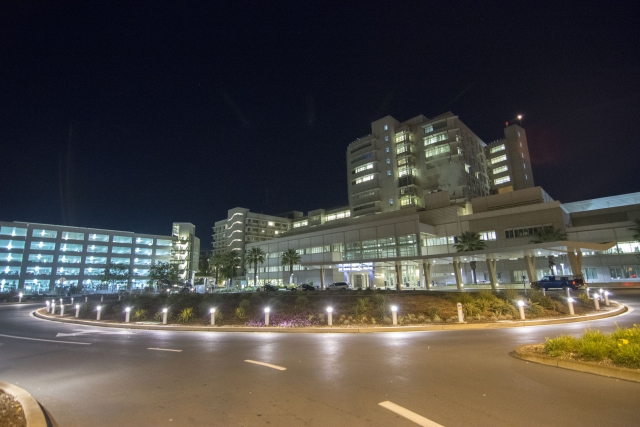
Possible measles exposure at the UC Davis Medical Center in Sacramento — after an unvaccinated child was found to be infected. Over 200 patients treated at the Sacramento location on March 17 were sent emails to warn of possible exposure to the child who was being treated on that date. The Calaveras County Health and Human Services Agency confirmed the case in press release on March 21.

“In California, what we worry about is many parents are vaccine-hesitant, and so they choose not to have their children vaccinated,” Dean Blumberg said, the chief of pediatric infectious diseases at UCDMC. “They tend to cluster within certain pools and communities — so if it entered one of those pools or communities, it could really just be transmitted very fast.”

None of the 220 patients contacted have reported any symptoms or infections. Read on.

City:

JORDAN CHOW / AGGIE

Student housing projects halted — a series of lawsuits have hit pause on the construction of two apartment complexes due to claims of environmental, health and safety concerns for students. Finding housing — let alone affordable housing — is challenging for students in Davis, with nearly 7% or 2,300 of students reporting they have been homeless at some point in their time at UC Davis.

“Those of us who oppose the Lincoln40 and Nishi projects are not opposed to more housing being built, especially student housing,” Susan Rainier said, a California-licensed architect. “We are opposed to the way it has been approved and, now, how it’s been done with the plan made by UCD and the city.”Originally set to be completed in the fall of 2020, however, its completion is now contingent on these lawsuits. Read on.

Features:

JAMIE CHEN / AGGIE

2019 Guggenheim Fellowship winners — two UC Davis professors were among the 173 Americans and Canadians to be awarded by the prestigious John Simon Guggenheim Foundation. Associate Dean of Undergraduate Studies and Academic Programs and history professor Ari Kelman and English professor Elizabeth Miller were selected from a pool of 3,000 applicants from a wide variety of disciplines.

“The thing that makes the Guggenheim unusual is that it’s available to people from a variety of different fields, some academic, some not, as long as they’re engaged in creative activities,” said Kelman.

Each will use their fellowships to support books and projects they are currently working on, learn more about their work.

Arts & Culture:

OLIVIA KOTLAREK / AGGIE

Earl Sweatshirt — The Arts Desk’s Liz Jacobson and Rosie Schwarz recount their concert experience. “Upon arriving to see Earl Sweatshirt in concert last Thursday, the energy and excitement manifested in the longest line we’ve ever seen for a concert at Ace of Spades. The line was filled with edgy teens donning Wolf Gang apparel, hipster 20-somethings in bucket hats and us, two UC Davis students just trying to chill in our Dickies and floral shirts.” Read on.

Sports:

JUSTIN HAN / AGGIE

UC Davis’s former wide receiver hopeful NFL Draft — Keelan Doss played in the prestigious Reese’s Senior Bowl in Mobile, Ala. Among the best players in the nation, Doss earned his ticket to Alabama late January after leading Aggies to a 10-3 record this past season. He finished the weekend with a Raiders logo sticker of approval on his helmet from Oakland Raiders head coach Jon Gruden. After completing a successful Pro Day earlier this month at Aggie Stadium, Doss is awaiting the seven rounds of the draft that run from Thursday to Saturday. Read on.

Science:

FRANCES C. MOORE / COURTESY

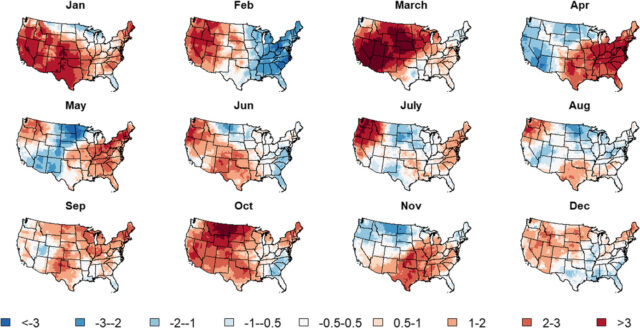
How Tweets tell when remarkable weather turns unremarkable — UC Davis professors study geolocated tweets regarding dramatic weather occurrences. Frances C. Moore, an assistant professor in the UC Davis Department of Environmental Science and Policy relates what she found to the boiling frog phenomenon — if a frog is placed in a pot of water with the temperature gradually increasing, the frog will cook not realizing the temperature change, but if the frog is placed in boiling water, it would jump out straight away. Moore found that if unusual weather persisted for a year, tweets decreased and was thus “normalized”. Read on.

Opinion — “Probably not the (Trumpian-ish) argument you were expecting for sex ed

Humor — “Why you should make Trader Joe’s your next romantic date spot

Editorial — “Calif. Assembly: Protect black hairstyles from discrimination

Culture Corner with our Editor In Chief, Emily Stack:

Television: “Derry Girls”

Movie: “Fried Green Tomatoes”

Book: “Bread” by Scott Shershow

Album: “Born to Run” by Bruce Springsteen

Read on.

That’s all folks. Tune in next Friday.

 Grace Simmons

UC Davis Medical Center notifies hundreds of patients of potential measles exposure

Sacramento hospital sends letter warning roughly 220 patients

UC Davis Medical Center in Sacramento sent out a letter to roughly 220 patients treated on March 17 at the hospital, warning them that they may have been exposed to measles after a child treated in the emergency room on that date was found to be infected with the highly contagious virus.

The source of the potential exposure was an unvaccinated child from Calaveras County who was treated at the UC Davis Medical emergency room for respiratory symptoms on March 17, according to a statement made by County Health Officer Doctor Dean Kelaita to the Calaveras Board of Supervisors. The Calaveras County Health and Human Services Agency issued a press release on March 21, publicly confirming the measles case and recommending vaccinations, including the measles, mumps and rubella (MMR) vaccine. The letter recommended the first MMR vaccine for infants 12 to 15 months, and the second for children four to six years old.

According to Kelaita, Calaveras County has seen a decrease in the number of children vaccinated against measles. The press release noted that the unvaccinated child had traveled abroad before contracting the disease.

“The unvaccinated child resides in the Valley Springs area and developed measles after returning to California from traveling overseas,” the release said.

The release also warned that some Calaveras residents may have been exposed to the virus and that the department would be notifying individuals potentially at risk of infection.

“Prior to being diagnosed, the child had contact with several members of the public in Calaveras […] and Amador counties,” the release said. “Public Health officials are contacting the potentially exposed groups with information to prevent development of illness.”

Dean Blumberg, the chief of pediatric infectious diseases at UCDMC, said staff at his hospital did not suspect the child had measles and thus did not take typical precautions for treating a patient with a highly infectious virus.

“When the patient came to the emergency department, measles was not suspected, so they weren’t isolated, and measles is one of the most infectious diseases known to man — so that you don’t even need to have person-to-person contact to be infected,” Blumberg said. “So anybody who could even be breathing the same air within two hours could potentially be infected, because the measles virus stays suspended up in the air for up to two hours.”

After it was discovered that the patient had measles, Blumberg said, the medical center sent out a letter to roughly 220 of the people treated at the hospital the same day as the patient. The letter, posted online by CBS Sacramento, encouraged recipients to inform their healthcare providers of their potential exposure.

“You will need to notify your primary health care provider(s) and your child’s provider(s) of this possible exposure to discuss your possible risk of infection, vaccination history, and other questions you may have,” the letter read.

The letter explained some of the symptoms of measles, which include coughing, red eyes and a runny nose. Two to three days after the initial symptoms appear, “red, blotchy” rashes typically develop on the face, which soon spread to other parts of the body.

“This rash rapidly spreads downward to the chest and back and finally to the thighs and feet,” the letter read. “The rash fades after about a week.”

Though these symptoms may seem mild, Blumberg said, the illness can lead to more significant medical problems.

“Typically, patients with measles have fever, upper respiratory symptoms and rash, but it can result in complications such as dehydration, pneumonia and — in about one in every thousand cases — can result in death,” Blumberg said.

It seems that none of the patients potentially exposed to the virus on March 17 were actually infected, according to Blumberg, and the hospital has not seen any other related measles cases.

“We’re thankful that we feel there were no [secondary] infections that occurred from that exposure,” Blumberg said.

Blumberg said that measles outbreaks still pose a risk to Californians despite the successful containment in this instance. The Centers for Disease Control and Prevention, which declared measles eliminated in the U.S. in 2000, has noted a resurgence of measles outbreaks in America within the past decade, due in part to clustered communities of unvaccinated people. Blumberg said that in California these clusters often contain parents who are skeptical of vaccines and decide not to vaccinate their children.

“In California, what we worry about is many parents are vaccine-hesitant, and so they choose not to have their children vaccinated,” Blumberg said. “They tend to cluster within certain pools and communities — so if it entered one of those pools or communities, it could really just be transmitted very fast.”

As of 2019, there have been a total of 21 reported measles cases in the State of California, the highest concentration being in Butte, Calaveras, Shasta and Tehama counties. The thinly populated counties are listed together in the CDC website due to privacy concerns.

The best defense against measles outbreaks is vaccination, according to Blumberg.

“The vaccine works very well, so it’s recommended for people to get two doses of the vaccine, and that results in about 99% protection,” Blumberg said.

Written by: Tim Lalonde — city@theaggie.org, Rebecca Bihn-Wallace — campus@theaggie.org

Calif. Assembly: Protect black hairstyles from discrimination

Persistent discrimination in workplace, schools proves need for bill

The California State Senate, in a commendable bipartisan vote on Monday, April 22, unanimously approved Senate Bill 188, a bill that would outlaw discrimination based on hairstyle.

The C.R.O.W.N. Act, short for “Creating a Respectful and Open Workplace for Natural hair,” is sponsored by Senator Holly Mitchell, CA-30, who is African American herself. The bill is designed to help prevent workplaces and K-12 schools from being biased against those with traditionally black hairstyles.

“Many Black employees, including your staff, members, will tell you if given the chance that the struggle to maintain what society has deemed a ‘professional image’ while protecting the health and integrity of their hair remains a defining and paradoxical struggle in their work experience, not usually shared by their non-Black peers,” Mitchell said before the Senate voted on her bill. “Members, it is 2019. Any law that sanctions a job description that immediately excludes me from a position, not because of my capabilities or experience but because of my hair, is long overdue for reform.”

What Mitchell said is old news to black people all over the country who face discrimination based on their hairstyles — hairstyles like braids, twists and locks that SB 188 will specifically protect. But at the same time as California is making this radical step, recent instances of prejudice against black hair remind us why laws like this are so necessary.

Horrific moments are shared across the internet, like a video from December of 2018 of a black wrestler in New Jersey who was forced to cut his hair while standing on the mat, else he be made to forfeit his match. A white sports reporter covering the match shared a video of the event on Twitter, calling the wrestler the “epitome of a team player.” The reporter later apologized, saying he “missed the bigger picture.”

More recently in April, a high school in Houston, Tex. implemented a dress code not for students, but for parents or anyone else entering the building. This dress code banned satin caps and bonnets, which, according to the New York Times, “are often worn by black women to protect their hair.”

“We are preparing your child for a prosperous future,” wrote James Madison High School Principal Carlotta Brown in the letter sent home about the dress code. “We want them to know what is appropriate and what is not appropriate for any setting they may be in. This is a professional educational environment where we are teaching our children what is right and what is correct or not correct.”

It’s unjust to deem certain hairstyles and garments, meant to protect a person’s hair, as wrong or not preparing a child “for a prosperous future.” If anything, Mitchell herself proves that hairstyle has no bearing on what a person can or cannot achieve.

The Editorial Board applauds the 37 members of the Senate who voted in favor of this bill. Passing this bill into law is an essential step toward remedying racial bias in our state. In the coming weeks, the bill will be seen before the Assembly. The Board urges assemblymembers to follow the footsteps of their peers in the Senate and vote unanimously to approve this bill. Send it to Governor Gavin Newsom to sign into law.

Written by: The Editorial Board

Doss stays true to himself as NFL Draft approaches

Former Aggie wide receiver is ready to make it on the biggest stage

It started off as just another early spring morning in Davis, with a steady mid-morning drizzle and overcast skies.

A nearly silent stadium of 10,000 empty seats looked on as close to a dozen young men underwent the ultimate job interview. The only audible sounds in the arena were the grunts of hard-working football players exerting their bodies to the maximum, in an effort to impress the scouts of over half the 32 franchises that make up the National Football League.

The backdrop was essentially the same as it’s always been for Keelan Doss. Without  too many eyes on him, he is a man on a mission to prove himself to the world and unleash his special talents of running and catching a pigskin.

Doss was barely recruited coming out of Alameda High School and despite being a finalist for the Walter Payton Award following his junior season at UC Davis, he still flew under the radar nationally.

But it’s all coming together for Doss now. After leading the Aggies to a 10-3 record, falling two wins shy of reaching the FCS National Championship game, he was invited to play in the prestigious Reese’s Senior Bowl in Mobile, Alabama, surrounded by many of the top college football players in the nation.

Doss made a name for himself throughout that pressure-filled week in late January, raising the eyebrows of coaches and fans alike for his performances on the practice field. He topped it all off with an impressive showing in the Senior Bowl game, catching four balls for 55 yards and earning the admiration of Oakland Raiders head coach Jon Gruden, who showed his approval by slapping a pair of Raiders logo stickers on his helmet.

Doss initially bumped into Gruden on an elevator ride during the week, foreshadowing an unforgettable memory for a kid who grew up donning the silver and black.

“It was a surreal moment because I grew up watching him on TV,” Doss explained. “Just being in the same elevator talking to him was a cool moment.”

Doss looked to keep the positive momentum going at the NFL Scouting Combine in Indianapolis at the beginning of March. Unfortunately, an early pectoral injury during the 225-pound bench press limited him to just eight total reps and forced him to forgo all other drills at the event.

“The most frustrating thing about it was that it happened on my second rep of the bench press, so I wasn’t even able to do anything,” Doss said. “We got the MRI results and it wasn’t as bad as we anticipated.”

The injury also meant that Doss had to postpone his Pro Day at Aggie Stadium by three weeks. Heading into this private and much more subdued workout, he knew that he had a lot left to prove to the scouts who were still eager to get an up-close glimpse of his exceptional abilities.

“They’ve seen me run routes at the Senior Bowl and on tape during the season, but they really wanted to see my explosiveness and I was able to show that today,” Doss said.

After initially deciding to skip the forty-yard dash, Doss elected to run it at the last minute and ended up with a solid time of 4.45 seconds, which would’ve placed him in the top-15 amongst wide receivers who ran the drill at the NFL Scouting Combine.

He also participated in other typical drills such as the vertical leap and long jump, in addition to running routes all over the field.

At the end of the day, by moving the Pro Day back from its original mid-March date to the first week of April, Doss allowed for greater publicity for the rest of the UC Davis seniors trying to make a name for themselves.

“For me personally, I wanted to move back the Pro Day a little bit just so we could get the most amount of scouts here, whether they’re here for me or want to see somebody else,” Doss said. “I wanted the most exposure possible for the program.”

Some of the other Aggie players who worked out for scouts included cornerbacks Vincent White and Isiah Olave, linebacker Mason Moe and running back Namane Modise.

“The guys that performed out there are great players,” Doss said. “I strongly believe a couple of them have a strong chance to play in the NFL.”

Doss’s display of unselfishness on this specific occasion was just a small testament to the unbelievable character and attitude he’s shown over the past four years. Throughout this draft preparation process, NFL teams are starting to take notice of the excellent type of person and teammate they might be receiving if they take a chance on Doss.

“I feel like the one trait everybody should have is being a good person and treating others the way you want to be treated,” Doss explained to the media, following his Pro Day. “That’s kind of my motto and its always been like that.”

UC Davis head coach Dan Hawkins and other Aggies have constantly raved about this aspect of Doss’s identity, which manifested itself further when the consensus All-American decided to return to Davis for his senior season.

“I came back for the team and wanted to work on some things that I could improve on, but really just to help UC Davis out,” Doss said. “They believed in me at first so I wanted to give them my all.”

Assuming he gets selected by an NFL team at some point during the seven rounds of the draft, which run from Thursday until Saturday afternoon, Doss will join Denver Broncos punter and 2017 graduate Colby Wadman as UC Davis alum on an active NFL roster. Despite what most people may think, Doss doesn’t believe that coming from a small school like UC Davis will hold him back from achieving his dreams and ascending to the top of his game.

“You kind of control your own destiny and how good you want to be,” Doss explained. “You see a lot of guys come from smaller schools and even get drafted later or go undrafted, but they become the stars. Why is that? I think it’s just the work ethic. Everyone is talented in the NFL, no doubt about it. You can always be great, in my opinion, if you work hard.”

Doss is not devoid of self-confidence and embraces the opportunity in front of him, as well as the grueling physical and mental journeys that come along with it.

“My mindset is that I’m the best player on the field 24/7,” Doss admitted. “For me, it’s the hard work and consistency that I pride myself in and it’s just something I always dreamed of as a kid. I don’t care if I’m coming from UC Davis or Alabama. At the end of the day, it’s just football and I think I can compete against the best of them.”

When the dust settles, there’s no doubting the legacy that Doss has left behind on this little town in Northern California. Besides departing as the all-time school leader in career receiving yards (4,069), catches (321) and 100-yard games (9), Doss put the football program back on the map and reinvigorated a sleeping giant. Fresh off a first conference title at the Division I level and arguably the greatest season in this school’s history, it’s impossible to imagine that Doss could’ve left the Aggies in any better position for future success.

No matter how his NFL career pans out, Keelan Doss will surely remain the same humble, hard-working human being that he’s been his whole life. The positive memories he brought to both Aggie Stadium and this entire community will live on forever.

Written by: Brendan Ogburn — sports@theaggie.org

Aggies heat up in April

Beach volleyball wins six of eight heading into conference championships

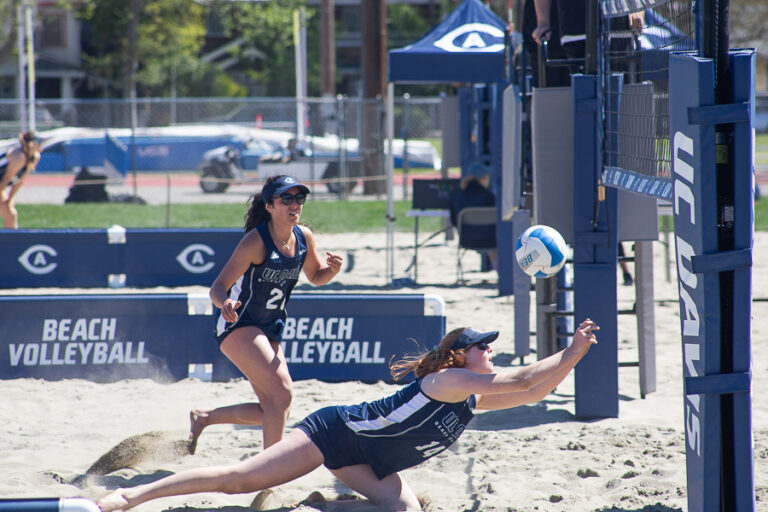
Though it may appear that the women’s beach volleyball team faced a unique challenge playing through the pandemonium of Picnic Day weekend, as one of the newest additions to the Aggie Athletics family, the women’s beach volleyball made its mark on the UC Davis sports season with a 3-2 victory at its first official home opener. The team’s first two games in early March were originally scheduled to be played at Sacramento State’s facilities, but extenuating circumstances forced the games to be moved to UC Davis.

Following the announcement of two new women’s division I sports teams — beach volleyball and equestrian — in April of 2018, UC Davis began construction for the new volleyball team’s home courts late last year. The courts’ inaugural practice was held this past February, less than a month before the team’s first home match. The courts themselves sit right off of Russell Boulevard on Howard Field, directly in front of the North Entry Parking Structure. They feature “amphitheater-style seating” for spectators.

“I thought the courts looked amazing and I think all of my teammates did too,” said freshman Nicole Andrade. “We were all really impressed with how it looked. I truly believe we have some of the best courts after traveling a lot this season.”

Fellow freshman teammate Rose Holscher also commented on the new court and how she thought it added to the first game’s experience.

“I thought our first ever home beach volleyball game was an amazing experience for our program and the school,” said Holscher. “It was awesome to have such nice weather and get to use our new courts which looked very professional. I think the atmosphere was inviting and welcoming for all our fans.”

Friday featured a morning to afternoon double-header against the University of Oregon, played in sunny but windy conditions. In the first contest, the duo consisting of senior Heather Reed and sophomore Savanah Schroeder won the third and deciding match for the Aggies, clutching their last two sets after losing the first and solidifying UC Davis’ first official home win by a score of 3-2.

After the high winds caused an injury during the second game, the match had to be suspended. Essentially, without an official bench or area to rest around the courts, teams would huddle under pop-up umbrellas to shade themselves from the sun during timeouts. In a sudden sequence of events, the winds rapidly picked up, tore an umbrella out of the ground during a timeout and hurdled it directly toward a live match. A UC Davis player was struck by the umbrella and taken to the hospital. The player was later said to be in good condition.

Despite the scare, the team was able to stay upbeat when the day was over, content with its well-earned first win. The Aggies had to claw their way back from an 0-2 deficit in the first match, winning the last three matches to secure the victory. The second game ended in a 2-2 tie after the suspension, but not before the pairs Andrade and sophomore Ally Reyes along with Reed and Schroeder won their respective matches, going undefeated for the day.

The Aggies are firing on all cylinders leading into the playoffs, winning their Saturday match against Pacific 3-2, and their Wednesday matches against Sierra College and Gavilan College. Having only lost once in April, things are coming together at the right time for UC Davis.

“After our big win against Oregon on Friday, we were all pretty thrilled and we took that energy and skill into our game on Saturday and our games on Wednesday,” Andrade said. “All of us continue to grow day by day as we work to improve ourselves and our team. All the games that occurred on Friday, Saturday, and Wednesday are preparing us for our championships next weekend and, in my opinion, we are ready to take that on.”

Following the team’s final match of the week on Wednesday, April 17, the Aggies now enjoy a nine-day break before traveling to Zuma Beach in Malibu, Calif. for the Big West Conference Championship. The championship games will take place on April 26 through 27 and will be a double-eliminated style play.

“Our coach has made a point to create a culture that is focused on growth so all of us went out on Friday with that intention and it paid off,” said Andrade. “I’m very proud of my teammates and how we have all performed in our past few games and [… I’m] very grateful to have such amazing coaches to help guide us and can’t wait to kick butt at the championships.”

Written by: AJ Seymour— sports@theaggie.org

Tiger defies the odds, takes home green jacket

Tiger Woods secures fifth master’s win, now has second most all time

In one of the most anticipated sporting events of the year, with tickets to the weekend of events selling for a minimum of $2,000, Tiger Woods captured his fifth Masters championship and 15th major win in his career. While many people contributed to the 15% rise in ticket prices from 2018, to fans wanting to observe the pure beauty of the Augusta National course, it was Woods’ return to the green that had fans flocking in the thousands to witness one of the most historic comebacks in sports history.

After an 11-year absence from the green, Woods faced multiple injuries that left doubts if he would ever play again. Several knee surgeries, a torn Achilles tendon and back fusion surgery had many believing that Woods would never win another major championship again. Even with an impressive practice run on the course a couple days before the event, shooting a 65 through the course (compared to the average around 75), there weren’t many sports outlets that predicted Woods would even finish in the top 10. However, the resilient golfer took to the green to prove to his family, to himself and to the world that he is still one of the greatest golfers in the game.

After the first round of play, Woods put up a score of 70, or two under par, hanging in with the other golfers as almost everyone in the tournament finished the round with scores ranging between 65 and 70. It wasn’t until rounds two and three that Tiger started to up his game and show his top contender merit. Earning similar scores closer to his practice runs at Augusta, Woods shot 68 (two under par) and 67 (three under par) in rounds two and three respectively. Going into the final round 11 under par, Tiger kept his stroke through the final day on Sunday and set himself up for a shot at the championship.

Beginning Sunday, Woods was tied for second, two strokes behind the Italian national Francesco Molinari. It seemed as if Molinari had the championship secured, until he shot double-bogeys on hole 12 and 15, giving Tiger the chance to soar to the front of the pack.

Taking it down to the wire at the 18th hole, a roar of anticipatory cheers from the crowd gave Woods the confidence he needed on the green. With a par four on the final hole, Woods had a large enough lead to take five strokes to secure the win. Wood’s took them all, shooting a bogey on the final hole. Woods’ final talley was 13 strokes under, one stroke ahead of the three second place finishers.

“When I tapped the putt in, I don’t know what I did, but I know I screamed,” Woods told news outlets after the win. “To have my kids there, it’s come full circle. My dad was here in 1997 and now I’m the dad with two kids there. I couldn’t be more happy and more excited and at a loss [for] words, really.”

Walking away with his fifth masters title, Woods has the second most masters wins of all time, second to Jack Nicklaus (6). This victory also marked Woods’ 15th major win in his historic career. Taking home a little over $2 million in prize money along with his green jacket, there is no telling if this win was the one to cap off the career of one of the best golfers in history, or simply the beginning of a new era of Tiger dominance. It was one of the most storybook endings seen in sports, and Woods’ response after putting on the illustrious green jacket says it all.

“It fits,” he said.

Written by: Ryan Bugsch — sports@theaggie.org

Two professors from UC Davis awarded Guggenheim Fellowships

Professors Ari Kelman and Elizabeth Miller two of 173 American and Canadian winners

On April 10, the John Simon Guggenheim Memorial Foundation announced the 2019 recipients of the Guggenheim Fellowship. Of the 173 American and Canadian winners, two were from UC Davis: Associate Dean of Undergraduate Studies and Academic Programs and history professor Ari Kelman and English professor Elizabeth Miller. The foundation receives around 3,000 applications annually and tends to pick around 175 recipients for the fellowship.

Both Kelman and Miller have received other fellowships, but the Guggenheim Fellowship stands out in multiple ways. They both mentioned the fact that the award can be given to artists or scholars from a number of different disciplines.

“The thing that makes the Guggenheim unusual is that it’s available to people from a variety of different fields, some academic, some not, as long as they’re engaged in creative activities,” said Kelman, who has also been awarded fellowships from the National Endowment for the Humanities and the Huntington Library. “There are artists, […] there are all different kinds of scholars, novelists, etcetera so to be selected for something like this honestly feels surreal. I’m not quite sure how it happened, it hasn’t really sunk in yet. But at some point I imagine it’ll sink in, and I’ll probably feel really good.”

Miller added to Kelman’s sentiment, mentioning that Debbie Niemeier, a professor from the department of civil and environmental engineering, was awarded a Guggenheim Fellowship in 2015. Miller also noted some differences between this and other fellowships she has received, which include the National Endowment for the Humanities Fellowship, the Charles A. Ryskamp Research Fellowship, the Curran Fellowship and the Joseph R. Dunlap Memorial Fellowship.

“I think the thing that’s different about the Guggenheim compared to any other thing that’s happened to me in my career is that it’s such a known fellowship,” Miller said. “I’ve even had neighbors on my street who aren’t in academia congratulating me about it. People just have a sense of what it is, in a way that goes beyond the academy. So that’s been really cool and exciting, and definitely a new experience for me.”

About a month before the official announcement, Kelman and Miller were told that they were finalists. One day before the official announcement they were informed that they had received the award. Kelman was sitting in his office when he received the email while Miller was volunteering at her children’s school.

“I always make a point not to have my phone out when I’m volunteering there, but as soon as I’m done with my shift, I always check my email,” Miller said. “And that was when I found out. I just sat down on a bench in the playground and took it in for a minute before I went on with my day. It was quite a shock and a surprise, and obviously, I was really delighted.”

Both Kelman and Miller spoke to the amount of rejection that precedes an honor like this. For many academics, there are far more denials than acceptances.

“I applied more than once,” Kelman said. “I fail at everything that I try and do many times before I succeed. And this was no different. I applied a total of two other times.”

Miller elaborated on how to handle the amount of rejection that comes with applications of this caliber.

“I’ve applied for lots and lots of things that haven’t worked out,” Miller said. “You just always have to assume that you’re not going to get it, but at the same time, put in the application. And then when it does work out, it’s an amazingly wonderful surprise.”

Currently, Kelman is working on three books that will be supported by the award — “Liberty and Empire: How the Civil War Bled into the Indian Wars,” a book for the Oxford University Press’ Very Short Introductions series on Indian Wars from the colonial period through the end of the nineteenth century and a graphic history of the Northern Cheyenne people that he’s working on with two colleagues.  

“One of the major projects that this is supporting is a revisionist history of the United States Civil War,” Kelman said. “[It focuses] on the experiences of indigenous nations, the ways in which federal soldiers during the era of the Civil War, in part prompted by the United States Civil War, engaged in violent encounters, in practices of conquest and imperialism against indigenous nations or native nations, American Indians in the West.”

Miller will be using the award toward a book that she’s been working on for about five years on extractivism and mining in the Industrial Era. She is looking at literature, and using it as an archive to consider how ideas of the world changed alongside the industrialization of mining.

For the Guggenheim Fellowship, applicants must complete a career narrative. In it, Miller talked about the continuity of her two published books and the one she is working on. She described “the attempt to understand literature within a historical context, within an economic context” and the ways in which literature reflects and also changes political ideas.

“Even though I’m looking at the 19th century, the project is really also engaged with discussions around climate change today and trying to think about the origins of environmental crisis and how they can be traced back to the beginnings of a coal fired economy with the Industrial Era,” Miller said.

Last year, three faculty members from the College of Letters and Science — Mika Pelo, associate professor in the department of music, Annabeth Rosen, Robert Arneson Endowed Chair in the department of art and art history, and Archana Venkatesan, associate professor in the department of religious studies and the department of comparative literature — were awarded with Guggenheim Fellowships. There are now 39 Guggenheim Fellows from the college.

“I think it’s unusual for a single campus to have multiple recipients in two years running. And I think it just speaks to the incredibly high quality of the work that’s being done on this campus,” Kelman said, “[…] and you know, this just feels like a pretty lucky thing.”

Written by: ANJINI VENUGOPAL — features@theaggie.org

The not-so secret secrets of secret societies

A glimpse into secret societies in universities

Since the founding and rise to infamy of Yale’s secret society Skull and Bones in 1832, college students across the nation have followed suit, creating their own secret societies. Most secret societies on college campuses prioritize keeping secret not their existence but what happens in them. This includes their members, rituals, initiations and events.

Little is known about these organizations and what happens behind closed doors. Because they are so secretive, not many people know about secret societies in general.

“I don’t know anything,” said Katie Smith, a first-year evolution, ecology and biodiversity major.

Wei-Lung Ho, an electrical engineering major, claims to know theses socities exist on the UC Davis campus but doesn’t know much else.

More prominently, here on campus, we have our own secret society: Sword and Sandals. Founded in December of 1921, Sword and Sandals was based on UC Berkeley’s secret society, Order of the Golden Bear. The goal of the society was to improve the university, though it isn’t known to what extent the university has changed because of them due to their secrecy.

Sword and Sandals was created as a medium for those involved in the UC Davis community to express their thoughts and concerns about the morals, politics and philosophy of the school, according to LocalWiki. The meetings and discussions of the organization are not available to the public. Before the development of social media, the location and times of the meetings would be discreetly placed into The California Aggie newspapers as a secret code for members to decipher.

Their members consist of UC Davis students, faculty, staff and alumni. Membership into Sword and Sandals is selected primarily on display of leadership, along with other values, hence previous members include (but are not limited to) past chancellors and high ranking officers of ASUCD. Notable members include Gordon Sproul (for whom Sproul Hall was named after), E.C. Voorhies (for whom Voorhies Hall was named after) and S.B. Freeborn (for whom Freeborn Hall was named after). In order to become a member, two of the members in Sword and Sandals must nominate you. The council must then take a vote, and you can only join the society if two-thirds of the council votes in favor of you.

“They are selective,” said Ho in response to this information. “They’re probably like any other club.”

The presence of secret societies on college campuses has been controversial. For example, George W. Bush’s membership in Skull and Bones when he was a student at Yale has led some people to believe that the organization was somehow involved in the war on Iraq.

“I don’t know, I don’t think there are any problems so far,” said Love Chien, a first-year cell biology major, in response to whether or not she believes there is controversy and scandals in Sword and Sandals. “I mean, I guess they sound sketchy and suspicious.”

Based on students’ knowledge about Sword and Sandals and other secret societies lurking in the nation, these organizations have stuck to their nature of being secretive. There is far more information than what is presented and it may never be known to the public. Those secrets remain with the members of these secret societies.

Written by: LINH NGUYEN –– features@theaggie.org

Facebook says it’s a “*de facto* good” — (ha!)

Facebook fuels terrorism, lynchings, conspiracies under guise of connecting people

“So we connect more people. That can be bad if they make it negative […] Maybe someone dies in a terrorist attack coordinated on our tools. And still we connect people. The ugly truth is that we believe in connecting people so deeply that anything that allows us to connect more people more often is *de facto* good.”

This comes from a leaked company memo penned by Facebook’s vice president Andrew Bosworth in June of 2016 amidst mounting allegations regarding the platform’s gross mishandling of Russian interference in the 2016 election. The core message of the memo is that connecting people — Facebook’s self-proclaimed objective — outweighs the site’s contribution to violence on a global scale. As Bosworth later stated in the memo, “That isn’t something we are doing for ourselves. Or for our stock price (ha!). It is literally just what we do. We connect people. Period.”

The memo is patently intended to comfort employees while absolving Facebook of responsibility for its role in the 2016 election interference, which might be justified if Facebook were simply a platform, but it isn’t. While Facebook does not commit violence directly, it feeds and encourages people’s basest emotional impulses regardless of whether those impulses are racist, violent or irrational. Based on the memo, Facebook only seems to care when it’s in damage control mode.

The algorithms employed by Facebook and other platforms like YouTube and Twitter filter what each person sees based on what will keep them on the site longer — most often the posts that make us linger on the site are those that rile us. When angry and hateful people go on Facebook, the search algorithm intended for Facebook’s growth will supply those people with fresh provocations, feeding and exacerbating their rage. But it’s not just anger; Facebook trades in the conspiratorial and irrational. As Mark Zuckerberg’s former mentor Roger McNamee said, go on Facebook and investigate vaccines, and in a year you’ll be protesting in the street over a mythical government conspiracy.

Facebook does more than connect people — it enrages people. The ethnic cleansing of Rohingya Muslims in Myanmar was incited, and made very successful, by Facebook. Right-wing terrorists have attained much of their ideological ammo from incendiary and false posts on Facebook. At least two dozen people have been murdered in mob lynchings in India in 2018 — killings ignited by rumors spread on WhatsApp (a Facebook-owned messaging service). In Brazil, citizens avoided a government-mandated yellow-fever vaccine because messages on WhatsApp falsely claimed the vaccine was dangerous.

Facebook also sells its users’ data to third party sites like Cambridge Analytica, a consulting firm that harvested data from 87 million users and Geofeedia, a social media monitoring company that attained special access to Facebook’s user data and sold it to police departments targeting Black Lives Matter protestors.

Connecting people is good; making the world “unified” is good. But when Facebook and other platforms purportedly “connect people” by hoarding them into an enraged echo chamber, by selling their data so law enforcement can target minorities, that is not connecting people — that is exploiting people for profit regardless of the consequences. Bosworth said that because Facebook supposedly connects people, it’s okay if there is a terrorist attack or if an innocent person is ripped apart by an angry mob. Following an admission of its role in terrorism with “we connect people” exposes the fallacy of Facebook’s proclaimed objective.

With a continuous stream of scandals and apologies followed by more scandals, it’s painfully obvious that Facebook pritorizes growth over the safety of its users. For Facebook to say this is because it’s solely driven by connecting people is not only false but absurd. Facebook isn’t trying to grow by connecting people as much as possible because it’s ultimately a “de facto good” for society —  if that were the case, it might strive more toward regulating the spread of false information.

Facebook grows by connecting people because it’s profitable — profit is why Russian hackers were able to pay $100,000 (at least) in ads to undermine American democracy. Profit is why Facebook has failed to make a genuine, concerted effort to regulate the spread of false information. Profit is why Facebook’s user data isn’t private, or safe. Profit is why Bosworth wants his employees to feel that what they do is a “*de facto* good” in the face of all the evil that has been done. And when that profit comes not from selling a product or service that improves  lives but inspires anger, irrationality and injury, that’s exploitation.

With a market cap of $509 billion, employing some of the most highly educated and accomplished people in the world, does anyone believe Facebook is accidentally exploiting people?

Written by: Hanadi Jordan — hajordan@ucdavis.edu

Disclaimer: The views and opinions expressed by individual columnists belong to the columnists alone and do not necessarily indicate the views and opinions held by The California Aggie.

Earl Sweatshirt and Friends

Rapper’s concert left audience feeling like one of the gang

Upon arriving to see Earl Sweatshirt in concert last Thursday, the energy and excitement manifested in the longest line we’ve ever seen for a concert at Ace of Spades. The line was filled with edgy teens donning Wolf Gang apparel, hipster 20-somethings in bucket hats and us, two UC Davis students just trying to chill in our Dickies and floral shirts.

Once we entered Ace of Spades for the “Thebe Kgositsile Presents: FIRE IT UP! A tour starring EARL SWEATSHIRT & FRIENDS” show, everyone crowded the stage, eager to see an act that wouldn’t go on for another hour still. Just the energy from knowing that Earl and his friends were backstage was contagious.

We were surprised at how the audience’s time was respected. It easily could have been very Odd Future-esque, with the artists coming on late, yelling for a few minutes and then dropping the mic. However, MIKE, one of said “friends” who would be performing, stepped onto stage right on time.

MIKE’s set was great and the whole audience was vibing to his lyrics and the beat. He was excited to be there, which made for a great opening act. Even if the crowd didn’t know all of the words, his on-stage crew did.

The second opener, Liv.E, is one of our new favorite artists. When Dallas-native Liv.E walked on stage in a cowboy hat with a pink toy gun and began to sing and rap, the audience was captivated. Regardless of familiarity, Liv.E had a sound that was easy to dance to. Giving off Erykah Badu vibes, Liv.E commanded the stage, swinging her hips to her songs.

Earl Sweatshirt, born Thebe Kgositsile, was originally known for being part of Tyler the Creator’s Odd Future rap collective, but he has since created a crew of his own artists with a different, more soulful vibe. While there has never been any question as to whether or not Earl is a serious artist, seeing his presence on stage and the talent of the artists he surrounds himself with affirmed his commitment to music and his unique sound.

After a short intermission, Earl casually walked on stage in a tour shirt and sweatpants. Sipping his water, he took his time getting into his element and jamming to the opening of “Molasses.”

Both of us having been to multiple shows at Ace of Spades, this show commanded a unique presence that drew everyone to the stage as hands bumped up and down shouting “Aye.”

Earl’s most recent album “Some Rap Songs” was full of experimental beats and sounds that might have been hard to perform. One example is “Riot!” which is completely instrumental. However, Earl added his own live touch, asking everyone to sing along. The audience then hummed the chords of “Riot!” together, just like we do when we’re listening on our own.

Earl performed an hour of straight music. Up on stage, he was in his element. Earl often had his back turned to the audience, not out of snobbery or shyness but simply so he could face his friends. It felt like we were in his living room just watching him dance and tell his story. Earl commanded the stage in a very different way than Liv.E, but he commanded it nonetheless. The stage became his space to share with his friends.

“Some Rap Songs” is a very cohesive album that can’t be easily broken up, and Earl performed it just like that. To our surprise and delight, it translated well onto stage, sounding exactly like, if not better, than the album. With songs like “Grief” and “Faucet” from 2015’s “I Don’t Like Shit, I Don’t Go Outside: An Album by Earl Sweatshirt,” the audience could hear his transition as an artist.

Another thing we noticed was the amount of phones out at the concert. While of course people have their phones out for an occasional picture or video, most of the audience was so tuned into the music that phones were at a minimum, which made for a refreshing change of pace.

Everyone was so respectful of each other; there was no pushing or aggression because our fellow Earl fans were so genuinely invested in the musical experience that it was all they cared about. Earl fostered this feeling because he, too, was just vibing to the music. Occasionally during his breaks he would stop and say “What’s up, Sacramento?” but other than that it was mostly just the music.

Overall, we both left the concert feeling euphoric as we looked around and saw everyone soaking up the moment with a smile on their face and in no rush to leave. It seemed that everyone there had been waiting to see Earl for years, and this was finally a moment that they wanted to cherish forever.

Written By: Liz Jacobson and Rosie Schwarz — arts@theaggie.org

Culture Corner

The Arts Desk’s weekly picks for television, movies, books and music

Television: “Derry Girls”

If you’re not watching Netflix’s “Derry Girls,” you’re missing out on one the most screamingly hilarious shows in recent memory. It follows the shenanigans of Erin, Orla, Clare, Michelle and Michelle’s English cousin James as they navigate teenage life in Northern Ireland in the 1990s. “Derry Girls” is undoubtedly a comedy, but the Troubles loom in the background, and the serious moments when the sectarian violence comes to the fore are handled deftly. The pure hilarity of the gang’s hijinks has broad appeal, though a certain off-color sense of humor is required to laugh at the group lying to a hot priest about a dog pissing on a statue of the Virgin Mary to get out of their final exams. “Derry Girls” is witty, thoughtful and worth a binge-watch.

Movie: “Fried Green Tomatoes”

A wholesome, feel-good comfort movie if there ever was one. “Fried Green Tomatoes” is both the story of the Threadgoode family in 1920s Whistle Stop, Ala. and the impact of that story on Evelyn Couch, a dissatisfied housewife in Birmingham who hears the tale from Ninny Threadgoode, whom she meets while visiting a nursing home in the 1980s. The protagonist of the Whistle Stop story is Ninny’s sister-in-law Idgie, a feisty tomboy with a heart of gold. Though the movie isn’t as explicitly queer as the novel it’s based on (which you should read first!), it’s widely considered a lesbian classic, and it’s hard to deny that the relationship between high-spirited, fiercely loyal Idgie and sweet, strong, steadfast Ruth is a love story for the ages. Have tissues on hand.

Book: “Bread” by Scott Shershow

“Charming” is a word not often used to describe scholarly monographs, but that’s what “Bread” is. I was hooked by the book’s opening –– a passionate declaration of love for bread –– as I, too, am a worshipper of this crusty carbohydrate. “Bread” is readable poolside, which isn’t a knock on its scholarly rigor; rather, it’s to say that the clarity of the prose and of the argumentation make the book not only a fascinating read but a genuinely pleasurable one. Astute analyses of the political and economic significances of bread and its centrality to organizations of civilization and society are woven in with personal stories of sourdough starter misadventures and the intense sensual pleasures of kneading dough. It’s a wonderful read for object-oriented scholars, cultural historians or simply lovers of bread.

Album: “Born to Run” by Bruce Springsteen

If you weren’t baptized into the Church of Springsteen as a child like I was, go dig “Born to Run” out of your dad’s attic and give it a listen. Springsteen’s ability to give voice to the tenderness and vulnerability among expressions of classic red-blooded American masculinity is unmatched. Is there a more perfect, more evocative image in English verse than “Barefoot girl sitting on the hood of a Dodge / Drinking warm beer in the soft summer rain”? “Shall I compare thee to a summer’s day?” has nothing on that. Ideally “Born to Run” is listened to while roaring down an open stretch of highway in an old Chevy with a pretty girl by your side on a sultry summer night, but if you can’t manage that it’s just as enjoyable through headphones on the way to class.

Written by: Emily Stack — arts@theaggie.org

Lawsuits continue to halt development on student housing projects

Environmental, traffic concerns to be resolved before construction on Lincoln40, Nishi begin

Lawsuits against student housing projects — Lincoln40 Apartments and Nishi Student Apartments — are holding construction in limbo until the court’s ruling. Amid a housing shortage for UC Davis students, those opposed to the developments claim that due to environmental and health factors as well as cumulative traffic conditions, the locations are unfit for students and will negatively impact the city.

The lawsuits were filed under the provisions of the California Environmental Quality Act. Patrick Soluri, the attorney of the litigation, revealed that the petitions received support from local residents, but many were unwilling to be named in the lawsuit in fear of retribution. California-licensed architect, Susan Rainier, is one of two individuals named in the Lincoln40 lawsuit and part of the unincorporated association named in the Nishi lawsuit.

“Those of us who oppose the Lincoln40 and Nishi projects are not opposed to more housing being built, especially student housing,” Rainier said. “We are opposed to the way it has been approved and, now, how it’s been done with the plan made by UCD and the city.”

Lincoln40 was approved over a year ago and was originally projected to be completed in fall of 2020 in order to service students looking for housing for the coming school year; however, construction will likely start this summer at the earliest, if settled in court. Alisha Hacker, a second-year political science-public service major at UC Davis, articulated the urgent need for more housing to accommodate the growing student population.

“These lawsuits threaten new student housing projects that if built would elevate a large burden on Davis students who frequently struggle to find housing in the city,” Hacker said via email. “With 7% or about 2,300 students at UC Davis reporting being homeless for some period of time while at Davis, any additional housing would greatly benefit students and their ability to thrive while attending UC Davis.”

Environmentally, Rainier expressed concerns with the placing of Linoln40 in an existing high-occupancy area. She also noted how the Nishi project is surrounded by the I-80 freeway on one side and the Amtrak railroads on the other, noting the dangers of toxic particulates from the roads.

“The City of Davis leadership is incompetent,” Rainier said. “They have not conducted enough analysis of the cumulative effects of mega dorms on city systems and services, such as traffic, noise, circulation, waste water propensity and police.”

While statutorily exempt, the City conducted an Environmental Impact Report, which Judge Stephen Mock deemed sufficient at the hearing for the Lincoln40 project, according to The Davis Vanguard.

Paul Gradeff, the managing director of HighBridge Properties, first conceived the development in 2014, and the project was approved by the city over a year ago. During the lawsuit, construction was ceased, leaving the property untouched while accumulating high costs.

“We have had exhaustive conversations with seven planning commissions, and the city performed an Environmental Impact Report,” Gradeff said. “Of course we’re very concerned about our impacts on the environment, so we have methodically gone through each piece that we have to to make sure we’re not causing any harm.”

The opposition argues that the EIR is not sufficient, specifically with regard to traffic conditions.

“One of the legal arguments has to do with the city’s refusal to adequately analyze cumulative traffic conditions and mitigate cumulative traffic conditions,” Soluri said. “There is going to be a lot more cars on the road under cumulative conditions than estimated in the draft EIR.”

According to Soluri, the sides are still waiting for results from the hearing on the merits regarding the Lincoln40 project, which happened earlier in April, and the Nishi project is expected to go to court in May.

If allowed to continue, the Lincoln40 project will be built to provide student-oriented housing, allowing students to lease by the bed. Gradeff noted the development’s proposed affordable housing program for students, as well as amenities such as study areas, a pool area, game rooms and security.

“This lawsuit is impacting the students directly,” Gradeff said. “It’s impacting no one else but the students. [Lincoln40] is going to be a great environment for students to live and study, and recreate, socialize and have a wonderful community there. That’s so desperately needed in Davis.”

Written by: Renee Hoh — city@theaggie.org

AFSCME Local 3299 UC workers hold state-wide strike to protest unfair labor practices

Complaint filed accusing UC of bribery, instilling fear and coercion to break union lines By ALLY RUSSELL — campus@theaggie.org

39,000 UC workers participated in a state-wide picket line and strike on April 10 to protest unfair working conditions, alleged instances of worker intimidation, outsourcing of jobs and the UC’s failure to meet contract bargaining demands. This is the fourth strike organized by AFSME Local 3299 in the past year.

AFSCME union representatives have been engaged in contract negotiations with UC representatives throughout the last two years but have failed to come to any acceptable agreements for both parties.

Service and patient care workers across five UC medical centers participated in a one-day Union Labor Practice strike after filing an official charge of illegal conduct against the university, claiming the university unlawfully interfered with workers’ rights according to a press release.

The complaint filed with the Public Employment Labor Relations Board includes allegations of UC representatives offering incentives for union workers to cross picket lines, instances of instilling fear into union members, UC supervisors bribing union members and other listed complaints.

Picket lines were held at the UCLA, UCSF, UCD and UCI Medical Centers as well as several UC campuses.

Strike efforts have garnered national news, gaining the attention of senator and presidential candidate Bernie Sanders who joined the UCLA union workers’ strike in solidarity three weeks ago. Sanders spoke to the crowd at the medical center, expressing his outrage at the UC’s treatment of its workers.

“I’m here today not as a candidate for president but as somebody who has spent the last 40 years of his life walking the picket lines for unionized workers,” Sanders said in a press release.

At UC Davis, students in solidarity with strikers participated in a rally at the Memorial Union. Students led chants as the group moved through the Coffee House to join workers picketing on the corner of Russell Boulevard and Howard Way.

Sam Howell, a student organizer and second-year plant sciences and neurobiology, physiology and behavior double major, helped organize students outside the Memorial Union.

“I’m just a student trying to show solidarity,” Howell said. “These workers are literally the people who make the university run on a day-to-day basis.”

Workers represented by AFSME include service workers, patient care workers, technical workers, skilled craft workers, non-academic service workers as well as clerical and professional staff.

Raquel Navarro, a third-year sustainable agriculture and food systems major, was also involved in organizing the student rally.

“As students, we invest a lot of money in this university, so we have a lot of leverage when it comes to trying to demand respect and dignity for students and workers alike,” Navarro said to a crowd of onlookers.

Navarro, along with fellow speaker Genessis Garcia, a third-year economics and human development double major, rallied the crowd of students, explaining to onlookers why workers were striking and students were standing in solidarity.

“These workers support our community, they feed us, they take care of us,” Garcia said. “AFSME 3299 workers are 85% women, immigrants and people of color, so this fight is not just about economic equality; it’s about racial and gender equality. These are the lowest paid workers on our campuses.”

According to strike organizers, black female workers are the lowest paid demographic of UC employees. Speakers repeatedly referenced the statistic that it takes six years on average for black women employed by the UC to achieve the starting salary of white men hired for the same positions.

While UC representatives have offered union workers raises of 3% and raised the minimum wage to $15 an hour, without adequate coverage and benefits, union workers have rejected UC offers.

Even at a $15 an hour minimum wage, workers employed full time would still not earn enough to afford a one-bedroom apartment, according to the National Low Income Housing Coalition’s annual report. In California, workers earning the current minimum wage would have to work 93 hours a week to afford a modest, one-bedroom rental home.

Moreover, wage discrepancies between UC service workers and chancellors are growing increasingly disparate. As of 2017, UC Chancellor and President salaries ranged from $495,000-$531,000 a year, according to a report published by the University of California. At $15 an hour, union workers employed full time would only earn $31,000 a year.