55.7 F
Davis

Davis, California

Tuesday, December 23, 2025
Home Blog Page 431

Individuals can only do so much amid corporate environmental destruction

Immediate action necessary to rectify blatant disregard for planet

For many, Earth Day is an annual day of reflection on the health of our planet. But in 2019, each and every day demands a reflection on the precarious and escalating effects of climate change. With weather patterns transforming and global sea levels rising dramatically, one constant in our lives is the looming threat of the heat-trapping gases in our atmosphere.

Flooding due to melting ice caps, ocean acidification, intense heat waves and extinction of coral reefs and other ecosystems are just some of the major threats our and future generations face.

Smothered by the dangers of a warming world, we ponder, pace and fret, racking our brains for sustainable solutions. We keep a wary eye on the length of our showers, electricity use and car mileage, desperately trying to reduce our carbon footprint in our own small ways, which we should. Being conservative with our energy usage is a pertinent skill, and one that we will undeniably require in the future when our finite fossil fuel reserves have been depleted. In the 20th century, the scientific community came to a consensus about anthropogenic climate change. But institutional complacency and outright denial have exacerbated the problem such that we now require emergency grand-scale action to do damage control.

Our inability to shed our dependence on environmentally unsound practices is leading us toward ecological catastrophe. Instead of adopting renewable sources, giant fossil fuel companies –– such as Chevron, ExxonMobil, Shell and BP –– continue to burn predominantly coal, oil and natural gas to heat our homes and power our cars. Since 1900, 80% of total energy consumption has been derived from fossil fuels in the U.S., one of the largest contributors to global carbon emissions.

The commodification of nonrenewable sources, which first skyrocketed during the Industrial Revolution, has driven major energy markets ever since. Capitalism allows the exploitation of resources like fossil fuels, and industries have, time and time again, chosen profits over the health of the environment. Despite the climate change data pooled by environmental scientists, fossil fuel industries have been able to enrich themselves despite a rapidly changing climate.

It is still important, of course, to turn off the tap water, cut the plastic use and be held accountable for our habits. We should refrain from being environmentally toxic at an individual level. Performing these small actions raises consciousness of climate change and perhaps alleviates one’s misplaced personal guilt. But individual consumers alone can’t make the radical changes needed to improve atmospheric and ecological conditions. To even attempt to halt the rate at which climate change is progressing, we need sweeping policy reform and large-scale collective transitions to renewable energy, such as San Francisco’s initiative to have all commercial buildings use 100% renewable energy by 2030 and be carbon neutral by 2050.

We’re already past the point of irreversible climate change. The mitigation steps we take now will determine to what extent the earth as we know it can recover or survive.

Written by: The Editorial Board
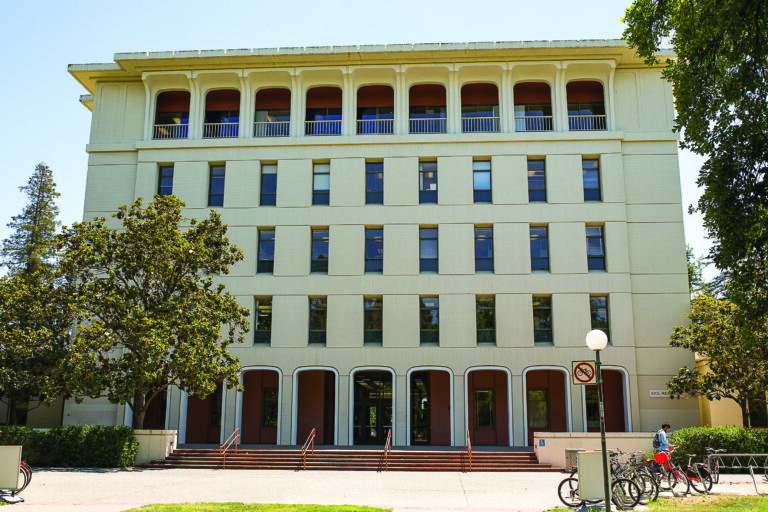
Office of Public Scholarship and Engagement opens at UC Davis

New office aims to connect university, non-university groups together

About six months ago, UC Davis unveiled the Office of Public Scholarship and Engagement (OPSE). It aims to continue and embody the mission of public service and outreach that UC Davis emphasizes.

The idea of such an office has existed for a long time, but because of the recession during the late 2000’s, the creation of the office was stalled because of severe budget cuts to outreach, according to the OPSE’s website.

Nonetheless, this idea of public engagement continued to gain traction. In the beginning of 2015, UC Davis received a community engagement classification and became the host institution for Imagining America the following year.

Then in 2017, the Office of the Provost appointed Michael Rios as the faculty advisor  and gave him the mission of developing a strategy plan for the envisioned office. OPSE came into being in 2018.

Michael Rios, the OPSE director, gave further reasoning as to why the new office was created.

“There is a need to create a more coordinated approach to sharing this [research] work as well as providing entry points to non-university groups that want to access this information connecting with expertise on campus,” Rios said.

Rios also acknowledged that one of the reasons why the office was created was to bring all communities and their respective talents together to improve research and learning experiences.

Not only is the office working to help various communities, but it is also listening to them. When work began in 2017, it came with a listening phase that included various activities to understand what those in the surrounding communities were interested in.

“We’ve spent the past year and a half listening to faculty, staff, students and community partners,” said Hanna Adamy, a graduate student researcher who has been with the project since it began, via email. “We held focus groups and workshops to better understand where each group was coming from, what they needed and how an office could help.”

As stated on its website, the OPSE fits in with the mission of UC Davis greatly. As a land grant institution, UC Davis has expectations to serve the community, and OPSE is looking to work with university and non-university personnel to facilitate access to university resources by all types of different communities.

There are multiple goals that are in sight for the office. It aims to have a network of communication that promotes public scholarship, share resources and allow new relationships to build. The OPSE is also looking to facilitate a multitude of activities across various institutions. The office wants to encourage scholarship and learning through various methods such as grants, awards, training and acknowledgement of merit and promotion.

Recently the OPSE released an action plan for the office called “Public Scholarship for the Public Good: An Implementation Framework for UC Davis”. The plan lays out the vision and objectives to further support public scholarship of UC Davis.

The action plan’s goals are to: “Cultivate and foster a culture of engagement that rewards and recognizes public scholarship in research, teaching, and service that upholds UC Davis’ land-grant-mission to serve the public good, builds the collective capacity and scholarly excellence of the UC Davis community, and increases the university’s impact and visibility through mutually-beneficial relationships that have local, regional, statewide, and global reach.”

Adamy emphasized what she sees in the document.

“Our primary goals in creating this framework was identifying the amazing work that is already happening at UC Davis and provide an open ended guide for building on that amazing work,” Adamy said.

The OPSE still continues to listen to the Davis community. According to Adamy, they are currently asking for feedback on their new plan through their website.

“We hope to receive all comments by April 22 so we can integrate that feedback into the final iteration of the framework, which will be finished in June,” Adamy said.

With the feedback that OPSE is looking to receive for its plan, OPSE has acknowledged the fact that the flow of ideas is changing and that there is not just one approach to this idea of university and community outreach.

“The document is living. it will be revisited and refined, and it’s meant to be a living document,” Rios said.

In its early stages, OPSE has had no issues of a lack of support. As the office keeps moving toward its goals, there is a positive environment surrounding it that is culminated by the faculty and the community.

“There has been an overwhelming amount of interest and support from the UC Davis administration and the student body; we are honored to be doing this work for and with the UC Davis community” said Adamy via email.

Written by: Alexis Lopez  — campus@theaggie.org

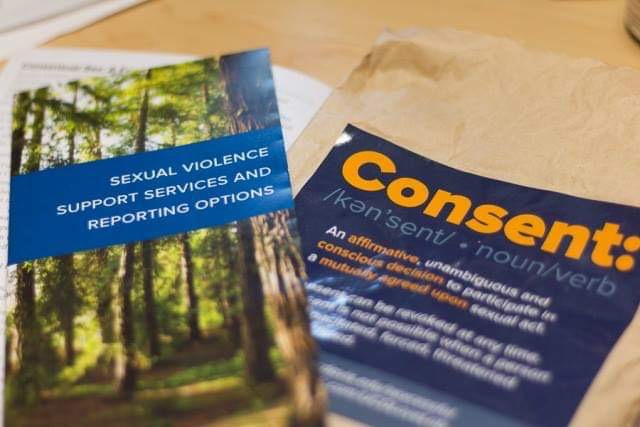
UC Davis honors survivors, hosts safe-space events to participate in Sexual Assault Awareness Month

Seven campus organizations come together to boost stories and voices of survivors

Nearly 30 events throughout the month of April will be held to educate students, raise awareness and honor survivors during Sexual Assault Awareness Month (SAAM). The events will take place almost every day throughout the month in hopes of getting different groups of students involved, including survivors of sexual assault, Chicanx and Latinx community members, the male student body, children and allies.

The Sexual Assault Awareness Advocacy Committee (SAAAC), the Cross Cultural Center (CCC), UC Davis Student Health and Counseling Services, the Women’s Resources and Research Center (WRRC), the Office of Sorority and Fraternity Life, the UC Davis LGBTQIA Resource Center and the Center for Advocacy, Resources and Education (CARE) are all working together to host different intersectional events throughout the month.

SAAM is an annual month-long tradition that works to spread awareness about the global epidemic of sexual assault and sexual violence, provide resources for survivors and educating community members. 20 to 25 percent of college women and 15 percent of college men will experience sexual assault or rape during their time at university, according to the National Sexual Violence Resource Center’s website. Of those impacted, more than 90 percent of victims will not report their assault.

Beyond their time as college students, 1 in 5 women and 1 in 71 men will experience sexual assault in their lifetimes. Members of the LGBTQIA+ community, racial minorities and other marginalized individuals also are more at risk of being victims of sexual violence than heterosexual, cisgender and white individuals.

Gursimran Kaur is a second-year, political science and sexuality and women’s studies double major and works as an outreach assistant at CARE. Kaur helped organize different events for SAAM.

“A lot of what I did to organize was communicate with people at different centers to make sure everything ran smoothly,” Kaur said.

This is the first time all seven centers on campus have collaborated on events during SAAM, working to incorporate each center’s focus and provide resources for the larger campus community.

Events include different crafting opportunities throughout the month to destress and participate in safe spaces, a workshop about healthy masculinity and male organizations (April 11), a consent for kids workshop (April 12), Denim Day information session and tabling (April 17 and April 23), Love Labs (April 4, 11, 18 and 25), Take Back the Night as well as others.

One of SAAM’s largest events hosted is Take Back the Night. Take Back the Night goes back to the 1960’s when women in Europe publicly protested not feeling safe walking alone at night. In 2001, the event came to America when Katie Koestner spoke out about the national issue of college “date rape” and the dangers women face walking around their own college campuses at night.

Take Back the Night aims to eliminate sexual assault, domestic violence, sexual abuse and other forms of dating violence, according to the event’s website. On April 10, students attended a workshop to help uplift the voices of survivors, create a space of solidarity and work toward empowering attendants to take back the night.

Allyanna Pittman, a UC-Davis alumna and education outreach specialist at CARE, worked with her team to organize this year’s Take Back the Night event.

“One of my biggest goals is really engaging the whole community and getting people to understand this is not just a survivor issue, this is not a women’s issue, everyone has a stake in this,” Pittman said. “I don’t want the burden of raising awareness and educating people and preventing this to be solely on survivors.”

Take Back the Night hosted different keynote speakers and empowered survivors to name their own experiences of sexual assault.

Other events throughout the month work to highlight the experiences of traditionally marginalized communities.  

Anamaria Rizo, a third-year English and cognitive science double major, is chairperson of ASUCD’s SAAAC. Last year, Rizo, along with a coalition of other students, worked to organize an event that brought attention to sexual assault within Black and Brown communities. Inspired by the event, Rizo is helping facilitate a discussion-centered event this year that is organized around the subject of sexual violence in chicanx and latinx communities. The event was held on April 16 at the Center for Chicanx and Latinx Academic Student Success (CCLASS.)

“There are a lot of barriers that are culturally specific and contribute to the issues surrounding the perpetuation of rape culture, which is something we see universally,” Rizo said. “It’s extremely important to cater events pertaining to this topic towards specific communities because while sexual violence and sexual assault affect[s] all groups, individuals and identities, marginalized communities are often targeted. They experience sexual violence in higher numbers.”

All the events throughout the month aim to engage the larger campus community in education opportunities for allies, prevention efforts and safer spaces to empower survivors.

“No individual should ever have to feel alone through their experience,” Rizo said. “Providing allyship and support to ensure that no one ever feels silenced, unheard or blamed for their experience is always the goal and why we want to promote SAAM.”

Written by: Ally Russell –– campus@theaggie.org

Probably not the (Trumpian-ish) argument you were expecting for sex ed

You should be required to take sex ed at the UCs before you graduate

There are plenty of scary statistics — I think they are terrifying — depicting how more states than not in our fine country do not require sexual education, which they may or may not even require in their public schools, to be medically accurate. Sperm? What are sperm? The only “S” words that states like Alabama and Mississippi are interested in when in comes to sex are words like SHAME and…STORK. Thankfully, California, God bless us all, leads the way with some of the most comprehensive sex ed in the country, under The California Healthy Youth Act, passed in 2016. California even cares enough to codify that it wants its kids to be able to talk to each other about sex — at least enough to avoid legal trouble (more about that later).

Similar scary statistics tell us that sex ed of the non-abstinence based variety, unlike what is so popular in conservative states (well, most states), does wonderful things like prevent teen pregnancy and reduce rates of STIs (and how curious, that those who are so pushy with their views on abortion can’t grasp the notion that empowering women with the choice to not get pregnant in the first place would take the decision whether or not to have an abortion right off the table).

California’s present leadership concerning sex ed is a step in the right direction, albeit an inadequate one. Sex ed should not be about simply mitigating the life-altering consequences of infection or an unplanned child. Sex ed should be about opening up unforeseen, amazing potential facets of life. No, I’m not talking about anything specific like discovering tantra, though of course, whatever floats your boat. What I’m talking about are communication skills.

Sex education cannot simply be comprehensive and science-based at the K-12 level; it needs to be truly sex positive and at the college level too. The California Healthy Youth Act promotes, “Healthy relationships for youth,” and California students grades 7 through 12 are taught, “Knowledge and skills related to recognizing, building, and maintaining healthy relationships that are based on mutual affection and free from violence, coercion and intimidation.” Except the happiness of an adult is predicated on so much more than being free from violence, coercion and intimidation.

Sex ed needs to be more than birth control and STIs; it needs to be elevated into the college classroom where messy, explicit, uncomfortable and delicate conversations can happen about how to communicate sexually in intimate situations, empowering young adults for a lifetime of optimized intimate relationships — conversations we don’t know how to have in this country. Ever been to Europe? Their attitudes toward sex are kilometers different than our own.

What is almost all the art we consume about? The entire music industry? The books we read? Love and it’s close synonym/culmination, sex, drive our economy. The we’re-so-desperate-for-mediocre-erotica-it-grossed-over-one-billion-dollars franchise is also the best-selling novel of all time (I hate “Fifty Shades”). The history of hundreds of years of poetry irrefutably demonstrates the importance of love and sex. Sex is the crux of our existence — and not simply because it’s our rote biological imperative. The pleasure we can gift one another is humankind’s most powerful common denominator and Americans need to do it better.

We are severely truncating the potential joy of the human experience if we limit the desired result of sex ed to the avoidance of trauma at the expense of prioritizing the responsible appreciation of pleasure. Better communication around sex leads to more fulfilled humans. People are not born knowing how to communicate in this way. High school probably isn’t the proper or most efficient venue, which is why I propose comprehensive, science-based, sex positive sex ed be a required class at the UCs. Let California lead the way once again.

It’s tragic that there are people who die having gone their whole lives wanting to be touched a certain way by their partners but not being able to articulate it to them. I also thought it was tragic when, a few years ago, my roommate told me she had never had an orgasm with a partner because she didn’t know how to talk to her partners. She is nowhere near the only instance of this I’ve encountered. I know too many people tied up in shame and silence when it comes to their bodies and unachievable pleasure, and it’s all avoidable with a little knowledge.

Hell, call required college sex ed a tool for capitalism if you have to. Happier people make for better workers…more robust GDP for our fine state…a larger budget surplus better insulates us from Trump. Or, you might go so far as to say that if the Trumps of the world received decent sex ed and were living their most fulfilled, blissed-out, shame-free sexual lives (ew) (I’m a hypocrite), then there would be no Trumps. He’d be too busy being happy and wouldn’t need the rapt attention of an entire nation to fill the hole in his soul. All from sex ed. You’re welcome.

Written by: Lauren Frausto — lrfrausto@ucdavis.edu

Disclaimer: The views and opinions expressed by individual columnists belong to the columnists alone and do not necessarily indicate the views and opinions held by The California Aggie.

Humor: Why you should make Trader Joe’s your next romantic date spot

A love letter to the (organic) apple of my eye

This is it. You and the man of your dreams are hanging out together. The lights are low, and tensions are running high. He says your name, and your breath catches in your throat. He leans in close and whispers in your ear:

“Let’s go to Trader Joe’s.”

Your search can stop here. You’ve found The One.

“That’s all I’ve ever wanted,” you reply, tears of joy streaming down your cheeks as you hop into his Kia and vamoose for some dried mango slices.

Truly, inviting a fellow human being to peruse the produce aisles of Trader Joe’s is how we express our affection in this day and age. If you’re a millennial, and your friend offers to take you to TJ’s for some Mandarin orange chicken, know that you are one quinoa sample away from a marriage proposal.

One’s love for Trader Joe’s is always deep. To share that love for Trader Joe’s is to share the most vulnerable version of one’s self, the version that “ugly-eats” an entire bag of TJ’s peanut butter pretzels on a tattered living room couch on a Friday night.

Side note: if your significant other has witnessed you wolf down these pretzels like a killer whale eating a seal in a BBC nature documentary and they’re still by your side, put a ring on it immediately.

If you’re still unsure about the romanticism of good ol’ TJ’s, allow me to take you on a journey:

You’re standing in front of Trader Joe’s, reusable shopping bags in your hand dancing in the caresses of the late April breeze. You check your phone one more time and think, Where is she? You hear your name in the distance, and you turn to see her half-jogging through the parking lot. She, too, has her reusable bags. She hugs you, and you grab crimson shopping carts together.

Walking in, you start in the flower aisle and snag a bouquet of daisies and sunflowers. You hand it to her, and she beams. She’s happy because she thinks you remembered what her favorite flower is, but you really chose this bouquet for the ladybug wrapping paper (you think ladybugs are hella rad).

Now you’re in the pasta aisle. Your hands touch as you reach for the last package of cheese tortellini, and you both blush. You tell her she can have it because that’s how much you love her (but you’re dying inside because you were craving those li’l cheesy bois).

Then you find yourselves in the frozen foods aisle. She pauses, right hand hovering delicately above the chicken fried rice. She instead reaches for the Japanese-style fried rice. Now, this is a woman of culture.

When you’ve had enough romantic tension, you both head to the privacy of the alcohol corner and just go at it. In the midst of making out, a bottle of cheap Pinot Grigio falls off the shelf and into your hand. Perfect for date night dinner!

That night, you two bond over a delicious meal from the sexiest grocery store in town (suck it, Safeway). You two have never felt more in love with each other, or with tortellini.

Written by: Madeline Kumagai — mskumagai@ucdavis.edu

(This article is humor and/or satire, and its content is purely fictional. The story and the names of “sources” are fictionalized.)

Couch Concert: Platonic Duets for Lovers

Best friends sing love songs to each other

Emma Ryan, a third-year political science major, and Matthew Gilbert, a third-year musicology major at UCLA, are best friends. And it’s quite obvious. They tell the story of how they met with clear fondness, not afraid of banter while describing its possibly embarrassing elements.

“You can tell the story, but I will simply correct you,” Gilbert said.

“You can correct me, but you’re going to correct me incorrectly,” Ryan said.

“I knew of Matt back in sixth grade, but he didn’t know me then — our best friends grinded together at a Catholic sixth grade dance,” Ryan said. “I had seen him before because he was tall, had a mop of hair and was awkward. But so was I.”

Eventually, the two sat next to each other in homeroom their freshman year of high school in Oceanside, California. While Gilbert asked Ryan to be his girlfriend on multiple occasions — Ryan said no each time — a solid friendship emerged as a result. They bonded over friends moving away, hating the same people and empathizing with the annoyances of high school dating.

“I have so much that I like about Matt. I adore Matt,” Ryan said. “I talk about him a lot. He’s so intelligent, creative and really funny. He’s been around so long that he really gets me, and he’s one of the only people that can make me feel genuinely understood and appreciated.”

Gilbert has similar words of admiration to say about Ryan.

“She’s very earnest,” Gilbert said. “She is very honest with herself, what she wants with herself and the world. She works really hard to be that person that she wants to be. People are not perfect, and Emma is no exception to that, but she works really hard to transform herself. She’s really aspirational to be the person she wants to be.”

While also in high school, Gilbert began the early stages of his musical career. During his junior year, Gilbert got in the habit of songwriting, writing music that he was “proud of and [he] thought represented [himself].” Of course, Ryan had to be included in Gilbert’s emerging passion.

“Matt and I went to Guitar Center my junior year, and on a sporadic decision, he bullied me into buying a ukulele,” Ryan said. “I didn’t learn to play it for a year. I don’t even want to claim I know how to play it now.”

While Ryan does not hold the same passion for music in comparison to Gilbert, who claims he will be singing and making music for the rest of his life, she participates in Gilbert’s music creations as method of introspection and an embodiment of their friendship.

“I want to preface that I don’t think I’m a good musician or a good singer, but I do it because it’s fun to push myself out of my comfort zones,” Ryan said. “Singing with Matt and in general is so terrifying to me, but the gratification in being uncomfortable makes me proud. It’s not about me expressing my creativity, but doing something that makes me proud to be me.”

Despite the different motivations to perform, the best friends began singing together their senior year in a school talent show. Last year, the two released a four-song ukulele EP titled “Platonic Duets for Lovers” in their sophomore years of college as part of Gilbert’s music project titled “Social Art Project.”

“The idea of the project was to remove myself from my music, not calling my music ‘by Matthew Gilbert,’” Gilbert said. “I don’t want to know the one associated with these songs. I want to the songs to be the purpose, and I want my friends and the people the songs are about to be the purpose. The name itself removes me, the male singer and songwriter living through the glory of everyone knowing their name. And it is ironic that is really is a social art project, where people are involved in the making of the art.”

The concept of the project is simple in theory, complex in practice: capture the essence of Gilbert’s friends, loved ones and things he cares about in a song. Whether the lyrics pertain to the person who the song is written about or said person participates in the recording process, Social Art Project celebrates who and what Gilbert loves.

“I write songs to one person, and that song can only be addressed to them,” Gilbert said.  “I’m trying to preserve that person. I think what gets lost in history is the common person. I want to give that person a name and identity in a song. I want to work with them and record them. Emma’s voice is always going to preserved, maybe not in 400 years when we don’t use MP3s anymore, but it will last longer than her life. There is a song written about her, for her and it’s her voice. Part of it is love. Right now I’m working on this project where I’m cataloging this guy’s old collection of recordings. A lot of is worthless trash that he recorded one day, like a TV. commercial that he found funny. But he found it important. Who is to decide who is talented and who is important?”

It begs the question then if Gilbert is writing love songs, or redefining the musical tropes that are common in love songs.

“You could sing about the ‘touch of her hair’ and use it for everyone,” Gilbert said. “I don’t think my songs are only love songs, but I only want to write about the people I love and care about. Sometimes I want to challenge them. I want them to feel like I love them, but I also want them to think of something different I think they are love songs, but maybe that’s a little too romantic.”

To prove this point, Ryan mentioned songs separate from that album that Gilbert wrote for her in high school with the first line reading, “Emma doesn’t wear a bra sometimes, Emma gets what she wants.”

“It cracked me up,” Ryan said. “It was love and it was challenging because the rest of the song made me think about my relationships with men. It made me feel recognized because I can get kinda simpy, and Matt reminded me through the song that I shouldn’t let people treat me in a bad way.”

As the first recordings on Spotify for “Social Art Project,” “Platonic Duets for Lovers” follows the same music ideology. Gilbert wrote the songs to capture his friendship with Ryan as well as their platonic love for each other.

“It wasn’t a project that I started, but it eventually formalized,” Gilbert said. “They are duets and they are love songs and they are for lovers, but me and Emma are very much platonic. But the overall idea and feeling that I love and appreciate Emma can carry through. I’m writing to Emma, but I think a lot of these themes are universal.”

The first song “Intro” is a back-and-forth between Ryan and Gilbert. Gilbert asks Ryan to sing a song with him, telling her “the words are on the table, it’s a very simple melody.”

“I wanted to introduce the idea of platonic songs for lovers to people, what they are supposed to listen for,” Gilbert said. “It was a fun, cute idea of saying ‘hey, sing a song with me,’ and literally the lyrics were right in front of us because Emma didn’t know the words.”

“Cute Song #1” role plays between Ryan and Gilbert as the lyrics describe them taking a road trip through California and eventually settling down in San Diego together. Intimate memories can be made and genuine love can be expressed without romanticism.

“Are you trying to foreshadow something, Matt?” asked Ryan.

“Yeah, you wish,” said Gilbert.

The next cute song, named “Cute Song #2,” plays with the idea of doing anything for the people we love in a simultaneous sentimental and tongue-and-cheek way. Followed by innuendos only Gilbert and Ryan know the full meaning of, the song begins with the lyrics “this song is for Jodie Foster, I would shoot the President for you.”

“There was a guy who tried to kill Ronald Reagan, and then he went to jail and started writing all these letters to Jodie Foster telling her that he loved her and tried to kill the president for her,” Gilbert said. “So that’s where it started — I would do anything for you. I am writing from the perspective of someone who is crazy, but you would literally do anything for the people we love.”

The EP ends with the song “Wash” performed solely by Ryan. With the most abstract lyrics of the EP, Gilbert wanted to write Ryan an empowerment song for her to reflect on when she needs it most.

“I wanted Emma specifically to sing it,” Gilbert said. “It’s a song about feeling like you don’t have to feel tied to a person or tied to what the world thinks of you. You can let it wash over you like the tide and you can still be standing there. I wanted Emma to have something to sing if she feels powerless.”

“Platonic Duets for Lovers” is rooted in a real friendship and gives the listener an insight into that friendship. Despite its ability to speak to the various humans and things people love, it is simply a manifestation of Ryan and Gilbert as a unit and their love for each other.

“In all my times singing with Matt, there is a fond memory attached to Matt,” Ryan said. “As long as Matt is in contact with me, we will continue to record more songs. Music isn’t my career or primary passion, but it is something I love as a shared experience. It is one of my favorite things to do with Matt.”

“Platonic Duets for Lovers” will be performed in an upcoming Couch Concert for The California Aggie.

Written By: Caroline Rutten — arts@theaggie.org

Put your “Endgame” face on

Students share theories and expectations for the final film of the Marvel Cinematic Universe’s third phase

It’s been nearly a year since “Avengers: Infinity War” came out, but on the off chance that you haven’t heard about what happens in it, be warned: there are spoilers ahead.

The Marvel Cinematic Universe (MCU) is the shared universe that is most known for its superhero movies based on characters from comics published by Marvel Comics. The first MCU movie released was “Iron Man” in 2008, and it began the first “phase” of films, which ended with 2012’s “Avengers.” The second phase was from 2013’s “Iron Man 3” to 2015’s “Ant-Man.” The much-anticipated “Avengers: Endgame,” which releases on April 26 will bring an end to  the third phase, which started with 2016’s “Captain America: Civil War.”

The ending of “Infinity War” left fans shocked, as half of all life in the universe was turned into dust. Fans were reminded of which characters survived Thanos’ snap with a series of character posters released by Marvel. Those who are still alive are displayed in color, and those who succumbed are in black and white, and all the posters read “Avenge the fallen.”  

“The first time I saw ‘Infinity War,’ I was floored,” said second-year physics major Haitch Martinez. “I loved it all the way to the end. I didn’t expect that ending and I really want to know what happens next because of it.”

But not all fans loved “Infinity War” at first. First-year cell biology major Mehrab Hussain was “more than excited” to see the movie, but found himself not as attached as he expected to be. He says that it had to do with the fact that one of his favorite characters — Hawkeye — wasn’t in the movie.

“I’m an archer myself, which is why I have a special place in my heart for Hawkeye,” Hussain said. “Even though he’s more of minor character and a lot of people view him as irrelevant or insignificant, I still think he’s an integral part of the team. I also think he’s just so cool, and I’m still envious of his archery skills.”

Hussain has watched “Infinity War” many times since that first time and said that he’s gotten over the disappointment and enjoys it now. Hussain has heard multiple theories and has some of his own predictions for what will happen in “Endgame.” He thinks that Captain America will die and that “something very unfortunate” is going to happen to Iron Man or someone Iron Man loves. There are a few things that Hussain is looking forward to for the movie, such as major confrontations, but he is clear about one thing that he wants in particular.

“Honestly, I just want Hawkeye to avenge his absence from ‘Infinity War,’” Hussain said. “They did him so dirty in the past Marvel movies, and if you think about it, the movie that didn’t have him, ‘Infinity War,’ resulted in the Avengers losing, but all the other ones with him, the first
“Avengers” and “Civil War”, they were able to win. So I’m excited for his return.”

First-year psychology major Jacob Diaz was first introduced to the MCU when he watched “Avengers”, but he didn’t really get into it until watching “Captain America: Civil War.” Diaz considers “Infinity War” to be his favorite MCU movie due to the years of build-up combined with its execution.

“It had humorous moments and also shocking moments which I was not expecting from a Marvel film,” Diaz said. “It also stood out to me because it was the first superhero movie I had seen in which the villain won.”

In “Endgame,” Diaz expects that there will be loss, and although he loves the original six Avengers, he thinks that Thanos might kill some of them. By the end, though, he believes Thanos will be dead, and he would particularly like to see Captain America and Iron Man work together to take out Thanos.

Both Hussain and Martinez talked about a particularly popular theory: time travel. Hussain says that he’s heard that the remaining Avengers are going to use the same equipment that Ant-Man used to travel subatomically in order to travel back in time, which makes sense given that the new suits look like Ant-Man’s suit. Martinez says that if he were to guess, the team would go back in time and take the stones before Thanos.

“My expectation for ‘Endgame’ is that I have no clue what [will] happen,” Martinez said. “One thing I learned from the last movie [“Infinity War”] is that we can’t expect anything, and nobody in the film is ‘safe.’”

On Picnic Day, the Physics Club put on a production of a parody play they wrote called “Infinity Wire.” Martinez worked with the writing team and played Spider-Man. Martinez says that he believes that the club’s choice to use “Infinity War” as inspiration reflects how excited he and a lot of other people are for what happens next.

Expectations are high for the movie, and fans are rushing to find clues. But the stars are trying their best to avoid revealing any spoilers. Chadwick Boseman, who plays T’Challa, repeated “I’m dead” in an interview to avoid revealing spoilers. Mark Ruffalo, who plays the Hulk, is known for revealing spoilers. He famously live streamed the first 20 minutes of “Thor: Ragnarok” at its premiere and said “Wait until you see this next one, everybody dies” before the premiere of “Infinity War.” This time, Ruffalo said that he shot different endings for “Endgame” and was given a script with dummy scenes so he couldn’t reveal anything. People even say that Benedict Cumberbatch was intentionally selected to be interviewed with Tom Holland so the younger actor would be stopped from revealing any spoilers.

With all of the hype surrounding it, tickets for the premiere are being resold on eBay for up to $15,000.

“I think it’s so ridiculous but so expected,” Hussain said. “I think [for] a movie on such a scale as ‘Endgame,’ there’s going to be people who take advantage of really desperate fans. I just think it’s pretty dumb and [that] people should just wait and be patient.”

Hussain plans to see the movie (probably multiple times) with friends from home, whom he has watched every MCU movie with. Martinez hasn’t made plans to watch the movie yet, but hopes to soon.

“I want to see the film ASAP,” Martinez said. “I just got to make sure I avoid the internet entirely until I see it in theaters.”

With any luck Hawkeye and the rest of the Avengers will not disappoint these fans.

Written by: Anjini Venugopal — features@theaggie.org

Different Story, Same Ending

The AAF becomes another football league added to the list of failures

On April 3, the owner of the Alliance of American Football, Tom Dundon, suspended all operations of the league, just two weeks before the end of the season. It is all but confirmed that the league will shut down its inaugural season. The final two weeks of games, in addition to the playoffs, will not be played. Players were informed a day before the official announcement that everything was being suspended, and now many players are left without jobs, places to live and any hope of playing professional football.

There is no clear answer as to why exactly the league shut down, but there is speculation about what happened. After starting off its first week of action with satisfactory ratings and decent attendance, the AAF’s first bump in the road came in just its second week, when reports alleged that players had not yet been paid.

The AAF claims that there was a glitch in its payroll system, leading to players not getting their money. Aat the same time that the issue was resolved, however, Carolina Hurricanes owner Tom Dundon committed $250 million to the league, leading many to believe that the AAF was already in financial trouble.

Although many league officials publicly denied any financial struggles, speculation remained. After all, the co-founder Charlie Ebersol told Variety in March of 2018 that the league would not disclose how much funding it had but was confident that it would “have the right team and long-term financial resources in place to ensure fans will experience high-quality professional football for many seasons to come.”

It seems differing views between co-founder Bill Polian and investor Tom Dundon ultimately led to the suspension of the league. When Dundon committed his $250 million to the league, he was given a chairman position in the league and had power over the ultimate direction it would take.

As the season went on, the football improved, and the talent was on display. The league seemed to be ahead of schedule, but Dundon was looking for a big move. The AAF and NFL Players Association began discussing the possibility of using NFL teams’ practice squad players in the league and developing them in the spring so that they were prepared for NFL training camp. Although this deal could have worked, players’ collective bargaining agreement needed to be reviewed, which takes time. Dundon, however, did not want to wait. He pressured the NFLPA to get the deal done. After all, Dundon did give the league 70 million dollars upfront, and he felt like his investment would burn up rapidly at the league’s current pace. When the deal was not completed, Dundon suspended league operations, catching everybody off-guard.

The sudden suspension of the league left not only players without jobs but all AAF staff members without jobs as well. Reports surfaced of players not being given flights back home, players being charged for hotel rooms the team should have been covering and possible pending lawsuits.

Sports Illustrated’s Robert Klemko reported that players were forced to buy their own flights back home. Memphis Express tight end Adrien Robinson tweeted out that he and a teammate had been charged $2,500 from a team hotel at which they stayed. Although this issue and many other similar cases were eventually resolved (the players were eligible for reimbursement), the AAF faced much bigger challenges.

Since the league did have two more weeks left and the playoffs scheduled in the season, it had rented out stadiums, hotels and transportation ahead of time. The sudden disbanding of the league left many of these sites and businesses wondering if they would even get their money. A report from Yahoo showed that the AAF owed the University of Central Florida over $300,000 in unpaid rent and could be faced with a lawsuit. Additionally, a “significant number” of hotels in San Antonio were still left unpaid according to a statement given to the San Antonio Express-News. How the league will manage to pay all of the debts is currently unknown.

While the AAF’s sudden end left many searching for answers, there was something that showed the league had, to a point, worked. According to Yahoo Sports, 44 players from the AAF were signed onto NFL training camp rosters. Regardless of whether they end up making an active roster or not, the fact that these players were immediately signed shows that the league did have talent and likely allowed these players to get another legitimate shot at either returning to the NFL or going pro for the first time.

Despite the league’s prematurely ended season, there is still a possibility that it can be back next year. If the league somehow manages to restructure itself and gain new capital, the AAF could continue and prove it is not like every other failed football league.

Written by: Omar Navarro — sports@theaggie.org

Police Logs

Dance like nobody’s watching

April 3

“Across the street, male in tan truck and transient male pushing each other around.”

April 4

“Man in intersection dancing, yelling.”

April 5

“Transient male laying on ground, requested be moved along.”

April 6

“BB gun found in room.”

April 7

“Reporting party’s son overdue from church meeting which ended.”

April 8

“Subject playing a keyboard at very loud volume in the courtyard of the building and requested they be advised to turn it down.”

April 9

“Male versus female yelling, walking together.”

April 10

“Two subjects banging on unknown object with large stick.”

The Gunrock reports increased numbers with alcohol sales

University marketing regulations prevent restaurant from reaching full potential

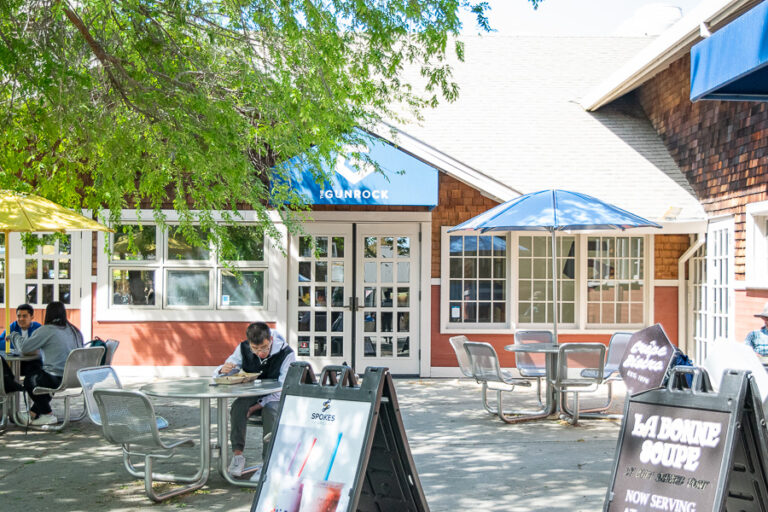
The Gunrock, one of UC Davis’s on-campus restaurants, reopened its alcohol service on January 7. Keith Luke, the manager of on-campus retail restaurants, reflected on Winter Quarter 2019 and the potential of the restaurant.

“Definitely, [the reintroduction of alcohol] changed the vibe,” Luke said. “It’s a lot more casual. Before, you’d come in and we had a bar but there was nothing there, so it was kind of awkward. It feels a lot more laid-back now, and I feel like it’s more welcoming.”

Luke said that there was a 32 percent increase in sales between Fall Quarter 2018 and Winter Quarter 2019, when alcohol was reintroduced to the menu. Additionally, the eatery saw almost a 60 percent increase when comparing Spring Quarter 2018 to Winter Quarter 2019.

Management at The Gunrock, however, still feels that sales have yet to reach their potential, blaming this on a lack of awareness within the student body. Marketing regulations get in the way of spreading the word about the restaurant’s new and improved menu, with university policy mandating that The Gunrock staff run any alcohol-related promotions past marketing officials for the school.

“The marketing aspect is a little bit tricky,” Luke said. “We have to be careful because we’re not supposed to, quote on quote, promote drinking […] so we’re using some social media but it has to be very PC, and any social media that we do post has to be approved through campus marketing and that kind of stuff.”

The establishment made it clear, however, it holds no control over what customers may choose to post on their personal social media accounts.

The Gunrock partnered with Capitol Garage, a popular Sacramento-based restaurant, in order to accomplish its goal of reopening the bar. Capitol Garage took over all liquor sales at The Gunrock, ensuring that the university would not have to handle any alcohol-related transactions.

Gia Hellwig, the director of operations for Capitol Garage, also expressed her frustration that The Gunrock’s marketing attempts are not reaching enough students.

“They’ve got alcohol on campus, but I think [the university is] still a little skittish about promoting that because it’s physically located on campus,” Hellwig said. “I think they don’t want people to think that we’re pushing booze onto the students, and I get it, I do. But it’s just like any other restaurant you’d go into anywhere else — it just happens to be specifically located on campus.”

Nonetheless, Hellwig still feels that business has been fair thus far, considering that The Gunrock’s bar has only been open for a little over three months. She expressed her appreciation for Luke, noting that they are able to troubleshoot any problems effectively.

Both Luke and Hellwig noted that the most popular items on their bar’s menu are from local Davis breweries — Dunloe Brewing and Super Owl Brewing.

“It’s always great to get more business, and I’m hoping now that the weather is warmer that’ll get more folks in there to come in, hang out and use the patio space,” Hellwig said. “We’re hoping that the change in the weather will help get more bodies in there.”

Written by: Claire Dodd — campus@theaggie.org

The United States is putting Saudi Arabia on the fast-track to nuclear weapons

How the Department of Energy’s decision to approve the sale of nuclear technology to Saudi Arabia puts the whole world at risk

Last week, the Department of Energy approved seven different companies’ requests to engage in an exchange of nuclear technology with Saudi Arabia.

Critics have warned that the maneuver may ultimately assist in putting the Saudis on track to developing nuclear weapons, while also noting that the Trump administration’s decision to approve the transaction without congressional support demonstrates a lack of transparency and may constitute a potential conflict of interest. Calls for further investigation into these nuclear dealings have worked to finally bring attention to one of America’s strongest, and most problematic, relationships.

Recently, U.S.-Saudi relations have been the target of intense congressional scrutiny following the death of Washington Post journalist Jamal Khashoggi at the hands of the Saudi government last October. Long heralded as a particularly close and special relationship, the alliance between Saudi Arabia and the United States has grown uniquely prominent in recent years, especially as the U.S. continues selling weapons to the Saudi kingdom despite its role in the ongoing slaughter in Yemen.

Recently proposed nuclear sales have been portrayed as assisting Saudi efforts to pursue energy modernization. The reality is, however, that Crown Prince Mohammed bin Salman’s push toward nuclear technology has far more to do with developing nuclear weapons as a means of countering Iranian influence than with providing a source of renewable energy. In fact, the Crown Prince stated last year that “without a doubt if Iran developed a nuclear bomb, we will follow suit as soon as possible.”

Despite the repeated insistence of the Trump administration that Iran is the greatest state sponsor of terrorism (and thus must be subject to regime change), the State Department remains silent on Saudi Arabia’s role in becoming arguably the most prolific financial supporter of global Islamist terrorism. Saudi Arabia has exported violent Wahhabist ideology at an international level, funding thousands of radical madrassas across multiple continents, with the intention of fomenting a radical form of Islam at the expense of more moderate voices. Saudi Arabia has funded terrorist organizations including al-Qaeda, the Taliban and al-Nusra.

Of course, the cognitive dissonance caused by America’s contradictory policies over Iran and Saudi Arabia’s pursuit of nuclear technology is not without reason. The United States remains closely tied financially to the Saudi government, especially over weapon sales and crude oil transactions. More broadly, the Trump administration’s support for exporting nuclear technology to Saudi Arabia is also part of a larger effort to establish a coalition of Arab states to assist the United States and Israel in countering Iranian influence in the Middle East.

White House Senior Adviser Jared Kushner has developed an unusually close relationship with the Saudi royal family, frequently engaging in private, informal conversations with the Crown Prince. This has drawn the ire of some who see the politically-inexperienced Kushner as susceptible to Saudi manipulation. Kushner’s top level security clearance was initially denied by intelligence officials last month, likely due in part to his close ties to the Saudi government, and was only approved after the president overruled the decision. Given his proximity to both Trump and the Crown Prince, it’s hard to imagine that Kushner did not have a role in pushing these dangerous nuclear sales forward.

Even as Trump rightfully attempts to denuclearize countries like North Korea, his administration contradicts itself by supporting the nuclearization of one of the most despotic regimes on the planet. Driven by its own greed and manipulated by its close alliance with the Saudi royal family, the U.S. government seems intent on assisting Saudi Arabia in developing nuclear weapons. The sale of nuclear technology to Saudi Arabia does not benefit the U.S. domestically or on an international level. Instead, it threatens to violently backfire by signifying American hypocrisy on a global scale and rapidly accelerating tensions in one of the most volatile regions in the world.

Written by: Brandon Jetter — brjetter@ucdavis.edu

Disclaimer: The views and opinions expressed by individual columnists belong to the columnists alone and do not necessarily indicate the views and opinions held by The California Aggie.

New climate committee is off to a bad start

Climate committee is just what many progressives expected — a waste of time

In the backwards problem that is climate change, where the perpetrators won’t live to see the consequences, it is us, the youth, who have the most to lose. The gap in the sense of urgency between the young and the old has never been wider.

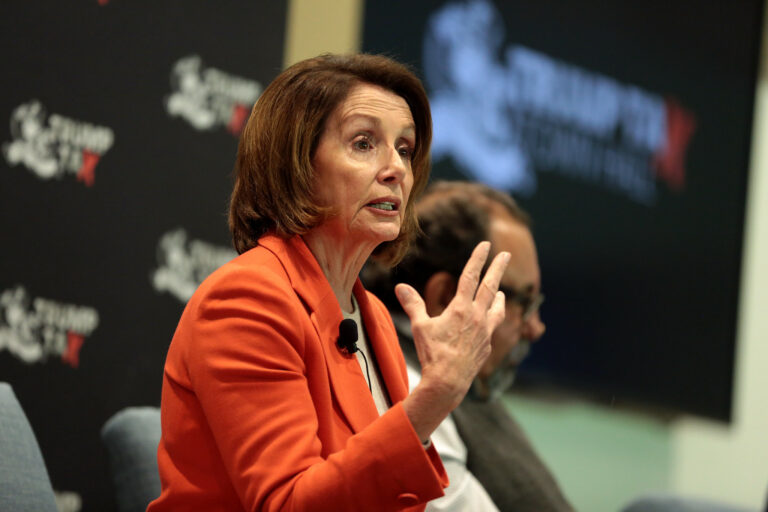
In November 2018, during the first day of orientation for the freshmen House of Representatives, 200 progressive climate protesters from the Sunrise Movement — a youth-led climate activist group —  along with freshman Representative Alexandria Ocasio-Cortez, protested outside Nancy Pelosi’s office for a climate solution plan as she transitioned to Speaker of the House. Talk about setting the tone!

Pelosi stands out among the Democrats as the “climate champion,” successfully blocking off-shore drilling and supporting new technologies to reduce U.S. dependence on foreign oil. So the last thing she probably needed was children criticizing her climate agenda before she even took her new job.

AOC, along with the Sunrise Movement, forged the Green New Deal, the most ambitious plan to date that addresses the climate scientists’ urgent calls for immediate action. They pressured Pelosi to make a new climate committee that would focus on implementing the Green New Deal’s plan, along with three simple requests: create a plan on the timeline mandated by top scientists, include language on economic and racial environmental justice and prohibit committee members from accepting fossil fuel money.

In what almost seemed like an act of defiance, Pelosi assigned Florida Representative Kathy Castor to head the new climate committee, officially called the House Select Committee on the Climate Crisis. Castor publicly opposed the ban on members who have accepted fossil fuel money by citing the First Amendment. Unsurprisingly, Pelosi’s new committee excluded the timeline pushed by top scientists and failed to include language on economic and racial environmental justice.

To make matters worse, the committee’s rules are strikingly similar to the climate committee formed in 2007, the House Select Committee on Energy Independence and Global Warming, which has since been disbanded. That committee, like its current iteration, ruled that it “shall not have legislative jurisdiction and shall have no authority to take legislative action on any bill or resolution,” meaning it couldn’t pass bills to the floor for a House vote. The new climate committee is no different.

The new climate committee also lacks subpoena power. Without this power, committee members can’t force government agencies to testify on environmental issues, which is essential for creating the necessary legislation that climate scientists are urging.

Despite the controversy, youth from the Sunrise Movement showed up to the committee’s first hearing earlier this month. The young environmental leaders educated the panel on the climate misfortunes of their hometowns, showing the same sense of urgency that climate experts are demanding.

As expected, the panel responded with classic climate change denial and skepticism — one read a whole letter from an energy worker who would lose his job if we take progressive climate action.

It’s almost as if the Democrats don’t want to take any drastic action against the fossil fuel industries that are driving us to extinction. They deliberately made the Anti-Climate Avengers team to delay as much action on climate as possible. It’s not just the Republicans in the committee who have taken money from the fossil fuel industries. Pelosi and her “climate” team have taken a total of $198,000 from the very corporations they’re supposed to be fighting.

The new climate committee is not the ambitious leadership we need to tackle our most pressing issue — it’s just show put on for progressives by more corrupt, old politicians who will not be around for the flood.

Written by: Daniel Oropeza — daoropeza@ucdavis.edu

Disclaimer: The views and opinions expressed by individual columnists belong to the columnists alone and do not necessarily indicate the views and opinions held by The California Aggie.

The Boiling Frog Effect: When Abnormal Weather Becomes Normal

How studying 2 billion tweets led UC Davis researchers to understand when remarkable weather turns unremarkable

Frances C. Moore, an assistant professor in the UC Davis Department of Environmental Science and Policy has been interested in the phenomenon in which extreme weather, after becoming increasingly frequent, is no longer considered extreme. This led to a study examining 2 billion geolocated tweets in the United States.

“I was thinking to myself, what would be the ideal dataset to actually measure it,” Moore said. “Twitter would be great because there are a lot of people on it, all over the country, talking about stuff continuously.”

The researchers studied tweets posted between March 2014 and November 2016 to understand which temperature changes caused the most tweets about the weather. Tweets about unusual weather for a particular time period in a specific area would decrease if the weather persisted year after year. The study found that on average, people normalize unusual weather within two to eight years.

“We didn’t actually conduct any new experiments but used existing social media data, weather data, climate model output and a sentiment database. However, acquiring, processing and combining all the data was a massive undertaking,” said Flavio Lehner, a climate scientist at the National Center for Atmospheric Research. “In a sense, the most novel part of this research is that we combined these very different datasets to answer a unique question that none of us could have answered by themselves.”

The study noted that this phenomenon is a classic example of the boiling frog metaphor, in which a frog is put in a pot filled with water which is slowly warmed to a boiling temperature. The frog is eventually cooked because it doesn’t notice the increasing temperature change over time. If the frog were suddenly put in a pot of boiling water, it would hop out instantly. The boiling frog metaphor serves to warn against the normalization of climate change

“Our research suggests that our psychological adaptability, a great strength to our species historically, may enable us to quickly normalize weather patterns that are historically unusual,” said Nick Obradovich, a research scientist at the Massachusetts Institute of Technology Media Lab. “The findings aren’t exactly encouraging for those of us concerned about climate change.”

Written by: Kriti Varghese — science@theaggie.org

Jordan Peele’s “Us” through the scope of W.E.B. Du Bois

Du Bois’s social theory weaves itself in and out of Peele’s sophomore film  

Spoiler alert: This article discusses “Us” and therefore reveals information you may not want to know if you haven’t watched the movie.

Jordan Peele’s “Us” is internationally applauded as an uncanny horror film that deals as much with identity dissociation as it does with America’s disturbing past. In his sophomore release to the film “Get Out,” Peele once again proves to be a master of the genre — inadvertently breaking the mold of horror and setting a precedent for future filmmakers.

Coming in at a 94 percent on Rotten Tomatoes, thereby certifiably “fresh,” it’s obvious that those who disliked the film may not have understood it. From the high-quality performances by its actors to its bone-chilling score, there is so much to marvel at within the reel. More so, there is much to be learned from the film by way of its blatant metaphors and social allegories. Specifically, but not limited to, the embodied social theory from the first African-American doctortorate recipient: W.E.B Du Bois.

There have been numerous articles written on the subject of Peele’s “Us” and Du Bois’s theories; many of them go much deeper than simply analyzing the facts that marry the two together, and instead highlight Peele’s entire career as a filmmaker and social activist. But it is imperative to focus in on the idiosyncratic details that go into Peele’s latest film. They not only highlight Du Bois’s theories, but bring audience members to craft their own theories about the satirical movie they live in— the United States of America: where a political climate can still exist that seemingly functions through racial colorblindness.

Even before the start of the film, movie-goers will know that “Us” deals with double consciousness, even if they can’t say exactly what double consciousness is. The movie poster that features Lupita Nyong’o holding a smiling mask of her face halfway off of her actual, petrified face offers a brief look at the duality that subsists within the film.

Before starting to pick apart key details of the film and splaying them out amidst the backdrop of Du Bois’s theory, it’s vital to first hear a quote from his most famous works, “The Souls of Black Folks.”

“It is a peculiar sensation, this double-consciousness, this sense of always looking at one’s self through the eyes of others, of measuring one’s soul by the tape of a world that looks on in amused contempt and pity. One ever feels his twoness, — an American, a Negro; two souls, two thoughts, two unreconciled strivings; two warring ideals in one dark body, whose dogged strength alone keeps it from being torn asunder.”

Though I tread lightly in explaining Du Bois for fear of botching this immortal-omniscient philosophy, the theory of “the double” goes something like this. The double consciousness is the phenomenon of having one’s consciousness divided into several parts, making it impossible to have one unified identity. Du Bois primed this theory within the context of race relations in the United States. Since black Americans have lived in a society that has historically oppressed and devalued bodies of color, it is difficult for them to unify their black identity with their American identity. Therefore, “the double” asserts that the black community is forced to cultivate their own unique perspectives — their African heritage — while also having to visualize themselves through a lens of how they might be perceived from the outside world (i.e., America). This creates a psychological struggle to reconcile their identity as a person of color and as an American citizen — “two warring ideals in one dark body.”

Now, look to Peele’s film and see the endless symbolism that embodies Du Bois’s theory. Look deeper at the poster, besides the obvious duality of the mask. Nyong’o’s character, Adelaide Wilson holds a pair of scissors: two knives conjoined together by one thin metal peg.

Then there is the Michael Jackson glove on Wilson’s right hand, which Peele, himself, mentions as a tribute to his influence. Later in the movie, the audience will see another shout-out to Jackson by way of Adelaide’s “Thriller” shirt in an ‘80s flashback, which is certainly not a coincidence.

“Everything in this movie is deliberate, that is one thing I can guarantee you.” Peele said in an interview, “Michael Jackson is probably the patron saint of duality […] the duality with which I experienced him [Jackson] in that time was both as the guy that presented this outward positivity, but also the ‘Thriller’ video, which scared me to death”

Evidently, there is more to the duality of Jackson that expands beyond the context with which Peele explains— one that exemplifies the racial backdrop of Du Bois’s theory.

Further into the heart of the film, the audience meets the antagonists: a group of doppelgangers who are required to live beneath the earth’s surface in hidden tunnels. The “Tethered,” as they are called, claim to be shadows of the bodies that function in the light of the American dream. Adelaide’s family, a group of middle class Americans enjoying a family vacation at the Santa Cruz Boardwalk, are psychologically tortured by their shadows and are forced to fight for their lives as the murderous Tethered attempt to replace them above ground.

This all seems to be evidence enough of Peele’s desire to highlight the themes of duality in his film, but the story takes a turn somewhere in the middle that would surely leave sociologists enthralled by the on-screen magic that ensues. When the Tethered corner Adelaide’s family in their summer home, they sit them down and explain who they are— “We are Americans” as Red, Adelaide’s doppelganger, says through a guttural voice. From there, Red forces Adelaide into handcuffs for the rest of the movie, causing her to fight off hordes of Tethered bodies while being partially handicapped.

Here we have it: Americans attempting to stamp out Adelaide’s family through the agency of a Tethered revolution that Red herself insighted in the shadow army. But the twists do not end there. Turns out that Red is actually Adelaide, and when the two first met each as children in a carnival attraction, The House of Mirrors, Red forced Adelaide into her shoes and into the tunnels where she spent the majority of her life while Red grew up in the comfort of Adelaide’s home. Therefore, who are the Americans and who are the oppressed? Which form of Adelaide started the revolution to retake the above ground? Is it the Americans who are attempting to stamp out the other, or the other attempting to take back what’s been stolen from them by the Americans?

Such answers can only be found by watching, and rewatching the film. Catching up on Du Bois’s theories will only help the viewer crack the code of Peele’s complex genius. As Adelaide still persists despite her oppressed stature by breaking free from the chains placed on her by Red and overcoming the American onslaught, she is forced into a position where she can only function through the confines in which “America” has placed her. Although she overcomes this bloody nightmare, she will never be the same. She can never forget the nightmare she was forced to endure.

Peele’s film is layered throughout. Even the title has a layer— is it only about the oppressed, or does “Us” include the oppressor? One thing is for certain, the statements made in this film will influence legions of moviegoers to think beyond the moving images on-screen. And with Peele becoming more active as a writer and director, all we have to do now is remain in the dark until he decides to once again shine a light.

Written By: Clay Allen Rogers — arts@theaggie.org

At the crossroads of environmentalism and consumerism

Despite being committed to their buyers’ values, major outdoor brands like Patagonia are capitalizing on environmental issues — and it’s not sustainable

Patagonia puffy jackets are a given on college campuses at this point, ubiquitous to the point that I’ve seen more than one starter-pack meme declaring them a staple of the “basic” college girl. It’s a ubiquity that warrants suspicion.

They belong in the same functional-fitness-meets-status-marker category as Lululemon leggings or Hydro Flasks, a niche characterized by brands so carefully associated with the people they’re selling to that they become a carrying card to a certain club, a certain status quo and, in the process, a cultural phenomenon. Patagonia, like other brands I have and have not mentioned, is a company strongly committed (and vocal about its commitment) to sustainability and ethics.

In the last article I wrote for this column, I briefly mentioned Patagonia’s role in mobilizing outdoor retailers to protest reduced protections of the Bears Ears National Monument, a beautiful swath of land in southern Utah. A dive into the company’s supply chain practices reveals a commitment to humane labor and sustainable material sourcing that outstrips the vast majority of major brands around today.

In the age of “fast fashion,” planned obsolescence and the undeniable presence of corporations in politics and policy, it’s hard to be too critical of a company actively vocal about and combative toward corporate, labor and environmental exploitation. But it is exactly because of its cultural relevance and corporate ethics that Patagonia is a company that calls into question the role of branding and label-awareness so heavily built into mainstream and subculture culture. There’s something of a “Cult of Patagonia” in the outdoor community, surpassing even the brand-awareness Patagonia has in broader American culture.

Branding is, at its heart, a pointed association of a product with a set of values. In the words of Naomi Klein’s eloquent 1999 book “No Logo,” the purpose of branding “is not to sponsor culture but to be culture,” wriggling into our lives to become one of our most basic expressions of our values. (Don’t believe me? Honestly think about how you would feel about wearing an Abercrombie & Fitch t-shirt in public.) We use brands to express ourselves to a truly shocking degree, and while a company like Patagonia is both aware of its power to shape culture and ethical enough to intelligently choose and determinedly live up to its values, it’s still capitalizing on value association, maybe more than most.   

Patagonia is one of a growing number of big companies that reflect and perpetuate a cultural shift toward consumer awareness about worker exploitation and environmental impact, and a desire to personally identify with outdoor culture that can be seductive. It has marketed itself into being a cultural phenomenon among outdoor enthusiasts and managed to sell that association to people who are not buying Patagonia products for anything more than cultural cachet. And on some level, that is antithetical to exactly the values it is associating itself with, reinforcing the systems supplying massive over-consumption that is such a big part of climate change.  

This article is not a call to boycott Patagonia — in fact, it’s almost the opposite. Patagonia is my model for what an ethical globally-successful company looks like, if such a thing is not an oxymoron. I don’t resent Patagonia for what it is, I feel like I’ve spent enough time in this article extolling its virtues to be nearly counter-productive, and hopefully enough to show how much respect I do have for it.

What I resent is the uncritical belief in the 3×5 cm label as an identifier of membership to clubs of cultural status and environmental awareness. Buying into the Patagonia brand of cool without recognizing you are paying $100 to $300 for a name is misunderstanding what it takes to love the outdoors. Excessive focus on the virtues of Patagonia’s business practices is a misunderstanding of what it takes to protect our planet. I have no beef with Patagonia or its creators, but the force of their social, branded success reveals something powerful about how we twist nature, outdoor culture and political will for environmental protection into something dangerously consumerist.

Written by: Anna Kristina — akmoseid@ucdavis.edu

Disclaimer: The views and opinions expressed by individual columnists belong to the columnists alone and do not necessarily indicate the views and opinions held by The California Aggie.