55.5 F
Davis

Davis, California

Tuesday, December 23, 2025
Home Blog Page 432

Apple-A-Day: A staple of UC Davis culture and a family-run project

Behind the scenes of the juice-making process and why students buy so much of the apple product

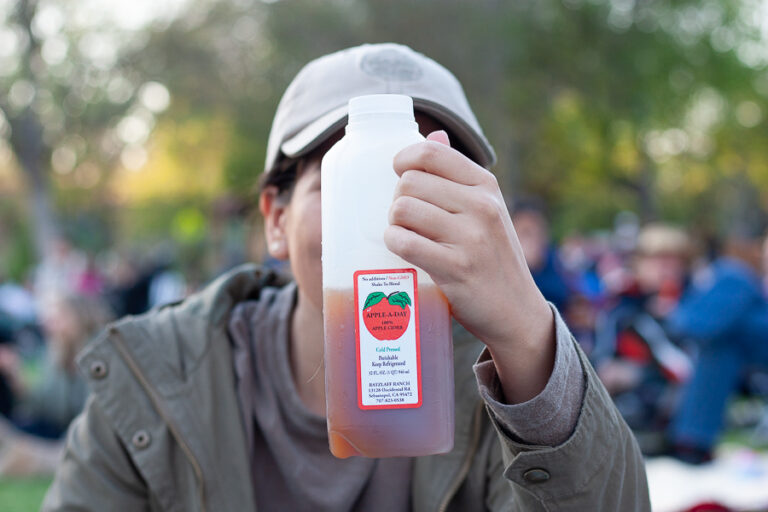
The famous Apple-A-Day apple cider, sold at the Davis Farmers Market, has been one of the most popular stands for years. Buyers have been amazed by how tasty the cider is and have returned to the farmers market specifically for the stand. If you ask almost anyone in Davis, chances are they have something positive to say about this refreshing beverage. Which is why individual bottles sell out so quickly week after week.

The cider comes from Sebastopol, in Sonoma County, where the owner of the stand travels to pick up a van full of produce to bring back to Davis for everyone to enjoy. Melinda Garcia, the granddaughter of the owner, said the process of pressing the apples into cider is done in Sebastopol as well. Although she has only seen the process once, she recalled seeing the apples go in and out of tubes and into a presser in a big warehouse.

“That’s all I can remember,” Garcia said, “I’ve only seen it once but anyone can go up there and see it. They’re operational, I think, seven days a week.”

Garcia also noted that she believes there may be different distributors going up and down California to sell the cider. A customer once told her that they saw the apple cider being sold at a farmers market in the Bay Area, so in reality, the apple juice can be purchased in many places outside of Davis.

Garcia’s grandmother, the owner of the stand, has delivered to the Co-Op in downtown Sacramento, to Pedricks and to all the Dos Coyotes restaurants.

The apple cider does not include any added sugars or preservatives and remains  unfiltered. It is purely pressed apples, with the exception of an ultraviolet light screening that is included in the pressing process to eliminate any bacteria.

“People cannot believe that it is just apples,” Garcia said, “And that it’s so minimally processed. People aren’t used to that. Most other things aren’t minimally processed.”

Nadia Barboza, a second-year community and regional development major, loves going to the farmers market for the environment, food and of course the apple cider.

“It’s the first and only time I’ve ever had like, fresh apple juice that is literally only apples,” Barboza said. “And I think that’s really cool, and it’s really good.”

The apple cider is sold in the biggest quantities during the summer: a time when the sun is out, the days are hot and the crowds rush to get to the cider stand first. In fact, Garcia mentioned that they have begun to completely sell out on Saturdays. They will bring anywhere between 40 and 60 cases of juice, which fills up an entire van, and will end up selling out by the end of the day.

You can buy the cider in various sizes ranging from gallons to individual bottles so that you can drink it on-the-go or store it in your fridge.

“I like the sizing,” Barboza said, “it’s great for college students and, like, little kids.”

Other uses for the apple cider have been popsicles, smoothies, vinaigrettes, stews and even mimosas. There are so many uses for cider besides just drinking it, which contributes to its popularity.

While most of Garcia’s family and friends help run the stand, she recalled a time when it was just her grandfather working by himself.

“I’ve been helping him since my sister and I were like five years old and we would hang out with him during the summer, come out to these things and go get some juice and what not,” Garcia said.

Now, Garcia has expressed her interest in taking over if her grandmother doesn’t want to do it anymore. If she does end up taking over the stand, however, there isn’t anything she’d want to change.

“If it isn’t broken, don’t fix it,” she said with a laugh.

Garcia hopes that the business will continue on through the family, especially since her seven-year-old daughter has already expressed a great interest in the stand.

“She asks me every time if she can come down to the market with me, but it’s a little too much for her right now,” Garcia said. “She does enjoy herself when she does get to come. She likes actually selling and talking to people.”

It’s safe to say that the future of the Apple-A-Day stand here at the Davis farmers market is in good hands and will continue to be available for future UC Davis students, allowing the tradition to continue.

Written by: Sierra Burgueno — features@theaggie.org

Editor’s Note: The article previously listed Sebastopol as a county when it is in fact a town in Sonoma County.
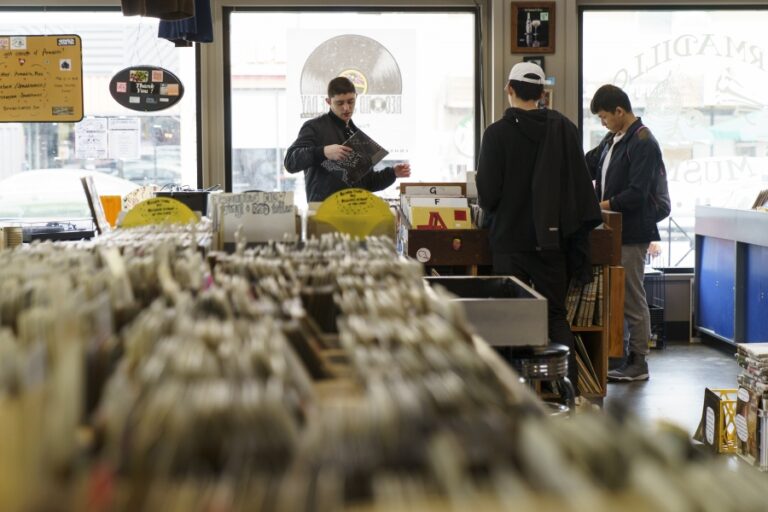

Amping up: Armadillo Music to sell beer, install turntables

Local music store approved for alcohol license

Downtown record store Armadillo Music is looking to introduce beer to its wide array of novelties including vinyl, CDs, DVDs and music-related merchandise.

Owner Joshua Chapman applied for a Type 40 License, allowing specifically the sale of beer for consumption on site. On April 10, City of Davis’ Planning Commission unanimously approved the Public Convenience and Necessity Determination for Armadillo Music.

Chapman has plans to build a nine-foot-long bar in the store, complete with six beer taps –– four of which will feature local breweries and two that will be rotated through. Alongside the taps, the owners hope to provide non-alcoholic drinks such as sodas, waters and juices, as well as snack options. The presence of alcohol on site will not prohibit underage customers from entering the store due to this particular type of license.

“One of our goals from the very beginning, back in 1996, was to bring music and the community together, and we definitely embraced the college students as part of our community,” Chapman said. “The good thing about the Type 40 beer license is that it doesn’t exclude anybody. It doesn’t matter how old the person is, they can still come into the store and shop and buy music. We’re trying to include all the demographics across the board.”

Back in 2014, Armadillo Music moved into its current location at 207 F St. for the larger space and ability to build a small stage to host local bands, touring artists or even first-time performers. Davis and East Bay-based band Busy Lighthouse has performed multiple times at the downtown music hub. Jesús Rico, a fourth-year mechanical engineering major and lead vocalist and guitarist of the band, expressed how the Armadillo Music stage serves as a platform for growing artists to find a larger fanbase and how beer would add to the experience of performing.

“Of course I’m speaking for the people I know, but [most people] just drink for the atmosphere,” Rico said. “They’re not drinking to cause a ruckus or be obnoxious. It’s about trusting your community.”

The inspiration to pair live music with locally-brewed beers came from Chapman’s experiences at different record stores across the country. In addition to the bar, four listening stations will be set up for customers to sample music.

“We’ll have listening stations along the windows with turntables,” Chapman said. “People can sit down, grab a record, listen to music on headphones and have a beer. It’s just a way to have people come in and spend more time in here, interact and engage with a medium of music maybe they’re not used to.”

Aside from performing gigs, Josh Zucker, the Busy Lighthouse drummer and a third-year atmospheric sciences major, would find more incentive to visit the store if listening stations are available.

“I’ll just look at the records, but I don’t buy them because I don’t have a record player at home,” Zucker said, noting that the in-store turntables “would be great.”

The store’s application necessitated action from local jurisdiction to host a public hearing meeting due to the nature of the license, the high concentration of existing alcohol licenses and high level of crime in the downtown area.

“This request for Armadillo Music is a little bit novel because it’s for a music store,” said Tom Callinan, the City of Davis planning technician. “It is supportable because they have limited amount of square footage, and it’s going to remain in the store, which primarily sells music.”

Callinan noted that the City’s main concern was any law enforcement-related issues proposed by the police department. Consultation with the police department showed no law enforcement concerns with this particular license request.

“Eventually, if there’s something that’s going to increase crime to cause more offenses, or if there’s already existing problems with crime involving that establishment or area of town, the police are going to be the ones aware of that, and also the ones that are going to have to deal with any ramifications,” Callinan said.

Armadillo Music now awaits more approval from the building and health departments regarding its construction plans and inspections. The project is estimated to be complete before early June in time to support the Davis Music Fest in mid-June.

Written by: Renee Hoh — city@theaggie.org

Davis Police Department increases traffic enforcement on Mace Boulevard, Cowell Boulevard

Traffic enforcement part of cities solution to improve Mace Boulevard

There will be increased traffic enforcement on Mace Boulevard and Cowell Boulevard each Thursday and Friday from 3 to 8 p.m, according to a March 26 statement by the Davis Police Department. The increase in traffic is related to the city’s Mace Boulevard Improvement project.

“The traffic in this area is an ongoing issue that has resulted in many concern for our Davis residents,” the statement said. “The main goal will be to increase visibility, perform selective enforcement, (specifically gridlock violations), and monitor other unsafe behavioral driving.”

The Mace Boulevard Improvement project began in 2013 when the Davis Joint Unified School District completed a survey among its students about their transportation to school. They found that students who commuted through Mace Boulevard had the lowest rates of walking or biking in the district.

“The cars kind of go kind of fast on there, and there’s like an overpass and people are merging onto the freeway and coming out of that street so it can get kind of dangerous,” said Michelle Acoba, a second-year electrical engineer major and Davis resident of 19 years. “There can be a lot of traffic if people are trying to merge in and out of the freeway.”

Today, the project is still ongoing. A report released by the City of Davis Public Works department in January stated that the work should have done by March.

“In order to perform the final paving and striping, dry weather with temperatures in the high 50 to 60 degree range will be necessary,” the report said. “It is presently estimated all of the work will be done by late February, or early March pending acceptable weather.”

According to Acoba, while the majority of Mace Boulevard is fine to navigate through, the intersection of Mace Boulevard and Cowell Boulevard has had a lot of traffic.

“It’s really irritating because there’s a lot of restaurants there like [Taqueria] Guadalajara and Wok of Flame, and when when I’m trying to get food or hang out with friends it’s really annoying,” Acoba said. “The streets are kind of weird — like where to turn left or right — like you don’t really know where you’re supposed to go.”

According to Idan Shemy, a second-year computer science major and former Unitrans trainee, the area of traffic enforcement — Mace and Cowell — has a very difficult intersection to navigate through.

“We call it the Mace curve, which is the curve from Mace to Cowell or Cowell to Mace,” Shemy said. “It’s a school zone, for a really long time, but there’s reason a student would run out into the street anyways, and the school is so far away from the street, so maybe it shouldn’t be a school zone for so long.”

According to a different Facebook post released by the Davis PD on April 2, there is still some work to be done. Paving and striping on Mace were done on April 3 and 4.

“We are in the process of working on urgent and long-term solutions to the Mace traffic problem,” the report said. “[…] Paving must be completed now and temporary striping will be added immediately with final striping will be added immediately with final striping to follow.”

Written by: Hannan Waliullah — city@theaggie.org

Entomology

Department of entomology hosts annual creepy crawly competition

Things that involve pests are typically not what one associates with fun. Many people squirm at the sight or even the thought of having to be in the presence of a cockroach. Bottomline: cockroaches are not often painted in a positive light. However, each year on Picnic Day they are allowed to shine and show the world just how entertaining they can be, during the annual Cockroach Race.  

Cockroaches from the order Blattodea, have made themselves quite present in Davis. Davis’ forgiving weather has allowed them to flourish and become an increasing topic of concern in recent years. A specific page has even been created to showcase the variety of cockroaches in Davis and how to combat them. This shows how much of a presence they have in and around the Davis community.

For many years, the Entomology Department has hosted the long awaited Cockroach Race. Even though some say they are grossed out by the insect, they can’t help but come back for more. Many Youtube videos spanning over the years illustrate the fun to be had at the race. In a video from 2009, one can hear loud cheering and the laughter of many children and adult participants as they witness this uniquely spectacular event. Through watching these videos one can observe changes that have been made to the racing procedures. In older videos, racing arenas were left unadorned and uncovered while the cockroaches themselves were marked with colorful papers. However, in newer videos, the wooden arenas are colorfully marked in Davis’ yellow and blue colors with covers holding the speedy creatures in, as the racing takes place. Even though it is unclear how this tradition began, it sure is here to stay. Be sure to check out the races and the other creepy cool showings by the Entomology Department this Saturday at Briggs Hall from 9:00 a.m.-5:00p.m., where these crazy crawlies might just have you in for a big surprise.

Written by: Isabella Beristain — features@theaggie.org

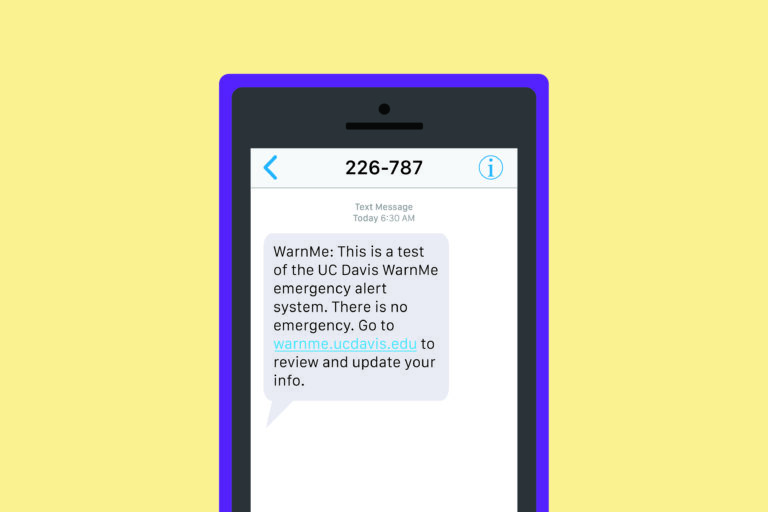
Second annual WarnMe emergency notification system test to occur on April 24

Students and community encouraged to update information for the alert system

On April 24 at approximately 12 p.m., the Davis campus will be conducting a test of the WarnMe emergency notification system. The test’s purpose, according to Clement O. Stokes, director of emergency management and mission continuity, is to familiarize “students, faculty, and staff […] with the notification process” as well as the reception and delivery of the notifications.

This is the second in a set of triannual tests that allow Stokes and his team to address potential system errors and issues while the survey allows reception of feedback “about areas on campus that may impede messaging and also to provide information about other safety tools we have available.”

News & Media Relations Specialist at UC Davis Strategic Communications Julia Ann Easley explained that the recent “vendor problem discovered on the night [January 30] of the Davis police officer’s shooting has been corrected.”

As of April 19, WarnMe’s current registration statistics are 56,045 Davis campus individuals, 14,858 Sacramento campus individuals and 2,037 community opt-in individuals.

According to Easley, the test and survey will be sent to the Davis campus, the Bodega Marine Laboratory and the Tahoe Environmental Research Center. Both vehicles of feedback and testing will be sent out via text and email messages to all persons registered in the WarnMe system.

WarnMe was created with the intent of “help save lives, keep people safe, prevent unnecessary inconvenience and reduce undue concern [through the] timely dissemination of information,” Stokes said. He further explained that WarnMe serves to “meet the need for urgent communication across our expansive university.”

Easley stated that UC Davis’ implementation of WarnMe was preceded by tragedy.

“[UC Davis first tested and implemented] after a multiple shooting at Northern Illinois University [which] underscored one of the main lessons from the earlier tragedy at Virginia Tech in April 2007: Campuses need to share emergency information in a timely way,” Easley said.

UC Davis residents and community members are encouraged by both Easley and Stokes to both register and regularly update their information.

“About every four months, the Student Information System will prompt students to enter or update their contact information,” Stokes said.

Students can update their information at any time, as the WarnMe system updates its contact database nightly.

Easley encourages Davis community members “to review your WarnMe contact information periodically”, highlighting the importance of new students and faculty adding personal contact information as well as individuals who have recently changed their email addresses or phone numbers.

Students and community members who do not receive communication on April 24 are instructed by Easley to “email administrators at warnme@ucdavis.edu so that can be remedied”. Further information regarding the UC Davis WarnMe system and the registration process can be found at  https://www.ucdavis.edu/emergency

Written by: Priyanka Shreedar — campus@theaggie.org

Editor’s note: This article previously incorrectly stated the origin of WarnMe and UC Davis’ implementation of the program. We regret this error.

How microtransactions are saving the video game industry (and your wallet)

Microtransactions give the player the ability to support the games and developers they love

When Prince Harry visited a YMCA to talk about mental health among young people a few weeks ago, he brought up an absurd idea to ban the videogame “Fortnite.” While his wish to ban “Fortnite” was unsubstantiated, he identified a core debate in the video game industry right now: the controversy over microtransactions.

Microtransactions are typically small in-game purchases that use real money for virtual currency or in-game items. They are often seen as a greedy, corporate attempt by video game companies to drain every last dollar out of consumers’ pockets. But the criticism of these transactions is largely overblown.

Microtransactions garner a bad name for themselves because of a few poorly handled incidents in the past, such as the loot box controversy of EA’s “Battlefront II.” Bad microtransactions usually go hand-in-hand with bad game design and bad loot boxes — some of EA’s favorite tactics in the past.

In “Battlefront II,” loot boxes (bought using crystals) were a designed purchasable item with the chance to win skill cards that could crucially affect competitive balance in online gameplay.

Unlike companies such as Activision and Epic Games, who use very transparent in-game transactions, EA opted for an opaque loot box bundle in “Battlefront II” that rewards big spending based on chance. These types of microtransactions deserve zero room in the market of in-game purchases. Any type of competitive advantage that can be bought using real money should never cross the mind of developers.

But, for every irresponsible microtransaction practice out there, there are plenty of developers who recognize bad microtransactions and discard them from their games.

At their best, microtransactions can maintain competitive balance online and support the hardworking people who develop games. The best microtransactions have zero effect on gameplay or competitive advantage in any way. Games like “Overwatch” and “Fortnite” have it down to a science.

The strategy is simple: don’t let people buy competitive advantages in games. Let them buy wacky outfits instead. Eventually, most people will want to buy one or two. How cool would it be to buy a Mandalorian outfit in “Fortnite” or “Apex Legends”? Sign me up. Take my money.

And in reality, video game publishers really do run on that money — they are a business like any other. At the end of the day, these products need to make enough money to fund studios and pay the hard working developers who make these games. And as gaming becomes cheaper, microtransactions are going to become a more common practice.

Games just aren’t made in the same way they were a decade ago. They are becoming increasingly expensive to make each year. Development studios are becoming larger and more complex. Even though games have become more expensive to develop, the average price tag for consumers hasn’t increased in years.

Because of all of this, microtransactions have become an absolute necessity in the industry. Developers and publishers seem scared of the reaction should they (justifiably) raise the price of their games to $80 or $100. They have been forced to find additional means of funding their creative projects.

The solution? Microtransactions.

Microtransactions were implemented to keep games at the same price they’ve been for years — $60. As cost of living, gas, food and movie tickets have all gone up, the cost of games has remained static. And even if you don’t spend some extra cash to unlock more lives in “Candy Crush, someone else will, and they will spend hundreds of dollars in doing so. These publishers and developers have done their research, and they are smart enough to know that for every ten people that don’t drop a dime on “Fortnite” cosmetics, someone will drop hundreds of dollars a month to get every new outfit and emote.

Just look around. “Fortnite” and “Apex Legends” are two of the most successful games out there right now, and they’re free. Bringing down that initial price barrier is important if the industry wants to grow and welcome in new gamers because gaming is a stupidly expensive hobby.

So vote with your wallet. Keep the games you love alive and support the developers that build them. And ignore the games that do it wrong. You don’t like it? Just don’t buy it. If used in the right ways, microtransactions should be a way to celebrate the games we love and support the creators whose work we enjoy.

Written by: Calvin Coffee cscoffee@ucdavis.edu

Disclaimer: The views and opinions expressed by individual columnists belong to the columnists alone and do not necessarily indicate the views and opinions held by The California Aggie.

Students JUMP on opportunities for inexpensive, bike share riding

Students, faculty and members of the UC Davis community ride electric JUMP bikes around campus and the city of Davis

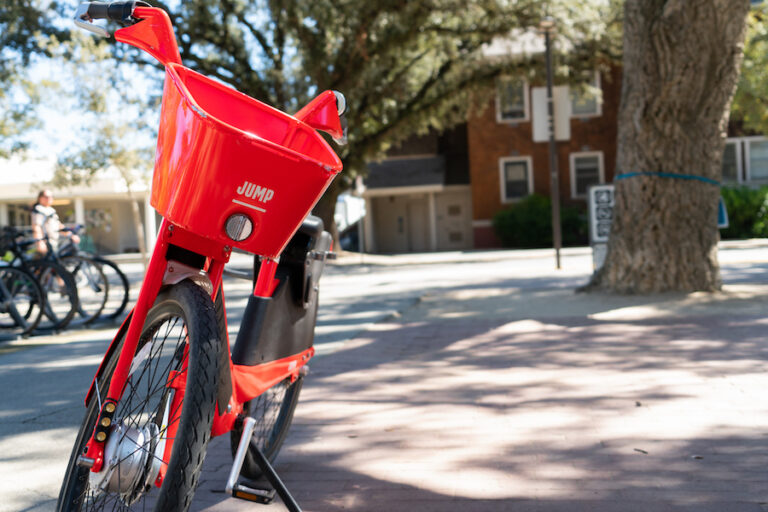
Bright red with a sturdy seat and practical basket, these electric bikes can be seen zooming past the rainbow of regular bikes owned by students. JUMP bikes have made their mark on the UC Davis campus during the 2018-19 school year.

The Uber-owned company launched its bicycle sharing program in Sacramento, West Sacramento and Davis in June 2018, according to the transportation demand manager Ramon Zavala. The program started with only 15 bikes in Davis, but now, there can be anywhere from 130-150 bikes in the city. The initial bicycle sharing program includes 900 bikes, and the vast majority are in Sacramento in the downtown area.

“JUMP creates on-demand electric bikes and scooters that allow you to go farther, get there faster and have more fun,” according to the JUMP website.

In Davis, a majority of the use for JUMP bikes includes small trips and commuting, as well as getting around campus itself, according to Zavala.

“Everyone knew that Davis was ripe for bikeshare,” Zavala said. “We would rather have people ride an automatically maintained JUMP bike than their own rust bucket.”

According to Zavala, JUMP bikes are a good alternative for people instead of leaving a bike on campus. Many bikes that are left on campus rot, get parted, partially stolen or end up being impounded by the UC Davis Transportation Services (TAPS).

“Going from the bus to your office or to your first class, that’s perfect for JUMP,” Zavala said. “My team thought, ‘Wouldn’t it be great to just have a lot of bikes on campus for people to use and they all just pay more into the system?’”

First-year undeclared social sciences major Kylie Crisostomo-Rickman said that she has used JUMP bikes five or six times this year.

“I use it mostly when I lose my bike key or my bike isn’t working for some reason and I have to get to class,” Crisostomo-Rickman said. “I hate walking and the JUMP bike is a nice alternative, especially because it’s pretty cheap.”

To use a JUMP bike, an individual needs to use either the JUMP or Uber app to create a regular account and put raw cash in it, or sign up for a membership. To just use the bike regularly, an individual can pay as they go, $1 per 15 minutes and then $0.07 per minute after that.

Students who create an account can receive a discount, where they pay $30 for a 12-month membership. You get an hour a day of use included in the membership and any minute you go after that is $0.07/1 minute, according to Zavala.

Other than the low cost, a benefit of JUMP bikes is their electric quality. The bikes are pedal-assist, which means the bike multiplies the power a rider puts into it. Zavala said that riding a JUMP bike is as simple as riding any other bike.

“A lot of people find it very easy to go up hills, carry more cargo, go longer distances, and you can get to work in work clothes and barely break a sweat,” Zavala said.

Riding JUMP bikes is good exercise, since riders still burn calories, but not as much as riding a regular bike. Also, JUMP bikes are unlike other electric bikes where riders can stop pedaling and keep moving, since riders still need to pedal to move.

“It’s just like a little boost,” Crisostomo-Rickman said. “Since it’s in the pedaling, if you pedal faster, there’s more power, so it’s not super fast and not fully electric, but it’s still a little bit faster than a regular bike.”

Even though there are many benefits to the bicycle sharing system, an issue Zavala has found involves parking. According to him, the best places to park the bikes are on a bike rack or near where other bikes are parked.

“There are some bikes that do not have docks, like Lime Bikes, so it creates the expectation that you can leave them anywhere,” Zavala said. “JUMP bikes have their own locking system, but because they are a part of this culture, people will just leave them wherever. And that is sometimes fine if they are left within bike parking area and there are no free bike racks.”

JUMP bikes have their own locking system, and due to the culture of dockless communal vehicles, people have been leaving them in inappropriate places, which can result in individuals receiving fines.

“It becomes an issue when you leave it on a sidewalk, preventing people from walking through, or on roads or handrails,” Zavala said.

Due to the overall benefits they bring to campus, in the future, Zavala hopes to see more JUMP bikes on campus. He thinks it is a better solution financially, personally and logistically than leaving an extra bike on campus.

“I have an explicit hope that people won’t feel the need to leave a junk bike near a parking lot or near one of the bus depots because there will be sufficient JUMP bikes to use once they park their car or get off the bus,” Zavala said.

Written by: Margo Rosenbaum — features@theaggie.org

Humor: [Actor] is a tour de force in [movie]

An understated masterclass in acting and filmmaking, full of [adjective]

Bonjour, it’s [pretentious film critic], and it’s great to be back with you, my devoted and [patronizing qualifier] readers. I’m back from the [Cannes/Sundance/Telluride/Toronto] Film Festival, where I sipped [expensive sounding name] wine excessively and screened dozens of films that you won’t actually be able to see in theatres for yourselves for [long time period] because I’m a prestigious, award-winning, widely-respected, universally-acclaimed, highly-educated, highly-paid film critic and you aren’t.

Anyway, I’m now back home in [city], and my primary task has been catching up on what’s playing locally. After grabbing a delicately-crafted artisan triple dry cappuccino with [nonfat/soy/almond/cashew] milk from [environmentally-sustainable cafe] Cafe, I meandered next door to the [historic local independent arthouse theatre] Theatre, where I bought a ticket for the new, critically-acclaimed picture from [name of obscure writer/director for the obscure {aesthetic/political/cultural/subcultural/sexual(?)} niche], cleverly-titled [movie].

While I’d heard fantastic things about [movie], I remained apprehensive, given my previous impressions of films in [writer/director]’s oeuvre, many of which have brief flashes of divine inspiration, but as a whole, tepidly teeter on the precipitous precipice of middling mediocrity. Luckily, by the end of [movie], I was pleasantly surprised to discover that I had not wasted [opportunity cost of seeing movie]. Rather, I felt compelled to spend an additional few [units of time] in my seat to reflect on the tour de force in [filmmaking and/or acting] that I just had the privilege of experiencing.

I just witnessed a freshly-minted, now-fully-matured auteur at the peak of their powers and in complete command of their craft, deftly dealing with the weighty themes of [social theme], [religious theme] and [political theme] in a highly sophisticated and confident manner, proving that [one to three of: experimental/stylized/avant garde/dynamic/expressionist/surreal] filmmaking is their raison d’etre. In contrast to their previous uninspired works, [auteur] successfully conjured a refreshing, unique, personal story about their time as an [approximate stage of life] living in [third world country].

[Auteur] manages to shed the hollow action sequences of [action movie], the kenspeckle Bardolatry of [their every movie except actual Shakespeare adaptation] and their excessive reliance on the [deus ex machina/red herring/MacGuffin/character shield/Chekhov’s Gun/flash forward/flashback/foreshadowing/in medias res/dream sequence/anagnorisis] plot device that plagued the [exposition/rising action/climax/falling action/denouement] of their last [insert large number] directorial efforts. In this strikingly original screenplay, [auteur] avoids the numerous mind-numbing nugacities that I previously wrote “could only be the inner reflections of a mumpsimus full of blatherskite,” and instead, finally finds their [exciting/daring/youthful/subversive] voice.

Another [qualifier not used in previous sentence] voice in [movie] is that of [actor]. After starring in several [bombs/duds/critical and commercial calamities], [actor] delivers a monumental performance in the semi-autobiographical role as a humble but troubled colporteur who moonlights as a bootless biblioklept on the streets of [capital of third world country], demonstrating great versatility by engaging in logomachy and coprolalia that run the emotional gamut, enhancing the already-apparent Pantagruelian quality of [auteur]’s witty yet [de-bourgeoisified/de-ideologized/dehistoricized/de-Americanized] script by Brobdingnagian proportions.

Despite my preconceived notions about [auteur] and [actor], [movie] provided me with a timely reminder of why it is incumbent upon me and my fellow pretentious film critics, such as my unimpeachable inspiration and role model, [pretentious film critic] at The New Yorker, to resist the tantalizing temptation of engaging in the unhealthy critical practice of floccinaucinihilipilification.

Written by: Benjamin Porter — bbporter@ucdavis.edu

(This article is humor and/or satire, and its content is purely fictional. The story and the names of “sources” are fictionalized.)

Investing in 101 Futures

UC Davis Seed Biotechnology Center partnership with African Orphan Crop Consortium prepare underutilized crops for success.

Crops like corn, rice or cocoa have relished in research, breeding crop varieties for high yield and disease resistance. Traditional African crops, such as spider plant, finger millet, bambara groundnut or allanblackia, remain highly nutritious in a limited set of varieties but inaccessible. They are “orphaned” into low yielding varieties and limited markets. The UC Davis Seed Biotechnology Center and the African Orphan Crop Consortium aim to optimize traditional African crops for local economies and agrarian communities.

Between 30 to 40 percent of African children experience stunting, according to Kent Bradford, the director of the UC Davis Seed Biotechnology Center and professor in the UC Davis Department of Plant Sciences.

One of the roots of stunting is malnutrition.

As a result, the AOCC was founded out of a partnership with Mars Incorporated, the Alliance for a Green Revolution of Africa, research institutions such as UC Davis, the African Union, the World Agroforestry Centre and biotechnology companies, to increase access to nutritious, reliable food resources.

In total, the AOCC investigates 101 commonly grown plants. Each plant had not been intensely bred for disease resistance, yield or nutrition.

“Our goal is not to transition agrarian communities out of their traditional crops or change the flavor,” said Allen Van Deynze, the director of research of the UC Davis Seed Biotechnology Center and scientific director of the AOCC. “We want to improve their crops by making them disease-resistant, retain their taste and nutrition and help them grow better.”

Crop nutrition varies among populations.

“An AOCC survey found that different populations have different vitamin outcomes for [the] spider plant, which is eaten like spinach, but is more closely related to broccoli rabe,” Bradford said. “One population received one type of vitamin, while another population received another vitamin. We need to select for spider plants that have both.”

“The biggest market for African countries is not exporting crops to Europe but rather urban Africa,” said Allen Van Deynze, the director of research of the UC Davis Seed Biotechnology Center and scientific director of the AOCC.

As urban dwellings grow, rural farmers will face increased demand and challenges for efficient crop production.

“In order for traditional crops to compete with crops like maize, we need to improve them and make them more productive and stress-tolerant,” said Michael Carter, the director of the Feed the Future Innovation Lab for Assets and Market Access and professor in the UC Davis Department of Agricultural and Resource Economics. “Though, it’s not enough to produce modified crops, but to also have rural farmers have increased access to markets and compete with other farmers.”

Farmers also need culturally-sensitive strategies to incorporate improved and traditional crop varieties into their diets.

“Farmers selling into Nairobi markets were not eating the spider plant they were growing, but only selling this highly sought-after and nutritious leafy green to make a good living and eating rice,” Van Deynze said. “They didn’t know how to eat it. We have trained them to steam the plants to retain their nutritional value and learn to cook and enjoy them.”

Each year, the UC Davis Seed Biotechnology Center recruits African doctoral researchers to intensely train in drying, seed production and breeding in three two week classes over the course of a year, building trust in African crop markets. Currently, the Plant Breeding Academy is in its fourth cohort.

“We can build trust in agrarian communities through community seed banks, depositing traditional seeds and documenting why people like them,” Bradford said. “We can then gradually show them the value of high-quality seeds, offering them samples of new, improved varieties.”

The UC Davis Seed Biotechnology Center’s Plant Breeding Academy aims to train 150 breeders after six cohorts, connecting them to research resources and funding while empowering them to apply their knowledge to their traditional crops and communities.

Written by: Foxy Robinson — science@theaggie.org

Does DNA code for identity?

DNA testing may promise new understandings of health and ancestry

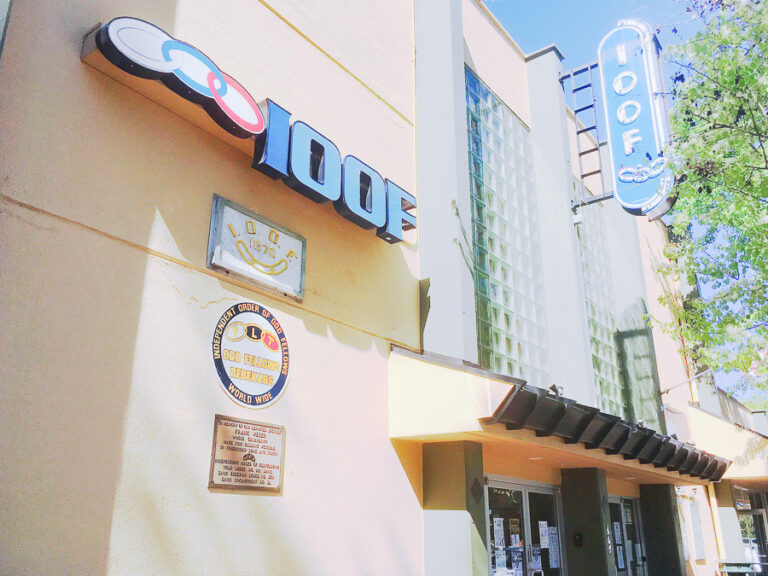
On April 24, the UC Davis Humanities Institute will host a “Who are you?” campus conversation at the Davis Odd Fellows, 415 Second Street from 5:30 p.m. to 7 p.m., about the pitfalls, social risks and promises involved in DNA testing on campus and in Davis communities.

“Campus conversations are a publically-oriented event series with informal forums and open conversations where faculty and graduate students can directly engage with undergraduates, non-humanities majors and wider communities across Davis,” said Jaimey Fisher, the director of the UC Davis Humanities Institute and professor in the German and Russian department and Cinema and Digital Media department. “The public gets to hear interdisciplinary conversations between STEM and humanities and arts.”

As commercial DNA testing draws more attention from the general public, interdisciplinary conversations are needed to identify its implications.

“Before taking the test, talk to your family,” said Graham Coop, a professor in the UC Davis Department of Evolution and Ecology. “By taking a DNA test, you have the potential to find out stuff about your family that affects them too.”

For one tube of saliva, people can have a million different regions of their own genome analyzed and learn about their own risks for chronic diseases. For those who are adopted, they may also identify new family members, such as cousins, ancestors or biological families.

After submitting DNA samples, genetic testing companies enter the samples onto profiles in a database, which can be compared and matched for criminal investigations or family matching.

“Police and law enforcement use genetic testing to find individuals by looking at certain positions of the genome,” Coop said. “In the case of the Golden State Killer, the DNA from the crime scene was extracted and uploaded to GedMatch, a public DNA profile database. They uploaded the sample, found a match and created a genealogy to identify family trees and the serial killer.”

These genetic records remain private, but matches can lead individuals to one another.

“One major concern is the availability of counseling available for people receiving potentially distressing information,” said Meaghan O’Keefe, an assistant professor in the UC Davis Department of Religious Studies. “Companies, like 23andMe, emphasize that people should talk to their healthcare providers about their results, but this isn’t always a possibility for people with less than great health insurance.”

Genetic testing regulation varies across countries.

“23andMe is US-based and must comply with FDA regulations,” O’Keefe said. “They are currently allowed to test for only 10 conditions they have demonstrated a certain level of accuracy in terms of testing. Other companies based outside of the US aren’t bound by the FDA, so there’s less control over accuracy and often very little support for those receiving distressing results.”

People also buy DNA testing kits to validate racial and ethnic identities through ancestry.

“Your DNA does not reflect you,” Coop said. “The community you grew up with is more important than what a DNA kit says.”

Written by: Foxy Robinson — science@theaggie.org

Student Book Clubs

Reading can be fun

For college students, reading books is so much a part of the academic routine that it sometimes becomes associated with stress and deadlines instead of pleasure. While everyone has a different relationship with literature, most people have expressed facing a challenge with trying to read books for fun during the busy school year.

Davis offers several book club opportunities and communities to get in touch with the pleasurable side of reading, such as the UC Davis English Department’s official Beyond the Book Club. Beyond the Book Club meets in Olson 151 from 6 to 7 p.m. on Tuesdays.

Their mission is to “foster our members’ literary creativity by creating a space that is safe and welcoming for all. As an organization, we will strive to share our love of literature with the community, and as a group we will aspire to make lasting connections with our fellow literature lovers.”

Raul Castellanos, a recent graduate of UC Davis with a degree in English and a current graduate student at the UC Davis School of Education, facilitated Beyond the Book Club last year.

“I really liked meeting other English majors through it,” Castellanos said. “It really made me feel like I was part of the community and it made the campus feel like home. I would prep by coming up with a lesson plan, usually just something to read and some discussion questions for it.”

Even though the English major curriculum is based around reading books, discussing novels outside of the classroom provides a casual and comfortable atmosphere for people to meet each other while discussing literature. The club is open to all majors and welcomes anyone who is interested.

Third-year international relations major Maya Barak hosted a book club event at her house where those who attended discussed “The Catcher in the Rye.”

“I was really thinking about an article that [the Aggie] wrote about books we read in high school and how they impacted us then versus now,” Barak said. “I really wanted to read ‘Catcher in the Rye’ because that book really impacted me in high school and I thought what better way to read it than with my friends and analyze it together. The first meeting was really exciting, we got through a fair amount of it but more importantly it was a really fun activity to do with friends.”

Sena Soleimannejad, a third-year human development major, attended Barak’s book club because he wanted a second chance to revisit a book that he had not read since high school.

“I read on my spare time, but getting the chance to discuss it with friends and hearing their thoughts too really heightens the experience and pleasure of reading a book,” Soleimannejad said. “I think it would be really fun to discuss a short story or poem next time because there is so much to analyze in such a small amount of writing.”

Because many people have such busy schedules and opinions, it can often be hard to find a time when everyone can meet or choose a book to focus on. Some people host book clubs at their houses and others have chosen spots downtown such as 3rd & U to grab a beer and discuss with friends.

Written By: Rosie Schwarz — arts@theaggie.org

Russell Boulevard Green Street Demonstration Project

City to promote sustainable landscaping with City Hall frontage redesign

Landscape irrigation accounts for up to 65% of water use in the Sacramento Valley, according to the City of Davis website. The site goes on to encourage residents to implement sustainable landscaping that will reduce water use and runoff, improve wildlife habitat and foster healthy soils. With the Russell Boulevard Green Street Demonstration Project, the city aims to go beyond only encouraging sustainable practices by demonstrating these practices in action.

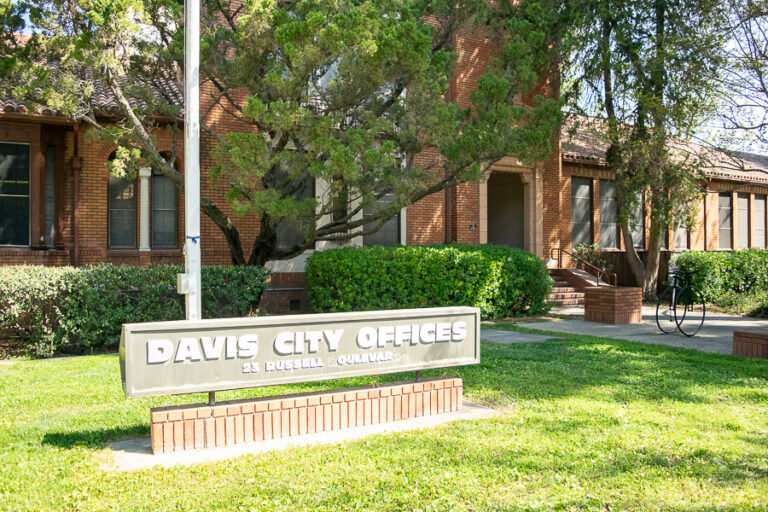
The Russell Boulevard Green Demonstration Project — which the city must complete no later than May 1, 2020 — will redesign the Russell Boulevard frontage of City Hall, converting nearly 25,000 square feet of turf to drought tolerant landscaping. The grant-funded project will also create seven new gardens and planters, new permeable paved seating areas and walkways and a vegetated swale — all of which is intended to capture, filter and control stormwater and runoff.

Candidate plants for the project include native and adaptive drought tolerant plants such as “island pink,” baccharis pilularis and “blonde ambition,” as well as stormwater plants like “elk blue” and accent and street trees.

Mayor Brett Lee commented on these plant type changes.

“We’re expecting that it’ll actually be a good example of sort of native plants and things that typically use less water,” Lee said.

Showcasing these sustainable techniques specifically at City Hall is a strategic move. Mike Webb, the city manager, said that the city hopes to lead by example in offering these examples of green redesign.

“The idea of doing it at City Hall really arose out of the idea that we have a lot of people that visit us and visit City Hall that are local architects [and] contractors that could benefit from seeing first-hand some of these techniques put into practice,” Webb said. “We as a city often find ourselves in a position of requesting — or in some cases even requiring — that certain drought tolerant features and runoff control features be integrated into private development projects. What better way to help sort of encapsulate that or to sort of promulgate those ideas by us as the city doing as we say?”

Stephen Wheeler, a landscape architecture and environmental design professor at UC Davis, said that the project seemed like a good idea, and highlighted the importance of sustainable practices like stormwater control.

“There’s no reason why not all stormwater runoff should be handled onsite by streets and parking lots,” Wheeler said. “That’s better for the ecology of the water table, and it avoids runoff into local waterways, which tends to erode and to have negative effects, and just takes the water out to the Pacific Ocean.”

The project is funded by a California Natural Resources Agency Urban Rivers grant, which was awarded to Davis in December 2017.

The 2014 Proposition 1 Water Bond funds the Urban Rivers grant program in order to support green infrastructure projects that “conserve water; improve water quality; buffer climate change impacts; reduce greenhouse gas emissions; and restore as well as protect rivers, creeks and streams,” according to the city’s calendar event of a Russell Boulevard Green Demonstration Project community input session.

In addition to its greening efforts, the project may also make City Hall more inviting to visitors, incorporating two plazas with permeable paving, shaded seating and interpretive signs, as well as new sand pedestrian pathways and an ADA-accessible boardwalk.

Dale Sumersille, the parks and community services director and lead on the project, said signage will be educational, referencing hopes for QR codes on the signs.

“Our goal is also with this project is to make this an opportunity for education,” Sumersille said.

Sumersille acknowledged the limits of Davis’ current green infrastructure teaching.

“[What] we need to do a better job of is in educating the public of what green infrastructure looks like,” Sumersille said. “Sometimes they’re very overwhelmed by some of the things, so if we can show them this is what we mean, then they have a better understanding of it.”

The project as a whole also features a public art opportunity. The civic arts commission is seeking an artist or collaborative team to design artwork that will adorn the faces of six planned concrete seat cubes, each measuring 2 feet by 2 feet. The city’s request for proposals said the artwork should “reflect sustainability, greening-related themes, local flora and fauna, history of place, and/or the architectural themes of City Hall,” and suggested using mosaic glass, tile or stone panels, ceramic tile squares or “artfully arranged items encased in weather-resistant resin.”

The artwork element is planned to be unveiled in November of 2019.

Currently, the city is still in the bidding process. Sumersille said that the city had to go out to bid a second time, as bids received for construction the first time around were incomplete.

Cunningham Engineering has been developing the project design, and Sacramento Regional Conservation Corps will help with the demo.

The city has sought to involve the public both with community outreach meetings for the project and with a volunteer opportunity that will be announced toward the project’s completion in which community members can help with landscaping.

Wheeler said that this project leaves opportunity for more implementation of green streets and sustainable landscaping practices.

“The biggest story might be simply that maybe we’re entering a new era of street and parking area design in Davis that many of whose strategies will be illustrated by this,” Wheeler said. “Green streets are a movement which is relatively recent, which hopefully will expand quite a lot.”

Written by: Anne Fey — city@theaggie.org

Tenth annual “A Taste of Davis”

City of Davis celebrates food with 19 purveyors offering samples to those who purchase tickets

From baked goods, pizza and wines to specialty brews, the City of Davis recruited 19 companies to offer food and beverage samples to those who attend this year’s celebration of food: A Taste of Davis.

The event will take place on April 25 from 6 to 8 p.m. at the Davis Odd Fellows Lodge Hall downtown at 415 2nd Street Each year, The Odd Fellows offers up invitations to various businesses willing to showcase what they do best.

“We invite restaurants, breweries, wineries, dessert houses, etc. to participate,” said Dan Rosenberg, the co-chair of A Taste of Davis. “It is by invitation only. We do not charge them to participate. They agree to provide samples to the guests. This year, we have 19 purveyors in the Taste of Davis. Tickets are $20 per person, and for that price, guests sample food and drink from these 19 purveyors. It started as another community function of the Lodge, featuring the town’s restaurants, wineries and breweries for the enjoyment of the community.”

Rosenberg has played a huge part in putting on this event since the first year the festivity started. He described the function as “probably the premier social event for the City of Davis” and explained how much of a bargain it is to have access to 19 businesses for $20.

Ticket sales have been open since March 16 and will last until the day of the event if space is available. Presale tickets range from $20-25 at the door, and individuals may acquire a ticket beforehand at The Avid Reader in downtown Davis.

Securing a ticket allows people access to drink and food from the following cafes, caterers, restaurants and breweries: Chay Corner, Chickpeas, Common Grounds, DeVere’s Irish Pub, Dunloe Brewery, The Hotdogger, Jack’s Urban Eats, Lamppost Pizza, Lazi Cow, Let Them Eat Cake, Matchbook Wine Company, Sudwerk Brewing Company, Sundstrom Wines, Seasons Kitchen and Bar, Solomon’s Delicatessen, Three Mile Brewing Company, Turkovich Family Wines, Upper Crust Baking Co. and Water Pig.

Each year, the 300 men and women that make up the fellowship choose a company to donate a share of the money raised to. This year’s beneficiary for the event is the Yolo Food Bank.

“What an exciting honor for Yolo Food Bank to benefit from this 10th annual event,” said Joy Cohan, the director of philanthropic engagement for the Yolo Food Bank. “Bringing together a celebration of Davis’ food and beverage purveyors to support those in the community who are not able to dependably provide nutritious food for themselves and their families is both a brilliant and meaningful selection on the part of Davis Odd Fellows. Yolo Food Bank is deeply grateful for this opportunity.”

Students, staff and faculty interested in volunteering with Yolo Food Bank are welcomed and encouraged. More information about volunteer roles and how to become involved can be found on the Yolo Food Bank website.

The Davis Odd Fellowship hopes to provide another successful year of wine and food tasting as residents inside and outside of Davis get a chance to experience A Taste of Davis.

“Folks enjoy the opportunity to chat with friends and neighbors, and to see and be seen,” said Lea Rosenberg, a long-time co-chair of A Taste of Davis.  

The Rosenbergs urge those interested to reach out and buy tickets early as they do sell out and prices may increase.

Written by: Lauren Tropio — city@theaggie.org

ASUCD Senate tackles all business in two hours

Senate elects new Pro Temp, passes resolution calling for Punjabi language classes

The April 4 ASUCD Senate meeting was called to order at 6:13 p.m. by Vice President Shreya Deshpande.

The meeting began with senate pro-tempore elections, with senator Noah Pearl being elected as the only nomination. Next was the farewell from former Internal Affairs Commission (IAC) chair Jacob Ganz. Ganz thanked friends in the crowd, fellow IAC members and other commission heads while reminiscing on his first senate meeting in June 2017, where he felt “so inspired and intimidated” by the senators. He remarked that now, two years later, he is “still really inspired by everyone.”

After his farewell speech, Ganz said a few words about Henry Nibellin, who was confirmed as the new IAC chair, stating that “[Henry] has been amazing and has worked really hard […] He knows the bylaws as well as I do.” Nibillen said he enjoys the “cool work” and “constant changes” IAC brings, hoping his new position as chair will provide “a great opportunity to grow.”

Next on the agenda was to appoint a new chair for the Business and Finance Commission. The recommendation for the position was Noam Marcus, who was described by Senator Andre Spignolio as someone with a deep “understanding of finances that’s required.” They also stated Marcus provides a bright future, as they could “fill a role that [Spignolio] lacked.” Marcus described being chair as “the logical next step” since he and Spignolio joined BFC at the same time and have seen the commission grow together.

The agenda was amended to continue with appointments, next on the list being a new director for the Entertainment Council. Current Director Liz O’Neill stated she is nominating Kimya Khayat due to her being “one of our most dedicated members.” Due to her being part of the council since her freshman year, Khayat said she has seen both “ups and downs,” leading her to confidently know “what [she] wants to implement in order to enhance the student experience.”

The Senate then moved on to Unit and Committee adoption for any more senator additions, as the table originally chose which units and committees to be a part of during week 10 of Winter Quarter.

Old legislation was scheduled to be considered, but the author of SB#62, SB#64, SB#66 and SB #67, Senator Mohammad Qayum, was not present and so it was pushed to next week’s meeting. Instead, a new resolution (SR#9) from the Ethnic and Cultural Affairs Commission (ECAC) called “Punjabi Classes Resolution” was brought forth to the table.

The author of the resolution said that having Punjabi classes are long overdue, as students have been asking “for over 10 years” for these courses, but “UC Davis administration has not been listening to these demands.” The administration’s response was to tell the Punjabi community to raise money on their own for the courses since the university claimed it had no ways of doing so, leading to a quarter of a million dollars being raised by Fall 2017. Despite raising the money, “it’s been two years that administration has not offered a plan of action. Nothing. Not even meetings. It’s just wrong.” The resolution passed with no objections.

Discussions on the status of previously passed legislation were tabled for next week. Senator reports, ex-officio reports and announcements followed.

The meeting adjourned at 8:13 p.m.

Written by: Deana Medina — campus@theaggie.org

Indigenous ceremonial objects misused, Tax Day, Battle of the Bands: Your Weekly Briefing

Happy Friday, Aggies!

Another Picnic Day for the books, congratulations for surviving, Aggies. Things are starting to heat up — Some Tahoe slopes are set to close Easter Sunday, but Squaw Valley is going strong and is not set to close until after the first week in July. Today marks the close of week three, midterms again, already!?

For those celebrating Passover and Easter, have a wholesome weekend, and for those celebrating 4/20 and going to Coachella Weekend 2, maybe not so much…

Here’s your news…

JUSTIN HAN / AGGIE

Story of the Week:

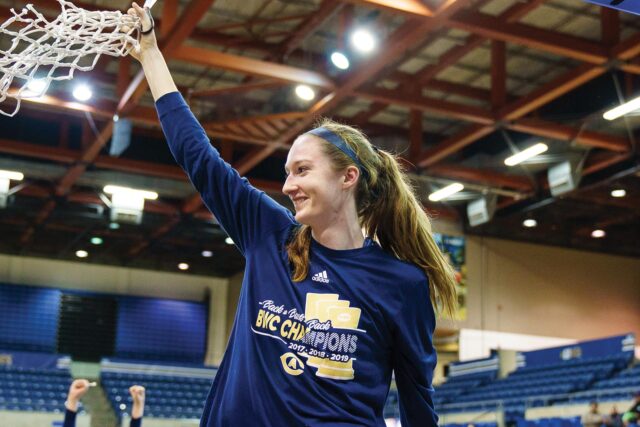
UC Davis’ Morgan Bertsch drafted to WNBA — the first woman to be drafted in Aggie history. With 2,422 career points, she also is the highest scoring player in UC Davis women’s basketball history. Bertsch was selected 29th overall by the Dallas Wings on Thursday, becoming one of the 36 women to be chosen worldwide. “It still blows my mind. It doesn’t really seem real that it actually happened,” Bertsch said. Read on.

LUIS LOPEZ / AGGIE

Campus:

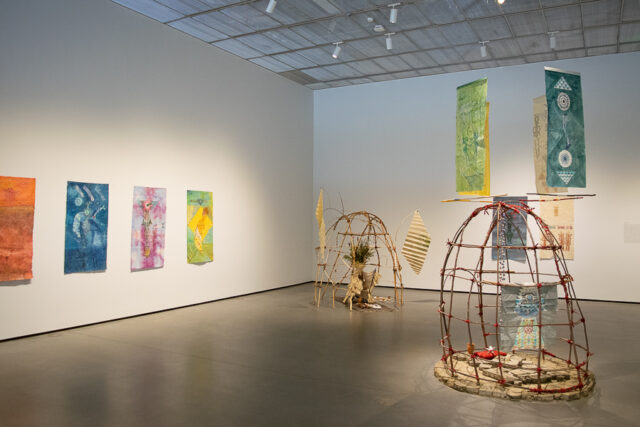
Art challenges indigenous identity — “Our religion is not art. It never has been,” said Native American elder and Davis resident Susan Reece in response to the Xicanx Futurity exhibition at the Manetti Shrem Museum. Ceremonial indigenous objects such as eagle feathers and tobacco ties were on display as part of the exhibit, which are forbidden uses of ceremonial objects according to the The Native American Studies (NAS) department at UC Davis. Reece alleged that the NAS department wasn’t consulted about the exhibition. The feathers have since been removed from the exhibit and a symposium will be held to address the issue and open dialogue regarding the complaints. Read on.

TESSA KOGA / AGGIE

City:

Kaiser Permanente to negotiate contracts with 85,000 healthcare workers — resuming negotiations that were halted by the healthcare corporation in early 2018, workers are pushing for higher wages and better conditions. The Coalition of Kaiser Permanente Union (CKPU) is returning to the table to secure a national agreement after Kaiser recently dropped a ban that prohibited employees from speaking out against patient care issues and being politically engaged. Read on.  

JEREMY DANG / AGGIE

Features:

Taxes — “It’s a b**** to fill out all the forms,” said Daniel Painter, a second-year biochemistry and molecular biology major. Tax season concluded earlier this week and for many students this year was their first time filing. What is a 1040, a W-2 form? These key components of filing your taxes are seldom taught in public high schools, leaving young tax virgins clueless. Students share their knowledge about taxes, or lack thereof, read on.

NATALIE MEVISES_COURTESY

Arts:

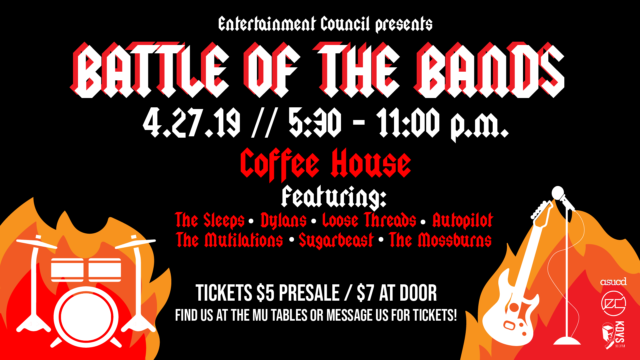
Battle of the Bands — ASUCD Entertainment Council to host seven bands on April 27. The top three teams will compete for a chance to perform at a future event of their choosing: the Davis Whole Earth Festival, Operation Restore Maximum Freedom and an EC Local Limelight. Each band will perform a 20-minute set that will be judged by the audience. The musical dual will take place in the CoHo from 5:30 to 11 p.m., tickets are $5 presale and $7 at the door. Read about the bands.

QUINN SPOONER / AGGIE FILE

Sports:

Aggies v. Mustangs — Aggie softball victory, Aggie baseball loss. Brooke Yanez, sophomore Aggie pitcher, fired a no-hitter in Sunday’s game against Cal Poly San Luis Obispo. This closed out the series against Cal Poly with a win for the Aggies. Read the full recap.

UC Davis baseball lost 5-6 in their Picnic Day game against Cal Poly San Luis Obispo, losing the three game series. Aggies continue their Big West Conference against UCSB. Read on.

COURTESY

Science:

CalTeach — a Mathematics and Science Teaching Program for UC Davis STEM students looking to pursue a career in K-12 education. The program includes internships for students to volunteer in community schools which is advantageous when applying for teaching credential programs after graduation. This program not only supports STEM students in becoming teachers, but given the lack of elementary school teachers with math and science backgrounds, it has the power to make a significant difference in K-12 education.

“I’d get paid more doing something else, but for me, I think teaching is an amazing opportunity to make an impact,” Jeffery Harvey said, a CalTeach/MAST alumni. “It’s a great place for people with higher degrees to end up because you get to expose one hundred human beings every year to your science knowledge.” Harvey teaches AP Physics. Read on.

Culture Corner — Alyssa’s Weekly Picks

Television: “Shrill”

Movie: “Matilda”

Novel: “The Book Thief”

Album: “Make My Bed” by King Princess

Read about them.

Opinion — The Andrew Yang phenomenon

Editorial — California municipalities send marijuana convictions up in smoke

That’s all for this week, Aggies. Check back next week.

— Grace Simmons