

Picnic Day 105 through the eyes of The Aggie’s photographers




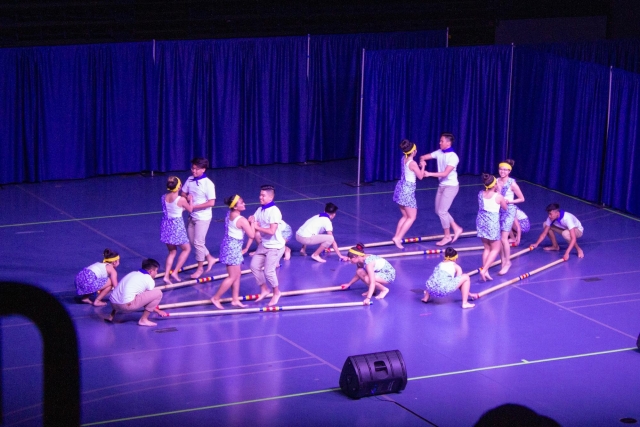
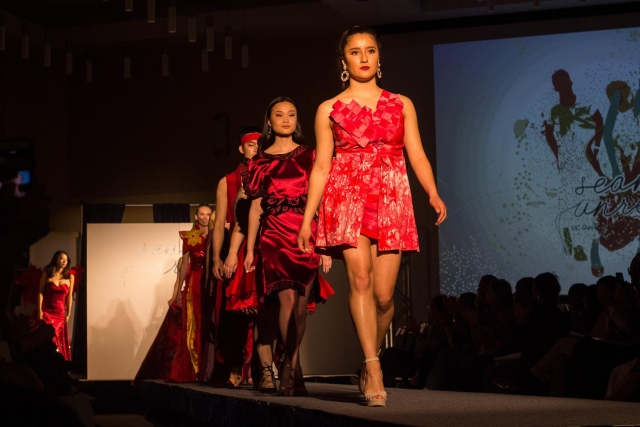







By: The California Aggie Photo Desk — photo@theaggie.org
Picnic Day 105 through the eyes of The Aggie’s photographers
By: The California Aggie Photo Desk — photo@theaggie.org

UC Davis baseball loses 6-5 in final game of Picnic Day weekend series
In the final of the three game series on Picnic Day weekend at home, the UC Davis Aggies were defeated by the Cal Poly Mustangs 6-5.
The weekend series began on Friday, when the Aggies suffered a 5-1 opening series loss to the Mustangs. Cal Poly led the entire game, putting two runs on the board in the first, and solidifying its lead with three runs in the fourth. Sophomore pitcher Brett Erwin started on the mound for UC Davis and was charged with all five earned runs to move his ERA to 2.79 on the year.
On Picnic Day, UC Davis took an early two run lead, which shrunk to one by the fourth inning. The Mustangs put on the pressure then, scoring three in the top of the fifth, and another three in the next two innings, giving the Aggies an 8-5 loss. UC Davis looked to use this final series game to prevent the sweep from the Mustangs and keep its record in good standing.
On Sunday, senior left hander Chris Brown started on the mound for UC Davis. Brown started his seventh game this season, coming in with a 3.24 ERA. The Aggies entered this final series game sporting a 10-17 overall and a 3-5 conference record compared to the Mustang’s 15-17 overall and 6-2 conference record. Cal Poly ranked second in the Big West Conference, with UC Davis placed seventh.
It wasn’t until the third inning that either team revved up its offense when the Aggies loaded the bases with zero outs on the board. Sophomore shortstop Tanner Murray stepped up to the plate with bases loaded and a .427 average on the year. Murray took a hard pitch to the shoulder, bringing in the Aggies’ first run. Senior second baseman Caleb Van Blake drove in two more with a soaring double into left field that dropped just shy of the foul line. Continuing the high offensive performance, junior catcher Logan Denholm added one with a double into right field, and a sac fly to center field brought the Aggies’ lead to 5-0 at the end of the third.
Cal Poly cut the deficit in the fifth, brining in two runs over the plate due to an error by Murray, shortening the Aggies lead to three. And in the eighth after Brown was taken off of the mound, the Mustangs began a hit parade on senior reliever Chase Lyford, driving in in three more runs to tie the game at five.
The bullpen continued to suffer for UC Davis in the ninth, when a single to left field drove in a run for the Mustangs, giving them the 6-5 lead.
Overall, Brown had a solid outing for the Aggies on the mound, going seven innings with only one earned run but the Aggie bullpen could not hang on. Brown’s current ERA now sits at 2.90.
The Aggies continue their Big West Conference play today beginning a three game series against UC Santa Barbara.
*Note to readers that players and coaches declined interviews after the game
Written by: Ryan Bugsch — sports@theaggie.org

Sophomore pitcher continues historic run for UC Davis softball
Sophomore pitcher Brooke Yanez fired a no-hitter for the UC Davis softball team in Sunday’s series-winning victory over Cal Poly, striking out seven batters and walking just two.
Yanez’s sensational performance comes just 33 days removed from the perfect game she tossed against Sacramento State on March 12.
Ever since she stepped foot on campus in the Fall of 2017, Yanez has done nothing but shatter numerous program records and thoroughly dominate opposing hitters every step of the way. With a record of 20-3 so far, she has already reached the 20-win mark to go along with seven shutouts, 201 strikeouts and a 0.93 earned run average.
Despite the center field scoreboard displaying a noticeable goose egg under Cal Poly’s hit column, none of the Aggies made a point to acknowledge the no-hitter as the game progressed. Many players and coaches were so locked in to each pitch that they didn’t even realize the significance of what was unfolding in front of their eyes.
“A lot of people on my team didn’t know, but it was probably better because they’d get a little nervous,” Yanez said after the game.
“We try not to think about it and I didn’t even realize it until after the first out in the seventh inning,” added UC Davis Head Coach Erin Thorpe. “Obviously, the team kind of knows what’s going on, but we always know she’s capable of it.”
Yanez’s no-hitter was rarely in doubt on Sunday afternoon, thanks in part to a rock-solid defense behind her. Junior shortstop Isabella Leon made the defensive play of the game in the fourth inning, diving headlong to snag a bloop pop fly up the middle. The only other play that evoked any relative sense of panic was a flyout to deep center field to end the sixth inning, which was calmly handled by junior Marissa Jauregui.
“It’s so fun to be behind her, and I know she’s always out there competing,” said junior right fielder Marisa Given. “It just makes us want to go all out and do everything we can to back her up. When she’s in that zone, there’s nothing that can stop her, and so our job is to just catch the ball.”
Given provided all the offense to help the Aggies jump out to an early lead, on her way to tying a program record for most doubles in a game, with three.
“I’m seeing the ball really well right now and covering both sides of the plate, so hopefully I can just keep it up,” Given said.
Given, who leads the team with a .390 batting average and 41 hits, opened the scoring with an opposite field RBI double to left center in the bottom of the first inning. She later capped off a two-out rally in the second inning with another double to the same part of the outfield, driving home two more runs and pushing the lead to 3-0.
“My first at-bat, I was sitting on a changeup and got it,” Given said. “I knew the second at-bat that they probably weren’t going to give it to me, so I was just looking for a good strike away and got it on the first pitch.”
Junior first baseman Maddie Rojas drove home the fourth run of the game with an RBI groundout in the fifth, before her younger sister and sophomore outfielder Alyse Rojas finished off the scoring on an infield single in the sixth.
Alyse Rojas has been an extremely reliable presence out of the leadoff spot in the lineup this season, and ended the day with three hits and two runs scored.
Sunday’s victory clinched the series win over Cal Poly, after the Aggies split a doubleheader on Picnic Day. In the first game, Yanez went the distance, giving up just four hits and a run, but UC Davis fell by a final of 1-0.
“As we’re learning how to be a winning program and we’re still fairly young, we’re going to hit those bumps and bruises where we have to teach ourselves lessons in ways we don’t want to,” Thorpe explained. “These ladies work really hard and have been able to bounce. That’s part of the resiliency we’re trying to learn, but now we have to get a little better at bringing our consistency every time we get an opportunity.”
Overall, with a record of 31-8, UC Davis has already surpassed its record win total in the program’s Division I era. With Yanez and junior pitcher Katie Kibby providing a lethal 1-2 punch on the mound, there’s no telling how far this team can go as the stretch run of the season proceeds.
“We have 14 games left and are trying focus on playing it one game at a time,” Thorpe said. “Regardless of [the] win or loss, can we bring our best game to the field? Do we feel good about how we play the game at the end of the day? When you don’t focus on how many wins and losses you have, it tends to be kind of shocking when look at it every once in a while.”
UC Davis has only made one prior appearance in the NCAA Division I Tournament in 2010, but that could change this season.
“As a whole, we haven’t really realized how great we can be,” Given admitted. “It’s just going to be a matter of us taking the next step and staying consistent because we know as a group we can do it.”
Written by: Brendan Ogburn — sports@theaggie.org
Isolation and low genetic diversity threatens Southern California mountain lion populations
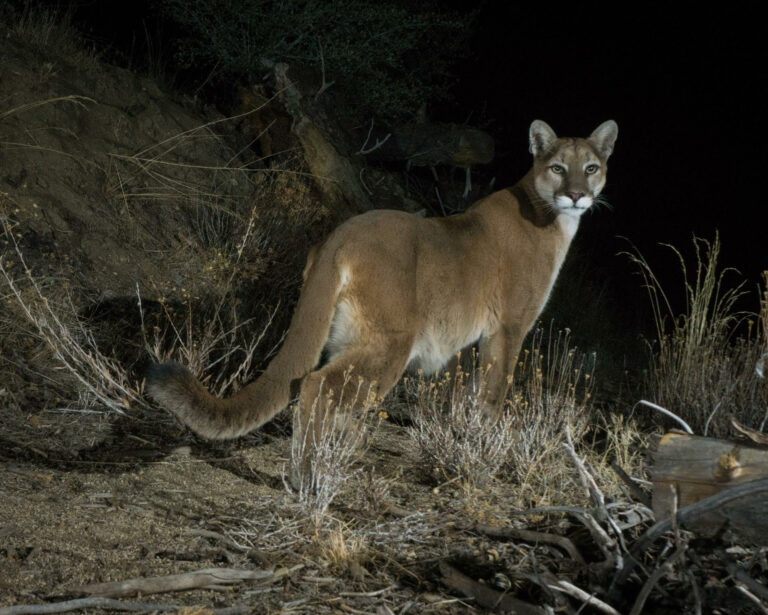
Although it is commonly accepted that mountain lions are dangerous, humans may be more of a threat to these predators than they are to us. A recent study of two mountain lion populations in the Santa Ana and Santa Monica Mountains revealed the potential extinction of these two populations over a period of 50 years.
According to Winston Vickers, a wildlife veterinarian at the Wildlife Health Center at UC Davis, the study had began by examining the impact of these mountain lions on endangered bighorn sheep in Southern California.
As the researchers began to accumulate data on the mountain lion populations, however, they began to discover aspects of this species that were previously unknown. In addition, John Benson, an assistant professor of vertebrate ecology at the University of Nebraska, stated that the team was concerned about the low genetic diversity and isolated nature of these populations, which motivated them to further study possibilities of extinction.
“Specifically, we wanted to contribute information to local conservation efforts and, more generally, to a greater understanding of the dynamics of small, isolated wildlife populations,” Benson said.
The two populations share various similarities, such as being small in size due to the factors of isolation and low genetic diversity, leading to the threat of local extinction. However, Benson explained that the Santa Monica Mountains popular showed a higher mortality rate and greater population abundance along with a greater risk for local extinction.
Vickers explained that a surprising find within their research was the discovery that the freeways, such as Interstate 15, and statewide development have created various genetic divisions throughout California.
“Mountain lions are highly mobile animals and one would expect them to have a pretty good chance to get across highways or find ways to cross,” Vickers said. “But it turns out these big freeways are more of a barrier, either because they get killed trying to cross or the crossing structures that are there are not adequate for them to use or there’s something about freeway environment that tends to turn them back.”
In order to mitigate this barrier and increase landscape connectivity, the number of safe pathways across Interstate 15 could be increased or existing passages could be improved upon. Benson added that this would also serve other wildlife populations with low genetic diversity.
The team is currently collaborating with engineering students and faculty at Cal Poly Pomona to design these new crossing structures. Vickers also proposed moving the mountain lion populations to the other side of the freeway, although the challenge is deciding which specific groups should be moved within the population concerning age and sex. However, he did explain that younger animals would be less likely to have previously established territories that they would migrate back to if moved, which would make them a good potential candidate.
The model they developed using demographic and genetic data on these populations illustrated an increase immigration to a greater effect in the Santa Monica Mountains population in terms of reducing the extinction. This proves to be an optimistic result, as it can have implications towards other populations as well.
“If we can conserve the largest cat species in the United States within our second largest metropolitan area, this bodes well for our ability to conserve large carnivores just about anywhere,” Benson said. “Large carnivores are notoriously difficult to conserve in human-dominated landscapes, so if we can do it in LA, this provides a compelling example that humans and carnivores can coexist.”
Peter Mahoney, a postdoctoral researcher at the School of Environmental and Forest Sciences at the University of Washington, said that finding a way to promote genetic diversity through population connectivity may allow populations of mountain lions to persist for years to come. Although mountain lions are highly sensitive to human activities as apex predators, he stated that there is a vigorous population documented that is isolated by one of the largest metropolitan areas in North America.
“There is still hope for many species currently threatened or endangered by human activities,” Mahoney said. “Many species, or populations in the case of the Santa Monica mountain lions, exhibit remarkable resilience to human disturbance provided certain basic needs are met.”
Moving forward, the team plans to continue studying the behavior, population dynamics and genetics of the mountain lion populations along with determining whether their low genetic diversity is causing increased mortality or reduced reproduction. Vickers explained that these mountain lion populations serve as representatives for less mobile populations, which may also be broken up due to human activity. He believes that more resources should be dedicated to helping these populations and that they should be put at a higher priority.
“I think drawing that lesson that we, humans in California that are rapidly developing states, have to be cognizant that we are alternating these habitats significantly and breaking them into islands of a sort and that that’s avoidable if we have proper planning and proper instruction to highway agencies to make sure that they develop crossing that are of adequate size and type for wildlife,” Vickers said.
Written by: Michelle Wong — science@theaggie.org

A UC Davis program helps STEM majors become K-12 Teachers
While some UC Davis students who earn technical degrees in majors such as physics or computer science go on to become engineers and scientists, others decide to pursue careers in education. Some STEM majors decide to become K-12 teachers, and a program called CalTeach Mathematics and Science Teaching Program helps support their ambitions.
CalTeach/MAST is designed to expose UC Davis STEM students to the K-12 teacher career path. The program offers courses where interested students can learn about teaching and volunteer in local math or science classrooms. In addition, the intern hours students earn through the program can help them get into a teaching credential program after graduation.
CalTeach/MAST is organized by the Department of Earth and Planetary Science and is focused on helping students who are completing STEM degrees. The program is also open to non-STEM students, who can speak with the administrators. Students can get involved by enrolling in the beginner GEL EDU 81 course.
The program has helped many former UC Davis students decide on their career paths. Elizabeth Broughton is a high school math teacher who graduated from UC Davis in 2015 with a major in psychology and a minor in mathematics. According to Broughton, she knew she wanted to be a teacher but did not consider teaching math because she had a bad experience with the subject in high school. However, after getting involved in the CalTeach/MAST program as a freshman, she changed her mind.
“They were showing me a different way of teaching math that was not the way I learned in high school,” Broughton said. “They were showing that math could be really fun and interesting if you teach it in a particular way, and I wanted to be that kind of teacher.”
Although Broughton knew she wanted to be a teacher when she came to college, many students enroll in CalTeach/MAST while they are still unsure of their career path. According to Sandy Carlson, the faculty director of the program, that is one of the great advantages of CalTeach/MAST.
“It’s a service for students to be able to explore something that may not have been on their radar initially in terms of a career, without any strings attached,” Carlson said.
Many students choose to take CalTeach/MAST courses so they can do meaningful volunteer work in the community.
“It’s a really great way for students to experience more than just the university while they are here” said Carlson.
The program is especially important in elementary schools. Many elementary school teachers do not have a background in science or technology, so the CalTeach/MAST interns bring a lot of valuable knowledge to the classrooms they help. According to Susan Pinter, the CalTeach Academic coordinator and lecturer, the student interns are in high demand. Last year they helped 171 teachers in the area.
“The elementary school teachers really love our students,” Pinter said. “Every year they come and ask, ‘Can you please put me on the list again?’”
Beyond providing direct service to the local community, CalTeach/MAST also produces desperately needed K-12 science and math teachers for California. The UC Davis program is part of a larger statewide effort that began in 2005 to address the massive shortage in math and science teachers.
In addition to producing a greater number of math and science teachers, CalTeach/MAST produces quality math and science teachers. UC Davis degrees in math and science give CalTeach/MAST alumni strong background knowledge in the subject matter they teach.
Jeffrey Harvey is a CalTeach/MAST alumni who is currently earning his teaching credential through the school of education at UC Davis while teaching high school science classes. Harvey came to UC Davis to get a Ph.D. in physics, but after his experiences as a teaching assistant, he decided that his calling was teaching. According to Harvey, his advanced degree is helpful in his classroom.
“I think that the more depth you have in that knowledge the better job you can do in turning students on to that topic,” Harvey said. “That’s what gives you flexibility to be creative in the classroom. You have to have that depth to draw from.”
According to Harvey, he could have made more money in the business world with his degree, but he likes the direct impact he has as a teacher.
“I’d get paid more doing something else, but for me, I think teaching is an amazing opportunity to make an impact,” Harvey said. “It’s a great place for people with higher degrees to end up because you get to expose one hundred human beings every year to your science knowledge. It’s kind of like a knowledge multiplier; that’s how I imagine it.”
When The California Aggie interviewed Harvey, he was excitedly preparing a demonstration of angular momentum for his A.P. Physics class.
“That blew my mind when I was a kid, and I’m super excited to be the guy to show somebody that for the first time.”
Written by: Peter Smith — science@theaggie.org

Amazon’s Rekognition could be the path toward authoritarianism
George Orwell’s “Big Brother” has arrived, courtesy of Amazon. The e-commerce tech giant is selling facial recognition technology to police departments — something not well known, and for good reason. This image analysis service, called Rekognition, is deeply flawed and deeply dangerous.
While Rekognition has been used for harmless indulgence in celebrity culture, like identifying celebrity wedding guests as they arrived at Windsor castle for the royal wedding, the program has several functions and can be adjusted by developers for a given company’s need. Some functions, aside from facial recognition, include pathing (tracking an object), facial analysis (familiarization with emotions) and deciphering text in images otherwise illegible to the naked eye. This technology’s adaptability and absent government regulation means companies and law enforcement can use Rekognition however they choose.
A study published in August by MIT found that Rekognition identified white men with 100 percent accuracy, which dropped to 68.6 percent when identifying women of color. In January, another study was conducted by researchers at MIT, which found that Rekognition mistook women for men 19 percent of the time and misidentified darker-skinned women for men 31 percent of the time. A study conducted by the ACLU of Northern California found Rekognition incorrectly matched the faces of 28 members of Congress with individuals arrested for a crime; among the misidentified were six members of the Congressional Black Caucus.
In the face of these studies and numerous calls from prominent artificial-intelligence researchers, civil rights groups and its own shareholders, Amazon simply chose to brush the findings off as “false” and “misleading” while refusing to present its own studies or to submit the system to the National Institute of Standards and Technology for evaluation.
Rekognition has the capacity to automate the identification and tracking of any individual; if outfitted for body camera usage, police could effectively become walking surveillance cameras. But you don’t have to take my word for it: one need only look to Orlando’s Rekognition pilot program, which has installed cameras that scan hundreds of thousands of faces daily across the city. More concerning, we don’t know how this technology is being used.
Although Orlando may be testing the pilot program on its own officers for now, the city will eventually broaden its functions while remaining free from legal restrictions. Other law enforcement departments implementing Rekognition haven’t been detailed about the way they employ the software, and the absence of laws in this area may mean they’re not obliged to disclose anything.
While a deputy for the Washington County Sheriff’s office stated officers were trained not to rely solely on the software, misidentifying persons of color as a threat has long been an issue, even without the racial biases of Rekognition. This technology risks the false imprisonment of minorities and women while simultaneously violating our right to privacy.
Amazon insists there have been no reports of misuse, but one wouldn’t expect law enforcement agencies to self-report on their civil rights violations, especially regarding laws governing facial-recognition technology. When requested by the ACLU, neither Orlando nor Washington County could produce records showing their communities were provided a forum to discuss Rekognition before its implementation or rules outlining how Rekognition could be used while ensuring the protection of rights.
In accordance with its business model — sell cheap and eliminate competitors — Amazon is pushing Rekognition, expanding its marketing of the product to organizations from police departments to the Immigration and Customs Enforcement (ICE) agency. Considering the current administration’s approach to migrants at the southern border, it’s not far-fetched to say Rekognition may be utilized by ICE for nefarious purposes.
Without government regulation, we won’t know how Rekognition is being used, when we’re being watched or when our privacy is being violated. The ambiguity of it all makes it increasingly likely that these things are already happening. Big Brother could already be, and likely is, watching.
Written by: Hanadi Jordan — hajordan@ucdavis.edu
Disclaimer: The views and opinions expressed by individual columnists belong to the columnists alone and do not necessarily indicate the views and opinions held by The California Aggie.

The military’s involvement in crafting positive films about war suggests state-run art
Our military has a PR problem. In an era of open connection, their oft-touted image as a noble force combatting powerful, faceless monsters has experienced a truthful inversion.
For decades, Army recruiting relied on the idea of expansive global evils, referred to in concept but never in name or actuality. But mass media is driving this tactic to near obsolescence. Videos of Yemeni children blasted to shreds by the booming footsteps of drones elicit horror and cries for justice. Nameless masses, upon arriving at our borders, become families holding each other tightly beneath a tear gas fog.
The military entered the modern era ill-prepared for the ramifications of this expansion of integrity. But in a stroke of Goebbelsian ingenuity, it has engineered a solution decades in the making: cinematic branding, more colloquially referred to as “militainment.” The mission? To make wars great again.
This trend’s prominence is more evident now as a result of greater opportunities for the military to engage with visual mediums, but its history extends back to the early days of cinema.
According to Todd Breasseale, an Army recruitment officer who was interviewed by Al Jazeera, “The Army’s been there since Hollywood was first built from the Los Angeles canyon and desert.” These initial efforts centered around more direct forms of civilian engagement: films previewing air shows, clips from World War 1 and so forth. In the midst of the mass media revolution, the Army released the film “Wings” in 1927, which was, in essence, a Top Gun prototype. It won Best Picture.
But as the cinema market became saturated with high-budget action movies, the military retreated from their more direct position at the forefront of film-making. Instead, they moved toward, and now primarily engage in, a form of symbiotic exploitation.
These dealings involve a film studio contacting the Army and requesting the use of military equipment for scenes in their production. In return, the Army requests final script revision to ensure that their portrayal in the film will be up to the American standard.
This process is currently headed by Phil Strub, who serves as the Pentagon’s liaison to Hollywood. According to Al Jazeera, his name has appeared in the “producers wish to thank” section of the credits for over 50 films, including Iron Man, Man of Steel, the Transformers franchise and Godzilla.
The more problematic issue is the mutual advertising utilized by film studios and the military. These sorts of branding deals are quite common: Coca Cola and Ready Player One, Lexus and Black Panther and so on. Persuading a consumer to drink a can of soda, however, doesn’t carry quite the same moral gravity as an implicit attempt to meld X-Men and infantry in the minds of viewers.
Renowned intellectual Noam Chomsky often invokes the modern inversion of the base economic principle that “informed consumers make rational choices.” He describes the advertising industry as having the opposite effect: creating “uninformed consumers making irrational choices.”
As these consumers, we’ve come to accept the reality of corporate and cinematic symbiosis. The mutual benefit present for each party may not be conducive to a truly democratic economy. It certainly isn’t conducive to art. Regardless, the worst possible consequence is that we buy things that we perhaps did not need or want.
But when the military engages in this practice, this attempt to sell caricatures of reality on the back of an industry that brings in millions of viewers each year, we find ourselves staring into the inklings of state-run art. No longer are we being asked to hand over our wallets, but our health, our families, our lives — things our military has deemed worthy sacrifices for triumph over a nameless power.
Our newfound expanse of information grants us previously unknown freedoms. But it also creates the necessity of precaution. We have to be prepared to ask ourselves whether our information, our art, has the integrity as free press that we have assumed it to possess. Next time our glorious troops wade ashore onto the silver screen, glowing rifles in hand, poised to strike at the hearts of evil incarnate, we should question whether the alien enemies they battle are monsters born of hatred, or children born of napalm.
Written by: Eli Elster — eselster@ucdavis.edu
Disclaimer: The views and opinions expressed by individual columnists belong to the columnists alone and do not necessarily indicate the views and opinions held by The California Aggie.
Bertsch capitalizes on historic season, becomes first Aggie drafted to WNBA
The story begins with a Santa Rosa High School basketball player back in 2014, who, even at 6 foot 4 inches, was flying under the radar of most college scouts. She’s discovered, more or less on accident, by UC Davis Head Coach Jennifer Gross and is offered a division one scholarship. But there’s a catch: she wants to run track too. So she competes in the high jump for three seasons. She also wants to major in biomedical engineering — no problem.
“You do you,” she said.
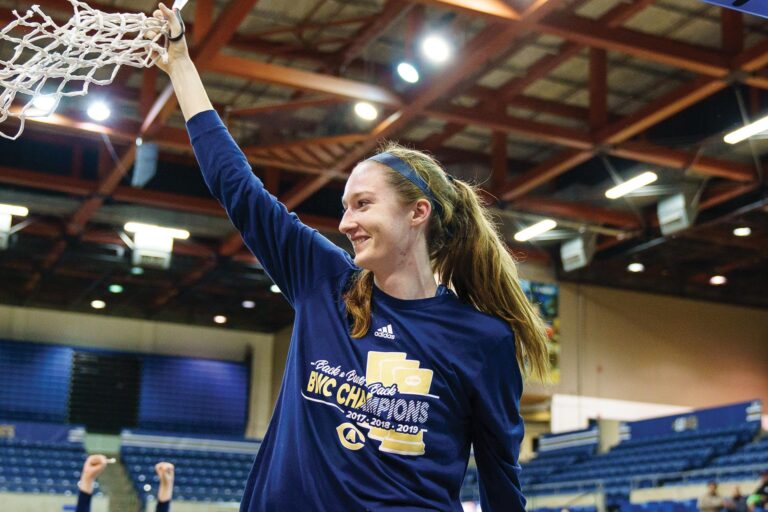
Five years later, the senior UC Davis women’s basketball forward Morgan Bertsch is continuing to engineer a path of her own. On Thursday, she was selected 29th overall by the Dallas Wings in the 2019 WNBA draft, becoming one of 36 women in the world to be chosen to play at the sport’s highest level.
“I could sit here and tell you that of course I knew this was going to be what happened, but I think it was at the start of this year I kind of set [the WNBA] as a possibility for myself and kind of as a little goal,” Bertsch said. “I’m not going to say it’s something that I’ve been striving for forever […] It still blows my mind. It doesn’t really seem real that it actually happened.”
There’s a thread of relatability in Bertsch’s voice, that encapsulates the dream all athletes have but only rarely actualize. Thursday’s WNBA draft marks the first time ever that a player from the UC Davis women’s program has realized that dream. But really it should come as no surprise, over the past five years Bertsch has had many ‘firsts.’
In November, she surpassed the Aggie great Carol Rische to become the all-time leading basketball scorer in women’s program history. In December, she surpassed the men’s mark. Now, with 2,422 career points, Bertsch stands alone as the single greatest basketball scorer in UC Davis history.
“The second she arrived on campus and started practicing and we saw the efficiency that she played with — we knew she was going to be special,” Gross said.
In her first year, she scored 13.9 points per game at a 58.2 percent shooting clip and continued to dominate the low post for the Aggies well into her third season. But Gross and Bertsch still weren’t satisfied.
“We saw the vision of her playing the three, playing a stretch four,” Gross said. “This year, as a staff we basically said, ‘She’s pretty good down there [playing in the post],’ and Matt Klemen works with the guards and we said, ‘Alright, Matt, you’re gonna take her every day and basically do the pre-practice guard workout and start to develop those skills.’ We saw that whole skill set start to evolve.”
And soon the staff had unlocked an entirely new part of the same beast. Bertsch began launching threes.
In her first three seasons, Bertsch only attempted a combined 11 three-pointers and made just four. During her final season, the senior shot 48 and made 23. Her near 50 percent shooting from beyond the arc immediately made Bertsch reach that stretch Gross and the coaching staff dreamed of and helped catapult the Aggies to a Big West conference title.
With the 6-foot-4-inch forward now a threat from the perimeter, opposing defenses were stretched thin. Leave her open from deep, and she stripes a three. Take away the outside shot and force her into the paint. Let her work one-on-one, and she’s getting a bucket. Double team her in the low post to take away the one-on-one game, and she’s dishing the ball back out to one of her sharpshooting teammates for an open shot.
For senior backcourt duo Karly and Kourtney Eaton, Bertsch’s ability to spread the floor and expand the offense helped their games grow, too. The pair shot 43 percent and 44.5 percent from deep, respectively.
“I knew I’d be able to get outside shots because of the threat Morgan creates inside,” Kourtney said. “So I worked all year at being consistent and feeling really confident, so I could knock down shots for my team. I wanted to score more this year, so I knew I needed to shoot a good percentage from three to do that. I think it was important because it created an outside threat and created more space for Morgan to go to work.”
How to beat the UC Davis women’s basketball team quickly became a question void of answer. Teams in the Big West Conference are still scratching their heads over that one, because they certainly didn’t. The Aggies dominated the conference for a third straight season, finishing with a 15-1 record in the Big West and 25-7 overall. But with the presence of a few veteran seniors, the Aggies were eyeing the tournament title from the start.
“We had a new core and, as expected, it took a month or two to really gel and play well together,” Karley said. “After everyone settled into their role and utilized our individual strengths, we really came together and became a great team.”
UC Davis won the Big West Tournament for the second time in program history and earned a berth in the NCAA Tournament for the first time since 2011. For many of the elder Aggies, the victory was the culmination of four plus years of hard work. For Bertsch, it was another rung on the ladder toward greatness.
“She not only talks about wanting to be great, but she puts the work into that,” Gross said. “And the exciting thing is she still has an incredibly high ceiling; we feel like she can continue to get better and better and that’s why the future is so exciting for her.”
The future is equally exciting for the Aggies. Bertsch will graduate from Davis in June, but the message she sends to young hoopers, and the legacy she leaves within this program and at this university will extend far beyond her days at The Pavilion.
“I had set some goals for myself at the start of the season, and to be honest, I think I achieved every one of them,” Bertsch said.
Goals of being the best scorer in program history? Ask the unscouted senior from Santa Rosa High School, the redshirt freshman. Goals of joining the WNBA? Ask the biomedical engineer and UC Davis high jump record holder.
Her new goal, she admits, is adjusting to her role in the WNBA. How she fits within the Wings scheme is still unknown to her, but anyone who knows Bertsch knows she’ll make it work —she’ll make the adjustment.
When she was asked about leaving Northern California for the first time and moving to Texas, Bertsch answered, “Just another adjustment.”
Written by: Carson Parodi — sports@theaggie.org

Written by: ROSEY MOREARTY — rosey@morearty.org

Watch, judge seven local bands competing for time slots in upcoming music events
ASUCD Entertainment Council is set to host a “Battle of the Bands” competition on April 27. Fifteen bands applied, but only seven made the final cut. Each band will perform a 20-minute set. The competition will feature The Sleeps, Dylans, Loose Threads, Autopilot, The Mutilations, Sugarbeast and Mossburns.
It will be up to the audience to decide the winner. The competition’s top three bands will get their choice of playing at one of three festivals in the future: the Davis Whole Earth Festival, Operation Restore Maximum Freedom and an EC Local Limelight.
The inspiration to host a Battle of the Bands struck during an EC staff meeting. When it was second-year political science major and EC special events coordinator Adrian Lopez’s turn to speak, he said the first thing that came to mind.
“[Our director Liz O’Neill] wanted everybody on staff to take projects,” Lopez said. “She wanted to create a self-sufficient team. And I just saw it on the wall. And it was a little paper that said “Battle of the Bands? 2017-2018.” So it was before I had even joined the Entertainment Council. And I looked at it and I had figured, why not? Let’s give it a shot.”
With a range of genres being performed, this battle is not only giving bands an opportunity to play for a bigger audience, but it’s giving the audience an opportunity to listen to music they may have never heard before.
“We actually call ourselves big wave,” said Jonah Lounds, bass player for The Sleeps. “We made it up as a genre, but the fact that it’s totally our construction gives us a lot of freedom. So I think the main aspect of it is that we’ve pieced together a lot of post-punk and new wave elements. But we use kind of rock stuff to just get it beefier and bigger. And maybe even a little bit of glam. Big wave is kind of like hand-me-down sound. So we take our whole style and just like grabbing whatever. You know, who knows if it’s gonna work out? But we just take what we like from older generations and older styles and just kind of piece it together.”
While some bands are more on the pop punk side, Loose Threads, aim for a more deep-bluesy vibe in their music.
“I have always wanted to play [for] bands that make you feel like you could conjure a spirit whether for evil or good when you hear the song,” said Gabriel Gipe, bass player for Loose Threads. “I imagine that it’s music that can be played in front of an audience of 1500 or an audience of five on a porch. And I think that being able to do both is a pretty good sign that you know what you’re doing.”
With such a variety of music for the event, potential audience members may wonder whether the music will appeal to them.
“Shoot through with an open mind,” Lopez said. “You know, that’s what you should expect. You should expect to find acts that are interesting, acts that are good. Just don’t come with expectations, come with an open mind.”
While the Battle of the bands is considered a competition, John Bologni, the singer and guitar player for Loose Threads, said an event like this does not feel like a competition at all.
“I think that overall, it’s just exciting to go ahead and bring the music to people who haven’t heard what we’re doing,” Bologni said. “And I’ve played in some battles of the bands before and to me at least, it’s not really like competition. It’s really just like an expose of talented musicians in the area that get to bring their music to a crowd that is going to receive them well. And you get to hear such a great variety of musicians when you play battles of bands. It’s more of like a form of building camaraderie with other local musicians.”
However, for The Sleeps, this competition is just a stepping stone. Because the winners get to decide on what event they’d like to perform at, the sense of competition for them is high.
“We’ve never done a battle of the band type of thing,” Lounds said. “So we were kind of apprehensive about it. But we were trying to get ourselves booked for ORMF this year. And because we played last year, they don’t like repeating acts. So we figured the only way that we can get back to ORMF is if we win this competition.”
Putting aside the level of competition and the ranking of the bands, Battle of the Bands still gives every music group an opportunity to widen their fanbase. And for some bands, that is all what playing music is about.
“I don’t really like playing music for money,” said Antonio Villegas, bass player for The Mutilations. “It’s just more towards the experience, having a good time.”
While the bands are all ready to go for the competition, Lopez admits that the road to getting this far has not always been a smooth one for EC.
“It’s hard,” Lopez said. “But I’m happy to do this. And I know because of that, because I’m nervous and because I’m scared… I’m learning something, and I’m going to come out a more experienced person because of it. Good or bad.”
Battle of the Bands will take place from 5:30 to 11 p.m. in the CoHo. Tickets are $5 presale and $7 at the door. EC will be tabling at the Memorial Union the week prior to the event.
Written By: Itzelth Gamboa — arts@theaggie.org

The Arts Desk’s weekly picks for television, movies, novels and music
Television: “Shrill”
This Hulu series premiered on March 15 and has been praised for its stark honesty and diverse, talented cast. Based on Lindy West’s novel “Shrill: Notes from a Loud Woman,” the series follows self-described fat woman Annie as she seeks to overcome her insecurities and improve her quality of life (in aspects unrelated to her weight). Saturday Night Live cast member Aidy Bryant stars in the role and gives a raw and nuanced performance in each episode. The series includes sharp social commentary about navigating the world as a plus-sized woman and does not reduce its characters to tropes or stereotypes. The series is poignant with some heartbreaking moments; overall it’s an uplifting and inspiring watch.
Movie: “Matilda”
“Matilda” was and always will be my favorite movie. Based on Roald Dahl’s beloved children’s novel of the same name, the film maintains the book’s inventive narrative voice and simply adds Danny Devito into the mix — apparently the secret ingredient for a successful children’s movie. Maura Wilson stars as the adorably precocious Matilda, a character whom I always looked up to as a child. The film is held dear by bookworms everywhere, who learned from Matilda that reading is not just a useful escape but also a superpower.
Novel: “The Book Thief”
Markus Zusak’s 2005 novel follows Liesel Meminger, a young girl in Nazi Germany who has a penchant for stealing books and a Jewish fist-fighter hiding in her basement. The story is told from the perspective of Death, which creates a fascinating and perplexing perspective for both the story and the novel’s historical period. Zusak’s writing is inventive, weaving dark themes with endearing characters and plot lines. Although it’s a young-adult novel, “The Book Thief” has an enduring quality that readers of any age can appreciate as a modern classic.
Album: “Make My Bed” by King Princess
On June 15, 2018, singer-songwriter Mikaela Straus, also known as King Princess, released her debut EP “Make My Bed.” The EP followed the release of singles “Play 1950” and “Talia,” two ballads dedicated to the LGBTQ community and queer love. Straus’ soft, airy voice contrasts with the explicit nature of the lyrics as she sings frankly about love and sex. Straus’ unique voice and lyrics make her pop songs feel fresh and exciting. Of the three new tracks introduced on the album, “Holy” is the standout hit and showcases Straus’ incredible falsetto.
Written By: Alyssa Ilsley — arts@theaggie.org

Students face the problem of tax illiteracy in their first tax seasons as adults
Millions of Americans rushed to file their taxes before April 15. For many students, filing taxes is a new adventure that they’ll have to embark on for the rest of their lives. Many students don’t have experience with doing taxes and don’t know anything about the filing process or even understand taxes in general. Even adults struggle with questions like “what is a 1040?” or “am I filing joint taxes or separate taxes?” and hire accountants to help them file for them.
“Not much, not going to lie,” says Navreen Randhawa, a fourth-year sociology major, in response to how much she knows about taxes. “Taxes […] if you’re working, you have to pay every year and there is an IRS form that goes out. I know more about taxes in the sense of, like, whether we should raise them or lower them depending on what programs you qualify for.”
Aside from what students know about the reasoning and procedures behind taxes, there are also negative feelings toward taxes that adults express which the younger generation picks up on.
“It’s a b**** to fill out all the forms,” said Daniel Painter, a second-year biochemistry and molecular biology major. Painter continued, listing what he knows about the use of taxes in our economy and government. “I know that it’s extremely paperwork heavy […] lots of bureaucracy, mainly the IRS. [They’re] used by the government to pay for public works, roads, fire and emergency services, military, NASA, fund the government.”
This uncharted territory of filing taxes can be quite daunting for students who have never done it before. It can still be quite stressful for students who have been doing their taxes for many years. It is common for many people to not know they had to fill out taxes until the year they have to do it.
“I started working when I was 15, so I wasn’t aware that I had to file taxes until I was 16, which was when the next tax season was,” Randhawa said.
“I’ve never filled out taxes before; this will be my first year doing it,” Painter said. “I only found out I had to do it a month ago.”
While some high schools educate their students about taxes in general, many high schools do not teach students how to file taxes.
“My parents were going to teach me [how to file taxes],” said Sean Hoffman, a first-year environmental policy analysis and planning major. “I didn’t learn anything about how to do taxes in high school.”
The fact that many students aren’t taught how to do taxes is arguably a flaw in the public education system, as most feel unprepared for the tax season. Even something as simple as knowing what a W-2 form is (the most common form) before doing taxes can alleviate a lot of stress.
“I think there are enough ways to learn about the tax process outside of public education,” Hoffman said, “but it would still be helpful [to learn about it in school].”
Programs like Turbotax or IRS Easy Taxes exist to help people easily file taxes with low stress. Students who just stressfully navigated their first tax form might want to look to tools like these in their next tax season.
Written by: Linh Nguyen –– features@theaggie.org

Expunging marijuana convictions first step to remedying War On Drugs
Whether you’re an experienced stoner, a casual consumer or a non-user, it is widely recognized that this Saturday, April 20 is the holiday for all things related to marijuana. With this marking the third occurance of 4/20 since California voters passed Proposition 64 in November of 2016 — which fully legalized the use of marijuana in the state for those over 21 — expect a large number of Californians to be celebrating this weekend.
As many in the UC Davis community prepare for Saturday’s festivities, it’s worthwhile for weed users to note just how unique it is to be in a state like California — one that has been at the forefront of marijuana culture and decriminalization for decades. As the story goes, the association between 420 and smoking weed was first forged in Northern California in the 1970s. California was the first state to legalize marijuana for medical use when Proposition 215 was approved in 1996, and remains one of only 10 states (plus the District of Columbia) where the drug is fully legal.
But while recent California history has seen a liberal legislature and a mass public that is increasingly 420-friendly, there is much that remains to be done to repair the damage caused by the War On Drugs — a zero-tolerance movement that swept the nation beginning in the 1980s. For one, the federal government still classifies marijuana as an illegal Schedule I substance. And in the 40-plus years since the war was first waged, thousands of Californians have been punished for crimes that today wouldn’t even be considered misdemeanors. Even in the decade leading up to Prop 64’s passage, California arrested nearly half a million people for marijuana-related offenses from 2006 to 2015.
Even as arrests have dropped significantly since the drug’s legalization in 2016, discriminatory policing is an issue that still persists. A disproportionate number of those arrested for pot in California (and across the entire U.S.) are people of color. Despite evidence suggesting that people of all ethnicities use and sell marijuana at similar rates, non-whites are much more likely to face legal consequences for it, contributing to a cycle of incarceration and poverty that negatively affects many at-risk communities.
Fortunately, several major California cities have made plans to address some of these issues, starting with expunging past marijuana convictions. The San Francisco District Attorney’s office claimed in late February it had already begun removing pot convictions from the records of over a thousand people, saying that “it was the morally right thing to do.” Prosecutors in Los Angeles and San Joaquin counties announced earlier this month that they were beginning the process of expunging over 50,000 convictions, some dating back decades.
Along with clearing up criminal records and giving past offenders a clean slate, California businesses have also made changes to address the drug’s evolving legal status. The number of companies implementing pre-employment and workplace drug screenings is declining, according to the Los Angeles Times. And among those that still do, fewer are rejecting qualified applicants just because they test positive for THC, or Tetrahydrocannabinol, the psychoactive compound found in marijuana, unless safety standards and federal requirements compel them to do so.
The Editorial Board commends California communities and businesses for their efforts in further decriminalizing this relatively low-risk drug and reminds those who choose to use marijuana of how fortunate they are to enjoy that right freely. The Board also encourages everyone to have a fun and safe 420 while acknowledging how much more needs to be done for people to enjoy that right equally.
Written by: The Editorial Board

Home security camera captures finale of high-speed pursuit, as suspect slams into back of a Davis bus
On April 1, a car chase that started in West Sacramento ended in Davis when the pursued driver crashed into the back of a Unitrans bus. The scene of the crash was captured by a nest home security camera and posted on Youtube by The Davis Enterprise.
Lieutenant Paul Doroshov of the Davis Police Department said that the chase began in West Sacramento when local officers tried to pull over a white van that was driving erratically. When the van refused to stop, the police began pursuing the vehicle. While in pursuit of the white van, police learned that the vehicle had been reported stolen.
The driver of the van fled West Sacramento police westbound down I-80 toward Davis. Doroshov said the Davis police were already set up and waiting, prepared in case the van entered the city. Once the van did enter Davis, the Davis PD took over the chase.
The pursuit was temporarily abandoned when a sergeant called it off, citing concerns over public safety.
“At some point, he starts driving really erratically,” Doroshov said. “So the sergeant cancelled the pursuit.”
Once the suspect was no longer being pursued, the van slowed down, Doroshov said. Police resumed following the vehicle when the car drove onto a dirt road, somewhat reducing the speed of the vehicle.
“He’s driving down the dirt road and the officers are thinking, ‘Well, okay, he probably can’t drive fast now because he’s on dirt, and maybe he’s going to ditch it and run’ — like a lot of people do with stolen cars,” Doroshov said.
The pursuit continued onto Monarch Lane, according to Doroshov, and ended there with a loud crash as the van slammed into the back of a stopped Unitrans bus.
Footage posted to Youtube by the Davis Enterprise shows the moment when the fleeing van crashed into the back of a Unitrans bus on Monarch Lane. In the video, the bus comes to a full stop for a moment before a white van speeds into frame and crashes into the back of it with a loud bang. Police follow close behind in SUVs, blocking the vehicle from behind. Officers exit their vehicles with their guns drawn and shout for the driver the driver to surrender.
“Stop, get down on the ground, get down on the ground, don’t move,” police can be heard yelling at the suspect in the video. “Show us your hands.”
Police officers surrounded the vehicle, opening the back and side doors of the van. The video ends with the suspect still out of frame, either still inside the vehicle or out of view behind the van.
Doroshov said that the suspect was injured during the crash. Realizing the suspect was hurt, police took him into custody and transported him to the UC Davis Medical Center for treatment. He was identified as Paul Joseph Wortmann, a 48-year-old resident of Sacramento. Wortmann was released from the hospital after recovery, and his case was turned over to the Yolo County District Attorney’s Office.
According to police, none of the passengers on the bus were injured. Unitrans general manager Jeff Flynn confirmed that there were seven passengers on the bus at the time of the crash. The driver of the bus — whom Flynn declined to name — responded to the crash within the guidelines of company protocol.
“The driver immediately asked if the passengers were alright — there [were] seven people on board,” Flynn said. “They all responded yes.”
When the driver saw that the police cars pull up with guns drawn, the driver told passengers to move away from the windows, according to Flynn. Officers soon entered the bus to assess whether there were any injuries as a result of the crash. Though no passengers were injured the rear of bus was badly damaged, according to Flynn. The bus is currently out of commision, and is being repaired at a site in Alameda.
Flynn called the incident a “highly unusual” experience for the transit company. Unitrans drivers are trained for collisions and other high-stress events, he said, but being rear-ended during a car chase was a unique situation. Nevertheless, Flynn said, the driver’s response was “exactly right.”
Written by: Tim Lalonde — city@theaggie.org

The Coalition of Kaiser Permanente Union resumes negotiations
Kaiser Permanente agreed to drop pre-conditions that once barred bargaining, and now, thousands of Kaiser Permanente workers are keen on resuming negotiations that began in 2018. The Coalition of Kaiser Permanente Union (CKPU) has been waiting since 2018 to come back to the table to nationally bargain.
Negotiations are picking up as “more than 85,000 healthcare workers across the U.S. are mobilizing as contract negotiations get under way with Kaiser Permanente, after the healthcare giant recently agreed to drop a ban on employees’ speaking out on patient care issues and engaging in political activity as a condition to start bargaining. Coalition of Kaiser Permanente Union (CKPU) workers from across the country are eager to resume contract negotiations,” according to the coalition’s press release.
Tamara R.Rubyn, the secretary-treasurer of the Coalition of Kaiser Permanente Unions, explained how the coalition started.
“The Coalition started in 1997 informally about how they could avoid strikes and labor unrest,” Rubyn said. “Then the coalition was formed with multiple unions from around the country and agreed upon a plan and a charter, and the coalition was developed in 1999.”
Rubyn then spoke on the coalition’s purpose in 2018 when it wanted to bargain with Kaiser Permanente, but it was shut down.
“They walked away from the table,” Rubyn said. “We commenced national bargaining with them in 2018 and in March 2018 — they walked away from the bargaining table.”
Rubyn indicated that the CKPU’s objectives remain since 2018 — it is pushing for better conditions for its workers, and that has not changed.
“We are going into national bargaining with the same objectives and plan we had when we started in 2018 to improve the wages, working conditions and benefits packages of workers and to secure the national agreement so they had all the positions of the national agreement, which included income security and the workers’ working conditions to make Kaiser the best place to work,” Rubyn said.
Meanwhile, Kaiser Permanente has accredited the disruptions in bargaining to how the former coalition broke apart. They are trying to combat this to maintain fairness. Kaiser Permanente’s statement noted how, “ever since the former Coalition broke apart, Kaiser Permanente has been doing everything possible to be constructive and make progress. We have already reached agreement with 21 former Coalition unions, which now have joined in a new Partnership group they have named the Alliance of Health Care Unions. We have sought to return to a true spirit of partnership with the remaining unions.”
Rubyn contends, however, that their own coalition became more robust.
“The coalition just got stronger,” Rubyn said. “The employer refused to bargain and we banded together — we formulated a strategic plan to get back to the table and we’re united and that continues.”
Rubyn emphasized how much the workers care for patients and that they deserve better conditions for the work they perform.
“The coalition of unions probably gives the best quality patient care of anywhere,” Rubyn said. “These workers take pride and accountability for working at Kaiser, and they made Kaiser what they are today. We are hoping that they are successful so that everyone can get back to their businesses to take care of patients.”
While Kaiser Permanente left the bargaining table, the company has indicated it prefers to work with the unions. There were disruptions that made bargaining difficult, but as it has lifted the ban, bargaining is up for grabs once more.
Kaiser Permanente’s statement reiterated that “as we have said in the past, our preference is to be in partnership with the unions who represent our employees, but for unions who prefer a traditional union-employer relationship to a partnership, we will continue to work fairly and constructively.”
Written by: Stella Tran — city@theaggie.org

©2021, ASUCD. Designed by Creative Media.