54.1 F
Davis

Davis, California

Tuesday, December 23, 2025
Home Blog Page 434

Native American Studies Department, Native American elders express dismay with Manetti Shrem exhibit

Certain items removed from exhibition  

The Native American Studies (NAS) department at UC Davis, as well as Native American elders in the Davis community, have expressed concern about the use of ceremonial objects in the Xicanx Futurity exhibition at the Manetti Shrem Museum on campus.

The NAS department alleged that it was not aware of the exhibition’s content until it opened in January of 2019. They objected to the use of ceremonial indigenous objects. These sacred objects included eagle feathers and tobacco ties.

The NAS letter cited the American Indian Religious Freedom Act, the Indian Arts and Crafts Act and the United Nations Declaration on the Rights of Indigenous Peoples (UNDRIP) as evidence of Native American cultural protocols which forbid the use of ceremonial objects as art.

“The main thrust of our concern is that [the artists in the exhibition] are using our sacred objects as art,” said Susan Reece, a Native American elder who lives in Davis. “Our religion is not art. It never has been.”

Reece alleged that the NAS department wasn’t consulted about the exhibition. “You have a world-recognized NAS department at UC Davis,” Reece said. “The experts are there, so there’s absolutely no excuse for them not to know.”

Rachel Teagle, the founding director of the Manetti Shrem, responded to the NAS allegations in an email.

“Our purpose at the Manetti Shrem Museum is to cultivate transformational art experiences to inspire new thinking and the open exchange of ideas,” Teagle said via email. “Xicanx Futurity’s guest curatorial team has helped us deliver our mission. It is not our intention nor purpose to offend and we regret when it happens. We honor the important and difficult concerns that have arisen around the exhibition. This is our work and we endeavor to deliver it with care.”

She also said that the museum does not plan on releasing a public statement about the issue. According to Teagle, a symposium is being planned to address the concerns raised.

The Xicanx Futurity exhibition was curated by Carlos Jackson, an associate professor and chair of the Chicano/a Studies department at UCD; Susy Zepeda, an assistant professor of Chicano/a Studies at UCD; and Maria Esther Fernandez, the chief curator at the Triton Museum of Art. The artists featured in Xicanx Futurity are Margaret “Quica” Alarcon, Gina Aparicio, Melanie Cervantes, Felicia “Fe” Montes, Gilda Posada and Celia Herrera Rodríguez.

“As the co-curators, we want to assure our communities that deep prayers were offered by the six featured artists,” the guest curators said in a letter. “In collaboration with the curators, the museum worked thoughtfully to support the fulfillment of the artists’ intentions […] The tensions that have arisen demonstrate the need for greater dialogue so as to encourage healing and solidarity.”

The curators objected to the characterization that the artists featured in the exhibition misrepresented indigenous identity, noting that many of their practices are rooted in ceremonial teaching from elders.

“[The artists] never misrepresented their identities,” the curators said. “Direct and indirect feedback that the curators have received from some critics of the exhibition reflects a belief that UNDRIP does not provide protection to detribalized indigenous people of the Americas (as defined by settler colonial governments), Xicanxs included.”

They also emphasized the political nature of Xicanx art and the importance of the dialogues that it can elicit, stating that, “For diasporic communities, it is a political act to affirm the right to self-determination through embodied practice.”

The NAS department said that the eagle feathers used in the exhibition are protected by both the Bald and Golden Eagle Protections Act and the Migratory Bird Treaty Act. NAS alleged that these acts stipulate that only members of federally recognized tribes can own eagle feathers.

“According to these protocols, eagle feathers are sacred, and for use in prayer and ceremony; they are not for display in a museum,” the letter said.

According to Teagle, the artist Celia Herrera Rodríguez requested the release of the eagle feathers in her mixed media installation on March 25. The feathers have since been removed.

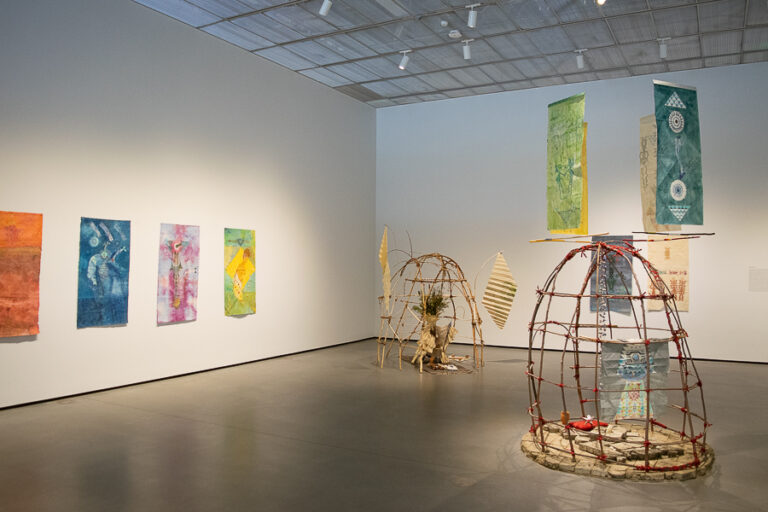
“The most difficult thing for me at this moment is to reckon with how [my] installation has been stripped down to its elements and objectified and that then my piece […] has been isolated from the entire exhibition […] I feel kind of taken apart and censored, at the end of it all,” Herrera Rodriguez said in an interview, referring to her installation, “Grandfather Earth”, in which the eagle feathers were previously featured.

“In an installation, all of the parts become a whole, [but here] only half is being focused on,” she added.

Herrera Rodriguez said that she had never been in direct communication with any of the people who made complaints about the exhibition. The director of the Manetti Shrem was the first to contact her regarding the accusations, she said. She also said that she later received an email from university lawyers asking her to provide the provenance of the eagle feathers used in the exhibit.

To her, the indirect nature of the accusations leveled also indicated that the curators of the exhibition had not been formally contacted by the complainants.

“As an artist, there should have been a point A, a conversation,” Herrera Rodriguez said. “A dialogue, a question directed my way if I was being discussed. My work was being discussed as an element in a museum and everything got taken apart—me, the production of my work, the piece itself, the whole exhibit.”

Herrera Rodriguez, an Oakland-based artist born in Sacramento, identifies with the Tephuanes community in Durango, Mexico. She stressed the complexity of Chicana/o identity, noting that indigenous Mexican tribes may not necessarily be federally recognized but are still provided protection by UNDRIP.

“[Chicano/as] are many people and we are affected by many different political perspectives,” she said. “And it’s a rather short conversation–we’ve only been having it for forty-five or fifty years. This is a momentous time and we deserve compassion and room amongst ourselves and within the scope of the international indigenous movement […] I get frustrated with this idea of federal identity being the only identity possible.”

Herrera Rodriguez also said that her work on the “Grandfather Earth” installation had been a meticulous collaborative effort, in which all of the pieces were handmade. She stressed that the decision to use eagle feathers had been done in good faith, and that the feathers had been given to her son, who is well-versed in ceremonial practices, by other indigenous individuals.

Native American elders in the Davis community have expressed anger about the use of the ceremonial objects.

Reece is a member of the Haudenosaunee tribe and the Odowa tribe and has been an active participant in the native community in California since the 1970’s.

“Those prayer ties originated with the Lakota people and the purpose of them is to offer tobacco when someone is sick or hurt,” Reece said. “But that practice is still ongoing and to tell people before you leave the exhibit that ‘you can make a prayer offering when [you’re] leaving,’ [that’s] not telling you [what the prayer ties] mean.”

Concerns have also been raised about the use of ceremonial practices in artist Gina Aparicio’s installation Caught Between Worlds, Praying for a Better Future. According to Reece, the installation depicted a sweat lodge, which mimics the shape of a womb and is designed to be a place of healing in a spiritual context.

“I was shocked, and I stopped in my tracks,” said Carole Standing Elk, a Native American community member in Davis. “[Aparicio] did this knowing it was controversial and that meant she sees it only as art. She didn’t see it as a practice of something spiritual or religious.”

Aparicio was unable to provide comment before this article went to press.

Standing Elk is a member of the Sisseton-Wahpeton tribe. She defines her membership of the tribe, and her citizenship in the United States, as being integral to her identity.

Raised in South Dakota, she moved to Los Angeles as a high school student under the auspices of the Indian Relocation Act, and since then has been an outspoken activist for Native American rights.

“The university needs to take care of this,” Standing Elk said. “I’m not so interested in an apology as in change, as in something happening on paper, as in something being done.”

According to Reece, this is not the first time UC Davis has been involved in controversies surrounding the use of Native American objects in its campus museums.

“Two years ago there was a potlach installation, [which is] a tradition of about five or six different northwestern nations that extends right into Canada,” she said. “It’s a thanksgiving tradition and [the Manetti Shrem] made an art installation of it.”  

But this lack of cultural oversight isn’t just a problem at UCD.

“In the seventies, new agers, white people, would misuse our ways,” Standing Elk said. “We would protest that and speak against it. Now what happens [is that] it’s these people [that] we allowed into [our community] use it for art and they don’t know what it is.”

Standing Elk likened the religious practices with eagle feathers and with tobacco ties as being similar to how people might feel about other places of worship, saying that, “It’s how Caucasians feel about their churches.”

“It’s like putting the holy eucharist of the Catholic Church, putting it in a museum, and calling it art,” Reece said.

“Our beef is where does the buck stop [with this]? Who is the master? Who is the university?” Standing Elk asked.

Both Reece and Standing Elk voiced their concerns about the exhibition to the Chancellor’s Office. According to Reece, they have also consulted with tribal justice specialists at King Hall, the UC Davis law school, and with the American Civil Liberties Union (ACLU). Reece and Standing Elk are also working with an attorney.

Reece and Standing Elk said that they were referred to Wendi Delmendo, the UC Davis chief compliance officer, to address their concerns. Delmendo declined to confirm whether or not this had taken place, citing privacy policies.

Reece said that they were informed about a whistleblower policy, but they found that no university policies in place that address the issues they brought up.

“It really should be in the hands of the general council of lawyers [at the university] and they should have been involved from the very beginning—we should have been dealing with them initially,” Reece said. “The decision making has been relegated to a compliance officer.”

Both were dismayed to find that the Manetti Shrem does not currently have an in-house curator, but typically uses guest curators for the exhibitions.

“The university has been reckless and negligent about their responsibility, even to themselves,” Reece said. “I would never build a museum and not have a resident recognized curator. If they had a curator, there’d be less of an excuse for the university. They’d know the legal protections that we have and they’d be duty-bound to them.”

Rachel Teagle said the Manetti Shrem is currently in the process of hiring an assistant curator, as the previous one did not return from maternity leave.

“We hope that our demands are very simple,” Reece said. “We want the installation taken down. We want the university and the artists themselves to publicly apologize to the Native American community. The third request is to initiate written policies within the UC system so that this does not happen again. [The UC system] needs to [recognize] and [enforce] the Indian Religious Freedom Act.”

Written by: Rebecca Bihn-Wallace — campus@theaggie.org

Trump’s tweet about Ilhan Omar has life-threatening consequences for millions of Americans

It’s time to see Trump’s online hate speech as a danger to civil rights

Last Friday, President Donald Trump tweeted an edited video that cut between images of 9/11 and clips of Representative Ilhan Omar speaking at a Council on American-Islamic Relations event. Omar, a freshman member of the House of Representatives, was one of the first female Muslims elected to Congress.

The intent of Trump’s message was self-interested — he used Omar as a political weapon to equate Muslims with terrorism, a clear tool to elevate his 2020 re-election campaign. After all, this strategy worked for him in 2016, when he stigmatized Muslims by discussing the creation of a Muslim registry in the U.S. and claiming that thousands of Muslims supported 9/11. While this language proved polarizing for many voters, it also attracted some of his most supportive backers. In the South Carolina Republican primary in February 2016, for example, exit polls showed that 75% of voters favored his proposed Muslim ban, according to The New York Times.

In the tweeted video, Omar is quoted multiple times saying that “some people did something” in reference to the 9/11 attacks — an attempt to make it appear that she was minimizing the severity of the attacks during her speech. In reality, Omar said that Muslims had “lived with the discomfort of being second-class [citizens]” and that “every single Muslim in this country should be tired of it.” She added that the council was created after 9/11 “because they recognized that some people did something and that all of us were starting to lose access to our civil liberties.” (The Council on American-Islamic Relations was actually founded in 1994.)

The consequences of this kind of message from the president go far beyond the confines of online hate speech. Placing images of a tragic terrorist attack next to a Muslim individual perpetuates Islamaphobia. Anti-Muslim sentiment in America increased after 9/11, but the fact that this ideology is now being explicitly expressed by the president has real consequences for the safety and civil liberties of America’s 3.45 million Muslims.

“Since the president’s tweet Friday evening, I have experienced an increase in direct threats on my life — many directly referencing or replying to the president’s video,” Omar said on Sunday. “This is endangering lives. It has to stop.”

With Trump tweeting constantly, many Americans have become desensitized to his hateful language online, assuming that his tweets won’t have a real effect on people’s ideologies or actions.

Throughout Trump’s presidency, however, messages that began on Twitter have become tragic realities. Take his hateful messages about journalists, for example. Five journalists were killed at the Capital Gazette in Annapolis, Md. last June, and bombs were mailed to the CNN offices in New York and notable Democrats in November. Hateful, incendiary messages from the most powerful man in America don’t do anything to promote safety and equality.

The way we interpret what’s on the internet has real-life consequences. The Editorial Board urges readers to take online messages — both from Trump and other outlets — more seriously and to look into the context in which those messages are being produced.

Written by: The Editorial Board

Doxie Derby: Picnic Day tradition with big bark

UC Davis School of Veterinary Medicine hosts a family-friendly tradition with Dachshunds

It’s time to place your bets on your favorite sausage dog, because the Doxie Derby is back. Picnic Day is right around the corner, and while there are many events planned for the day, one of the most anticipated is the Doxie Derby.

This student organized event was first introduced in 1972 at UC Davis and featured many little dachshunds racing for the win. The event is put on by the UC Davis School of Veterinary Medicine (SVM) and is organized each year by the Vice-Presidents of the second year class. According to their website, “Judges and jumbotrons with instant replays will be present to determine who is the ‘fastest wiener’ in town!”

Peter Ellis, the Vice President Class of 2021 at the UC Davis School of Veterinary Medicine, is one of many who are involved in organizing the event. Other VP’s planning the event include Nicole Selk, Rama Ramakrishnan, Gabriella Lawrence, Bradley Whelchel, and Ferdie Gadiel Liard-Ramirez.

“[The Doxie Derby] has been around for more than 30 years and it is an event that is truly unique to the Davis community,” Ellis said. “Each year we have thousands of spectators and 40+ competitors.”

Participating in the contest last year, there were 13 miniature dachshunds, 25 standards and 5 mutts competing. This year, the number has increased. At Picnic Day, you can expect to see 17 minis, 23 standards, and 6 mutts competing.

In 2018, the overall winner was Benson Silva who is planning on returning again this year to defend his title. In 2016, the title was given to mini Pickles, and in 2017 claimed by Maxi Franck. After 2017, however, Franck put up the fuzzy racing boots and sadly retired. But this year, Franck is coming out of retirement and is preparing to compete.

“Preparation is up to each individual contestant, but one could say that each dog prepares his or her entire life for the glory that Doxie Derby encompasses,” Ellis said.

Davis’ veterinary department has certainly grown since it’s first class in 1948. Today, there are about 140 students in each of the four veterinary school classes. With one of the largest and most advanced veterinary training programs in the world, Davis is #1 in the nation according to the rankings of veterinary schools according to the US News and World Report. The Doxie Derby is one event that raises money to support the veterinary programs, according to Ellis.

Sponsors for the event include Purina and Banfield Pet Hospital, as well as Aggie Ally Sponsors: Vetoquinol and Nutramax. Additional sponsors include Royal Canin, Hill’s Pet Nutrition, Merck, and Platinum Performance.

There are three esteemed judges from the SVM faculty. First is Dr. Stephen McSorley, the Director of the Center for Comparative Medicine. Dr. Sean Owens and Dr. Dori Borjesson, two professors of Clinical Pathology, Microbiology, and Immunology, are also among the judges who will be voting on the winning wiener.

Be sure to support our furry friends at Picnic Day during the Doxie Derby event and celebrate this ongoing tradition. It’s sure to be doggone cute!

Written by: Sierra Burgueno –– features@theaggie.org

Student Advisor to the Chancellor application open through April 21

Chancellor May’s student advisors serve as advocates for the undergraduate community

UC Davis undergraduates have the opportunity to apply to be student advisors to the Chancellor. The application can be found on the Student Advisors to the Chancellor website and is due by April 21.

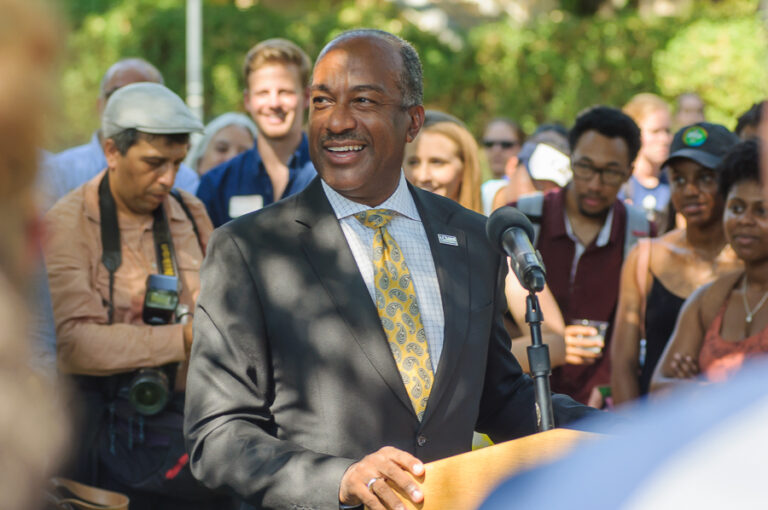
Upperclassmen may apply to be one of Chancellor May’s student advisors, according to Chancellor Gary May.

“I’m excited about each of these positions and hope students will get their applications in by April 21,” May said in an email. “My advisors share student concerns with me, foster relationships with other students, and advise me on a variety of campus issues.”

Any UC Davis undergraduate may apply to be on the Chancellor’s Undergraduate Advisory Board.

“The members of the board are highly motivated student leaders who explore ways to enhance the undergraduate experience,” May said. “The board can initiate, support or coordinate campus-wide special projects and events related to a variety of topics.”

Being a student advisor or serving on the board are both ways for students to develop leadership skills and affect their communities, according to May.

“Both of these opportunities are a great way to work with campus administrators, get more involved on campus, and advocate for your peers,” May said. “For those students interested in developing their leadership skills and having an impact, I hope they’ll apply.”

Abigail Edwards, a fourth-year sustainable agriculture and food systems major, is currently one of two student advisors to the chancellor. Edwards said she was drawn to the advisory position partially because of the unique variety of tasks that are required of a student advisor on a day to day basis.

“It’s a very dynamic position,” Edwards said. “At any time in the week, we might be meeting with senior administrators, meeting with students, meeting with student activists, meeting with students who have concerns, meeting with different center representatives, talking with people from different organizations, responding to emails, going to our office hours. A lot of it is just knowing where to direct people and making introductions to the right people to direct student needs.”

May and his student advisors talk about campus climate issues, such as the fires that occurred during Fall Quarter, and what could have gone better with the campus closure.

“We’ve had a lot of things that have happened on campus this year and I think it’s been a learning experience for everyone involved,” Edwards said. “When things like that happen, we’re there telling Chancellor May how the students are feeling and what we heard as students who are on the ground every day talking to other students and reflecting on how things might have [been] done differently or if something like this were to happen in the future, how we wish it would be handled.”

William Sampson, a fifth-year Native American studies and history double major and tribal affiliate of the Oglala Lakota tribe, is the second student advisor to the chancellor this year. Sampson also emphasized that the student advisors advocate for the student body in conversations with the chancellor and administrators when any issues arise that affect the student body, such as the incident with the fires and campus closures last year.

“If student concerns are being brought up or you’re seeing issues with regards to advocacy brought up, that’s really where we try to step in and work with students as well as on behalf of students to make sure those issues are being advocated for on the appropriate levels,” Sampson said. “We can really start to see some sort of change more efficiently.”

Sampson mentioned several ways students can get into contact with both himself and Edwards in order to express their concerns or opinions.

“Chancellor May is looking for student input and really wants to see what the student perspective is,” Sampson said. “Abby and I, we get folks that will reach out to us via messenger, text, email, in person, and we really try to field concerns, thoughts and really try to elaborate on those in a matter. We’re students too, so trying to bring in our own perspectives as well.”

The university administration operates very bureaucratically, which makes it more complex to achieve outcomes, according to Edwards.

“Coming into this position, I realized everything is so much more complicated than it seems,” Edwards said. “Even at the top level, the chancellor trying to do something is so much more complicated than [signing] off on it and [having it] happen. It’s very bureaucratic and a lot of things are so much more complex than I think we as students really ever are privy to.”

Edwards and Sampson are often the only student advocates in rooms full of administrators.

“When we’re sitting in a room, sometimes we’re around a whole bunch of administrators and Abby and I tend to be the only two undergraduate students in the room,” Sampson said. “Really providing that feedback of what students are feeling is really powerful and we’ve definitely gotten some good, powerful responses from administrators. These positions really do reaffirm that there’s a reason and intention for them being here.”

Sampson said he applied for the position of student advisor because he was concerned about student advocacy as a top priority for an institution that is intended for students.

Edwards emphasized the importance of learning the power of student voices after serving as the student advisor to the chancellor over the last year.

“[…] We’ve definitely been in situations where we’ve had to put our foot down and say ‘No, we are the students, we’re providing you with the student perspective, this university is built for students, this is how we feel,’” Edwards said.

Student representation and sharing of student perspectives are made possible by these advisory positions, according to Edwards.

“I think part of applying for this position is really assuring that there will be a student in the room when these really important conversations are going on, and also it will be a really good student — someone who will advocate with and for students and really get out in the community and make sure that you’re representing the right narrative and that you’re really talking and working with other students, because it’s not just your own voice,” Edwards said.

Written by: Sabrina Habchi — campus@theaggie.org

2019 NBA Playoff Preview

Recapping the 2018-19 NBA regular season, looking to the postseason

When two-time all pro DeMarcus Cousins joined the Golden State Warriors in free agency this past summer, many NBA fans wrote off the season entirely, claiming that this year’s title was already won. Having a starting lineup consisting of five all stars has only been done five other times in league history and hasn’t been done since the 1975-76 Boston Celtics, who went on to win the title.

As the regular season is now in the books and playoffs are just getting started, the Warrior’s competition looks to be drastically more difficult than thought to start the season. Surprising to most, the Milwaukee Bucks earned the best record in the NBA this season, leading the Eastern Conference with a record of 60-22. Team leader and MVP front-runner Giannis Antetokounmpo anchored the Bucks this season, averaging 27.7 points, 12.5 rebounds and 5.9 assists per game.

One of the other captivating storylines this season was superstar Lebron James moving to the west coast to play for the Los Angeles Lakers and whether or not he could instantly turn them into a playoff team. Having been pegged as one of the most dangerous teams to start the season with an over/under win total of 48 games, the Lakers and LeBron fell flat and missed the playoffs with a record of 37-45.

On the other hand, the Warriors met expectations and finished as the top seed in the West, continuing their surge toward the franchise’s first ever three-peat, which would be the sixth in league history. For the third straight year, Oklahoma City Thunder’s Russell Westbrook averaged a triple double, a feat which, three years ago, was absolutely unheard of. In Houston, MVP-candidate James Harden became the first player in NBA history to average 35 points and seven rebounds. Unsurprisingly, these juggernauts all made the playoffs, making for an unusually competitive first round and playoff bracket overall. The Aggie takes a look at this year’s playoff matchups.

Eastern Conference:

No. 1 Milwaukee Bucks vs. No. 8 Detroit Pistons

The Detroit Pistons will have their work cut out for them, given the Bucks boasted the league’s fourth ranked offense along with the top ranked defense. The Pistons were able to snag the final playoff spot in the Eastern Conference with a 41-41 record, beating the New York Knicks in the season finale. In the regular season, the Bucks beat the Pistons in all four of their meetings, a fate that is not unlikely to reoccur. Unless Detroit’s Blake Griffin and Andre Drummond have the series of their lives and are able to somehow shut down Giannis Antetokounmpo, the Bucks should sail right over them pretty swiftly.

No. 2 Toronto Raptors vs. No. 7 Orlando Magic

Although the Raptors parted ways with superstar DeMar DeRozan and Coach Dwane Casey, the Raptors did not lose a step this year and could have possibly even gained one. New Head Coach Nick Nurse led the Raptors and all pro Kawhi Leonard to a league second-best record of 59-24. The Raptors will face a red-hot Magic team who earned its playoff spot by winning 11 of the last 13 games behind all-star center Nikola Vucevic. The Raptors and the Magic’s season series was split 2-2, but that was with Leonard and other key players from the Raptors out with ailments. Although the Magic are hot, their play has been nowhere near the caliber of the Raptors.

No. 3 Philadelphia 76ers vs. No. 6 Brooklyn Nets

The intriguing storyline of this matchup is whether Sixers center Joel Embiid will play. Embiid has struggled heavily with injuries throughout his career, and it appears they have returned. After missing five of the last seven games, it seems more likely Embiid will not be starting the series, which would make that the second year in a row he misses the opening round. The Sixers still have three all stars in Ben Simmons, Jimmy Butler and Tobias Harris, who will square off against one of this year’s top breakout players: D’Angelo Russell. The Nets certainly have the role players to pull off the upset, featured by sharp shooter Joe Harris, who shot an astounding 47.4 percent from behind the arc this year.

No. 4 Boston Celtics vs. No. 5 Indiana Pacers

Both of these teams had rather unfortunate ends to the year, especially compared to that of last season. After leading the East last year, the Celtics slid all the way down to the four spot, while the Pacers lost team leader Victor Oladipo. The Celtics haven’t suffered any tumultuous injuries but have played abysmal defense. Even without Oladipo, the Pacers own the number three defense in the league, giving them a chance to overpower any team in a seven games series, especially one as inconsistent as this year’s Celtics.

Western Conference:

No. 1 Golden State Warriors vs. No. 8 Los Angeles Clippers

The Clippers were the surprise of the season, finishing as a playoff team without an all star, or previous all star, on their roster. This feat has only been done four other times in NBA history, which is why the Clippers should give themselves a big pat on the back. However, it would take more than a miracle for veteran Head Coach Doc Rivers and the Clippers to take down the defending champs. Having a starting five consisting of five all pro players is normally the roster for an all star game, not the playoffs. Any team having to face this year’s Warriors, with likely the most impressive roster they’ve had yet, will likely need a herculean performance to prevail.

No. 2 Denver Nuggets vs. No. 7 San Antonio Spurs

While the Spurs are back in the playoffs for the 22nd straight year, the Nuggets are in for the first time in six years. Despite the Spurs having a lot of experience with all star DeMar DeRozan and Head Coach Gregg Popovich, the Nuggets are a force to be reckoned within all aspects of the game. Denver’s Nikola Jokic has commandeered the Nuggets into the two seed, proving big name players aren’t necessarily needed to dominate a conference.

No. 3 Portland Trail Blazers vs. No. 6 Oklahoma City Thunder

When Jusuf Nurkic went down with a season-ending injury, it was obvious the Trail Blazers wouldn’t be quite the same team. This might not necessarily be a bad sentiment however, as the Blazers went 0-4 against the Thunder in regular season play. Having been dominated that badly, but having done well in the regular season, it is evident the Blazers might benefit from taking a different approach this time around. This series is shrouded in mystery and uncertainty, almost guaranteeing an exciting matchup.

No. 4 Houston Rockets vs. No. 5 Utah Jazz

Both teams have won their last eight out of 10 games, while also going splitting the regular season series against each other. The first two games went in the Jazz’s favor, while the latter two fell to the Rockets. The Rockets surged defensively at the end of the season, while the Jazz flourished offensively, both having been weak spots for each team throughout the season. This matchup is as even as even gets and has the perfect making for a seven-game series.

Written by AJ Seymour — sports@theaggie.org

What we can learn from flat-earthers

I watched the flat-earth documentary on Netflix so you wouldn’t have to, and this is what I discovered

I guess the first thing I should clear up, in order to have any credibility, is that I am not a flat-earther. But that doesn’t mean I am not willing to listen to them, and you should feel the same.

Flat-earthers are passionate people, and they have a message they won’t stop preaching until you’ve heard it: the earth is flat.  

“Behind the Curve,” a 2018 documentary running on Netflix, gives a glimpse into the life of a group of people whose ideas are gaining major headlines. While many people brushed them off as crazy, or conspiracy theorists, I thought it might be interesting to hear what they had to say.

The very nature of being a flat-earther is to question everything, even the most fundamental ideas that we’ve all been taught in school. Darwin was no different — he was heavily criticised for his work on the evolution of species, for questioning ideas that everyone took for granted.

This shared quality of doubt is something we seem to be lacking in the era of misinformation and fake news. If we were to question and find our own answers by doing our own research, we wouldn’t be such a gullible society; a lot of the fake news preachers, like Jussie Smollett — the man accused of staging his own homophobic attack for money — would think twice before spreading lies for fear of being caught.

Another important lesson I learned from watching “Behind the Curve” was that we shouldn’t challenge people’s beliefs and core values, especially when trying to persuade them about an issue.

Flat-earthers will not listen to your science or logic because their beliefs are deeply rooted in doubt and skepticism. When confronted with opposing views, instead of processing your logic, they filter out all information given to them and think of the next counter point.

Sound familiar? This is the same tactic used by climate-change deniers, politicians and anyone who disagrees with anything you have to say.  

These are the kind of people who need to see in order to believe. Instead of trying to prove them wrong, a journey into discovery together will go a longer way (maybe to the edge of the world if necessary).     

Flat-earthers might be so deeply embedded in their own world that their stubborness stops being solely about belief. When people are pushed away by their friends and family, they tend to find each other and bond over feeling neglected. A lot of flat-earthers have been discriminated against based on their beliefs alone, even from the people closest to them. So when they find a movement to be a part of, they hold on tight.

Flat-earthers have found an identity. They’ve made longtime friends, garnered fame and recognition and found a sense of community. Some flat-earthers may not care about the truth if it means losing all they’ve gained instead. So while the flat-earth movement could be just another knowledge-bubble worthy of popping for you, it could mean a life-changing sense of acceptance for them.

Instead of ridiculing flat-earthers for thinking NASA photoshops every satellite picture in order to make the Earth look round, try taking them out for a drink with your friends and treating them like they’re also human.

Written by: Daniel Oropeza — daoropeza@ucdavis.edu

Disclaimer: The views and opinions expressed by individual columnists belong to the columnists alone and do not necessarily indicate the views and opinions held by The California Aggie.

The inner workings of the FADS Picnic Day Fashion Show

Behind the scenes of a popular tradition

While part of the world can anticipate the fashion shows of Fashion Week around the world, Picnic Day visitors can anticipate the annual fashion show hosted by UC Davis’ Fashion and Design Society. It showcases the work of students in the Fashion and Design Society and those in the class Design 179, a capstone class in the design major.

“There is a design capstone class offered winter quarter in which you come up with and create your garment, design concept and your design statement that concisely conveys the idea behind your collection,” said Hannah Torromeo, a design major alumna with a fashion emphasis and Italian minor, who was a designer for the 2018 show.

The class is a lot of work beyond the garments. The students are expected to craft the mood of their show through media and models.

“Once that class ends, there is a lot left to do in the first three weeks of spring quarter that lead up to the show: creating music for our models to walk the runway to, tailoring the garments to make sure they fit just right (as well as any other final touches), rehearsing walking, testing out makeup techniques, choosing accessories, etc,” Torromeo said.

There are different collections featured in the 90 minute show, presented by the students in FADS.

“We have different collections showed in the Fashion Show. One of the collections focuses on women’s health. Another section is called ‘single garment’. Every student who wants to submit their own garment in the competition can get a reward for it. It’s open to every student who wants to apply for the competition,” said Agnes Lam, a third-year design major with a minor in both theatre and art and the current president of FADS.

Lam noted that this year, everything will be new and everything is changing.

“This year, our theme is called ‘Seams Unreal,’” Lam said. “Each year, we have students in 179 and FADS officers choose themes, probably between four or five or more options. We tell [the students] at the beginning of 179. The signature collection class always happens in winter quarter, so students have time to complete their garments on time so they can showcase in the fashion show in the spring.”

This year, the show will showcase the fashion collections of 10 designers, which Lam said is a lot less than the past years.

“This means we only have 10 collections, and each collection has around four garments to show,” Lam said. “Some students can have extra [garments] (maybe up to five). [The collection focusing on women’s health] has about 15 or 14 dresses to showcase because it is a 10-year celebration for this collection.”

Not many students applied to the single garment portion of the show this year, but Lam is hopeful that students will gain more interest in the future.

“For the single garment part of the show, we are probably changing it to single garment presentation because not a lot of people applied for it this year compared to previous years,” Lam said. “Maybe in the following years, we’ll have more students interested in fashion design.”

The students in this class put in a lot of work and effort into the preparation and production of the show.

“To prepare for the fashion show, I have spent about 20 hours a week on garments for my collection,” said Chi Adanna Ilori, a design and managerial economics major and a designer for the show this year. “I have been designing for the [show] since winter break of 2018 when I sketched 22 ideas for my collection. From there, it was narrowed to 12, then five.”

To designers, the actual event brings many emotions. Designers can feel stressed if there is a wardrobe malfunction or if anything goes wrong. The show can also feel very rewarding as designers watch their designs being brought to life.

“The day of the event was pretty stressful and emotional,” Torromeo said. “You want everything to be perfect so there’s a lot of running around and double/triple checking everything to make sure all goes well. It was almost like being in a dream watching the whole thing come together before my eyes. All my months of hard work had paid off.”

Torromeo described her feelings of immense pride in getting to share her art with others.

“There was also a sense of relief that came with realizing that it was all over, but also an extreme sense of pride in the work I was able to present to my family, my friends and my peers,” Torromeo said.

There are two showings for this year’s show: one in the morning at 11 a.m. and one in the afternoon at 1:30 p.m.. The second showing will be livestreamed on YouTube. Both showings will be in the ARC Ballroom. Tickets can be purchased online before the show or at the door.

Written by: LINH NGUYEN –– features@theaggie.org

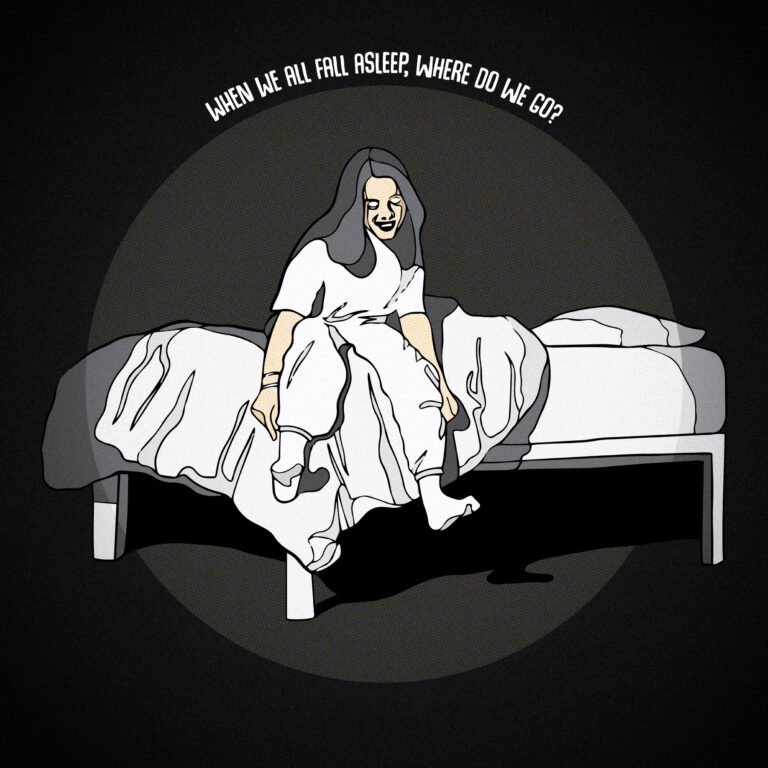
Review: WHEN WE ALL FALL ASLEEP, WHERE DO WE GO?

Eillish gives us power, innocence in her first album

17-year-old Billie Eillish emerged as a star quickly and suddenly. There seems to have been an abrupt transition between Eillish being a homeschooled teenager in L.A. and skyrocketing to fame. Eillish is not only talented, she stands as an object of fascination — authentic and silly, yet mysterious and intimidating to some. Her hypnotic vocal range, stunning facial features and androgynous fashion sense have made her the alternative pop icon of the current era. Crazy enough, such fame was established with only a nine-song EP. Her first full length album “WHEN WE ALL FALL ASLEEP, WHERE DO WE GO?” becomes all the more significant as the legitimate foundations to an already established, yet adolescent, stage of her fame.

Eillish’s strategy is quite simple: she is true to herself and to her music. Afterall, she is a teenager, and the growing pains are obvious in the album. The album’s collections of songs bounce between hard-hitting creepiness, her humanizing innocence and downright goofing around. To prove the point, the intro “!!!!!!!” is simply an ASMR-esque audio recording of her removing her Invisalign braces. She quickly transitions to the power song “bad guy.” With strong, high-pitched electronic beats and simple lyrical rhymes, Eillish sings from the perspective of a homewrecker, claiming she’s “only good at being bad” and that maybe the girlfriend is scared “because I’m wearing your [her boyfriend’s] cologne.” As teenagers do, “bad guy” shows Eillish playing with and hyping up her power and sexuality, exerting the confidence that comes with age. The dance-worthy popular track acts as the catalyst for the more creepy songs of the album — she flips the sex appeal chased by teenage girls on its head.

“You should see me in a crown,” with a dubstep chorus, kicks off the album’s creep appeal. She continues the power trip established in “bad guy,” yet the form is more tyrannical. With the sound of a sword scraping in the background, her power is brutal and even a little scary. She doesn’t deserve power because she’s a dominant female with sex appeal, but because she simply demands it with hushed low vocals. “Bury a friend,” a clear example of Eillish’s lucid dreaming and night terrors that inspired much of the album, is the album’s top track. Siren sounds and Eillish’s altered voice calls us to “step on the glass, staple your tongue,” creating a grotesque aura that places us in Eillish’s psyche and recurring nightmares.

While “bury a friend” places Eillish on a creative and creepy pedestal, it also ushers in the humanzing aspect of her album. What things live in our nightmares and what scares us in our reality? Eillish delves into topics of love and longing, another ode to her teenage mindset but with an emotional vulnerability that is universal to all ages.

“Wish you were gay” demonstrates the young artist’s impressive vocals while displaying a hope for an explanation as to why someone doesn’t love her back. Her tongue-in-cheek ultimately turns heart wrenching with “when the party’s over.” The same feeling of unequal love is expressed with emotional piano, soft cries and desperate lyrics like “I could lie and say I like it like that.” Eillish is not only a dominant female with an alternative personality, she is also equally as vulnerable as the rest of us. The eclectic nature of “WHEN WE ALL FALL ASLEEP, WHERE DO WE GO?” mirrors Eillish’s adolescence, the intense jumble of emotions she is feeling for the first time that we can relate to in one way or another. Possibly the most exciting aspect of the album is that this level of emotional and musical maturity comes from a 17-year-old — the feelings Eillish makes us feel and the psychological places she takes us too in this album are only the beginning.

Written By: Caroline Rutten — arts@theaggie.org

Esketamine: Do right by science, please

The FDA approves new nasal spray for depression, despite failing efficacy standards

The FDA recently approved a new drug called Esketamine, a nasal spray for severe, treatment-resistant depression. My gut reaction to Esketamine was disturbed. Two of three of the drug’s trials did not meet the FDA’s normal efficacy standards, which means the results of the studies were inconclusive. The FDA has allowed Esketamine to go into production, under the brand name Spravato, despite there being such little proof — less than is normally required of other drugs on the market — of it actually helping patients.

As someone with treatment resistant depression, I do not think sloppy science is the best way to help me and others like me. Esketamine could help a lot of severely depressed people, especially the suicidal, and improve the quality of, if not save, countless lives — except we don’t know enough about the drug, and that giant could is an enormously risky gamble with people’s brains. It’s a cost/benefit analysis that doesn’t pan out in the drug’s favor.

Esketamine is based on Ketamine, an injectable, general anesthetic, also known as a psychedelic commonly used as a recreational hallucinogenic. One reason to be highly Esketamine-wary is that it carries with it a high potential for abuse and addiction. The FDA assures us that the drug will only be available through a “restricted distribution system,” as if classifying and monitoring opioids as a highly controlled substance has prevented millions of people from getting addicted. Seeing as how we can’t say whether or not Esketamine even works, gambling with addiction and the possible adverse long-term side effects we know nothing about on a federally regulatory level is practically criminal. Addiction ruins the lives of addicts and hurts everyone around them, and mass producing another highly addictive substance under the pretense that we can control it, when controlling what has come before it has utterly failed, is just plain arrogant and stupid.

Here’s an anecdote regarding long-term side effects and the fallibility of medical practitioners. In the 1950s, doctors gave my grandma, my mom’s mom, a drug while she was pregnant that was supposed to ensure her ability to carry my mom to term. It was the latest, greatest thing. What no one knew were the long term implications of the drug; it would have a colossal reproductive fallout in the female children of the pregnant women. As a result, my brother and I were both born three months early after my mom’s nearly unbearable pregnancies that involved many emergency room trips and blood transfusions. The vast majority of the readership of this paper probably can’t conceptualize an infant minus an entire third trimester. I’ve seen the pictures. It’s horrifying. Google it and then imagine the grey and white matter detrimental equivalent.

Esketamine is the the latest, greatest thing. The newest fad. Like dosing an entire generation of small children with a tidal wave of ADHD meds and then a decade later going, “Oops! Perhaps we were a little trigger happy with the pills.” Psychiatry takes a deft hand, good intuition and patience. Wellbutrin, which has worked wonders for me and many people I know, can take up to six months to manifest full therapeutic effect when first beginning treatment. That is a God-awful wait if you are mired in the soul suffering of severe depression. But if the drug is the right fit for you, the payoff is more than worth it.

I often joke that psychiatry is less like science and more like voodoo. The infinite number of combinations and doses are mind-boggling, and just because you’ve got a hit on a seemingly magic cocktail one month doesn’t mean it’s going to work the next. I’m pretty sure my psychiatrist is a neurochemical artist-alchemist-sorcerer. Dangling untested drugs even hinted at as the miraculous in front of depressed and desperate people, many of whom spend all day wanting to die, is irresponsible and dangerous to a degree that makes me angry. Maybe Esketamine will save countless lives, but maybe it won’t. We simply do not know. To posture otherwise is getting all “Jurassic Park” or something (except with brains). We all saw how that ended — five times. #Chaos #JeffGoldblum #MorbidArbitraryDinosaurBasedHumorMakesMeFeelBetterAboutTheProspectOfLotsOfLivesBeingMessedUp

Put the drug through the proper paces. What happens, for example, when someone has been receiving treatment for years and then stops suddenly because their insurance no longer covers it? Is it safe for pregnant women? Is it safe for the developing brain (which doesn’t stop until 25, ahem, undergrad population)? Esketamine still carries a risk of dissociation, albeit “less” than Ketamine, so how much of a risk of dissociation are we willing to accept in the course of treatment? Dissociation, in my experience, is profoundly unpleasant. I got bronchitis recently, had an allergic reaction and ended up in the ER experiencing a very specific form of dissociation rarely associated with cough suppressant. I don’t have nearly ample the word count to articulate the psychological trauma of that experience. You want to potentially put suicidal people through that?

Add moving forward in such ignorance, plus the risk for abuse and the possibility of inducing psychosis in the severely depressed all together and the FDA folks seem kind of… sick. Stop messing with our brains. We appreciate what you are trying to do, but be mature about it and take the time and effort to do right by the scientific method. Please.

Written by: Lauren Frausto — lrfrausto@ucdavis.edu

Disclaimer: The views and opinions expressed by individual columnists belong to the columnists alone and do not necessarily indicate the views and opinions held by The California Aggie.

When studying abroad isn’t everything and more

Rediscovering a sense of control, stability while abroad

Less than an hour after I got to London, I hid in a stall in the airport bathroom and had a panic attack. Being out of the U.S. for the first time and feeling tired and grimy and homesick was, of course, emotionally draining. But what I was unable to cope with was the feeling that being abroad — the unrivalled dream I had worked to make a reality for several years — was nothing like how it was supposed to be.

I have a very vivid memory of a talk I had with my mom during my senior year of high school. At a time when I was uncertain what I wanted to study or where I wanted to study it, I swore I wouldn’t graduate college without studying abroad. I’m an indecisive person — at times, painfully and debilitatingly so — but the choice to study abroad was always one I had full faith and confidence in.

At dinner that first night, people in my program began making plans to travel to other countries over the first weekend. Almost everyone, it seemed, had extensive experience traveling in other countries. I had never been outside of the U.S. before, so I couldn’t wrap my head around it — I didn’t want to think about venturing out of my new neighborhood, let alone the U.K.

While bombarding my very caring boyfriend with an excess of worries over the phone, he gently pointed out that I shouldn’t and couldn’t make my experiences identical to everyone else’s.

There’s an extreme pressure in a scenario such as this to want to conform — we’re out of our comfort zones in every way and we only have strangers to depend upon for immediate comfort. Yet it’s a futile idea to believe that every experience abroad should be or will be the same. I quickly discovered that it was just silly to feel compelled to completely absorb the group mentality when my priorities were, at times, very different from those around me.

I also realized that being abroad wasn’t everything I expected it to be and more, because I expected it to be everything. The fact of the matter is that I idealized the experience so extremely so as to put myself at a disadvantage — when I arrived and saw that the places and city and the experience I had idolized were real and flawed and different than how I had imagined, I spun myself into a state of overwhelming, impending-sense-of-doom type misery and anxiety.

Since those first few especially rough days, I’ve had other breakthrough moments: on the first day of a class I’m taking on British museums, my professor highlighted our upcoming field trips and I found myself excited for the future of the program for the first time. At orientation, our advisors emphasized the counseling services available to us, and even knowing that was an option was a huge help. And eventually, other people in my program expressed my same worries, and I realized I was not alone.

This isn’t to say my experience now, two weeks in, is completely enjoyable — there are still moments of discomfort and extreme homesickness. The program has, however, forced me to assess my relationships at home. And for this perspective, I am eternally grateful, because I realize just how many support systems I have to depend upon.

A friend of mine who was worried about me after I sent a particularly cryptic text message offered wisdom I greatly benefitted from. He pointed out that being totally out of my elements and forced to abide by a rigid schedule challenged my agency, and as a person who values my independence, it would be important to regain a sense of control.

I took this insight to heart. During my first free morning, I ventured outside my apartment to a cafe one block away and bought myself breakfast. The first weekend, I explored the neighborhood by myself. And the second week, I successfully navigated the local transit system and got myself to the Tate Modern and back alone. Being able to do things on my own gave me an important and valued sense of stability.

I received and pursued other pieces of really great advice from others: the first few days, I packed my schedule so I had less free time to think about home and returned to my apartment exhausted and ready to sleep; I took the first week not only one day at a time, but one hour at a time; I crossed days off my calendar; I did activities I knew would put me at ease and I stayed connected to my friends at home while making a genuine effort to connect with people in my program.

Through this recounting, I hope not to inspire sympathy — I don’t want nor need it. I recognize that I’m incredibly privileged to be able to study abroad and for that reason feeling sad for myself was infuriating. Nonetheless, the experience forced me to sink or swim.

With every passing day, I feel a bit more comfortable. This is, for a number of reasons, in large part thanks to the support and selfless kindness from both my friends and loved ones at home and my lovely new friends in London who are also trying their best to figure out every new day.

Written by: Hannah Holzer — hrholzer@ucdavis.edu

Disclaimer: The views and opinions expressed by individual columnists belong to the columnists alone and do not necessarily indicate the views and opinions held by The California Aggie.

Humor: Gunrock announces his engagement to Rainbow Dash of “My Little Pony”

Here comes the bridle!

Mazel tov! Gunrock, everyone’s favorite cobalt colt, popped the question to his longtime girlfriend, Rainbow Dash, this past weekend. Miss Dash, for those who are unfamiliar, is the star of “My Little Pony: Friendship is Magic,” a popular TV show for young children and men who live in their parents’ basements.

“I’m lucky to have her,” Gunrock said. “I met her when I was at a low point in my life. This beautiful cerulean filly with a rainbow tramp stamp came up to me and said, ‘You look blue.’ And that was the beginning of a wonderful relationship.”

“For the proposal, I took her to a romantic dinner at our favorite restaurant: Golden Corral,” he neighed. “I got down on one knee — which is hard to do as a horse. We’re all knee.” He chuckled. “I pulled out a two-carrot engagement ring. She thought it was delicious!”

“What’d she say, in regards to your proposal?” I asked.

Gunrock grinned. “She said ‘neigh.’”

“Nay? She said no?”

“No, she said ‘neigh.’ ‘Neigh’ is Horse-ish for ‘yes.’ Anyway, Rainbow Dash and I have been having a blast planning our nuptials. We’ve got the venue picked already. Our reception will be at the Buehler Alumni Center on campus. It’s gorgeous, and it has all the amenities needed for our wedding. Aaaaannnnnd we’re also getting our reception comped if we give them a shoutout in this interview. Gotta save that Aggie Cash, amirite? People kept asking us if we were going to have our reception at the equestrian center. Ugh, that place is a dump. Do I look like I was raised in a barn?”

“Where are you having the ceremony?”

Gunrock exhaled. “That was a little trickier to decide. You see, Rainbow Dash and I don’t practice the same religion. Our parents were concerned that we were gonna be unequally yoked. But we’re young, and we’re in love. We’re having a non-denominational ceremony in Davis.”

“Our family and friends will all be there,” he continued. “I’ve invited my mom, my dad and my sister, Pistolpebble. I’ve also invited Chancellor Gary May and the whole football team because AGGIE PRIDE! Rainbow Dash has invited her family, her cast members from the set of ‘My Little Pony,’ Bojack Horseman and Trolley Boy, who played Secretariat in the movie. After the reception, we’re leaving for our honeymoon in the U.K.. We’re going on a tour of the locations where ‘War Horse’ was filmed!” Tears welled up in his eyes, and his words became garbled. “Ughhh, I juust cannn’t-”

“Mr. Gunrock? Are you okay? You’re sounding choked up.”

“I just can’t wait to marry her. Sorry, I’m just a little hoarse, that’s all.”

Written by: Madeline Kumagai — mskumagai@ucdavis.edu

(This article is humor and/or satire, and its content is purely fictional. The story and the names of “sources” are fictionalized.)

Police Logs: Move along

March 29

“Subject sleeping in middle of upstairs walkway between businesses on west side, required he be moved along.”

“Complaint of transient male smoking marijuana outside business windows and reporting party/coworkers unable to open windows due to smell, required he be moved along.”

“Open line with female talking in high pitch voice, then disconnect.”

March 30

“Reporting party’s security lights came on, reporting party went to look outside and saw three other homes with their motion security lights on as well. Requested officer drive through.”

“Male stating he feels bad about something.”

“Transient female sitting on the porch refusing to leave.”

“Vehicle driving erratically—stopping/slowing and crossing over the lines.”

March 31

“Male subject causing disturbance inside the store—picking up decorative items and refusing to put them down.”

April 1

“Reporting party states male subject currently crouched in the bushes outside her window with a bike and tools. Reporting party is concerned subject may have stolen the bike or trying to remove bike parts.”

April 2

“Male subject standing in the car lot yelling and disrupting business. Reporting party can’t understand what he is saying. Request he be moved along.”

“Two transients refusing to leave the property and playing loud music. Request they be moved along.”

WiFi improvements made in Shields Library’s Main Reading Room

Library and IET Staff collaborate to install additional wireless access points

On Tues. March 19, staff members of Shields Library and the Information and Educational Technology (IET) placed new wireless access points in the library to improve WiFi coverage. Their collaborative efforts were a response to increased reports from students regarding slow WiFi in the Main Reading Room, located on the second floor of the library. An article from IET News said that the three new wireless access points will be able to “handle more than 300 smartphones, tablets, or other wireless devices at a time [while] prior wireless coverage came from access points downstairs.”

Chris Clements, the network operations manager for IET, explained that “the funding [for the three new wireless access points] was split between Library and […] Information and Education Technology.”

Members of the UC Davis Library staff Jessica Nusbaum and Dale Snapp provided The Aggie with a joint email statement. As Director of Communications and Marketing for Shields Library and the Head of Information Technology Infrastructure Services, respectively, Nusbaum and Snapp described the increased influx of comments regarding slow wireless coverage.

“Those comments were gradually increasing, so it was clearly time to take action,” they said. “The drain on wireless access points increases as it becomes more common for students to carry multiple wi-fi enabled devices, each of which uses bandwidth [the amount of data that can be sent from one point to another in a certain period of time]. […] It was important to improve the system to keep up with the way students study today.”

Since students typically carry multiple devices including phones, laptops and smartwatches, wireless coverage can be increasingly strained since each access point is treated the same and is using the same WiFi bandwidth.

Snapp gathered feedback from the student body by personally speaking with students studying in the Reading Room and using WiFi. Snapp asked students to test the new wireless access points and had positive responses, describing one interaction in particular.

“I asked one student to test out the WiFi,” Snapp said. “He reloaded the class lecture he was streaming and told me it was the first time he was able to stream a class video without it being choppy. It’s one of the best parts of my job when we’re able to make an improvement to the library’s technology that helps students out like that.”

Because the Reading Room is not the only area of Shields that experiences slower or weaker WiFi coverage, the IET staff and library staff plan to improve these other areas soon.

“While investigating the needs in the Main Reading Room, we also discovered some weak coverage spots on the west side of the second and third floors of the library (above the main entrance),” Snapp said. “We’ve added more study chairs in that area recently as well, and will soon be adding more wi-fi coverage to match.”

According to the article from IET News, the “IET also plans to improve other heavily used locations around campus, with a focus on providing efficient spaces to study.”

Nusbaum and Snapp both encouraged students to continue vocalizing their comments and concerns to the library staff, utilizing the technical support request form on the library’s website.

Written by: Priyanka Shreedar— campus@theaggie.org

Letter to the Editor: Defending the status quo isn’t brave

To the Editor:

Re “Responses to column about Professor Clover showcase university values” by Nick Irvin (column, Apr. 11):

“Forty-five percent of President Donald Trump’s supporters believe that whites are the most discriminated-against racial group in America; 54 percent of Trump’s supporters believe that Christians are the most persecuted religious group in America. There is a crucial distinction, of course, between feelings of resentment and oppression and genuine inequality and discrimination.” — Jason Stanley, “How Fascism Works,” Chapter 6 “Victimhood”

We need to talk about victimhood. Victimhood was originally understood as a status or subject of systematic erasure and violence. Conservatives have since transformed it, describing those who support hierarchical structures and domination as victims when others try to restructure or abolish these violent systems. This transformation has fundamentally obscured what it means to be systematically disadvantaged — it obscures the historical and power relations at work that make “feeling uncomfortable” different than “being oppressed.” Although conservative writers and thinkers have worked hard to erase these historical processes, there is a rhetorical and material difference between being a victim of oppression and being divested of the capacity to kill, destroy, exploit and silence oppressed people.

This transformation allows a writer like Nick Irvin to frame himself as a suppressed voice, as a brave fighter for freedom of speech and as a victim, even as he simultaneously uses his voice to reinforce carceral, harmful systems. Just one powerful example of how his speech is elevated and the speech of others is not: When antiracist organizers attempted to address how “Blue Lives Matter” is racist, no news venue — including The California Aggie — would print our writing until nearly a week later for fear of retribution and violence.

But Irvin was silent on that issue. Instead, he has taken the speech of someone on a public forum — well beyond the classroom — and attempted to attack them for their personal political stance. This seems contrary to his position on freedom of speech. It didn’t occur in a classroom, it didn’t pertain to the university, it didn’t personally affect him. It also runs contrary to the way Davis College Republicans framed Milo Yiannopoulos to the campus — as an innocuous free speech advocate — rather than acknowledging the material harms of his rape culture, transphobia and racism. The sudden reversal of Irvin’s adherence to traditional conservative “free speech” arguments becomes clearer when we take into account that the goal of conservative thought is to claim the status of victimhood while leveraging the power of the status quo.

Right-wing “organizers,” and I use that term loosely, have also attempted to use Professor Joshua Clover’s words as a way to undermine the organizing that has been happening on campus and in the local community following Sacramento District Attorney Anne Marie Schubert’s decision to let the murderers of Stephon Clark go free. As a result, Clover’s words have become tools used to undermine the Black and Brown organizers and the Black Lives Matter movement as a whole. Whether or not Black and Brown people agree with Clover’s words, these organizers used old tweets in a blatant attempt to silence us by proxy. If even a white male professor cannot speak his truth, what hope do I have as a Black trans scholar? The idea that this was done as part of some “counter-cultural” display belies the fact that the “conservative victim” ideology obscures the erasure of Black and Brown organizers who have been on the ground doing this work.

Irvin, some ASUCD Senators and a number of folks on campus have also applied this “expanded” definition of victimhood to police. Referencing the “line between civilization and barbarity” (a dog whistle used in conservative circles to talk about the police controlling and incarcerating Black, Brown and poor people), Irvin argues that police are the true victims. Not the thousands dead at their hands every year, not the Black and Brown people they incarcerate, nor the people they steal from. No. For Irvin and his ilk, the police are the true victims.

In 1959, William Parker, police chief for the Los Angeles Police Department, popularized the ideas of the thin blue line and that police were the “true victims.” In his comments to the U.S. Civil Rights Commission, Parker said, “I think the greatest dislocated minority in America today are the police.” This is the same police chief who recruited police officers from the South in his attempt to militarize and shape his police force as a means to regulate and control their ever-expanding power. This is the intellectual and historical lineage upon which Irvin and other police apologists draw to make their arguments about victimhood today.

But police are not victims. Their structural and historical role within society has been to enforce slavery and segregation, break strikes and patrol borders. Their role is to dominate others. Attempts to rein in their power do not make them victims; rather, checks on police mean that they are less able to victimize people who are historically and materially oppressed. The resolution seen by ASUCD is one attempt to rein in the powers of the police — forcing them to rely on de-escalation techniques, community mental health professionals and others who are better equipped and more helpful in a crisis. Disarming police recognizes that police do not need lethal force to do their jobs. It protects victims. It keeps those of us at multiple structural margins ALIVE.

So who are the victims? I’d prefer to say those of us experiencing and living through systemic forms of violence and erasure are survivors rather than victims. But I’m not willing to accede that word to conservatives either. The people with social power do not get to frame themselves as victims when marginalized people say, “no more.”

Irvin and others like him aren’t victims, and neither are we. In their love of systemic stratification they would like to see us dead or exploited. We want to see us alive and thriving. THAT is the political difference between us.

The writer is a PhD Candidate in Sociology at UC Davis, studying white gay men’s participation in conservative social movements. As a Black trans scholar and activist on campus, they primarily work with labor and anti-racist organizations to build community capacity, a strong understanding of history and an intersectional approach to mutual liberation.

Written by: BLU BUCHANAN, DAVIS, CA

To submit a letter to the editor, please email opinion@theaggie.org.

The Andrew Yang phenomenon

Why young people from across the political spectrum are turning to an innovative Democrat

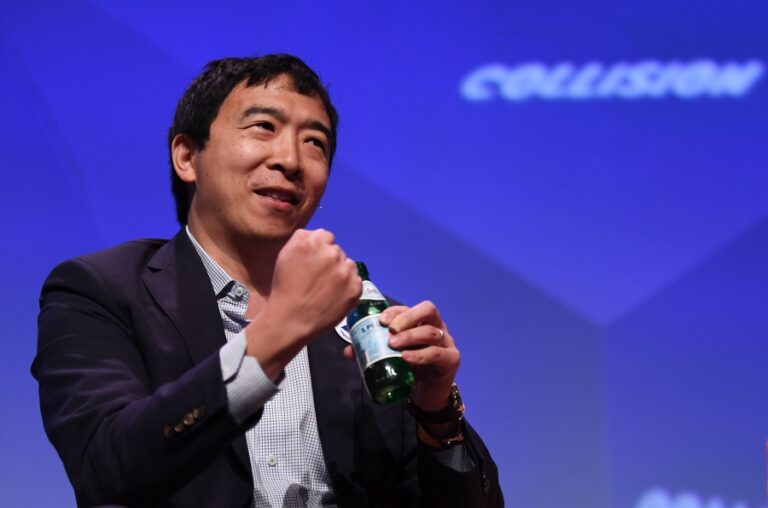
I first heard about Andrew Yang, the entrepreneur turned political dark horse, in late 2017 when researching possible 2020 Democratic presidential candidates. Yang had already filed his campaign with the Federal Election Commission and was thus one of the few declared candidates listed on Wikipedia. At the time, Yang was perceived so far-fetched that he was not listed among Wikipedia’s major declared candidates — he was instead relegated to a low bracket where he was positioned alongside perennial candidates like performance artist Vermin Supreme and businessman Rocky de la Fuente. Dismissing Yang as a long shot, I did not investigate him any further.

Fast forward two years, and I was approached by a largely apolitical friend who asked me about the political prospects of Andrew Yang. My friend had viewed a popular “Ask Me Anything” post by Yang on Reddit and was piqued by his unique proposals, which at the time included policies like the implementation of a universal basic income (UBI) and the switch to an online, ranked-choice voting system. In my infinite hubris, I downplayed Yang to my friend, relying on my now-outdated knowledge to definitively dismiss his chances at electoral success. Still, I was intrigued that years later, Yang was still in the race and apparently making waves on sites like Reddit, a trend frequently seen among political dark horses turned legitimate contenders.

With my attention now drawn to Yang, I turned to his Twitter, where I was surprised to find tweets addressing issues such as job loss due to automation and the decline in American life expectancy (a topic I covered in detail last Fall). Yang’s platforms were particularly intriguing because they existed largely outside of the standard Democratic orthodoxy. Following the link to his website, I headed to his highly extensive policy section, which has been described by some as incredibly detailed. I soon discovered that Yang’s various proposals are also as abundant as they are detailed. His website outlines plans for everything from autism intervention to paying NCAA student-athletes.

Naturally, my next maneuver was bringing up Yang to my brother, a left-leaning techie currently working in Silicon Valley. Coincidentally, it turned out, my brother helped with recruiting forhad been associated with Venture for America, Yang’s non-profit that had placed recent graduates and young professionals in startups across America, particularly in economically-challenged cities. Venture for America is notable because Yang’s experiences there motivated him to run for president. Having witnessed extensive job loss due to automation, particularly among the working class, Yang sought to find methods for alleviating this looming economic disaster. His three main solutions — universal basic income, Medicare-for-all and “human-centered” capitalism — have since become the central tenets of his campaign.

In the weeks following, Yang went from a complete non-factor to an internet phenomenon. In particular, his proposal for a $1,000-a-month UBI has garnered him a great degree of support from the online community, even among more problematic groups. Much like how Donald Trump’s early success in 2015 was, in part, driven by anonymous online meme-makers, Yang has enjoyed a surge of popularity from this same base. He has since surpassed the 65,000 donor mark necessary to make the Democratic debate stage in June, and his odds among online betting sites have skyrocketed to the point where he now frequently outranks establishment politicians like Cory Booker and Kirsten Gillibrand.

Despite having now secured his spot on the debate stage this summer, Yang remains unlikely to win the Democratic presidential nomination. Much like the insurgent campaign of Hawaii congresswoman Tulsi Gabbard, the main goal of Yang’s campaign seems to be bringing new policy topics into the fold, in hopes that they can create greater publicity and potentially influence the frontrunners. But whereas Gabbard hopes to bring attention the topic of regime-change wars, Yang seeks to push the issues of automation and UBI to the forefront of the debate stage.

In spite of his present popularity, Yang faces several key electoral challenges. His lack of established Democratic support is likely to rob him of both liberal and moderate support, and his reliance on small donations may prove problematic as campaign expenses heat up come 2020. Furthermore, his history as an entrepreneur and his endorsement of free enterprise are likely to dissuade the party’s younger socialist wing, who may view Yang’s proposals as inadequate in fully addressing the inherent ills of capitalism. Still, Yang’s presence on the debate stage will bring a degree of political creativity that has been largely absent from modern dialogue, and we will all be better for it.

Written by: Brandon Jetter — brjetter@ucdavis.edu

Disclaimer: The views and opinions expressed by individual columnists belong to the columnists alone and do not necessarily indicate the views and opinions held by The California Aggie.