54.1 F
Davis

Davis, California

Tuesday, December 23, 2025
Home Blog Page 435

Guest: Unconditionally restore women’s rowing and men’s swimming

Chancellor Katehi eliminated four collegiate sports in 2010 that need to be restored

By now, we’ve all heard about the recent college admissions scandal. Shocking, right? That the rich and famous could use their wealth and privilege to slip their academically underqualified kids into top schools through a side door? Outrageous! Damnit, that door was built by those schools so they could slip “blue chip” football and basketball players in! These are imposters! Fakes! Frauds! And somebody besides the schools themselves made money off of it? Off with their heads!

Think about it, people. How can we be offended by one of those scenarios and just fine with the other? What’s the difference?

Now consider this: Your UC Davis predecessors sought to ensure that that sort of side door would never exist at UC Davis. One of the ways they did that was through the Campus Expansion Initiative, which was passed by students and approved by the Regents in 2002. It was precisely the passage of the CEI that enabled the university to move its intercollegiate athletic program (ICA) from NCAA Division II to Division I. In order to collect students’ fees, the university promised to its students that it would observe seven explicit principles. One of those principles stated that, “Admissions and graduation standards must in no way be specially altered or amended for athletes.” That’s the one that was supposed to keep the side door from ever being built at UC Davis.

Pretty smart, eh? And, with a notable exception or two (dozen) during the highly regrettable Katehi years, the university has been pretty good about abiding by that principle and staying out of trouble. But before anyone feels too good, remember there were six other principles.

One of those principles claimed that, “UC Davis cannot reduce its broad-based program but must seek to add sports.” That one was intended to protect sports from being sacrificed for the enhancement of football and basketball — a classic failure mechanism of D1 sports. That’s the one that was utterly and blatantly — even fraudulently — abused when Chancellor Katehi eliminated four intercollegiate sports in 2010. On the basis of state budget cuts, she declared a “crisis” (any of this sounding familiar?) and started tossing assets like women’s rowing and men’s swimming — two highly successful Aggie sports — overboard.  

Katehi got away with it because she didn’t bother to tell anyone at the time there was no state funding in the ICA program to begin with. Moreover, the university’s own annual reports to the NCAA later revealed that the ICA budget was never actually reduced like she said it had to be. Instead, sure enough, the money that would have gone to support those four sports was instead redistributed to the remaining sports — with the lion’s share going to just two. Care to guess which two?

So, fellow Aggies, while those other schools rummage through the rubble of their own integrity, what say we take this opportunity to do a little housekeeping ourselves? How about if you, the Aggie Editorial Board and ASUCD leadership let Chancellor May know that his administration needs to renew the university’s commitment to all seven of those CEI principles and, while they’re at it, make amends for the errors of the past by unconditionally restoring women’s rowing and men’s swimming.

What say you?

Written by: Paul Medved

The writer graduated from UC Davis in 1978 with a B.S. in civil engineering. He has worked in transportation engineering in the Bay Area and Asia for nearly 40 years, now serving as the project manager of the BART Warm Springs Extension project.

Review: “Queer Eye”

Season three churns out more feel-good content

The third season of Netflix’s “Queer Eye” was released on March 15 with eight joyful, uplifting and unapologetically sappy episodes. The show’s stars, referred to as the “Fab Five,” returned with the same charm and chemistry as in previous seasons. The episodes are set in Kansas City, Missouri and focused on a broader spectrum of people than fans of the show have seen before.

This Netflix reboot of Bravo’s “Queer Eye for the Straight Guy” premiered in 2018 and was an instant hit. The likability of the new Fab Five was infectious, from fashion expert Tan France’s posh charm to hair and grooming specialist Jonathan Van Ness’ flamboyant vocabulary and comically overdramatic reactions. Viewers of any background or political ideology can enjoy watching a group of lovable men give makeovers to equally lovable participants, called “heroes” on the show.

Season three was at its best when focusing on more diverse heroes than in the show’s previous seasons. Breaking even further from the original series’ plot premise of gay men giving makeovers to straight men, this season had its first double-feature episode centered around two women. Hardworking sisters Deborah and Mary, who own a barbecue joint called Jones Barb-B-Q, were nominated by Deborah’s daughter so that the Fab Five could teach them how to relax and find time for self-care even with their rigorous schedule.

The highlight of the episode was when France and Van Ness took Deborah to get her missing tooth fixed. For years Deborah had been covering her mouth when she smiled, so seeing her bright and confident grin at the end of the episode was heartwarming.

The Jones sisters exemplify the magic and charm of the show — it’s about watching good, kind people learn to be good and kind to themselves. While the Fab Five is in charge of moving the story along, each episode’s new hero draws viewers back.

The other series highlight was the fifth episode of the season, titled “Black Girl Magic.” The series featured a lesbian hero for the first time, and the Fab Five handled her makeover with genuine respect and care. The episode focused on Jess, a 23-year-old who had struggled with her identity her whole life, both as a lesbian and African-American woman. By the end of the episode, Jess reflected tearfully with the Fab Five upon how she learned that it is “cute and confident to just be black, and be gay and be a woman.”

At the end of the day, the show is not trying to be anything more than it is. While some scenes may feel overly choreographed or prepared for reality TV, the show is good at sticking to its core theme: good people helping other good people. It’s about finding confidence in what you already have and learning to love those things about yourself. The Fab Five rarely try to change people or their habits, which would be an impossible feat in a week’s time. What they do instead is try to show that small improvements can go a long way.

An IndieWire review wrote that, “So much of [the show] is about the battle against inertia, one of the greatest enemies of major life changes.”

The third season strongly emphasized this idea without forcing the heroes too far out of their bubbles or comfort zones. Many themes in the episodes included minor changes in the way one takes care of themselves that, over time, will improve their quality of life.

For example, the season’s second episode “Lost Boy” featured Joey, a program director at an outdoors camp who lacked leadership skills and basic grooming habits. Since Joey lives an active and simplistic life due to his job, the Fab Five did not try to point him in the direction of extravagant grooming or life changes that Joey would not be able to follow. France took him to REI to find outdoorsy clothing that would still look professional, instead of taking him to lavish department stores and forcing him into a suit.

In a recent interview with The Oprah Magazine, the Fab Five discussed the popularity of the show.

“[Fans are] happy to see that there are still people out there that care about others,” said Bobby Berk, the interior designer of the show.

The original “Queer Eye” on Bravo was set in a time where members of the LGBTQ community were fighting for tolerance and civil rights. Today, in a post-Trump era, the show works to bridge the gap between different communities of the country, showing that anyone can come together in the name of self-improvement.

Written By: Alyssa Ilsley — arts@theaggie.org

Davis Ace Hardware, Aggie Ace Hardware stores sold to new owners

Ownership transfer expected to take place mid-April

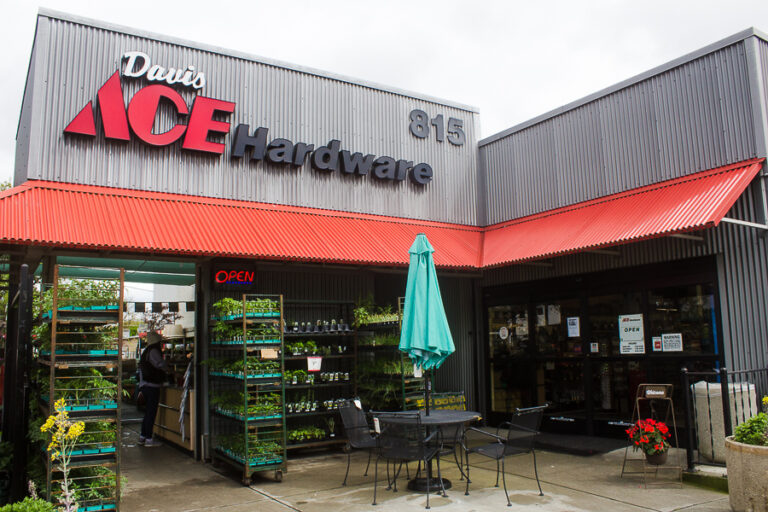
Davis Ace Hardware and Aggie Ace Hardware are being sold to Crown Hardware, a hardware store company based in Orange County. The deal is expected to close in April, and the stores’ names will not be changed.

Davis Ace Hardware and Aggie Ace Hardware, according to their websites, sell “traditional Ace items, including paint, hand and power tools, electrical, air filters, lighting, plumbing, fasteners, automotive [supplies, and] camping supplies.” Despite the similar name and logo, they are not owned by the nationwide franchise Ace Hardware.

The new owners, Mark Schulein and Matt Fales, own 17 other hardware stores across California, Arizona and Hawaii. Schulein and Fales own the Crown Hardware franchise, primarily based in Orange County. COO Matt Fales and his wife are both UC Davis alumni.

“They are truly excited to bring their experience back to Davis,” said Jennifer Anderson, the former owner of Davis Ace Hardware, in a letter to customers. “We know they will continue our traditions and build new ones in our community and for our employees. This is really important to us.”

Anderson has been the president of Davis Ace Hardware since the 1960s. Anderson’s family has been involved with Davis Ace Hardware for 105 years — since 1914. The store recently celebrated its centennial.

The Anderson family acquired full ownership of Davis Ace Hardware in 1962. In 2012, they opened Aggie Ace Hardware on Covell Boulevard. Along with Davis Ace Hardware and Aggie Ace Hardware, Anderson’s family also owns the Rock Yard, Cookery & Company and Davis Ace Garden & Pet store in downtown Davis.

Donna Martin, who commutes to Davis for work, expresses long-standing appreciation for Davis Ace Hardware.

“I’ve been coming here for over 30 years,” Martin said. “They’re great, I really like them. They have everything, even little stuff that you’re looking for, they’ll have it.”

Martin did not know about the hardware store’s change in ownership.

“I just hope they don’t change anything,” Martin said.

Although Anderson is selling the store, she says she and her husband Doby Fleeman are not retiring.

“We know this is the time for us to step aside, and we wanted the right team to take over,” Anderson said. “Doby and I are not fully retiring. We will still be in the Davis community — committed to Davis Ace and Aggie Ace success through Crown. We still own other properties and investments.”

Anderson said she and her husband are selling the store because their children have careers, so it’s difficult for the store to stay in the family.

“Our children, now in their 20s, are firmly committed to their individual career directions,” Anderson said. “We love our business and have achieved the results we have with our incredible team of employees.”

Written by: Hannan Waliullah — city@theaggie.org

Fourth annual Davis Cherry Blossom Festival held

Bakuhatsu Taiko Dan, Sudwerk Brewing Co. host Japanese cultural celebration with music, activities

Bakuhatsu Taiko Dan invited musicians, visual artists and performers to Sudwerk Brewing Co. for the fourth annual Davis Cherry Blossom Festival. The free festival — which took place from 11 a.m. to 10 p.m. on Saturday, April 6 and from 11 a.m. to 9:30 p.m on Sunday, April 7 — has grown exponentially to become a full-fledged regional music festival in addition to it being a celebration of Japanese culture and spring.

The festival was founded by UC Davis third-year anthropology graduate student Gregory Wada and UC Davis alumna Kathleen Brandl. Wada is a Bakuhatsu Taiko Dan member and Brandl was the dock store manager at Sudwerk. This year, Dan Martin is the manager at Sudwerk and has continued the tradition of helping host and organize the festival.

Wada explained his and Brandl’s vision for the festival to foster understanding between people and to show that Davis is a diverse community.

“We had this conversation just about genuine human interaction,” Wada said. “There’s so much we can do to promote justice and things in our world through making the right policy decisions and fighting those battles — you know, yes, those are all important — but I think also there’s this landscape that needs to be addressed too that is just people interacting with people and promoting that civility and just that friendliness.”

“What we’re trying to do is really get people together and let them have a good time together,” Wada said.

Wada also encouraged students to come to see musical acts they couldn’t see anywhere else. Headlining artists at this year’s festival were Tanukichan, Jessica Malone, The Brothers Reed, The Midnight Dip and Big Sticky Mess, although more than 30 musical acts were present over the two days. The festival also featured other Taiko and cultural performances and a local artists’ gallery. Interactive educational and cultural demonstrations and games were available for kids.

In its first year, the festival acted as a fundraiser for Bakuhatsu Taiko Dan to host the Intercollegiate Invitational. Bakuhatsu Taiko Dan is a UC Davis performance drumming group that practices kumi-daiko, which Wada described as “one part tradition and one part jazz.” He explained that taiko’s history in the U.S. is one of expression and inclusion, aspects the festival aims to reflect.

“We try to get people from different walks of life and different genres of music,” Wada said. “But also, this year in particular, we have a lot of female-led bands and women artists.”

In keeping with this theme of supporting women, a percentage of proceeds from Sudwerk’s limited-edition sakura (cherry blossom) beer went to My Sister’s House. This Sacramento-based organization serves Asian and Pacific Islander women and children impacted by domestic violence, sexual assault and human trafficking by providing support and safe havens.

Nilda Valmores, the executive director of My Sister’s House, said it is an honor for the organization to be the charity beneficiary of the festival.

“Funds raised will be especially helpful to help us purchase culturally appropriate outreach materials and conduct efforts that can help My Sister’s House more effectively prevent and intervene on issues involving domestic violence, sexual assault, and human trafficking, particularly for those victims / survivors that primarily speak Asian languages,” Valmores said via a written statement. “We are thankful to all the Davis Cherry Blossom Festival patrons!”

Portions of proceeds from vendors also supported My Sister’s House. Vendors included Street Cravings, Pollo Inferno, Koizora, Underdog Grill, Davis Creamery, Dumpling House, Puros Churros, Kobe Mini Mart, Korndogg Balloon and Face Art, Farm Fresh to You and SAFE Credit Union.

In addition to music and food, the festival offered: “Ikebana (flower arrangement) demonstrations by the Sacramento chapter of Ikebana International; origami demonstrations by Davis Origami Group; shibori tie-dying with Alicia Decker of the UC Davis Design Museum; mochitsuki (rice-cake making) sponsored by the Buddhist Church of Florin; shishimai (Japanese lion dance) by Miyo Uchida from the UC Davis Japanese department; and live painting by Gregory Shilling,” as listed on the press release.

Uchida spoke about shishimai and her experience with performing.

“It is usually performed for New Year’s festivals to bring good luck and then to just get rid of bad luck, so that’s why it’s a very cheering and festive dance,” Uchida said.

Uchida said she would be happy to perform at the festival and other places in the future.

“I hope I’ll get invited again,” Uchida said. “It’s a short piece — like five to seven minutes — so I’ll go anywhere to just show this lion dance […] to spread this joy through the lion dance in this region.”

Visual artists included JYNcreations, Pielodoodles, Smada Earrings, Shigeko Fukuya, Jeremy Dang, Alex Ryo Simotake, Kimchi Kawaii, Blythe Nishi, Of the Dirt Pottery, Brad “Brakinja” Kincaide, Celeste Wong Ceramics and Bike City Woodworks.

Other musical artists included A Few Drinks In, Busy Lighthouse, Carsick, Cloud Hats, Emmet Francis, golfdads, Indigo Elephant, Katgrüvs, Killer Caribou, Lillian Frances, Lost Again, Psychedelic Dub Orchestra, Sturdy Skeptics, The Chandelier Ravens, The Modern Wild, Violet Island, Your Local Cemetery, B. Hold, Video Game Orchestra, DJ Allen Brookside and Lo & The Mix.

This year, Davis Cherry Blossom Festival received support from the Yolo County Visitors Bureau and the City of Davis, which awarded the festival a recently-implemented grant from the Arts and Cultural Affairs Fund to support emerging programs and festivals in the city. This helped Bakuhatsu Taiko Dan and Sudwerk pay for the performing artists and make professional sound and staging possible.

Rachel Hartsough, the program manager with City of Davis Arts & Culture, said the city is pleased to support Bakuhatsu Taiko Dan.

“The things that I’ve been really excited about are that it’s a student group who just seems to be incredibly well-organized and professional, and has been super, super on their game as far as really being open to collaborating with other community partners, and creating something that’s going to celebrate culture in the community,” Hartsough said.

UC Davis Global Affairs, the Davis Odd Fellows Lodge and the Sacramento chapter of the Japanese American Citizens League also sponsored the festival.

Joanna Regulska, the vice provost and associate chancellor of Global Affairs, commented on its support.

“Our mission in Global Affairs is to inspire global curiosity, understanding, and engagement — and local events like this that bring together so many different people for a shared celebration align so well with this mission,” Regulska said via email.

Additionally, the Japanese American Student Society, Nikkei Student Union at UC Davis and Davis Aggie Lions Club provided volunteers that helped with managing traffic, staging, leading the arts, crafts and games for kids, welcoming attendees and helping with the mochi pounding demonstration and artists’ gallery.

Allison Huang, the assistant director of the festival and a member of Bakuhatsu Taiko Dan, said that it has been rewarding to see the festival’s growth.

“I think the most exciting thing about the event is really seeing everyone come together for our cause this year,” Huang said.

Written by: Anne Fey — city@theaggie.org

Legislative action needed to keep California’s legal cannabis industry afloat

California Senate Bill 67 proposed to revalidate cannabis farmers’ temporary licenses

California’s legal cannabis industry is about to experience a shortage in its marijuana supply, experts say, as nearly 10,000 cultivators’ licenses are set to expire by the end of April. Without a valid license, these farmers will be forced by the state government to halt their operations.

This is expected to cause major disturbances down the industry’s supply chain if a legislative fix doesn’t pass. Enter California Senate Bill 67. Published on Feb. 19, SB 67 would revalidate temporary licenses for farmers who have submitted their applications for a permanent annual license.

“If SB 67 doesn’t happen, that will have repercussions up and down every single aspect of the supply chain,” said Matt Z’Berg, the vice president of public affairs for Perfect Union retail stores, Fireworx Farms and Metta Distribution and Transportation LLC. “So cultivator, distributor, testing lab, retail — retail includes store and delivery only dispensaries — and then there are manufacturers too. Seed to sale, everything begins with the cultivator.”

Starting on Jan. 1, 2018, cannabis farmers were able to apply for temporary CalCannabis Cultivation Licenses through the California Department of Food and Agriculture (CDFA). This cultivation license is required to commercially grow and distribute to dispensaries in California.

These temporary licenses were valid for 120 days with an option for 90-day extensions. The extensions allowed commercial cannabis farmers to continue their operations as they applied for permanent annual licenses. Close to 3,000 licenses have already expired, with the remaining set to expire by April 30. Although 7,000 farmers got their applications in on time, only 52 Adult-Use Cannabis Cultivation licenses have been approved, according to the CDFA license database.

The issue is that it could take up to two months for the bill to reach Governor Gavin Newsom’s desk, leaving farmers unable to distribute their bud and posing a threat to the legal cannabis market.

“Even if they do that super fast — get it to committee and get it passed as soon as possible — there are going to be lots of temporary license holders that have no clear path forward and are going to have a legal and ethical quandary as to whether to continue their operations or not,” said Gabriel Garcia, Principal at Garcia Law Corporation.

The bill has an urgency clause that would allow the temporary license extensions to take immediate effect once signed.

“It’s going to create some very interesting issues, not only from a criminal law aspect, but also it’s going to be a civil act because there will probably suits against the state — you can imagine that,” Garcia said.

The newly legalized marijuana industry in California has experienced turbulence in its transition to becoming a government-regulated industry, and this poses the biggest detriment yet. SB 67 serves as a bandage, an immediate fix to buy the CDFA more time to process these applications.

“SB 67 is trying to right a wrong that is currently happening, which is that […] the desks at the state level are piled up too high with these cultivators trying to get their application to the state for their annual license,” Z’Berg said.

Z’Berg is part of a vertically-integrated cannabis operation in Sacramento that encompasses cultivation, distribution and retail — a rarity in the cannabis industry. At the time of the interview, the temporary cultivation licenses for all three Fireworx Farms locations were still valid, but upon publication, one of their licenses had expired.

“We have applied for our state annual license, but obviously we haven’t gotten it yet,” Z’Berg said.

Z’Berg said this backlog was a long time coming, posing the question, if the CDFA issued nearly 10,000 temporary licenses, how did this pile up happen? Did the CDFA not expect a large number of these temporary license holders to apply for their permanent licenses before their expiration date?

“I don’t think that [the CDFA] didn’t prepare, I think we are in a challenging situation given that in 2018 the regulations were in flux and we had five different drafts of the regulations,” said Jacqueline McGowan, a consultant at K Street Consulting LLC, who also works for several operators throughout the cannabis supply chain and industry.

Farmers had to consistently modify their annual license applications to adhere to a fluctuating regulatory environment. These readjustments created more work for both the CDFA and cultivators, forcing the CDFA into a time crunch.

In 2016 — 20 years after California became the first state to legalize medical marijuana — Proposition 64, the Adult Use of Marijuana Act (AUMA), was passed, legalizing cannabis for adult recreational use. On June 27, 2017, Governor Jerry Brown signed Senate Bill 94 into law, which consolidated the Medicinal Cannabis Regulation and Safety Act (MCRSA) and Prop 64 to form a singular regulatory and taxation framework called the Medicinal and Adult Use of Cannabis Regulation and Safety Act (MAUCRSA).

Of California cities, 85% still ban recreational dispensaries. Regardless of the state law, SB 94 gives local governments the ability to issue licenses, zone or ban cannabis businesses through a dual-licensing system.

Unique to the state of California, this dual licensing means that both state and local governments set regulations for the industry — all operators must abide by the state regulations, but local governments can tack on additional regulations. In order to obtain state cultivation licenses, businesses must be granted local licenses first.

This complicated policy framework is putting a stress on the legal market, which is already struggling to compete with the ever-present black market.

“All this is doing is helping fuel the black market that we then have to compete with,” McGowan said. “I don’t like to call it black market — I like to call it ‘duty-free’ — and the duty-free market is winning at the moment, while the legal industry is in a severe recession.”

The California Cannabis Advisory Committee within the Bureau of Cannabis Control (BCC), said in its 2018 annual report that the regulatory process has not given unlicensed businesses incentive to seek licensure, and has not de-incentivized the underground market in order to effectively protect public health and safety.

“The dual nature of the licensing process (i.e., state and local) has created a bottleneck in licensing at the local municipal level where unless a local municipality actually issues a license, permit, or other authorization, businesses are not able to apply for a state license,” the report stated.

In addition to filing 44-page license applications, businesses must also pay a steep annual fee, ranging from a couple thousand dollars to $78,000, depending on the size and type of site.

“The black market isn’t just about people who are gangsters and felons and weird stuff like that, they are people who are pointing a finger at SB 67 and this whole problem and saying, ‘see, look at how jacked up this whole thing is,’” Z’Berg said.

Cultivators are also taxed $9.25 per dry-weight ounce of cannabis flowers, and $2.75 per dry-weight ounce of cannabis leaves, which are collected by manufacturers and distributors and paid to the state. For small farms that have been distributing to the medical market for decades, these ‘excessive regulatory burdens’ that came with Prop 64 would be enough to put them out of business, which is why many are staying in the ‘duty-free’ market.

In February, the California Department of Tax and Fee Administration (CDTFA) reported $103.3 million in tax revenue at the end of the fourth quarter, far below the initial $185 million estimate.

Taxes collected by the state from across the industry through Prop 64 are allocated to community grant programs that fund job placement assistance and substance use disorder treatment, California universities to evaluate effects of the measure and studies that measure the risks and benefits of medical cannabis and the California Highway Patrol to create and adopt methods for detecting impaired driving.

As policymakers are quickly learning, there are still logistics that need to be worked out.

“Many of these temporary licenses will expire in the coming months, and we are making every effort to complete the review of the annual applications for business entities operating under soon-to-expire temporary licenses,” said Rebecca Forée, the communications manager in the CalCannabis Department at the CDFA, via email. “However, it can take months to complete this application review process because an annual license application has more requirements than a temporary license application.”

The way the system is set up now, it can take many months for the CDFA to process a single application.

“Each application must first go through a local authorization verification process before it can be reviewed by the state, and local jurisdictions have up to 60 business days to respond to this request for local authorization,” Forée said.

The applicant must receive approval, or no objection from local jurisdiction in the 60-day period. From there, the application moves through two more stages, each of which can take up to 90 days to process.

“Incomplete applications cause many delays in this process, as each applicant has to be notified about any deficiencies in his or her application, and applicants are allowed 90 days to respond to deficiencies,” Forée said.

Forée confirmed that this “backlog” was expected, and said that the CDFA was prepared for the volume of applications.

“Processing the annual licensing applications is our top priority and staff at CDFA’s CalCannabis Cultivation Licensing Division have been working overtime to expedite the process wherever possible,” Forée said.

Despite the CDFA’s preparedness, the legislative fix from SB 67 is necessary to keep the legal cannabis industry running.

“The bottom line is this: This bill is going to protect thousands of cannabis farmers, in particular, who did the right thing and applied for a state license after the passage of Prop. 64 but their temporary license is about to expire,” said Senator Mike McGuire, the lead sponsor of the bill, in a hearing, according to The Sacramento Bee.

As for the cultivators whose licenses have already expired and can no longer distribute their product, they must decide whether to halt operations, or proceed with caution.

“I don’t see why there would be opposition to [SB 67] by anybody because the legislature has already decided to have this legal cannabis market,” Garcia said. “This is a bad situation that needs to be alleviated and can only be fixed through legislative action, so I think they will take it seriously and get it to committee as quickly as possible to buy the agencies more time to start approving annual licenses.”

Written by: Grace Simmons — city@theaggie.org

Initiative to make UC Davis herbicide-free gains momentum

Grounds department already taking steps to minimize herbicide usage

The ASUCD Environmental Policy and Planning Commission (EPPC) is making progress towards making UC Davis a herbicide-free campus. This initiative follows in the footsteps of the Herbicide-Free Cal campaign, which started after two UC Berkeley volleyball players discovered the use of Monsanto’s RangerPro on the field surrounding their volleyball courts in 2017.

Herbicides destroy unwanted vegetation, such as weeds, through a complex mix of chemicals, with glyphosate almost always being an essential ingredient. Glyphosate is listed under Proposition 65 as a chemical known to the state of California to cause cancer. Monsanto’s RangerPro, along with many other commonly used herbicides, contains this hazardous chemical.

UC Davis uses Monsanto products all over campus, except for its athletic fields. UC Davis has had Monsanto representatives on its advisory board, according to a Food and Water Watch report on corporate influence on university agricultural research.

Monsanto’s name is often in the news, most recently in a court case where a federal jury ordered the company to pay more than $80 million in damages. It was determined that the company’s product Roundup partially caused a California man’s cancer.

Alice Beittel, the chair of the EPPC and prominent leader of the movement, further discussed the process of transitioning UC Davis into a herbicide-free environment. She explained that this campaign is part of a larger movement of students working together to eliminate toxic herbicides from all UC campuses.

“We are partnering with other UC campuses and Food and Water Watch,” Beittel said via email. “Working with students at Herbicide-Free UC campaigns at UC Berkeley, UC Riverside, and UCLA, we are pushing for an herbicide-free UC system and calling on the University of California to join the long list of our fellow research institutions that have already reduced or eliminated the use of herbicides on campuses.”

According to Tyson Mantor, the superintendent of Student Housing and a key member of the grounds and landscape services team at UC Davis, these efforts have been successful. Mantor said that the University of California Office of the President (UCOP) has recognized these concerns coming from various UCs, and they are trying to create a universal policy towards reducing and potentially eradicating herbicide use for the entire system.

“We’ve been working very hard, as have all the UCs and the industry in general, to try and take a more sustainable perspective,” Mantor said. “For example, we’ve made the promise that, excluding sports turf, across campus we will only use 100% organic fertilizers […]  We have also implemented a process of applying — I think we’re almost at 1,000 yards — mulch across campus, to try and bring our herbicide or sprayed chemical use down.”

These efforts have not been mandated by the UCOP, which is still trying to figure out what kind of policies to implement and when. These actions are simply UC Davis’ independent method of taking initiative to lower their chemical usage.

Mantor noted that he had heard of the EPPC’s initiative and believes that UCOP’s newfound mission to eliminate herbicides is a direct effect of the EPPC’s proposals.

Beittel expressed her appreciation for the grounds teams’ work towards a cleaner campus. She noted several different methods they’re experimenting with, including aeration and composting.

“UC Davis groundskeeping has already been stepping up the transition off of herbicide use and to organic management practices,” Beittel said via email. “If you see large piles of much around campus, you are witnessing first hand an effort to reduce weeds and soil erosion through increased mulching. [They] are also testing out compost tea applications to increase the bioactivity of soils […] If you saw many small holes drilled into the main quad’s soil, this is an effort to aerate the soil to create an environment that is a better fit for grass than weeds.”

Caroline Newell, the president of the Environmental Club at UC Davis, feels not enough students are aware of the extent of herbicide use on their campus. She suggested a few simple solutions — Davis can either hire individuals to tend to the weeds, instead of using hard chemicals to treat them, or opt for a more natural substance.

“I think maybe the better way to do herbicide treatment would be to use naturally derived, organic herbicide treatments,” Newell said. “Personally, I’m not completely anti-chemical use. I think that when you have an invasive species, you have to do integrated pest management, which is, you use chemicals but you use them the least amount possible.”

Newell suggested that pairing integrated pest management with a hands-on weeding approach may be the best way to approach the situation.

Written by: Claire Dodd — campus@theaggie.org

Paul Kim hired as new director of UC Davis Counseling Services

Students, community express mixed reactions to Kim’s hiring

Paul Kim, the previous interim director of UC Davis Counseling Services, has been hired as its permanent director. His hiring comes on the heels of the controversial firing of former SHCS Director Sarah Hahn in Feb. 2018. He had been in this interim role since July 2018.

“Dr. Kim is a passionate advocate for students, a thoughtful and trusted leader and an enthusiastic colleague to campus and community partners,” said Margaret Walter, the executive director of Student Health and Counseling Services, to UC Davis News and Media Relations.

Milly Judd, the director of the Mental Health Initiative at UC Davis, however, has expressed concern about UC Davis’s decision to hire Kim instead of Ruben Valencia, the current chief of mental health at California State Prison, Sacramento.

“To be honest, I’m pretty disappointed in the decision to hire Paul Kim as the new Director of Counseling Services,” Judd said via email. “In my and many other students’ opinions, Ruben Valencia was a far better choice. In fact, we were worried that Paul Kim might be chosen mostly based on his previous ties to UC Office of the President, so the night before the final decision was made, a number of mental health organizations on UCD campus wrote letters as to why Valencia was a better choice.”

Judd, who said she participated in interviews and luncheons with both candidates, referred to Kim’s ideas and responses as “surface-level” and “short-sighted.”

A graduate of St. Mary’s College of California and UC Berkeley, Kim came to work at UC Davis in 2009. He helped establish the Community Advising Network and, in tandem with the Cross Cultural Center and the Asian American Studies Department, worked to increase minority student access to mental health care at the university. In 2014, he began working as the director of Multicultural Services within the counseling unit and became interim director of SHCS in July 2018.

Kim’s interest in mental health care was sparked after he created an academic retention center for Asian-Pacific Islander students as an undergraduate. Through this work, Kim became aware of the degree to which mental health issues can adversely impact students’ academic performance.

“In that role, I worked with students who were on academic probation or subject to dismissal and I realized that many of the students were having academic difficulties due to mental health concerns,” Kim said via email. “I was referring many students to the Counseling Center and I wanted to be in a position to help those students with their mental health concerns so that they could be academically successful.”

At UC Davis, Kim has had a positive experience, referring to Counseling Services staff as “diverse” and “exceptional.” In the future, he hopes to “improve access [to services], [continue] to work on [our] cultural competency, [strengthen our] relationships with students and the campus, and [develop and implement] a strategic plan.”

“Student Health and Counseling Services […] are working hard to reduce stigma of mental health and help seeking behaviors, especially with underserved and marginalized student communities,” Kim said.

Kim also addressed the most pressing mental health issues that college students face today, noting an increase in the demand for these types of support services on university campuses. As Kim noted, according to the American College Health Association-National College Health Assessment II, administered at UC Davis in 2017, the primary difficulties that students experience include anxiety, sleep problems and stress.

In the Health Assessment at UC Davis, 61.8 percent of undergraduates reported feeling that things were hopeless at some point within the last twelve months. 15.5 percent of undergraduates had seriously considered suicide, while 2.6 percent had attempted it.

Self-harm and depression were also significant factors in the assessment. 8.8 percent of undergraduates reported having engaged in some type of self-harm, while 49 percent of undergraduate students said that they had felt so depressed at times that they found it difficult to function.

“As the demand for services increases at UC Davis, it should be noted that some of this increase may be due to the important work that we have done around stigma reduction and having multiple points of entry through the Community Advising Network (CAN), our counselors embedded with our academic partners, and our counselors in the Behavioral Health and Psychiatry,” Kim said.

Written by: Rebecca Bihn-Wallace — campus@theaggie.org

Humor: Local germaphobe/health guru dies grisly, unsanitary death after contracting infection from soap dispenser at vegan cooking retreat

Avert your eyes, and anything else that can contract infection

D. Finn Kumquat was quite successful as an avocado — f***ing hell, excuse me, I’m sorry — was quite successful as an advocate of the health food movement. He spent decades serving the local community from his private practice as a “licensed” diet, health, wellness, motivation and primary personal companion plant positivity consulting professional.

It is with heavy hearts that we relay the sad news that D. Kumquat passed away this past weekend after an unlikely series of freak coincidences, none of which were preventable by his healthy lifestyle and extreme germaphobic tendencies.

For six months, D. Kumquat had been living in virtual isolation with several other health food aficionados at a vegan cooking retreat at a Freeganist grass-fed, cage-free, free-range, GMO-free, pesticide-free, certified transitional cooperative farm on the California coast.

A few Meatless Mondays ago, during an artisanal probiotic juicing class, D. Kumquat accidentally sliced his hand while cleaning the blade of his spiralizer. He lost concentration because a classmate, Annie Yocksidance, tripped over the compost bin, spilling a bowl of passion fruit, açaí berries and other superfoods all over the room while Teacher Quinua Aquafaba answered questions on differences between the Whole 30, keto, paleo, vegan, gluten-free, raw-food, vegetarian, fruitarian, flexitarian, pescatarian and pesca-pescatarian diets.

D. Kumquat immediately ran to the restroom to clean the wound, taking every precaution to prevent infection. This was his fatal mistake. Cole Estheral had just left the restroom after a mud bath, leaving grime on the soap dispenser, and out of habit D. Kumquat began furiously pumping the soap dispenser with his injured hand, allowing germs to enter the wound. A lifetime of germaphobic habits had left him with a weak immune system that allowed the infection to fester.

For the next week, he did a detox cleanse, engaging in some much needed LTC, using essential oils for aromatherapy and maintaining his CR by eating only an AI of GRAS foods, like kombucha and ACV dressing, all while tracking his BMI, ADME, calories and CALERIE. Alas, the infection prevailed, taking a gruesome toll on his overly purified and sanitized body.

While D. Kumquat never introduced himself as “Dr. Kumquat,” most people came to believe that the “D” did indeed stand for “Dr.” and that he just went by “D” to demonstrate his great humility. Unfortunately, the secret of whether or not he actually was a qualified doctor will go with him to the grave — well, actually, to his biodegradable burial pod that will eventually turn his body into a tree (unfortunately there was a mix-up and he will instead become a persimmon tree rather than a kumquat tree, as he requested).

Nonetheless, we will always have confidence in his medical competence because of the giant inflatable carrot on his office roof, the neon “HEALTH GURU” window sign and the official-looking framed documents on his wall that were possibly diplomas from some prestigious online university.

*Acronym and Abbreviation Guide for those persons actively disengaged from engagement in Earth-positive personal dietary practices: GMO (Genetically Modified Organisms); LTC (long-term care); CR (Caloric Restriction); AI (Adequate Intake); GRAS (Generally Recognized as Safe); ACV (Apple Cider Vinegar); BMI (Body Mass Index); ADME (Absorption, Distribution, Metabolism, Excretion); CALERIE (Comprehensive Assessment of Long-Term Effects of Reducing Intake of Energy); D (Doctor).

Written by: Benjamin Porter— bbporter@ucdavis.edu

(This article is humor and/or satire, and its content is purely fictional. The story and the names of “sources” are fictionalized.)

A streaming future will change the way we play and experience entertainment and video games

Google’s Stadia represents a large leap forward for gaming

Netflix. You would be hard-pressed to find someone who didn’t have access to it by way of a subscription or a friend’s password. The behemoth streaming platform has revolutionized the way we experience and consume movies and TV. Google wants to change that with video games. Enter Stadia.  

Announced on March 19, Stadia aims to revolutionize the way we play games. Stadia is “a new gaming platform from Google for playing AAA video games across all kinds of screens,”  according to Google. Out are the four-hour downloads; in is access to gaming in seconds. Stadia will save time and money for everyone. Regular consoles often cost around $500 at launch. Stadia (so far) has no upfront price for hardware. It’s simply a cloud-based software, playable wherever.

And when I say wherever, I truly mean wherever. Stadia is playable on laptops, phones, desktops and myriad compatible devices. PlayStation has tried to enable remote play from laptops and phones with PS4 Remote Play, but it simply does not work over mediocre wifi speeds. Having Stadia available on countless platforms can lead to a similar type of success that Fortnite had by being accessible on every possible screen. Now, we don’t know if Stadia will be free as an interface and store for games, but it could share a similar strategy with Fortnite by being widely available.

As the first, first-party launch in the industry since Microsoft launched Xbox in November of 2001, the first rendition of Stadia will be shaky. There’s no doubt about it. That’s just the way first attempts in technology work. But one day, Stadia will signify the future of games. Even in beta, Assassin’s Creed Odyssey ran smoothly at 25 mbps — it would be a near miracle if Stadia held that performance at launch.

Stadia will succeed because it has Google at the helm. And what Google has been doing for the last couple of years is important. It has been buying up loads of talent in the industry to create first-party titles that will drive sales for games on Stadia.

Critics of Stadia propose questions like: What happens to the modding community with streaming games? Will lousy internet speeds really hold up for consistent performance? Will Google’s monopoly take over our data in the gaming industry as well? First off: Each of these questions are absolutely valid. Google is a massive corporation that has never been in touch with the gaming industry. Internet speeds in the less populated corners of our country have been holding back gamers from going fully digital for years. Just look at the awful launch of Xbox One. But it’s time.

To all of these concerns, I believe we will have answers.

1. The modding community will be just fine; games like Skyrim have built mods into updates in their games. See: every rendition of Skyrim.

2. Internet speeds will no doubt labor some users in the beginning of the service, but like all technologies, internet speeds will just get better and better. A 25 mbps speed should be capable in all areas.

3. Google cannot monopolize an industry that already has technology behemoths Sony and Microsoft in it, with Nintendo off to the side doing what they always do.

4. We still don’t have all the information yet. Speculation is cool. But hold the criticism until we have all the details.

Youtube and Twitch offer free streaming for experiencing games, but what if you could play those games in the same way? That’s where games are headed. Young gamers right now know that streaming is the future. Microsoft was far ahead of its time in imagining an all-online future at The Electronic Entertainment Expo 2013. In the world we live in, many are already consuming all the content they love for free on YouTube (hey, Google) and Twitch (hey, Amazon). Throw in Netflix and HBO Go for the streaming content, and all you need is capable internet to get the job done.

The future of gaming and entertainment is here. Google’s Stadia is the first step into an all digital, all streaming future. Seamless connectivity and ease-of-entry are what the industry has lacked for decades. With the barrier of entry lower than ever, Stadia represents the largest leap forward in gaming since the rise of mobile games.

Written by: Calvin Coffee

Disclaimer: The views and opinions expressed by individual columnists belong to the columnists alone and do not necessarily indicate the views and opinions held by The California Aggie.

The changing outdoor culture

More people are going outdoors — and this isn’t necessarily a bad thing

Ask anyone who’s been outdoorsy in the West since the ‘70s and they can tell you they’ve been witness to the changing culture and experience of natural places over the last 50 years. Old timers — be they climbers, hikers, surfers, bikers, backpackers or from any other crew — gripe about the overcrowding that now characterizes parks and once-remote places. They have a point: as technology makes exploring easier and safer every year, more people visit national parks, explore new areas and get themselves out there than ever before.

Every sport and community has its mythical spot, and for climbers, Yosemite Valley is the first that comes to mind. Immortalized in campfire lore, legendary photographs and movies like “Valley Uprising,” the Yosemite Valley of the ‘60s and ‘70s has taken on the feeling of a lost paradise. It’s no longer possible to live in the way the tight-knit crew of climbers were living back then; too many people want campsites, a shot at the classic routes or are only in town for a weekend.

And, yeah, it’s frustrating. It’s not really possible to live like that in the Valley anymore, or at least not possible enough for a community to be built around it. There are parallels in a lot of the outdoor sports that have generated powerful subcultures and communities.

Beyond even the niche desire to escape and climb or surf or ski or anything else is the critical desire in many people to be alone outside. So often, going outside is an escape, a way of looking for a place where instead of being someone in a crowd, you’re just someone, and the idea that places once overwhelmingly remote are now tourist attractions can be genuinely scary.

Plus there are the dumb butts who don’t know how to — or don’t care to — treat natural spaces right: the more people use public land, the more of these fools there are as well. Personally, few things get me goin’ like the negligence and vandalism that happen on public land. It hurts to see people mistreating the little land we’ve collectively agreed to save, and it feels to me like further evidence that we need the land we’re destroying. It makes me genuinely angry, sad and depressed.

I’ve had a lot of conversations and read a lot of articles in the past couple years about how outdoor culture is changing. Some people try to cheer me up, some voice the same anger or fear and some haven’t ever really thought about it. The fact is, though, that as much as I or anyone else personally feels sad or scared about more people using public land, it’s a really, really good thing.

For example: A hot issue of Trump’s presidency has been his attempt to reduce the Bear’s Ears National Monument of Southern Utah. The monument was designated by President Barack Obama back in 2016 and protects 1.3 million acres of land, including important climbing, mountain biking and backpacking destinations as well as a large amount of important Native American history. Trump’s planned reduction would drastically reduce the size of the monument, stripping a number of important Native American heritage sites and outdoor recreation areas of protection.

In response, a large group of big-name outdoor retailers (shout-out to Patagonia) threatened to hold a massive annual retail convention planned to be held in Utah in another state. The companies were leveraging what has become a billion-dollar industry against the money and political power of more traditional industries like oil, and though the Bear’s Ears protections are still an ongoing debate, the companies’ actions mark a larger changing view of natural spaces. As more people go outside, vastly more money is being spent on travel and gear, providing strong economic incentives to protect the spaces driving the ecotourism industry. And as more people fall in love with the spaces we’ve protected, there’s a growing political energy toward continuing to protect them.

In very real, practical ways, the continued protection of open spaces is dependent on people using them, and resentment about this is a dangerous form of entitlement. At the end of the day, the only thing I really resent about more people getting outside is when they do it rudely and anonymously. The outdoor community is a powerful force, partly (or mostly) because of a sort of grassroots, family-style support system that has grown out of mutual support in the face of physical challenge and awe-inspiring beauty.

There’s an easy solution to that twinge of bitterness at having to share special spots with people who don’t know them or love them yet: initiate a kook. Tell people when they’re doing something uncool (looking at you, Joshua Tree vandals). Smile at the people you pass on the trail, maybe even chat about the weather. Outdoor culture is no doubt changing, but whether it’s for the better or the worse is entirely up to the people who are part of it right now.

Written by: Anna Kristina — akmoseid@ucdavis.edu

Disclaimer: The views and opinions expressed by individual columnists belong to the columnists alone and do not necessarily indicate the views and opinions held by The California Aggie.

NCAA Tournament in Review

Virginia captures first National Title in thrilling overtime win over Texas Tech

In what turned out to be a tournament lacking in upsets and traditional program dominance, the University of Virginia reigned supreme after pulling off an 85-77 overtime win over Texas Tech in Minneapolis on Monday night — a year after becoming the first top-seeded team to be upset by a 16 seed.

    Coming into the tournament, Duke, Gonzaga, North Carolina and Virginia were all number one seeds. However, all eyes were on Duke freshman Zion Williamson, the probable number one overall pick in the upcoming NBA Draft and his top-seeded Blue Devils. Williamson had a dominant season averaging 22.6 points and 8.9 rebounds a game all while shooting 68 percent from the field. Williamson also won the AP Men’s college basketball player of the year award by a landslide and joined Kevin Durant and Anthony Davis as the only players to win the Naismith Trophy as a freshman.

With a supporting cast of other potentially NBA-bound players like RJ Barrett, Cam Reddish and Tre Jones, this seemed like the Blue Devils’ tournament to lose. According to Forbes who had odds from BetOnline.ag, Duke entered the tournament as outright favorites to win the National Title, followed by Gonzaga, Virginia and North Carolina. In ESPN’s Bracket challenge, Duke was the most popular pick to win the tournament, with 37.7 percent of brackets projecting a Blue Devil championship.

But Duke’s Achilles heel throughout the season was its three-point shooting. Shooting a mere 30.2 percent from beyond the arc, the Blue Devils ranked 328th in the nation — near the bottom of college basketball. In today’s era, not being able to shoot the three consistently can be a team’s downfall in such an offensive-minded game. After surviving very close games in the second round and the Sweet 16, Duke fell to Michigan State in the Elite Eight by a score of 68-67, most likely ending the college careers of Williamson, Barrett and Reddish as they embark on their journey to the NBA.

    Fellow one-seed and ACC rival North Carolina was ousted in the round before, falling in the Sweet 16 to the five seeded Auburn Tigers — a team that surprised many in the college basketball world and was the lowest-seeded team remaining in both the Elite Eight and Final Four. Head Coach Bruce Pearl’s Auburn squad came into the tournament as the unexpected champions of the SEC and intended to maintain that championship momentum deep into March.

The Tigers did just that, but ultimately suffered a heartbreaking loss to Virginia in the Final Four. Up two with very little time left in the game, Auburn’s Samir Doughty fouled Virginia’s Kyle Guy as he attempted a three-pointer with 0.6 seconds left. There was little question a foul was committed, but controversy surrounds a sequence that took place five seconds earlier, where Virginia’s Ty Jerome seemed to commit a double dribble violation that was not called. Guy would go to the line and sink all three free throws, giving Virginia the 63-62 win and a spot in Monday’s National Championship game.

The second favorite coming into this tournament was Gonzaga, but Head Coach Mark Few’s Bulldogs failed to make the Elite Eight. The Zags have been to only one National Championship game and lost it in 2017. Outside of two years ago, they have been given a high seed yearly but repeatedly fail to secure the school’s first title.

This year, the Bulldogs lost to three-seeded Texas Tech in the Elite Eight. The Red Raiders were seeded high, but not many expected that they would make it to the National Championship game. Fueled by stellar defense and clutch shooting, Texas Tech controlled most of its Final Four showdown with Michigan State and ran away with a 61-51 win to advance to the school’s first ever National Championship game.

This was the first final since 1979 that included two teams playing in their first-ever national championship game. Both teams appeared nervous from the jump, starting the game shooting a combined 1-10 from the field in the first five and a half minutes of play. A Jerome three-point basket with a second left in the first half gave Virginia a 32-29 lead at halftime.

Coming out of the half, Virginia scored the first six points and extended its lead to nine. The Cavaliers seemed to be in control throughout the half, but Texas Tech then went on a 9-0 run to tie the game and eventually lead by three with 22 seconds remaining. Desperately in need of a basket, Virginia turned to sophomore guard De’Andre Hunter, who drilled a three from the right corner with 12 seconds left to send the game to overtime.

In the extra period, Red Raiders senior guard Matt Mooney gave Texas Tech a quick three-point lead. But once again, another clutch three-pointer from Hunter gave the Cavaliers a lead with two minutes remaining. Virginia never looked back and went on to win its first ever national title by a final score of 85-77.

   Overall though, in a tournament that’s known for its buzzer-beating shots and wild upsets, this year’s tournament was one that was, for the most part, predictable. For example, the record for most correctly predicted games in a row on a March Madness bracket was broken this year by 40-year old Gregg Nigl, who picked the first 49 games in the tournament — shattering the previous record of 39.

The lowest seeded team to advance to the second round was the 13-seeded UC Irvine Anteaters out of the Big West Conference. UC Irvine beat four-seeded Kansas State in the first round but lost to 12-seeded Oregon in the second round. Oregon was then the lowest seed that made it to the Sweet 16, where its season ended in a loss to Virginia. The other 15 teams in the Sweet 16 were all between a one and five seed. Of course, there were several highly-competitive games that went down to the wire, like Duke-UCF, LSU-Maryland or Purdue-Virginia but low-scoring, slow-paced games like Oregon-Virginia and Texas Tech-Michigan reminded viewers that this still is amateur basketball.

Aside from Williamson, this tournament seemed to lack individual star power, leading some to question whether the ratings for the Final Four and National Championship will dip due to the elimination of Williamson and Duke. There is no question that the teams in the Final Four were quality programs, but they did lack the star power that can attract the casual fan. But regardless of how relatively predictable this tournament was or how many tuned in to watch, the 2019 NCAA tournament did deliver its fair share of exciting games, heroic performances and controversy.

Written by: Omar Navarro — sports@theaggie.org

Sarah T. Stewart: Parade Marshal for Picnic Day 2019

From advancing planetary science to leading a rich, historic Davis event

The 105th Picnic Day, to be held on April 13, is an event filled with engaging activities and an opportunity for others outside of the Davis community to look at what the campus has to offer. While many people are working diligently to plan out the course of events for the exciting day behind the scenes, Dr. Sarah Stewart, this year’s parade marshal, has been given the grand opportunity of representing Picnic Day as well as the Davis community. Her work in planetary science has been recognized as the embodiment of this year’s theme of adventure –– Stewart was recently awarded a MacArthur Foundation “Genius” Grant for her work on celestial collision and the formation of the Moon. Stewart shared her past experiences with Picnic Day and what it means to her to be a Parade Marshal.

While Stewart may not have been aware of the true breadth of her work, it all came to fruition once she found out that, by nomination, she was chosen as this year’s parade marshal.

“The student organizers for Picnic Day put out a call for nominations for the marshal,” Stewart said. “Someone nominated me and went through to find a good match for the theme, and they thought me and my work were a match for Adventure Awaits.”

The annual theme of Picnic Day is a celebration of one of the many aspects of UC Davis that make it a unique environment for the students and faculty. From building “Foundations for the Future” in 1960 to “Leaving a Mark” in 2007, themes have given the event a personalized feeling that brings the community together.

“The idea that the campus is full of adventure, and you come to Picnic Day to discover it and be surprised by everything happening on campus truly makes it a celebration of adventure,” Stewart said. “Showing up and wandering around campus in a new space, meeting new people, there’s always something to be found.”

With everything there is to see on campus, Stewart hopes to introduce a new atmosphere this year that truly lives up to the theme of adventure.

“I’m trying to encourage people to do something different,” Stewart said. “I’ll be going to events this year that I have never been to. I want students to purposefully seek out that surprise moment. That will be my call to action that morning: find something new.”

Much like the new students on campus today and the prospective students soon to come, Stewart recalled her first Picnic Day event and remembered the shock of seeing all there was to UC Davis in one day.

“I had that same experience of, ‘There is so much going on,’” Stewart said. “With my kids, the first thing we did was see all the animals since that’s one of the main attractions on campus. I’ve been in the parade with my daughter, so I’ve walked in the parade before with her and many other groups.”

Along with seeing the animals and dairy presentations, Stewart also enjoys exploring the chemistry show, making sure to attend that event whenever time permits her. The Battle of the Marching Bands is another highlight that Stewart encourages students to see, noting it as another of her favorite events.

In recent years, Stewart has worked with the geology department to bring new and engaging activities for students during the day.

“The dinosaur hats you might see on campus, those are from us,” Stewart said. “We spend the weeks leading up to Picnic Day making them in-house, taking time with volunteers gluing together some hats and then they’re gone in a few hours.”

Another presentation Stewart implores students to attend is the sandbox visualization, an interactive tool that allows students to see the differing water levels attributed to varying terrains.

“As you move around the sand and build mountains or lakes, a projector that controls [the] water level will fill in where water would flow in real time,” Stewart said. “The software for this was written here, and we’ve sent it all around the country as a teaching tool.”

Stewart’s newest addition has been her Shock Compression Lab, which has allowed her to give some insight to students about her work.

“In the lab, we conduct impact experiments to study what happens when planets collide,” Stewart said. “It’s an amazing facility and it’s one of the few times that students can come and take a peek at what goes on.”

Stewart recalled the years prior to the introduction of her lab and remembered the excitement she had knowing what new events were to come on Picnic Day, something she enjoys seeing again this year and hopes students will enjoy as well.

“You do see a lot of the new things being built on campus, gorgeous places like the Shrem Art Museum, and what events these places will be hosting,” Stewart said. “When you see the continual rejuvenation of the campus that occurs just by waiting a year, it’s like looking at snapshots in time.”

Although Stewart has a busy schedule ahead of her as Picnic Day draws nearer, she finds great pride in knowing she was chosen as the person to lead Picnic Day this year. With her goals and excitement for adventure, Picnic Day is aimed to be as extraordinary as ever.

Written by: Vincent Sanchez –– features@theaggie.org

Gunrock wins Aggie affection as both a friendly, furry mascot and favorable Cavalry sire

Gunrock isn’t only the lovable Aggie mascot –– he was also a real-life champion breeding sire

With his white toothy grin, wide eyes and huggable navy blue fur, all UC Davis students know him well. But what is our mascot? An Aggie? A Mustang? He is actually Gunrock. His appearances are always well received at sports games and school events, as he can be seen high-fiving students, posing with children of alumni and cheering on sports teams with the Cal Aggie Marching Band-uh!

However, Gunrock is more than just the mascot all Aggies know and love. Gun Rock (yes, two words) was a real Thoroughbred stallion who lived at UC Davis from 1921 to 1931. Instead of navy blue, his coat was a golden chestnut color, matched with a white blaze on his face and white leg markings.

Born in 1914 as an offspring of the British Triple Crown winner in 1903, Rock Sand, and race mare Gunfire, Gun Rock lived his early years under the care of Clarence Mackay, his breeder who was a U.S. telegraph company mogul. With high-class breeding, Rock Sand was related to two American racing legends, as he was the grandfather of Man O’War and great-grandfather to Seabiscuit, according to Michael Mienaltowski, a professor in the animal science department. His mother Gunfire was the great-great-granddaughter of Lexington, another famous American racehorse.

With his prestiged racehorse pedigree, Gun Rock was owned by various wealthy sporting elite. Several millionaire race enthusiasts passed his ownership around, including Standard Oil heir Herbert Pratt and financier August Belmont Jr., who bred Man O’ War and built the famous Belmont Park racetrack in Elmont, New York, according to a UC Davis Centennial Article on Gun Rock.

While he never had any big racing wins, Gun Rock became a legend for other reasons. Since Belmont was a great supporter of the U.S. military, he donated Gun Rock and many of his other prized horses to the U.S. Army’s old Remount Service, according to Mienaltowski. This branch, within the Department of Agriculture, placed hundreds of breeding horses and mules on land-grant colleges and certain private farms across the country to provide horses for the cavalry.

Stationed at UC Davis, which in the 1920s was known as the University Farm campus, Gun Rock become a valuable military stud. He was bred with 476 mares, some owned by the university and the rest from varied farms across Northern California. According to a 1930s edition of the Aggie Alumni Association bulletin, Gun Rock lived a pampered life in pastures during his 10 years spent in Davis.

The cavalry bought most of the foals sired by Gun Rock, but many others ended up being used for other purposes, such as racing, showing, rodeos, ranch work or pleasure riding.

In 1932, Gun Rock’s time in Davis ended as he was moved to a facility in Utah. Shortly after his move, he passed away. Upon his death, a reporter at The Aggie in 1932 recalled him as “a beautiful animal with class and breeding evident in every line.”

As a sign of respect and to try and keep his legacy alive, the mascot for the university was named and modeled after him. The current mascot, named Gunrock, is a Mustang, however, not a Thoroughbred.

Gunrock has not always been the mascot, since Davis has gone through many different characters. But, to honor the agricultural heritage of the UC Davis campus, referring to students as the Aggies has remained a constant.

In 1924, Gun Rock, the actual horse, accompanied the men’s basketball team at games and rallies as their mascot. After Gun Rock moved away, a more traditional mascot also named Gunrock was used instead and persisted into the 1970s until Ollie the Mustang replaced him, according to a UC Davis Centennial Article on Gunrock. In 1993, the cow was adopted by students as the mascot, but the administration and alumni were not in agreement. After decades of not having an official mascot, in 2003, the mascot was officially identified as the Mustang once again. After students and community members voted in an online poll, the name Gunrock returned when it won with 98 percent percent of the votes.

Today, Gunrock continues to be the official mascot and ambassador of UC Davis and Aggie athletics. The legacy of the 1920s champion breeding sire still lives on every time his mascot version can been seen galloping around athletic games and community events, receiving smiles and cheers from everyone he passes.

“To put it simply, Gun Rock (and now Gunrock) represents traditions of agriculture, service and strength for UC Davis, the premier agricultural school in California and I dare say the nation and the world,” Mienaltowski said.

Written by: Margo Rosenbaum — features@theaggie.org

Prediction for Davis schools’ enrollment to decline

Starting conversations about Davis’ high housing prices, the future of DJUSD

Due to lower birth rates, rising housing costs and the mobility of families, Davis Demographics & Planning, Inc. forecasted a gradual decline in enrollment numbers for Davis Joint Unified School District in the coming decade.

At the school board meeting on March 21, Davis Demographics’ annual report and presentation projected that the enrollment in 2028-2029 will range from 8,222 to 8,330 students, lower than the 8,580 students in 2018-2019. The reported enrollment numbers inform the school board of its budget, as funding from the state of California is dependent on the number of students in each district. The district maintained enrollment at around 8,500 students in past years by filling open spots with students living outside of the district or out-of-boundary.

“If we have a class that has a capacity to have 25 students and we only have 24 students in that classroom, we are potentially losing the money that we could have if we filled that seat,” said Maria Clayton, the public information officer for DJUSD. “Similar to an airline, you pay to send the airplane across, but if all the seats are not filled, you’re not optimizing your ability to get money for that flight.”

As housing prices continue to increase, more families are moving away from Davis and younger families with children are less inclined to move in. Residential students have declined by 580 students from the 2008-2009 to 2018-2019 school year, requiring an average increase of 79 interdistrict transfers each year, according to the Davis Demographics 2019-20 Report.

“We’ve been really fortunate that we have high quality programming that people who live in other places are attracted to,” Clayton said.

According to the report, local birth rates decreased from 530 average births per year from  2007 to 2011 to 503 average births per year from 2012 to 2016. In general, Californian women are having children later due to economic or personal factors and more availability of birth control, according to an article by the SF Chronicle. The decreased number of births could mean fewer students entering kindergarten each year.

The Davis Demographics 2018-19 Presentation, which measures the percentage of families moving in and out of the district, featured the net retention rate for mobility at 55 percent. The positive value indicates that more families are moving into rather than out of the district, but the rate was lower than in previous years.

A decline in overall enrollment would require the board to reevaluate its budget, possibly resulting in programs being cut, less pay for teachers, larger class sizes and, most drastically, closure of campuses.

“There’s only so much revenue that’s available, and the only way to change our outcome is to lower expenditures and raise our revenue,” Clayton said. “That is the struggle or challenge the board of education faces on how to make sure our financing is matching what kind of programs and expenditures that we have.”

While low birth rates and expensive housing has affected California, neighboring states face increasing student populations. Julia Ann Easley, a news and media relations specialist for UC Davis, expressed the difficulty in predicting future UC Davis admissions with lower local enrollment. The number of UC Davis applicants and enrollees have steadily increased in the past 10 years.

“UC Davis receives thousands of applicants’ applications from across California, and across the country and around the world,” Easley said.

Recently, both UC Davis and the City of Davis have contributed to more affordable housing with the approved expansion of West Village Student Housing and the Davis Live housing project, among others. The report indicated an increase of 100 single-family detached units in certain areas and multiplied by the SFD K-6 student yield factor, 0.265, it may increase enrollment by 26.5 students. As more UC Davis students are in need of housing, and more families depart from the district, the Davis housing crisis is in need of relief.

“The quality of Davis schools is a benefit to our community,” Clayton said. “It’s in everyone’s interest to make sure that our schools continue to be attractive and as successful for our students as possible. It’s really important for the community to understand the challenges faced in our school finance situation right now.”

Written by: Renee Hoh — city@theaggie.org

Yolo Hospice expands palliative care

Dignity Health Woodland Memorial Hospital provides grant for YoloCare

With assistance from a community grant provided by Dignity Health Woodland Memorial Hospital, Yolo Hospice will soon expand its palliative care program called YoloCare.

According to Yolo Hospice’s website, “The YoloCare palliative care program provides an extra layer of support for people dealing with a serious illness. We are here to help you navigate the often confusing healthcare system.”

YoloCare encompasses support beyond diagnoses or medicine. Currently, the program reaches about 55 patients. Louise Joyce, the director of community development at Yolo Hospice, explained how YoloCare started.

“YoloCare is our palliative care program, [and] it was founded in 2016,” Joyce said. “Back in 2016, partnership health plans were interested in gathering some data about the needs for palliative care within our region. Through a criteria process, four hospices were selected to participate in the pilot program. It went for a year and it provided a service, and we would get reimbursed from partnership health funds.”

Joyce noted how the program was continued a year after the launch of the pilot program.

“It was a wonderful exercise in gathering data about the patients that were using the emergency room for not just their medical attention but their medical needs,” Joyce said. “Lots of people on palliative care have a chronic or serious illness requiring an extra layer of supportive care. Once the pilot program was over, we launched our palliative care program and kept it going.”

Craig Dresang, the CEO of Yolo Hospice, noted how the grant they received will be able to increase the number of clients by 33 percent — to about 80 clients.

“We will seek out new clients among the most vulnerable residents of Woodland and West Sacramento, those typically without health insurance, which is just beginning to cover palliative care,” Dresang said to The Davis Enterprise.

Joyce also indicated that attaining the grant from Dignity Health went relatively smoothly.

“Dignity Health was very clear about the criteria, and they set up a workshop way before the grant was due,” Joyce said. “We got to sit down with other nonprofits in the area, and received information from Dignity and brainstormed about collaborating together. A huge thing about Dignity was about collaboration — collaborating with like-minded nonprofits that are doing the same work — [and] it’s huge because they understand that together we can accomplish so much more and reach a larger audience.”

Dresang suggested that supportive care was important, as receiving news about an illness can be difficult for patients to grasp and cope with.

“Getting a diagnosis of a serious illness can be devastating and overwhelming,” Dresang said to The Enterprise. “Our team provides not only comfort care but also guidance through the healthcare system and through learning to live with an illness. Research shows that leads to reduced stress levels and better health outcomes.”

With the grant from Dignity Health, YoloCare hopes to include more underserved individuals.

“[Dignity Health] wanted to reach out to the underserved in the east and west Woodland, so we’ve partnered with Fourth and Hope — who provided services to homeless people, as they are underserved — and we’ve also partnered with Community Care […],” Joyce said. “We are going to provide education around palliative care, we’re going to be collaborating on resources for the homeless back and forth, we are going to be working with the Yolo Adult Day Health Center in Woodland that currently has a whole health center, but they have a waitlist for that center. It’s challenging because sometimes that waitlist is so long so people do not get admitted to the health center, so we would be a good second option for the people who are on that waitlist.”

Dresang expressed YoloCare’s appreciation for the grant, as they are now able to create new goals and reach out to more people.

“We’re deeply grateful to Dignity Health for allowing us to increase our capacity to serve the community in this way,” Dresang said to The Davis Enterprise. “As Baby Boomers age, they are putting strains on the medical systems, and we’re committed offering expert and compassionate care to all who need it.”

Joyce also expressed gratitude toward Dignity Health since the program does not have any other funds.

“We’re just extremely grateful,” Joyce said. “Our palliative care program is one of our programs at Yolo Hospice [that] is currently not funded. This is a service that we provide to our community because we understand the needs that are out there, so we’re grateful for this grant to help us expand that more and provide the services that are so greatly needed within our community.”           

Written by: Stella Tran — city@theaggie.org