54.1 F
Davis

Davis, California

Tuesday, December 23, 2025
Home Blog Page 436

Unitrans acquires two new double-decker buses

New buses allow for higher capacity, increased service

Unitrans recently acquired two new double-decker buses. With these buses, the unit is able to increase the capacity of passengers, and Unitrans will be able to increase services on its most used routes.

The two buses come at a time when Unitrans is looking to expand its operations and improve its efforts in having higher capacity buses. It is also working toward more environmentally sound methods of transportation, including its vision of moving to all electric buses in the future.

According to Jeffrey Flynn, the general manager of Unitrans, the two new buses were acquired through a joint contact with AC Transit based in Oakland, Calif.

The buses were manufactured by the same company that produced the modern double-decker buses that Unitrans currently has. These new buses bring the total of modern double-decker buses that Unitrans operates to four.

Weston Snyder, the operations manager for Unitrans, made it clear where the money for the buses came from.

“The money for them came from grants, no student fees,” Snyder said.

With these new buses, Unitrans is aiming for efficiency: it is looking to increase capacity on routes without having to use more buses.

“We’ll be expanding modern double-decker service to the G line and we’ll be able to more consistently operate double-decker service on the J and the V lines,” Flynn said.

These new Unitrans buses will also prevent breakdowns. Snyder explained that having four double-decker buses will allow for a more efficient rotation, where the buses that need repairs and maintenance can be pulled from the rotation while still having multiple buses running routes.

Previously, Snyder said that when double-decker buses were pulled out of operation, single-deck buses were used to compensate. This practice is incapable of meeting the demand of passengers.

“Our V and J line passengers would have days where they would have a single-deck bus when normally they have a double-decker, and the bus would fill up,” Snyder said

As Unitrans looks to expand, the double-decker is continuing to stay within its sights.

“Our current growth strategy is to introduce more high-capacity buses like these as we replace older single-deck buses,” Flynn said.

Snyder also commented on how higher capacity buses would help Unitrans achieve its goal of ultimate growth.

“They will help us keep up with the expanding student body of Davis,” Snyder said. “As this will mean more people living in Davis and more Unitrans riders, we can have larger buses available to handle the passenger loads.”

Elizabeth Chavez, a second-year cognitive science major, weighed in on Unitrans’ new purchases.

“I think it’s a good thing,” Chavez said. “I like the idea of bigger buses. You hear a lot of complaints about there not being enough space on the buses and visually seeing that Unitrans is doing something about it makes you feel like your voice is heard.”

As far as what else to expect for Unitrans going forward, there are two projects that Unitrans is currently looking to push.

“We’re working hard now to improve service and reintroduced midday 15-minute service on our most popular lines, — the D, G, J, W and V lines — add more capacity buses and reduce breakdowns in time for Fall 2019,” Flynn said.

The other push is what Flynn calls “capital related.” This push is for Unitrans to introduce electric buses.

The movement toward electric buses initially started in 2017, when Unitrans began exploring a possible transition. The reason for this is that Unitrans wishes to support the university’s and the City of Davis’ greenhouse gas reduction goals.

Based on preliminary engineering and cost estimates, the upgrade to electrical capacity will cost around $3 million, and the purchasing of 12 new electric buses would cost between $9 and $10 million. After these estimates, Unitrans began to pursue funding for this project.

Last quarter, Unitrans was awarded around $3.7 million in funding through a regional transportation funding agency called the Sacramento Area Council of Governments (SACOG).

After this initial acquisition of electric buses in the near future, Unitrans will look to only buy electric buses.

According to Unitrans, the transportation service is continuing to pursue up to $10 million in funding for the buses and is continuing its research regarding the best electric bus technology.

“This funding will allow us to improve our facility to handle electric charging and install chargers,” Flynn said. “We hope to replace 12 old buses with new electric buses by 2022-2023, which accounts for 25 percent of the current bus fleet.”

The idea of electric buses is something that passengers as well as Unitrans are looking forward to. Chavez had a very clear opinion on the initiative.

“It’s honestly a step forward — there is obviously many people concerned with the environment and knowing that there are current efforts here in Davis to protect our environment while increasing the bus services is really a win-win situation for everyone,” Chavez said.

With the new double-decker buses, there are many passengers who are looking forward to a smoother commute to school or to any of their destinations.

“It would really help anyone who uses the bus to get around Davis,” Chavez said. “For me personally, it seems like it would make commuting easier, and I guess peace of mind knowing that the chances of me being late for something out of my control has decreased.”

Written by: Alexis Lopez-Perez — campus@theaggie.org

Davis listed among top 50 safest cities in California

Police, fire departments work to keep city safe

In light of several recent events — such as school being canceled due to poor air quality from deadly fires in nearby counties, or the failure of the WarnMe system — individuals took necessary actions to ensure the safety of Davis and its residents. Police officers and firefighters alike, among others, worked around the clock while Davis was greatly tested, which led to the inclusion of Davis in a recently compiled list of the top 50 safest cities in California. Davis ranked 33rd this year.

According to a report completed by SafeWise, the size of the population and FBI uniform crimes reported were the factors taken into account when placing the cities in order of safety.

“Our rankings are based on the number of reported violent crimes (aggravated assault, murder, rape, and robbery) in each city. If there was a tie, we also factored in the number of property crimes (burglary, arson, larceny-theft, and motor vehicle theft),” SafeWise staff said in a statement, according to The Daily Democrat.

The staff also commented on how particular crimes are compared to others based on, for example, severity and giving precedence to violent crimes over property ones. Violent crimes usually result in physical harm and are feared more than a crime which causes an economic impact.

Using its most recent available records, which included all crimes reported in 2017, Safewise also concurred that 60 percent of the safest cities were in southern California and 40 percent in northern California. Nonetheless, Danville was named the “safest city” in California.

“I think what helps make Davis a safe place is the fact that our campus is one of the few college campuses with both a fire and police department, along with the city of Davis departments,” said Jack Gordon, the senior resident firefighter for the UC Davis Fire Department. “This allows for fast emergency response times throughout the city and the campus, which create a safe and friendly environment.”

Davis utilizes students’ abilities to perform functions outside the classroom, offering a student firefighting program to allow those who are interested to be exposed to fire safety and learn what it takes to become a firefighter. Students who choose this route can become more aware of how to avoid starting a structural fire, which is more common in California than any other state.

“The UC Davis Fire Department also has a student firefighting program and an EMT program, and the police department also has a cadet program in which a lot of students participate, which allows for educated individuals in either law enforcement, fire suppression or medical emergencies to be spread out throughout the campus on a daily basis, which can help out in a situation [that] calls for it,” Gordon said.

Members of Davis City Council expressed why they believed Davis was included in the top 50 safest cities.

“Every city has crime to deal with, including Davis, but we are safer than most cities because of the smart and effective policing approach of our police department, and the caring and supportive nature of our community,” said councilmember Dan Carson. “We watch out for each other and it shows.”

UC Davis Police Chief Joe Farrow gave advice on how the police department and community should work to maintain security and foster a safer environment for students and residents in the city.

“Safety is the responsibility of everyone in the community, not just the police,” Farrow said. “In our department, we always strive to build good relationships and work with our campus community, as well as with our colleagues in the City of Davis Police Department and other local law enforcement agencies. It’s important to remember that crime happens anywhere, even in a ‘safe’ community. However, there are simple things we can all do to avoid being a victim — be aware of your surroundings, don’t leave laptops and other valuables unattended, lock your doors and windows.”

Written by: Lauren Tropio — city@theaggie.org

105th Picnic Day, Wake the Funk Up Granola, Women’s Tennis: Your Weekly Briefing

Happy Picnic Day Eve, Aggies!

Incase you’ve been living under a rock, Picnic Day is tomorrow! It’s going to be a hot one, so make sure to stay hydrated, slather on that sunblock, and for those early risers, get plenty of rest for a full day of fun. The Aggie is having an open house, stop by 25 Lower Freeborn for some pizza, shade and some cool, old newspaper printing technology.

Get the briefing in your inbox —subscribe to our weekly newsletter.

Here’s what you need to know this week:

DIANA LI / AGGIE FILE

Campus:

Adventure Awaits — The 105th Annual Picnic Day is expecting to attract crowds of over 50,000, making this cherished Aggie celebration one of the largest student-run events in the nation. This year’s Picnic Day board of directors chair is Elise Pohlhammer, a fourth-year human development and psychology double major. For the past year, Pohlhammer, along with 15 student directors and 75 assistant directors, have been organizing festivities, such as 100 different exhibits, but also logistics that happen behind-the-scene to make the event run smoothly. “This year we really want to focus on improving the logistics for the day of Picnic Day,” said Aaron Garcia, a third-year communication and psychology double major and Picnic Day publicity chair. “We want to decrease the lines for food trucks and have more options available.” Read on.

City:

JORDAN CHOW / AGGIE

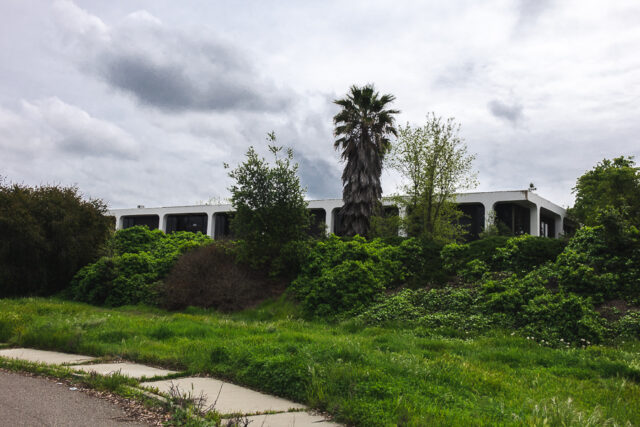
Housing — Davis City Council approved a workforce housing program. The non-student focused project is designed to meet the needs of working families and professionals in Davis. Located at 3820 Chiles Rd., the 225 unit apartment complex will rent one, two and three bedroom units, rather than rooms or beds like most complexes geared toward students. Though the complex will not include low-income units, instead the program will donate a portion of its rental revenue to the city’s affordable housing program to fund future developments. “[The Chiles project] fulfills a need that we haven’t really addressed recently, and that is for a more traditional configuration of the apartment complex,” Mayor Brett Lee said. “This type of configuration is available to a wider variety of folks rather than the student-oriented configuration.” Read on.

Features:

JAMIE CHEN / AGGIE

Picnic Days Past — In 1909, 2,000 people traveled to Davis by car, train and horse carriage to view the new Dairy Farm. The event was propagated by a cow named Molly who was walked from Berkeley to Davis, a 97-hour journey. The University Farm hosted and sponsored the event for the next couple years, until 1912 when a student committee took over. This year marks the 105th Picnic Day and the theme Adventure Awaits “represents the adventure that every past, current and future UC Davis student experiences as they pursue their academic and personal goals throughout their college years.” Read on.

Arts:

CIELLE WATJEN BROWN AND RUBY BARUTH / COURTESY

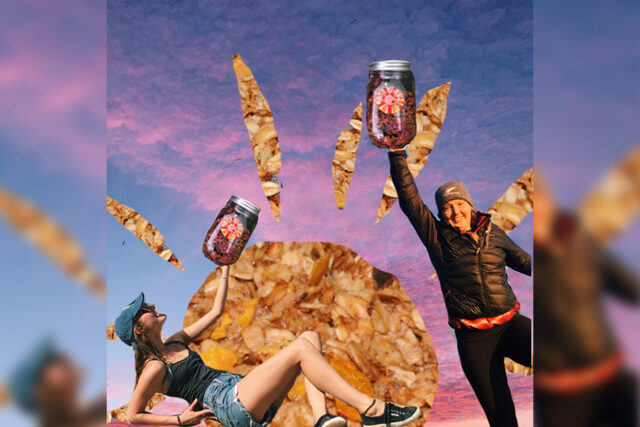
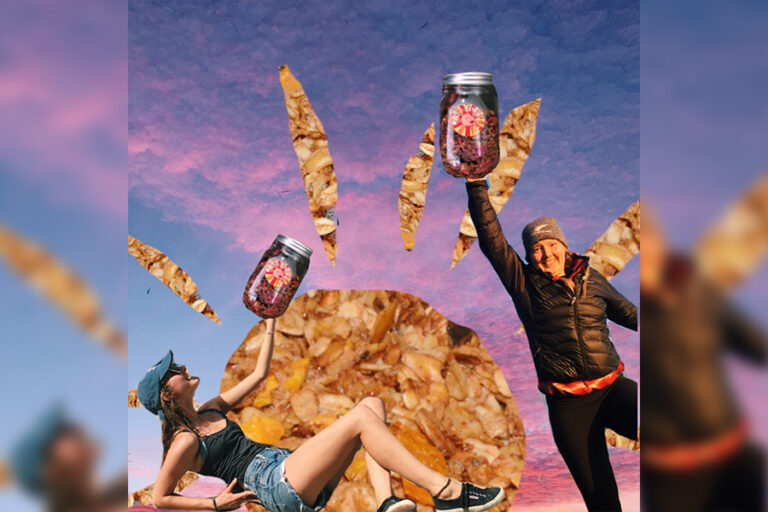
Wake the Funk Up Granola — an eco-friendly granola business run by duo Cielle Watjen Brown, a fourth-year wildlife fish conservation and biology major, and Ruby Baruth, a fourth-year environmental science and management major. Wake the Funk Up is a sustainable business model entirely run on Instagram where customers can order by sliding into @wakethefunkup ’s DMs. Brown and Baruth currently home make two granola flavors — Destiny’s Chaild and Chock Berry — and personally deliver orders on campus with a sticker and a song recommendation. “Make it all based on artists and music and also, when you wake up in the morning, what do you want? Granola and music!” said Baruth. “Things to get you hyped for the day.” Read on.

Sports:

BRIAN LANDRY / AGGIE

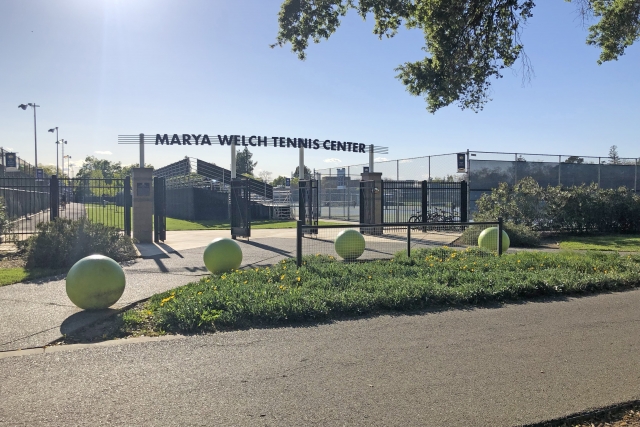
Women’s Tennis — Aggies gain momentum after 6-1 victory over Northern Colorado last Friday with a win over Montana State Sunday. “Everyone always asks about how to get confidence,” said UC Davis Head Coach Bill Maze. “Well I think you get confidence by winning, so I think we’re building some momentum and I think the team’s in a good place.” UC Davis has three games left before the Big West Conference Championship, one of which is a Picnic Day match against UC Riverside at 11am. Read the full recap.

Science:

TESSA KOGA / AGGIE

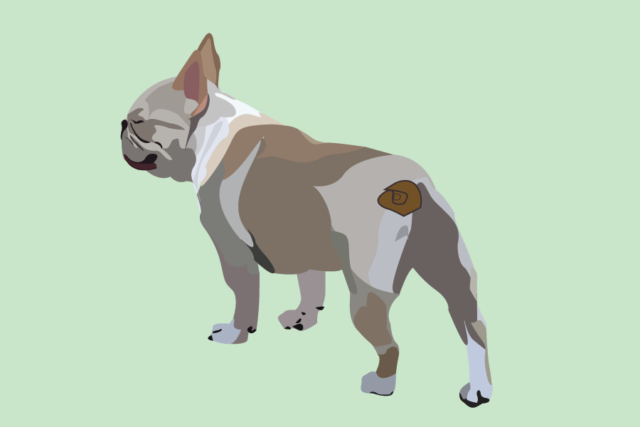
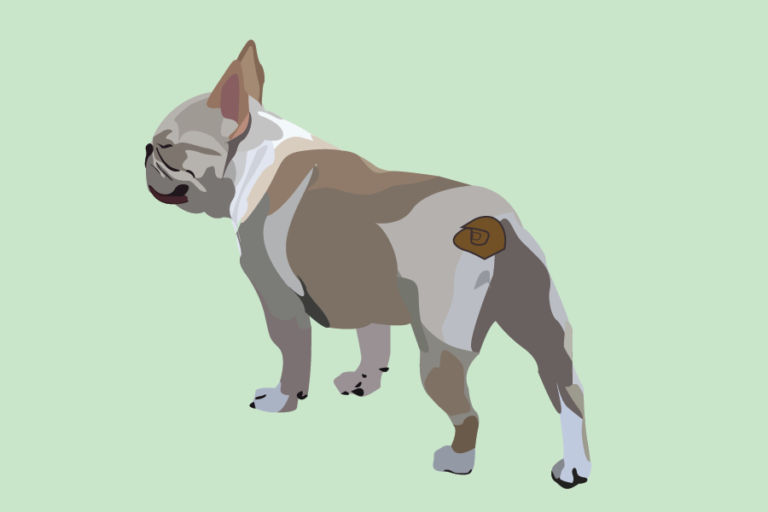
Bulldogs for Science — The UC Davis Veterinary Medical Teaching Hospital identified a link between screwtails and a human genetic disease. The gene responsible for the signature screwtail in bulldogs and Frenchies and Boston terriers was found to be closely related to the gene mutation found in humans with Robinow Syndrome — a rare hereditary disorder that causes short stature, wide heads, flat faces, short limbs and spinal deformities. “We can use the knowledge from studying the dog mutation to strategize means to manipulate and potentially “correct” the pathway in human Robinow patients, for example through gene therapy,” said Professor Henry Ho, of the UC Davis School of Medicine. Read on.

Opinion — “Social media and the rise of extremism

Editorial — “Be aware of heightened police presence on Picnic Day

That’s all for this week, Aggies. Check back next week.

Grace Simmons

UC Davis hosts 105th Picnic Day celebration

Community open house is one of the largest student-run events in the nation

Adventure awaits at UC Davis’ 105th annual Picnic Day, which will kick off at 9:30 a.m. on Saturday, April 13. Bringing the Davis community together since 1909, Picnic Day is one of UC Davis’ longest-running traditions. This year, the event organizers are expecting crowds of more than 50,000, all eager to experience more than 200 engaging and interactive events.

Picnic Day is one of the largest events hosted by any UC school and is one of the largest student-run events in the nation. Elise Pohlhammer, a fourth-year human development and psychology double major, leads the Picnic Day Board of Directors as chair. Along with 15 other student directors, 75 assistant directors have been working for the past year to make the aspirations for Picnic Day a reality. On Saturday, Pohlhammer’s team will also be working with an additional 300 student volunteers to help oversee the day’s events.

This year’s Picnic Day theme is Adventure Awaits. Student directors collaborated to come up with a theme that embodies the adventure guests will embark on at Picnic Day as well as the adventure students experience while attending UC Davis. Pohlhammer and her team were drawn to the theme because of its different meanings for different people. Pohlhammer has been involved in Picnic Day organizations since her freshman year and commented on what the theme means to her now, during her final year at UC Davis.

“Even when you leave Davis, adventure is still out there,” Polhammer said. “If leaving Davis is part of your next adventure, like it is for me, there is always more out there and Davis has been such a great part of the adventure so far.”

Over the past decades, Picnic Day has become one of the signature events that sets UC Davis and the community of Davis apart. This day of celebration will include 100 different exhibits hosted by UC Davis academic departments, animal events, the children’s discovery fair, the student organization fair, entertainment stages and many other attractions.

While guests will be able to revisit many of their favorite performances and events this year, some of the biggest changes made by board members will be things guests will not experience.

“This year we really want to focus on improving the logistics for the day of Picnic Day,” said Aaron Garcia, a third-year communication and psychology double major and Picnic Day publicity chair. “We want to decrease the lines for food trucks and have more options available.”

Events will kick off in the morning with the annual parade and opening ceremony, followed by activities and performances throughout the afternoon. Many of the community’s favorite traditions are returning this year, including the battle of the marching bands, the doxie derby race, the chemistry magic show and the cockroach races, among many others.

Third-year animal science major April Yoshihara has taken over the reigns this year as director of animal events. There will be more than 40 different animal events and booths including the Canine Medicine Club’s frisbee dog contest, chicken hatching and cow milking. Many animal events have become favorite Picnic Day traditions for guests that return every year to experience them again.

“I’m looking forward to the UC Davis Center for Equine Health to bring some of their draft horses out on Hutchinson Field,” Yoshihara said.

Each year, a community member is selected to serve as parade marshal “based on their active participation in the community, their positive impact on others and their embodiment of the theme,” according to the Picnic Day website. This year, the board chose Sarah T. Stewart, a professor of earth and planetary sciences at UC Davis. Stewart was recently awarded the MacArthur “Genius” Fellow grant and has been applauded for her recent work where she “offers a revolutionary and innovative theory as to how the Moon was formed from the Earth.”

In addition to more than 40 campus-affiliated organizations and departments, members of Davis’ local government as well as the fire and police department have come together to support this student-run open house celebrating the legacy and future of UC Davis and the Davis community.

Written by: Ally Russell — campus@theaggie.org

Social media and the rise of extremism

With increased accessibility to extremist ideologies, millennials lack the critical thinking skills to discern fake news

According to extensive polling and surveys, millennials possess great confidence in their ability to think critically. Recent research, however, undermines this millennial way of thinking, and recent events have exemplified the underlying danger of this deluded sense of confidence.

The internet has afforded us instant and unprecedented access to information. With the rise of social media, users are presented with information that has been filtered through an algorithm providing each individual with information consistent with their personal (and preconceived) beliefs and interests. These algorithms supply people with information affirming these preexisting beliefs, rather than challenging them. In this way, an individual with anti-immigrant viewpoints, for example, is given information that confirms their sentiments, even if that information is false, misleading or skewed.

Even more problematic is the rate at which fake news is able to spread through social media, spanning countries and continents. By preying on misled fears and beliefs, fake news and skewed news have successfully sown discord and violence in society.

The consequences range from spreading silly conspiracy theories to skewing an election and stoking ethnic violence. Facebook, a well-known platform for fake news, was used by Myanmar’s military personnel to incite fear and hatred of the country’s Rohingya Muslim population, culminating in genocide and mass migration. By the time Facebook had acknowledged its failure to act, 700,000 Rohingya had already fled the country.  

Fake news would be benign if not for the lack of critical thinking skills present among millennials — and their dependence on social media as a news source exacerbates the problem. A study conducted by MindEdge testing critical thinking skills found that, of young professionals aged 19 to 30, only 24 percent of participants were able to answer eight of nine questions correctly — even after expressing confidence in their critical thinking skills — and 44 percent could not correctly answer more than five of these questions.

This is dangerous because 67 percent of Americans get “at least some of their news” from social media. When presented with fake news, those users likely accept it as fact, proceeding to share and spread that false information to friends and strangers.

Extremists have found a safe haven on the web to share and organize with like-minded people and prey on unfounded fears, allowing them to fester in the most egregious forms. The most recent example of this played out in the Christchurch mosque shootings in New Zealand. The terrorist responsible exchanged and shared his views on 8Chan, wrote a manifesto riddled with popular culture references and memes, and live-streamed the massacre, which was instantaneously shared and re-shared far faster than content moderators could take it down. His manifesto was rife with anti-Muslim writings and is available online, and even White House advisor Kellyanne Conway encouraged people to read it.

Every facet of the terrorist’s actions was intended to garner publicity and incite similar violence. On March 25, a California mosque was set on fire in what has been called a “clear homage” to the New Zealand terrorist attack, with graffiti sprayed on the walls citing the Christchurch shootings. Thankfully no one was injured, but the stream of violence leaves no group safe from a future attack.

Viewpoints that would normally be discarded as conspiracy theories are now afforded legitimacy with the rise of social media and the ability for those with similar grievances to connect, exchange and establish groups. The inherent problem within social media lies in the fact that uninformed and informed opinions are on the same plane. Unlike legitimate news sources, social media news goes unfiltered, unchecked, and ultimately becomes dangerous, and even lethal, when both informed and uninformed “news” are regarded as equally factual.

Beyond holding social media platforms accountable and ensuring content moderators fulfill their duties, the real long-term and effective solution is to foster critical thinking within the education system. Education must nurture young minds to analyze the information they’re given rather than accept it unquestioningly. Terrorism is a war of ideologies, and the best way to defeat an evil one is to expose it for what it is: false.

If platforms like Facebook continually fail to act, then it’s time they be regulated. Individuals can be sued for defamation, yet a platform with an international reach that knowingly allows non-curated and incendiary information to circulate globally is not held to the same standard. Facebook should not have more immunity than a guy who falsely screams “fire” in a theater.

Written by: Hanadi Jordan — hajordan@ucdavis.edu

Disclaimer: The views and opinions expressed by individual columnists belong to the columnists alone and do not necessarily indicate the views and opinions held by The California Aggie.

Does cinema reflect our modern moment?

Current cinematic trends reveal our own desires

Providing a true definition of art, particularly in the realm of cinema, is an impossible task. By the subjectivity inherent to the craft, forming strict standards for what constitutes legitimate artistic construction is best left to individual taste. However, that does not mean there is no room for opinion. A definition I have always considered fondly was one relayed to me by a fellow writer: art is a reflection of our modern moment.

By this standard, artistic expression can serve as a measure of the feelings defining our modern lives. The popularity of a bleeding-heart American film like “Top Gun” or “Miracle,” for example, would imply a societal lean toward patriotic ideals. From this assumption about art and cinema, a natural question emerges: what saturates the current cinematic market, and what does it say about our modern moment?

A statistical examination reveals a clear trend: sequels, prequels and adaptations. Since 2005, the percentage of such films within the top 100 grossing movies each year has risen from a bit over 65 percent to about 90 percent. Filmgoers are flocking to theatres to see movies that adopt something they know, something familiar, and either expand on the concept or rehash it in a different medium. As a result, studios spend exorbitant amounts on adapted or pre-existing material, budgeting for this at an average of $139 million dollars, while allotting only a third of that sum to original screenplays, at around $46 million.

Attacking this trend as an affront to art is a bit of a gray area. Film studios are businesses, not charities, and they will cater to consumer interests. So it falls to an analysis of us, the consumers, to understand why originality in cinema seems to be fading into obsolescence. It is much easier to derive the societal implications of high-grossing original movies. What does it mean when cinema finds a basis not in originality, but in familiarity?

Let us return to our earlier definition of art. Cinema seems to be establishing its foundation in familiarity, and in a similar sense, nostalgia. The industry is catering to a demand for a return to the well-tread — not an examination of final frontiers, but of known spaces. If art reflects our modern moment, this cinematic trend tells us that we are avoiding the reflection.

Studios are responding to consumer demands by creating products founded in nostalgia, products that let us forget through remembrance. Like other times in our nation’s history, people are turning to cinema as an escape to idealism. During the Great Depression, movie theaters acted as a source of respite to otherwise aggrieved Americans. The turmoil and quiet desperation of their daily lives could be lost, if only for a moment, in spectacle. Hollywood experienced an unprecedented boom then, as it is now. By serving this purpose, cinema was — and is — no longer a pristine reflection, but a portal to a better world.

Through screwball comedy and high-caliber action, Depression-era moviegoers sought an escape from day-to-day misery. By returning both to the familiar and to conceptualizations of nostalgia, we now seek to escape the advances of growing frustration with our system and society. This sense of unfocused tension is everywhere we look: in our politicians, in our news outlets, in our social media. We are surrounded every day by stories of the world on fire, of corruption, of exploitation, of violence and of anger. Few want any further reminders of the modern moment. So we avoid the reflection and instead seek a portal to somewhere better: to a  world that makes sense, a world that puts out the things that are burning. And we know the fire will be put out because someone always puts it out. Someone always does.

So perhaps a better definition of art is not as a reflection of our modern moment, but a reflection of what we want our modern moment to be. When the world seems predictable, we seek progress through certain ideals, and our films reflect those desires. And when everything unravels, we seek something predictable. As much as I wish I could criticize this trend of artistic complacency, to demand originality, meaningful and creative products, maybe a reflection is not what we need right now. Maybe a portal is okay.

Written by: Eli Elster — eselster@ucdavis.edu

Disclaimer: The views and opinions expressed by individual columnists belong to the columnists alone and do not necessarily indicate the views and opinions held by The California Aggie.

Wake the Funk Up Granola!

Student business provides new sustainable way to snack

Best friends Cielle Watjen Brown, a fourth-year wildlife fish conservation and biology major, and Ruby Baruth, a fourth-year environmental science and management major, created a new eco-friendly brand of granola called “Wake the Funk Up Granola.” Anyone interested can buy homemade granola from this duo by direct messaging their Instagram @wakethefunkup. Brown and Baruth charge 69 cents per ounce of granola and will fill up up any jar with the requested amount, whether it be one or 20 ounces. If a customer does not bring their own jar, they will be charged an extra dollar. Brown and Baruth personally deliver orders on campus and give customers a complimentary sticker and song recommendation, creating the perfect snack experience. This new business currently has two flavors of granola: Destiny’s Chaild and Chock Berry.

Baruth’s idea for this small business was originally envisioned as a storefront business named “Ola Granola.” But to Baruth’s disappointment, this name was trademarked in multiple countries including the United States, which lead to the name change.

“We were like, ‘rebrand, rename, wake the funk up’,” said Ruby. “Make it all based on artists and music and also, when you wake up in the morning, what do you want? Granola and music! Things to get you hyped for the day.”

In order to make the perfect batch of granola, the duo goes around Davis searching for the best ingredients for their customers. The process of making it — which includes making sure their cat doesn’t get in the way — takes a couple of hours.

“People think granola is mostly a morning food,” said Brown. “But people now are just eating it as a snack and eating it out of the jar. One of my friends was literally using her pencil to get the bottom little scrapings out during finals week, and she was like ‘I want it all, it’s so good!’”

They aim for an eco-friendly and sustainable business model. By using mason jars and personally delivering the granola by bicycle, they avoid the environmental repercussions that regular store-bought granola creates.

“At the grocery store if you buy granola it comes in cardboard,” Brown said. “Then inside the cardboard, there’s plastic and you don’t need that. And also, I think you can really tell it’s fresh because it’s so much more crunchier and the flavor is just so much better. The way we store it, in the jars, makes it stay [fresh] for a long time. It has a long shelf life.”

With the goal of promoting healthy snacks, the pair found it difficult to stay on the organic route and still keep their customers happy with the prices.

“When I originally thought of this idea, I was like ‘I want to get all local, all organic ingredients.’ I wanted the best quality,” Baruth said. “That’s always a struggle. I feel like it’s the quality of ingredients and the price, because I could never pay $12 for granola. So I’m kind of on the same page, but I want to give the $12 quality. We try for as many ingredients as we can to have them be sourced from organic places or as local as possible, but that’s a work in progress.”

Although Baruth and Brown have shipped their homemade goods before, they found it challenging. Because shipping glass is so expensive, they had to try finding unique ways to compensate for the high price. The girls sat down and decorated the packaging and wrote thank you notes for all online orders.

“We were kind of discouraged when we were sending their granola,” Brown said. “It was more like we felt bad and frustrated that we couldn’t make it cheaper for people because we wanted to send it. It was so many of our friends and relatives that were really excited about us starting this new business, and they wanted to support us.”

Despite being full-time students, they take on this extra workload and still manage to enjoy both school and their business. They mentioned that while the granola sales barely bring in any revenue, the business is more fun than work.

“If we were getting paid, we’re getting paid like one dollar an hour for the amount of work we put into it,” Baruth said. “Which is why it’s important that we like to do it, because it’s really fun. And it’s not really about [the money].”

As their business continues to grow, Baruth and Brown have created a loyal customer base. Maria Vollmar, a fourth-year wildlife conservation biology major, mentioned that she was one of the first in line to buy the granola when the business started and is now on the list for the next order of their sold-out batch “Destiny’s Chaild.”

“It’s really so cool to see a small local business started by two young women slowly grow and reach beyond just their friends,” Vollmar said.

Their hopes for a granola bar in the future is close to coming to fruition and their new flavor will be a fruity one. They also plan to sell at the Whole Earth Festival in the future. Interested customers can find updates about where they will be selling their funky granola on their Instagram page.

“We’re really friendly, and we’re super accommodating to people,” Brown said. “So if they want to meet anywhere else off-campus or they have a weird jar, if they have food allergies, that’s something they can totally let us know. And we’ll make a special batch. We just want people to be happy with the product.”

Written By: Itzelth Gamboa — arts@theaggie.org

Women’s tennis gaining momentum as season closes

Aggies win two of three games over April weekend

The UC Davis women’s tennis team put together one of its most impressive performances of the season in a 6-1 win over visiting Northern Colorado at the Marya Welch Tennis Center on Friday afternoon. After a tough loss to a very talented Long Beach State on Saturday, the Aggies came back with their first shutout of the season on Sunday versus Montana State.

Expectations were high coming into this season, after the Aggies went 15-6 last spring and entered the Big West Conference Championship tournament as the No. 2 seed. UC Davis has struggled at times this year, with an overall record of 7-12, but has shown signs of improvement in recent weeks culminating in Friday’s win.

“We haven’t had a lot of matches that we were favored in, but I definitely think we were favored today and we came through beautifully,” said UC Davis Head Coach Bill Maze after Friday’s victory. “I think the whole team played great and that’s what I like. It turned out to be a great day all around.”

To start things off, the Aggies made it a clean sweep in doubles play by winning all three sets and claiming the first point of the afternoon.

In singles play, reigning Big West Athlete of the Week and sophomore Sara Tsukamoto thoroughly dominated her opponent at the No. 2 spot in a stunning 6-0, 6-0 victory. She is currently on a three-match winning streak and holds an 11-10 overall record in singles play.

It didn’t take long for the Aggies to extend their lead to 3-0, as sophomore Shirley Hall quickly wrapped up her match with a 6-0, 6-3 triumph. Hall leads the Aggies in singles play, having won 13 matches so far this season.

Junior Kristina Breisacher sealed the UC Davis victory at No. 4 with a comeback effort in her second set, winning the match by a final of 6-1, 6-4.

The two victories were another step in the right direction for UC Davis, coming off a 5-2 win over Sacramento State at the end of March.

“Everyone always asks about how to get confidence,” said UC Davis Head Coach Bill Maze. “Well I think you get confidence by winning, so I think we’re building some momentum and I think the team’s in a good place.”

Sunday’s win over Montana State was almost identical to the performance on Friday, with UC Davis sweeping the doubles point and then quickly wrapping things up in singles play. The match was played in the clinch format in order to speed up the pace of play, in anticipation of the men’s match against UC Santa Barbara which took place immediately thereafter.

UC Davis has three more games remaining on the schedule before the Big West Conference Championship, which takes place in Indian Wells, Calif. at the end of the month. All three games are happening this weekend, including an 11 a.m. showdown with UC Riverside on Picnic Day. Maze would like to see his team continuing to work hard in practices during the week and show up everyday with a positive mindset.

“We just like to give ourselves the best chance to win by preparing well and having good attitudes and great efforts, because that’s what we can control,” Maze said.

Written by: Brendan Ogburn — sports@theaggie.org

Piecing together tips for a healthy cat

Utilizing food puzzles may help increase cat welfare

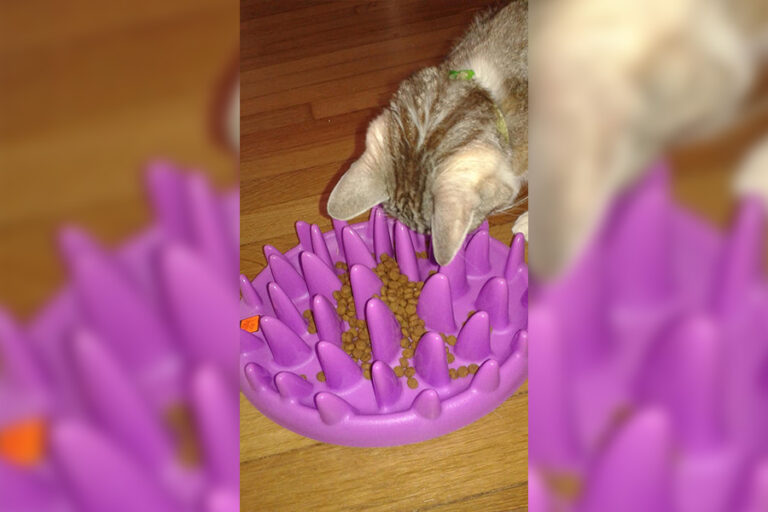
Although cats are commonly known as low maintenance pets, there are still important factors owners have to consider when taking care of their animals. According to Mikel Delgado, a postdoctoral researcher at the School of Veterinary Medicine at UC Davis, food puzzles can allow cats to express their natural behaviors within the home environment. In her recent study conducted with other UC Davis researchers called “A survey of feeding practices and the use of food puzzles in owners of domestic cats,” 30 percent of surveyed cat owners were found to use food puzzles for feeding their pets while 18 percent no longer used them.

Since many cats are kept inside of the house, some may begin to lack the exercise and mental stimulation that they would normally acquire in the wild.

“All of their senses are very well developed to make them good hunters, and so by keeping them indoors, we’ve really restricted their abilities to engage in those natural behaviors,” Delgado said.

According to Tony Buffington, a clinical professor in the Department of Epidemiology and Medicine at the UC Davis School of Veterinary Medicine, although there are many healthy diets on the market for cats, there is less research done on how to feed cats in accordance with their natural hunting and activity needs. Delgado explained that cats’ bodies are naturally attuned to hunting small rodents and birds and are used to eating multiple small meals a day. She added that households with multiple cats should feed them in separate areas, as it is not part of their nature to share food and may increase stress.

“By providing them choice in how to eat, and eat in a more natural fashion, we can positively affect their welfare by helping to decrease any stress that they may be encountering while eating,” said Melissa Bain, a professor of medicine and epidemiology at UC Davis.

In order to introduce cats to food puzzles, Buffington emphasized the importance of the cat’s feeling of safety, as they are both a prey and predator species. In addition, cats require predictability, such as a routine, as well as choices within their environment. He recommended that owners choose cat foods that they prefer while also giving their cats a variety to choose from to satisfy both parties.

“Then [the owners] know that the cat has preferences and can show the owner what they are,” Buffington said. “So that really helps owners understand how to interact with cats.”

Once these components are established and the cat is healthy, owners can begin to introduce food puzzles to the cats. Owners can choose from a variety of different puzzles differing in mobility and difficulty. They also have the option of making their own devices such as from toilet paper rolls or plastic bottles. Delgado created a website with her friend as a resource for owners to determine what food puzzles best fit their individual cat’s needs. Buffington recommended placing these food puzzles in nonthreatening areas and making their use obvious such as leaving a trail of food coming out of the devices. He stated that when introducing food puzzles, along with improving cat welfare in general, it is best to start easy in order to prevent the cat from feeling overwhelmed. Bain added that though the eventual goal is for the cat to be able to eat all of its food through such foraging techniques, owners should gradually switch between bowl feeding and food puzzles in order to minimize stress.

“There’s no rush on these things and so I always tell people to pick the one thing they’re most interested in and start there and they’ll learn about their cat in the process,” Buffington said. “Once they get that, then every next thing that they want to try is going to be easier.”

Buffington stated that he and Delgado are actively researching how cats use food puzzles in different environments, such as when they are with a cat they get along with or a cat they do not get along with. Through utilizing videotape analysis of the cats in homes, they hope to provide more developed recommendations for how owners should proceed in these situations. Delgado also stated that their next steps would be to further understand the effects of food puzzles on cats’ behavior and health and if they truly improve their welfare.  

“Cats are intriguing animals that have some unique behaviors that are not as well understood as other animals’ behaviors,” Bain said. “They are also very commonly kept as pets in the United States and we would like owners to have as much information to provide them the best welfare possible.”

Written by: Michelle Wong –– science@theaggie.org

The Link Between Screwtails and Human Genetic Disease

UC Davis researchers find mutation in bulldogs similar to anatomical changes caused by rare genetic disease Robinow Syndrome

Bulldogs, French bulldogs and Boston terriers aren’t only recognizable by their wide heads and short limbs but also by their screwtails, which are caused by the lack of vertebrae that normally make up the tailbone. Researchers at the UC Davis Veterinary Medical Teaching Hospital sequenced the whole genome of 100 dogs from 25 breeds. Among those breeds, only the Bulldogs, French bulldogs and Boston Terriers are known to share the identifiable screwtail.

“About 12 million genetic differences were identified in the studied dog genomes,” said researcher Dr. Tamer Mansour. “Computational analysis predicted one of these changes in a gene called DISHEVELLED 2 or DVL2 to cause the shape of the tail. Searching other species for similar changes showed that this genetic change is not only responsible for the kinked tail but also vertebral deformities and a special type of brachycephaly. Surprisingly, we found strikingly similar manifestations in a very rare human disease called Robinow syndrome caused by mutations in the related DVL1 and DVL3 genes.”

Robinow syndrome is a rare hereditary disorder that causes similar genetic changes to those of bulldogs, including a short stature, wide heads, flat face, short limbs and spinal deformities, as well as disease traits like cleft palate. By studying the DVL2 mutation in dogs, it’s possible to learn more about how DVL proteins function and how human mutations in DVL1 and DVL3 can cause Robinow syndrome.

“We can use the knowledge from studying the dog mutation to strategize means to manipulate and potentially “correct” the pathway in human Robinow patients, for example through gene therapy,” said Professor Henry Ho, of the UC Davis School of Medicine.

Understanding these mutations can help dogs as well.

“We now know that these dogs’ vertebral malformations are linked to their screwtails,” said Professor Danika Bannasch in the Department of Population Health and Reproduction in the UC Davis School of Veterinary Medicine. “This helps us to understand some of the disease predispositions in these breeds.”

These dogs could prove to be an important model for better understanding the rare Robinow syndrome.

Written by: Kriti Varghese — science@theaggie.org

Measures to ensure safety on Picnic Day

How the Picnic Day pledge and agreements with downtown businesses promote safe fun

This week, the UC Davis campus celebrates the 105th Picnic Day, a tradition that has been ongoing since the university was first established in 1908. Each year the event is filled with numerous activities for students, families, alumni and faculty to enjoy. Although Picnic Day is officially known as the university’s open house, it is also widely known by students to be Davis’ biggest party day of the year.  

On March 28, 2019 the entire UC Davis student body received an email regarding this year’s Picnic Day celebrations as well as tips and tricks to stay safe during this eventful time of year. The email contained a Picnic Day pledge, which urges students to make responsible choices during the festivities and uphold a welcoming environment for all students and visitors.

Third-year statistics major Nicole Deacon is the current vice chair for the Picnic Day. As Vice Chair, Deacon works alongside 13 other directors throughout the year to coordinate Picnic Day events with the help of campus departments and administration as well as the ASUCD Executive Office to ensure a fun and safe environment for students and visitors.

“Every year, there is a safety enhancement zone surrounding a large area north of campus,” Deacon said. “In this area, fines for various violations related to drinking are doubled to further discourage illegal and unsafe actions. We also work with both [the] UC Davis Police and the City of Davis Police Department to maintain safety off campus. We also work with the Davis Alcohol and Other Drug Advisory Group (DAODAG) that is part of Student Health and Counseling Services in promoting safe party tips and programs for students.”

In the past, students have been given citations by the Davis Police department for urinating in public, being generally noisy, having open containers of alcohol and smoking in public. Deacon explained how the safety of the event has changed over the past couple of years.

“There has been a larger effort to control the off-campus party scene over the past few years,” Deacon said. “One of the big issues in the past has been in downtown because bars used to have a variety of promotions on drinks that encouraged heavy drinking. A few years ago, an agreement was reached to end these Picnic Day specials. Since then, the violations downtown have very dramatically decreased.”

For those who plan on hosting their own Picnic Day party, the board of directors for the event have come up with a few tips and tricks to ensure that party throwers and goers have a fun and safe time. Another resource that can be utilized is the safe party initiative which details the precautions one should take before and while drinking. As a reminder to all students, alcohol is prohibited on the UC Davis campus.

Written by: Sneha Ramachandran — features@theaggie.org

Looking Back: Picnic Day’s origins

The history of the event over the years

There are many things that make UC Davis what it is, but Picnic Day is particularly special to the entire Davis community. Cow milking? A Chemistry show? A Frisbee dog contest? An Avengers-themed show hosted by the Physics Club? Picnic Day, UC Davis’ annual open house, described as its “crown jewel,” has it all. Although Picnic Day has significantly changed since it was first celebrated, it has transformed into one of the largest student-run events in the nation, and the spirit of the event remains.

On May 22, 1909, about 2,000 people came to Davis to view the new Dairy Farm. According to Ann Scheuring’s “Abundant Harvest: The History of the University of California, Davis,” these people came by car, train and even horse and carriage. The ceremonies started at 11 a.m. and were about an hour and a half, but the attendees stayed, having brought their own picnics (and cups and spoons) to go along with the coffee provided by the university. To publicize the event, a cow named Molly was walked from Davis to Berkeley, a feat completed over a total of 97 hours.

The picnic was deemed a success, and the faculty of the University Farm planned and sponsored the event until 1912, when a student committee took over. The event has been canceled only five times: due to an outbreak of hoof-and-mouth disease among the cowherds in 1924, delayed construction of the gymnasium in 1938 and from 1943 to 1945 during World War II. This year marks the 105th Picnic Day, and there is an expected attendance of over 75,000 people.

The City of Davis, ASUCD and UC Davis co-sponsor the event, and this year’s theme is Adventure Awaits. According to the UC Davis website, the Picnic Day Board chose the theme because they felt it “represents the adventure that every past, current and future UC Davis student experiences as they pursue their academic and personal goals throughout their college years.” This theme also epitomizes their goal for visitors’ experiences: “a day where adventure awaits.”

A list of past themes goes all the way back to 1923 (“Follow the Sign”). UC Davis’ agricultural roots are referenced in many of these early themes — “A New Day in Agriculture” was the theme in 1933, and “Agriculture Ahead” was the theme in 1935. The 1940 theme was “Agriculture, the Nation’s Foundation,” and its poster can be found on the UC Davis Picnic Day website, alongside a few others.

The event was first called “Picnic Day” in 1916, when attendance tripled from the previous year to 15,000. The following year, the parade had a float, and the year after that, floats were included on the official schedule. In 1935, the university went as far as to cancel classes the day before so students could help prepare for Picnic Day. At this time, there were 507 students enrolled in the university and 100 faculty members. Eight of these students rode horses from Davis to Sacramento and invited Governor Frank Merriam to attend. In 1951, Governor Earl Warren, who would later be the Chief Justice of the Supreme Court, attended the event.

The enrollment of UC Davis has now gone up to over 35,000 and the campus hosts many more people at Picnic Day. There are an abundance of events to choose from, organized into categories: animal events, exhibits, Children’s Discovery Fair, live performances and the Student Organization Fair. Expanding upon just coffee and cream (with a new bring your own cups and spoons policy), the official schedule of events has an entire page devoted to food options — over 30 food trucks will be serving food on campus starting at 10 a.m.

But despite all the new additions, tradition remains. The event welcomes students, families, alumni and members of the community to experience the UC Davis campus. As Chancellor Gary May wrote in his message on the official schedule of events, “one thing hasn’t changed: The spirit of friendship and sharing from the original 1909 picnic.”

Written By: Anjini Venugopal — features@theaggie.org

What the recent cheating scandals mean for future collegiate sports

A look into the recent collegiate corruption scandals

In 2017, the Federal Bureau of Investigation arrested 10 individuals including college coaches and an Adidas executive on corruption charges taking place in collegiate basketball. Over a dozen schools, including big-name basketball programs such as Louisville and North Carolina State, were involved in the scandal. These college coaches were accused of offering and paying high school stars upwards of hundreds of thousands of dollars to get players to commit to their schools. Wiretaps placed by the FBI and played in court confirmed some of these offers to players. Two years later, some of the accused coaches are still under investigation and the NCAA is conducting their own investigation into the matter.

“I think disappointment,” said Kevin Blue, the UC Davis director of Athletics, about the recent corruption in college sports. “I think that the public should trust that the institutions it believes in are going to do things according to the rules that guide those institutions. When that trust is broken it’s very disappointing for everybody.”

Although the news of corruption in college basketball seemed to be the biggest NCAA scandal to date, nobody expected new evidence to leak unrelated to the NCAA. Within the last month, wealthy parents, including some celebrities, have been charged with not only illegally paying universities to admit their high school kids, but also paying college coaches to add their children as recruits, ensuring their entrance into the institution. In many of these cases, the child in question never even played the sport they were supposedly being recruited for. Currently, the defendants are being tried in court for their actions, some of them accused of paying over $500,000 to institutions and collegiate coaches.

Even though UC Davis is not one of the institutions involved in the corruption scandals, Blue reassured the UC Davis community that the process for catching any corruption at the athletic level can be trusted.

“I think that we [UC Davis Athletics] are confident in our processes,” Blue said. “We are confident in the integrity of our people and obviously a situation that comes up like this at other schools will naturally cause us to reexamine our processes to make sure that they are even tighter, and we reduce the likelihood that a loophole can be exploited. We are reviewing them as a consequence of this, as any responsibly managed organization would. But that is not to say that us, as a responsibly managed organization, aren’t open to improving, and we are going through a process now to examine that.”

As far as what these current corruption scandals mean for the future of college athletics, opinions vary. While some believe that stricter rules and consequences need to be put in place by the NCAA to prevent future corruption, others believe corruption in collegiate athletics may never go away. Nevertheless, it has been made clear that collegiate sports, especially those involved with the NCAA, will continue to grow and be successful.

“We want to see college athletics play by the rules, and we believe in that here [at UC Davis] and want to see that everywhere,” Blue said. “I think college sports will and should continue to evolve over a period of time. I don’t know what affect the recent problems that have popped up will have on the future of college athletics, but I am hopeful that leaders in our field can demonstrate the leadership necessary to make sure that college athletics is on a good path going forward and hope we at UC Davis can play a role in that.”

Written by: Ryan Bugsch — sports@theaggie.org

Cartoon: English

ROSEY MOREARTY / AGGIE

Written by: Rosey Morearty — rosey@morearty.org

Davis City Council approves Chiles development project designating housing for workers, families

With widespread support from community members, city officials vote unanimously to begin construction on apartment complex for Davis workforce

On March 19, The Davis City Council voted unanimously to give the green light to the Chiles workforce housing program. This action effectively approved plans for an apartment complex geared toward working families rather than students.

The 3820 Chiles Rd. project is unique among recent housing proposals in Davis — unlike most of the other projects that have been presented to the council in the past few years, the development will be specifically oriented to meet the housing needs of working families and professionals. City planner Eric Lee called the proposed housing a “more traditional type of rental housing project,” contrasting the future workforce-oriented apartments with other recent projects aimed at the city’s growing student population.

“Obviously, we’ve seen a number of student-related or student-oriented projects for local projects, but we have not seen one like this for a while,” Eric Lee said.

Rather than renting out rooms or beds — as student housing typically does — the 225 new apartments in the Chiles complex will rent by 1-, 2- and 3-bedroom units. By doing so, city officials and developers hope this project will primarily serve the needs of workers, professionals and families seeking to live in Davis, rather than students. Mayor Brett Lee noted that the Davis workforce population has been underserved by recent housing development in the city.

“[The Chiles project] fulfills a need that we haven’t really addressed recently, and that is for a more traditional configuration of the apartment complex,” Brett Lee said. “This type of configuration is available to a wider variety of folks rather than the student-oriented configuration.”

The project is also unique in its approach to the city’s affordable housing regulations. Davis municipal codes previously dictated that high-volume rental housing must include units set aside for low-income renters or contribute fees or dedicated land in lieu of affordable units.

But developers proposed an alternative to meet the city’s affordable housing requirements — instead of including the required affordable units, the new housing will donate a portion of its rental revenue to the city’s program.

According to Eric Lee, 1.65 percent of rental income from the Chiles apartments will be donated to the city’s Housing Trust Fund, with a minimum yearly payment of $100,000. The money generated by the complex would be used to fund future affordable housing projects within the city. Before approving the Chiles project, City Council voted to amend the city’s affordable housing code to allow for the project to move forward.

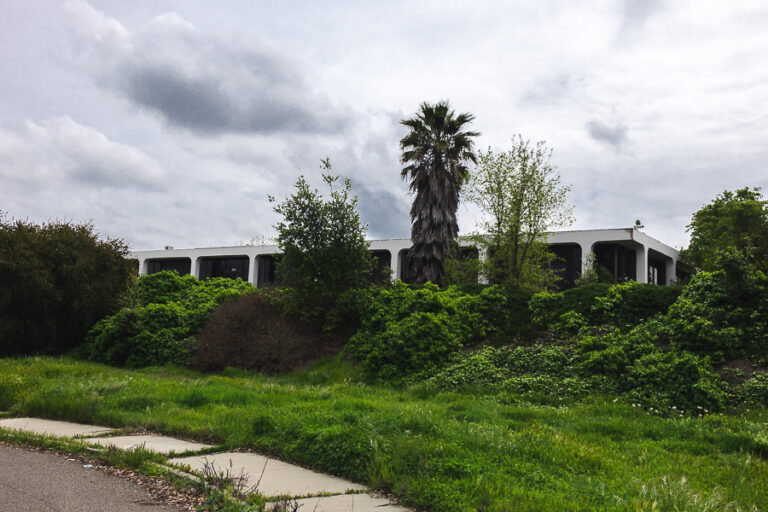
The South Davis land where the complex will be built is currently occupied by a vacant office building. During the meeting, some members of the public expressed pleasure that the new housing development would revitalize the unused property. South Davis resident Eric Johnson praised city officials redesignating the zoning of the lot from commercial to residential.

“This is an ideal site for workforce housing, compared to the current zoning, which would likely yield more freeway-based commercial business,” Johnson said. “Workforce housing is much more conducive to the neighborhood that borders the site, compared to the typical gas stations, convenience stores and fast-food chains that are typically found within the current zoning and proximity to freeways.”

Indeed, another notable aspect of the Chiles workforce housing project is the apparent lack of public resistance to it. While the development of other Davis housing projects like the West Davis Active Adult Community and Nishi Student Apartments have been delayed by public controversy and community opposition, the Chiles project seems to enjoy widespread support among city residents. There was no organized public opposition during the meeting or other parts of the planning phase. Linda Deos, a community member who ran for City Council in 2018, commented on the unusual lack of push-back throughout the approval process.

“I’m thrilled that there is — as far as I can tell — no organized neighborhood opposition to the project, and that’s thrilling and quite nice to see,” Deos said.

Mary Jo Bryan, a community member who said she has been involved with Davis housing issues for some time, commended the developers on their efforts to provide housing for working families.

“I believe [the development team] is building for the future of Davis,” Bryan said. “They observed and listened to the people of Davis, and they have developed a project that will provide much-needed workforce and family housing.”

Written by: Tim Lalonde — city@theaggie.org