55.5 F
Davis

Davis, California

Tuesday, December 23, 2025
Home Blog Page 437

Picnic Day Student Organization Fair includes a variety of clubs and on-campus student organizations

Student organizations will be tabling throughout the quad

UC Davis’ annual Picnic Day will involve a variety of student clubs and organizations that highlight student involvement on campus. Victoria Choi, a second-year English major and the student organization fair director of Picnic Day, explained that there are a number of benefits for student organizations participating in the fair, which takes place on the quad.

“First of all, it’s great exposure — over 70,000 visitors come by the quad,” Choi said. “The names of the clubs gets out there, they’re very present and they get to expose themselves to a lot of visitors, and that’s a great way for them to make connections. Secondly, they can also fundraise — they can host an entire food booth where they prepare their own food, and they have the potential to make a lot of money that way.”

One student organization that will be putting on a food booth is the Puerto Rican Community Association (PRCA). According to Eliacin Velazquez, a fourth-year political science major and president of the PRCA, visitors to the quad will be able to purchase tostones, Puerto Rican salad and pork chops from the booth.

The association’s goals include spreading awareness of the issues that Puerto Rico faces, particularly revitalization efforts for the island.

“We serve to unify Puerto Ricans and allies throughout the state of California, and we’re open to anyone who wishes to learn about Puerto Rico,” said Liliana Valladares, a third-year sociology major and general board member. “Our organization was created in response to Hurricane Maria, which of course, devastated the island in September 2017. The PRCA works with this organization called Casa Pueblo, which is an international[ly] renowned community organization that prioritizes social and ecological self-efficiency throughout the island.”

The organization’s fundraising and food booths will be providing money for Casa Pueblo for solar panel installation throughout Puerto Rico.

The quad will be split into two separate areas, according to third-year statistics major and vice chair of Picnic Day Nicole Deacon. The East Quad will include all the food booths that certain clubs and organizations will put on, and the West Quad will primarily be utilized for information and fundraising booths for student organizations who have opted to participate in Picnic Day. Both sets of booths have the opportunity to raise significant funds for the clubs and organizations involved.

Choi emphasized the importance of Picnic Day as it relates to presenting UC Davis to the larger community.

“I think Picnic Day is really important because it’s UC Davis’ open house,” Choi said. “We’re showcasing ourselves, and I think [Registered Student Organizations] are really crucial to that because they represent different groups and communities on campus, and we all make up this campus community together, so RSOs really play a central role in making Picnic Day that community aspect.”

Deacon also stressed the important role that student clubs and organizations play in Picnic Day and how clubs continue to participate in Picnic Day year after year, despite membership and leadership change.

Mechanism Press, a recently formed student-run publishing company that is working to produce its first literary magazine called Open Ceilings in Fall 2019, is one of the student organizations that will be tabling at Picnic Day.

“We’re planning to set up a photo booth with some props, like a typewriter, and we’re going to try to get as many people there as possible,” said Matthew Pimbley, a second-year English major and the co-director of the board for Mechanism Press. “It’s really an important event for us, because, as a brand new organization, it’ll be our first opportunity to gain publicity on such a large scale with the community, alumni and parents.”

The Students for Reproductive Freedom at UC Davis will also be involved with Picnic Day. The organization is an affiliate of Planned Parenthood’s Generation Action organization, which is Planned Parenthood’s collegiate-level organization. According to Emma Warshaw, a third-year global disease major and the president and co-founder of the UC Davis chapter, the organization is concerned with reproductive justice issues on campus, within the community and within the state of California.

“As a club, this is our first year; we officially launched this last fall, and we worked on canvassing campaigns — we were part of the campaign for Josh Harder in Modesto for Congress,” Warshaw said. “We do birth control workshops. Some events that we’re going to be doing this quarter are a gender pay gap bake sale. We’re hoping to do a workshop on Title X reforms that are happening, which is taking a bunch of funding away from Planned Parenthood and leaving about 4 million people without health care.”

In terms of their involvement in Picnic Day, members of the club will be marching in the Picnic Day parade and tabling at the student organization fair. They will share information about the club and current reproductive justice issues and hand out Planned Parenthood imprinted goods.

The Environmental Club will also be involved in tabling at the student organization fair, where they will be selling pins and stickers and promoting an event called the Stay Nature Challenge, according to Caroline Newell, a fifth-year wildlife, fish and conservation biology major and president of the environmental club.

“Our club is essentially just a place where people can come to our people to learn about environmental issues,” Newell said. “We are really focused on outreach and education about environmental issues, and we also provide avenues for students to get involved with the local community in environmental types of projects.”

Community projects that the environmental club members are involved in include Tree Davis, a local organization that plants trees in the community to increase the quality of habitats, and different restoration projects.

“We also just allow students to learn more about careers in environmental avenues,” Newell said. “We went last quarter to the Lawrence Hall of Science and got to do a career panel with people that work there, and we got behind the scenes tours of the facilities, and this weekend we’re going sea kayaking. We’re trying to increase people’s appreciation of the environment as well as raising awareness about issues that we face as a society.”

The UC Davis Zero Waste and Sustainability Club, another club dealing with environmental issues, will try to attract UC Davis students by asking them to pledge to use zero waste products, according to Malia Helms, a third-year bioengineering major and president and founder of the club. In exchange for signing the pledge, students can choose between a reusable straw, a reusable boba straw and a reusable bag.

“The club is founded to make UC Davis more sustainable,” Helms said. “Currently, there’s a UC-wide goal for all the campuses to reach zero waste by 2020, so that’s what we’re trying to help the campus do.”

UC Davis is currently at about 75 percent waste diversion from the landfill, and the club’s goal is to reach 90 to 95 percent of their zero waste goal by 2020.

“There’s also a UC-wide goal of zero carbon emissions by 2025, and we’d also like to help reach that goal,” Helms said. “The main way we’re doing that is involving students, which is the largest population on campus, to reach that goal.”

Students from the UC Davis Betty Irene Moore School of Nursing will also be involved with Picnic Day. They will be tabling and selling succulent plants, among other items, in an effort to fundraise for the Flower Project, according to Breanne Harris, a Master’s Entry Program in Nursing (MEPN) student and vice president of the MEPN Cohort 3 Graduate Student Association.

“Our group is comprised of students who are working towards our Master’s in Nursing, and we all have a Bachelor’s degree in something other than Nursing,” Harris said. “Ours is the third actual group of graduating students from this program — it’s only been around for three years — and our particular group is focused on providing resources for homeless and underserved women. We have a particular project that we have been working on that we call the Flower Project, which is dedicated to putting together feminine hygiene kits for women who are homeless or underserved.”

The week before Picnic Day features certain festivities to get the student body excited for the big day.

“This year we’re going to have events on Wednesday and Thursday from 12 to 3 out on the Quad,” Deacon said. “There are going to be performances by student groups, there are going to be groups tabling, it’s going to be a lot of fun.”

Written by: Sabrina Habchi — campus@theaggie.org

Be aware of heightened police presence on Picnic Day

Maintain safety, minimize need for police involvement on campus, in city

Picnic Day is this Saturday, and in response to UC Davis’ notoriously rowdy springtime celebration, fines for some municipal code violations, like noise and open containers, will be doubled, and police officers throughout the Enhanced Safety Zone on campus and in the city of Davis will be on higher-than-usual alert. And while this kind of enhanced policing is standard practice for many events of Picnic Day’s size, it can increase the risk of violent or upsetting interactions between police and civilians.

UC Davis Police Chief Joseph Farrow has spoken multiple times about his department’s desire to be a responsible, productive, community-oriented force and the need to build trust between the police department and the community. Last May, Chancellor Gary May announced that the department would begin prioritizing de-escalation tactics, and Farrow told The California Aggie in October that “we are trying to make this organization the best we can. We are completely changing the culture of this police department.”

Previous Picnic Days, however, have had ugly encounters between revelers and police. Most notably, in 2017, five young people were arrested and charged with felony resisting arrest after a fight broke out between the group and three undercover officers. It was unclear from dashcam footage who threw the first punch, and protests sprung up in support of the group, dubbed the Picnic Day Five.

Amid ongoing national and local discussions about policing and on a campus that has its own recent history of police violence against students, Picnic Day is a perfect opportunity for campus and city police to act on their culture-changing rhetoric and demonstrate that they’re willing to uphold their obligation to improve the relationship between police and communities. Many community members are understandably fearful and distrustful of the police, and individual officers as well as the department as a whole have a duty to prove to the community that they can and will do better.

If we want to minimize the extensive police presence on campus, then one of the best ways to do that is to minimize the need to involve the police in situations that don’t require law enforcement. It’s unavoidable that police will be on campus, but through community cooperation, we can help prevent unnecessary police interactions that put us at risk.

Policing ourselves means keeping an eye on our friends and doing what we can to de-escalate situations before they get out of hand and someone feels like their only option is to call the police. So know your own limits and don’t get so intoxicated that you’re a danger to yourself or others. If it looks like two of your buddies are spoiling for a fight, enlist a few bystanders to separate them before they start throwing punches. If you’re hosting a party, make sure you have at least a few sober, responsible people in attendance. Ask your neighbors to keep the noise down yourself before calling the police to break up the party. As much as possible, seek out alternative kinds of help, like mental health crisis hotlines and community safety initiatives –– there may be someone better equipped to safely resolve a situation than a police officer. And yeah, don’t do things that you know are stupid, dangerous or illegal and ask for trouble. Don’t steal stuff. Don’t break stuff. Don’t let your friends steal or break stuff. Absolutely don’t let anyone get behind the wheel if they’ve been drinking, even if that means wrestling a friend into an Uber against their will.

There are of course some situations that require police intervention, and you shouldn’t avoid calling for help when it’s really an emergency. But if we take care of ourselves and each other, we can de-escalate many situations before they turn into emergency and keep everyone safer.

Written by: The Editorial Board

Separating families at the border, obstructing rights is unjust

Resignation of high-ranking government officials does not make them martyrs

President Donald Trump called for the resignation of former United States Secretary of Homeland Security Kirstjen Nielsen on Sunday after she refused to close entry ports at the border and withhold aid from those seeking asylum. In her resignation letter, Nielsen stated: “I can say with confidence our homeland is safer today than when I joined the Administration. We have taken unprecedented action to protect Americans. We have implemented historic efforts to defend our borders, combat illegal immigration, obstruct the inflow of drugs, and uphold our laws and values.”

These efforts weren’t, in any way, historic. Despite repeatedly lying about the administration’s policy about separating families at the border, according to Business Insider, Nielsen later said that her department would “not apologize for doing our job,” also stating, “This administration has a simple message: If you cross the border illegally, we will prosecute you.” Nielsen did nothing but help Trump and his administration terrorize those seeking asylum and separate families at the border.

Nielsen’s forced resignation by Trump was so that the administration could have a “tougher” approach on immigration and likely replace her with someone who will enact even harsher immigration policies, despite the harsh immigration policies Nielsen already implemented. Nielsen is a perpetrator, and her resignation from the Department of Homeland Security does not exonerate her from the atrocities she committed against immigrants, including invoking the Migration Protection Protocols under the Immigration and Nationality Act, which forced undocumented immigrants or those without proper documentation to return to Mexico for the duration of their immigration proceedings.

Not only is separating families and forcing them to remain in Mexico morally reprehensible and sickening — it’s also illegal. A California judge ruled on Monday that asylum seekers could not be forced to wait in Mexico while waiting for their trials in U.S. immigration courts. U.S. District Judge Richard Seeborg stated that the DHS’s policy “lacks sufficient protections against aliens being returned to places where they face undue risk to their lives or freedom,” according to Bloomberg.

Other high-ranking government officials have also partaken in maltreatment against immigrants seeking refuge. Scott Lloyd, the former head of the Office of Refugee Resettlement, “abused his position of power to try to coerce pregnant minors to carry unwanted pregnancies to term by trying to prevent those who wished to pursue their constitutional right to abortion by leaving the shelter,” according to the American Civil Liberties Union. After the ACLU filed a lawsuit to challenge the Trump administration’s anti-abortion agenda toward immigrants, Lloyd was transferred to the Department of Health and Human Services’ Center for Faith and Opportunity Initiatives.

Families trying to escape violence, poverty and seek better lives for their children should be met with open arms — not have their children torn from their arms. The Editorial Board condemns the unjust actions and immigration policies of Nielsen and the Trump administration, and demands that justice be served. No one should have to endure the inhumane living conditions that these immigrants have been imposed by the administration.

Written by: The Editorial Board

UC Davis Agathon: Dancing for a Cause

A fresh philanthropy for Children’s Miracle Network Hospitals to take place at the CoHo

Time to get your dancing shoes on! This Saturday, April 6 from 7-11 p.m. is the UC Davis Agathon, a dance marathon happening at the CoHo. The pre-sale registration fee is $7 and all proceeds will be donated to support Children’s Miracle Network Hospitals.

Previously called the UC Davis Dance Marathon, this is the first year that Agathon is hosting this event under its organization. Agathon is a student organization that stands for unity, compassion and community. The organization focuses on raising money for Children’s Miracle Network and their partner, UC Davis Children’s Hospital. Agathon hosts many fundraisers throughout the quarters, but one of their biggest events is the annual Dance Marathon event. They strive to raise enough money to help children and their families with hospital bills and the care offered through the children’s hospital.  

Students can expect to see a variety of music and performances at the event, to get the crowd dancing. There will also be Miracle children present sharing their stories, face painting and more. This year, the event even has a glow-in-the-dark theme.

Lucero Vasquez, a third-year communication major, is the president of the Agathon organization. She is in charge of overseeing all committees in the organization such as hospital relations, finance, morale dance, sponsorship and recruitment.

“Agathon, in short, means us Aggies coming together #ForTheKids,” Vasquez said.

Yuliett Stefania Olivas-Gonzalez, a second-year human development major, is part of the sponsorship committee with the UC Davis Agathon. She works with others to reach out to the community in order to raise funds and promote events.

“It is very important to raise money to such an important cause because they help serve partnered children hospitals like our very own UC Davis Children’s Hospital,” Olivas-Gonzalez said. “These amazing children and their families cannot afford the cost of treatments and expenses on their own, and that is why the Children’s Miracle Network Hospitals should be helped out in any way possible by businesses, community and student organizations like ourselves!”

To Vasquez, the most important part of the event is the “final reveal”, when an announcement is made about how much everyone has fundraised. The total fundraised amount is kept a secret until the big reveal, so it is surprising news to everyone.

“My passion for this movement has continuously increased every time I make a smile on a child’s face,” Vasquez said. UC Davis students are invited to join the Agathon organization regardless of year, career interests or majors. It is open to anyone wanting to join. You can check out the UC Davis Agathon on social media such as Facebook and Instagram @ucdagathon for updates, events, fundraisers and more. Those interested can also email the President at luvasquez@ucdavis.edu and/or be placed on a Listserv.

Written by: Sierra Burgueno –– features@theaggie.org

Alex Grey: Art influenced by psychedelics

LSD moves the visionary art movement

Alex Grey is considered an American visionary artist. He paints images to illustrate the transcendency of body, mind and soul by means of spiritual and mystical themes. A world renowned painter, author, teacher and Vajrayana practitioner, Grey is revered as the main influencer of the visionary movement.

Hailing from a middle-class family in Columbus, Ohio, Grey’s father was a graphic designer who bolstered Grey’s fascination with art by supplying him with the resources to pursue his interests. After attending two art schools and a five-year vocation at Harvard Medical School where he worked in the Anatomy department studying cadavers in-line for dissection, Grey’s art is nearly unexplainable. His art takes shape as a psychedelic x-ray vision into body, highlighting the soul and mind in connection with “the light” at the end of the tunnel.

One of his most famous works, “Cosmic Christ,” is a 50 by 102-inch oil painting on carved wood. It’s a burning inferno outlining the image of Christ, and within the outline is a series of micro-paintings that depict a wide range of historical figures and events, some of them mythical.

Something wholly unique to Grey’s style is that his paintings confront the realities that surround us and the sources of light and dark within us. Much like “Cosmic Christ,” his countless works show corporeal bodies with their brainwaves and energies illustrated towards a higher power — toward a light. His paintings always have a light in the top corner or center. Is this light God, the universe or the “clear light?” As interpreted by Timothy Leary, a psychedelic visionary of the 1960s, it may represent the subtlest level of the mind — a Buddha-like nature.

Artwork such as Grey’s does not take place in a vacuum. We can attribute his immeasurable skills to his time spent studying at Columbus College of Art and Design, where he subsequently dropped out to pursue a career in painting. His skills can also be attributed to his time at the School of the Museum of Fine Arts, Boston, where he studied under conceptual artist Jay Jaroslav. But his art shifted with his spirit when he began to use LSD, or acid.

For roughly five years, he and his partner Allyson Grey, also a psychedelic artist, indulged in sacramental journeys on LSD that, according to Grey, transformed his agnostic existentialism to radical transcendentalism. As the story goes, the two lovers shared a spiritual experience that is entirely unexplainable by earthly logic. This experience would drive Grey to produce pious artwork that would become revered world-wide, driving bands such as Tool to commission him to create their album covers. In addition, The Chapel of the Sacred Mirrors, a New York church, was constructed to house their sacred paintings.

Besides painting multidimensional situations and detailed representations of the human body with its chakras, auras and other spiritual tessellations, Grey has contributed to the world of philosophy through his 1998 book “The Mission of Art.” In his ledger, he promoted the mystical potentialities of art, saying “the process of artistic creation can (and should) play a role in the enlightenment of the artist […] the process of artistic creation holds the potential of transcending the limitations of the mind and more fully expressing the divine spirit.”

Grey is in touch with an inner divine spirit that can only be attributed to his five-year journey through the depths of his mind by way of psychedelic drugs. And he is not alone on this divine plane. Now resting somewhere in the void, Salvador Dalí and Hieronymus Bosch had their experiences with psychedelics, which influenced the dreamscapes of their paintings.

However, Grey’s paintings focus less on dreamlike landscapes and more on the divine spirit of the human soul and its interconnectedness with the light above and within. As a  supporter of the psychedelic experience, Grey now hosts lectures on psychedelic therapy in New York with Dr. Anthony Bossis and full moon gatherings at his chapel.

His chapel gatherings revolve around guided meditations, lectures and art classes and  provide information for its visitors to go out and seek psychedelic therapy on their own.

The Chapel of the Sacred Mirrors also features a number of modern artists who illustrate the same hallucinogenic visions in their art. From Jonathan Solter, who paints ancient pyramids in a field of colorful rays which he calls “The Halls of Creation” to Nadia Satya, who paints the beauty of circles — that is, what one might see thirty minutes into a double dose of LSD.

Grey paved the way for modern visionary art through his experiences with psychedelics. By constructing the chapel, physically and digitally, he provides an outlet for other visionary artists to promote their paintings and he intends to expand this spiritual community through his lectures and classes.

Furthermore, he plans to create a social space in upstate New York: the Entheon. It will be a 12,000-square foot exhibition built to house the original artwork of the Visionary Art movement. According to the chapel’s website, it will be a place “where precious paintings, drawings, sculpture and moving image resonate with the highest states of consciousness.” For $150, visitors can lay a brick at the Entheon with a personal message inscribed.

Written By: Clay Allen Rogers — arts@theaggie.org

Professor Anita Oberbauer wins prestigious university prize

Oberbauer will receive $50,000 with her award

Dr. Anita Oberbauer, an animal science professor at UC Davis, recently received the UC Davis Prize for Undergraduate Teaching and Scholarly Achievement. Oberbauer joined the UC Davis faculty in 1989 and is especially commended for her research on companion and captive animals such as dogs, cats, fish, reptiles and birds.

On the afternoon of Mar. 4, Chancellor May and several other administrators delivered the prize to Oberbauer while she was teaching a class in Introductory Companion Animal Biology. The prize amount is $50,000, thanks to the philanthropic efforts at UC Davis.

Oberbauer graduated from UC Davis with a Bachelor of Science in Zoology in 1980, a degree which she obtained with highest honors. She later pursued a Ph.D. in Animal Science from Cornell University. She completed postdoctoral fellowships at Loma Linda University and UCLA before joining the UC Davis faculty.

According to Chancellor May, glowing student evaluations played a role in selecting Oberbauer.

“[They] are a large part of determining the winner of this prize,”  May said to UC Davis Dateline. “We didn’t have to crunch the numbers too long to see that students truly love her classes.”

Oberbauer reflected on all of the people who helped her receive this award.

“In short, I can say that I am thrilled, deeply honored, and humbled to be recognized with this amazing award,” Oberbauer said via email. “I am indebted to the instructors who taught me, the students who constantly inspire me to grow in how I teach, and my colleagues who support and value teaching.”

“I am fortunate to be a faculty member here at UC Davis which recognizes and appreciates that teaching can really come alive when it blends with our scholarly activities,” she said. “And even though teaching makes me a better scientist and communicator, seeing students engage and learn, well there just isn’t anything better than that.”

To receive this award, someone had to nominate Oberbauer. That person was Helene Dillard, the Dean of the College of Agricultural and Environmental Sciences.

“Prior to Professor Oberbauer’s hiring, the ANS major curriculum had little emphasis on the biology of companion animals,” Dillard said in her nomination, according to UC Davis Dateline. “However, the student population increasingly expressed keen interest in courses and career paths associated with companion animals.”

May commented on the specific qualities that Oberbauer brings to UC Davis that made her deserving of this honor.

“I am pleased to commend Anita Oberbauer for the passion, mentorship and expertise she has brought to our teaching and research mission in her 30 years at UC Davis,” May said via email. “I can think of no one more deserving of the UC Davis Prize for Undergraduate Teaching and Scholarly Achievement.”

Written by: Rebecca Bihn-Wallace — campus@theaggie.org

Police Logs

How dare someone have a flashlight

March 24

“Reporting party’s arm scratched by roommate during 415 over cardboard boxes that were left in common area.”

“Loud thumping music.”

March 25

“Male subject yelling at customers and is running up to their vehicles as they arrive.”

“Male subject soliciting in the area without identification. Reporting party concerned because subject is soliciting in the rain without rain gear and thinks it’s a possible scam. Request an area check.”

“For advice referencing neighbor leaving her 11-year-old son home alone and he’s cooking unsupervised.”

March 26

“Male subject standing in front of the residence with a large knife. Subject is not being violent, but passerby appear scared. Subject is also looking into vehicles in the area. Request officer check on him.”

“Reporting party’s house egged twice within the past 10 minutes.”

March 27

“Flagged down referencing someone on a bike on 14th St that was seen vomiting.”

“Subject with flashlight.”

“5 people followed reporting party — reporting party unable to provide description of people following him. Advised he does not know who they are or why they are following him.”

March 28

“Male passed out behind wheel. Head down. Horn sounding.”

Cacao research comes to downtown Davis

Mars, Inc. to research cacao with UC Davis faculty

With temperatures rising in West Africa, climate change is drawing many concerns for what the future may look like for the cacao crop and companies like Mars, Inc.

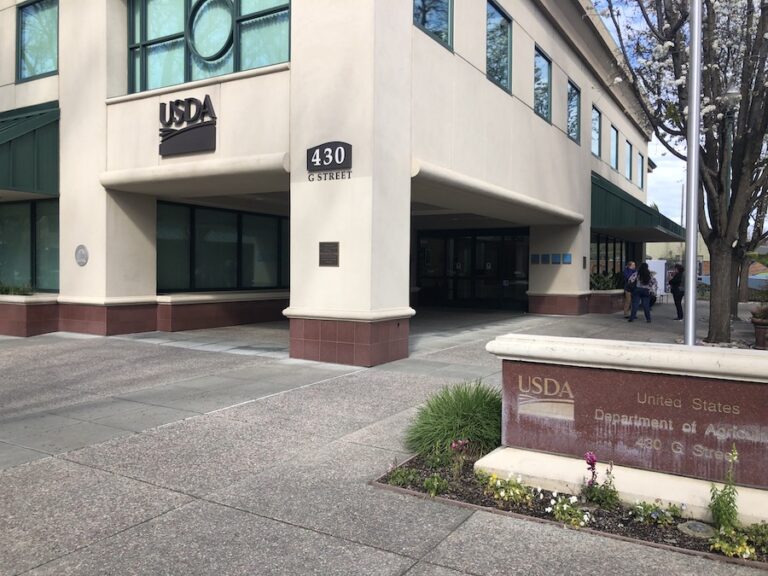
This business will now be a part of downtown Davis, as the city offers a new location for cacao research. Mars has already started improvements on a structure at 430 G St. that will serve as its facility. This building is also home to the United States Department of Agriculture.

The team of approximately 15 people, along with a contractor and genetics team, will work in this location as a part of the Mars Wrigley Confectionery Cocoa Research and will take full advantage of the highly-ranked agriculture school next door. This team hopes to coordinate and benefit from UC Davis faculty and students who are willing to assist research projects of mutual interest.

“The Mars Cocoa for Generations strategy is a good example of a private enterprise partnering with UC Davis, a leading research institution, to establish more sustainable practices in agriculture,” said Mayor Brett Lee. “This is a perfect fit for the City of Davis, and we’re proud to welcome them here.”

The building and research will be able to begin as soon as this summer. The company will work to figure out the most sustainable practices when it comes to cultivating cacao, as cacao farmers currently produce 20 percent under output potential.

This area remains in need of more resources and cultivation ideas to allow cacao farmers the vital support they have been longing for with insufficient funds from the government. As they are usually funded by the government, agencies or even universities such as UC Davis, steps need to be taken to encourage more funding than what has been offered. Davis City Council saw the opportunity to further aid Mars in bettering the cacao cultivating system.

“The project builds on the relationship we have developed with UC Davis over the last 35 years,” said David Mackill, the director of Cocoa Genetics and Breeding at Mars. “The university, with Mars’ support, is constructing a large state-of-the-art greenhouse complex on campus that will allow university and Mars scientists to maintain a collection of cacao clones that reflect the diversity of the species and to use the collection to breed new clones with higher productivity, resistance to diseases and pests and good quality chocolate. We are excited to have the city and the university as partners.”

As this private enterprise partners up with UC Davis, two pillars lead the strategy that the university and Mars hope to successfully take on, one being “Responsible Cacao Today,” and the other striving for “Sustainable Cacao Tomorrow.”

According to National Oceanic and Atmospheric Administration, the cacao plant is in danger. The crop could be extinct by 2050 due to climate change.

UC Berkeley has also become a key research institution for Mars, as Barry Parkin, Mars’ chief sustainability officer, found their efforts to save the cacao plant to still not be happening fast enough.

UC Berkeley’s first major step was to modify the plant’s DNA with CRISPR technology, something with which UC Davis will now be able to offer assistance.

“Working together, we can expand our plant science research while boosting the productivity and quality of cacao and improving the lives of cacao farmers around the world,  as well as creating jobs here in Davis,” said Prasant Mohapatra, the vice chancellor for research at UC Davis.

Mars, Inc. has invested in forward thinking with the reality of climate change and the global marketplace, according to Jennifer Hebets, an MBA student who graduated in 2016 and had the opportunity of working closely with the partnership Davis has with Mars.

Written by: Lauren Tropio — city@theaggie.org

Yolo County District Attorney’s office cites five Davis businesses for the sale of tobacco to minors

Businesses cited will face fines, clerks cited can opt into restorative justice program

The Yolo County District Attorney’s office carried out an undercover operation on March 9 and 10, during which it cited five Davis stores for the illegal sale of tobacco products to minors. The investigation was conducted throughout 27 locations in Davis.

It is illegal to sell tobacco and tobacco-related paraphernalia to anyone under the age of 21 in California with the exception of military personnel. Tobacco vendors must check the ID of anyone who appears to look under 27 years old. Failure to comply with these laws can result in fines up to $6,000.

The investigations involved an undercover DA investigator and an undercover minor decoy. If the decoy minor attempts to purchase tobacco, and the clerk sells it to them, then the DA investigator can issue a citation. Law enforcement is allowed to use minors as decoys for these undercover operations, in accordance with the 2009 Family Smoking Prevention and Tobacco Control Act.

The Yolo County DA worked with the Yolo County Health Department for this investigation and other issues surrounding the underage sale of tobacco. Together, the DA’s office, the Yolo County Department of Health services and the Yolo County Anti-Tobacco Youth Coalition form the Tobacco Retail Monitoring Program. The goal of the program is to “decrease the illegal sale rate of tobacco to minors in Yolo County.”

“We have a long-standing partnership with the Health Department to try to enhance the health of our community,” said DA Jeff Reisig in a press release. “These efforts are an important opportunity to educate our youth about healthy choices, but also serve as opportunity to help the business community understand their role and responsibility in the health of our youth.”

Underage tobacco sales are an ongoing problem in Yolo. The Yolo County DA conducted a similar investigation in 2014 in which five other stores were cited for similar reasons.

According to the DA office press release, however, the DA and YCHD have offered many resources to businesses in order to make sure they have been in compliance with the law.

“Health Department and DA staff first work to educate businesses about compliance issues, visiting the businesses and even offering a report card of compliance issues where they may need correction or improvement,” the release states. “During these outreach visits the businesses are informed about the goals of compliance and that underage tobacco purchase operations will be conducted as part of the overall illegal tobacco sales cessation effort.”

In addition, the DA’s office offered an alternative sentence to the cited businesses. The cited clerks are allowed to participate in Neighbourhood Court, the DA’s restorative justice program.

“NHC uses the principles of restorative justice to resolve offenses outside of the traditional courtroom,” the NHC website states. “Participants meet in a relaxed setting to discuss their conduct with members of the local community panelists in what is called a conference. The conference is designed to hold participants accountable by helping them recognize the harms caused by their conduct. Then the panelists, participant, and victim (when present) can come up with a collaborative solution designed to address those harms in a way that is restorative rather than punitive.”

The businesses cited by the DA will face administrative sanctions and fines. More information can be found on the DA’s website.

Written by: Hannan Waliullah — city@theaggie.org

Construction of UC Davis Recreation Pool on schedule

Rec Pool to be replaced by two new pools that may not suit the needs of certain aquatic club teams

The UC Davis Recreation Pool (Rec Pool) has been under construction since Spring 2018. The original pool will be replaced by two new pools, according to the Project Manager Michele Leong. The construction is on schedule to be completed in the middle of May.

“It’s two pools instead of one,” Leong said. “One is an activity pool with a dive board. The other pool is a lap pool, and the lap pool is available for all-year-round use versus the old pool [which] was seasonal.”

New features of the renovation that UC Davis students will be able to enjoy include new bathroom fixtures, new showers, new locker rooms, shade canopies and a new sand volleyball court. The Associate Director for Campus Recreation, Jeff Heiser, also mentioned that the changing room and restrooms will be gender inclusive.

“Students can enjoy a variety of programming space[s] including: grassy space with anticipated outdoor yoga and other group wellness classes taught through LiveWell, additional lounging areas for studying, relaxing and socializing, indoor and outdoor showers, heated locker rooms and additional day lockers,” Heiser said via email.

This new aquatic center will be open for community access beginning the summer of 2019, according to the UC Davis Campus Recreation and Union’s website. The website lists reasons for the renovation, including that “Sport Clubs, Intramural Sports, Fitness and Wellness, Aquatics, Youth Programs and Informal Recreation are often competing for space and time at other campus pools.”

Women’s Club Water Polo President Carmen Steinmeier emphasized difficulties with finding the space and time for the team to practice when the only other two pools on campus are the Schaal Aquatic Center and Hickey Pool.

The Schaal Aquatic Center is run by the ICA, making it difficult for club water polo teams and other aquatic club sports to get practice time, according to Steinmeier. The women’s club water polo team currently practices at Schaal because Hickey Pool is not large enough for the team to play.

“The only time slot available [at Schaal] is 8 to 10 p.m. which isn’t really what we want to do,” Steinmeier said. “We even tried asking for 7 to 9 p.m. and they wouldn’t even give us that. There’s no contract between club and ICA, so we’re not even guaranteed the 8 to 10 spot.”

During Fall Quarter, however, women’s club water polo will be forced to use Hickey Pool because the men’s season is in the fall, and they will receive the 8 to 10 p.m. time slot.

“We can’t really play [at Hickey],” Steinmeier said. “We kind of just have to do circuit type things so we can fit girls into certain places, which isn’t really what we want to do.”

Although the new athletic recreation pool was intended to alleviate competition between Campus Recreation programs, the dimensions of the new pool are still not regulation size for water polo, according to Steinmeier.

“Last year, they had meetings with the board members from club water polo and swim, and they were asking us what type of storage we would need for our equipment and stuff like that, so it was pretty official that one of the pools was being made for us to use,” Steinmeier said. “Then, they made us aware of the dimensions of the pool that we were supposed to use, and it’s still not big enough for us. Basically, they were building a pool that they said was for [us], but we aren’t even able to use it.”

After learning the new pool was not going to be large enough for club polo teams, the Women’s Club Water Polo team scheduled meetings with administrators from other sports clubs and campus recreation to voice their concerns. The team grew increasingly frustrated with the response, or lack thereof, on the part of the university.

“We were basically like ‘Why are you building this giant pool that’s going to cost billions of dollars that isn’t even big enough for all of us to use?’” Steinmeier said. “We had meetings about [it] and they basically were like ‘Well, we already have the plans, we can’t do anything about it, this is what it’s going to be.’ They basically just brushed it off. We started a petition, and we tried to go to the chancellor, and the chancellor never got back to us and wouldn’t meet with us. No one really replied to or acknowledged our concerns.”

Steinmeier mentioned that the Women’s Club Water Polo team has been highly successful in recent years, yet the team is unable to benefit from the renovation of the Rec Pool.

“Right now, our women’s club water polo team is back-to-back defending national champions,” Steinmeier said. “Our club is growing, and it’s not fair that we are a very successful club that competes at high levels, but we’re not able to get the facilities we need.”

The lack of a pool that fits their needs will likely have long-term effects on UC Davis club water polo teams.

“I think definitely in the future, we’re either not going to have space or we’re going to have cut girls from the team, so we can have a smaller number of people to make space, but we don’t want to do that — it’s a club team, it should be open to everyone,” Steinmeier said. “It really kind of does suck that they didn’t listen to us or what we needed.”

Written By: Sabrina Habchi — campus@theaggie.org
Guest: The hidden potential of ASUCD

The outgoing ASUCD Internal Affairs Commission Chair speaks of the good, hard-working people of the Association

Divisive, petty, toxic: these are just some of the many acerbic words used to describe ASUCD. I have been in the Association for the past four years, and while these attributes may be accurate from time to time, it is often not the case.

For the past two years, I have been the Internal Affairs Commission Chairperson of ASUCD. This position has provided me the opportunity to see over 40 different senators, three executive offices and 200 pieces of legislation.

From my largely non-partisan perch on the Senate table, I can confidently say that all the senators, staffers and commissioners I’ve met in ASUCD are here for the right reasons. Every senator and commission chair comes into office with platforms or goals that they aim to accomplish. From housing to safety to internal reforms, these aspirations are often fulfilled. I have seen countless new members of ASUCD learn to wield their newfound influence in order to better the overall experience for students on this campus.  

It is often said that ASUCD does so much on campus yet is largely ignored. Despite the constant talk of increasing outreach, there is rarely any effort made to actually connect with students outside the Association. Even though many senators may make a profound impact on this campus, it is not always widely broadcast. I would argue that this is acceptable. As long as the job gets done, it does not matter if ASUCD gets the credit.

Our student government has an unfortunate habit of publicly airing its dirty laundry. Most of my friends have only heard of ASUCD through nasty, vitriolic and personal Facebook spats. While public discussion is an important part of any major discussion, these petty arguments are not representative of ASUCD on a daily basis.

This gets me to the crux of this article: ASUCD is filled with good, hard-working people. While there are often disagreements between factions, the environment is only toxic if you make it toxic. Some people ask how I managed to survive in ASUCD’s environment for so long. My answer is that if you go to work every day with a smile on your face and the explicit goal to work with anyone and everyone, you will succeed. Openness and equality are often empty platitudes, yet in the case of ASUCD they are the best way to get things done.

As I attend an ASUCD Senate meeting for the final time this Thursday, I would like to emphasize to the student body of UC Davis that your student leaders are hard-working, passionate individuals. They represent students from all walks of life and, at their best, these student leaders will work together to make this campus better for all.

Written by: Jacob Ganz

The writer is a fourth-year studying history and political science and the Internal Affairs Commission Chairperson in ASUCD. He had been on the ASUCD Senate table for the longest time of any currently active member, having served since May 2016. He is resigning on April 4.

Disclaimer: The views and opinions expressed by individual columnists belong to the columnists alone and do not necessarily indicate the views and opinions held by The California Aggie.

Responses to column about Professor Clover showcase university values

A hostile public and a wounded university go head to head

When my editors at The California Aggie gave the green light to publish my op-ed “A UC Davis professor thinks cops ‘need to be killed’” on Feb. 25 — after weeks of hard deliberating that both delayed and strengthened the final result — we hardly expected to get national attention.

We had a simple goal: to drive a conversation about faculty standards and the limits of academic freedom. But there were also inherent risks to publishing. Suggesting that the police were potential victims, instead of offenders, seemed risky on this campus. The possibility of death threats against Professor Clover and those involved in the publishing process seemed real — all irony aside. Would bringing this story to light invite more closed-door responses and reinforce existing tribalisms?

Student opinions of Clover are mixed. The story trended on the campus news app Wildfire and drew a range of comments on Facebook. The Davis College Republicans hosted a “Fire Joshua Clover” rally that drew a 100 people. On the other hand, a small number held signs of support for Clover and “occasionally shouted down” student speakers, according to The Davis Enterprise.

Regardless of how students felt, the response from those beyond the borders of UC Davis showed that bringing Clover’s comments to light was a necessary exercise in transparency. First came the emails from all over the country, from police officers and lawyers to UC Davis alumni who said they wouldn’t donate to the school as long as Clover remained employed.

Next came the interviews for Sacramento TV networks and call-ins to radio stations from places including Napa, Calif. and Sioux City, Iowa. Media outlets like Newsweek, the Daily Mail and Fox News ran stories about Clover’s comments.

California Assemblyman and UC Davis alum James Gallagher, who represents California’s Third District, submitted an Aggie op-ed and personally delivered a petition with 10,000 signatures calling for Clover’s termination. (Gallagher also introduced a like-minded resolution to the State Assembly on Mar. 12.) UC President Janet Napolitano told Capital Public Radio that Clover’s comments are “repugnant to university values,” though she cited academic freedom as a reason not to fire him.

Although Chancellor Gary May eventually asked campus counsel to review Clover’s conduct, the weeklong delay in doing so — prompted only after intense public outcry — reinforced the common refrain that universities are elitist and partial to lofty, alienating behavior. The response to Clover simply underscores the disconnect between higher education and much of the public.

And while administrators are right to be skeptical of public scorn over its academic decision-making, the public too has a right to demand accountability from a university system partially funded by taxpayer dollars.  

There’s been a small, and unfortunate, side-effect of bringing the Clover story to light. When Breitbart News picked it up, commenters were quick to plug their own narrative of campus “libtards” with abandon. Based on Breitbart’s account, every liberal college student and professor wants cops to die and Marxism to take over the world.

Over at National Review, my piece was criticized by David French as the “right-wing analog” of left-wing “fake outrage” seen over debates about Tucker Carlson, for example.

The problem with making Clover’s comments a distinctly political issue is that constructive dialogue rapidly deteriorates when groupthink cordons off individualism — support for law enforcement means you’re anti-black; promoting police reform means you hate all police. You either support progressive politics or conservative ones. It’s one or the other — a zero-sum game.

I received many emails from people across the political spectrum who decried Clover’s comments, not for ideological reasons, but rather for their assault against human values. One email came from a self-described liberal Democrat who recognized the importance of taking the long view for issues that breach our collective value system, whether we lean left or right.

“We can differ in our political views, we can want different systems for our country, but actively wishing for and supporting the murder of humans is not a political statement, but the ravings of an unstable person who has no business in a position of authority or power,” she wrote.

Indeed.

The Clover piece was designed to kickstart a conversation about who UC Davis is, what we represent and where our institutional values lie.

It seems to have worked.

Written by: Nick Irvin — ntirvin@ucdavis.edu

Disclaimer: The views and opinions expressed by individual columnists belong to the columnists alone and do not necessarily indicate the views and opinions held by The California Aggie.

Equal play, equal pay

United States Women’s National Soccer Team sues U.S. Federation for gender discrimination

On International Women’s Day, March 8, 2019, 28 members of the eligible player pool from the U.S. Women’s National Soccer Team filed a class action gender discrimination lawsuit against the U.S. Soccer Federation (USSF) — three months before the start of the Women’s World Cup.

“The USSF has utterly failed to promote gender equality. It has stubbornly refused to treat its female employees who are members of the WNT equally to its male employees who are members of the MNT,” the players wrote in their lawsuit.

In the 25-page filing, there are a total of 41 complaints, highlighted by claims of unequal wages, playing conditions and action from the federation. If the women’s team were to play 20 friendly games, for example, players could earn up to $99,000. On the other hand, if the men played the same amount of games, players could earn up to $263,320. As for the World Cup, members of the MNT roster earned $55,000 in 2014. On the women’s side, players were given $15,000 for achieving the same thing in 2015.  

Overall, the women have had more success than the men, winning three World Cups, four Olympic gold medals and being atop the World Rankings all but nine months in the last 10 years. The women’s World Cup final victory in July of 2015 stands as the most watched soccer game in American TV history.

“The WNT’s success on the field has translated into substantial revenue generation and profit for the USSF. In fact, during the period relevant to this case, the WNT earned more in profit and/or revenue than the MNT. For example […] the net profit for the WNT outstripped net profit for the MNT (from April 1, 2015-March 31, 2016) because the female players on the WNT were more successful in competition than the male players on the MNT – while being paid substantially less.”

There is no debate when it comes to relative success, as the men’s national team has struggled in recent years while the women have thrived. The women play more for less pay and often in unsafe conditions. According to the lawsuit, from January 2014 to December 2017, the women played a total of 62 matches in the United States. Of those 62, 13 were played on artificial surfaces. In that same time period, the men played 49 matches in the U.S., only one of which was hosted on an artificial surface. Playing on an artificial surface is more likely to cause serious injury, as it changes the speed and bounce of the ball as well as how players make contact with it.

This is not the first time players have taken legal action against the USSF. In March of 2016, Alex Morgan, Carli Lloyd, Megan Rapinoe, Becky Sauerbrunn and former U.S. goalkeeper Hope Solo all filed a federal complaint against the federation with the Equal Employment Opportunity Commission (EEOC). After an investigation, the EEOC found that they were in fact discriminated against by the USSF and that the Federation practiced “wage discrimination.” After almost three years, there was no resolution but the players did receive a “right to sue” by the EEOC on February 11, leading to the lawsuit.

“During his 2017 campaign for president of the USSF, current President Carlos Cordeiro, who had been a member of the USSF’s Board of Directors since 2007 and Vice President of the USSF from 2016 to February 2018, admitted, ‘Our women’s teams should be respected and valued as much as our men’s teams, but our female players have not been treated equally.’ The USSF, however, has paid only lip service to gender equality and continues to practice gender-based discrimination against its champion female employees on the WNT in comparison to its less successful male employees on the MNT.”

Cordeiro responded to the lawsuit with a letter a week after it became public, stating, “U.S. Soccer has partnered with the USWNT in a sincere effort to listen, provide the very best resources possible to the team and its staff, and advance the women’s game on the field and in the marketplace. We were therefore surprised by the complaint filed last week by the U.S. Women’s National Team.”

According to the lawsuit, however, the players state that the USSF has “continually rejected WNT players’ requests for pay equal to the pay afforded to MNT players.”

In the end, the players are seeking change and equality, as well as payment for damages. They hope to get rid of discrimination once and for all and finally be met with action — not just words.

A favorable ruling in this lawsuit could eventually lead to other women in professional sports taking similar actions, as they continue to battle inequality. In the end, the evidence may finally lead the USWNT to achieve something they have been fighting for for a long time: equal pay for equal play.

Written by: Omar Navarro — sports@theaggie.org

Commentary: LGBTQ in Hollywood

Reserving LGBTQ roles is a double-standard, misses issue

The 91st Academy Awards was a big night for LGBTQ characters portrayed on the big screen in Hollywood. Rami Malek and Olivia Coleman won the Academy Award for Actor and Actress in a Leading Role for their roles as Freddie Mercury in “Bohemian Rhapsody” and Queen Anne in “The Favourite.” Many in the LGBTQ community, however, were outraged that the two actors themselves are straight. The topic of diversity is a critical issue that must continue to be addressed. However, outrage toward the Academy Awards winners is a double-standard. Actors do what they do best — act.

Rami Malek’s role as Freddie Mercury danced with sensitive subjects such as living in an unwelcoming society and living with HIV/AIDS. In retrospect, as someone that became HIV positive after the film debuted, I appreciate the raw emotion that Malek poured into a character he can’t relate to through personal experience. It’s in that willingness to see the world through the lens of another that genuine acts of kindness can come to fruition, such as choosing this role over another.

For Olivia Coleman to play Queen Anne required her to transport herself to a time where even nobility had to hide their desires behind absolute discretion at the risk of fatal costs. Women were not allowed to express their sexual desires

Many straight characters in Hollywood were played by LGBTQ characters over the years. Neil Patrick Harris, Matt Bomer and Luke Evans have all played straight characters — and they played them well. The notion that someone themself must belong to the group being captured on film overlooks the level of empathy and understanding that actors can harness and spread. Although, an entirely diverse industry would help to address many of the stories untold.

Accepting the role of playing an LGBTQ character is an ally status. Actors take the time to get into the mind of their characters and live in their footsteps. Though they may never be someone that identifies as LGBTQ, they’ve helped humanize a group of people that have been persecuted and outcasted for many years and increase diversity.

Incredible strides have been made in Hollywood to address diversity. An “inclusion rider” is a clause an actor can request in their contract that requires at least half of the cast crew and staff to be industry minorities. The Screen Actors Guild and Directors Guild of America also work with internal committees aimed at increasing the variety of talent showcased on screen.

The debate also covers the race that actors can portray. In 2016, there was outrage from Harry Potter critics when they found out that Noma Dumezweni was cast as Hermione in the play “Harry Potter and the Cursed Child.” People took for granted the versatility of a character that was never racially specified in the novels by the author. J.K. Rowling responded to critics by saying that Dumezweni was chosen because she was the best fit in the pool of people to select from, which demonstrates that the issue in Hollywood isn’t straight people stealing the roles reserved for LGBTQ actors, but an insufficient pool of candidates.

The industry as a whole is the bigger picture and singling out actors by guilting them into forfeiting their roles doesn’t create a healthy environment or template to work off. While encouraging actors to relinquish their roles and leave them open to LGBTQ actors, it misses that critical step of enlarging the variety of actors to choose from. I implore people to empower committees that have an influence and say behind the camera where effective change is more likely to be longer lived. In the meantime, the stories of critical LGBTQ characters can be played by well-known famous actors  

Accurately playing a role in a film is essential to encapsulating the message of a historical figure such as Freddie Mercury and Queen Anne, and Rami Malek and Olivia Coleman delivered on their end. Getting the message across to the audience, and having it stick with them, is the point of a film regardless of the sexual orientation of the actor.

Written by: Josh Madrid – arts@theaggie.org

Disclaimer: The views and opinions expressed by individual columnists belong to the columnists alone and do not necessarily indicate the views and opinions held by The California Aggie.

Writing Ambassadors: exploring the intricacies of education

Program enables students to unlock new interests and career goals

College students majoring in biological sciences might not imagine themselves returning to elementary school classrooms and having to learn how to say “denominator” in Spanish for a group of bilingual children, but this is exactly what students like Estefania Jimenez are doing through a unique internship opportunity on campus.

The Writing Ambassadors Program offers students the opportunity to intern at local K-12 schools and get hands-on experience working in classrooms alongside teachers. The program is open to any major, giving students the ability to explore the discipline of teaching while still pursuing their own personal goals and achievements. The emphasis on literacy learning allows students to work in a variety of different subjects while  still providing assistance and fun, engaging activities that strengthen literary skills necessary across all disciplines.

Kelly Crosby, a professor and program coordinator for Writing Ambassadors, has been involved in the program for two years and has helped students grow as educators and leaders for the coming generations of young learners. She shared her own excitement at having the opportunity to spread the importance of literacy across multiple grade levels.

“That idea that literacy is everywhere, even if you’re in math with Common Core Standards, numeracy and literacy really speak to each other,” Crosby said.

Joining the program involves filling out an application that shows a student’s interest in teaching and literary development. Once students have been chosen, they are enrolled in the UWP class that serves as a workshop for them to discuss their ideas for teaching and the experiences they’ve had within their own classrooms as interns.

Crosby expressed her joy in hearing the students talk among each other, sharing ideas and cultivating a space where learning and teaching are joined. She often invites guest speakers, ranging from previous students to other local teachers, which is also a huge help for those who need another perspective on what it’s like in the field of teaching.

“It’s a dynamic setting, not every week is the same, and not even every quarter is the same,” Crosby said. “Interns can stay in the class for a full year, you can repeat the class for up to ten units. We had a student last year that joined in the fall, stayed with her class at Cesar Chavez Elementary School and by the end of the year, had a job in an afterschool program.”

Although the goal of the program is for students to gain teaching experience, Crosby embraces the fact that not all students leave the program wanting to become a teacher.

“Over the course of my five quarters, I’ve had a few students that said ‘Thanks for the experience, but I know I don’t want to be a teacher,’ so it is affirming in either direction,” Crosby said. “That is critical because, as someone who taught high school for six years, if you’re knee-deep in teaching, and you have doubt, I can’t think of anything more miserable.”

Crosby stressed the idea that students should use the program to experiment with different class settings to find the best fit for them. She acknowledged the malleability of teaching and the learning curve of finding what methods work for each class. The ability to adapt to different situations and circumstances, both as a student and educator, can have profound impacts on whether students decide to follow the teaching discipline or not.

The conversations and lessons shared during class sessions are another aspect Crosby highlighted as a time where students are often vulnerable. This vulnerability allows them to learn how to address situations that they previously had only been on one side of.

“We work a lot on empathy because it’s not easy and people will make mistakes,” Crosby said. “We have students that say, ‘A kid came up to me today totally bawling, and I turned to the kid and said everything would be okay,’ but, as much as we’d like to believe that, we need to talk through other options and what to do in that situation.”

For the most part, Crosby suggested that learning how to handle emotional situations with younger students is something that comes from both practice and dedication.

“We just don’t know until we get coached or until we fail and try another way,” Crosby said.

Crosby also noted the struggles that students find when “converting into an answer-person from a question-person.” She reminds her students to stay curious and continue to find new ways to interact with their students, building respect throughout the journey.

Ryan Choi, a second-year psychology major and current Writing Ambassador intern at North Davis Elementary School, shared his experience working with his third-grade class during the school year.

“I work with Ms. Pearl Toy, and she has given me the opportunity to work in small groups with students, one-on-one tutoring and whole group lessons where I’m able to cover reading comprehension and grammar lessons,” Choi said. “I’ve been able to build meaningful relationships with the students. It’s been a fantastic opportunity to be able to grow in a different sense since, in the past, I used to tutor for STEM subjects.”

Choi has been able to help students develop their reading skills and become stronger and more proficient with the English language, something he finds to be very rewarding. As he continues with the program, he hopes to work with other teachers in varying grade levels to get a better idea of where his teaching abilities are best suited.

“When I continue this program, I think the appropriate grades for me to work in would be a sixth-grade classroom and a first-grade classroom,” Choi said. “Sixth graders have progressed a bit more in terms of writing ability, and first graders are learning to read rather than reading to learn. Having done a lot of seventh to ninth-grade tutoring, I think that elementary school is more suited for me and my interests in helping students build strong character traits, like compassion and empathy.”

Estefania Jimenez, a fourth-year biological science major and current intern at Cesar Chavez Elementary School in a fifth-grade class, joined Writing Ambassadors initially due to her uncertainty about what she wanted to do after college. Since being in the program, she has a newfound appreciation for teaching and is more confident working with students.

“The experience has helped me grow as a person,” Jimenez said. “People always say, ‘Don’t take things personally.’ I definitely see why now.”

Jimenez described how classrooms and having students can be a flurry of emotions and stress for both parties, particularly when she’s trying incredibly hard to diffuse the troubles of her students.

“Sometimes the students may be having a bad day and you’re doing your best to help them learn and they’re not having it,” Jimenez said. “That can be really discouraging that you’re not getting back the energy you’re putting in. At the end of the day, you have to remember you’re there to help them learn. Tomorrow will be a new day and it’ll be better.”

Jimenez has faced other obstacles such as helping students both in Spanish and English, switching between the languages throughout her day, but enjoys challenging herself in new ways and finding what works best for her and her classroom.

“They work in Spanish in the morning and in English in the afternoon, so that’s been challenging,” Jimenez said. “I’m a native Spanish speaker, but I went to school in English my whole life, so it was strange having to learn terms like numerator and denominator and having to explain things in a different language.”

Jimenez and Choi both have found great success and a new passion through interning with Writing Ambassadors. As the program continues to grow and house more future educators, the future looks bright for education across all grade levels and subjects.

Written by: Vincent Sanchez –– features@theaggie.org