55.7 F
Davis

Davis, California

Monday, December 22, 2025
Home Blog Page 438

OpenGov: For a more transparent Davis

Financial transparency tool discloses city’s spending habits

To paint a clear picture of the city’s financial data, the City of Davis relaunched OpenGov, a platform to interactively visualize local governments’ financial records. Using graphics to portray information, OpenGov intends to be user-friendly and easily accessible for residents.

“What a government does, how we operate, where we obtain funding and how we spend that money can be complicated and overwhelming to some residents who are not intimately involved with day to day government accounting or operations,” said Nitish Sharma, the finance director for the City of Davis, via email. “When we thought about how to make our finances easier to digest and understand, we wanted to provide a tool that was intuitive to use, extremely configurable, accessible to all residents, available 24/7 and integrated to our financial system to have it updated continuously.”

On Davis’ OpenGov site, the records date from the current 2018-2019 fiscal year back to the 2011-2012 fiscal year. Users are able to filter their search by, for example, expense or revenue and the particular department, to access information such as police department overtime or capital projects budget for the year.

The city also developed bookmarks, or saved views, based on citizens’ most frequently asked questions, which include “General Fund expenses by expense type” and “General Fund revenues by revenue type,” according to Sharma. The software also allows the option for data to be downloaded into formats such as Microsoft Excel. Moving forward, Sharma hopes to continue integrating community input into the development of the OpenGov tool.

“We want the current site to always evolve based on our residents’ needs,” Sharma said. “I encourage anyone to reach out to us to ask for anything else that they might like to be shown online as the site was designed specifically for external stakeholders. We anticipate bringing more financial and non-financial views and reports online in the future.”

With the goal of holding governments accountable when spending taxpayers’ dollars, OpenGov began as a Silicon Valley startup in 2012 during a time of growing concern for efficiency and government transparency. The company utilizes a cloud-based Software-as-a-Service to document budgeting and spending.

Now, with more than 2,000 governments using The OpenGov Cloud, OpenGov’s customer base ranges from local cities, including West Sacramento, Calif. and Palo Alto, Calif., to the District of Columbia and California State Lands Commission, according to the OpenGov website.

“The City of Davis joins a growing number of governments across the country who are leading a movement towards financial transparency,” said Zachary Bookman, the CEO and co-founder of OpenGov, to City of Davis News. “With the financial data readily available to residents and staff, the City is improving efficiencies and building trust and engagement in the community.”

The City of Davis is looking into furthering its collaboration with OpenGov to provide citizens with adequate information and transparency.

“OpenGov also has other pieces of their solution, such as budgeting and performance, that we are exploring in order to drive internal operational efficiencies,” Sharma said. “I am looking forward to leveraging these additional pieces as OpenGov has proven to be a very strategic partnership for the Davis.”

Written by: Renee Hoh — city@theaggie.org

Crafting the perfect March Madness bracket

The Aggie explores multiple ways to put together a March Madness bracket

The end of Winter Quarter is now upon UC Davis, forcing students to bear down for the darkness that is finals week. Luckily, once finals are over, there are plenty of things that students can look forward to, like spring break. Taking a much-needed hiatus from their classes, students will have plenty of free time to watch one of the most thrilling sporting events of the year: the NCAA tournament. Since the spectacle began in 1939, underdog teams have been capturing the hearts of millions of fans while breaking the hearts of others.

Even if spectators aren’t lifelong fans of a certain team, the tournament is often still compelling, thanks to the popularity of the March Madness bracket. The majority of fans watching the games are increasingly more invested in the tournament because of the popular competition that is filling out a perfect bracket. Although the chances of predicting a flawless bracket are astronomically low, that doesn’t stop the well over 50 million Americans who partake in this activity each year.

Much of the appeal of this friendly competition is that, because the outcomes of games are so unpredictable, anyone can fill out a bracket and have a decent chance of putting up a great score. Whether you’re competing in a big group, playing against your family and friends or simply just filling out your own bracket online, there’s always plenty of fun and excitement to be had.

There are many ways to choose teams for a bracket, ranging from the simplest methods to the most complicated equations, to get the best score possible. For those that do not really follow basketball but still want to partake in March Madness, one of the simplest ways to choose can be anything from which team’s mascot is personally the most appealing, to staying loyal to the local teams in one’s area.

Apparently, there is a bit of predictability behind picking teams based off of their school colors or the color of their jerseys. It has been mathematically shown that teams with blue as their dominant color have historically won more March Madness championship than have schools with any other color. In fact, since 1939, 55 percent of the teams that have won the tournament have been a blue team. For those who are more into visuals and not so in touch with basketball, betting on blue is a safer bet.

In the same neighborhood as picking purely based on color is choosing victors based purely on the team’s mascot. Of course, you could go with the standard: which mascot do you like more? But if you’re trying to mix it up, you could select a favored mascot by who you think would win in a boxing match, who would be the better painter or something even more creative. No matter how random the prediction, there’s still not a proven method. So what’s there to lose?

Another interesting method is utilizing a website or an app to help determine which teams should be chosen. A math professor at Davidson College, Dr. Tim Chartier, used his years of experience crunching numbers to turn to basketball and use his skills to help create the perfect bracket. Dr. Chartier looks at everything from win streaks to recent performances in order to predict how successful a team will be in the tournament. But Dr. Chartier is not the one who does all of the work. His website allows specific users to be in charge of choosing their own rating method. The best part about the website? It’s completely free and perfect for college students who don’t have much time to watch college basketball during the school year to try out.

Finally, one of the simplest methods — which has somehow proven to be effective in choosing the winners of other sporting events — is to let an animal decide. If you’re one of the lucky students in Davis who gets to live with a pet, have them choose the winner! The ways to do this depend on the owner. Some have found success with narrowing down the animal’s options, printing out the logos of the teams and having their pets decide by seeing which logos they go up to, sniff or linger around. Others have tried to have their pets watch certain teams to see which team gets their little friend the most engaged. It is said that animals are the best judges of character, so put your pet to the test and see if they are the best judge of basketball talent as well.

Whatever your preferred method, March Madness is an easy, fun event to partake in with a hundred different options to pick the bracket that is best for you.

Written by: AJ Seymour — sports@theaggie.org

Remembering Cesar Chavez amid declining farmworker union membership

Undocumented workers, union members deserve rights, protection

Sunday, March 31 was Cesar Chavez Day, established in 2014 to commemorate the work of one of the country’s first and best-known Latino civil rights and labor movement leaders.

Known for his use of nonviolent yet thoroughly disruptive tactics including marches, consumer boycotts and hunger strikes, Chavez uplifted the voice of one of the nation’s most neglected workforces: farmworkers. Along with Dolores Huerta, Chavez founded what later became known as the United Farm Workers — the first union for farm laborers in U.S. history.

The immediate results of Chavez’s efforts were tremendous. The Salad Bowl strike led to the passage of The Agricultural Labor Relations Act of 1975, which established the right for California’s farmworkers to collectively bargain. During this movement, workers also became eligible for benefits like medical insurance and employer-paid pensions. Growers were prohibited from using toxic pesticides on their crops, while short-handled hoes — which threatened the long-term health of workers — were banned, drastically improving the safety conditions of the fields. And wages increased to match the federal minimum wage — all thanks to the organizing efforts of a poor, Mexican-American farmer from Arizona who dreamt of a more equitable, safe environment for the nation’s overlooked.  

Yet many of the hard-won victories of Chavez and the UFW have not persisted into present day. Unionization rates among farmworkers have plummeted since the late ‘70s, with less than 10 percent unionized nationwide in 2018.

This decline in unionization — especially in California, the birthplace of one of America’s most pivotal labor movements — is disheartening, although not exactly surprising. Undocumented workers constitute about half of the state’s agricultural workforce, and the anti-immigrant rhetoric of the Trump administration undoubtedly dissuades these laborers from organizing to gain more fair wages and treatment. This keeps field employees some of the least politically powerful and most easily exploitable workers in the nation, even though California’s agricultural industry churns out approximately a third of the nation’s produce and employs roughly a third of U.S. farmworkers.

Working conditions for field laborers today are a stark improvement from those in Chavez’s early days. But without a steadfast bargaining agent, farmworkers still face the dangers of being exploited, without the political pressure behind them to change unfair practices. Many farm workers felt pressured to keep working amid the wildfires in California last year, and others are fearful that heat laws won’t change quickly enough in the face of increasing temperatures in the Central Valley due to climate change.

Chavez showed that the poorest in America could take on the most powerful. But to continue this legacy, UFW must divert more attention to the undocumented workers who tend to California’s fields and make them feel, amid the threat of deportation, that the union is even worth it. The Editorial Board also demands that lawmakers support organized labor and protect the workforce that feeds the nation.

Written by: The Editorial Board

Protest in favor of dismissing Professor Joshua Clover held

Chancellor Gary May says that there will be no further university investigation into Clover’s conduct

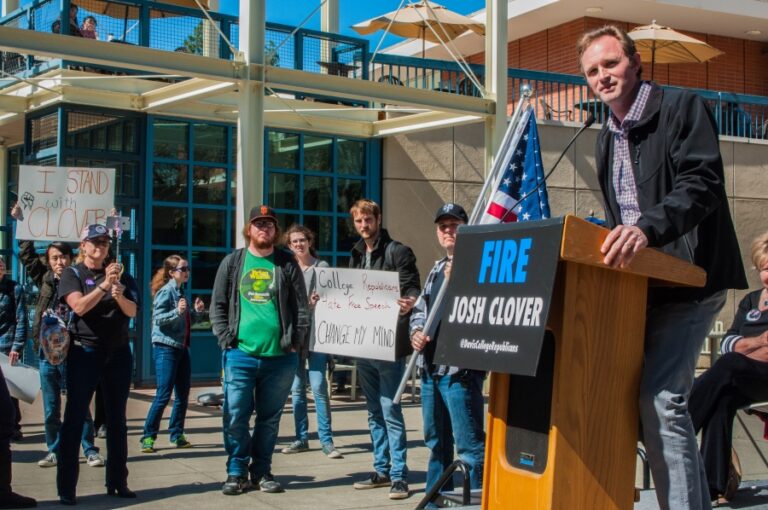
In an attempt to demonstrate their belief that professor of English and comparative literature Joshua Clover should be fired over his anti-police comments, the Davis College Republicans (DCR) held a rally outside the Memorial Union with the help of ASUCD Senator Mohammad Qayum and former ASUCD President Michael Gofman on March 15.

“The goal of the rally was to demonstrate to campus administration that the student body was not going to stand idly by while a murder advocate is protected by the university,” DCR chair Ryan Gardiner said. “Advocating for violence against any group of people is unacceptable.”

Qayum started the rally with a brief statement, saying that both his presence there and the rally itself were things he wished he “didn’t need to do.” Much of the focus was on what constitutes free speech. Qayum stated Clover’s comments do not fall under this category and are instead “hate speech.” The crowd applauded, appreciative of Qayum’s determination to make something happen. “If there’s a will, there’s a way,” Qayum said.

Gofman discussed the death of officer Natalie Corona in comparison to the Clover controversy, stating both situations were a matter of “right and wrong.” For Gofman, what was inherently wrong about Clover’s comments was the lack of critique.

“It was very simple,” Gofman said. “It was calling for the murder of the people that protect. It was calling for the murder of people.”

James Gallagher (AD-3), an alumnus of UC Davis and a California State Assemblymember, was the last speaker at the rally. Gallagher advocated for a civil dialogue and discourse in which everyone could “reach an understanding of each other.” While also introducing a resolution into California Legislature, Gallagher demanded “UC Davis administration ‘do what they think is right and make sure this rhetoric is not going to be taken anymore.’”

Gallagher’s resolution, HR-22, is a direct response to the UC Davis administration’s actions regarding Clover’s statements. The resolution states “that the Assembly urges University of California, Davis Chancellor Gary S. May, University of California President Janet Napolitano, and the Regents of the University of California to remove Professor Joshua Clover from the classroom and terminate his employment at the University.”

The resolution has not been approved by the California State Assembly at the time of publication.

Chancellor Gary May updated his statement that had previously not been changed since Mar. 4 and released a letter in response to Gallagher’s resolution. In his statement, May said he consulted his team to see if Clover’s comments were “subject to review under the University of California’s Faculty Code of Conduct (APM 015)” which describes both a formal and informal investigation into faculty misconduct. May came to the conclusion that the “university will not proceed with review or investigation of concerns regarding Professor Clover’s public statements” due to a possible reduction in federal funding for not protecting Clover’s right to free speech. This comes on the heels of President Donald J. Trump’s recent executive order that requires universities protect free speech on campuses.

On behalf of Chief Campus Counsel Michael Sweeney, Melissa Lutz Blouin of Strategic Communications said, “The procedures for responding to allegations of misconduct by faculty members are set forth in UCD Academic Personnel Manual (APM) 015.” However, APM 016 lays out forms of faculty discipline, one of which is dismissal which could be used against Clover. Other forms of discipline include written censure, reduction in salary, demotion, suspension, denial or curtailment of emeritus status and dismissal from the employ of the University.

The UC Regents have the power to make the final decision to dismiss a faculty member. If they choose to do so, Clover “may file a lawsuit to challenge a dismissal action.”

The California Aggie reached out to Clover for interview or statement. Clover provided the same response he previously sent: “On the day that police have as much to fear from literature professors as black kids do from police, I will definitely have a statement. Until then I have nothing further to add.”

Written by: Deana Medina — campus@theaggie.org

From DNA to algorithms

Self-assembling DNA programmed by applying theoretical computer science to molecular engineering

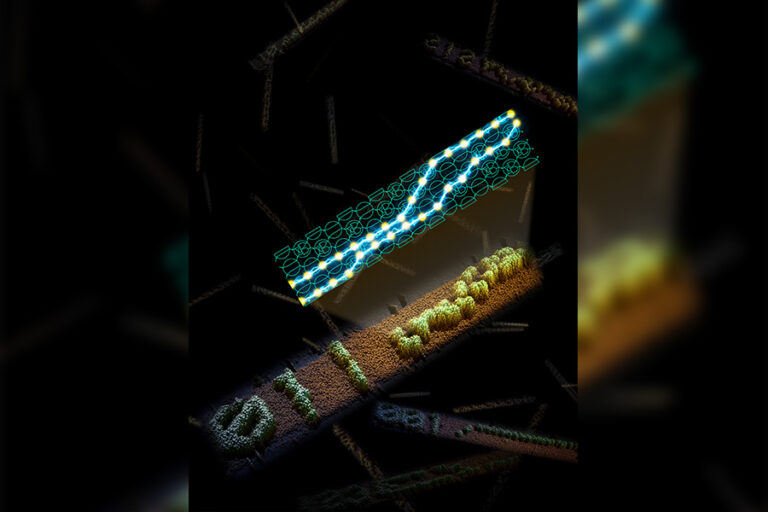
Through the incorporation of computer science into molecular engineering, computer scientists from UC Davis and the California Institute of Technology developed DNA that can algorithmically self-assemble. Using a DNA set tile containing 355 single-stranded tiles, the scientists were able to construct 21 circuits that can execute algorithms ranging from obtaining an unbiased choice from a random biased source to stimulating cellular automata, according to a Nature article titled “Diverse and robust molecular algorithms using reprogrammable DNA self-assembly.”

“I hope that molecular engineers will understand that the best way to understand how to get their molecules to automatically do what they want is to program them, which is where computer science comes in,” said David Doty, an assistant professor of computer science at UC Davis. “At its core computer science is not about electronic computers. It’s about automation […] how to design automatic processes that just work — we call them algorithms — without any need for people to come in and direct things by hand.”

The initial idea for this research came from Erik Winfree, a professor of computer science, computation and neural systems and bioengineering at the California Institute of Technology, who published a paper titled “The program-size complexity of self-assembled squares” that incorporated ideas on how to make these molecules perform computation from his Ph.D. thesis.

“I have long been fascinated by the conceptual connections between the mathematics of geometrical tilings, the fundamental principles of theoretical computer science, the exquisite forms of crystals and minerals, the complexity of biological self-assembly processes and the elegant formalisms of statistical mechanics,” Winfree said. “All those threads come together here.”

Doty, who had originally been studying Algorithmic Information Theory at Iowa State University as a graduate student, was captivated by the notion that this theory could be implemented to create actual self-assembling DNA molecules which can form nanoscale structures. Doty began working on theoretical problems in the field before joining Winfree’s lab. Damien Woods, a professor at Hamilton Institute of Maynooth University, joined Winfree’s lab after Winfree’s arguments intrigued him. Although both researchers were unfamiliar with laboratory work, instead coming from a theoretical computer science background, the two worked together to implement the theory into actual experiments.

Woods identified a major step in their research to be functionalizing an error reduction technique called “2×2 proofreading,” which allows the creation of more complex systems. Once this technique could be implemented, they were able to design the DNA system to fully exploit proofreading.

“When we purchased our molecules and started our experiments, we knew of only three or four circuits (programs) that we could implement in the lab,” Woods said. “But because our DNA system was reprogrammable, we spent subsequent days, weeks and months figuring out a total of 21 circuits to implement experimentally. Programming at the lab bench. A wonderful experience.”

Doty explained that a large portion of the project was devoted to determining how to unzip the DNA in order to demonstrate that their experiment had worked. After working roughly six months to develop a method to unzip the DNA, the problem resurrected and forced the researchers to come up with new ideas.  

“You take years to do an experiment, and you think the first few months will be spent knocking out the boring mundane stuff just to get the system up and running, and the next several years doing cool things with it,” Doty said. “In reality it’s the reverse: the majority of the time on the project is boring mundane stuff, mostly focused on figuring out what doesn’t work by trying things over and over again and recording that they don’t work.”

Woods stated he was pleased with the range of algorithms implemented through the experiments and the mathematically proven theoretical results from their self-assembling DNA. According to Doty, although they concentrated on DNA because there are already synthesizing methods in place and the molecule is fairly predictable, the double helix structure and the negatively charged characteristic of the molecule made some of the procedures difficult. Doty stated that their research could serve as a stepping stone to learning the general principles of automated molecule engineering. The researchers have the opportunity to move from title growth causing the execution of an algorithm, as in their recently published paper, to exploring how algorithms can direct this growth, essentially turning around the arrow of causation. This could lead to 3D printing without a printer and growing an object controlled by algorithms.

“We are still in the early stages of exploring this jungle of ideas,” Winfree said. “Now that we’ve cut a trail to one lovely waterfall, so everyone can go there, I imagine that we’ll rest for a few days at our base camp to renew our energies and then pick up our machetes again and start hacking away at the underbrush to explore in a new direction, and see what we’ll find.”

Written by: Michelle Wong –– science@theaggie.org

The engineering club hopes to make the world a better place

Engineers without Borders at UC Davis provides sustainable solutions to empower underserved communities globally

Engineers without Borders applies engineering skills to provide solutions that elevate the quality of life in underprivileged communities in developing countries. The Davis chapter of the organization currently has three projects in Peru, Bolivia and Kenya and has had successful projects in both Peru and Nicaragua.

“EWB is a unique organization in that it has an impact on both the communities we partner with and on our UC Davis students,” said Professor Colleen Bronner, the faculty advisor for EWB at UC Davis.  “We help communities raise the funding […] for water and sanitation projects and provide some of the technical expertise needed for the designs.”

As members of EWB, UC Davis students learn resourceful construction techniques and create relationships with different cultures where both parties learn from each other. The hope is that, through the experience, students learn that underprivileged communities aren’t victims and instead have much to offer. They just don’t have the resources to do so.

“Many developing communities around the world have been positively impacted by the projects that EWB has completed,” said Tanisha Potnis, a fourth-year mechanical engineering major and president of EWB at UC Davis. “Projects are targeted at helping communities achieve basic human needs such as sanitation, water distribution and construction.”

The Peru project focuses on improving the water distribution system of La Huaylla in northern Peru. The current water distribution system doesn’t provide sufficient clean drinking water for the community it’s serving. Last year, the team traveled to Peru to build a reservoir to increase the amount of water that could be stored. This year, the team is returning to install new pipes in the current distribution system to minimize leaks and ensure they’re properly sized to maximize the amount of water stored. They’re hoping that providing a sustainable solution to La Huaylla will help spread awareness to neighboring communities.

“The community is made up of 250 households,” said Valerie Yanez, a fourth-year civil engineering major at UC Davis and the co-lead for this project. “The goal is that the community of La Huaylla will have access to sufficient quantity and quality of water […] especially during peak hours to meet demands.”

The Bolivia Project hopes to improve sanitation in the community of Parque-Colani by building sustainable latrines in every household. They will travel to Bolivia in the summer to present their designs, teach the community how to build the latrines and start the building process within the community.

“On a greater scale, we hope to educate the entire community of Parque Colani on some basic sanitation techniques that could help eliminate illness and [the] spread of disease in the community,” said Lauren Chew, a third-year civil engineering major and co-lead for this project. “In addition, we hope to be able to provide resources, such as reusable pads, and information on women’s health.”

The Kenya project is working with Mabinju, a village in southwest Kenya, where limited access to clean drinking water leads to the prevalence of waterborne illnesses. While this project is still in the early stages, the team hopes to travel to Kenya this summer to identify the community’s needs.

“With access to clean water, children will not be forced to miss school to fetch water, families will experience greater yield and income from agriculture and livestock and community members will not be exposed to harmful bacteria in water,” said Mark Susanto, a fourth-year mechanical engineering major and co-lead for this project. “In addition, our project will visit local schools to promote both STEM education and gender equality in all industries.”

EWB hopes to continue serving underprivileged communities and increase its presence on campus, diversifying the team to include members of all majors.

Written by: Kriti Varghese — science@theaggie.org

2019 Stanley Cup Playoffs Preview

A look at the NHL Playoff picture as the postseason begins

The 2019 NHL playoffs are scheduled to begin Wednesday, and as such The Aggie takes a look at the postseason picture and predicts how teams will fare on their quest for the Stanley Cup.

Early last week, essentially 12 of the 16 eventual playoff teams had secured their position in the postseason, with only the wild card teams hanging in the balance. In the days since, the Carolina Hurricanes and Columbus Blue Jackets officially qualified as the NHL’s two Eastern Conference wild card teams — beating out the Montreal Canadiens, who had only a 31 percent chance of making the postseason according to projections by The Athletic. In the slightly less volatile Western Conference, the Dallas Stars and Colorado Avalanche punched wild card tickets of their own, with the Avalanche edging out the Arizona Coyotes by only four points in ROW (regulation plus overtime wins) standings. With the picture finally settled, here is the final 2019 NHL postseason bracket.

Starting out West, despite hopes for a deep playoff run, the San Jose Sharks roused more questions than answers in the final weeks of the season as they scuffled toward the finish line. They finally dug their way out of a seven game losing streak with an overtime win against the Las Vegas Golden Knights on March 30, but aren’t necessarily poised to give the Knights much more trouble in their opening round matchup. During the regular season, the Sharks have struggled to defend against the Knights’ high-powered offense, losing two out of their four matchups by scores of 7-0 and 6-3. The Knights’ late-February addition of right-winger Mark Stone, who scored 73 points in 77 games this season, makes Las Vegas an even bigger favorite against San Jose in round one. And for a team like San Jose that is not necessarily known for their postseason heroics, it may be better to bet on the defending Western Conference champions. Look for the Knights to get by in seven games.

With the Coyote’s loss to the Avalanche on March 29, the St. Louis Blues officially completed their dramatic late-season comeback. The Blues, who were the NHL’s worst team on Jan. 3, finished the year 30-10-5, becoming only the seventh team in modern league history to make the playoffs after being in last place on New Year’s Day. The Blues are arguably the hottest team on the ice right now and are carrying significant momentum into their first round matchup against the Winnipeg Jets. Despite dominating the Blues in the regular season, the Jets injury-prone roster may be in jeopardy come playoffs, with the return of defenseman Josh Morrissey and right-winger Brandon Tanev still unknown. Expect the red-hot Blues to defeat the Jets in six games.

Some not-so-unexpected selections are the Western Conference wild card teams being defeated in the first round. The Stars may take the Nashville Predators deeper into the playoffs than fans from Tennessee would like, but with home-ice advantage, it’s hard to imagine the Preds would allow their round one series to extend beyond five games. On paper, the Calgary Flames should dominate the Avalanche in four, maybe five games, but with the return of All-Star right wing Mikko Rantanen, there’s a chance Colorado takes it to six games, but no more.

On the Eastern Conference side of things, playoff predictions may seem a bit clearer — it’s essentially the Tampa Bay Lightning versus any team who tries to step just one toe in front of them. The Lightning’s 62 wins this season are tied with the 1995-96 Red Wings for most in NHL regular season history and their league-best 128 points is among the best of all time. They are one of the most dominant teams in history and with their title odds at +240, the Bolts are the obvious Stanley Cup favorites. They should sweep the Blue Jackets in four games — in a “Lightning” round of sorts — and are The Aggie’s very non-hot-take pick to win the finals.

But regardless of what may already seem predetermined, other teams are destined to make at least a little noise in the Eastern Conference bracket. The Toronto Maple Leafs, despite not officially clinching a playoff spot until late last week, may be the team that most fans sleep on come playoff time. Goalie Frederik Andersen, who has been jumping up the ranks in recent years, has put together one of his best seasons to date. He finished the season second in the league in saves with 1,796 (.917 save percentage) and third in wins with 36. His ability to protect the net will be crucial if the Maple Leafs want to upset the Boston Bruins in round one. In addition, center forward John Tavares, who finished third in the league in goals with 47, will surely be ready to prove himself in the playoffs after many a fruitless year with the Islanders. Assuming the Lightning win their first round matchup, a Maple Leafs-Lightning second round could potentially be a battle between the eventual Stanley Cup Champions.

The opening round series between the defending-champion Washington Capitals and the wild card Carolina Hurricanes may end up like many of these wild card series do — with the first seed team moving on. The Hurricanes have a promising squad, but they are young and haven’t qualified for the playoffs since 2009. But banking on the lone veteran presence and playoff experience of three-time Stanley Cup winner Justin Williams, and a few regular season wins over the defending champs, the Hurricanes may do just enough to steal a few wins from the Capitals. Washington in six.

The series between the New York Islanders and Pittsburgh Penguins may actually turn out to be one of the most evenly matched contests in this year’s playoffs. The two have met in the playoffs five times in the past, with the Islanders taking four of those series matchups. The Penguins slightly superior offense matches up against the Islanders slightly superior defense and will make for an exciting and balanced series. Yet, with the Islanders securing home-ice advantage, The Aggie is picking them to win in game seven in New York.

The first playoff puck drops between the Lightning and Blue Jackets on Wednesday, April 10, at 4 PM.


Written by: Carson Parodi – sports@theaggie.org

Commentary: “Leaving Neverland”

Documentary presents child abuse allegations against Michael Jackson

In the span of two two-hour episodes, the 2019 HBO documentary “Leaving Neverland” betrays the iconism of Michael Jackson — the King of Pop, the beloved performer famed since his childhood. Director Dan Reed displays the narratives of Wade Robson and James Safechuck, who claim Jackson molested them both repeatedly throughout their childhoods and pre-teenage years. In hard-to-listen-to, detailed interviews, both men walk through how they became Jackson’s victims at young ages.

Part one of the documentary concerns itself with Robson and Safechuck’s first interactions with Jackson and the beginning stages of the abuse. It serves as the background in understanding how the events were able to occur. And the film’s excellence lies in its attention to detail; each piece of information, anecdote and character description is vital to understanding the complexity of the abuse. Robson and Safechuck’s parents’ gross perpetuance to guide their children to fame becomes a main reason for their frequent close interactions with Jackson. As they each gained a familial acquaintance and even friendship with Jackson, what he could do for their children’s performance careers drove the parents to endow Jackson with their full trust. On top of that, the feeling of being “special” — they were chosen out of all of the families in the world to be Jackson’s friend — made them oblivious to various red flags. They let their children sleep in Jackson’s bed on multiple occasions; they left their kids in Neverland alone for days on end. The naivety of the parents is stressed in the film. As one judges and disapproves of the parents, one can’t help but question if they would be keen enough to engage their own critical thinking in the face of Jackson’s charismatic attention.

The parent’s deception ultimately becomes critical to Jackson’s manipulation. His kindness, his sympathetic appeal as a man stripped of his childhood groomed the parents in his favor. The same was done to the boys. Jackson did not come on to the boys in a violent or forceful way (towards the end of the abuse in the teenage years, Jackson “respected” both boys’ denial to anal sex). Rather, Jackson’s alleged abuse was calculated, sinister and fundamentally damaging. In a much more insidious way, he told the boys that their sexual intercourse was a way to display love. He called the boys by pet names, bought them presents and even had a fake wedding ceremony with one of the boys. The boys have the cards and jewelry, the chilling evidence to prove the inappropriate relationship. Jackson knew the faults of his ways — he made the boys practice getting dressed in case they got caught and told the boys they would all go to jail if anyone found out. He was not a helpless victim. His actions had a clear objective, which further illuminates to the public the unspoken methods of pedophiles in general.

Part two focuses on Robson and Safechuck’s years after abuse, and the deep psychological damage. The foundation of love explains why it took decades for Robson and Safechuck to speak out and why Robson testified in favor of Jackson in his 2003 trial. Existing issues of blame and self worth are clear in both adult men. Part two also focuses on Jackson’s various other child abuse allegations in 1993 and 2003. The viewer is reminded that this is not the first time this portrayal of Jackson has entered the public sphere. There lies a layer of social guilt. As this documentary presents the most personal and damning account of Jackson’s pattern of pedophelia, it begs the question how many other children were his victim and were disregarded in favor of the beloved Michael Jackson.  

The documentary thus adds another layer to the #MeToo era — it does not only happen to adults, it happens to children. It not only victimizes women; men have also suffered. Moreover, Jackson is arguably the biggest star to be accused of sexual abuse — larger than Bill Cosby, bigger than Harvey Weinstein.

The sketchy area, and possible fault, of the film lies in a similar vein: Jackson is not alive to defend himself. The film could be perceived, then, as slander and claims without evidence even with the moral intention to simply give the victims a voice. Reed then takes a risk in his documentary as he battles the King of Pop’s legacy. While there is some evidence, the film is Robson and Safechuck’s word against the lasting personhood of Jackson.

The documentary itself presents a thorough narrative-led investigation to bring justice to the abused. Yet the audience is left with the question of how to interact with Jackson’s music. Other #MeToo cases had a seemingly streamlined way of reacting: cease watching their movies, stop listening to their music, and furthermore, bring charges. However, the legacy of Jackson is on a much larger scale. Michael Jackson the musician is bigger than Michael Jackson the abuser. The dances, the songs and art we consume on a popular scale are a result of Jackson’s masterful creativity. He is an integral part of our modern day art and culture, and fully ridding our society of Jackson would mean erasing blameless artists he influenced. As these allegations against Jackson cut our society to its deepest cultural core, the complexity and deep emotional charge of the situation does not lend to us one correct way to morality. Nonetheless, a voice to the victims and a change in the way we each interact with Jackson and his music will compel us to think.

Written By: Caroline Rutten — arts@theaggie.org

Latinx Leadership Council debuts on campus to promote unity of leaders

Young Latinx leaders step up to connect undergraduate activities at UC Davis as a Hispanic Serving Institution

A great perk of attending UC Davis is getting the ability to participate in one of the many clubs and organizations. With over 800 plus clubs/organizations to choose from, each student is ensured an opportunity to become part of a community in which they can fully be themselves.

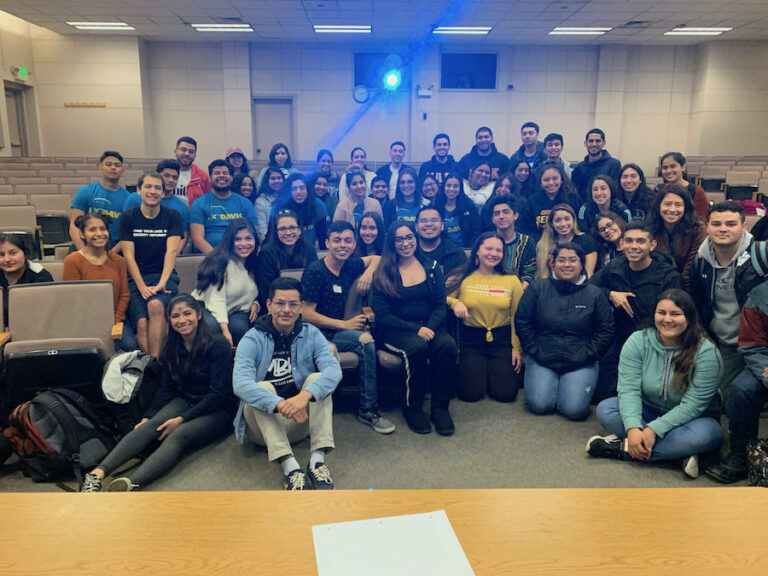
One of the ways this is achieved is through having clubs/organizations that embrace the many minorities on campus. A new organization that has just made headway is the Latinx Leadership Council spearheaded by second-year, community and regional development major Sergio Maravilla.

The organization’s main aim is to bring together the executive teams of the Latinx community as one to promote efficiency throughout all the clubs involved.

“The main thing I want people to know about this new organization is that its main goal is to provide more organized unity in the Latinx community at UC Davis. We meet once a month to encourage communication and collaboration at the executive level for Latinx-based organizations to ensure everyone is aware of what is happening in the community,” Maravilla said.

        Additionally, “the council brings together representative from undergraduate clubs, but we also aim to bridge undergraduate activity with outside organizations such as the Chicanx Latinx Alumni Association, Latinx staff and faculty association and many others,” Maravilla explained.

The end goal of this organization is to foster a sense of community for the Latinx/Chicanx students at Davis especially with it being a designated HSI (Hispanic-Serving Institution).  

Anna Estrada, a third-year sociology and Chicana/o studies double major and newly elected ASUCD senator, stated the significance that this organization has for the community.

“Since UC Davis is becoming a federally designated Hispanic Serving Institution (HSI), it is important to create a council where Latinx leaders unite,” Estrada said. “We have a beautiful Latinx community on campus yet we had no clear communication between all organizations. I believe that LLC will bridge the gap and allow for all to communicate clearly. In addition, it is important to aggregate the experiences, knowledge and skills of student leaders in order to collaborate on new projects and strengthen the bonds in the community.”

Maravilla also commented on this same idea.

“My main goal is to create an organization that not only brings together the Latinx organizations on campus, but also to create an impactful organization that is sustainable for future generations,” Maravilla said. “As UC Davis becomes a Hispanic Serving Institute with more than 25 percent of the population being Latinx, I want to ensure the incoming students that the Latinx community is well organized and can provide a good social network with countless opportunities.”

First-year, neurobiology physiology and behavior major Annanya Tyagi commented on the importance of promoting diversity at UC Davis.

“I definitely think that Davis is a diverse school. This add[s] to the different ways of thinking and forms new perspectives and helps us come up with solutions to difficult problems more easily,” Tyagi said. “It is important for minority clubs to be able to provide their input for decisions because it empowers them to give their input later in life and makes for a more productive society that works for everyone after college.”

WRITTEN BY: ISABELLA BERISTAIN — features@theaggie.org

Daylight savings: saving daylight, but at what cost?

The long-standing practice of changing our clocks for daylight savings might come to an end

Every spring, the clocks are turned one hour ahead to make the evening sunlight last longer. The beginning of daylight savings is dreaded by many as an hour of sleep is also lost the night it begins. Yet, as it inches closer to summer, many appreciate the sunlight lasting until 8 p.m. so they can enjoy the light. At UC Davis, students taking evening classes appreciate the evening light in the spring for other reasons as well.

“It makes me feel safer when I go back to the dorms from class at night, especially the classes further away from my dorm,” Afshin Amiri, a first-year psychology major, said in response to the benefits of longer daylight hours.

While there are some street lights on campus, some students don’t find them sufficient enough in providing a sense of safety. There have also been multiple comments about a lack of blue emergency call boxes on campus. One of the reasons for this shortage is the Davis Light Ordinance of 1966, which was implemented in order to limit light pollution, controls and restricts the erection of street lights or any light-emitting structures outdoors.

“In the fall, I had a class that got out at 8 p.m.,” Amiri said. “I remember that daylight savings ending was in the middle of the quarter, so for half of [fall] quarter, I got out of the class and it was still bright, and it was dark for the other half. It was a big difference.”

Amiri said his productivity is largely dictated by the sunshine.

“I feel more motivated to do stuff when the sun is out,” Amiri said. “It’s also pretty nice and warm when the sun is out, so I don’t feel like staying inside all the time.”

Many students agree they are more willing to take evening classes when they know the sun will be out when they go to and from their classes.

But in November, the clocks are turned back one hour to restore light to the morning hours, bringing darkness back to the evening.

In recent years, some regions have opened public debates on whether or not they should end the daylight savings practice altogether. The state of California still practices daylight savings. Some states such as Hawaii and Arizona, however, do not practice daylight savings. The European Union also recently declared that each country must decide on whether or not to abolish daylight savings by 2021.  

“I don’t have much of an opinion on the issue,” said Alex Chavez, a fourth-year neurobiology, physiology and behavior major. “Daylight savings was instituted during World War II to supposedly conserve energy for the war effort.”

Since then, adjustments have been made to the clock accordingly, without anyone thinking twice about it.

“I don’t think it’s really necessary nowadays,” Chavez said. “And from what I’ve read on the subject, it seems like there are very minimal energy savings with daylight savings time.”

There are no long-term consequences to ending daylight savings. In fact, there might be some benefits, including less artificial light and decreased health problems.

WRITTEN BY: LINH NGUYEN – features@theaggie.org

City explores possibility of piloting homeless respite center

Mayor’s staff developing proposal, options to provide basic amenities for Davis homeless

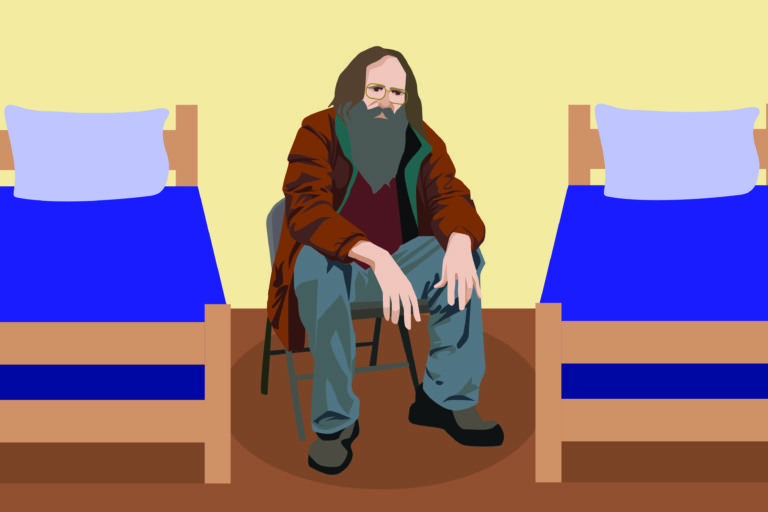
When overnight shelters like Fourth and Hope in Woodland and Interfaith Rotating Winter Shelter (IRWS) close their doors each morning, and when IRWS ends its operational season in March, where can individuals experiencing homelessness go? Mayor Brett Lee hopes to open a City of Davis respite center to better serve Davis’ homeless population.

The respite center, which Lee hopes will open June 1 if approved by City Council, is a potential one-year demonstration project that would serve homeless individuals through two main components: a temperature-controlled day center and a small number of tent cabins or similar structures for safe and orderly camping.

On Feb. 19, City Council approved exploration of Lee’s general idea with a budget that had an upper limit of $80,000, and it commissioned staff “to return with analysis of a potential respite center pilot project, to include locations and resource needs (funding, staffing, etc.),” according to the council meeting minutes.

Lee’s idea for the pilot’s daytime component is for the city to offer a space that is air-conditioned during the summer and heated during the winter. He said a place like the respite center is needed, as traditional shelters that close early in the morning leave individuals with 12 to 14 hours of limited places to go.

“Most of the time, [people are] just out in the cold,” Lee said, in explaining that “the idea is to create a place where people can go to watch TV or read a book or just sort of sit and not have to be worried that they’re blocking a business or someone’s private property.”

The day center would also offer basic amenities, such as laundry facilities, showers, restrooms and television, and would also allow pets. To keep costs down, Lee’s plans for the respite center pilot have focused on trailer-based solutions like shower and laundry trailers. Lee also hopes that the center would help connect eligible people with social services.

The second component, Lee said, speaks to the fact that individuals living homeless often camp in various places such as adjacent to campus and at the edge of Davis.

“It’s supposed to rain in a couple days, and a few weeks ago, there were crazy cold, rainy storms, and people are literally living in crummy tents under the trees in ditches here in Davis,” Lee said. “These folks need something now.”

According to Lee, the respite center could help shelter people in five to 15 tent cabins, even as other groups work on more long-term solutions, such as Paul’s Place. Lee noted the achievability of short-term, immediate solutions; he cited the speed at which emergency structures and amenities were put into place in response to recent California fires.

“It would be nice to offer [those camping] a more safe and secure area,” Lee said.

Lee noted that finding the land for the tent cabins may pose a challenge.

“Most of the city land is already being used for something, so we’ll probably have to relocate, at least on a temporary basis some of some city activity,” Lee said.

Lee also acknowledged potential neighborhood concerns.

“It’s reasonable for people to be concerned, but I think we can allay those concerns by showing it will be well run and done in an orderly fashion,” Lee said. “But that is one of the challenges — trying to make sure that the neighbors understand what it is versus letting their fears or imagination get the better of them.”

Before piloting either the day center or the tent cabins, the proposal still must be developed, presented and approved by the council.

Joan Planell, a social services consultant for the City of Davis, has been leading the staff team responsible for policy recommendations for the center since the Feb. 19 meeting. This staff team includes, among others, Officer Ryan Collins, the homeless outreach services coordinator, Ginger Hashimoto, an analyst with the city manager’s office and Madeline Handy, a second-year microbiology major at UC Davis and intern for Lee.

Handy has been working on researching options for the center since she was hired in late September of 2018.

“When I started toward the end of September, I was just doing research and talking to members of the community about the potential of having the project,” Handy said, adding that she’s spoken to groups like Davis Community Church and IRWS to learn about the homelessness efforts already happening in Davis and receive feedback. “Everybody has been relatively supportive. There have been some concerns about the program, but we’re still working through details.”

Handy continued by explaining her work with the team.

“Since that [Feb. 19] meeting, I’ve been meeting with members of the staff to put together a proposal that will actually go to the city council,” Handy said. “We’ve just been gathering research and looking into the best practices, and hopefully when the proposal is finished, it will get approved, but it still is in the works.”

Planell emphasized that at the moment, her team is exploring the respite center as a possibility, rather than a certainty.

“There has to be a vote of at least three [council members] are in favor of doing this before it becomes a reality, so we’re just exploring it at this point,” Planell said. “It has not been agreed that the city council is going to do this. The mayor had an idea, and the staff are researching the feasibility of it.”

Planell said that the team will present its findings in a written report for Mike Webb, the Davis city manager, by the end of April.

“I’ve been working with [Lee] as far as what’s his vision, making sure that our research is in line with his vision,” Planell said.

Handy showed support for the project while highlighting the fact that the project is still in its beginning stages.

“I think that the respite center will have a really big impact on the community and it’ll be really helpful,” Handy said. “We’re just sort of working through some details and preparing options that the city council will look at, so there’s still a lot of room for improvement and figuring out what will be best for Davis.”

Written by: Anne Fey — city@theaggie.org

Members of Senate call for Senator Zapardiel’s resignation at Mar. 14 Senate meeting

Zapardiel accused of threatening Senator Maraiyesa in a Facebook group chat

The Mar. 14 Senate meeting was called to order at 6:16 p.m. in the Mee Room of the Memorial Union. The meeting began with an amendment to the agenda so the senate could swear in Senator Sahiba Kaur. Senators Noah Pearl, Victoria Choi and Internal Affairs Commission Chair Jacob Ganz were absent.

After electing Senator Andre Spinoglio as pro-tempore, the meeting moved into confirmation of the new Academic Affairs Commission (AAC) chair, Naomi Reeley, a fourth-year political science and human development double major. Reeley was confirmed without objection.

The Ethnic and Cultural Affairs Commission chair (ECAC) Rina Singh gave their quarterly report. Singh criticized senators’ past actions and failure to show up for communities of color and called Senator Ricky Zapardiel out specifically after he commended the commission’s work in the past quarter and identified himself as an ally.

“You’ve come to ECAC’s meetings and I thank you for that, but I need to be clear about how I feel and how students of color feel,” Singh said. “I don’t think you respect the work that ECAC does or the work that any commission or person of color at the table has done. Being an ally comes from actions. Allyship is a verb, not just a noun. Allyship means showing up and being there.”

Singh referenced Zapardiel’s past action; he posted a laughing reaction on facebook to an event created to provide space for students to mourn the loss of Stephon Clark and renounce the recent decision not to prosecute the Sacramento police officer who killed him.

Later in public discussion, the issue of Zapardiel’s actions were brought up again. External Affairs Commision Chair Nayzak Wali-Ali called for Zapardiel’s resignation.

“You said we need to hold people on this table to a certain standard and I’m holding you to that standard,” Wali-Ali said.

Singh and Gender and Sexuality Commission Chair Joelle Judeh stood in solidarity with Wali-Ali. Judeh also called for Zapardiel’s resignation.

Zapardiel maintained that the laughing reaction was a mistake. Former ASUCD President Michael Gofman also posted a laughing reaction to the same event. Gofman has not indicated that the reaction was a mistake.

“It’s because of my actions previously that you’re going to dismiss everything I said as a lie,” Zapardiel said. “When my peer showed me what I had done I changed it. I was shocked. I already knew what was going to happen. I knew people were going to call me a racist. I’m not going to sit there and laugh at an event that lets people express themselves. I’m upset that you all fail to believe me. I’m not racist.”

Wali-Ali addressed inconsistencies between Zapardiel’s rhetoric in claiming he wants to be an ally and his inaction.

“I think you need to reevaluate how you’ve been acting as a senator,” Wali-Ali said.

Singh brought up Facebook group messages between Zapardiel and Senator Jumoke Maraiyesa about his action posting a laughing reaction. In response to asking whether Maraiyesa had informed “her constituents,” meaning people of color, about the action being a mistake, Zapardiel appeared to threaten them.

The Facebook message from Zapardiel read, “Be wary of who you trust and what you say to certain people because it comes around sooner or later.”

In light of certain members of the ECAC receiving death threats for their online response to the passing of Officer Natalie Corona, Singh perceived the Facebook message from Zapardiel as a threat. Wali-Ali and Senator Shondreya Landrum agreed that this text was perceived as threatening.

Many spoke in solidarity with Wali-Ali, including Senators Maya Barak, Sean Kumar, Spinoglio and Landrum. Commission chairs also included were Environmental Policy and Planning Chair Alice Beittel, Judeh and Singh. President Justin Hurst spoke in solidarity as well.

“That’s taking what I said completely out of context,” Zapardiel said. “Thank you all for holding me accountable and bringing me into this space to tell me the way I’m doing things aren’t right. I want to acknowledge that and I hear that, and I need to reconsider how I’m acting if this is how people see me.”

Members who ran on the same slate as Zapardiel also spoke out against his actions and words.

“I felt ashamed to be on a slate that was associated with that,” Spinoglio said.

After being prompted by Wali-Ali, Zapardiel finally addressed his threatening comments to Maraiyesa.

“What I said to Jumoke in the group chat was wrong and I should have reworded it in a way that was not threatening,” Zapardiel said. “I didn’t mean to threaten her.”

The senate then brought up old legislation and saw bills #63, #65, #68, #69, #70 and #72. All bills passed without objections.

SB #63 would give senators and ex-officio members two deferments during public discussion.

SB #65 would establish an ASUCD newsletter for senators to keep them informed about campus events and outreach hours.

SB #68 would clarify ASUCD campaign regulations. Candidates may not campaign in residence halls or libraries, but can campaign in the Coffee House.

SB #69 would extend the term limit for interim appointments from one month to cover the remainder of the term the are filling.

SB #70 would create two new student positions for the ASUCD Library Committee.

SB #72 was already passed but changed the amount allocated to purchase a stage from $27,340 to $30,000 to account for state taxes.

The Senate then moved to introduction of new legislation. SB X was introduced. The bill would establish a herbicide free committee on UC Davis’ campus to push UC Davis toward being a fully herbicide free campus. Authored by Beittel, this bill passed without objections.

Written by: Ally Russell — campus@theaggie.org


Accusations of hazing, assault, general misconduct within Band-uh!, #Health4All, HellaCappella: Your Weekly Briefing

Happy Friday, Aggies!

Spring Quarter, at last. Week one of the new quarter — a.k.a. week of class swapping, anxiously eyeing waitlists and wandering the campus looking for that lecture hall you’ve never heard of — has come to a close. Picnic Day is on the horizon, and The Aggie is hosting a Picnic Day open house. Come take a break from the sun, check out vintage newspaper technology and snag some free pizza! Our office in 25 Lower Freeborn opens at noon.

And now for the news…

JAY GELVEZON / AGGIE FILE

Campus:

Band-uh! Uh-oh! Accusations of sexual assault and hazing have risen within UC Davis’ California Aggie Marching Band. Current and ex-members came forward to The Aggie to tell their stories, making the student body aware of the dark side of Band-uh!. Hazing new members is seen as tradition by the group, but a series of “marching tests” and “bonding” events have contributed to a “toxic” culture. Joel Gutierrez, a third-year American studies and gender, sexuality and women’s studies double major, described the pressure put on new members to attend these gatherings. “At one specific bonding, new male members were blindfolded and taken to an outdoor area, dimly lit by candles. They were handed hand-carved penis candles and were instructed to describe what the candles felt like. They were all subsequently asked to describe their own genitals as well.” Read on.


CAITLYN SAMPLEY / AGGIE

City:

#Health4All — On Mar. 20, hundreds of advocates in the Health4All Coalition gathered in Sacramento to urge legislators to support a bill to extend healthcare for all Californians, including undocumented immigrants who have been “locked out of healthcare.” Senate Bill 29 would expand on the already-in-place Senate Bill 75 — “Health4AllKids,” which provides healthcare to all undocumented children — to include adults.

“We have taken the first steps toward providing healthcare for all, regardless of immigration status,” said Senator María Elena Durazo, who authored SB 29, in a press release. “In spite of their integral role in our state, undocumented Californians are, for the most part, left out of our health insurance system. They can’t get preventive screenings for serious health conditions like diabetes. They rely on emergency rooms and last-minute care.” Read on.

ALLYSON KO / AGGIE

Features:

Following admissions decisions released Mar. 8, campus tours are getting increasingly busy. Campus tour guides have the responsibility of leading groups of 15-to-25 prospective students and their families around campus and through residence halls, as well as working admissions events and greeting at the Welcome Center. This is an important job that requires guides to be well-steeped in facts about the campus and to be able to answer a variety of questions for prospective Aggies.

“For the two hours you are there giving the tour, you must be 100 percent present,” said Shubha Chakravarty, third-year communication and cinema and digital media double major, who has been a tour guide for a year. Chakravarty and other fellow tour guides share their experiences. Read on.

KENJI STINSON / COURTESY

Arts:

Get Hella Spoked — The fifteenth annual HellaCappella is tonight at 7 p.m. in the Mondavi Center. Hosted and organized by UC Davis’ Spokes, the premiere cappella showcase welcomes groups from University of Oregon, The Claremont Colleges, UC Berkeley and UC Santa Cruz.

“This year we’ve really harnessed all of our unique music tastes and musical backgrounds to create a diverse and dynamic sound,” said Tanya Kameswaran, a fourth-year psychology and communications double major and President of the Spokes. “Fifteen years is a huge milestone to celebrate so we’re so thankful to have this opportunity to share our music with the Davis community.”

The women of Birdstrike Theatre will be the emcee this year. Tickets are $21 for students and children and $35 for general admission at the door. They can be purchased beforehand or online for a reduced price. Doors open at 7 p.m. Read the full preview.

QUINN SPOONER / AGGIE

Sports:

After a rocky preseason, UC Davis baseball captured their first Big West series win, claiming a 2-out-of-3 victory against the UC Riverside Highlanders.

“The series [against UCR] went very well,” junior outfielder Cooper Morrison said. “It was good to win a series at home. It was big to come back in the 6th, 7th and 8th. Kind of carries into next week, next game — Pacific, then Hawaii — which is a lot of fun. It’s key to win games at home in conference so hopefully we can keep it rolling.”

Aggies’ next home series starts Apr. 12 against Cal Poly. Read the full recap.

ANDREA GONZALEZ / AGGIE

Science:

Studies show students’ insecurities about national and local community events are being translated into mental health conditions such as depression and anxiety. Despite an overall decrease in school violence in California, a survey of 12,000 high school students’ social and emotional health showed that a higher number of students who reported feeling unsafe correlated to feeling sad or down.

“Being exposed to school violence is a risk factor for mental illness, with the more intense and direct exposures being associated with higher rates of challenges, such as Post-Traumatic Stress Disorder,” said Stephen Brock, a professor and coordinator of the School Psychology Program in the California State University, Sacramento’s Department of Graduate and Professional Studies in Education. “While it is expected that most people exposed to school violence will not go on to develop mental illness, like PTSD, some do, and this can seriously affect school adjustment and academic functioning.” Read on.

From the Opinion Desk: A Tale of Two Californias: Is it time to finally restructure our state legislature?

Have a laugh:Humor: Marvel creates new UCD-themed comic book, “The Agents of Shields Library”

Editorial: College admissions scandals take spots away from deserving students

Itzelth’s Weekly Picks:

Television: Delhi Crime

Movie: Spider-Man: Into the Spider-Verse

Novel: I’ll Give You the Sun

Album: RKS

That’s all for your weekly briefing. Check back next week.

To receive the briefing in your inbox, subscribe to our newsletter.

— Grace Simmons


Joey Purp, Falcons to perform at Lawntopia

Entertainment Council announces artist line-up

On April 5, the ASUCD Entertainment Council announced that Joey Purp and Falcons will headline the 7th annual Lawntopia on Sat. May 4.

For the first time in three years, Lawntopia will take place on the Quad. Last year, the event took place at the ARC Conference Center due to inclement weather and the year before it took place on the campus soccer fields.

Joseph Davis, better known by his stage name Joey Purp, is a Chicago-born rapper and will be the headliner for the event. He is a founding member of the hip-hop collective Savemoney, along with Chance the Rapper and Vic Mensa, and is also one half of Leather Corduroys. Joey Purp released his debut album “Quarterthing” in 2018. His popular songs include “Girls @” (feat. Chance the Rapper), “Hallelujah” and “Elastic.”

Falcons is a Los Angeles-based DJ and producer. Falcons is best known for his 2015 “Terra EP” which features a collaboration with GoldLink and Chaz French called “Aquafina.”

Joey Purp and Falcons’ performances will mark the second hip-hop act, after Chance the Rapper, brought to campus by the Entertainment Council since the hip-hop duo the Cataracts performed in 2010.

“Because we did Sunset Fest and that was an electronic show, I really wanted to bring more diversity onto the campus,” said Liz O’Neill, a fourth-year managerial economics and psychology double major and the director of the Entertainment Council.

“I’m excited to see how the genre does on campus,” O’Neill continued. “I think [Joey Purp] will do really well with the crowd here and I’m really interested to see what the engagement is going to be like.”

Joey Purp and Falcons will not be the only performers on Saturday night. The Entertainment Council is currently taking applications for a student DJ to play the opening set. The application closes Sun., April 8 at 11:59 p.m.. The Entertainment Council encourages that sample mixes focus on hip-hop, R&B, trap and electronic music, but original work is welcomed.

Students can look forward to food trucks, photo opportunities, giveaways, possible art installations and more that has yet to be announced at this year’s Lawntopia.

Lawntopia will take place from 5:30 to 10 p.m. on Sat. May 4. Admission is free and both students and community members are invited to attend. More updates can be found on the Entertainment Council’s Facebook page and the Lawntopia event page.

Written By: Liz Jacobson — arts@theaggie.org

Exotic States

New research from UC Davis and other universities explores the curious characteristics of networks.

Networks like the internet, powergrid and brain control our lives, yet the underlying dynamics that define them are somewhat mysterious. One of the most fascinating dynamics is the natural tendency for behavior in networks to synchronize.

A famous example of network synchronization occurs in groups of fireflies. Certain species will start blinking randomly and then adjust until thousands of them turn on and off at the same time. Besides synchronous behavior, scientists have also observed more complex repetitive patterns that can emerge between network nodes. They call these exotic states.

A more detailed study of these states might allow scientists to better create and decipher complex networks. Recently, researchers from UC Davis, Caltech and other universities made a significant contribution to this field. On Mar. 8th, they published a paper in Science describing what they learned from a new ideal system they created to study network dynamics.

The experimental system the researchers built is a ring of eight electrically connected nano-mechanical oscillators. Each oscillator can be thought of as a clock with only the minute hand. The figurative clocks can spin independently, but through some novel experimental design, electrical connections between them allow the oscillators to influence their neighbors in the ring. The system is essentially an ideal recreation of the firefly network. Each node, the firefly or oscillator, acts independently but can interact with the other nodes. When the connections in the system are switched on, the figurative clocks spin in an uncoordinated manner. Then, like the fireflies, they slowly lock into a stable state.

One of the states the research team found was perfect synchrony; all the figurative clocks turned identically. However, they saw other exotic states with more curious behavior. For example, they observed splay states where the figurative clocks moved at the same rate and direction, but each each clock was slightly offset from its nearest neighbors.

Each emergent state was based on the starting conditions of the oscillators. The experimenters turned on the system with hundreds of different initial conditions and observed as the exotic states emerged. Many of these states had been predicted theoretically but never recreated in an ideal experimental setting, others were observed for the first time.

According to Matt Matheny, a research scientist at Caltech who was the principal author on the study, the team combined the experimental data and mathematical theory to better characterize exotic states and begin to explain how and why they emerge.

“What we did is that we went through, and we explained why you get this sort of different behavior and showed mathematically that if you write out the equations you can pinpoint how these strange behaviors are stabilized.”

According to Michael Roukes, one of the leaders of the research and the Frank J. Roshek professor of physics, applied physics and bioengineering at Caltech, such precise analysis was possible in this experimental system because the researchers had full control over almost every aspect.

“This is a really well behaved system where we can both measure everything that’s going on and control everything in the system,” Roukes said. “Those are the ingredients that now give us this very robust and detailed experimental platform to sort through the various theories that have been proposed, put them to the test and expand them where they don’t explain what is manifested in the real world.”

Although the systems we deal with on a daily basis have more than 8 nodes and are connected in dramatically more complicated ways, the simplicity of the experimental system allowed the scientists to get a better understanding of the fundamentals of networks in a way that an observational study of complicated networks would never allow.

According to Raissa D’Souza, a professor of computer science and mechanical and aerospace engineering at UC Davis and another author on the paper, the team was pleasantly surprised by the sheer variety of exotic states that could emerge from a simple 8 node system. They were also daunted by what that could mean for more complicated real world networks.

“It’s the simplest kind of structure that we could think of, and already in that simple structure we see beautiful unanticipated patterns of coordinated behavior,” D’Souza said. “It’s a little staggering and exciting to think about what would happen if we start scaling up the complexity of the network beyond that ring.”

Yet scaling up the complexity of the network is exactly what the team plans to do next. They want to answer more questions about the fundamentals of synchrony and exotic states in more complicated systems.They’d like to see if it is possible to push the system between exotic states.

“One of the things that we really want to do is understand how we can nudge the system to go from one type of exotic state to a different type of exotic state,” D’Souza said. “We’d like to give it a small little push and take advantage of the natural dynamics of the system to push it from one behavior very simply to a different kind of behavior.”

This ability to nudge systems between states could potentially allow scientists to better control large scale networks and help manage issues in the human brain.

The researchers believe that one day, an understanding of exotic states may help make all sort of systems better.

Written by: Peter Smith – science@theaggie.org