52.4 F
Davis

Davis, California

Tuesday, December 23, 2025
Home Blog Page 43

Moov-in’ Moo-seum encourages students to make art for Unitrans

Moov-in’ Moo-seum, in collaboration with Aggie Arts, Unitrans and Secret Spot, hosted an event for students to make hanging art for the buses


By MEGAN PUSL— campus@theaggie.org


A museum on wheels? At UC Davis, that means student art, buses and a tribute to our favorite animal, the cow. On Saturday, March 3, the Moov-in’ Moo-seum made its way into Downtown Davis for an art event at local art lounge Secret Spot.

The ASUCD Moov-in’ Moo-seum is a new art program that brings art to public transit at UC Davis. The program is a collaboration between Unitrans, Creative Media and Aggie Arts.

Jonah Messinger, a third-year food science major and project director for the ASUCD Moov-in’ Moo-seum, shared his excitement about the program.

“The new art program is bringing art to public transit in Davis,” Messinger said. “We started with the Moo-seum bus, which is the wrapped colorful bus, [and] instead of ads, there is art inside the bus.”

On March 3, students gathered at Secret Spot to create their own artwork to be displayed inside all Unitrans buses. In the backyard of Secret Spot, students painted the art hangers while others performed in the open jam session.

Messinger explained what the event is all about as it turns everyday bus rides into mini art galleries.

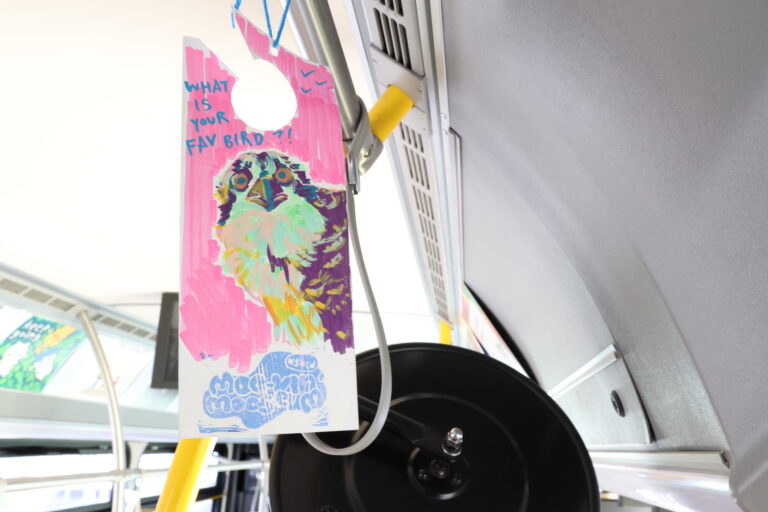
“[The art hangers] are going to go inside all of the buses in Unitrans,” Messinger said. “They hang from the handrails and are going to start popping up in all the buses. Today we have art supplies and blank hangers so people can create these, and we are going to install [them] throughout all the buses.”

Secret Spot, located at 117 D St. in Downtown Davis, acted as the venue for this art event. The lounge has showcased over 100 different local artists and hosts a variety of classes and events at their location.

Toni Rizzo, co-owner of Secret Spot, explained how this collaboration came to be.

“[Moov-in’ Moo-seum] reached out to us on Instagram, basically looking for venues for this awesome project that they are doing, and it kinda seemed like the perfect fit,” Rizzo said. “We are an arts and music lounge and this is the type of stuff that we do.”

Aggie Arts Committee Co-Chair Siomara Sanchez, spoke of the joy that the Moov-in’ Moo-seum brings to the community and said that she wants to continue to spread that creative spirit through public transportation.

“It’s been really great having the opportunity to involve the community as a whole through the Moo-vin’ Moo-seum,” Sanchez said. “We are trying different ways to engage with the city and the students, and seeing the results has been really exciting. This initial launch year has let us get a good idea on what’s been working and what hasn’t. We are really excited to keep bringing art to everyone in different ways while hopefully making public transport more fun.”

Messinger expressed that he hoped the Moov-in’ Moo-seum art event would get students involved with the art program on campus and introduce students to places like Secret Spot.

“The idea with these hangers is it brightens people’s commutes,” Messinger said. “With this event in particular, I hope it brings people together and forces [people] to recognize a lot of the art spaces that exist here in Davis.”

Anyone can ride the Unitrans Moov-in’ Moo-seum bus around Davis, as it operates on standard Unitrans bus routes. Keep an eye out for the vibrant exterior as it cruises through Davis to transport students to campus, downtown and beyond.

The next Moov-in’ Moo-seum project on Unitrans buses will be a collage of student memories in Davis. Anyone who has memories, past or present, in Davis is encouraged to submit photos that will be displayed inside of the buses. Visit the Moov-in’ Moo-seum website to submit photos by March 21.


Written by: Megan Pusl — campus@theaggie.org

 

‘UC’s greed has got to go’: Hundreds of UC Davis union members go on strike, alleging unfair labor practices

AFSCME 3299 and UPTE-CWA march across campus as part of their three-day ULP strike


By KHADEEJAH KHAN – campus@theaggie.org


Hundreds of workers at UC Davis started the first day of their strike by marching through campus, voicing concerns about unfair labor practices (ULP), interference with rights and staffing shortages.

This strike is a part of system-wide ULP strike taking place across 10 University of California campuses and five medical centers from Feb. 26 to Feb. 28. The workers are members of the American Federation of State, County and Municipal Employees Local 3299 (AFSCME 3299) and the University Professional and Technical Employees Local 9119 (UPTE-CWA), representing over 50,000 workers combined across the system.

AFSCME 3299’s picket line began at 6 a.m. on Hutchison Intramural Field where strikers shared coffee and snacks in preparation for the march through campus at 8 a.m. Walking down La Rue Road, strikers crossed the intersection making their way to UC Davis’ Student Health and Wellness Center. Strikers filled the air with drums, maracas, cowbells and loudspeakers.

“UC, UC, you’re no good, treat your workers like you should,” the strikers said through chants. “Hey hey, ho ho, UC’s greed has got to go.”

From UC Davis’ Student Health and Wellness Center, strikers crossed the intersection to make their way to Segundo Dining Commons. The strikers stopped in front of Segundo, and after the final chant, the pace of the drums accelerated until all of the strikers cheered in unison.

“UC, UC, you can’t hide, we can see your greedy side,” the strikers said through chants. “What do we want? A fair contract. When do we want it? Now!”

From Segundo, the strikers took a right past Cruess Hall and walked through the Silo Terminal. Strikers in neon vests ensured that other strikers made room for students who were biking through campus to ensure safety.

“Who runs UC? We run UC,” the strikers said through chants. “Who got the power? We got the power. What kind of power? Union power. We’re fired up. We can’t take it no more.”

From the Silo Terminal, the strikers walked straight back to Hutchison Intramural Field, chanting “3299” to represent the union, AFSCME 3299. As the strikers returned to the picket line, cars at the intersection of Hutchinson Drive and La Rue Road honked in solidarity, and the crowd of strikers cheered and rang cowbells.

The AFSCME 3299 strike is the second ULP strike of the academic year. Nicholas Hearl, a cook at Segundo Dining Commons, recalled the November 2024 ULP strike and expressed gratitude for the community bonds within AFSCME 3299 that have deepened since the previous strike.

“We have a great community here,” Hearl said. “We have a great turnout. [We’ve] got snacks. We have nice weather. I’m hoping that luck will shine on us as well.”

UPTE-CWA joined AFSCME 3299 at Hutchison Intramural Field at 11 a.m. from their original picket location, UC Davis Veterinary Hospital.

Both unions alleged unfair labor practices, interference with rights and staffing shortages. UC executive wages have increased 50% on average, yet AFSCME members have taken an average of 8% real wage cuts, both adjusted for inflation, according to James Clark, an AFSCME 3299 executive board member. He calls for UC’s $60 billion revenue to be reallocated.

“We’re here because UC deployed an unlawful campaign and intimidation in an attempt to stop us from fighting for what we deserve,” Clark said. 
”We refuse to be silenced in our ongoing fight for big raises that address inflation, affordable healthcare and housing benefits. We are struggling and they know it. We’re the people that make it happen, the frontline workers. UC’s greed has got to stop.”

Both AFSCME 3299 and UPTE-CWA strikers expressed concerns over increased copayments, despite the absence of an agreement. Leticia Garcia Prado, a medical assistant at the Student Health Center represented by AFSCME 3299, described how many UC employees struggle with housing, healthcare and other basic needs.

“We just want our workers to be able to retire,” Prado said. “For custodians, it’s hard work on their body. Someone can’t work here for 30 years and be able to retire.”

Gemma Blumenshine, an animal health technician represented by UPTE-CWA, commutes 30 minutes daily from Sacramento due to the high cost of living in Davis. However, her commute is not a rare occurrence among UC employees, as she described that at least one-third of her co-workers commute more than 40 minutes.

“The cost of living in Davis is so high, so the UC really needs to come to the bargaining table and reallocate their funds,” Blumenshine said. “[The university] has a lot of liquid capital, and so [they need to] not just fund the campuses but make sure that it’s being allocated to the right places, too, and support our technicians that work these really hard jobs. After a hard shift, no one wants to drive an hour home.”

Amidst the November 2024 ULP strikes, many strikers cited the UC outsourcing workers and allegedly paying them $32 an hour, which is above workers’ $25 demand. Clark described this practice as “the lean concept” with the UC “doing more with less,” alleging the university of contracting one worker responsible for a job that requires multiple people. In this practice, workers often do not get replaced, intensifying their work loads.

LaShell Alpaugh, a registered veterinary technician represented by UPTE-CWA, believes that this practice contributes to the amount of understaffing on campus. She believes this issue affects not only workers but the quality of care patients receive.

“We’re so understaffed right now that, you know, our patient ratio is like one technician to 10 to 20 patients at a time, which is not fair,” Alpaugh said. “It’s not fair to the patients, it’s not fair to my co-workers and it’s definitely not fair to the clients that are bringing and trusting us with their pets.”

For Alpaugh, this strike represents an intertwined struggle experienced by both students and staff under the UC system.

“Everything has increased – housing, inflation, groceries, gas,” Alpaugh said. “But again, when you talk to people, most of the people out here on the strike, they’re not going to tell you, ‘We’re doing this for the money.’ We are definitely doing this for our patients and our clients and for our co-workers.”


Written by: Khadeejah Khan – campus@theaggie.org

Torkwase Dyson explores space, justice and art at recent artist talk

Dyson engaged students and faculty in a powerful discussion on the transformative role of art in shaping the future


By ALMA CULVERWELL city@theaggie.org


The California Studio: Manetti Shrem Artist Residencies in the Maria Manetti Shrem Museum recently hosted Torkwase Dyson for an artist talk on Feb. 27 at Wright Hall.

Dyson, a Chicago native, is known for her work across multiple mediums, including painting, drawing and sculpture. Her abstract works explore the continuity between ecology, infrastructure and architecture while addressing themes of human geography and the history of Black spatial liberation strategies.

Throughout her career, Dyson has grappled with the ways in which space is perceived, imagined and negotiated. Her research and creative practice confront issues of environmental liberation and envision paths toward a more equitable future.

Dyson’s academic background includes studying sociology and social work at Tougaloo College in Mississippi, followed by a Bachelor of Fine Arts in painting from Virginia Commonwealth University and a Master of Fine Arts in painting from the Yale School of Art.

Katie Grube, curator and program manager for The California Studio: Manetti Shrem Residencies, explained a few details behind planning the event.

“Torkwase Dyson visited UC Davis as a ‘spotlight’ artist in The California Studio: Manetti Shrem Artist Residencies, a visiting artist program in the Department of Art and Art Studio,” Grube said. “The department invites three ‘spotlight’ artists and curators annually. One comes each quarter and is on campus for about a week. The California Studio also brings two visiting professors every year. One professor comes in fall quarter and one comes in spring quarter.”

These artist residencies are integral to the UC Davis community, providing students with valuable opportunities to engage with accomplished artists and curators from diverse fields. Dyson’s visit was a highlight of this year’s program, sparking dynamic conversations about the relationship between art, environment and social justice.

The event allowed attendees to hear firsthand from Dyson about her creative process and the ideas that drive her work. Her ability to bridge academic disciplines and artistic expression has made her a vital voice in conversations around social equity, environmentalism and the transformative potential of art.

Jamal Gunn-Becker, a second-year graduate student in the art studio program, explained his thoughts on the event.

“The event was very powerful and informative to watch,” Gunn-Becker said. “Dyson’s insights into art as a catalyst for social change and environmental action not only inspire, but challenge us to rethink our role as artists in shaping the future.”

The California Studio: Manetti Shrem Artist Residency program continues to foster an environment of creativity and cross-disciplinary engagement, bringing some of the most innovative artists and scholars to campus each year. 

“In spring quarter, artists Marie Lorenz and Byron Kim will be in residence,” Grube said. “Marie Lorenz will be a visiting professor in art studio. Byron Kim will be on campus during the week of April 21.” 

Marie Lorenz is scheduled to give a talk on Thursday, April 10, and Byron Kim is scheduled to give one on Thursday, April 24. Both talks will be from 4:30 to 6 p.m. at the Manetti Shrem Museum.


Written by: Alma Culverwell — city@theaggie.org


Fashion’s dangerous return to size 0

UC Davis senior fashion lecturer speaks on the regression of body positivity in the fashion industry


BY BETH MUNRO-MORRIS — arts@theaggie.org 


Inclusivity in the fashion industry saw significant strides throughout the 2010s, with a growing demand for diversity fueled by the rise of social media. Progression has taken a halt amid the resurgence of Ozempic in mainstream culture and the subsequent return of size 0 on runways. The pendulum seems to be swinging back toward the glorification of ultra-skinny and, in turn, opportunities for plus-size models are becoming increasingly scarce.

Adele Zhang, a senior fashion lecturer at UC Davis, offers a critical perspective on the uncertain future of body positivity in fashion, shedding light on the inner workings of the industry. Ranging from technical design in the sample room to the business of apparel trade, now teaching at the university level, Adele’s rich experience provides a unique insight into the industry’s troubling regression.

“The fashion industry wields immense power when it pushes a trend, and striking a balance between those trends and the diverse needs of individuals is very challenging,” Zhang said. “When diversity in body types is overlooked, it reflects a broader disregard for the social and cultural backgrounds of consumers.” 

While she doesn’t claim to have a straightforward solution to this challenge, Zhang’s experience running a fashion show in China underscores a commitment to diversity and inclusion that current runways seem to be lacking. Recognizing the fashion industry’s need for broader representations of identities, she chose models that better reflected the general population. 

“I selected garments from retail stores and hired floor staff to model real clothing for real clients,” Zhang said. 

She attributes the success of the show to its relatability and resonance with consumers.

“It was no longer a prestigious event reserved for private guests; it attracted ordinary, everyday people,” Zhang said.

Zhang’s approach exemplifies how the industry can drive sales by boosting consumer confidence. Fashion companies tend to prioritize trends and marketability over genuine body positivity, with plus-size models sometimes serving as ‘tokens.’ Such models are picked merely to fulfil diversity requirements, their presence often a superficial ploy to make a brand appear more progressive. What companies can fail to realize is that by fully embracing and investing in diversity, consumer demand can rise, along with profits.

Instead, the fashion industry isn’t promoting a truly ‘healthy’ look, with many influential brands guilty of glamorizing underweight figures. A recent trend report on size inclusivity, following the “Big Four” fashion weeks in New York, London, Milan and Paris, revealed that nearly 95% of the looks featured straight-size models (U.S. sizes 0 through 4). The majority of these models were on the extremely thin end of the spectrum.

This trend extends beyond the runway, with more and more celebrities undergoing extreme weight loss. Speculation of celebrities using weight-loss drugs like Ozempic continues to rise as this shift becomes more widespread across mainstream culture, raising concern for not only the fashion industry but society as a whole. 

Hayden Ma, a third-year cognitive science major at UC Davis, discussed the current state of body positivity in the fashion industry, highlighting its potential harm from a psychological perspective.  

“Through experience and exposure, we build up strength and accuracy in our mentalizations of the things in our environment, and we adjust our schemas because of it,” Ma said. “With the constant exposure to the idealized beauty standards we see in the fashion industry, our ideas of what a woman is supposed to look like is getting progressively further from realistic standards.” 

Ma also said the industry’s regression has affected her on a personal level. 

“As women, we are told that every body type is different, yet current runways demonstrate the opposite, insinuating that one size fits all,” Ma said. “The constant pursuit of any idealized body type is exhausting, but when that body type is literally unachievable, the damage can be multiplied tenfold.”

Ma continued to stress the different perceptions that consumers gravitate toward, noting that relatability is the main thing that we, as shoppers, are looking for. 

“The fashion industry distorts our perception of what is considered normal or more importantly, ‘healthy,’” Ma said. “We want to see people that look like us and relate to them — it’s part of human nature. When we don’t, we’re left with two options: feeling sad and inadequate or changing ourselves to fit the mold. Both are equally as harmful.”

Zhang said that body shame is unacceptable, but she also stressed the importance of self-awareness.

“There’s a grey line,” Zhang said. “Denouncing a group of people is wrong and unproductive — what’s more important is educating people on how to stay healthy.” 

Zhang said the change needed to reshape the industry lies in the hands of the consumer.

“People have the chain the wrong way around: […] If the consumer voices their needs, the industry will be forced to change to cater for consumer demands,” Zhang said. “The consumer has the right to pick and choose what they want, the power rests with them.” 


Written by: Beth Munro-Morris — arts@theaggie.org 


I’ve seen tabling from both sides now and they both suck

A lose-lose college classic


By MADISON SEEMAN — meseeman@ucdavis.edu


The sun was shining, the birds were chirping but, somehow, out of the nearly thousands of people who walked past where I was tabling, only a sympathetic few actually stopped to grab a sticker and stay for the spiel.

There are few constants in life: the sun, the moon and tabling college students. As long as college education exists, students will be found at foldable tables, trying to trap other students for one thing or another. It’s a campus classic!

Whether you’re freezing on the bench of a picnic table or zipping past very eager and borderline desperate faces, there’s not a single UC Davis student who hasn’t encountered tabling. And, if somehow you haven’t — what the hell? Please share your secrets.

I’ve looked at tables from both sides now and I’ve only learned one thing: Everybody is suffering. This past year I have seen the worst of humanity — guerilla tactics from both sides of the table — and I’m here to give you the inside scoop.

They’re camped out at the Memorial Union (MU) and the Silo, just waiting to catch vulnerable students unawares. What do they want? It depends. Some tablers want new club members. Some want to raise awareness for real issues. Some want you to join them for some Korean BBQ, which comes with a secret side of Christian conversation.

Some tables trap you with an ambiguously designed banner. Others might lure you in with compliments: “Oh, I like your shirt and, hey, would you like to convert to my religion?” And don’t forget the stickers — props are everything. Maybe it’s my fault that I can’t say no to a good sticker, but hey, it’s a free sticker. And the wheel? You’re telling me I get to spin a wheel? I’ve seen people who get more joy from the wheel than the prizes on it.

But there are also expert table-avoidant targets that have perfected the slippery art of table-based subterfuge. In my tenure both tabling and avoiding tables, I’ve come across a few prominent and successful strategies.

Modern innovations have brought us the cellphone, which has many uses — the best of which is looking at your lock screen really intently when you don’t want to lock eyes with an especially pushy table.

Next, the speed walk is an oldie but a goodie. How can a tabling student even think of stopping you if you pass them faster than they can say, “Free stuff?”

A personal favorite of mine is the guilt trip. As you walk by the table, make sure to let that stress you’ve been feeling all day really show on your face. The more visible your distress, the worse of a person that tabler would be for trying to haggle you. Bonus points if you can shed a single tear.

While a little less theatrics, switching all the way to the far side of the sidewalk also gets the job done. Only excessively dedicated students will breach the distance and haggle if they have to yell. The only downside to this strategy is that, when done ungracefully, it’s comedically obvious.

Then, there are those lucky few who walk around with genuine horse blinders, which is the ultimate strategy, however unintentional. The easiest way to avoid a table is to not even know it’s there! Ignorance truly is bliss.

As dreadful as tabling and being tabled at can be, it’s (mostly) nobody’s fault. Whether it’s rejection therapy for you or whether you’re the rejection therapist yourself, at some level we all understand each other. I don’t want to yell at you and you don’t want to feel guilty for ignoring me. The tabling cycle is an endless struggle; College students may be trapped ‘till the end of time. So, if you have the time, stop by — or don’t, we don’t blame you.


Written by: Madison Seeman –– meseeman@ucdavis.edu


Disclaimer: (This article is humor and/or satire, and its content is purely fictional. The story and the names of “sources” are fictionalized.)


The inevitable third wheel

Friend groups of three can be difficult to maintain, so here’s some advice to fix that


By JHANA RHODES—jsrho@ucdavis.edu


Is it just me, or do trio friendships have a 50-50 chance of working out? Half of the time, everything is excellent. You and your two other friends spend quality time together, create inside jokes and share memories — daily activities that friends do. However, the other half is a Shakespearean play. There are fights, drama and backstabbing; Ultimately, someone always ends up being the third wheel.

If I’m being honest, trio friendships aren’t that bad: They just get a bad reputation. Under the right conditions, friend groups of three people can thrive. On the other hand, the reality is that trio friendships aren’t for everyone. If this applies to you, here are some things you should avoid if you want to stay best friends forever.


  • Third wheels are great for tricycles, not friendships!  

If someone were to tell my younger self that all of my trio friendships would not work out, I wouldn’t have believed you. I was too busy looking for matching friendship necklaces that came in sets of three to think about whether or not my friend group dynamic was practical. Although I believed I had strong friendships back then (strong enough to buy “best friends forever” pendants), I naively overlooked one of the biggest challenges in trio friendships — exclusion.

Exclusion is something that many of us who were always picked last in gym class know extremely well. While the friendship starts off strong, all of a sudden you’re listening to your two friends talk about the sleepover that they had without you. Again, trio friendships are great and can offer a unique blend of perspectives and cultures. However, if you want to maintain those friendships, it’s essential to ensure that you are making everyone in the friendship feel included.


  • Communication is key. 

Like almost any relationship, conflict is inevitable. Most of the time, when conflict happens, many of us (including myself) just let it go and never bring it up, hoping that the problem will disappear. However, not addressing conflict is one of the worst things you can do for your friendships. Even though they may be small problems, eventually those problems will stack up, and sooner or later, your trio could become a dyad.

Luckily for you, there is an easy fix. The quickest way to solve interpersonal conflict is to address it — you don’t even have to be a communication major to do it! If you’re feeling left out, talk about it. Your friend told you that they didn’t like your skinny jeans? Talk about it! Addressing your problems with your friends is a great way to understand each other’s points of view.


  • If it wasn’t meant for you, let it go.

This bit of advice may be controversial, but it must be said. Many of us, including myself, hold on to friendships even when we know they aren’t good for us. Despite knowing that we aren’t being treated well, we often feel obligated to stay because of history together. It’s so important to understand that you deserve better than that. Surround yourself with friends who uplift you just as much as you uplift them.


I’m sure many of you reading this have experienced or are currently in successful trio friendships. However, there are many of us who just seem to be unlucky when it comes to choosing friends. Whether you’ve found success with them or not, trio friendships can teach us a lot about ourselves — how to act in friendships and how we handle conflict. At the end of the day, you should always remember to prioritize building positive and healthy relationships founded upon mutual understanding and communication.


Written by: Jhana Rhodes— jsrho@ucdavis.edu 


Disclaimer: The views and opinions expressed by individual columnists belong to the columnists alone and do not necessarily indicate the views and opinions held by The California Aggie.


Two wins, two losses for UC Davis beach volleyball in the Battle of the Bay

Aggies improve to 5-3 with victories over Pacific and San José


By LUCIENNE BROOKER  — sports@theaggie.org


After starting the 2025 season at home, UC Davis beach volleyball went on the road for their first stretch of away games. The Battle of the Bay, held from Feb. 28 to March 1, saw the team face off against four formidable opponents and walk away with two wins and two losses. With one set of games in Berkeley and the other in San José, it was a weekend full of travel for the Aggies.

Starting in Berkeley, the Aggies were able to claim a hard-fought victory in their first matchup of the day. Facing off against the University of the Pacific, the Aggies came out strong and took home a 4-1 win. Tabitha Mitchell, a fourth-year animal science major, and Lindsay Heller, a fourth-year communications major, won the first match easily, winning 21-10 and 21-14.

Although Pacific was able to tie up the score in the next round, the golden pairing of Kate O’Steen, a third-year human development major, and Alexandra Leal, a second-year environmental engineering major, continued their winning streak and put the Aggies back in the lead. O’Steen and Leal have yet to be defeated this season. Two more matches carried the Aggies to their 4-1 victory and, after a brief celebration, it was time to regroup for the second game of the day.

It was a quick turnaround, with the second game starting almost immediately after the conclusion of the first. The Aggies showed some fatigue straight away in the first set, with UC Berkeley, on the other hand, ready to put on a dominant performance. The Aggies lost all five games, losing all but one set in the entire tournament. Juliana Chapman, a second-year undeclared major, and Kaitlyn Smyth, a second-year computer science major, were the only pairing able to score any points against Berkeley. They won the first set of their match 21-17 but were not able to rally any further as Berkeley completed their clean sweep.

Despite the tough loss, UC Davis had to get back on the court the next morning for their second set of two matches, this time against Saint Mary’s College of California and San José State University. First up was St. Mary’s, where the Aggies were unable to break their losing streak. After losing the first two matches of the game, O’Steen and her new partner, Anna Braun, a third-year viticulture and enology major, were able to claim the first win. They defeated the St. Mary’s pair in two sets.

Although St. Mary’s won the next set, UC Davis had one more chance to find success on the court in the last set. Skye Smolinski, a second-year design major, and Mia Olen, a fourth-year environmental policy analysis and planning major, defeated St. Mary’s, bringing the final score to 2-3 between the schools. Despite the disappointing result, the Aggies were invigorated by their strong showing heading into the final game of the weekend.

Once again, they had to come from behind to find any success. Despite not winning their first match, San José took the next two, leaving the Aggies scrambling for control. Smolinski and Olen won their match in two sets by large margins, 21-11 and 21-14, tying up the score heading into the final match of the day. Finally, Chapman and Smyth were able to squeak out a very narrow win in the third set. After each team had won one set 21-19, the Aggies found a second win and won the game-winning third set 15-5.

The Aggies had some time off before going on the road again. Following these matchups, they took on four highly ranked teams, including San José State University in San Luis Obispo on March 15 and 16, which was won 4-1, marking the lead-up to Big West Conference play.


Written by: Lucienne Brooker — sports@theaggie.org

A looming trade war

Why can’t I buy groceries at a normal price?


By NEVAEH KARRAKER— nakarraker@ucdavis.edu


An empty wallet is something all college students carry. However, it may soon be possible to possess not just an empty wallet, but a negative wallet — a direct result of the wave of tariffs currently unfolding upon consumers who can least afford necessities.

For context, Mexico recently began specializing in the automotive industry rather than oil or energy. After supply chain disruptions caused by COVID-19, Mexico redirected its efforts to prioritize regional trade and nearshoring in order to amplify protectionism. In other words, seeking a supplier within close proximity to increase restrictions on imports and encourage a domestic industry. When the United States’ demand for the automotive industry surged, China’s lingering tariffs made it more cost-efficient for the U.S. to export auto parts to Mexico for assembly and then import them back into the U.S. to sell on the market.

This, combined with labor-intensive, inexpensive “maquiladoras,” allowed Mexico to surpass China in 2023 as the top source of imports into the U.S., for the first time in two decades.

Despite this positive economic growth, the U.S. remains in a serious debt crisis; In 2024 alone, there was a trade deficit of over $900 billion. As inflation and the cost of living increase, the minimum wage remains insufficient to cover basic living expenses for most Americans.

As of March this year, President Donald Trump imposed 25% tariffs on steel production for Canada and Mexico, as well as increased tariffs from 10 to 20% on Chinese imports. In response, Mexico’s President Claudia Sheinbaum Pardo declared that the country will impose retaliatory tariffs. Canada and China have also vowed to strike back, sparking mass panic over a global trade war. Trump addressed these concerns by postponing the tariffs until April — for many, relief is deeply felt.

In theory, tariffs could replenish domestic employment through increased wages and job opportunities. They could also generate revenue to assist in paying off debt via the redirection of currency and the encouragement of a competitive market.

However, tariffs can also lead to high interest rates, supply chain disruptions and increased costs that ultimately burden consumers.

Consumer prices have remained at an all-time high in recent years, due to factors like inflation, the avian influenza outbreak and subsidies related to climate change initiatives. These specific tariffs instated by Trump will mostly influence the cost of electronics, clothing and automobiles. An additional 10% tariff on Canadian energy imports will likely impact transportation, thus increasing food prices.

The U.S. is an industrial nation capable of being, to some extent, self-sufficient. Even so, the benefits of trade far outweigh remaining internally sufficient, as it provides opportunities for market specialization, global alliances and economic growth. The ambition and desire to maximize profit and minimize labor costs frequently backfires by exceeding acceptable dependence on other countries.

Trump aspires to redirect focus on American industries, similar to the 35% tariff on Chinese tires instated in 2009 in order to improve American manufacturers’ profits and reduce job losses. He also hopes that these tariffs will coerce Canada and Mexico to enhance their dedication toward fentanyl trafficking intervention and illegal immigration prevention.

When cleaning your room, it generally becomes shockingly disorganized before it improves. This is the logic Trump is using to justify imposing tariffs on our closest trade partners, and it is clearly not entirely applicable to everything. While tariffs indirectly encourage consumers to invest in domestic businesses rather than foreign ones — which overall improves the economy — they also provoke frustration and difficulties for those already financially struggling.

Regardless of whether or not the long-term result of Trump’s actions will be beneficial via the elimination of trade imbalances and attraction of foreign direct investment, the immediate aftermath is concerning.

After the tariffs were instated, the stock market decreased by 2% and Dow Jones dropped 150 points. Now, investors fear a potential recession. The impacts also extend beyond the U.S., as Mexico’s stable economic growth will largely be stunted. As a result, there could be ripple effects on the U.S., including a lower demand for American exports and job losses in sectors related to Mexico’s agricultural industries.

Further, the political tensions between all countries are expected to escalate, especially with Mexico given the present strains on border security. The true impact of this decision remains uncertain — leaving consumers, as well as companies, holding their breath in anticipation.

In the meantime, instead of panicking, students can stay informed about updates and practice budgeting. Smart financial decisions, such as alternative transportation or shopping methods, might alleviate the consequences. Compared to a negative wallet, students may find that an empty one is a luxury.


Written by: Nevaeh Karraker—nakarraker@ucdavis.edu


Disclaimer: The views and opinions expressed by individual columnists belong to the columnists alone and do not necessarily indicate the views and opinions held by The California Aggie.

Why you should write to your 13-year-old self

The unexpected benefits of showing love to the ‘you’ of the past


By NATALIE SALTER — arts@theaggie.org 


During the 13th track of her 2023 album “Bewitched,” Icelandic-Chinese singer-songwriter Laufey turns deeply introspective. “Letter To My 13 Year Old Self” is everything the title suggests — a melodic message backwards through time to her adolescent years. “I wish I could go back and give her a squeeze / Myself at thirteen / And just let her know, know that she’s beautiful,” she sings softly, her voice full of emotion. Touchingly, she metaphorically reassures her younger self with comforting words of unconditional love. 

The narrative Laufey presents throughout “Letter To My 13 Year Old Self” is all too familiar. She chronicles all of the insecurities and loneliness of being 13, looking back at the self-doubt she experienced at this age with a note of sadness. But what makes the song so moving is the kindness and gentleness she shows her younger self. 

It was “Letter To My 13 Year Old Self” that came to the front of my mind when I sat down to journal one night — and the practice I applied to my life thanks to the song might be healing for you too.

On its own, journaling is a wonderful habit to maintain. A journal can serve as an outlet for your troubles and feelings. If you have no one to talk to about what ails you, journaling is an alternative way to let that weight off of your shoulders. A journal can also serve as a chronicle of your mind — you may find yourself looking back at your old writings for a window back into a previous chapter of your life.

After listening to “Letter To My 13 Year Old Self,” however, I wondered if my personal journaling habit could take a new direction, one that could allow me a therapeutic sort of interaction with my younger self. 

Instead of detailing the events of my current life, I wrote at the top of the blank page in front of me an address to myself. It was no longer a diary entry but a letter, even if it would never properly be sent or received. And then I wrote, talking back to a past that would never respond and felt a new sort of lightness by the final word.

There is something remarkable about the process of conversing with your younger self. If you sit for a moment and think back to a point in your past when you felt extremely lonely, you were never truly alone even then — because you still had yourself. That version of you might feel distant now, but reconnecting with them can be a deeply personal experience.

Whether you already journal or are unfamiliar with the process, I implore you to take a bit of your free time to attempt one of these letters. Think about a time in your life when you needed reassurance or guidance and write what you would tell yourself if you had the chance. What advice would you give your younger self? What would you have needed to hear to feel happier at that time?

As I did, you might find yourself faced with a curious inclination to be kinder than you expected to your past self. Does it really matter to you that this younger iteration of you struggled with acne or failed that one math test? Maybe you are being too hard on yourself — you were still figuring out who you wanted to be. You’ll likely realize that you were just young and learning how to live. 

Moreover, treating your younger self with love opens up a comforting possibility. Somewhere in the future, there’s an older and wiser version of you looking back at the “you” of today with the same pride and affection. If you can be kind to your past today, you can trust that your future will look at you with the same kindness, and plenty of love.

Written by: Natalie Salter—arts@theaggie.org


Disclaimer: The views and opinions expressed by individual columnists belong to the columnists alone and do not necessarily indicate the views and opinions held by The California Aggie.

City of Davis Planning Commission hears from local businesses at recent meeting

The meeting had discussions of temporary and conditional use permits


By PIPER AWEEKA — city@theaggie.org


On Feb. 26, at 7 p.m., the city of Davis Planning Commission held its bimonthly meeting at the Community Chambers to discuss two scheduled public hearings.

In the first hearing, the Co-Chair of the Interfaith Housing Justice Davis, Ellen Kolarik, advocated for the commission’s acknowledgment of her organization’s equitable housing development initiative.

“Our approach is principle-based,” Kolarik said. “We strive to shape a future where housing is accessible, sustainable and just for all members of our community.”

Thomas McNairn, an associate planner for the city of Davis, introduced the first of the two public hearings of the evening: a proposed conditional use permit (CUP) at a multi-tenant warehouse.

“The proposed uses within this space are primarily a climbing gym and a bouldering gym,” McNairn said. “The space will also offer climbing areas for kids, cardio and weight training activities, as well as a snack bar with items available for purchase for members. Staff finds that the proposed use is compliant with the zoning and compliant with the surrounding uses. […] We recommend that the Planning Commission approve of the resolution that will allow the bouldering field.”

With similar statements from her colleagues, Commission Member Georgina Valencia stated her acceptance and approval of the proposed CUP.

“I think the economics of having another business in our community is a good one,” Valencia said. “Something that’s orientated around health and fitness seems good also.”

After a unanimous vote approving the CUP, the commission went on to address the other item of concern.

The second public hearing was dedicated to 1123 Olive Dr., where two food trailers have been operating as accessories to Davis’ Volt Coffee shop. McNairn shared that because the prior temporary use permit (TUP) had expired as of February, the applicant has applied for an additional TUP and CUP.

In his coverage of the proposal, McNairn stated the lack of Volt’s compliance with the terms of their past TUP and CUP, one concern being an expired health permit for one of the operating food trucks.

“A temporary use permit is arguable that it can turn into a property right and so out of an abundance of caution, [the] staff is recommending that you revoke the temporary use permit,” McNairn said. “Based on the non-compliance of the temporary use permit, [staff] cannot recommend that the Planning Commission approve of the conditional use permit. Staff recommends that the Planning Commission revoke the temporary use permit for the two trailers […] and also deny the conditional use permit for those two trailers, as well.”

Robert Salazar, the applicant and one of the owners of Volt, voiced his perspective.

“Like any new business, we had a learning curve during the first 12 months of operations,” Salazar said. “We believe we’ve remedied all the situations and issues. […] We respectfully request an extension or approval to get this finalized and past us so we can focus on Volt. We’re not perfect, we’re new to this.”

Following the Planning Commission’s discussion of Volt, the meeting allowed public comment on the issue. After a slew of supportive testimonies from contractors and employees at Volt, commissioners deliberated on the conditions in which the approval of the permits could be granted. With no clear consensus being agreed upon, Commission Member Vince McLaughlin stated his motion for a two-week extension of the hearing.

“I don’t want to wait six months for this,” McLaughlin said. “I was thinking of something like 30 days to sign the development agreement, 120 days to complete the work unless there are delays attributable to city processing, then the TUP would be revoked and the CUP would be denied. I’m inclined to vote in favor of rolling it over to [the] next meeting to see if they can make a concrete proposal. […] I move to continue this matter until our next planning commission meeting for further direction from staff and deliberation by the commission.”

With all commission members voting in favor of McLaughlin’s motion, deliberation on the 1123 Olive Dr. proposal will continue at the next Planning Commission meeting on March 12. More information on the Planning Commission and future meetings can be found on the city of Davis’ website.


Written by Piper Aweeka — city@theaggie.org


Separating the anti-anxiety effects of psychedelics from hallucinations

A recent study identifies neural pathways driving anti-anxiety effects associated with psychedelics


By KATELYN BURNS— science@theaggie.org


Psychedelics are a class of hallucinogenic drugs that can cause an altered mental state. While there’s currently very little known about the mechanisms of these drugs and the extent of their effects, there has been interest in their potential therapeutic uses.

Dr. Jessie Muir, a postdoctoral scholar in the Kim Lab at Princeton University, said traditional treatments for anxiety can be ineffective.

“Despite [anxiety and depression’s] prevalence and their burden on the population, traditional treatments for anxiety and depression are ineffective in a large part of the population,” Muir said via email. “Even [for] people in which treatment does work, there is a high risk for recurrence.”

Psychedelics have been found to promote changes in the prefrontal cortex that can have therapeutic effects, and they have shown promise as a non-traditional treatment for anxiety. Of course, in certain situations, psychedelics can have the opposite effect, inducing anxiety.

“When we discuss psychedelics as potential therapeutics, it is important to isolate these therapeutic effects, as it would be beneficial to be able to treat [anxiety] with as little adverse side effects as possible,” Muir said.

In a study published in Science, a peer-reviewed journal in the American Association for the Advancement of Science, in November 2024, mice were used to study the neural pathways driving the therapeutic anti-anxiety effects of psychedelics.

Dr. Christina Kim is an assistant professor of neuroscience and bioengineering at Princeton University and the lead researcher of the Kim Lab.

“If we could isolate distinct neural pathways that just drive potential beneficial behavioral effects, without driving the hallucinogenic effects, these could inform new therapeutics that ultimately could be safer and more precise,” Kim said via email.

In the study, neurons in the medial prefrontal cortex that were active following a psychedelic injection were tagged and reactivated after the drug was no longer affecting the mice. It was noted that the anti-anxiety effects occurred without the hallucinogenic-associated head twitch responses.

“This was also a little unexpected, as we thought that the neurons in the medial prefrontal cortex may also be involved in driving the hallucinogenic-like effects,” Kim said.

The prefrontal cortex has been the focus of a lot of work, including this study, regarding the therapeutic effects of psychedelics.

“The medial prefrontal cortex is one that has been well-studied in rodents; hence we focused on it [in this study],” Kim said.

However, other brain regions like the ventral hippocampus, as noted in a recent paper published in Neuron in November 2024, are also thought to be involved in the therapeutic effects of psychedelics.

“We still do not know exactly how the hallucinogenic effects of these drugs are instantiated in the brain,” Kim said. “It’s possible that it involves many brain areas; this is something that many researchers are actively working on.”

It should be noted that while the study had implications for the therapeutic use of psychedelics without the hallucinations, the specific psychedelic from this study — 2,5-dimethoxy-4-iodoamphetamine (DOI) — wasn’t being evaluated as therapeutic.

“The psychedelic we studied in our paper is not one that is being evaluated as a therapeutic in clinical trials,” Kim said. “Our study was very much a basic research-focused study.”

Regarding future clinical trials and other research-focused studies, new tools and technologies are being developed now that will open new possibilities in psychedelic research.

“We are actively engineering new types of molecular technologies that would allow us to identify specific proteins that may be involved in psychedelic signaling in activated neurons,” Kim said.

The possibilities of expanding research is a source of inspiration for Muir.

“There’s a lot to learn about these drugs and we have more tools now than ever before to study them,” Muir said.


Written by: Katelyn Burns— science@theaggie.org

Graphic design is my passion

Please follow my new Etsy shop: “Designz by Designer”


By ALLISON KELEHER — adkeleher@ucdavis.edu


I recently got Canva Pro, and it has changed my life. Now that I have so much power at my fingertips, I sometimes get overwhelmed by all of my creative ideas. Not to sound cocky, but graphic design may or may not be my new career. It would be a disservice to keep this heat to myself. What is this heat you may ask? Well, you are in luck, because I have just released my new t-shirt line.

My t-shirts are special, because I am harnessing the raw energy of Artificial Intelligence (AI) to generate groundbreaking designs. It all started when I asked my computer for a UC Davis design. It spit out a cow at me, and I bonked myself on the head because I hadn’t thought of that.

This was just the beginning; After that first design, I was able to really start cranking out ideas. It was so easy, too! I only spend one hour a week managing my business, which leaves ample time for me to keep up with my classes.

I started out by putting my designs only on white t-shirts, but now I’m thinking of expanding into other colors. It might be time, because I’ve already received five orders, meaning that things are heating up (only two of the orders were from my mom).

I even looked into trademarking my designs so that no one would steal them from me. However, it’s pretty complicated to acquire a trademark, especially when the content is AI-generated. The attorney fees alone would have cleaned me out. This business is supposed to be bringing me money; I need to cover my Canva Pro costs.

Last week, I took my designs to the craft fair near the Davis Farmers Market and they were a hit! Almost 10 people stopped to take a look. Even though only three people bought one, I felt super successful. If anyone tells you that I gave them a discount, don’t believe them. I only sell at a premium, since the designs are so good — only the best AI works for me.

I’m currently expanding my operations to accommodate the surge in demand that I’m expecting from the Craft and Vintage Fair publicity. There are currently multiple tabs open on my laptop creating content. Once I have some free time, I plan to put these beautiful designs on Canva and my dreams will become reality. I am considering contracting out a printer so that I can make these in bulk.

My mom is my biggest supporter and I couldn’t do it without her. She suggested the Etsy shop since that would help me reach more customers. It is now up and running, so please go check out my whimsical cow designs.


Written by: Allison Keleher — adkeleher@ucdavis.edu


Disclaimer: (This article is humor and/or satire, and its content is purely fictional. The story and the names of “sources” are fictionalized.)

Moderation is the new excess

Microtrends are a big, fat fallacy


By ABHINAYA KASAGANI— akasagani@ucdavis.edu


In an age where microtrends permeate every aspect of daily life, allow me to let you in on a secret: You do not need five iterations of the same thing to feel a sense of joy and there is no “shiny new thing” that will instantly fix all of your problems. Mass conglomerates are lying to you about everything they call “essential” — if it were, in fact, essential, you would be struggling to live without it. 

This trap is easy to fall into, and I will not fault you for being dazzled by this benevolent sequined slit in the sky which drenches you in style. What is alluring about microtrends is the extent to which they offer their consumers the illusion of novelty, while at the same time being plagued by eventual obsolescence. We know this and producers know this. But we still bite. 

The microtrend culture is seasonal — being “on trend” is no longer reserved for fashion or tech enthusiasts. The novelty of microtrends can make you feel as if you are in on the joke when, in truth, the joke is on you. The consequences of consuming and adopting microtrends without regard for whether or not they are truly necessary for our well-being is what’s dangerous about overconsumption. We purchase, discard and purchase again. This overconsumption is unsustainable and clearly influential to cultural homogenization, financial spending, environmental degradation and market saturation

The very nature of microtrends is transient. Fashion brands like Zara, H&M and Shein capitalize on the rapid turnover of styles by mass-producing cheap and disposable clothing that eventually ends up in landfills. The technology sector further perpetuates this cycle of obsolescence by contributing to e-waste. Prioritizing trends over substantive content affects culture at large, trading longevity for instant gratification.

What is troubling about this is the extent to which trends dictate personal style, taste and eventual consumption. In this way, cultural homogenization arrests true and effective thought, flattening range and diversity. Local identities and cultures are rendered insignificant. A monoculture, where aesthetics, ideas and schools of thought are replenished and repeated, leaves less room for innovation. Similarity is rewarded and reward is prioritized. 

The environmental consequences of microtrends are staggering, with brands pedaling rapid product cycles that cause consumer fatigue. Both the fashion and technological sectors tend to be notorious polluters of the environment, responsible for producing nearly 100 billion new garments each year. What trends dictate, the planet bears.

The market struggles to compete with the demand for microtrends, forcing brands to accelerate their production cycles — often causing lessened product quality or market oversaturation. Consumers, overwhelmed by the multitude of choices and new releases, struggle to distinguish genuine innovation from cheap imitation. Caught in a cycle of perpetual spending, they suffer from buyer’s remorse, eroded self-worth and financial instability all at once. The pressure to spend in order to avoid the fear of missing out (FOMO) or any lingering feelings of inadequacy that follow, makes consumers feel as if they are obligated to spend — that if they don’t, they will fail to be relevant. 

The allure of microtrends is understandable — everyone wants to be in the know. Marketed as subcultures, microtrends tend to be removed from the mainstream and considered as having a broader value system. However, the “core-ification” of most things commercializes them. The costs proceed to outweigh the benefits. 

Supporting sustainable products, along with prioritizing quality over virality, creates an environment that values substance over surface-level appeal. Some microtrends can be useful, but, as consumers, we must make this decision with care and deliberation. Our desire to have the next shiny, new thing is our Achilles’ heel, fashioned into a pair of bright red Louboutins. It is clear that we are yet to learn that moderation is the new excess, and we must work on internalizing this crucial lesson.


Written by: Abhinaya Kasagani— akasagani@ucdavis.edu


Disclaimer: The views and opinions expressed by individual columnists belong to the columnists alone and do not necessarily indicate the views and opinions held by The California Aggie.

UC Davis students reflect on the prospect of a child-full or child-free life

Students discuss how they envision their future and the many factors that influence the decision to have children


By AMBER WARNKE — features@theaggie.org


The decision on whether to have children is a highly personal one, with some people knowing from a young age that their future includes parenthood and others coming to realize that they want to remain child-free. UC Davis students who reflect on this decision may face concerns over how their job trajectory may impact their decision to have children.

College-educated women statistically tend to have children later in life compared to women who never went to college — and women earning a master’s degree have children even later than those with a bachelor’s degree.

Having children is an incredibly complex choice, as it can be influenced not only by someone’s career path but also by expenses, family dynamics and political beliefs. The decision to not have children seems to be an increasingly popular choice, with a 2021 study showing 23% of non-parents aged 18 to 49 reported that they were not at all likely to have kids, a higher percentage than that of a few years prior.

One student who wishes to remain anonymous,  a third-year Chicano studies major, faces additional factors impacting their family planning as a queer individual.

“In terms of being part of the queer community, it could sometimes feel like you cannot have children just because of the stigmas around it,” the student said. “As a queer person, I have seen a lot of queer people feel like it’s not for them because of external factors.”

Queer parents may experience additional challenges, as up to 30% of queer parents may not have the legal status of parent or guardian of at least one of their children. Despite these concerns, the student said they are excited about the family they plan to have in the future, as they are optimistic about starting a family that they can raise to value respect and human rights.

Today’s parents can often feel pressure to raise their children according to a very specific set of standards, with authoritative parenting, gentle parenting and other parenting styles dominating conversations on how to raise a child. Max Badal, a fifth-year aerospace engineering major, however, said that good parenting comes more from a place of love, understanding and effort, rather than following a specific set of recommendations that can be learned from a parenting book.

“I feel like once it happens, I’m probably gonna be thinking, ‘Oh God, what the fuck do I do, how do I take care of this thing?’” Badal said. “But I feel like people make too big a deal of the perfect parenting style — I feel like as long as you’re just a reasonably good parent, you’ll be fine.”

Kasey Baysa, a fourth-year cognitive science and linguistics double major, plans to be child-free but looks forward to being involved with her friends’ and family’s children.

“I think that we spend a lot of time not collectively raising children; I think that a child needs more than two adults to depend on,” Baysa said. “[For children to] have this intuitive sense of, ‘There are always people that can support me,’ is something that I’m really interested in continuing.”

Ren Crayton, a fourth-year global disease biology major, also plans on not having children.

“I’m having a hard time with the current political climate and also, economically, I’m not really sure if I’ll ever be in a place where I could support another human being that’s completely reliant on me,” Crayton said.

This concern is not so uncommon, with 38% of adults aged 18 to 49 who are unlikely to have children reporting that concerns over the state of the world have impacted their decision, and 26% reporting environmental concerns as a factor.

Additionally, up to 70% of pregnant people experience anxiety or stress during pregnancy, which also comes with a variety of potentially serious health risks, a statistic that could act as a deterrent for prospective parents.

Crayton also reported having concerns over carrying a life to term.

“I just don’t like the idea of having a whole other human inside me,” Crayton said.

Crayton said the decision not to have children can be difficult, and they personally reached this decision at the age of 16.

“A lot of it is having realizations about the fact that you might not be the best parent, or you might not be in the space to be a parent yet, and that can be a little sad,” Crayton said. “[But] I want to make sure that I actually get to live a life for myself before I live a life for other people.”

Regardless of the plans UC Davis students have for their future, they can know countless others have the same hopes or concerns as they do. As students go through their college careers, they face pressure to figure out what they want to accomplish, not only in their careers but also in their personal lives. While this can feel overwhelming for some, the best choice they can make is the one that is most true to them.

Written by Amber Warnke —– features@theaggie.org

Aggie Compass Basic Needs Center hosts CalFresh Outreach Week

The event introduced students to resources such as CalFresh, amongst other social services


By JESSICA YUNG — campus@theaggie.org


From. Feb. 24 to 28, the Aggie Compass Basic Needs Center held a series of events known as CalFresh Outreach Week. These events included a pizza and drinks social, an informational day at their center and the LGBTQIA Resource Center, a meal at the Aggie Eats food truck and a “Pickling 101” workshop.

The Peer Navigators at the Aggie Compass Basic Needs Center, including Lisa Pan, a second-year clinical nutrition major, Lorena Alvarez Flores, a second-year political science — public service major, Dylan Jang, a fourth-year food science major, and Myo Maung, a fourth-year communications major, described the event as a way to ensure that students know what services are available to them.

“Outreach Week is a time when Aggie Compass focuses on making sure students know about the resources available to support them,” the peer navigators said. “A big part of the week highlights CalFresh and how students can access food assistance. It’s also an opportunity to spread awareness about the Basic Needs Center as a whole. Many students don’t realize the range of support we offer [from] food and housing assistance to financial and wellness resources.”

On their website, Aggie Compass provides information and access to students about the various resources they provide. It also states their mission and goal for the community.

“The Aggie Compass Basic Needs Center helps by providing access to nutritious food, assistance applying for CalFresh and other social services, access to economic crisis resources, case management and immediate shelter and support for unhoused students,” the website reads.

The peer navigators, whose role is to support students at Aggie Compass, elaborated on the assistance that the Aggie Compass Basic Needs Center provides.

“Aggie Compass Basic Needs Center is here to make sure students have the

support they need to be successful at UC Davis,” the peer navigators said. “We help students access essential resources like food, housing, financial assistance and wellness support — because we shouldn’t have to choose between education and meeting our basic needs.”

One way that Aggie Compass Basic Needs Center can help students, and the main promotion of the week, is through CalFresh.

“CalFresh, also known as SNAP/EBT, is a long-term food assistance program for low-income people who meet federal income eligibility rules and want to add to their budget to put healthy and nutritious food on the table,” the website reads.

The peer navigators explained more of what CalFresh offers.

“CalFresh is a federally funded nutrition program that helps students afford groceries by providing up to $292 per month in food benefits,” the peer navigators said. “It’s designed to support those with financial need, making it easier to access nutritious meals. For many students, CalFresh can be a crucial resource in reducing food insecurity and ensuring they have the energy to focus on their education.”

Many students use CalFresh to supplement their funds while they learn at UC Davis. Saul Duran, a fourth-year computer science major, said that CalFresh helps students in need.

“It’s important that programs like CalFresh are a thing since it helps many students in need who otherwise wouldn’t be able to eat,” Duran said.

Lola Jung, a fourth-year art studio major, said that CalFresh has been a lifesaver for her.

“I’m an undergrad myself, [and CalFresh] is, no exaggeration, a lifesaver,” Jung said. “With so little time to work and make money while being a student, it would actually be impossible to eat properly, let alone healthily [without CalFresh].”

Affording both food and housing costs has been a worsening problem for university students everywhere, and particularly in California, according to World Population Review.

“California has the nation’s third-highest cost of living index at 142.2,” the website reads. “California’s transportation costs are the second-highest in the country, due in part to high gas prices in the State. Housing in California is twice the national average, with a typical single-family home priced at $683,996.”

Leslie Kemp, the director of UC Davis Basic Needs Initiative and Aggie Compass Basic Needs Center, stated that change is occurring to help students with these issues.

“Students shouldn’t have to skip meals or choose between rent and food just to get an

education,” Kemp said. “CalFresh provides crucial, ongoing support, but we know that not every student qualifies and the student exemption rules and citizenship requirements leave a lot without access to healthy food.”

Kemp continued by describing other alternative resources to CalFresh.

“That’s why we’ve developed solutions like our county-approved Local Programs for Increased Eligibility (LPIE), which helps students qualify for CalFresh when they don’t meet the work [or] work training requirement,” Kemp said. “For those who are ineligible due to other student exemption rules, we created AggieFresh — a pilot program that provides the same level of monthly food support as CalFresh to students who would otherwise qualify.”

The peer navigators described how students can interact with their services.

“Students can access our services in whatever way works best for them — they can email us (compass@ucdavis.edu), give us a call [at] (530) 752-9254 or stop by Aggie Compass in person at the [Memorial Union], no appointment necessary, just walk in and let us know what kind of support you’re looking for,” the peer navigators said. “We can provide direct assistance or connect you with other campus and community resources. Depending on the service, you may need to show your student ID, fill out a quick form or sign a document, but we can help.”

Written by: Jessica Yung— campus@theaggie.org