54.1 F
Davis

Davis, California

Tuesday, December 23, 2025
Home Blog Page 46

Congregation Bet Haverim hosts forum on current immigration enforcement

Immigrants at Risk — What You Can Do forum addressed local immigration concerns


By GIA LOOMIS — city@theaggie.org


On Feb. 24, Congregation Bet Haverim (CBH) hosted the Immigrants at Risk — What You Can Do forum to educate attendees on current immigration enforcement and how it may affect the Davis community. Taking place from 7 to 8:30 p.m., the forum was free and open to the public at the church. For these forums, attendees are asked to register in advance and, while free to the public, donations are encouraged. 

Organized by the CBH Social Justice Committee in collaboration with the Yolo Interfaith Immigration Network (YIIN), the event strived to share information about current immigration enforcement given the rise and anxiety surrounding mass deportation efforts. In addition, the forum sought to inform individuals on how these enforcements are impacting local immigrants and what the community can do to help. 

This forum was planned following the Social Justice Committee’s decision to make immigration their sole issue focus of 2025. Member of the committee and Co-Chair of YIIN John Katonah explained the inspiration behind this decision and the following forum. 

Our goal was to generate interest within the congregation (youth and adults) and invite them to become engaged in this [immigration] issue within Yolo County,” Katonah said. “I was asked to form a program that would bring in panelists who were very involved in working with immigrants to help the congregation begin to find ways to be of support to them during this very frightening time for the undocumented people in our midst.”

To highlight local immigrants’ experiences, the forum included a multi-speaker panel including local immigrants and the director of a local refugee center. The discussion housed by this forum aims to push the community to better understand the situation created by recent changes in immigration policies and show attendees how to help respond to this developing situation. 

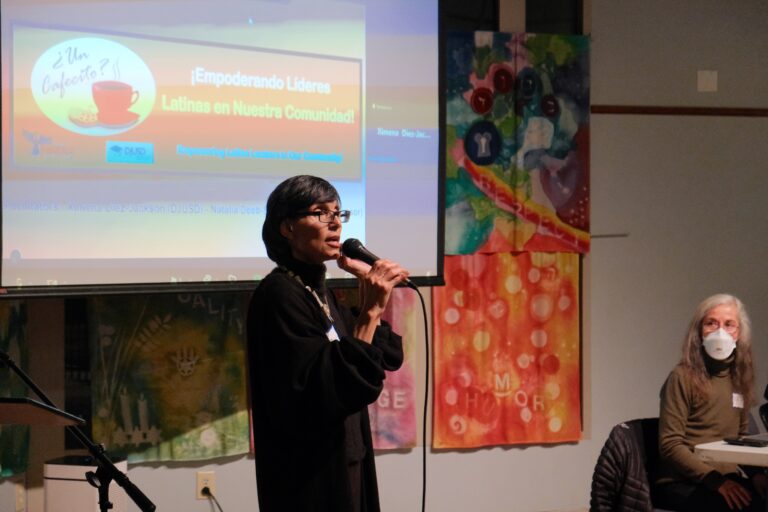
Speakers on this panel included Ignacio Alarcon, a previous employee of UC Davis AB540 and Undocumented Student Resource Center, Ximena Diez-Jackson, the Davis Joint Unified School District’s coordinator of language justice and family partnership, Dr. Natalia Deeb-Sossa, a UC Davis professor of Chicana/o/x Studies, and Usama Khalil, the chief executive officer and co-founder of Refugee Enrichment and Development Association. 

The speakers addressed various issues with immigration enforcement, focusing especially on the legal landscape that undocumented immigrants are currently faced with. Additionally, the panel presented several immigrant women who spoke on their fears surrounding immigration enforcement and what others can do to help. 

By presenting a variety of speakers, CBH aimed to show the public the first-hand experience and fear that immigrants are experiencing today. Katonah emphasized this by explaining the program’s hopes and intended impact. 

“This program’s goal was to bring a deeper awareness of the conditions undocumented folks face now,” Katonah said. “Leading to ideas for action by the dominant white community who are privileged and therefore have power to make a difference.” 

While CBH has hosted social justice-based events in the past, this immigration forum varied from similar events. This is the first time since the COVID-19 pandemic that CBH has partnered with and included other groups outside of the congregation, like the YIIN. 

Comparatively, CBH’s recent events concerning social justice were more focused on engagement within the church. On Feb. 21, the church held Repro Shabbat with CBH Partner Lauren Salmo. At this event, they discussed reproductive health, rights and justice, stating their belief that reproductive freedom is a Jewish value. This event takes place annually on Shabbat as they read Parshat Mishpatim, which has verses often referred to when discussing the value of reproductive rights, according to the CBH website.

Katonah expressed the significance of this event, with over 150 people attending, as it enforced the severity of these growing immigration issues and helped raise donations for important immigration-focused organizations, to name a few. 

Just being together in unison for wishing to address the immigration issue as experienced in everyday lives brought a sign of hope,” Katonah said. “It was impressed on attendees that the issues mentioned are serious, causing families to fear becoming separated by deportations, losing jobs and income of family members who are forced to leave this country.”

While another immigration forum is not currently planned, check out Congregation Bet Haverim’s website and calendar for more information and updates on future events. 


Written By: Gia Loomis — city@theaggie.org
Soroptimist International of Davis holds fundraisers in honor of Women’s History Month

March is nationally recognized as a celebration of the history and achievements of women and their contributions to society 


By OLIVIA HOKR city@theaggie.org 


Women’s History Month is annually observed during the month of March within the United States to highlight the voices of women that sacrificed and fought to bring us to where we are today. 

In Davis, there are organizations, such as Soroptimist International, that dedicate their time to promoting gender equality and education. Lori Hansen, the president of Soroptimist International of Davis, shared more about the founding of the organization and its mission. 

“Soroptimist International is a global volunteer organization with a network of nearly 65,000 members in 118 countries,” Hansen said. “It was founded in Oakland, California in 1921 at a time when women were not permitted to join service organizations. Our chapter, Soroptimist International of Davis, was formed in May of 1954. […] Our mission is to provide women and girls with access to the education and training they need to achieve economic empowerment. Our core values are gender equality, empowerment, education and diversity and fellowship.”

Two signature programs of the organization are called Live Your Dream and Dream It, Be It. Live Your Dream is a grant that clubs award to women who are financial heads of their household and are pursuing an undergraduate education or technical training.

“Many of these women have overcome hardships such as homelessness, foster care and domestic violence,” Hansen said. “We gave five Live Your Dream Awards this year.”

The Dream It, Be It program focuses on career development and mentorship for girls. Soroptimist International of Davis works monthly with a local continuation high school, Martin Luther King Jr. High School, to present about career paths and goal setting. 

The organization hosts fundraisers throughout the year to support their mission, including one coming up on March 9, Cuts for a Cause, at Creative Hair & Spa and Underdog Barbershop with all proceeds going to Soroptimist International. On top of fundraising, they participate in a variety of projects to serve the community.

“We also collect food for the [Short Term Emergency Aid Committee] (STEAC) neighborhood Food Project, make and fill toiletry bags for women at the domestic violence shelter and fill rescue backpacks for women escaping sex trafficking,” Hansen said.

The Davis Food Co-op has a monthly beneficiary for their Round Up At The Register program and updates their website after each month with the fundraising results. For the month of March, Soroptimist International of Davis will be the beneficiary.

“Founded in 1954, the Davis chapter actively supports the community through programs like the Live Your Dream Awards, which offer financial assistance to women who are primary financial supporters of their families, and the Dream It, Be It career mentoring program for high school girls,” the Davis Food Co-op website reads. “Additionally, they collaborate with local organizations to combat human trafficking and provide resources for survivors. Their mission is to ensure women and girls have the opportunities to reach their full potential and live their dreams.”

During Women’s History Month, it is important to educate ourselves on the significance of the women who came before us. The Avid Reader Bookstore provides a list of books on their website to highlight literature that focuses on telling the stories of powerful women in history as well as the struggles women have endured over time. Some of these include “The Six: The Untold Story of America’s First Women Astronauts” by Loren Grush and “Off with Her Head: Three Thousand Years of Demonizing Women in Power” by Eleanor Herman. 

“Women’s History Month is an opportunity to recognize and celebrate the achievements of women throughout history,” Hansen said. “It also encourages conversations about the need for continued progress towards gender equity.”


Written by: Olivia Hokr — city@theaggie.org

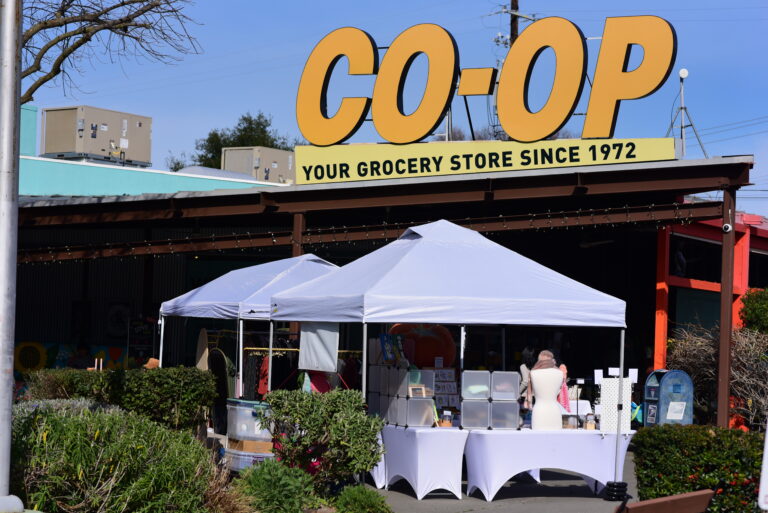
Davis Food Co-op holds Local Love Fair

The Love Fair showcased local artisans, food producers and small businesses


By ALMA CULVERWELL city@theaggie.org 


The Davis Food Co-op’s Local Love Fair, held on Feb. 22, was a vibrant celebration of community and local talent. The event featured an array of Davis and Northern Californian artists, offering attendees the opportunity to engage directly with creators and sample products from local brands. In addition to the maker mart, co-op members enjoyed a special promotion, earning four times the rewards points on local items purchased between Feb. 22 and Feb. 29. 

The co-op’s commitment to fostering local businesses was evident through its diverse lineup of vendors, including Schiller Crafts, Pixley Ceramics and Estella Moon. Additionally, they offered samples from Masala Blend, Mia Bea Wines, Rostam36 Brewing, Frate Sole Olive Oil, EO, Abernathy Lane Wines and Island of the Moon Honey. 

Pinar Brummer, founder of Pixley Ceramics, shared her enthusiasm for the event, highlighting the personal connections fostered between artisans and the community. Brummer creates everyday pots, including bowls, vases, teacups, small condiment bowls and bud vases. 

“My studio came out of post-COVID frustration; how little time we are given and how there needs to be an immediacy to all our dreams,” Brummer said. “I am a scientist by trade, but I have always been a creative person. My studio is my outlet for all I have been keeping in my heart since I was very, very young.”

She also expressed gratitude for the Davis Food Co-op’s commitment to local artists.

“Local Love Fair represents all the wonderful things about Davis Food Co-op, I think,” Brummer said. “What we are, what we make, what we produce in our town. And also, who we make these things for. I love the fact that I get to shake the very hands that will be using the teacup I made. Just the best feeling there is. But more importantly, as an immigrant, female small business owner, I am tremendously grateful for the inclusivity in events like this offer. Whenever I get an invitation from the lovely folks of the Davis Food Co-op, I say yes.”

Brummer also shared her positive experiences participating in other local events.

“I have done the Davis Cherry Blossom Festival market last year, and that was extremely well run, [and it] was a joy to be part of as well,” Brummer said.

Mamta Gupta, founder of Masala Blend, explained her ongoing relationship with the co-op and her journey collaborating with them.

“Masala Blend has been at Davis Food Co-op since 2020,” Gupta said. “They were our first buyers and gave us the opportunity to connect with the community at large. We have learned and grown a lot with Davis Co-op guidance. We like to participate in the Local Love event at the co-op as we get to interact with the community and sample our products. Davis [Co-op’s] support for local businesses is what we love about them.”

Gupta, a former public school special education teacher, transitioned to selling spice blends full time in 2023. Inspired by traditional spices she learned to blend from her mother, she founded Masala Blends to provide easy, nutritious meal solutions.

“I love making blends for people to create easy-to-cook nutritious meals using Masala Blend,” Gupta said. “Our goal is for people to make ‘The Taste for Memories’ with their loved ones. As people cook nutritious meals and share them with their families and friends, they go beyond any cultural lines and also create awareness of the deliciousness in a variety of foods when made with love.”

Gupta also spoke about her dedication to maintaining high-quality, chemical-free products.

“We hand-make 24 different spice blends in micro-batches,” Gupta said. “All spices go through a cleaning process by hand. Each spice is then added or pounded into powder to the blends. We only add ingredients we can pronounce and that are commonly used around the world. No chemicals or preservatives are added, as I couldn’t even say them or know what they did. Our motto has been to be transparent with details on our products that anyone can read and understand.”

Another vendor, Flora Guilbaut from Estella Moon, an eco-conscious fashion brand born from Guilbaut’s own search for stylish, comfortable and sustainable postpartum clothing. After working in fashion for over a decade, she struggled to find clothing that fit her new lifestyle as a mother. 

Guilbaut emphasized the importance of the event in showcasing and supporting small businesses. 

“Showing love to the community, to the local artisans, growers and makers that make this cute little town cute,” Guilbaut said. “To shine a light on the creatives that live in this town? It’s hard to be seen these days, so these little markets are lovely ways to highlight the community.”

Guilbaut’s brand focuses on small-batch, slow production, using sustainable fabrics and deadstock materials. All garments are cut and sewn in Downtown Los Angeles. She explained more about her favorite product, her best-selling, high-waisted, wide-elastic bias midi skirt.

“It has such a big stride you could literally go running in it — or chase after kids or run for the bus you almost miss,” Guilbaut said. “My clothes are made for busy people who just want to throw on something that will instantly make them look cuter and still be functional with a busy lifestyle.”

For Guilbaut, the event was also special on a personal level. Beyond connecting with customers, she cherished the chance to spend time with family and friends in a lively, welcoming atmosphere.

“My husband came by with my kiddo, Estelle, […] and met up with her bestie in my booth, where they ran around in circles and ate lunch,” Guilbaut said. “They are the cutest and brighten my day always. But also, I loved seeing both strangers come check out my stuff and get to know what I do, as well as running into friends or people I didn’t expect to see. Life is so busy these days — it’s fun to talk and get to know your neighbors a little deeper.”

The Local Love Fair exemplifies the co-op’s dedication to supporting local businesses and strengthening community ties. It offers a platform for artisans and producers to showcase their work and connect with residents. The Davis Food Co-op has several other exciting event opportunities planned for March, including four times the member rewards on local products, free samples, weekend crafting classes and more. For information on these events, check out the Davis Food Co-op’s website


Written by: Alma Culverwell — city@theaggie.org

The Jan Shrem and Maria Manetti Shrem Museum of Art hosts Art Jam: Print Social

The event included showings by the Davis Filmmaking Society and a screen printing activity with the Moo-vin’ Moo-seum and Aggie Reuse


By JESSICA YUNG — campus@theaggie.org


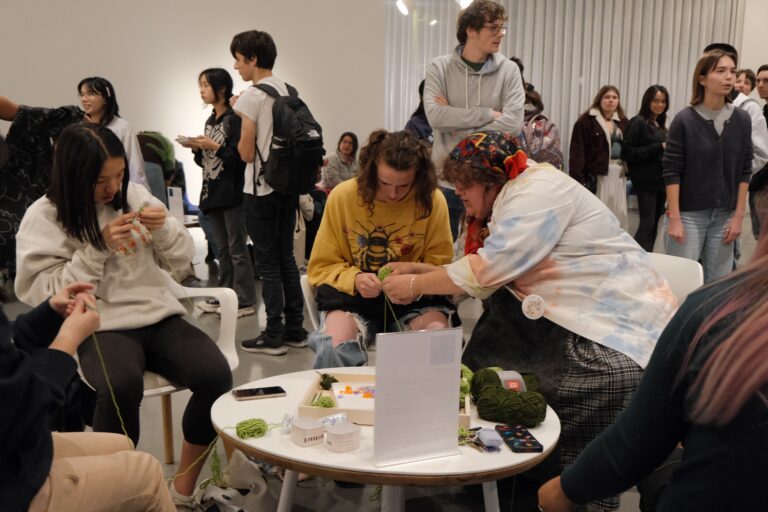
On Feb. 20, The Jan Shrem and Maria Manetti Shrem Museum of Art hosted an Art Jam: Print Social event. 

“Enjoy recent film projects by the Davis Filmmaking Society and have a print party with the Moo-vin’ Moo-seum and Aggie Reuse!” the Manetti Shrem’s website reads. “Make something unique with specially designed screenprint and block print designs — you can even bring an item of clothing to print on and refresh with a new look.”

The museum’s galleries were open for guests to explore during the event. The museum provided free pizza from Woodstock’s Pizza, drinks and snacks.

Coordinator of Museum Programs and Student Connection at the Manetti Shrem Museum Linda Alvarez described Art Jam as a showcase of student art.

 “Art Jam is our after-hours student event series,” Alvarez said. “We typically hold one every quarter. The spirit of Art Jam is really about highlighting the creative things that students do on campus outside of school work. The two projects that are part of this Art Jam are the Moo-vin’ Moo-seum project from [ASUCD] Unitrans [and] Aggie Reuse, which is the campus thrift store. They are leading a print-making activity in our studio with some screen print designs inspired by the Moo-vin’ Moo-seum.”

Jonah Messinger, a third-year food science major and project director for the Moo-vin’ Moo-seum and advertising sales representative for Unitrans, described how the Unitrans bus doubles as a museum.

“[The] Moo-vin’ Moo-seum is a public arts program bringing art to public transit in Davis,” Messinger said. “We do […] interior installations. So inside the bus, instead of having advertisements, we have an art gallery space. We try to rotate out those interior installations three times a year, or that’s our plan. We also do community events.” 

The Davis Filmmaking Society presented 13 short films in the screening room including “That Time I was Reincarnated as Luke Skywalker,” “2+2=Fish,” “Recital Roses,” “Gem Jam,” “Detonates at Midnight,” “21 Problems,” “Do Not Donut,” “Yesterday, Today and Tomorrow,” “Dimension Distress,” “Mr. Nefarious,” “Wasteland,” “Kickstart Krash” and “DFS Mockumentary.”

For the screen printing activity, all of the necessary art supplies were provided, including stamps, paper and fabric scraps, as well as hair dryers to dry the finished products and other screen printing equipment. 

Design Lead for Aggie Reuse Becca Libby, a third-year design major, described the process of screen printing. 

“Screen printing is the process of printing an image onto either paper or fabric using a screen,” Libby said. “The ink travels through the mesh on the screen that isn’t covered with emulsion.”

Aside from the event, Alvarez explained all of the different works that the museum showcases.

“The Manetti Shrem Museum is a contemporary art museum,” Alvarez said. “It’s part of UC Davis and we show a lot of different types of art. Most of it is traveling exhibitions and so they rotate a couple of times a year. Some of it is from the fine arts collection at the university too. So it’s a little mix of everything. Currently, there are three exhibitions on view.” 

Hope Madden, a first-year art history and art studio double major, shared her thoughts on the exhibits and the event.

“I especially think [that] the photography exhibit is really interesting,” Madden said. “I studied one of the photography pieces that’s in there, so that was really cool to see. I feel [the event is] definitely a social kind of environment, but I love absorbing all the art.”

The Manetti Shrem Museum is located at 254 Old Davis Road and is free for all visitors from the hours of 10 a.m. to 5 p.m., Thursday through Monday. The museum hosts a variety of programs, events and exhibits throughout the year, and more information can be found on their website.

Written by: Jessica Yung— campus@theaggie.org

It may be time to subscribe to physical media

Reevaluate how much you spend on streaming services and the rewarding aspect of tangible media


By AALIYAH ESPAÑOL-RIVAS — arts@theaggie.org


Streaming services have revolutionized the way humans consume media. “Streaming” is the ability to access media content on the internet without having to download the file. The concept was popularized by Netflix in 2007, following the company’s shift from Digital Versatile Discs (DVD) rentals to on-demand video streaming. Since its introduction, Netflix has not only grown as the largest streaming platform, with 296.6 million subscribers across the globe, but has made streaming the societal norm for consuming media. 

While streaming platforms continue to multiply in number and size, each platform’s catalog of content becomes increasingly important. The uniqueness of each platform’s catalog is what can increase or decrease subscribers, making the acquisition of popular and new content a priority. Prior to 2022, the hit television show, “The Office,” could be streamed on Netflix, as NBC and Netflix had a licensing deal. But, with the launch of NBC’s streaming service, Peacock, NBC ended their deal with Netflix and now is the sole distributor of the show. 

As the “streaming wars” between platforms continue through the acquisition of content, 

media is now diverged across platforms. As a result, consumers are not only paying more through increasing subscription prices as platforms attempt to make up for lost revenue, but they are also paying for additional platforms for their favorite shows and movies. 

However, as consumers give more money to streaming services, it gives platforms even more power. This power has led to the concept of “rotating” content, allowing companies to diversify their catalog on a month-to-month basis through the removal and addition of new content. But this concept can contradict a user’s interest in subscribing, giving companies the power to remove content to their own discretion, regardless of user consumption. 

On Oct. 3, 2024, HBO’s streaming service, MAX, removed numerous popular animated shows created by Cartoon Network. These shows included “The Powerpuff Girls,” “We Bare Bears” and “Regular Show.” MAX, owned by the Warner Brothers, advertised their catalog of animated shows by Cartoon Network in their initial launch yet has removed numerous titles without reason or notice to subscribers. 

Additionally, in 2023, Disney+ and Hulu removed dozens of original content from their platforms due to underperformance. While not every show or movie is guaranteed to be a hit,  the creators and crew lose the benefit of financial compensation when their creations are removed from streaming services. 

Subscribers pay high prices for these platforms, with Netflix’s cheapest ad-free subscription plan being $15.49 a month. Yet, the media paid for through subscriptions doesn’t guarantee its accessibility and permanence. After all, everyone has experienced their favorite movie being removed from a streaming service, moved to another platform or, even worse — becoming completely inaccessible. 

While it may be impossible to unsubscribe from every streaming platform, consumers have other options, like physical media. Specifically, purchasing and renting DVDs.

DVDs became popular in the early 2000s following the decline in Video Home System (VHS) tapes. Originally costing anywhere from $20 to $25, DVDs can now be found on websites such as Amazon and eBay for less than $10. 

In Davis, there are two DVD stores: Armadillo Music, located on F Street, has an upstairs floor with a DVD section, with prices ranging from $3 to $5 per DVD; Bizarro World, located on E Street, has “Four Star Movie Rental,” Davis’ only video rental service. Patrons can rent DVDs for $2.50 for three days. The store carries over 10,000 titles, including new releases and sets of entire TV series. 

Instead of jumping from platform to platform, resubscribing and unsubscribing, consider owning your favorite movies and TV shows. By owning and selectively choosing the media you consume, power is placed in the hands of consumers instead of streaming services. Owning your media means it cannot be rotated out, kept in a vault or leave you with content you’re not interested in. 

Written by: Aaliyah Español-Rivas — arts@theaggie.org

Behind the scenes of the Davis music scene

From conception to execution, UC Davis community members share the immense effort that goes into creating a successful show


By EMME DUNNING — features@theaggie.org


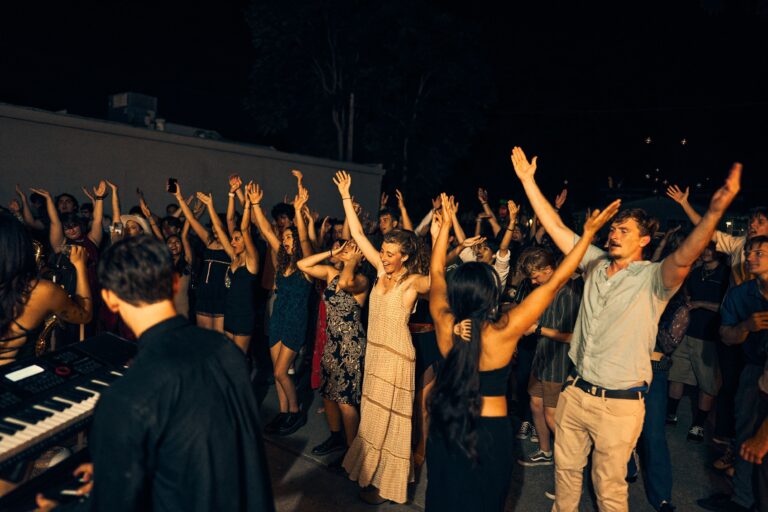
Live music is a vital part of the social lives of many UC Davis students. A hub for backyard concerts, underground raves and local community music events, the Davis music scene has long been celebrated as a cornerstone of student culture. However, while many students and community members attend these events, far fewer truly understand the full extent of what it takes to put a show together.

Caden Velasquez, a UC Davis alumnus with a Bachelor of Art (B.A.) in international relations and the founder of the local music collective DRC Creatives, previously known as Davis Rave Company, is acutely aware of just how much is required to create a memorable show. He also understands that this hard work is often unnoticed by the average attendee.

“[Attendees] buy their ticket, they show up, they have fun and then they leave,” Velasquez said. “You’re maybe seeing 5% of the entire show.”

So what accounts for the other 95%? Velasquez asserts that the entirety of a show is a major production that can take weeks, if not months, to coordinate.

“It takes a lot of people and time to put on a show,” Velasquez said. “The first step of the timeline is the concept. What you want to do, what kind of vibe you’re going for, who you want to attract and what kind of product you’re trying to create for people.”

This stage of planning is crucial, Velasquez asserted, as all elements of a show must work together cohesively to be successful.

“It has to mesh very well, and a lot of that goes into comprehensive planning,” Velasquez said. “You just want to make sure everything is compatible, comprehensive and complementary because, in the end, that’s what’s going to make a really good show.”

After a general vision is established, organizers start coordinating more granular logistics.

“Once you have a location and a date and an artist and really a concept, you can start to reach out and get other third parties involved — like vendors,” Velasquez said. “A few days before the event you start getting more into meticulous itinerary planning and who’s gonna be doing what, at what time and where, with who — so you want to make sure that you’re orchestrating a team really well.”

Velasquez said that although this planning is essential to the success of a show, the most successful shows never let on to this massive effort.

“If you’re at a really good show, you should feel very immersed in the experience,” Velasquez said. “Never should you feel like you’re anywhere but that show.”

For Katya Jane, a UC Davis alumna with a Bachelor of Science (B.S.) in neurobiology, physiology and behavior, this behind-the-scenes work is a personal passion.

Jane is a former member of the locally renowned band Cowboys After Dark, her involvement in which propelled her into her current career as the founder and lead show producer for Velvet Red Productions. In this role, Jane is responsible for much of the logistics that go into creating a successful music event and is all too familiar with the sometimes lengthy planning process it brings.

“There are so many layers that go into it,” Jane said. “I personally like to have about a month in advance to plan all the gear, make all the arrangements and get a really good flyer that’s engaging and easy to follow.”

During this month, Jane also takes time to introduce performers to their potential audience through social media.

“On Instagram, I like to do spotlight posts,” Jane said. “I like to highlight every band and kind of talk about them individually before the show so that people know who they’re going to see.”

As the show gets closer, pressure to perform well can mount for both musicians and crew members. To combat the expected stress from this, Jane noted that having a solid and compatible team is essential.

“It’s a lot of people working on one thing so it’s really important to have camaraderie with the people that you’re working with,” Jane said. “There are so many moving parts, and it can get very chaotic. You have to make sure you’re able to communicate things efficiently and get a lot of people on board to do one big event. That’s how these events become big and awesome and so much fun is when everyone comes together and does their part.”

Nola Zimdars, a fourth-year design major, has taken a particular interest in creative marketing and poster design for local music events, particularly with ASUCD’s Whole Earth Festival. Zimdars asserted the importance of design in shaping the underlying message of a show and attracting a key player — the audience.

“Design is so important,” Zimdars said. “A good design catches people’s eyes. If you don’t have a good poster, who’s going to come to your event?”

Being part of the music scene through designing flyers and other promotional content allows Zimdars to engage with the creative community, despite not being a musician herself.

“I get to be creative,” Zimdars said. “I’m not musically inclined, but I get to participate in the process and then I still get to just be in the crowd and also feel like I’m involved in the creation. It’s super rewarding to work hard and see your efforts come to fruition.”

For Zimdars, a major goal of promotional design is to expand the reach of the show beyond those who might typically attend.

“We’ve been trying to make a much bigger effort to diversify where we put posters up because the music scene is for everyone, and everyone deserves to participate,” Zimdars said. “It shouldn’t just be the group that’s involved going and we’re trying really hard to make a broader range of people feel included and welcome in the space and just give more exposure to groups that might not normally have wanted to come.”

Once a show has been planned, booked and effectively advertised, the focus shifts to the performance itself and how to effectively capture the hard work of organizers and performers on and off the stage.

During the show, photographers and videographers play a vital role in ensuring the show is documented thoroughly and professionally, providing future promotional materials for artists and immortalizing memories for attendees.

Nik Wylie, a UC Davis alumnus with a B.A. in history, and JJ Noel, a former UC Davis student and Davis resident, work together to capture the unique energy of local shows. The pair work as full-time UC Davis staff members, shooting marketing content as a videographer and photographer respectively, but also hold a strong passion for the local music scene. Like many other players, they have a primary goal of contributing to the overall success of the show for both the artists and the audience members.

“Especially here in Davis, we’ve been pretty blessed with a lot of really good local bands who can play a really good show and a really fun show,” Wylie said. “Being able to take videos of those shows and how fun they can be — it’s really cool being able to share that kind of stuff.”

As a musician himself, Wylie hopes to accurately portray the atmosphere of a show through his videos to truly capture the experience as if it were live.

“I want to make it as representative as possible of what it’s actually like playing onstage,” Wylie said. “I’ve been in the crowd and I’ve been onstage, and the nice thing about video is being able to capture what it’s like being on stage and then representing that on social media. I think it’s very special to be able to do that.”

Noel echoed these statements and emphasized the importance of photography in capturing the true essence of a show.

“My motivation for doing photos of the local scene is really to shine a spotlight on them and show people how exciting these shows are,” Noel said. “Being able to do that for people who are students and just doing it for the passion of it […] is a really special thing.”

Noel asserted that the right visuals go a long way in making a show look professional and, in turn, elevating the perception of local shows and artists.

“[We want to] take something that [is] super grassroots and elevate it to a level of, ‘This could have been Green Day back in the day,’” Noel said. “It could’ve been anyone. It could’ve been a national act, and making it look and feel that way is our goal as marketing photographers and videographers.”

While Davis continues to be a hub for local artists and creatives to thrive, Noel fears that fourth-year planning members graduating and a recent loss of long-standing venues could pose a threat to the future of the local music scene.

“We’re losing houses that are willing to put on shows, and we’re losing music venues in Davis,” Noel said. “A lot of the people who made these incredible memories for us graduated and moved on.”

Although this shift presents undeniable challenges to the beloved music scene, Noel remains hopeful about the future. To keep this special scene alive for future generations of Aggies, he said that it will take initiative from everyone.

“This is something that anyone can do,” Noel said. “If everyone contributes to the community and everyone puts in a little bit of effort and believes in it, really amazing things can happen.”


Written by: Emme Dunning — features@theaggie.org

The real cost of funding cuts in medicine

The Trump administration’s policies on cutting NIH and CDC funding and the impacts on future medical advancements


By NAREN KRISHNA JEGAN — science@theaggie.org


On Jan. 30, 2025, my principal investigator (PI) began our lab meeting with a voice of concern. 

“This will be our hardest year,” he said. “We may struggle financially, and we are unaware of what our future may look like, but we must try to do our best in these times.”

Later, on Feb. 5, 2025, I received an email from the National Institutes of Health (NIH) Office of Intramural Training and Education (OITE).
“Due to a presidential executive order the NIH Intramural Research Program has paused interviews for all summer internship programs,” the email reads. “NIH investigators will be unable to interview you or make offers at this time. We will continue to update you on the status of SIP 2025 as information becomes available.”

I realized the gravity of the risk of being a researcher the day the NIH and Centers for Disease Control and Prevention (CDC) funding cuts were announced.
In his first few weeks of presidency, President Donald Trump and his administration have taken sweeping and abrupt actions against the NIH and CDC, threatening the integrity of medical research and public health. At the NIH, drastic funding cuts and operational freezes have thrown critical research into chaos, jeopardizing advancements in maternal health, cancer treatment and other life-saving studies. Researchers face hiring bans, grant delays and heavy restrictions, stalling progress in fields that directly impact millions of lives.

Meanwhile, the CDC has been subjected to outright censorship. Entire web pages containing crucial health information on human immunodeficiency virus (HIV), youth health risks and disease prevention were erased overnight under an executive order. Scientists have been muzzled, forced to submit their work for government review and even remove their names from publications. 

These reckless policies don’t just slow scientific progress — they actively strip the public of vital health resources, leaving Americans uninformed and vulnerable. The consequences of these actions will be felt for years, as research stalls, trust erodes and critical health initiatives are dismantled in the name of politics.

A major responsibility of biomedical researchers and practitioners of medicine is to establish truthful communication and a line of trust. Unfortunately, history has shown that when this trust is broken, the consequences can be devastating.

One of the most infamous examples is the Tuskegee Syphilis Study (1932-1972), where the United States Public Health Service knowingly withheld treatment from black men with syphilis to study the disease’s progression, despite the availability of penicillin. This unethical study led to deep mistrust in the medical system, particularly among African American communities, with lasting impacts on healthcare disparities today. When trust is violated, the consequences extend far beyond the immediate victims, shaping public perception and influencing healthcare decisions for generations.

Trump’s rash actions against the NIH and CDC are leading to a repetition of these mistakes. By censoring scientific research, slashing funding and restricting experts from openly communicating findings, the administration undermines public trust in two of the nation’s most vital health agencies. If these actions persist, Americans may grow increasingly skeptical of medical guidance.
COVID-19 demonstrated in real time how transparency and trust in scientific institutions can mean the difference between life and death. In the early stages, misinformation and government mismanagement led to confusion, delayed responses and preventable deaths. When public officials downplayed the severity of the virus, suppressed expert opinions and provided conflicting guidance, trust in health agencies like the CDC and NIH suffered. The result was widespread vaccine hesitancy, resistance to public health measures and the persistence of conspiracy theories — issues that continue to impact global health today.

Science thrives on the truth. Regardless of whether our results create a paradigm shift or go through hundreds of rounds of failure, our duty to science is to share and educate about the facts. To discover these truths and have the opportunity to share them, immense support is required in various forms, namely grants and funding.

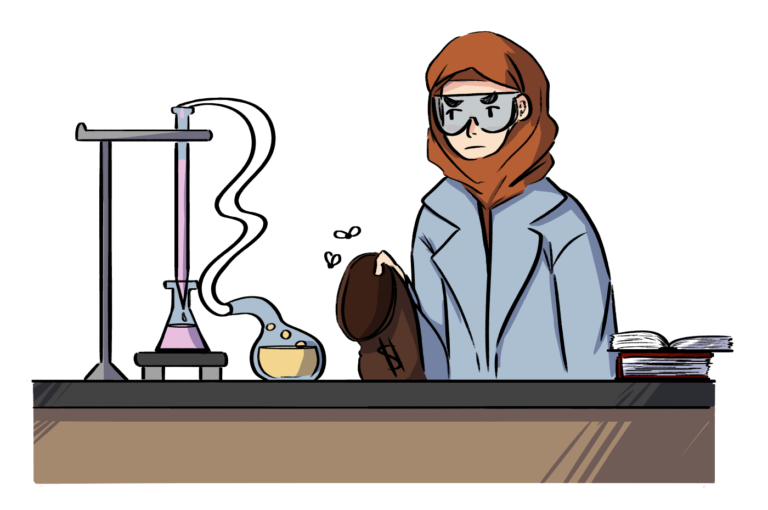
At UC Davis Health, I work in a nanomedicine lab specializing in minimally invasive cancer nanotherapeutics. We are fortunate to be affiliated with a National Cancer Institute (NCI) as an NCI-Designated Cancer Center through UC Davis Health’s Comprehensive Cancer Center. Our research utilizes a bench-to-bedside approach, where the results of our research done in the laboratory are directly used to develop new ways to treat patients. Moreover, we are even more fortunate to continue working on innovative nanomaterial research through the support of the NIH in various grants. 

These grants provide us financial support in various aspects: reagents, facilities, highly specialized equipment, data collection and analysis and even clinical trials, which bring novel therapies into the market. This doesn’t even include the salary of those involved in the research. 

Without these resources, labs across the country will face crippling limitations, forcing them to halt projects, lay off staff or abandon promising research altogether. Young scientists, particularly students and early-career researchers, will have fewer opportunities to contribute to groundbreaking discoveries. The pipeline of innovation that fuels advancements in medicine and public health will begin to dry up, leaving gaps in our understanding of diseases and delaying critical treatments.
The impact extends beyond research facilities. Patients who rely on experimental treatments — such as those suffering from rare diseases, aggressive cancers or neurodegenerative disorders — may see their last hopes vanish as clinical trials are suspended due to a lack of funding. The development of new antibiotics, desperately needed in the fight against antimicrobial resistance, will slow to a crawl. Meanwhile, maternal and infant health programs, already underfunded in the U.S., will face further setbacks, increasing the risk of preventable complications and deaths.

Global health initiatives will also suffer. The NIH and CDC play critical roles in monitoring and preventing emerging infectious diseases worldwide. Cuts to these agencies hinder disease surveillance, vaccine development and outbreak response, making future pandemics more difficult to contain. When U.S. leadership in science weakens, international collaborations falter, and the entire world pays the price.
The brash, authoritarian stance the Trump administration has taken will have catastrophic consequences for biomedical research, public health and global medical advancements. The damage inflicted on scientific progress and public trust will not be easily undone. If these cuts and restrictions persist, we risk losing a generation of discoveries that could have saved lives, exacerbating health disparities and setting back progress by decades.
Cutting science isn’t just cutting budgets — it’s cutting lives, cutting progress, cutting the future before it even begins. When we strip away research, we strip away hope from patients, innovation from minds and trust from the very institutions meant to protect us. The cost of discovery is high, but the cost of ignorance is far greater. The real question is: How many breakthroughs are we willing to lose before we realize what we have destroyed?

Written by: Naren Krishna Jeganscience@theaggie.org

Disclaimer: The views and opinions expressed by individual columnists belong to the columnists alone and do not necessarily indicate the views and opinions held by The California Aggie.

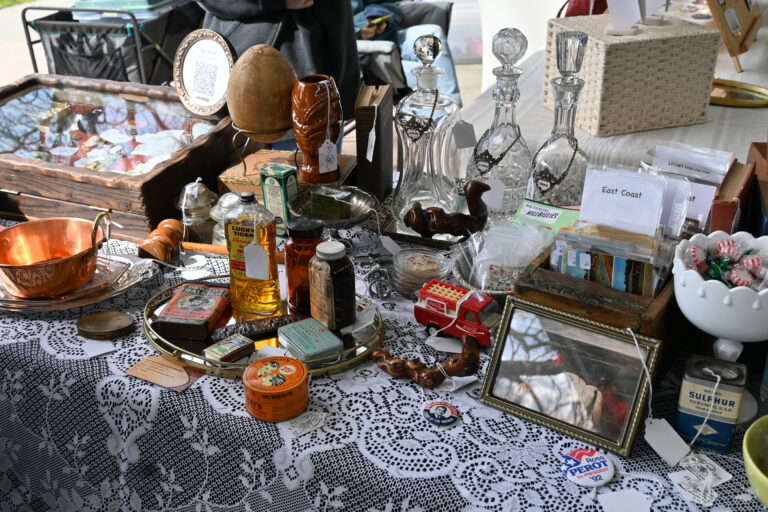
West Coast or East Coast — which side are you on?

 My unique experiences living on both sides


By ELLIE NOH — eenoh@ucdavis.edu

From the West Coast’s popular hamburger chain In-N-Out Burger to the East Coast’s famous bagel bakeries, where do the biggest distinctions between the two coasts lie?

Growing up on the East Coast and attending college in California, one of the main differences I recognize is the weather. I am generally accustomed to the more seasonal temperatures on the East Coast, consisting of snowy days and hot summers. In Davis — even during this time of year — I feel comfortable wearing shorts outside, which is not common on the East Coast considering that my hometown is currently experiencing heavy snowfall. 

With my acclimation to significantly milder weather patterns, people from my hometown might even consider me out of place, given that I am no longer used to the colder climates of the East Coast and seem to be too comfortable with temperatures in the 40s and 50s here in California. While I am grateful for not walking through a foot of snow from my dorm to the Memorial Union, I do miss going outside and being met with a winter wonderland in my own backyard.

With regard to fashion, I frequently see passersby on the East Coast with thick coats, worrying about wearing at least three layers of clothing to make up for the cold weather. I realize that being in California makes it easier to get ready, as I often don’t have to check the weather knowing that, either way, it will be much warmer than what I’ve experienced growing up. Even though it gets very hot in Davis over the summer, I prefer handling high heat levels for a few months rather than lingering in freezing temperatures for long periods of time.

When comparing areas with popular tourist attractions such as Los Angeles and New York City, each location has its own unique features. A day in New York can include visits to The Metropolitan Museum of Art, grabbing $1 pizza, looking up at skyscrapers and transportation underground using the subway system. On the other hand, a day in Los Angeles can include gazing at the Hollywood Sign, visiting attractions such as Disneyland and relaxing on the Santa Monica Pier. 

With these vast differences, it’s difficult to choose one over the other. While I prefer being surrounded by palm trees and having better access to beaches, so much is still left for me to explore before I can truly choose between LA and NYC. In the future, I hope to live on the West Coast rather than the East Coast as it is a new environment for me with so many different opportunities for exploration. With warmer, gentler weather and more convenient access to both urban, rural and beach life, the West Coast beats the East Coast in achieving that harmony.

As there are distinct variations between the two coasts, it is important to recognize that it all depends on personal preference. Some might want to experience snow as a yearly occasion, while others might want to be in warmer climates year-round. I’ve also yet to discover and learn about areas beyond well-known cities such as San Francisco and Los Angeles. However, considering these aspects, life on the West Coast is the most enjoyable experience so far, and I am leaning towards recognizing it as the more preferable location.

Written by: Ellie Noh — eenoh@ucdavis.edu

Disclaimer: The views and opinions expressed by individual columnists belong to the columnists alone and do not necessarily indicate the views and opinions held by The California Aggie.

‘Please, Please, Please’ start making playlists

Spotify playlists are much more than folders of organized music, they are time capsules full of memories 


By JHANA RHODES—jsrho@ucdavis.edu

I’m the Chief Executive Officer of Spotify. Who would’ve thought? Well, not me per se, because I’m totally lying. However, with all the money I spent on the monthly subscription to keep Spotify, I might as well own 90% of Spotify stock. 

Yes, the monthly fee of $11.99 is expensive, and the unexpected charge always plunges my checking account into the negatives — but I’d rather give up my iced matcha green tea latte (with oat milk) every month before I give up a year’s worth of memories, emotions and nostalgia. There’s no way I will give up the freedom of skipping and shuffling unlimited songs without getting an ad. This is not to say that Spotify is unusable with the ads; However, when listening to my “Fall 2018” playlist, I don’t want to be stuck on an unskippable song that reminds me of Someone Who Shall Not Be Named.

Now that I think about it, my favorite thing about living life is knowing I’ll get to make a Spotify playlist about whatever I’m experiencing. Just broke up with my ex? I will probably make a passive aggressive playlist and publish it to my profile. Just finished watchingWicked” for the fifth time? Playlist! Going through post-concert depression after attending Sabrina Carpenter’s “Short n’ Sweet” tour? I’m downloading the whole setlist. 

In other words, I make a playlist for everything. Whether the playlist is titled something vague like “Beach,” an unintelligible keyboard smash (there are a lot of those) or something particular like “Songs To Play When I Have The Aux So People Think I’m Cool,” my playlists are much more than songs in a folder — my personal diary comes in the form of a 305-hour-and-15-minute digital time capsule.

Spotify is just that: a time capsule containing playlists from some of my life’s best (and worst) times. Each playlist has become a historical artifact that I stumble across every now and then. And, when I do, I am reminded of eras of my life I would’ve generally forgotten about. It’s odd to think that the second I hear a particular sequence of songs in a specific order, I am instantly transported back to my cringe-worthy middle school days as an aspiring Tumblr blogger. 

For example, I just listened to my “Mom’s Birthday 2023” playlist. The second I hear Beyoncé’s “You Won’t Break My Soul,” I think about my mom dressed head to toe in chrome and spinning around like a disco ball at Beyoncé’s Renaissance World Tour. Sure, it’s not necessarily the music that gets me feeling nostalgic, but rather the emotions and memories associated with the songs that make each playlist feel so personal.

However, my playlists aren’t personal just because my username is attached. They’re personal because they act as an outlet for self-expression: they’re how I reflect. While most world-renowned playlists are public for my nine followers, the deeply personal ones that conjure the most remarkable (and embarrassing) memories are private.

Creating playlists is like writing in a diary (or a journal if you’re Greg Heffley). Just like in a diary, you’ll make playlists about your accomplishments, milestones and heartbreaks, all while practicing some self-reflection. There have been many times when I made a playlist amid one of my “everything is going wrong” moods, only to look back at it three months later and realize that I am in a much better place. I could be experiencing any mood — joy, guilt, sadness — and you best believe I’ll make a playlist for each one. Though a playlist does not define who I am, it helps paint a clearer picture of the past versions of myself, helping me discover the person I want to be. 

At the end of the day, Spotify may not be available to everyone (*cough* Apple Music listeners). But no matter what platform you use, most of us make playlists. I say ”most of us”  because I know a few people who just shuffle their Liked Songs. 

If you don’t already make playlists, I encourage you to start creating your digital time capsule. It can help you uncover old memories and create new ones, discover new artists and songs and, even though this is cheesy, encourage you to find yourself. Whether it’s your “Rise and Grind” gym playlist or your playlist dedicated to your partner, each sequence of songs is another opportunity to express yourself. So just try it: You might be surprised at the fond, exciting or heartbreaking memories you find. No matter what it is, hopefully you can take the time to reflect and discover something new about yourself.


Written by: Jhana Rhodes— jsrho@ucdavis.edu 


Disclaimer: The views and opinions expressed by individual columnists belong to the columnists alone and do not necessarily indicate the views and opinions held by The California Aggie.


Yolo County Board of Supervisors discuss shortcomings in budget goals

The meeting discussed the county’s mid-year budget report, guaranteed income programs and renovations to the superior court


By YUENJO FAN — city@theaggie.org


On Feb. 25, the Yolo County Board of Supervisors met to discuss the 2025 mid-year budget, evaluate the Yolo County Basic Income Project (YOBI) and take reports from county subcommittees.

For discussions about the mid-year budget, Laura Liddicoet, Yolo County’s chief budget official, presented a comprehensive report summarizing revenue changes. The report detailed how several revenue streams did not reach anticipated budget goals, meaning that the actual revenue did not match the projected numbers. Liddicoet also mentioned how most county departments are projected to yield a revenue surplus, but those numbers are lower than that of previous years.

“Major county revenues are projected to largely end the fiscal year below budget,” Liddicoet said. “At the state level, sales tax receipts are coming in below anticipated levels. The impact to us at the county is that our Prop 172 public safety sales tax revenue is projected to finish the year almost five percent below budget. Similarly, our public safety realignment growth was lower by approximately $27,000 than anticipated. […] Locally, property tax is anticipated to be less than one percent below budget and, with a bit of good news, our general fund sales tax is expected to come in slightly above budget.”

Furthermore, Liddicoet addressed the board about the current solar panel malfunction issues the county is facing and how they have accrued into another expense. For Yolo County to meet new costs, the budget department will now look to use money from its contingency funds to pay off these new electric bills.

“The county is experiencing some issues with our various solar arrays,” Liddicoet said. “There have been extensive financial implications of the solar arrays being inoperative the past few months. The most immediate of which is the state of the county’s electrical bill. […] Initial analysis indicates that we are seeing $400,000 quarterly increases in our electrical bills with the arrays being down. As you can imagine, this is putting some constraints on various electrical budgets.”

Across Yolo County, there are numerous solar farms and arrays, including a one-megawatt solar panel in Woodland that powers the county’s justice departments. The county is hoping for a quick end to the issues impacting the solar array and for fixes to their solar issue shortly.

The meeting then moved on to YOBI’s evaluations. Dr. Catherine Brinkley, a UC Davis faculty director for the Center for Regional Change and Community, took to the podium to discuss an evaluation of YOBI, one of the nation’s first 100 guaranteed income programs. YOBI’s goal was to provide stability to community members at risk of financial and emotional stress, especially after the events of the COVID-19 pandemic. The program, which ran from 2022 to 2024, had its results brought in front of the county supervisors for review.

“One of the big findings was a 62% increase in the number of YOBI families who reported that ‘Overall, my life feels more stable,’” Brinkley said. “We also saw statistically significant improvements in the number of YOBI families that could afford rent or own homes. We saw YOBI participants’ ability to [rent/own housing] move from 53% to 82%. Those that were in [YOBI’s] housing support program saw an increase [in housing affordability] from 64% to 93%.”

The YOBI program served 243 individuals and had an average stipend fund of $1,289. Monetary support for the program came largely from donors, while the county and UC Davis evaluated its effectiveness.

Moreover, County Supervisor Lucas Frerichs provided updates from the Historic Courthouse Capital Project Planning subcommittee. The subcommittee is looking to move forward with a plan to provide further renovations to Yolo County’s superior court building in Woodland. To follow through with this project, the county is looking into working with UC Davis architects to design additional areas within the courthouse while also replacing older building infrastructure.

“There’s a bunch of activities underway from actually securing the building to more immediate work around the outside of the building,” Frerichs said. “We’re working on a plan for cost estimates and funding for the inside and especially the third floor.”

The plan is still in its relative infancy, with more comprehensive details to come.

Lastly, Yolo County finalized Mike Webb’s appointment as the county’s new administrative officer. With 28 years of experience working for the city of Davis, including as a city manager, Webb’s new position will have him oversee county operations and budget.

The Yolo County Board of Supervisors meeting typically takes place on Tuesdays at 9 a.m. in the county’s superior court. More information can be found on their website.


Written By Yuenjo Fan — city@theaggie.org


Datamatch: a UC Davis student-specific dating site

Involved parties discuss the success and scope of small-scale dating services on college campuses


By NOAH HARRIS — features@theaggie.org


At UC Davis, there is a relatively unknown and unconventional method for students to find love: Datamatch, a website initially started at Harvard University in 1994. Unlike Hinge or Tinder, which are mobile apps, Datamatch is a dating website unaffiliated with UC Davis where students can sign up, answer survey questions and be matched with other UC Davis students.

This year, 331 students, around 1.1% of UC Davis’ undergraduate population, used the website. Students log in using their university email, ensuring that only fellow students are permitted to use the website. Each year on Valentine’s Day, 10 potential matches will be presented to users, after which they can decide to “like” as many of them as they want. If both people “like” each other, they will be matched and have the chance to fall in love or, at the very least, have an awkward interaction via the site’s direct messaging feature.

Since its inception in 1994, the site has expanded to include 47 universities. This year, over 16,500 people signed up in total across the nation. In the recent past, Datamatch has experienced privacy issues, such as when a Harvard student released the Rice Purity Scores of Datamatch users and when UC Los Angeles students accessed the profiles of over 16,000 students.

While Datamatch has existed for three decades, it was introduced to UC Davis in 2021 from Nina Steinkemper, a 2022 UC Davis alum with Bachelor of Arts degrees in design and communications.

Steinkemper had friends that attended East Coast schools and who commented on their experiences with university-specific dating platforms.

“I was like, this sounds so cool,” Steinkemper said. “But I was also thinking, maybe UC Davis is just too big and it’s not gonna happen.”

Steinkemper submitted a request to Datamatch to add UC Davis, which was approved.

“I was reading more into this, and I slowly just started to realize that I’m the one who has to do all the work,” Steinkemper said.

After creating survey questions, Datamatch already had a system in place to gather student emails, which left most of the work in advertising.

“Basically, what they do is they write a code so they can get every single email from their student directory and they encourage every single university to do that,” Steinkemper said. “Just because you literally get your hands on thousands of emails.”

Steinkemper, with help from a Harvard student, attempted to find an easy way to email en masse.

“It wasn’t possible because our university is a public university, so the database is just way more protected,” Steinkemper said. “But then again, our university still has a directory where you can find [any] student. I have access to all this information, but now I’m realizing I’m gonna have to copy and paste. I did this for like three months while I watched lectures [and] watched TV.”

There were roadblocks that arose for Steinkemper with emailing thousands in the school directory, including only being able to use an email account affiliated with UC Davis.

“I was using just a generic Gmail [account],” Steinkemper said. “A lot of things would land in spam. So I think ultimately, it was really hard to not get the scammer vibe [from me]. That year, we had 790 students sign up.”

Steinkemper described different methods she used at the beginning of the Datamatch process.

“I went to this one thing that was just such a mistake,” Steinkemper said. “I went to a discussion [on Zoom] and I put the survey [in the Zoom chat] so people could do it immediately. After, I saw I got kicked out of the class. Then, I [got] an email from UC Davis administration saying that I have one strike on my admission. If I do it one more time, I’m gonna get kicked out of UC Davis.”

Through Steinkemper’s efforts, which included making a UC Davis Datamatch Instagram page, the following year, which was the second of the site’s existence, they were able to reach 1,504 student users, nearly four percent of the UC Davis undergraduate population. However, a few months later, Steinkemper graduated.

“I didn’t have anyone to pass it down to,” Steinkemper said. “I assumed that it just went away.”

The Instagram account became inactive and students no longer received emails from the Datamatch account. However, the entity itself stayed alive.

This year, one individual responsible for Datamatch’s advertising, who wishes to remain anonymous, explained their reasons for promoting Datamatch.

“I want to help out my fellow Aggies [and] some friends of mine,” the anonymous source said. “There’s all sorts of clubs at UC Davis, but it can be kind of hard for people to try to connect with somebody, and I’m not talking about a hookup or a one-night thing.”

Unlike Steinkemper, the anonymous source did not contact Datamatch or create the survey.

“I had no affiliation, I had no access,” the anonymous source said. “All I did was help with just advertising. I was trying to put the word out on YikYak.”

Chris Whites, a fourth-year art history major, joined Datamatch in 2024.

“I heard about Datamatch from a flyer on campus that had a QR code on it,” Whites said via email. “I signed up because I thought that it would be a fun way to meet new friends. I filled out the survey and got a few matches with some people but I never actually met up with anyone.”

However, the results of 2024’s Datamatch was not as successful as what was hoped for, according to the anonymous source.

“Unfortunately, the payoff wasn’t quite what I was hoping,” the anonymous source said. “It didn’t work. One of my friends was turned off by all the advertising. So they weren’t even interested and then other people said they didn’t like their matches. Only 331 people signed up to do this. There’s not going to be a lot [of options].”

While the future of Datamatch at UC Davis is unclear, there is a path for university-specific dating sites, with 38% of Harvard students using Datamatch and 25% of Cornell University’s student body using a site called Perfect Match.

The anonymous source was skeptical about the future of Datamatch, citing the lack of awareness and limited timeframe of the site.

“It’s not really that well known,” the anonymous source said. “The problem is, while I think it’s a really cool service, it’s only open one week of the year for Valentine’s Day, which is problematic.”

In the future, Datamatch could end up being a popular form of online dating at UC Davis. However, while Datamatch holds a presence on other university campuses, the percentage of users at UC Davis have been decreasing over the last few years. Whatever happens, Datamatch and similar small-scale dating services prove an interesting method of finding love in college.


Written by: Noah Harris — features@theaggie.org

Bake your way to serenity

No matter the question, cookies are always the answer


By MOLLY THOMPSON – mmtthompson@ucdavis.edu

Sometimes, I wonder if my roommates look forward to midterm season because it means our cookie jar will always be full. 

Like many of us, I’m a stress-baker — when I’m overwhelmed, I head to the kitchen. There’s something undeniably soothing about taking the time to whip up a batch of brownies or rice crispy treats. Baking is a coping mechanism utilized by many, in no small part because it’s effective. Why? These are my theories.

Firstly, taking the time to make baked goods gives you a break from academic work or other burdens that may be weighing you down. Spending an hour or two in the kitchen allows you to put some space in between yourself and your stressors, giving you something else to focus on. With that extra breathing room and an excellent distraction, problems start to feel a little less looming and intense. 

Secondly, baking is a very tactile task. Measuring ingredients, mixing them together, kneading, shaping dough, washing dishes and all the other manual aspects of creating food channels energy into your hands. It’s grounding, and it helps you redirect your anxiety into something physical. Placing your brain into your fingertips and concentrating on the tangible sensations of baking — even if it’s not a conscious choice — is a very effective method of stress relief. 

Above all, I think the biggest reason why baking is so enticing in the face of stress is that it’s an incredibly digestible (no pun intended) project. When school, work, social issues or other problems are too mentally taxing, banana bread feels easy. It’s a task that you know you can take on, which is incredibly appealing when studying for tomorrow’s test seems overwhelming. When you pull the flour out of the cabinet and the butter out of the fridge, you know that you’ll be pulling out a delicious pan of chocolate chip blondies from the oven in an hour and a half. It gives you a sense of accomplishment and a confidence that you can carry over into studying. When staring at your computer, you feel incapable and in over your head. But, standing in the kitchen, you feel capable and successful; You can do this. 

It’s different than just taking a break to scroll on your phone or do something equally passive — when you’re baking, you’re actively accomplishing something. That’s why doing something like baking is a more rejuvenating way to take a break; It keeps your brain active while still allowing it to rest. 

Food is also inherently comforting. In many cultures, food is often accompanied by family, community, routine and familiarity, making it an aspect of our lives that we tend to gravitate toward when we’re feeling out of sorts. Snickerdoodle cookies might bring forth fond childhood memories and comfort. Making brownies from a family recipe might transport you back home where you’re cared for and protected — somewhere you feel safe. 

Cookies are more than just cookies; they’re vehicles for tranquility. Muffins bring joy as well as sustenance, and blueberry cobbler is just as full of rejuvenating energy as it is antioxidants and sugar. I truly believe baking is one of the most enjoyable and effective ways to relieve stress, and it’s greater than the sum of its parts. After all, at the end of your project, you won’t just be ready to take on all that studying, you’ll also have a delicious plate of brown butter chocolate chip cookies.

Written by: Molly Thompson — mmtthompson@ucdavis.edu 


Disclaimer: The views and opinions expressed by individual columnists belong to the columnists alone and do not necessarily indicate the views and opinions held by The California Aggie

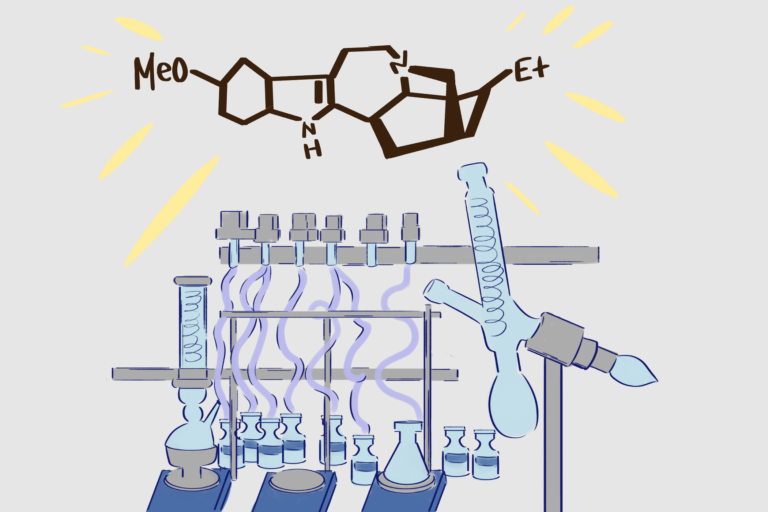
Synthetic chemistry ‘gaines’ a new path to ibogaine

Researchers at the UC Davis Institute of Psychedelics and Neurotherapeutics have finished the total synthesis of a scarce, naturally found anti-addiction/antidepressant agent


By NAREN KRISHNA JEGAN — science@theaggie.org


Ibogaine, a psychoactive compound derived from African plants like the iboga shrub (Tabernanthe iboga) and the small-fruited voacanga tree (Voacanga africana), has long been recognized for its potential in treating addiction and depression.

However, its natural scarcity and association with cardiac risks have limited its medical applications. In a groundbreaking study published in “Nature Chemistry,” researchers at UC Davis’ Institute for Psychedelics and Neurotherapeutics (IPN) have successfully synthesized ibogaine and its analogues from pyridine, a widely available and inexpensive chemical.

Led by Rishab Iyer, who received a Ph.D. from UC Davis in 2023, and Professor David E. Olson, the team developed a strategy to create ibogaine-related alkaloids with significantly improved efficiency. Previous synthesis attempts faced low yields and complex chemical pathways, but this new method produces ibogaine analogues in just six to seven steps, with yields ranging from 6 to 29%. This advancement allows for large-scale production without depleting natural plant resources and opens new doors for medicinal chemistry and organic synthesis research.

Organic synthesis is the process of constructing complex molecules from simpler chemical building blocks. In total synthesis, chemists design step-by-step methods to create natural products like ibogaine from non-natural sources.

“Accessing sufficient quantities of natural ibogaine for clinical trials has proven challenging as it is produced in small quantities, and overharvesting of T. iboga negatively impacts cultures that use it for spiritual purposes,” the study reads.

Using organic synthesis techniques, these problems can be avoided in a clever manner.

“[Using] semi-synthesis from the more abundant natural product voacangine offers a potential solution, as does efficient total synthesis from readily available building blocks,” the study reads.

One of the biggest challenges to consider in the production of ibogaine is the compound’s unique and complex structure. Imagine trying to build a puzzle where certain pieces must fit together in a specific way. Scientists overcame this by using a series of chemical reactions, including one where they “snap” different pieces of the molecule together in a controlled way. Their new approach uses key steps such as regioselective reduction, a Diels-Alder cycloaddition and epimerization to build the molecule efficiently.

Ibogaine’s potential as a treatment for substance use disorders, traumatic brain injuries and neuropsychiatric diseases is gaining traction, despite its risk of causing irregular heartbeats. Olson’s team sought to understand how ibogaine interacts with biological systems by studying its molecular structure and testing analogues.

One key discovery was that only the natural form of ibogaine, not its mirror image, promoted neuronal growth, indicating a specific receptor interaction.

“Nature only produces one version and if the therapeutic effects of ibogaine are coming from interactions with another chiral entity, like an enzyme or receptor, then you would expect only the natural version to have an effect,” Olson said. “If it’s non-specific, then both compounds would produce an effect.”
Another notable analogue, (-)-10-fluoroibogamine, demonstrated strong effects on neuronal growth and serotonin transporters, which play a crucial role in depression treatment. This analogue exhibited rewiring of the brain in a way that supports addiction recovery and mental health improvement.

Olson emphasized the need for an “Ibogaine 2.0” — a safer alternative that retains the compound’s therapeutic benefits without cardiac risks. By making ibogaine analogues more accessible and studying their biological mechanisms, researchers aim to develop next-generation treatments for addiction and mental health disorders.

This research’s importance also lies in its ability to make ibogaine more accessible for scientific studies and medical use while avoiding environmental harm. More importantly, it lays the foundation for developing safer treatments for addiction and mental health conditions. The ability to create modified versions of ibogaine with improved safety profiles could revolutionize treatment options for patients worldwide.


Written by: Naren Krishna Jegan

Davis Craft and Vintage Fair: a look into the operations of the biweekly event

The entirely volunteer-based event offers various crafts, vintage clothes and jewelry to community members at Central Park 


By RACHEL GAUER — features@theaggie.org


On two Sundays of every month, the fresh produce, bread and cheese booths that typically populate the Davis Farmers Market in Central Park are replaced by an array of handmade goods, vintage clothing and jewelry.

The Davis Craft and Vintage Fair has become Davis shopping staple, allowing local businesses and vendors to collectively sell their specialized goods in a prime location downtown. Items that are frequently on sale at the event range from handcrafted journals and notebooks to carefully curated vintage clothing pieces. Accompanied by alternating local bands and a food truck, the craft fair offers a unique market for any shopper looking for a Sunday stroll.

Debra Ariola is the director of the Davis Craft and Vintage Fair and the owner of  Recollections Vintage & Pre-Loved Items, a business reselling vintage jewelry at the fair. Ariola, who has lived in town since the 1970s and is a UC Davis alumna, highlighted the appeal of Davis that draws vendors to participate in the fair.

“We have amazing volunteers that come from as far as Auburn and they are committed to our community,” Ariola said. “It’s amazing how charmed people are by Davis and how much we are a great community that people want to be a part of.”

The events originally began in 2012 as Square Tomatoes Craft Fair and offered exclusively crafted goods. Though the quirky name was certainly memorable, Ariola said it brought both some confusion and limited the offerings to only handmade goods.

“Many people came looking for tomatoes: We thought we either would have to start crafting tomatoes -– square ones — so we can say, ‘There they are,’ or we could change the name,” Ariola said. “We decided to change it to Davis Craft and Vintage Fair to be very clear about what we are and who we are.”

Ariola highlighted that the event is organized entirely by volunteers — vendors who choose to volunteer have greater priority in securing a competitive spot for a booth.

“As a director who is also a vendor it has been very important to me to have this group of volunteers,” Ariola said. “It has made the fair and grown the fair so much from what I can do just by myself — I have a great group of people who are totally committed to keeping this fair going.”

The fair’s team of about 30 volunteers do everything from local advertising to running their various social media pages. Emily Avalos and her husband are part of the team, installing lawn signs to advertise the event around town.

Avalos is the owner of Emily’s Crochet Corner and began selling her handmade crocheted plushies at the Craft and Vintage Fair in 2023. She said that the fair has offered her a sense of belonging and community unique to Davis.

“I knew that Davis was a community-based town, but once we started doing the craft fair, I found that not only are all of the people who are part of putting on the event are extremely kind and welcoming, but also the community has been really great, especially all of the college students,” Avalos said. “It’s always lots of fun to see people come in and get excited about the things in my booth and I start recognizing regular customers and build a rapport with them.”

The fair also partners with local non-profit Couleurs Vives Art Studio & Gallery, a Davis organization that offers art classes to neurodivergent adults at their downtown studio. In addition to being a key sponsor, Couleurs Vives also offers a booth at the fair to allow the artists to sell their work.

Kim Nguyen, the director of Couleurs Vives, explained the intention behind this unique experience for the artists.

“It’s an opportunity for them to be a part of their community and not feel a stigma,” Nguyen said. “My goal is for these artists to come and showcase their talent and learn to communicate with the people in the community.”

Nguyen, who began partnering with the fair in 2018, emphasized that the work sold at the booth and any donations made go directly to studio space.

“The proceeds go to the artists themselves, and the money we raise covers the expenses that go into the studio –– the supplies, the rent, everything,” Nguyen said. “The [artists] come to work at the studio and it is all free for them.”

Outside of the Sunday events, Nguyen explained that Couleurs Vives and the Craft and Vintage Fair work to mutually benefit each other: The organization assists financially to host the fairs and vendors volunteer to teach classes at the studio.

“The vendors teach at our studio and encourage the artists to be touched on their creative side,” Nguyen said. “It’s good for the vendors to have an understanding of these special artists and how they think and that they are capable of being creative and successful at doing what they do — they learn about people who are neurodivergent and the neurodivergent learn from them.”

The Davis Craft and Vintage Fair hosts the event twice a month on Sundays from 9 a.m. to 4 p.m. at Central Park in Downtown Davis. For more information on regular vendors and the fair’s history, visit the Craft and Vintage Fair’s website.


Written by: Rachel Gauer — features@theaggie.org

Gunrock or a cow?: The Davis mascot debate

UC Davis students discuss what image of UC Davis best represents the school and its history


By AMBER WARNKE — features@theaggie.org


The debate over whether or not the cow should replace Gunrock as the UC Davis mascot has been going on for years. In 2022, 73% of students voted to change the mascot to a cow in the spring elections for the ASUCD. However, concerns over how difficult re-branding would be, as well as what alumni would think, led to the choice to institute the cow as the ASUCD mascot, rather than as the UC Davis mascot. Nevertheless, the debate about which mascot would better represent the UC Davis community has lasted since this decision over two years ago. 

Diego Tolliver, a third-year materials science and engineering major, weighed in. 

“I think the cow is just a better representative of the spirit of the school in general,” Tolliver said. “Everything is cow-themed already. And the mustang is kind of a thing of the past.” 

Tolliver proposed “Bucket” as a name for the potential cow mascot, and suggested that another reason the cow is the right mascot choice lies in how people often perceive UC Davis. 

“I’ve heard of people kind of using ‘Davis as a cow school’ as a little bit of a derogatory thing,” Tolliver said. “But if we were to change our mascot to a cow, it would be kind of reclaiming that.”

Tolliver also pointed out that the cow mascot would suit Davis’ agriculture-heavy culture. 

“I think it would be better to have a cow,” Tolliver said. “[Horses] are not as much of an agricultural thing as cows are, so that fits that a lot better.”

Jack Manly, a fourth-year history major, takes a very different approach to the issue. 

“There is no such thing more agricultural than a horse,” Manly said. “It was horses that were used historically to till the fields, pull the plows, take farmers from one place to another. Horses have been an integral part of agriculture since we tamed them. I see no reason why we should switch to a cow.” 

Manly went on to clarify the reasons behind his opinion. 

“I think [Gunrock] then and still now represents the ideas of Davis as a campus and as a community,” Manly said. “I think it’s important also that we honor our history, which I feel strongly about as a history major.” 

The real-life Gunrock was actually named Gun Rock and was a Thoroughbred, not a Mustang as the current mascot is. Gun Rock was born in 1914 to Rock Sand, the British Triple Crown Winner in 1903. He lived at UC Davis from 1921 to 1931, and while he did compete in races, Gun Rock did not land any significant wins. Instead, he was mainly considered valuable as a breeding horse. During his time at UC Davis, Gun Rock was bred with a whopping 476 mares, siring many notable racing horses.

Manly considered Gunrock a valuable symbol that represents UC Davis students. 

“I think Gunrock represents the hardworking and motivated drive that all Aggies possess when it comes to academics,” Manly said. “Speaking from my personal opinion, I view horses as animals that have that drive, that motivation. Cows don’t evoke the same image. They evoke a wandering laziness, which is not what I believe that Davis currently represents, has represented in the past or will represent in the future.”

Manly also reflected on his experience as the Gunrock mascot at the 2024 Big West Conference basketball game. 

“It’s hard to not feel connected when you are the embodiment of something, even if for a short period of time,” Manly said. “Being inside the Gunrock costume has only amplified that connection and passion I feel for it as a mascot.”

Grace Zuroff, a first-year graduate student at the School of Education, said she considers Gunrock to be unique from other university mascots. 

“What other school has an anthropomorphic blue horse as their mascot who’s ripped AF?” Zuroff said.

She believes that Gunrock, standing apart from any other mascot, captures the spirit of UC Davis in a special way. 

“It plays into the beauty of Davis in that we may not be like the biggest UC, but it’s still something that makes us fun and quirky,” Zuroff said.

Zuroff also acknowledged that having Gunrock represent UC Davis in athletics was more fitting than a cow, since cows don’t “really strike fear into other schools.” 

However, one hangup she had about Gunrock was his representation in the infamous “Daddy Gunrock Senpai” fanfiction, which has been widely circulated on Instagram since 2021. 

“The fan fiction and the fan art did not make me proud to be an Aggie,” Zuroff said. [That’s] one thing I want to be remembered by.”

Benton Buecker, a second-year environmental policy and planning major, also spoke to the way the mascot should represent UC Davis culture. However, he feels that cows better capture this spirit. 

“Davis for the most part is this chill little college town where we have tons of access to nature,” Buecker said. “And I think that if we want to attract new students, I think that we should lean into the cow messaging.”

Buecker continued to describe the lack of connection between the student body and the current UC Davis mascot.  

“I don’t think many people have any sort of emotional connection to Gunrock,” Buecker said. 

Buecker believes that the merchandise already being more cow-focused points to the existing affection students have for cows over Gunrock and pointed out how other schools’ mascots represent their cultures more closely. 

“You think of UC Santa Cruz, they’ve got the banana slugs, which I think is hilarious because it totally fits with their Redwood, laid-back vibe,” Beucker said. “And I think for Davis, we should have a mascot that represents our vibe and our campus, which I don’t think a blue horse does very well.” 

He also criticized the need for mascots to be “hyper-masculine predator-type things,” believing that a cow might change that stereotype.

“The mascot should be a cow because, sorry, Gunrock, you’ve been dead for a hundred years,” Buecker said. 

Manly stands in opposition to this viewpoint and wanted to make something clear.

“There is a room in the heart of the Aggies for both Gunrock and the cow,” Manly said.

“There is room for both in this ecosystem.”


Written by: Amber Warnke — features@theaggie.org