55.5 F
Davis

Davis, California

Thursday, December 25, 2025
Home Blog Page 794

UC Davis Institute for Social Science holds inaugural conference series

Guest lecturers, faculty discuss relevance of social science research

The UC Davis Institute for Social Science inaugural conference series will host its final event this Friday on “Social Networks in Decision Making.”

The conference will include talks from guest lecturers and faculty in a wide range of departments, including philosophy, psychology, anthropology, veterinary medicine, economics, business, computer science and sociology.

Joe Dumit is the first director of the ISS, which officially launched in October 2014.

“My job is to help imagine how we can foster interdisciplinary research among faculty; support intellectual exchanges through lectures, conferences, and workshops; support graduate student research and enhance undergraduate education,” Dumit said in an email interview.

One of the ISS’s biggest projects is the three-day conference series showcasing the broad scope of social science research. This year’s event took place on three consecutive Fridays and will conclude this week.

“[There are] so many ways in which social sciences on a day-to-day basis really speaks to who we are as people and society,” said ISS Assistant Director Victoria Austin. “People in the general public or even people in the university don’t think about how important that is….We wanted to have a conference that would…talk about the social sciences in the broadest way possible, to…give a wide audience a perspective on what’s happening in social sciences research.”

With this in mind, the ISS executive committee put together the conference series and found lecturers in a wide range of departments to talk about research under major themes. UC Davis political science Professor Bradford Jones played a major role in putting together the second conference of the series.

“The overall theme has to do with the issue of big data and technological change as it comes to analysis, and so our overriding principle was to try to bring together people from multiple disciplines to give presentations about statistical models of networks or big data, which would include Facebook data, Twitter feed data, things like that,” Jones said. “On the panel that I put together, we have people from nutrition sciences, communication, political science, from history, from philosophy, from statistics –- and so the principle of ISS is to try to build a multidisciplinary community from otherwise atomized departments.”

The UC Davis ISS was first established in an effort to increase interdisciplinary research on-campus.

“Faculty tend to be in their own departments and focus mostly on their research in their own departments, but there’s a trend in social sciences, and even with research across campus, of being more interdisciplinary,” Austin said.

Austin commented that similar institutes exist at other universities and interdisciplinary research is necessary to stay competitive.

“The big research grants are tending to be for projects that have an interdisciplinary bent,” Austin said. “A lot of times the big government agencies or the other big funders who are supporting research want to see an interdisciplinary approach to problems, with the understanding that a bunch of different people coming together with their different areas of expertise can maybe solve a big problem in a way that any single person can’t.”

From a social science perspective, where there might be considerable overlap between research interests, an interdisciplinary approach makes sense. One of the major goals of the ISS is to create opportunities for sharing knowledge.

“One benefit is you might learn something new,” Jones said. “Secondly, you may meet individuals in other departments, who are working on research questions that are similar to what you’re working on but are thinking about them in a different way, maybe applying different methodologies to study them, that without this institute I would probably never have even encountered.”

The ISS supports faculty and graduate student research and has given out thousands of dollars in grants and event co-sponsorship. Starting this fall, the institute plans to offer proseminars for graduate students with a focus on methods of approaching social science. Future plans could include a greater focus on reaching out to undergraduates.

“One of the missions of ISS is to not only facilitate community among faculty, but also among graduate students and undergraduates as well,” Jones said. “We’re still in our infancy, so we don’t really know exactly what we’re going to be, but we do know that bringing together students from other disciplines is one of the hallmark goals of it.”

Increasing access to undergraduate research opportunities is one of the ways in which the ISS plans to foster a multidisciplinary community among undergraduates, with the goal of encouraging students to go to graduate school.

“For undergraduates we have helped support the ASPIRE program to offer hands-on lab experience and mentoring in cutting-edge research environments, something we are planning on expanding in coming years,” Dumit said, in an email interview. “We are also in the beginning stages of launching a ‘Data Studies’ program to help Liberal Arts majors take their critical skills and apply it to the world of data, learning how to question, analyze and present data research for use in business and administrative environments.”

Austin pointed out that with the wide range of disciplines available for study at UC Davis, it is possible for undergraduate students to create their own interdisciplinary experience.

“I think that one of the great things about being an undergraduate at UC Davis is…how amazingly interdisciplinary it [already] is,” Austin said. “There are 100 majors on campus and you could, if you wanted to, major in human ecology and English, or you can do design and statistics. So I feel like the university is already well set up for undergraduates to do an interdisciplinary curriculum if they want to.”

The conference series has attracted faculty, students and members of the community. Jones said there were many undergraduate students in attendance at the first conference and that the lecturers did a good job of making their talks accessible and emphasizing the relevance of their research.

The ISS holds monthly noontime lectures which everyone is welcome to attend. For more information, visit socialscience.ucdavis.edu.

Graphic by Jennifer Wu.

UC Davis celebrates LGBTQIA community with annual PRIDE month

PRIDE coordinators discuss purpose of month, planning, events

pride_ca6_Gelvezon

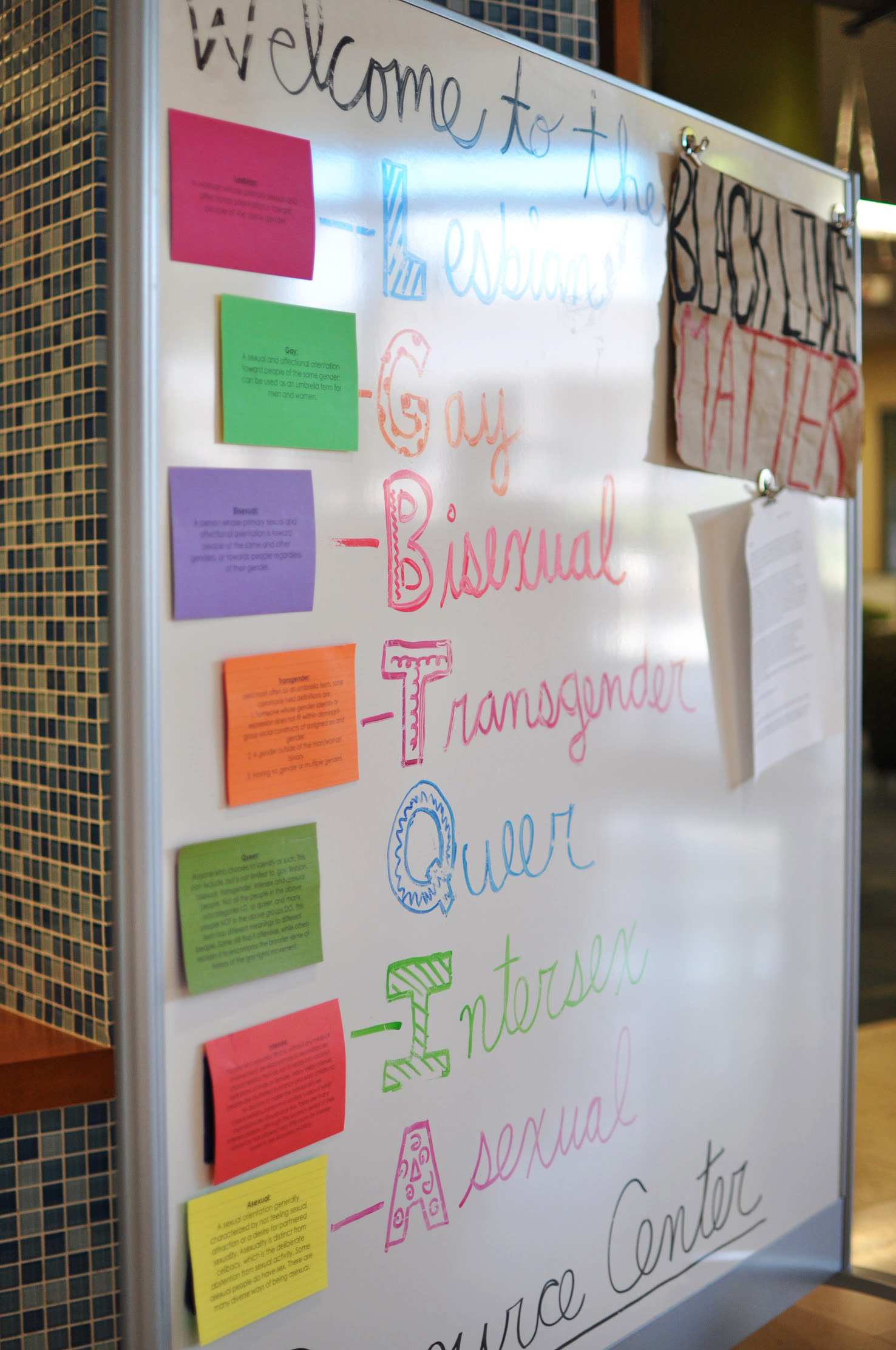
In recognition of May as Pride month, the UC Davis Lesbian, Gay, Bisexual, Transgender, Questioning, Intersex and Asexual (LGBTQIA) Resource Center plans to celebrate the diversity and importance of LGBTQIA individuals within the campus community.

“I believe Pride month is a way for our community to get together and form solidarity between other communities – to show who we are and be proud of our identities,” said Pride Month Planning-Committee Leader and second-year Native American studies and history double major Valentin Sierra. “There’s a lot of shame and stigma around identifying as LGBTQIA, so [we’re] combating that, and [it’s about] really accepting ourselves and showing we are awesome individuals.”

Although previously having been a week-long event, this year’s Pride includes workshops, conferences, a talent show and many other activities throughout the entire month of May. This year’s event also features three special performances: DARKMATTER, a trans south-Asian performance art duo, activist and author Dan Savage, as well as a highly-anticipated visit from actress and LGBTQIA activist Laverne Cox. Dan Savage will be speaking at the Mondavi Center tomorrow at 8 p.m.

“For the month of May we’ll have the whole [LGBTQIA] community be incredibly visible and active,” said second-year English major and Pride Youth Education Conference Subcommittee Chair Alison Tam. “Pride month is a way to bring the larger LGBTQIA community closer together. It’s going to be huge. We’re going to have so many events. You’re going to see so many people around wearing the t-shirts and it’s something you really can’t ignore.”

Although the center has been planning for Pride since fall quarter, planning for subcommittees, such as Tam’s Pride Youth Education Conference Committee, started in winter quarter.

“We’re inviting high school students and others in the Davis area to come [to the Youth Education Conference] and learn about social justice,” Tam said. “We’re hoping that the high schoolers who attend will just learn a lot more about social justice, learn about identity – it’s the kind of thing that a lot of LGBTQIA communities desperately need to learn. It’s easy for teenagers to not really have the resources that they need.”

Second-year science and technology studies major and the Out List Social Subcommittee Chair Alexis Caligiuri has been working for the very last Pride event of the month on May 29: the “Out List social.”

“The Out List is a list of faculty, staff and graduate students who are openly LGBTQIA individuals. [The Out List social] provides networking possibilities, resources and it’s specifically to address a few campus climate issues,” Caligiuri said. “Let’s say that you’re a queer student here and you’ve applied for a LGBTQIA specific scholarship and it requires a letter of recommendation from your professor, and you’re afraid of approaching one of your professors – suddenly you and your desire to be able to fund your education are politicized. If you know your professor is openly LGBTQIA, it’s not like you’re coming out to somebody where you can’t anticipate their reaction – it’s so much more comfortable.”

UC Davis Provost and Executive Vice Chancellor Ralph J. Hexter, who is a member of the Out List, was instrumental in getting a hundred new responses this year in anticipation of Pride’s Out List social.

Tam, who has also been working on the Out List, said the Out List social is a way for LGBTQIA students to network, discuss research and provide role models to help students relate to those in the professional world as fellow members of the LGBTQIA community.

“[PRIDE week is about] not living in fear,” Caligiuri said. “Visibility has always been important to the community. [Also PRIDE is] so fun and it allows people to be queer and have their queerness be celebrated instead of attacked and treated as a bad trait. [Pride] is getting to embrace who you are in a really enjoyable way.”

In addition to the Youth Education Conference and Out List social, there are various other events during PRIDE month hoping to bring together the LGBTQIA community such as Gayme Night, the Genitalia Fair and the Queer Talent Show.

“I’m most excited for the queer talent show on May 22,” Sierra said. “I think normally other cultural days put on an open mic, [but] with this we’re trying to broadly encompass talent. We’re going to have groups come and dance, we’ll have drag performers, people sing, people doing open mic things.”

Not only is this year’s Pride the first month-long event, but it is also the first Pride event at UC Davis that has not been funded by ASUCD.

“Being able to expand [Pride] to a month and having the resources to be able to do that speaks tremendously to how strong as a community we are and how resilient we are,” said Sierra. “It shows we are here, we are queer, we are wonderful people and we work hard.”

Photos by Jian Gelvezon.

Breaking News: Davis protesters block I-80 entrance

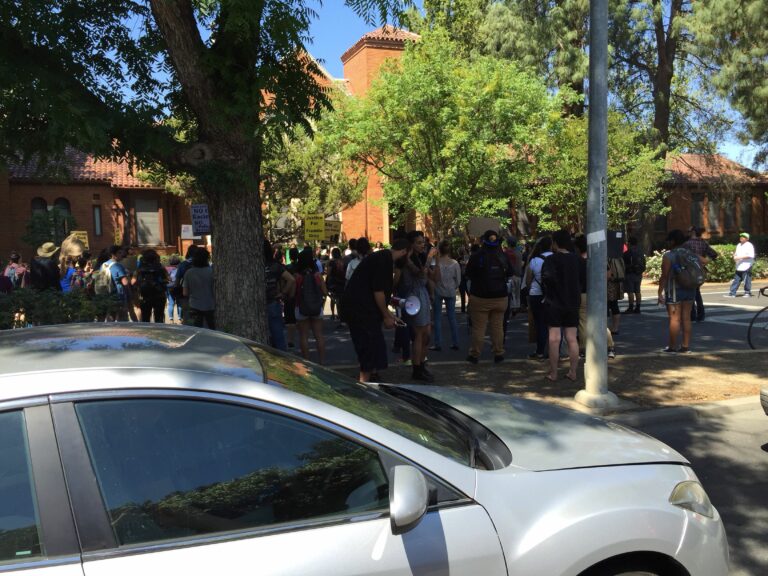
Due to protest activities, the Davis Police Department has closed off the Interstate 80 eastbound and westbound off-ramps to Richards Boulevard and Olive Drive.

The protesters held a walkout at 1:30 p.m. on campus. According to the Facebook event page, they are protesting to bring awareness to the death of Freddie Gray and the current Baltimore protests. They join several other statewide and nationwide protests.

Starting with approximately 50 people, the protest has grown to around 100.

At about 3 p.m. protesters gathered around Davis City Hall on Russell Blvd, holding posters with slogans such as “The whole system is guilty. No more killer cops,” and “No Justice, no peace, no racist Police.”

Officials say they are monitoring the situation and there may be more off-ramp closures near Highway 113.

Photo by Brendan Chang.


Myths and Misconceptions about Health: ADHD – Silenced and Erased

0

What do you think of when you hear the word ADHD? Do you think of a hyperactive child disrupting a classroom? Do you think of an overly impulsive child? Do you think of a kid who will inevitably turn to substance abuse? Do you think that kids with ADHD just want attention?

These are the types of thoughts many people have when they think of a person with Attention-Deficit/Hyperactivity Disorder. The misconceptions people have about ADHD tend to both downplay the seriousness of the disorder and erase the experience of it. Unfortunately, many people with the disorder get stigmatized as a result of these myths. I have seen this stigma from firsthand experience.

My older brother has ADHD and I remember watching him struggle. He was ridiculed by his classmates; they called him crazy. His teachers labeled him as a troublemaker and he became notorious for his behavior. Nobody ever took his disorder into consideration and he was either perceived as a “bad kid” or as having a learning disability. My mother had to fight the school system from placing him into special education. These constant struggles caused him to resent school. He felt like an unwanted  burden, so he stopped going.

Myth: ADHD is not a real disorder.

There are a lot of people who don’t think that ADHD is a real disorder. People with ADHD get marginalized because their disorder is not as easily diagnosable in the biomedical world. Since there is no single scientific test such as a blood or brain exam that can be used to diagnose ADHD, it gets reduced to a “fixable” behavioral problem. The problem is that ADHD does not fit a strict category and is still being understood by professionals, so it’s no wonder why many people misunderstand it. However, ADHD is a disorder just like any other. It may not have a single treatment or method of diagnosis, but that does not make it any less of a real impairment.

There is a tendency to associate ADHD with bad parenting. The logic is that these kids weren’t properly disciplined, it isn’t that they actually have a disorder. I remember my mother feeling inadequate and that it was her fault that my brother acted out so often. She did not understand that the disorder was the root cause of his behavioral problems. My mother was not at fault, but she and many other parents of children with ADHD get blamed for causing the disorder.

Even though the environment plays a role in the development of ADHD, it is not the sole cause. Therefore, parents and schools should not be blamed for the disorder. Parental and educational support are helpful, but it is a medical disorder and should be treated like one, and that may or may not include medication.

Myth: ADHD is a childhood disorder.

Another common misconception is that ADHD is only prevalent in childhood. Plenty of teens and adults deal with ADHD symptoms everyday. Teens often  exhibit symptoms from their early childhood, but are less likely to be excused because it seems “childish” to express hyperactivity, inattention or impulsivity. The symptoms in adults with ADHD are not as noticeable; however, many adults still struggle with organizational skills and forgetfulness. They tend to have difficulty keeping jobs and often have trouble maintaining relationships.

As an adult today, my brother still struggles with the symptoms listed above, and many other adults do too. ADHD is not a disorder that magically vanishes when you grow up. It still lingers and creates conflict in an individual’s everyday life.

Myth: Everybody has ADHD these days.

People tend to misinterpret the increased diagnosis of ADHD to be an over-diagnosis. I often hear people say that “everybody has ADHD these days.” This statement reduces the legitimacy of the disorder because it questions the rigidity of its diagnostic process. There are many reasons for the increase in diagnosis. Some studies indicate a correlation between the school accountability policy and ADHD diagnosis. This policy measures the amount of rewards given to schools based on academic test scores and graduation rates. To maximize their rewards, schools had more underachieving students diagnosed and treated for ADHD so they would be put on medications and/or receive testing accommodations.

However, this increase might not be so bad. There are still many individuals with ADHD who go through life undiagnosed and untreated. This is especially seen in people who come from minority groups or whose parents are not familiar with the disorder because they often don’t report any of the symptoms.

ADHD is a serious disorder and a painful reality for many individuals. Making seemingly harmless comments about ADHD adds to the stigma. The misconceptions are widespread and many people don’t look for any information other than what they hear or read, unless the disorder directly affects them or someone they know. Rethink the thoughts you have when you hear the word ADHD. Are they marginalizing? Are they generalizing? Do they reduce the legitimacy of the disorder?

Tiffany Marquez can be reached at tmmarquez@ucdavis.edu.

In Our Nature: Connection – Wi-Fight It?

0

As those who know me know, nature isn’t my only interest: I’m also a big fan of music. Often when I go hiking in wild places, I like to put in my ear buds and find a soundtrack for my adventures on my iPod.  However, when hiking at Sunol Regional Wilderness with the Davis Hiking Club a few days ago, the only things filling my ears were the sounds of camaraderie, laughter, and birdsong.  Some people there I already knew; some of them I had just begun to know. But being in that moment there with them and sharing the bright sunshine in those familiar hills made me feel truly present and fully alive.

I didn’t miss my iPod one bit. I didn’t need it to feel like I was really connected. There wasn’t even service where we were, and it’s easy to see where people get the idea that we have a “better connection without wi-fi.” Anyone who’s been out in the woods and has spent quality time with friends there will find it an attractive notion. I have a friend who chooses to use a flip phone instead of a smartphone in order to try to be more in touch with the moment and the people around him, and another who elects not to have a phone at all for that same reason. Yet another ] always shushes me when we’re out there and I’m playing guitar, because he wants to hear what the true natural scene is singing.

These are attitudes and lifestyles I’ve always admired. To forego the attractive distractions of modern consumer culture for the deep essence of the moment is a noble endeavor. In fact, it is my belief that for the preservation and health of our souls, it is absolutely necessary that we find time to unplug and detach ourselves from our artificial materialism. Never having a chance to unplug would drive me crazy.

Now, what my friends have drawn from this idea is that it’s better to go without these artifices altogether. As an avid fan and user of Instagram, Facebook, Snapchat, and a host of other apps and social sites, I must confess I’ve never been fully comfortable with their conclusion. This discomfort has forced me to examine my motivations closely. Is it that I prefer everything in moderation, or is it that I am more enthralled to consumer society than I realize? Maybe an exception can be made for listening to music? Or could they simply be wrong?

I’ve come to the conclusion that none of the above is the case. I’m not a slave to my materialistic ways, I’m not a particular fan of moderation, and my friends aren’t entirely wrong. But to think that connection can only come with detachment from material things is to miss many elements of what connection can mean. Sure, you can be connected in and with yourself if you feel the moment, but there are so many others ways that we humans connect. We connect through friendship, we connect through familiarity with the ecology around us and we connect through the internet.

What I’m trying to say is this: technology doesn’t have to stunt our spiritual growth or separate us from each other and from the present. In some cases, technology can do the opposite. Maybe listening to the right music on my iPod when I’m out in the forest will help me connect emotionally with the scene on a deeper level than I could otherwise experience. Maybe playing my mass-produced Yamaha guitar through the deep stillness of an open field can lend peace to my soul that I can instill into my music and let others feel when they listen to it. Maybe that Instagram or snap I send from the top of a mountain will allow me to share in a joyful connection with whoever’s on the other side, or better yet will cause them to seek out the connection of the mountain for themselves.

In short, although we have a basic need to occasionally unplug, there’s also nothing wrong with plugging in sometimes when we’re in nature because it may help us experience a kind of connection that we would otherwise miss. That’s why as I took pictures on this past weekend’s hike, I knew I wouldn’t regret spending that time behind the camera. The pictures captured my friendships, and the memories they preserved are connections deep and wonderful in their own right, no matter how dull and artificial my little Apple phone may be in comparison to the awesomeness of the world around us.

So don’t worry about what the nature hipsters may say. Sharing your memories and tuning into your music are an integral part of what connection is all about.

Look up, look out, look around – connection is in our nature.

Nick Jensen can be reached at njensen@ucdavis.edu.


Editorial: Administration responds to open letter on campus climate

0

Forum held today to begin discussions

The UC Davis women’s lacrosse team faced heavy backlash from the campus community this week after a Facebook photo of eight players dressed in culturally insensitive attire resurfaced after its initial posting in October.

Originally taken during a Halloween-themed team practice, the photo specifically targeted the Chicana/o and Latina/o community, and received negative reactions from a variety of students. UC Davis Vice Chancellor for Student Affairs Adela de la Torre immediately responded to these concerns in an email sent last Friday, in which she called upon the student community to practice “cultural humility” and ensured that UC Davis Athletics would take the appropriate steps to prevent similar offenses in the future.

The photo is just one of many incidences of blatant racial discrimination at the university this year, as outlined last Monday in an open letter drafted and signed by undergraduate students, campus organizations, ASUCD officials and community members.

The letter, addressed to UC Davis Chancellor Linda P.B. Katehi and senior UC Davis administration, expressed disappointment in how little the university’s Principles of Community are enforced. Specifically, it stated that the university has failed to prevent several incidents of racial insensitivity, and thus has contributed to the lack of a safe and respectful space for students of color on campus.

Recognizing that many issues of cultural discrimination on campus often go unnoticed without appropriate action, The California Aggie Editorial Board commends the rapid and effective student response in regards to this incident. We understand how wide the scope of this problem is on the university level and believe that strong student activism is key to making successful change.

We hope that in cooperation with the student body, the UC Davis administration will  take steps to combat acts of cultural and religious insensitivity. We recognize that some of these efforts have already been made. Chancellor Katehi’s prompt and timely response to the open letter via email not only demonstrates that she is prioritizing campus climate-related issues, but also that she has concrete plans set in place moving forward.

The Editorial Board appreciates that the administration understands the magnitude of the problem and is taking active steps to combat it, starting with the open forum held today at 12 p.m. with de la Torre. Given the large number of discriminatory incidents by UC Davis students and campus leaders this year, it is crucial that these discussions between students and administrators continue in order to foster sustained dialogue.

Graphic by Jennifer Wu.

 

Men’s tennis finishes their season

0

The final match of the men’s tennis team has come and gone, and with it the hopes of emerging from the Big West Conference Tournament victorious. But this past season, the team has attained far more than previous seasons and ended their year with exciting records that will be difficult for the program to top in the future.

After defeating UC Riverside 7-0 on April 18, the Aggies secured a share of their first ever Big West regular season title. However, with only one match left to play, they weren’t in the clear just yet. The battle to decide if there would be one or two Big West Champions was fought against UC Irvine and ended in UC Davis’ defeat. Their loss to UC Irvine anointed them co-champions, giving UC Irvine a No. 1 seed for the tournament and the Aggies No. 2 seed. The team has never received a higher seed.

The Aggies were guaranteed a first-round bye because of their seeding, and in the semi-finals they fell to No. 3 UC Santa Barbara 4-1, the team that went on to win the tournament. Sophomore Bryce McKelvie was the only UC Davis athlete to put a point on the board.

In the Big West Conference Tournament, UC Davis has faced UC Santa Barbara twice before, losing to them 4-0 both times, in 2009 and 2010. This season was the first time the Aggies had won a match against UC Santa Barbara in the regular season in years. It broke up an 11-match losing streak and gave UC Davis some short-lived hope for any immediate future encounters with them.

Although an unfortunate loss, it doesn’t sully their overall performance throughout the season. With an overall record of 16-6 and a conference record of 4-1, the Aggies went undefeated at home (8-0) and entered the tournament ranked No. 57 in the nation. In a record unbroken for over 20 years, the 16 total wins they earned hasn’t been replicated since 1992.

The doubles pairing of freshman Everett Maltby and sophomore James Wade has given an exceptional performance, with a total of 24 wins this season. They led the conference as they entered the tournament, and although they didn’t end up playing in it, their future as a pair holds a significant amount of promise for the team.

With improving records for three consecutive seasons under the tutelage of head coach Eric Steidlmayer, the Aggies must now turn their sights toward the future. The team is helmed by the recently named Big West Coach of the Year and will include a full returning roster from this year’s successful team. The UC Davis men’s tennis team is well within its means to tackle whatever obstacles will appear in the coming years with increasing success.

Graphic by Sandra Bae.

To Pimp A Butterfly and make it socially conscious, too

0

Guest review of Kendrick Lamar’s new album

When I lived in a dirty, scuffed-up co-op with 15 other college students, our anthem was Kendrick Lamar’s “Fuckin’ Problems.” We would blast it when waking up in the morning, we would yell it across bike paths at passing housemates, we would even play the Kidz Bop version while cooking dinner for each other. It’s only with the release of Lamar’s most recent album, To Pimp A Butterfly, that I realize we had no idea what we were dealing with.

Kendrick Lamar has always been bastardized by the mainstream. His hit singles have been stripped of all deeper meaning—the reflective irony of “Backseat Freestyle” was taken sincerely, the dark commentary on alcoholism in “Swimming Pools (Drank)” was assimilated into the binge-drinking blackout vernacular, and yet another image of the “girls, guns, and money” rapper was perpetuated.

From frat parties to co-op cook nights, it’s clear that our generation loves to misunderstand Lamar’s intentions. It would be quite a stretch if anyone managed to do that with Butterfly.

Lamar’s third album, released March 15, 2015 produced by Top Dawg, Aftermath, and Interscope Records, is an innovative, emotional work of art. Blending free jazz and funk beats with gritty lyricism, Lamar addresses everything from racial oppression to depression.

Although many of the songs work best within the album, as opposed to as singles, the 16 tracks are versatile in nature—intimately personal yet relatable, lyrically thick, yet accessible, and even a few that are heavily political yet danceable, such as Butterfly‘s #1 hit, “King Kunta.”

Centered around the narrative of Kunta Kinte, an 18th century slave whose foot was chopped off to keep him from running away, the song layers modern black power lyrics over a lowrider funk melody. Lamar traces the development of the African man in American society, his change from “a peasant to a prince to a motherfuckin’ king,” while still acknowledging the inherent disrespect for his monarchy—i.e., racism.

Along with an ode to black resilience, many have said the song is also subtle attack on rapper Kanye West, whose idea of lyrical black activism is that he’s made an exorbitant amount of money (West christens his nouveau style “luxury rap”) which, while definitely a revolutionary act for a black man, is the complete opposite of Lamar’s community-rooted lyrics.

In Butterfly, Lamar raps about the ubiquitous “hood” in a way that both waxes nostalgic and holds it at arm’s length distance. While most rappers either glorify or cut themselves off from the neighborhoods they grew up in, Lamar walks the fine line between loving and leaving Compton.

He also walks the line that divides sanity and instability. In this album, Lamar not only talks about his depression, he pours it for the audience straight from a bottle of 100 proof. We drown in it with him on “u,” an almost terrifyingly vulnerable look into Lamar’s neuroses, and track the narrative through “Alright,” “Momma,” and in some of the songs’ outros, which culminate in a poem in the final track “Mortal Man.”

This intimate look into a black man’s depression feels simultaneously voyeuristic and awe-inspiring. The defiance of the social stigma surrounding depression is augmented by Lamar’s blackness—where mental health is already a hushed-up topic, it can be downright taboo in black communities.

Community is also connected with Lamar’s depression—within “u,” Lamar blends his internal struggles with the external, detailing how his guilt at leaving Compton and pursuing his rap career served to push him even deeper into depression.

But Lamar’s goal is not to drag the listener into the same pit in which he resides—in an interview with Rolling Stone, Lamar said, “Anybody reading or listening who may be asking these questions of themselves, just remember: from ‘u,’ you will eventually reach ‘i.’”

“i” is the second to last song on Butterfly, and another one of those heavily political yet danceable hits, featuring the chorus “I love myself/ I put a bullet in the back of the back of the head of the police/ I love myself.”

Suffice to say, it would be a bit of a stretch for Kidz Bop to cover any of these songs, or for frat boys to fist pump along at a party. The album has exploded its way into the rap canon with tracks that challenge, entertain, stimulate and struggle.

Lamar speaks to issues on a level much deeper than whatever Fuckin’ Problems we believe we all have.

Graphic by Jennifer Wu.

aggieANGELOUS

0

In loving memory of the inclusivity and resilience of Maya Angelou

aggieangelous

ThePoetry

Unsigned

By Marina Brown

I climbed four

floors of frozen stairs

last January

to leave

a vase of roses

too close outside

your iron door.

I am still walking

away

not knowing

if your hands

shook lifting

them in

or bled

picking up wet glass

and red petals.

For Paul Breslin

By Marina Brown

  1.  at the reading, Mr. Breslin mentions

the particular ironies of his failures

in vision / childhood roadblocks.

‘the first job of a poet,’ he says,

‘is to see,’ and I think of feeling

my way down the dark stairs of

an old wine cellar, the cool wall

steadying my slipping vertigo.

my father once restrained

a thrashing alcoholic,

who coughed an infection

into his right eye. the surgery

was by the ocean, and put to

use the cornea of a corpse.

today, his eyes are two

slightly different shades of blue,

but he still flies, and writes.

  1.   this afternoon, a friend remarked at my

carelessness: my hips faced the world

in soft black cotton, only a few steps

from the window, blinds open and drawn

a quarter way up. I said they can’t see

us in here – that they’re never looking,

but she was unfazed and half-closed

her eyes. her body pleaded with

the tall white door-frame as she said

it’s so easy for us, from behind these

windows, to see them. it’s crystal clear.

  1.   because I am aggravated by blank whiteness,

I have peppered my new apartment with pushpins,

lights and art and jewelry. but I scarcely notice

any maps or flower-bouquets when I shut the door

behind me in the evenings. I want to prove you

wrong, Mr. Breslin, and ask for your prescriptions,

and find for you all the night-blind poets, and explain

to you how it is, that I can no longer feel the things I see.

marina2Marina Brown

My name is Marina Brown and I’m a fourth-year international relations and Russian double major. I am a member of Phi Sigma Pi fraternity and Editor-in-Chief of Her Campus online magazine at UC Davis. I was born in Kharkov, Ukraine and raised in Stockton, California. I love reading and writing, exploring big cities, electronic and indie music, being outdoors, drinking tea, making new friends and hanging out with my cat.


Be Featured in aggieANGELOUSaggieangelous icon

Send your poetry to aggieangelous@gmail.com with your name, major, year and a short one- or two-paragraph description about yourself. Feel free to include your interests and/or hobbies, or maybe even your favorite quote!

Arts and Culture Feature: People Tapestries

0

A peek into some of Davis’ co-operatives

daviscoopWhat is it that makes a family? Shared values? Shared space? Shared food? Shared understandings of the world, maybe? It is different for each home, but it is clear that sharing is essential. For many alternative students or members of the community, cooperative housing is the place to live in Davis. Although there are various styles of cooperatives, each tied together by different concepts and values, they generally operate by codes of open communication, community and, of course, cooperation.

If you have seen the “Project Compost” sign on campus, then you have unknowingly stumbled across the gardens of the Tri-Cooperatives. There are three houses: Agrarian Effort (Ag), Davis Student Co-op (DSC) and Pierce Cooperative. Each house holds between 12 and 13 people and is located right next to Sprocket Bikeway on campus.

Josh Wizman, a resident of Agrarian Effort, believes each of the individual houses seems to have its own unspoken theme. He adds that Agrarian Effort is one of the more politically active houses.

“Currently we are looking for queer person of color applicants [because] they are the most disenfranchised group,” Wizman said.

Of the cooperatives interviewed (Ag, DSC, J Street, N Street and The Domes), the overarching consensus seemed to be sustainability, social justice or an intermingling of both.

Each of the co-ops have consistent group meetings where they talk about how best to approach events and dilemmas facing them. Most operate by consensus in an effort to build a conscious community and a true democracy. They also share food and take turns cooking group meals for each other.

Kathleen Miles, a graduate student in ecology and resident of DSC, says the key to harmonious living among so many diverse people is communication.

“[Luckily] the general culture around the co-ops is one of openness and learning. [But] with this many people, we need to have house meetings every week. Anywhere you live you need to communicate, but living in this situation emphasizes that need really quickly,” Miles said.

Two rather famous odd ducklings within Davis’ alternative living sphere are N Street Cohousing and The Domes. Thedaviscoop2 Domes are located near the Student Health and Wellness Center on campus and comprise of 13 dome-shaped houses that each house two students. They are considered a co-op because of their shared meal nights, work parties and the fact that they are an intentional community.

The N Street Cohousing has been slowly built since 1979 and now consists of about 20 houses on the N Street block. They’ve knocked down all the fences in the backyard and now share a haven of gardens with a tree fort, a fire pit, a greenhouse, a pizza oven, murals, chickens and flowers. Their community tends to be heavily composed of graduate students, families and long-time residents who act less like a neighborhood and more like a village.

Many residents noted that their favorite aspect about living in co-operative housing is the people that surround them.

Kevin Wolf, a long-time resident of the N Street cohousing, feels a strong connection to the people he lives with.

“We have a lot of fun together,” Wolf said. “We do a lot of things for each other. We’re generous with one another. We talk with each other. We see each other.”

The residents of J Street, Ags and The Domes added that they host public dinners at 7 p.m. weekly.

Photos by Courtesy.

Rape? Yes, I do want to talk about it: Why nobody wants to report

0

Reporting rape is important. Super important. We need to report because 88 percent of rapists will rape more than once. And, like, why would we knowingly let someone get away with that?

Even with these statistics, rape is the least reported of all crimes. On college campuses, only 11 percent of victims report their experience. But, why? Could it really be that bad?

Let’s take a closer look:

Picture it. You’ve just experienced some form of sexual assault. You’re completely shaken up, and although all you want to do is lie on the floor and never move, you can’t ignore your mother’s nagging voice in your head telling you to take action.

So you desperately try to remember that one phone number everybody seems to think is so important: 9-9-1, was it? Wait no, 9-1-1. You dial the number and in seconds there’s a herd of scary policemen in your room aggressively asking you really simple questions that suddenly seem daunting.

“Do you spell your name with an I or an E? When was your birthday?”

And you have absolutely no idea because all you can think about is the terror creeping through your bones.

The police officers proceed to take everything in your room that could be used as evidence. They take the hand-stitched blanket on your bed. They take the teddy bear from your desk on the grounds that Bear-y observed the entire event first-hand and must be brought into the station for questioning. They take the 20 bucks from the floor – because come on, it’s 20 bucks.

Then the police shove you in the back of the police car. “Wait a minute,” you think. “Am I the criminal?” You’re sitting there on a seat equivalent in comfort to a cement floor, and think to yourself, “What kind of people have sat in this same exact spot?” That thought sends chills down your spine.

When you get to the station, or the Center for Advocacy, Resources & Education at UC Davis (CARE) office, the questioning continues. Only this time the questions are actually difficult and you haven’t the slightest clue how to answer them. Detective Jim looks you dead straight in the eyes, past your eyes and into your soul and says in complete seriousness, “I want you to tell me… during the assault… was your left pinky positioned at a 90 degree angle, or was it more like a 95 degree angle? ”

You silently criticize yourself for not paying closer attention to your pinky while you were getting raped, and proceed to do nothing but sit there – with a blank stare and a suspicious-looking pinky resting on your lap.

Next, they graciously give you a victim’s advocate. Finally, someone who gets how horrible this is. So, you and your advocate set out on a whirlwind adventure to the sexual assault clinic far far away (there is no clinic anywhere close to UC Davis).

Upon arrival, you find out you’ll be getting 87 shots to prevent against every STD ever.  The names sound so unfamiliar you’re pretty sure the doctor just made them up on the spot so he could stab you with the maximum number of needles. Once the stabbing is done, you get to have the deluxe PAP smear special. Does that sound like fun? Because it means a stranger sticking a gigantic tube up your butt.

Congratulations! You’ve just had the most horrible night of your life. But hey, at least the worst of it is over, right? Well, not exactly. Plot twist…that was the easy part. The hard part is everything that follows.

The hard part is going through with the University and criminal justice reporting process with the constant reminder from others that you are “Ruining somebody’s life.”  Or when everyone around you loves your rapist way too much to think of him as the monster you know him to be. Or when your friends come up with ways you could have prevented it, or reasons why you should get over it. Or when the University pretends like they have all this power, but they leave you living next door to your rapist for two months. Or when you testify in court and actually pass out from a panic attack. Or hearing, from his attorney, that your story is full of lies, when you know so deeply in your heart the reality of what happened to you. The hard part – is knowing that while your friends may struggle with feeling homesick or passing Chemistry, you have to struggle every single day, knowing that this process is excruciating. And  eternal.

Everyone wants victims to report their experience. I want victims to report their experience. But if it’s going to be this painful to report sexual assault, then we can’t really expect very many people to willingly rip that duct tape off their mouths.

Like her bluntness? Contact Maddy Pettit at mepettit@ucdavis.edu

Graphic by Jennifer Wu.

Current, former ASUCD officials weigh in on lack of student involvement

Low voter turnout in latest ASUCD election raises concerns on student representation in association

Recently, participating in the ASUCD popular election has seemed to be an unpopular decision, with only a 2.3 percent voter turnout of the student body in last quarter’s election.

With a lack of candidates running, the election allowed the six candidates to unanimously win a total of six available ASUCD senate positions. As a result, some believe the association is suffering from misrepresentation of the student population, stemming from a decreased number of students with the desire to hold office.

“What every student government wants is to have differing opinions so that the organization can make the best decisions on behalf of the student population,” said UC Davis alum and current ASUCD Business Manager Janice Corbett. “An organization is ineffective if there isn’t any differing opinions and there are underrepresented voices in the student body.”

Corbett stressed that equal representation is critical for a large student government–one serving approximately 26,700 students. Additionally, this year, the association offers over 1,500 student jobs, internships and volunteer positions.

Some say that students pursuing majors in the sciences may not participate in ASUCD as an extracurricular activity because the positions do not align with their studies.

“I think that there is the trade-off that in order to participate in student government, [students] need to take time away from their studies,” said former ASUCD controller and fourth-year computer science and engineering major Rylan Schaeffer. “[If being in] ASUCD doesn’t compliment or reinforce their studies like [it does for] political science or ethnic studies majors, there is really no incentive [to participate].”

However, some believe that the association allows students to develop job skills that cannot be found in the classroom. For third-year ASUCD senator and philosophy and neurobiology, physiology and behavior double major Anas Tresh, being involved in student government will have an impact on his future career.

“[As a senator], you are going to have to communicate with people in your constituencies, and I think those traits and attributes are qualities that will go with you,” Tresh said. “I personally plan on going into the [medical] profession, so communicating with people is of utmost importance.”

ASUCD involvement can allow students to branch out into other departments and explore interests beyond what their academic majors offer.

“I also got involved not just because of computer science, but an interest in computer science, government and business, and for me I couldn’t really find a way to get business involved in my classes,” Schaeffer said. “I was able to join the financial side of ASUCD [and] it turned out to be a great experience.”

However, both Tresh and Schaeffer attribute their involvement in ASUCD to peer influences rather than campus-provided information.

“Most people get involved in ASUCD their later years; I got involved my first year,” Schaeffer said. “First of all, I had a great mentor — his name was Patrick Sheehan, [and] he was an [ASUCD] senator. He had mentored me and brought me into ASUCD and that helped get me off the ground.”

Tresh said that in addition to attracting students to run for senator positions, ASUCD also suffers from problems of communicating its relevance to students.

“[Many students] don’t realize that it literally takes 30 seconds to vote and that vote can make a huge difference,” Tresh said.

According to Corbett, “competing technology” has made voting so convenient that students tend to procrastinate and therefore forget about it.

“It’s not as visible,” Corbett said. “[In years past], you saw the voting booths and you went in. Now you do it on your phone, if you remember.”

Corbett also stressed that many UC Davis students do not realize the scope of the association’s many functions and purposes on-campus.

“I’ve heard many students just describe ASUCD as student government,” Corbett said. “[However] ASUCD is much bigger [than that]. ASUCD is [Unitrans], the CoHo, the committees that run Picnic Day, and the Whole Earth Festival. It is much bigger than just the election.”

Some believe that apathy among the student population for ASUCD has led to several major consequences.

“ASUCD cares a whole lot about certain issues and not about other issues, and I think that disparity between how much certain thoughts are considered and addressed has negative ramifications,” Schaeffer said.

According to current ASUCD Vice President and former senator Robyn Huey, having different types of people participating and actively voting in student government would facilitate unique ideas and thoughts representative of the diverse campus.

“For me, coming from a landscape architecture major, [being involved in ASUCD] is kind of unusual,” Huey said. “My classes aren’t really related to what ASUCD is, but I found out that some of the stuff that I learn and understand in my classes can actually be applied [to issues in ASUCD].”

Huey’s experience as a landscape architecture major gives her a unique view on situations, allowing her to have a fresh perspective on issues that are happening within the association. She hopes that other students may recognize this need to introduce a new perspective into the senate.

“Representation is really important; one student’s experience may not be another student’s experience [since] we come from different majors and backgrounds,” Huey said. “On one hand there are students whose classes are more geared toward ASUCD and on the other hand there are students whose classes aren’t related to ASUCD at all. But their perspective is still really important [in] that they represent the issues and voices of students who traditionally aren’t part of the ASUCD student government space.”

Huey said there is a lack of outreach and participation in the association from certain groups on-campus, specifically from students who are representatives of engineering and the sciences. But while under representation may be a current issue, Corbett recalls that in the past, the problem was much worse.

“When I was a student, it was primarily political science majors [in student government], maybe some international relations,” Corbett said. “Now, we have some engineering, and biological sciences on the table. I think that no matter the population that comes to the table, there will always be diversity of thought and ideas.”

Among the 12 senators this quarter and last quarter, however, not one is pursuing a degree in engineering. Huey hopes to change that.

“Another thing is making ASUCD relevant again and ensuring student voices are included in our decision-making process by having more focus groups, having more outreach,” Huey said. “For example, our student wellness committee brought in a lot of students who are more health-minded and I think that also relates to how ASUCD is relevant, making sure that we continuously provide infrastructures and support for students who have different academic interests.”

Looking ahead, Corbett said the association is constantly looking to better itself in order to best serve students.

“We have over one thousand student employees and volunteers. But we have to engage further,” Corbett said. “How do we engage the 26,000 students that are here? How do we make this a place where students can come and ask the right questions about what is going on in the student experience, and either find ways add new businesses or add new opportunities for ASUCD?”

Photo by Samantha Hartmann.

Police Brief week of April 23-30

0

Our little town of Davis never sleeps, and the Davis Police Department is there to keep the peace. The following is the most entertaining bits of the police activity from the last week in Davis.

Thurs., April 23

Morning Snack

7:29 a.m.: Man looking into vehicles on J Street identified as wearing a trench coat and holding a Slim Jim.

Do Your Jeans Hang Low

4:05 p.m.: A man was seen on his way to AM/PM wearing no shirt, red underwear and his jeans around his ankles.

Fri., April 24

Old Ticket, New Tricks

11:22 a.m.: The owner of a gold Cadillac without a parking permit put the envelope of an old ticket on their windshield to avoid getting another ticket.

Graphic by CA Aggie Graphic Design Team.

News in Brief: Dollar Tree Inc. to pay $2.7M lawsuit for improper hazardous waste disposal

0

Last Friday, Judge Morris Jacobson of the Alameda County Superior Court ordered the Virginia corporation Dollar Tree Inc. to pay $2.72 million in civil penalty costs, according to a Yolo County District Attorney (DA) press release. Yolo County is set to receive $35,000 in costs and $129,000 in civil penalties.

Yolo County DA Jeff Reisig, as well as 45 other DAs, led the investigation that ultimately found Dollar Tree Inc. disposing of hazardous waste improperly. The waste included toxic materials, batteries, electronic devices, corrosive liquids and other electronic waste.

The investigation of over 480 facilities statewide found that store employees had been dumping toxic waste into local landfills, which are not authorized to manage toxic waste, rather than hazardous waste facilities.

Since the investigation, the stores have established new employee training programs on how to properly dispose of hazardous waste.

Graphic by Jennifer Wu.

News in Brief—Active Minds holds suicide awareness campaign

0

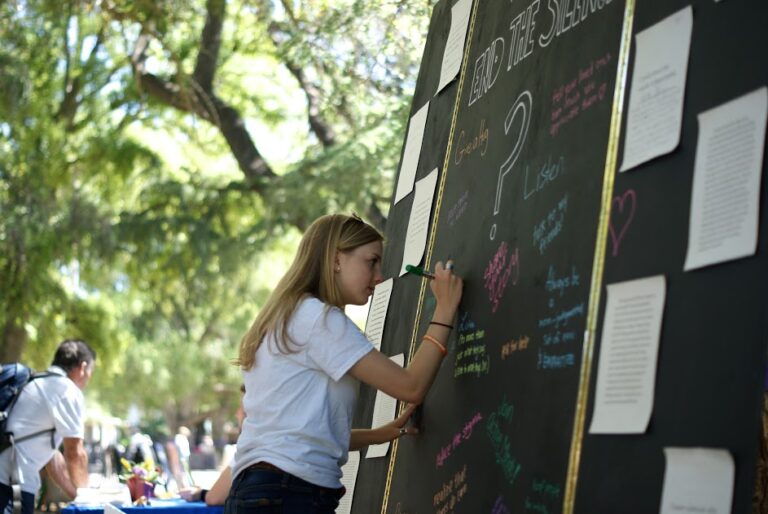
Earlier this week, Active Minds held its first-ever End the Silence Suicide Campaign on the West Quad.

Active Minds is a national organization that focuses on raising awareness about mental health issues and mental illnesses. The organization provides students with information about campus and community resources that could help with any mental health issues.

Last Monday and Tuesday, students working with the organization displayed 1,100 diplomas on the West Quad from 9 a.m. to 5 p.m. The 1,100 diplomas represented the 1,100 college students nationwide who commit suicide each year. Students were encouraged to stop and reflect on these issues with the organization.

“It’s more of a visual representation that we all can speak about and [use to] just reflect on the large number of students who take their lives,” said Anum Idris, a member of the External Affairs Commission.

Members of Active Minds said they intend to break down the stigma of mental illness through events such as the End the Silence campaign. In addition to making this an annual event, the organization plans to attend and organize other events such as Operation Beautiful, an eating disorder awareness campaign, and has been working on developing a mental health curriculum for middle school students in Davis.

Photos by Johnny Ma.