56 F
Davis

Davis, California

Wednesday, December 24, 2025
Home Blog Page 867

The Mondavi Center presents Rita Sahai

On March 8, Indian musician Rita Sahai will be returning to perform at the Mondavi Center. Sahai performs Indian classical vocal music and will be accompanied by other musicians who specialize in traditional Indian instruments.

Sahai specializes in a form of music known as Hindustani which is traditional repertoire from Northern India. Classic Hindustani pieces tend to feature either an instrumental or vocal soloist, tabla (a two-drum instrument), a drone (an instrument that provides a perpetual tone to follow) and a melodic instrument (like a violin or harmonium). Sahai accompanies herself on the tanpura, a traditional drone string instrument.

Sahai was born in India and has performed music since she was a child. Since the age of 9, she studied Hindustani with renowned instructors and eventually came to the U.S. to expand her musical knowledge. She eventually trained under internationally-renowned sarod (traditional Indian string instrument) maestro Ali Akbar Khan, during which time she mastered Seni Allauddin Gharana style — a branch of Indian classic music known for its intricate ragas (a traditional Indian melodic pattern).

The musician has been widely praised by critics for her mastery of Hindustani music and was deemed “Gayan Alankar,” which means “The Jewel of Music.” She has recorded music with bluegrass Grammy award-winning artist Béla Fleck and tours throughout the world offering performances and music classes.

Chair of the UC Davis Department of Ethnomusicology, Henry Spiller, has seen Sahai perform before and expressed in an email interview his awe of the musician.

“Rita is a very natural, quiet, calm presence on stage, and she makes me (and the rest of the audience) feel at ease,” Spiller said. “Yet when she sings, she demands my attention, and I find myself intimately and actively involved in the minutest details of the music: the rich beauty of her voice, her subtle melodic ornamentation, her slow unfolding of the piece’s tonal material. It is exhilarating.”

Sahai will be accompanied by an array of talented musicians. The instruments featured will be harmonium, tabla, slide guitar and viola. Sahai’s performance will mainly showcase her vocal ability. The use of slide guitar with vocal pieces is considered rare. Instrumentalist Vikram Shrowty will be playing the instrument and said he is excited to see how the performance turns out.

“The slide guitar is not usually employed as an accompanying instrument in vocal recitals,” Shrowty said, “so this will be a fun, new combination.”

Kanwaljit Kalsi, a life-long friend of Sahai, will be accompanying her on the harmonium. Interestingly, the harmonium is the one instrument used in traditional Hindustani music that is not original to India. The instrument is German, but blends well with Indian classical vocal music.

“I play harmonium when accompanying Indian singing,” Kalsi said. “It is easy to carry; it sounds sweet and one can sing and play at the same time. You can use it for light music, folk music as well as for classical Indian music.”

Though Sahai is well-versed in many traditional Indian vocal classics, she writes a lot of her own music and will be performing original new pieces on March 8. Rita said she hopes her music will inspire people to learn more about music. She also said she hopes people will emotionally connect to her pieces.

“Indian music is based off emotion,” Sahai said. “I am looking forward to touching everyone’s heart — that’s my goal. Some musicians try to show off, but I just want to touch people’s hearts.”

The performance will take place in the Vanderhoef Studio Theatre in the Mondavi Center. Doors open at 7 p.m. Ticket prices vary. For further ticket and show information, you can visit tickets.mondaviarts.org
Campus Chic: Michelle “Melles” Tran

How to Wear: The Denim Shirt.

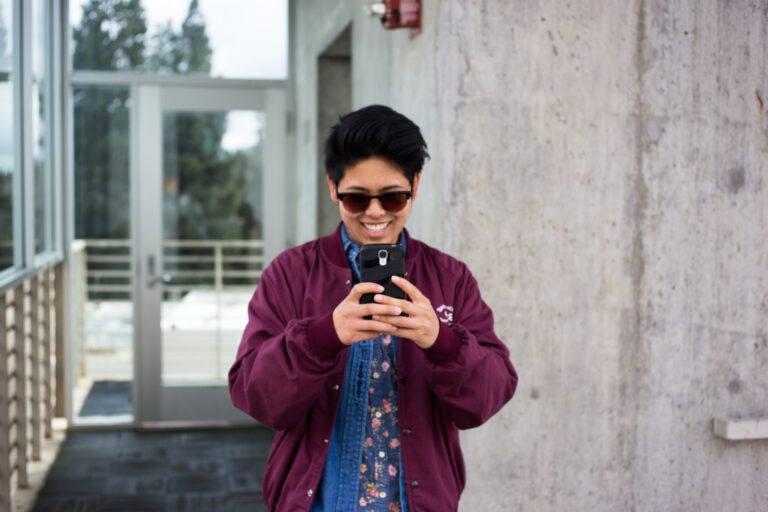
The denim shirt is a classic, staple piece that every girl and guy should own in their wardrobe, but how do we keep it chic without looking like we’re going to some tacky, denim-on-denim rodeo? Fourth-year economics major, Michelle “Melles” Tran, shows MUSE how she rocks a denim top for the spring season for a clean and simple, yet finished and sophisticated look.

First off, ask yourself where you’re going. A denim top is appropriate for both a fun night out with friends and for a professional environment like the office depending on how you coordinate your outfit that day.

For the guys, pairing your denim or chambray top with a clean pair of fitted chinos rolled at the hem and desert boots or boat shoes is an easy way to create a fashion-forward, yet relaxed and comfortable look. Feeling dressy? Throw on a blazer, and yes, you are allowed to do that; however, your blazer MUST have texture. If you have any sort of glossy sheen-like quality to the jacket, it is way too awkward and formal to pair with a denim material. If you’re aiming for an edgier, streetwear-inspired look, pair your denim button-up with a black leather biker jacket or combat boots or even ripped denim jeans for the bottom, just as long as they’re of different washes. You can go lighter on the top and opt for a darker wash on the bottom, but NEVER wear the same wash for both or you’ll be looking like you came straight from the 90s, and not in the good way.

Now for the girls, you have OPTIONS! For spring, think outside of the box and pair a denim shirt of a lighter wash with, for example, white lace shorts or a long flowy pastel maxi dress. Crop tops were a huge trend on the spring/summer 2014 runway, so if you’re feeling bold, pair a denim shirt with a black crop top and maxi skirt or floral leggings or Boho harem pants. If you’re going for a more polished and sophisticated look, match your denim shirt with a fitted blazer, slacks and heels and you’re good to go. Some of my favorite trends this season were the structured pastel separates in the Alexander Wang for Balenciaga collection and the accordion-pleated maxi skirt with metallic detailing in the Proenza Schouler ready-to-wear runway show. Obviously, most of us can’t afford these pieces, but I can already see these trends trickling down to stores like ZARA, H&M, and Forever 21 for a more affordable price that work just as well with a denim shirt than an unimaginative white V-neck or khaki pant.

James’ Notes: Personally, I suggest investing in a high-quality denim shirt as it is, in fact, a classic and will never grow out of style as long as you live. Get creative with your outfits and try different ways in incorporating other trends of the season into your wardrobe and pairing them with your denim shirt and see what you can come up with. Casual or formal, relaxed or polished — the possibilities are endless. Cheers!

Interview with Michelle “Melles” Tran:

1. If you could describe your personal style in three words, what would they be?
Layers, androgynous, practical.

2. Who or what is your style icon?
I get inspired by blogs that involve anything with menswear, sneaker culture, streetwear, workwear, queer fashion or androgynous looking people in the fashion industry. I grew up being really interested into sneakers which lead me to streetwear and photography. Since I’m graduating soon, I look into how I could dress business casual and business professional that would suit me.
To name a few, I get inspired by urban, men’s lifestyle fashion bloggers, like Joshua Kissi and Travis Gumbs, the faces of Street Etiquette, for their thrift store and tailored looks, their usage of ethnic prints, and their ability to combine menswear, streetwear and sneaker culture into their blog. Asian womyn fashion directors Janie Cai, Esther Quek and Jeeyong Kang are womyn who incorporate menswear suits and styles and tailor them to their body with a feminine touch. Often times, they use bright colors and accessorize with matching earrings and bags.
I find myself on Tumblr a lot, relating to queer and/or androgynous looking womyn with their styles as far as hair and how they dress everyday.

3. What are your three must-have items in your wardrobe?
Button-ups, shoes, and chinos.

Button-ups are my go-to. I love dressing in layers and I like to mix and match my button-ups. They’re also versatile because they are pieces you can wear all year-round and depending on the print/material they can be worn for various occasions.
I think shoes make or break an outfit. Two of my favorite everyday shoes are my Nike Multi Flyknit Trainers and my Allen Edmonds McAllisters. My Flyknit Trainers are bright so they pop out amongst my darker tones in my outfit and they are also really lightweight and comfortable. My McAllisters are dress shoes that I bought off Ebay and I love the quality of Allen Edmond’s leather. I appreciate how I can wear them casually but also in business attire.
Chinos are really versatile and once you find the perfect fitting pair, you just get addicted. I find myself really attached to Uniqlo’s chinos and have pairs in various colors to wear casually and in professional settings.

4. What is your favorite accessory and why?
I’m not much into accessories. The only accessories I wear everyday are watches. I enjoy Casio’s retro looking watches. I am currently sporting a Casio Calculator watch and I like how it’s very practical and looks vintage. Yes, I’ll calculate tax, tips, and sales for you. I did my Nutrition 10 midterm using my watch once since I left my calculator at home.

5. Where do you love to shop and why?
I’m a frugal shopper. I try to find deals online from the FrugalMaleFashion, a sub Reddit. There are really cheap online deals that this community discovers and shares. Everytime I’m in my hometown, San Jose, I do a whole day of visiting thrift shops near my area. I also recently discovered the Alameda Antique Fair where it’s similar to a Flea Market but with more unique, vintage and higher quality items. I love the thrill of the search and finding something that I not only appreciate the texture, quality, print and cut of but also the fact that it’s in my size. I’d like to think thrifting and deal hunting is like digging for treasure.

6. What is your most treasured item in your wardrobe?
Speaking about treasures, some of my most expensive and rarest items are my sneakers. My all-time “grails” are my Jordan Royal 1s and my Jordan Black Cement 3s. Jordans get retroed and released every handful of years. These two are the 2001 release and are rare and sought out for now because of it’s quality, age and details. Something I appreciate about sneakers is that you may have the money to buy something, but that doesn’t mean you’ll find it and in your size. As a female sneakerhead, it is difficult to find particular sneakers due to my small shoe size; however, it’s all that much more rewarding when you find your grails in your size and for a price you would want to pay for.

7. How has your style changed since high school?
My style has definitely matured and refined since high school. I was always a bargain shopper but now I’m more aware of quality basics and brand names whenever I thrift. I still incorporate sneakers into my everyday wear but my taste on sneakers has changed for example. Back then I wore bulkier shoes such as Nike Dunk SB, part of Nike’s skateboard sneaker and clothing line. Today, I wear slimming and lighter sneakers like the Nike Roshe or the Nike Janoski.

8. What does fashion mean to you?
Fashion is a way of representing my hobbies, gender expression and daily life.

9. What items would you recommend our readers to incorporate into their wardrobes for the upcoming spring season?
I’m trying to find myself a pair of leather sandals for spring. That’s what’s up.

10. What final tips can you give to our fashion-forward readers?
Be aware of your body and know yourself.

IMG_2063

IMG_2078

IMG_2121

IMG_2128

IMG_2135

Aggie pride shines through in nationally-televised game

0

On March 1, ESPN returned to the UC Davis campus. The 5 p.m. game was broadcast nationally as the Aggies played the UC Santa Barbara Gauchos. Though the game was ultimately a statistical loss as the Gauchos defeated the Aggies, 67-54, the heart and effort that the team put in along with the fans and students who attended left most feeling like the evening was not in vain after all.

The game was not only nationally televised, it was also senior night for the men’s basketball team. The lone senior on the team is Ryan Sypkens, and he was honored before the start of the game to thunderous applause from the more than 5,000 fans who packed the ARC Pavilion to support the Aggies.

“It was a blessing to have a senior night with a packed house, in this environment, on a nationally-televised game,” Sypkens said. “I really felt the support from the community before, and during the game. I cannot thank them enough.”

Pavilion manager and UC Davis alumnus Paul Maginnity worked hard to make this game a reality and liked the response from the fans.

“I was surprised to see students already lined up at the entrance when I arrived in the morning,” Maginnity said. “I was pleased with the amount of energy from the Aggie Pack. I am glad that I was able to experience this and hope that the students had a good time.”

In the midst of the Aggie Pack attending the game was fourth-year political science major Omar Ornelas.

“It was amazing! A group of us went to the tailgate and hung out with all the Aggie fans and you could just tell that everybody was excited for the game,” Ornelas said. “The Aggie Pack was killing it and it was just a good feeling being there. I think we showed ESPN why they should keep coming back.”

Fourth-year economics major Tony Miller attended the game as well and agreed.

“While we may have lost the game, the atmosphere in the Pavilion was a lot of fun,” Miller said. “People were excited for the ESPN game and it showed before and after the game.”

The enthusiasm for the game was felt and seen on campus in the days leading up to it as well.

“I saw people getting pumped up for it a lot on my way to the gym,” third-year computer science and engineering Kevin Parry said.

It seems that UC Davis’ Aggie pride was heard again as the final two games of the season for the men’s basketball team will be broadcast to mass audiences as well. On March 6, ESPN3 will stream the game at UC Riverside live across the country, and on March 8, Fox Sports Prime Ticket will show the game at UC Irvine regionally throughout Southern California.

These televised games are indicative of a basketball program on the rise and of a fanbase hungry for sustained success. As the team develops, so too will the opportunities to showcase the school on a national level.


SB 41 veto: Faulty reasoning

1

On Feb. 24, ASUCD President Carly Sandstrom vetoed Senate Bill #41 (SB 41), a measure that passed through senate with a 10-0-2 vote. The bill called for more ASUCD transparency by amending the bylaws to somewhat mirror California’s Brown Act of 2003, which calls for open meetings for local government bodies. In the case of SB 41, all meetings of the ASUCD senate and its subordinate bodies would have to be announced, with an agenda, 48 hours prior to them taking place.

In her veto message, Sandstrom cited logistical issues with being able to publish agendas on time for Monday Internal Affairs Commission meetings, because the Student Government Administrative Office is closed on Fridays. Sandstrom also vetoed the bill because she took issue with the use of the word “crippling” in it, a word she called “politically incorrect.”

If Sandstrom has issues with the wording of the bill, why would she wait until after senate passed it to bring up her concerns? Senate had discussed SB 41 for weeks before passing it, amending the language throughout the process. You would think our president would be aware of pending legislation before it hits her desk.

Additionally, senate passed SB 41 — not even one senator voted against it. We’re all for checks and balances, but vetoing a bill passed almost unanimously through senate is irresponsible and wholly unrepresentative of senate and its constituents: us, the UC Davis students. The fact that our student body president vetoed a resolution that would make ASUCD more transparent as a whole is telling within itself and is downright embarrassing.

The issue of transparency is not confined within senate. During the last two weeks, both Ballot Measure 1’s supporters and opponents have attempted to obtain specific election data from ASUCD Election Committee Chair Eric Renslo. They asked for a breakdown of the votes by day, especially on the first day of elections, Feb. 18, when there were initial issues with voters accidentally abstaining from voting on Measure 1. Renslo, through Creative Media, released only the basic data from the election — the number of votes for each senate and executive ticket candidate and the number of yes, no and abstention votes for Ballot Measure 1.

When asked, Renslo refused to release further information, referencing the ASUCD bylaws and constitution and claiming the lack of precedence. Arguing that something cannot be accomplished because it is not specifically addressed in the bylaws is ridiculous. Having no precedent for something does not imply that one cannot be set.

ASUCD has taken steps toward making itself more transparent and accountable — SB 41 is evidence of that. We appreciate that the current senators have tried to enact legislation to promote transparency, but we hope that the next table and administration will be more successful.


In Transition: C-C-Cool Stuff

0

Being a student is hard. It’s a long, difficult process that can feel isolating and even impossible at times.

But the glass isn’t always half empty!

There are a ton of great things about being a transfer student (and a UC Davis student in general) that I’ve discovered over the past year and a half. Knowing that I’ll be graduating in June, I feel like I have an obligation to pass on my wisdom. So here you go!

Once I transferred here, I was struck by an odd jealousy. Sure, it was cool to finally be a UC Davis student, but I still felt like I was missing out on a lot.

It can be really hard to meet people as a transfer student, and one of the things I was most jealous of is that I never got to live in the dorms.

Like I said, it was an odd jealousy. To me, there’s just nothing like being thrown into that “college” experience by learning to cook ramen in a coffee pot and packing your entire closet into a room smaller than your shower. I mean, where else can you get that kind of knowledge?

Oh and the Dining Commons (DC)! Again, I know — I’ve heard it a thousand times. It’s weird that I’m jealous I never had swipes. But think about it … having access to unlimited food that you don’t have to cook or clean up yourself? What’s better than that?

But as much as I feel like I missed out on those key experiences, transferring in also gave me a lot of unique opportunities.

It was also super cool to be able to have my car with me 24/7. I’ve never really experienced a time that I didn’t have my car — I bought it on my own when I was 16 and have had it ever since — so to find out that people had to bike to the grocery store or take a bus to Target was incredibly foreign to me.

It was just so nice to be able to drive around to anywhere I needed, especially home.

Between a few bad cases of strep throat my first few months in Davis, dislocating a rib after multiple back spasms and missing my puppy more than I could bear, having that privilege was more wonderful than I have words for.

And because I was an older student, I felt like I already had a good grip on balancing my school and work load. Yes, my UC Davis classes were much tougher than any class I took at my community college, but still. I felt like I had all the tools I needed to navigate my way through tough classes and nine hour shifts.

I had also had the chance to live on my own before coming to UC Davis. Balancing a budget with a full-time school schedule and a full-time work load at 20 years old was an incredibly powerful, and irreplaceable experience.

I’d also like to point out how great it was coming into college as a 21-year-old.

I mean, is there really any better way to transition into adult life than taking a midterm after your first mojito night? Talk about grace under pressure, preparing oneself under non-ideal circumstances, and learning from your mistakes — enjoying a pitcher of that sweet, sugary mint deliciousness that you later discover is your worst enemy.

While mojito night and I may have a love-hate relationship, I will still miss it. There are just some things in Davis that you can’t find anywhere else. Like those DC cookies. I’ve said it before and I’ll say it again — I will forever miss those DC cookies. There’s just nothing like them.

Aside from that, one of my biggest fears of graduating is that I will never again live in a place that has an In-N-Out, Chipotle, Habit, Mikuni’s, Black Bear Diner, Burgers and Brew and a Dutch Bros. pretty much walking distance from my house.

And those quirky little Davis things that you just can’t find anywhere else in the world: egg heads, the Arboretum, crazy bikers and DC cookies — I know I already listed those, but I just can’t help myself. They’re too good!

Regardless of whether you’re a freshman or a graduating senior, take the time to appreciate all this cool stuff, and DEFINITELY swipe me in if we ever get the chance.

If you haven’t had the chance to experience some of these things yet, email SARAH MARSHALL at smmarshall@ucdavis.edu to hear more!


Watts Legal: March 6, 2014

0

Question: I read online that Ellen Degeneres doesn’t own the selfie she took at the Oscars, even though I think she used her own phone. That got me to wondering: Who owns the pictures on my iPhone? If I post on Facebook a photo of my friends that I took with my iPhone, can one of my friends get me to take it down?

— F.V.
Davis, CA


Answer: Any work of art put in a fixed medium of expression is a copyrightable work. The copyright belongs to the author. When a photograph is taken, the author is usually the photographer. During the creation of a photograph, the photographer is the one who put the artistic effort into it by choosing the white balance, or the angle of the shot, or the timing. The photographer is the “artist,” even if this particular photograph required very little actual effort.

Ellen does not own her selfie — or at least the copyright in her selfie — because she was not the photographer. It was actor Bradley Cooper, not Ellen, who stretched out his arm and snapped the most-tweeted photo of all time. Since he used the camera, he owns the copyright unless certain exceptions apply.

Indeed, if an exception applies, the internet ma­­y be wrong about Ellen. A photographer does not own the copyright to his work if he signed over his rights to somebody else like his employer. Photographers for the Associated Press or Reuters, for instance, probably sign employment contracts agreeing that their photographs are works for hire, which means the copyrights belong to the people paying their salaries. If Bradley Cooper signed an agreement to take the photograph for Ellen, and signed a contract to that effect, Ellen, not Cooper, would own the selfie.

And because of a court ruling that came out a couple weeks ago, there’s even the possibility that any actor in the photo could own a small piece of the copyright. In Garcia v. Google, the Ninth Circuit considered whether an actress who played a bit role in the film “Innocence of Muslims” owned a copyright in her performance.

(She wanted the film taken offline; she’d been receiving death threats since the film was dubbed to make it look like she was calling the prophet Mohammed a child molester.)

The director of Innocence of Muslims never made the actress sign an agreement transferring ownership of her performance to him, so the court decided that her performance in the film was an independent work of authorship, and she owned a copyright in her portion of the film. The court ordered Google to take down all copies of the film from YouTube, though emphasized that the takedown order did not apply to versions of the film without the actress’s performance.

Based on that decision, one of the actors appearing in the Oscar selfie photo could argue that they own a copyright in their “performance” — after all, they posed! — and tell Twitter to take the photo down. Twitter would probably fight that in court (and would probably win, since posing for a photo is less of a performance than acting), but it’s not outside the realm of possibility.

If you asked me this question a month ago, I would have said your friends do not own copyrights in photographs you took of them. After Garcia v. Google, it’s a little unclear.

Even if your friends did file a lawsuit against you, they would not be able to win much money unless they took the time (and money) to register the copyright with the federal government. Although an author automatically owns a copyright in every work he creates, he cannot get much money in a lawsuit unless he has paid registration fees to the U.S. Copyright Office. That takes effort that the average college student is probably unwilling to put in.


Daniel is a Sacramento attorney, former Davis City Council candidate and graduate of UC Davis School of Law. He’ll answer questions sent to him at governorwatts@gmail.com or tweeted to @governorwatts.

News in Brief: UC Davis students participate in March in March

0

On March 3, a handful of ASUCD senators, along with students from ASUCD Lobby Corps and University Affairs participated in the March in March in Sacramento. The event began at Raley Field in West Sacramento, where students from all over California met and then marched to the State Capitol to advocate for legislation regarding higher education. Upon reaching the capitol building, students rallied and listened to speeches by California Assembly members Paul Fong and Rocky Chavez in addition to community college students and faculty members.

The Student Senate of California Community Colleges organized the march to unite students at community colleges and other state universities and to instill motivation in students to take action for higher education.

Harley Litzelman, a first-year sociology and communication double major and the current legislative aid for Lobby Corps, attended and helped organize the event. When external director of Lobby Corps and third-year international relations major Sumeeta Ghai  ran for ASUCD vice president, Litzelman temporarily held the position and aided with the legislative aspects of Lobby Corps.

Litzelman described the main motives for UC Davis organizations’ participation in March in March.

“We want to expand Lobby Corps from its traditional status as elite students in suits marching the halls of the Capitol and briefly meeting with legislative staffers,” Litzelman said. “We still want to be lobbyists, but we also want to be activists, organizers, protestors and most importantly, advocates.”

Adina Kuncz, a third-year political science major, also helped organize March in March as a member of Lobby Corps. Kuncz previously attended Santa Barbara City College, where she served as a senator and attended the march last year as well.

“We needed to show that all students across California unify on their concerns for higher education, regardless if you’re from a CC, CSU or UC,” Kuncz said.

The march demonstrated the effort and advocacy for issues dealing with higher education, such as high costs and rising class sizes, that our California state legislature currently faces. Students were able to express their advocacy for more accessible higher education during the entirety of the march and influence ideas on state legislation.

“The quality of policy affecting community colleges is inextricably bound to the quality of policy affecting four-year universities,” Litzelman said. “Community college policy is higher education policy, so it is only natural for us to stand in solidarity with them.”


— Laura Fitzgerald


Latin Americanisms: The Narcocorrido

0

How many times have hip-hop aficionados been characterized as lovers of thug music? Answer: many times. There is an undeniable racialization of the rap scene in the U.S. that has been an ongoing project for certain media and political entities since Rapper’s Delight first hit the airwaves and flooded the music world with its inner-city funk.

The flip side to this this dominant criminal narrativization of rap as a musical medium has been its popularity exploding in parts of the country which by their very makeup seem antithetical to its urban soul. White suburban kids have become a prime consumer base for the latest in hip-hop, almost single-handedly (have you been to a hip-hop concert lately?) spurring on new artists like Danny Brown, Action Bronson and Freddie “Gangsta” Gibbs, among others, to the forefront of 2014 hip-hop.

Now you might ask yourself what if anything does this has to do with Latin America? After all, it is the focus of this column. I’d like to let Trap artist Gucci Mane answer that question:

“All I wanna be is El Chapo/ Fully automatic slice your auto/ All I wanna be is El Chapo/ Three billion dollars in pesos/ All I wanna be is El Chapo/ And when I meet him I’mma tell him bravo.”

This song is one of Gucci Mane’s most realistic songs, in that, yes, he probably wants nothing more than to be El Chapo (other Gucci Mane fans knowing his personality would agree), and that it captures the sort of ripped-from-the-headlines aesthetic that is the lifeblood of that most Mexican of artforms: the corrido. The corrido is simply stated, a musical ballad which recounts a popular story, often with a criminal tale in mind, at times coupled with the self-effacing swagger you might expect from a rap song, and culminating in what some see as a dangerously subversive message.

One of the newest corridos to hit the Mexican airwaves (not everywhere since certain states have outright banned the airing of corridos) is La Captura del Chapo (El Chapo’s Capture). It is already being heard through booming sound systems on streets in Mexico’s northern states.

The arguments often levied against narcocorridos (to be seen as separate from the more popular, and to a certain extent more benign category of corrodes — think rap vs. gangsta rap) by certain sectors of Mexican society closely resemble the charges against gangsta rap in the U.S. This critique finds its basis in what can only be described as a misdirected moral panic. The main issue many have with narcocorridos as a subgenre of Mexican music is the idea that they do one of two things: they either glorify the violence that is found in their lyrics, or they directly participate in perpetuating this violence in Mexican society.

There does however seem to be a racial — or national for that matter — double standard at work in the pop culture sphere. Criminally inclined songs, be they murder ballads or heist tunes, have been part and parcel of white American music for generations. Many a country artist has staked his career on narrating the criminal exploits of others. Johnny Cash, Willie Nelson, George Jones; these, and many other artists, have seen fit to recount the lives and actions of the American underbelly’s inhabitants. And yet, rather than be lambasted as enablers, they have been heralded as storytellers, branded as bards of the little man. All claims to which I sign onto.

The reality is that music as art — and precisely because it is art — is intrinsically tied to the political standing of its social and physical enclosure. What I mean by this is that an artist of any stripe cannot be faulted for creating something that represents the reality of his or her community. In fact, such acts should be applauded in an era of increasingly manufactured corporate pop music which would seem to have no interest in relating to its listeners or the lives they lead.

Life is bleak, dark and murderous. Not all the time but certainly some of the time. Why then seek to hide this ugliest of truths? Why not let our artists confront it as they so choose, and let their listeners and fans decide what does or doesn’t pass the litmus test of musical reality.


If you, like JORGE JUAREZ would also like nothing more than to see Gucci Mane take a stab (not a literal stab moral panickers) at a Corridos-only album, send your ideas for making this a reality to jnjuarez@ucdavis.edu.

Shakespeare-On-a-Shoestring presents The Merchant of Venice

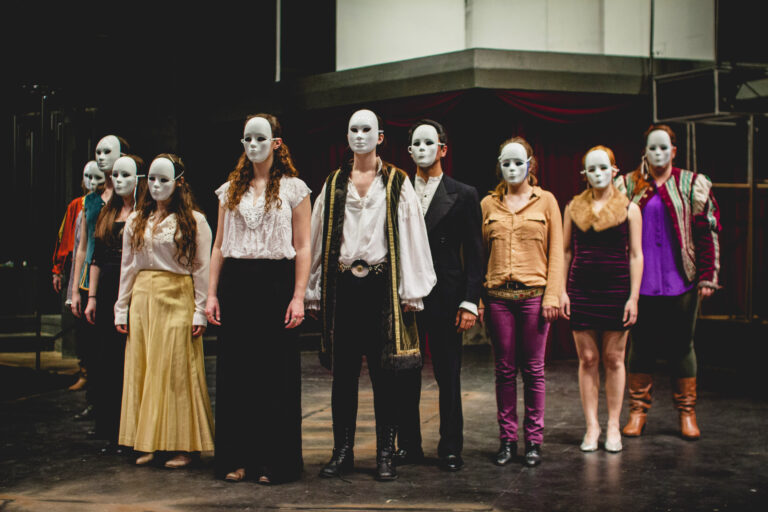
Shakespeare-On-a-Shoestring (SOS), a no-budget troupe in the Department of Theatre and Dance, will present The Merchant of Venice from March 13 to 16.

The play is directed by Bella Merlin, a UC Davis theatre and dance professor. Merlin came up with the idea of the Shoestring series, which minimizes the use of costumes and aims to maximize drama and audience involvement, shortly after she began to work at UC Davis.

“I arrived in 2008 when the financial crisis was happening, and production budgets were being hacked,” Merlin said. “I wanted to tell the world that actors could tell any story despite the budget, so I made a series that deliberately had no budget.”

According to Merlin, the idea for the series came about by accident.

“I was at a conference in the Mondavi two years ago and we were talking about different facilities on campus,” Merlin said. “I realized that with the Wyatt [Pavilion] Theatre, we had a facility that was perfect for Shakespeare and it just came out of my mouth in the midst of this conference. At that point, I realized it was crazy that we hadn’t done something with it already.”

This particular staging of The Merchant of Venice features a minimal amount of props and almost no set decorations. Callie Heyer, a fourth-year dramatic art major who plays Bassanio, described this as a rewarding challenge on the actors.

“I think it’s really given the actors the forefront,” Heyer said. “We’re the ones who bring the color and excitement to the show in the way other shows compensate for by using sets and lighting.”

Except for the actor playing Shylock, the entire cast in this production is female. According to Merlin, this was unintentional.

“I initially wanted a multicultural cast, but Grapes of Wrath was running at the same time,” Merlin said. “That play is very realistic and thus needed men to be men and women to be women. I didn’t need that so I could cast whoever I wanted based on their performance.”

Pablo Lopez, a first-year Chicano studies and dramatic art double major who plays Shylock, expressed how the casting situation helps push him to embrace his role.

“As an actor, I feel no difference, but it allows me to imagine what it’s like to be entirely different, to be the one percent who are pushed aside,” Lopez said. “It allows my imagination to work. Also, theatre is mostly women and I’ve grown accustomed to being around women anyway. I was the only guy in my freshman seminar last quarter.”

Wendy Wyatt-Mair, a fourth-year dramatic art and economics double major who plays Portia, enjoyed working with Merlin as an educational experience.

“What’s great about working with her is that she’s the acting professor here, so she already knows most of us very well,” Wyatt-Mair said. “She had an acting intensive course over the summer — 10 hours a day for two weeks — so it’s nice to have a director who knows your work, your process and what you need to work on. She’s a director but she takes moments to teach us and work with us rather than just criticizing.”

Merlin said that this show aims to be accessible for most audiences.

“If anybody has never seen any Shakespeare before, this is a good entry point because we focus so much on trying to keep the story clear,” Merlin said. “The audience is the final, crucial player. We can’t do it without them.”

The Merchant of Venice will be performed at the Wyatt Pavilion on March 13, 14 and 15 at 7:30 p.m. and on March 16 at 2:30 p.m. Admission is free.


Literary Lessons: Bathroom Reading

0

I have heard through the grapevine that the people who run UC Davis are pretty smart. In order to manage various student academic websites, organize class schedules and keep havoc from wreaking everywhere, they maintain a very well-organized system. One would think that with this kind of organization, there might be at least some attention paid to the basic necessities. I’m not talking about fancy golden fountains with water coming out of the mouths of nymphs. No, I’m talking about toilets. For whatever reason, UC Davis just hasn’t been able to nail it in the sanitation department.

There are a few successes on campus, but all in all the restrooms are a major wreck. I, like everyone else, need water. And then, after I consume this water, I need to do a little dance to get it out the other side. Personally, I prefer not to do this dance in public, but considering my last few experiences, the bushes are looking pretty hospitable. For the record, I am a girl, and I cannot comment on the men’s bathrooms. So bros, this article might not perfectly encapsulate your struggle, or you might be able to relate. I have no idea. Boys’ bathrooms are like the pinnacle of mystery and coolness, and one day I hope to find myself nervously locked in one with Johnny Depp after a mystifying first encounter.

In any case, I thought a creative way to discuss my disdain for UC Davis bathrooms might be to compare each one with a book. For example, take Wellman. When I use the restroom there, especially the one on the first floor, it reminds me of reading Animal Farm. It’s scary, unpleasant and does not end well. I think that whenever a girl spontaneously gets her period, it always seems to happen in Wellman — there is often a lot of blood. Also, people like to pee on the toilet seat. I don’t know why. Please everyone, stop doing this. Please. I’m really tired of sitting on other peoples’ urine. Just like the pigs in Animal Farm steal the dignity of the other farm animals, so does Wellman take my dignity every time I have to use paper towels as toilet paper because I know for a fact there will not be toilet paper in the stall. I just imagine some sinister Bathroom God watching from above, twiddling his thumbs and scoffing, “All bathrooms are equal, but some bathrooms are more equal than others.” It’s just a dark and hostile experience.

Second only to Wellman comes the CoHo bathroom. This bathroom is for all the people who don’t know about all the secret bathrooms or don’t have enough time to get to one. It’s like a book off a high school reading list. It’s a good starting point and perfect for people who aren’t all that curious about reading or just don’t have enough time to read (but let’s be honest: the only legitimate reason you have to not read is if you’re in training to go and populate Mars). The CoHo is also incredibly convenient. It’s where shit gets done, literally. People drink coffee, coffee does magic, magic gets disposed. It all happens in the undersized feeding hole we call the CoHo.

Somewhat a step above CoHo bathrooms are Giedt bathrooms. Giedt has all the building blocks of a great bathroom — lots of stalls, good cleaning efforts, well stocked. However, with all the high-tech work that was put into that building, I can’t understand one thing: why can’t the stalls lock? I say this with the risk of confusing everyone because maybe they do lock very well, and I just can’t figure it out. However, I am pretty sure that most of the stalls cannot lock! I just don’t understand! It could be the ultimate bathroom experience! It’s like Sartre’s Being and Nothingness. That could be an amazing book. It’s a good idea. However, it neither makes sense, nor can be completed in a lifetime. Just like the girl who understands the locks at Giedt, an existentialist is twiddling his mustache at me for that comment. But trust me, even Sartre doesn’t understand that book. When you ponder the consciousness of a chair, I lose my trust. Giedt, like Sartre, needs to figure out how to regain my trust.

And thusly I present to you the bathrooms of UC Davis. I recommend to the board of people who decide important matters that we can add a new facet to the University Reading List (which I think is a thing that exists). We should have copies of Animal Farm at Wellman, a copy of Romeo and Juliet at the CoHo and Being and Nothingness at Geidt. And then, instead of implementing that idea, they can figure out why a university as bureaucratically complex as this cannot even provide appropriate sanitation.


To discuss the disgusting with EREN KAVVAS, you should email her at ebkavvas@ucdavis.edu. For more in-depth bathroom reviews, check out updavis.com.


Arts Week March 6, 2014

MUSIC

“Innovation Greets Tradition” by Rita Sahai
March 8, 7 p.m., $8 children and students, $20 adults
Vanderhoef Studio Theatre, Mondavi Center
Presented by the UC Davis Department of Music, Rita Sahai will be performing a Hindustani classical vocal concert where she will be accompanied by the table, harmonium, viola and slide guitar. Sahai is a talented composer and performer whose vocal talents have led to recording vocals for the Grammy Award-winning bluegrass artist Béla Fleck.

Delbert Bump SA-ZIL
March 7, 7 p.m., free
John Natsoulas Gallery, 521 First St.
Pianist and composer Delbert Bump will be presenting a new style of music called “SA-ZIL” that combines aspects of Salsa and Brazilian, creating a danceable combination of music.

THEATER

South Pacific
March 7 and March 8 at 8:15 p.m., prices vary
Davis Musical Theatre Company, 607 Pena Drive
The Davis Musical Theatre Company presents weekend showings of the Rodgers and Hammerstein classic musical South Pacific, a tale of war, love and oppression on a tropical island during World War II.

LITERATURE AND POETRY

The Poetry Night Reading Series Presents Camille Norton
March 6, 8 p.m., free
John Natsoulas Gallery, 521 First St.
Widely read and award-winning poet Camille Norton will be performing at the John Natsoulas Gallery. Following Norton at 9 p.m., the open mic will begin with The Spokes, the only all-female a capella group at UC Davis who has toured extensively throughout California.

ART

Ann Agee: Visiting Art Lecture Series
March 6, 4:30 p.m., free
Art Annex, Main Room (Room 107)
The artist Ann Agee, whose work includes installations in the Brooklyn Museum of Art and the Philadelphia Museum of Arts, will be lecturing on campus. The ceramic artist and sculptor is a Guggenheim Fellowship recipient.

Davis Honors Challenge, Integrated Studies Honors Program to combine

0

 The two bodies of the UC Davis University Honors Program (UHP) on campus have developed a plan to become one program in Fall Quarter 2014. The Davis Honors Challenge (DHC) and the Integrated Studies Honors Program (ISHP) will combine into one singular UHP.

Current students enrolled in UHP will have the option to remain in their respective program, but students admitted this fall will be accepted into the new UHP.

Ari Kelman, the University Honors Program Director, said that after becoming the director, he checked in with students and faculty of both DHC and ISHP to evaluate the status of the programs. Although both were running fairly effectively, Kelman said that those involved with the programs were concerned about the UHP being divided.

“Having two distinct honors programs includes a lot of inter-program rivalry,” Kelman said. “DHC students thought students in ISHP are getting more opportunities, and students in ISHP thought the DHC students had more flexibility.”

According to Kelman, students who were recruited into one honors program would question why they were not in the other, and he said the combination of the two programs will reduce confusion and create more interaction between all UHP students.

Janet Sandoval-Reynoso, a first year international relations and linguistics double major and DHC student, said students in their respective programs feel somewhat isolated from others in the program.

“We haven’t really had contact with the other students,” Sandoval-Reynoso said. “Anything that keeps students connected is a good idea.”

According to Gideon Cohn-Postar, a DHC Research Analyst and previous DHC student, students in each program had different access to academic opportunities. He said this issue was due to honors students from different programs not being able to take the same seminars.

“Great students aren’t interacting with each other,” Cohn-Postar said. “We want to make sure students have access to all faculty members.”

Another difference between the two programs is the admittance procedures. Students can join ISHP solely by invitation, while any freshman, second-year or transfer student who earns and maintains a 3.25 GPA can apply to DHC. With the new UHP, any first-year, second-year or transfer student can apply, and the same amount of incoming students will be admitted to the program as were let into both programs previously.

The curriculum for the honors program will also be changed. Kelman said that many students struggle with taking honors seminars because these classes do not count for general education (GE) credits and can be used to fulfill requirements for students’ majors.

“It was really challenging for students to be told that time they could normally be using for required classes had to be used for Honors requirements,” Kelman said. “Students would suggest to faculty members that the classes shouldn’t be as challenging for this reason.”

The new plan involves classes that will count towards honors students’ GE or major requirements, which will allow the classes to be challenging and also contribute to UHP students’ degrees. By the end of their second year, students are expected to complete a total of 26 units in required honors courses. By the end of their third year, students will complete a community service project that can include helping out a cause they believe in or become a peer advisor or tutor. By the end of their fourth year, students will have completed a Capstone project that can be lab research, an honors thesis or a community service project.

Kalvin Zee, a second-year neurobiology, physiology and behavior major and DHC student, said that the change in courses is a good idea.

“Right now, the classes are skewed towards hard sciences, which makes it difficult for students who want to take classes in the softer sciences,” Zee said.

The plan still needs approval from the academic senate, which is currently reviewing it. If approved, the plan will go into effect this fall, and incoming freshman will be accepted into the University Honors Program, rather than the DHC or ISHP specifically.

UC Davis to compete in 2015 Solar Decathlon

In February 2014, UC Davis was chosen by the Department of Energy to build a solar-powered home to compete in a Solar Decathlon in UC Irvine during October 2015.

UC Davis was chosen as one of the 20 universities to compete in the competition. The competition is also featuring other top research universities such as Stanford, Yale and nearby rival school, Sacramento State.

“We don’t know exactly how the Department of Energy made its final selections. They have a very rigorous proposal process,” said Frank Loge, principal investigator for the team and a professor in the Department of Environmental and Civil Engineering. “We … pulled in a remarkable team of interested students and faculty from across many disciplines at UC Davis to prepare a proposal … and we told an interesting story while we did it.”

Although the team was confident, they were as surprised as anyone when they heard the news. Loge even admitted that the team got started late in the proposal process. The team was able to successfully convey its research in the proposal with examples of zero-net energy usefulness.

“I believe we were selected … on the merits of the proposal, which has a clear audience and need. While most energy-efficient housing is aimed at high or mid-market, ours is aimed at those that need it the most,” said Brett Synder, an assistant professor in the Department of Design.

The Department of Design was instrumental in putting together the design proposal. They had several meetings that brought together people across the University from landscape architecture, social sciences, engineering and transportation.

“The University is obviously a big part of our efforts. We will run much of our operations through the Energy Efficiency Center innovation hub in the West Village, and look forward to interacting with campus communications and development staff especially to help make this a win that all of UC Davis can be proud of,” Loge said. “Obviously, the biggest resource is our student body, and for now, it’s a wealth of talent — we’re still putting together the structures we need to harness all that excellence and enthusiasm and put it to good use.”

The project generated a lot of interest on campus. Currently the team is looking for the most motivated students that will bring their skills, background and curiosity to the table for a true collaborative experience.

“Because this is such a complex project, we’re expecting faculty to choose the students they feel best suited to their specialties,” Loge said. “That process is ongoing.”

Faculty will start incorporating class projects within courses to contribute. Some engineering classes can require students to work on the project.

“There are three ways students can participate. For instance, there could be some engineering classes which require student[s] to choose between an array of options to contribute to the project. Second, there can be an internship for course credit of three to four units; third, students can be involved with certain elements of the team. They can volunteer, fundraise and help put up a SmartSite together and a listserv [for] communication within the team,” said Ben Finkelor, executive director of the Energy Efficiency Center.

Daniel Sperling, interim director of the UC Davis Energy Institute, believes the solar project will fight societal challenges such as climate change and energy efficiency.

“Solar energy replaces fossil energy (natural gas, petroleum, coal) and thus largely eliminates emissions of greenhouse gases,” Sperling said. “For example, West Village itself is already nearly zero-net energy. State laws require it for future buildings. All it requires is better efficiency and more use of renewable energy which is clean, non-polluting and good for the environment.”

The project will result in a working prototype house that will find a permanent home on campus, and be accepted in the larger marketplace. Since the home must be shipped to Irvine, it must be put into containers and reassembled.

“Our initial concept was to ship the house in parts through containers as a starting point. We will reconstruct the home in Irvine using rails, and this laborious process will involve using storage containers, barges and rail cars, but it is structurally sound,” Finkelor said.

The team also looks at this as an opportunity to showcase how great UC Davis is as a school.

“We battle societal challenges. We may not get recognition because we are not an athletic powerhouse like Stanford or UCLA. However, we solve world problems with our agricultural school. We are doing big things like figuring out how to address climate change. Every student should feel like this is the opportunity to get engaged,” Finkelor said.

The team has communicated with some local and regional housing providers, and they have expressed a keen interest in what we’re hoping to accomplish. Statewide, there is a target for 100 percent of new homes to be zero energy efficient by 2020.

“We look forward to bringing those goals into reality using technologies and techniques that hold a modular home to a tight price point,” Loge said. “Succeeding will make it harder for anyone to complain that it can’t be done.”

News in Brief: Delayed Fifth Street construction to be completed early May

0

City of Davis officials said that the Fifth Street construction will be completed as soon as early May 2014. The project was initially projected to be completed January 2014, but has experienced a few setbacks.

Vanguard Construction Services of Livermore began working in early October 2013 with the intention to make biking and pedestrian activity along Fifth Street safer.

They will be adding bike lanes between A and L streets. They will also be adding a dual left-turn lane and turn pockets, upgrading and adding access ramps in compliance with the Americans Disabilities Act and adding new traffic lights and pedestrian activated traffic lights at the C and J street intersections.

To date, they have completed much of the work, said Roxanne Namazi, City of Davis senior civil engineer in the Public Works Department.

 “The majority of the concrete flatwork including upgrading the access ramps and sidewalks — adjacent to the ramps — is completed.  Foundations for the signal poles, pedestrian signals and street lights have been poured. The conduits for the street lights and traffic signals have been installed,” Namazi said.

In its entirety, the total project is projected to cost $1.9 million, according to Namazi. It will be payed for in part by a $836,000 Sacramento Area Council of Government grant, Davis transportation and transportation roads funds, $200,000 from a Highway Safety Improvement program grant and $50,000 from Community Development Block Grant funds.

The principal reasons for the delay were the halting of construction work on Thanksgiving and New Year’s in order to minimize “public disruption” over the holidays. Construction is also waiting for traffic lights to arrive.

“Street lights are scheduled to be delivered within the next few weeks. As soon as street lights are delivered they will be installed — they will not be energized until we have PG&E’s service points. Signal poles and equipment, Econolite, are scheduled to be delivered early April. Signal installation and striping work will be done during the month of April,” Namazi said.

The street lights are to upgrade traffic signals on A, B and L streets. They will be adding additional eight-phase signals at the intersections of F and G streets and a fire station access traffic light at the E Street intersection.


— Gabriella Hamlett

Guest Opinion: Re: Recycling

0

A few years ago, I walked into a Costco which had its tire section at the entrance when a tire came in. As I curiously walked closer to the tires (because hey, I’ve never been to a tire shop before), I was shortly greeted by a noxious odor from the stack of tires, and I walked away.

These tires clearly emitted some serious volatile organic compounds, or VOCs for short, many of which are of concern in the non-toxic side of environmental activism. Yet with a brief visit to many green stores both online and brick-and-mortar, one can encounter objects made from recycled tires, inner tubes and bicycle tires. These objects range from purses, belts, coasters, bags, pencils, and so forth. Car tires have also been recycled into pavement, gym mats, cushioning substrate for playgrounds and as building material in experimental or DIY sustainable housing.

Is it possible that recycling, while normally a very good environmental technology, tends to supercede the health and safety side of being “green”? Tires are not made of natural rubber of course: they are made of synthetic vulcanized rubber made from plenty of mystery synthetic chemicals (something I’d never want close to my skin as a bag, and something I hope wouldn’t pollute the ground).

If you look up online the words “BPA” and “receipt,” a plethora of articles will come up about BPA being found in receipts, sometimes in amounts larger than in certain plastics.  According to some articles, people who work at cash registers have higher BPA levels, and that BPA has been shown to migrate into the skin even deeper than soap and water will go.

There is now strong advice to stop recycling receipts, as BPA has been found in recycled paper products such as pizza boxes and toilet paper. Most places here on campus let you refuse a receipt, but in the bookstore you may need it for a return. During very busy times of the quarter they are checked, and large bins of receipts often result. Even the BPA-free receipts from the Food Co-op may contain another bisphenol chemical like BPB or BPS.

Hopefully, environmental organizations are already aware of this and don’t recycle these products, but the people I asked in the bookstore weren’t sure. If they are recycling receipts, they should highly consider disposing of them differently, and the campus should switch to receipts without any bisphenol chemicals.

What other things should we think a little bit more before reusing, upcycling or recycling?  Many green product stores offer Christmas ornaments, clipboards and other items made from the green motherboards taken from old computers. The motherboards are removed and stripped until they become green boards with funky line patterns and holes on them. I have read plenty of articles about dangerous fire retardant chemicals in computer parts including the motherboards; should these things get a free pass as everyday objects one would touch frequently?

Other products that you should think twice about: recycled wood may contain mystery chemicals used to treat it from bugs and mold. I have seen snack bowls made from vinyl records in eco boutiques — not only is the plastic not food-safe, but it’s vinyl, one of the more questionable plastics. Many upholstery swatches in the Aggie reuse store also have flame retardants. Some people grow plants for food in plastic or newspaper containers. Furthermore we need to think about the inks, adhesives and other substances that hitch along with the paper, plastic and metal products that go in the recycling bin.

Of course I am not saying we shouldn’t recycle or upcycle, just that we be mindful of what and how we do it. A record bowl is a nice decoration, but to eat out of it is another matter; newspaper for paper mâché is fine, but for composting or planting we need to consider pollutants that can get into our food supply or soil. We need to think about the safety of recycled water when it comes to our food supply and surrounding environment.

There is so much to consider. However, it can be quite a mental challenge, and I understand that we have to accept a certain level of risk; otherwise, we’d live inside hazmat suits. I hope there can one day be a better conversation about how and what we recycle.

KATHERINE LIU is a third-year psychology major who can be reached at katliu@ucdavis.edu.