54.1 F
Davis

Davis, California

Tuesday, December 23, 2025
Home Blog Page 881

Police Briefs: 1/21-1/25

Tuesday 1/21
Expensive to boot
On Anderson Road, someone wired $1,200 to a known suspect for shoes that were never shipped.

Thursday 1/23
Pool party
An intoxicated guy on L Street was drinking a beer while sitting in a pool of his own vomit.

Eggsposed
Someone caught a group of people on film egging a property on Michelangelo Place.

Saturday 1/25
Miscellmania
On West Covell Boulevard, two females ran off with a shopping cart full of miscellaneous items.

Old hat
Someone on Fifth Street believed citations were only being issued to him because he was being discriminated against for wearing a beanie.

Smoking gun
Someone reported a group of people with neck tattoos smoking cigarettes. According to the reporter, they “did not look like a normal Davis crowd” because they did not answer her when she said hello.

Police briefs are compiled from the City of Davis daily crime bulletins. Contact EINAT GILBOA at city@theaggie.org. XXX
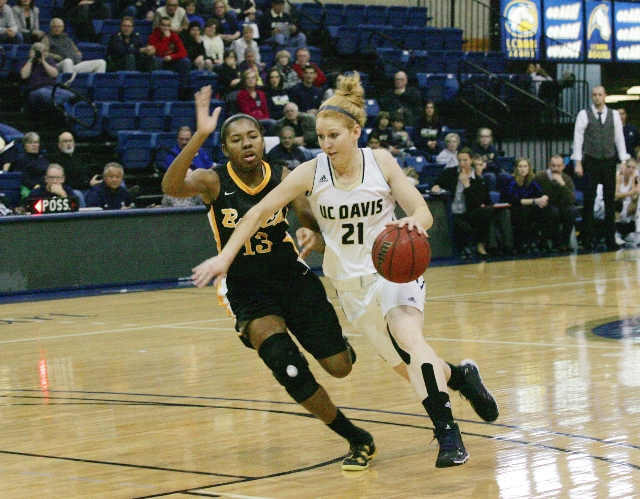

Aggies look to ride Mustangs to victory

0

Teams: UC Davis vs. Cal Poly

Records: Aggies 8-10 (3-2); Mustangs 11-8 (5-1)

Where: The Pavilion — Davis, Calif.

When: Thursday, Jan. 30 at 7 p.m.

Who to watch:

Junior Sydnee Fipps has already scored 982 points in her illustrious UC Davis career. Fipps looks to become just the 16th player in the history of the program to reach the 1000-point milestone — the first since alumni Kasey Riecks in 2011-12. There is a good chance Fipps will surpass the mark at home against Cal Poly on Jan. 30, as the gritty, physical forward scores a team-leading 17.4 points per game.

Preview:

The Aggies went cold in paradise.

Riding a three-game winning streak, the UC Davis women’s basketball team headed across the Pacific Ocean to take on the Hawai’i Rainbow Wahine in Honolulu on Jan. 23.

Poor shooting and a big Rainbow Wahine run spanning the first and second halves were the Aggies’ downfall.

Leading 19-14 late in the first half, UC Davis (8-10, 3-2 Big West) was undone by a 17-3 Hawai’i run. The Wahine (8-10, 3-1) were led by Kamilah Jackson, who scored 14 of her game-high 18 points in the second half to put the game out of reach for the Aggies. Jackson, a first-team All-Big West performer a season ago, also added nine rebounds.

The Aggies were paced by junior forward Sydnee Fipps and sophomore forward Alyson Doherty, who chipped in 17 points and 11 points, respectively. Fipps, who didn’t shoot well from the floor (3 of 11), was aggressive going to the basket and drawing fouls, going 10-14 from the foul line.

Fipps and sophomore forward Celia Marfone led the Aggies on the glass with five rebounds apiece, but the Aggies were outrebounded as a team 38-27.

UC Davis actually played solid defense, holding Hawai’i to 37 percent shooting from the floor. However, the Aggies were unable to get into any sort of rhythm offensively and shot just under 36 percent from the field.

One bright spot was freshman Taylor McGuire, who averages 1.2 points a game for the Aggies but knocked down two second-half threes.

Up next, UC Davis looks to get back to its winning ways against a dangerous Cal Poly team on Jan. 30.

The Mustangs (11-8, 5-1) have dominated conference play, winning their past three Big West games. Most recently, Cal Poly beat up on UC Riverside on Jan. 25, winning 89-72.

Last season, the Mustangs placed second in the Big West standings, won the Big West conference tournament and reached their first ever NCAA tournament.

This year, the team, currently sitting atop the Big West standings, boasts a three-headed scoring machine in the form of Molly Schlemer (17.5 ppg.), Ariana Elegado (16.7 ppg.) and Jonae Ervin (12.9 ppg.).

Luckily for the Aggies, the game will be played at the Pavilion, away from Cal Poly’s Mott Athletic Center, where the Mustangs are undefeated (8-0) this year.

— Scott Dresser


Judge finds City of Davis’ water rates fair, legal

0

On Jan. 22, Yolo County Superior Court Judge Dan Maguire issued a tentative ruling stating that the City of Davis’ current and future water rates to pay for the Woodland-Davis Surface Water Project are legal and fair.

The Yolo Ratepayers for Affordable Public Utility Services (YRAPUS) and John Munn filed a lawsuit against the City of Davis in January 2013 alleging that the City’s wastewater and water rates were in violation of Proposition 218, which states that a ratepayer cannot be charged more than the cost of supplying water to their property.

A final ruling on the water rates will occur after a 15-day period to allow the plaintiffs and the city to comment on the tentative decision. Other areas of the lawsuit will be settled in the spring.

Michael Harrington, the attorney for the plaintiffs (YRAPUS), said they appreciated the court’s hard work in analyzing the rates.

“We are disappointed with the ruling but the city attorney acted very professionally in trying the case,” Harrington said. “We are now awaiting the court’s decision.”

Davis City Council members were pleased with the tentative ruling because it allows the city to move forward with the Surface Water project.

Measure I, passed in March 2013, allowed the City of Davis to raise water rates to fund this project, which will supply Woodland and Davis with drinking water from the Sacramento River. It will cost the City of Davis $106 million, with a combined $245 million for both cities. The first of the rate increases became effective on May 1, 2013.

“I am very happy our City has prevailed in court. It is now time for our community to move past the continued attempts to derail this critical project, and onto the important work of bringing a sustainable supply of clean water to Davis,” said councilmember Dan Wolk in an email. “We will continue to collaborate with our partners on making sure the project is built on time, on budget and with as much outside funding as possible to minimize the impact to ratepayers.”

Mayor Joe Krovoza stated that the City Council took the advice of the city’s Water Advisory Committee to ensure the new rates were legal and fair.

“This means our joint project with Woodland will proceed to bring Davis a clean, environmentally sound and fiscally responsible long-term surface water supply,” Krovoza said.

Dianna Jensen, from the Water Advisory Committee and a principal civil engineer for the City of Davis, said the aim of the surface water project is to provide water supply reliability and improved water quality.

“The conjunctive use of surface water with groundwater to meet customer demands will result in an improvement in source water quality, substantially reducing the hardness of the water to customers,” Jensen said.

Harrington said that the opponents of the water rate increase submitted signatures on Jan. 23 for an initiative in the upcoming June 2014 election. This initiative aims to place a measure on the ballot to allow citizens to vote on the water rates that will pay for the construction and operation of the surface water project.

This initiative, if approved by the voters, would repeal these rates and return them to the rates prior to May 1, 2013, Harrington said.

As of Jan. 28, the initiative has been taken to the Yolo County Elections office to verify the signatures. According to state law, 1,161 valid signatures are needed to place the initiative on the ballot.

The total number of signatures collected is 2,233, said Tom Stanionis, the chief of staff at the Yolo Elections office.

Zoe Mirabile, the City of Davis city clerk, said that the next step is getting the signatures back from the county by mid-February if it is to be considered for the June 2014 election.

“By Feb. 11, the City [of Davis] has to take action to call the [June 2014] election, so the initiative has to meet that deadline to be on the ballot,” Mirabile said.

Harrington said he expects this to be a great political challenge for the Davis residents.

“We started this water referendum together as a team in August 2011,” Harrington said. “We want the people of Davis to vote as to whether they think these rates are fair or appropriate.”

Members of the group stated that their aim is to fight for safe, affordable, sufficient water provided by a public utility for Davis residents.

The issues the lawsuit addresses about the City of Davis paying for its water use still need to be addressed, Jensen said. Maguire stated in his tentative ruling that a pretrial conference is scheduled for March 7 to discuss those issues.

Watts Legal: 01/30

 Question: I read your column in The Aggie and wrote down your email in case I ever had some legal questions. I am an upper division student at UC Davis, and I need some advice regarding the University’s policy on grading changes. Over the summer, I took a course during Summer Session II and elected to take it for pass/no pass credit. Before the deadline to do so, I used Sisweb to change the grading option to pass/no pass. By the end of the summer, I had the equivalent of a C grade in the class, having always intended to take the course pass/no pass rather than for a letter grade.

But when I looked at my transcript, I discovered that Sisweb had apparently malfunctioned when I initially switched to pass/no pass. Sisweb didn’t process the switch and there was no record of me making the switch, so the C grade is showing up in my transcript and affecting my GPA. I explained the situation to my professor, who helped me submit a retroactive grade change request.

The grading change committee denied my request. I want to fight this, because it’s not my fault that there’s a flaw in the Sisweb system. The University cannot prove that I did not make that initial switch to pass/no pass. But the University says that I’m the one that has to prove that I requested pass/no pass, which is impossible.

On principle, I want my grade changed to pass/no pass, and I would like the university to make changes to Sisweb so that this doesn’t hurt other students in the future. Is there anything I can do?

-Jim S.

Davis, CA

Answer: You did the right thing by filing a petition with the Grade Change Committee. Unfortunately, reversing its decision will be an uphill battle.

Sometimes the most difficult part of solving a problem is determining which arm of the bureaucratic octopus to ask for help. According to its website, the Grade Change Committee “reviews all retroactive and grade change requests not unambiguously justified by the Regulations of the Academic Senate and of the Davis Division.” In other words, if the normal regulations of the Academic Senate clearly entitle you to a grade change, the committee does not need to review the grade change request. The website doesn’t say where you’re supposed to go to request an “unambiguously justified” grade change, but I assume you must have asked your professor or the registrar to change your grade, and one or both of them declined. Either way, the committee is the right place to ask at this point.

The committee reviews each petition on a case-by-case basis, though it applies the same set of rules to the facts of each case. It also claims the authority to make exceptions to its own rules when a petition warrants it.

In general, the committee won’t change your grade unless the grade resulted from a clerical or procedural error. It won’t substitute its judgment for a professor’s judgment; if you thought your essay deserved an A, but your professor thought it deserved a failing grade, the committee probably would not touch the case. A clerical error is one that is made by someone other than the student, such as an instructor or a staff adviser. Your problem seems like a clerical error to me, though the committee stresses that “ignorance on the part of a student regarding university policy is not generally considered valid justification for retroactive action.”

If I were to play devil’s advocate, I’d say the committee could reasonably interpret your failure to immediately notice the Sisweb problem as “ignorance on the part of the student.” It’s possible that “university policy” is to use this flawed Sisweb system, and that everything was working exactly as the university planned it to work. Maybe when you submitted your pass/no pass request, you were using a weird internet browser or accessing Sisweb from a faulty internet connection, both of which “university policy” says you should not do.

But even though the committee denied your petition, you can still appeal. You usually get only one shot at the appeal, and you have to make the appeal within one academic quarter. Also, appeals are limited to confirming that the committee did not act in an arbitrary or capricious manner in making its determination. You have to provide substantial and new information and argue that the committee’s prior decision was not based on substantial evidence. You can’t just rehash the committee’s decision; you have to come up with new evidence.

How should you obtain new evidence? I suggest you talk to Sisweb administrators and ask them whether they have any record of Sisweb having technical difficulties during the time you tried to make the switch to pass/no pass. You could then argue that these glitches are indeed a “procedural error” that entitles you to a retroactive grade change.

If Sisweb refuses to give up the records, or claims that is has no records, do not give up just yet. Make a formal request under the California Public Records Act by sending an email to the campus public records coordinator, Lynette Temple, at lstemple@ucdavis.edu. From my previous experience with her, she will promptly respond to inquiries. You can use the public records request template at firstamendmentcoalition.org/public-records-2/sample-cpra-request-letter/ or Google “California public records act request template” for more information on how to file a request.


Daniel is a Sacramento attorney, former Davis City Council candidate and graduate of UC Davis School of Law. He’ll answer questions sent to him at governorwatts@gmail.com or tweeted to @governorwatts.

In transition: C-C-Chasm

0

I knew that transferring to UC Davis would mean taking harder classes, having more responsibilities and inevitably facing the terrifying process of graduating and moving on to the real world.

I expected to have longer homework assignments and learn more diverse concepts than I previously had. I’m not sure I can say that I was “prepared” for it, per se, but at least I was aware.

However, I was surprised by the significant amount of insight I gained about community college when I transferred. Suddenly, I realized what I had truly learned at my CCC and what I had missed out on while I was there.

So aside from the pedagogical aspects of taking more arduous classes and forging a path for my eventual career, I recognized some other incredibly significant differences between my experiences as a CCC and a UC student.

As a CCC student, there was little to no sense of overarching community or lifelong skills taught there. I didn’t have many chances to build lasting relationships with my peers or join groups to develop my interests.

In community college, there was no equivalent to the dorms or the DC. We couldn’t spend nights eating yummy late night cookies or getting to know the people on our floor. I still lived with my parents and found it difficult to connect to my peers.

My CCC didn’t have a football or basketball team, so there was never a chance to attend tailgates, rallies or even show school spirit. We couldn’t support our fellow students or take pride in our school’s history.

We also didn’t have many social groups on campus — no sororities or fraternities to join, no cool CoHo people and very few interest clubs.  It was difficult to feel immersed and harder to establish a dedication to our school.

But here’s the kicker: our campus didn’t even have a quad. The biting irony of a “community” college with no communal space for students to hang out in still makes me chuckle as I sit in the CoHo.

We didn’t have the chance to build that feeling of “community” at our community college simply because we didn’t spend much time on campus, or even think much about our school outside of class.

Aside from those missed opportunities, CCCs diminish the focus of long-term goals and structured plans for its students, so your education and experience feels incomplete.

For transfer students, CCCs present a rudimentary education — one that will be fulfilled at a secondary school. It was commonplace to have large chasms in the flow of our studies because we were consistently dabbling in subjects, often dipping into and out of certain fields every semester.

It was a far cry from the regularity of a declared major at a UC.

For other students, CCCs are utilized to supplement past degrees or stacked to earn field-specific certificates.

So ultimately, no matter your route, your education at a CCC is temporal and subordinate. Even more frustrating, there is also this anomalously withering comfort zone that accompanies a CCC education.

During your time there you’re only focused on, well, only your time there. Your classes are a bargaining chip for satisfying requirements and moving on. You take a class, do well, and move on. It’s a type of pass-go-and-collect-$200 focus — not exactly the epistemological one UC Davis proclaims.

Overall, this unsteady and inconsistent education creates and instills a very real “you’re on your own” mentality for CCC students.

As unfortunate as it is, the fact remains that my primary goal during my time at community college was to get out of there as quickly as possible. I had absolutely no interest in maintaining loyalty or boasting school pride. It was sad.

But things are different now.

I’m thrilled to be an Alpha Phi, live within walking distance of my school and have the opportunity to create the life my UC Davis education prepared me for. I’m proud to be an Aggie and I don’t want to leave.


To add to this list of discrepancies, email SARAH MARSHALL at smmarshall@ucdavis.edu.


Opposing the Opposition to the Boycott

15

Dear Editor,

We have written to express our profound disagreement with the Chancellor’s and Provost’s published opposition to the American Studies Association’s endorsement of the boycotting of Israeli universities as part of the Boycott, Divestment and Sanctions (BDS) campaign for justice in Palestine.

We acknowledge that, in comparison with some of the rhetoric coming from college leaders on this issue, their statement is measured and moderate. It is not, for example, routine to see even a mention of the Palestinians by critics of ASA’s resolution. We also agree that the principle of academic freedom should, as they say, “guarantee free access to students and faculty at all Israeli and Palestinian universities.” And we agree too that violations of academic freedom should be protested wherever and whenever they occur; indeed, faculty at some universities have recently called into question their institutional affiliations with other countries (Wellesley has debated its relation to China; others are under pressure to explain their satellites in the Gulf). But in its occupation of Palestinian lands, Israel not only violates academic freedom in higher education; it also erodes the functioning of the entire educational system in the occupied territories. Unlike other countries that may be cited for similar violations, Israel receives massive subsidy from the U.S. government and private institutions alike.

While Jewish-Israeli students and academics in Israeli institutions enjoy free access to and from most places and full rights deemed normative by democracies, comparable opportunities do not exist for Palestinians in the occupied territories or even for many Palestinian citizens of Israel. Their academic freedom, like their basic legal and economic rights, is often compromised by the Israeli state and its security apparatus. For a compelling account of the indignities and injustices governing the daily lives of the Palestinians, Saree Makdisi (UCLA’s) book Palestine Inside Out may be recommended.

Thus it seems to some of us that, paradoxically, a commitment to academic freedom for all in fact demands support of the boycott, not its condemnation.

Entry to Israel itself is difficult for various categories of people, like the student of non-Jewish Middle-Eastern descent who applied to UCD’s summer abroad program some time ago. Her acceptance required the program director to make a cap-in-hand visit to the Israeli Consulate in San Francisco, which surely violates all our principles of non-discrimination in the pursuit of normal academic activities. Movement in and out of the occupied territories (which students on the program were not permitted to enter at all) is even more heavily policed. Stories of refused entry and massively inhibiting border protocols are legion, and have been well documented, including by the U.S. State Department. Recent published statements by Professors Robin Kelley (UCLA) and Judith Butler (UCB) offer eloquent evidence of the current situation leading both foreigners and Israeli supporters of the boycott to speak out. Butler points out that not one Israeli university has expressed opposition to these protocols; those of us who support the boycott hope that we can stimulate worldwide awareness and also support those courageous Palestinians and Israelis, Jews and non-Jews, who are calling for an international response.

The boycott is not aimed at individuals, and does not seek restrictions on anyone’s movement in and out of Israel, although it cannot be denied that some individuals might be impacted. Nor does it hold individuals responsible for their governments; the ASA resolution specifically “supports the protected rights of students and scholars everywhere to engage in research and public speaking about Israel-Palestine.” Instead, the boycott is aimed only at Israeli institutions and at other institutions that engage in collaboration with them. Universities should perhaps in the best of all worlds be regarded differently, but the complex web of military industry and other contracts fully implicates universities in activities from which they often otherwise seek to distance themselves. To pretend otherwise is simply to ignore the facts. Many U.S. opinion makers once vigorously opposed the boycott campaign directed at South African apartheid, but it would now be hard to find anyone who would publicly deny that the new South Africa is a better place than the old one.

It is standard rhetoric to defend academic freedom, much harder to agree about just what that is, and where its limits lie. If universities should not take political positions, as is often argued and as our Chancellor and Provost assert in their press release, then it behooves those who speak for them to be very sure about what does and does not constitute a political position. Academic freedom, some of us believe, is a highly political issue, especially in the context of Palestine-Israel. Their press release, while it does not explicitly claim to speak for the University, does not disavow the implication that it does so. The University subsists in its faculty and students (among others) and not only in its chief administrators. Among these groups are some who approve of the ASA resolution and others who, whether or not they are supporters of the boycott or the resolution, might disagree with (and even find coercive) their public denunciation of it. Such disagreement is, after all, one palpable attribute of academic freedom.

As we write, denunciations are appearing of the recent Modern Language Association’s resolution about the “right to enter” and additionally of the mere holding of a panel discussing the academic boycott. College leaders have been among those reproducing the standard objections to anyone critical (or potentially critical, in this case) of the contemporary Israeli state and its continuing expansion of its illegal settlements in the occupied territories. More will surely climb on the bandwagon. We very much hope that our Chancellor and Provost will not be among them. Spurred by denunciations of the ASA resolution and other initiatives, a wave of threats by self-described “pro-Israel” partisans, including a number of politicians, seeks to pressure faculty to dissociate from ASA, to defund it, and even to instigate legal action. These are indeed dangerous attacks on academic freedom, not to mention basic freedom of speech, and we call on our chief administrators to denounce them.

Yours Sincerely,

David Simpson, Distinguished Professor, English

Noha Radwan, Associate Professor, Comparative Literature

Gregory Dobbins, Associate Professor, English

Beth Freeman, Professor, English

Parama Roy, Professor, English

Baki Tezcan, Associate Professor, History

Joshua Clover, Professor, English

Hsuan Hsu, Associate Professor, English

Nathan Brown, Assistant Professor, English

Donald Donham, Professor, Anthropology

Flagg Miller, Associate Professor, Religious Studies

Omnia El Shakry, Associate Professor, History

Elizabeth Miller, Associate Professor, English

Gina Bloom, Associate Professor, English

Evan Watkins, Professor, English

Julia Simon, Professor, French

Sunaina Maira, Professor, Asian American Studies

Jocelyn Sharlet, Associate Professor, Comparative Literature

Susette Min, Associate Professor, Asian American Studies

Jeff Fort, Associate Professor, French

Robyn Magalit Rodriguez, Associate Professor, Asian American Studies

Richard Kim, Associate Professor, Asian American Studies

Kathleen Frederickson, Assistant Professor, English

Neil Larsen, Professor, Comparative Literature

Sustainable Agriculture: Agent Orange Corn

0

A decade before most of us were born, the U.S. government contracted chemical companies, such as Dow Chemical and Monsanto, to manufacture Agent Orange for use during the Vietnam War. This deadly defoliant was a mixture of two common pesticides: 2,4-D and 2,4,5-T, dubbed Agent Orange because of the orange stripe on the metal drums used to transport it around Vietnam. The U.S. government secretly developed 2,4-D as a chemical weapon under the disguise of agricultural research. When wartime was over, it was marketed to homeowners as a weed-killer for lawn and to farmers as an herbicide.

Despite its sordid history, the Environmental Protection Agency is in the process of evaluating a new GMO corn and 2,4-D pesticide combo-pack. As RoundUp Ready corn and soybeans are resistant to RoundUp pesticide, this new GMO corn and soybean would be resistant to a pesticide containing 2,4-D — one of the ingredients in Agent Orange.

Because 2,4-D is already used at a commercial scale, there is overwhelming scientific evidence that has documented its carcinogenic effects. Some argue that 2,4-D can’t be linked to Agent Orange because it was only one of the two ingredients in the chemical weapon. In 2006, however, researchers clearly linked stomach cancer in California farmworkers to the application of 2,4-D pesticide on agricultural fields. 2,4-D easily volatilizes, or changes from liquid to a gaseous form, and is then ingested through the air by breathing and swallowing. What would approving this new GMO corn and soybean result in? Even more 2,4-D sprayed all over the country!

Farm workers aren’t the only people who have been exposed to and sickened by 2,4-D — many Vietnam veterans have, too.

Vietnam veterans suffer from lymphoma at rates disproportionately higher than the general population. The link between Agent Orange and lymphoma has been so scientifically proven, that the U.S. Department of Veterans Affairs offers disability and compensation to any veterans or family members of a veteran who were “exposed to herbicides during the Vietnam era.” The family members of any veteran who died because of exposure to Agent Orange are even entitled to survivor’s benefits.

How do veterans feel about GMO corn that is modified to withstand the spraying of the same chemical in Agent Orange?  The Vietnam Veterans of America, a nonprofit organization dedicated solely to assisting veterans from the Vietnam War, wrote a letter to President Obama asking for his support in opposing the approval of such a poisonous chemical.

Proponents claim that 2,4-D resistant corn and soy will benefit farmers. However, a study on Nebraska farmers linked 2,4-D application to the increased rates of lymphoma in farmers who sprayed the pesticide. Are increased yields worth poisoning our farmers? 2,4-D is a smoking gun for a bullet-riddled problem.

Last year, the USDA faced enough public outcry to require a formal environmental impact assessment by the EPA, now underway. If you would like to voice opposition to the approval of Agent Orange Corn to the EPA, you can comment online at regulations.gov by searching “Dow AgroSciences” on the homepage. Nearly 3,000 people have already commented. Additionally, you can sign a petition at CenterforFoodSafety.org.


To vent frustrations about poisonous chemicals in our food system, email ELLEN PEARSON at erpearson@ucdavis.edu.


EPA Public Comments section

Link to Center for Food Safety’s petition

Study linking 2, 4D to stomach cancer in Californian farmworkers

US Veteran’s Affair Website

Vietnam Veteran’s of America letter to the President

Study on Nebraskan farmers

Circadian rhythm dictated by dietary pattern

Researchers at the University of California, Irvine have revealed a fascinating connection between cellular metabolism and the circadian rhythm — commonly known as the biological clock. Conducted in the laboratory of Dr. Paolo Sassone-Corsi, one of the world’s leading researchers on circadian genetics, a recent project examined the effects of a high-fat diet on the expression of genes responsible for unintended circadian oscillation (weird biological rhythms). The study, “Reprogramming of the Circadian Clock by Nutritional Challenge,” was published in the journal Cell in November of 2013.

But first, what exactly is the circadian rhythm? For the typical college student, it’s certainly something that many of our priorities and schedules disagree with us on. However, for the ordinary sentient organism, the circadian rhythm is the daily cycle of biological events and activities that typically occur in a predictable fashion. In human beings, the circadian rhythm is responsible for processes such as the sleeping and waking cycle; it may cause one to feel keen and alert at one point of the day and more lethargic at another. For the researchers at UC Irvine, circadian rhythm is an intricate timepiece hinged upon a complex, dynamic set of genes that respond, interestingly enough, to dietary composition.

The study itself was conducted on wild-type rodents. The test subjects were divided into two distinct groups: those fed a diet of “normal chow” [NC] (the regular, unadulterated rodent food) and those fed a “high-fat” [HF] diet, representative of a traditional high-fat human diet. The team chose to closely examine the liver tissue of the rodents, which allowed them to determine the overarching effects of the diet on their circadian rhythms.

“The liver is a beautiful organ to look at because it has a very powerful intrinsic clock, and it’s composed of almost all homogeneous tissue,” Dr. Sassone-Corsi said. “This allows a nice look at the biochemistry … it allows the direct study of the effect of nutrition on metabolism.”

The research team determined that the mice fed a consistent diet of normal chow have a certain set of circadian genes activated. When the mice are placed on the high-fat meal plan however, an entirely different set of genes are switched on. This causes a major shift away from the organism’s original circadian rhythm.

Dr. Pierre Baldi is a key member of the study’s bio-informatics team, responsible for the collection and analysis of highly complex genetic data.

“Roughly 10 percent of an organism’s circadian genome is oscillating in a given cell,” Dr. Baldi said. “The 10 percent that is oscillating is different from cell to cell, tissue to tissue, organ to organ … A high-fat diet disrupts normal oscillation and creates new rhythms altogether.”

Lead author of the study, Kristin Eckel-Mahan, elaborated on some of the specific biochemical alterations.

“… A high-fat diet resulted in the cessation of many of the existing circadian oscillations within the cell’s metabolome and transcriptome,” Eckel-Mahan said. “This is attributable in part to the aberrant chromatin recruitment of the CLOCK and BMAL1 proteins, which are two transcription factors essential for cellular rhythmicity … A high-fat diet both blocks existing oscillations within the hepatic [liver] clock while inducing new oscillations where and when they would not take place under normal conditions.”

The research team was able to determine that this drastic shift in biochemical rhythm can happen when an organism consumes a high-fat diet over a very short period of time (Christmas break, anyone?). Luckily however, reverting back to a controlled lower-fat diet allows the organism to return to its original bio-clock.

“You can have a high-fat diet for five days, and you can re-program your clock in this time … In the study, if we take an obese subject on a high-fat diet and put them back on a diet of normal chow, their clock will revert to a normal circadian rhythm … this is encouraging because you have not locked the system into something irreversible,” Dr. Sassone-Corsi said.

The question that that research teams will seek to answer in the future is how different diets, not just a typical high-fat diet, can impact an organism’s circadian rhythm. The Atkins, Paleo, Vegan and Mediterranean diets are prime examples of popular dietary paradigms employed today, and each one may have its own unique effect on gene expression and circadian rhythm.

Once again, research reminds us that our dietary patterns and lifestyle choices dictate both our physical status and our lives in more ways than previously imagined.

UC Davis computer science lecturer moonlights as Fringe Festival blogger

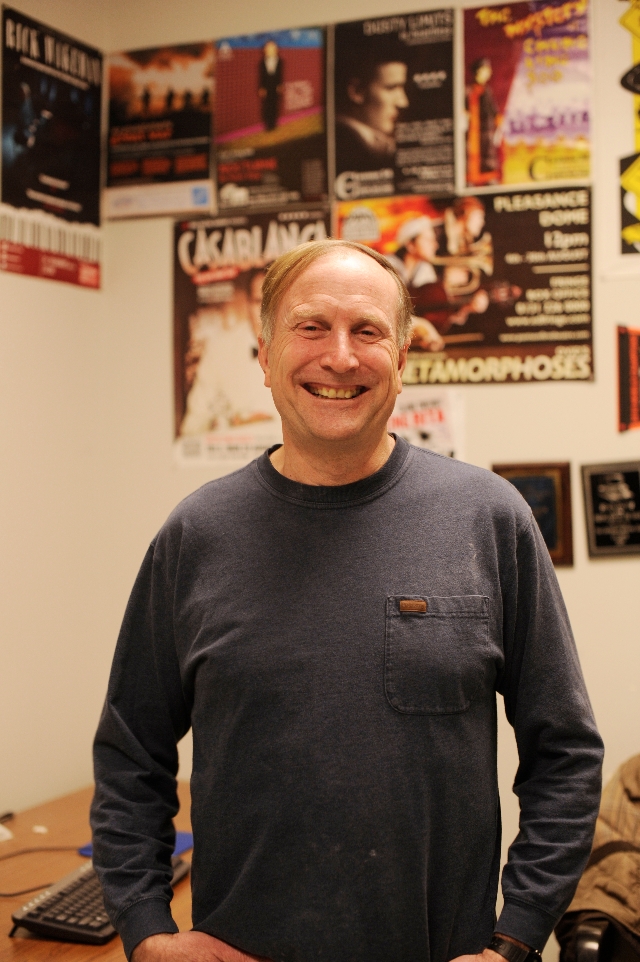
UC Davis continuing lecturer Sean Davis watches 160 to 200 plays every August. For the rest of the year, he teaches computer science.

“I think I am lucky enough to be gifted with a wide range of interests,” Davis said. “I’m a general contractor, I review plays and I teach computer science.”

Like many undergraduate students on campus today, Davis started in the 1970s with no specific major interests. After bouncing from chemical engineering to history, Davis graduated with a Bachelor of Arts psychology degree in 1978, having zero idea that one day he would rejoin the Aggie community as a faculty member in the College of Engineering.

“It’s kind of cool because you realize that he absolutely didn’t know what he wanted to do at our age,” said second-year animal biology and computer science double major Russell Miller, who took Engineering Computer Science (ECS) 30: Programming and Problem Solving and ECS 50: Machine Dependent Programming with Davis. “He had a very generalized education, and learned most of the computer science he knows now on his own.”

Davis picked up a keen interest in computers and programming after graduation, fostered by his purchase of a small computer from the children’s store, Toys “R” Us. After some self-teaching and experimenting with various projects, Davis applied to the UC Davis Ph.D. program in computer science, but ended up getting a master’s degree and teaching ECS classes in 1994.

Davis described his teaching style as active and crazy. He said he doesn’t mind suddenly jumping up in class or walking up and down the aisles of the lecture hall in an attempt to grab students’ attention.

“When he teaches, he is more of a casual teacher, he doesn’t just lecture from his slides. It’s really nice and easy to pay attention to if you want to,” Miller said. “I think that even though he’s one of the hardest teachers, he is also considered one of the best teachers.”

Apart from teaching, Davis enjoys dabbling in subjects outside of computer science quite often. One such interest lies in Scottish theater, specifically plays on showcase at The Fringe Festival in Edinburgh, Scotland.

“The Fringe is marvelous. It’s so different, that it is unlike any other situation,” Davis said. “Those people are there to present plays because that’s what they want to do.”

As the largest arts festival in the world, The Fringe boasts theatrical and comedy acts, as well as dance and music performances over the entire month of August. Just last year, over 45,000 performances of close to 3,000 shows were presented, and nearly two million tickets were sold.

Since 2005, Davis has attended the festival from start to finish, watching anywhere from 160 to 200 plays over the entire month and averaging between six and 10 plays each day.

“I was a big moviegoer and then I discovered plays because they can be wilder. The suspension of disbelief is greater for a play than it is for a movie,” Davis said. “I’m a novelty seeker. The Fringe has not failed me.”

Davis is joined at the festival every year by his friend and theater buff Tim Emm, who chooses about half to two-thirds of the plays they watch together.

“Sean is a great companion as he would describe himself the loud American willing to talk to anyone and me the slightly more reserved English man discussing background and providing lots of theatre trivia,” Emm said in an email interview.  “I choose the plays based on my knowledge of up and coming playwrights, particular actors I find interesting and the reputation of certain venues plus a few random experiments. I like having a mix of fringe and international festival productions.”

Venues at the festival can range from 1,000-person auditoriums and smaller conference rooms to caves beneath bridges holding close to 40 viewers. Despite this, the average audience size is just four during the festival, because smaller shows happening in the city’s outskirts don’t attract as many viewers.

“Sean’s approach is to take a venue and see everything in it that day — pretty much going in blind not knowing anything about it — a true fringe adventurer looking for the undiscovered gems,” Emm said.

After watching each play, Davis takes mental notes on what he liked and didn’t like. At the beginning of every day, he updates these comments onto his website, fringefan.com.

“He keeps to a couple of lines of text, a star rating and constantly lists them in the order that he has enjoyed them,” Emm said. “I do read it particularly if he arrives at the festival before me to get a flavour of the festival from his perspective.”

Davis’ short comments give readers a quick overview of what the piece’s highlights were. Website visitors can also see rankings of the previous Fringe festivals.

“Last year, I had about 1,000 people who read it. Most people can’t go to the festival for the whole month, so the website is like a service for them,” Davis said. “I want to go in and ask ‘how does an average Joe see the play?’”

Even though there is hard work involved in the venture, Davis made it clear the work is rewarding.

“Sean is an enthusiast, throwing himself full pelt into the festival atmosphere — talking to people in the queue getting their word of mouth tips and recommending shows,” Emm said. “He has no pretensions and doesn’t analyse plays in an academic way but describes how he responds to a play or artist.

Aggie men’s basketball can’t keep up with Aloha spirit

0

Men’s basketball faced Hawai’i on Jan. 23, at the Pavillion. They looked to add another notch to their win column after defeating Cal State Fullerton on Jan. 18.  However, to the team’s dismay, the Aggies couldn’t bring home the victory, as Hawai’i came out on top with a final score of 90-73.

The game started off promising, with the Aggies at one point in the game leading by as many as seven points in the first half. A three-pointer from freshman forward Georgi Funtarov and baskets from junior forward Iggy Nujic and senior guard Ryan Sypkens would give UC Davis an early 15-8 lead. The lead, however, wouldn’t last, as Hawai’i surged ahead, leading by 11 points at halftime with a score of 45-34. The Aggies were able to slash a 20-point deficit in the second half to single digits. Yet, it still would not be enough, as the Aggies were unable to retake the lead at any point in the rest of the game.

Several positives still can be taken from the Jan. 23 matchup. Junior guard Corey Hawkins, who has been solid all season, led the team with 21 points on the night, 12 of which coming from behind the three-point line. Nujic raked up a season-high 17 points followed closely behind by Funtarov and Sypkens, who each had 10 points apiece. Funtarov also performed well defensively, with a team-high six rebounds.

Looking beyond offensive and defensive statistics from the game, Sypkens continued to add to his overall career numbers. After the game, Sypkens now stands alone at No. 4 in UC Davis history for all-time three-point field goals made with 285.

The team as a whole also performed fairly well around the court, with a .509 shooting percent overall, not far behind Hawai’i’s .582. The Aggies also shot nine of 13 from the free throw line. But when it comes down to it the overall numbers don’t lie, and Hawai’i outscored UC Davis, coming away with that 90-73 victory.

This now puts the Aggies at an overall record of 6-14 and 1-4 in Big West Conference play. The team must step it up in the last 11 league games of the season if they expect to have any chance of making the trip down south in mid-March for the Big West Tournament. With every single remaining game of the year counting towards their conference record, any more slip-ups could cost them dearly.

The Aggies are on the road for their next two match-ups. They first play Cal Poly in San Luis Obispo on Jan. 30 in at 7 p.m. Continuing south, UC Davis will then face UC Santa Barbara Feb. 1 before returning home on Feb. 6 to take on Cal State Northridge.

— Sloan Boettcher

Strong second half pushes Rainbow Wahine past Aggies

0

Although junior forward Sydnee Fipps and sophomore forward Alyson Doherty scored in double figures for the Aggies, a 22-6 run in the second half lifted the Hawai’i Rainbow Wahine over the Aggies with a 64-50 victory on Jan. 23.

Both teams started well in the Big West. UC Davis won three consecutive games heading into the matchup with Hawai’i, including two wins on the road, and the Rainbow Wahine had a two-game winning streak heading into the game against the Aggies.

UC Davis and Hawai’i traded buckets at the beginning of the first half. Hawai’i started off badly, just scoring four out of their 23 shots in the first 15 minutes of the game. This allowed UC Davis to gain a 15-11 lead with 5:00 to play in the first half.

Then two back-to-back three-pointers from Hawai’i’s Kamilah Jackson and Marissa Wimbley, and a layup from Shawna-Lei Kuehu helped the Rainbow Wahine tie the game at 19-19 with 2:49 left in the half. With five seconds left on the clock, a fade-away jumper from Kuehu gave the Rainbow Wahine a 25-22 lead to end the first half.

Both teams struggled from the field in the first half. UC Davis shot 38.1 percent from the field in the first half, while Hawai’i shot 26.7 percent. Fipps scored seven points, including six free throws.

The Rainbow Wahine started strong in the second half, especially Jackson, who scored 10 of Hawai’i’s first 13 points in the second half, after only scoring four points in the first half. On the other hand, the Aggies struggled to make shots from the solid defense of the Rainbow Wahine.

A 22-6 run within 10 minutes helped Hawai’i extend its lead to as many as 19 points with 10:45 to play. The Aggies chipped the deficit down to 11 points with a three-pointer from freshman guard Taylor McGuire and a jumper from sophomore forward Celia Marfone, 55-44, with 5:18 left to play.

However, the Rainbow Wahine defense stifled the Aggies, and in the last four minutes UC Davis could only score points from the free throw line. The Aggies eventually fell to the Rainbow Wahine by the final score of 64-50.

Fipps scored a team-high 17 points to go with five rebounds and a pair of steals. Doherty added 11 points and another five rebounds. UC Davis fell to 8-10 on the season and 3-2 in Big West play. Hawai’i won its third-straight and improved its record to 9-7 overall and 3-1 in conference play.

The Aggies will return to the court to host Cal Poly on Thurday, Jan. 30 and UC Santa Barbara on Saturday, Feb. 1. Both games will take place at the UC Davis Pavilion.

— Janet Zeng

One World, One UC Davis campaign aims to increase university visibility

0

The One World, One UC Davis campaign was launched in the fall of 2013. Advertising for the campaign has cost $81,249, according to Associate Chancellor for Strategic Communications, Luanne Lawrence.

The One World, One UC Davis campaign, which focuses on featuring exceptional UC Davis faculty, students and donors and their stories, seeks to improve the general public’s awareness of the University.

The ultimate goal of the campaign is to improve the University by attracting more donors and even greater talent. It is also intended to distinguish UC Davis from other University of California (UC) campuses.

So far, the money has been spent on outdoor banners, promotional items, launch advertising and IT retrographics. Over half of it, approximately $53,000, has gone to television spot production, T-shirts and giveaway items, according to Lawrence.

“We [members of the UC Davis community] know that UC Davis is very well-known and recognized for its agricultural, veterinary and biological sciences programs,” Lawrence said. “But from surveys, we’ve learned that the general public doesn’t really distinguish between the UCs.”

ASUCD Senator Pamela Nonga, who was featured in a One World, One UC Davis campaign video, agreed that all of the UCs can blend together in the view of the public.

“Even when I was applying to colleges and looking at the different UCs, UC Davis didn’t stand out to me as much as the other ones,” Nonga said. “We need to work on getting ourselves out there and advocating for ourselves.”

When asked whether the campaign is a good use of University funding, Shaun Keister, vice chancellor of alumni relations, said that he believes that it is the best way to expose “the best kept secret out there.”

“When you look at all of the things that matter the most to society — water, food, health, the environment, the arts — there are very few universities in the world that can match the caliber of programs and people we have at UC Davis,” Keister said. “Prior to this campaign, we didn’t champion this enough.”

A large part of the campaign involves sharing the stories of people in the University. Banners are currently in place around campus that highlight specific students and their achievements, and their full stories can be read on the campaign’s website. These highlights are not limited to students. The achievements of faculty and donors are also being displayed.

The Campaign for UC Davis, which was launched in 2010, had a goal to raise $1 billion in funds for the University from more than 100,000 donors. The goal was reached in November 2013, a year ahead of the projected fundraising schedule. In late January, One World, One UC Davis will tell the stories of 100 of the donors.

“Our goal is to thank the 100,000 plus donors who helped UC Davis reach the goals of its first comprehensive fundraising campaign … and to show the world at large the face of philanthropy at UC Davis,” Keister said.

The 2020 Initiative, which seeks to add 5,000 undergraduate students and approximately 300 faculty members to the UC Davis community by 2020, should be aided by this marketing of the University, according to Sarah Colwell, the senior manager of communications for development and alumni relations.

“One of the main goals of the 2020 initiative is to grow the faculty. The One Campaign wants to show prospective faculty members why they should want to come work with UC Davis,” Lawrence said.

According to Colwell, UC Davis also has opportunities for expansion that other UCs don’t.

“UC Davis has the largest geographical footprint of the UCs. It’s not like UC Berkeley where they’re surrounded by a major city, we have room to grow and expand,” Colwell said.

Nonga said that she was happy that the funds being used in the campaign didn’t come from raising student fees.

“I’m glad that they were able to find another avenue of funding. Hopefully, whatever kind of visibility that UC Davis gets from this campaign will make it a worthy investment in the long run,” Nonga said.

In June, the One campaign will be expanded outside of the UC Davis campus and will move into the state of California as a whole, according to Lawrence. The campaign will start to appear in all of the admissions materials, and a large part of the project involves connecting alumni with the campus.

“We’re creating an alumni portal on the One website of alumni and student events in specific areas,” Lawrence said.

The One World, One UC Davis campaign is the first UC Davis streamlined marketing campaign which includes all parts of the University. Programs such as the UC Davis Nursing School, which is located across the causeway in Sacramento, often have different marketing strategies than the base UC Davis campus, but the One campaign wants to integrate everything that makes up UC Davis.

“The best part of the campaign so far has been working with the students, because they’ve never had a platform this big to tell their stories or to celebrate their achievements,” Lawrence said.

UC Davis Store partners with Amazon

10

On Nov. 22, 2013, the UC Davis Bookstore officially announced its partnership with Amazon online — the first partnership that Amazon has had with any university. Amazon approached UC Davis during Spring Quarter of 2013 to pitch the idea of this pilot program.

UC Davis will receive a little over 2 percent of most purchases by  students that shop at Amazon with a UC Davis email account, or customers that shop at davis.amazon.com.

According to a Jan. 27 news release, students can sign up for a free six-month membership of Amazon Prime that would provide free two-day shipping. After the six months, students would pay $39 to continue their membership — 50 percent less than the regular price.

UC Davis Stores Director, Jason Lorgan, says that a portion of the funds will go to support a upcoming textbook scholarship program for students in 2014. The rest will fund other student programs and services.

“They recognized our store was the first university store in the nation to offer our students textbook price comparisons on our ucdavisstores.com textbook ordering page, resulting in UC Davis Stores being one of their larger textbook affiliates among U.S. colleges stores,” Lorgan said.

Lorgan believes the partnership will increase the current revenues for the UC Davis retail operation and that it will not be detrimental to in-store sales.

“The benefits the program provides to UC Davis students include a free six-month trial membership for Amazon Student Prime. Amazon Prime provides our students with free second-day air shipping on Amazon orders,” Lorgan said.

Lorgan explained in a news release that UC Davis has continuously set itself apart from other university bookstores. With the rapidly increasing cost of books and tuition, students are constantly looking for options to find better deals. Three years ago, the UC Davis bookstore began the price comparison for all books, a decision many were critical of at first. Now hundreds of stores have followed suit.

Public Relations Officer for Amazon Brittany Turner explained that the program so far has been a success. They have started an Amazon Brand Student Ambassador program.

“These students are big Amazon fans who want to help spread the word about Amazon’s offerings for students to their friends and peers,” Turner said.

Lead Brand Ambassador for the Amazon Student Ambassador Program, Ting Jung Lee, a fourth-year political science major, believes the program is really beneficial to the student community.

“As a student representative, I aid Amazon’s On-Campus Marketing Team to throw a series of fun and interactive events at UC Davis. During finals week of Fall Quarter, we had several ambassadors all over campus handing out free pizza and other goodies to fuel the students while they study,” Lee said.

She adds that she is excited about how prominent Amazon has become on the campus.

“It really goes to show what an influential university we’re becoming to have such a large brand come in and support us,” Lee said.

All other Brand Ambassadors declined to comment.

The UC Davis-Amazon collaboration is intended to be beneficial to students and the community at large who are already doing much of their shopping on Amazon. Without any additional costs, it will support the school and students.

ASUCD Controller Eric Evans, a third-year managerial economics major, believes that Lorgan’s team has been creative in finding new revenue despite the changing climate of the bookstore.

“I don’t see UC Davis changing our school-owned and school-operated model unless the bookstore becomes drastically unprofitable without a solid recovery in the cards — if that happens, the campus would probably look to an outside contractor to run the Stores to shed the risk,” Evans said.

He expands on why it is important the bookstore remain campus-operated — to give back to students via student employment.

“The importance of a campus-run bookstore lies less in who’s taking home the margin and more in who gets employed there. Our campus is a nonprofit entity, so any money we make at the Stores gets returned to the students in other ways … The university ownership and reporting structure ensure that when CRU is staffing the bookstore or the ARC, they turn first to student employees,” Evans said.

Teresa Torres, a second-year microbiology, genetics and Chicana/o studies major and bookstore employee says she has been seeing a significant increase in advertisement for the partnership. She believes this program is very beneficial because as is, students often struggle with book expenses and Amazon has offered deals on books and other things students need.

“Honestly, I don’t think there [has been] a big impact … so far I haven’t [seen] anything happen. I have seen them hand out discount coupons like $15 off a $50 purchase, but that is about it,” Torres said. “Then again there could be some type of benefit to the partnership since it is still happening. Hopefully, the prices of textbooks go down! Now that would be awesome.”

Grupo Corpo to perform at Mondavi

0

The Brazilian dance ensemble Grupo Corpo is set to perform at the Mondavi Center Feb. 4. With an immersive presentation of movement, rhythm, light and costume, Grupo Corpo’s uniquely Brazilian aesthetic has captivated international audiences for over 30 years.

Grupo Corpo will be performing two different pieces created by choreographer Rodrigo Pederneiras, Sem Mim and Ímã, translating to “without me” and “magnet,” respectively. Sem Mim, based on the lyrics of Martin Codax’s 13th century “Sea of Vigo” song cycle, is characterized by wave-like movements that reflect a maiden’s longing for her love lost at sea. Ímã, on the other hand, features magnetic motions and vibrant, colorful choreography that emphasizes juxtaposition.

According to dancer Janaina Castro, who has been with Grupo Corpo for 13 years, the two pieces may differ greatly in style yet have the same “language” that audiences can appreciate.

“It’s great to perform two different pieces,” Castro said. “We work with the same choreographer so it’s like we have a language; each performance is very different. It’s nice to do two pieces in one night because we can show the audience that they have the same language but are totally different.”

According to Castro, the movement of Grupo Corpo’s dancing is a fluid combination of classical ballet and contemporary dance, and lies on the foundation of discipline and precise control of body movements.

“We do something very fluent and use the entire space,” Castro said. “Sometimes, people think it’s very easy and a free work, but I think it’s hard work. You have to focus and have the discipline.”

Technical director of Grupo Corpo Pedro Pederneiras believes that Grupo Corpo’s use of Brazilian dance movements, rooted in such types of dance as capoiera and samba, has led to the development of choreography and movement not easily replicated. The company, based out of Belo Horizonte, Brazil, features an almost entirely Brazilian group of dancers.

“The dance of Grupo Corpo is based in Brazilian music,” Pederneiras said. “The way of the dancing is very special and even hard for non-Brazilians to dance in this way.”

Pederneiras, who initially began with Grupo Corpo during its inception as a dancer, said that the goal of Grupo Corpo has always been to tour internationally, almost as a form of cultural exchange. He said that currently 60 to 65 percent of all of Grupo Corpo’s shows are performed internationally.

Jeremy Ganter, associate executive director and director of programming at the Mondavi Center, says this is the group’s fourth time performing at the Mondavi Center. He attributes Grupo Corpo’s popularity to an “aesthetic [that] is powerful and easy to love.”

According to Ganter, the group has become a local favorite and reflects Davis’ wholehearted support of contemporary dance.

“Grupo Corpo is very popular here, and I think that is as much about the power of their work as it is about the incredibly strong and supportive modern dance audience we have in this region,” Ganter said. “On campus and off, we have some of the most warm, supportive and adventurous dance-goers you’ll find anywhere. We are so proud of that.”

Tickets range from $17.50 for UC Davis students to $63, and can be purchased online at mondaviarts.org or at the Mondavi ticket office.


Student veteran presence grows on campus

Over 700 students make up the veteran population on campus. The Davis Student Veteran Organization (DSVO), founded in 2010, serves as their representing body.

Student veteran organizations have developed on campus over the past few years with goals to build community, representation and awareness concerning veteran identity. Lack of veteran-specific resources and breaking pervasive stereotypes have been struggles to their efforts.

Though experiences vary, Elias Sanchez, a fourth-year political science and international relations double major and president of DSVO, said that veterans face many obstacles readapting to civilian life.

“Reintegrating into civilization is really hard felt because you have sacrificed so much physically, psychologically, emotionally,” Sanchez said. “The greatest fear I have for veterans is when you have free time that’s the time you have to reflect … The difficulties we have had were never addressed. In the military your emotional needs are not priority one, your mission is priority one. But when you come to a normal setting and people actually ask you, ‘What do you think?’ or ‘How do you feel?’ it [challenges] you to self reflect.”

These issues are indicative of not only the academic, but also the medical and counseling needs of student veterans on campus.

Dr. Romana Norton has been the Community Advising Network (CAN) counselor to the Transfer, Re-entry and Veteran community for five years and throughout that time she has worked to identify the needs of veteran students.

“The military is a very distinct culture … the military’s answer to the traumas and stress that these folks have endured has been a lot of medication and a bootstrap mentality,” Norton said. “The first couple of years was just gathering information and one of the things I realized was that there weren’t any resources on campus. Being a CAN counselor assigned to the veteran population was the first resource besides the TRV center … unique to that population that would be provided on campus.”

The Transfer, Re-Entry and Veteran Center (TRV) established in 2009 has been the resource base for veterans since a majority transferred from community colleges to the UC and must go through Veteran Affairs in order to process their GI Bill benefits.

The Post 9/11 Veteran’s Assistance Act of 2008 has been alluded to as a reason for the increasing student veteran population and has been called the best federal educational benefit provided to veterans since WWII.

Service members who served over 36 months after 9/11 are eligible for full tuition coverage and housing and textbook stipends. Within the bill, there is also a transferability component, meaning service members can transfer benefits to their dependents.

With increased incentive for veterans to attend higher education, the advocacy and presence of student veterans on campus as well as the historical significance of the Memorial Union (MU), the establishment of a student veteran center on the second floor of the MU is expected to commence in fall 2014.

According to John Campbell, executive director of campus recreation and unions, the MU renewal project is expected to last 18 months and will be a comprehensive renovation. The veteran center is expected to provide space for social, counseling and professional outreach on behalf of veterans, and an overall rededication of the MU to revitalize campus awareness of student veterans is also a part of the project.

Victor Garcia, 2011 UC Davis veteran alumnus and TRV advisor, said he knows that current resources are lacking, but believes that combining them in a new center will make them more accessible to students.

“A lot of these veterans are coming into our institutions with specific issues: combat trauma, traumatic brain injury (TBI), PTSD … and what we’re starting to find is that those [particular] needs aren’t being met,” Garcia said. “The center would serve as a launching point for all of our veterans here on campus, as a new place where services and resources can be consolidated … One of the major needs that a lot of our veterans identified was the need for a place … to really come together as a community.”

Norton also sees this need for a consolidation and specialization of resources for veterans and increased communication between them.

“Medical issues are a big issue for student veterans … for instance pain management,” Norton said. “For [veterans] it’s not uncommon to have some sort of injury and not necessarily from combat … We need clinicians on campus that have expertise in combat injuries … What we at UC Davis want to provide them is ‘wrap-around services’ which means [communication] between all the services.”

Sanchez identified with the issue of lacking medical services and referrals on campus. If there is an issue that veterans have that cannot be accommodated in Davis they must travel to the Veteran Affairs (VA) Mather Hospital in Sacramento which has been described by some veterans as a ‘lost day’ with an average four-month waiting period to be seen, according to Norton.

The issue of TBI has also impacted Sanchez personally as one of his fellow DSVO officers had to leave school due to “psychological impediments.”

“A lot of veterans need medical service; they are disabled, they have arthritis and are diagnosed with a lot of different issues,” Sanchez said. “The loss of … a fellow marine from an academic setting really hit me hard because I felt responsible — like I didn’t do enough to help him stay here to accomplish his goal. His loss was ultimately a main motive pushing me towards helping other veterans who are here and may feel that they’re going in it alone when they’re not … it made me revert back to that ‘troop welfare’ mentality.”

Garcia also sees the effort of veteran students lobbying for the establishment of a veteran center as important for the perpetuation of veteran representation on campus.

“The students that did work on the proposal [for the veteran center] have graduated … but a lot of our current veterans who are working for this vet center and carrying forward that proposal to make sure something happens … realize that they’re not doing this for themselves… that their efforts are only going to pay dividends and be fruitful for those who are coming after them,” Garcia said.

Overall awareness and resource accessibility are the goals of DSVO, and for the 2013-2014 school year, their ongoing project will be “What is a Veteran Project” in which student veterans will give video testimonials about their experiences transitioning from the military to academia.

“[There are] a lot of individuals here who have contributed [to DSVO], who are about to graduate or who are student alums whose stories are very compelling to me,” Sanchez said. “Our overall goal is to … inform the community that we have veterans within Davis who are regular individuals who are going through extraordinary trials … and telling other veterans specifically that it’s okay to admit that we have faults, that we have needs … As a former platoon sergeant, my job was to recognize people’s contributions … and I don’t want their stories to go untold.”