


39.8 F
Davis

Davis, California

Wednesday, January 14, 2026
Home Blog Page 914

Calendar

0

Thursday, October 10

Conversations with Writers: Sam Freedman
4 to 6 p.m.
Voorhies 126
Attend the first lecture of this year’s Conversations With Writers Series, hosted by the UC Davis University Writing Program. Author, journalist and Columbia University Graduate School of Journalism professor Sam Freedman will speak about his new book. The event is free.

Education Abroad Information Sessions
1 to 4 p.m.
Felder Room, Memorial Union
Three information sessions will be held to address affordable study abroad, financial aid for study abroad and the opportunities for interning abroad.

Friday, October 11

Pajamarino
Davis Amtrak Station, 840 Second St.
5:15 to 8 p.m.
Kickoff Homecoming Weekend by greeting alumni at the train station in your pajamas. There will be a pajama parade starting at 5:15 p.m. from Central Park to the station, as well as games and free food.

Prelude to a Kiss
8 to 10 p.m.
Wyatt Deck
Common House Productions and the Friends of the UC Davis Arboretum present this slightly dark but touching comedy featuring a whirlwind romance. Tickets are $10 for adults and $8 for seniors and students.

Saturday, October 12

Bike Auction
8 to 10 a.m.
Pavilion Parking Structure on Hutchinson Drive
Check out over 400 bikes. The bike preview begins at 8 a.m. and the auction begins at 9 a.m.

Cool Davis Festival
9 to 1 p.m.
Central Park
Attend the fourth annual festival for entertainment and information about reducing your carbon footprint. The event is free.

International Festival
12 to 6 p.m.
Veterans Memorial Center, 203 E. 14th St.
Attend this event and celebrate unity in diversity. The festival incorporates music, dance, food and educational presentations about cultures around the world.

Homecoming Game
4 to 7 p.m.
Aggie Stadium
Attend the Homecoming Game against Montana.

Prelude to a Kiss
8 to 10 p.m.
Wyatt Deck
Common House Productions and the Friends of the UC Davis Arboretum present this slightly dark but touching comedy featuring a whirlwind romance. Tickets are $10 for adults and $8 for seniors and students.

Sunday, October 13

Prelude to a Kiss
8 to 10 p.m.
Wyatt Deck
Common House Productions and the Friends of the UC Davis Arboretum present this slightly dark but touching comedy featuring a whirlwind romance. Tickets are $10 for adults and $8 for seniors and students.

Monday, October 14

Pub Quiz
7 to 9 p.m.
DeVere’s Irish Pub, 217 E St.
Attend Doctor Andy Quizmaster’s weekly celebration of knowledge, strategy and raucous company. Teams can have up to six players and are encouraged to arrive by 6 p.m.

Tuesday, October 15

Salsa Tuesday
The Graduate, 805 Russell Blvd.
9:30 to 11:30 p.m.
Learn to dance salsa with lessons at the Grad. The event is $6 and 18+.

Wednesday, October 16

Fraud Awareness Fair
10 a.m. to 2 p.m.
City Hall Galleria, 1110 West Capitol Ave., West Sacramento
Attend the fair and learn about how to recognize and avoid getting tricked out of your money.

Museum Career Talk
12 to 1 p.m.
Everson 157
Dr. Rachel Teagle, director of the new Jan Shrem and Maria Manetti Shrem Museum of Art, will meet with students to discuss museum careers and her own career path as a curator and museum director. Students are encourage to bring their own lunches.

Jazz and Poetry Night
6 to 8 p.m.
Multifaith Living Community, 433 Russell Blvd.
Come enjoy an evening of jazz, poetry and other activities with the residents of the Multifaith Living Community (MLC). Dinner will be served. Everyone is welcome.

Column: Stay tuned

0

Our generation, in my opinion, has the most convoluted ideas about meeting people. We congregate in the most pungent bars, scour internet chat rooms, spend hours in dark coffee shops reading a clever book conspicuously held up to our faces for passersby to inspect.

Love though, does not conform to meticulously crafted schemes, and instead rides the ebb and flow of chance. It is the same with music. Inspiration itself seems elusive enough, and finding your musical inspiration in the form of another musician can feel impossible.

To be clear, this is not a story of boy meets girl. This is a story of melody meets harmony, of strings meet percussion. I am not interested in the story of John and Yoko. I am interested in the story of John and Paul.

My quest for a musical soul mate started around the time I had begun to branch out from my background in classical guitar. I had grown up listening to those who stood solidly on their own: Bob Dylan, Joan Baez. But I wanted to find the Simon to my Garfunkel.

I used to think this was about finding someone with great talent or similar music tastes. But really, it’s all about chemistry, as I learned from playing with some incredibly talented and driven musicians, who I have zero interest in playing with again.

When I was a freshman in high school, a boy who knew I played guitar asked if I wanted to come over after school and “jam.”  Maybe this was it, maybe the combination of our skills would produce something unique and inspiring. I had never been propositioned to “jam” before, but to my socially awkward 14-year-old self, it had that same cool ring to it as “chillin’ out” or “hanging” (two things I never did), and I enthusiastically accepted.

On the bus ride to his house, he explained to me why the Rolling Stones were completely overrated, and I agreed because opinions are a scary thing to have during puberty. When we arrived it was straight to business. He passed me a guitar and sat down at his impressive piano.

“Ready?” he said, as if we were about to take off. He looked over his shoulder as if to check if I was wearing a seat belt.

“Ready?” He asked again. I nodded because “no” didn’t sound like the appropriate answer here.

He began to play, his hands a blur as he busted into a tune that to my anxious ears sounded like a mix of jazz and ragtime. I wasn’t sure when to go, what to play. I felt like I was in second grade watching the jump rope swing by at an alarming speed while my friends waited for me to jump in.

I looked at my fingers, clasped tightly to the fret board. Do something I willed them, but they remained stubbornly clamped in the shape of a G chord, one of the five chords I knew. Eventually the rush of piano slowed and then stopped.

“Why didn’t you play?”

This felt like a trick question.

“I play mostly classical … and some chords”

“Oh … do you play any blues? Jazz?” No.

“Not really”

He stared at me for a while before deciding that we should take his dog for a walk. It felt like hours before my dad picked me up. Needless to say, I wasn’t invited over for round two.

My most wonderful music connections all came from chance and friendship. Also in my freshman year of high school, a girl with classical training was in my homeroom period. The teacher kept a guitar in the closet, and after about a week we shyly asked if we could use it.

It became routine. Every homeroom we would grab the guitar, sit outside, and for 20 glorious minutes we played and sang without restraint (or skill, for that matter). We would disturb the entire hallway as we painstakingly plucked the four chords of whatever pop or folk song we’d printed out the night before.

We began to work on harmonizing, and slowly our voices became in tune with each other, to the point where I’d sing a new song and she’d pick up harmonies after a couple tries.

We never took ourselves too seriously, so it was easy for either of us to point out when the other was off-key. To this day, she is my closest musical counterpart, and one of my closest friends. Some of my favorite songs to sing are the ones we’ve written together. All it took was four simple chords to ignite what became a four-year-long adventure.

It is chance. Serendipity. All those cliché and overused rom com themes. To find someone who is in tune with you both mentally and literally is not an easy task, but it is certainly a worthy one.


To help ELLY OLTERSDORF find her Davis musical soulmate, contact her at eroltersdorf@ucdavis.edu.

News in Brief: Change of Pace Foundation’s annual Oktobrewfest race on Oct. 12

The Oktobrewfest Race, hosted by Davis-based A Change of Pace Foundation, will take place on Oct. 12 at Central Park, on the corner of F Street and Covell Boulevard. Both the 5K and 10K course start at 6 p.m. The event is sponsored by local brewery Sudwerk.

While most people who enter the race are from the greater Sacramento region and the Bay Area, some entrants come from as far as Los Angeles, Arizona and New York state.

Last year, UC Davis was represented in the men’s 10K, 20 to 25 age category by UC Davis alumnus Mark Pepin, who came in first with a time of 32:41.40. Pepin described the event as very inclusive and welcoming of the student population.

“It is not a PR [personal record] race … it’s a great course, scenery-wise, and it is a fun way to stay in shape,” Pepin said. “It’s nice to get off campus.”

Interested participants can register online or in person at Fleet Feet Sports on Second Street. Entry fees increase as the date approaches the race so early registration is advised.

According to Trenton Yackzan and Caleb Weeks, brewers at Sudwerk, 1,500 beers were distributed at the finish line last year, which is equivalent to 12 kegs.

“[We were] pouring and handing out beers nonstop until it was all gone,” Weeks said.

Yackzan and Weeks said that this year they will serve three varieties of beers: Northern Pilsner (a light lager), Marzen Amber Lager (a traditional Oktoberfest beer) and California Dry Hop Lager, their new flagship beer.

All finishers who are over 21 will receive a complimentary beer for participating. For those underage, there will be other treats such as free snow cones.

Entry fees, registration and further information can be found online at changeofpace.com/oktobrewfest.


— Valentina Nakic

Editorial: Plastic bag ban

0

There’s a plastic bag ban coming to town, and we applaud the Davis City Council for its vote although we’re surprised that it’s only happening now.

Starting in January for major retailers, the ban will remove single-use plastic bags from the city, with the exception of produce aisle bags for sanitation reasons. We’ll still be able to purchase paper bags for $0.10, and thicker plastic bags, like the ones handed out at Forever 21, are considered reusable and will still be around.

Similar bans in other cities have generated some mixed feelings as shoppers miss the bags they previously used to line their trash cans or to pick up after their dogs. In Davis too, there may be some compromises. Students sometimes make use of the plastic to cover their bike seats on rainy days. As this helps bikers avoid unfortunately wet pants, we think it’s a fantastic way to use them, but we don’t think it’s a strong point against the ban.

In fact, the conversation seems one-sided, in part because it has already been discussed for years. Plastic bag bans are old news. Back in 2007, San Francisco became the first city to prohibit the use of plastic bags, and while others like Los Angeles may only be getting there now, we’re surprised that an environmentally conscientious like Davis wasn’t among the pioneers.

This isn’t to say that Davis has just been throwing wasted plastic into landfills. Some stores like Whole Foods and the UC Davis Stores already charge for plastic bags or have removed them completely.

This is quite sensible seeing as students generally wear backpacks on campus, and while the Editorial Board acknowledges that we don’t need legislation for changes to occur, we’re still glad the city’s finally making it official.

As for soggy bike seat problems, try investing in shower caps or switching to Forever 21 bags — the bright yellow might make you more visible on rainy days.

Cool Davis Festival in Central Park on Oct. 12

0

Cool Davis’ third annual Cool Davis Festival will take place on Saturday, Oct. 12 in Central Park, from 8 a.m. to 1:30 p.m.

According to Lynne Nittler, co-chair of Cool Davis, the Cool Davis Initiative has almost 60 partner organizations from the Davis community who focus on reducing transportation-induced carbon footprints and hosting zero waste events in the workplace.

“Changing our behavior will be an all-out effort, and we need the support of schools, churches, businesses and every other group and individuals if we are to succeed. We especially love working with UC Davis students. They have helped with projects, volunteered at our various events and offered their research skills,” Nittler said in an email.

The festival will be open to everyone of all ages, and feature live entertainment and music, exhibits, games and information about carbon footprint reduction. These varied exhibitions are centered around the idea of a greener Davis.

“The theme is actually supposed to be ‘Getting Cooler All the Time,’” said Kerry Daane Loux, Cool Davis Festival chair, in an email.

Davis was named the “Coolest City” in California this past year, but Cool Davis wants the City of Davis to keep getting cooler, keep up the progress to minimize the carbon footprint and encourage other cities to do the same.

“In July, City Council adopted the 2013 Integrated Waste Management Plan, which is a road map to achieving 75 percent waste diversion. Our recycling program received a statewide award last year as well,” said Jennifer Gilbert, conservation coordinator for City of Davis Public Works Department, in an email. “Next year, the city will be celebrating its 40th anniversary of having a curbside recycling program. There are so many different ways that Davis is green and becoming greener every day.”

The idea of global warming has been highly debated, but the correlation between climate changes or at least atmospheric fluctuations and human-influenced carbon output has been scientifically proven.

“I suspect more and more people are aware that the climate situation is serious, and each of us has to take more than just small steps toward changing our lifestyles that depend on the luxury of fossil fuels,” Nittler said.

Cool Davis aims to show Davis residents the ways in which they can minimize their waste and lead to a greener community.

“I believe that Davis is the sort of city that could model the kind of transition we need away from fossil fuels to a low carbon, clean-energy future,” said Nick Buxton, communications consultant for Cool Davis, in an email.

Cool Davis has enlisted Unitrans to give free bus rides to Central Park, as a way of encouraging public transportation.

“The most important thing we can do for the environment is educate each other,” said Libby Wolf, a City of Davis employee. “But not just education, we need to follow up with action and be a part of it.”

Additionally, Third Street between B and C streets will be closed to make way for cyclists and pedestrians traveling to the festival. Third Street will be the site of exciting cycling activities including the Bike Circus, Davis Bike Polo exhibition game and the Elected Officials Cycle Race.

“Our message is in some ways simple: start on the path of self- examination and keep going. Consider your transportation (the largest part of our collective footprint in Davis despite all the bike paths and the excellent busing system), your home energy efficiency and your consumption (including waste and food print),” Nittler said.

Nittler added that every one of their film screenings, workshops, forums, newspaper articles and competitions revolves around one or more of these three areas.

The Cool Davis Initiative aims to make Davis a healthier and happier community that works together toward practical solutions to reduce greenhouse gas emissions.

Davis was named the “Coolest City” in California by the state because of its pride in increased environmental consciousness. Additionally, UC Davis was named Sierra Magazine’s “#4 Coolest School” this year.

“I believe many people have begun the transformation, but I know we have a steep climb ahead if we are to avoid the worst consequences of global warming,” Nittler said.

SHANNON SMITH can be reached at city@theaggie.org.

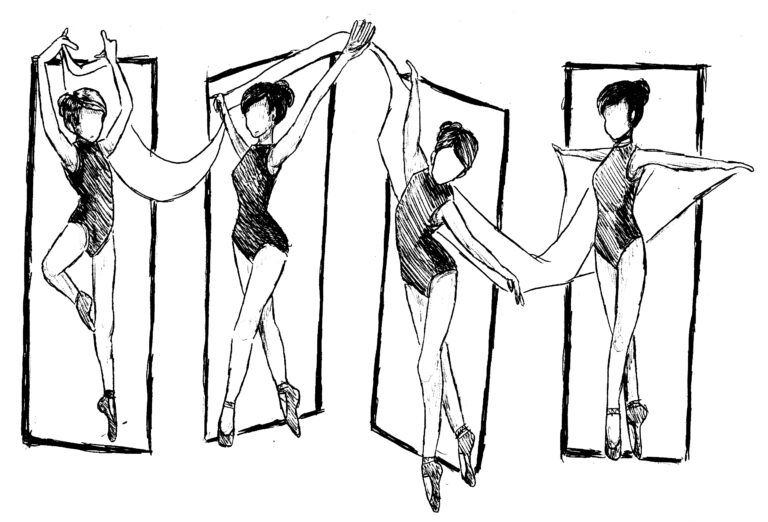
Mondavi Center presents Ballet Hispanico

New York-based dance company Ballet Hispanico will perform at the Mondavi Center on Oct. 11. Through modern dance, the dance company explores the Latino voice, experience and tradition.

Ballet Hispanico was founded in 1970 by dancer, choreographer and National Medal of Arts recipient Tina Ramirez. The company became committed to exploring, preserving and celebrating Latino culture through dance. Since their small, grassroots beginnings, they have grown to become internationally recognized for their work.

The organization has performed for over two million people around the world and has worked with over 45 choreographers to commission 80 original dance pieces. The pieces tend to be inspired by either a specific Latino identity or a fusion of many Latino identities.

UC Davis professor and contemporary Latina/o and Chicana/o theatre scholar Jon D. Rossini is set to moderate Ballet Hispanico’s Mondavi visit. Rossini believes dance is one of the many ways people can communicate their cultural uniqueness and that it helps the audience to see the differences in each culture’s experiences.

“There are a wide range of bodies that are being represented and some of the choreographers and artists are coming from outside the U.S. and think more broadly about Hispanic identity,” Rossini said. “Others think of dance in less specific terms, especially artists from the US The experiences of Latinos in the US can be very different than those in other countries.”

In 2009, founder Ramirez retired from her post as the artistic director and was replaced by company dancer Eduardo Vilaro. Vilaro, founder of the Luna Negra Dance Theatre in Chicago, has choreographed multiple dance pieces and has been widely recognized and honored for his work.

Jeremy Ganter, director of programming at the Mondavi Center, experienced Vilaro’s work firsthand when he sat in on one of the company’s New York rehearsals.

“I was taken by Vilaro’s energy and blown away by the pieces I saw. They are looking at the past, present and future of Latino dance. Vilaro takes great joy in his work and it shows through their performance,” Ganter said.

Though the company puts great emphasis on their performance, they also offer a lot of opportunities for community involvement, especially with young people. In Manhattan, the studio holds dance classes for ages two to 18. Classes are offered for those who dance as a hobby and for others with pre-professional outlooks.

Along with the Manhattan classes, the company also holds workshops and master classes in schools around the country as they tour. Unlike many dance companies, Ballet Hispanico holds beginner classes for students who may be interested in the art, but have never had the chance to partake.

“We are interested in exposing students to working artists. We’re used to groups mostly teaching master classes for already highly-trained students, so it’s great the company is willing to work with beginners,” Arts Engagement Coordinator of the Mondavi Center Ruth Rosenberg said.

The company will be holding a class at a high school in Dixon as well as Natomas Charter School in Sacramento. As for UC Davis students interested in learning more about Ballet Hispanico, there will be a Q&A session onstage immediately following the show on Oct. 11.

Ganter believes the experience will be one-of-a-kind and is excited for Davis to welcome them.

“They show what modern dance can do all while expressing their culture and that deserves to be seen in this community,” Ganter said.

For ticket information, visit the Mondavi Center Box Office or  tickets.mondaviarts.org.


AKIRA KUMAMOTO can be reached at arts@theaggie.org.

Festival on the Green

0

On Oct. 12, Central Park will rock.

The Festival on the Green, a concert sponsored by Music Only Makes Sense (MOMS) and the Davis High School Blue and White Foundation, features nine bands performing on two stages from 2 to 10 p.m.

The bands include Midi Matilda from San Francisco, Radiation City from Portland, Cherry Royale from Atlanta and Oakland and Be Calm Honcho, a band with two Davis alumni, including vocalist Shannon Harney.

“The bassist and I both went to Davis, so we have an attachment to playing for our friends and community,” Harney said. “It’s always cool to come through and support the local public schools. Everyone in our band participated in art programs when we were kids, so we hope that Davis will come out.”

The concert, which costs $18 in advance and $20 at the door, will benefit two programs that support public schools in Davis. The profits will be split between the sponsors.
The vice president of the DHS Blue and White Foundation, Karen Mattis, said that her organization’s share of the profits will go to their Student Activity Grant Program, which aims to provide grants for students who want to participate in curricular and extracurricular activities.

“It gives financial support to students who otherwise may not receive it,” Mattis said. “They can apply for a grant for any extracurricular. This goes from a student who needs track shoes to somebody wanting to go to engineering camp for four or five days. We try to give anyone who applies something.”

MOMS, who previously organized the Davis Music Festival, will use their share of the profits to support an art grants program for public schools in Davis, according to MOMS president Danny Tomasello.

The collaboration between the Blue and White Foundation and MOMS came up during a previous charity concert.

“A former president of the Black and White Foundation, Marty Morris, brought Danny Tomasello in to help select the bands for a concert we were organizing at Wild Horse Golf Course,” Mattis said. “This year we decided to bring the concert away from the golf course and into downtown.”

Mattis feels as though her partnership with Danny is effective.

“We both have our own niche,” Mattis said. “I can do organizational work and keep things in the background going, while Danny can connect with the bands and give them what they need.”

Tomasello selected bands for the Davis Music Festival that he thought were talented and would receive positive feedback from audiences.

“We really wanted Cherry Royale and Rita Hosking, but they were not available in June, so we booked them for this show,” Tomasello said. “Be Calm Honcho and Extra Classic were really well-received, so we invited them back. We also have Kingfisher and Sea Train to show young talent, and Midi Matilda was a request from Karen, who saw them open at a concert.”

Tomasello said that he hopes people would come out to see the concert in order to see the exciting things Davis is doing.
“As far as students go, they might only think of Davis as the university, but this fundraiser will let those students see what we’re really doing,” Tomasello said. “Also, there is a cool music scene in Davis and this will help people pay attention to that.”

For more information on Festival on the Green, visit davismusicfest.org.

JOHN KESLER can be reached at arts@theaggie.org.

Women’s soccer begins conference title quest

0

Teams: UC Davis at Long Beach State; UC Davis at UC Irvine

Records: Aggies, 3-5-2 (0-0-0) ; 49ers 7-5-0 (1-1-0) ; Anteaters 6-5-0 (1-1-0)

Where: George Allen Field – Long Beach, Calif.; Anteater Stadium – Irvine, Calif.

When: Thursday, Oct. 10 at 7 p.m.; Sunday, Oct. 13 at 1 p.m.

Who To Watch:

Senior Ashley Edwards scored the game-winning goal in a 1-0 victory over the University of the Pacific in the Aggies’ last game on Sept. 27. She has two goals on the season now and will look to make an even bigger impact as the Aggies move into their conference schedule. Edwards started all 19 games last season and finished with a team-high 16 points which included seven goals and two assists. She was selected as one of three team captains on this year’s squad.

“Edwards possesses an excellent work rate,” said head coach Maryclaire Robinson of her star forward.

Junior goalkeeper Taylor Jern recorded a shutout in the win against Pacific for the third Aggie shutout of the year. Jern started all 19 games last year as well and finished with a 1.09 goal against average and 84 saves. She is on a hot streak right now, not having conceded a goal in two consecutive games. She seems primed to lead the Aggies into their conference matchups starting on Oct. 10.

Did You Know:

Head coach Maryclaire Robinson is only three wins shy of 200 for her remarkable career at UC Davis. If all goes well and the Aggies win their next two games at Long Beach State and at UC Irvine, then coach Robinson could possibly win her 200th win at home on Oct. 17 against Hawaii. Regardless of what game marks her career milestone this season though, Robinson is very much looking forward to winning her 200th game, but probably not for the reason you’d think.

“I’d like to reach that milestone this year, but because it means that the team is winning,” coach Robinson said.

The win will have to come in conference play which is always harder, as the intensity and desire to win spikes, but the victory will be that much more rewarding.

Preview:

The Aggies head into this critical two game stretch in desperate need of a couple wins. Their non-conference schedule was difficult with some very good teams, but they just couldn’t get the victories.

There is reason to hope though. Besides the shutout win against Pacific, the Aggies played very well against top competition, going 1-1-1 against Pac-12 teams. Nevertheless, UC Davis is probably going to need to win the Big West in order to make the postseason this year. That journey starts with the games at Long Beach State and UC Irvine.

Long Beach State is 7-5-0 so far this year and one of the top teams of the Big West. They earned a spot in the NCAA tournament last year, so they have a postseason pedigree to give the Aggies trouble. UC Irvine is 6-5-0 this season but is only 1-3-0 at home, giving hope that the Aggies can continue that trend when they visit on Sunday.

The key for the Aggies is to make the most of their opportunities. Many times this season, the Ags have gotten into winning positions but have just failed to convert.

“We can compete with anybody,” coach Robinson said. “Every day is an opportunity to be our best.”

The Aggies will certainly get their chance to prove this against two good sides in Long Beach State and UC Irvine.

– Vic Anderson

The Force: Coming to select retailers near you … someday

Lightsabers may no longer be a figment of George Lucas’ imagination. Harvard physics professor Mikhail Lukin and MIT physics professor Vladan Vuletić are the closest yet to making the Lightsaber — a laser beam-bladed sword and every Star Wars fan’s weapon of choice — a reality. If the research produces tangible results, they will look and feel nothing like the light-up plastic versions sold nationally in toy sections; Lukin and Vuletić are working on the real deal.

Within the Harvard-MIT Center for Ultracold Atoms, Lukin and Vuletić have been conducting a highly isolated experiment in which they’ve bombarded super-cooled clouds of matter with a photon stream, causing the photons to bind together in a molecular manner.

For those of you that don’t know, photons have traditionally been defined as the basic, elementary mass-less particles of light that exist independently of each other. They curiously behave as both waves and particles, a concept proposed by Albert Einstein in his Quantum Theory of Light. The key point to the experiment is that photons have the capacity to enter into what is called a “photonic-bound state,” a rarely observed theoretical condition upon which Lukin and Vuletić based their research.

“Photons have long been described as mass-less particles that don’t interact with each other. Shine two laser beams at each other and they simply pass through one another,” Dr. Lukin said.

The Harvard Crimson website mentioned that researchers found that the photon light elements could be “manipulated into acting as if they had mass” after they had been subject to the super-cooled cloud of matter. It would appear that the photons entered the bound state upon encountering their target.

The result? A malleable aggregation of light quanta-trapped within the designated particle cloud.

The research team headed by Lukin and Vuletić continue to capitalize on the photonic ability to enter into a bound state and are attempting to create units of “colliding beams of light,” similar to those employed by the Jedi and Sith (members of the dark force) in the Star Wars Saga.

Though the development of a real-life lightsaber is still in the distant future, Star Wars fanatics can rest assured that these fantastical physical properties of photons aren’t limited to our favorite galaxy far, far away.


EMILY SEFEROVICH can be reached at science@theaggie.org.

Around the world in six hours

0

To celebrate cultural diversity, The International House Davis, also known as the I-House, will be hosting the third annual International Festival Davis (IFD) on Oct. 12 in association with The Culture C.O.-O.P., UC Davis and the City of Davis.

Nearly 30 countries will be represented in order to share a deeper understanding of their world views, aesthetics and cultural heritage in order to bridge the gaps that result from cultural differences.

With “Unity in Diversity” as its motto, the free event will include live music, dance, food, art, fashion, vendors of diverse cultural themes, along with informational booths and a guest speaker. Many of the performers are highly acclaimed in their fields, taking part in national and international events.

Starr Garrison, volunteer coordinator of I-House, created this event in hopes of offering an informal opportunity for people to learn about similarities and differences between themselves and people of other cultures.

“It’s a way of being in a kind of community with somebody who you would never think you would be communal with,” Garrison said.

The first International Festival, which was held in 2011, was a large success. Garrison and Sandy Holman, event coordinator and director of the Culture C.O.-O.P., had only expected a turnout of roughly one thousand people, but it turned out to be three thousand.

Indian, Native Americans, Aztec, Colombian and Indonesian dance troupes, among many others, will be giving lively demonstrations of their heritages.

Galena Street East Productions (GSEP), one of the headlining performers of the event, is a world-renowned dance production that was not only chosen by former Gov. Arnold Schwarzenegger to represent California in the Festival of States in Washington, D.C., but also opened for the pre-Olympics in Beijing in 2008.

The GSEP performers, who range from elementary students to young adults, focus on developing their gifts and talents to be able to share them with many nations and communities.

“One of my main focuses is to have different nationalities singing and dancing songs from around the world instead of just one culture doing their own heritage. I feel this creates an interest and eventually an understanding and love of all cultures,” said Jeri Clinger, director of GSEP, in a statement.

Cori Grimsam,  public show coordinator of GSEP, expressed that since most people view music and dance as a way to experience the traditions of different cultures, it remains important to GSEP to achieve authenticity in performances.

“You have to be careful when you’re doing a performance that you’re representing it correctly,” Grimsman said.

But music and dance will not be the only forms of entertainment at the IFD. There will be a fashion show showcasing traditional and modern fashions from around the world. Nathalie Minya, whose designs have appeared on “Oprah,” designed many of the outfits that will be exhibited on the runway.

In past years, the fashion shows in the IFD have always been a highlight of the event. Holman described this aspect of the event as “culture in motion.”

Also attending will be international guest speaker Dr. Tererei Trent, a fellow with the Center for AIDS Prevention Studies at the Department of Medicine, UC San Francisco.

Trent, who has been involved in HIV prevention research in sub-Saharan Africa, will be sharing her story about growing up in rural Zimbabwe, lacking access to education and rising up to the challenges of the unequal distribution of access to resources and education.

The festival will be held at the Veterans Memorial Center from noon to 6 p.m. For more information, visit internationalfestivaldavis.org.


DANIEL STAECHELIN can be reached at arts@theaggie.org.

Editorial: Freedom of expression

0

Among college students, the Bill of Rights has found its place in popular culture — like Second Amendment puns about arming bears and memorizations of the Miranda rights from countless episodes of crime TV shows.

But this October, the First Amendment should be the one on everyone’s lips: the right to free speech. If any of you check your email as manically as we do at The Aggie, you’ll have read (or at least noticed) the Oct. 4 email from Provost Ralph Hexter titled “UC Davis Freedom of Expression Draft Policy: Open Forums and Ways to Engage.”

The announcement concerns the Blue Ribbon Committee for Freedom of Expression, a group created in April 2013 by UC Davis Chancellor Linda P.B. Katehi. The group’s inception was spurred by a report from the Academic Senate’s Freedom of Expression Committee addressing “Freedom of Speech and Protest Policies.”

The committee, made up of representatives from multiple groups on campus (such as the UC Davis police chief and ASUCD President Carly Sandstrom), is drafting a policy regarding freedom of expression at the university — and it needs your help. There will be four forums for discussion, as well as a call for written feedback via a web survey.

So why should you care? Consider recent incidents at other universities where free speech has been infringed upon. On Sept. 25, student activists at Modesto Junior College, Madison Area Technical College and the College of Central Florida were banned from handing out U.S. Constitutions on their campuses. Six days before that, a University of Cincinnati student was threatened by arrest and prevented from gathering signatures for an Ohio ballot initiative outside of the school’s designated “free speech zone.” He sued — and won.

If you don’t want these types of transgressions on your rights at UC Davis, speak up. Show up to the forums and take the opportunity to try and change any policies you feel doubtful about — perhaps from “Section III: Time, Place, and Manner Regulations,” which establishes that expression can only be exercised if it doesn’t interfere with “University operations.” (We know some student activists might especially take interest in point D5: “No person on University property or at official University functions may use university properties for overnight camping”).

The first forum is from 12 p.m. to 1 p.m. on Oct. 14 in the Student Community Center Multipurpose Room, with three others following it in the subsequent weeks. If you can’t make it to the meetings, fill out the online survey, which can be accessed through the Provost’s email.

Rather than complaining retroactively, take the chance to make a change right now. Make your voice heard, be proactive and take advantage of your rights. If you don’t speak up for yourself, someone else will. And you might not like what they have to say.

New mothers continue to face social stigma against breast-feeding

Breasts. They’re pretty important. Do you know why? If Sports Illustrated comes to mind, you may need to rethink how you view these masses of adipose tissue. Don’t worry — you aren’t the only hominid to have forgotten that mammals (with our root meaning breast; see: mammogram) evolved to use the organs on our chests.

This is causing a crisis among women who are new to parenting. In fact, Laurie A. Nommsen-Rivers and colleagues from UC Davis recently reported that breastfeeding problems are very common among first-time mothers, leading these women to add formula or abandon breastfeeding overall.

The study, which involved women in different stages of pregnancy and childbearing, revealed a myriad of problems associated with breastfeeding. Among these issues were breast pain after feeding, perception of insufficient breast milk and concerns infants were not feeding well enough at the breast. The survey revealed that while 75 percent of American mothers initiate breastfeeding, less than 13 percent follow through with the six months recommended by the American Academy of Pediatrics.

In an email correspondence, Nommsen-Rivers spoke on behalf of the UC Davis research team about this issue. She believes that women certainly have access to information on breastfeeding in the classroom and online, but the problem stems from a lack of vicarious learning.

This means that women do not usually observe others breastfeeding. The research team correlates this with societal attitudes against breastfeeding. They write, “As a society, we can help to ensure that all expectant mothers have … learning opportunities by being a more breastfeeding friendly culture. For example, it is important that mothers feel welcomed to breastfeed wherever they may go with their baby — whether it be at a restaurant, the park, the mall, etc.”

This fear of mammary glands is both new and alarming. Breastfeeding has been a part of the human life cycle since we evolved, as seen in our animal relatives. It is very important for making healthy humans. One of the biggest benefits of breastfeeding stems from the immune system boost mothers pass to their children. A woman can pass up to half a gram per day of Immunoglobulin A antibodies via her milk. These end up in the intestines of the infants and help fight infection.

Over the last few hundred years, breasts have become centers of attention for different reasons. Why this occurred is hard to say, but the researchers recommend help for the concerned, new mothers. The scholars suggest plans to evaluate breastfeeding and make mothers more comfortable with their role in childbearing. Perhaps the lactation rooms on our very own campus can help set this in action.

“I’ve seen [the lactation rooms] around but I’ve never seen them in use,” said Amy Chyan, a second-year neurology, physiology and behavior major.

While not many of the younger student population may take advantage of these rooms, Lonna Hampton, the lactation specialist at WorkLife on campus, knows the true importance of the lactation rooms.

“The rooms benefit students, staff and faculty who are separated from their infants during their time on campus, as they provide excellent quality breast pumps and a private place in which to pump,” Hampton said in an email.


CATHERINE MAYO can be reached at science@theaggie.org.

Clery Report indicates reduced crime on UC Davis campus

0

The recently released annual “Clery Report” showed a general reduction in criminal activity on the UC Davis campus from 2011-12.

Some of the most notable reductions were a decrease in forcible sex offenses and a significant decrease in the number of burglaries that occurred in 2012 — two of the most common crimes on campus. The Clery Report numbers from 2012 also showed that there were no hate crimes on campus during that year.

“We’re working with the community to keep the campus a safe place to work, study, visit and live,” said UC Davis Police Chief Matt Carmichael in a news release from the UC Davis news service.

The reduced crime rates can be attributed in part to increased use of preventative measures by students. Simple things like keeping windows closed at night and during vacations, staying aware of surroundings and not going out alone after dark can help to decrease some types of crime.

The Clery Report numbers for 2012-13 have not been released yet.

Bike theft, burglary on campus

UC Davis has more bikes registered through TAPS than it does full time students, and bike theft is a big issue for everyone from students to professors.

“Bike theft is the biggest crime that we see on campus,” said Andy Fell of the UC Davis Police Department.

Bike theft could certainly account for a large amount of the burglary charges shown in the 2012 Clery Report.

Campus safety

Contrasting the improved crime rates on the UC Davis campus is the explosion that took place on the UC Berkeley campus on Sept. 30.

According to UC Berkeley spokesperson Dan Mogulof, who spoke about the incident to the LA Times, the explosion was most likely caused by a burglary that occurred earlier in the week when copper wire was stolen from an off-campus electrical system. The explosion took place near California Hall, and at least four people sustained mild injuries such as burns.

“[We] weren’t sure what to do in the emergency,” said Karin Olivia, a fourth-year UC Davis animal science major who was visiting friends at UC Berkeley when the explosion went off. “It was mass hysteria at first.”

All students were evacuated from the UC Berkeley campus at the time of the disaster while fire, police and ambulance crews contained the explosion and made sure that everyone was safe. About 20 people were trapped in the elevators but were eventually rescued, and temporary generators were brought into the campus to power buildings while repairs were being made.

According to Fell, the UC Davis campus has well developed disaster preparedness plans for such emergencies. A full time emergency planner is in charge of the program, and an emergency operations center coordinates responses.

Fell also advises students and faculty to sign up for WarnMe text alerts to receive info about potentially dangerous situations. You can sign up at warnme.ucdavis.edu.

Homicides in City of Davis

The City of Davis is considered to be a relatively “crime free” city, Fell said. However, two cases of homicide occurred in the City of Davis this past year.

The first was the double homicide of elderly Davis couple Oliver “Chip” Northrup and Claudia Maupin, whose bodies were discovered on April 14, 2013. Daniel Marsh, 16, has been accused of killing Northup and Maupin.

Marsh is ineligible for the death penalty because of his age, and has pled not guilty to the charges of murder and torture. However, he is being tried as an adult and faces life in prison if convicted.

Most recently, a five-year-old girl was found in the trunk of her mother’s car in Sacramento and pronounced dead on the way to the hospital on Sept. 30. While the mother and daughter were found in Sacramento, the crime is suspected to have happened in the City of Davis, within a mile of the area where Northrup and Maupin were killed in April.

The homicides from the past year have definitely shaken up some Davis residents. The prime suspect for the death of the five-year-old is her mother, 29-year-old Aquelin Talamantes. Northrup and Maupin’s murder shocked residents because a teenager was found to be responsible for the horrible tragedy.

“I worry about kids [being] out at night,” said Michael Plonsk, a citizen of the City of Davis.

The Clery Report may indicate a lowered crime rate, but the recent events show that serious crimes do still occur, and members of the UC Davis and City of Davis communities have reason to be cautious.

Students that are at any time worried about their safety when they are out and about are encouraged to call the campus escort service or campus security and to always report any suspicious behavior.


TAYLOR CUNNINGHAM can be reached at city@theaggie.org.

Alzheimer’s patients fare better if diagnosed early

Forget me not. The impact of Alzheimer’s disease continues to grow. Fortunately, a recent Medicare-sponsored study conducted at UCLA offers some promise of earlier detection and better outcomes for Alzheimer’s patients. Dr. Daniel H. Silverman, the lead investigator of the study, a clinical professor and the head of the Neuronuclear Imaging Section of the Ahmanson Translational Imaging Division at UCLA, proposes that Alzheimer’s patients who are offered a FDG-PET scan earlier in their diagnosis fare better than patients who aren’t offered a scan.

The study is unique in the sense that it is the first Medicare-approved trial in which the value of performing FDG-PET scans is assessed on patients diagnosed with Alzheimer’s.

“This is the first time anybody has ever done a clinical trial with a level of rigor on the evaluation of brain imaging for Alzheimer patients,” Dr. Silverman said.

In the blind study, the FDG-PET scan — a brain imaging tool that evaluates brain function region by region — was performed on all of the participants, but the interpretation of the scan results were randomized. In one group, the results of the brain scans were released immediately to physicians, and in the other, such information was withheld for two years. During the course of the two years, participants were assessed on their health and cognitive abilities every six months.

“Parts of the brain that are more active take up more glucose and more FDG … and if the brain is affected by Alzheimer’s it shows how it is decreased by the disease,” Dr. Silverman said, when discussing the value of an FDG-PET scan.

Evidently, aside from an autopsy, it is the single most effective way of determining whether or not someone has been affected by the disease.

“If someone has a normal pattern of FDG, there is a 95 percent chance that they don’t have Alzheimer’s disease,” Dr. Silverman said.

Thus, early signs of Alzheimer’s can be detected through the use of the scan.

The control group whose doctors were provided with the brain scan results saw the warning signs of Alzheimer’s and prescribed their patients with proper medication within the first six months of the study. However, the group whose doctors were not given the brain scan results immediately did not prescribe their patients with medication within the first six months. The prescription of medication by the end of the first year was also very slim.

Therefore, the results of the study indicate that when physicians are provided with as much information about a patient’s brain function, the more likely they are to prescribe an appropriate medicinal regimen at an earlier stage of diagnosis.

Although the results of the study are based on 63 participants out of the 710 approved, research is one medium that provides intervention to patients with Alzheimer’s, but sometimes isn’t fast enough to improve lives.

However, intervention at both the individualistic and the assisted-living levels are not to be discounted. According to Bruce R. Reed, a professor of neurology and the associate director of the UC Davis Alzheimer’s Disease Research Center, non-drug interventions are just as important.

“Supervision, companionship, social stimulation, activities at an appropriate level, providing for good nutrition, medical care and safety in daily activities – these are things that are extremely important,” Reed said in an email interview.

Patients of Alzheimer’s tend to do poorly on their own, regardless of the severity of the disease.

It is important to note that Alzheimer’s is a very complicated disease, involving both genetic and environmental influences. According to Laurel Beckett, a research specialist and biostatistician also at the UC Davis Alzheimer’s Disease Research Center, Alzheimer’s has many modifiable risk factors.

“Vascular damage to your brain … seems to increase the risk of Alzheimer’s or brings on the damage and symptoms earlier. We can actually prevent or treat a lot of the risk factors for vascular damage, through: smoking, hypertension and type 2 diabetes,” Beckett said.

The study is still in progress, however. In the meantime,  individualistic interventions can be made, such as modifying poor behaviors (for example, quitting smoking) and seeking continuous support from caretakers.

JASBIR KAUR can be reached at science@theaggie.org.

Column: Watts Legal

0

Question: “If I live in a private residence and park there with a private permit, does TAPS have the authority to ticket me for parking?”

Answer: Law enforcement agencies have limited jurisdiction. Sometimes the restrictions on jurisdiction are legal: The FBI enforces only federal laws, not state laws, for example. Sometimes the restrictions are territorial: The CIA can’t assassinate people with drones within the borders of the United States. And sometimes the restrictions govern the types of people against whom the laws can be enforced: The Sacramento police department can’t fly to New York and start arresting people.

Even seemingly omniscient agencies have their limits. The National Security Administration, or NSA, isn’t supposed to spy on domestic communications (though the recent leaks from government contractor Edward Snowden exposed that as more of an aspirational limitation than one set in stone).

Like the CIA, UC Davis’ Transportation and Parking Services can enforce laws only within specific territory. TAPS outlines this on their website. The UC Davis Medical Center, located in Sacramento, helpfully explains that the “‘B’ permit that is posted on signs on the streets is a residential City of Sacramento ‘B’ permit and is enforced by the City for compliance.” Of course, parking on those city streets removes you from their jurisdiction, but also from their protection. TAPS reminds visitors that “Parking on the streets also places your vehicle at greater risk of vandalism and theft as our enforcement staff do not patrol those areas.”

More clues to TAPS’ jurisdiction are found in the UC Davis Traffic and Parking Code, which was “adopted for the purpose of promoting safe and orderly movement of traffic within the boundaries of the University of California, Davis Campus, the University of California, Davis Medical Center (UCDMC), Sacramento, or other grounds or properties owned, operated or controlled by The Regents of the University of California and administered by the Davis Campus, (all hereinafter referred to as the University), and for the safe and orderly parking of vehicles and bicycles thereon.”

In short, if the University doesn’t control the property, TAPS has no power there. I’m assuming your parking complex is truly private, and not some kind of university-private hybrid. Unless the Regents control your apartment’s parking lot, you shouldn’t get a TAPS citation. TAPS has a map on its website showing its jurisdiction around Davis: taps.ucdavis.edu/sites/taps.ucdavis.edu/files/attachments/parking_map.pdf

Question: “After an unfortunate event in one of the UC Davis on campus housing units, my roommate and I got in trouble for being at a neighbor’s house and being too loud past the quiet hour. Because there was alcohol present, each guest was referred to the ‘conduct coordinator.’ Although both my roommate and I did not drink, we got a formal warning and were told we had to attend an Alcohol Education Seminar. When we got the email there was a link regarding a survey:

‘Please complete our baseline survey by using the following survey invitation link. You must complete your survey by ____’

The survey was regarding drug and alcohol consumption and changed which seminar you had to attend based on your answers. My roommate, for example, answered a question regarding marijuana and now has to attend a different seminar. My question has to do with the legality of forced participation in the survey. I thought all experimental participants must be voluntary, including surveys and experiments alike.”

– Megan V., Davis, CA

Answer: You’re correct that universities receiving federal funds must comply with regulations issued by the federal Office of Human Research Protection. Those regulations generally require informed consent from humans participating in research studies. But what you’re describing does not necessarily sound like research. I’d have to see the full survey, but it sounds like this survey isn’t used for research, but for determining the appropriate way to punish a particular student. Although it bears resemblance to an experimental survey, so does a lot of UC Davis coursework. Think of a multiple-choice final exam or a math placement test. They’re “surveys” to determine whether you get a degree.

It also sounds like this survey, if used for research, might be intended to determine which of these alternative substance abuse programs is most effective in preventing subsequent offenses. Section 46.101(b) of the Code of Federal Regulations specifically allows surveys used in educational settings, if they’re used to gauge the effectiveness of certain educational programs. Anonymous surveys are also generally fine.

However, these surveys are not exempt from the informed consent requirement if “any disclosure of the human subjects’ responses outside the research could reasonably place the subjects at risk of criminal or civil liability or be damaging to the subjects’ financial standing, employability, or reputation.” This is where the University might have a problem.

Universities don’t always follow the law (see Pepper Spray Cop, 2010), so it’s possible that they’re conducting an illegal research survey without students’ consent. Since they’re asking students about illegal activity, they’re definitely in a gray area.