37.8 F
Davis

Davis, California

Wednesday, January 14, 2026
Home Blog Page 913

Police Briefs

0

WEDNESDAY Oct. 9

Pizza Planet
A pizza delivery car was driving over 50 miles per hour on Fifth Street.

THURSDAY Oct. 10
Organized chaos
A crossing guard was misdirecting children into oncoming traffic on Cowell Boulevard.

Annoying Orange
Someone on Hanover Drive is having an ongoing problem with a guy with long orange hair jumping out from under the stairs and scaring him.

FRIDAY Oct. 11
Pedalophile
A transient subject was talking to a bike rack on C Street.

SATURDAY Oct. 12
Smooth delivery
A suspicious person came to someone’s door saying he was there to deliver something, but had nothing in his hands and was looking into the homeowner’s windows on Chiles Road.

SUNDAY Oct. 13
Completely powerless
Someone on Cantrill Road called to report her power had gone out but she didn’t know her address.

Police briefs are compiled from the City of Davis daily crime bulletins. Contact EINAT GILBOA at city@theaggie.org.

Government shutdown affects UC Davis, city community

1

On Wednesday Oct. 16, Congress voted on legislation on to reopen the government after a 16 day government shutdown and raise the debt ceiling. A failure to reach a decision regarding the appropriation of funds was the reason for the federal government shutdown. Federal agencies had to work with a skeleton staff, scientific databases were no longer being maintained and funds were no longer being distributed.

The shutdown has drawn criticism from the public and elected officials, mostly due to the lack of discussion between disputing factions. The bill passed by Congress will reopen the government until Jan. 15 and raise the debt ceiling until Feb. 7.

Within two weeks, hundreds of thousands of federal workers were furloughed. In Davis alone, over 200 U.S. Department of Agriculture (USDA) employees cannot work. Eight government websites are shut down altogether, while over 42 are severely limited.

Farmers cannot afford to harvest their crops because federal inspectors cannot visit the sites. If they can harvest it, they will be forced to sell their crop immediately rather than wait until spring for better prices since the Farm Bill subsidies only carry over through this fall season.

Businesses cannot apply for alcohol or import/export licenses. Facilities which make processed food for the masses are only being inspected by 976 out of 1,602 FDA investigators.

Federal grants, loans

Thankfully, the shutdown does not affect federal grants or loans for the 2013-14, but research and scientific tools are severely limited.

Gary Falle, associate vice president for UC Federal Governmental Relations at the UC Washington Center, explained that there are three major areas of funding: financial aid, research and healthcare. Each area is affected to different degrees, with research suffering the most immediate impacts, financial aid remaining stable per academic year and healthcare remaining most stable due to the majority of money coming from trust funds.
“Despite the shutdown being a heavy disruption, all the money for federal financial aid is paid in advance for each academic year, so no students are going to have their grants pulled,” Falle said. “However, if it goes on to July 1 [the day after the 2014 FAFSA application deadline], we might have an issue because the funds won’t have been made available for incoming students.”

Gina Banks, director of Federal Government Relations at UC Davis, pointed out that many agencies saw the shutdown coming and were able to soften the blow.

“Luckily I think that many federal agencies foresaw that this might happen so they tried to get everything out the door before it did,” Banks said. “Given that we did receive the last of our financial aid money on Sept. 27, and the government shutdown on Oct. 1, there might be some correlation but that’s purely conjecture.”

The National Institute of Health (NIH) and the National Aeronautics and Space Administration (NASA) now have severely limited resources. Faculty members at university campuses were required to submit grant proposals by Oct. 5 to the NIH in order to receive appropriations, but now the proposals are left in bureaucratic limbo.

Dawn Sumner, a UC Davis geology professor, ran into funding roadblocks with NASA, which funds her research.

Professor Sumner had originally planned to spend four weeks in Antarctica this year and six weeks next year in the spring to collect chemical samples at key transitions in the microbial communities. Due to the shutdown, there is nobody to give the OK for Sumner’s team.

Lockheed Martin, the logistics contractor for United States Antarctica Project, hasn’t received further funding and is forced to disassemble support. Lockheed Martin has also sent memos telling all American-backed researchers to suspend their work until further notice.

“I keep trying to put it in perspective; I keep telling myself that it’s not a health and safety issue” Sumner said. “But there is a huge amount of science research that’s really damaged by this. The Antarctic field season is such that a brief pause might mean us losing the whole year.”

Debt ceiling

If the government didn’t by Oct. 17, the United States would have had to default on its loans, losing its full faith and credit.

The debt ceiling was established in 1917 as part of the Second Liberty Bond Act. The bill served to finance the U.S. entry into World War I by allowing the government to take on more debt.

According to a 2008 report, “The Debt Limit: History and Recent Increases” by government financial analyst D.A. Austin, a debt ceiling is a useful means for a government to remain in good standing with its lenders. It is the United States’ way of stating that it will only borrow a certain amount of money before it has to pay back the debt it has already incurred.

The Treasury Department pays back the debts in a constant cycle throughout the year using tax revenue. The issue this year is that the tax revenue did not match the amount of debt.

Another issue is the failure of the Budget Control Act of 2011, which instated yearly spending caps for Congress over the next decade.  The end goal was successfully making $1.2 trillion in cuts.

A “supercommittee” consisting of Democrats and Republicans from both branches of Congress was to be appointed by Majority Speaker of the House John Boehner. Their job would be to decide where to find the income, whether it be from increased taxes, spending cuts, or entitlement reform.

Boehner did not appoint a committee, which resulted in cutting all discretionary spending by 8.2 percent.

Rep. John Garamendi, representing California’s 3rd District (including Davis) and former Deputy Secretary of the Interior during the Clinton Administration has experienced two of the longest government shutdowns in U.S. history.

Garamendi endorses raising the debt ceiling for at least a year, as it will provide stability and deeper understanding of the problems the government is facing.

“The Tea Party is dominating the discussion and driving their radical agenda,” Garamendi said. “The Tea Party has no solution, and we are coming up against another potential crisis … the United States of America cannot allow itself to lose its full faith and credit.”

Garamendi also said that laws don’t always start out perfect, and that they should be changed through normal legislative channels, not by trying to force a hand.

Importance of education

Garamendi emphasized the importance of the phase most are in right now: formal education.

“Our nation prospers with economic growth when key investments are made, the most important of which is education … [it] is the first rung on the success ladder,” Garamendi said.

The Federal Department of Education was unreachable for an interview; only six percent DOE employees were deemed “essential” to keep the department running.

Budget decisions being made now by the federal government will have long-lasting effects for the next decade.

“Even if they [students] don’t feel like the issue directly affects them, it does,” Banks said. “It affects all of us.”

VALENTINA NAKIC can be reached at city@theaggie.org.      

Letter to the Editor: Regarding TAPS

0

In regard to the Oct. 10 issue of the California Aggie and the “TAPS increases parking prices for 2013-2014” article, I am questioning the facts reported by TAPS resulting in the increased parking prices.

Although I understand that fewer permits being sold can certainly contribute to the need to raise prices, I also understand that permit prices may need to be raised to assist with the 20% salary increase of [Transportation Demand and Marketing Coordinator] Leslie Mancebo. As a UC employee, Mancebo’s salary data is public knowledge; thus her 2011 salary of $44,770.00 increased by $8,972 to $53,724 in 2012. This increase seems to be significantly above and beyond the typical UC Davis employee salary increase.

Within the article, TAPS failed to disclose how many fewer permits invoked this rate increase.  Instead, TAPS seemingly uses a magician’s sleight of hand and quotes other less-specific figures (such as the annual budget and the number of increased goClub memberships) as a diversion away from what they specifically claim to be the major contributor to the increased rates. This makes it seem like TAPS is hiding something, possibly the real reasons behind their rate hike. Perhaps some investigative journalism is required here to bring the truth to light.

Aren’t staff and students entitled to know how many fewer permits were sold between 2011 and 2012? I want to know these figures so I can to plug the numbers myself and see if they really add up to the sum that TAPS says they do.

– Anonymous UC employee and parking permit holder


Men’s soccer preview

0

Teams: UC Davis vs. UC Santa Barbara

Records: Aggies, 6-6-1 (2-2-0); Gauchos 9-4-0 (4-0-0)

Where: Aggie Soccer Field — Davis, Calif.

When: Saturday, Oct. 19 at 3 p.m.

Who to Watch:

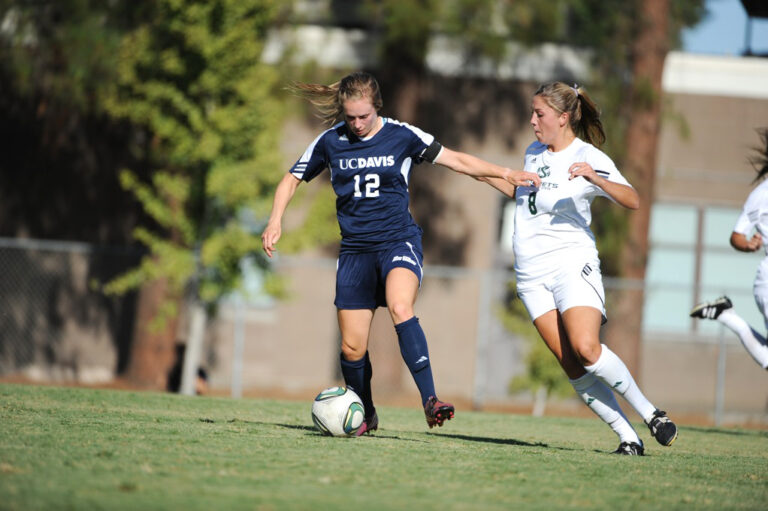
Although the weekend started off rough with a loss against Cal State Fullerton on Oct. 11, the Aggies ended the weekend on a high note with a big win against UC Riverside on Oct. 13.

Coming into the weekend matchup, both UC Davis and Cal State Fullerton held 1-1 records in league play. Although the Aggies didn’t get the results they were hoping for, they still held their own. While the Titans scored the only goal of the game within the first five minutes of play, the Aggies still had a lot of confidence heading into their second weekend game on Sunday, Oct. 13 against UC Riverside.

Not everything about their loss against Cal State Fullerton was negative. Senior goalkeeper Omar Zeenni continued his dominance in goal, making three saves against the Titans. Those three saves allowed Zeenni to set a new school record, placing him at the top of overall career saves for UC Davis goalies. With 197 saves in his Aggie career, Zeenni broke a 10-year-long record held by alumnus Nic Platter.

After their initial loss, UC Davis bounced back with a huge 2-0 victory against UC Riverside putting them back at .500 in the Big West conference.

Junior forward Matt Wiesenfarth recorded his third goal of the season, giving him the best shot percentage on the team. His goal came in the 14th minute of the game. Coach Dwayne Shaffer had high praise for his junior forward.

“He’s training really hard at practice and is doing all the right things,” coach Shaffer said. “When you get hot, things start to go your way.”

Continuing his solid season alongside Weisenfarth is junior forward Matt Sheldon. In the afternoon matchup versus the Highlanders, Sheldon kept his hot streak alive, scoring an insurance goal to help guarantee the Aggies a win.

With his goal against the Highlanders, Sheldon is the team’s leading scorer with four goals this season.

A final standout player from the match against the Gauchos was redshirt freshman Armando Quezada. Quezada started his first game in goal, and made five saves on the day.  This marked Quezada first collegiate start and first shutout victory.

“In his first collegiate game, he stepped up and played really well,” coach Shaffer said. “Armando proved today that he is a quality goalkeeper.”

Coach Shaffer was pleased with the performance which the Aggies put up in the weekend series.

“I thought we played really well and were excellent in every area of the game — offense, defense and on set piece situations,” coach Shaffer said. “The team played outstanding today.”

Preview:

The men are back at home to take on the always tough UC Santa Barbara Gauchos.  This game marks the halfway point in league play for the Aggies. A win at home would set them up to finish their season strong.

The Gauchos currently hold an overall record of 9-4. Even more impressive is their undefeated record in conference play at 4-0. With wins versus Cal State Fullerton, UC Riverside, Cal State Northridge and UC Irvine, UCSB is not a team not to take lightly.

The Aggies will need to be firing on all cylinders if they want to break above .500 this season and establish themselves as a force to be reckoned with in the Big West. However, the men feel good about their chances.

“We are feeling very confident going into the game on Saturday,” said senior Alex Aguiar. “We know that we can beat any team in the nation at any time.”

– Sloan Boettcher

ASUCD Coffee House accepts Aggie Cash

As of Sept. 26, the ASUCD Coffee House (CoHo) began accepting Aggie Cash. The CoHo became the latest of UC Davis campus dining service locations to accept this form of payment, making Aggie Cash accepted at every dining service location on campus.

In addition to the CoHo, satellite locations The CoHo To Go and The CoHo South Cafe have also begun accepting Aggie Cash. According to Brenan Connolly, the general manager of Resident Dining, students now have more variety to choose from for their meals.

“From a standpoint of partnering with the Coffee House and trying to make sure we’re looking at all the different entities of food service means that our community spends their money with as much flexibility as possible. That’s definitely a benefit to the whole campus,” Connolly said.

Along with providing variety and flexibility to campus meal plans, Connolly also hopes that the Aggie Cash will grow beyond just a first-year market. Director of Student Development Branden Pettit is pleased at the potential for freshmen involvement at the Memorial Union.

“I am glad that everything fell into place this year so that residence hall students can engage the MU community even more than before,” Pettit said in an email interview.

According to Connolly, the partnership has been in discussion for at least six years. He claims that there are various reasons why the partnership didn’t work out until now. However, Connolly also claims that Darin Schluep, the most recent CoHo food service director, saw the deal as a viable option and was one of the major reasons for why the partnership happened.

“I’m relatively new to my position; I’ve been here about a year. So I thought it’d be a great opportunity to recheck it out and see what was available out there and if we could partner with them. Really for us, the reason why we want to do it is it’s a service to the students. So it was in our best interest to make it happen,” Schluep said.

According to Chris Rzenut, Aggie Cash program controller, technical issues also played a part in the delay of Aggie Cash partnering with the CoHo. He claims with the advancement of technology over the years, cost for it has been brought down enough to possibly sway the other party’s decision.

“As technology grows it gets easier, and I think the price came down enough that it made sense. Maybe five years ago, the technology would’ve been more expensive and wouldn’t have been worth their while to do it,” Rzenut said.

According to Schluep, the decision allows the CoHo to tap into the first-year market, a much smaller market than other classes. Having already seen an increase in the first week of business, Schluep expects both the number of everyday students that come into the CoHo and sales numbers to increase further over time.

“Up until now, we had some freshmen that come over, but not as much as they’re probably going to come over now just because they can use their Aggie Cash here. We’re tapping into a freshman group of 5,000 or so that are now able to utilize their Aggie Cash here,” Schluep said.

Although a 10 percent discount is given to those who use Aggie Cash at a majority of participating locations, the CoHo will not provide a discount for using Aggie Cash at this time. Schluep claims the reasoning behind this decision is that prices at the CoHo are already competitive. However, he also claims that the door for an Aggie Cash discount remains open if the program goes well for the Fall Quarter trial period.

“If down the road, we see that there’s a benefit to offering a discount, we do have the door open to do that if we so choose. Our prices are discounted already. That’s how we look at it. We have some great prices; we hold up well against anybody else,” Schluep said.

As of now, Aggie Cash is accepted at every location in the CoHo except the two outside registers at the Marketplace. According to Schluep, if one wants to use Aggie Cash at the Marketplace, they have to go to the middle three registers. There are also signs to direct people to which registers accept Aggie Cash. Schluep claims that it was a business decision to save money on installation costs as these registers are only open a couple of hours a day during the CoHo’s peak period.

A business’ startup cost for Aggie Cash includes running wires, purchasing readers, a monthly charge for the readers in case one fails and a monthly charge that goes to the service by Sodexo.

According to Kyle Privette, Dining Services marketing manager, UC Davis dining services look for unique businesses to partner with in terms of Aggie Cash. Privette claims what’s unique about the CoHo is that it’s on campus.

“We’re always looking for a variety of vendors that offer something unique. We don’t want 25 pizza places,” Privette said.

Regina Marion, a third-year nutrition science major, is a fan of the partnership because of the increased options.

“I think it’s great for students. I know a lot of places you would think would accept Aggie Cash, but don’t. It gives students more variety,” Marion said.

JASON PHAM can be reached at campus@theaggie.org.

Internet problems plague students

0

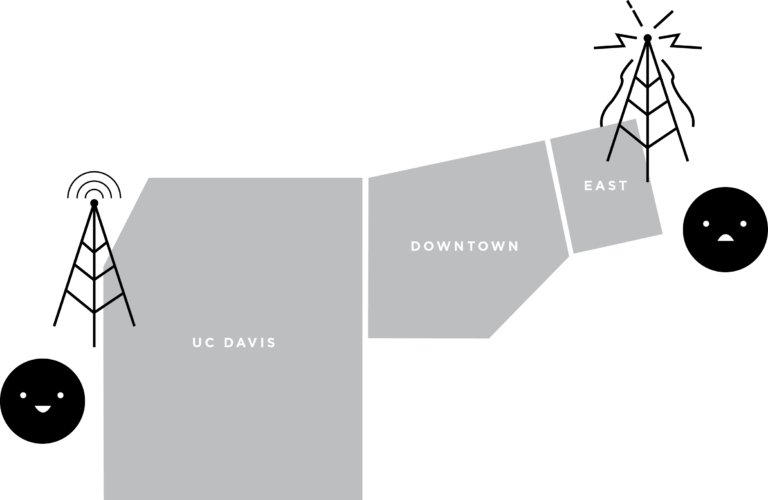
On Oct. 7, an internet outage in East Davis involving Comcast’s Xfinity services affected many students. Comcast attributed the problem to an area-wide outage beyond their control.

This problem is a common occurrence throughout the City of Davis. A wide array of students from all over Davis have reported problems with slow or no internet connection within their apartment complexes. Common internet providers include Comcast Xfinity, AT&T and UC Davis Wi-Fi.

Whether these providers are the cause of the internet and Wi-Fi problems depends on the situation. But many students do agree that getting a good, solid connection is often very difficult, especially during midterms or finals.

“When I have internet problems it’s usually because of the wireless connection or my laptop,” said Elizabeth Chun, a third-year biological systems engineering major who uses Comcast’s Xfinity service. “It’s probably due to a bad modem connection, so my computer is to blame as well.”

Issues stem from internet provider

When asked where they think the problems are coming from, students agree that the separate internet providers are to blame rather than their apartment complexes.

“It has to be coming from the providers’ end because our apartment management [cannot] do anything about it,” Chun said.

Several management offices in Davis apartment complexes have received complaints from their tenants about the Wi-Fi lagging repeatedly.

“Usually when students come in with complaints about their internet, we try to help them figure out the problem by establishing whether it’s our issue or the provider’s issue,” said Thomas Chang, the community manager of the Avalon, Sorrento and Brisa Apartments located in South Davis. “We get a few instances where it actually is a maintenance issue with the pole-wiring system. If that’s the case, we step in and file a contract for a rewiring system.”

According to the Davis Wiki page on internet providers and usage, the quality of the cable reception and internet speed is based partly on how far one’s house is from a hub. If the home is farther than 300 feet or so, then there can be some problems with signal quality and channel reception.

“AT&T might be faster, but it shares a central hub with its users, whereas Comcast uses a single hub for each household. Everyone is wired to their own internet,” Chang said.

Student housing

Some apartments use the UC Davis network for their internet services, in which the campus provides the Wi-Fi for the residents. One example is The Colleges at La Rue.

“The internet is provided by the campus which is extremely convenient because we get lightning-fast internet without having to pay monthly network bills,” said Daniel Choi, a fourth-year aerospace engineering student who lives at The Colleges. “Even when [my housemates] are using it at the same time, the ping time is almost always a single digit number, and the test results on speedtest.net always show a network speed of 90-95 megabits per second.”

Apartments that come with campus Wi-Fi seem to have a solid internet connection, although there have been problems due to the routers. In those cases, the problems can be quickly solved by connecting an Ethernet cable from one’s computer to the wall modem socket.

“If the connection were to suddenly slow down or get dropped, I would say that something would’ve happened to the campus servers,” Choi said. “Maybe the school received a major bug or virus attack, or maybe IT accidentally pressed a button that shut the servers down, or maybe even someone like a Davis’ own ‘Mark Zuckerberg’ was hosting a huge website on the campus servers, causing an exponential increase in the campus’ web traffic and overloading the systems. But it definitely would be a problem with the campus servers.”

West Village

Apartments in West Village are also presumed to use the campus Wi-Fi, but according to Julia Ann Easley, senior public information representative of public affairs for UC Davis, they do not.

“The campus network services are not extended into the West Village residences,” Easley said in an email. “However, UC Davis does provide data, voice and wireless services in West Village office spaces where campus units are housed. UC Davis also provides some Wi-Fi services in some outdoor and common areas at West Village.”

Many students living in West Village have complained about the frequent and long internet outages in their apartments. The Facebook page for The Ramble has numerous comments from students about internet outages and low connectivity issues with Wi-Fi.

West Village uses a company called Korcett to provide network services to their student apartment complexes: Ramble, Solstice and Viridian. However, the issues with internet connection are recurring, and students claim that it takes several days to fix the problem and that they have to keep calling Korcett for help.

When asked about the internet issues, the management office of West Village declined to comment.

Finding solutions

Although the cause of the problems could be the routers, some students do not think that bad routers seem to be the issue. Due to the fact that everyone has different routers under their respective internet providers, the company could be to blame rather than the routers.

“It’s never the router’s fault, it’s always the service,” said Selah Shine, a third-year international relations student, who lives in Sorrento Apartments. “When I go on my MacBook, the Airport Utility tells me my router is working fine and that there is a disconnection problem.”

In terms of finding solutions for lagging Wi-Fi, the only options are visiting the local offices of their internet providers or calling the main 1-800 number to assist and teach them how to use their service and equipment in an efficient manner.

“I would expect them to send a person from the company to either help us on the phone or come and give us a new modem in order to do whatever they can to help us out,” Chun said.

TAMMY LEE can be reached at city@theaggie.org.

Pence Gallery opens new exhibits

As a part of the ARTober festival, a month-long celebration of the arts and humanities in October, Pence Gallery opened three new exhibits. The exhibits’ opening reception will take place this weekend and will include a curator talk with a San Francisco guest curator.

Since 1975, the Pence Gallery’s mission has been to educate and inspire the community by offering high caliber art exhibits by local and regional artists and providing education programs for all ages. Every year, they offer 14,000 visitors free admission to encounter quality exhibits that cater to all ages.

The nonprofit gallery organizes several different exhibitions and events for the community throughout the year. The Pence has planned for three different exhibitions to be on display for the public for this month: “Reality ,” “Magic Lands” and “The Tiny Show.”

“Reality²” will be the largest exhibit this season, presenting an exhibition of Bay Area figurative painters, selected by San Francisco artist and art critic DeWitt Cheng, on view from Oct. 1 through Nov. 10.

On Oct. 11 from 5 to 6 p.m., the gallery will host a curator talk, where guest curator Cheng will give an overview of the “Reality²” exhibit. The free admission includes free wine and food provided by Holly’s Hill Winery. The talk will also be accompanied by a performance of “Dracula,” by the Acme theater company.

This particular exhibit will show the works of six Bay Area figurative painters, Arthur Bell, Mark Bryan, William Harsh, Chris Leib, Pierre Merkl and Michael Kerbow. Their works all display a modern take on pictorial realism, illustrated with imagination and humor in different naturalistic styles.

Natalie Nelson, curator and director of the Pence Gallery, usually chooses the artists for the exhibitions. This time, she invited Cheng to do so, since he is known for his expertise relating to California artists.

“I believe the Pence Gallery’s mission is to highlight local California art. We try to represent really good art that may not have had a lot of exposure. We like what is a little off the mainstream and what shows a different side of the art world. I think ARTober is the perfect time to display Cheng’s picks for ‘Reality²,’ as all the pieces are very different, quirky and thought-provoking,” Nelson said.

DeWitt Cheng is a well-known sedulous art critic and artist from San Francisco, known as a kind of “ombudsman” for Bay Area visual art. He acts somewhat as a catalyst for curators, suggesting names of artists, or helping to put artists’ work in perspective for the art audience.

“I had run across the work of these artists in various places over the years, from Open Studio to the internet, and believed that their work deserved more exposure. ‘Reality²’ focuses on surreally imaginative figurative painting as a vehicle for social and political satire, but there are others, of course, whose work would be perfect for other themes,” Cheng said.

For example, artist Michael Kerbow chooses to depict modern landscapes, like in his painting “Means to an End,” which shows an everyday landscape view, of a freeway running through a busy city, but with an ominous tone.

“These artists are doing something totally different with reality. When you think of realism, one normally thinks of the 19th century. But these guys incorporate a naturalistic style that embodies realism in a completely different way,” Nelson said.

Another show on display at the Pence Gallery for ARTober is “Magic Lands,” which displays the art of Cynthia Martin Kroener, on view from Sept. 28 through Nov. 3.

Some of Kroeners works include depictions of the alpines around Lake Tahoe and the Sahara desert. Kroeners said her travels serve as inspiration in her art.

“I love color. I love travel. And I try to convey both these loves of mine in the art I create. I’m having fun. That’s all that matters,” Kroener said .

On Oct. 11, from 6 to 9 p.m., the opening reception will allow guests to meet the artist and view the exhibit. All the exhibits on display for ARTober will only be displayed throughout the month of October. For more information, visit pencegallery.org.


LARISSA MURRAY can be reached at arts@theaggie.org.

Inside the Game with Kendall Frisoli

0

In just her first year on the UC Davis women’s volleyball team, Kendall Frisoli looks to have a promising future. Currently averaging 1.5 digs per set, Frisoli will have many more years to flourish and develop her game as an Aggie.

A Southern California native who was already known as a basketball standout at Thousand Oaks High School, Frisoli was recognized more for her volleyball talents. Posting 307 kills and averaging .335 kills per game in 2012, Frisoli helped her team to three consecutive 14-0 league records. As a result, Frisoli never lost a league match and earned three consecutive All-Marmonte League Championships.

Frisoli luckily had time to meet with Aggie Sports Writer Shaun Moncada to discuss UC Davis volleyball, the transition from high school to college and her musical talents.

Being a standout in both basketball and volleyball during high school, what made you pursue volleyball heading into college?

I have been a multiple-sport athlete for my entire life and choosing to play one sport was one of the hardest decisions for me. I had a separate passion for both basketball and volleyball, but both complimented each other — the aggressiveness in basketball and the jumping and agility of volleyball. But by the summer of my senior year in high school, I decided to start focusing on the one sport that I was taking seriously going into college —  volleyball.

As a follow up, what was the appeal of the UC Davis volleyball program?

Besides the school itself, I knew I wanted to go to the UC system. Coming up north from Southern California, the environment here was laid back, the people were nice and I am close to family. Volleyball-wise, while participating at Libero Camp the summer before my junior year, that is where I was offered a spot to come play at Davis. Being able to interact with the Aggie players and coaches drew me in. It felt like a family and felt like a home.

You received so many accolades and achieved great success in high school. How has the transition been from high school play to now playing at a collegiate level?

It is an entirely new level, and that is what pushes you to limits and levels that you never thought were possible. So few people are able to play collegiately and while you know it is going to be harder, until you get here and experience it for yourself, it is definitely different. The girls are bigger, serve better; everything is at a new level.

Currently in the midst of Big West Conference play, from your perspective, how would you describe the season thus far?

We have had our ups and downs, but we are becoming a consistent team, and that is our goal. We want to find out who we are and play with that mentality. Although tied for fifth place, we know there is a lot ahead of us. We must focus on every team individually. The Big West conference is so stacked and anyone can be beaten on any given day.

What many people may not know about you is that you play and compose for the guitar. How important has music been in your life?

Music is my expressive outlet. Being in college and balancing it with sports, even if I have no time for playing music, I force myself to do it because it is such a release for me. Writing music and expressing my feelings allows me to be me. I love performing for and with people. Music just brings people together.

Finally, with school now a couple weeks into the quarter, how does it feel to be a student-athlete at UC Davis?

I feel proud. It is a very special thing to call yourself a student-athlete. The work put in, going to class, practicing, even going to get food is a chore now. Then coming home to do homework and going to bed, it is literally eat, sleep, play. This experience, having this team, it is like a family, and it makes for an easier transition into college. I am proud to be a UC Davis student-athlete.

– Shaun Moncada

MLA elects Davis professor as president

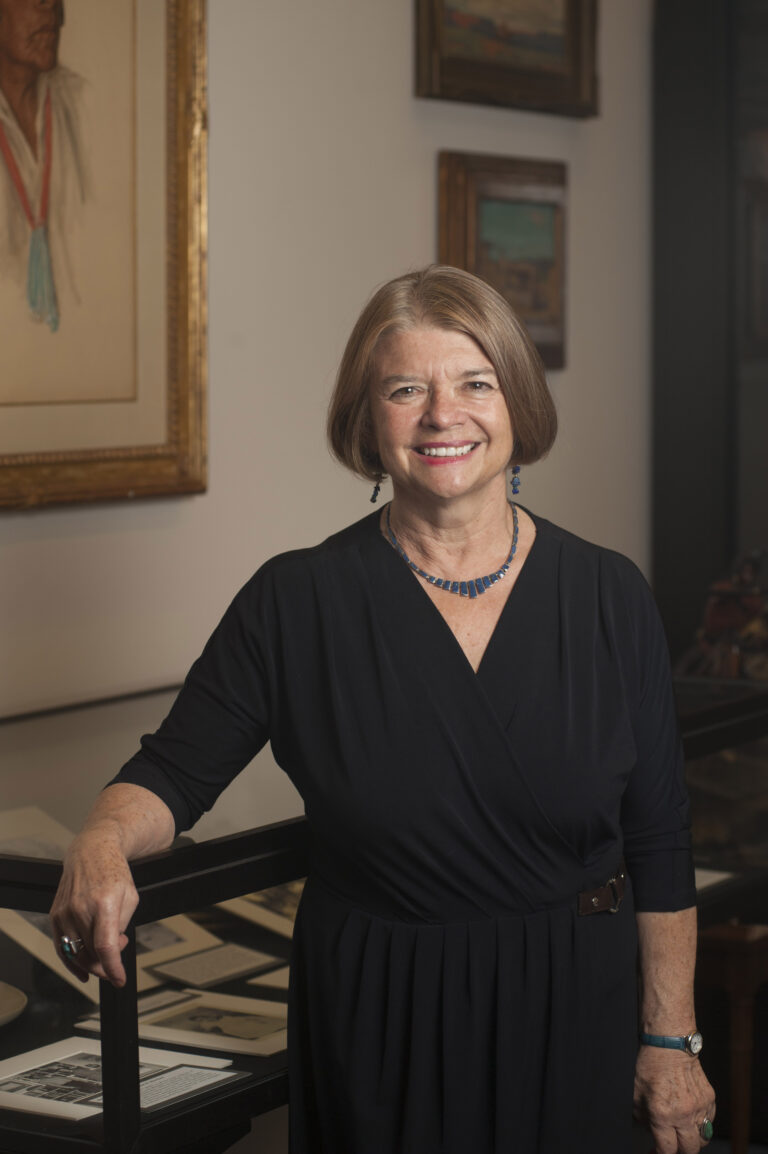
UC Davis Department of English Professor Margaret Ferguson plans to bridge the gap between college and high school language education as the Modern Language Association’s (MLA) new president.

The MLA is best known for its guidebook to citation style, which is used by almost everyone at UC Davis. When most students start college, they’ve already known about the style guide. It is the standard for citation in high school as well as college. Since not many manage to memorize it, it’s a safe bet that few students know anything about the MLA beyond it.

“The rules are constantly updated. That takes a lot of thought and also feedback from people who are using them, including students. We get interesting feedback from students who say, ‘this just isn’t clear,’“ Ferguson said.

Ferguson is best known to students for teaching a range of English courses at UC Davis, including English 3, the course that introduces many to higher education literature. This stage of college education is very important to Ferguson, as it offers the most variety in students. English 3 is generally a class taken by those who are not pursuing English as a major. It is also one of the first steps to transitioning from high school to college level courses, an area which Ferguson has shown a lot of interest in with her work in the MLA.

As president, Ferguson plans to look at and help with the implementation of new core standards for K-12 curriculum. What does a style guide for citation have to do with K-12 core curriculum? Overall, not much. However, this is much closer to the heart of what the MLA was created for.

“It started in 1883 as an organization for professors of modern languages, to help them gain a place in university and college curricula — different from the very big place that classical languages and literature then held,” Ferguson said.

MLA stands for “Modern Language Association.” Modern refers to the type of language it draws attention to, not how recent the association was formed.

“It is the biggest organization for language and literature teachers in the world,” Ferguson said.

Language, she feels, plays a big role in what the MLA should be focused on. Although recent years have apparently seen a shift of the “L” from Language to Literature, literature is merely a branch of the larger language focus in the MLA.

MLA presidents are expected to write and act as a spokesperson for the organization. Ferguson has already decided one of the things she wants to talk about.

“I want to talk about the ways in which teachers of writing, teachers of foreign languages, teachers of literature, can pool their resources through the MLA to address some major issues in colleges which are losing funding for some of their language departments,“ Ferguson said.

MLA was organized around modern language, which goes beyond classical language. This includes English, but not necessarily only literature. The interests of the MLA stretch beyond college because they involve language education, which starts at the K-12 level. One of Ferguson’s major focuses as president is to begin and continue education effectively.

“I’m hoping to bring some high school teachers in to talk to MLA members, who are mostly but not always employed as college teachers, about how we can better bridge the social and educational gaps between six to 18-year-olds and 18-year-olds through graduate students,” Ferguson said.

Her colleague at UC Davis and the current English Department chair, Elizabeth Miller, recognizes the importance of Ferguson’s focus and efforts.

“We, as professors, need a better sense of how our students are being prepared for college, and high school teachers likewise need a better sense of what is expected of students when they come to university,” Miller said.

Ferguson’s efforts in the MLA are not even isolated to merely educational problems in kindergarten through graduate school, but extend to aiding in the continued success of graduating students.

Another colleague from the English Department, Gina Bloom, expressed interest in Ferguson’s current project with the MLA.

Ferguson has been working on a document to set standards for letters of recommendations done by professors. The hope is that it will help professors to more easily write adequate letters.

“I’m especially excited about the work she has already begun doing to address the problem of inflation in letters of recommendation. More than ever before, faculty are expected to write more and longer letters of recommendation that do not necessarily have any greater of an impact on students’ success securing positions at graduate schools or in jobs,” Bloom said.

In her one-year term as president, Ferguson hopes to continue the success of the MLA and aid in the improvements she feels are already happening in the organization. One of her roles as president is to inform people of what the MLA is and emphasize its advocacy of helpful educational policies and academic freedom.

“I hope that the MLA will continue to advocate on behalf of lecturers and other non-tenure-track faculty, to support graduate students facing a difficult academic job market and to be a national voice for academic freedom. I know that Margie shares all these goals,” Miller said.


NICK FREDERICI can be reached at features@theaggie.org.

ITS-Davis leads national consortium for sustainable transportation

0

UC Davis’ Institute of Transportation Studies (ITS-Davis) was chosen by the U.S. Department of Transportation to lead the two year, $11.2 million research consortium.

The center will aim to reduce greenhouse gas emissions from passenger and freight transportation on the state and federal levels. They will approach this through fuel and vehicle alternatives, environmental and energy policy and community development and outreach.

In a world largely dependent on fossil fuels, vehicular mobility and profit margins, institutional change in the transportation system will be the overarching goal of the National Center for Sustainable Transportation (Transportation Center) now based here at UC Davis.

Operating since 1991 ITS-Davis began as an interdisciplinary approach to “sustainable transportation” between faculty and students even before the term was widely used.

This was a major reason they were chosen to lead the consortium, according to Daniel Sperling, founding director of ITS-Davis and executive director of the Transportation Center.

“From the beginning, we emphasized the environmental, energy and livability aspects of transportation,” Sperling said. “We were one of the first to do that in the U.S. and we have grown and developed that reputation from experience.”

Made up of transportation institutes from the University of Southern California, CSU Long Beach, UC Riverside, University of Vermont and Georgia Institute of Technology, the consortium will attempt to facilitate cooperative change by partnering with influential stakeholders like car and oil companies, local governments and public interest groups.

“Our primary focus is mitigation by reducing carbon emissions and energy use,” Sperling said. “We’re trying to help cities and states develop a more sustainable transportation system and we will provide them with information and assistance to find what the best way forward is.”

Secondary to mitigation, another objective for the center concerns land use and travel behavior for extreme weather patterns that climate change is expected to produce.

“Our research will analyze vehicles, fuels and technological fixes to the problem, but we will also be looking at the infrastructure itself,” said Susan Handy, professor of environmental policy and Director of the Transportation Center. “We will examine how we build roads, how we can operate them in a way that reduces emissions and how we can get people to drive less through how we design our communities.”

The Transportation Center’s plans include mobilizing findings by creating a model curriculum for sustainable transportation students nationwide, hosting weekly online seminars and holding a National Summit on Transportation and Climate Change to discuss the translation between research and policy.

This is often the most difficult step in the process, according to Anthony Eggert, executive director of the UC Davis Policy Institute and partner of ITS-Davis.

“Today people are bombarded from advocates, concerned citizens and industry groups,” Eggert said. “Our primary mission is to penetrate that noisy system by taking technical information and distilling it into a form that is accessible to policy makers to better inform policy and benefit the community.”

According to Eggert, the transfer from academia to application in the private sector will require economic sustainability in terms of affordability and profitability in a market economy. They will be dealing with large vehicle and fuel industries which bring in nearly $1 trillion every year in the U.S. alone.

“Any time you’re trying to change an industry of that size you have to recognize that the only way to make an impact is through scale,” Eggert said. “We can’t just sell a few efficient cars and a few gallons of low carbon fuel. It has to be millions of cars and billions of gallons.”

However, as automakers introduce more efficient, electric and renewable energy models to the market, increased production will likely drive down prices for consumer accessibility.

Eggert also noted that the interdisciplinary approach of the Transportation Center is important for addressing concerns for both private and public sectors.

“What we find in the research is that you cannot change the transportation system with one particular technology or strategy,” Eggert said. “You need a portfolio of strategies which includes fuels, vehicles and land use to reach energy and environmental goals, making sure policies are scientifically, legally, socially and economically sound.”


SEAN GUERRA can be reached at features@theaggie.org.

Guest Opinion: YOU should run for Senate!

0

Hey everybody, this is Eric Renslo, your ASUCD Elections chair for the 2013-14 school year. If you are reading this, then it is not too late for you to run for Senate; in fact, you’re ahead of the schedule!

Petitions come out at 10:00 a.m. next Tuesday, Oct. 15. You will have until 4 p.m. the following Tuesday, Oct. 22, to collect 125 signatures from other undergraduate students. Be sure to collect a few extra signatures in case there are duplicates or some of the entries are illegible. Once you collect 125 signatures and agree to abide by our election codes, you will appear on the ballot for ASUCD Senate. It’s that easy!

And no, you don’t have to be a political science major. ASUCD loves political science majors; however, students from other majors greatly increase our diversity of thought. Engineering, science and music majors are just as encouraged to run for Senate as any other student.

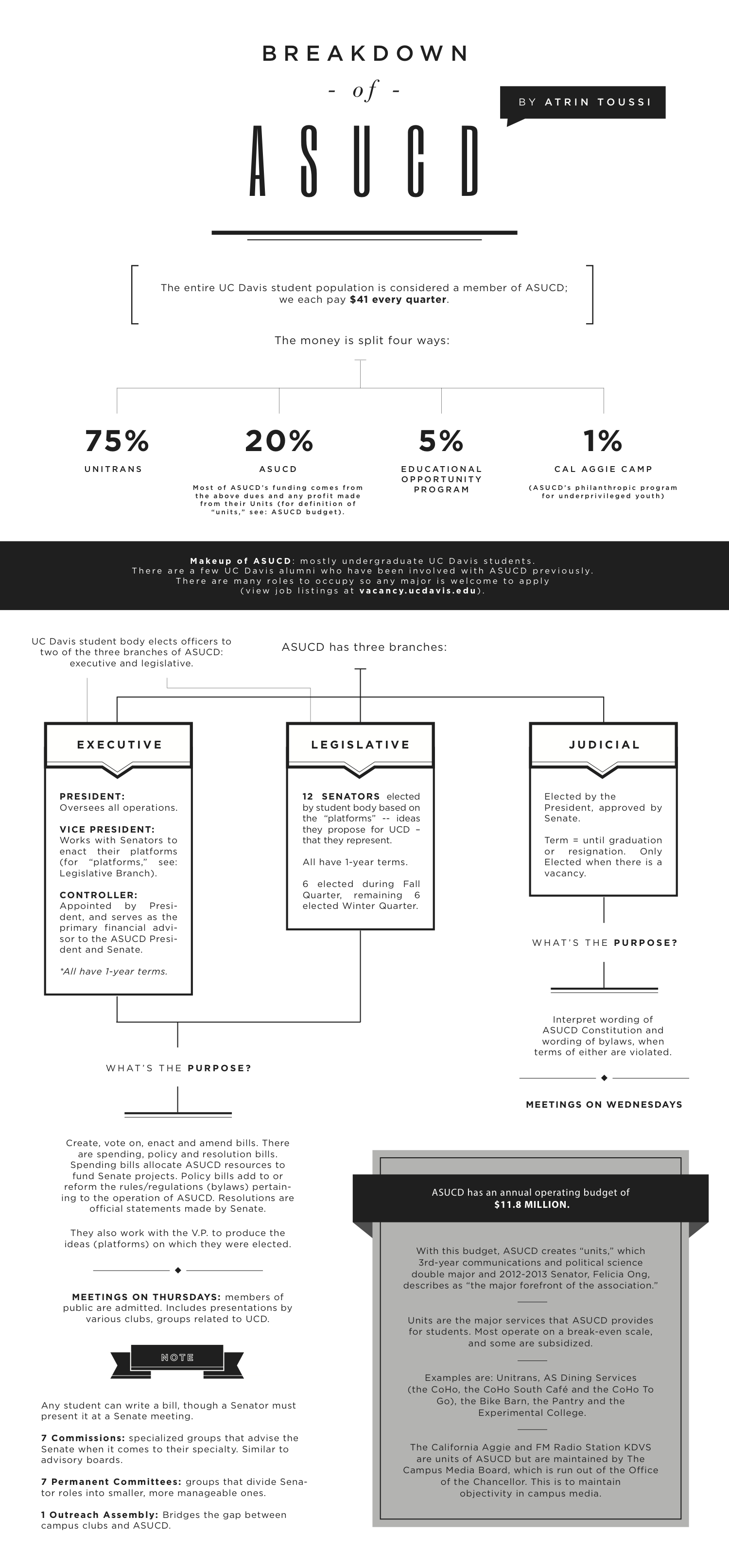
There are many great reasons to run for Senate. First, our student government has an $11.8 million budget. Senators approve the budget yearly and influence where our money is allocated.

Second, senators see important legislation that affects other students. Senate meetings are frequently filled with many people voicing opinions to their student representatives. By running for Senate, YOU have the opportunity to be that student representative!

Lastly, it is a great work experience to talk about with future employers. Being a senator signals that you are a leader, an advocate for students, and able to communicate well with others. This may be the final time you have such an incredible opportunity to demonstrate all of these traits at once, unless, of course, you become a politician.

A reason that people conjure up for not running is that the pay is low. To be fair, $49/week won’t allow you to be “poppin’ bottles.” But that money can pay for your weekday lunch the entire time you are on Senate.

Being a student representative is not about the money. It’s about standing up for issues you believe in, accomplishing things you would not have done otherwise, and having fun at your weekly Thursday night Senate meetings. The money is just a bonus.

You should really consider taking out a petition and running for Senate if you made it this far. Any undergraduate student, first-years included, can run for Senate (unless you are on academic probation).

Browse through daviswiki.org/ASUCD to view the craziness that is our student government. Check out elections.ucdavis.edu to get an idea of where you could be in just a few weeks. And after you are convinced to run for Senate, take out a petition from SGAO on the third floor of the Memorial Union, room 348, starting at 10:00 AM on Oct.15. Give it a shot!

ERIC RENSLO is a senior political science major currently applying to law school. When he is not furiously refreshing his LSAT score report page, he can be reached for questions at emrenslo@ucdavis.edu.

Column: Trying to understand…

0

Have you ever seen someone lose themselves in a battle against humor? From what I’ve witnessed and personally experienced, laughter can possess a person. It takes over — distorts the face, makes limbs flail in all directions, dominates your desire to actually breathe properly and sometimes it can even literally bring a person to the floor.

But what stumps me is what exactly distinguishes a joke or scenario from being “funny” or “hilarious.” Something funny might produce an LOL but something hilarious can generate a full-out ROFL.

The answer might rest solely in the reasoning that laughing itself can cause more laughter. Many people say things that are on the verge of “funny” but I think we all have at least one friend that expels this horrific type of noise that is funnier than the original joke, story or what have you.

That friend who bursts into hysterics for no specific reason, leaving all surrounding people entranced, and inevitably causing a chain reaction of crowing.

Laughter, at its simplest, is just a quick and automatic response to something funny, but certain people take it levels beyond laughter. Their responses can be more amusing than the original joke or story itself. I’ve noticed that if one is willing to relinquish themselves of all shame when laughing, then the power will be an undeniable force.

For example, my friend and I could be considered the crazies in any given room, based on the reality that the smallest thing could send us to the ground, laughing on our knees in public, or flopping in a ball on the floor of our room like idiots.

It seems like these types of laugh attacks are involuntary and uncontrollable.

On more than one occasion in the past two weeks, we’ve reached what some might consider public humiliation because of what laughter does to us. I kid you not, the look people have given us seems to read as: “Wow, should I go help those drunken fools out there? They don’t really look capable of biking home in the dark.”

This leaves me wanting to prove my insane levels of sobriety.

Even if a humorous occurrence deserves more than a casual recognition of humor, some people seem to be incapable of escaping the tamed version of self, and releasing themselves into the world of unrestrained amusement.

Does this mean that your ability to ROFL is rooted in how crazy you are in the first place? If so, then sometimes laughter can be a response to the acknowledgement that you are deranged and that you might (unknowingly or not) seek to physically show that through exaggerated sounds and gestures.

Maybe it’s because the people who can shriek and jump for joy at the smallest things are simply the ones who don’t mind that others might seriously question their mental stability.

But really, aren’t we all insane to begin with? The normal people are the ones who truly freak me out.

For those of you who have never succumbed to the force of extreme laughter, the struggle must be real. Because after all, laughter is the best medicine.

So next time you see someone struggling to survive because laughter is consuming them, don’t just stand back and watch — find something to laugh at yourself.

SAVANNAH HOLMES can be reached at skholmes@ucdavis.edu or find (and join) her ROFLing around Cuarto.

UC implements changes to service workers’ pay

UC service workers are experiencing a decrease in take-home pay due to the recent enactment of UC’s latest proposal for AFSCME 3299 service workers.

The AFSCME service workers include custodians, gardeners, food service workers and facilities maintenance staff. The workers are now required to contribute a larger percentage of their paycheck to the pension fund. This change follows a series of negotiations between the service workers and UC at the bargaining table, which failed to result in compromise.

“The cuts amount to a 1.5 percent decrease in take-home pay for workers making an average of $35,000 per year, and up to $124,000 in higher health costs for each worker over their lifetime,” the AFSCME press release stated.

UC maintains that the changes are part of pension reform, and the wages of service workers compare favorably to those in public and private sectors.

Much of the outrage expressed over the pay cuts involves the fact that they were imposed on a unit comprised of over 8,000 of UC’s lowest-paid workers. According to AFSCME, 99 percent of the service workers are currently income-eligible for some form of public assistance. The high level of pay and recent raises for some of the top-earning workers and executives in UC has only added fuel to the fire.

“As far as executive compensation goes, it is a very small percentage of the overall budget that UC has,” said Shelly Meron, a media specialist in the UC Office of the President. “The compensation package that we give service workers is very competitive.”

Some service workers disagree with UC’s insistence that they are providing the unit with reasonable compensation.

“Working at UC Davis, as a father of two, I can’t even afford to live in Davis,” said Ruben Santos, a senior custodian in the UC Davis Facilities Management Department. “If the pay was competitive we wouldn’t be living paycheck to paycheck.”

Santos also expressed his concern that he will be unable to pay for his children to someday attend the institution that he works for.

“This is not what a public university is supposed to stand for. They are supposed to build ladders to the middle class, and right now they are destroying those ladders,” said Todd Stenhouse, communications director with AFSCME 3229.

Other service workers are also struggling to support their families on their current income. Eugene Stokes, a senior building maintenance worker at UC Berkeley, spoke about the difficult financial choices he was faced with recently.

“Yesterday, I had to choose between paying the mortgage or helping my daughter with her tuition. On other days, that choice is between medicine and food,” Stokes said.

The changes were implemented one week before UC President Janet Napolitano began her term on Sept. 30. Many are looking to her for resolution on this issue.

Ten California state representatives recently signed an open letter to Napolitano addressing their concerns about UC’s treatment of the service workers.

“Whatever the reason, whatever the recent history, singling out the University’s largest population of minority workers for the harshest treatment at the bargaining table sends a deeply disturbing message.  Nothing could be less consistent with the values that you have embodied throughout your career,” the letter stated.

AFSCME and the service workers are currently deciding what steps to take next.

“What workers are worried about right now is our families and our futures. We love working for UC. We love the students and the faculty.  All we’re asking for is to make a fair wage and be respected,” Santos said. “We are ready to fight until we get something that’s fair.”

LAUREN MASCARENHAS can be reached at campus@theaggie.org.

Men’s Soccer Preview

0

Teams: UC Davis at Cal State Fullerton; at UC Riverside

Records: Aggies, 5-5-1 (1-1-0); Titans, 4-6-0 (1-1-0); Highlanders, 0-2-0 (5-4-2)

Where: Titan Stadium — Fullerton, Calif.; UC Riverside Soccer Stadium — Riverside, Calif.

When: Friday, Oct. 11 at 7 p.m.; Sunday, Oct. 13 at 2 p.m.

A tough loss to sixth-ranked Cal State Northridge may have ended the weekend on a sour note for the UC Davis men’s soccer team, but the Aggies started the weekend series on a high note with a victory against another nationally ranked team, UC Irvine.

Redshirt freshman forward Dashiell MacNamara struck first, 28 minutes into the Oct. 4 afternoon matchup against the Anteaters. MacNamara’s first goal as an Aggie came at a crucial time.

“I knew Ryan Gross [could] make that long throw-in, he’s been making that pass all season and can get [the ball] in the penalty area,” MacNamara said. “Matt Sheldon cut in front of me and went in for the header, I just drifted behind him and flicked it in.”

The goal gave MacNamara his first goal of the season and earned sophomore midfielder Ryan Gross his first assist of the year with his on-point throw-in.

Later in the match the Aggies would strike again, with a goal coming from the foot of junior forward Matt Wiesenfarth in the last three minutes of the game. After breaking past defenders, Wisenfarth beat Anteater goalie Michael Breslin for a goal at the near post. The goal doubled the Aggies’ lead and guaranteed an upset victory for UC Davis.

Not to be ignored on the other end of the pitch, senior goalkeeper Omar Zeenni also continued his dominance in the match against UC Irvine, earning his fourth clean sheet of the season, giving him a program-high 17 career clean sheets, tying him with alumni Nic Platter for the all-time record. Although Zeenni gave up two goals on the Oct. 6 match-up against the mighty Cal State Northridge, he still holds a solid 0.98 goals allowed per game average this season.

After a tough 0-2 defeat at the hands of Cal State Northridge in their Oct. 6 matchup, some might think that the Aggies have lost their mojo. However, with their 2-0 victory against the 25th-ranked UC Irvine on Oct. 4 and their 2-1 win over nationally-ranked New Mexico, the men still have plenty of confidence heading into this weekend’s games against Cal State Fullerton on Oct. 11 and UC Riverside on Oct. 13.

The Aggies will square off against the Titans under the lights in Fullerton, then travel to UC Riverside on Sunday. With the Titans holding a current overall record of 4-6, UC Davis should feel good about their chances of coming out of Fullerton with a win in their first away game of the weekend.

Having to play in such a high-pressure position, senior goalkeeper Omar Zeenni maintains that level-headed persona on and off the pitch.

“I feel confident about our chances,” Zeenni said. “We definitely shouldn’t be worried about them.”

Going on to describe what the team needs to do to come out 2-0 this upcoming weekend, Zeenni stressed focusing on their game, and not worrying about the Titans or the Highlanders.

“If we just come out and play our game we’ll come out 2-0 this weekend,” Zeeni said. “Continuing to have trust in the system and exploiting their weaknesses will be key.”

The Aggies hope to continue their impressive play in this weekend’s matchup against Cal State Fullerton and UC Riverside. A good road trip would help UC Davis’ standings in the Big West.

– Sloan Boettcher