58.6 F
Davis

Davis, California

Monday, December 22, 2025
Home Blog Page 99

Yolo County Library hosts celebrations for Día de los Niños/Día de los Libros

Día brings community members together to celebrate children and encourage literacy


By OLIVIA HOKR — city@theaggie.org 


Día de los Niños/Día de los Libros, also commonly referred to as Día, will be celebrated by various Yolo County Library locations throughout the month of April. Día is a nationally recognized holiday that aims to honor children and recognize society’s next generations while promoting literacy and cultural diversity. 

On April 6, the Yolo Branch Library held the first of many celebrations. The festivities began with storytime and interactive children’s songs led by Ana, an employee from the West Sacramento Branch and an organizer of the Día celebration. Books and songs were spoken in both English and Spanish to highlight the origin of Día.

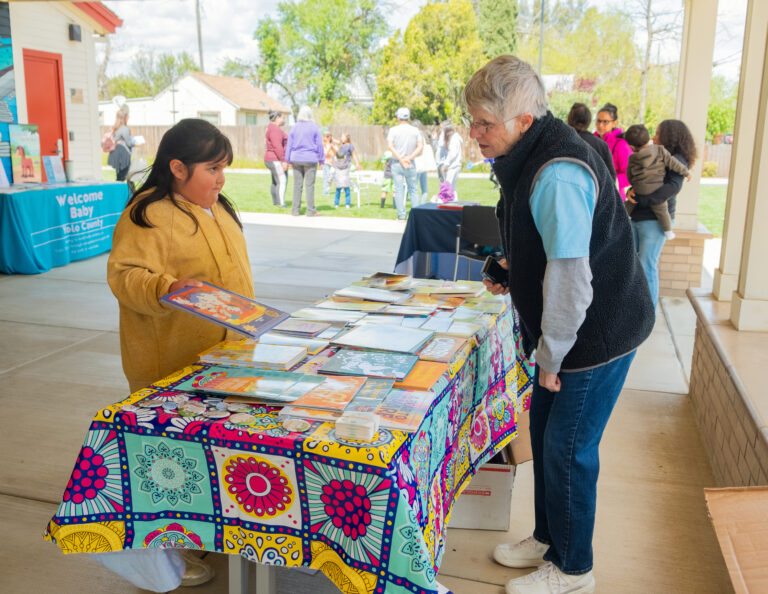
This was followed by various activity stations for children and their families to enjoy, including coloring, crafts, bubbles and building blocks. The grand finale was a performance by Nā Keiki O Hawaiʻi Dancers. A display of books was available for families in attendance to choose from and take home with them. 

Hundreds of children’s books were donated and fundraised for the library in honor of late community member, Violet Hansen, who is remembered for her love of reading. The Violet Hansen Memorial Funds were created by her family to provide thousands of books for the library and for the expansion of Violet’s Corner in the library. They hope to encourage reading and literacy in children. To honor Violet, books were donated for giving away at the Día celebration. 

A Yolo County Library employee from the Davis branch and an organizer of the events, Gaby, shared why they bring these Día celebrations to their communities every year and how it aims to educate and entertain families and their children. 

“The events are to celebrate youth, celebrate books, celebrate literacy and make [literacy] accessible for the children in Yolo County,” Gaby said. “We like to bring culture into it and bring in performers for families to enjoy.” 

A significant part of the celebration is to provide the opportunity for families to engage with others from their community. At the Yolo Branch event, nearly 20 families were in attendance and were able to enjoy a welcoming and interactive space. Children played and sang together while learning about the importance of education. 

Family Yolo County Literacy Organizer Leticia Flores is a community member and mother who attended Día on April 6. She emphasized the importance of promoting early literacy and of spreading knowledge of the available local library services, especially in small rural areas.

“I think it’s important to bring the community together and, especially with kids, have these types of hands-on events to bring people together,” Flores said. 

Flores was one of many women who were there to celebrate Día with her family but also to share information with the community regarding the organization. Yolo County Library provides many services and resources for literacy and education. This includes classes to improve reading and writing skills for both children and adults and provide overall more accessible reading materials. 

To celebrate Día de los Niños/Día de los Libros and engage with the community, people can attend an event at your local Yolo County library. Each celebration will include a special performance and offer free take-home children’s books. 


Written by: Olivia Hokr — city@theaggie.org 

Shredville finds a new mayor

New Head Coach Tim Plough ushers in a new era for UC Davis football


By MI’ZAUNI REESE — sports@theaggie.org


Last month, the UC Davis football team hosted their only spring game and prospect day, giving new staff, players and the Davis community a warm welcome to “Shredville” — a new program created by Head Coach Tim Plough. The event took place on March 9 and gave Plough a platform to showcase the new talent and skills that he has cultivated during the off-season. On CBS Sports Sunday, Plough discussed his goals for the program and what the future of UC Davis football would look like with new key staff members that will improve the program. 

Shredville is an idea created around 2017 with Plough’s SoCal slang. Shred, meaning to destroy, annihilate and demolish the competition, resonated heavily with players and thus resulted in the name Shredville.

Special Teams Coordinator Eric Raisbeck from Penn State and Cornerbacks Coach Dumaurier Jordan from Midwestern State are some of the biggest names joining the coaching staff this upcoming fall. Plough was also able to retain multiple coaches who worked under past head coach Dan Hawkins. This includes renowned Defensive Coordinator Matt Coombs, who has been with the program for five years and counting. 

Aside from the coaching staff, Plough also mentioned in his interview a few key players crucial in maintaining the integrity of the team. Fourth-year running back Lan Larrison, second-year Rex Connors and fifth-year Miles Hastings are just a few players Plough mentioned his gratuity for as they return for another or final season. 

Just before the spring game and prospect day, UC Davis football had seven athletes named part of the Big Sky Fall All-Academic team, acknowledging their academic prosperity as athletes. Not only are the Aggies strong athletically, but they are also a very academically motivated team.

The spring game also proved to be an opportunity for the team to connect with the community. With aspirations to make this an annual event, Plough invited children and community members to join the players on the field, hoping to cultivate a stronger bond and support for the UC Davis football program. 

Aside from the game, there were various activities and events, as well as prizes and t-shirts being given out to everyone, making for an entertaining and fun experience for the Davis community. The stadium was filled with fans, families and festivities, including food trucks, drinks and a DJ. 


Shredville has also been incorporated into community programs. This summer, UC Davis will be hosting the Shredville Youth Camp, amongst other football training programs, to cultivate the next generation of Aggie athletes and increase community ties to the program. In more upcoming news, the program will also be hosting a Next Level Flag Football Season for grades K through six, further amplifying community involvement. Plough has made it clear that there will be a conscious effort to turn Davis into a football town. 


Written by: Mi’Zauni Reese — sports@theaggie.org


The Pantry offers new translations of their services for international student community

The Office of the International Student Representative has been working to ensure all ASUCD units have translation services since 2022


By SYDNEY AMESTOY — campus@theaggie.org


As The Pantry recently moved to its new location at MU 117 East Quad Avenue, it also released its translation services for the translation of products in several different languages. This project was sponsored by the ASUCD Office of the International Student Representative. 

The project began as a cross-promotion between a former external affairs manager and a former international student representative in 2022 as a way to extend the services of The Pantry to the international community on campus, according to Qinyin Huang, The Pantry’s outreach manager. 

The translations of The Pantry items and services include multilingual videos on The Pantry’s YouTube account, according to Huang. 

“The mission of The Pantry is to help every Davis-affiliated individual with basic needs and food security,” Huang said. “To maximize our outreach and ensure that students are aware of our resources, this multilingual video project helps break down the language barrier and welcome those who can benefit from us.”

Asif Ahmed, a third-year economics major and the current ASUCD international student representative, said that during his term, he has continued the translation services for numerous ASUCD units that began under the previous representative.

“Recently, we also started doing it with SAO [Student Government Administrative Office], but the translation stuff has been going on since before I was elected,” Ahmed said. “One thing that I wanted to do was keep that going because a lot of the stuff that ASUCD has to provide would be more accessible to more students.”

Ahmed described how other units have used a different system of translation for their items, such as the CoHo, showing menu translations in Chinese, Spanish, Hindi, Korean, Japanese and Arabic. 

“For example, with the CoHo, they send us the menu, and within our office, we try to translate to the most popular languages [that] are spoken in Davis,” Ahmed said. “We translate it, [get] a document ready online and create a QR code. If students need to use the translations, they can use the QR codes to access it.”

  Ahmed, who is nearing the end of his term, said there are plans to create a translation committee within this office that will handle future translation services within ASUCD.

“There’s only four of us in the office [to translate],” Ahmed said. “The one thing that we kind of like to try to make sure is that whichever language is the most spoken is being translated. We have Japanese, Korean and Hindi for this year.”

Ahmed continued to say that a translation committee would ensure that there is consistency in the languages being translated within each ASUCD unit. Currently, the translations are dependent on individuals with Ahmed’s office, and having a larger committee would allow for a wider range of languages. 

While the office has translations in Arabic, Hindi, Japanese and Korean available for certain units in ASUCD, other units still have basic translations for their services in Chinese and Spanish only. Unitrans General Manager Jeffery Flynn said these translations come from within Unitrans. 

“We haven’t used ASUCD yet for translating,” Flynn said. “Unitrans has many students who are native speakers of non-English languages including Spanish and Chinese. We typically rely on our internal staff before reaching out for assistance.”

There are hopes that a committee would allow for more ASUCD units to have translations of more languages in the future, according to Ahmed.

“The long-term hope is making the entire ASUCD more accessible to international students or people who speak different languages,” Ahmed said. 


Written by: Sydney Amestoy — campus@theaggie.org 

City of Davis purchases 120 acres of farmland for agriculture conservation

Davis now owns part of a $960,000 agricultural conservation easement primarily facilitated by a parcel tax intended to protect open space


By HANNAH SCHRADER city@theaggie.org


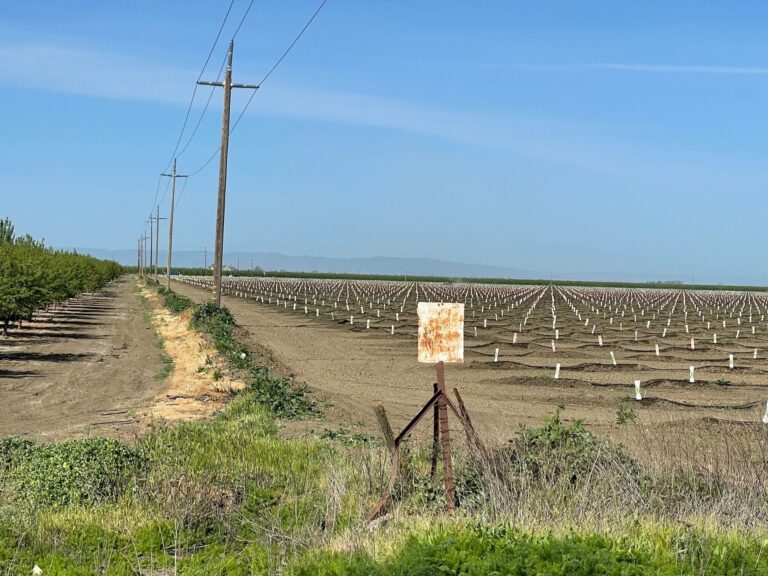
The city of Davis has made a concerted effort to protect its natural landscape through the Open Space Program, which was established in 1990 to protect farmland and habitats in and around Davis. The city now has 240 acres of protected land after its most recent 120-acre land purchase, which closed on March 15.

Measure O, a parcel tax in Davis that funds the preservation of open space, was passed in 2000. This tax enabled the city to create the Open Space Program Strategic Plan, which is an extensive plan that outlines land the city seeks to preserve and manage through 2030.

This most recent agricultural conservation easement purchase was made in partnership with Yolo Land Trust, an organization that helps landowners obtain long-term farmland protection.

Tracie Reynolds, the real property owner for the city of Davis and manager of the Open Space Program, spoke on the unique agricultural situation of Davis.

“Davis is really kind of at the forefront of [agricultural conservation],” Reynolds said. “There are not very many cities in California that have a special tax like that to support conservation easements. Davis is visionary in that regard.”

Reynolds then talked about the most enjoyable parts of working with the Open Space Program.

“Over the last 10 years or so, [I’ve enjoyed] just seeing how native grasses and native plants and everything have really taken hold much more than they used to,” Reynolds said. “I enjoy working with these property owners that are around the city […] to try to do these easements. I really enjoy […] looking at that map and trying to help implement […] that vision that a lot of people had way back […] in the 60s and 70s.”

John Currey, the executive director of Yolo Land Trust, spoke about some of the organization’s goals and priorities.

“I would say that our primary goal, first and foremost, is to protect agricultural land, [specifically] primary cultural land in Yolo County,” Currey said. “The protection of farmland against the encroachment of urban sprawl is really the thing we do in partnership with the county and our urban centers: the city of Davis, city of Woodland, city of Winters and the Esparto-Madison area.”

Currey spoke about some of his favorite aspects of working with Yolo Land Trust.

 “What’s most important to me is the relationship that we have with the farmers and the landowners,” Currey said. “These are relationships that have to last forever because these easements are forever.”

Tracy Ellison, the conservation manager at Solano Land Trust, talked about the factors that go into landowners’ decisions to sell their development rights.

 “To be a landowner means many, many things,” Ellison said. “So when landowners choose this conservation easement tool, they’re taking their ownership, and we call it in our world a ‘bundle of sticks.’” 

A bundle of sticks refers to the rights landowners have to do various things with their land including the right to: develop on their land, allow others to use their land to develop, or allow others to farm on their land and so on.

Conservation easements occur when landowners voluntarily give up the right to ever develop on their land. Ellison then referenced the fact that landowners are entirely in control of whether they sell the development rights to their land or not.

“They have an opportunity as landowners to make a decision about what to do with those rights,” Ellison said. “Some of those rights are free and clear. There’s no policy, there’s no requirements or restrictions against them, and they can do what they want with them.”“They can retire on the money [or] they can send their family to college if that’s what they need,” Ellison said. “But typically, we see landowners doing infrastructure upgrades for their irrigation, going from open ground to tree ground […] That would pay for them to put trees in the ground and buy new equipment. And so this is a landowner owning their rights and making a choice to agree to a value and the time and that space to preserve their property for all of those agricultural values with an opportunity to use the funds because of their land ownership.”


Written by: Hannah Schrader — city@theaggie.org 


In the fight for abortion rights, every ruling matters

Californians should not feel immune to attacks on reproductive healthcare 

By THE EDITORIAL BOARD

In an unsurprising turn of events, Arizona made headlines this week by blocking attempts to repeal an 1864 abortion ban. Republicans have repeatedly stalled voting on the ban, which provides no exceptions for cases of rape or incest. Former President Trump, who recently declared support for state-led abortion laws, drew bipartisan attention by criticizing the decision to reinstate the bill as going too far.

This is amid other unnerving news such as the Alabama Supreme Court ruling that IVF embryos can be legally considered children and Florida Gov. DeSantis’ abortion bill, which bans most abortions before six weeks. As of April 2024, 21 states have an active ban on abortion or restrictions more extreme than allowed under Roe v. Wade.

The purpose of this editorial is not to convince anyone of the importance of legal abortion in the United States; studies have shown time and time again that restricting abortion does not lower the number of abortions, but instead has serious negative impacts on people’s health and livelihood, especially for people of color. Instead, the Editorial Board asks you to keep paying attention. It may seem like Californians are safe from the anti-abortion sweep, but essential lobbying and legislation are happening all the time, and happening here too.

Even though abortion is protected by the California Constitution, this state is not exempt from the nationwide issue of legality versus access, where people may be unable to find or use essential reproductive health services regardless of whether such services are legal. Rural areas often have a difficult time attracting and keeping qualified physicians in their towns. Many people cannot afford to take time off to receive and recover from reproductive health care. Local groups harass reproductive health clinics and their patients. All of these issues exist here in California, one of the most liberal states in the country. Supporting local reproductive health clinics and telehealth gives patients a better opportunity to stay healthy and safe. 

Moreover, California does not exist in a vacuum. What we do in this state inspires and impacts others. California took many of the first and boldest steps to protect abortion rights post-Roe, and many other states took their cues from us. Because of our legal protections, many people travel to California to get abortions and other life-saving healthcare. 

Abortion is incredibly relevant to us as UC Davis students. A vast majority of students are not currently trying to get pregnant, though many are sexually active. Even for those who practice safer sex, unwanted pregnancy is always a possibility. Sexual assault is also an unfortunate reality, particularly on college campuses. 

Many of us or our peers come from outside of California, and plenty factored the political environment into their decision to come to Davis. A 2023 study found that three-quarters of polled college students took reproductive health laws into account when deciding to stay enrolled in their current campus. In short, fighting for reproductive health access is essential to keeping our campus welcoming and safe for students. 

Pay attention to where you can access reproductive health care in your community. For UC Davis students, keep in mind resources like the Sexess Map, Student Health and Counseling Services and the Planned Parenthood Health Center in Woodland. On-campus organizations like the Love Lab and the Women’s Resources and Research Center can also help you find information on where to get care. Even if you may not need a pregnancy test or emergency contraceptive, it’s likely that someone in your life at some point will. Being openly supportive and judgment-free about sexual health can build a support network and could end up changing someone’s life for the better. 

And vote. Not every bill will be “Abortion: Yes or No,” but there are plenty of candidates, legislation and conversations that support or undermine our reproductive rights. So cast your ballot and raise your voice — don’t let lawmakers drag us back into the 1800s.   

Written by: The Editorial Board

Spring in full swing for the UC Davis softball team

Aggies take two losses and one win


By EMMÍA J RIVERA — sports@theaggie.org


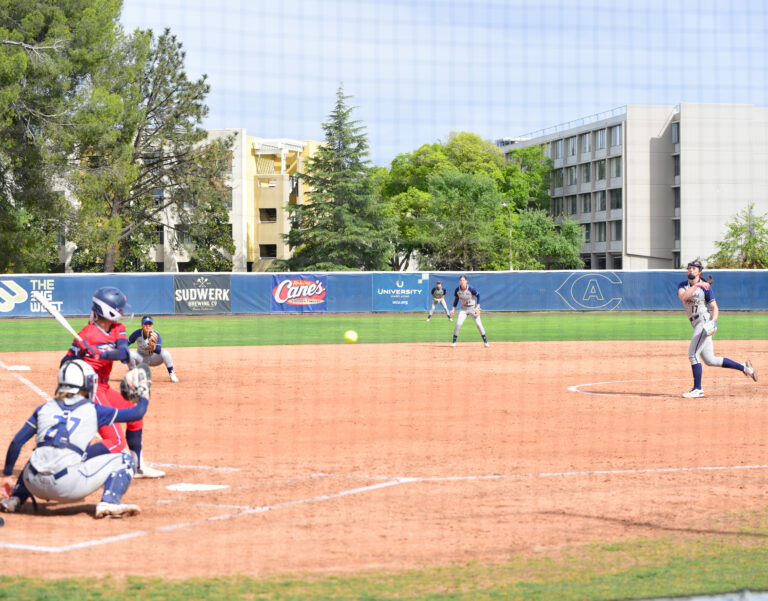
Aside from the emergence of spring, mid-March also introduces a new season for UC Davis: Aggie softball. Since the official start of Big West conference play on March 15, Davis has played three sets of competitions against opponents Cal State University (CSU) Fullerton, CSU Long Beach and CSU Bakersfield.

In their first match-up for the Aggies, UC Davis hosted current conference leader Cal State Fullerton. Unfortunately for the Aggies, the set resulted in a loss with Fullerton coming in strong to kick off their season. Fullerton was victorious in the first and third games with the third game resulting in the Fullerton shutout. Nonetheless, the Aggies still pulled out a win in the second match, showing that they were just warming up for the season.

The following week, the Aggies went back on the road where they were edged out by reigning Big West champion CSU Long Beach in three close games. Davis provided two fair fights, but ultimately fell short in the end. The first game of the series ended 2-1, where both teams battled for 11 innings and Long Beach held on to the lead.

 The second game, following the extra-innings trend, had a final score of 1-0. Even with the extra time, the Aggie comeback just wasn’t enough and Long Beach took the victory. With one game left to go, the Aggies held on to their high spirits and prepared heavily. However, in the series finale — just coming up short against the defending Big West champions — the Aggies faced another loss with a final score of 4-1. 

Aside from the losses, some of the athlete performances were undeniably stellar, with the most notable performance coming from Davis’ right-handed hurler fifth-year Kenedi Brown. Brown held on to her composure throughout all of the games and had numerous strikeouts that prevented any one of the Aggies’ opponents from extending their scores.

Additionally, fourth-year Anna Dethlefson had a strong performance throughout both games with her many hits and base steals. 

Dethlefson, the reigning Big West Conference Player of the Year, was the first UC Davis player to earn top honors since joining the conference back in 2008. She also stole her 93rd base, adding to her newly acquired title: Davis’s all-time stolen base leader.

For the last competition set in March, the Aggies hosted CSU Bakersfield at La Rue field on March 28. This set would be no easy task for the Aggies as they had another loss in the first game. With a final score of 3-0 for the first game, the Aggies were looking to finally break their losing streaks and bring home a win. 

As the team had a newfound confidence for the last two games of the set, the Aggies took two big wins on March 29, taking down Bakersfield 7-5 in the first game on Saturday and 7-1 in the second.

Despite being down 4-0 early on in the first game, base hits from fifth-year Leah Polson, fifth-year Sarah Starks, fourth-year Libbie McMahan and second-year Gia Felice helped the Aggies cut the deficit to 4-2. First-year Marley Panziera delivered an additional two runs batted in (RBI) base hit to tie the game. 

Bakersfield restored its lead, but it didn’t last as fourth-year Sarah Nakahara and teammate Polson scored a combined three runs en route to a 7-5 win. Beyond the heavy offensive production, Davis’ victory was secured courtesy of a save by Brown, who threw three consecutive perfect innings. 

In 2023, Brown was named Big West All-Conference First Team for the third straight season. Her performance looks promising to continue her streak for the fourth time.

Game two against Bakersfield provided another seven-run win with a plethora of base hits and an opposite-field home run from Panziera. The sixth inning was fueled by a three-run rally and led to UC Davis being awarded the series win. 

Coming off of a strong 15-win season last year, a feat not seized since 2010, the Aggies hope to shine even brighter on the field this season. As they won’t be leaving Davis very often this spring, April will hopefully bring more home victories to add to their at-home winning record, which is currently 11-9.


Written by: Emmía J Rivera — sports@theaggie.org


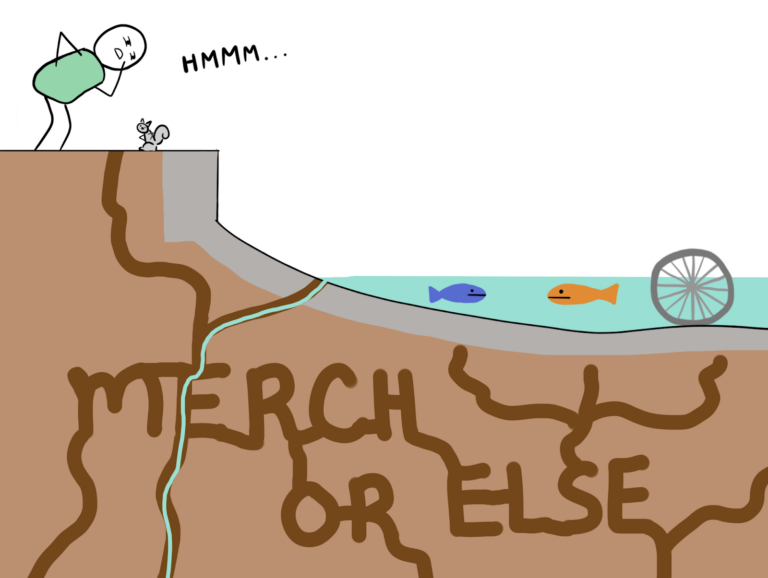
Ground squirrel tunnels cause of Arboretum water level decline, appears intentional

Drawn by: Emma Lapidus –– eblapidus@ucdavis.edu

Disclaimer: (This cartoon is humor and/or satire, and its content is purely fictional. The story and names of “sources” are fictionalized.)

UC Davis Events in April

Students and community gear up to have a schedule packed with engaging and academic opportunities 


By ELIZABETH WOODHALL — arts@theaggie.org


As we approach the end of the school year, UC Davis offers many engaging events for students to start spring quarter with a bang. Students have the opportunity to network with professionals and employers to solidify their professional future — and can join in on some engaging activities to take the stress off of school work. 

Have you ever wanted to attend a TED talk? Are you ready to immerse yourself in enriching conversations relevant to UC Davis students and everyone worldwide? Now’s your chance! On April 13, TEDX: WholehearTED talk includes performances, networking and professional development. There will be three performers and seven speakers, and the topics range from self-directed learning to the history of female sexuality. The talk will happen from 10 a.m. to 4 p.m. in California Hall, and the tickets are available on @tedxucdavis. 

The 49th Annual UC Davis Powwow is going to be happening on April 13 from 11 a.m. to 8 p.m. in the Quad. 

Powwow, as practiced today, is a social gathering intended to provide the campus and local community a space to learn about, engage with and celebrate the traditions and cultures of Indigenous peoples to bring visibility to the vibrancy of Native American music, dance and arts,” the UC Davis website states. 

The UC Davis Annual Powwow is student-run and student-planned, and it is an event that hosts vendors, drum groups and dancers from all over California. This event will allow the Native community to build connections and address the issues Indigenous people face today. 

The Spring Career Fair will happen on Wednesday, April 17, from 10 a.m. to 2 p.m. at the University Credit Union Center. The fair catalyzes students’ professional careers where they will explore various fields and solidify their job search. Employers can connect with UC Davis students and alumni — and it allows students to learn more about the open internships and full-time jobs. 

Students should attend the fair if they’re interested in learning more about the opportunities available to them. Whether you’re getting ready to graduate or are just starting your journey at UC Davis, the Internship and Career Center and Handshake facilitate the connection between students and employers. 

Picnic Day is happening on April 20 and is just around the corner! With over 200 events to choose from, people come to UC Davis from all over California to join in on this tradition. Whether you’re going to see the parade, the science show or hoping to meet some furry friends, Picnic Day promises that your day will be packed with a whirlwind of events. There will also be a career fair to connect with companies and widen your career scope. 

UC Davis students can join in on the exciting lineup of events happening this month. Networking with professionals and connecting with the community is crucial to the college experience — so don’t miss out on these opportunities!

Written by: Elizabeth Woodhall — arts@theaggie.or

The importance of media literacy

We must do everything we can to combat misinformation


By CLAIRE SCHAD — cfschad@ucdavis.edu 


As college students, most of us have gotten pretty good at identifying credible and non-credible sources. Many of our classes spend countless hours drilling the importance of research skills and careful source selection into our heads, helping us recognize the importance of forming our arguments with support from trusted sources. 

However, gathering credible sources for a research paper often looks a bit different than most people’s daily news consumption. So, while it can be easy for many college students to decide whether a source is credible enough for their assignment, it is often not as easy to discern whether that news headline you saw on X, formerly known as Twitter, is true, misleading or completely false altogether.

It has never been easier to spread misinformation. The rise of the digital age has paved the way for new voices to be brought into the spotlight. While this undeniably has some positive effects, such as giving a platform to those who had previously failed to receive formal media attention due to societal biases, it has also given a microphone to those with ill-fated intentions. This means that digital media users are left to comb through a seemingly infinite stream of content, deciding for themselves what is true and what is not. 

The process of evaluating media for its accuracy and legitimacy is deemed “media literacy,” a skill that most people have no formal training in, causing many consumers to be unable to discern if the media they are consuming is accurate and reputable. 

Falling for fake news can be especially easy on social media because as humans we often go to Instagram, TikTok or X, for entertainment first and news second, meaning our minds are on the hunt for entertaining content. This causes us to latch on to the most dramatic or interesting headlines, often failing to recognize that they are fake or misleading. A study conducted by researchers at the Massachusetts Institute of Technology found that fake news reaches people about six times faster than real news, demonstrating that entertaining or seemingly unbelievable headlines receive the most attention. 

The epidemic of fake news should cause us all to worry, and there is no sign of it slowing down. The emergence of publicly available generative artificial intelligence (AI) platforms has added an entirely new area of concern that makes fake media even harder to identify. Altered images, videos and audio commonly known as deepfakes have been on the rise, making it almost impossible for media consumers to tell the difference between altered and original content. One of the most troubling cases of this is occurring at high schools across the US, where students have non-consensually used photos of their fellow classmates to generate nude images and videos, which are then shared online.  

However, it’s not just high schoolers who have been messing around with deepfake technology, those working to spread political misinformation can alter audio and video clips to depict politicians saying things they never really said. For example, earlier this year in New Hampshire, ahead of the primary elections, many voters received a robocall that featured what appeared to be President Biden’s voice urging them not to vote. “Your vote makes a difference in November, not this Tuesday,” the voice said. As we head into the first Presidential election season where AI is being used widely by the public, it is hard not to think about the dangers that AI-generated fake media could pose to the election due to our nation’s low media literacy skills. 

I’m sure many people think it’s easy to spot fake news or content by recognizing the surrounding context, however, it’s not as simple as you might think. A study published in the Proceedings of the National Academy of Sciences found that as many as three in four Americans overestimate their ability to spot fake headlines in the news. Another common misconception is that older individuals who are not as familiar with technology are the most susceptible to fake news. But this was also debunked by a study at the University of Cambridge that found despite their increased familiarity with technology, young people and heavy media users are more likely to fall for fake headlines. 

It is clear that our society is lacking media literacy and it is scary to think of all of the ways that people could be misled by fake news. Given the growing reliance on technology and digital media, something must change. Despite the widespread acknowledgment of the danger that fake news poses, only four US states — California, New Jersey, Delaware and Texas — require media literacy education at all grade levels. 

While it is encouraging that states are starting to adopt media literacy into their education practices, more work must be done to ensure that all students across the country have access to this valuable curriculum, which has been shown to increase media awareness and the ability to identify false information. 

All states should work to implement media literacy instruction in all grades immediately. By giving students the necessary tools to spot and combat misinformation we could help our society overcome the fake news epidemic. We must also all hold ourselves accountable and ensure that we only share credible news. We have seen the harm that fake news and media can cause and now we must do everything in our power to stop it. 


Written by: Claire Schad — cfschad@ucdavis.edu 


Disclaimer: The views and opinions expressed by individual columnists belong to the columnists alone and do not necessarily indicate the views and opinions held by The California Aggie.


Representative Mike Thompson presents $850,000 check for Walnut Park Library project

The initiative is meant to expand community services with expected completion by 2026


By ALEXANDRA SHAPIRO — city@theaggie.org


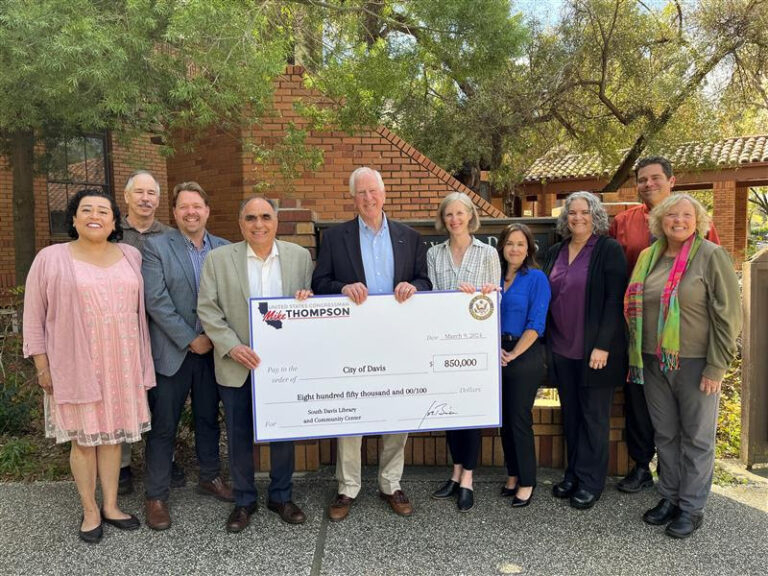
On March 25, Representative Mike Thompson secured a boost to the city of Davis by presenting an $850,000 check for the South Davis Library project. This funding was secured as part of the government funding bill signed into law on March 9, 2024.

The Walnut Park Library project has been long awaited. Davis residents first recognized the need for a library south of I-80 in 2001, and the demand for expansion led to the land allocation in 2002. Still, it was not until 2017 that the Yolo County Library Facilities Master Plan began Phase One of the project.

In 2020, community partners discussed service needs for a South Davis library branch and architects began developing design concepts. Significant progress was made in 2022 when the Yolo County Library received $8.7 million as part of the Building Forward Grant from the California State Library. The city of Davis’ commitment in 2023 granted $1.5 million towards the project and further advanced its progress.

The Walnut Park Library, scheduled for completion in 2026, will be located at 2700 Lillard Drive at the west end of Walnut Park. The facility will occupy over 12,000 square feet, providing a vibrant space for learning and community engagement. The project’s total cost is estimated at approximately $21.3 million, with funding provided by the State of California and administered by the California State Library.

This new establishment responds to the needs of an economically disadvantaged area that has experienced significant population growth in the last two decades. 

“The South Davis Library will greatly benefit a community that currently does not have access to a library by expanding library services and establishing literacy programs for children and adults,” Thompson said in a press release.

 Doubling as a community center, the library is proposed to be open six days a week, ensuring accessible services and resources for residents.

 “I am glad that Davis leaders brought this project to my attention, and I am proud I was able to secure the funding in government funding bills. In addition, this space will help to protect our community from extreme weather by serving as a warming and cooling center and a place to shelter from smoke,” Thompson said. I look forward to seeing this project move forward and benefit the entire Davis community.”

In 1968, Davis introduced its initial branch library, now known as the Mary L. Stephens Library, last renovated in 2010. However, by 2014, the Mary L. Stephens Library reached maximum capacity and continues facing challenges such as inadequate seating, tables and parking.

Thompson’s new funds for the South Davis library prove a significant investment in community infrastructure and a promising step towards addressing the needs of underserved populations in Davis. 

“The Walnut Park Library project will be a tremendous asset to the South Davis community,” Davis Mayor Josh Chapman said in a press release. “The funding support received, including $850,000 from Representative Mike Thompson’s office, $8.7 million from the California State Library and the City’s own donation of $1.5 million, will bring invaluable services and programs to the children and residents of this community. I am so proud to have been a part of this collaborative process to provide a state-of-the-art library to South Davis.”


Written by: Alexandra Shapiro city@theaggie.org

UC Davis’ Princess Pals brings magic into local children’s lives

Club officers share memorable experiences and give insight into how the organization works


By SABRINA FIGUEROA — features@theaggie.org 


Everyone needs a little light and magic in their life, especially kids. But that can be difficult to achieve for children who live under difficult circumstances such as being hospitalized with a critical illness or living in a shelter.

“Mental health conditions, such as anxiety, ADHD and depression, affect at least one in 10 U.S. children hospitalized for a medical condition or surgical procedure,” the PolicyLab at the Children’s Hospital of Philadelphia states. 

When a child is staying in a shelter, they are also more likely to develop anxiety and depression symptoms during their childhood and adolescence. 

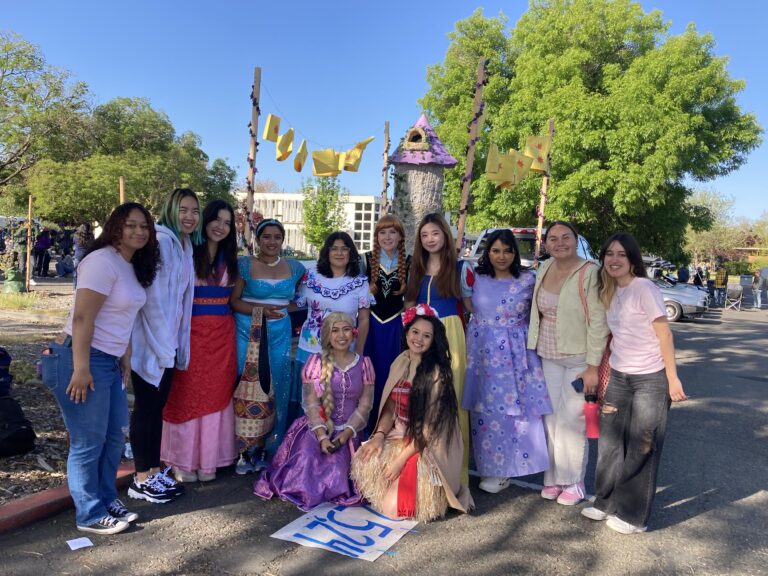
Princess Pals, an organization at UC Davis, is set up with the intention of bringing that magic and light into the lives of children who face these difficulties mainly by dressing up as beloved Disney princesses and princes. They also host activities for the children.

Daphne Mora, vice president of Princess Pals and third-year neurobiology, physiology and behavior major, commented on the purpose of their organization. 

“[Princess Pals] aims to raise children’s spirits and create lasting experiences through art, overall fun, playing games, making crafts and participating in activities where the children elicit creativity and friendship,” Mora said. 

Mora also explained that, along with their goal of helping children, they also aim to give UC Davis students the opportunity to be a part of a student-run organization that gives back to the local community by volunteering with children. 

The club currently makes visits to hospitals, shelters and schools an average of four times per quarter. However, the actual amount of visits varies each quarter, with the most visits occurring in the spring and fall. 

President of Princess Pals, Annika Zamora, a fourth-year design and Chicana and Chicano studies double major, described how the club arranges visits to children.

“We have an ongoing list that we’ve collected over the years as a club with [institutions’] contact information,” Zamora said. “About a month before each quarter, [the outreach coordinator] will send out emails to different places asking, ‘Is there some time that’s good for a visit that works for you guys during this quarter?’”

Recently, Princess Pals visited Kaiser Permanente in Roseville and Saint John’s Program For Real Change, a women and children’s shelter, in Sacramento. These are also the places that they visit most often.

In a club that emphasizes acting, the most important part is their members. Fall quarter is an important time for their recruitment because of the UC Davis Involvement Fair that happens every year, according to Zamora. 

However, Princess Pals does not limit when students can join — new members can get involved during any quarter. In fact, the club doesn’t require their new members to fill out an application or have prior acting or volunteer experience. 

“No prior experience is required, it’s more so we have our own requirements that can be completed once you join,” Mora said. 

All members are required to sign a “costume contract” that asks the student to acknowledge that they are responsible for their costume during the time that it’s in their hands. They are also required to complete a shadowing shift that requires going to an event as a helper. New members are also required to attend a workshop in order to see what costumes they fit into and if they know how to do makeup. 

“We’re not too strict on the makeup because we understand that there are some people that either can’t afford makeup or just don’t know how to do it,” Mora said. “In either case, we can help them or it’s also optional, but highly encouraged.” 

Valeria Ramirez-Leng, Princess Pals treasurer and third-year human biology major, also clarified that not everyone who joins the club has to dress up. 

“If you just want to be a part of the club, feel free to sit in any of our meetings,” Ramirez-Leng said. “If you do want to dress up, you would have to do all of the requirements.”

There are also roles for everyone, including those who aren’t too keen on acting. Volunteers can choose to dress up and act as princesses or princes at events, but they can also choose to be helpers who assist the actors and also do activities with the kids. 

Once people become members, their choices are not restricted in any way as long as the costume fits them, allowing students to dress up as different princesses or princes every single visit.

As volunteers, members can gain rewarding work experience that adds to their motivation for continuing the club’s important efforts. 

“One time, I dressed up as Moana and we had an event at the Graduate Center for the kids of graduate students,” Mora said. “At the beginning, some kids will be a little shy while others will immediately run up to us, but I think little by little they all open up and it’s such a beautiful moment. Specifically, I remember two toddlers that would grab me by the hand and pull me to different places trying to show me things, and I thought it was so adorable.” 

Zamora also shared an experience she cherishes. 

“One of my most memorable memories was my first time dressing up, and I dressed up as Cinderella at a daycare event for graduate students,” Zamora said. “We did bracelet making back then, and there was this one little girl who was like, ‘I made a bracelet for you,’ and I was like, ‘No, I can’t take your bracelet! You keep it, that’s so sweet!’ I just couldn’t do it, and she didn’t want to leave. It was so adorable.”

These stories are not unique to only the members who dress up and act. Helpers who attend events also have similar experiences.

“I remember my first year, I went as a helper and there was this little girl that just kept being next to me and stood by me the entire time, it was really sweet. At the end, she drew me a little picture, and I still have the picture up in my room in Davis,” Ramirez-Leng said. “It’s little things like that that stick with you. You don’t even have to be dressed up, the kids just enjoy that you’re there.” 

Even though the circumstances these children live with are emotionally heavy, the volunteers attempt to work through it with them and are happy to do so. 

“Knowing that you can bring them just a little bit of joy, I think helps to keep us going and have a smile on our face,” Zamora said. “It’s meant to be a special experience for them, so you kind of take how you feel out of it just to give them a little bit of joy.”

During the spring, Princess Pals will have their meetings from 7 to 8 p.m. on Mondays starting the second week of the quarter and continuing every other week. More of Princess Pals and their work can be seen on their Instagram, @ucdprincesspals, and they can also be reached through their email, princesspalsatucd@gmail.com. New members are always welcome, and everyone who volunteers can help make a difference in the lives of children in the local community. 


Written by: Sabrina Figueroa — features@theaggie.org

Four springtime films to watch this quarter

Spruce up your spring with some movies to add to your Letterboxd 


By NATALIE SALTER — arts@theaggie.org 


As springtime blooms here at Davis, one of the best ways to celebrate the start of the season is to watch films with your friends and family. If you’d like to keep in line with the bright, gentle presence of this season, here are four films that will help put you in the mood for the next few months. 


“Kiki’s Delivery Service” (1990) dir. by Hayao Miyazaki

When headstrong witch-in-training Kiki hops on her broomstick and flies away from home to learn the life of a witch hands-on, she finds herself swept away to a sprawling seaside town full of curious people and places. Inspired by her own acts of kindness, Kiki decides to start a delivery service with her trusty cat, Jiji — however, Kiki’s new job may put her in both trouble and good fortune. The film is equal parts comforting and exciting, and is friendly for viewers of all ages, making it an ideal watch for you and your friends and family.

Just like springtime itself, “Kiki’s Delivery Service” captures your attention with vibrant scenes of the natural world in vivid bloom and strings you along on a tale ripe with childlike whimsy and enchanting playfulness befitting the season. It’s the perfect film to not only inspire you to enjoy the colors and events of the season, but to also make springtime a brighter place for everyone else around you by being kind and helpful unconditionally. 


“Emma” (2020) dir. by Autumn de Wilde

Bright with pleasant pastels and floral patterned sets, “Emma” is a film alight with the aura of springtime. Set in Regency-era England and adapted from the Jane Austen novel of the same name, the film follows the wealthy Emma Woodhouse as she discovers a passion for matchmaking. Though she is clever and well-liked, Emma’s games entangle her in a web of relationships and rumors that even she might not be able to charm her way out of, leading to a series of comedic mishaps that put her in unexpected trouble.

Springtime is often associated with flirtation and playfulness. “Emma” is a film built around these characteristics. Lighthearted, romantic and humorous, the movie is certain to entertain and amuse viewers, tied together by lovely sets, costumes and cinematography painted in the delicate shades of spring. It’s an absolute gem of a film that is deserving of your attention if you’re looking for something to watch this season.


“The Sound of Music” (1965) dir. by Robert Wise

In 1930s Austria, stubborn and curious young nun-to-be Maria finds herself hired for the position of governess to the wealthy Von Trapp family. Maria’s unconventional methods put her at odds with the seven children’s father, the Captain Von Trapp, but her relentless joy breathes life into the family and brings them all closer together. Music, romance, family and pure hopefulness are the foundations of this classic piece of cinema, and the scenery of Austria’s mountains and hills are touched by the unadulterated beauty of spring.

As a musical film, the soundtrack of “The Sound of Music” is delightfully infectious, and the characters and story at its heart are touching and lovely. It’s easy to fall in love with the family central to this film, and Maria’s love for them is the perfect reminder to appreciate one’s own loved ones this spring. 


“The Tale of Princess Kaguya” (2013) dir. by Isao Takahata

Spring is the time of cherry blossoms, and if you want to watch a film that feels like one of these blooms brought to the screen, “The Tale of Princess Kaguya” is a lovely choice. Based on “The Tale of the Bamboo Cutter,” a Japanese folk tale, the story follows Kaguya, a tiny girl who is discovered inside of a bamboo shoot. The film chronicles Kaguya’s life and happenings as she unearths her own identity while discovering the world, with an emotional final act certain to move any viewer.

Gorgeously animated with lush pastel colors and delicate brush strokes, “The Tale of Princess Kaguya” is as beautiful in its imagery as it is in its story. A film as exquisitely graceful as this seems perfectly befitting of the season, and as such deserves a place on your watch list this quarter. It is unexpected yet unforgettable and is sure to linger in your thoughts whenever you enjoy and reflect upon the wonders of springtime.


Written by: Natalie Salter — arts@theaggie.org 

Davis Line Dance group warmly welcomes residents of all ages

The group offers $5 classes multiple afternoons per week at the Davis Community Church


By EMMA CONDIT city@theaggie.org


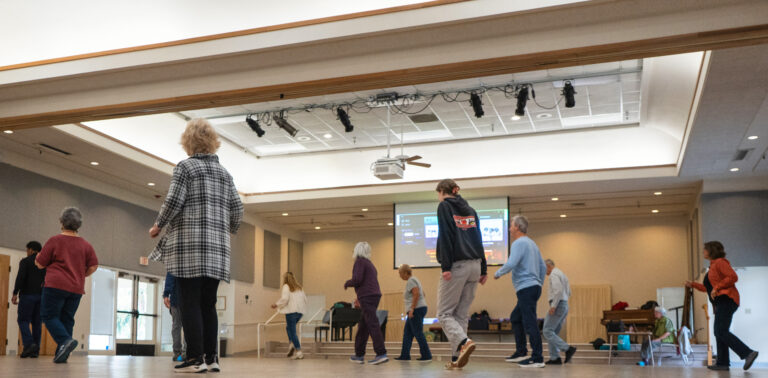
The Davis Line Dance group, run by a group of women who volunteer several days a week, teaches line dancing to the Davis community. Each class, the volunteers break down each step combination into simple, digestible moves that have all of the participants jumping and kicking in perfect, lively unison. 

Davis Line Dance President Reeta Palmer shared the group’s journey. 

“We started about a year ago,” Palmer said. “We all enjoyed dancing and wanted to get together and teach it as a group.”

Palmer noted that the dance cooperative has over 50 dances in its repertoire. If you are unable to attend an in-person class, the group’s website provides videos, music and explanations of each dance so that you can practice and get moving at home. Palmer then commented on her particular inclination to line dancing. 

“I discovered [line dancing] in a senior community, and it was so much fun and such great exercise,” Palmer said. “It was really good for my brain and my body, and the music was fantastic. I just love dancing to music and it’s a lot of social fun.”

At a Thursday afternoon class on April 4, a couple — the Walkers — enthusiastically learned to line dance. The Walkers moved to Davis in early 2020 and, in the four years they have lived here, dance classes, usually geared toward senior citizens, have helped the couple make friends and create a strong community. 

“We’re in another class [in Davis], and we met a couple [of] people in this class who said ‘come to this,’” Jim Walker said, referring to a one-day-a-week city of Davis-funded jazz class. “It’s for cognitive connection between the brain and the body.”

Jim Walker explained how their shared interest in dance classes has benefitted their relationship with the Davis community.

“I enjoy [line dancing] more [than jazz, it’s] really great,” Jim Walker said. “We’ve made a lot of friends here. It’s a very welcoming town. Dancing is a great outlet to meet people and expose yourself.”

Throughout the class, participants learned unique line dances to five different songs, and in a short time, the whole room was “handbagging,” ”swishing” and “mamboing.” Each dance had a different style, pace and difficulty level. 

Though typically utilized by senior citizens, Davis Line Dance Cooperative classes are for participants of all ages. Younger participants, like college students, are welcomed to classes with open arms and can equally benefit from the techniques employed in line dancing. 

Davis Line Dance classes are free for first-time participants and $5 for returners (usually paid in cash), with classes being held three to four times per week at Davis Community Church’s Fellowship Hall. More information can be found on their website at davislinedance.com


Written by: Emma Condit city@theaggie.org

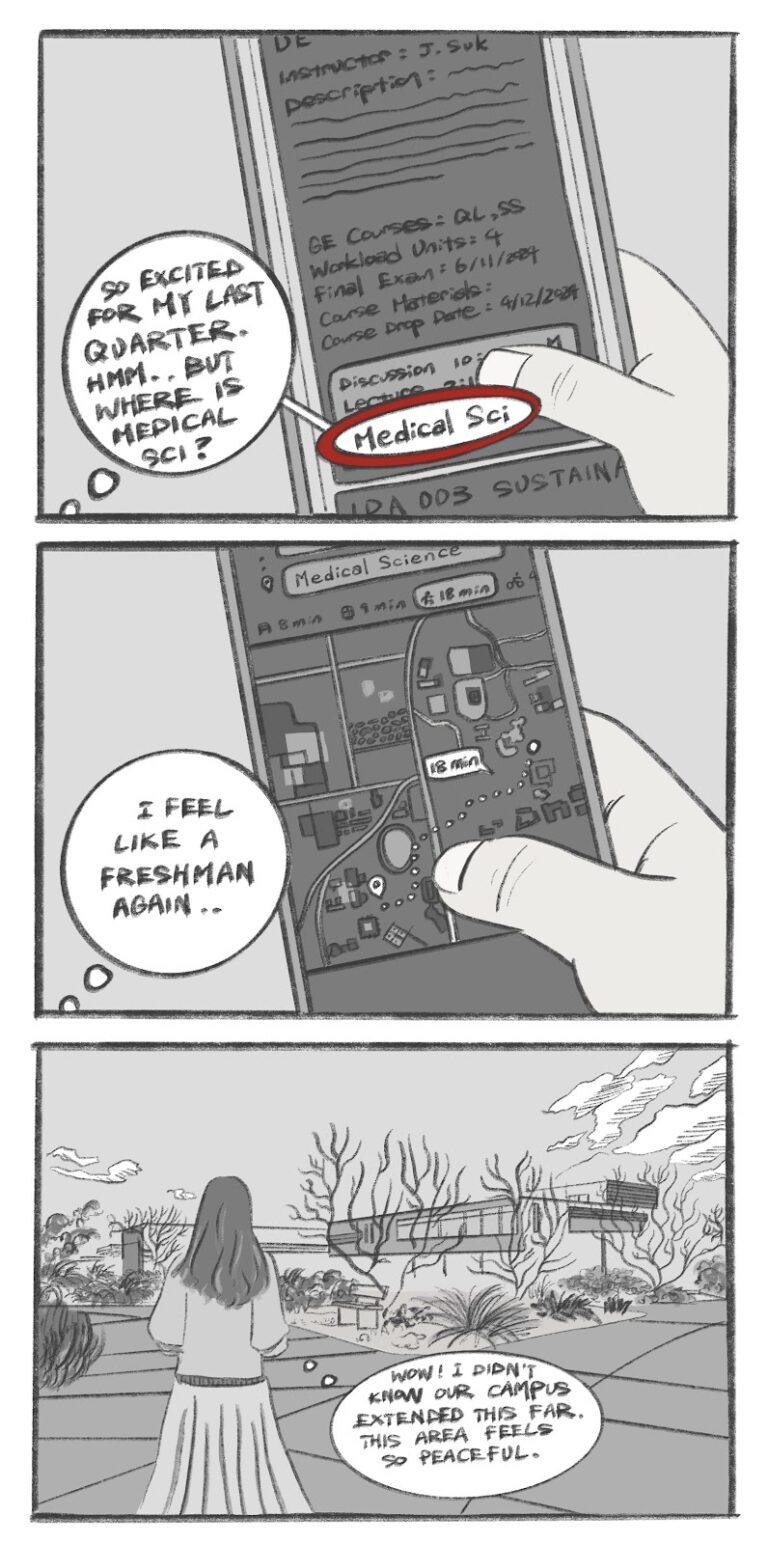
So… how big is our campus?

Drawn by: Lanhui Zhen –– lazhen@ucdavis.edu

Disclaimer: (This cartoon is humor and/or satire, and its content is purely fictional. The story and names of “sources” are fictionalized.)

College is a lawless place

School/life balance is unattainable in our current atmosphere 


By MOLLY THOMPSON — mmtthompson@ucdavis.edu 


There are no boundaries in college. The Powers That Be can have you in a lecture hall at 7:30 in the morning and you can find yourself in a lab on the same day at 10 at night. In between those classes, you might go to the gym or back to your home or to some sort of appointment or to get something to eat, all without leaving campus. It’s impossible to separate school from other aspects of your life, and that really takes a toll. 

In high school, the “school day” lasts from 8 a.m. to 3 p.m., or whatever the specific various hours are. It starts at the same time every day and it ends at the same time every day. When it ends, you leave and it’s over. Granted, there is homework, but school itself has a definite endpoint. The same goes in the conventional workforce — you go into the office at 9 a.m. and you leave at 5 p.m. In college, anything goes. You can start at any time, you can end at any time, you can go in and out of classes throughout the day, you can go home in between and you can fluctuate between states of focus over and over throughout the day. There are no rules, no lines and no divisions. 

It can be really hard to switch back and forth between routines and purposes so many times in a single day — from class in the morning, to a workout, to lunch, to studying, to relaxing in your room, to another class or two, to getting some homework done, to a club meeting in the evening and then back home again to wind down (if you’re not doing more work). There’s compartmentalization or division, there’s no school/life balance. 

And because everything happens in one bubble, any boundary lines that would have existed are innately moot. Especially as a freshman when you live on campus, every aspect of life happens in the same place. Work happens in the same place as leisure, which happens in the same place, as socializing, which happens at the same place as sleep, which happens in the same place as errands and chores, etcetera. 

In a dorm or a small apartment, this is exacerbated even more: your desk might be where you get ready in the morning, eat throughout the day, FaceTime friends and family, watch movies and study. You might hang out or relax, do homework and sleep in your bed. It’s kind of impossible to avoid a sort of “cross contamination” between different aspects and spaces of your life. 

All of this takes a toll on productivity, mental health, physical health and more. It’s difficult for the brain to figure out what “mode” it’s supposed to be in if so many different things happen in the same set of circumstances. You might get in bed to sleep, but your brain thinks it’s time to study so you’ll struggle to nod off. You might sit down at your desk to do homework, but your brain thinks it’s time to relax so you’ll struggle to focus. 

People know this, it’s the reason that the rest of the world operates the way that it does. Finding a “work/life balance” is a whole thing because people recognize how important it is for well-being and productivity. But because of the way that universities operate, the possibility of drawing and keeping boundaries goes out the window when you enter higher education. We can all try to keep our laptops out of our beds or find a routine to stick to, but there’s only so much we can do — it’s too inherently seeded in collegiate systems to effectively combat alone. 

One of the other main reasons that boundaries are important is that they help prevent burnout, which is especially (and increasingly) prevalent in college. When there is nothing outside of school because school is everywhere and everything is school, it can feel impossible to escape or catch a break. School is always, so there’s no time or space to step away and refresh from it. Inevitably, that causes burnout. 

The digital, Zoom age is also contributing to the issue, since technology now allows us to bring work and school into our home spaces in a much more invasive way than we ever have before. When we’re attending classes in pajama pants from our kitchen tables and then sitting down with our families for dinner at the same table a few hours later, the lines aren’t just blurred — they’re gone. School becomes home and home becomes school and neither truly serves its real purpose anymore. We now have hybrid in-person and digital classes that we take in our hybrid school/home rooms during our hybrid work/leisure time, and it all gets messy. Compartmentalization is necessary for our success and well-being, but it’s becoming increasingly difficult to achieve, especially in college. 


Written by: Molly Thompson — mmtthompson@ucdavis.edu