57.9 F
Davis

Davis, California

Monday, December 22, 2025
Home Blog Page 98

ASUCD Gender and Sexuality Commission hosts first-ever drag brunch at Student Community Center

The event featured both drag performers from and outside of UC Davis and LGBTQIA+ trivia 


By JORDAN POLTORAK — campus@theaggie.org


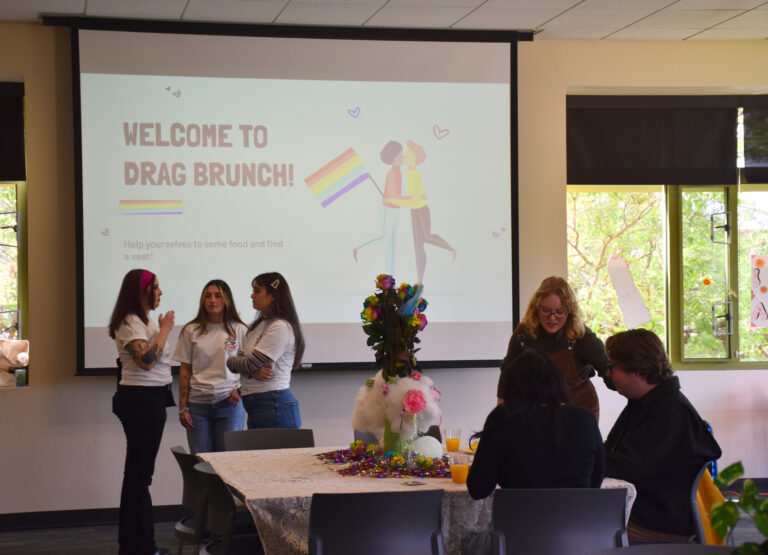
On April 5, the ASUCD Gender and Sexuality Commission (GASC) hosted a drag brunch from 1 to 3 p.m. at the Student Community Center. The event featured four drag performers and an intermission of LGBTQIA+ trivia. 

Two of the performers, Komolika and Srobin, are UC Davis students. Hard Kandi and Ivory Haze, drag performers who are not UC Davis students, were also contacted by ASUCD to perform.

Komolika started the show to “Vogue” by Madonna with a lip-sync and dance, which received large cheers from the audience. 

“It’s so fun to watch people express themselves. Everyone is so welcoming and so supportive of all the queens performing,” Chelsea Sun, a second-year student, said.

Throughout all of the performances, audience members cheered from every corner of the room. The audience’s enthusiasm was felt by Ivory Haze.

“There was more energy in this room than BearDive some days,” Ivory Haze said in regard to the bar where they typically perform. 

Each performer brought their own style to the show. Komolika’s performance included elements of Bollywood in music, clothing and dance. Hard Kandi incorporated props such as a rotary phone and a fake guitar to smash. 

The intermission included LGBTQIA+ trivia from around the world. This allowed students to team up, get to know each other better and gain knowledge on LGBTQIA+ history as a whole.

“You can be whoever you want to be in Davis,” Stella Moynihan, a third-year student said.

This is evident as Srobin is both a second-year statistics major and drag artist.

“I like the contrast between doing drag and being a math diva, but there is an intersection as well that I enjoy,” Srobin said.

Volunteers from GASC planned and ran the entire event, from decorating the space to inviting the drag performers and introducing each act. 

This was the first drag brunch put on by ASUCD, and the event had so many attendees that those who had not signed up in advance were turned away at the door. 

“Events like this are amazing because there is [a] huge overlap between the queer community and the bar scene,” Hard Kandi said. “For young queer kids, it is great to have events that are not necessarily linked to nightlife.”

Written by: Jordan Poltorak — campus@theaggie.org

Best burrito: Ali Baba

Middle Eastern eatery Ali Baba voted Best Burrito in Davis for the fourth time


By ALEXANDRA SHAPIRO features@theaggie.org


Middle Eastern eatery Ali Baba Cafe has been voted Best Burrito in Davis with an overwhelming 75% of the votes. Ali Baba is known in Davis for having highly addictive, unique breakfast burritos suitable for all times of the day. Ali Baba offers a wide-ranging menu featuring gyros, hamburgers and specialty coffee drinks, but their breakfast burritos are a popular staple of the restaurant. 

When he was only 20 years old, Ali Moghaddam opened the cafe in 2008. Motivated by a desire to learn and contribute to the community, Moghaddam and his mentor, Ali Reza, decided to establish Ali Baba in Davis because of the high foot traffic common in a college town. 

“I was just a punk kid who didn’t want to go to school, and my parents were like, well, you have to work,” Moghaddam said. “When I started, I was 20 and very optimistic. I loved that I was around the age of all the kids around me. Having a restaurant really allowed me to meet a lot of people and grow with the business [and] understand people better.” 

Ali Baba introduced the breakfast burritos in 2009, but their immense popularity soon made them the star of the menu. 

“The breakfast burrito makes up about 85% of our sales,” Moghaddam said.

Moghaddam explained that the menu is well-tailored to suit the customer demographic.

“The breakfast burrito and the ‘buy six, get one free’ are designed around what the college students want,” Moghaddam said.

The renowned breakfast burritos at Ali Baba come in two styles: regular (meat) and veggie. The traditional meat burrito includes two scrambled eggs, cheddar cheese, bacon, gyro meat, french fries, locally sourced honey and Tapatio wrapped in a flour tortilla. The veggie burrito replaces meat with avocado, grilled tomatoes and mushrooms but includes the rest of the ingredients. Both are fully customizable and offer plenty of extra add-ins, such as feta cheese, chicken and falafel.

Ali Baba’s breakfast burrito has become a staple for hungry college students in Davis. Following an early morning exam, Rojina Imani-Nejad, third-year neurobiology, physiology and behavior major, always opts for the traditional breakfast burrito as is.

“I love how it’s ready just minutes after ordering,” Imani-Nejad said.

Jasmine Rodriguez, fifth-year civil engineering major, described the variety of Ali Baba’s menu and the benefits of both meal options. 

“The menu is super easy to navigate and both of the breakfast burritos make great meals,” Rodrigez said. “The veggie is for when I want something a little more nutritious, and the regular meat is for when I want a hearty meal to carry me for the rest of the day.” 

The breakfast burritos are well-portioned and only cost $10, making them the perfect meal for college students. Their neat wrapping makes them easy to enjoy, and customers can have their burritos cut in half. 

Ali Baba offers a refreshingly simple and social anxiety-friendly ordering process. Customers can adjust their orders without the pressure of talking to cashiers or waiting in line. 

During the 2020 COVID-19 pandemic when the university was closed, Ali Baba remained one of the few restaurants in the area to keep its doors open. 

“I looked into what I could do and found the kiosk buddy,” Moghaddam said. “I put those in, and it’s been great because now I don’t have to hire cashiers. I hired an extra cook so the kitchen has extra help.”

Moghaddam further explained the variety of benefits the kiosks bring to Ali Baba’s employees and customers. 

“The kids sometimes have a lot on their minds,” Moghaddam said. “[The kiosks] make the process more clean, metaphorically speaking. This process benefits not only customers but also employees by preventing mix-ups.”

On April 8, Ali Baba opened a second location in Berkeley right next to the UC Berkeley campus.

 “This one is a smaller location; I kept the menu simple, really only selling breakfast burritos and sides [to] give the people what they want,” Moghaddam said. 

Moghaddam is deeply appreciative that Ali Baba was voted Best Burrito in Davis for the fourth time.

“I love Davis, and I love my customers,” Moghaddam said. “I’m indebted to them for supporting me. I am also very grateful to have my coworkers; without them, Ali Baba wouldn’t be what it is.” 


Written by: Alexandra Shapiro features@theaggie.org


Best graduation photo spot: West Quad road

Students have selected West Quad road as the best place to take graduation photos 


By CAROLYN (CARI) FENN — features@theaggie.org 


For many students, a common way to commemorate their undergraduate experience is to get dressed up, grab a bottle of champagne and their cap and gown and travel around UC Davis to take graduation photos. While there are a plethora of beautiful spots all around the UC Davis campus, this year students voted “West Quad road” as the Best Graduation Photo Spot. 

At some point, every UC Davis student has either seen, biked or walked down the road situated between the Memorial Union and Wellman Hall. Lined with beautiful oak trees, it is no surprise that graduates love to make the road one of their main backdrops for graduation pictures.

“In my opinion, it kind of represents Davis as a whole,” UC Davis alum Dominique Pajaro, a graduation photographer who earned a degree in landscape architecture, said. “Davis is surrounded by nature and beautiful trees, and this spot helps illustrate that in such a beautiful way.”

Pajaro elaborated further on how the road presents an ideal backdrop for graduation photos, with her background in landscape architecture adding an extra layer of knowledge on what makes the West Quad road so picturesque. 

“Humans like to feel enclosed in a space, and the way the oak trees drape over you and create that arch is definitely something that helps draw people to that space,” Pajaro said. “The way the light shines in between the leaves makes it look like the leaves glow, and helps center the graduate within the arch.”

While Pajaro believes that the spot is always a great place to shoot no matter the time of day, she chooses to shoot on the road with graduates either from 9 to 11 a.m. or from 3 to 6 p.m. to get the optimal lighting for photos. 

“Either of those times is perfect, but you need to switch which sides you take pictures on for the best lighting,” Pajaro said. 

To all the UC Davis students beginning to say their final goodbye to the campus as they prepare to embark on a new journey in life, don’t forget to commemorate your time here at UC Davis by taking your graduation pictures on the iconic West Quad road.

Written by: Carolyn (Cari) Fenn — features@theaggie.org

Best dessert shop: Davis Creamery

The family-owned ice cream shop’s unique flavors and welcoming environment make it a Davis staple 


By LAILA AZHAR — features@theaggie.org 


From Kit Kat Nutella to Avocado Coconut, Davis Creamery’s unique assortment of ice cream flavors helped the shop win in the Best Dessert Shop category with 45.8% of student votes.

Located in Downtown Davis, the family-owned ice cream parlor strives to create a “welcoming, enjoyable environment for all ages,” according to their website.

Co-owner Jen Schmidt owns the store alongside her husband and noted that, because of its location in Davis, college students make up a large portion of the store’s employees. She also described how the community-oriented spirit is integral to the business. 

“I really enjoy our employees [and…] giving kids their first jobs,” Schmidt said. 

One way the shop connects with its customers is with its annual flavor idea competition: Bracketology. As part of Bracketology, customers submit their ideas for ice cream flavors, and 16 of these ideas are then selected for a bracket. Customers vote on which flavors move on to the next level in the competition. 

“It’s a fun way to get the community involved,” Schmidt said. 

Flavors from the most recent Bracketology include chocolate potato chip, animal cracker and peanut butter pancakes with maple syrup. 

Previous winners, such as brigadeiro (a Brazilian dessert) and trifecta, have become staples of the store’s menu. Davis residents are welcome to participate in this annual event every March. More information about Bracketology can be found on their website, originaldaviscreamery.com

The store has been a part of the Davis community for 17 years, and Schmidt’s family purchased it eight years ago. Both Schmidt and her husband grew up in family businesses, and Davis Creamery has served as a way for them to continue that tradition while also providing their kids with a space to learn about running a business. 

“It’s something we talk about at dinner; it’s something me and my husband enjoy working together on,” Schmidt said. “It’s a family activity that we’re all involved in at some level.” 

Davis Creamery’s ice cream is made daily, with an emphasis on using local ingredients.

Schmidt cites honey fig and goat cheese, along with orange blossom honey, as her favorite flavors. With its rotating menu and wide range of flavors, there’s something for everyone to enjoy. It’s clear why this community-oriented family business was chosen as Best Dessert Shop in Davis.


Written by: Laila Azhar — features@theaggie.org

Best dumpling: Dumpling House

UC Davis students vote Dumpling House as favorite spot to satisfy a craving for dumplings


By ALMA CULVERWELL features@theaggie.org


Davis’ Dumpling House, located in downtown Davis at 129 E Street, was voted the best dumpling after receiving 60.5% of students’ votes. 

Dumpling House, which has been a Davis staple for over 20 years, is known for its variety of dumpling options, such pork and chive, shrimp and pork. They also carry several options that cater to patrons’ various dietary restrictions, including vegetarian options like veggie or kimchi-filled dumplings. 

Originally known as London Fish N Chips, Dumpling House also carries several options from their original menu, including their signature fish and chips and calamari. 

Grace Hsu, a second-year managerial economics major, described why she loves frequenting Dumpling House and the personal connection she feels to the restaurant. 

“I love eating Dumpling House’s food because it’s always so comforting to the soul,” Hsu said. “It reminds me of my mom’s cooking and it tastes authentic.” 

Dumpling House is well-regarded by many community members for its welcoming and supportive atmosphere. Nina Moreno, a second-year cognitive science major, stated her thoughts about the restaurant’s atmosphere. 

“Dumpling House is like a place of comfort for me,” Moreno said. “I really like dumplings in the cold weather or when you are having a bad day.”

Linda Liu, the owner of Dumpling House, learned how to make dumplings from her grandmother. She got her inspiration for founding the Davis location after traveling around Asia and noticing the widespread popularity of dumplings. 

Liu developed her dumpling business to cater to the college audience by making her food affordable and accessible. Liu explained her favorite part about working her job. 

“I feel like people, [including] all the workers, are so friendly,” Liu said. “Also, the customers are so friendly, too.” 

Liu explained that her hope for the future is to increase business.

Dumpling House underwent a brief remodel after a fire in 2019 but has been reopened since March 2022. They also currently operate a stall at the weekly Saturday farmers market at Central Park, a Sacramento location and often make appearances at other Davis events. 


Written by: Alma Culverwell features@theaggie.org


Best coffee shop: Mishka’s Café

Their cozy vibe, artisanal lattes and their pastries are a crowd favorite


By RAGAVI GOYAL — features@theaggie.org  


With lingering aromas of the brewing coffee, light jazz playing in the background, warm lighting and the chatter of college students studying with one another, Mishka’s Café makes for the best coffee in Davis. Preferred by 27.7% of this year’s Best of Davis respondents, this coffee shop has everything from delicious coffee to the best vibes for both socializing and studying. 

Located in downtown Davis on 2nd Street, Mishka’s was founded in 1995 to create an environment that matches the atmosphere of old European cafes, according to their website. The name, Mishka’s, comes from the name of a “big black friendly cat,” to which the Mishka’s website owes its success to.

The coffee shop offers high-quality and freshly roasted beans and various teas for the non-coffee drinkers. 

They have a wide variety of lattes and an array of unique flavors such as their rose latte, lavender latte, turmeric latte and midnight mocha. The coffee shop also offers special drinks for the holidays. 

Mishka’s is also known for their pastries and baked goods, with the majority being freshly made each morning. Some of their more popular pastries include the blueberry scone and the coffee crumble cake. 

“We’re here almost every day,” Jenny, a UC Davis graduate student in psychology said. “I get the white mocha every time.” 

Ria, a fourth-year human development major, believes that Mishka’s is the perfect coffee shop for any occasion, whether it be for studying, catching up with friends or grabbing a bite to eat. 

“You look around and there’s all sorts of people,” Ria said. “There’s always people on a first date, people who are studying or friends just hanging out. It’s just really a wonderful environment to be in.” 

Ria continued to say that she likes Mishka’s especially because of their wide selection of teas.

“Usually, coffee shops don’t really value teas as much and that is why I like Mishka’s,” Ria said.

She concluded by discussing the warm environment created by the staff at Mishka’s.

“The staff is really friendly,” Ria said. “They are always super welcoming.”

Written by: Ragavi Goyal — features@theaggie.org

Best sushi: Mikuni

This Japanese restaurant, located in the Davis Commons, was voted the best sushi restaurant in Davis


By HANNAH SCHRADER features@theaggie.org


Mikuni was once again voted the best sushi restaurant in Davis, receiving 56.8% of votes. It is a Japanese-style restaurant located just off First and D Street in downtown Davis. 

Mikuni was founded in 1987 by Taro Arai in Fair Oaks, California, who had just recently emigrated from Kyushu, Japan. Arai became the reverend to the First Japanese Baptist Church in Sacramento shortly after moving to California.

Arai came to the United States not knowing how to speak English but learned it through his years working at his parent’s restaurant. Though Arai didn’t have the privilege of getting a higher education, his kids were able to.

The Arai family owns Mikuni, which started as a small business 37 years ago and has flourished to become one of the most prominent businesses in Northern California with nine locations throughout the region. Chefs at Mikuni have created over 300 recipes, and the restaurant has won the Best in Sacramento Readership survey 13 times consecutively.

In 2001, Mikuni started their sushi bus and became the only traveling sushi bar in the world. Then, in 2002, Mikuni launched their well-known interactive sushi-making class that teaches the basics of sushi making. In 2004, the “Koki Club” was launched as Mikuni’s very first loyalty program, and today, it has over 80,000 active members.

The restaurant celebrated its 35th anniversary in 2022 and gave away a new Honda Civic. Though the restaurant’s philanthropy does not end there, Mikuni has raised over $3.5 million dollars for over 100 different charity organizations.

“[Mikuni] firmly [believes] in giving back…to being a good neighbor…to assisting those in need in any way possible,” Mikuni’s website reads.

Mikuni also accepts fundraiser requests on its website. Some of the organizations Mikuni has donated to include: Twin Lakes Food Bank, Child Advocates of Placer County, River City Food Bank, Alzheimer’s Aid Society and Lighthouse Family Counseling and Resource Center.

The Mikuni Davis location has a very modern design with low-hanging mood lights and traditional Japanese decor. On the weekends, the restaurant is lively, with servers swiftly delivering rolls through a bustling restaurant with a sustained buzz of chatter.

The crowd at Mikuni varies from UC Davis students seeking reprieve from the quick-moving quarter system to out-of-towners who love Mikuni just as much as the Davis locals.

Melvina Smith, a materials and store supervisor, and Tajae Ramsey, an arts education and camp manager at the Kroc Center, enjoyed a meal at Mikuni and talked about the vibe of the restaurant.

“Oh, it’s really good,” Smith said. “And we keep coming back because we live in Suisun, so we travel to come here.”

Smith and Ramsey then talked about their favorite rolls to order at Mikuni.

“I really do like the flaming mushroom [roll],” Smith said. “Every time I come back, I try a different roll.” 

Ramsey agreed with that sentiment.

“All their rolls are really good,” Ramsey said. “And their appetizers are everything.”


Written by: Hannah Schrader — features@theaggie.org


Best grocery store: Trader Joe’s

The iconic Trader Joe’s location is voted Davis’ Best Grocery Store by students


By YASMEEN O’BRIEN — features@theaggie.org


Known for its friendly employees, affordability and wide range of snack selections, it is clear why Trader Joe’s won Best Grocery Store in Davis (for the third year in a row!), securing 54.9% of the student vote. 

At any given time in the popular grocery store, you are bound to find an abundance of customers of all ages, from college students to families to elderly shoppers, all with the shared goal of finding good deals on reliably high-quality groceries.

Joe Johnson, a Trader Joe’s crew member of over two years, said that while he is very appreciative, he is not surprised that Trader Joe’s won Best Grocery Store. He chalks it up to its proximity to campus and the friendly environment of the store. 

“People are just more excited to be there [than other grocery stores],” Johnson said.

Johnson also shared that there’s never a dull moment at the store, and that you must be prepared for anything while on shift. 

“I once had a roach crawl on my arm from a customer’s bag that they brought from home,” Johnson said. “So, that turned me off a little bit [from customers bringing their own bags].”

The positive work environment Trader Joe’s fosters is a main reason why Johnson enjoys working there; he values his fellow crew members and has become close with them.

“I transferred to Davis from junior college and didn’t really get a chance to make a lot of friends outside of work,” Johnson said. “So for me, my coworkers became my group of friends in a way that I haven’t experienced with other jobs.” 

Johnson’s experience working for Trader Joe’s has undoubtedly enriched his life: from new friends to being unexpectedly but often entertained on the job, Trader Joe’s checks all of the boxes as a working environment. 

The iconic grocery store is also famous for creating an inviting environment that keeps customers coming back for more. 

Simone Haggerty, a fourth-year ecological management and restoration major, shops at Trader Joe’s every week and has done so throughout her time at UC Davis. She agreed with Johnson that the store’s positive atmosphere improves her shopping experience.

“I think [Trader Joe’s is] a great environment,” Haggerty said. “I always run into friends there, and all [of] the cashiers are really nice. It’s good vibes.”

Haggerty also shared that she appreciates the unique aspects of the shopping experience Trader Joe’s cultivates.

“I love all [of] the fun little snacks they have to try and all [of] their seasonal foods,” Haggerty said.

Whether you are grabbing a quick snack after classes or completing your weekly grocery haul, expect your Trader Joe’s shopping trip to be a well-rounded experience full of exciting specialty products and passionate, engaging staff.

If you haven’t already, check them out at their Russell Boulevard location between the hours of 8 a.m. to 9 p.m. any day of the week.


Written by: Yasmeen O’Brien — features@theaggie.org


Best trivia night: Sophia’s Thai

The popular Davis bar and restaurant was once again voted the Best of Davis


By MADELEINE YOUNG features@theaggie.org 


Sophia’s Thai Kitchen, a vibrant restaurant and bar located in the heart of downtown, has returned to the Best of Davis list for best trivia night with a 56.3% vote. 

Launched in 2005, Sophia’s Thai was the first bar in Davis to host a trivia night. This 21+ event happens every Tuesday night at 9:30 p.m. at the kitchen’s adjacent bar and requires an order of at least one drink as your buy-in. 

At night, you can find a mix of college students, families and locals looking for a bite, ordering their county-famous mojito, or participating in trivia night. With gift cards, six-packs or bottles up as prizes, Sophia’s is a great place to grab a drink and bring out your competitive side. 

Third-year managerial economics major Trimanpreet Kaur can be occasionally spotted competing with a handful of her friends on a Tuesday night. 

“It’s a really fun way to spend a night out with friends since the more people on your team, the more likely you are to win,” Kaur said. 

Kevin Wan, owner of Sophia’s, makes the questions himself. They range from geography, history, pop culture and more. Wan also will occasionally give bonus prizes for things like “most incorrect answer” or “funniest answer.” 

“It can get competitive but you meet so many new people and get to spend time with friends, especially when you want a breather from school,” Kaur said. 


Written by: Madeleine Young features@theaggie.org


Best Pub or Bar: Sophia’s Thai 


On top of this, Sophia’s Thai Kitchen follows it’s last year’s place as best pub or bar with 42.9% of votes this year.

The business was founded almost 30 years ago and according to the owner, they were the first Thai restaurant in Davis.

It is common to see a live DJ or even karaoke on this bar’s outdoor deck. The bar didn’t open until 2001 and has made a great companion piece to Sophia’s trivia nights.

“I usually get a ‘Thaibreaker’ as my drink [while I] play,” Kaur said describing their drink of choice during trivia night. 


Written by: Madeleine Young features@theaggie.org

Five poems to celebrate the arrival of April and its status as National Poetry Month

Enjoy a selection of April-themed poetry 


By JULIE HUANG – arts@theaggie.org


The month of April promises spring showers, summer around the corner and an entire month dedicated to appreciating poetry and those who write it. Fittingly, many poets have written about the month designated as National Poetry Month, often imbuing the idea of April with bittersweet feelings of gentle melancholy and hope. The following poems, which span across time and literary movements, exemplify those tender feelings that are so readily associated with April and springtime. 


“The Waste Land” by T.S. Eliot 


“April is the cruellest month, breeding / Lilacs out of the dead land, mixing / Memory and desire, stirring / dull roots with spring rain.” 

Often taught in English classes and literature courses, “The Waste Land” is best known as a shining example of Modernist poetry — complex in form and loaded with obscure literary references. Yet strikingly simple is the alluring sentiment of its opening lines, which masterfully characterize the duality of April as both a time to celebrate new growth and a time to remember old losses. This wistful approach to the month of April helps ease the reader into the long journey that is the rest of “The Waste Land.”

“Spring” by Edna St. Vincent Millay


“To what purpose, April, do you return again?” 

Edna St. Vincent Millay uses plain, unpretentious language in her plainly titled “Spring,” and it creates a somber effect. The poem carries a sharp, accusatory tone as it comments on the relentless cycle of time. The month of April appears to be a scapegoat for the speaker’s dissatisfaction with the nature of time, singled out for being a beautiful month whose beauty cannot end the cycle of the seasons. This may be a poem to read and reflect on during moments of nostalgia or déjà vu while looking at the familiar sight of returning greenery or budding flowers. 


“Song of a Second April” by Edna St. Vincent Millay 


“April this year, not otherwise / Than April of a year ago, / Is full of whispers, full of sighs” 

Millay’s other poetic acknowledgment of April takes on a more hopeful, sympathetic tone. Once again the prevailing theme is the passage of time, demonstrated by the cyclical nature of the seasons. Yet in “Song of a Second April” Millay focuses more on the triumph of April year after year in doing away with the harsh jagged cold of winter and bringing the soft sweetness of springtime to the world. It provides a nice contrast to the sharpness of “Spring,” which makes for a complementary reading experience when pairing the two poems together. 


“Two Tramps in Mud Time” by Robert Frost


“The sun was warm but the wind was chill. You know how it is with an April day.” 

Once again, April is called out for its apparent duality, this time in a Robert Frost poem that narrates a tale of the speaker chopping wood when he is approached by two strangers. In setting the scene for his narrative, Frost perfectly captures the contradictory feeling that often accompanies springtime. It is not quite warm enough to be summer, but not cold enough to be winter. This feeling of being in between lends the poem, and the month of April, a sense of melancholy and hesitation. 


“April Rain Song” by Langston Hughes 


“The rain plays a little sleep song on our roof at night / and I love the rain.” 

Hughes, celebrated for his accessible, authentic poetry that directly addressed the Black American experience, immortalizes in “April Rain Song” the quiet moment of feeling happiness at hearing spring rain. Full of sincere appreciation, the poem turns what could be seen as simply a commonplace occurrence into a celebration of April and the human capacity to feel unabashed love and joy. 

Written by: Julie Huang — arts@theaggie.org

Misner & Smith: the musical duo with a creative process fueled by gardening

Sam and Megan discuss their new album and inspiration from the Davis gardening community


By GRETA FOEHR — features@theaggie.org 


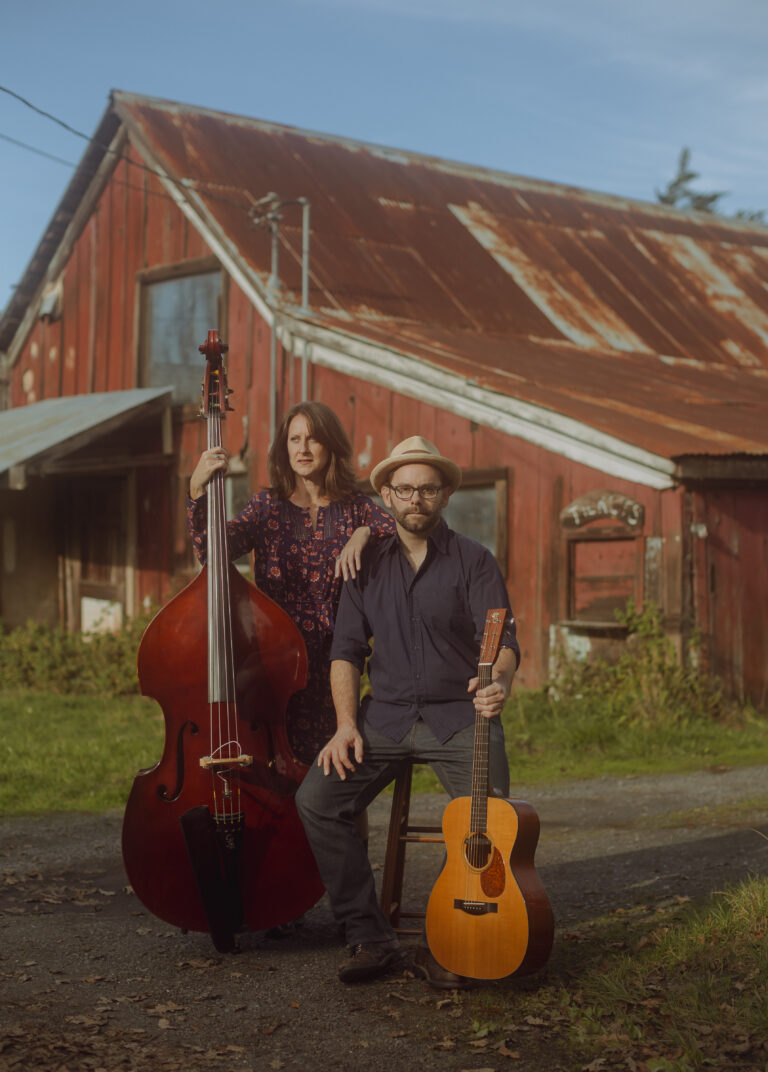
Local musical duo Misner & Smith brings the Davis community together through their passions for music and gardening, which they often express simultaneously. 

The duo is made up of Sam Misner, the guitarist and vocalist, and Megan Smith, the upright bassist and other vocalist. While the two share responsibilities on vocals, Misner writes most of the songs, bringing both lyrics and chord progressions to a piece. Smith, who has more of a classical background in music, enjoys writing vocal harmonies and bass lines. 

They are also involved with the Davis community in numerous ways that go beyond their music, notably through gardening. For example, Smith has been closely involved with the Master Gardeners program in Yolo County since 2017. The Master Gardeners are an extension of UC Davis and take science-based information about gardening coming out of the UC system, specifically UC Davis, and use that to teach the public about best gardening practices.

Both musicians are passionate about gardening and find joy, comfort and grounding through time spent in the garden. This passion for gardening is deeply intertwined with their understanding of music and their songwriting process. 

Smith sees a lot of similarities between her creative processes in the garden and in writing music. 

“The garden really anchors me in the present moment in a way that no other thing in my life does, which then goes back and influences my musical ear and the way I approach arranging and creating music,” Smith said. “Being in the present moment is really important when you’re trying to create something new. It’s often difficult to create something and edit it at the same time. You have to shut the editor part of yourself outside and just let yourself be creative, and I think the garden is like that. I let myself go and I go crazy with what I plant and I try things and then I edit later.” 

Misner had a complimentary take on the ways in which music and gardening intertwine. 

“The creative process is so enigmatic in a lot of ways. Sometimes you feel inspired to write, sometimes it feels like you haven’t written anything in a long time. It’s about trying to retain the idea that you have to give everything time. A plant isn’t just going to suddenly be in bloom when you plant it the day before,” Misner said.

They don’t consider themselves genre-specific, allowing them to take more creative freedom in songwriting. 

“Our music is definitely something that isn’t classified by one genre, it’s hard to put in a box. The same thing is true of the experience of the outdoors and nature and gardening,” Smith said.

Their new album, “All is Song,” will be released on April 12 on all platforms. They were planning to record this album in March 2020 but were delayed by the pandemic. Instead of recording their songs, they held live stream shows from their living room. This allowed them to workshop their songs while bringing joy and hope to their listeners. 

“Once we got back into the studio in 2022, we both felt that the songs were kind of revealed to us in a way that might not have happened if we had gone right into the studio,” Misner said,  

When the pandemic hit, Smith wanted to stay involved with the Davis gardening community, so she and Misner started hosting neighborhood plant sales. Smith explained that gardening was a way for people to get through hard times and support mental health. 

“I had all these extra plants, and I decided that it was important for me to try to support [something] that was happening in the community.” Smith said. “It was so much fun because I got to meet a lot of people in my community that I had never met before.” 

She kept the plants affordable and found that it was similar to the work she does through the Master Gardener program. 

“Educating the public and helping them start their own gardens, and empowering people to grow their own food was just really cool,” Smith said.

Throughout COVID-19, Misner & Smith provided a space to enjoy the present through their music and plant sales.

 “We need those experiences with nature and with each other, and with music and with art — things that can express and hold our emotions in a way that nothing else can,” Smith said. 

“All is Song” makes them feel like they are a part of “something bigger” and hopes it will further inspire them to become a part of something bigger than themselves, according to Smith. 

“I hope that it allows people to see life and music as deeper than what meets the eye at first glance and that there’s so many layers to our experiences,” Misner said.  

Their music has had an invaluable impact on many of their listeners. Gail Kennedy, a Davis resident and long-time Misner & Smith listener, is one of them.

“Sam [Misner’s] lyrics are poetic; he’s a great storyteller and his stories conjure up many emotions in my heart. I often find myself joyful and tearful listening to their songs,” Kennedy said. “Megan [Smith’s] voice and their harmonies are evocative and mesmerizing.”

Misner & Smith are a beacon of light in the Davis community thanks to their colorful music and the work they do to encourage others to garden. 

“[We’re all about] bringing people together around something that gives people hope,” Smith said. “We just believe so much in the good that you do. Keep doing it. It makes a difference. Nothing good that you do is too small, there are ripple effects that far extend beyond what you can see.”

Listen to their music on any streaming platform under “Misner & Smith” and learn more about them at misnerandsmith.com. Their new album, “All is Song,” comes out on April 12. They will also be playing live at Davis Music Fest on June 16.


Written by: Greta Foehr — features@theaggie.org 

Review: Does ‘Wonka’ really tell us how Willy became Wonka?

A warm family film that could’ve been explored more 


By INDRANIL BASU — arts@theaggie.org


“Wonka,” directed by Paul King and written by King and Simon Farnaby, was released in December of last year under Warner Bros. Pictures. The film has been a commercial success and well-received by audiences and critics. It became the 70th-highest-grossing film of 2023 and was nominated for awards including the BAFTA Award for Outstanding British Film and the Golden Globe Award for Best Actor – Motion Picture Musical or Comedy (for Timothée Chalamet).

This musical fantasy comedy film is premised on the origin story of Willy Wonka, the well-known character from Roald Dahl’s famous children’s novel, “Charlie and the Chocolate Factory,” starring Chalamet in the titular role. King uses Dahl’s body of work to visualize his backstory and create a fantastic exploration of the intriguing personality of Wonka.

Set in a vague 1940s European city, Wonka arrives as a young man, inventor, magician and chocolatier after spending seven years as an innovative chef at sea. He is ready to make a fortune, and more so a life for himself, with his chocolatey inventions that he has perfected during his time and travels across the world. The film follows his journey of achieving that dream, one strongly connected with themes of family — both blood and chosen — and generosity.

“Wonka” is well written, in terms of plot, dialogue and lyrics, as well as brilliantly filmed by Chung-hoon Chung and scored by Joby Talbot. The musical numbers are well-worked, performed (mostly) by Chalamet, and created but don’t stand out too much vocally in the way they are composed or sung. 

Chalamet as Wonka fits into the image of the beloved character in the overcoat, hat and cane, with a suitcase full of his inventions and dreams, as iconized in previous films by Johnny Depp in “Charlie and the Chocolate Factory” (2005) and Gene Wilder in “Willy Wonka & the Chocolate Factory (1971),” though definitely drawing more from the latter in its characterizations. He seems out of place in his young boy-next-door looks with ruffled hair and American accent, which match Wonka’s background if we consider him American and the film as a modern interpretation of him (which it is in many ways). 

He is simple, friendly, innocent and giving, unlike Depp’s portrayal and, more importantly, the novel’s sassy, socially awkward, apathetic and androgynous Wonka who is the embodiment of eccentricity. The filmmakers run with the straighter 1971 version of Wonka who is none of those but innovative — rather an aspirational underdog the audience can relate to, which he perhaps was before making it as a chocolatier and becoming the pop culture phenomenon he is seen as in previous appearances. Although the filmmakers have stated that Chalamet was their top choice for casting, perhaps someone else could have captured the fantastic seed of eccentricity that must have still been in him as a young adult, one that the film could have explored more.

The ensemble cast delivers wonderful supporting performances in the film: particularly Calah Lane as the orphan girl Noodle, whose character arc is significantly in parallel with Wonka’s; Keegan-Michael Key as the corrupt Chief-of-Police Paterson Joseph; Matt Lucas and Mathew Baynton as the “Chocolate Cartel” leaders; Jim Carter as the accountant Abacus Crunch; Olivia Colman as the evil Mrs. Scrubitt and Hugh Grant as the singular Oompa-Loompa of the film.

The film is definitely a “savage indictment of capitalism,” as the filmmaker has stated himself, especially in Western socio-political structures, with a hugely corrupt (three)-man monopoly (on chocolate) that is constantly colluding with the church and the police and using (chocolate as their currency of) bribe to maintain their hegemony and the large economic gap between them and the consumer. 

Daydreaming comes with a fee in this economy. Some of the language, however, such as a chocolate “cartel” for the corrupt oligarchy of the three Galéries Gourmet Chocolatiers, or “monks” for the “chocoholic” clergymen, is fairly questionable. It makes a good critique of capitalism but falls just a bit short on Wonka as a character and leaves it to the viewers to bridge the gap between him at the end of this film and the beginning of Wonka as we know him.

“Wonka” is a good film to watch with family, with its themes of family, love and sharing over greed and dreaming. The movie maintains a visual spectacle with excellent set and costume design that absorbs the audience into an earlier fantastical era in Europe and its musical numbers. You will understand Wonka as someone just like us, and discover the story of his drive for spreading happiness by making chocolate. Be ready to shed a chocolatey tear of joy. “Wonka” is now streaming on HBO Max.

Written by: Indranil Basu — arts@theaggie.org

City of Davis celebrates 30th Annual Environmental Recognition Awards

Davis recognizes local business, individuals and nonprofit organizations that promote the environment


By ALMA CULVERWELL city@theaggie.org 


The city of Davis announced the deadline for its 30th Annual Environmental Recognition Awards nominations was March 20 and winners were announced on April 16. The environmental awards seek to appreciate people or businesses that have been environmentally conscious in the community. 

The nomination criteria includes: addressing a current environmental concern, establishing a record of achievements or actions benefiting the environment and quality of life around Davis, creatively implementing or developing an innovative project related to sustainability or the environment, setting an example of how to conduct business, set up a home environment and/or live daily in a manner that encourages sustainability and impacting others in the Davis community through outreach, engagement or education efforts. 

The awards are divided into respective categories, businesses, individual and group efforts and non-profit organizations. The city also recognizes events and programs that have contributed to improving the Davis environment over time.

“Environmental stewardship is a core value for Davis community members,” Davis Mayor Josh Chapman said in a press release. “Through the City’s Environmental Recognition Awards, now in their 30th year, we want to recognize organizations and individuals that contribute to sustainability in Davis. These awards honor those who have made strides to envision and implement sustainability actions in the community and to support the 2020-2040 Climate Action and Adaptation Plan.”

Sean Rader, sustainability coordinator of Nugget Markets and 2020 recipient of the Sustainable Business Recognition Environmental Award, talked about the significance of earning the award. 

“Here at Nugget Market, we’re committed to being a leader in our industry, which includes pursuing full-circle sustainability.” Rader said. “Founded in 2015, our Sustainability Program focuses on three key pillars: social responsibility, environmental stewardship and economic vitality. With sustainability specialists stationed throughout each store, we’re constantly improving our environmental impact through eco-friendly actions like reducing water and energy usage, recycling, diverting food waste, donating to local nonprofits and more.”

Nugget was awarded due to their major developments in energy savings, water conservation, food waste reduction and more. They also partner with other local nonprofits and government agencies to support environmental well-being in the city of Davis.

Nominations were submitted to Kerry Loux, city of Davis sustainability coordinator, and are set to be reviewed by the city’s Natural Resource Commission and winners were accepted during a ceremonial presentation on April 16. 

Written by: Alma Culverwell city@theaggie.org

UC Davis to introduce new business major in fall 2025

The selective major will only be open to incoming first years and will open to other students in fall 2027


By VINCE BASADA — campus@theaggie.org


On March 14, UC Davis announced that the curriculum for a new business major has been approved and will be available starting in fall 2025. The Bachelor of Science (B.S.) degree will join both the economics and managerial economics majors to complete the three Business Economics Cluster paths. 

The new major will feature four specializations: accounting, finance, marketing and business analysis and management and strategy. Students will be allowed up to two specializations, though they will not be eligible to declare a minor offered by the Graduate School of Management (GSM). The degree will require 108 to 109 units, slightly more than the managerial economics major’s unit requirement. 

The major was brought to fruition by the Joint Working Group for the Creation of the Business Major, which spanned three different academic departments. Its six-member team included Professors Joseph Chen and Hollis Skaife from the GSM, Giovanni Peri and Derek Stimel from the Department of Economics and Stephen Boucher and Jeffrey Williams from the Department of Agricultural and Resource Economics. 

Peri spoke on how the group worked to create a major that is distinct from existing ones.

“One important thing was for [the departments involved] to create a new business major but also maintain and value the major that we [already] offer and create something which is differentiated from that,” Peri said.

The new business major will share many prerequisites and courses with existing degrees in the cluster, but will emphasize preparing students to work in the industry rather than larger economic theory.

The Joint Working Group hopes that approximately 150 incoming first-year students will enroll in the major in its fall 2025 debut. Transfers, both from external institutions and by UC Davis students who wish to switch into the major, will not be allowed to declare until 2027. 

Additionally, the major will be selective, meaning that students will have to complete the prerequisites for the major in order to be eligible to switch. The goal is to eventually have a graduating class of approximately 300 students from the major each year, according to Skaife.

Skaife noted that it’s unlikely that any student currently enrolled at UC Davis will be able to obtain a business degree. 

“I would encourage [those students] to reach out and take a look at the minors that we offer [at the GSM], because they, too, are going to provide [a] solid business education,” Skaife said. “It’s just that, unfortunately, [these students] arrived in Davis too soon to take advantage of the business major.”


The announcement has raised some questions regarding the future of the managerial economics degree in particular, given the significant overlap in focus between it and the approved business degree. 

Simulations done in the analysis for the working group revealed that managerial economics, more so than economics, will experience displacement from students leaving for the business major, according to Williams. 

“About 90 students in [managerial economics] take the accounting minor, and about 30 or 40 in [the economics major] take it,” Williams said. “If we could go into the future, those people would probably end up in the new business major.” 

Matthew Schwartz, a managerial economics major and technology management minor, is the vice president of the Managerial Economics Society (MES), the only official club associated with the managerial economics major.

“It’s hard to determine the impact of this development based on the current information available, but it’s easy to assume this would lead to decreased enrollment in the Managerial Economics major,” Schwartz said via email. “I’m confident that [MES] will be able to continue its existence, while making some adjustments to accommodate students in the new major.”

Despite these predictions, Williams said that the working group hopes that the Business Economics Cluster majors will complement each other, rather than create a “hierarchy,” and allow students to specialize in the degree that best suits them.

He also noted that while students — and with them, funding — may shift following the introduction of the business degree, Provost Mary Croughan guaranteed the hiring of five new positions to help support the degree while limiting the total number of students in the program, so as not to take away from existing majors.

Another group that has reacted to the announcement is the Economic and Business Student Association (EBSA), the largest business club on campus which runs quarterly case competitions for undergraduates from all majors.

EBSA President Annie Ding, a second-year double major in economics and design, believes that while there will likely be a shift toward the business major, it will take time given that the major is unranked and unfamiliar to recruiters.

“I think [only] after maybe five, 10 years or after [will] we see how the business major actually grows and [whether] people actually see success out of taking [it],” Ding said.

Ding also offered advice for current students. 

“It’s important, if you want to market yourself more similarly to someone who has the background of a business major, to pursue [accounting and business-related minors] as well as pursue opportunities through clubs on campus like EBSA,” Ding noted.

EBSA Vice President Ashley Knauss, a second-year economics major, said that the new major will be beneficial for major diversity and discussion within clubs like EBSA. 

“With the format of our club — with case competition members [that] are put onto teams — anytime […] there’s [a] diversity of majors within the teams, [there are] going to be new perspectives and new knowledge […] that helps the team,” Knauss said.

While EBSA leaders believe that the major will bring these and other positive changes for students and give them more opportunities to pursue and explore their interests, they said that they feel the most important factor is experience.

“When you apply for jobs, no one submits their degree,” Ojas Batra, a second-year managerial economics major and EBSA co-director of program development, said. “We submit our resume.”

Batra then spoke more on the importance of experience in business.

“Looking at it from an industry perspective, if you look at numbers, MBA enrollments are going down,” Batra said. “That’s your go-to business degree, and people are enrolling less and less in even some of the top MBA programs in the country. That’s because they’ve realized that the return on investment on those programs or even the return of investment on an undergraduate business degree might not be the same as just going out to the industry and getting to work.”

Still, the working group emphasizes that the business major will bring in new attention and students, as well as career training, fairs and opportunities. They also note that while there is still some work to be done in the time between now and the major’s official launch, they are confident in its future at UC Davis.

“Building a new major at UC Davis is a complicated thing,” Peri said. “The fact that [everyone] from the Provost all the way down to the individual professors in each unit all supported it shows the commitment that the university [put into] this business degree.”


Written by: Vince Basada campus@theaggie.org

Budget hearings, spending bills discussed in April 4 Senate meeting

The Senate allocated money to HackDavis, as well as to the upcoming ASUCD Cultural Festival


BY SONORA SLATER — campus@theaggie.org


“I will be requesting money in the future,” Senator Nur Ambaw said. “And I hope the things you have to say against it are reasonable.”

He was speaking out after criticism against SB #50 during the previous meeting, a bill that he drafted but ultimately withdrew that would allocate money to purchase athletic gear for the MU. This was only one of a variety of budget-related discussions at the April 4 ASUCD Senate meeting as the table gears up for budget hearings in early May. 

The meeting was called to order at 6:19 p.m. by Internal Vice President Aarushi Raghunathan. After calling roll and reading the UC Davis Land Acknowledgement, the Senate moved into President Pro Tempore elections for the spring quarter.

Senator Trinity Chow was the only nominee, and it was noted that she has both “a willingness to take on extra responsibility” and the ability to “help facilitate mature conversations.”  

She was unanimously selected and accepted the position, saying that she plans to help them become “a more cohesive table,” and to successfully represent units and commissions in the upcoming budget hearings. 

Next, Recruitment and Retention Organizing Committee External Chair Ashley Perez Caron gave a quarterly report for the Student Recruitment and Retention Center. 

“Who has been to the SRRC, raise your hand?” Caron began. When several people raised their hands, she tacked on, “Omg, slayyy.”

She then proceeded to give the Senate table a background on the history of the organization, and what they’re up to now. According to Caron, the program focuses on getting people into higher education, and keeping them there — especially underrepresented groups. One of the ways they do this is through hosting “nontraditional” campus tours for prospective students.

“For most of these students, college is romanticized for them, so they may not realize they’re also going to struggle,” Caron said. “[In these tours], it’s more than, ‘Hey y’all, come to UC Davis, we’ve got good coffee.’ We talk about the challenges and struggles, and try and make sure the youth are being told the truth because they deserve to be.”

In terms of future goals, she highlighted the grant funding they continue to provide RSOs in order to support building cultural communities, and a fellowship that they’re planning to create for students. 

After unit adoptions, during which Senators chose units and commissions that they wanted to focus on supporting this quarter, the table moved into public comment. 

Senator Leah Jung noted that certain bathrooms across campus have started charging a quarter for pads and tampons, and said that they should continue to be free for everyone.  

At 7:30, Raghunathan called a break for dinner (pizza and Insomnia cookies). They reconvened at 7:47 p.m. and moved into discussing legislation.

All legislation passed in the previous meeting was signed by the president. New legislation included SB #72, which would reform quarterly reports, SB #73, which would give the Senate Table the ability to move Senate Meetings online and SB #74, which would establish an earlier deadline to notify parties mentioned in ASUCD Senate Bills, Senate Resolutions, and Ballot Measures. All three were assigned to the IAC for review. 

Next, old legislation was voted on. SB #75, which allocates $7,313.50 to HackDavis to cover meals for students attending and makes ASUCD a sponsor for the HackDavis 2024 event, passed with nine yeses and five abstaining, with the goal of serving as an advertisement for ASUCD, especially for more STEM focused students.

SB #76, which allocates $253.00 to the Office of Senator Chow for the ASUCD Cultural Festival on April 15, passed with 10 yeses and four abstaining

Finally, the table moved into open forum. Raghunathan requested that senators ensure they are informing her beforehand when they are going to be late to or absent from a meeting.

“I get that it’s more relaxed here, but it’s still your job,” Raghunathan said. “I see on your timesheets that you’re saying you were here the whole meeting and you just weren’t. So I’m going to start being stricter about that.”

Controller Allyson Francisco reminded the table about upcoming budget hearings in early May, sharing tentative time frames for the table and encouraging them to take the process seriously.

“You’re mandated to be here, and if you’re not ,there are consequences,” Francisco said. “This is why we had all these problems last year, is because people weren’t dedicated. And now we’re searching for money and wondering what happened. What happened is people weren’t really invested. So I’m asking people to come prepared.

She noted that there will be breaks, and if members of the Senate table have class, that is a reasonable excuse for absence. She also encouraged the Senate to talk to unit directors and commissioners before the budget hearings to make sure they have an understanding of how to best advocate for their needs.

Ambaw, in response to the spending bills that were passed, brought up his proposed spending bill to purchase athletic equipment for the MU, which he later withdrew. 

“No shade, but [my bill] was big on visibility,” Ambaw said. “We passed [the HackDavis bill] today on the bounds of visibility. My bill needed work, and I totally agree with that, but I will be requesting money [for bills] in the future and I hope the things you have to say against them are reasonable.”

After approving past meeting minutes, Raghunathan adjourned the meeting at 8:23 p.m. 


By Sonora Slater — campus@theaggie.org