






Language programs at UC Davis provide opportunities for cultural insight
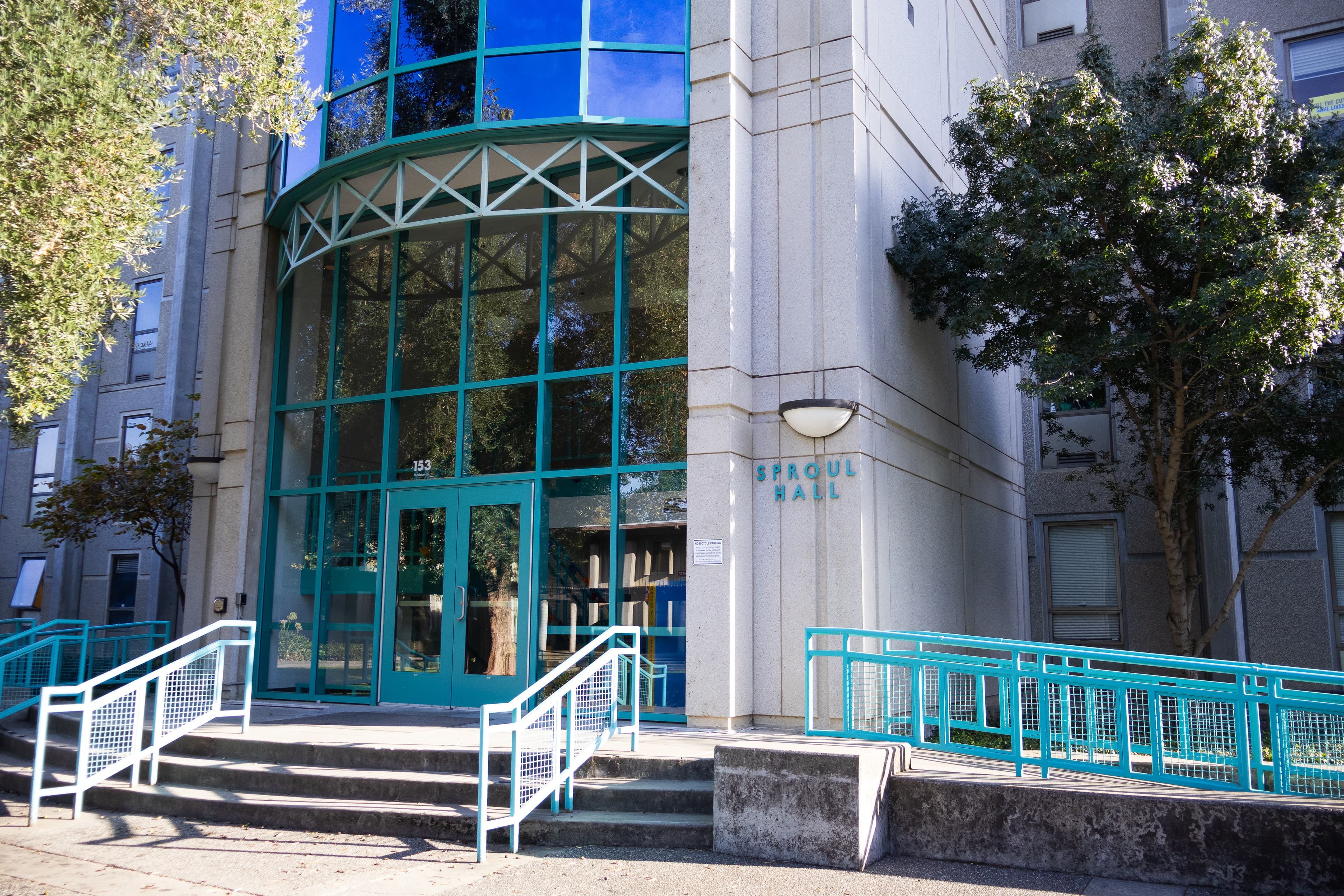
UC Davis faculty and students discuss the importance of language learning as nationwide enrollment drops
By HANNAH OSBORN — arts@theaggie.org
As children, we learn a language simply through our observations of the world; it was almost mindless. As students, the loss of this ability to pick up language as easily can keep one from venturing into the world of language-learning as an adult. Despite the increased difficulty, UC Davis students and faculty still find value in undertaking the acquisition of another language.
Students seeking a Bachelors of Arts or Bachelors of Applied Science through the university’s College of Letters and Science or College of Biological Sciences must take at least 15 units of a language to complete their degree. This creates many opportunities for UC Davis students to become engaged in their choice of any of the 14 languages currently offered.
Carlee Arnett, professor of German at UC Davis, has noted the enthusiasm she witnesses in classes as a result of students feeling motivated to learn a language. Whether there’s a degree requirement or not, she has found that students are usually drawn to a language because of a personal involvement with the culture they seek to engage in.
“The importance [of learning a language] is it makes you a richer human being; it makes you think about your own culture,” Arnett said. “Even if you just take two or one year of a language, you know there are things out there that are different from you.”
For Arnett, there is great enjoyment in getting to watch first and second-year students discovering a culture through the medium of language. Students are able to confront culture on a more global scale, in order to better understand differences.
Students like Samia Parsons, a third-year pharmaceutical chemistry major who enrolled in Spanish 001 last quarter, also recognize the value of learning a language at a university level.
“There’s definitely such a difference actually trying to speak a language in a class full of students who are all trying to do it, and a [teaching assistant] who knows how to speak it,” Parsons said. “I feel like I improved so much more in one quarter than I had done in two years of [online learning].”
Learning a language as an adult includes not only learning how to communicate, but also understanding the components of a culture, Navid Saberi-Najafi, professor of Persian, explained. Within UC Davis’ Persian Program, Saberi-Najafi emphasizes the rich heritage of the language students are engaged in.
“It cultivates empathy, historical awareness and an appreciation for the plurality of human expression,” Saberi-Najafi said. “In this sense, language learning is not an ancillary skill but a primary avenue of humanistic inquiry. Because Persian allows students to engage directly with primary texts, they gain the ability to form their own understanding of Iranian and broader Middle Eastern history and culture, rather than relying solely on narratives shaped by Western perspectives.”
Learning a language allows students to access a different realm of experience from their own and to broaden their horizon of thought, empathy and understanding, according to UC Davis students and faculty. At a time when enrollment in languages other than English has declined in American universities, the passion held by faculty to teach and the willingness of students to learn shows an appreciation for culture and the pursuit of knowledge at UC Davis.
Enrollment in languages other than English decreased by 16.6% between fall 2016 and fall 2021, according to a 2023 census report of 2,455 institutions created by the Modern Language Association (MLA). This is the 26th census of American higher education programs that the MLA has conducted, in order to better understand the field of academia and enhance humanities education.
While acknowledging a general downturn, the MLA report did note that programs which remained robust often shared a focus on the cultural aspect of language in their pedagogy and teaching approach.
The importance of the cultural component was something that students at UC Davis also report as motivating their participation in language courses. Parsons shared that while having taken Spanish, her goal is to learn Arabic as a way to reconnect with her culture.
“I feel like it would really help me connect with aspects of culture that I’m missing,” Parsons said. “I’m doing Spanish as a gateway to the process of learning a language.”
Saberi-Najafi is similarly dedicated to the cultural transmission of language. What draws students to learning a language is the culture they become immersed in through its acquisition, Saberi-Najafi explained.
“Teaching Persian to undergraduate students has been an intellectually rewarding experience,” Saberi-Najafi said. “Students study Persian to sharpen their literacy skills, to communicate eloquently with their Persian-speaking grandparents, to immerse themselves in the rich cultural heritage of Iran and to broaden their understanding of the interconnectedness of cultures.”
Saberi-Najafi also shared a poem by Sa’adi of Shiraz, which he translated from Persian and uses as educational material for his undergraduate students. The poem reflects on the importance of empathy for people of other cultures, which Saberi-Najafi believes students can gain through studying new languages.
“The children of Adam are limbs of one another, / Created from the same essence,” the poem reads. “When the world afflicts one limb, / The others cannot remain at rest. / If you feel no sympathy for the suffering of others, / You do not deserve to be called a human.”
Written by: Hannah Osborn — arts@theaggie.org