






Healthy sleep relies on more factors than just number of hours
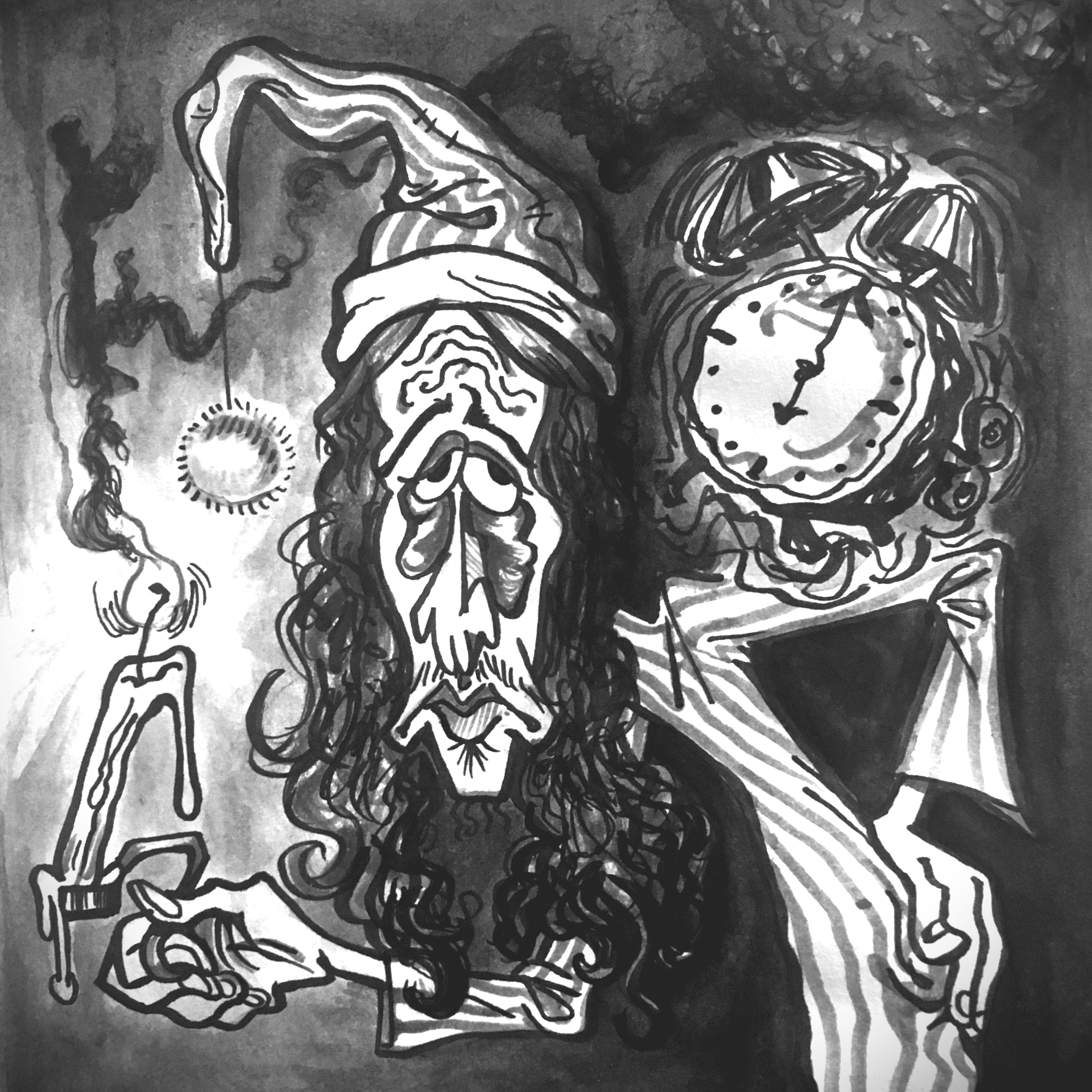
While getting 8 hours of sleep is beneficial, timing and consistency also play a role in long-term health
By EMILIA ROSE — science@theaggie.org
On any given night, staying up past your bedtime might not seem like a big deal: in fact, there are many reasons to stay up late — a video might run long, a conversation drifts or a thought might not finish itself. 10 p.m. becomes midnight, midnight becomes 1 a.m., 1 p.m. becomes 3 p.m. and so on. This is especially common at UC Davis, where the fast-paced nature of the quarter system leaves little time for leisure.
Lily Bailey, a first-year animal science major, described her sleep schedule in full.
“I typically go to bed between 11 p.m. and midnight, and I tend to get between 7-8 hours of sleep,” Bailey said. “I occasionally stay up past my usual bedtime if I’m feeling extra energetic, hanging out with friends or cramming for a test.”
Diego Lopez, a first-year physics major, described more or less the same type of schedule.
“I usually get 8 hours [of sleep],” Lopez said. “I stay up only when I have big exams coming up, so I tend to study a little more for them.”
Experts often cite that a healthy amount of sleep is around 8 hours; by conventional definitions, then, these students are doing everything right. However, getting a good night’s rest might be a bit more complicated than originally thought. Recently, consistency and sleep timing have been shown to be just as important factors in your long-term health.
Of course, this spreads beyond the habits of just some students. In fact, a new study out of the Oregon Health and Science University reported that consistent, insufficient sleep correlates with a lower average life expectancy across individuals in the United States.
“We tested the associations between insufficient sleep and life expectancy at the county level, while controlling for common adverse health behaviors (i.e. smoking, diet, and inactivity),” the study reads. “Insufficient sleep was significantly negatively correlated with life expectancy in most states from 2019 to 2025, such that lower sleep insufficiency was associated with longer life expectancy.”
Patrick Fuller, a professor in the UC Davis Department of Neurosurgery, described his perspective on this study and the true essence of its meaning.
“The study legitimately shows that counties with more short sleepers have lower life expectancy,” Fuller said. “I think this is a key conceptual point […] at the population level, small shifts in average sleep duration can move mortality curves.”
At the country scale, no single night stands out — the effect only appears when you compound thousands of ordinary nights together.
You might think that as long as you get the average number of hours or more, your life expectancy will improve and you’ll be officially sleeping healthily. However, there is more to it than just the numbers.
Christelle Anaclet, an associate adjunct professor in the UC Davis Department of Neurosurgery, explained the importance of sleep timing in the context of the circadian rhythm.
“The circadian rhythm is a rhythm of 24 hours […] synchronized by the light,” Anaclet said. “Deep down, we have a small nucleus named the suprachiasmatic nucleus […] a small master clock. They impose this rhythm to the entire body, regulating the timing of hormonal secretion, of sleep, of metabolism. The timing of sleep is very important […] More important than the duration of sleep.”
Additionally, Anaclet described the sleep cycle, which occurs every night that we sleep.
“In humans, we are distinguishing three major vigilance stages: wakefulness, non-REM sleep and REM sleep,” Anaclet said. “Non-REM sleep is subdivided into three stages: drowsiness (stage one), light sleep (stage two) and deep sleep (stage three). And these cycles last 90 minutes.”
Now, applying this knowledge of sleep stages to our sleeping habits, an interesting finding emerges.
“If, for social reasons, you cannot go to bed, you are not going to start with the first cycle […] missing the first cycle is going to miss a lot of deep sleep […] adding some REM sleep at the end […] that’s going to make you more tired,” Anaclet said. “Circadian misalignment is when your rhythm of activity is not aligned with the rhythm of your body […] and it has been shown also that circadian misalignment is a risk factor for all diseases.”
Putting all this together — the complex factors of the circadian rhythm, sleep cycles and habits of consistently staying up — we arrive at a more nuanced understanding of healthy sleep.
Getting 8 hours consistently is not enough by itself. Instead, sleeping at a time that aligns with your circadian rhythm so that you can go through all your needed sleep phases is key.
Not doing so might be fine day-to-day, but long term — compounded over years and even decades — this adds up to an increased risk of a wide range of physiological conditions such as cardiovascular disease, diabetes and high blood pressure.
When feedback is delayed and the cost is invisible, healthy sleep becomes a long-term gamble. There are so many factors to account for, and the consequences for decisions now may add up in the future.
Biologically, our understanding of healthy sleep is well-studied. So regardless of the reason we choose to stay up late, we know the risks to gambling with our health. Is it a gamble worth taking? That is not an answer science can provide.
Written by: Emilia Rose — science@theaggie.org