






Valentine’s yay or Valentine’s nay?
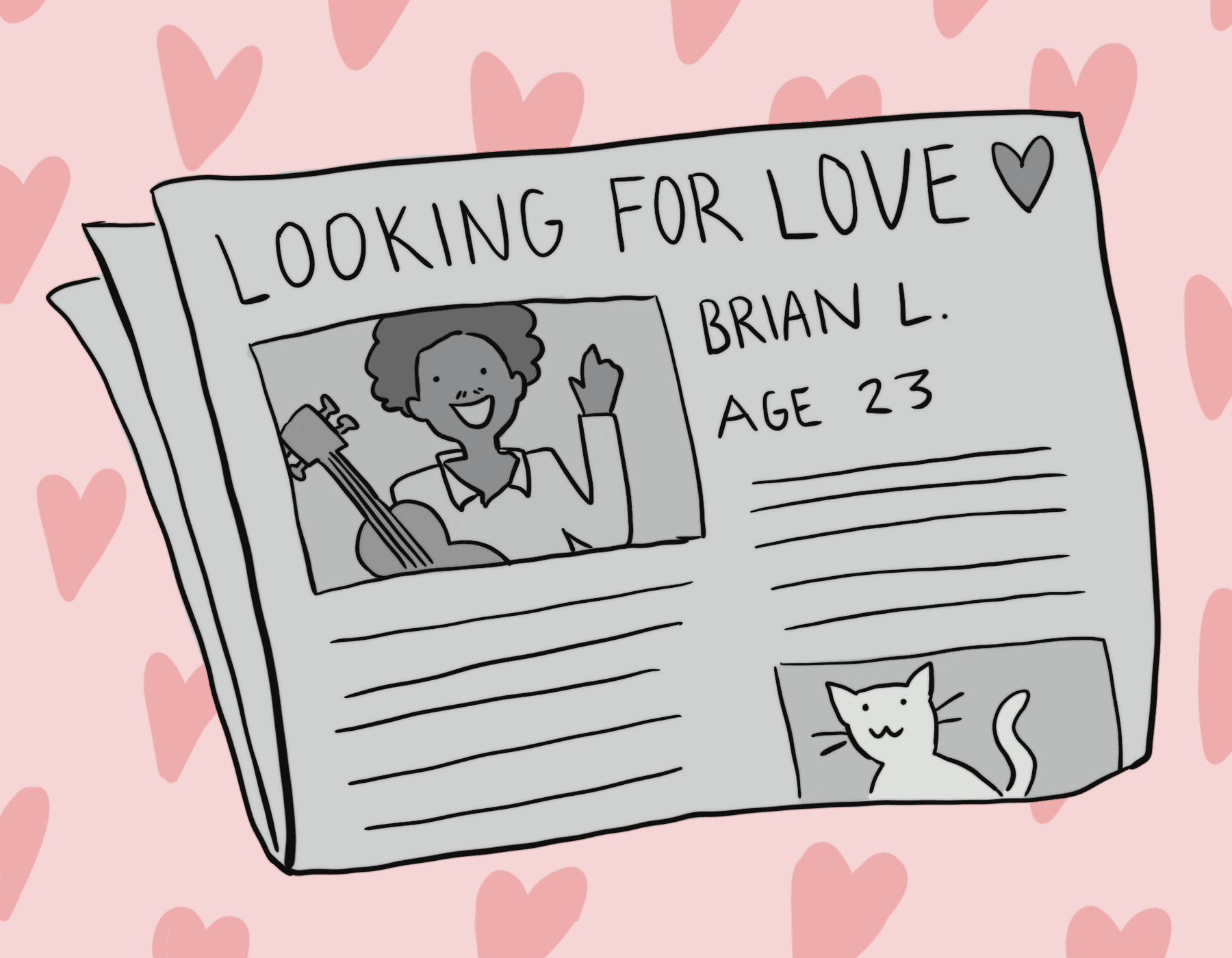
The evolution of Valentine’s Day rhetoric
By ABHINAYA KASAGANI — akasagani@ucdavis.edu
One cannot move through the world this time of year without being bombarded by the influx of Valentine’s Day emblems in red, pink or white — or the equally predictable wave of unmoving opinion pieces that have something to say. This article, however, refuses to join the stack of millions advocating for the celebration of Valentine’s Day, nor does it admonish anyone for partaking in its capitalist sensibilities.
For years, the flurry of Valentine’s Day opinion pieces has failed in making original claims for or against the celebration of Valentine’s Day. “The Price of Love: Capitalism’s Grip On Valentine’s Day.” Cool, what hasn’t been commercialized? “Even more than April 1, Valentine’s Day is for fools.” Sure, but couldn’t that be said about any holiday? “Love me, love me not: Why Galentine’s Day should be equally celebrated as Valentine’s Day.” You’re your own person, go nuts. The anti-Valentine’s Day argument is tired, because frankly, no tradition that involves gift-giving can ever be removed from the urge to swipe a card.
Birthed amidst a culture of disillusionment and cynicism regarding the idea or act of romance, the anti-Valentine’s rhetoric has left Feb. 14 fighting a losing battle. For years, not engaging with the tradition seemed like the more appropriate, responsible option when it came to this romantic tradition. Recently, however, there’s been a more pronounced shift in how people have taken to posting their partners online, on random holidays, with captions like “My boyfriend hasn’t asked me to be his egg for Easter yet?” or “He hasn’t asked me to be his Valentine.” This conversation is polarizing; ideas like “princess treatment” or “bare minimum” have managed to skew the standards of dating entirely, with everyone feeling the need to either go big or go home.
In placing an exorbitant amount of pressure on their partners to show up for them in extravagant ways, people have begun to forget what the day is entirely about. Companies have begun staving off usual criticisms about their integrity with cards that read, “happy, unimaginative, consumerist, entirely, arbitrary, manipulative and shallow interpretation of romance day,” leading most people to misguidedly believe that big corporations are now on their side. Helen Fisher, an anthropologist at Rutgers University, commented on this foolishness: “This isn’t a command performance. If people didn’t want to buy Hallmark cards… Hallmark would go out of business.” Pretending that we ourselves are not contributors to this phenomenon is frankly laughable.
Adding to this conversation is Chante Joseph’s article “Is Having a Boyfriend Embarrassing Now?” from late last year, which caused an immediate ruckus by those who took offense at being disliked for “loving their boyfriend.” While others pointed out that they completely missed the point, this signified a shift in the discourse surrounding romance. Apart from this conversation being nauseatingly heteronormative, it prompted people to either prove their allegiance to female friendship or “reclaim or romanticize their single life.” Enter Galentine’s Day.
The concept was likely first introduced in 2010 by “Parks and Recreation” protagonist Leslie Knope, who organized a holiday for her friends to celebrate their platonic love for one another. Mentions of Galentine’s Day in my friend groups have skyrocketed this year, and while some use the day to truly appreciate their friends, others opt to use it to collectively circumvent the loneliness brought forth by Valentine’s Day, in a Singles Awareness Day (SAD) way.
Despite occasionally feeling subdued by the repeated backlash surrounding the holiday, the public hate for the holiday hasn’t put too much of a damper on the festivities, with aggregate Valentine’s Day spending expected to reach $29.1 billion this year, according to the National Retail Federation.
While there is no obvious “right” way to celebrate Valentine’s Day, it doesn’t hurt to critically assess the extent to which we are playing into the systems we attempt to denounce. Determining how we can ethically dip our toes in the consumerist pool before losing ourselves in it entirely remains tricky.
Yet, when it comes to matters of the heart, no one is satisfied with an evidence-backed stance. It’s especially comforting, during times like these, to know that love is in the air and that we retain an inexhaustible capacity for love outside of romantic partnerships. Ultimately, no matter how one celebrates, they are choosing to celebrate each other. Rejoice in the fact that it is completely optional to buy into the rhetoric that’s so strongly pushed this time of year — allow your love to exist however it so desires. Valentine’s Day is yours to celebrate as you wish.
Written by: Abhinaya Kasagani— akasagani@ucdavis.edu
Disclaimer: The views and opinions expressed by individual columnists belong to the columnists alone and do not necessarily indicate the views and opinions held by The California Aggie.