55.7 F
Davis

Davis, California

Monday, December 22, 2025
Home Blog Page 101

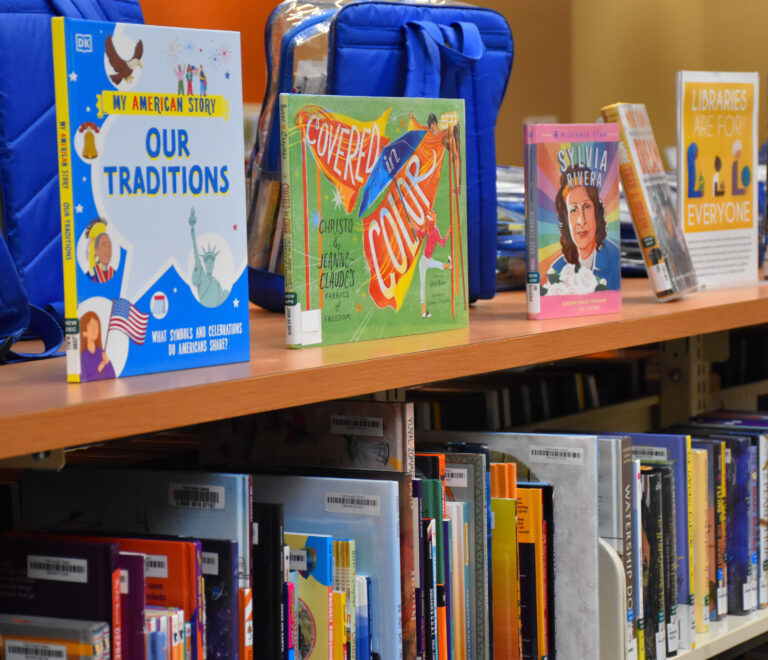
Friends of the Davis Public Library holds monthly book sale at Mary L. Stephens Library

The non-profit organization offers a wide range of donated novels and all proceeds help finance the services they offer to the public library


By MATTHEW MCELDOWNEY — city@theaggie.org


Friends of the Davis Public Library, a non-profit founded under the core message of providing additional financial support to its library, held their book sale for the first weekend of this month from March 1 to 3. With a selection of books on subjects ranging from history, science, world languages, poetry and more, the book sale is able to price their collection for as low as $1. 

Eli Bejarano, a fourth-year biochemistry major, was able to add Fyodor Dostoevsky’s “Crime and Punishment” into his reading list thanks to the book sale.

“Usually book sales give away books that they are sick of keeping around [but] they have a really big sci-fi collection and a lot of classics which was really nice,” Bejarano said.

Bejarano found out about the book sale from Logos Books, a volunteer-run bookstore owned and operated by the Friends of the Library since 2018. 

The book sale represents only a small part of the work that the non-profit and its volunteers dedicate to the community of Davis. Donations pass through the hands of pricing experts from Logos Books to the book sale and sometimes directly to the library. 

Stacks of boxes towering up to the ceiling are sorted through and circulate within this system to ensure that these books fall into new hands. Even books unable to find homes in Davis are eventually donated to an organization called Better World Books to be given as charity to developing countries around the world.

Mabel Correa Reynolds, a volunteer with the group for seven years, manages publicity while sorting and pricing books for Logos’ world languages and literature section. 

“It’s not a matter of saying I want to sort, you got to be well read and have the initiative to know what will sell and what won’t,” Reynolds said. “And, then there’s the physical effort it takes to move these boxes of books. But, it’s well worth it. It’s very rewarding.” 

Reynolds was able to see Logos Books transform from its dilapidated state into one of the organization’s largest financial contributors. The impassioned efforts of volunteers have allowed Friends of the Library to not only last, but expand in spite of the pandemic. 

“During the pandemic, we never stopped working,” Reynolds said. “We used to go out and sell books outside, rain or shine.”

Reynolds demonstrated a deep appreciation for the Friends of the Library President Rory Osborne and Volunteer Gino Greene for helping the organization thrive during these turbulent times.

The community of Davis and their love for reading is much larger than a heap of used books changing hands. The money raised by Friends of the Library aids the Mary L. Stephens Library in creating various programs and resources for the community. 

With Friends of the Library donating over $100,000 this year, Library Regional Supervisor Crista Cannariato had no shortage of ways to describe the impact they have made.

“They provide money for book club bags, nature explorer backpacks so that kids can go out with their families to explore the outdoors, and discovery kit collections with things like telescopes that people can borrow to learn about astronomy,” Cannariato said. 

Friends of the Library is able to provide support to the library so that they can not only supplement state funding but also provide resources exclusive to Mary L. Stephens Library.

“They are helping to provide funding for the maker space,” Cannariato said. “There will be a variety of soldering equipment, 3-D printers and laser cutters. They also provide funding for a lucky day collection, which is for books that are not reservable but are really popular titles.” With the amount of resources Friends of the Library raises for their respective branches in Yolo county, these libraries are able to coordinate county-wide events for their communities.

“They help provide money and donated books for system wide events in Yolo County such as El día de los niños,” Cannariato said. “They help fund the annual Juneteenth program. Friends of the Library helps fund our annual summer reading program, the program’s prizes and weekly presenters to encourage people to become life-long readers as well as to help students from falling behind.” 

With no indication of slowing down, Friends of the Library has continued to expand their financial efforts. There was uncertainty as to whether the non-profit organization would be able to stay afloat after acquiring Logos, after all the trouble caused by the pandemic but after everything, Friends of the Library have held firm in their mission.

“And to think that there were naysayers that were skeptical about whether we would be able to support the book sale and the bookstore, […] it has been quite the contrary,” Reynolds said. “From their love for reading and their continued generosity to donate, it speaks volumes about the people of Davis.” 


Written by: Matthew McEldowney — city@theaggie.org
 

UC Davis LGBTQIA+ Resource Center hosts vigil for Nex Benedict on Feb. 29

The center aimed to create a safe space for queer individuals grieving


By BENJAMIN CARRILLO – campus@theaggie.org


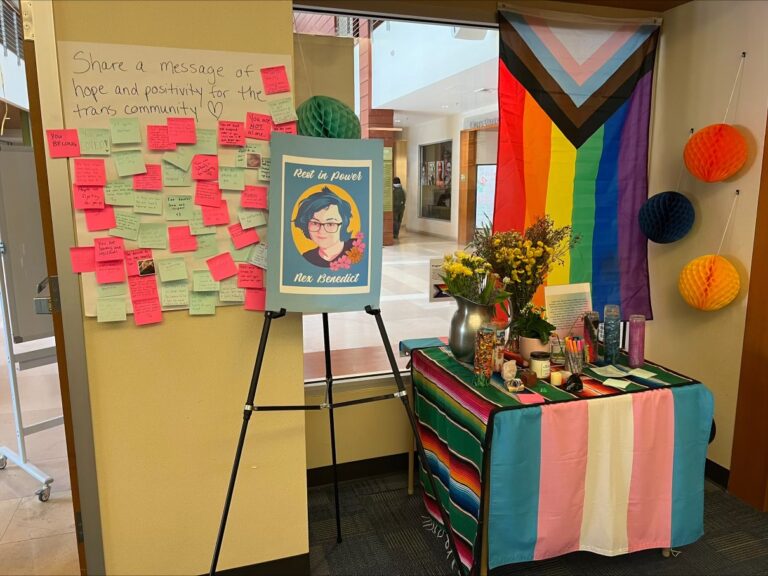
On Feb. 29, the UC Davis LGBTQIA+ Resource Center hosted a vigil of remembrance for Nex Benedict. Benedict was a non-binary high school student from Oklahoma who died on Feb. 7, one day after being attacked and severely injured by other students in a school bathroom. Angel Bernardino, the trans advocate and student services specialist for the center, spoke on the importance of hosting this vigil.  

“Nex represents the reality of what’s going to happen if the legislature and schools don’t take a stand for trans kids,” Bernardino said. “[The vigil] was a space for anyone to come in whenever they had time to give flowers to Nex and other trans individuals who have been murdered. It was mostly a safe space for people to grieve.”

The vigil also included a place where community members could write both their thoughts about the tragedy and condolences to Benedict with no judgment. 

Benedict was also Native American. While the specific origins of the tribe that they initially came from are unknown, Benedict was living on a Cherokee reservation at the time of their death.

“We do recognize that the center isn’t a space that all communities feel 100% welcome in, specifically the Indigenous community,” Bernardino said. “Luckily, the Native Nest is doing a great job and [helping] that part of the student body. We wanted to do our part of recognizing Nex’s identity as non-binary and also recognize that they were a child. We should grieve any child that passes from bullying in the school system.”

Amira Inzunza, a fourth-year psychology and Chicana/o studies double major and trans advocacy community coordinator, spoke on their experience as an attendee at the event in support of Nex Benedict and the non-binary community. 

“For a lot of people in that moment, it was a get-together for those in the queer community,” Inzunza said. “There was also a line where we could write affirmations and thoughts about the trans experience, and for mine, I wrote that I wish we would just stop being killed. In that moment, though, it was more of a joyful get-together with staff coming to show support. We all felt comfortable being in community with everyone.” 

Inzunza also spoke on the tragedy of Benedict and the future of the LGBTQIA+ community if this lack of protection for transgender lives continues. 

“Dealing with the cards that you’re dealt with, and just wanting to use the restroom [that ended] in [Benedict’s] demise, is tragic,” Inzunza said. “I think that Nex is someone that we all saw ourselves in: a queer individual [being] bullied. What UC Davis can learn from this situation is to add more gender-neutral bathrooms on campus and create a safer space for non-binary and queer individuals.”

Written by: Benjamin Carrillo — campus@theaggie.org

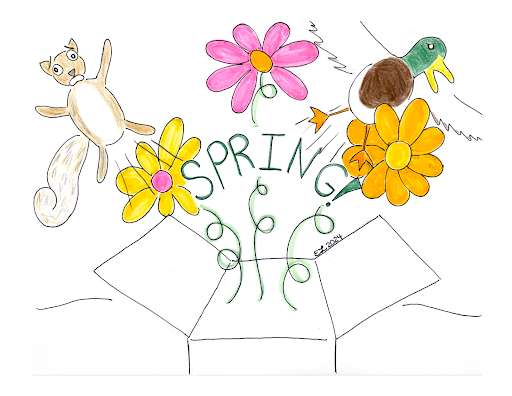
Spring has sprung

Drawn by: Emma Lapidus — eblapidus@ucdavis.edu

Disclaimer: (This cartoon is humor and/or satire, and its content is purely fictional. The story and names of “sources” are fictionalized.)

The live-action series ‘Avatar The Last Airbender’ proves not every animated show needs an edgy reboot

Aang can fly now… I guess?


By MAYA KORNYEYEVA — mkornyeyeva@ucdavis.edu


Warning: Spoilers ahead!


The day the live-action remake of “Avatar: The Last Airbender” (ATLA) aired on Netflix, I bounced straight from my work table to the couch, aiming my remote at the television and mentally preparing myself for what lay ahead. Piles of assignments remained willfully forgotten on my desk, and my computer was left opened — merely ornamentally — to the draft of my next article for The Aggie. “But it can all wait,” I told myself as I pressed play, hopefully, albeit anxiously, waiting for the show to start. 

Before I provide my review of the live-action remake, I must preface that I have watched the original animated series twice, as well as dabbled in some of the comics. I got into the show with my family during the pandemic, a time when we all needed both the humor and the escapism of ALTA’s incredible world-building. When the plans for the live-action remake were announced, I hoped the new adaptation would preserve the light-hearted interactions between the characters and the cohesive story. 

The first episode was truly “live-action;” filled with a chase sequence, fighting, sacrifice, betrayal and ultimately a dude being burned alive. Ten minutes in I found myself wondering if this new remake was even rated PG… the violence was a bit dramatic and borderline inappropriate for the age range of the audience that the animated show was originally aimed toward. 

Doing a little research revealed that the series was actually meant to cater toward Game of Thrones fans: an older audience who perhaps watched the animated “Avatar: The Last Airbender” as children and who would find appeal in a more mature portrayal of the show. I actually quite liked this more mature take, as the premise of the series deals with very serious story elements like war, destruction and violent spirits, which are better presented through darker cinematography. 

The first episode also brought forth a recreation of the iconic “Water, Earth, Fire, Air” intro; I was expecting something crisp and clean, which followed the original introduction perfectly. Lo and behold, with these high expectations I was doubly disappointed. The computer-generated imagery (CGI) was poor, especially when it came to the human figures. The benders clearly looked fake, and the script featured an exposition dump that would be better told by another character in the show (for example, Katara’s grandmother, who goes on to repeat the entire original intro monologue a few scenes later). 

The CGI for Aang’s newfound flying ability was also quite painful to watch, and definitely dampened my general attitude toward the remake. The very fact that he could fly — one of the hardest bending techniques to ever achieve, as established in the sequel Legend of Korra — also creates an overwhelming amount of plot holes. For instance, if Aang can fly, why does he need a glider? Why can’t he fly away from his captors and why couldn’t other Air Nomads use this strategy to escape from the fire-benders? I just couldn’t stop myself from asking these critical questions.

Yet another negative of the show was the pacing. The first few episodes stuck relatively closely to the established storyline set by the animated series, but everything fell apart in the later episodes. The third episode combined three separate story arcs into one — Omashu became the setting for the Bumi conflict, as well as Jet’s “freedom fighters” narrative and Haru and Tyro’s storyline. The following episode managed to mix in the “Secret Tunnel” plotline, and thus four pieces of the Avatar’s journey were mashed into one. 

While this combination of events was executed creatively, it was a stark contrast to the original plotline and added some unnecessary complexity. Given that the runtime of both the original and the live-action remake is roughly 8 hours, the new series felt much more rushed than the animated one. 

Adding to this dilemma was the dramatically inflated amount of screen time that Azula and her two friends Mai and Ty Lee received. While Azula is introduced much later in the original animated series, she is spotlit immediately in the remake. I found this problematic not only because of the discontinuity with the animated series, but also because the personalities of Azula’s friends are erased to make way for her own character development. Mai and Ty Lee serve as mere plot pieces, standing next to each other, watching Azula train for 99% of the time. I would have loved to see their friendship dynamic come forth, and for the remake to spend more time on bringing out their individuality.

Despite all the issues in Netflix’s adaptation of the ATLA series, there were a few notable positives. For one, the dynamic between Zuko (one of the main antagonists of the first season) and his uncle Iroh was done with obvious care; the two characters shared a heartfelt backstory, and both the verbal and nonverbal interactions enforce their adopted “father and son” relationship. I also enjoyed the beautiful visuals sprinkled in through the episodes, as well as the choreography for several of the fight scenes — they felt fresh in a dynamic way that reminded me of Jackie Chan’s fighting style in his older films. In particular, the fight between Aang and Zuko in the streets of Omashu demonstrated this stylistic ingenuity: the characters used their environments to truly let their abilities shine. 

The ATLA live-action remake was an interesting watch, even if the adaptation was not super satisfying to current fans of the show. There is a certain appeal to the design and visuals in the live-action, even though the negatives either match or outweigh the positives. In the end, it is not the worst live-action remake, but definitely not the best one.  


Written by: Maya Kornyeyeva — mkornyeyeva@ucdavis.edu


Disclaimer: The views and opinions expressed by individual columnists belong to the columnists alone and do not necessarily indicate the views and opinions held by The California Aggie.

Swing dancing community at UC Davis integrates both traditional and modern practices of the art form

The Davis Swing Dancers club teaches dance moves and the cultural history of swing dancing


By LYNN CHEN — features@theaggie.org


If you ever need a space to learn a new hobby, groove to the music or blow off some steam, then the Davis Swing Dancers club might be the place for you.

“Our club is dedicated to celebrating the culture of swing dancing and inviting other people to learn how to do it and enjoy it,” Wesley De Leon Rodas, a fourth-year applied physics major, said.

Historically, swing dancing is a form of social dance that developed from swing style jazz music. The dance style originated from Black communities in the 1930s in the Harlem neighborhood of New York City, according to Ava Marie Ruggiero, president of the Davis Swing Dancers.

“Swing dancing is an umbrella term,” Ruggiero said. “There are many types of swing dancing that [our club] does, but the main thing that’s done in most places is Lindy Hop.”

Lindy Hop is a type of swing dance that requires a substantial amount of physical vigor. It emphasizes the ability to improvise and include various foot movements to different rhythms.

Other forms of swing dancing that the organization practices include Collegiate Shag, Balboa and Charleston.

During weekly meetings, the student organization allocates time to provide free in-person instruction to beginners. The rest of the meeting is then dedicated to “social dancing” — an unstructured period for people to pair up with others and dance creatively to the music.

To further promote the art form, the club hosts events that allow its members to learn more about the cultural history of swing dancing and to interact with other local communities that practice the dance.

For instance, recently the organization held a watch party for a documentary called “The Spirit Moves,” a film that traced the evolution of Black social dance through most of the 20th century.

Furthermore, earlier this year, the organization hosted an intercollegiate event called the “Lindy Exchange,” where swing dancing clubs from other University of California campuses came to Davis to celebrate the art form.

“[The clubs] danced together for a whole weekend. We rented out a dancing venue in Sacramento, we booked a couple [of] rooms in the [Teaching and Learning Complex] and just did a bunch of classes with local instructors,” Ruggiero said.

Other than educating others about the art form, the Davis Swing Dancers club is focused on creating its own dancing community built on consent, freedom and self-improvement.

“A big thing we prioritize in swing dancing is consent and asking others [for permission] to dance,” De Leon Rodas said. “It’s a good idea to have throughout life, and we hope people can take [that way of thinking] into real life.”

In addition, the organization constructs a space that encourages self-improvement in its members.

Elias Higbie, a general member of the club and double-major in linguistics and Spanish, recalled how learning new dance moves helped him to find confidence in himself. 

“I [used to] be very timid,” Higbie said. “Now, I can ask people to dance without that voice in the back of my head saying, ‘You’ll humiliate yourself.’”

He added that the club has helped him feel more secure in himself. 

“I actually have confidence in my dancing now, and it makes me feel confident elsewhere too.”

Higbie highlighted that the organization also prioritizes gender neutral practices.

“Traditionally in swing dance, it’s very gendered [since] usually the man leads and the woman follows,” Higbie said. “It’s like this in other places [I’ve danced at]. The way I found it [at Davis], it’s not at all gendered. You [can just] go up to someone, and be like ‘Hey, do you wanna dance?’ And if they say ‘Okay,” you respond, ‘Cool, do you lead or follow?’”

While the club is pushing the boundaries of traditional swing dancing, they are still intimately connected to and empowered by its cultural history. This aspect of the dance form is especially impactful to De Leon Rodas. 

“You see old footage of people [swing dancing] and doing the same things that you are now, and it’s interesting because it’s like you’re living a part of history,” De Leon Rodas said.


Written by: Lynn Chen — features@theaggie.org


Five popular book recommendations that are worth your time

If you’re looking to read a popular book series but aren’t sure where to start, here are some suggestions 


By NATALIE SALTER — arts@theaggie.org 


If you’ve engaged with any online reading communities — whether on Instagram, YouTube, TikTok or any other social media site — you’ve likely heard certain books cycle into discussions very often. It can be hard to decipher which books are worth checking out and deserve the praise they receive — so here is a list of five popular books that are just as amazing as their fans claim they are.


“The Cruel Prince” by Holly Black (2018)

Holly Black’s “The Folk of the Air” trilogy, starting with “The Cruel Prince,” is set in a lush and dark faerie realm filled with peril and intrigue. Jude Duarte is a mortal girl swept away by her foster father, one of the dangerous Folk, and made to live in the land of Faerie. Surrounded by bloodthirsty and cunning fae, Jude must fight to fit in, and her strong will puts her at odds with the youngest prince of the land, Cardan. When Jude becomes entangled in a complex political scheme involving Cardan and his siblings, each vying for their father’s throne, she discovers a new side of the Folk, as well as an opportunity to rise in power herself.

Black has crafted a brilliantly woven story that combines a complex succession crisis, fascinating worldbuilding and heart-wrenching romance into one novel. Every character is deeply compelling, and their relationships with one another are handled with precision and attention, each interaction feeling fleshed out and unique. It’s no wonder that “The Cruel Prince” has become a classic of the dark fantasy genre and is worth every praise it receives in literary communities.


“Once Upon A Broken Heart” by Stephanie Garber (2021)

How far are you willing to go for love? When hopeless romantic Evangeline Fox has her heart broken by her first love, she turns to drastic measures — making a deal with the immortal Prince of Hearts to stop her lover’s wedding to another. However, magical deals come with steep costs, and when Evangeline finds herself thrust into the center of a powerful prophecy, she comes to find that the Prince of Hearts may be her unlikely ally. Though her trip to the Magnificent North initially feels like one of her childhood tales of magic and adventure, Evangeline discovers that happily ever after is not always what it seems.

“Once Upon A Broken Heart” is the first of a magnificent trilogy for which Stephanie Garber has received high praise. The novel’s enchanting universe, full of fantasy that feels like a fairytale brought to life, makes the perfect backdrop for a story of twisted curses, destined quests and true love. Once you fall into the world that Garber has crafted, you will never want to leave, and this bewitching trilogy provides unforgettable magical adventures that you’ll truly fall in love with. 


“Six Of Crows” by Leigh Bardugo (2015)

If you love a good heist, then Leigh Bardugo’s “Six Of Crows” is the book for you. The novel follows six distinct characters: Kaz, a talented criminal harboring a dangerous grudge; Inej, an acrobatic thief; Jesper, a witty sharpshooter with a penchant for gambling; Nina, a powerful magic user; Matthias, a highly trained soldier forced to question his own country; and Wylan, a demolitions expert and runaway. These six unlikely companions find themselves at the head of a near-impossible mission to break into the world’s most highly guarded fortress, and the complex relationships they develop may save their lives.

Bardugo’s universe is incredibly compelling, and the characters she writes are genuinely unforgettable. Once the action in “Six Of Crows” starts, it is impossible to put the book down. The secrets, needs, desires and fears carried by each character make them deeply nuanced and enjoyable to read about. This book is the first of a duology, and its follow-up, “Crooked Kingdom,” is just as incredible, making it a worthy choice for your next literary adventure.


“The Poppy War” by R.F. Kuang (2018)

R.F. Kuang’s popular book, “The Poppy War,” is a great choice if you’re interested in an East Asian-inspired fantasy universe that draws influences from real-world history. “The Poppy War,” as the name suggests, is a wartime novel. Rin is a war orphan raised by a criminal family hoping to sell her into marriage. Seeking to avoid this fate, she studies relentlessly and aces the Keju, a test that ensures her a spot in her nation’s most prestigious military academy. Finding herself an outcast, Rin must fight relentlessly to succeed, all whilst a war brews that could change the course of history forever. 

Kuang’s novel navigates difficult topics that directly reflect real history with care and mindfulness. Though certainly a darker read than the other entries on this list, “The Poppy War” is compelling and engaging. You might have to take your time reading this novel, as the subject material can be hard to swallow, but what makes Kuang’s book a worthwhile read is the insight it will give you into the real world. It is the sort of book that sticks with you long after reading, and if you want more of Kuang’s universe, it is the first of a stunningly well-written trilogy.


“The Priory Of The Orange Tree” by Samantha Shannon (2019)

Once you open Samantha Shannon’s “The Priory Of The Orange Tree,” you’ll discover a fascinating and carefully crafted universe that makes it a worthy entry into the halls of literary fantasy fame. In the nation of Inys, lady of the court Ead has a secret quest — to protect the country’s Queen Sabran from the assassins who seek to end her bloodline. Ead hides her magical abilities and affiliation to the enigmatic Priory in order to stay close to Sabran’s side. Across the sea, orphan Tané is given a life-changing opportunity to become a dragon rider, but she hides a secret that could cost her entire future. When a great evil thought long dead begins to rise once more, these three women find their lives entwined in the quest to banish the darkness for good.

Given its massive size, Shannon’s novel can be a daunting read. Still, even new readers of fantasy will find themselves engrossed in the interweaving story threads that make up Priory’s many pages of memorable and diverse world building, taking influences from across the real world. Likewise, Shannon presents heroes that are easy to love and villains that are easy to hate whilst also providing them with the complexity necessary to create compelling stories and relationships. If you have lots of time on your hands and want to take on a bigger read, pick up Priory — you certainly won’t regret it.


Written by: Natalie Salter — arts@theaggie.org


A love letter to philia

Don’t let your friends fall by the wayside


By MOLLY THOMPSON —- mmtthompson@ucdavis.edu 


I’ve never been in love: I’ve never had a date on Valentine’s Day, or an “our song” or someone to take me to prom. But that doesn’t mean I don’t have love in my life. 

Our society places so much pressure on romantic relationships — from the storybook-perfect Disney love stories that raised our generation to the very concept of “cuffing season,” we’re surrounded by these fantastic images of idyllic romances. I’m a first-year in college, I basically just got here, and I’ve already witnessed my peers seeking, engaging in and recovering from multiple flings. The message is that if you’re not involved, you’re missing out — that you have a deficit, a space to be filled. 

But here’s what I’ve learned: I can live a perfectly full life, complete with elation and heartache and serenity and melancholia, without any sort of romantic presence. Platonic relationships tend to be written off as secondary to their romantic counterparts. We place eros (romantic love) on a pedestal, above philia (platonic love). Not to say that we don’t value friendship, but I think we sometimes get so hung up on our romantic fantasies that we let our friends fall to the back burner. They don’t deserve that — we don’t deserve that. 

I have two friends who walked me home — 30 minutes in the opposite direction of where they live — after I had a panic attack at a frat party once. I have a friend who wrote, illustrated and assembled a homemade pamphlet with diagrams and calming techniques when I had to get my blood drawn in middle school because I was so scared of the needle. I have a friend who lives across the country and sent me a T-shirt she saw at a vintage fair because it reminded her of me; I hadn’t seen her in over a year.

I have a friend who sat across from me in a hot tub listening to me pine over my (extremely mediocre) middle school crush — and who is still there, still listening to me talk about my crushes, more than five years later — who gives me birthday cards that make me cry and who could recognize me by my handwriting or my footsteps or my laugh. I have friends I just met this year, to whom I can voice all my delusions just to find out that they think the same way. I know a girl who would bike through a torrent of cold, unforgiving rain just to sit and watch a movie with me. I know girls with hearts of gold, purple and blue the exact shade of the night sky. 

That kind of love is special. There’s an extraordinary kind of intimacy in true philia — it’s different than the kind of intimacy in eros, but it’s just as strong. The idea of a perfect romantic relationship is to have someone who will support you no matter what. Who will pick you up when you fall, support you when you’re weak and kiss your bruises to make them better. But if you’re lucky, your friends will already be there to help. 

Because at the end of the day, it’s who you sit around an apartment living room table with, eating coffee cake from Trader Joe’s and drinking tea (and maybe sangria). It’s who you run around downtown with after dark, slipping into the ice cream shop just minutes before they close. It’s who you scream with over the phone when a boy likes you and who you cry to when he breaks your heart. 

Those are the memories that make me, like stars that amalgamate into a galaxy. Each one makes me a little brighter, a little stronger, a little more radiant. I love them all. 

This is a love letter to friendship, because romance gets enough attention. Our platonic relationships are precious, and we should treat them as such. We need to be intentional with our friends the way we would be with our romantic partners — tell them we love them, tell them we’re grateful for them, reach out to them and make time for them. They’re just as important to us, so we should put the effort in with them as much as we do with lovers. 

Of course I want romantic love. Of course I do. This is not to say that romance is unnecessary or unimportant. I’m a hopeless romantic: I’ve daydreamed of having someone who reaches for my hand in line for coffee, who holds the door for me, who will dance with me in the kitchen in the middle of the night. 

But I can confidently say that I can be happy in the absence of romance; I cannot say the same about platonic relationships. I need the support of my friends in order to be happy but also just to be okay. I rely on them, and they rely on me. I want to protect them, I want to hold them gently in my palms like butterflies. I want them to know that — I want them to know how much I care about them. Friendship is precious and beautiful and sacred, and it should never come second to romance. 


Written by: Molly Thompson — mmtthompson@ucdavis.edu 


Disclaimer: The views and opinions expressed by individual columnists belong to the columnists alone and do not necessarily indicate the views and opinions held by The California Aggie.

Chris’ Culture Corner

The Art Desk’s weekly picks for movies, music and more


By CHRIS PONCE arts@theaggie.org


Book: “The Book of Overthinking: How to Stop the Cycle of Worry” by Gwendoline Smith (2020)


Look, it’s nearly the end of the quarter, finals are coming up and papers are due. There’s plenty to feel anxious about right now — trust me, I’m in the same boat. This is why I’ve decided to pick the less conventional book recommendation, “The Book of Overthinking.” This short “self-help” style book gives advice on how to manage anxiety and overthinking in a healthy, non-judgemental way. It’s intentionally a short and digestible read to make the reader more comfortable, there are even some graphics and random cartoons throughout. “The Book of Overthinking” isn’t a one-size-fits-all all approach to anxiety, however, it does provide helpful exercises and tips to help manage overthinking. This is a book I certainly reread around this time of the quarter and I hope it can be a helpful resource for you too. 


Movie: “American Fiction” dir. by Cord Jefferson (2023)


I got the chance to watch “American Fiction” at the Davis Varsity Theatre last week and this was the most packed I remember seeing the theater in some time. As the crowd watched the drama/comedy satire people laughed and vividly expressed their reactions to the film. “American Fiction” is as hilarious as it is important — the film follows a Black writer (played by Jeffrey Wright) who is working for a publishing company who feels his work will only be appreciated if he capitalized off his ethnicity. Out of frustration, Wright’s character ends up writing a novel — that he believes plays into Black stereotypes — which lands him a movie deal and skyrocketing sales. The movie opens up a conversation on race, exploitation, tokenism and white performative activism. “American Fiction” notably doesn’t provide any hard answers to these nuanced questions, allowing the audience to be a part of the conversation. 


TV Show: “The Rehearsal” by Nathan Fielder (2022)


Comedian Nathan Fielder’s most recent docu-series begins as funny as his 2013 show “Nathan for You” but slowly evolves into something more meta and thought-provoking. This isn’t to diss Fielder’s comedy, which is at its best in this series, but clearly, Fielder intended this show to have a stronger message with its satirical approach. In the show, Fielder helps guests on the show prepare for stressful situations in an artificially controlled setting (i.e. a rehearsal). What Fielder creates is a satire about the nature of anxiety and the overplanning we put into our lives. This show’s stunts quickly become shocking and leave the audience with something more profound than what would have been expected. 


Album: “Gradients” by Archer Oh (2022)


“Gradients” is the sophomore album of Chicano indie band Archer Oh. This rock album is about several feelings — growing up, lost love and being your own worst enemy. Many of the songs incorporate traditional Mexican sounds — such as the trumpet — and other Western surf-rock style compositions. Archer Oh currently has 26.9k monthly listeners on Spotify, so go give them a listen so you can say, “I knew them before they blew up.” 


Written by: Chris Ponce — arts@theaggie.org


Preliminary hearing for Carlos Reales Dominguez completed

Dominguez’s arraignment was scheduled following the hearing


By MADELEINE YOUNG city@theaggie.org


Carlos Reales Dominguez was arraigned on March 13 following the preliminary hearing that began on Feb. 26.

Last year, prosecutors deemed Dominguez mentally unfit to face charges based on testimony made by Dr. Dale Watson on the fifth day of Dominguez’s competency trial in July. 

“My opinion is that he is most likely schizophrenic, that this is a ‘first break’ of schizophrenia and that he’s suffering both of the psychiatric illness and the neurocognitive deficits that are often associated with an illness like schizophrenia,” Dr. Watson said to the court.

However, Dominguez was recently restored to mental competency following examinations by state hospital officials at Atascadero. Once deemed fit for trial, the preliminary hearing began at the end of February.

The Yolo County District Attorney announced on Feb. 26 that they would not be seeking the death penalty. During the preliminary hearing, the court heard multiple testimonies regarding the attacks. One of those testimonies came from Davis Police Corporal Pheng Ly who attempted to revive UC Davis student Karim Abou Najm on April 29. 

“He was lifeless,” Ly told prosecutors at the preliminary hearing as he recalled attempting CPR on Najm, according to coverage by ABC10.

Ly testified that he and his fellow officers on the scene heard a male voice yelling for help before seeing two individuals at the park — one hunched over and the other attacking the former.

Sergent Matthew Muscardini, who conducted the interview with Dominguez after his detainment, testified about the third victim, Kimberlee Guillory, who survived her wounds from an attack on May 1. 

“She was sitting on her bed inside her tent, on her phone, and she said she felt like she got punched through the tent,” Muscardini said in his testimony, according to KCRA3. “She did not realize she had been stabbed twice until later on.” 

Ultimately, Judge Samuel McAdam ordered a trial for two homicides and one attempted homicide.


Written by: Madeleine Young city@theaggie.org

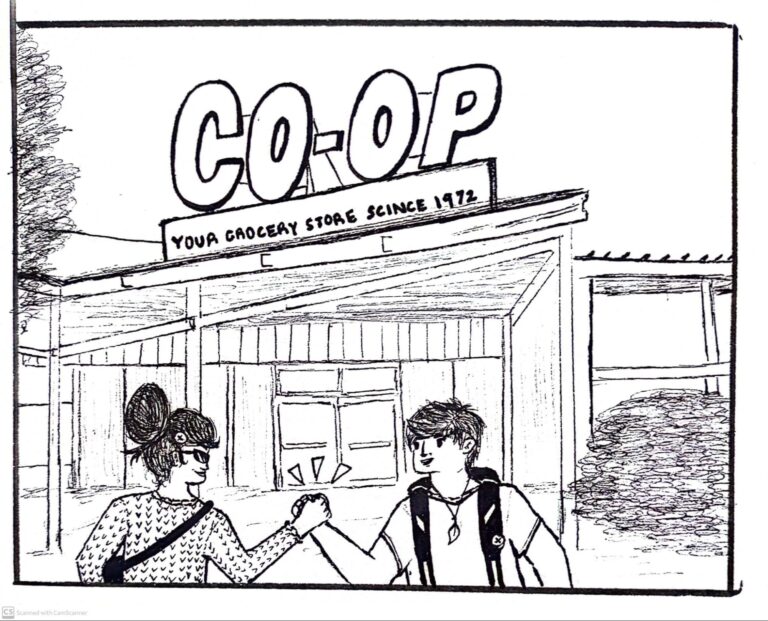
Bits of Davis: Groceries take two

Drawn by: Nimra Farhan –– nfarhan@ucdavis.edu


Disclaimer: (This cartoon is humor and/or satire, and its content is purely fictional. The story and names of “sources” are fictionalized.)

A deep dive into the detrimental effects of nitrogen deposition in the Santa Monica Mountains

UC Davis professor Justin Valliere discusses the impact of urbanized nitrogen deposition on Santa Monica Mountain Airshed


By EVELYN KUEI — science@theaggie.org 


After a large wildfire, such as the 2013 Springs Fire in the Santa Monica Mountains, many native species are expected to blossom. However, with recent uprooting from alien and invasive species, our native wildlife cannot sprout.

Since 2011, Justin Valliere, an assistant professor in the UC Davis Department of Plant Sciences, has been working with the National Park Service in the Los Angeles region to investigate the adverse effects of vehicle and urban pollution in the Santa Monica Mountains National Recreation Area. 

“The park knew that nitrogen deposition was likely something they were facing,” Valliere said. “However, evaluating it as a risk to native species and for invasions hadn’t been studied yet, so that’s how the project started.” 

Valliere and his team used observational studies to study nitrogen deposition naturally without manipulating the environment, along with a controlled experiment in which the researchers deposited known quantities of nitrogen onto different plots of land. 

“The physiology of native species has evolved in the context of low nitrogen availability, so in some ways, they don’t know how to behave with added nitrogen,” Valliere said.

Although nitrogen is one of the most essential nutrients for plant growth, too much nitrogen threatens native wildflowers. When exposed to far more significant portions of nitrogen than needed, native plants are overrun by invasive species that benefit from the nitrogen and use it to grow faster. 

This added nitrogen can also exacerbate the negative effects of drought on native species. In addition to the nitrogen deposition already caused by vehicle and industry emissions, the dry drought season has also brought many challenges –– including the increased chance of more significant and damaging wildfires. 

“In 2013, there was a massive wildfire called the Springs Fire,” Valliere said. “When that happened, it was unexpected, but we realized it would be a cool opportunity to understand how nitrogen deposition does not just impact natives in the park and invasive [species] but how it impacts post-fire recovery.” 

Valliere’s recently published research highlights weed damage to coastal sage shrubs and fire-following species in the Santa Monica Mountains. With native species needing more time to bounce back after a drought and fire season, weeds can displace the native flora due to their ability to grow more rapidly. 


“This work provides strong evidence that [nitrogen] deposition can exacerbate the negative impacts of other drivers of global environmental change, including extreme drought and nonnative plant invasion,” Valliere’s website reads. “Together, these drivers may contribute to converting native coastal sage scrub to invasive-dominated annual grasslands. Loss of native habitat will further impact native biodiversity and ecosystem services.”

Many fire-following species are only seen after a wildfire, requiring intense heat to sprout. However, with weeds taking over the available space, these flowers can not grow from their seeds and blossom. Valliere is currently focusing on the relationship between dry drought seasons, high nitrogen deposition and the impacts of wildfires. 

A study on fire and invasive species in Mediterranean-climate ecosystems of California discusses the factors that contribute to the success of invasive species.

“Alien grasses that invade woody associations often have characteristics that alter the fire regime in ways that favor aliens over the indigenous vegetation,” the study reads. “In their new setting, these alien annuals succeed partly because of their propensity to shift the fire regime away from one that favors shrub reestablishment to one that favors further annual establishment.”

Although the weeds take up the available space, they are more flammable and thus more dangerous. If a fire were to occur under these conditions, it would start faster, become more robust and ultimately cause more damage to our climate and environment. 

The threat of larger, more exacerbated wildfires looms over our lives. These wildfires, paired with the takeover of more flammable weedy species, threaten the livelihood of our households and communities and are an ever-growing threat to our planet. 


Written by: Evelyn Kuei — science@theaggie.org

Growth hurts

Homesickness is part of the process 


By MOLLY THOMPSON — mmtthompson@ucdavis.edu 


It’s the Saturday night before winter quarter starts. It’s been raining all day, and I just got dropped off back at my dorm after winter break. My roommates don’t get back until tomorrow — I’m all alone. 

There’s an inevitable moment that every college freshman must encounter when an unshakable, hollow ache starts to really set in. The novelty of being in college has worn off, it’s cold and dark all the time, classes get overwhelming and the idea of being at home — wrapped up in your favorite blanket, surrounded by your family, eating mom’s home cooking — starts to sound nice. Really nice. Like maybe I wouldn’t ever leave. Maybe I’d rather be anywhere but here. Mom, can you come pick me up? I’m not having fun anymore. 

It hurts to rip off a scab — the skin underneath is tender. It’s no longer being protected, and it still needs time to finish healing and toughen a little. When you move away from home, you’re leaving — if you’re lucky — the safety net you’ve had for your whole life. Of course, it’s exciting, the whole world just opened up in front of you! But at the same time, the whole world just opened up in front of you. Oh god.  

College is like adulthood with training wheels. We have to feed ourselves and tuck ourselves into bed and put ourselves by the window so we make sure we get enough sunlight, but we might still call Dad when our bike locks rust shut or we need money for groceries or to read through the lease before we sign it. Yes, we have help, but we’re still learning how to ride this metaphorical bike; we’re not in the backseat of our parents’ car anymore. 

It’s inevitable: spreading your own set of wings. Learning to fly solo comes with marvels but it also comes with growing pains. Homesickness is a symptom of growth. It’s a sign of detachment from childhood, no wonder it’s going to hurt a little sometimes. Though, in the moments when it feels particularly sore, it’s difficult to see the silver lining. It feels like the world is so vast and dark and I’m merely an iota in one tiny cell of the honeycomb that is my dorm building. I won’t even try to conceptualize myself in a scope of the whole world — it’s far too overwhelming. I’m a teeny little fish in a massive, expansive pond and I can’t shake the feeling. 

And yet, the sun comes up and my roommates come back and I’m pretty sure everything’s gonna be okay. It ebbs and it flows — there are nights when it’s all-consuming, and there are days when it doesn’t even exist. People say to call home, to keep familiar and comforting objects around you, to find people that you love who will keep you company, as if those things are more than an ice pack that’ll numb the injury without actually healing it. 

The truth is that homesickness is a part of life that we all have to face. That doesn’t mean I shouldn’t call my sister on a Sunday afternoon, keep the quilt my grandmother made on my bed or knock on my next-dorm neighbor’s door just for a Spindrift and a little camaraderie — an ice pack might not heal an injury but it sure can take away the sting. 

The first quarter of freshman year is so bright and shiny, that it’s almost too exciting for the dauntingness to set in. Going back to school for winter quarter doesn’t have the same allure that your first quarter did. So when you get back to your dorm, you start to miss eating waffles at your kitchen table and realize you took sleeping in your childhood bed for granted. Instead of driving your own car to go see your high school friends, you have to walk through the wind and rain to your geology lecture. Yeah, home sounds pretty good right about now.  

But time heals all wounds. Growing pains subside, soreness fades and the new skin under the scab is soon indistinguishable. A fever sucks but it heals an infection; homesickness is tough but it means you’re growing up. You’re coming into yourself, and it’s hard — you should be proud. Sometimes you pull a muscle trying to get your sea legs, it’s a part of learning and growth. 


Written by Molly Thompson — mmtthompson@ucdavis.edu  

How popular is astrology at UC Davis?

Students share stories and opinions about zodiac signs, tarot readings and manifesting 


By SABRINA FIGUEROA  — features@theaggie.org 


“Your actions may be touched by a fanciful frame of mind today,” the stars said. Well, at least the horoscope.com website says they did. 

Astrology, tarot card readings and “manifesting” have all been re-popularized among younger generations over the years as a form of spirituality, especially on social media platforms. Maybe you have even come across predictions about your life based on zodiac signs or virtual tarot card readings that feed into your delusions about your crush. 

No matter how popular it may be, there are still about 51% of Americans who don’t believe in astrology at all, according to a 2022 survey by YouGov. 

 Nonetheless, astrology is still quite popular among the younger generation — whether it’s being routinely practiced or there’s just general interest — and a college campus like UC Davis provides a great opportunity to see what young people actually think about it. 

“I believe in [astrology] to a certain extent,” Paulina Rodriguez, a fourth-year managerial economics major, said. “I’m a Pisces, and some characteristics that people say apply to [the Pisces zodiac] I feel do apply to me personally, but others definitely don’t. This is even true among other people in my life too.”

However, Rodriguez explained that the notion of compatibility between zodiac signs when it comes to romantic relationships and friendships is not something she believes in. 

“I’ve never really paid attention to when people have said there are certain signs that are compatible in friendships or relationships because I’ve had friends that are Leos and apparently, those signs don’t work together,” Rodriguez said. “Libras are also supposed to be [romantically] compatible with my sign, but every Libra I’ve dated has not worked out at all.” 

Other students are more skeptical and think that astrology is far too simple to explain everything about the world, people and interpersonal relationships. 

According to Ebony Macias, a third-year biological sciences major, horoscopes can be entertaining but not necessarily accurate. 

“I don’t really believe in it, but I still think it’s fun. But, I do think that people are way more complicated and complex than zodiac signs make them out to be,” Macias said. 

Ava Moore, a first-year political science major, agreed with this sentiment, saying that although there are multiple signs that are a part of one person’s “zodiac birth chart,” the zodiac characteristics and predictions are too stereotypical and broad for them to really be true and personal. 

These concerns are actually discussed as problems in the study of astrology, stemming from modern astrology practices that became popular starting in the late 19th century, according to an article by Quartz Magazine. The concept of “sun-sign astrology” — where your sun sign indicates your character and personality — was created at a time when the universe was being discovered to be much larger than just the Earth and the Sun. It gave people reassurance that they were still important and written in the stars, even if they were small.

Branching off of astrology are the sectors of tarot card reading and even “manifestation,” which is the act of thinking or writing down aspirations with the intention of making them real simply through the power of thought. These disciplines have both contributed to the popularity of looking to the stars to explain behavior and events. 

“Sometimes I’m scrolling on TikTok and a video will pop up with like two likes saying that someone is eyeing me, or that an ex is wanting to come back,” Moore said. “It’s very funny to me cause I’m like, ‘What if it’s true?’ but then it’s not and I get embarrassed for believing it.”

Rodriguez chimed in with an experience similar to this. 

“I had a coincidence — just once — where a video was like, ‘Someone is going to come back to your life,’ and someone who I had previously talked to requested to follow me again,” Rodriguez said. “But, even if those videos do explain or predict something in your life, I feel like [they] are based for a large audience anyways, so they’re broad and not really specific.” 

Macias explained how she tried to “manifest” something once and it worked, but she also “had to put some work into it.” 

“I couldn’t really just write, ‘I will get an A on this next exam,’ without studying or else I probably would’ve failed. You also can’t say, ‘I will get this job,’ and then not try in the application and interview process,” Macias said. “It definitely is also up to you, and not just the law of attraction or the universe.” 

Although astrology and similar disciplines are practiced in their entirety and have become trendy to take part in, a lot of people are still reluctant to join in on the fun.

Perhaps the most relevant and constant criticism of astrology is that most of it is not based in science. Even famous psychiatrist and psychoanalyst Carl Gustav Jung said there was no causal relationship between the stars and what happens down on Earth — although he did occasionally use astrology as a tool in his analytic practices. 

Macias, however, said that people can still believe in astrology even if it’s not scientific. 

“I wouldn’t tell people not to follow or believe in astrology just because it doesn’t have research to prove it. At the end of the day, following a movement, whether it’s astrology or even religion, is about building community,” Macias said. “Plus, even science changes and differs from time to time, so you never know. Just have fun with it.” 


Written by: Sabrina Figueroa — features@theaggie.org


Peter J. Shields Library showcases ‘Third World Forum’ exhibition

The exhibit highlights the UC Davis student newspaper, Third World Forum, which marginalized students of color created to bring attention to social justice issues


By MADISON PETERS — campus@theaggie.org


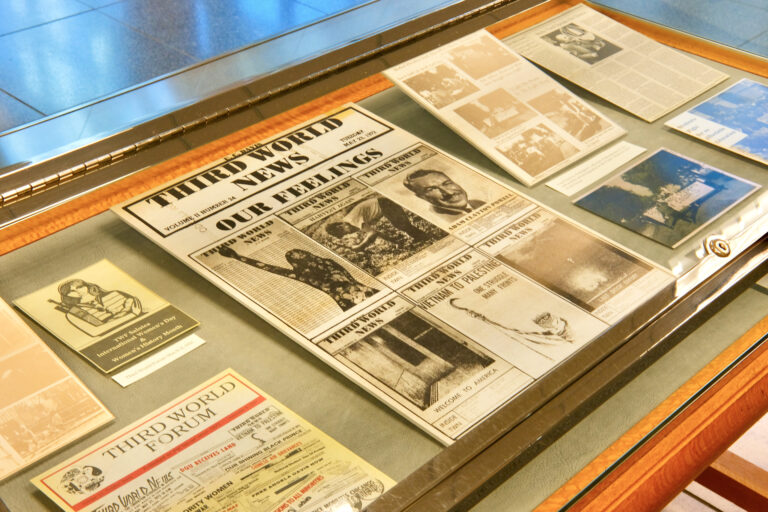
From Jan. 12 through April 22, Shields Library is showcasing the “By Any Means Necessary: Marginalized Students Give Voice in the ‘Third World Forum’” exhibit. Located in the library lobby in front of the Archives and Special Collections, this exhibit displays archives from the Third World Forum, a student newspaper run from 1970 to 2013 that was dedicated to giving students of color a voice.

According to Christine Cheng, instruction and outreach librarian for archives and special collections, the newspaper was created in response to marginalized students not feeling represented by the official school newspaper, The California Aggie. The Third World Forum covered topics ranging from protests on campus to global social justice issues.

One excerpt from the Third World Forum explains the goals of the publication.

“[The ‘Third World Forum’ serves as] a bridge between the communities that have been historically oppressed and the students of color, [and] providing those students who are far away from their communities with information on what is happening within those communities,” the excerpt read.

The exhibit took around two months to put together, and Cheng said that she created it so that undergraduate students would find something meaningful when they came into the library.

“I wanted to find something that would interest [undergraduate students]; something that they could see themselves in [and] that they cared about,” Cheng said. “I can feature all the Shakespeare and literary figures that are important, but when they come into the library, do they feel welcome? While Shakespeare is still important, there are certain social justice issues that were important then and continue to be significant today.”

The exhibit is composed of six cases, which all display excerpts of news articles, front pages and centerspreads from the Third World Forum. According to Cheng, the first case introduces the newspaper and contains words from the editors of the publication describing the publication itself and its significance. The subsequent cases contain articles that celebrate important cultural events and occurrences dedicated to the groups of Native Americans, Asian Americans and Pacific Islanders, Latinxs and Chicanxs and Black Americans.

Many of the articles feature photographs taken by Francisco Dominguez, who worked first as the cultural desk editor of the Third World Forum and later transitioned into the role of photographer for the publication.

According to Dominguez, the publication got its name from the Third World Liberation Front strikes that occurred in 1968 at San Francisco State University and the University of California, Berkeley which called for many demands, including the inclusion of ethnic studies as a part of the curriculum.

“Student empowerment is what I was documenting,” Dominguez said. “It was students of color empowering themselves on campus, and making their own events and protesting if there was something racist that happened. They would speak up. It was all about building a community for the students of color to have a voice and it worked.”

During his time at the Third World Forum, Dominguez interviewed and worked with many prominent figures such as John Trudel, Martin Luther King Jr’s son, Jack Forbes and Caesar Chavez.

According to Dominguez, the publication faced great backlash from many groups on campus, and was constantly threatened by funding. Dominguez said there was even an anonymous newspaper, the Davis Republic, being released with the sole purpose of ending the “Third World Forum.”

“We were always under attack from funding or political attack from conservative forces on campus because some people didn’t like what we had to say,” Dominguez said.

The newspaper eventually got defunded after it was put to a student vote by ASUCD in 2013. 

Anyone can visit the exhibition that is displayed in glass cases on the first floor of the library during normal Shields Library hours found on their website, according to Cheng. If anyone wishes to explore more hard copies of the publication they can stop by the Archives and Special Collections department which is open Monday through Friday 10 a.m. to 12 p.m. and 1 p.m. to 3 p.m.

If people are unable to visit the exhibit in person, Cheng said they can see the digitized archives of the Third World Forum on the California Digital Newspaper Collection website.

Cheng hopes students will not only come see the exhibit, but also explore the other resources that are found in the Archives and Special Collections. Additionally, Cheng indicated her plans to eventually create a “Third World Forum” digital exhibit, so that everyone can continue to explore meaningful topics the paper addressed.

Dominguez shared these sentiments and commented on the overall impact that the paper had.

“It was all about student empowerment, reclaiming our history and telling our own story,” Dominguez said. “That’s a part of what happened in the 60s and 70s when people of color took control of their own destiny, which was then called self determination. That’s what we were doing.”

Written by: Madison Peters — campus@theaggie.org


Davis duo leads Aggies to electric 75-63 victory over Hawaii

UC Davis men’s basketball triumphs on Senior Night


By EMMÍA J RIVERA — sports@theaggie.org 


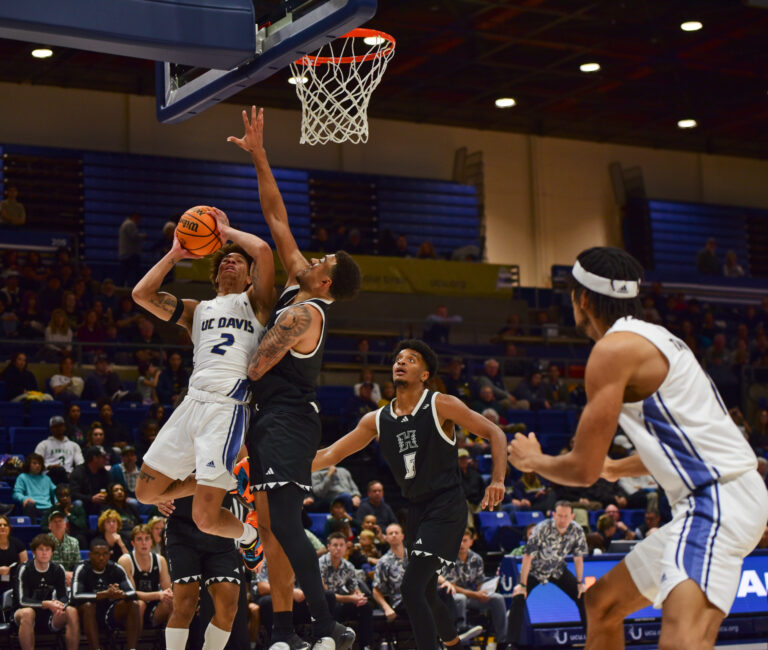
In the last home game of the regular season, the UC Davis men’s basketball team tipped their hats to five seniors as they faced the University of Hawaii Rainbow Warriors on Feb. 29 at the University Credit Union Center. Prior to the match, fourth-year Elijah Pepper, third-year Niko Rocak, fifth-year Ade Adebayo, fifth-year Kane Milling and fifth-year Sam Manu were given a standing ovation for their work on the court. 

Throughout the game, standout performances from Pepper and third-year Ty Johnson led the Aggies to victory. Together, Johnson and Pepper make up one of the best backcourts in the Big West Conference. Additionally, the pair have led the Aggie offense and proved their skill against Hawaii. With 30 points apiece, the renowned Davis duo continues to conduct with authority.

Following a tough 17-point loss in their first match-up against Hawaii, the Aggies were hungry for redemption. Courtesy of three consecutive steals and back-to-back baskets, Davis set the tone early in the first half with an 8-0 lead. However, the Rainbow Warriors were prepared and responded with four three-pointers and stronger defensive blocks, making the game intensify. The leading score for the Aggies was cut to an astounding 38-32 just before halftime.

In the final half on the Aggies’ home court, Davis regained poise and stretched their lead to 75-63. The Rainbow Warriors were unable to summon a comeback, giving the Aggies their 12th win of the season.

On top of the vast recognition Elijah Pepper has earned as an Aggie, this season he joined a new group of athletes as he became the new all-time leading scorer for UC Davis. Elijah Pepper, having previously broken a record held for 44 years, has only a few games left to continue making history on the UC Davis court. 

For his fourth year, Pepper holds an average of 20.4 points, 4.5 rebounds and 2.0 assists per game. Johnson, another lead guard, has also been a staple to the team’s success with 17.8 points, 3.6 rebounds and 3.3 assists per contest. As a stellar player from the mid-range, Johnson went 11 for 16 from the field and shot perfectly from the free-throw line, sinking all seven of his attempts. Additionally, he tallied three rebounds and two steals in the game against Hawaii. 

Concurrently, in the match against Hawaii, Pepper scored 10 points from the charity line and 20 beyond it, including a huge 4-point play with five minutes left in the game. Due to being solid on both ends of the court, the Aggies held their lead throughout the entire game. Defense frequently became offense, forcing 16 turnovers and converting them into 22 points.

Hawaii was led by Bernardo Da Silva, who put up 20 points with five rebounds and two assists. The Rainbow Warriors provided an overdue second-half push, but it wasn’t enough to surpass the effort of the Aggies. Yet again, the Aggies moved up in the league as they now hold a 12-6 record and third place in Big West Conference play.

With the season coming to an end, the Aggies look to finish on a high note before the annual conference tournament set for March 13 at the Dollar Loan Center in Henderson, Nevada.

Until then, Davis will face UC San Diego on March 7 at 7 p.m., followed by the regular season finale at CSU Long Beach on March 9 at 3 p.m. Depending on the outcomes, wins or losses could determine how teams will be seeded in the Big West Conference tournament.

Written by: Emmía J Rivera — sports@theaggie.org