55.4 F
Davis

Davis, California

Monday, December 22, 2025
Home Blog Page 109

Are California’s winters becoming warmer or colder?

Climate scientists and Davis residents discuss climate change and how it’s affecting the season


By SABRINA FIGUEROA — features@theaggie.org


California — known for its warm climate and sunny skies — was hit by a chilling atmospheric river and bomb cyclone on Feb. 1, flooding parts of Southern California and killing nine people. 

Comparing the current winter season to the ones in past decades, winters in California are getting warmer. In the Sacramento Valley, the average winter temperature increased by 2.3 degrees from 1970 to 2022. However small that number may seem, it will have larger implications in the future. 

California is not alone in this. A study done by Climate Central shows that winter was the fastest warming season in 74% of 246 locations observed in the United States. 

Even so, some residents suggest that they feel this change is the opposite. 

“I’ve lived in California all my life,” Prisilla Diaz, a local Davis resident, said. “I do remember there being some storms, but I never experienced them to the point where heavy branches in my backyard are falling. The capacity of the storm [on Feb 1.] definitely took me by surprise. For me, the winter seems a lot colder and longer now.”

Cristina Chambers, a fourth-year psychology major at UC Davis, agreed with this sentiment.

“Coming from Mexico, I didn’t expect the severe [winter] weather,” Chambers said. “I always heard that California was so warm, but not that it was so windy and stormy, so it’s surprising.”

Now the question seems to be: if our seasons are getting warmer, why do we feel like it’s colder, and why are storms much more extreme? 

Dr. Michael Anderson, the official state climatologist for California at the Department of Water Resources, noted that not noticing the temperature change in California is likely due to the fact that it’s happening slowly.

“You really have to look at how the average [temperature] moves. Is it a little bit each day? If every day is just a little bit warmer, then nobody really notices it’s happening,” Anderson said. “Or [are we seeing] periods where it’s just like, ‘Wow, it’s really warm today. It’s 10 to 15 degrees warmer than it should be?’” 

Adding onto this, climate change and the El Niño climate pattern are supercharging the intensity of storms, especially atmospheric rivers — which might be more common in California than you think. Atmospheric rivers are narrow bands of concentrated water vapor in the atmosphere extending from the tropics to mid and high latitudes. It is not unusual for atmospheric rivers to cause floods, landslides and levee breaks, all of which California has experienced this winter.

“It’s a combination of El Niño and global warming as to why the oceans are so warm over such a broad region,” Daniel Swain, a climate scientist at UC Los Angeles, said. “It’s not 100% clear exactly the extent to which each is a relevant player, but they’re both significant. The long-term trend, of course, is mainly because of climate change and the warming of the oceans associated with that.” 

The warming of the oceans from the past year — one of the planet’s hottest years on record — contributed to increased air moisture, causing severe atmospheric rivers and rainfall this season. Additionally, due to the increased level of greenhouse gasses, climate change caused the air to have a larger moisture-retaining capacity as well, according to the Clausius-Clapeyron relationship in thermodynamics. This means that when the atmosphere grows one degree warmer, its capacity to hold water increases by up to 3.9%

So, what does this mean for the future? 

Climate scientists at UC San Diego found that atmospheric rivers will become more “potent” in the coming winter seasons as the climate continues to grow warmer. On the one hand, it is a contributing factor to California’s water supply. However, this also means that as the climate has warmed and droughts have become more frequent, the land is much drier, making it prone to dangerous floods. 

Allison Michaelis, an atmospheric river expert at Northern Illinois University, discussed the changes in storm severity.

“With these atmospheric rivers occurring in succession, it doesn’t leave a lot of recovery time in between these precipitation events,” Michaelis said. “So, it can turn what would have been a beneficial storm into a more hazardous situation.” 

Bomb cyclones, although not uncommon, are now passing through California more than ever before. It’s probable that they will cause more frequent and higher-speed winds in future seasons. 

There are also engineering costs to be taken into consideration. Urban planners currently — and will continue to — face new challenges when it comes to making flood-safe or flood-proof infrastructure. 

“The mentality of the past was that we could control floods and contain where flooding happened,” Brett F. Sanders, an engineering professor at UC Irvine, said. “And outside of that, communities and businesses and residents could kind of go about what they do and not think about floods. But we know now that, around the [United States], we’re seeing that infrastructure is undersized to contain the extreme weather of today.”

However, some things are still left uncertain. Scientists do not yet know if climate change affects how often atmospheric rivers form or where they go. In the meantime, we shouldn’t assume that atmospheric river storms will be bigger than any other storms that occur in the future, according to Samantha Stevenson, an atmospheric and climate scientist at UC Santa Barbara.

Amid all of the uncertainty about the future of climate change, many fear the consequences that come with society not taking action sooner. 

A student shared their feelings about the climate’s current state and its impact on humanity’s future.

“I honestly feel worried because the climate has changed so fast to me; it makes me feel like [humans] went wrong at some point in time,” Chambers said. “I think to myself, ‘If the climate is already degrading right now, what will it be like in 5 years?’”

A resident suggested that as weather and climate change become more extreme in the upcoming years, Californians will not be equipped for the damage it will bring. 

“[Californians] are used to the heat, but extreme winters and the floods that will come with it, are not things we’re used to,” Diaz said. “I feel like California and the entirety of the United States [are] affected by [climate change] in different ways. It would be more sustainable to really think about how to stop it instead of thinking about what we can do as humans to just get through a rainstorm. We need to think long-term.”

Even though it may seem like California’s winter season is becoming colder due to recent extreme weather, the reality is that it’s actually getting dangerously warmer. Learning about these unusual climate patterns will better equip us to mitigate the consequences of global warming as well as bring awareness to them. 


Written by: Sabrina Figueroa — features@theaggie.org
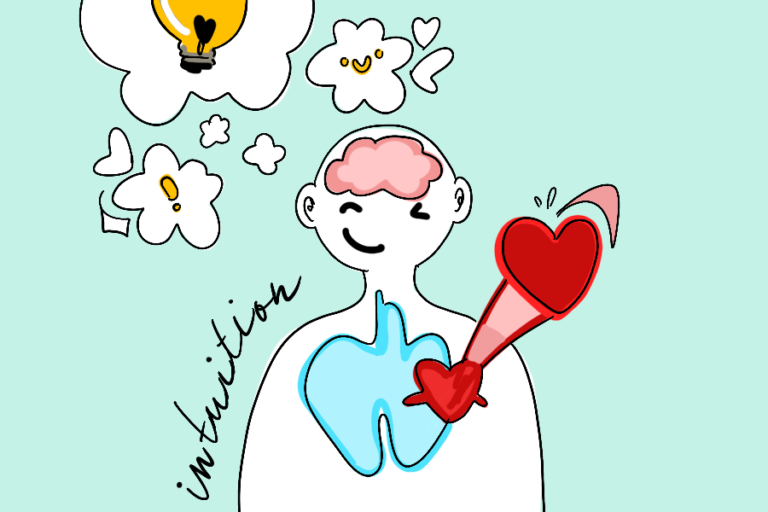
Your intuition is almost always right

The psycho-biological reasons why you should trust your gut


By MAYA KORNYEYEVA — mkornyeyeva@ucdavis.edu


I’m sure you have heard the sayings “Trust your gut” or “You’ll know it when you see it.” But what exactly are you trusting? What exactly are you supposed to know when you see something? 

A flash of inner insight, like a butterfly in the stomach or an invisible hand on your shoulder, is the physical feeling many people describe as a “gut feeling.” This gut feeling is known as intuition or instinct and is an amalgamation of neural and chemical signals that you process subconsciously, and which your body creates a reaction to. 

These “aha” moments usually occur when your “conscious mind finally learns something that your subconscious mind had already known,” a research article published by Russell Futcher states.

 In fact, the psychology behind intuition is incredibly fascinating. When you feel intuitive conviction about something, what occurs is a form of pattern recognition where your brain creates an association between current and past events. In this way, the brain functions as a predictor of sorts, since it uses the identified patterns to generate information about expected events and outcomes.

Once you are placed in a situation that coincides with a pattern your brain identifies, you get that feeling of intuition: your body predicts something about the situation faster than you could consciously come around to that conclusion.

For me, intuition often strikes when I am forced to choose between many options, such as a color scheme for my next digital poster or when I am stuck between going out with friends versus staying in. My intuition tends to guide me to the decisions I make, often without consciously being aware of it — a collection of pink hues for my design feels “just right,” and going out with friends feels like “what I need to do” at the moment.

In other situations, intuition can be used to judge the trustworthiness of an individual that you are meeting for the first time or to assess a situation that could be potentially dangerous. Suppose something about your new coworker seems off the moment you first talk to them. In that case, that could be your body picking up on emotional or physical cues you need to pay attention to. On the other hand, if you’re about to jump a fence or walk through a sketchy area, your gut feeling can warn you that this may not be the best idea. 

Intuition can be incredibly useful for making fast decisions. But not every off-hand thought or moment of anxiety is intuition. Being able to recognize when you are feeling the presence of intuition is something that can only be relied on and developed through experience. 

One way to do so is to pause and reflect on your situation whenever you are struck with a “gut feeling”: is it a positive emotion, or a negative one? What may have prompted that feeling given your current situation? What kind of patterns could you have subconsciously noticed? Asking these questions can be critical, allowing you to develop a better quality of pattern recognition and to know when your gut feeling should be trusted. 

I argue that, in most –– if not all –– cases, you should trust your intuition. Decision-making in any situation can be stressful, and allowing yourself to be guided by your intrinsic senses can help relieve some of that stress and create a deeper connection with your intuitive self. 

Especially when it comes to danger or your own personal health, these gut feelings are your body actively warning you against something. Perhaps it’s that migraine that just won’t go away or a cold that you think might not be “just a cold” anymore; either way, embracing your intuitive feelings rather than pushing them aside may be a choice that not only empowers you to make decisions but also stops you from overthinking.

Rather than agonizing over a choice or event, why not practice listening to what your gut is telling you? Over time, training your intuition can lead you to make faster and stronger choices that coincide with your moral compass and personal self. Listening to your body while also relying on logical, situational thinking will help you avoid second-guessing yourself and, more often than not, make the right choice. 


Written by: Maya Kornyeyeva — mkornyeyeva@ucdavis.edu


Disclaimer: The views and opinions expressed by individual columnists belong to the columnists alone and do not necessarily indicate the views and opinions held by The California Aggie.


Culture Corner

The Art Desk’s weekly picks for music, movies and more 


By LORENA ALVAREZ — arts@theaggie.org


Book: “The Unhoneymooners” by Christina Lauren (2019)

“The Unhoneymooners” is the perfect romantic comedy for this season. Though it is filled with romantic cliches, it follows a woman’s character development as she realizes her worth and finds herself falling in love with her “enemy.” Through the depiction of this protagonist, who is always comparing herself to others (such as her “lucky” twin sister), the story comments on the types of relationships and lifestyles you can have when you are open to new things. The plot follows a bride’s realization that her long-term partner is not who she thought he was — all while depicting the “unlucky” twin’s trip to Hawaii with her twin’s brother-in-law. Through this turn of events, “Unhoneymooners” explores the development of an unexpected love and life. As someone who does not like cliches, I was weary when reading this novel. However, I ended up finishing it in one sitting, and strongly encourage romance lovers or anyone who enjoys the enemies-to-lovers trope to read this rom-com.


Movie: “Holidate” dir. by Tiffany Paulsen (2020)

Starring Emma Roberts (Sloane Benson) and Luke Bracey (Jackson), this film follows two strangers’ year-long experience as each other’s plus one to holiday parties. It opens on Christmas day, with both protagonists feeling uncomfortable towards their new partner and feeling conflicted with their family’s preconceived expectations. They agree to be each other’s dates in hopes of escaping their family pressures and having someone to spend the holidays with. While spending celebrations like Valentine’s Day together, Sloane and Jackson catch feelings for each other, threatening their no-strings-attached deal. This rom-com is more than just your classic romance movie; it features the platonic fun two adults can have and the unexpected relationships that can form over time. 


TV Show: “The Artful Dodger” by James McNamara, David Maher and David Taylor (2023)

Transforming classic literature into a TV series may be controversial, but it is not always disappointing. While I cannot speak to how well “The Artful Dodger” portrays Charles Dickens’ characters from “Oliver Twist” (a monthly series published from 1837 to 1839), I can say that the first two episodes are entertaining. Admittingly, the chemistry between Belle and Jack is what caught my attention when I first saw Hulu’s trailer, but the social and economic inequity discussed in the series makes this show more than just a romance drama. In the first episode, we are introduced to Jack, a conflicted man returning to past habits (stealing) to repay his debts and save his future as a surgeon. In a time of crisis, he steals from someone in high society and is given an ultimatum by Lady Belle Fox (the Governor’s daughter). The ultimatum leads to many of the climatic events of the series, depicting a woman’s struggle to enter a male-dominated medical field. The show’s main format follows Belle and Jack’s reunion in adulthood. That said, be aware that this is a storyline with two potential surgeons, so there are a lot of scenes that may make you physically flinch if blood makes you queasy.


Song: “Black and White” by Niall Horan (2020)

In his album “Heartbreak Weather,” Niall Horan explores the beautiful side of relationships. This romance and fuzzy feeling is best depicted in his single “Black and White.” The pop-rock ballad’s upbeat tone and catchy lyrics depict eternal love and devotion. Horan sings that while he cannot promise a white picket fence, he can promise to always be devoted to his partner. The chorus, “I see you standing in your dress / Swear in front of all our friends / There’ll never be another,” depicts a person envisioning marrying their partner and spending the rest of their lives together. Overall, this is my favorite love song as it depicts love as something that should be obvious to the naked eye.


Written by: Lorena Alvarez — arts@theaggie.org

How do students balance schoolwork with nutrition?

0

UC Davis undergraduates share how they cook, meal-prep and grocery shop efficiently


By LYNN CHEN — features@theaggie.org


An important aspect of college life is being independent and that involves tending to daily tasks like cooking and grocery shopping while trying to keep everything within budget.

However, with papers and exam deadlines looming over one’s shoulder, sometimes it can be difficult to find the time and energy to prepare a proper full meal. How do various students go about this challenge? Is there an effective way to achieve academic success without sacrificing balanced and nourishing meals?

For second-year cognitive science major Chuyuan Wang, cooking has become something easy to master. 

“I prioritize finding foods that are easy and quick to cook,” Wang said. 

The foods Wang mentioned consist of simple and healthy ingredients that take little time to prepare into dishes.

“Cabbages, lettuce, potatoes, carrots — you can mix and match these easily with other meats and vegetables,” Wang said. “You can also store them for a very long time.”

Despite her statement, Wang admits that she still eats junk food quite frequently on school days.

“Since I don’t have much time to go home, I head to [the] Memorial Union a lot,” Wang said. 

Wang does not live on campus and therefore, transportation is a very time-consuming matter.

“I’ve been eating a lot of burritos and pizzas lately,” she said. “It’s a pretty easy way for me to get nutrition in between classes.”

Ellie Chareonsuphiphat, a third-year economics major, tries to overcome the difficulty of balancing school with making food by meal-prepping everything ahead of time.

“Students should schedule a time during the week to cook a larger batch of food,” Chareonsuphiphat said via iMessage. “[This] can then be eaten throughout the weekdays.”

Chareonsuphiphat said that she usually makes pasta or curry in bulk, but she also purchases mini salads from Trader Joe’s to eat for lunch.

“I also make sure to pre-cut my fruit so that I don’t have to worry about prepping [them] in the morning,” Chareonsuphiphat said.

Truc-Linh Dam, a second-year human development major, has a similar strategy to Chareonsuphiphat regarding how to save time when cooking meals at home.

“I like to prepare each ingredient separately ahead of time and then toss them together when I’m making a meal,” Dam said.

For instance, Dam likes to keep frozen vegetables as well as marinated tofu and chicken for future use. She also stores minced garlic, onions, shiitake mushrooms and other chopped vegetables in the fridge to save time when cooking throughout the week.

Additionally, Wang said she needs to consider costs while shopping for ingredients for her meals.

“I live by Safeway, so I use their digital coupons and student discount,” Wang said. 

Despite the time and effort required to prepare meals, a college student can be resourceful and strategic with the task to ensure they stay nourished and healthy.


Written by: Lynn Chen — features@theaggie.org


Yolo County hosts voter education workshops in preparation for the presidential primary election

0

The Zoom workshops were an attempt to reach out to voters with disabilities and limited English proficiency


By EMMA CONDIT city@theaggie.org


From Feb. 5 to 8, Yolo County hosted voter education and outreach workshops via Zoom to prepare voters for the presidential primary election, which ends on March 5. These workshops were held in English, Spanish, Chinese, Korean, Punjabi, Russian and American Sign Language (ASL) and aimed to improve voter literacy in populations with accessibility barriers, like people with disabilities and non-English speakers. 

Jesse Salinas, the chief elections official for the Yolo County Department of Assessor, Clerk-Recorder and Elections (ACE), said that these workshops are required by state law and cater to the specific linguistic needs of Yolo County. 

“By state laws, we’re required to do these workshops,” Salinas said. “[But] we try to go above and beyond. We are required to do sessions in Chinese, Korean, Punjabi and Spanish, but we have included the Russian language. We know in West Sacramento there’s a large Russian population, and we want to make voting accessible.” 

Yolo County is a Voter’s Choice Act (VCA) county. This program, established by SB 450 in 2016, allows counties to have more control over their elections and provides greater voting flexibility. For instance, Yolo County, by opting into this plan, has made vote-by-mail more accessible, increased the number of ballot drop-off sites and streamlined voting technology. 

As laid out in the most recent VCA Election Administration Plan, Yolo County will continue its education and outreach efforts, key components of which are the online educational workshops. The county has held similar workshops twice in the past and hopes to continue holding them in the future. 

Armando Salud, Deputy of Elections in Yolo County, oversees all aspects of election management. Salud explained the importance of these workshops.

“Participants stand to gain valuable insights and resources from these meetings,” Salud said via email. “They include information on vote-by-mail, vote centers and ballot drop boxes. The workshops offer information on translated copies of the official ballot for reference, ensuring accessibility for non-English speakers. […] Attendees gain awareness of voter rights and resources available to address any issues or concerns they may encounter during the voting process.” 

These workshops were targeted towards parts of Yolo County with high rates of limited English proficiency. For instance, limited English proficiency in parts of Woodland ranges from 18 to 26 percent of the population, compared to only four to nine percent in Davis. These workshops, however, have extremely low attendance. 

“The amount of people we aim to reach depends on how many people show up,” Salinas said. “We started doing these workshops in 2021, and we only had a handful of people show up. We’re very limited in the number of people we can actually reach.” 

Salinas explained that they have tried to promote these workshops to the best of their ability, but few people usually attend. The Aggie attended this year’s first Spanish-English voter workshop on Monday, Feb. 5; there were no other participants. 

Yolo County voter turnout rates have remained fairly stable in the last 10 years. In the general election in Nov. 2022, Yolo’s voter turnout was around 57% of registered voters, which is similar to its previous election turnout. These rates are also on par with the rest of California, whose turnout of registered voters rarely exceeds 67%.

It is unclear whether low attendance in these workshops is due to lack of interest, accessibility, adequate promotion or need. Regardless, Salud explained that Yolo County has made strides in maintaining voting accessibility.  

“Yolo County’s voter engagement efforts have demonstrated a commitment to fostering a county wide level of participation,” Salud said. “From working with our voter accessibility advisory committee and language advisory committee to the various community-based organizations such as religious groups, language groups and government organizations Yolo County is committed to get involved and be involved.”


For more information about upcoming elections and to register to vote, visit https://www.yoloelections.org/


Written By: Emma Condit city@theaggie.org


Davis League of Women Voters makes the case for voting ‘No’ on Proposition 1

0

The league held a forum encouraging residents to vote against the popular proposition


By CHRIS PONCE — city@theaggie.org


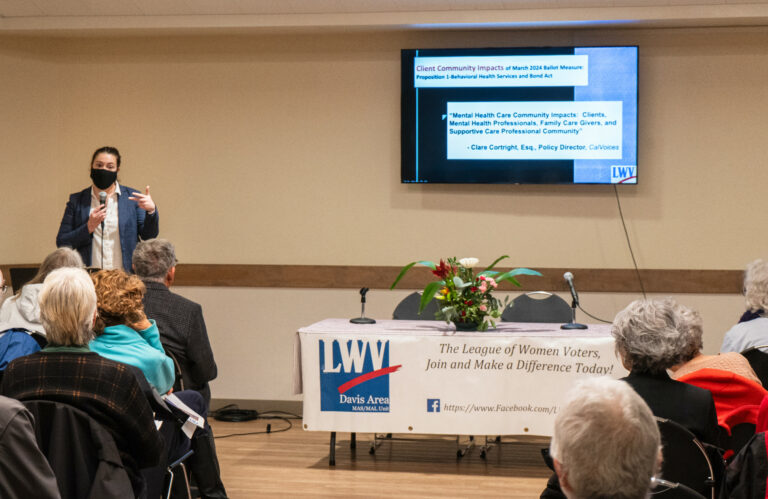
The League of Women Voters Davis Area (LWVDA) has been hosting a series of forums to help educate voters on what will be on the ballot in the upcoming March 5 election. On Wednesday, Feb. 7, the LWVDA hosted a forum to educate voters about ballot propositions and encourage them to vote no on Proposition 1. 

Proposition 1 hopes to authorize $6.38 billion in bonds to build treatment facilities for those struggling with mental health and/or substance abuse. The proposition restructures the 2004 Mental Health Services Act (MHSA) to give the state more control over how counties spend their MHSA funds. Specifically, Proposition 1 will require counties to spend more of their existing funds on housing and support services; counties are not currently required to spend a specific amount of their MHSA funds on said services. 

The LWVDA believes this change would take away counties’ liberty to address local mental health issues directly by allocating funds at their discretion — especially since the proposition will not change the current tax rate that funds the MHSA. 

Clare Cortright, policy director of Cal Voices, was a guest speaker at the forum invited to explain why Proposition 1 will hurt counties throughout California. Cortright said the proposition is a “bad piece of policy” and shared how her struggles with mental health have been positively affected by the MHSA. 

“For me, what saved my life was the MHSA,” Cortright shared. “[The community] passed this as a voter grassroots initiative; this was not passed originally through the legislature. This was the entire community of impacted people coming together.” 

Michelle Famula, president and health committee chair with the LWVDA, shared PowerPoint slides given to her by Yolo County Mental Health Director Karleen Jakowski. The slides explained how Proposition 1 would affect the services currently funded by Yolo County. 

“Probably more importantly, […] [it] has to do with the mandated distribution of those funds and reduction of flexibility [in] how counties can independently make decisions about where to put those funds,” Famula said.

Gov. Gavin Newsom, the California Teachers Union and The San Francisco Chronicle’s Editorial Board have all endorsed Proposition 1. On top of his endorsement, Newsom has helped raise millions of dollars for the Proposition 1 campaign.

Stacie Hiramoto, director of the Racial and Ethnic Mental Health Disparities Coalition (REMHDCO), was the second guest speaker at the forum. Hiramoto believes that the majority of the mental health community doesn’t support the proposition.

“I feel confident in telling you that the majority of the mental health community opposes this measure,” Hiramoto said. According to her, in many instances, these members are afraid to speak up due to “big guns” in support of the measure. 

Hiramoto said that REMHDCO can’t support the proposition because of how the state legislature passed it. 

“We are opposed because of the manner in which [Proposition 1] was developed and passed through the legislature,” Hiramoto said. “[…] This bill was jammed through, it did not have adequate public hearings; the administration was not listening to us.”

Hiramoto talked about how the MHSA currently helps serve people of color and the LGBTQIA+ community.

“I feel very confident to tell you that the majority of the LGBTQ community is also opposed to this proposition,” Hiramoto said. “The most promising aspect of the original act was that the original act had a funding category that was ideal for programs that reduced disparities and served underserved communities.”

Judy Higgerson, voter service and voter registration chair for the LWVDA, believes that forums like this help “bring to life” the issues on the ballot. Despite this campaign being a long shot, she hopes that the forum can help educate people about the proposition.

“This is the type of format [that], if we could get to other people, even if it’s just to see the website and to view the recording, it will help people think more about what this is,” Higgerson said. “Everybody says, ‘It’s going to pass, it’s going to pass, it’s going to pass’ — well, we kind of knew that from the get-go. But I appreciate the fact that it’s not over. It’s still got a ways to go, but it’s not over.”


For more information about upcoming elections and to register to vote, visit https://www.yoloelections.org/

Written by: Chris Ponce — city@theaggie.org

Champions crowned, $2 million won in National Hockey League All-Star Weekend

0

Auston Matthews leads team to victory


By CAROLYN (CARI) FENN — sports@theaggie.org

Over the weekend of Feb. 1 to 3, the best teams in the National Hockey League (NHL) came together for the 2024 All-Star Weekend Game in Toronto, Canada. Starting in 2025, the NHL is implementing the Four Nations Face-Off Tournament in preparation for their return to Olympic hockey participation in 2026.

To start off this year’s All-Star Weekend, the league held the All-Star Player Draft, presented the Alumni Man of the Year award — a celebration for the 1967 Toronto Maple Leafs — and had a three-on-three showcase of the Canadian Tire Professional Women’s Hockey League. While the first day was packed with multiple events, the draft was the biggest of them all with players getting assigned to teams of 11 by star captains and celebrity co-captains. Once drafted, they had little time to prepare before competing in the tournament.

The 2024 All-Star Draft marked the first time since 2015 that captains were able to select the players they wanted, adding incentive for the tournament on Saturday.

This year, the four teams consisted of: Team Matthews with Captains Auston Matthews, Morgan Reilley and Justin Bieber; Team McDavid with Captains Connor McDavid, Leon Draisaitl and Will Arnett; Team MacKinnon with Captains Nathan MacKinnon, Cale Makar and Tate McRae; and lastly Team Hughes with Captains Quinn Hughes, Jack Hughes and Michael Bublé. 

Following the draft and team formation, players and captains move forward to the All-Stars Skills Competition. Unlike in previous years, where every All-Star player competed in the competition, only 12 All-Star players competed in a series of eight events. During these events, participants aim to earn the most points and receive the $1 million prize. The participants this year were Matthews, Draisaitl, MacKinnon, Makar, Hughes, David Pastrnak, McDavid, Mathew Barzal, Nikita Kucherov, William Nylander, J.T. Miller and Elias Pettersson.

Additionally, players had the opportunity to choose from four of the first six events to participate in for the competition. The events consisted of fastest skater, hardest shot, stickhandling, one-timers, passing challenge and accuracy shooting. After each player competes in six events, the four players with the lowest points get eliminated. For this year’s competition, Draisaitl, Hughes, Kucherov and Pastrnak were the first of the All-Star players to be eliminated. 

Following the first elimination, the remaining eight players then moved on to the one-on-one shooting competition against a goalie of their choice. Unfortunately for MacKinnon and Pettersson, the shooting competition marked the end of their time in All-Star Weekend. 

The last and final event of the skills competition was an obstacle course where point totals were doubled. Narrowly winning the last event and taking first place, McDavid came out on top to win the $1 million prize. Despite the tough competition, McDavid earned 25 points by winning his first three events: fastest skater, stick handling and accuracy shooting, then earning 10 points in the obstacle course. While McDavid gave an impressive performance, he also earned zero points in two events, showing just how tough the competition was. 

After the skills competition came the main event: the All-Star Game. The first two matchups were Team MacKinnon versus Team McDavid and Team Hughes versus Team Matthews. With the event being a three-on-three tournament — a style first introduced in the 2016 All-Star Game — it was shaped to be a scorer’s paradise. 

In the first match of the competition, taking place between Team Mackinnon and Team McDavid, the game was close, with both teams putting up a good fight. Ultimately, Team McDavid took the victory with a late comeback and a final score of 4 to 3 over Team MacKinnon. The comeback was achieved through the two last-minute goals scored by Pastrnak and McDavid to send the game to a shootout. 

During the match, players Pastrnak and McDavid assisted on one another’s goals, with Boone Jenner scoring a goal immediately after. Additionally, looking at both goalies for Team McDavid, Connor Hellebuych made 10 saves on 11 shots on goal in the first period. In contrast, Sergei Bobrovsky stopped eight of 10 shots in the second period and both shots in the shootout.

On the other side of the rink, Team MacKinnon had a total of two goals scored by one of the captains themselves. Oliver Bjorkstrand scored one goal, and Sidney Crosby and Cale Makar each had two assists. Looking at the Team MacKinnon goalies, Alexandar Georgiev made nine saves on 10 shots in the first period, while Jeremy Swayman stopped the first eight shots he faced in the second period before allowing two goals on the last three shots he faced. 

The second matchup of the competition between Team Matthews and Team Hughes proved to be just as exhilarating as the last match. With a final score of 6 to 5, Team Matthews became victorious while enduring a shootout against Team Hughes — the winning shot taken by Alex DeBrincats in the shootout granted them the victory. Aside from DeBrincat’s shootout goal, DeBrincat also scored two goals during regular game time. 

Additionally, DeBrincat helped Team Matthews with an assist. Continuing down the line, Flip Forsberg scored two goals along with an assist, Mathew Barzal had three assists and Mitchel Marner scored a goal. Looking at the goalies for Team Mathews, Jake Oettinger stopped eight out of 10 shots in the first period, while Igor Shesterkin stopped seven out of eight in the second period, with no goals allowed in during the shootout. 

For Team Hughes, Frank Vatrano scored two goals and an assist, Quinn Hughes had three assists and Nikita Kucherov scored a goal and an assist. Looking at the goalies, Cam Talbot stopped four out of six shots in the first period, and Thatcher Demko stopped seven out of 10 in the second. 

With Team Matthews and Team McDavid winning their semi-final matchups, they were set to battle for the championship title in the finals. 

During the last game of the tournament, Team Matthews was crowned winner over Team McDavid with a final score of 7 to 4. As Matthews used his home-field advantage as a member of the Toronto Maple Leafs, he and his team secured the win over Team McDavid without having to go into a shootout. Captain Auston Matthews had the most significant impact in the game, scoring two goals and an assist to win him Most Valuable Player of the tournament. 

For Team Matthews, fellow Toronto Maple Leafs Mitchell Marner, Morgan Rielly and William Nylander contributed to the team’s win. Marner scored a goal, while Rielly and Nylander each had an assist. Other skaters who contributed to the victory were Clayton Keller, Mathew Barzal and Alex DeBrincat, who all scored one goal and two assists in the final. Lastly, looking at the goalies’ performances, Igor Shesterkin saved eight out of 11 shots in the first period, while Jake Oettinger saved eight out of nine in the second. 

For Team McDavid, Leon Draisaitl scored one goal and two assists, adding to the goals by Boone Jenner, Tomas Hertl and David Pastrnak. Looking at the goalies for Team McDavid, Sergei Bobrovsky saved 10 out of 13 shots in the first period and Connor Hellebuych saved seven of 10 in the second.

With Team Matthews coming out on top, the team and Celebrity Captain Justin Bieber split the $1 million that went to the winning team.

As the 2024 All-Star weekend came to an end, viewers were ecstatic with Team Matthews’ hometown win and McDavid’s Skills Competition victory. Unfortunately, fans will now have to wait until 2026 for the next All-Star Game and a new set of All-Stars to compete for the title. 


Written by: Carolyn (Cari) Fenn — sports@theaggie.org

So you broke your New Year’s resolution — here’s how to start again

It’s not too late to build the life you vision-boarded

By THE EDITORIAL BOARD

It’s February, which means the gym is empty again. Fridges, which on Jan. 3 were filled with leafy green vegetables and ginger shots, are now a deposit box for take-out containers. The beautiful 2024 planner you bought is empty and forgotten in a drawer. 

You’ve heard the stats: most New Year’s resolutions fall through fast. It’s no coincidence that many people seem to give up on their ambitious plans just as work or school pick up the pace post-holidays. While your wide-eyed dreaming for 2024 is admirable, a lot of us forget that the new year doesn’t mean an entirely new you. You likely still have a lot of the same responsibilities and bad habits you had in 2023. Setting goals without acknowledging those obstacles is setting yourself up for failure. 

Now, having tried and faltered, you have a chance to think critically about what made you stop cooking at home or waking up for your eight a.m. spin class (Hint: It’s at eight a.m.). Maybe your goals were too extreme and you just need to tone it down from “Read one book a week” to “Read one book per month.” Being realistic is key.

Or maybe you were too vague. “Be more organized?” What does that really mean? Also, putting a picture of a hot person on your Pinterest board does not count as a resolution. Outlining specific and tangible actions to take could make all the difference. It might give you a first step toward what seems like a distant aim. 

Worse still, maybe you made goals that, strictly speaking, you have no control over: get a boyfriend, get into Harvard Law School. These are fine aspirations, but pretending that everything is a matter of willpower will lead to feeling disappointed in yourself when things don’t work out. Going on a first date or reaching out for letters of recommendation — those are things you can actually take charge of. 

Beyond just setting better goals, starting again means you can think through what your goals mean to you. If you said you wanted to lose five pounds in two weeks, maybe you’re actually just interested in improving your health and you can find a better way to approach that purpose. This is your chance to make a resolution that’s really about you. Pick up Esperanto via Duolingo, call your mom once a week —- whatever moves you toward a better life. 

As a bonus, making resolutions in the off-season means you’re probably surrounded by less pressure to radically reinvent yourself. Fewer Instagram videos promising that this one workout will fix your life and improve your GPA. Fewer ads for yet another journal that, tragically, will not change your whole personality. And when you do miss the mark, you’re not shattering a promised vision of 2024, you’re just being human. You can pick up the piano practice again tomorrow. 

Or maybe you didn’t break your resolutions. Maybe you made it out of Dry January, well, dry. Or your thirty-day no-texting-that-guy challenge was a success (We’re so proud of you). Regardless, continuing to set and work toward goals can be a useful tool to make sure you’re living a life that is fulfilling and sustainable. It’s not a one-and-done deal — you can do it again next month! And if having a goal each month sounds exhausting, find flexible resolutions that you can actually see yourself doing and enjoying in the long term, not a month-long experiment in tortuous self-will. 

Here’s the other thing, and we hope this is obvious: You deserve to be happy now. No matter what bad habits you harbor, you’re still deserving of respect. And even if you aren’t currently a knitting virtuoso like you had hoped in January, you can have fun failing and trying again. As you plan for great things ahead, take time to be grateful for the little moments that happen on the way. That way, you’re not just building toward a life you’ll be content with, but enjoying the whole ride. 

Your thirty-day challenge might have fallen through, but there’s a great time to start again: now. There are a thousand opportunities to set a new goal: the first of the month, a three-day weekend, Tuesday. Really, any time works. How about now? The Editorial Board has some journaling prompts to help you identify your objectives and obstacles, and be thoughtful about how to approach both. Happy goal-setting!


  1. What are you most hopeful and excited about in the near future?
  2. What is something you’ve been putting off, but want to do?
  3. When you think about where you want to be in five years, what values do you want your life to reflect?
  4. What things often get in the way when you try to develop a new habit or skill?
  5. How can you manage stress or challenges as you move toward a new goal?

Written by: The Editorial Board

How listening to full albums allows for a deeper appreciation of the art

0

UC Davis students discuss the return of vinyls, CDs and other ways to listen to albums 


By ZOEY MORTAZAVI — features@theaggie.org


As far back as recorded music goes, artists have created their albums with a great deal of care and intention. A calculated effort goes into the order by which the songs are placed, and many albums tell stories according to their chronological order. 

In recent years, physical albums have risen in popularity once again, as listening to vinyl records and CDs has become a resurrected practice. An appreciation for albums seems to reflect an appreciation for the intentions of the artist. This desire to respect the artist’s craft has led many at UC Davis to celebrate this tradition once again. 

“I think we should bring back listening to music by the album because it’s a completely different experience listening to a physical piece of media, like a CD, from beginning to end,” Ritika Ghosh, a first-year neurobiology, physiology and behavior major, said. 

Ghosh is a part of KDVS 90.3FM, the UC Davis student-run radio station. She explained that the group almost always listens to music by full album, as opposed to shuffling songs on playlists.

“Most albums were meant to be listened to as a group, and when you sit down and take the time to appreciate the album as a whole you unlock this whole new way of thinking about music, not just as individual songs but as groups of songs in an album that all cohesively flow together,” Ghosh said. “At KDVS, we listen to all, if not 99%, physical media — and it’s made me appreciate music so much more in a different way than Spotify [has].”

Digital music offered through streaming services such as Spotify and Apple Music has created a playlist-based music culture. Playlists are curated based on different genres, artists or even moods that are meant to create ambience for the listener. Even when people do choose to listen to albums, the convenience of streaming music has encouraged skipping songs. 

Listening to a full album in the correct order is what the artist intended, and it was done that way for a reason,” Jamie Parmenter wrote in an article for VinylChapters. “The artist may have spent hours figuring out the track order, changing and swapping tracks, stressing over little sections and even removing songs because they just didn’t fit into the overall sound. It’s kind of like baking: put some ingredient into the mix in the wrong order, and it could ruin the whole cake.” 

Students at UC Davis report that there is nothing wrong with curating playlists with many different artists and genres, but that listening to full albums has helped them unlock a newfound appreciation for artists they already enjoy. 

There are a few albums that are known for being popularly listened to in their entirety: some of these might include Pink Floyd’s “Dark Side of the Moon,” David Bowie’s “The Rise and Fall of Ziggy Stardust and the Spiders From Mars” or Radiohead’s “OK Computer.” 

Aside from these examples, there seems to be intention behind the order and cohesiveness of every album. As many Davis students are reporting, it is definitely worth trying to listen to full albums by your favorite artists. If nothing else, listening to albums as opposed to shuffling playlists or songs can help listeners get to know their favorite artists a little bit better. 

“I really enjoy listening to albums because I feel like it lets me connect with an artist on a deeper, more intimate level in a way,” Rowan Cary-Clark, a second-year psychology major, said. “I also have been listening to more concept albums, like Ethel Cain’s ‘Preacher’s Daughter’ or Hozier’s ‘Unreal Unearth.’ I think concept albums show how creative musicians can be and how they can tell a whole story through music — it’s really beautiful. I’ve started collecting CDs for my car, and I think they are a nice way to really understand the creative vision and story behind the music.”

A concept album is defined as “a collection of songs written by a musician or group that is based around a central theme or concept.” These albums are often listened to all the way through because they tell stories chronologically or relate to a main idea.

“My preferred method of listening to music is through albums,” Olivia Doyle, a first-year neurology, physiology and behavior major, said. “I believe that, for the majority of artists, albums are created to tell a story. It takes you through a series of ups and downs in both a lyrical and musical sense. Listening to an album cultivates an experience that’s similar to watching a movie. It gives you a perspective into the artist’s creative thought process as well as an inside look into the artist’s lives.”

Doyle continued by mentioning some of her favorite albums. 

“‘The Miseducation of Ms. Lauryn Hill,’ by Ms. Lauryn Hill, ‘For Lovers, Dreamers, & Me’ by Alice Smith, ‘Case Study 01’ by Daniel Caesar and ‘Frank’ by Amy Winehouse,” Doyle said. “Each album has a unique and specific feel and story that connects you to the artist, as well as sparks my own creativity.”

These Davis students are finding new appreciation and love for music after listening to albums in full. Consider doing a deep dive into one or two of your favorite albums — you might see them in a completely new light and find a greater understanding of their art.


Written by: Zoey Mortazavi — features@theaggie.org


Why we love villains

Is it better to reign in hell than serve in heaven? 


By JOAQUIN WATERS — jwat@ucdavis.edu


When I was a little kid, I went through a phase where I was obsessed with classic Disney movies. I’m sure a solid portion of the people reading this article went through a similar (if not identical) phase. And let’s be honest, folks: the villains are far and away the most memorable part of those films. 

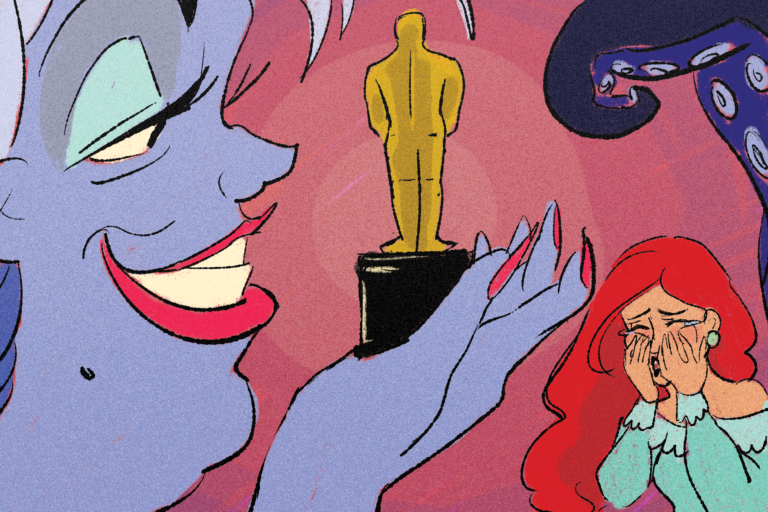
Aladdin is fun, but Jafar is fantastic. We root for Simba, but we count the minutes until Scar is on screen again. Ariel’s quest to find love by losing her voice is…well, more than a little problematic, but when Ursula sings, cavorting around her skeletal lair, it’s easy to forget that. 

Disney villains are cultural icons — perhaps even more so than the princesses for which the Mouse House is famous. These films are often our first exposure to the fascinating phenomenon of villain worship, or loving the bad guy.

This impulse — to prefer the villain to the hero — is not unique to Disney films. One needs to only look at the enduring popularity of characters such as Darth Vader, Hannibal Lecter and the Joker to see that the desire to root for the monster is woven into popular storytelling. They aren’t just famous because of their fear-inducing intimidation — audiences actively like these characters. 

Every time Darth Vader ignites his lightsaber, or Hannibal Lecter eats someone or the Joker spouts some nasty one-liner, we practically cheer. Sometimes, a villain’s popularity will actually dwindle the less evil they become. Observe the Marvel Cinematic Universe’s Loki, a fan-favorite character whose redemption arc culminated in the Disney+ series in which he becomes a straight-up hero — but he was never more popular than when he was blowing up buildings and cackling in “The Avengers.” 

There is something monstrously cathartic in seeing the demons of humankind’s collective imagination given voice and form in fiction. And oftentimes, they’re just plain fun. Villains of the type I’ve mentioned here are shameless and flamboyant, possessed of an agency and an urgency that is often lacking in protagonists. Some might argue this is the root of our fascination with the bad guys: nobody likes a passive character, and antagonists, out of necessity, are always active. I think it goes even deeper than that. To look further, we have to go beyond villains to the realm of the anti-hero. 

Consider “Paradise Lost.” For centuries, John Milton’s epic retelling of the Book of Genesis has been a subject of controversy concerning its depiction of Satan. Because the poem is told partially from the Devil’s perspective, theologists and literary students alike have debated for generations whether Satan should be considered the “hero” of the poem. If one reads “Paradise Lost” in its entirety, I think it is clear this is not the case. Milton was a devout Christian; the poem is explicitly a cautionary tale that condemns Satan’s rebellion and the ensuing temptation of Eve.

Even still, the debate rages because so many scholars have trouble reconciling that condemnation with the character’s actual presence in the text: Milton’s Satan is complex, charming and even tragic at times — readers like him. Imagine the poem’s most famous line, “Better to reign in hell than serve in heaven,” being spoken by your favorite Disney villain, and the dichotomy between the text’s intention and its effect becomes clear.

If “Paradise Lost” is too archaic an example, then consider instead the popularity of anti-hero characters on television. Tony Soprano of “The Sopranos,” Walter White of “Breaking Bad” and the Roy family of “Succession” are characters who take villain worship to the next level. Though they are deliberately written as villainous, even monstrous, they are the protagonists of their respective series. 

The audience is meant, at least for the duration of an episode, to side with them. And their massive popularity proves that they do. Like Milton’s Satan, the great TV anti-heroes stand against the texts of the stories they inhabit and choose to reign in hell. And even when the story and audience condemn them for it, there exists within each of us an admiration for the fallen angel. 

It has been remarked by many much smarter than me that we hate the most in others the things we fear the most in ourselves. We all have harmful impulses, and we rightly loathe dictators, terrorists and bigots in part because we are all aware of the possibility we each have to become them. We hate the villains of the real world because they give in to hateful impulses. 

But in fiction, we delight in hateful characters. As human beings, we are possessed of contradictory desires when it comes to our own self-interest. We want to be rebels, but we also want to be in charge of something. Villains and anti-heroes appeal to us because they represent the part of ourselves that wishes we could do both: be a rebel and a boss. They give us an outlet to celebrate the parts of human nature that are loathed in reality. 

Taylor Swift remarked that “it must be exhausting always rooting for the anti-hero,” but I think if centuries of villain-worship have proved anything, it’s that the opposite is true. It isn’t exhausting; it’s exhilarating. Sometimes frighteningly so. 


Written by: Joaquin Waters — jwat@ucdavis.edu


Disclaimer: The views and opinions expressed by individual columnists belong to the columnists alone and do not necessarily indicate the views and opinions held by The California Aggie.

UC Davis Student Housing and Dining Services holds student focus groups for ‘Dining Reimagined’ project

Students shared feedback on the current state of dining and possible improvements


By AALIYAH ESPAÑOL-RIVAS — campus@theaggie.org


On Jan. 26, the UC Davis Student Housing and Dining Services hosted three student focus groups for the first phase of their “Dining Reimagined” project. Held in the Segundo Dining Commons, students across different years and housing locations — on- and off-campus living — were invited to give feedback on what the dining commons could be doing to improve the student dining experience. 

“Dining Reimagined” has been in the works for the past two years, created after student input was given to create the Latitude restaurant, according to Richard Ronquillo, head of marketing for Housing and Dining Services at UC Davis. 

“Latitude was our first real facility that was really designed to meet a specific need from our students,” Ronquillo said. “Students really expressed that they wanted to have more international cuisine […] For some students, they wanted the experience, […] and for some, they wanted a taste of home.” 

  Kraig Brady, the executive director of Dining at UC Davis, said that “Dining Reimagined” looks to the future of dining on campus, with the help of student input to implement both short and long-term changes to improve the dining hall experience. 

“[‘Dining Reimagined’] is a collaboration with the campus and student community,” Brady said. “We want to [bring forth] a service provider program that is totally cohesive and collaborative with the community.”

For Maya Leonard, a first-year communications and fashion design double major, attending the focus group was important to her because she wanted to get more involved in the community. 

“I came to this group because I had ideas [to improve dining on campus],” Leonard said. “I’m trying to make people get involved and put their ideas out there, because if it’s not out in the world, it’s not going to happen.” 

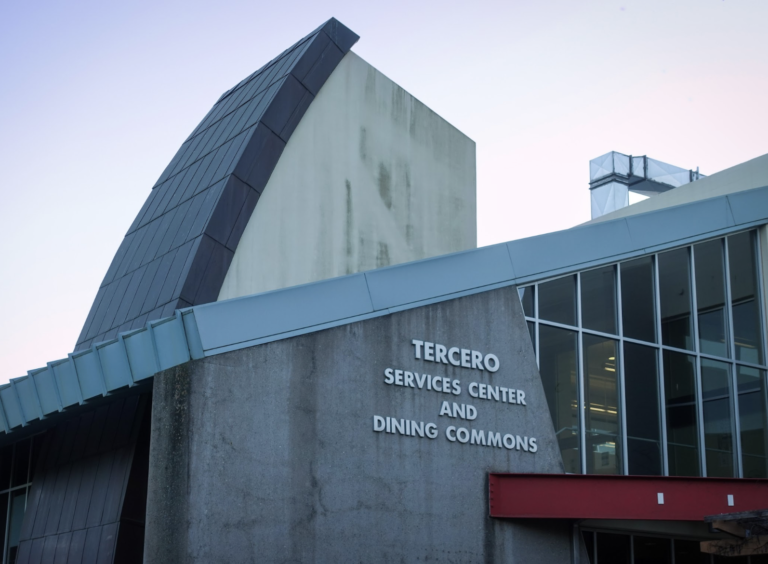
Leonard’s main concern was to voice against the recent change of operating days for both the Cuarto and Tercero Dining Commons, leaving Segundo as the only open dining commons on the weekend. 

“I feel so bad for people who don’t live in Segundo because they have to walk or bike so far to come here on the weekends,” Leonard said. “It’s not sustainable to be able to eat three meals a day and be healthy.” 

However, the focus groups are only one small part of the overarching project. Ronquillo has also reached out to the Cross Cultural Center to discuss how the dining commons can better represent the needs of cultural groups. With these conversations, many events have since been hosted to support cultural groups.

“If there is feedback that we could incorporate from some of the cultural groups, we’ve tried to do it if we could,” Ronquillo said. “To support Native American programming, we brought in Chef Freddy, a Navajo chef, […] and [on Jan. 26] in conjunction with the Cross Cultural Center, we’re bringing in Chef Martin Yan for Lunar New Year.”

Looking towards the future, Ronquillo hopes the feedback gained from the focus groups will help guide strategies to meet students’ needs. 

“The goal is to try and condense and look at what the core feedback is, and start developing short-term and long-term strategies to help meet those particular needs,” Ronquillo said. “We know we’re going to stumble, we know that not everything is always going to be perfect, but we’re striving to be better.”

Furthermore, Ronquillo hopes students will continue to give their thoughts to further help the dining commons evolve and decrease stress surrounding food. 

“We hope to come up with the process by which we could continue to get student feedback so that long term, we can always evolve with our students, because that is our biggest challenge,” Ronquillo said. “‘Dining Reimagined’ is all about evolving with our students so that we can make dining the least stressful part of their day.” 

While upcoming events have yet to be announced following the focus groups, Leonard is hopeful that change will come from the conversations. 

“UC Davis really wants to make sure students are getting the [best] experience we can,” Leonard said. “Even if change doesn’t happen tomorrow, it’ll happen next week, or next month or next year, and you can improve the experience for the people coming after you.” 


Written by: Aaliyah Español-Rivas — campus@theaggie.org

Therapy dogs can be an invaluable resource for improving patients’ well-being

Newly-employed golden retriever Landon has been brightening up hospital rooms at UC Davis Health


By KATIE HELLMAN — science@theaggie.org

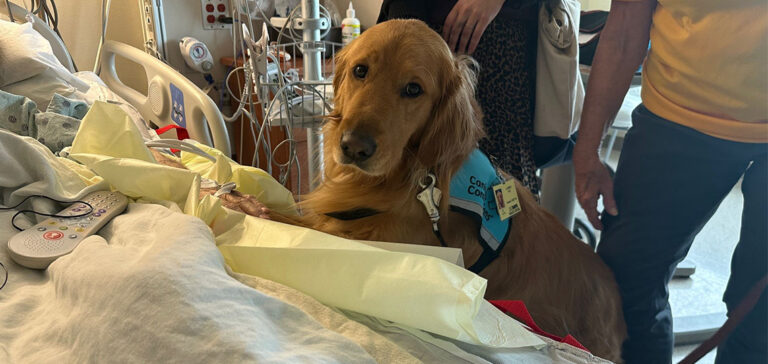
Landon, a two-year-old golden retriever, has an important job: to cheer up hospital patients. Equipped with a wagging tail and a joyful spirit, Landon distracts people from a stressful time in their lives with his warm presence.

He is specially trained to provide comfort to adults and loves to work off-the-clock by visiting hospital staff. Landon is part of UC Davis Health’s Creativity, Amenities, Relaxation, Exploration (CARE) Project, which uses an interdisciplinary approach to holistic healthcare, employing activities like art therapy and reiki, a form of energy healing.

By supporting the whole person, caregivers, and family members, we hope to empower a patient throughout their hospitalization with empathy, compassion, and understanding,” CARE’s website reads.

Canine CARE, currently consisting of a team of six dogs, specifically aims to help patients cope with an illness through the use of therapy dogs.

To qualify for his important role, Landon had to first pass his Canine Good Citizens test, allowing his handlers to make sure he would be friendly, obedient and gentle while interacting with patients. Landon did exceptionally well on his test; he kept his focus when surrounded by commotion and refused to give in to meticulously placed distractions, such as a stuffed animal dog blocking his path. 

Katie Lorain, the Creative Arts and Recreation Therapy department manager at UC Davis Health, commented on the impact that the dogs have on patients’ well-being.

“The main purpose is to normalize the hospital experience,” Lorain said. “Many of our patients are missing their personal pets when they are admitted for a long time, and even if they don’t have a dog, [the dog] is just something that reminds them of the world outside of the hospital. It can lift their spirits and it can motivate them to engage in treatments, like ambulating or getting up and out of bed so they can walk with the dog down the hallway.”

The impact of therapy dogs doesn’t just stop after their visit — they can actually promote physical healing and have positive long-term effects on human health, according to a study published in PubMed.

“When humans are faced with a stressful or unknown situation […] the steroid structured hormone cortisol is released,” the study reads. “Studies in humans investigating stress biomarkers found that when people are engaged with interacting or stroking a dog, sensory stimulation in both the human and the dog can activate oxytocin and decrease cortisol levels in humans.”

Anyone interested in learning more about the CARE program can check out their website and support the CARE project fund by visiting their UC Davis Crowdfund.

Written by: Katie Hellman — science@theaggie.org

The cultural history of Smokey Bear

The U.S.A.’s most recognizable federal icon


By SAVANNAH BURGER—arts@theaggie.org


Smokey Bear is one of the most well-known federal mascots in United States history. With the icon turning 80 this year, U.S. citizens have been seeing, listening and reading about Smokey Bear for nearly eight decades. Almost everybody knows his famous line, “Only YOU can prevent wildfires.” But what most people don’t know is that this wasn’t always his slogan. In fact, “wildfires” was only changed from “forest fires” by the Ad Council in 2001. The reason for this amendment has to do with everything Smokey has represented –– all the way back to the 1940s.

Not many are aware that Smokey Bear actually started as a wartime advertisement. After the attack on Pearl Harbor in 1941 and the U.S.’s entrance into World War II, government officials were worried about forest fires distracting American troops from the war effort — they regarded forest fires as a separate, naturalistic home-front war that threatened national security. 

In 1942, the U.S. Forest Service and War Advertising Council approved a campaign to bring nationwide attention to forest fire prevention, distributing posters that had messages such as, “FOREST DEFENSE IS NATIONAL DEFENSE.” In the same year, Disney’s “Bambi” was released, and the corporation temporarily lent the image of Bambi and friends to the U.S. Forest Service to use in their forest fire prevention campaign. The U.S. Forest Service would soon need their own mascot to use for branding.

On Aug. 9, 1944, after an agreement between the U.S. Forest Service and the Ad Council, Smokey Bear was approved as the official symbol for the forest fire suppression campaign and was featured visually for the first time on a poster. The poster depicted Smokey, a brown bear dressed in blue dungarees and a ranger hat, bending over and pouring a bucket of water on a campfire while glaring at the person looking at the illustration. Underneath, a caption reads, “SMOKEY SAYS — Care will prevent 9 out of 10 woods fires!” This was only the beginning of Smokey Bear’s journey in the public eye.

Spreading like wildfire, Smokey Bear quickly made himself known across the country through hundreds of thousands of books, pamphlets, toys, posters, stamps and radio broadcast public service announcements (PSAs) that started in the 1950s. In the radio broadcasts, Smokey would be introduced by the song “Smokey the Bear,” written by the same songwriting duo behind “Frosty the Snowman”: Steve Nelson and Jack Rollins. 

Though their piece became Smokey’s official song, it spurred confusion over the character’s name. In the popularized song, it was sung as “Smokey the Bear” to be consistent with the rhythm. Officially, however, his name is just “Smokey Bear,” without a “the.” The 1950s solidified Smokey’s design — it wasn’t until this decade that Smokey’s hat and belt had his name printed on them; before, they had been blank.

In 1950, a lone black bear cub was recovered from a violent forest fire in the Capitan Mountains of New Mexico. Firefighters found him clutching to a tree with severe burns on his body. They named him Smokey Bear after the character, and the cub was later moved to the National Zoo in Washington D.C. There, multiple senators, forest service officials and other dignitaries met Smokey, and he was officially recognized as the living symbol of Smokey Bear and the forest fire prevention campaign. 

The live Smokey Bear became wildly beloved and popular across the country, and he received so much fan mail that, in 1964, he was issued his own zip code: 20252. Smokey Bear is the only American to have their own unique zip code other than President Dwight D. Eisenhower. The 34th president between 1953 and 1961 was an outspoken supporter of Smokey and has been photographed holding Smokey Bear merchandise.

The first Smokey Bear commercials aired in the United States in the 1960s, featuring cartoons of the character and popular television hosts verbalizing their support for the campaign. All the while, Smokey Bear’s image and branding were plastered on anything related to the forest service, ranging from training pamphlets to junior forest ranger kits. His campaign continued throughout the decades, with more commercials and new billboards going up starting in the 2010s. 

Although the Smokey Bear Wildfire Prevention Campaign is the longest continuing PSA campaign in United States history, there have been modifications to Smokey Bear’s approach. In the last two decades, professionals specializing in fire science have found evidence that 100% fire suppression is much more damaging to the environment than not. If forest fires are not allowed to burn naturally in fire-adapted ecosystems, forests will grow abnormally thick, becoming the perfect conduit for huge, violent and unpredictable fires. 

Without human intervention, forest fires are supposed to burn through environments periodically. If the environment is not overgrown, these forest fires will commonly be low-intensity burners that will clear out the forest floor of dead and decaying materials. This cleanse also supplies specific nutrients to the environment, along with providing certain animals and plants with ecological benefits only available to them after burns. For example, the California state tree, the coastal redwood, is reliant on fires for seedling reproduction.

Because of these scientific findings, Smokey’s call for the suppression of all forest fires turned out to be the wrong message. This is why we now hear Smokey say, “Only YOU can prevent wildfires,” as by no means should every forest fire be stopped. Out-of-hand wildfires, however, like the countless that California has weathered in the last decade, should indeed be prevented. They’re still a massive problem — nearly 85% of wildfires today are started due to human negligence, according to the National Parks Service. In addition to this, in 2023, the National Interagency Fire Center recorded 50,697 wildfires initiated by human activity.

Now that his message has been revamped, Smokey has also had to adjust to a world dominated by social media. In recent years, Smokey Bear has focused his campaign on popular platforms, such as Facebook, Instagram and YouTube. While he still retains his original design in many other ads and merchandise, he is now frequently represented on social media with an originally designed Animoji. His imagery now appeals to both older and younger audiences. 

Smokey Bear, the American icon that is shared by multiple generations, is still going strong into the eighth decade of his PSA. Don’t forget to celebrate his 80th birthday on Aug. 4!

Written by: Savannah Burger — arts@theaggie.org

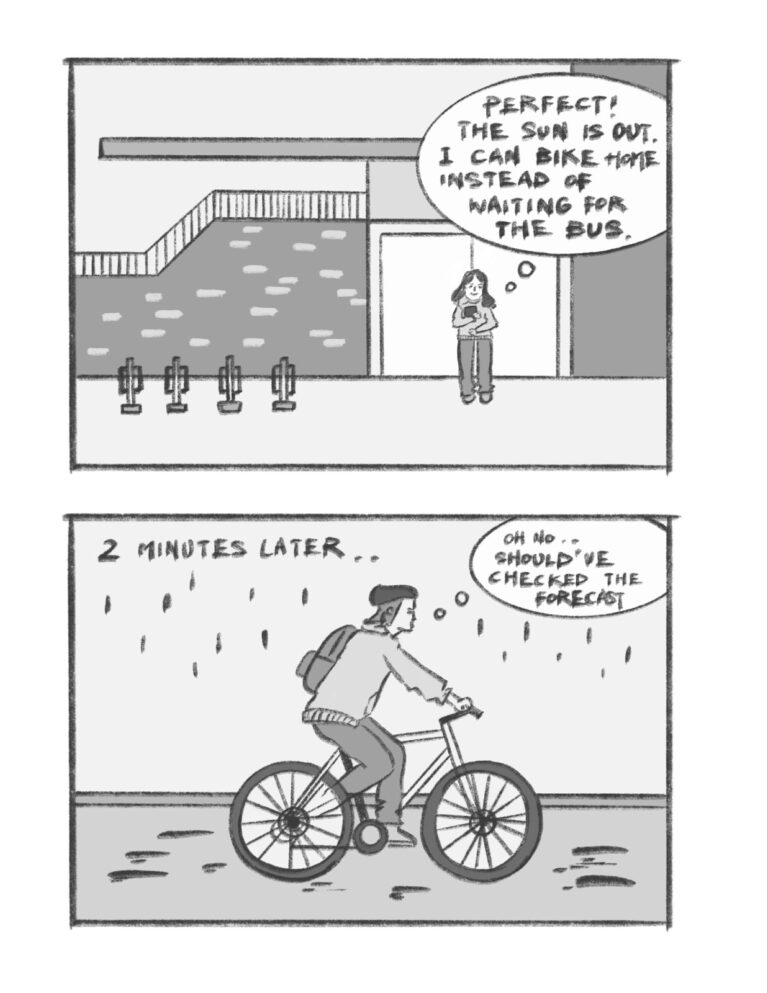
Biking in the rain

Drawn by: Lanhui Zhen –– lazhen@ucdavis.edu

Disclaimer: (This cartoon is humor and/or satire, and its content is purely fictional. The story and names of “sources” are fictionalized.)

Davis MoMA: Aggies Horses

Original: “Pharaoh’s Horses” by John Frederick Herring Sr.

Drawn by: Nimra Farhan –– nfarhan@ucdavis.edu

Disclaimer: (This cartoon is humor and/or satire, and its content is purely fictional. The story and names of “sources” are fictionalized.)