58.6 F
Davis

Davis, California

Monday, December 22, 2025
Home Blog Page 108

Davis parcel tax banners elicit legal action from conservative law group ahead of Measure N campaign

0

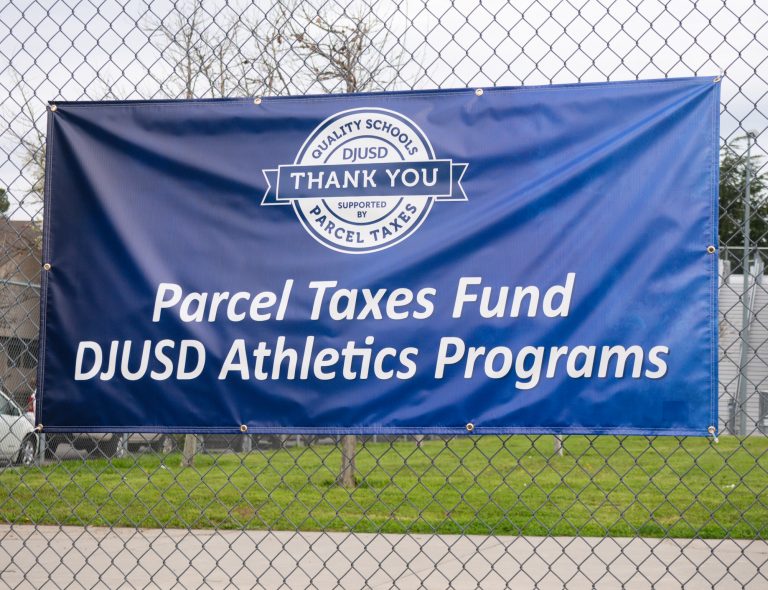
The Davis Joint Unified School District received a cease and desist letter from Beth Bourne after hanging banners that thanked the community for parcel taxes 


By HANNAH SCHRADER city@theaggie.org


On Jan. 29, the Davis Joint Unified School District (DJUSD) was served with a cease and desist letter from Dhillon Law Group on behalf of Yolo County Moms for Liberty Chair Beth Bourne. 

The letter was prompted by a series of posters, banners and flyers that were hung at schools in the district. The banners’ statement that parcel taxes enhance the district’s ability to provide high-quality education prompted the letter. 

“Parcel Taxes Fund Our Exceptional Programs,” one sign in front of the district office read. Measure N, a proposed policy that would continue existing parcel taxes, is not directly mentioned in any of the banners.

“The District has used public resources to urge voters to adopt Measure N, a parcel tax that would fund District operations,” Attorney Jesse Franklin-Murdock, an associate at Dhillon Law Group, wrote in the letter.

Measure N would mainly fund public educational programs in Davis public schools and will be on the March 5 presidential primary ballot. Measure N hopes to continue the funding that was previously introduced in the expired Measure H. 

“We write to demand that the District cease its illegal conduct immediately,” Murdock wrote.

Beth Bourne is a UC Davis alumna and long-term Davis resident. In Oct. 2023, DJUSD filed a temporary restraining order against Bourne for harassing teachers who displayed pride flags in their classrooms. Bourne shared that she supports parcel taxes but has accused DJUSD of funding the campaign.

“I’ve always voted in the past for the school parcel tax,” Bourne said. “The school district is sponsoring it, and the school district passed a resolution to put it on the ballot. But how does the school district campaign for it? And what resources can a government institution use?”

Bourne stated that she first noticed the banners at her child’s high school.

“When I saw the signs [and] the banners at my [child’s] high school campus, and then […] at our neighborhood elementary school, I was concerned,” Bourne said.

Bourne’s lawyer, Murdock, outlined the main argument of the cease and desist letter.

“Saying that the deciding factor is whether the banners, the signs, the other materials, reference Measure N specifically kind of misses the point,” Murdock said. “[Statutes] don’t want you to urge public support or opposition to a ballot proposition or a candidate. Now, there are plenty of ways to do this without actually mentioning the candidate’s name.”

Murdock stated his belief that the cease and desist letter is one of many ways to find out where the funding for the banners came from. 

“Given that the signs were all over the district property, it gives rise to a presumption that surely government resources were used,” Murdock said. “I want to find out exactly which ones and I think there’s a number of ways.”

Murdock stated that the law group recently filed a public records request to DJUSD to confirm whether government resources were used for the campaign. 

Additionally, DJUSD requested a 14-day extension to a public records request that was made by The Aggie on Feb. 6. 

“Accordingly, while the District is not required to create records in response to your CPRA [California Public Records Act] request, the District will search its records to determine whether there are relevant records pertaining to your request,” DJUSD said in an email response to The Aggie’s request.

Kristen Conner, DJUSD’s public information officer, noted the district’s position on the matter in a statement via email.

“We have had many posters and banners around the district for years, thanking voters for their support of these taxes (much like you would see along the highway construction ‘your tax dollars at work),” Conner said. “In fact, many of those posters and banners have been in place since the passage of Measure H in 2016. As you can read in the banners, the statements are informational and factual and do not mention or advocate for the passage of Measure N. We have no plan to remove them.”

Conner ended her statement by answering whether further legal action would be taken.

“The letter from the [San Francisco] law group received a legal response that their allegations were without merit,” Conner said. “We consider this matter closed.”


Written by: Hannah Schrader — city@theaggie.org
 

ASUCD passes bill in favor of divestment from corporations ‘complicit in violations of Palestinian rights’

The $20 million ASUCD budget can no longer be spent on companies on the Boycott, Divestment and Sanctions list 


By RIVERS STOUT — campus@theaggie.org


On Feb. 16, the ASUCD Senate passed Senate Bill (SB) #52, which implements an ASUCD boycott of and divestment from “corporations complicit in human rights violations against Palestinians,” according to the bill’s language. This boycott is in accordance with the Boycott, Divestment and Sanctions (BDS) movement, a nonviolent global campaign promoting boycotts against Israel and organizations that they have deemed “complicit” in Israel’s actions over the past few months, including Intel, Disney, Starbucks and many more.

Prior to the Senate meeting where the bill was considered, UC Davis Students for Justice in Palestine (SJP) encouraged students to attend and speak during public comment in support of the bill through an Instagram post, which had more than 1,400 likes at the time of publication.

At 6:30 p.m., the time of the bill’s scheduled consideration, hundreds of students gathered in the Memorial Union Coffee House (CoHo) to share their opinions on the bill. 

“We have been given the opportunity to take direct action by passing this bill, and we need to take it,” one speaker said. “We are sick and tired of coming out here time and time again and seeing no material change. I am sick and tired of having lived the entirety of my life screaming the same chants and mourning the same losses.” 

The speaker elaborated, saying that by passing the Senate bill, which stops any ASUCD funds from being spent on items from companies listed on the BDS list, they believed UC Davis students would be “helping to stop the bombing of over 28,000 [Palestinian people] and the complete destruction of Gaza.” 

Another speaker provided their stance on the matter, specifically arguing against concerns that the bill could contribute to antisemitism on campus.

“BDS is not hate,” the speaker said. “It is a message for liberation and standing against settler-colonialism. BDS is not an attack on Jews, but an attack on settler colonialism and genocide. We, as students, have the power to be on the right side of history, so it is imperative that we support the divestment of Israel and stop supporting the settler-colonial and the apartheid, oppressive state.”

Some students, albeit a smaller group, attended the meeting in opposition to the bill. 

“There is not a single bone in my body that asked for this war,” President of Aggies for Israel Carly Klinger said. “There is no part of me that believes that this is how any conflict should be solved. It is without a doubt that innocent lives of Palestinians are being lost. However, this does not mean we need a warzone on campus. By integrating BDS into the bylaws, that is exactly what you will be encouraging.”

Speakers opposed to the bill also mentioned the monetary kickback of its implications. 

“Spending a large portion of your ASUCD budgeting on getting rid of printers, computers and software and replacing [them] will cost us our tuition money,” one speaker said. “A boycott of Intel would mean replacing all of the computers across all of the university.”

Others noted that ASUCD does not control all of the computers across the university and only controls those under the ASUCD domain. 

“This bill is not seeking to replace any equipment that ASCUD already has,” Senator Yara Kaadan said. 

Instead, according to Kaadan, the bill would block future deals with these companies. 

Another speaker in opposition to the bill noted that most affordable kosher food options on campus come from Israel-affiliated companies. 

“Sabra, for example, is a company that produces many kosher items, some of which are offered at the CoHo and campus stores,” the speaker continued. “If this bill were to pass, Sabra, among others, would be banned. By passing BDS, you are taking away on-campus kosher options from Jewish students. That is blatant discrimination on the basis of national origin, culture and religion.”

While this was a popular sentiment among those opposed to the bill, External Affairs Vice President Celene Aridin later rebutted this argument. She said that ASUCD is one of the only student governments that opens its own businesses, such as the several restaurants in the CoHo eating area, and it is therefore possible for these quick service stops to provide more kosher food products on the menus. 

Some UC Davis Law school students refuted the claims of discrimination on a number of grounds and told the Senate that they were more than willing to examine the legality of the bill and subsequent actions. 

“I stand before you queer, trans and Jewish,” a speaker in favor of the bill said. “I am a strong supporter of the divestment bill and of a free Palestine. The Jewish opposition here does not speak for me and will never speak for me. There are thousands of Jewish people across the country organizing every day with the same beliefs. Supporting the BDS bill is not anti-semitic, it is what is right.”

After public comment had ended, and the table had taken a brief break, senators voiced their thoughts on the bill. 

“I believe that SB #52 is in many ways very hastily written to surprise the Senate, half of whom are recently elected, and most of whom have absolutely no knowledge of [the history of] Israel and Palestine,” Senator Gabriel Gaysinsky said. “And why should they? [There are] a bunch of STEM majors and people who have nothing to do with this. Most people simply do not know.” 

Gaysinsky’s words were met with sounds of disapproval from many of the gathered attendees. Aridin called for silence and requested that people remain respectful.

 “It is not a question of intelligence,” Gaysinsky said. “Some of us have studied this for years and some are barely getting into it now because [the bill] was introduced [to the Senate table] six days ago. Unless distinct changes to the bill’s language and intent are made, it will continue to be an attempt to strongarm a vote to uplift one community at the expense of another.”

He moved on, speaking on Jewish people who had voiced support in favor of the bill.

“It is very telling that many of those who came to speak ‘as a Jew’ are those that I’ve either rarely seen or never seen active in the Jewish community,” Gaysinsky said, air-quoting the words, “as a Jew.” 

Kaadan then responded to Gaysinsky’s words. 

“This bill is very clearly targeting the actions of a nation-state and very exclusively stating it is not targeting a group of people,” Kaadan said. “If you have an issue with condemning genocidal violence, it’s not my responsibility or Palestinians’ responsibility to make you feel comfortable in your genocide denial or justification.”

Kaadan shared more on this thought. 

“I would really hope that everybody on the table agrees with me on this, as well as the public: we should all be condemning anti-semitism,” Kaadan said. “I also want to note that it’s not the Palestinian community’s responsibility to account for European and Western anti-semitism that […] we see on this campus.”

Kaadan also addressed comments that argued the bill was written from one perspective.

“This bill had over 30 endorsements from a very diverse coalition of organizations on this campus, and not just undergrads,” Kaadan said.

The bill was signed by many student associations, unions, clinics and other campus-affiliated organizations. 

“Also, I want to address some racist tropes that came up tonight,” Kaadan said. “Implying that Palestinians asking for their basic human rights be respected and supported would create a ‘warzone’ on campus is racist. Arabs are not violent, Palestinians are not violent, and we’re tired of having to explain that to you over and over again because you cannot break out of that stereotype. This bill is not targeting people, it’s targeting genocidal violence from the Israeli government.” 

Kaadan also made it a point to say that from the time the bill was written to the time of the bill’s consideration by the Senate table, the death toll of Palestinians in Gaza had to be amended by an estimated 5,000 people.  

After nearly six hours of both public comments and deliberation by the senators, SB #52 passed with a 12-1-1 vote, with one voting against the bill and one abstaining. 


Written by: Rivers Stout — campus@theaggie.org

Rejection is associated with higher levels of brain activity in individuals who tend to ruminate

A UC Davis study found that increased electrical activity and blood flow occur in parts of the brain associated with identity, especially in adolescent girls


By KATIE HELLMAN — science@theaggie.org

It’s common for people to ruminate from time to time. When you ruminate, you repeatedly obsess over negative thoughts that aren’t typically conducive to solving a problem. 

A UC Davis study has found that ruminating brains display different patterns on a functional MRI (fMRI) scan compared to those that are less prone to excessive worrying. This trend has been most prevalent in adolescent girls.

The study, published in the journal “Developmental Cognitive Neuroscience,” specifically aimed to evaluate the effects of social rejection and how they relate to neural responses. The participants consisted of 116 females aged 16 to 19 who were asked to self-report their tendency to ruminate after receiving fake positive and negative feedback from peers.

“Rumination is a significant risk factor for psychopathology in adolescent girls and is associated with heightened and prolonged physiological arousal following social rejection,” the study reads. “Results of this meta-analysis indicated that people with greater levels of rumination show heightened neural activity” in parts of the brain that “are hub regions of core default mode network (DMN) known to be engaged during self-related processing such as retrieving self-knowledge, experiencing self-conscious emotion, and retrieving autobiographical and episodic memory.”

To obtain these results, the study participants were asked to pick 30 photos of teenagers that they would feel comfortable talking to. While in the fMRI machine, which detects electrical activity and blood flow changes, the participants were then told which of the teenagers in the photos would and would not want to talk with them. 

In the brain regions that define who we are as people, greater blood flow and electrical activity were identified when the girls were faced with rejection. This association was also stronger in the participants who had reported higher rumination tendencies. 

Amanda Guyer, a professor in the Human Development and Family Studies Unit of the Department of Human Ecology, commented on how these brain patterns relate to specific ways of thinking.

“Some of [these patterns] are related to depression and anxiety and other tendencies such as low self-esteem,” Guyer said. “Some of the brain regions that we were looking at are involved with certain cognitive functions, like mentalizing and self-related kinds of thinking and processes.”


Another study published in PubMed aimed to determine possible relationships between rumination and psychopathology, including why people engage in repetitive negative thinking and how these behaviors can be helpful in identifying mental disorders.

“Rumination is not only related to depression, but is involved in the development and/or maintenance of a broad range of disorders, including post‐traumatic stress disorder (PTSD), anxiety disorders, insomnia, eating disorders, somatic symptom disorder, and substance use disorders,” the study reads.

Using these results, scientists can explore methods that alleviate the need to ruminate and improve overall mental health in affected individuals.

“A next step would be for us to address questions about what types of psychopathologies relate to these kinds of patterns in these kinds of conditions and situations,” Guyer said. “Does it carry over into specifically elevated depression symptoms or social anxiety symptoms? We could also look at not just pathologies, but also social competencies.”

Written by: Katie Hellman — science@theaggie.org

Ongoing events, available resources at Mary L. Stephens Library

The Davis branch provides craft communities, monthly book sales, material kits and more 


By SAVANNAH ANNO — arts@theaggie.org

Beyond just providing books, libraries can also serve as important community builders. By welcoming all members of society into their spaces, practicing outreach and hosting events that encourage patrons to interact with one another, public libraries offer not only reading material, but connection. 

Nestled between Davis Senior High School, North Davis Elementary and Community Park, the Mary L. Stephens Davis Branch Library is one of these institutions focused on community outreach. If you’re looking to meet new people, get involved with the off-campus Davis community or practice a new skill, this library may have just what you’re looking for. 

For anyone interested in fiber arts, the library hosts a weekly Knitting & Crochet Circle. People of all skill levels are welcome to work on individual projects alongside each other, sharing tips and tricks from 5:30 to 7 p.m. each Tuesday. Don’t forget to bring your own materials as well as a few good conversation starters. No sign-up or registration fee is required. 

The library also hosts a variety of group meetings to help community members practice learning new languages. If you want to gain confidence and improve your conversational Spanish, Mandarin or English skills, attend weekly meetings to speak with other language learners. All skill levels are encouraged to attend, and no registration is required: simply show up ready to talk. English conversation groups are held each Monday from 12:30 to 1:30 p.m. as well as on Thursdays from 6 to 8 p.m. Spanish conversation groups are held on Mondays from 6 to 7:30 p.m. and Mandarin groups on Wednesdays from 6 to 7 p.m. 

Another weekly drop-in event held at the library is open hours with the Davis Makerspace. Each Thursday from 9:30 to 11 a.m., the non-profit group provides tools like the open-source software Arduino, single-board Raspberry Pi computers, a sewing machine, craft wood and other various pieces of small equipment to visitors. Davis Makerspace — a group of builders, makers and programmers — encourages community members to stop by and show off their projects or to ask any questions they may have about how to use the tools offered. 

Last on the list of ongoing events at the Mary L. Stephens Library is the monthly Friends of the Library Book Sale, hosted by volunteers and spanning three days. The sale begins on the first Friday of the month from 12 to 7 p.m., is open Saturday from 10 a.m. to 5 p.m. and on Sunday from 10 a.m. to 3 p.m. Being the final day of the monthly book sale, Sunday is “bag day,” meaning visitors are encouraged to fill a grocery-sized bag with books for $10. Find used books about poetry, cooking, science, politics and more in the Friends of the Davis Public Library’s collection. 

On top of the library’s in-person events, the Yolo County Library also provides a variety of online and material resources for members. Sign up for a free library card by visiting the Davis Branch with your ID and proof of California residency (a piece of mail with your address on it, for example) to gain access. With your card, the library opens up a world of possibilities: language-learning programs, performing arts video collections, LinkedIn Learning, test-prep materials and access to The New York Times online. 

In-person, Mary L. Stephens Library also offers interactive resources such as discovery kits for activities like bird watching, calligraphy, sewing, meditation and even ghost hunting. Each kit contains books, DVD tutorials and the necessary materials to get started with the project. Visit the library to explore each option, and if you have an idea for a new one, be sure to suggest it. 

By catering to a wide variety of interests, from knitting to language learning, the Mary L. Stephens Library encourages connection through shared hobbies beyond just reading. If you’re interested in enriching your free time, talking with a diverse group of people or improving your creative skill set, the local library just might be for you. 


Written by: Savannah Anno — arts@theaggie.org


City of Davis hosts housing forums for community members

0

The city’s Social Service and Housing Department is seeking feedback from local renters at these events


By ALMA CULVERWELL city@theaggie.org 


The city of Davis’ Social Service and Housing Department recently held a tenant’s open house in the City Hall Community Chambers on Jan. 24. 

The open house was intended to be a place for community members to share their rental experiences and help city staff better understand residents in order to adequately assist them in the future.

Tiana Evans, a Davis resident of three years, explained her experience as a renter.

We found out quickly how competitive it was to find a house to rent,” Evans said via social media. “I remember having to pay ahead to secure a spot so we had a place as soon as we arrived from Reno, Nevada. There wasn’t much within our budget, and we ended up paying about half of our income in rent. We were fortunate to lock in a two-year lease, but [we] also realized that’s when rates can go up.”

Evans discussed what homeownership and rental regulations she hopes to see moving forward from the city of Davis.

“I want limitations on single family houses being purchased and immediately rented out,” Evans said. ”I want to buy here one day […] and as a first time home buyer, it’s looking bleak.” 

Kim Brennan shared her renting experience after moving to Davis from Los Angeles seven years ago.

“When I first moved here I had to live in Woodland and I rented a room,” Brennan said via Facebook Messenger. “When I moved to Davis very shortly after I also rented a room […] I was able to get my first apartment at Creekside, which is affordable housing, but couldn’t stay there. Now I am in just a regular apartment here in Davis and they basically force us to sign our lease this month for September […] There’s a 10% increase every single year without any improvements to the apartment itself.” 

Brennan described her frustration as a renter in Davis and her wishes for more support from city staff moving forward.

“Davis isn’t expensive; it’s overpriced,” Brennan said. “There needs to be more regulation on rent increases and rent caps. And they need to build a lot more affordable housing.”

The city of Davis plans to host another housing office hours event on Feb. 21 from 11 a.m. to 1 p.m. by appointment. They are offering fifteen-minute one-on-one appointments with city staff members for residents to share their rental experiences and ask any questions.


Written by: Alma Culverwell city@theaggie.org 

Six podcasts to get you through winter quarter

Discover the perfect podcast for you 


By MIAH JORDANE –– mjcampos@ucdavis.edu 

The days are rainy and full of clouds, making the walks in between classes slightly intolerable. However, a great way to pass the time is to pop on a podcast! If you’re anything like me, you may feel intimidated to jump into a brand-new podcast with a new cast of voices to get to know; it’s almost like meeting a new group of friends –– these ones just happen to live in your phone and earbuds. If you struggle with finding new podcasts or don’t listen to podcasts but would like to, here are some recommendations from an avid podcast listener. 

Many people start their podcast obsession by branching into the world of true crime –– it’s interesting and captivating, yet creepily realistic, making the listening experience one that grabs your attention. Stephanie Soo began as a YouTuber in early 2017 and didn’t immediately delve into true crime. However, as her audience grew, she began to develop an interest in sharing her insight on crime cases. It wasn’t until 2020 that Soo and her husband started a sit-down podcast titled “Rotten Mango” on more serious and gruesome topics.  

She also expanded her team across the globe by hiring researchers from different countries to help her compile accurate information on sensitive topics, taking a professional and compassionate approach to discussing crime cases. Stephanie Soo’s discussion of true crime cases isn’t only knowledgeable and considerate, but also extremely engaging as she has a unique allure that absorbs her listeners’ attention. If you enjoy true crime, I definitely recommend checking out “Rotten Mango.” 

“Rotten Mango” is only one layer in the multiverse of Stephanie Soo –– she has many different forms of content on YouTube and Spotify. A notable mention is her secondary podcast “Baking a Murder,” which may appeal more to listeners who don’t enjoy true crime. “Baking a Murder” occasionally has a visual aspect, with Soo following a baking recipe while diving into adaptations of books — such as the series of “A Court of Thorns and Roses” by Sarah J. Maas — as well as movies, TV shows and K dramas. This podcast contrasts with “Rotten Mango” to appeal to a general audience and take a break from intense topics, creating a space for her to discuss fictitious interests with her audience. 

On the other side of the podcast spectrum, there are less intense and more social podcasts: “Trash Tuesday,” with female comedians and friends Annie Lederman, Esther Povitsky and Khalyla Kuhn; “Ear Biscuits,” with the fathers of YouTube Rhett and Link from “Good Mythical Morning”; and “Canceled,” with the controversial-yet-hilarious best friends Tana Mongeau and Brooke Schofield. These podcasts take a laid-back approach — they don’t always have a plan for what they want to discuss, but they still always find a way to lead interesting and amusing conversations. These types of podcasts complement days when you feel stressed or merely want background noise to play while cleaning, cooking or getting ready for the day. 

Similarly, the H3 Podcast with YouTuber Ethan and occasionally Hila Klein is a great mention and seems to appeal to a diverse group of people. Their podcasts range from having lighthearted chats with guests to discussing popular internet trends, as well as engaging with the live audience, small bits and games, serious deep dives on controversies and even politics. This podcast isn’t for everyone, and not everyone necessarily likes Ethan Klein, but it is definitely one worth checking out, as there is an enormous archive of episodes on different topics for endless hours of enjoyment. 

The last, but definitely not least in terms of importance, stands with their own mention for their unique podcast setup: “Distractible” with Mark Fischbach (Markiplier on YouTube), Wade Barnes (LordMinion777) and Bob Muyskens (Muyskerm). These three best friends have set up their podcast in a never-ending competition format: one of them chooses the topic or game for the podcast, and the winner is allowed to choose the next episode’s theme. By answering extremely complex questions such as “Is it a taco or a cannoli?” and “Is it a hotdog or a sandwich?” as well as playing simple games like Would You Rather, “Distractible” is an easy, comedic listen. Not to mention, Markiplier’s voice is always pleasant to listen to (those who get it get it). 

It can be difficult to find a podcast that complements your interests, and there are so many different podcasts out there that these are only scratching the surface. If you’ve yet to dive into the universe of podcasts, these may be a great start.


Written by: Miah Jordane — mjcampos@ucdavis.edu 


Disclaimer: The views and opinions expressed by individual columnists belong to the columnists alone and do not necessarily indicate the views and opinions held by The California Aggie.


UC Davis student organizations hold supply drive in collaboration with Empower Yolo to provide aid to domestic abuse survivors

Students Demand Action, the Sexual Assault and Awareness Advocacy Committee and the Aggie Reuse store are accepting donations during winter quarter 2024 


By MADISON PETERS — campus@theaggie.org


From Jan. 22 through the end of winter quarter, UC Davis’ Students Demand Action (SDA), the Sexual Assault and Awareness Advocacy Committee (SAAAC) and the Aggie Reuse Store are holding a supply drive in collaboration with Empower Yolo to support victims of domestic abuse.

Empower Yolo is a domestic violence service provider that operates in Davis and Woodland, according to Roan Thibault, a second-year political science major and SDA co-lead. They provide assistance such as emergency housing, financial aid, case management and legal help.

Donations for the supply drive should include basic necessities such as personal hygiene items, household goods, kitchen supplies and clothing, according to Victoria Mattsson, a third-year environmental science and management major and co-unit director for the Aggie Reuse Store.

Mattsson then detailed what people should look for when considering making a donation.

“[Donate] anything that someone moving into an empty house would need,” Mattsson said. “I encourage people to look through their closets and cabinets and see if they have a giant pack from Costco that they are willing to share.”

Empower Yolo has provided a wishlist of desirable items, which can be found on their website or by visiting SAD’s, SAAAC’s and Aggie Reuse’s respective Instagram pages.

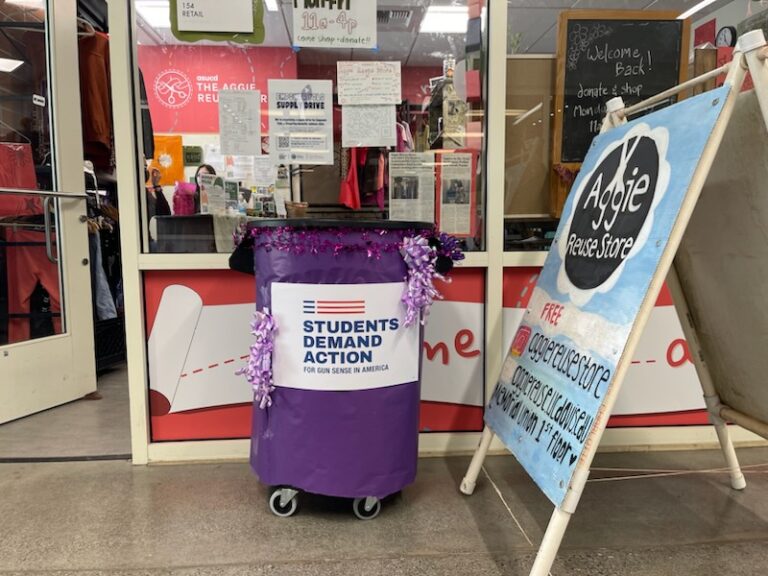
Thibault said that anyone who is willing to donate items just needs to look for the purple bins in front of the Aggie Reuse store located at the Memorial Union (MU).

Elyssa Lieu, a second-year design major and co-unit director of the Aggie Reuse store, elaborated on Aggie Reuse’s involvement with the drive.

“So often, we are the receivers of other members of the community that give what they no longer need,” Lieu said. “It’s great that we can take advantage of having a physical space in the MU, [which is] a more accessible location for students and other members who can’t make it down to Empower Yolo. [It] just adds another option for those who want to engage in the community and give back to the mission.”

These donated items will be given directly to the Rooms to Go program that Empower Yolo is working on. This program provides emergency housing and shelter to survivors of domestic abuse, according to Sanjana Gudivada, a third-year psychology major and member of the SAAAC.

Thibault spoke on the connection between SAD’s focus on gun violence and domestic abuse.

“Abusers use guns to threaten and control victims,” Thibault said. “These threats often escalate to murder. Every month, an average of 70 women are shot and killed by an intimate partner, and nearly one million women alive today have reported being shot or shot at by an intimate partner. Service providers like Empower Yolo really provide a critical lifeline so that these women can escape these situations and come out on the other side stronger.”

Gudivada and Thibault said that more flyers will soon be posted around campus and that there will be an increase in tabling at the MU to spread the word about the drive.

The goal of these actions is to make the drive an annual event that takes place during Domestic Violence Awareness Month in October, according to Thibault.

Gudivada spoke on the significance of this event.

“I think [the drive] is really good, because most of the time, the shelters that domestic violence survivors go to don’t have a lot of resources for them because [they’re] not really funded and a lot of people don’t really care about [them],” Gudivada said. “[But] they have more resources now and people are more aware of it.”

Thibault then gave his final comments on what he hoped this drive would provide for survivors of domestic abuse.

“[The] bottom line is that a donation as small as a can opener can make a huge difference in the lives of survivors as they adjust to new housing and a new life,” Thibault said. “We encourage UC Davis students to come together and uplift survivors.”

Written by: Madison Peters — campus@theaggie.org


The Nicki Minaj and Megan Thee Stallion feud: what’s this Megan’s Law business?

Unpacking the hottest diss tracks from two of the most famous female names in the rap game 


By ELIZABETH WOODHALL — arts@theaggie.org


Content warning: This article contains discussions of gun violence, assault and profanity. 


Megan Pete, better known as Megan Thee Stallion, is gearing up to drop her third studio album with the release of its second single, titled “HISS.” Her single exudes everything the “hot girl” persona is known for: calling out the haters and showing who the boss of the rap game is. Soon after, Nicki Minaj released a diss track in response. What caused this explosive feud between two of the most influential female rappers of all time? 

Let’s dissect Pete’s song, “HISS.” The first two lines make pop culture references to Mariah Carey’s 2009 track, “Obsessed,” and Kris Jenner’s powerful role as manager for the Kardashian dynasty. She talks about people who have claimed to be linked with her, yet they’re just another “body” and irrelevant.

“All this free promo, I’m turnin’ a profit,” she wrote, showing the power she holds in flipping the narrative to gain profit. 

She might be calling out anyone in the industry who attempts to defame her character, but she’s also calling out specific figures who have participated in this witch hunt. For example, she allegedly calls out Drake, as rumors spread that he, too, had gotten a Brazilian Butt Lift (BBL): “Hate on BBLs and be walkin’ ‘round with the same scars.”

This comes after Drake released a song with 21 Savage titled “Her Loss” where he commented on the infamous trial of rapper Tory Lanez, who was indicted last year for shooting Pete in the foot: “This bitch lie ’bout getting shots, but she still a stallion.”

Additionally, Pete referenced fans who have defended Lanez. She suggested his fans download JPay, an app that allows people to connect with incarcerated people. 

The conflict between Pete and Minaj began with Pete’s line: “These hoes don’t be mad at Megan, these hoes mad at Megan’s Law.” She seemingly references Minaj, who is married to Kenneth Petty, a registered sex offender, according to Rolling Stone. 

Megan’s Law is a federal policy originating from the 1994 murder trial of Megan Kanka, a 7-year-old girl who was raped and murdered by a convicted sexual offender. In 1996, Megan’s Law was passed, which allowed for public access to the records of registered sex offenders in the area. Kanka’s father expressed his frustration on TMZ with Pete’s reference of his daughter’s name in her recent single. 

In retaliation, two days later, Minaj started an Instagram live and sent out several tweets calling Pete out for her “hypocrisy,” claiming that she has “proof” of her lies. Minaj then released the track “Big Foot” on Jan. 26, in which she makes several comments about how Pete allegedly uses ghostwriters, slept with her best friend’s partner and lied when she went on Gayle King’s show after the Tory Lanez incident. 

She goes on to reference Pete’s lyrics: “This lil’ begging whore talkin’ ‘bout Megan’s Law / For a Free Beat, you could hit Megan Raw.” 

She claims that Pete would have sexual intercourse for a good record. Despite claiming that Pete was lying about getting shot, she tells her to “‘get up on [her] good foot,” contradicting her previous line claiming that the foot injury was falsified. Minaj proceeds to reference the men Pete has been linked to in the past, such as rappers G-Eazy and DaBaby — the latter of which Pete collaborated with on the 2020 track “CryBaby.” 

Minaj attempts to degrade Pete’s character throughout the track by claiming several defamatory statements. When compared to Pete’s line in “HISS,” Minaj seems to be profiting off the controversy and has released multiple versions of the track on Spotify. She threatens to release more tracks that will allegedly ruin Pete’s image. 

Although it isn’t clear what provoked Minaj to release an entire track dissing Megan Thee Stallion, it is clear that they are far from their past days of collaborating on hit tracks, such as their song that created the phenomena of “Hot Girl Summer” back in 2019. However, it seems this feud will continue to be a popular topic as Minaj claims that there are more tracks to come. Pete, seemingly unbothered, went on Good Morning America on Jan. 30 to announce her new tour. We’ll see if this feud simmers down, but it’s safe to say that regardless of the outcome, both rappers will continue to stay on the top charts. 


Written by: Elizabeth Woodhall—arts@theaggie.org


What are the best freshman seminars offered at UC Davis?

0

Whether you’re a senior looking for a fun class, a freshman looking for a low-stress environment or anywhere in between, here are some of the best seminars offered at UC Davis


By FAITH DEMEULENAERE — features@theaggie.org 


Embarking on the exhilarating journey of university life, first-year students often find themselves at the crossroads of curiosity and the unexplored. Within the realm of academics, the gateway to this unfamiliar territory is the freshman seminar — a playground of provoking ideas, interactive experiences and the wisdom of seasoned professors.

Freshman seminars are a place of bonding over personal experiences and interests. One example is music. Professor Julian Elias, the host of the “Wonderful and Weird Music” seminar, said music has played a great role in his life. 

“I’ve been in love with music since I was a kid in New York,” Elias said. “Music fascinates me, inspires me and helps me relax. I can’t imagine what life would be like without music.”

Elias also said his seminar is a place to bond over music. 

“The students and I usually have a great time listening to and discussing the musicians we like, the songs we love, the concerts we’ve gone to, the upcoming concerts we’re excited about and so on,” Elias said. “Undergrad students interested in music are welcome to register for my seminar.”

The freshman seminars include a variety of studies. Some professors cater to those with an interest in more philosophical topics, such as Professor Richard Huskey’s psyche-exploring “Could a Robot Ever Be Conscious?”

“The human brain is an exquisite computer that gives rise to our conscious experience,” Huskey said. “By comparison, computers lack a human-like brain but they still do computation. Are computers conscious? Could they be? How would we know? Can computers tell us something about our own consciousness? These questions animate research in the cognitive sciences, and have taken on new urgency in the age of artificial intelligence. In this class, we use different theories of consciousness to explore these questions. It’s a ton of fun, and students regularly change their mind about what it means to have a mind.”

Freshman seminars even adhere to those with more niche interests, such as Professor Karma Waltonen’s, “The Simpsons: Satire and Postmodernism,” a writing-based class all about the television series “The Simpsons.” 

“[Students] will pay special attention to how the show functions as a satire — how it serves as corrective comedy to issues such as consumerism, inequality and political dysfunction,” Waltonen said. We will also discuss the show as an example of postmodern literature. Students will collaborate to produce a ‘mini script’ of ‘The Simpsons’ to demonstrate a mastery of the subject and to discover the intricacies of humor composition.”

For some, freshman seminars can be essential for learning how to adapt to the pace and environment of college in a mindful way. Professor Sarah Faye’s seminar, “Habits To Improve Our Mental Wellbeing,” provides a safe space for students to develop healthier habits. 

“The seminar is structured around weekly habits that we practice together: better sleeping, healthy eating, exercise [and] meditation,” Faye said. “When we get together, we share our successes and struggles with the habits, discuss some strategies for making it easier to insert the habits in our lives and act like a support group for each other.”

Overall, the advantage of freshman seminars is that they are more relaxed academic environments to make new friends with shared interests. While there is a wide variety of them to choose from, perhaps some of the seminars stated above have piqued some interest in you.


Written by: Faith DeMeulenaere — features@theaggie.org 


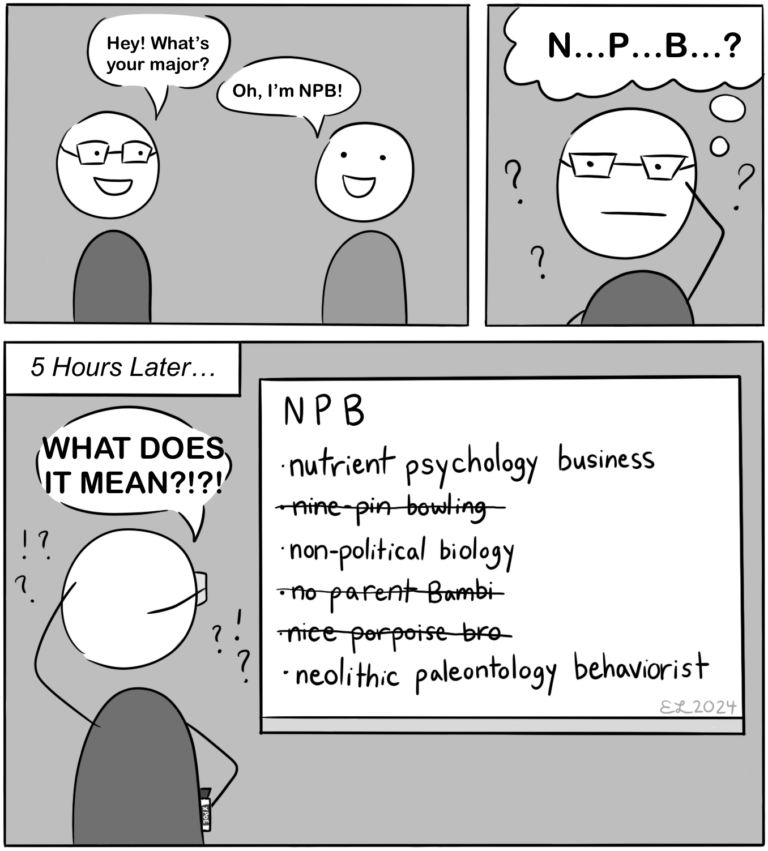
Major confusion

Drawn by: Emma Lapidus –– eblapidus@ucdavis.edu

Disclaimer: (This cartoon is humor and/or satire, and its content is purely fictional. The story and names of “sources” are fictionalized.)

Your local voter guide to the 2024 primary election

The March 5 presidential primary election features several candidates and measures that affect California and Yolo County

By THE CITY NEWS DESK city@theaggie.org 

With the March 5 presidential primary election closing in a few days and with plenty of measures, propositions and congressional candidates to choose from, The California Aggie’s city news desk has prepared an in-depth voter guide to several local issues that you should be aware of on your ballot. 

There are ballot drop box locations in Davis located at Davis City Hall, Nugget Markets and outside the Memorial Union. There are also vote centers located at Emerson Junior High School, the Veterans Memorial Center, Montgomery Elementary School and the UC Davis ARC. People can drop off mail-in ballots and vote in-person up until 8 p.m. (even if you are still in line at 8 p.m., it is state law that you can cast your ballot). 

U.S. Senate

California has an upcoming historic Senate election with four major candidates in the running — some of whom have spoken at UC Davis. Regardless of party, the candidates with the top two votes will move on to the general election this November. 

Rep. Adam Schiff — Democrat

Currently, Rep. Schiff is leading in the polls in the election. Schiff visited UC Davis on Feb. 14, 2023 and discussed his experience as former chair of the House of Intelligence Committee during former President Donald Trump’s first two impeachments. Schiff, like the other Democrats, is in favor of a two-state solution to the Israel-Hamas war.

Rep. Katie Porter — Democrat 

Rep. Porter, who is tied for second place in the polls, has focused her campaign on addressing corruption on Capitol Hill. She also visited UC Davis on March 15, 2023, and shared her platform’s focus on grassroots fundraising, addressing gun violence and codifying Roe v. Wade and the Equal Rights Amendment. Porter has also recently called for a bilateral ceasefire to the Israel-Hamas war at the second debate.

Steve Garvey — Republican 

Garvey, who is tied for second place in the polls and has campaigned as an outsider in the race, has no elected experience and is a former Los Angeles Dodgers player. His campaign has focused on addressing inflation and auditing state finances. Garvey is the only major candidate who does not support a two-state solution to the Israel-Hamas war.

Rep. Barbara Lee — Democrat

Rep. Lee is currently behind Schiff, Porter and Garvey in the polls. She is known for an anti-war track record, as she voted no to the 2001 Afghanistan war and was also one of the first candidates to call for a ceasefire to the Israel-Hamas war. Lee also has roots in activism — even volunteering with the Black Panther Party in the past.

Congressional (District 4)

Mike Thompson

Rep. Thompson, the incumbent, currently represents California’s 4th Congressional District including Napa, Lake Counties and parts of Solano, Sonoma and Yolo County. First elected into Congress in 1998, Thompson has previously represented California’s 2nd district in the Senate where he chaired the Budget Committee. 

As the first Vietnam Veteran elected to California State Senate, he said his experience has connected to the issue of supporting United States Veterans. 

During his time in office, Thompson has sponsored several acts including the Charitable Conservation Easement Program Integrity Act of 2020, the Disaster Tax Relief Act of 2020 and the GREEN Act of 2020.

“In Congress, my number one priority is serving the people of our district,” Thompson said in a press release made last November. “I’ve helped constituents recoup tens of millions of dollars from federal agencies and secured funding for local projects that improve water infrastructure, support health care delivery, upgrade public safety communication, strengthen emergency operations, combat flooding and modernize our roads.”

Andrew David Engdahl

Andrew Engdahl decided to run for Congress in 2022 and according to his website, he decided to run again to set an example that it is possible to take money out of politics. 

Engdahl’s key issues include universal healthcare, combating climate change, criminal justice reform and defending the LGBTQIA+ community, amongst other issues. 

Engdahl has a unique experience regarding the issue of healthcare, as after his first bid for Congress he was diagnosed with non-Hodgkins lymphoma.

“I am officially in remission and have a new lease on life. However, not every American is so lucky,” Engdah’s website states. “We are the only industrialized nation on earth that does not provide universal health care to our citizens and I aim to be a voice to change that. Healthcare is a human right and it’s high time that we put people over profits, once and for all.”

Niket Patwardhan

Coming to the United States as a graduate student with a degree in computer science, Niket Patwardhan is the son of a German mother and Indian father.

“I came to the US as a computer science graduate student with total admiration for the American government and American technology, particularly the US Constitution and the space program,” the campaign website reads. “The foundation was beautiful — especially the idea that the government exists to secure the right of people to ‘Life, Liberty and the pursuit of Happiness.’”

Patwardhan’s platform focuses include fighting party tribalism, people’s agency, reining in medical costs and voter access among other facets. 

John Munn

John Munn is a lifelong California resident who has previously served on the Davis School Board and as president of the Yolo School Boards Association, the Yolo Taxpayers Association and California’s Professional Soil Scientists Association.

If elected, Munn’s priorities include lowering national debt while supporting national defense and protecting Social Security and Medicare, regaining control over crime, fuel prices, inflation and other government constraints as well as transparent healthcare.

“Now, I am asking ‘is this what you want?’ our national debt is approaching $32 trillion ($95,000 per person), more than we spend annually for private goods and services,” Munn’s website reads. “This is passed to future generations. And nearly another $2 trillion was borrowed this year. Let’s quit spending what we don’t have, while supporting national defense and protecting Social Security and Medicare that we have paid for.

Due to his history working at a variety of agricultural jobs such as the US Forest Service and the California Department of Forestry and Fire Protection, Munn has a background in issues that he views are “badly needed for future environmental, agricultural, and natural science legislation.”

County Supervisor District 4 

Antonio De Loera-Brust

Antonio De Loera-Brust, Davis native and son to Mexican immigrant parents, is running for District 4 County Supervisor. De Loera-Brust graduated from Davis High School in 2013 before attending Loyola Marymount University to study film and Chicano Studies. 

De Loera-Brust has held several local and federal government positions, including serving as a legislative aide in the U.S. House of Representatives and a policy advisor to Secretary Julian Castro and Senator Elizabeth Warren. De Loera-Brust also served as special assistant to Secretary Anthony Blinken at the U.S. Department of State as part of the Biden-Harris Administration.

De Loera-Brust stated on his campaign website, “Today, our County faces complicated and enduring challenges. But it is my belief that there is nothing wrong with Yolo County that cannot be solved with what’s right in Yolo County: our people, our values and our belief in the government to make life better.” 

Currently, De Loera-Brust serves as Communications Director for the United Farm Workers. He has also worked closely to assist many local Yolo County families with obtaining food, healthcare and housing for the past ten years.

If elected, De Loera-Brust aims to focus on several key issues, including strengthening county services, fixing traffic and improving transit, expanding affordable housing, public safety and justice for workers and immigrants. He also emphasizes the importance of climate resiliency and conservation in the city of Davis. 

De Loera-Brust has been endorsed by a range of organizations and politicians, including the United Farm Workers, Congressman Joaquin Castro, former Mayor of Davis Robb Davis and Davis Vice Mayor Bapu Vaitla.

Sheila Allen

Sheila Allen, RN, Ph.D., current Deputy to Supervisor Jim Provenza, announced that she would be running for County Supervisor for District 4 in May 2023.

Allen, originally a rural Wisconsin native, moved to the city of Davis in 1993 with her husband Mitch after pursuing her public health educational career in San Francisco and providing in-home nursing services to families in Southside Chicago. 

Allen became involved in the Davis community when she first moved. She served as president of the Parent Teacher Association, served on the school board for nine years, became an inaugural Yolo County First 5 Commissioner and advanced several ballot measures that helped better support Davis students. Allen has also received the Woman of the Year Award on two occasions, from both Senator Bill Dodd and Congressman John Garamendi.

In 2010, Allen founded the Yolo Healthy Aging Alliance, a nonprofit that promotes the well-being of older adults through education, collaboration and advocacy, where she served as executive director for 13 years. Since 2022, Allen has served as the deputy to Supervisor Jim Provenza.

“My passion and life’s work are to bring people together to address local problems and needs,” Allen said in a press release. “I care about and have served the youngest to the oldest in our community. As we plan for our future, we always have to remember that our choices impact residents’ day-to-day lives, and that is really what matters.”

Allen stresses the importance of various issues in the city of Davis, including affordable housing, education, women’s rights, mental health, homelessness, public health, the economy and climate change. Due to her strong public health background, Allen focuses on programs that adequately address possible health concerns, including CalFresh, CalWORKS and WIC.

Allen’s endorsements include Davis College Democrats, State Lieutenant Governor Eleni Kounalakis, Senator Bill Dodd, Assembly Majority Leader Cecilia Aguilar-Curry and Davis Mayor Will Arnold.

Nathalie “NJ” Mvondo

Natalie “NJ” Mvondo, a grassroots organizer, announced that she would be running for County Supervisor for District 4 in Sept. 2023. 

Mvondo grew up in Cameroon and later moved to France to attend public school. She moved to the U.S. in 2004 to further pursue her education and studied sociocultural anthropology and nutrition at a local community college. Mvondo moved to Davis in 2009 to care for her parents.

Mvondo has been an involved member of the community since moving to Davis. She has founded Davis Network for Africa, helped co-organize the Solidarity Space in response to the murder of George Floyd, created the Interactive Healing Arts Project during the COVID-19 pandemic and more. Mvondo currently serves as chair of the city of Davis’ Human Relations Commission. 

Mvondo wants to highlight the significance of climate and environmental issues, as Davis plans to be carbon-negative by 2030. 

“With every decision that is taken, we [need to] ask ourselves the question, how does that impact the environment?” Mvondo said at the League of Women’s Voters forum on Jan. 31. “It calls for collaboration among sectors and from everyone.”

Her campaign also focuses on other issues, including housing insecurity, a sustainable economy, public transportation, disability services and community safety.

Mvondo has been endorsed by former Mayor of Davis Ruth Asmundson, former Police 

Chief Calvin Handy, Yolo County Climate Action Commissioner Mark Aulman and more. 

Recall of Woodland Joint Unified School District Trustee Emily MacDonald 

Emily MacDonald is a governing board member representing Trustee Area 2 for Woodland Joint Unified School District (WJUSD). MacDonald was elected to the board in 2022, and if not recalled, her term will last through 2026. 

A petition was filed to recall MacDonald because of comments she made at a WJUSD board meeting on June 15, 2023,  where she expressed concern over supporting transgender students and their right to seek medical procedures as a result of their gender identity. In the statement she read at the meeting, she said the increase in transgender identity “has been so massive that [it] defies any reasonable explanation but at least some degree of social contagion.” 

The petition filed to recall MacDonald had 1,350 signatures when it was submitted in Nov. 2023. Supporters of the recall state that her comments go against WJUSD’s commitment to fostering a safe and inclusive environment for students, regardless of sexual orientation and gender identity. 

MacDonald is currently one of seven members serving on WJUSD’s board of trustees. When elected to the board, she ran on a platform of improving math and reading scores in Woodland schools and increasing transparency to families in the district. Trustees are responsible for representing the interests of families in the district, approving the district’s budget and advocating for students. If MacDonald is recalled, the position will be temporarily vacant. 

Judge of the Superior Court, Department 14 

Chris Dietrich

Dietrich, a UC Davis Law School alum and candidate for Yolo County Superior Court, has lived in Yolo County his whole life and is certified to practice law in the area. 

Dietrich has worked locally for the past decade, helping those living in Yolo County with civil legal matters. Over the past nine years, Dietrich has run free legal clinics for survivors of domestic violence.

Dietrich has wanted to be a judge for most of his legal career as he greatly respects the work that judges do and is prepared to take on the challenge to help his community.

“When I entered the legal profession, I knew I wanted to do something that would help […] make a difference in the lives of individuals,” Dietrich said. “That desire led me to practice primarily in the world of family law, where I deal with some of the most important issues imaginable […], and it’s that same desire for service that has led me to seek out opportunities to serve the community in my legal profession. That same desire leads me to run for judge of the Yolo County Superior Court.”

Clara Levers

Levers, also a UC Davis Law School alum and candidate on the ballot for Yolo County Superior Court, has served as deputy attorney general in California’s Department of Justice for 15 years. Levers’s legal focus has mainly been on criminal law.

Levers has volunteered at the California Rural Legal Assistance Foundation for over two decades, helping individuals with DACA applications and the naturalization process. Levers has also been a fervent advocate for women’s reproductive rights and protecting immigrants’ rights.

Lever hopes to bring fairness and respect to the courtroom as a judge and to use her years of legal experience to help her community.

“My connections and my commitment to this community will push me to be an excellent judge,” Levers said. “As a judge, I will exemplify professionalism, fairness and respect to all parties, attorneys and witnesses. In doing so, I hope to encourage civility in litigation, bolster public confidence in the courts and fairly administer justice.”

Proposition 1 

If voted “Yes,” Proposition 1 will allocate funds through bonds and authorize $6.38 billion to build mental health treatment facilities and transform current facilities. It will also provide more housing to those with mental health and substance abuse issues as well as the unhoused population. The proposition has been endorsed by Gov. Gavin Newsom, the California Teachers Association, the California Medical Association and the National Alliance on Mental Illness California.

If voted “No,” the current use of county funds via the Mental Health Services Act (MHSA) would remain unchanged. The League of Women Voters Davis Area (LWVDA) has voiced opposition to this proposition. The group believes that the current local distribution of MHSA funds is adequate for addressing local problems. 

Others that oppose the measure are the Rural County Representatives of California, the County Behavioral Health Directors Association, the County Wealth Fair Directors Association and the County Health Executive Association of California. Proposition 1 was placed on the ballot by the state legislature, meaning it did not go through California voters. For it to pass, the proposition simply needs a majority vote. 

Measure N (Davis)

Measure N will replace the existing Measure H, which created a parcel tax — a property tax that is based on property units — and was first approved during the 2016 presidential election by voters within the Davis community. The parcel tax costs each resident an estimated $64 monthly, or $768 annually, and raises approximately $11.7 million annually that funds public education within Davis Joint Unified School District. 

The Yolo County Elections Office noted that adjustments will be made to consider inflation and ensure that exemptions for seniors and people with disabilities are included within the parcel tax. 

Evan Jacobs, a community activist involved in the Yes4Students campaign that supports Measure N, shared that Davis schools are able to provide their students with outstanding academic and extracurricular programs because of the funding it has received from Measure H. 

Davis is a community built on knowledge and education. From world-class UC Davis to our kindergarten classrooms, education is at our core,” Jacobs said. “Passage of Measure N will keep excellence in Davis public schools by renewing the parcel tax that has been supporting our classrooms for 40 years.” 

However, banners displayed by Davis schools about the positive effects of parcel taxes have received criticism for their funding. Dhillon Law Group recently filed a cease and desist order against Davis Joint Unified School District (DJUSD), accusing them of using DJUSD funds to advocate for the measure. 

Written by: The City News Desk city@theaggie.org 


Correction: A previous version of this article stated that California State Association of Counties had opposed Proposition 1. However, the association has not taken a stance on the proposition.

ASUCD Senate allocates $469,000 for Lawntopia as internal, public pressure sparks dialogue on administrative conduct at Feb. 8 meeting

With strong attendance from students and supporters of the Entertainment Council, the Senate passed the debated SB #41 in order to fund the annual concert


By VINCE BASADA — campus@theaggie.org


The Feb. 8 Senate meeting, the first in-person meeting of the quarter, resulted in the filling of several vacant positions, the passing of SB #39, #41 and #45 and ended with discussions over how senators, members of the public and campus media can better respect each other.

Internal Vice President (IVP) Aarushi Raghunathan called the meeting to order at 6:14 p.m. Afterwards, she read the UC Davis Land Acknowledgement.

The Senate first confirmed three nominees to the Judicial Council, though an error in the process was realized only after one nominee had left the meeting — meaning only two justices were sworn in.

Positions were then filled on the ASUCD STEM Committee and Internal Affairs Commission.

The Senate opened for public comment before External Affairs Vice President (EAVP) Celene Aridin presented a quarterly report of her office, emphasizing an upcoming visit by the Student Regents of the University of California on Feb. 16.

Following a break, the Senate began reviewing the status of previous legislation, moved newly introduced new legislation for review and approved the consideration of the consent calendar before moving to the consideration of old legislation.

SB #46, placing The Green Initiative Fund (TGIF) Fee Referendum on the Spring 2024 ASUCD Ballot, was passed unanimously.

The Senate then moved into consideration of SB #39, which would allocate $9,626.33 for the purchase of new sound equipment for ASUCD from the technology reserves. Senator and author of the bill Binh Do answered questions from the senators, explaining that the equipment would be accessible for free by ASUCD units.

While discussing the price of SB #39, Do successfully moved to reintroduce SB #41 and SB #40, which also deals with Entertainment Council (EC) funding.

SB #41 is set to allocate $469,075.63 from General Reserves to EC for the “Lawntopia” music festival. Several senators and ASUCD officials, there is a minimum of 10 million dollars in general reserves at the time of publication, according to the bill. 

Senator Do introduced the bill during the author’s comments portion in which he addressed concerns that the bill would be taking money away from other crucial ASUCD units (notably Unitrans) and set dangerous spending precedents that could risk long-term ASUCD financial stability.

Do said that he met with Unitrans management and confirmed that they would be unaffected by “Lawntopia” spending.

“As a Senate table, how can we be so against setting new precedents when there is a tangible fleshed-out plan to improve the student experience, yet be okay when setting a new precedent that has led to nothing but a bureaucratic nightmare?” Do said, referencing the recent impeachments of President Francisco Ojeda and IVP Raghunathan. 

He then said that students give ASUCD their money expecting a full package of services. 

“Every other student government at other UCs are able to provide [these services],” Do said. “One of these includes a concert.”

Do, alongside Senator Jonathan Ng and EC, had released an Instagram post with information on both SB #40 and #41 calling for members of the public to show their support for the bills (and with it, Lawntopia) a day before the event. By the start of the meeting, it had garnered over 800 likes, and public presence at the meeting fluctuated around 30 people for the time spent deliberating on those bills.

In discussion of SB #41, time was deferred to former ASUCD Senator Gaius Ilupeju, who argued that ASUCD, while staffed and led by well-intentioned people, is not as fully aware of its financial state as it should be — alleging misconduct by Associated Students Business Management, Administration and Operations Executive Director Greg Ortiz. President Ojeda gave him a verbal warning to be respectful, which Ilupeju acknowledged before moving forward with this statement.

Ilupeju noted early in his comment that he had not been paid fully for his two terms as an ASUCD Senator. 

“I don’t think Greg [Ortiz] is a horrible person, but there’s so much bureaucratic and administrative holdup here that it affects students’ lives — like mine,” Ilupeju said. 

He alleged that Ortiz failed to delegate responsibilities and ignored ASUCD bylaws by saying one of Ilupeju’s projects from last quarter was “over” because he was no longer a senator, though Ilupeju argued that funding from the initial Senate bill should have applied through the quarter.

“After budget hearings, I realized that EC was going to need something to put on events,” Ilupeju said. “I started meeting with them in the summer. I asked Greg [Ortiz] in the summer, I was like, ‘How much is in reserves?’ No answer. I don’t blame any of this on [Controller Allyson Francisco].”

Ilupeju also questioned the status of the reserves, voicing doubt that the Senate had an exact idea of how much money was in ASUCD reserves. This is something that he said he blames himself in part for. He also criticized the table for the hold in promised funds for student-aid programs.

Gaius’ statements were followed by fourth-year political science and economics double major Oshiogwe Nash-Haruna.

“Entertainment is a basic need that helps people mentally, spiritually and emotionally,” Nash-Haruna said. “Having an annual event is something a lot of students look forward to on a yearly basis. As senators, your job is to represent your students’ needs and wants — not act like you’re in Washington D.C.” 

Similar sentiments were expressed by other members of the public, as well as EC representatives. 

“I’m here as a direct voice of the student body, and I can tell you right now that if you do not pass this bill and put this as an investment into EC, you will not be seeing positive results in your election turnout,” Volunteer Director for EC Shanthoshi Thamilseran said.

A few students did voice opposition to the bill, notably former Senator Erek Leschyn who criticized Do for reversing his position on the impeachment and argued that his Instagram post, which featured an image of Drake, was misleading. Do disputed these points in a point of clarification.

Another sentiment voiced was that while senators have good intentions, they can be “out of touch” as Nash-Haruna said, and have not collaborated as much as they could have with Registered Student Organizations (RSOs) and groups outside of ASUCD. However, Senator Dani Antonio’s Planet Her event and Senator Trinity Chow’s upcoming cross-cultural event were cited as examples of events that crossed over with other groups.

Amidst rising tensions, Senator Leah Jung expressed concern over individual senators’ safety who had been criticized by name by members of the public and requested that the table move to Senate discussion. 

After an hour of public comment, consideration of the bill moved to Senate discussion. EAVP Aridin reasserted community guidelines and asked both senators and the public to remain respectful.

Controller Francisco discussed financial issues in regards to SB#41. 

“As senators, [they] are going to have to see the budget holistically and decide [the] priority and make cuts,” Fransisco said. “ […] as the financial person of this association, I do not know how we will sustain this [expense for Lawntopia] if you are not prepared to make serious cuts to our other units.”

The bill went to a vote at approximately 11:30 p.m., ultimately passing 9-4-1 (Yes-Abstain-No). The news was met with applause and cheers from the public, several of whom had been present since the start of the meeting more than five hours earlier.

Senator Antonio, the sole ‘No’ vote, gave an address acknowledging the public’s dedication and perspectives shared throughout the night. She also addressed earlier critiques of her work on Planet Her by saying she had reached out to RSOs and student groups, some of whom tabled at the event. 

“I am one person,” Antonio said. “I am trying my best.”

She also clarified that while she respects the views of the public, she voted in the best interest of the causes she ran on. Ending her statement, she received applause from the room.

Raghunathan also came to their defense.

 “Time and time again in ASUCD, the people who are being called out publicly are the women of color,” Raghunathan said. “These are the most hard-working senators […] We need to stop this pattern of calling out women of color on this table when that is such a rare thing for this table to have.”

Afterwards, SB #40 passed unanimously without objection. The Senate then returned to discussion of SB #39, which also passed unanimously.

Moving to open forum, Senator Jung criticized Senator Nur Ambaw, who had filled in for Pro Tempore Chasa Monica after they left earlier in the night, and both the IVP and EAVP for not better maintaining order, as well as defending targeted senators.

Raghunathan responded by pointing out her recent impeachment and cited increased media scrutiny of her performance. Further discourse on the issue led to a call for decorum, as well as Aridin calling on all of her peers to defend one another and stop “pointing fingers.” 

Raghunathan later spoke of events of personal attacks and doxxing against her in previous meetings. Jung apologized for her complaints and thanked her colleagues for their insights and context. 

This point branched into a larger conversation amongst the table on safety and well-being, with an emphasis that senators and ASUCD staffers are also students.

The meeting adjourned at 12:12 a.m.


Written by: Vince Basada campus@theaggie.org


Upcoming events, opportunities at Davis’ The Avid Reader bookstore

The Avid Reader in downtown Davis offers a chance for readers to interact with authors and discover new reads


By NATALIE SALTER — arts@theaggie.org 


If you’re as devoted of a reader as I am, you’ve certainly paid a visit to The Avid Reader, a local bookstore located in downtown Davis. The store offers books in every genre, as well as bookmarks, tote bags, stationery kits and other cute and useful items to express yourself with. If you’re a frequent shopper, you can set up an account and collect credit with every purchase, which you can cash in to get discounts on future purchases.

The Avid Reader has more to offer than just amazing shopping. One great reason to visit their shop downtown is the events they host, where local authors are given an opportunity to showcase their books and interact with curious readers. 

If you’re interested in paying a visit to one of these author-centered events, stop by The Avid Reader on Saturday, Feb. 17, from 6:30 to 8 p.m. to find out more about “Why We Remember: Unlocking Memory’s Power To Hold On To What Matters” by Charan Ranganath, Ph.D. The book uses psychology and neuroscience to reframe our perspective on memory, allowing readers to understand and utilize their own ability to remember in unique and unexpected ways.

On Thursday, Feb. 22, from 6:30 to 7:30 p.m., The Avid Reader will host Sarah Ruiz-Grossman to promote her novel “A Fire So Wild,” which encompasses a tale of the inhabitants of Berkeley as they deal with an impending wildfire, as well as their own personal conflicts and growth.

Additionally, if you have a young reader in your life who wants to get involved, take them to a special children-focused event at The Avid Reader, which centers around author Nazzy Pakpour and her new children’s book “Please Don’t Bite Me.” This event will take place on Saturday, Feb. 24, from 1 p.m. to 2 p.m. Be sure that any buzzing questions your little reader may have about the insects of the world will be answered.

For anyone who’s particularly fond of love stories, Isabella Kamal will showcase her debut historical romance novel, “The Temple of Persephone,” on Saturday, Feb. 24, from 6:30 to 7:30 p.m. The aforementioned novel combines history, intrigue, mystery and romance, perfect for lovers of romantic fiction. 

Looking not just to read but to write works of your own? Attend The Avid Reader’s free Writer’s Workshop on Wednesday, Feb. 28, from 6 to 8 p.m. Local novelists Judith Starkson and Tim Schooley will share their techniques in writing contemporary fiction, exploring and explaining complex topics of writing and sharing their advice with event-goers. 

Beyond these events, there are even more opportunities offered by The Avid Reader to get involved and discover new books to read. Visit the bookstore’s website to find direct book recommendations from staff working there, or ask for a suggestion from an employee while in the store. If you want to expand your reading and mind, then The Avid Reader is a great place to start.


Written by: Natalie Salter — arts@theaggie.org 

Horoscope reader 100% accurate 50% of the time

Are you alive, human and reading this right now? Egads, she’s done it again!


By AUDREY ZHANG — aurzhang@ucdavis.edu


Legendary horoscope reader Hocus Bogus has released her monthly predictions to her loyal followers. All she asks is that you only look at your own zodiac sign reading. Do not read anything else.


Cancer: You’re probably human. As most people are, this is a very safe claim to make.

Taurus: You have likely felt emotions at some point in your life.

Capricorn: If you eat only meat, you will eventually contract a magical condition called scurvy.

Virgo: If you eat only gummy bears, you will eventually contract a magical condition called not being alive.

Gemini: Your lucky numbers are the last three digits of your social security number. Hocus Bogus says that if you mail them to her, she will interpret them free of charge. Don’t waste this chance! 

Aquarius: You will go to the parking lot on Ninth Street. You will leave a check of $5,000 made out to one Hocus Bogus. You will hide it underneath the fire hydrant. It will bring you…luck or something. Just do it.

Libra: This month, you will be breathing. That’s so Libra of you. 

Sagittarius: Are you aware that you subconsciously block out the feeling of your tongue in your mouth? Now you are.

Leo: This month goes great for Leos. But if you are a Leo named Leo, listen carefully. Wednesday, 2:04 p.m., you will receive a phone call from an unknown number. Do not pick it up. Go home and leave garlic on your windows. Do not answer your front door. Do not mess this up.

Aries: You will find every Leo you know and call them on Wednesday, 2:04 p.m. Why? It will be really funny.

Pisces: At some point, you will die.

Scorpio: At some point, you will realize that it’s difficult to come up with unique situations for 12 different things and resort to writing random words. Popsicle.


If you read all of them and realized that they all applied to you, then this means you don’t follow directions very well. That’s such a Cancer-Taurus-Capricorn-Virgo-Gemini-Aquarius- Libra-Sagittarius-Leo-Aries-Pisces-Scorpio thing to do! 


Written by: Audrey Zhang — aurzhang@ucdavis.edu


Disclaimer: (This article is humor and/or satire, and its content is purely fictional. The story and the names of “sources” are fictionalized.)

Both men’s and women’s basketball dominate in tough weekend games

The Aggies held their own against UC Santa Barbara and Cal Poly San Luis Obispo


By LUCIENNE BROOKER — sports@theaggie.org


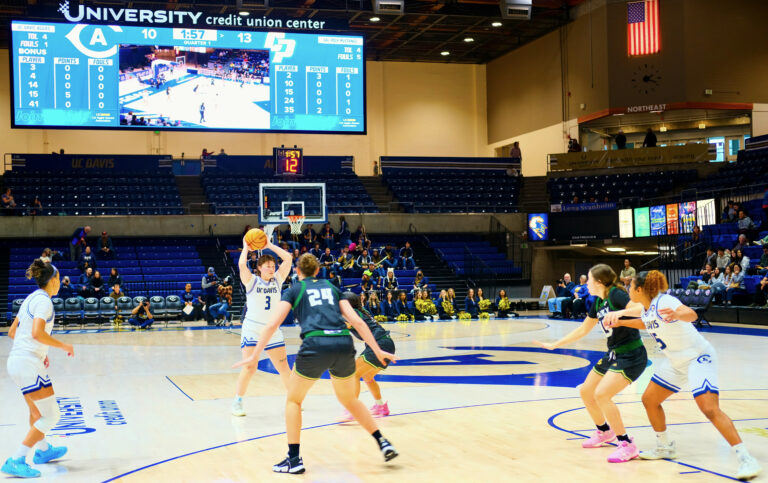
The beginning of February has been nothing but strong for both the men’s and women’s basketball teams as they faced off against the UC Santa Barbara Gauchos and the Cal Poly San Luis Obispo Mustangs. The men’s team defeated the Gauchos and the Mustangs over Feb. 1 to 3, maintaining their third-place spot in conference standings. While the women’s team also defeated UCSB, they fell to Cal Poly on Feb. 3, dropping them to fifth place in the conference. 

The women’s team played at home for both games after a pair of matches on the road in Southern California. First up, they defeated UCSB 82-62 on Feb. 1 in the Black Futures Month Celebration game. Although the Aggies held a narrow lead going into the second quarter, their dominant 35-point performance secured their victory as the Gauchos were left playing catch-up for the rest of the match. This performance broke the Aggie record for most points scored in one quarter. 

On the individual level, third-year political science major Megan Norris scored a career-high 22 points as well as 15 rebounds to lead the team. Fifth-year psychology major Evanne Turner was right behind her on the scoring chart, contributing 21 points. Additionally, fourth-year psychology major Tova Sabel rounded out the top three with 11 points. While the Aggie offense was on fire, the Aggie defense also thrived, holding the Gauchos to their worst shooting game of this season. 

The victory over the Gauchos pushed the Aggie women’s basketball team to just below the first-place spot in the Big West standings. They hoped a victory over the Mustangs would bring them to the top, but their dreams were thwarted during their lowest-scoring game of the season. With the 47-57 loss, the UC Davis women’s basketball team fell to the fifth spot in the conference standings. Despite the home-court advantage, UC Davis struggled to convert their shots, while Cal Poly had one of their most efficient games of the season. Norris again led the scoring with 16 points, joined by third-year human development major Sydney Burns and Sabel. Overall, the Aggie offense was unable to capitalize on scoring chances. 

Over the same weekend, the men’s basketball team pulled out two tight wins against the Gaucho and Mustang teams, moving them up the Big West standings to the third spot overall. On the road for both games, they defeated UCSB 79-69 on Feb. 1. Fifth-year sociology major Elijah Pepper and third-year communications major TY Johnson each scored 24 points, combining to over half of the Aggies’ total points. Pepper also marked his 200th career steal during a dominant all-around performance. 

After their strong start to the trip, the Aggies faced off against Cal Poly on Feb. 3. Despite a quieter day on the offense, the defense held strong to clinch a 59-52 win in San Luis Obispo. Pepper and Johnson again led the scoring, while first-year undeclared major Connor Sevilla also scored in the double digits. It was a back-and-forth game, with UC Davis having to intensely defend their lead. Although the Mustangs fought hard, the Aggie’s men’s basketball team came away with the victory, increasing their record to 9-2. 

Next up, both the men’s and women’s teams face Cal State Fullerton and the University of Hawaii. With both opponents ready to take the Aggies down, the UC Davis men’s and women’s basketball teams have been training and are prepared for the rest of the season. Both teams will be looking to climb up the rankings as the Big West playoffs approach. 


Written by: Lucienne Brooker — sports@theaggie.org