58.6 F
Davis

Davis, California

Monday, December 22, 2025
Home Blog Page 110

Davis Odd Fellows host sold-out Davis Chocolate Festival

0

The organization held its first festival back since the pandemic downtown at the Davis Odd Fellows Lodge


By HANNAH SCHRADER city@theaggie.org


On Sunday, Feb. 4, at the Davis Odd Fellows Lodge, the Davis Chocolate Festival was hosted by the Davis Odd Fellows from 2 to 5 p.m. There were 400 tickets originally available online, but the festival sold out of all online tickets shortly before the event. As the event was underway, more tickets were made available at the door for a discounted rate.

A total of 12 local vendors were at the event and booths filled both the upstairs and downstairs levels of the lodge. This chocolate-themed event featured items for samples from chocolate baguettes to chocolate almond toffee.

Local residents were encouraged to enter the cookie bakeoff held at the Chocolate Festival and the judge panel included Davis Enterprise Columnist Shelley Dunning, Assistant Publisher at the Davis Enterprise Debbie Davis and Noah Stromberg, a local Davis resident.

Shortly after the event began, Dave Rosenberg, master of ceremonies, welcomed guests to the event with a lighthearted quip.

“Welcome to the chocolate festival, are you having a good time?” Rosenberg asked the crowd. “You getting enough chocolate? We’re talking about starting a vanilla festival next year. What do you think? There cannot be enough enthusiasm here.”

The member briefly went over some of the history behind Odd Fellows and what the aims of the organization are.

“Odd Fellows [is] the oldest organization in the city of Davis,” Rosenbergsaid. “We do a lot of fun things and raise a lot of money primarily for children, disadvantaged [children] and children in need, so thank you for being here. You’ve contributed to helping children.”

Vida Gupta, a Davis local business owner who attended the festival, spoke about her experience at the festival.

“[I] like the samples, it’s nice to try all the different types of chocolate people are making,” Gupta said. “There’s a chocolate fountain around here theoretically so that’ll be fun, and [I will] just [be] trying and maybe buying some chocolate.”
Cheryl Randell, a traffic manager at Capital Public Radio in Sacramento who attended the festival, spoke about her favorite part of the festival.

“The chocolate fountain,” Randell said. “This is my first time [at the Davis Chocolate Festival].”

To close out the festival, one of the Odd Fellow members thanked the sponsors of the event and reminded guests of the cookie bakeoff.

“We want to thank all our sponsors and committee members […] check out the bake sale in the lower hall,” they said. “And we’re gonna have the cookie bakeoff starting around about what 3:30 p.m.? Stay tuned for that.”


Written by: Hannah Schrader  city@theaggie.org

Backpacks of UCD

Drawn by: Sandhya Pfile –– sbpfile@ucdavis.edu

Disclaimer: (This cartoon is humor and/or satire, and its content is purely fictional. The story and names of “sources” are fictionalized.)

UC Davis Integrative Center for Alternative Meats and Proteins launches on Jan. 17

The center is a collaboration between multiple departments and institutions that will lead innovation and research in sustainably producing alternative proteins


By MADISON PETERS — campus@theaggie.org


On Jan. 17, UC Davis launched the Integrative Center for Alternative Meats and Proteins (iCAMP), a new program designated to accelerate the research and commercialization of cultivated meat as well as plant and fungal-based proteins.

According to iCAMP’s Executive Director, Kara Leong, the center is a project that grew out of the established Cultivated Meat Consortium on campus. It is also the first of its kind to be both federally and state-funded.

The center will not only be dedicated to researching alternative proteins but will also delve into the fields of consumer acceptance, product development, commercialization, entrepreneurship and even policy and law.

Leong spoke on the successes of the center thus far.

“Already one company, [Optimized Foods], has spun out of a graduate student doing research in one of the labs,” Leong said. “There are a lot of potential innovation startups that could spin out of this space.” 

iCAMP’s Education and Workforce Lead as well as Director of the Biotechnology Program on campus, Denneal Jamison-McClung, Ph.D., explained that all of the products being developed rely on bioprocess engineering and the fermentation of cells.

“[Cultivated meat] is when you take a biopsy or sample of animal cells from an animal and you grow more of those cells to recreate what a slice of meat from an animal the traditional way would be like: in terms of how it tastes, how it feels in your mouth [and] what it looks like,” Jamison-McClung said.

The creation of plant and fungal-based proteins is a process that has been researched and developed more than cell-based meat, according to Jamison-McClung. For cultivated meat to reach the consumer level, it will need adequate funding and scaling, which will be a much longer process.

The center is a collaboration between multiple campus departments, student organizations and businesses who are striving to fulfill their mission statement of “sustainably filling all global needs by 2050,” according to the iCAMP website

The Davis Alternative Protein Project is just one on-campus organization that works broadly with the Cultivated Meat Consortium and iCAMP. 

Nick Johnson, President of the Davis Alternative Protein Project, said that the group works with their partner, the Good Foods Institute, to raise awareness around alternative proteins and create a community of students who are interested in working in the field.

Johnson spoke on the significance of the alternative protein industry.

“The way that [the agricultural system] is currently operating is not sustainable to feed a growing population,” Johnson said. “The way that a lot of the alternative protein industry has grown is really to supplement conventional animal agriculture techniques with alternative sources that can provide nutrition in a sustainable way.”

Many other sectors on campus, such as UC Davis Dining Services, are working with iCAMP through the Robert Mondavi Institute for Wine and Food Science to create more plant-forward protein alternatives. 

According to the Director of Dining Services, Kraig Brady, many recipes that the dining commons employ have tested the extent to which plant-based foods will be accepted on a consumer level. One example of this is found in dining commons’ beef burgers, where 30% of the patty is composed of mushrooms in order to decrease the amount of meat consumption on campus.

Brady said that the dining commons can provide valuable information about consumer feedback on alternative proteins.

“iCAMP now has an opportunity as they move forward with developing alternative meat proteins to have a captive audience [that can] try some new products,” Brady said. “So the dining commons could be an outlet for some of these companies that are involved in iCAMP to put forth some of their products in front of our students and actually get some real feedback from the students [and] our culinary team.”

Leong said that in the future, there could be iCAMP cafes on campus aimed at testing student responses to alternative proteins.

Brady commented on this possibility by saying that it’s more likely that iCAMP menus will be featured in pre-existing dining service spaces.

  Vice President of the Davis Alternative Protein Project Jules Madigan commented on the hurdles of incorporating alternative meat into mainstream diets and said that she hopes consumers will look past their initial biases.

“Technology and science [are] usually [things] people don’t want in their food,” Madigan said. “But it’s something that is already in their food all the time. We’re using science and technology to solve some really pressing environmental and animal welfare and nutrition issues within our food system right now. I think what history has shown us is that adding more science to food ultimately makes it safer. And we can potentially make foods that people love to eat in a way that can ensure accessibility to them for the foreseeable future, given that traditional agriculture is really at risk within the current climate conditions of our environment.”

Leong furthered on the trajectory of iCAMP and its impact on the future of alternative foods.

“We’ve never seen so much student interest in a particular area,” Leong said. “It’s more than science; it’s food and it’s culture. Food is integral to our art, our being and our enjoyment and just who we are as humans. Seeing so much excitement and interest [has] so much promise.”


Written by: Madison Peters — campus@theaggie.org

Tackling foreign language courses as a college student

0

A guide on how to succeed in language courses at UC Davis


By ZOEY MORTAZAVI — features@theaggie.org


There are many reasons to take foreign language courses while in college. At UC Davis and beyond, many take language courses to study abroad. Others try to learn new languages for cultural reasons, general interest or just to fulfill major requirements — particularly for students within the College of Letters and Science here at UC Davis. 

Regardless of why students enroll in foreign language courses, countless studies show that learning multiple languages can be incredibly beneficial. Fluency, or even partial fluency, of multiple languages can aid with cognitive development and cultural competency, as well as act as a generally useful skill. Despite the fact that enrollment in language courses is at an extreme low, many students still hope to learn multiple languages during their time in college. 

UC Davis PhD student and Associate French Instructor Calista Pettit said students can benefit a lot from taking language courses.

“I believe that if you truly put energy into your studies, even if you find that foreign languages don’t come naturally to you, you’ll get a lot out of the class,” Pettit said. “If you come to class prepared and willing to try, you’ll make great strides in your language development.” 

For many students, taking courses in a foreign language is simply another requirement to check off their lists. Many resources and materials are available to help students succeed in language courses; however, even those who are academically successful in these courses often reflect low retention rates of the languages being studied. 

That being said, many students who opt to take these courses are serious about learning the language they’re enrolled in, but it can be intimidating and challenging to get started. 

Language courses at UC Davis are five units, and they take place every day of the week. Students should expect to put the amount of effort into the class that they hope to get out of it, according to local language professors. In other words, students have the capacity to succeed and retain the language if they work on it regularly and consistently — outside of the classroom just as much as in it. 

Although it may be intimidating, Pettit said students can increase their learning capabilities by participating in class.

 “Many people don’t volunteer in class because they’re afraid to say the wrong answer or look silly, but the people who are constantly raising their hands, stepping outside their comfort zones and asking for help are the students who are making the most progress,” Pettit said. “Learning a new language can be scary, but if you have a positive attitude and you’re open to new ideas, you’ll find you’re taking in a lot just by being present and participating.”

However, in terms of specific work and study habits for these courses, many students don’t know where to start. Everyday practice can be hard to maintain, and the 50-minute class periods every weekday don’t necessarily provide enough time to retain everything being taught. There is a way, according to a language specialist and professor at Davis, that a balance can be found: exposure and entertainment in the chosen language while still maintaining regular practice. 

Jay Grossi, a professor who has taught Italian at UC Davis since 1994, offered advice to students. His advice is geared specifically towards the activities that language courses at UC Davis entail. 

“Before coming to class, the students should thoroughly review all materials and completely do all exercises found in the textbook and on the online platform,” Grossi said. “When they do the exercises, they should endeavor to not only, for example, fill in the blanks, but to also understand the language in the whole exercise. They should also repeat out loud the text in some of the exercises in order to regularly work on their pronunciation.”

Grossi continued to advise that students spend as much time with the material as possible.

“They need to attend daily class and actively participate in all class drills and exercises,” Grossi said. “In addition, outside of class, they should try to watch as many programs and films in the language they are studying.”

Grossi is just one professor insisting that routine exposure to various types of media in the language you’re studying can be highly effective when trying to retain it. The UC Davis Department of Languages and Literatures offers a variety of language courses, including but not limited to French, Italian, Spanish, Chinese, Japanese, German, Russian and Farsi. 

The department offers many resources for students attempting to learn new languages, including tutoring, study materials and other options for involved students. Many language programs also hold events, including movie nights in the given language, in order to spark student interest beyond the daily class periods. 

UC Davis students have expressed that their high school language courses didn’t quite prepare them for the level of college’s, and many opt for retaking beginner levels. Even students who were raised bilingually and have already learned a second language alongside English often have trouble learning new languages in a strictly academic environment.

“I grew up speaking both English and Farsi and then took Spanish in high school,” Terme Arjomand, first-year biochemistry and molecular biology major, said. “The way my mind thinks in English versus Farsi is completely different, but when I speak Spanish, I think in English. What this means is that because of the nature of how I learned Spanish in school, I do not culturally think in Spanish.”

 Arjomand also discussed the advantages of learning a language along with tips for how to do so. 

“The most beneficial component to learning a language, in my opinion, is to introduce yourself to new ways of thinking or new perspectives,” Arjomand said. “It’s harder to learn and pick up on a language through a textbook than learning it culturally, which is why I think people have such a hard time learning new languages in school. The most effective way to actually learn a different language is through cultural means and exposure to the environment that the language reflects, not just through memorizing grammar rules and vocabulary words.”

Despite the stigma of difficulty often attached to learning new languages, there are other features to balance the academic aspect of foreign language retention — including things like vocabulary and grammar — with cultural elements, including music and movies. 

Students can expect to sufficiently learn the language they’re taking if they exercise legitimate interest and learn to balance academics and enjoyment, according to professors at UC Davis. Appreciating aspects of the language’s culture that aren’t necessarily taught in a classroom setting will make a world of difference. 


Written by: Zoey Mortazavi — features@theaggie.org


New exhibit at UC Davis’ Design Museum documents history of racial issues in the United States

Artist Barbara Brandon-Croft discusses her cartoons and recent exhibition 


By LAILA AZHAR — features@theaggie.org 


In the late 1960s, Brumsic Brandon Jr. began publishing “Luther,” a comic strip focusing on the lives of young Black children living in a fictional inner-city neighborhood. 

About 20 years later, his daughter, Barbara Brandon-Croft, became the first Black female cartoonist to be nationally syndicated. Her comic strip, “Where I’m Coming From,” details the vast experiences of a group of Black women. Her cartoons cover a wide variety of topics, from relationships to motherhood to workplace discrimination. 

STILL: Racism in America, A Retrospective in Cartoons,” an exhibit featuring the work of both Brandon Jr. and Brandon-Croft, is on display in the UC Davis Design Museum from Jan. 23 to April 23, 2024. 

Presenting the artists’ work together documents a story of racial issues in the United States that spans decades. 

A 1971 cartoon by Brandon Jr. reads, “I just met a cute little girl who just moved here yesterday, and before I could find out her address, she had been urban renewed!”

A 2001 cartoon by Brandon-Croft reads, “Urban renewal? Why not call it what it is: Black folk removal.” 

“I think it’s pretty profound when you can sit there and look at a strip that was done in 1967, and then he may have covered the same thing in 1987, and then me in 1997 and 2017,” Brandon-Croft said. “That’s why [the exhibit is] called ‘STILL.’” 

The exhibit was originally displayed in the Medalia Gallery in New York City and later, the Billy Ireland Cartoon Library and Museum at Ohio State University.

As it made its way to Davis, Brandon-Croft stressed the importance of including the year each cartoon was published, in order to highlight the exhibition’s message of the continuity of struggle. 

“It’s very complicated to move works,” Brandon-Croft said. “But the main thing is, we had to have the years there. That’s the whole point, so you can see that things haven’t changed.” 

Initially, Brandon-Croft had conceptualized the project as a book. She credited curator Tara Nakashima Donahue with the idea to put together an exhibit.

This iteration of the exhibition is the first one to be accompanied by music. Brandon-Croft curated a Spotify playlist to accompany the artwork, which visitors are given access to through a QR code. 

“I tried to shape it so that it reflected what we were talking about — all the themes, including the hopeful ones,” Brandon-Croft said. 

Both Brandon Jr. and Brandon-Croft’s work has been met with backlash. In 1976, a reader upset by the inclusion of Black cartoonists in the newspaper tore out Brandon Jr.’s cartoon and mailed it back to him with a racially charged message written across it. 

“That’s the kind of things we got,” Brandon-Croft said. “I like it when I get that reaction, because it makes me feel like I hit the mark. I got you that upset? Really? This is a cartoon!” 

She carries that same approach to criticisms of her art style. Brandon-Croft’s cartoons include her character’s faces, and occasionally hands, but not the rest of their body. She omits backgrounds and speech bubbles from her work as well, leading to a very minimalist look that draws attention to the character’s expressions and words. 

“Some people say they don’t like how it looks. It’s okay; it’s me,” Brandon-Croft said. 

Her unique style serves a purpose. By solely displaying her characters’ faces, Brandon-Croft hopes to counter oversexualized depictions of women in the media. 

“I just liked the idea of women being thought of and heard,” Brandon-Croft said. 

As a child, she never would have guessed she’d follow in her father’s footsteps as a cartoonist. 

“I was always told I could draw when I was a kid,” Brandon-Croft said. “My dad wanted me to help him, and I did. Who knew I was in training to be a cartoonist?”

Growing up, she was surrounded by her father’s art. “Seven Deadly Sins,” a piece currently on display as part of “STILL,” used to be on the walls of her dining room. She also credited her father’s artistry as having influenced her own. 

“I learned from my dad that you have to get things done quickly,” Brandon-Croft said. “You have to make your point in the amount of time somebody is willing to read it.” 

Brandon-Croft attended Syracuse University’s art program where she felt that people often undervalued her intelligence

“I feel like people thought, ‘Oh, Barbara. She draws. How did she get in here?’ I was like, I had to be smart too,” Brandon-Croft said.

She recalled receiving a card one Valentine’s Day that said, “You’re pretty smart for someone who’s not in the school of business.” 

Despite this, she looks back at her time in college with an appreciation for the skills it taught her. 

“There’s something about all being the same age, living in the same place, bouncing ideas off of each other, forming these bonds — all of that,” Brandon-Croft said. 

Ultimately, Brandon-Croft did not earn a degree during her time at Syracuse, yet feels she gained skills that helped her immensely. 

“What I got out of school was coming out of my shell,” Brandon-Croft said. “Socially, it helped me immensely.”

For current college students, she stressed the importance of finding a mentor. 

“People who are older know the deal. Especially the people on your own campus can really help you,” Brandon-Croft said.

During its time in the UC Davis Design Museum, Brandon-Croft hopes the exhibition “serves as an education” for college students. 

And it seems to be accomplishing just that. First-year political science and design double major, Temo Martinez, described the exhibit as “thought-provoking.” 

“The comics managed to be funny, while still discussing serious topics,” Martinez said. “The humor makes you realize how ridiculous it is that these issues have stayed topical for so long.” 

Brandon Nguyen, a first-year managerial economics major, agreed. 

“Even the comics from the ‘60s still feel relevant,” Nguyen said. 

Brandon-Croft also commented on the longevity of both her and her father’s work. 

“I hope it’s seen as an authentic look at history,” Brandon-Croft said. “It’s something that’s trying to be erased by so many people, and it has to stand. It has to be remembered.”


Written by: Laila Azhar — features@theaggie.org


Student housing kinda sucks

Your student ID and all your savings, please


By ANDIE TARABZOONI — rmtarabzooni@ucdavis.edu 


When I was first deciding on a college at the ripe young age of 17, I had taken into account the fact that no matter where I went, I refused to live in a place similar to my sister’s $2,000 a month 300-square-foot apartment in Boston, Massachusetts. My top three school options were in three different locations: Boston, Los Angeles and — well, you guessed it — Davis. Yet despite me going for the relatively cheapest area cost-of-living wise, I still find myself in awe at the housing crisis in Davis. 

During my first year at Davis, I lived in student housing. There were many great memories, but my favorite has to be the amount of times they told me to live at The Green. Part of me considered it. But then I saw the $22,000 price tag that comes with a now nine-to-10 month lease and went, “Maybe not.” Nothing against The Green; it’s not them, it’s me. But I just feel a little deluded for trying to make myself feel like this is all normal. I’ve heard with financial aid it’s a lot more affordable — same with Orchard Park. But what if you don’t have access to that. What then? Accept the bargain of $2500 a month? Or try to work around student-based housing? 

I have scoured the Internet to see what the case is at other UCs… it’s really not looking great anywhere. Perhaps we aren’t the worst case, but God, does it get bad. Someone had recently told me that when they visited UCSB, the apartments were not only double the price they’d be in Davis but felt like shoe boxes. This is a prominently student-filled apartment complex so it seems like the market for students is worse than ever. When it comes to other schools like UCLA and UC Berkeley, I can only imagine how much you have to pay as someone trying to live there as a regular tenant, let alone a student. 

So, do students tend to pay more? I could not find any data to follow this up, so we’re using opinion and observation here. The first lease I signed at Davis required me to send over a lot of schooling-related documents since I didn’t have a social security number. But this was a similar protocol for places close to campus with jacked-up prices. Prove you’re a student, and you somehow end up paying $3k for a studio. But, that’s not necessarily the truth. Maybe they just want you to prove you’re a student to prove you need somewhere to live. But a lot of the time, I feel tempted to ask how much Davis residents pay for rent. Nonetheless, if you want more affordable housing it feels like a nightmare. 

One of my very good friends recently documented their experience trying to sign a lease in North Davis. They camped from 7 p.m. to 8 a.m. the next morning to sign a lease. That feels horrid. For the reward of a lower rent, you spend a school day camping in the cold to not even be guaranteed a lease. Isn’t that kind of cruel? Why is housing in college towns so weird and twisted? I personally signed my lease via email, but I also never got to tour. So, you win some and you lose some. None of the housing for students in college towns seems to be worth it. 

For unfurnished, inaccessible and barely renovated apartments, I want to be paying with dimes. If I cannot guarantee my carbon monoxide alarm works, why are you making me pay you my entire paycheck? I guess my main question is why do we agree to pay so much for how little we get? I constantly get ads about how cheap it is to live in Thailand, and maybe I’ll take it up if rent goes up. What made landlords so evil? Why do you not want to give me my security deposit?

I think back to “The Perks of Being A Wallflower” in times like this — “We accept the love we think we deserve.” But instead, we accept the apartments we think we deserve. Maybe I’m nitpicking but what are we paying for in extra fees if maintenance doesn’t show up until we’ve moved out? Maybe the housing market is awful everywhere in the world, maybe everything is awful everywhere. Blame Reagan. But you really feel it in college towns. Finding affordable housing and housing that suits you shouldn’t be this difficult. Especially as your first time being a tenant. 

I suppose the argument stops being “University housing is awful” and becomes “housing is awful” pretty quickly, but I do think there has to be a study done somewhere about why housing is so expensive for students. I know why, but I need it to be factually proven for me. I just cannot grasp the idea that we’ve all accepted this. Can we get a student housing union? Or at least a rent discount? Or a full night’s sleep before leasing day? It’s important to find housing that’s equitable and suitable for you. 

All I can say at this point: don’t settle. There are plenty of fish in the sea. The first apartment you find won’t always be your favorite. Just make sure you’re making choices for yourself rather than just to get leasing “over with.” 


Written by: Andie Tarabzooni — rmtarabzooni@ucdavis.edu


Disclaimer: The views and opinions expressed by individual columnists belong to the columnists alone and do not necessarily indicate the views and opinions held by The California Aggie.

UC Davis men’s basketball suffers tough loss at the hands of UC San Diego

Aggies break winning streak with the first loss in four games


By MI’ZAUNI REESE — sports@theaggie.org


With an overall successful season so far, the UC Davis men’s basketball team has secured a 9-2 record and numerous Big West Conference acknowledgments. With an average score of 72 points per game, it is clear that the Aggies are here to make a name for themselves in the National Collegiate Athletic Association (NCAA) league. However, after last season’s 76-66 win against UC San Diego in 2023, the Tridents came back with a vengeance.

Held at the University Credit Union Center, the game proved to be a fierce matchup between the Aggies and the Tridents. A few minutes into the first half, the Tridents held a small seven-point lead but, not letting the rough start discourage them, the Aggies came back fighting. 

Their defense was consistently aggressive, with numerous blocks and steals in an attempt to avoid giving up more points in the first half, and has proven to be one of the strongest parts of the team — contrasting significantly from last season’s defense that lacked a strong, united front. 

For the majority of the game, the Aggies were biting at the ankles of the Tridents as they remained only a few points behind the lead. The end of the first half resulted in a 36-38 score, making it anyone’s game. Trying to start the second half off with a bang, Elijah Pepper, a fifth-year sociology major with an emphasis in law and society, immediately scored a three-pointer at the start of the clock, setting a resilient tone for the Aggies. 

However, the Aggies weren’t the only team set on leaving the U Center with a win. UC San Diego’s defense was revived following halftime as they held their ground firmly against all UC Davis attacks. As the second half progressed, UC Davis’ energy waned as UC San Diego continued to score multiple points back to back. The once-resilient Aggies started to see the win disappear. In the end, the final score was 92-59: a win for the Tridents, and a tough home-court loss for the Aggies.

Nonetheless, the game was not without success. Ty Johnson, a third-year communications major, was not only an offensive star in the game but a defensive anchor as well. Johnson scored a little under half of the total points against the Tridents with his ability to get to the other side of the court in a mere second. Additionally, Elijah Pepper, who was recently awarded Athlete of the Week by the Big West Conference, was the team’s second-highest scorer. 

“The greatest improvement since last season is our defensive gameplay for sure,” Pepper said. “It allows us to hold up much better against other Division I teams because of our team chemistry and unity. It has improved our overall performance.” 

Following the match, Pepper reminisced on the team’s performance as well as his own this season. 

“Last year we had nine new guys,” Pepper said. “Playing [together] for the first time, really, ever in a season was really difficult. Lots of ups and downs. But, after last season, as well as the summer session, the team was able to bond and we now know exactly what we want to do compared to last year. It has helped everything from defense, to winning, to even just knowing how a guy feels about certain things and being able to assist him on and off the court.” 

 As a fifth-year student, Pepper wanted to stay for one last season due to his commitment to what he sees as a winning team.

“I want to be a part of a team that I feel is capable of winning a championship, which would be forever remembered in the UC Davis men’s basketball legacy,” Pepper said. 

After winning both of their Big West Conference games earlier this year, Pepper was recognized as Player of the Week for his strong performance among his fellow athletes. Not only has this award meant publicity for himself, but it has also drawn the public’s attention to his team, as they are now known as a force to be reckoned with in the NCAA.


Written by: Mi’Zauni Reese — sports@theaggie.org

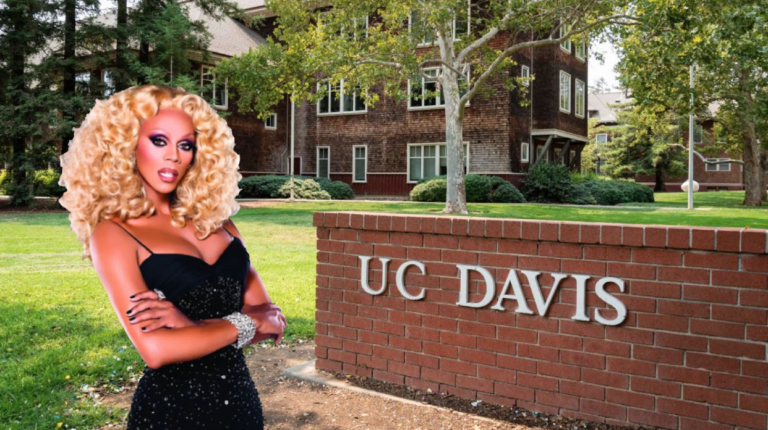
Season 17 of ‘RuPaul’s Drag Race’ to be filmed in Davis

This season’s queens will be earning their Ph.D.s in Public Servevice at the Motherversity of Yassssifornia, Slayvis


By GEETIKA MAHAJAN — giamahajan@ucdavis.edu


After successful runs in Canada, Mexico and the UK, the RuPaul’s Drag Race (RPDR) franchise has decided on its newest expansion venture: “Drag Race” is coming to Davis. 

If you’re reading this and thinking, “There’s no way an Emmy-award-winning franchise that’s worth millions of dollars would come here, there has to be some kind of mistake” — you’re actually right! Rupaul wasn’t wearing his glasses and misread “Davis” as “Divas.” By the time anyone realized the error, it was too late. Preparations had already been made for the season 17 queens to lip-sync for the crown in the Mondavi Center for the Arts. 

“I would call it more of a happy accident than a mistake, though,” a producer said. Viewership for the original show has been in decline, and the resulting budget cuts have been nothing short of excruciating for the main cast. 

“They took away the Botox budget,” Ru hyperventilated in an exclusive interview with The California Aggie. When asked to elaborate, he just kept gasping and saying “Botox budget — Botox budget — Botox budget —” over and over again. 

He seemed quite distressed, though nobody could really tell for sure because all the muscles in his face are permanently frozen. Luckily, Ru won’t have to suffer like this for long. The show is reportedly saving up to 45 million dollars by simply not filming in Los Angeles, where all reality shows must provide on-call eyebrow detail for their staff and pay an elusive “Erewhon tax.” 

Despite initially being a mistake, the cast and crew of “RuPaul’s Drag Race” are excited to broaden their audience and introduce the show to students at UC Davis.

“Our success lies not in an audience base that is intimately familiar with the art of drag, but one that can incite and participate in needless drama and tweet things like ‘omg who let her serve bob,’” RuPaul said. “I think that the population at Davis is perfect for that.”

Perfect or not, Ru reportedly stated off the record that he “will not be staying in a town that smells like cow****.” The upcoming season will be hosted by Gary May in a blonde wig. 

When asked if they were worried about adapting the show for a setting so removed from Los Angeles, both cast and crew waved away any concerns. 

“If we survived Shangela coming back three times, we can get through anything,” Rupaul said. 


Written by: Gettika Mahajan — giamahajan@ucdavis.edu 


Disclaimer: (This article is humor and/or satire, and its content is purely fictional. The story and the names of “sources” are fictionalized.)


UC Davis evolutionary biology professor Jeffrey Ross-Ibarra awarded National Academy of Sciences Prize in Food and Agriculture Sciences

Ross-Ibarra’s research on maize is recognized for its contributions to the evolutionary genetics of maize and related crops


By RODRIGO VILLEGAS — campus@theaggie.org


The National Academy of Sciences (NAS) recently awarded the 2024 NAS Prize in Food and Agriculture Sciences to Jeffrey Ross-Ibarra, a UC Davis professor in the Department of Evolution and Ecology. 

“I was pleasantly surprised and happy,” Ross-Ibarra said. “I’d like to think [the award recognizes] that some of the more basic evolutionary biology we’re doing is recognized as being useful.” 

According to the NAS website, the award is given to a “mid-career scientist at a U.S. institution” whose research contributes to agriculture or the understanding of the biology of a species important to agriculture or food production. In the case of Ross-Ibarra, the award recognizes his research on maize. 

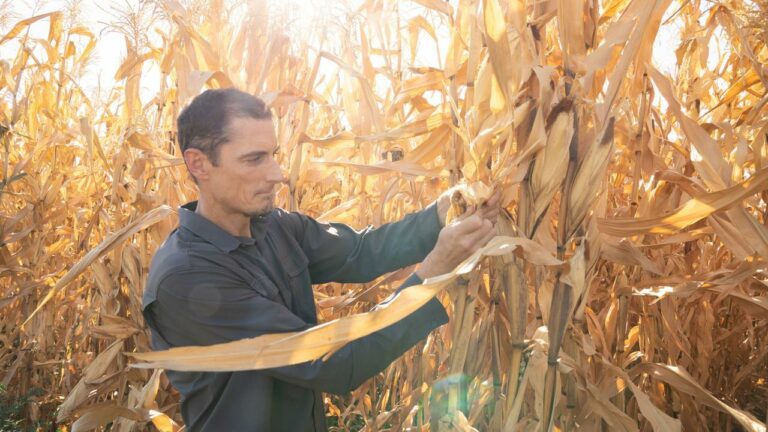
Ross-Ibarra’s lab uses maize as a “model system” to research a variety of topics. Some of these pursued topics include a better understanding of adaptation among other plants, work on genome evolution, as well as how crops have adapted to modern breeding and have coevolved with humans. 

Though Ross-Ibarra received the award, he recognized that his research was a collaboration between both his lab and other teams within the maize community. 

“I also felt quite a bit of gratitude because it’s certainly not a one-man show,” Ross-Ibarra said. “We wouldn’t be here without the collaborators, so it’s a nice recognition of their efforts as well.” 

Ross-Ibarra also mentioned that his team currently works with 25 different labs in locations such as Mexico, Finland and Germany to grow corn and understand how it adapts to their environment. His lab primarily functions as a computational biology lab, but the partnerships provided opportunities to share resources and data from specialized techniques that they couldn’t do as a single lab. 

Rubén Rellán Álvarez, assistant professor in the Department of Molecular and Structural Biochemistry at North Carolina State University, and his team were one of several groups that collaborated with Ross-Ibarra. Rellán Álvarez’s team evaluated samples for physiological and metabolic changes. 

“You are combining techniques and approaches that are very specialized, so it’s hard to have a single lab that can do all those different approaches well,” Rellán Álvarez said. “All of those [specialized approaches] combined can give you a better overall picture of the evolutionary and physiological processes that you are interested in.”

He further spoke about Ross-Ibarra’s ability to establish thriving partnerships with teams around the world to enhance each other’s research. 

“[Ross-Ibarra] has been very successful at building fruitful and productive collaborations with colleagues all over the U.S. and around the world,” Rellán Álvarez said. “When you see a group like [Ross-Ibarra’s] that has been able to collaborate with folks from different universities, across different fields and across different countries — that tells you that it’s not a coincidence.”

Sherry Flint-Garcia, research geneticist for the Agricultural Research Service of the United States Department of Agriculture, agreed with the sentiment. She commended Ross-Ibarra’s talent for bringing people together, citing it as one of the many reasons why he won the award.

“One of the cool things about working with Dr. Ross-Ibarra is that he’s a really cool person,” Flint-Garcia said. “He’s got a good sense of humor, he treats his people well — he is a good collaborator both scientifically and as a person. That’s not an extremely common characteristic.”

She described Ross-Ibarra as someone who knows when to approach his work with earnestness, yet possesses a lighthearted personality that shines through his puns and quirks. 

“Remember, for every corny joke, there’s always a kernel of truth,” Flint-Garcia said. “[Ross-Ibarra] has these hilarious jokes and puns about corn. He has this ability to keep things light, but at the same time he gets very serious and down to the science.”

Though she considers Ross-Ibarra to be a very fun person, she also acknowledged his extensive knowledge of evolutionary biology and his ability to analyze data. 

“He goes back in and he is able to take that data set and do a lot more, squeezing more information and more results out of data sets,” Flint-Garcia said. “He has done a lot of really nice science, a lot of high-caliber papers, and [has pushed] a lot of the evolutionary genomics.”

Ross-Ibarra hopes that his research provides valuable insights into plant adaptation for the future and the understanding of humans’ coevolution with crops that we interact with. 

“I’ve long thought that evolutionary biology can contribute to thinking about agriculture,” Ross-Ibarra said. “This [award], at least for me, is some validation of that.” 


Written by: Rodrigo Villegas — campus@theaggie.org 


Senate hears anti-Indigeneity presentation, Mental Health Initiative quarterly report at Feb. 1 meeting

The Senate held their first meeting since being on hiatus due to vacancies in the Judicial Council via Zoom 


By AALIYAH ESPAÑOL-RIVAS — campus@theaggie.org


Vice President Aarushi Raghunathan called the Feb.1 Senate meeting to order at 6:12 p.m. After roll call, she read the UC Davis Land Acknowledgement. 

The first item on the agenda was an anti-Indigeneity presentation given by Zeph Schnelbach, a third-year political science, public service and Native American studies double major. The presentation highlighted Indigenous justice, the history of Indigenous erasure in the United States and how the community can be allies to Indigenous and Native American students. 

“We cannot erase the connection between environmental justice, racial justice, immigration, voting rights and reproductive justice to that of Indigenous people,” Schnelbach said.

The next item on the agenda was the Mental Health Initiative (MHI) quarterly report. The initiative has been working toward their annual Mental Health Conference, according to Adithi Sumitran, the secretary for MHI and a second-year statistics and political science double major. Slated to be held from Feb. 17 to 18, Sumitran shared updates on the conference including the workshops, resources and the speakers confirmed.
Sumitran then called upon the Senate’s support to help with getting the word out about the conference, in both advertisements and attendee outreach. This includes tabling and posting on social media. Other updates from the initiative included upcoming events, team training and socials. 

The meeting then went into public comments. Senator Chasa Monica urged senators to begin thinking about possible locations for the upcoming town hall meeting, due to the Mee Room in the Memorial Union building being under construction. 

After discussing town hall, the Senate moved into an open forum. 

Senator Trinity Chow announced that the Senate meeting should most likely be in person next week as interviews for the vacancies in the Judicial Council would be finalized.

The meeting was then adjourned at 7:25 p.m. 


Written by: Aaliyah Español-Rivas — campus@theaggie.org

Notorious cat burglar finally apprehended

Drawn by: Emma Lapidus –– eblapidus@ucdavis.edu 

Disclaimer: (This cartoon is humor and/or satire, and its content is purely fictional. The story and names of “sources” are fictionalized.)

How ‘Baldur’s Gate 3’ revolutionizes the video game industry

The tabletop fantasy role-playing system has fans hooked on this unexpected adventure


By NATALIE SALTER — arts@theaggie.org 


Last December, one of the gaming industry’s most anxiously anticipated events of the year, The Game Awards, aired live to an audience of around 118 million viewers. The show’s most prestigious award — Game of the Year, a worthy brag for any game company that has snagged it — sat at the end of the show’s three-hour run. However, a frontrunner had already established itself throughout the event’s duration: “Baldur’s Gate 3,” a fantasy role-playing game (RPG) developed by Larian Studios that, up to that point, had earned nine nominations and five wins — including for Best Performance. 

It was “Baldur’s Gate” that came out triumphant here as well, crowned Game of the Year over video game industry juggernauts such as “The Legend of Zelda,” “Super Mario” and “Resident Evil.” “Baldur’s Gate” would go on to receive a number of accolades from various other awards shows, as well as overwhelming acclaim from the most reputable game review sites. 

This monumental success was the culmination of six years of effort on the part of Larian Studios and a massive voice-acting and motion-capture cast. Preceded by two other “Baldur’s Gate” games, released in 1998 and 2000 respectively, and under the purview of BioWare and Black Isle Studios, it was the Belgium game company Larian Studios that shouldered the responsibility of creating the series’ next installment. 

After successfully earning permission to develop the game from Wizards of the Coast, development launched in 2017. Six years later, after a short early access release, “Baldur’s Gate 3” had a massive global launch on both PC and console gaming systems. It was from here that the game’s initial success snowballed into international acclaim.

Set in the fictionalized realm of Faerûn, the protagonist — either personalized to the user’s choice of class, race, appearance and statistics, or a pre-made character provided by the game — is infected with a parasitic tadpole that transforms them into a tentacled monster if left unchecked. The player finds themself making unlikely allies out of a number of fellow infected individuals, including a vampire and a worshipper of the goddess of darkness. Across hidden groves, underground caverns and sprawling cities, the player and their party are free to explore Faerûn and create their own story.

“Baldur’s Gate” is based on the popular fantasy tabletop RPG “Dungeons and Dragons” (D&D), which Wizards of the Coast also owns. Like “Baldur’s Gate 3,” the expansive universe of “Dungeons and Dragons” is completely open to the whims of the players, who can find endless solutions to puzzles, fights and interactions with other characters. To adapt this sort of free-reign gameplay into one video game, able to be personalized to the player’s own desires, would be a massive undertaking. Open-world games are one genre, choice-based games another and any intersection of the two opens an unimaginable amount of possibilities for gameplay that requires hundreds of voice-acting performances and carefully designed environments. 

On top of this challenge, “Baldur’s Gate 3” sought to assume a hyper-realistic graphic style popular among many other successful video games. This demanded extra care and effort to create detailed surroundings that hold up under close scrutiny, as well as well-translated motion capture performances that appear just as human as the actors portraying them. If one removes the story and characters of “Baldur’s Gate” from the equation entirely, this alone is such an incredible achievement for a single game that its slew of awards should come as no surprise.

Just as any passionate fan of “D&D” might hope, “Baldur’s Gate 3” delivers on the freedom of choice that made its source material so widely beloved. At the game’s start, players are given the ability to personally craft a character with a variety of races, classes, backgrounds and skill sets that directly affect their dialogue interactions and combat choices throughout the game. Hair color, tattoos, scars and a variety of unique faces are just a few of the character creation options provided to players in this game. 

Furthermore, the game is equipped with an expansive dialogue system within which players can pursue romances, challenge enemies and generally approach each situation in any way they want. The sheer massive amount of dialogue options available during each and every interaction means that every single player’s experience with “Baldur’s Gate 3” will be unique and personalized to their own wishes and worldviews. 

This freedom expands to the gameplay as well. While fighting your way through a horde of enemies is always an option, players can use their skills of charisma or intimidation to talk their way out of a battle or can use trickery and clever traps that are limited only to the user’s imagination. While “Baldur’s Gate” has a set overarching story, the way this story progresses in both large and small ways is entirely in the hands of the player. 

The video game industry is ever-changing, with huge progress being made regularly as game studios push the boundaries of what is possible for a single game. Gaming experiences are becoming progressively more and more immersive and interactive with each major release. If “Baldur’s Gate 3” is any sign of the future of the industry, video games will only continue to become more expansive than ever. And if you’re looking for a story and a universe to lose yourself in, pick up the controller and enter the world of “Baldur’s Gate” — there are a million stories inside, waiting for you to tell them.


Written by: Natalie Salter — arts@theaggie.org 

Academic environments during election cycles

Every four years, the environment at school gets really weird…I wonder why


By JOAQUIN WATERS — jwat@ucdavis.edu 

The first time I recall being vaguely interested in the goings-on of American politics was in 2012. I was nine years old, and all I really understood with any clarity was that former President Obama was being challenged by a rich guy named Mitt Romney. I had a nebulous understanding of the American political system (history was one of my favorite topics in school), but at that age, none of my peers or I really grasped what was going on in Washington, DC. Terms like “Super PAC,” “Republican primary” and “electoral college” might as well have been some other language spoken by news anchors and grown-ups at dinner. That was in another world, one far more complicated than the one most American schoolchildren inhabited.

Four years had passed before the next election cycle, and when you’re a kid, quite a lot changes in four years. At that point, I was thirteen, and as my peers and I now had one foot in the adult world, we were starting to understand the mysterious language of politics. We were expected to, after all. So, as the race between Donald Trump and Hillary Clinton began to heat up, my school staged a mock election. Certain eighth-graders who volunteered would play the roles of the presidential and vice-presidential candidates (third-party as well as Democrat and Republican) and post little flyers all over the school. On election day (which coincided with the real date), the student body was encouraged to go to the cafeteria and vote for whichever “candidate” we liked the most. We were also encouraged not to necessarily be influenced by what we had seen in the news or by our parents’ political affiliations. 

It was a noble goal — they simultaneously tried to teach us about critical thinking and the electoral process. But, even in an academic setting, it was impossible not to be influenced by the ever-growing cacophony of propaganda we were bombarded with from every possible angle. As election day 2016 grew closer, the environment at school began to change drastically. I remember two kids who walked around campus with “InfoWars” stickers on their backpacks, declaring their allegiance to one of the foremost right-wing conspiracist cults of our time. I remember many more who wore Bernie Sanders stickers well after the candidate in question lost the Democratic primary. In addition to the ever-present memes and video game playthroughs, our YouTube viewing now included sermons from (depending on the viewer) John Oliver or Alex Jones. A few weeks before the election, I had a falling out with a friend who, seemingly overnight, had become a virulent racist who regularly mocked my Latino heritage while insisting he was “joking.” 

Then election day came around, and everything really changed. Half of the student body walked around as if in mourning, the other half with disturbingly genuine victorious grins. One of my friends (like myself, no older than thirteen) greeted me that morning with a grim proclamation: “RIP America.” Beyond that, nobody wanted to talk about any of it, including the staff. That afternoon, an announcement from the principal went out telling us to refrain from bullying on account of political beliefs. That did not happen — on either side — but there were no further announcements on the subject. School, which was allegedly meant to be a non-judgmental place of learning, had transformed into an ideological warzone nearly as potent as the one in Washington itself, yet post-election day, the staff did not seem interested in engaging with that change in the slightest.

Fast forward four years later, and another election cycle was underway. Once again, we held a mock election. Naturally, it was over Zoom (which meant no more printed-out flyers all over campus), but that was far from the only difference. In 2016, there was a naive enthusiasm for our mock election cycle. We were faux-intellectual tweens then, proudly waving our flags because they made us feel more educated, less like children. In 2020, we really were more educated. None of the words drifting from the news channels in our locked-down homes sounded like gibberish anymore. We were painfully aware of the seriousness of the coming election. And nobody wanted to play-act it anymore. Nobody wanted to pretend to be Donald Trump or Joe Biden. And there was a sense that the teachers and staff didn’t particularly want to discuss the election either. We were all of us walking on eggshells. We proceeded with it only out of obligation, but it cast quite a pall over the already-hampered academic environment our teachers were trying to cultivate. 

Now here I am, about to enter my senior year at UC Davis, and another election cycle is underway. Perhaps the most important election in our lifetime is on the horizon. Global fascism is on the rise, conservative lawmakers continue to strip people of their rights and the United States is at an ideological crossroads not seen since the onset of the Civil War. This time, there will be no mock election for us. We’ll cast our votes for real. And even here, in college, I feel that old wariness and hesitation to broach the subject begin to set in. 

In many ways, it’s good that my generation became so politically aware at such a relatively young age. We know where we stand, and we’re willing to fight for it. And I believe that we must not let the unpleasantness of the current political environment further hamper academic spaces. Schools are becoming complacent toward politics, and the more volatile they become, the more complacent they become. The American education system must find a way to positively engage with the subject outside of meaningless mock-election cycles that teach kids nothing and, if anything, actively further the negative attitude toward politics among student bodies. I don’t have an answer for this; I don’t think there is an easy one. But apathy begets apathy, and there should be no place for it in educational environments.


Written by: Joaquin Waters — jwat@ucdavis.edu 


Disclaimer: The views and opinions expressed by individual columnists belong to the columnists alone and do not necessarily indicate the views and opinions held by The California Aggie.

Tree Davis partners with city to develop climate friendly plan for Robert Arneson Park

0

Tree Davis seeks community feedback on future plans 


By ALMA CULVERWELL city@theaggie.org 


The city of Davis along with local nonprofit organization Tree Davis is seeking community feedback on their plans to transform parts of Robert Arneson Park into climate-ready landscapes. 

Tree Davis held two in person feedback sessions on Thursday, Jan. 25 and on Saturday Jan. 27. They also created an online feedback form intended for Wildhorse residents to share their thoughts about the project.

Executive Director for Tree Davis Torin Dunnavant described the term climate-ready landscape as pollinator gardens and drought tolerant native plants. Tree Davis has successfully implemented several other similar plans, including Memorial Grove.

Dunnavant explained how the plan to renovate Arneson Park originated two years ago with the implementation of their Tribute Trees funded by community members and planted in honor of a loved one or memory. 

“We were just finishing up with all the space that we wanted to convert in the Memorial Grove, and as we saw that happening, we realized there’s still a lot of people that are interested in participating. And so we started thinking about […] there’s another location where we can do this,” Dunnavant said. “Robert Arneson Park, it’s actually a park where one of our longtime supporters is a resident as well as actually a couple people that you know were like, ‘hey, you should think about doing this in Robert Arnison Park.’”

Their plan for the Robert Arneson park includes transforming unused parts of the park into pollinator gardens and mini forests.   

Dunnavant also described how the project plan has been met with positive feedback from the community thus far.

“In every way, the feedback has been thoughtful [and] generally very supportive,“ Dunnavant said. “We’ve definitely gotten a little bit of discomfort [but] we really are kind of getting into with very specific elements like where should a specific tree get placed and that sort of thing. But no, there really has been almost […] 100% support for it.” 

Dunnavant continued that the main concern from community members is the question of upkeeping the park, but he assured that Tree Davis would oversee the upkeep as planned in their funding model.


Written by: Alma Culverwell city@theaggie.org 


English majors, professors share their favorite book recommendations

0

Who better to recommend you a book than someone who has read, well, hundreds?


By FAITH DEMEULENAERE — features@theaggie.org  


In the halls of UC Davis, the English department serves as a sanctuary for those who find solace in the written word. Beyond the rigors of academia, a group of literary experts, both students and professors alike, share a collective passion for storytelling that transcends the boundaries of the classroom.

From the pages of classic literature to the contemporary world of undiscovered new voices, these authors extend their influence, offering students a curated roadmap to navigate the vast and enchanting realms of literature. 

If you’re in a drought of good reads this rainy winter, fear not. These seasoned English majors and professors have read a plethora of books, and some might be to your taste. 

Theodore Sprague, a fourth-year English major, recommends Kurt Vonnegut’s “Galapagos.” 

“It’s a sci-fi novel set in the not-so-distant past that unpacks questions about fate, thought and human nature in a darkly comedic way,” Sprague said. “I would recommend it to those who struggle to rationalize the rough edges and inconsistencies of mankind or maybe to those who want to read something that’s poetically unhinged.”

English Professor Matthew Vernon likes classics that never get old. 

“The book I return to most often is Ralph Ellison’s ‘Invisible Man.’ It’s one of those books that changes with you over time,” Vernon said. “When I first read it as a teenager, it was a book about growing up and aspiring to make it in a big city. As I entered my 20s, it was a book about disillusionment and having to find yourself. Still, later, it became a book about trying to make yourself visible in a world that often wants you to resemble it.”

Vernon continued by describing what the book offers to the reader. 

“The point is that if I had to recommend a book to someone I didn’t know, it would be one that could meet them where they were,” Vernon said. “‘Invisible Man is one of those books that contains multitudes inside of it, and I could imagine that most people would find some part of the book to speak to them.” 

English Professor Chip Badley recommended a story that lingers and sticks with you for a long time. 

“I’d have to recommend Rachel Cusk’s ‘Outline,’ which taught me that literature, like love, offers a crash course in how to pay attention,” Badley said. “I inhaled the trilogy during the COVID pandemic and haven’t stopped thinking about it since.”

Jeff Solomon, a fellow UC Davis English professor, couldn’t help but recommend two.

“For someone younger than me, reading in English, living in Davis right now who’s looking for a book that would suck them in and hold their attention in a delightful way — and relieve a book drought — I’d recommend Gabrielle Zevin’s ‘Tomorrow, and Tomorrow, and Tomorrow,’” Solomon said. “Jennifer Egan’s ‘A Visit from the Goon Squad​’ would be my very close second choice, for mostly the same reasons. Both are technically playful, but not in a taxing way that requires tons of attention; both offer great moments of surprise and delight. Fun reads, thought-provoking, good payoff at the end. Five stars.”

Even though the books listed above are the stars of this literary stage, some honorable mentions the people above also recommended were Haruki Murakami’s “Hard Boiled Wonderland,” Christina Sharpe’s “Ordinary Notes” and Susanna Kaysen’s “Girl, Interrupted.”

Hopefully, these top-tier recommendations stir up some curiosity, and you can find your new favorite novel. Stay well-read, Aggies.


Written by: Faith DeMeulenaere — features@theaggie.org