57.9 F
Davis

Davis, California

Monday, December 22, 2025
Home Blog Page 111

Are you ready for Super Bowl LVIII?

If you’re not a football expert, here’s a crash course on this year’s big game

By THE EDITORIAL BOARD

If you haven’t heard enough about the Super Bowl commercials, then you’ve probably heard people debating about the Chiefs and their strong offense (plus, of course, Taylor Swift’s boyfriend) or the 49ers and the underdog story of Brock Purdy. If you’ve been to the grocery store recently, you’ve also probably seen that they are all sold out of chips, dips and chicken wings. 

Well, there is a reason for all this madness — one of the biggest sporting events of the year, Super Bowl LVIII (58), is happening this Sunday, Feb. 11 at 3:30 p.m. PST. If the excitement of the Super Bowl wasn’t enough, the game is set to play in the luxurious, middle-of-the-desert, excitement capital of the world: Las Vegas, Nevada. 

The Kansas City Chiefs are set to play the San Francisco 49ers in what could be one of the most-watched Super Bowls to date. The Chiefs, led by their quarterback Patrick Mahomes, have had an outstanding season with 13 wins and six losses. Originally underestimated in the playoffs, the Chiefs shocked fans by beating the favored Baltimore Ravens in the American Football Conference (AFC) Championship and earning a spot in the Super Bowl for the fourth time in the last five years. With Taylor Swift by their side, they are definitely a team to watch out for. 

The 49ers, led by quarterback Brock Purdy, have had an even more stellar season than the Chiefs. With a total of 14 wins and five losses, there was no question they would make it to the playoffs. As a rematch of the 2020 Super Bowl between the 49ers and the Chiefs, Niners fans all over are energetically waiting to see if the 49ers can finally win a Super Bowl in what feels like forever.

The Super Bowl features one of the most confusing and expensive sports to learn and play. It can also be hard to follow for new fans, even with the digitally overlayed yellow lines that show viewers where to look during complicated plays. So why do people care so much about a bunch of random people running around with a ball for three hours?

To some, football represents tuning in every Monday night to watch their favorite team battle it out for a win, but for most, it represents a sense of comradery and a feeling of belonging. As described by author Daniel Wann in his book, “Sport Fans: The Psychology and Social Impact of Spectators,” “Whether their team wins or loses, sports fans are more psychologically healthy than those who don’t follow sports … It’s not really the performance [of the team] that matters, it’s the connection to the team.” So, if you feel like rooting for a team or finding a connection, why not give football a try by tuning into the Super Bowl.

Additionally, the Super Bowl offers so much more than just a long game. There is a halftime show that brings in much of the viewership, along with a series of confusing or crazy commercials containing an absurd amount of random celebrities. More than just a random celebrity this Super Bowl season, R&B sensation Usher was announced as the halftime show performer. So, if you want to find “Love in this club” (to be screaming “Yeah”), or go “OMG,” then you should tune into the stellar halftime show. 

Nonetheless, for those of you who have no idea how football works or are just jumping on the Chiefs’ bandwagon because you love Taylor Swift, here is a crash course in preparation for the upcoming Super Bowl. 

Essentially, two teams of 11 players are on the field at all times during the game, with one acting as one team’s offense and the other acting as the opposing team’s defense. Both teams have their own offense and defense teams with 11 people each but will switch off between having their offensive and defensive team on the field depending on who has the ball. There are four 15-minute quarters in a game, though each game ends up being around three hours with halftime, timeouts and pauses between each play to set up the ball.

The objective of the offense is to move the ball down the field to the other team’s endzone (the end part of the field past the zero-yard line marker). Each field consists of 120 yards. The middle of the field is represented by the 50-yard line and from there, going both directions, it counts down to the zero-yard line in 10-yard increments. The offense can run or throw the ball down to the end zone and once they make it past the line then their team earns six points. From there, the kicker on the team has a chance to score one more point every touchdown by kicking the football between the two yellow posts, called a field goal.

As you can probably guess, the objective of the defense is to stop the other team from reaching their end zone and to regain possession of the ball. Each defensive player is supposed to guard an offensive player or an area of the field that an offensive player might run into. The defense can do one of three things; they can either tackle a player with the ball, sack the quarterback or intercept a pass by the quarterback. To regain possession of the ball, the defense can either force a fumble by the other team (when a player drops the ball and anyone can grab it to gain possession) or intercept a throw by the other team’s quarterback. Once the defense gains possession of the ball, then each team switches their players on the field, so the team with possession now turns from defense into offense and the once offensive team is now on defense.

The quarterback, usually the most well-known player on the team, calls out the plays to the team, deciding if they are going to throw the ball or pass it off to a player to try and run down the field. The quarterback is the head of the offense and the person that the defense is trying to sack to force a fumble and gain possession of the ball for their team to try and score.

Although it can be very exhilarating once a team has forced a fumble or interception, these are not as common as you may think. The more common way the ball possession is transferred is through a team not getting a “fourth down.” Basically, an offense has four tries to move the ball at least 10 yards when they are in possession. Each try has a number (how many tries they have had) paired with the word down: for example, first down or second down. Once they have had four downs and have not made it at least 10 yards, possession of the ball switches to the other team.

Now that you have a basic understanding of football, the last thing you need to survive the Super Bowl is a brief explanation of terms to casually throw out during the game. You can use “Just throw the ball!” when the quarterback is holding the ball. You can use “Where’s the protection!?” when a quarterback gets sacked (make sure it’s your team’s quarterback). You can also use “Pass Interference Ref!” when a player does not catch a throw from a quarterback. Additionally, you can use “Block Him or Sack Him!” when your team is on defense and the other team’s quarterback has the ball. Lastly, you can use “That was holding!” if your team’s offense did not catch the ball. Any of these phrases, used properly, will make you a true pro football fan.

Whether you are a Niners fan, a part of the Chiefs Kingdom or just in it for the snacks, the Super Bowl has a little bit of something for everyone. 

Written by: The Editorial Board
Which major is secretly full of vampires

I know what you are — say it!


By AUDREY ZHANG – aurzhang@ucdavis.edu


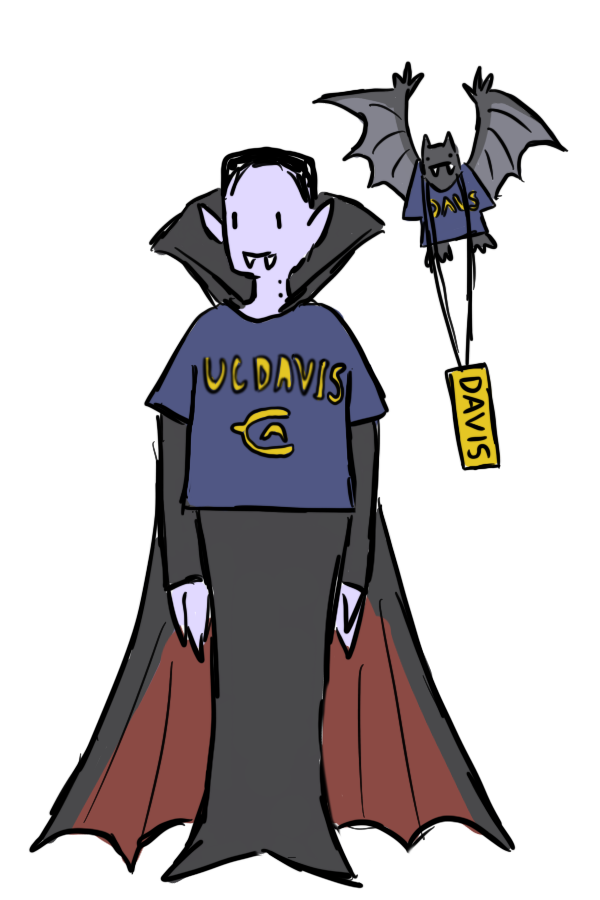
For those afraid of the creatures that stalk the night, I have composed a surefire list to figure out whether you are actually talking to Edward Cullen –– except, unlike Bella, you don’t smell good and are probably just dinner. On a scale of one to 10, I have ranked how likely you need Van Helsing on call depending on the suspected vampire’s major.


Engineering: They never seem to sleep. 10/10.


Political Science: Everyone knows that it’s lizard people who secretly run the world, not vampires. 5/10.


NPB: That’s a fake major if I’ve ever heard of one, it’s just a bunch of random letters. The perfect cover for someone whose only purpose is to get closer to college-aged dinners. 10/10.


Religious Studies: 1/10. No vampire worth their salt would go anywhere near that many crosses. Disregard the ranking if they’re a Buddhist or Hindu vampire. Then it’s 10/10.


Communications: A lot of athletes take this so they can focus on the thing they actually care about. Vampires would stay away from dinners that can fight back. 4/10.


Statistics: You’ve seen Sesame Street right? Count Dracula is a full-grown man who takes five minutes every episode trying to figure out what a single number means. 1/10, and even then, I doubt vampires can count that high.


Clinical Nutrition:  Why are they so interested in what we eat, huh? I bet they want to figure out what meal combo makes us the tastiest. 10/10.


Design: Vampires are a bunch of artistic, flamboyant drama queens. 10/10.


Theater and Dance: Drama. Queens. 10/10.


Sustainability: Dracula literally shipped 50 coffins full of soil halfway across the world for no reason. Vampires are obsessed with dirt. 10/10.


Cognitive Science: You’re relatively safe; vampires think the common human is quite stupid and there’s nothing in our brains worth studying. 2/10. Do watch out for zombies though.


Economics: The major’s full of bloodsuckers. 10/10.


Computer Science: They’re pale, stay indoors all day and don’t speak unless spoken to first. Vampire out of 10. 


Biological Sciences: They’re obsessed with what we’re made of, and you know what we’re made of? Blood. I rest my case. 10/10.


Italian: 2/10. You’re unlikely to find one here, due to the unusually high amount of garlic and crosses amongst the Italian population. Though any vampires here would be the smart ones who’ve decided to study their natural enemies for any weaknesses. Approach every Italian with caution.


Written by: Audrey Zhang – aurzhang@ucdavis.edu 


Disclaimer: (This article is humor and/or satire, and its content is purely fictional. The story and the names of “sources” are fictionalized.)

Davis City Council, Davis Joint Unified School District discuss school updates​​ at 2×2 meeting

School board officials discussed challenges facing the district and ways the city can help


By KATELIN PANG — city@theaggie.org


On Jan. 17, the Davis City Council and Davis Joint Unified School District (DJUSD) 2×2 meeting took place at 5 p.m. At the meeting, officials talked about a new safety measure, road work updates, new learning strategies and questions regarding funds.

This monthly meeting invites two city council members to join with two DJUSD board members in order to discuss schedules, projects and progress about plans happening in the city of Davis and DJUSD.

Mayor Josh Chapman was accompanied by Davis City Council Member Donna Neville. The school board presented Cecilia Escamilla-Greenwald, from the DJUSD Board of Education, and Superintendent Matt Best. Best brought many items of interest including a proposal for new street transformations, new teaching techniques to be implemented and plans to build more affordable housing in Davis. 

Best also discussed the test teaching strategies, which seek to help individual students grow when provided testing, that have been in the works for a little less than a year. 

“One of our main focuses is universal design for learning. This is a certain learning pedagogy where teachers design a lesson to meet the needs of all students,” Best said. “It makes meeting their needs easier in a classroom and makes the targeted interventions more effective for the students that need them.”

Best talked about the Legislative Analysis Office and the governor’s news that introduces budget deficits for the state of California, spanning over the next three years. This will result in a heavy decrease in overall revenue for the district in the coming year. This loss is caused by a decrease in enrollment after the pandemic and reduced costs related to falling attendance. 

Best reported that the funding they receive from the state government is heavily apportioned through attendance records in each school.

“Pre-pandemic attendance was at 96% and today, we’re sitting at a little less than 93% — and that’s a loss of over three million [in] ongoing revenue,” Best said. “We are encouraging students to attend when they are well and take advantage of short-term independent study.” 

This three percent can be attributed to multiple factors: one being parents deciding to keep their children home longer when having symptoms of illness and with online learning options being readily available, according to Best. The superintendent said that even after the pandemic, parents don’t see a need to send their children to school sick when work can be done at home, preventing them from falling behind.

After Best shared this information, Assistant City Manager Kelly Stachowicz provided updates on major roadway projects.

“We have finished most of our major road work projects for the winter and won’t start anything else until later in the spring,” Stachowicz said.

This will limit the amount of downtown traffic that has been taking hours to clear at the end of the day when commuters are trying to get home.

Regarding the before and after-school traffic around Hamel St. in front of Pioneer Elementary School, the school is hoping to change it into a one-way street westbound in order to minimize road blockage. They have sent out a survey to the neighboring houses and intend to make adjustments with their input. 

Chapman mentioned how they aren’t the only school prioritizing pick-up and drop-off safety and that he is happy to help the movement.

“However I can assist or facilitate through the city side, I am happy to be engaged in that conversation,” Chapman said.

Best brought up the topic of workforce housing projects, which has been a district-wide conversation about building more affordable living for teachers and staff. Escamilla-Greenwald said she was excited to hear about the future project.

“It’s a shame to lose such good teachers because they aren’t able to live here affordably, and they can’t continue to commute an hour or so back and forth,” Escamilla-Greenwald said.

Other challenges during the school year have been multiple bomb threats, violent damage to school property and even racial slurs written on classes with POC teachers, which forced stronger security standards like camera pilot systems being installed in each facility.

“We have had quite a tumultuous year with regards to school safety,” Best said. “Starting the year off with a litany of bomb threats and in Oct. and Nov., we started to experience vandalism particularly focused on our elementary sites. Many broken windows […] one of our Black teachers was targeted with the [N-word] on the back of her classroom. So as a result, we have taken an unprecedented step as a school district and initiated a camera pilot [system].” 


Written by: Katelin Pang — city@theaggie.org

Taller Arte de Nuevo Amanecer encourages local youth to express themselves artistically

0

Stories of how the workshop began and how it currently functions


By SABRINA FIGUEROA — features@theaggie.org


Located in the heart of Woodland, Taller Arte del Nuevo Amanecer (TANA) is more than just an art gallery. Co-founded by the Chicano artists Malaquias Montoya and Carlos Francisco Jackson, TANA aims to provide local artists and youth with resources to express themselves through art and culture. 

TANA was founded as a “collaborative partnership between the Chicana/o Studies Program at the University of California, Davis and the greater Woodland community,” according to their website.

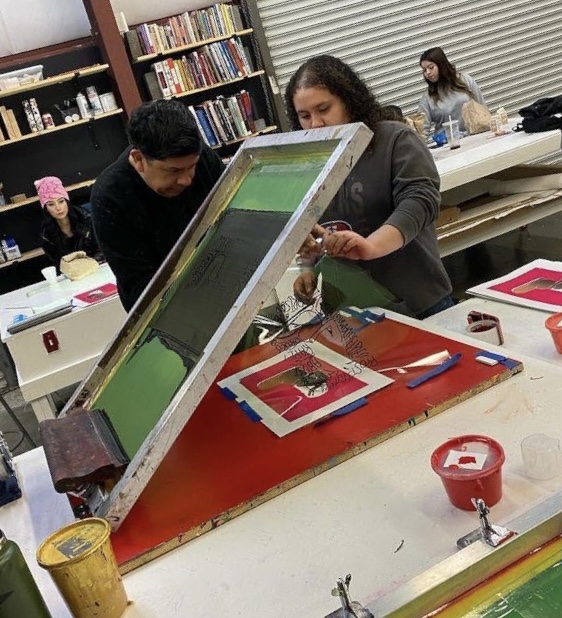
Montoya stated that his motivation for starting a Latinx and Chicanx workshop space in Woodland came from his own experiences of being surrounded by workshops in Oakland during the late 1960s and early 1970s. Local youth would frequent these workshops to create art that expressed their activism for social issues while also bonding with community members. He noted that silkscreening was the most popular.

“When I was teaching my classes at UC Davis, I taught a class on art history and talked about the different workshops [around Oakland] and the importance they had to the community because they brought people together,” Montoya said. “[Workshops are] a gathering place.”

TANA focuses mostly on visual arts, with silk screen printing as their specialty. This printing method uses mesh stretched across a frame to transfer an image with paint, ink or dye onto a surface. However, before the actual printing happens, the image must be designed and cut into sections according to the amount of colors. 

Although it may seem like an intricate process, you don’t need to be an established artist to participate. 

In fact, José Arenas, the director of TANA, said the workshops aim to teach and educate community members on the silkscreen process through its master printing staff and free resources.

“All of the materials and supplies are provided for anybody who walks in the door,” Arenas said. “The idea is that this is a community space; a space to bring new people together [regardless of personal resources].”

While TANA focuses on visual arts, it also emphasizes the value of all artistic forms of expression. They provide a series of programs that are designed to cater to different mediums, such as their mural program, theater program and, of course, the main atelier program that focuses on teaching the art of screen printing. On occasion, they also hold other kinds of workshops that focus on artistic and cultural expression through poetry and other forms of literature.

“[We] periodically invite professional Latinx artists that are, not only emerging artists, but international artists,” Arenas said. 

Collaboration — or sponsorship — is possible through the atelier program, where the artist-in-residence gets help from a master printer at TANA. 

“We really try to facilitate the artist’s vision and oftentimes the artist may not be familiar with the silkscreen process,” Arenas said. “The master printers work together with the artists to create editions. Editions are basically multiples of a design, and what we do is we split them with the artists, just like other presses and print shops do, and then sell them to bring back money to the program.” 

Through this program, TANA has had the opportunity to collaborate with artists and activists such as the Bay Area Tenant and Neighborhood Council, the Brown Issues organization and even recent protest organizers in support of Gaza and Palestine. 

The hard-working and skilled staff members have played a key role in the success of the workshops and collaborations. TANA relies on student interns who have taken silkscreen printing courses at UC Davis, as well as a full-time staff. 

Edgar Lampkin, TANA’s workshop coordinator, reflected on his time working with the community through TANA. 

“I’ve been here for 10 years, and at moments [working at TANA] is very fulfilling, but other times it’s overwhelming because of the scope of the issues,” Lampkin said. “It’s hard to facilitate empowering artwork out of [workshop participants] when their basic material needs aren’t met. You need to be comfortable in terms of housing, education, food and all that kind of stuff because sometimes [not being secure in those things] can get in the way of finding time to express yourself and work through those issues.” 

Lampkin continued to explain that TANA is a great resource for Woodland locals but wished it was utilized more by the community as a way for members to express their cultures, identity or political views — or even just to try something new. 

“It’s hard to sell [people on] something that’s free,” Lampkin said. “A lot of people that might benefit from [TANA’s] resources, oftentimes, don’t take advantage of it. I think a lot of it has to do with the proximity and affiliation to UC Davis that seems to cause a lot of confusion with community members. Sometimes people don’t believe it’s not meant for Davis students or other times they’ll think there’s a catch, when there really isn’t.” 

Although TANA’s demo days and non-workshop events are open to the general public, they give first priority to local youth who are not enrolled at UC Davis — of any background — for the actual workshops. UC Davis students who are interested in screen printing are encouraged to take the on-campus printing courses offered through the Chicana/o Studies and Design departments instead. 

When the workshop space is converted into an art exhibit, the staff put up work that is mostly done by local Latinx or Chicanx artists. They occasionally showcase artwork from youth and adult community members who participated in workshops as well, so it can be a great way for up-and-coming artists in the area to show their work off. 

TANA is a special opportunity and resource for youth in the area to utilize, especially if they want to further engage with community members that have unique experiences and diverse backgrounds. Not only is it a great way to learn new skills, but it’s a gateway to exploring self-identity and cultures. 


Written by: Sabrina Figueroa — features@theaggie.org

Culture Corner

The Art Desk’s weekly picks for music, movies and more


By CHARLIE MCBRIAN — arts@theaggie.org 


Album: “#1 Record / Radio City” by Big Star (1974)

This double album from 1978 combines 1972’s “#1 Record” and 1974’s “Radio City” which, due to poor distribution, had gone unnoticed up to that point. This re-release, however, introduced a more receptive punk rock generation to Big Star’s music and became massively influential as a result. Acolytes include Teenage Fanclub, The Lemonheads, The Replacements, Elliott Smith and R.E.M. Big Star serves as the bridge between 60s pop rock and 90s alt-rock. Unlike other alt-rock forefathers, there’s nothing too revolutionary about their approach at first glance. Contextually, however, Big Star’s contemporaries — Led Zeppelin, Aerosmith, Slayer — eschewed the fey and “feminine” songcraft of 60s soft-pop for heavier riffs to reflect the development of a more sexually aggressive and thoroughly cynical rock-n-roll mythos for “serious adults.” 

Big Star, on the other hand, fused the latent melancholy of 60s Beatles-inspired soft-pop with blasting rock riffs to effortlessly convey a complex swirl of emotions. The bright jangle-y guitars, the melodic efficiency and the wounded yelps courtesy of Alex Chilton all laid the groundwork for alternative styles like power pop, college rock, jangle pop, indie pop and paisley pop. But beyond its importance, “#1 Record / Radio City” is just a solid record, featuring standouts such as “O, My Soul” with its punchy groove. “Back of a Car” introduces riffs that make desire feel cosmically large, and the heartbreakingly tender “Thirteen,” famously covered by Elliott Smith. I would recommend this for fans of the sweeter, hookier side of rock and pop. 


TV Show: “Community” (2009-2015)

While only moderately successful in its time, one can still see reverberations of “Community” today. Showrunner Dan Harmon, who went on to co-create “Rick and Morty,” Ludwig Goransson, composer of the Oppenheimer score, and Donald Glover are just a few significant figures who got their start on “Community.” Although inconsistent — yes, even during its good seasons — at its best, “Community” combines the jumbled anarchy of shows like “It’s Always Sunny in Philadelphia” and the pop culture cutaway humor of “Family Guy.” The show refines these elements to make for intra-episode webs of effective setups and payoffs. “Community” constantly toys with the fourth wall, simultaneously critiquing and celebrating the limitations of the sitcom format while remaining playful and digestible. With a new movie on the horizon, it’s clear that “Community” continues to captivate audiences nearly a decade after its original run ended. I would recommend this for fans of sitcoms who want a fresh take on the format.


Movie: “The Holdovers” dir. by Alexander Payne (2023)

Sometimes, less is more. In a content-first media landscape, films are constantly upping audiovisual noise to drive up engagement. “The Holdovers” consciously counters this, focusing largely on the relationship between its two leads: Paul Hunhan played by Paul Giamatti and Angus Tully played by newcomer Dominic Sessa. Set in a 1970s New England boarding school, a series of misfortunes make it so that the antisocial teenager Angus and an abrasive curmudgeonly teacher, Paul, are the only two left at the boarding school over the break. Despite its limited nature — or perhaps because of it — “The Holdovers” is able to remain consistently engaging through a convincing script and characters that naturally unfold throughout the film. Its visuals are similarly refined, having a grainy look reminiscent of films from the period in which this movie takes place. “The Holdovers” has all of this and more and serves as a great reprieve for anyone looking to escape the overexposure present within modern media.


Written by: Charlie McBrian—arts@theaggie.org

The ASUCD Senate’s biggest mistake

Our student government’s lack of vision cost them a failed impeachment attempt


By MALCOLM LANGE — mslange@ucdavis.edu


This quarter has had an eventful start, with impeachment hearings being held for our ASUCD President and Internal Vice President (IVP) within the first couple weeks. President Ojeda and IVP Raghunathan were the subject of scrutiny by the ASUCD Senate last quarter who voted to impeach each one in a unanimous vote. From their official statement that was released on the ASUCD Instagram account, some accounts of impeachment are slightly vague. Their conditions, however, seemed reasonable enough to want replacements for the executive members who were not, according to them, performing their designated tasks efficiently. Bam, wham, Bob’s your uncle, right? It, unfortunately, was not that simple. The Davis College Democrats (DCD) made a post that same week calling out the Senate for their “undemocratic and unconstitutional impeachment.” That is a huge accusation to throw around — but only if anyone actually cared. 

The fact of the matter is not many students actually cared or even knew about what was happening. Obviously, outside organizations getting involved and commenting on the situation proves that students do care, even if it’s so they can support their friend who is president (yay friendship!). But if you are not in the vast minority who follow the DCD or ASUCD Instagrams, this probably went completely under your radar. This is because the ASUCD Senate didn’t see the bigger picture. 

The Senate did not advertise what was going on well enough, and it was one of the reasons the DCD called them out — a lack of transparency. Assuming that the Senate was not attempting a malicious power grab, they should have broadcasted this everywhere. It should have turned into a bigger deal, because what gets people interested in a boring school function other than drama?

Most of the students I interacted with, who do not read The California Aggie, did not know that our President and IVP were being impeached, let alone that we really had a student government. The ones who did know about the ASUCD had no clue what they do, or what the impeachment was about. Students who are not directly correlated to the ASUCD rarely know what they really do, and that is an issue. No one, outside those on the payroll of the ASUCD, cares about the inner workings of ASUCD. Sure, that is a bit of a generalization, but not by much. How, then, are you supposed to get roughly 31,500 undergraduate students to care about something that many of them haven’t even heard of? A disaster. 

The squeaky wheel gets the grease, but if the problem gets fixed too quickly and too quietly no one knows it was broken in the first place. That should not be the goal of the Senate, because if they truly believed that President Ojeda was a bad fit for president, they should want more people qualified or interested in the ASUCD to help vote for better candidates. The best way to get students to care is when it starts to affect them. If the Senate wanted more student participation and to get rid of President Ojeda, they failed at both objectives. DCD was right, their impeachment was rushed. They impeached Ojeda within his first quarter as president, and didn’t let anyone simmer with the consequences that he brings in the role. The Senate should have let him be, continue to allow him to make mistakes, miss deadlines and drive the ASUCD into a nonfunctioning mess. 

Would this go against certain guidelines in the ASUCD Constitution? Potentially, since they must actively strive for an efficient operation of the ASUCD. However, as the Judicial Council does not seem to care a great deal if this is actually met, since they did not remove President Ojeda for failing to accomplish the tasks relevant to his office that would provide the efficient operation of the ASUCD, then that standard clearly is not very important within the ASUCD. 

Unlike President Ojeda’s failure to maintain an efficient operation of the ASUCD, the Senate will be aiming for a greater good — a greater involvement within the ASUCD and the community they serve, the students. The best way for students to really see what the ASUCD does is to show what their lives might be like if the ASUCD cannot function correctly. Budgeting issues regarding the CoHo or the Unitrans? Oh no, maybe they go on strike, making everyone’s life way harder. What will people do? Start protesting and blaming people, primarily the president especially if the Senate accuses him of not doing his job properly thus causing the strikes. The students will want Ojeda out in no time, and the Judicial Council will have no choice but to listen. 

Students will see how important the ASUCD actually is, and once elections come up again, all that needs to be done is remind them of what happens when someone not up to par is elected. This will create greater engagement and higher voter turnouts, which is fantastic. An added bonus is students will be more inclined to check in with the ASUCD if they actually participated in the voting process since they have metaphorical skin in the game — they will hope the person they voted for is doing well. 

This is all easy to say as an outsider to the ASUCD, and I know that. It is also easy to say since we are looking back at how the events unfolded and that Ojeda was not even impeached, making the whole thing incredibly stupid and a waste of time. It did make for some fun drama, but it could have had more drama for a better purpose. 

Is this idea of what the Senate should have done less than honest and slightly unconstitutional? Yes. But that’s just politics, and if it generates more participation with the students to the ASUCD, I say it will be worth it. But hey, that’s just a theory.


Written by: Malcolm Lange — mslange@ucdavis.edu

Disclaimer: The views and opinions expressed by individual columnists belong to the columnists alone and do not necessarily indicate the views and opinions held by The California Aggie.

Pioneer Baseball League announces new Yolo County High Wheelers team

0

The first Davis professional sports team will play at Dobbins Stadium 


By LUCIENNE BROOKER — sports@theaggie.org


 Professional baseball is coming to Davis: with the addition of the Yolo County High Wheelers to the Pioneer Baseball League (PBL), Yolo County gains its first-ever professional sports team. The High Wheelers are the second PBL West Coast expansion team, following the addition of their new rivals, the Oakland Ballers. 

In an unprecedented partnership with UC Davis, the High Wheelers will play games at the UC Davis Phil Swimley Field at Dobbins Stadium, and their first home game is set for May 21, 2024. 

Rocko DeLuca, director of athletics at UC Davis, offered insight on the partnership.  

“We are thrilled to announce our exciting partnership with the Yolo High Wheelers, Davis’ newest baseball team,” DeLuca said. “This collaboration represents a significant stride in fostering community engagement and promoting the spirit of baseball within our university […] We look forward to a successful and mutually beneficial partnership.” 

The High Wheeler ownership plans to not only collaborate with the university over stadium scheduling and resources but also aims to involve the students in many aspects of their day-to-day experience. 

Through a Community Benefits Agreement between the PBL, UC Davis and Yolo County, the High Wheelers are looking to benefit the community as much as they can. One of their goals is to provide internships and career advice for students looking to go into the sports world. Additionally, they plan to support the community of Yolo County by committing to yearly renovations of baseball facilities in the county, partnering with local businesses, donating tickets and much more. 

Davis Mayor Josh Chapman already sees the partnership as both a celebration of Davis culture and an acknowledgment of the potential to continue expanding the appeal of the city. Chapman expressed this at the announcement press conference on Jan. 23, 2024.

 “Today’s announcement showcases a desire for our city to have a professional sports team that celebrates everything that makes our community a fantastic place to call home,” Chapman said. “I am excited to root for the Yolo High Wheelers and throw the first pitch at the season opener in May. I look forward to seeing the Yolo High Wheelers provide our residents, communities and visitors with a fun and memorable experience.” 

The name High Wheelers honors the city’s deep dedication and love for bicycling. Often considered the “biking capital of California” and home to the U.S. Bicycling Hall of Fame, Davis is notorious for being a bike-friendly city. The Yolo High Wheelers are named for a vintage bike, the high wheel. High wheelers were popular in the 1900s for their comfortable design featuring a disproportionately large front wheel. 

Although opening day is still several months away for the High Wheelers, they’ve been busy hiring their coaching staff and beginning to build their roster. Co-founders Paul Freedman and Bryan Carmel first brought in Troy Laparco as general manager and have since expanded their staff. Gary Davenport will take the role of bench coach, while Jerome Williams has been named pitching coach; Billy Horton has been hired as the team manager. 

Horton shared his excitement at the Jan. 23 press conference. 

“I am extremely excited for the opportunity to lead the Yolo High Wheelers in our inaugural season,” Horton said. “It’s been an awesome challenge over the past three months helping build this club, and I am very excited about the foundation we have created. I believe the players we are bringing in will represent the City of Davis and Yolo County well both on and off the field.”

Freedman and Carmel shared the same sentiment as they want their players to not only play baseball in Yolo County but also to get involved with the community. So far, the team has signed Jack Zalasky, a recent Sacramento State graduate, and is looking to further expand their roster before opening day. 

PBL President Michael Shapiro shared his thoughts and excitement regarding the new team.

“On behalf of the Pioneer Baseball League, we welcome the Yolo High Wheelers and the broader Yolo and Solano County baseball fans to the historic Pioneer League,” Shapiro said. “We’re excited to bring professional baseball to more California fans, […] while building a partnership with the local community that puts the fans first.” 

Fans can catch the Yolo High Wheelers in action for the first time and see for themselves what the team can bring to the community on May 21 at Dobbins Stadium. 


Written by: Lucienne Brooker — sports@theaggie.org


Chinese student nonprofit seeks to spread cultural awareness through Lunar New Year celebration in Central Park

0

UC Davis’ Chinese Union hosts the “Dragon’s Market” for all


By LYNN CHEN — features@theaggie.org


Lunar New Year celebrations are just around the corner for many students at UC Davis. One particular student-run organization is committed to celebrating in a unique and memorable way.

The Chinese Union (CU) is a 501-(c)(3) non-profit organization split across many college campuses around the country, including UC Davis. It was founded at UC San Diego with the purpose of providing assistance and support to Chinese international students in the U.S. 

On campus, CU regularly hosts social events and extracurricular opportunities that integrate students’ academic, lifestyle and entertainment interests.

“It’s a great place to meet friends who have a similar background to [you],” said Yi Zhu, an executive member for the Project Management Department of CU and second-year psychology and theatre and dance double major, via WeChat text messaging. 

To observe the arrival of the Lunar New Year, the nonprofit will be hosting the “CU Dragon’s Market” in Central Park on Feb. 18 from 12 p.m. to 4 p.m. A variety of booths showcasing traditional food, games and artwork, as well as music and dance performances of various Asian cultures for guests’ perusal and participation.

“We will showcase activities such as traditional Chinese paper cutting and embroidery during the event,” said Xiniy Tong, an executive board member of CU, second-year communications major and deputy chief planner and financial director for the event.

“Through our fair, we hope that [non-Chinese] people can learn more about our culture,” Tong said.

According to Tong, attendees can also expect Lion Dance (舞狮) performances, long rope skipping games (跳长绳), writing calligraphy blessings on red parchment paper (写福字) and the opportunity to dress in traditional Han-style clothing (汉服).

Additionally, many of the goods and materials provided or sold at the Dragon’s Market will be imported directly from China, in the hopes that it will create a more welcoming and homely environment for those who grew up there.

While these are all traditional Chinese activities and recreational pursuits, CU also hopes to be inclusive of other cultures that celebrate the Lunar New Year with its event.

“In the past few years, we’ve only hosted events for international students from China,” Justin Han, president of CU and third-year managerial economics student, said. “This year we wanted to change this fact through the market fair, because everybody should be able to enjoy our cultural event.”

Han stated that the fair will also be showcasing traditional Vietnamese performances.

First of all, hosting a fair to celebrate Lunar New Year was a relatively new idea for CU to bring to life. Other similar Chinese student associations to CU and the nonprofit itself had no experience organizing something at such a large scale under such a short amount of time. As such, the Union placed a substantial amount of effort into planning the event.

 “The Dragon’s Market has been a very creative and challenging project for us,” Tong said. “It’s something that has never been done before in Davis.”

The group had to flesh out detailed plans for the event and design its marketing campaign to appeal to the UC Davis community. At the same time, CU communicated tirelessly with Davis city officials to obtain food, health and venue permits for the fair. 

“This was definitely a very risky and adventurous decision to undertake. Normally, we would have a few months to a year to prepare for a big event like this, but we only had less than two months to design the whole thing,” Han said.

Thankfully, the city was quite supportive of the student organization’s endeavors, which eased the process according to Han. Furthermore, members of the Chinese Union team themselves were active in contributing to making the project work.

“I’m really grateful for everyone’s help so far,” Han said. “Even though the fair hasn’t started yet, it’s really hard not to see success in our future.”


Written by: Lynn Chen — features@theaggie.org

UC Davis ‘Chopped’: It’s just college students cooking in their first apartment

Does a fire alarm mean the food is ready?


By CARMEL RAVIV — craviv@ucdavis.edu


Slightly brown romaine lettuce. Crusty teriyaki sauce. Honey glazed deli ham. Milk. Everclear vodka. 

Even the most experienced chefs that graced the televised kitchen of “Chopped” couldn’t think of a way these miscellaneous ingredients could have blended together to make an edible meal. But the might of a second-year college student too lazy to go to Trader Joe’s, wired from a 6 p.m. midterm, could make something somewhat almost edible — but that is also probably gonna take two years off their life. 

“Hey, how are they supposed to know what vegetables to buy if the salad kits are right there? Also, my mom isn’t here — why should I pretend to eat salad? Why would I buy an onion? What can I even do with an onion? Wait, parsley and cilantro are different things? They’re not just tiny leaves?”

I’ve seen it all. I know what you do when you think no one is watching. I know you made pasta three times this week and then posted it on your story captioned “Cheffing it up” or  “Someone come wife me up.” I know you think frozen Trader Joe’s food is a fully balanced meal. I know you just wash the same plate over and over again. I know you never use your oven. If you’re a boy, you think you make the best chicken ever. You don’t. It’s dry. Cry. 

Last year in the DC I saw some guy eat four cups of curly fries, apple juice and two snickerdoodle cookies and said it was his lunch. I thought that was the strangest food combination I’d ever seen. Then you give 20-year-olds free rein in the kitchen. I saw a different guy eat two cans of tuna and cottage cheese the day after his move-in. You’re paying over $30k in tuition, why eat like we’re in the Cold War? 

The things Davis students are making in their kitchens never cease to amaze me. Not because it shows they’re ready for adulthood, but more so ready to take on any expired/radioactive substance they ingest. 


Written by: Carmel Raviv — craviv@ucdavis.edu


Disclaimer: (This article is humor and/or satire, and its content is purely fictional. The story and the names of “sources” are fictionalized.)


A love letter to spring training

Why Major League Baseball’s preseason is a baseball fan’s paradise 


By CLAIRE SCHAD — cfschad@ucdavis.edu 


Most years, in October, shortly after the San Francisco Giants finish their season, I receive a message from my dad. It usually reads something along the lines of “130 days until pitchers and catchers report” or “130 days until spring training.” For my baseball-loving family, spring training marks the end of a dark and damp winter, but most importantly, it signals the beginning of a new major league baseball season. 

Each February, thousands of professional baseball players and coaches converge in Arizona for spring training. The athletes typically spend about two months preparing for the upcoming season, with pitchers and catchers reporting a couple of weeks early — hence my dad’s comment. While at camp, the players participate in workouts, attend meetings and face-off against other teams.    

My love for spring training started when I was 13: my younger brother and I had woken up Christmas morning to two large but suspiciously light boxes covered in red and green wrapping paper, addressed to each of us. After my parents told us that we must each open these specific boxes at the same time, we quickly tore off the paper and found a stack of about 10 pages of paper stapled together. Atop the front page were the words, “You’re going to spring training!” We were ecstatic, quickly flipping through the pages detailing our trip scheduled for that March.

The months between Christmas and March were long and many of the days cold and rainy, but my brother and I were counting down the days until we left for our vacation. When the day finally came, we all loaded into the car and started the 12-hour drive to Phoenix, Arizona. 

Once we arrived, I knew that this vacation would soon be one of my favorites. Each day was filled with baseball: from the early mornings to the late evenings, we were at the ballpark in some capacity. As a baseball fanatic, this felt like heaven. 

So what makes spring training so special, you may ask? Firstly, the energy is different — you can feel the excitement in the air. Each team gets a fresh start, and everyone recognizes this gift. No matter whether your team is coming off a World Series win or a last-place season, there is a sense of hope for what is to come. This energy is palpable as soon as you step foot in the stadium; it radiates from the fans and players alike. This shared sense of hope is what makes the environment so special. 

Additionally, spring training allows fans to see major league stars up close and personal. The Arizona stadiums are smaller, about a quarter of the size of major league ballparks, ensuring close proximity to the action. Many teams also hold open workouts, giving fans an even closer look into the training process at their state-of-the-art training facilities. Being in such close proximity to my favorite players humanized them and made me even more excited about the upcoming season. 

Another aspect of spring training that I fell in love with was the relaxed environment, far different from a high-stakes regular season game. While many minor leaguers spend the spring fighting for a spot on the major league roster, veteran players are often relaxed and more engaged with their fans. I remember my brother and I spending hours standing on the edge of the field anxiously anticipating the next autograph we would receive. 

In a further dedication to a top-tier fan experience, after each spring training game, most teams allow fans to wait outside the clubhouse to talk with players and coaches as they are leaving. One afternoon, after watching the Giants play at Scottsdale Stadium, my family and I stuck around after the game with hopes of getting an autograph or two. After about an hour, my parents were ready to leave but my brother and I were determined to wait a bit longer. Sure enough, not even minutes later, World Series-winning shortstop Brandon Crawford comes out and invites my brother and I, along with a few younger fans, into the clubhouse to meet him and sign autographs. As a lifelong Giants fan, this quickly became one of my favorite memories.

Since 2015, I have gone back to spring training a few times, and each time I fall more and more in love with it. From the long drive through the desert with my family to the days that we spent basking in the warm Arizona sun at the ballpark, I have created memories that I will cherish forever. 


Written by: Claire Schad — cfschad@ucdavis.edu 


Disclaimer: The views and opinions expressed by individual columnists belong to the columnists alone and do not necessarily indicate the views and opinions held by The California Aggie.

Brews and bikes: Have fun in the sun with the Davis Brewery Bike Loop

Davis Bike Collective and Sudwerk Brewing Co. hosted their first regular brewery bike crawl


By EMMA CONDIT city@theaggie.org


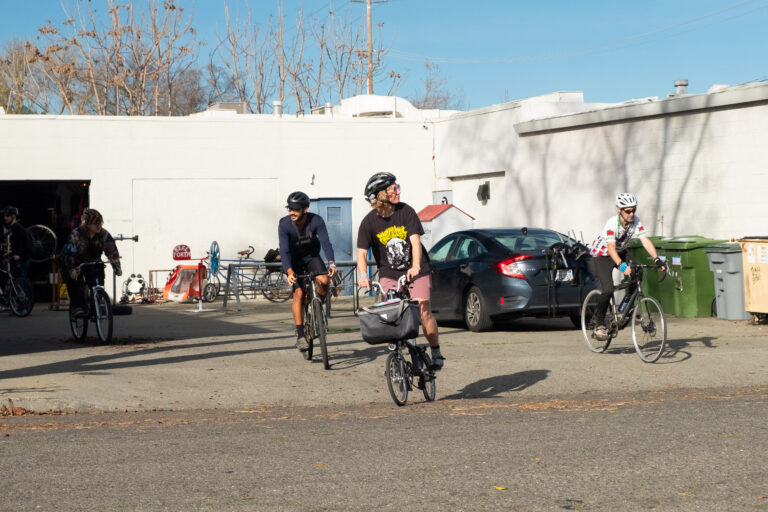
On Sunday, Jan. 28, Davis Bike Collective and Sudwerk Brewing Co. hosted a bike loop across four Davis breweries. As they enjoyed the journey from spot to spot, participants bonded over their love of bikes, beer and unseasonably warm January weather. 

Davis Bike Collective is a “volunteer-run nonprofit community bicycle organization,” as written on their website. Alex Fisher-Wagner, Sudwerk’s event planner, explained the intention behind the event.  

“You don’t have to drink,” Fisher-Wagner said. “But if you are into beer and haven’t had an excuse to go try the different breweries and you want to burn it off at the same time, this is a really great opportunity.”

Jordan Blandino, a first-year graduate student at UC Davis and participant in the event, offered his thoughts on biking in Davis. 

“I did lots of biking before I came to Davis, and that’s actually one of the reasons I came here,” Blandino said. “I was thinking, ‘maybe I could put some of the bike background into the education.’” 

Blandino, who is pursuing a Master of Fine Arts in design, hopes to integrate his biking background into urban design. 

“With design, for example, there are a lot of opportunities around sustainable transportation and sustainable product design,” Blandino said. “I want to focus on wellbeing for people in American cities […]. [In Davis] we don’t have any mountains, and the county roads are long and straight. But there is a lot of support for cycling here.” 

The 10-mile loop took participants to 3-Mile Brewing, Dunloe Brewing and Super Owl Brewing and ended at Sudwerk Brewing Co., where a small market was happening simultaneously. Marina and Brandon Aria, who sold cookies at the market during the event, spoke about their journey as bakers.

“I’ve been doing it since I was a little girl, baking with my Oma,” Marina Aria said. “Then I hurt my spine when I was 22, so I would bake to relax because I couldn’t really do anything else. […] Then the pandemic hit and my aunt asked me to bake a cake because everything else was closed, and I realized, ‘Hey, I love this’ and dove head first into it.”

Brandon Aria then spoke about his experience selling in local markets and supporting Marina Aria. 

“I enjoy supporting her,” Brandon Aria said. “The biggest thing, other than that, is connecting with the community. I didn’t think that would be a big thing for me, but it’s really cool; it’s very rewarding. We have a reason to leave the house. So let’s do it.”

Davis Bike Collective and Sudwerk Brewing Co. plan to host this free event on the last Sunday of each month. 

Written by: Emma Condit city@theaggie.org

Baseball Hall of Fame 2024: The big names entering Cooperstown

0

Longtime Manager Jim Leyland and players Adrian Beltre, Todd Helton and Joe Mauer are the Baseball Hall of Fame class of 2024 


By CAROLYN (CARI) FENN — sports@theaggie.org


Cooperstown, New York. To some, Cooperstown may sound like just another small town on the East Coast, but to those who play baseball, it signifies the ultimate dream. 

For many, the ultimate dream is a two-step process. Step one, make it to the big leagues. Step two, make it to the Baseball Hall of Fame in Cooperstown, New York. Yet, with the odds stacked against them, most baseball players don’t make it to the Major Leagues — even fewer make it into the Hall of Fame.

Out of all the players who have ever played in the MLB, only 1.5% make it into the Hall of Fame. Despite these near-impossible odds, every year a select few have the honor of being chosen to join the class of the best to ever play baseball. 

While there’s no set number of inductees a year, this year three players and one manager were able to get over 75% of ballot votes to be inducted. The three players are third basemen Adrian Beltre, first basemen Todd Helton and catcher Joe Mauer. The one manager inducted is longtime manager Jim Leyland. 

To fully understand how these players overcame the difficult challenge of obtaining 75% of the ballots cast, it is important to look at the careers of these amazing players and manager.


Adrian Beltre

After only his first year on the ballot, Adrian Beltre got elected into the Hall of Fame, with his name appearing on 95.1% of the ballots. Regarded as one of the best third basemen of all time, Beltre’s 21-season career is filled with plenty of major achievements.

Beltre was born and raised in the Dominican Republic, signing with the Dodgers before the age of 16. Even though signing someone under the age of 16 was against the rules, the Dodgers saw the potential that Beltre had of becoming a star and decided that they would rather be reprimanded than miss out on such great talent. Then at the age of 19, Beltre made his big league debut. 

From the young age of 19 to 39, Beltre played with a total of four teams: the Los Angeles Dodgers (1998 to 2004), Seattle Mariners (2005 to 2009), Boston Red Sox (2010) and the Texas Rangers (2011 to 2018). Despite a rocky start with the Dodgers, Beltre had his major breakout season in 2004, beginning the Hall of Fame-worthy career he’s known for today. 

Over 14 years, Adrian Beltre accumulated a long list of awards and accomplishments that helped put him on the Hall of Fame track. By the end of his career, Beltre had five Gold Glove Awards, two Platinum Glove Awards, four All-Star Game selections and four Silver Slugger Awards. 

Statistically, throughout his 20-year career, Beltre had 477 home runs, 3,166 hits and a baseball-reference wins above replacement (bWAR) of 93.5 that ranked him third among third-basemen in baseball history. He also became the third third-baseman to reach the 3,000-hit mark and has the second-most number of games at third base at 2,759 games. His statistics in hits (3,166), plate appearances (12,130) and runs batted in (RBI) (1,707) rank him at the top of several all-time lists among third-basemen and one of the greatest players of all time. 


Todd Helton

After six years on the Ballot, Todd Helton was able to score the 75% of ballots he needed to take his rightful place in Cooperstown. Helton got a total of 307 votes, at 79.7% of the ballots. While it took the voters a few years to fully recognize Helton’s talent, his 17-year career with the Rockies shows exactly why he is so deserving of joining some of the greatest of all time in Cooperstown. 

While in college at the University of Tennessee, it became clear that Helton was going to be a top prospect in the 1995 draft. During his time at Tennessee, Helton was named the winner of the Dick Howser Award by the American Baseball Coaches Association and was named Player of the Year by Baseball America after hitting 0.407 and securing 11 saves. The Rockies ended up drafting Helton No. 8 overall in the 1995 MLB draft, making it the second time Helton had been drafted, with the first being by the Padres in the second round of the 1992 draft when he was straight out of high school.

After debuting in the major leagues in 1997 and earning the starting first base job in 1998, Helton displayed nothing but impressive statistics over his long career with the Rockies. In 1998, Helton finished second in National League (NL) Rookie of the Year hitting 0.315 with 97 RBIs and 25 Homers

At the end of his career, he had a 0.316 batting average, 0.414 on-base percentage and a 0.539 slugging average with 592 doubles, 369 homers, 1,406 RBIs, 1,401 runs scored and more walks than strikeouts. His 0.953 on-base plus slugging (OPS) ranked him 18th among American League (AL)/NL players at the time of his retirements, his 592 doubles ranked him 16th among players, and he is one of only 11 retired players in history to have at least 0.300 batting average, 0.400 on-base percentage, 0.500 slugging percentage and 350 home runs.

Along with his impressive statistics came some major awards and achievements. Helton won three Gold Glove Awards, four Silver Slugger Awards and was a five-time All-Star.

While Helton’s career was filled with plenty of accomplishments, the hitter-friendly offensive environment of the Rockies home field, Coors Field, kept Helton from Cooperstown. Yet, after six years, the voters finally realized that Helton’s accomplishments weren’t seen just at Coors Field, but at any field he plays and finally elected him into the Hall of Fame.


Joe Mauer

Similar to fellow Hall of Fame inductee Beltre, 2024 was Joe Mauer’s first time on the ballot. He ended up with 76.1% of the ballot votes, just getting over the 75% mark. While he didn’t have as overwhelming of a vote as fellow first-timer Beltre, Mauer is solidified as one of the best catchers of his generation with his 15 seasons in the Major Leagues.

In high school, Mauer made a name for himself as a star athlete, being the first student to be named USA Today’s High School player of the year in two sports: football and baseball. Mauer was then selected by the Minnesota Twins with the No. 1 overall pick in the 2001 MLB draft, straight out of high school while turning down offers to play college football. 

In 2004, Mauer was brought up to the big leagues, but his first full season in 2005 is when it became clear the impact Mauer was going to have on the Twins organization. Over the next 15 seasons with the Twins, Mauer ended up finishing his career with a 0.306 batting average, 0.388 on-base percentage, 428 doubles and 2,123 hits. As the only catcher in history with at least 2,000 hits, a 0.300 batting average, and a 0.380 on-base percentage Mauer also became a six-time All-Star, five-time Silver Slugger Award recipient, three-time batting champion and AL MVP in 2009. He is the only catcher to have three batting titles and his total bWAR of 44.6 during his 10 years as the Twins’ catcher was the best at the time among the catchers.

While Mauer is mainly known for his role as a catcher with the Twins, his road to the Hall of Fame became a little rocky when he was forced to switch to first base as a precaution against further concussion. Although Mauer didn’t have as great of success as a first-baseman his time as a catcher was enough to make him stand out as one of the greatest of all time, earning him his rightful spot in Cooperstown. 


Jim Leyland

When looking at Jim Leyland’s time as a manager in the MLB, it is clear why he is so deserving of being the 24th manager to be added to Cooperstown. Leyland started as a manager for the Pittsburgh Pirates as they came off a 104-loss season in 1985, and retired from his last job in the big leagues in 2013 with a plethora of huge achievements.

Leyland first joined the Major Leagues as a player, not a manager. He was drafted by the Tigers straight out of high school, but never made it past Double-A. After retiring from baseball as a player, he worked for the Tigers organization for a short period before becoming a manager in the minors. 

Leyland eventually worked his way up the management ladder, joining the staff of the White Sox in 1982 as their third-base coach before becoming the general manager of the Pittsburgh Pirates. During his 11 seasons with the Pirates, Leyland transformed a losing franchise into a winning one, culminating in three straight National League East titles and being named the National League Manager of the Year twice. 

After leaving the Pirates in 1996, Leyland went on to manage the Florida Marlins from 1997 to 1998, leading them to a World Series title in 1997. After leaving the Marlins in 1998 due to the Marlin’s poor performance that season, Leyland managed the Colorado Rockies for the 1999 season before resigning after their poor performance as well.

Despite two prior less-than-stellar seasons, in 2006 Leyland came back to coach for the Detroit Tigers where he transformed a losing team into a winning one once again. As a result he eventually won his third Manager of the Year Award. In 2013, Leyland stepped away from the Tigers, only returning to baseball to manage Team USA in the World Baseball Classic in 2017.

  Leyland finished his career with a 1,769 to 1,728 record, three Manager of the Year Awards and three second-place finishes. His love of baseball and ability to transform losing franchises into winning ones is what helped solidify Leyland’s rightful spot in Cooperstown.

Beltre, Helton, Mauer and Leyland have all in their own ways made dramatic impacts on baseball. Thanks to their hard work, dedication and love of the game, they are all now forever solidified in the Cooperstown Hall of Fame, joining the ranks of the greatest to ever play the game of baseball.


Written by: Carolyn (Cari) Fenn — sports@theaggie.org

UC Davis Integrative Center for Alternative Meats and Proteins launches on Jan. 17

The center is a collaboration between multiple departments and institutions that will lead innovation and research in sustainably producing alternative proteins


By MADISON PETERS — campus@theaggie.org


On Jan. 17, UC Davis launched the Integrative Center for Alternative Meats and Proteins (iCAMP), a new program designated to accelerate the research and commercialization of cultivated meat as well as plant and fungal-based proteins.

According to iCAMP’s Executive Director, Kara Leong, the center is a project that grew out of the established Cultivated Meat Consortium on campus. It is also the first of its kind to be both federally and state-funded.

The center will not only be dedicated to researching alternative proteins but will also delve into the fields of consumer acceptance, product development, commercialization, entrepreneurship and even policy and law.

Leong spoke on the successes of the center thus far.

“Already one company, [Optimized Foods], has spun out of a graduate student doing research in one of the labs,” Leong said. “There are a lot of potential innovation startups that could spin out of this space.” 

iCAMP’s Education and Workforce Lead as well as Director of the Biotechnology Program on campus, Denneal Jamison-McClung, Ph.D., explained that all of the products being developed rely on bioprocess engineering and the fermentation of cells.

“[Cultivated meat] is when you take a biopsy or sample of animal cells from an animal and you grow more of those cells to recreate what a slice of meat from an animal the traditional way would be like: in terms of how it tastes, how it feels in your mouth [and] what it looks like,” Jamison-McClung said.

The creation of plant and fungal-based proteins is a process that has been researched and developed more than cell-based meat, according to Jamison-McClung. For cultivated meat to reach the consumer level, it will need adequate funding and scaling, which will be a much longer process.

The center is a collaboration between multiple campus departments, student organizations and businesses who are striving to fulfill their mission statement of “sustainably filling all global needs by 2050,” according to the iCAMP website

The Davis Alternative Protein Project is just one on-campus organization that works broadly with the Cultivated Meat Consortium and iCAMP. 

Nick Johnson, President of the Davis Alternative Protein Project, said that the group works with their partner, the Good Foods Institute, to raise awareness around alternative proteins and create a community of students who are interested in working in the field.

Johnson spoke on the significance of the alternative protein industry.

“The way that [the agricultural system] is currently operating is not sustainable to feed a growing population,” Johnson said. “The way that a lot of the alternative protein industry has grown is really to supplement conventional animal agriculture techniques with alternative sources that can provide nutrition in a sustainable way.”

Many other sectors on campus, such as UC Davis Dining Services, are working with iCAMP through the Robert Mondavi Institute for Wine and Food Science to create more plant-forward protein alternatives. 

According to the Director of Dining Services, Kraig Brady, many recipes that the dining commons employ have tested the extent to which plant-based foods will be accepted on a consumer level. One example of this is found in dining commons’ beef burgers, where 30% of the patty is composed of mushrooms in order to decrease the amount of meat consumption on campus.

Brady said that the dining commons can provide valuable information about consumer feedback on alternative proteins.

“iCAMP now has an opportunity as they move forward with developing alternative meat proteins to have a captive audience [that can] try some new products,” Brady said. “So the dining commons could be an outlet for some of these companies that are involved in iCAMP to put forth some of their products in front of our students and actually get some real feedback from the students [and] our culinary team.”

Leong said that in the future, there could be iCAMP cafes on campus aimed at testing student responses to alternative proteins.

Brady commented on this possibility by saying that it’s more likely that iCAMP menus will be featured in pre-existing dining service spaces.

  Vice President of the Davis Alternative Protein Project Jules Madigan commented on the hurdles of incorporating alternative meat into mainstream diets and said that she hopes consumers will look past their initial biases.

“Technology and science [are] usually [things] people don’t want in their food,” Madigan said. “But it’s something that is already in their food all the time. We’re using science and technology to solve some really pressing environmental and animal welfare and nutrition issues within our food system right now. I think what history has shown us is that adding more science to food ultimately makes it safer. And we can potentially make foods that people love to eat in a way that can ensure accessibility to them for the foreseeable future, given that traditional agriculture is really at risk within the current climate conditions of our environment.”

Leong furthered on the trajectory of iCAMP and its impact on the future of alternative foods.

“We’ve never seen so much student interest in a particular area,” Leong said. “It’s more than science; it’s food and it’s culture. Food is integral to our art, our being and our enjoyment and just who we are as humans. Seeing so much excitement and interest [has] so much promise.”


Written by: Madison Peters — campus@theaggie.org

Social isolation can have negative health impacts, but affected individuals may not seek help

Studies have shown that in geriatric populations specifically, those reporting higher levels of loneliness were also less likely to use telehealth for medical care


By KATIE HELLMAN — science@theaggie.org

Social isolation and loneliness for prolonged periods of time are linked to health issues like heart disease, stroke and type 2 diabetes.

The Center for Disease Control and Prevention found that one in three adults in the United States aged 45 and older struggle with loneliness, and investing time in personal relationships can increase overall health.

“When you feel like you belong and have the support and care you need, as well as the number, quality, and diversity of relationships you want — this is what’s known as social connectedness,” their website reads. “People with meaningful social connections have less stress and better sleep, better overall health that can lead to a longer life, healthier habits and behaviors, and better quality of life and a sense of belonging.”

Last year, U.S. Surgeon General Vivek Murthy raised concerns about the “loneliness epidemic.”

“Our epidemic of loneliness and isolation has been an underappreciated public health crisis that has harmed individual and societal health,” Murthy said. “Our relationships are a source of healing and well-being hiding in plain sight — one that can help us live healthier, more fulfilled, and more productive lives.”

The COVID-19 pandemic dramatically increased social isolation around the world and also caused an increase in telehealth appointments, or online doctor visits. For instance, a UC Davis Health study in the Journal of the American Geriatrics Society found that telehealth usage increased from 6% to 24% during the pandemic.

“Telehealth is both acceptable to older adults and associated with improvements in healthcare quality,” the study reads. “We found that socially isolated older adults were less likely to use telehealth during the first wave of the pandemic. This is concerning, as limited access to care may compound risk for poor health outcomes in an already at-risk group.”

Rebecca Howe, lead author of the study, used the Berkman-Syme Social Network Index — a questionnaire designed to assess a study participant’s social network — to see how isolation affected telehealth use during the pandemic. The survey asked the respondents how often they felt lonely. 

“We found that [the] people who were [the] most socially isolated were less likely to use telehealth,” Howe said in an interview with UC Davis Health. “And that’s a big problem, right? Because these are the folks who don’t have caregivers and maybe live alone.”

As healthcare continues to evolve, more attention is being paid to the mental health needs of patients and the resources that might benefit them. In older adults specifically, there is a focus on increasing quality of life by addressing the four Ms: mobility, mentation, medication and what matters.

Written by: Katie Hellman — science@theaggie.org

Chef Martin Yan visits campus on Jan. 26 to give cooking demonstrations in celebration of the Lunar New Year

At the event, a world-renowned chef and UC Davis alumnus engaged students in cooking demonstrations and prepared limited-edition recipes for dining commons menus  


By MADISON PETERS — campus@theaggie.org


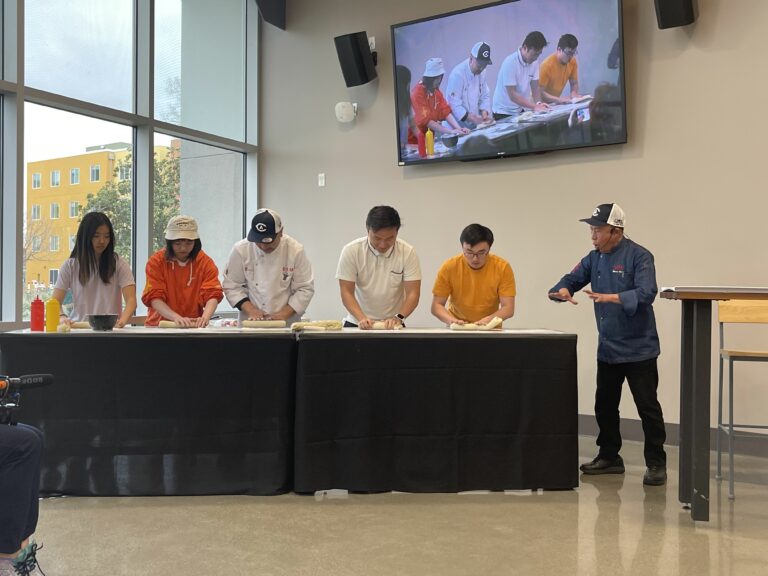
On Friday, Jan. 26, from 10:30 a.m. to 8 p.m., world-famous chef Martin Yan came to UC Davis to celebrate his Aggie heritage and kick off the Lunar New Year by sharing recipes with students.

The event was hosted in collaboration with the Cross Cultural Center and held at Latitude Restaurant on campus. During the event, Yan conducted multiple cooking demonstrations and answered questions from both students and the press.

Latitude diners were able to enjoy a menu that both Yan and the Latitude culinary team prepared beforehand, according to the Director of Dining Services Kraig Brady. Some dishes featured on the menu included Mapo Tofu, walnut shrimp and various traditional Lunar New Year desserts such as egg tarts.

During one of his cooking demonstrations, Chef Yan invited multiple students up to the stage to learn how to make hand-pulled noodles, a dish that he said is very important to Chinese culture.

All of the students who participated in the demonstration were given signed cookbooks from Yan. Additionally, Yan taught a group of students how to cook some of his favorite dishes, including Kung Pao Shrimp.

Brady reflected on the demonstrations that Yan performed and his engagement with the community. 

“[Yan] was really into being more a part of the community than being a celebrity here,” Brady said. “He wasn’t really looking for celebrity fame, he wanted to be here for the students and have fun with [them] — which showed.”

Afterwards, Yan demonstrated the breaking down of a chicken in under 20 seconds, a skill that he holds a world record for. Yan was able to fully deconstruct a chicken in about 19 seconds.

Earlier in the event, Yan announced the publication of his newest cookbook: “Best of Yan Can Cook” and said that it will become available in early March. In 2022, Yan and his wife Susan donated their collection of 3,000 cookbooks, photographs and cooking paraphernalia, along with $20,000 to the UC Davis library for the new Chef Martin Yan Legacy Archive. 

The recipes that Chef Yan created himself will continue to be featured for a couple more weeks to celebrate the Lunar New Year, and any student can go to any dining hall on campus to try the different dishes offered, according to Brady.

Recipes that will be featured include Creamy Pumpkin Chowder on Feb. 5, Lo Hei Salad with seasonal melons on Feb. 6 and Sizzling Firecracker Dragon Shrimp on Feb. 9.

Brady spoke on the process of working with Yan and his expectations for this new menu.

“He taught us to do a bunch of different style foods, he gave us a bunch of stuff we could work with and move forward and I’m excited to see how that turns out in the next couple of weeks,” Brady said. “Come taste Chef Yan’s food in our dining commons made by our culinary team.”

Many other notable chefs have been able to visit campus and help introduce more culturally diverse foods to the dining halls, including Native Chef Freddie Bitsoie, according to Brady.

Flavors From Home, a program that has been around for more than 25 years, is a part of an effort to try and diversify the food found at the dining commons and also allow students to submit their favorite recipes from home.

Any student can submit a recipe that is meaningful to them and their culture, and the chefs at the dining commons will recreate it to their liking and possibly feature it on the menu, according to Brady.

Brady expanded on the successes of the program and its impact on students. 

“We have dishes that we currently serve today that came from that program 15 to 20 years ago,” Brady said. “Our version of something may not hit the mark, and [someone might say], ‘Hey this doesn’t taste like my mom’s recipe.’ We say give us your mom’s recipe, and we’ll make it. And then we try it and have the student taste it.”

Bringing more diverse chefs to campus is something that Brady wants to continue, but he says it depends on the funds that the university is willing to spend.

Brady spoke on the importance of these events for the future of UC Davis Dining.

“I’m trying to look for these opportunities where we can celebrate different food cultures and bring in food experts from that culture to come and demonstrate how to look at it through more of a traditional lens than maybe what we are used to seeing,” Brady said. “[The goal is to] put ourselves out there a bit and learn some things ourselves.”

Written by: Madison Peters — campus@theaggie.org