55.7 F
Davis

Davis, California

Tuesday, December 23, 2025
Home Blog Page 112

You should go on a walk

Daily walks benefit both your psychological and physiological well-being


By MAYA KORNYEYEVA — mkornyeyeva@ucdavis.edu


Imagine you are sitting at your desk in the apartment, taking notes on a particularly difficult passage in your architecture textbook. There is a diagram depicting a wide range of lines and circles, converging into a layout of a residential structure; you sigh, feeling your focus drift away and the sneaking sense of anxiety permeate your thoughts. You start to feel overwhelmed: this chapter is just the top of your mountain of work that must be completed within the next few days. 

Or perhaps you have been engrossed in a television show for nearly four hours when your eyes start to droop and your brain goes blissfully blank. It’s the afternoon, and you have an essay to write, but you have absolutely no creative ideas and no motivation to write anything substantial. You gaze blurredly back at the screen, wondering how you will ever get yourself up and out of bed.

The solution to these feelings of being stressed or burnt out can be found in an activity as simple as stepping outside for a walk and some fresh air. Here’s why.

Throughout my life, I have prioritized daily walks. Whether it’s a one-hour stroll through a nearby park, a 20-minute walk in my neighborhood or a two-to-three-hour hike on a forest trail, these excursions into the outside world have been incredibly helpful in allowing me to restore my inner balance: to feel refreshed and have time away with my thoughts.
No matter what I’m feeling — and often, I can’t pinpoint the turmoil of emotions I experience at any given moment — stepping out of the immediate environment allows me to attune to myself and understand what is going on. Whether I’m feeling gloomy, tired of staring at a screen or simply needing to get up and move around, walking has been a reliable outlet for me.

On a psychological level, just being outside is incredibly beneficial. Healthline, a public health and wellness website, says being within the natural world can increase the senses and clear the mind, allowing us to notice things we never would have considered before. It can also help alleviate unwanted or painful emotions such as fear, worry or sadness.

On a physiological level, fresh air, vitamin D from the sun and the abundance of life within the surroundings rejuvenate the body. Light therapy, in particular (simply being in the sun), can help reduce symptoms associated with depression, such as low mood and fatigue, as well as improve sleep. Fresh air is helpful in clearing the lungs and promoting better breathing, along with boosting your immune system. 

Pair being outside with walking, and you get what I like to call the golden combination: physical, outdoor exercise, which has incredible benefits for your cardiovascular system and isn’t particularly strenuous or tiring. In fact, walking can be just as good as running since it lowers your blood pressure, decreases the risk of getting type 2 diabetes mellitus, burns fat and strengthens bone and muscle structure — just like running does. 

Finally, walking is even more rewarding with a friend, partner or companion. When you have someone to share your journey and engage in conversation with, time flies faster and your walk is much more enjoyable. Especially if you haven’t seen someone close in a long time, walking can be a perfect way to reconnect without spending money going out for dinner or coffee. 

So, if you’re feeling stuck or unmotivated, drop everything and take a short walk outside. Chances are that when you return to your desk and start doing your homework again, you will be refreshed and ready to take on the challenge of tackling whatever is on your to-do list. 


Written by: Maya Kornyeyeva — mkornyeyeva@ucdavis.edu


Disclaimer: The views and opinions expressed by individual columnists belong to the columnists alone and do not necessarily indicate the views and opinions held by The California Aggie.


Review: ‘Snap Judgment Presents: Spooked’ — a must-listen horror story podcast

True-life supernatural encounters told by the people who experienced them


By SAVANNAH BURGER—arts@theaggie.org


Looking for something to listen to in your downtime that will keep you on your toes? I have the perfect podcast to satisfy your spooky content-deprived soul. Snap Judgment, a one-of-a-kind, award-winning radio show and podcast, combines original music and riveting true-life storytelling to create a next-level audio narrative experience. The show, created by its host and executive producer, Glynn Washington, is produced in Oakland and was first aired in partnership with the Public Radio Exchange and KQED in July 2010. 24 years later, the program is now downloaded more than two million times every month and is broadcast on over 500 radio stations across the United States. 

Starting in 2017 around Halloween, Snap Judgement decided to record people’s personal supernatural stories to fall in line with the spooky season and give listeners a scare. The show’s audience quickly became hooked to how their cinematic medium meshed with horror content. There was such an influx in demand for more special horror episodes, that Snap Judgement Presents: Spooked, the sister podcast to Snap Judgement, was established under Snap Judgement Studios and Luminary.

Spooked, which is also hosted by Washington, is the best audio production of supernatural stories I have come across in media thus far. Every episode has an analogous layout — the episode begins with a warm-up abstract story narrated by Washington that sets the listener in the mood for that particular episode. The theme song, which was masterfully created by Oakland-based, audio producer and sound designer Pat Mesiti-Miller, plays and is followed by a brief context for the story. 

The stories presented on the podcast themselves are narrated by the same people who experienced them, so they feel intimate and all the more authentic. There’s a new voice every episode for each new experience, and on some episodes, multiple members of the same family will each recant their individual perspectives on the same haunting encounter. While all are supernatural, every story has a different takeaway. Some episodes, such as “The Deer Stand” and “Dead End,” have very poignant elements that reflect on the passing of close ones. Others, like episodes, “Take Me Home” and “Skinwalker,” will leave you regretting you ever listened to them because you’ll be losing sleep. 

As the show makes a point to spotlight stories from non-American cultures and stories told by people of color, there are many episodes that have stories that are deeply rooted in different world cultures told by the people who belong to them. Thus far, there have been stories featuring entities from Montserrat, Russia, Hawai’i, Oaxaca, South Africa, the Philippines and so many others. This is another terrific element of the podcast, as you can learn about folklore from a variety of cultures while creeping yourself out at the same time.

The stories are coupled with originally produced scores of music, sound effects and surround sounds that amplify the scariness and atmosphere. While listening, you have the possibility of hearing the repeated knocking of a ghost coming from the ceiling, footsteps circling around a tent, the growling of a demonic spirit and eery music that will put you on the edge of your seat. These auditory effects work in tandem with the content of the stories to create a horror experience masterpiece.

Spooked is in its seventh season—episodes dating back to 2017 are available on every podcast platform. It releases a new episode every Friday. Because the podcast features true-life stories told by the experiencers themselves, the podcast is always looking for new voices! If you have an unforgettable supernatural encounter that needs to be heard by the masses, email your story to spooked@snapjudgment.org.


Written by: Savannah Burger—arts@theaggie.org

UC Davis to decide on renewing 10-year pouring rights contract with PepsiCo

Both student representatives and researchers argue that renewing the contract would go against university commitments to health and sustainability


By VINCE BASADA — campus@theaggie.org


UC Davis’ 10-year pouring rights contract (PRC) with Pepsi Beverages Co. is set to expire in June 2024, leaving university officials with the decision to either renew their contract or search for viable alternatives. 

PRCs are not just purchasing contracts; these contracts grant beverage corporations marketing rights and near-exclusive shelf space within campus grounds. Opponents of a contract renewal argue that PRCs promote unhealthy consumption and raise prices and that co-branding with PepsiCo goes against UC Davis’ goals of sustainability and wellness.

UC Davis’ current PRC, which was signed in 2014, gives PepsiCo exclusive pouring rights at athletic events and dining commons and gives them 90% of the shelf space at campus stores.

Associate Professor Jennifer Falbe, ScD, MPH, of the Department of Human Ecology is a nutritional epidemiologist and public health policy researcher who has studied the effects of policies and programs, including PRCs. Falbe is also part of the Beverages Pouring Rights Industry Working Group, an advisory committee focused on the future of a PRC, set up by the UCD Preferred Partnership Program (UP3). 

“My research provides evidence that PRCs incentivize and induce the university to sell, market, promote, and make available Coke or Pepsi products,” Falbe said via email, also noting that she was speaking on behalf of herself and not as a representative of the working group. “According to dining directors, [this] can increase the prices that students, staff, and faculty pay for beverages.” 

Her research shows that 81% of students at UC/CSU schools both opposed PRCs and overestimated the revenue that they generated. 

PRCs do generate some revenue for the school through sponsorship — approximately 600 thousand dollars a year out of UC Davis’ total annual revenue of over 6 billion dollars according to Falbe. This amounts to roughly 0.01% of total annual revenue, most of which goes to the college athletics department according to the ASUCD Environmental Policy and Planning Commission (EPPC).

Both the working group and a separate UP3 advisory committee’s advice will be passed on to the Chancellor’s Leadership Council, who will ultimately make the final decision on renewing the contract.

Neither Falbe nor any other member of the working group could comment on the current status of the PepsiCo PRC renewal due to a non-disclosure agreement.

Currently, the only area on campus not included in the PRC is the CoHo, as ASUCD chose not to opt into the contract at the time of signing. It has cited wanting to maintain choice for customers and a lack of transparency in regard to funding available to the CoHo by the contract.

Allyson Francisco, ASUCD Controller and member of the Beverages Pouring Rights Industry Working Group, affirmed that the CoHo will not participate in any PRC, as stated within Senate Resolutions (SR) #2 and #6 of fall quarter 2023.

“ASUCD believes in sustainability and equality and all of these really important pillars,” Francisco said. “ASUCD and Senate and different aspects of the organization truthfully believe that being in a beverage pouring agreement with Pepsi negates all those things and doesn’t allow us to fulfill those standards that we set for ourselves.”

Francisco also noted that marketing alongside PepsiCo would contradict UCD’s identity as a whole, given that the company is the second largest plastic polluter in the world.

Even if a PRC deal is not signed, according to Falbe, UC Davis would still be able to sell PepsiCo products without exclusivity. As a result, she believes that the campus would have the opportunity to stock smaller, local brands, as well as more healthy alternatives. 

Daphne Crother is the Vice Chair of EPPC, an environmental advisory board whose official stance is against the renewal of the PRC. 

According to Crother, EPPC has been attempting to spread awareness of the PRC among the student body through social media campaigns, creating an informational page on their official website and tabling. EPPC also organized a rally last June on the issue and helped advise SR #2 and #6.

Crother believes that UC Davis’ choice will show its commitment to its core ideals. 

“If UC Davis takes the stance [against the PRC] and the Chancellor’s Advisory Council votes against this, it would be a large step showing that UC Davis cares about sustainability more than it cares about the co-branding, the funding and the [recognition] that we’d get with Pepsi,” Crother said.

UC Berkeley renewed its contract with PepsiCo in Aug. 2023, and according to Falbe, it is possible that UC Davis will sign on a similar contract if the Chancellor chooses to renew. Details of the contract, provided by the Center for Science in the Public Interest via a public records request, include a maximum of a 4% annual price increase on products, 85% exclusivity on market shelves and the ban of the sale of all Coca-Cola products.

There is also concern that a contract renewal would go against the UC-wide initiative to eliminate single-use plastics from all campuses by 2024. 

“[UC Berkeley’s] Pepsi contract is incompatible with UC’s policy and commitment to eliminate single-use plastics by 2024 because Pepsi will not provide a couple of large product lines in non-single-use plastic containers until 2030,” Falbe said.

Falbe also noted that UC Berkeley’s final Pepsi PRC was obtained through a public records request separate from her role in the Beverage Pouring Rights Industry Working Group. 

There is also some concern that PRCs overprice beverage products at the wholesale level, which would likely be passed to the consumer and student levels. As Falbe noted, “the PRC wholesale price for sparkling water is more expensive ($14.30 for 24 cans) than retail prices at Walmart ($11.16 for 24 cans of LaCroix) and even Whole Foods ($9.98 for 24 cans of [the brand], 365).”

Ultimately, Crother says that if UC Davis does decide to renew the PRC, it could damage the university’s reputation.

 “I think that if UC Davis does go forth with this contract, despite student, administrative and faculty disapproval, it would not be good for UC Davis’s standing with sustainability and just disregard on student support,” Crother said. “We would be following the path of UC Berkeley, unfortunately, which is not a precedent that we want to set, especially as we’re known for being a sustainable, environmentally forward school.”


Written by: Vince Basadacampus@theaggie.org

How do college expectations differ for first-generation students?

First-years share their college experiences as first-generation students


By JULIANA MARQUEZ ARAUJO — features@theaggie.org


Although all students undergo a level of apprehension for their first contact with a college campus, it may be an especially daunting event for a first-generation student — a person who is the first in their family to attend college — since their perspectives may be influenced by unreliable sources.

“Media definitely influenced me to think that college was going to be horrible and was going to be the worst experience of my life,” Ren Romero, a first-generation first-year undeclared major, said. “I kept on seeing videos of people saying, ‘If you’re doing okay in high school, then you’re going to do terrible in college,’ and I was terrified.”

Without the presence of a college graduate close to them who could explain the college application process and help set realistic expectations, it can be easy to feel intimidated.

Romero described the exaggerated beliefs that follow the overestimation of college.

“It was all new to me; it was a new environment and I was like, ‘I’m going to fall behind, I’m not going to do well, my teachers are going to hate me for some reason,’” Romero said. “But it turned out fine and the professors were nice and the workload wasn’t entirely crazy.”

However, they claimed that the pressure to constantly do better is overwhelming. 

“With the amount of studying [my friends] put into [school] or the amount of work they put into it, I feel like [in comparison] I am putting no effort into my academics, even though I know that I am,” Romero said.

Going into the quarter system in college can also be difficult to adapt to if a student is used to a slower-paced learning environment. Numerous students ask themselves what a quarter system entails and wonder if they are prepared for it.

“I was absolutely terrified starting [college] because I was coming in from a school that had year-long grades and no midterms or finals,” Romero said. “But [after] coming into it and experiencing the first quarter, I was able to adjust at a pace that was a little more comfortable for me.”

While it is normal to feel frustrated with the workload of a quarter system, what differs for students in college is the accessibility of the countless resources available to them. However, the responsibility to take advantage of these opportunities lies with the students.

Romero listed their goals for future quarters and academic years: “Attending office hours, trying to attend more study groups, being more open to opportunities as well, not just in an academic standpoint but volunteering as well. [I am] just trying to make a better life for myself here.”

Ethan Hernandez, a first-generation first-year pharmaceutical chemistry major, shared his first quarter experience as well.

“I always put being at UC Davis first, but I definitely enjoyed the freedom to have fun that came with moving to Davis for the first time.”

He claimed that he felt a little more prepared for college than most first-generation students because he had the guidance of his cousins, who encouraged him to see the opportunities that arise with a college setting.

“I’ve always had friends who were older than me and mentors throughout my high school that definitely helped me with the idea of what I wanted to do in college. But I was more worried about how I was going to do it once I got here. [It was] just all brand new, coming to a whole different campus eight hours away from home.”

Hernandez highlighted the importance of finding your community when stepping into college, as he joined a fraternity in his first quarter.

“I found my group of people fairly easily. Receiving advice from people that I found very similar to me but also already had an experience that was at a higher level allowed me to seek different opportunities. I’ve always found something to learn from certain groups of people,” Hernandez said.

First-generation student America Bernabe, a first-year political science major, named an obstacle that arises in a first-generation student’s process and explained how it differs for students with parents who are able to guide them.

“They know what to ask; they know who to ask. It can be really hard sometimes because no one wants to find something out on their own. It’s more intimidating,” Bernabe said. “You don’t want to feel so lonely in such a life-changing process.”

The resources provided by a high school can also have an impact on a student’s college perception and preparedness. 

“[My high school] had a really bad system. It was supposed to be a college preparatory school, but it’s more like they just sent you to college. They didn’t actually prepare you for it,” Romero said.

Unlike Romero, Bernabe was able to grasp an understanding of college due to her earlier education. 

“I feel like my high school did a really good job of ensuring that the seniors had at least a general idea of what college is and what college can mean to you,” Bernabe said.

She also said that a college environment can come with difficulties besides academics, such as learning time management and prioritizing mental health.

“Academic-wise, it was a little bit harder to discipline myself since I thought that I was going to have so much freedom,” Bernabe said. “I was really having my ‘me time,’ trying to make sure that I had a good memory of my first quarter.”

The ability to balance academics with a social life and create a memorable experience in college is important too, especially for mental health reasons. Plus, loved ones are excited for them to experience college fully, not just through academics. 

“I knew that I was going to go to college just because that was always an expectation for me from my parents. I had to make sure that their sacrifices were worth something because that’s important to them, and it’s important to me,” Bernabe said.

Parents of first-generation students may not have had the choice to attend college but did what they could to ensure that their kids would be presented with opportunities to explore their passions.

“Reflection, reflection, reflection, that’s all that college has been. Davis has nurtured me in a way that has allowed me to grow because I feel like I can just think and express myself a lot more creatively than before,” Bernabe said.

In order to take control of their futures, these students are finding the support and motivation to pave their paths through the confusing and sometimes intimidating experience of higher education.


Written by: Juliana Marquez Araujo — features@theaggie.org


Construction services provided

Drawn by: Sandhya Pfile –– sbpfile@ucdavis.edu

Disclaimer: (This cartoon is humor and/or satire, and its content is purely fictional. The story and names of “sources” are fictionalized.)

Students bond over love for actor Jack Black

0

The Jack Black Pack provides a welcoming space for UC Davis students to unwind and connect through movies


By LAILA AZHAR — features@theaggie.org


The Jack Black Pack may never have assumed a false identity in a desperate attempt to make money as a substitute teacher or faced off with an evil snow leopard, as the characters played by Jack Black did in “School of Rock” and “Kung Fu Panda,” but they’ve faced a dilemma of their own. 

Less than a week after it was left on campus, the group’s A-frame sign promoting their club was stolen from the East Quad. The newly official club offered a sticker in exchange for information leading to the sign’s discovery, but in spite of their attempts, the sign was never found. 

Despite this theft, the club, which meets up to watch Jack Black movies every other week, is still going strong.

The president of the club, fourth-year communications major Max Inman, said the inspiration for the group came from his sister. When she attended UC Davis, she and a group of friends, all of whom were fans of the actor, called themselves the Jack Black Pack. 

When Inman learned that clubs officially registered with the Center for Student Involvement could rent out rooms for free, he decided to make the club official in fall of 2023. He has since hosted Jack Black movie nights on a big screen, celebrating students’ love for the films. 

“Sometimes movies we loved as kids seem cheesy when we look back on them,” Inman said, “But Jack Black’s acting holds strong.” 

Being able to watch the movies together enhances the experience, according to the club’s Vice-President Matt Wang, a third-year economics and cinema and digital media double major.

“Jack Black often plays characters that are always just really fun to watch, especially in group settings,” Wang said. 

Their shared love for Jack Black serves as a way for members of the club to connect with each other. 

“It’s more than Jack Black movies,” Inman said. “It’s just a place for anyone to come and feel welcome — to make friends. Appreciating Jack Black movies is just something that almost anyone can relate to.” 

This sentiment was echoed by the club’s treasurer, Balint Szigeti Csucs, a third-year computer science and engineering major.

“[It’s a place to] make new friends through the common appreciation of the art of the legend himself,” Csucs said.

Inman said members continue to bond over their shared experiences while watching the movies.

“Halfway through whatever movie we watch I pause the movie so that people can go to the bathroom or just have a break,” Inman said. “During this time I ask people what their favorite part of the movie has been, or if they have any comments. It’s always fun to hear people’s perspectives.” 

Members are also able to express their opinions when the club votes on what movie to watch next. 

“We love democracy around here,” Wang said. 

The group has made its way through a sizable portion of the actor’s catalog, including “School of Rock,” “Nacho Libre,” “Goosebumps” and “The Holiday.” 

At a recent movie night showcasing “Kung Fu Panda” — which Inman, Wang and Csucs all cited as their favorite Jack Black movie — Chancellor Gary May paid a visit to the club and told the group that his favorite Jack Black movie is “King Kong.” 

The Jack Black Pack provides a unique way for students to bond over a common interest. Its officers encourage everyone to join the community, describing the environment as low-pressure and friendly. 

“It’s a great way to unwind in the midst of classes, midterms and projects,” Csucs said. “All are welcome.” 


Written by: Laila Azhar — features@theaggie.org

ASUCD holds first Senate meeting of the quarter

Senators elect Senate President Pro Tempore and debate respectful communication at Oct. 5 meeting

By LILY FREEMAN — campus@theaggie.org

Vice President Aarushi Raghunathan called the Oct. 5 Senate meeting to order at 6:14 p.m. After roll call, she read the UC Davis Land Acknowledgement.

Next, Zahar King, a third-year English and design double-major, was confirmed and seated as an ASUCD senator. 

Senate President Pro Tempore elections followed this confirmation. JT Eden, third-year international relations and environmental policy double-major and ASUCD interim senator, was nominated by Senator Dani Antonio. 

“Senator Eden has shown confidence, efficiency and deep knowledge of the ASUCD operations since his term as [internal vice president] and now interim senator,” Antonio said during the nominations. “I have only personally known Senator Eden for two months, but it is in these few months that he has earned my respect and trust inside and outside of work.” 

Following Antonio’s nomination, Eden was elected to the position with a unanimous vote. 

Next, the Senate confirmed Zach Boggeln, a fourth-year philosophy major, as the new Internal Affairs Commission chair. Then, Jonathan Ng, a second-year political science major, was confirmed as the new Aggie Mentorship Committee chair. Lastly, Jordyn Kosai, a fourth-year sustainable and environmental design major, was confirmed as the new chair of the Student Sustainability Career Fair committee.

Several commissioners were then confirmed for the Internal Affairs Commission, the Environmental Policy and Planning Commission and the External Affairs Commission. 

Following the confirmations, the senators moved into senator adoptions, where each senator chooses a few ASUCD units and/or committees to adopt for the fall quarter. These adoptions allow for senators to collaborate with and provide support to the ASUCD groups of their choice.  

Next, the Senate opened the floor to public comments. There was one comment made by a UC Davis student.

“I learned very recently that participating in [the UC Washington program] or any other program where students leave Davis, like study abroad, students sacrifice their guaranteed student housing,” the student said. “This, in my opinion, is entirely inequitable. When signing on with Davis, I felt secure knowing I could live at the Green for my two years here. Now, I am left with a risk of going to DC and risking my home and thus my livelihood when I return. Furthermore, the fact that this practice was subtly hidden within the Green’s lengthy housing contract and not mentioned at all in the Washington Program housing contract is very troublesome.”

Raghunathan then assigned specific senators to work on the issue raised by this public comment. 

Then, the Senate introduced seven new pieces of legislation, however, there were no bills voted on during the meeting. Next, the senators approved past meeting minutes and moved into open forum. Raghunathan raised a question regarding the dinner that was provided for the Senate during the meeting. 

“Did everyone like the Beijing beef [from Panda Express] or are you actually very strongly against it and want orange chicken instead?” Raghunathan said. 

After two senators voiced that they would prefer orange chicken, the senate debated on the comparative qualities of the orange chicken and Beijing beef from Panda Express. 

Senator Gaius Illupeju then expanded on the difficulties of coming to a consensus about foods provided at the meeting. 

“I think you’ll find that ordering food is kind of difficult,” Illupeju said. “No one is on the same page about what they want. You’ll find that when you go to buy Mexican food [for the meeting], it is expensive… Students provide the table with food every quarter, and I tried to make the best choices that I could. I think the fact that we’re debating between Beijing beef and orange chicken shows the dilemma [Raghunathan] is bound to be dealing with every week. I’ll be praying for you.” 

Raghunathan went on to raise an issue that she has experienced in the Senate as ASUCD vice president.

“Please set boundaries,” Raghunathan said. “I am a student, and also a person, not a robot… I, in fact, do not live here. Please don’t text me at 2 a.m. on a Saturday about work, because I am not going to respond to you… I have a social life. I have responsibilities. I don’t live and breathe ASUCD. I am a person. Calm down. No weekend texts, please. We are very busy people, please keep that in mind.”

Raghunathan continued. 

“Please also be respectful,” Raghunathan said. “I have noticed especially that we say things over and over and over. We know what we’re talking about, [and] we’ve been in the meetings to talk about this… We know what we’re doing. You guys get the very end, and then still people argue with us about every little thing. [However], the second a man says the exact same thing, everyone shuts up. Please just don’t argue and just be talking to a wall until a guy says the exact same thing. Be respectful.” 

Following open forum, Raghunathan moved to adjourn the meeting. With no objections, Raghunanthan adjourned the meeting at 9:48 p.m..

Written by: Lily Freeman — campus@theaggie.org

Commentary: Are these four TikTok makeup products worth the hype?

TikTok Shop has revived the makeup community by simplifying how to shop for makeup products


By ELIZABETH WOODHALL — arts@theaggie.org


When you think of TikTok, you might think of viral trends or vlog-style clips grasping your attention for just a few seconds before moving on to the next video. Anything you’d like to find or learn about — it’s on the app. It’s a platform that serves you any type of media on a silver platter, and it’s an endless feed that can have you on your phone for five hours (or more) a day. 

TikTok has recently introduced TikTok Shop, a new feature that allows anyone to showcase their products and facilitates shopping for shopping addicts like myself. If endless products being gushed about by influencers wasn’t enough, TikTok, in an effort to get more people on the shop, has provided users with unbeatable deals. 

The makeup industry has been at the forefront of the success of the new feature. This sensationalization of makeup on TikTok has led to a feed filled with products that claim to be bigger, better and cheaper than the last. What better way to confirm this claim than to try a few of these makeup products on my own to see if the hype is real? Most of the products that have gone viral are available at any drugstore or makeup retailer, so these products are not exclusively on TikTok, but their promotions might be worth looking at.


Elf’s Hydrogrip Primer

Described as a “gel-based, hydrating face primer that smooths skin while gripping your makeup,” this primer’s claims are not baseless. While searching for makeup products that could withstand the test of sweat and a face mask, this primer was the stellar product that beat every other primer I tried. It has a gel consistency that, once applied, dries down quickly. This primer is not meant to set on your face while you figure out what song to add to your new “Getting Ready” playlist. It does not leave a white cast, which makes it perfect for all skin tones. For people who have dry, oily or combination skin, the product is perfect for year-round wear. 


KimChi Chic Beauty’s Puff Puff Pass Set and Bake Powder

 Kim Chi made it to the finals on season eight of “RuPaul’s Drag Race” in 2016, and she soon after became the CEO of the viral makeup brand KimChi Chic Beauty. This brand grew popular because of TikTok Shop and the cheap deals it had on the product. I got mine for 10 dollars while it’s currently retailing for 50 dollars on the website. The product has generated a lot of popularity because it doesn’t make your makeup cake and build up; instead, it smooths out any rough edges and creates a seamless look. If you can catch a similar deal, check out this setting powder.


One/Size Beauty’s Setting Spray

 This setting spray is from the brand of makeup guru Patrick Starr. On his TikTok account, he tests out his setting spray by spraying his full face of makeup and jumping into the pool. Once they get out, they dry their face with a wet towel, proving the spray creates a transfer-proof and waterproof base. This TikTok gained 23.8 million views. Soon after, I purchased this setting spray, and I was shocked to see that it did not meet my expectations. Retailing at 32 dollars, this setting spray isn’t something that is an easy pick-me-up. The fragrance was incredibly strong to the point where I’d have to plug my nose in an attempt to not cough. I broke out from this product, and it stung my face. With the effects being so intense, I chose to return the setting spray after many attempts to make it work.


Rare Beauty Soft Pinch Liquid Blush 

Selena Gomez, the founder of Rare Beauty Makeup, shook the world with these blushes. The applicator is meant to be accessible for people with disabilities without having to constantly open and close the product. In general, the blushes are incredibly pigmented and long-lasting. There are shades for all skin tones and types, and it’s available in both a matte and dewy finish. The blush retails at 23 dollars, has 7.5 ml of product and is available on TikTok Shop and Sephora. Even though it feels like a liquid at first, it blends similarly to a powder, which doesn’t disrupt the base of the makeup. This product is versatile and can be used as a blush, eyeshadow or lipstick. I personally use it for all three, so the price is well worth it. 


TikTok has shifted from being a social media platform to a place where people can purchase items within a few clicks. Not only has this generated a new way to promote products, it has also embedded ads that lure the viewer into not swiping away. This rise in popularity of makeup products feels like jumping back into 2014, where obsessively purchasing new lipstick is a force of habit — because it definitely isn’t the same shade we already had. 


Written by: Elizabeth Woodhall — arts@theaggie.org 

The beauty in the mundane

“Romanticize the life-ife-ife”


By MOLLY THOMPSON – mmtthompson@ucdavis.edu 


When I go grab a chai latte on a Sunday morning, it’s not just a chai latte — it’s a whole event. It’s a cute outfit complete with my favorite lip gloss. It’s a bike ride downtown on my blue cruiser, early enough that it’s tranquil and quiet (unheard of on a college campus). It’s the little, local coffee shop with immaculate vibes and chatty Gen-Z baristas. It’s the matching cup and saucer my drink comes in, the leaves I can see falling outside the window, the good book I pull out of my bag, the shot I line up to post on my Instagram story and the way my hands fit around the mug as I take the first warm, comforting sip — It’s serenity. But it could be just a chai latte.

Romantic, by definition, means “characterized by or suggestive of an idealized view of reality.” In the 17th century, “romances” were stories written in romance languages (French, Spanish, Italian, etc.), which often consisted of passion, adventure and fancy. Over time, the word “romance” has come to convey grandeur, whimsy and idyllic concepts. To romanticize something, then, would be to make it the most beautiful version of itself. 

The notion of romanticizing ordinary aspects of everyday life gained traction in the early months of the pandemic in 2020. When there was so little to look forward to, the idea of embracing small joys within normal goings-on was welcome. In essence, the intention is to maximize the pleasure that you can get from seemingly mundane activities. You’re going to get up and make yourself breakfast no matter what, so you might as well open the curtains to let the sunshine into the kitchen, put it in your favorite bowl, add an extra drizzle of honey on top and put on a good podcast while you eat it. Suddenly, you have something to look forward to. 

There’s a special kind of beauty in little luxuries — maybe you buy yourself flowers to put on your dining room table because they make you smile and only cost $3.99 at Trader Joe’s. Maybe you put on a little extra cologne or perfume on a Tuesday because why shouldn’t Tuesday be a special occasion? Maybe you pour your can of Diet Coke into a glass with ice and drink it with a straw because it feels more classy that way. Now, all of a sudden, what used to be nothing more than a moment in your day that you never thought twice about is a special ritual that you can get excited for.    

It’s scientifically proven that aesthetically pleasing things make us feel safe. Back in the hunter-gatherer days when our fight-or-flight responses were more frequently warranted, we could only appreciate the physical beauty in something if we weren’t in any immediate danger. In other words, recognizing pretty things meant that we were out of harm’s way. In a state of panic, the brain simply can’t process the value in aesthetics. So if we surround ourselves with pretty things, and every time we look at those things we appreciate their beauty; we can continuously give ourselves little subconscious reminders that everything’s okay. If we can see beauty around us, we must not be in any real danger. Long story short, romanticizing your space can even help to alleviate anxiety. 

Gen-Z has popularized a myriad of different trends, lexical additions, styles, etc. Our obsession with different aesthetics in particular has been central in our society for multiple years now. I’m not on board with everything that comes through the trend cycle, but I am a supporter of the “romanticize your life” phenomenon. Why would you not want to try to get as much joy out of your day as you possibly can? Especially if the things about your life that you can change to optimize your happiness are simple and inconsequential, I see no reason why you shouldn’t. Any “cringe” factor associated with this idea is moot, if you ask me, because anything that brings you serotonin or dopamine (without hurting other people) is a stupid thing to be embarrassed about. 

If you’re going to go study in the library and you stop for a coffee on the way — that’s not just a coffee, it’s an accessory. (And honestly, it should be included in your tuition because it’s necessary.) It’s a tiny, simple article that takes your study session from I’m-a-tired-burnt-out-college-student-running-on-fumes-and-pancakes-and-an-empty-planner to I’m-a-mature-and-sexy-academic-with-insurance-and-a-really-cool-jacket-and-my-life-together. Not only will you be more productive during the latter, you’ll enjoy it a hell of a lot more too. A rainy day goes from glum and gloom to cute and cozy if you’ve got a book and a blanket. Put a bow in your hair for a regular work day because it’ll make you feel so cute and special (you’ll look it too). There’s joy in the mundane if you want there to be — find the brightness in the tedium and the romance in the quotidian. 

So that’s how I ride back home from the coffee shop — calm and warmed from the inside out. The sun is peeking through the clouds and people are starting to pepper the streets of downtown on their way to Sunday brunch. Taylor Swift is playing in my headphones — “Taking your time in the tangerine neon light, this is luxury.” I still have the whole day ahead of me. It’s serendipitous and intentional and peaceful and content. It’s romantic because I made it that way.


Written by: Molly Thompson — mmtthompson@ucdavis.edu 


Disclaimer: The views and opinions expressed by individual columnists belong to the columnists alone and do not necessarily indicate the views and opinions held by The California Aggie.

 

City of Davis opens several new parks for the community

The city opens Campanilla Mini Park, Donato Mini Playground and Sandy Motley Park


By ALMA CULVERWELL city@theaggie.org 


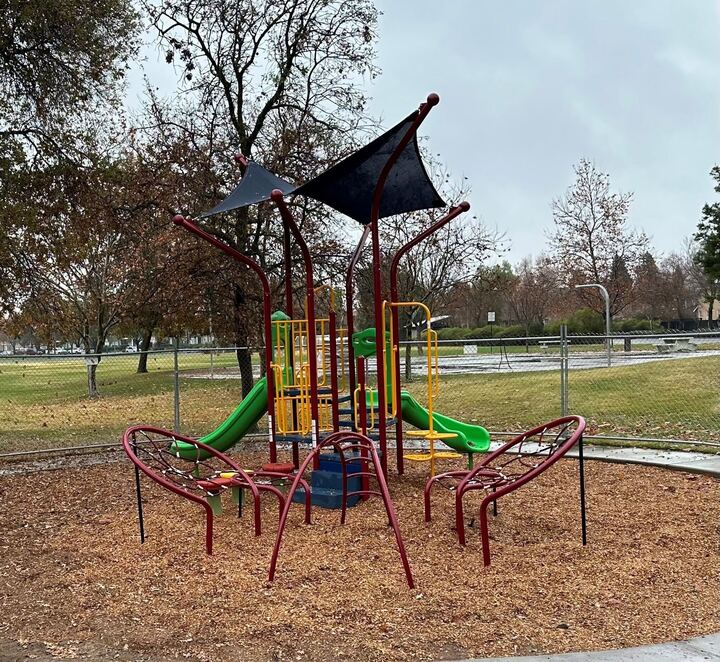
The city of Davis recently renovated several local parks for a range of ages, including the Campanilla Mini Park, the Donato Mini Playground and the Sandy Motley Park. Both the Sandy Motley Park and Donato Mini Playground are intended for children aged two to five while the Campanilla Mini Park is intended for teens and above.

Campanilla Mini Park is located in Mace Ranch, east of Campanilla Court and north of Arroyo Avenue; the Donato Mini Playground is located in Mace Ranch, west of Costa Verde Street between Donato Lane and Eligio Lane; the Sandy Motley Park is located in Wildhorse at 1919 Moore Blvd.

Dave Knighton, parks manager for the City of Davis, explained the decision behind the renovations. 

“With Campanilla and Donato, the play structures that were out there previously had reached their life cycles, […] they didn’t have a lot to offer in terms of play value,” Knighton said. “Nowadays we design playgrounds with the intent of facilitating certain aspects of development, whether that’s physical, cognitive, problem solving […] and so as we phase out these old playgrounds when we design the new ones, there’s intentionality behind it.”

Knighton also explained the design aspects of the parks, specifically the installation of an adult fitness system at Campanilla Mini Park, as well as the communities’ desire to cater the park to a different demographic after dealing with unwanted activity in the past. 

“We felt that would activate the park in a different way,” Knighton said. “It would encourage adults to come out and use that area, and maybe if the park was activated in a way that it hadn’t previously been, that some of that nefarious activity would inherently go away.” 

The parks have served as an outlet to many and aim to provide further space for children to enjoy. John Cooper, community member and UC Davis alumnus, described how the parks have served his family throughout the years.

 “I absolutely love our neighborhood’s Slide Hill Park,” Cooper said. “My son learned to ride a bike, play baseball and swim there. I worked with a neighborhood committee when play structures were redesigned. I have a daughter in a power wheelchair, so my two cents went towards making sure changes would be as accessible as possible. I could probably write a love song about Slide Hill Park and its many uses. We are super blessed with the number and quality of the parks in our city. Sometimes I will complain if something is broken, but in general they are safe and well maintained.” 

In addition to these recently completed projects, the Mace Ranch Park play structure is awaiting inspection and opening soon, and the La Playa Park play structure’s construction is planned to start soon, according to Barbara Archer, public information officer for the City of Davis.

Knighton described his future hopes for developing more inclusive playgrounds in Davis and hopes to work with playground designers who have inclusivity specialists.

“We want to put something in that can be enjoyed by everybody whether you have a full range of motion with your body or you have aspects that are limited and prevent you from being able to use a traditional playground, but something that still incorporates play value that really allows everybody to use it,” Knighton said.


Written by: Alma Culverwell city@theaggie.org

UC Davis Students Demand Action calls on UCs to divest from the gun industry during divestment week

The week took place as a response to the Las Vegas SHOT Show, the largest national gun show in the United States


By BENJAMIN CARRILLO – campus@theaggie.org


During the week of Jan. 22 to 26, 2024, Students Demand Justice organizations nationwide, including UC Davis’ division, participated in divestment week. The student-led organization seeks to ensure that the UCs, specifically UC Davis, uphold their promises to limit their involvement within the gun industry.

Roan Thibault, a second-year political science major and group co-lead of Students Demand Action, discussed what divestment week is and why this particular week was chosen. 

“[From Jan. 23 to 26], the gun industry is holding its biggest event [in] the world,” Thibault said. “It’s called SHOT Show, a trade event in Las Vegas, and it’s the biggest gun show in the United States. To respond, students made action chapters in over 50 schools to discuss America’s role, and call [on] colleges to divest from the gun industry.” 

Thibault then went on to explain what this week entails and the importance of having such an event to hold UC Davis accountable. 

“Here at UC Davis specifically, we’re building on our divestment efforts from previous quarters by gathering more petition signatures, which now stand at 200, more than any other university in the nation,” Thibault said. “We’ve also been putting up flyers, tabling and talking in our classes.” 

Notably, the week’s main event took place on Jan. 22, where Mary Duplat, mother of a gun violence victim, spoke on her experience with gun violence and offered perspective to students. 

“She spoke about her daughter losing her life to gun violence right before starting college and spoke to our chapter about personal loss through gun violence,” Thibault said. “[She talked] about channeling that grief into a power and [defined] that a survivor is more than just someone who has been shot before.” 

Kayla Garcia-Pubdani, a fourth-year political science major and group co-lead on Students Demand Action, also spoke on what divestment week meant to her.

“What makes me proud to be an Aggie [are] our movements,” Garci-Pubdani said. “With all these movements and changes to the campus, how great would it be for UC Davis to take this next progressive step and take action in the gun industry? UC Davis, and every UC for [that] matter, needs to be [held] accountable for our safety, and the gun industry is a direct contradiction for that.” 

Garcia-Pubdani went on to discuss the goal of Students Demand Action going forward. 

“While this week is indeed the SHOT show and also National Gun Violence Survivors week, what’s important is not backing down,” Garci-Pubdani said. “We have an advocacy day in March that will be [focusing on] talking to legislators about gun regulation and talking about what we can do with other chapters [in] California to talk about gun control. We will continue to hold events and not back down until the UCs stop [their contribution] and listen to the students’ voices.” 


Written by: Benjamin Carrillo – campus@theaggie.org


How to write an essay in one hour

AAAAAAAAAH


By AUDREY ZHANG – aurzhang@ucdavis.edu


We’ve all been there. You’re spending your time trying to enjoy college and get those Best Years of Your Life™ and then you remember that you’re drowning in debt for a reason — to get a degree. The deadline is tonight and you’ve got a blank page and no hope. Fear not, for I have seen this time and time again and can save your failing grade. I call it the Death Metal Technique because at the end of it, your paper will be spitting bars and you will feel like you want to die.  

Preparation is the most important step. I know this sounds obvious, but if you’re reading this, then you have clearly missed that memo. Step one is to panic. Get all those nerves and feelings that maybe your parents were right about you out of your system. You’re running out of time, so make your nervous breakdown quick. You have work to do. 

Brainstorm. It’d be helpful if you did any actual research or read the material beforehand, but I’m not holding out too much hope at this point. It’s time to hit up the internet. SparkNotes is your problematic ex that you keep going back to. Treasure it. Love it. And when it asks for money you don’t have, watch it take your future hopes and dreams away from you.

The next step is to tell everyone you know how hard you’ve been working and how you can’t hang out; you really need to get this essay done. Call again and talk about your grindset mindset. There, now you’ve made everyone else feel bad about writing at the last minute too. Ride on that throne of lies and let it carry you to victory.

Do the format first. I guarantee you will forget at the end and you’ll feel like you’ve actually accomplished something once that document looks all nice and pretty. Reach the page count by saying the same thing in a slightly different way each time. The TA skimming it won’t notice and you’ll get points for organization. Pay special attention to the first and last sentences of your essay. It’s probably all they’ll read.

Take your only break and pull out ChatGPT. It’s alright, I know everyone’s at least thought about it. Just don’t blame me when it says that Romeo kissed Tybalt instead of Juliet. Get back to work. 

Soon, you’ll have a completed draft in front of you. Don’t bother proofreading. Just Ctrl-F that baby and look up any swear words that you might’ve said aloud and then typed into your beautiful essay. No, I am not speaking from personal experience. 

No need to thank me, but Lamborghinis don’t come cheap. Feel free to tip my Ko-fi, and good luck! Time is ticking.


Written by: Audrey Zhang – aurzhang@ucdavis.edu


Disclaimer: (This article is humor and/or satire, and its content is purely fictional. The story and the names of “sources” are fictionalized.)

What goals are UC Davis students setting for 2024?

0

Students share their New Year’s resolutions and reflect on their purpose


By SABRINA FIGUEROA— features@theaggie.org


For many, the new year inspires the spirit of change and the desire to turn over a new leaf. About 37% of Americans said that they had a resolution or goal they wanted to fulfill in the new year. Of those people, about 87% said they would be very likely or somewhat likely to hold their goal throughout the year. 

Of people making New Year’s resolutions in the United States, 59% are young adults between the ages of 18 and 34. Thus, a college community — like UC Davis — has plenty of students with resolutions that range from becoming an “academic weapon” to finding spirituality or improving their health. 

“Some of my major New Year’s resolutions are trying to apply for internships and being more active. I also want to prioritize my health more,” Elisha Navarro, a second-year neurobiology, physiology and behavior major, said. “I’m currently in my second year [of college] and I think it’s a good time to look for internship opportunities at the Internship and Career Center.” 

On the other hand, Cathalina Cordero, a second-year sociology and psychology double major, is interested in tending to her spiritual side. 

“I really want to grow my faith and build a healthier lifestyle. I think the two come hand in hand because, essentially, they are both to help me grow spiritually and mentally,” Cordero said. 

For 2024, the top New Year’s resolutions were to improve fitness, finances and mental health. These goals were also popular among UC Davis students.

“To grow a more healthy lifestyle, I’m planning on working out and running more often,” Cordero said. “I feel like last year I was unable to really be active because of the challenges that college students face on a daily basis. [However], I think with a gym buddy and a consistent schedule, I can really improve this.” 

Balancing achieving your goals with the expectations of obtaining a college degree is difficult for students because sometimes it means sacrificing one thing over another. 

“School, for me, plays a part in the mental health aspect [of my health goal] because it can get stressful most of the time,” Navarro said. 

Cordero suggested that time management in college is a challenge as well.

 “There are so many things I could be doing throughout the day that I need or want to do. [Still], it all comes down to prioritizing what’s important: allowing for a good balance of work, school and leisure time.” 

Because students have to balance class, work and social activities already, it becomes difficult for them to uphold the motivation to achieve these resolutions. However, they are not alone in this. According to a Forbes Health survey, the average resolution among Americans only lasts around 3.74 months, with 22% of the goal-setting population lasting until the three-month mark. 

“Keeping myself motivated can be rough, especially after February. Those first two months of the year are usually the best because my resolutions are still fresh in my mind. It’s finding the motivation to continue those goals that’s challenging,” Cordero said. 

Despite these challenges, students still find ways to keep themselves going during this tough process. 

“I tell myself that if I stay consistent and pull through with my goals, then I would see results and not fall behind,” Navarro said. She continued to talk about how her new strategy of self-accountability has worked for her so far, in comparison to her 2023 New Year’s resolutions. 

“I didn’t really get to achieve the majority of my goals from last year. As soon as the clock hit 12 a.m. [on January 1, 2024], I basically submitted applications for multiple internships. Right now, I currently have three internships on my plate and a healthier consistent lifestyle,” Navarro said. 

Taking a different approach, Cordero suggested that most of her motivation comes from doing community service. 

“Knowing that you accomplish your personal goals is one thing, but knowing that you are inspiring others to fulfill their goals and desires for their own personal growth, as well as our community’s, is a motivation that leaves me in awe,” Cordero said.

Although making New Year’s resolutions is popular in the United States, there is still a majority of 63% of Americans that don’t create any. This can be for a myriad of reasons ranging from simply not liking the idea to believing the resolutions are bound to fail. 

“I don’t make resolutions. I feel like if I set specific goals for myself and then don’t reach them that would start the year off on a poor note,” Julia Carlson, a second-year sociology and psychology double-major said. “My mom sets New Year’s intentions instead, which I think is a better idea because it’s less pressure on yourself. But I didn’t do that either.” 

Mia Trujillo, a second-year design major, agreed with this sentiment.

“I don’t have any [resolutions] set. I feel like setting them only makes me disappointed when I fail even just a little bit. It seems more discouraging, so instead I actively try to be better every day.” 

Though inspiring, change is still hard to accomplish. Dr. Cynthia Vinney, a psychology expert writer, explains that setting goals that are too broad and difficult to achieve is a reason behind the failure and discouragement of New Year’s resolutions. This supports perspectives like Carlson and Trujillo’s. 

“We need to set smaller goals along the way to be successful, like devoting five minutes a day to learning a new word or phrase. That way we can ease ourselves into the change, instead of making an overwhelming change that we probably can’t sustain, like planning to be fluent in [a] new language in four months,” Vinney said. 

On top of New Year’s resolutions being big changes for some, others think that change does not need to wait for a new year to roll around. 

“For me, resolutions are not worth setting. You can start new whenever,” Trujillo said. “Not every day will be perfect, but don’t let the bad days discourage you because there is always tomorrow.”


Written by: Sabrina Figueroa — features@theaggie.org


An Antarctic tourism boom is bad for all of us, even those who can’t afford the cruise

Stay away from those penguins

By THE EDITORIAL BOARD

If you’ve been active on TikTok lately, there’s a chance that you’ve seen a unique type of video popping up on your feed — namely, videos of people setting off on giant cruise ships to visit Antarctica. This niche genre showcases the life of those aboard these ships as they make the journey to the southernmost continent, documenting everything from seasickness to wildlife sightings.

Antarctica has long been an enigmatic area of the world because of its pristine frozen conditions. It is the only continent that is not and never has been inhabited by humans. Instead, the icy kingdom is ruled by an assortment of largely aquatic organisms, including penguins and seals, and a handful of visiting research teams. There are no modern comforts (i.e. indoor plumbing) waiting to welcome weary travelers. Rationally, Antarctica should not be the first place that comes to mind when thinking of tourist destinations — unless, of course, you arrive via the modern comfort of a cruise ship. 

In recent years the continent has become just that: a “hot” new attraction. The number of tourists arriving in Antarctica has been rapidly increasing since the 1990s, with the 2022-23 season seeing a record high of 104,897 visitors, according to the International Union for Conservation of Nature. Most of these visitors arrive via cruise ship, often advertised as the cheaper and more comfortable option, though some make the trip by plane. 

These trips tend to last anywhere from 10 to 24 days — an incredibly brief time compared to even the most short-term Antarctic research contracts (three months). This stands in contrast to the length and intensity of the journey needed to make it there. Let’s say you wanted to make the trip from San Francisco to Antarctica. First, you’d have to take a roughly 24-hour flight to Ushuaia, Argentina, where most Antarctic cruise vessels depart from. You’d then be on said ship for two to three days to arrive (depending on the charter company and conditions of the sea). 

There’s also always the possibility that your voyage will be marked by intense swells and unsafe conditions — what some dub the “Drake Shake” — as you cut through the Drake Passage. Then, you’ll be in Antarctica (yippee). Before you know it, you’ll turn around and do it all again. 

All in all, this treacherous journey will have cost you anywhere from $5,000 to $15,000 and about 4.14 tons of carbon emissions — the same amount you (as an average person) would have otherwise produced in a year. 

Some argue that tourism to Antarctica can have a positive impact, as the striking landscape can leave a lasting impression on travelers who will then return to their normal lives inspired to support conservation efforts for those cute little penguins that they saw on their great expedition. However, this logic is seriously flawed, as it fails to take into account the environmental impact tourism has on the region.    

A single large cruise ship can produce nearly four times the amount of CO2 per passenger mile than a plane. These are extremely alarming numbers to be putting up during a period in time marked by devastating impacts from unprecedented anthropogenic climate change. 

What’s more, these impacts are especially apparent in the iciest, most remote areas on Earth — like Antarctica. The polar regions are the first areas in the world to be affected by a rapidly warming climate. According to the Antarctic and Southern Ocean Coalition, the Antarctic Peninsula, one of the most popular destinations on Antarctic tourist voyages, has seen an increase in average summer temperatures by over 3° Celsius since 1970. For reference, the widely accepted threshold for preventing major climate catastrophe is an average increase in global surface temperature of 1.5°C.

And even though the North and South Poles are the first to show signs of climate change, activities like these cruises harbor extreme danger for the rest of the world as well. Increased carbon emissions are a major culprit of many modern disasters, including drought, famine, severe weather events, poverty and wildfires, among others. Moreover, these effects will be felt first and foremost by people in low-income or otherwise marginalized communities — not the primary emitters of greenhouse gasses that largely contribute to these impacts.   

It feels almost dystopian for a generation that grew up on movies, photographs and documentaries showcasing unsettling images of melting ice blocks to now see social media posts promoting trips to those same areas on vessels that worsen these conditions. We are in desperate need of action that addresses the irreversible impacts of anthropogenic climate change, not Instagram posts flaunting vacations to this vulnerable region.

The Editorial Board encourages anyone thinking of booking one of these cruises and exploring this one-of-a-kind ecosystem to reconsider. No amount of “inspiring conservation efforts” justifies the immense carbon emissions of these recreational trips that directly lead to devastating sea level rise and biodiversity loss. 

There are plenty of opportunities to discover the unique characteristics of the environment that you are already in, or one that is a significantly less carbon-intensive trip away. Consider, for example, exploring California’s national and state parks or hosting a screening of “Our Planet” with your loved ones if you truly want to feel inspired to tackle environmental issues.    

Yes, the lasting impression of seeing Antarctica with your own eyes is tempting, but are the pictures worth knowing that they will be some of the last documentation of the continent when it was still frozen?

Written by: The Editorial Board

Undocumented students deserve the right to work

The UC Board of Regents needs to be more transparent about its decision on allowing undocumented students on-campus jobs


By THE EDITORIAL BOARD


On Jan. 25, the UC Board of Regents deferred their decision on whether to allow students who are undocumented immigrants to hold on-campus jobs. The decision comes as a follow-up to a meeting last May, when regents unanimously agreed to create a pathway to hire undocumented students. 

This inaction from the regents not only robs students of the right to work but contradicts the board’s previous statement. The Editorial Board stands with the 4,000+ undocumented students across all UC campuses who are affected by this inaction. All students should be able to gain experience with on-campus jobs and have a safe college experience.

The regents’ decision was reportedly made because the board found that allowing undocumented students to work on campus could cause “significant risk” to them and the university as a whole. In the regents’ statement on the meeting, UC President Michael Drake explained that these students could be at increased risk of deportation and federal prosecution. 

While these concerns may be legitimate, the UC needs to be transparent about this process while they continue working to find alternative and safe solutions for undocumented students to have the same opportunities other students do. 

College is expensive — having the ability to work an on-campus job can make a major difference in a student’s experience. At a research university, being able to work in a lab or contribute to an on-campus research project can drastically improve a person’s career prospects. Undocumented students should have the same access to these resources that other students have. 

The original goal of the regents was a response to a legal theory that stated institutions like the UC would not be prohibited from any federal law regarding the work status of undocumented residents. Ahilan Arulanantham, UCLA co-director of the Center for Immigration Law and Policy, was one of the people who presented this theory to the board in May. Recently, Arulanantham told the LA Times that outside legal experts have assessed the situation and said the risk would be “minor.” 

With Arulanantham arguing that the legal theory proposed by their department has shown that the university system has the right to employ undocumented students, the UC needs to be transparent about where exactly their legal interpretations are at odds. 

The need for clearer details is especially important considering the dissent from some members of the board. According to an LA Times interview, Regent John Pérez said he’s never been “more disappointed” with the board. The regents only voted to shelve the issue with a 10 to 6 majority, with one regent voting to abstain. 

Before a 2021 court ruling, undocumented students once had the ability under the Deferred Action for Childhood Arrivals (DACA) to more easily obtain work permits. Now, as less and less students have DACA benefits, institutions have a responsibility to come up with new ways to protect undocumented students’ right to work. 

While the regents have stated that they are committed to exploring more options, it’s important to consider how timely this issue is. Students typically only attend their university for two to four years, so by the time the regents come to another decision, it will be too late for many students to be employed and gain the financial support and resume experience they need.

The UC system sets precedence not only for education in the state of California but leads the way nationally. As the regents represent the university and academics, it’s important that we not only abide by set standards but explore new creative ways to protect the civil rights of students. 


Written by: The Editorial Board