54.1 F
Davis

Davis, California

Tuesday, December 23, 2025
Home Blog Page 131

It’s almost NaNoWriMo — pick up your pen and join us!

This November, write for yourself, not the grade

By THE EDITORIAL BOARD

Along with many fall festivities, November brings a new one for avid writers. National Novel Writing Month, also known as NaNoWriMo, began in 1999 and challenges people to write an entire novel — or 50 thousand words of one — in just 30 days. The goal of this challenge is to promote creative writing outside of an educational environment. Those who are not officially participating can still take this time to explore writing outside of the deadlines and conventions that students often bear. 

If that sounds like an intimidating challenge, don’t freak out. When it comes to creative writing, there can be a sense of pressure to create something perfect that meets the high expectations of teachers, peers or yourself. We are our own harshest critics and the incessant worry of “not being good enough” often hinders us from enjoying the process of writing. That being said, there are ways to explore what creative writing means to you, even if the first draft won’t win you a Pulitzer. 

One way to take part in this experience without worrying about the quality of your work is by journaling. Whether this be via picking up an old blank notebook or buying one with daily prompts included, keeping a journal can create a private space free of judgment to write about whatever is on your mind. It doesn’t always have to be that deep either — sometimes just writing about your day, as mundane or exciting as it may have been, is a nice way to process how you feel about what you have experienced. 

Another writing practice that has grown in popularity is writing down manifestations or goals for yourself. Solidifying any intentions for your day, month or year can help change your perspective on your life and the power you have to change it. Affirmations or listing things you are grateful for can also serve as a reassuring positive reminder when feeling uncertain about your future. 

For many, creative writing can also serve as a way to connect. Platforms where creative writing can be shared, such as open mic nights or spoken word performances, are also great places to appreciate others’ work or share your own. These events, which often cost little to nothing, host communities that invite people to share their writing in a space that hears and appreciates the author’s willingness to be vulnerable with an audience. The Avid Reader in downtown Davis hosts many author nights, where writers come to talk about their work to whoever is willing to listen. The main goal is for writers to gain exposure and share their craft. 

In this day and age, it may be difficult to see the benefits of writing as equal to the importance of STEM fields. At a research-focused university like UC Davis, the majority of students are involved in areas related to math and science rather than areas of study focused on writing. But for all majors and career paths, developing a knowledge of how to clearly articulate your perspective, as well as learning how to write an email and a cover letter, is just as important. By writing, we create an opportunity to communicate and connect with the world.

So this coming month, a new challenge (with a smaller time commitment) presents itself: write. Anything that comes to mind, anything that sparks your interest, write it down. And then maybe, if it feels right, share it with someone.

Written by: The Editorial Board    
An overdue housing development plan leaves Davis at odds with the state

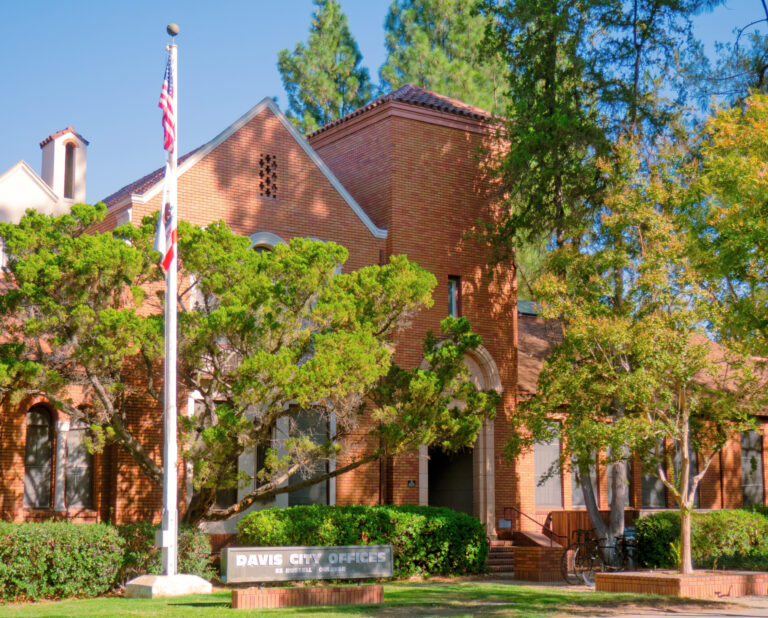
The city of Davis is at risk of being faced with legal action from the state of California due to the city’s failure to adopt a realistic housing development plan


By HANNAH SCHRADER — city@theaggie.org


The city of Davis is two years overdue in submitting a suitable housing element to the California Department of Housing and Community Development (HCD).

The city of Davis made a comment that discussed the status of the housing element.

“The City is collaborating with HCD, and City staff met with the agency this week to get further direction on revisions to the Housing Element,” Sherri Metzker, city of Davis community development director, said in the statement. “Once completed, the new version of the Housing Element will then go through the public hearing process.”

In a letter from the California HCD to Michael Webb, the Davis city manager, in Jan. 2023, the department outlined what needs to be done in order to make Davis once again compliant with state law.

“As this year has passed and Program 1.2 (Rezone Program) has not been completed, the housing element is out of compliance and will remain out of compliance until the rezoning has been completed,” the letter reads.

The department outlined the repercussions the city of Davis could face for their incompliance. Some of the possible consequences of failing to submit a housing development plan include the withholding of critical state funding programs.

“Government Code section 65585, subdivision (l)(1), establishes a minimum fine of $10,000 per month, up to $100,000 per month,” the letter reads. “If a jurisdiction continues to remain noncompliant, a court can multiply the penalties up to a factor of six.”

Former Davis Mayor and current housing development advocate, Robb Davis, said that housing development projects can become more about marketing campaigns than about planning.

“It becomes a marketing campaign to see what could pass the vote,” Davis said. “As opposed to a thoughtful planning process where we can really think about, you know, planning our community.”

Davis is a part of the Davis Community Action Network which is a local organization that advocates for the development of affordable climate friendly housing in the city. Davis talked about the overdue plan that leaves the city of Davis and the California Housing and Community Development at ends.

“I think, with the city right now, they haven’t had it approved because they haven’t demonstrated to the satisfaction of HDC that they can zone sufficient number of properties to meet the targets that have been given to it,” Davis said. “And that’s really where the sticking point is right now.”

Davis shared one of the issues that is delaying the creation of a feasible housing element.

“There was a large development across from the university,” Davis said. “Where the mall is what was put into the housing element with several hundred units of housing, and then the developers came back and said, ‘we can’t build the housing. We just want to build the retail.’ Well, it was still in the housing element and so Legal Services of Northern California filed a, I don’t think it’s a lawsuit but a complaint alleging that correctly. I believe that the housing element was not accurate. So the city has to go back and it has to demonstrate a plan for zoning and a plan for how it’s going to achieve that. The problem is it’s struggling to do that in the current housing element.”

Davis talked about the future of the Davis Community Action Network and anticipated trajectories for the organization.

“I think we’re trying to make a really strong connection,” Davis said. “Between housing and environment, like really connected dots for people about what that looks like. I think we’re also really promoting planning processes that are not marketing campaigns, but are genuine planning of housing that is dense housing, you know, that has affordable within it.”


Written by: Hannah Schrader  city@theaggie.org

Davis community gathers to mourn victims of Hamas attack

Following the events of Oct. 7, the Israeli and Jewish American community held a vigil to find comfort in grieving together  


By ZOE SMITH — city@theaggie.org


Content warning: This article contains discussions of violence. 


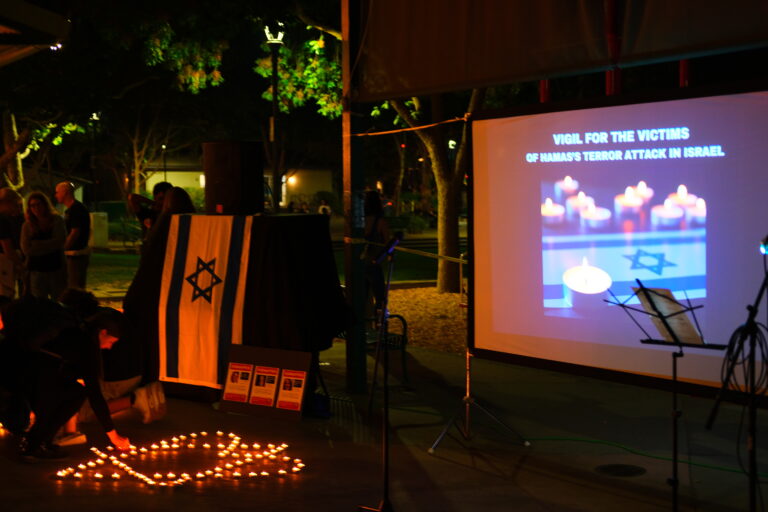
In response to the Oct. 7 attack on Israel by Hamas, a political and military group governing the Gaza Strip of the Palestinian territories, that left 1,400 killed and 3,400 injured, a vigil was held at Davis Central Park on Oct. 17 for the victims. Many Davis and Sacramento residents, who are Israelis and Jewish Americans, gathered to sing, pray and speak. 

“​​We are not okay,” Leah Hibel, one of the speakers at the vigil, said. “Your Jewish friends and neighbors are not okay. Grief is contagious. Being in the company of somebody who is in profound despair is deeply uncomfortable. As humans we want to avoid that discomfort either by avoiding people who are grieving or by cheering them up. But we cannot be cheered up. I beg you: do not avoid us, do not abandon us, do not look away from this. For we must all bear witness. We must all stand together. But it isn’t just your Jewish friends who depend on you. All of humanity depends on us being united against this atrocity.”

Hamas took more than 200 hostages who are believed to be held in Gaza. Bombings and attacks in Gaza have left more than 3,000 people dead and 12,500 injured. Those who remain trapped in Gaza are without electricity and running water and are left with very little food and medical supplies.  

“They specifically targeted innocent civilians,” Hibel said. “Reports say that 80 percent of the victims were tortured. This is not a political proclamation. This is a proclamation of humanity, where we get to say, ‘War is terrible’ but this was not the war. The conflict is complex and heartbreaking. But this was not the conflict. This was an act of terror.”

Hibel continued that the attacks remind the community of tragedies that have killed their ancestors in the past.

“We feel this terror on a cellular level as our DNA ignites to remind us of the pogroms that killed our ancestors,” Hibel said.

The Davis Police Department was at the vigil to protect those who gathered in peace to mourn. The FBI has tracked increased threats to Jewish and Muslim Americans since the Hamas attack. Hibel shared that there was anxiety that an attack would occur the night of the vigil. 

“Did you know that we have seen our fellow community members deny the events of last Saturday?” Hibel said. “Did you know that the number one question I received when inviting people to this vigil is, ‘Will there be security?’ Did you know that some of our elders declined to come because they can’t run very fast?”

Amir Kol, one of the organizers of the vigil, discussed how they believe some people in Davis have defended the attacks by Hamas. 

“People [who] are in our communities in Davis, people are justifying the Hamas attack, calling it legitimate resistance to occupation,” Kol said. “People are denying what happened. [There is] leadership that is not willing to look at reality and call it for what it is.”

Kol expressed that the vigil brought people together and that its solidarity was uplifting.

“I couldn’t stay quiet,” Kol said. “I had to do something. It’s not about if you’re pro-Palestinian [or] anti-Israeli, it’s about who we are as humans. [There] was something very uplifting in seeing everybody standing together as a community — and not just the Jewish community, but also non-Jewish neighbors, college friends, coming and supporting us. That means a lot in days like this.”

Dan Abramson, a vigil attendee, talked about having relatives in Israel and praying for peace. 

“I wanted to be here with my community,” Abramson said. “I know so many people here who have relatives there. I have relatives there. And you know, it’s important to stick together as a community and send our prayers for peace.” 

Written By: Zoe Smith city@theaggie.org

Student demonstrators rally at Memorial Union to support Palestinians amidst further Israeli advancements

A vigil was also held on Monday to recognize the Palestinian lives lost


By ANTHONY W. ZAMMIKIEL and HANNAH SCHRADER — campus@theaggie.org


Content warning: This article contains discussions of violence. 


On Friday, Oct. 19, in response to Israel’s advancements into the Gaza Strip, students rallied for Palestine at the Memorial Union (MU), with the afternoon demonstration soon spreading throughout the campus. The rally was organized by Students for Justice in Palestine at UC Davis. Students and supporters arrived at the South Patio with banners and Palestinian flags. 

Students on campus waved banners and signs that read statements such as “Free Palestine, ceasefire now” and “From the river to the sea, Palestine will be free.” 

Palestinian flags were waved, and demonstrators wore “keffiyehs,” a traditional Palestinian checkered scarf with black-and-white patterns. The “keffiyeh” has become an important symbol of Palestinian resistance

President Biden visited Israel on Oct. 18, reiterating U.S. support for the state of Israel while cautioning the Netanyahu administration from repeating the mistakes that the U.S made throughout the Middle East after Sept. 11. 

The organizing students, who chose to remain anonymous, talked about the Biden administration providing ongoing military and financial assistance to the state of Israel. They stated that they believe the US has been responsible for furthering the Israeli campaign against the Palestinian civilian population.

“There are no ‘both sides’ to a genocide,” an organizer proclaimed over the loudspeaker.   “America is funding a genocide against the Palestinian people. We have to end the siege on Gaza now.” 

These statements were followed by chants proclaiming, “Biden, you can’t hide, we charge you with genocide.” 

As of Oct. 19, there have been nearly 3,785 Palestinian casualties, and more than 1,300 Israeli casualties. More than 12,000 Palestinians have been injured, and 6,307 Israelis have been injured.

On Monday, Oct. 23, students once again gathered at the MU for a vigil mourning and honoring the Palestinians who have been murdered as a result of violence in the area.

Members of Students for Justice in Palestine at UC Davis opened the vigil by giving speeches. 

“People seem to not use these standards of ‘never again’ when looking at the middle, specifically in Palestine,” a member of SJP said. “We will never normalize the ongoing ethnic cleansing and genocide that has been happening for the past 75 years.”

UC Davis student Umer Ali spoke on what the “Free Palestine” movement means to him.

“[The movement is about being] free from Israeli occupation,” Ali said. “And for me, it means setting up a Palestinian state for the Palestinians, free from any sort of threat of occupation.”

Scott Stuart, an attendee of the vigil, discussed the broader history of the “Free Palestine” movement.

“The ‘Free Palestine’ movement is a legacy of humanity that we have unfortunately ignored in this country for 75 years,” Stuart said. “It means that we have a long road — or hopefully a shorter road — to justice.”

Stuart then made a call to action for people to consider ways to help those struggling in Palestine right now.

“This is a warning to everyone: We have to stop this now,” Stuard said. “It will not get better without unfortunately some of us giving up our privilege.”

The vigil ended with a prayer for those who have died fighting for a Palestinian state to be established, with flowers being placed in a circle around candles that were set out in remembrance.


Written By: Anthony W. Zammikiel and Hannah Schrader campus@theaggie.org

ASUCD hosts first-ever Planet Her event

The event, created by Senator Dani Antonio, highlighted several different resource groups and organizations in light of International Day of the Girl Child 


By LILY FREEMAN – campus@theaggie.org

On Oct. 20 from 6:30 to 8:30 p.m., ASUCD hosted the first-ever Planet Her event in celebration of the International Day of the Girl Child. Planet Her was created by ASUCD Senator Dani Antonio, a fourth-year political science and psychology double major, who said that this was the first-ever for women and by women ASUCD-sponsored event. 

“I am so honored to be here and have all of you wonderful humans in one room celebrating the power of the girls,” Antonio said in the event’s opening remarks.

The International Day of the Girl Child was declared in 2011 by the United Nations (U.N.), according to the U.N. website. This national holiday is celebrated every Oct. 11, aiming to recognize girls’ rights and the unique challenges that they face globally. 

“More often than not, women are underlooked, underestimated and underrepresented,” Antonio said in a conversation following the event. “Currently, I am one of two women on the twelve-seat ASUCD Senate table. If this is something I experience, I just know that women everywhere are experiencing the same thing. With that, I wanted to create a safe, inclusive space to celebrate women and their power, especially for International Day of the Girl.” 

There were over 25 resource and involvement booths for attendees, such as the Students for Reproductive Freedom, UC Davis Women’s Rugby, Davis Women in Business, the LGBTQIA Resource Center, the Society of Women Engineers, the Prytanean Women’s Honor Society and the ASUCD Mental Health Initiative. 

To encourage students to learn from all of the organizations and resources, every attendee was given a bingo card which could get stamps from going to each of the booths. If a student won their bingo sheet, they would have the opportunity to win prizes, such as Amazon gift cards and Plan B. 

The event also included performances by women-led organizations on campus, such as AfroVibes, MK Modern and The Spokes. 

Chiroshree Das, a third-year global disease biology major and volunteer at Planet Her, said that it was important to have more events that highlight the International Day of the Girl.

“Obviously, we celebrate International Women’s Day, but it’s also important to celebrate girls and their place in society,” Das said. “There’s a lot of countries where girls aren’t really given the resources they need growing up or where femicide is a pretty common occurrence. This event was just made to uplift women, and then call attention to that day on campus.” 

Andie Tarabzooni, a second-year communications major and ASUCD chief of programs,   discussed her initial thoughts when Planet Her was proposed by Antonio. 

“When [Antonio] first introduced this to me, I was like, ‘Whoa, this is a lot to pull off,’” Tarabzooni said. “Now, I’m seeing her pull it off. Being a part of the team that has been able to pull it off has been something so amazing.” 

Tarabzooni went on to discuss the value of the resources provided for students at the event and the importance of Planet Her as a whole.

“I absolutely think that Planet Her is such an essential day when it comes to ASUCD events,” Tarabzooni said. “Students should know what resources they have. At the end of the day, the main thing I hope people get out of [Planet Her] is a resource that they didn’t know they had before. I just hope that they fully understand that these are the things meant to benefit [students], and there’s no shame in having things that benefit you.” 

 Antonio said that the intention is to have future Planet Her events and others like it. 

“There is so much value that comes with building spaces of representation and community,” Antonio said. “We live in an extremely inequitable world. It’s only essential that we create spaces like these to foster environments of inclusivity, respect and empowerment. I hope that everyone who came to the event felt celebrated for their individuality and their power. As a senator, it’s my dream to listen to every single student, support them and amplify what they have to say.” 

Written by: Lily Freeman – campus@theaggie.org


A brief timeline of the Davis Phoenix Coalition and Yolo County Moms for Liberty

The two organizations have been at the forefront of transgender issues in Davis and Yolo County


By ANTHONY W. ZAMMIKIEL — city@theaggie.org


Content warning: This article contains discussions of transphobia.


While Davis public institutions have experienced multiple bomb threats since August, some of which contained “anti-LGBTQIA+ rhetoric,” two Yolo County-based activist organizations have been at odds over the rights of transgender and LGBTQIA+ youth long before the threats: Yolo County Moms for Liberty and the Davis Phoenix Coalition (DPC).

Anoosh Jorjorian, the director of Yolo Rainbow Families, believes that every child has the right to feel safe in Yolo County, including trans and LGBTQIA+ youth.

“Being queer or trans is not a choice,” Jorjorian said in a comment made via email. “We are who we are, and no amount of withholding information, care or representation from children will change that. We refuse to go back into closets, and we refuse to return to discriminatory practices that put young members of our community at risk. All children, no matter who they are, have a right to feel supported, seen and safe in our schools. We will ensure that Davis and Yolo County remain a place where everyone can belong.”

Yolo Rainbow Families is a project of the DPC. The DPC was founded in response to a 2013 hate crime committed against “Mikey” Partida because of Partida’s sexual orientation. Partida’s mother, Gloria Partida, along with other Davis residents, then founded the DPC to combat discrimination in the local community. 

“The world sometimes fears diversity, and hate crimes sometimes happen in the places you least expect,” the DPC website states. “In 2013, “Mikey” Partida was beaten in Davis because of his sexual orientation. His mother and other concerned Davisites formed the Davis Phoenix Coalition, so that no one would have to suffer what Mikey did ever again.”

The DPC has hosted several events in Davis all with the goal of combating hate and eliminating intolerance

Yolo County Moms for Liberty is a branch of the national Moms for Liberty organization. Moms for Liberty was founded in 2021 with the goal of “unifying, educating and empowering parents to defend their parental rights at all levels of governments,” according to their website and has worked to combat COVID protocols in schools and restrict the rights of trans youth. The Yolo County branch of the group has been active at school board meetings and community protests and has hosted many forums at the Mary L. Stephens Davis Library since early this year.  

In a comment made via email, Beth Bourne, chair of Yolo County Moms for Liberty, discussed why she joined the group and that she believes the Davis school system has forced trans “beliefs” on kids.

“I am a lifelong Democrat and consider myself a liberal,” Bourne said. “After my family was impacted, I became aware that the Davis school system and other entities were promoting a set of beliefs I do not agree with and believe are indeed very harmful to the young people exposed to them. I am not alone in this belief, and I am not alone among left-leaning lifelong Democrats in this belief. I wanted to do something about it because I have always believed that it is important to speak up when something is not right, and people are being harmed.”

The Southern Poverty Law Center (SPLC), a group that tracks extremism in the nation, identified Moms for Liberty as an “anti-government extremist” group in an annual report. 

“Moms for Liberty is a far-right organization that engages in anti-student inclusion activities and self-identifies as part of the modern parental rights movement,” the SPLC website states. “The group grew out of opposition to public health regulations for COVID-19, opposes LGBTQ+ and racially inclusive school curriculum, and has advocated books bans.”

Jorjorian compared the organization to the Proud Boys and said that, in contrast, the DPC is a local grassroots movement. 

“Moms for Liberty is a national organization funded by dark money that partners with extremist anti-government groups like the Proud Boys,” Jorjorian said. “These facts are all documented. The Davis Phoenix Coalition was founded by a Davis resident right here in our community, and we work at the grassroots with Davis and Yolo residents every single day.”

Bourne believes that the work of Yolo County Moms for Liberty, in part, is to host public meetings where people can discuss different points of views.

“I thought an effective means of communication would be to hold open public meetings which anyone could attend and respectfully listen to and question the point of view that was being left out of the conversation in Davis schools and in Davis generally,” Bourne said via email.

Jorjorian said that it isn’t transphobic to ask good-faith questions about the process of transitioning for kids. The DPC offers an “office hours” YouTube series to help answer frequently asked questions about trans identity. However, Jorjorian believes that it is transphobic to intentionally spread misinformation to take away the rights of trans people. 

“DPC will continue to respond as we have: we will show up to demonstrate that Moms for Liberty’s campaign of disinformation is discriminatory and aims to divide this community against itself — and it’s not working,” Jorjorian said. “We will also continue to educate the community about LGBTQ+ identity and other marginalized communities, to provide services to marginalized communities to support them and uplift them, and to hold events that bring the community together for equity and justice.”


Written By: Anthony W. Zammikiel  — city@theaggie.org

UC Davis women’s tennis takes on the West Coast’s best in Intercollegiate Tennis Associations Regionals

Davis competed against 18 other schools for Northwest Regional victory


By MEGAN JOSEPH  — sports@theaggie.org


Competing in the bay, the UC Davis women’s tennis team drove two hours down to Stanford University for the Intercollegiate Tennis Associations (ITA) regionals. The competition saw schools from all over the west coast come and compete for first place and the title of Northwest Regional Champion. 

Prior to regionals, the Davis team has done relatively well throughout their season in local competitions. Regionals being the largest event the team has competed in all season, there was a much harder competition the team had not faced prior. 

The competition, consisting of 64 doubles teams and 128 singles, was no easy task for the Aggies. Starting off strong, fourth-year team mebers Carly Schwartzberg and Michelle Zell advanced out of their first round match in doubles. Schwartzberg and Zell passed through the first round with an 8-4 win. 

In the next set of matches however, the women put up a tremendous effort, but it wasn’t enough to get them through to the next round. With the next competition being the Saint Mary’s Invitational, the pair are looking to have a rematch with some of the teams they played in regionals. 

As seniors, Schwartzberg and Zell have had a lot of success playing together. The duo has only been teamed up together since the 2022-2023 season and it has been nonstop ever since. Last year, Schwartzberg and Zell played a total of 18 matches together where they won 10 out of the 18 matches. The close teammates dominated their conference with a 5-1 record and even had a five consecutive game winning streak making them one of the strongest Davis doubles teams. Together, Schwartzberg and Zell are unstoppable and still have a lot of fight left in them for the rest of the season.

Another Davis doubles team, third-year Daisy Maunupau and fourth-year Olive Maunupau put up a good fight against the 25th-ranked doubles team in the nation from Washington State University, Eva Alvarez and Elyse Tse. The Maunupau duo had an excellent game where they went into a 12-point tiebreaker set. By only slightly losing to such a high-ranked team, the Maunupau duo did very well.

In the singles round of the competition, third-year Ariana Stavropoulos showed her skills on the court and advanced out of the singles first round. She has had a good season so far with her fast reflexes and ability to serve aces against opposing players. Even though she was knocked out in the second singles round of 64, she played expertly against Sacramento State’s very own Mayya Gorbunova and lost by a small margin.

Overall, the Aggies did have the outcome they wanted, but they still put up a very good fight and are looking forward to future competition where they can dominate the courts.


Written by: Megan Joseph — sports@theaggie.org 

The role of physician assistants in the medical field

Learn about this rapidly expanding profession and how it compares to other jobs in healthcare


By KATIE HELLMAN — science@theaggie.org 

Physician assistants, also known as physician associates or PAs, are not as well-known as other healthcare workers like physicians, nurses and pharmacists. The profession, however, is rapidly expanding.

“​​Physician assistant (PA) and similar health-care professions are increasingly used in response to physician shortages,” an article in PubMed states. “What these various professions have in common is that they are trained under the medical model (or advanced nursing model in the case of nurse practitioners and nurse clinicians) in an accelerated, efficient, and cost-effective time frame to deliver quality, team-based health care tailored to need.”

PAs practice medicine in similar ways as doctors do in the sense that they are able to diagnose and treat conditions, give physical exams, order tests and prescribe medications. 

Most PA programs take around three years to complete post-grad, require more than 2,000 clinical hours and conclude with passing the Physician Assistant National Certifying Examination. Although PAs are supervised by a physician during their work, they hold advanced degrees and get to provide direct patient care.

There are over 168,000 PAs practicing in the United States and their jobs have been invaluable to the healthcare field amidst the current physician shortage. The implementation of PAs in hospitals and doctors’ offices has allowed more people to get access to the medical care they need.

The PA profession may be of interest to anyone considering a career in healthcare. While the training is still rigorous, it is not as in-depth as medical school and therefore takes less time to become licensed compared to a physician. PAs can also change their specialties throughout their career.

Maria Delfino, a second-year PA student at UC Davis’ Betty Irene Moore School of Nursing, commented on why she decided to pursue this career path.

 “The work-life balance as a PA was attractive as well as the idea you can switch specialties,” Delfino said.

The PA profession is ranked second in the Best Health Care Jobs list in the nation and the U.S. Bureau of Labor Statistics predicts that the number of PAs will grow by 27% by 2032.

Christi DeLemos, chief of advanced practice at UC Davis Health, commented on the importance of this job in an interview with UC Davis Health.

“In many health care settings, physician shortages make it more difficult to recruit doctors,” DeLemos said. “PAs can bridge that gap by supporting access to care for our community.”

Written by: Katie Hellman — science@theaggie.org

Davis Pavement Management Program works to renovate Putah Creek bike path

Repavement efforts began earlier in the month


By ALMA CULVERWELL city@theaggie.org 


The city of Davis started to repave the Putah Creek multi-use path that runs from south of Evergreen Court to south of Drummond Lane on Oct. 2. The project is expected to last three weeks depending on weather conditions.

The Putah Creek multi-use path is a 19-acre parkway that serves as a wildlife habitat as well as recreational area for community members. It was originally used as a waterway in 1870, but was later transitioned to serve as a nature area for community members. Now, there is a bike path that spans the entirety of the greenbelt and the area is home to several different habitats including grassland and oak savannah.

Barbara Archer, communications director for the city of Davis, discussed the development and implementation process for the renovations.

“Each year, the city undertakes a pavement improvement project that includes a number of areas in town that either need pavement maintenance or pavement rehabilitation,” Archer said. “This year’s project, which usually starts in the spring and ends in the fall, included a number of well used multi-use paths in Davis.”

The Pavement Management Program is a team that helps the city of Davis make decisions about road renovations and rehabilitations. They work to identify conditions of street and bike paths and the most cost efficient way to maximize pavement condition in the city of Davis. The program identified that the Putah Creek bike path was in need of renovations.

“Due to the condition of the pathway, this pathway will be reconstructed,” Archer said. “The existing asphalt will be removed. The subgrade will be graded and compacted, and a new pavement section composed of asphalt concrete over aggregate base will be placed.”

Archer also described the desired impact on community members who frequently utilize the Arboretum and trails that run through it.

“This is a well-used path and the new paving will make it more safe to travel and provide a better user experience,” Archer said. “There will be a detour for pedestrians and bicyclists. Users will travel east [and] west on Cowell and Lillard.”

In order to accommodate renovations, there is a path detour from Drew Circle to Cowell Blvd to Lillard Dr to Danbury St/Drummond Ln. The city warned residents to expect construction noise and dust during the work hours of 7 a.m. to 5 p.m.


Written By: Alma Culverwell — city@theaggie.org 


Davis’ women’s soccer pulls out a win against the Unviersity of Hawai’i at Manoa

Aggies move to fourth place in the Big West league 


By Megan Joseph  — sports@theaggie.org


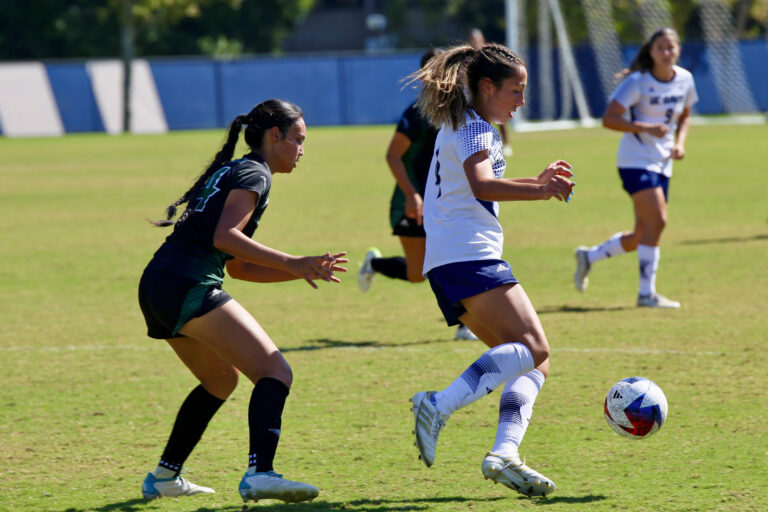
With a full energetic stadium, the Aggies took on the University of Hawai’i at Manoa Rainbow Warriors. Coming from far away, the Rainbow Warriors came ready to play and tried to dominate the Aggies on their own field, but they were no match for the Aggie’s offense and defense.

Starting the game off strong, the Aggies took as many shots as they could that eventually led to a goal. In the 23rd minute of the game, third-year Risa Yamada passed the ball to teammate and third-year Sam Tristan who then shot the ball into the back of the net. This goal marked Tritan’s fifth goal of the season and was just the start of the Aggie’s outstanding performance against the Rainbow Warriors. 

Not even a minute after the first goal of the game, fourth-year Leslie Fregoso got her chance when she broke away from the opposing defense and took a brilliant corner shot that no goalie could stop. Fregoso has had a strong start to her season — only a few weeks ago, she was named UC Davis’ leading goal scorer of all time in the Division I period. 

With such an award, Fregoso definitely lived up to the expectations in this game with her distribution of the ball and goal. Although the soccer season ends in almost a month, Fregoso still has plenty of games left to break more records and score more goals.

The first half of the game ended with the Aggies holding their lead 2-0. Throughout the first half of the game, the Aggies held control of the ball and took the most shots at the Rainbow Warrior’s goal. The Rainbow Warrior’s goalie, Kennedy Justin, blocked a majority of the Aggie’s shots but that did not stop the Aggies from taking ten shots on goal and sneaking a couple of goals in. 

The second half of the game proved to be a little more challenging for the Aggies with the Rainbow Warrior’s newfound confidence and comeback. In the 50th minute of the game, the Rainbow Warriors found their opening in the Davis defense and shot the ball into the net. 

The Aggies definitely started to feel the stress after the Rainbow Warrior’s goal but did not let it stop them. Only about a minute after the opposing goal, the Aggies counterattacked with their own goal which would be the final Davis goal of the game. Fregoso, using her footwork, set the ball up for Yamada to nail the ball into the back of the Rainbow Warrior’s net. 

The entire stadium broke out in cheers for the duo and their incredible teamwork. Both players did a good job of staying calm and focused on finding their offensive breakaway to the goal.

The Rainbow Warriors made one final attempt at stopping the Aggies from pulling out their sixth win of the season. In the 54th minute of the game, following both of the recent goals, the Rainbow Warriors received a penalty kick from a foul in the box. Rainbow Warrior Mia Foster took the penalty kick for her team and narrowly hit the ball into the top left corner away from the Aggie goalie, third-year Caeley Goldstein. Goldstein played very well all game while not letting the ball past her into the Aggie goal. 

Although two Aggies received yellow cards during the second half of the game by Fregoso and second-year Livi Lewis, the Aggies were still unstoppable and beat the Rainbow Warriors with a final score of 3-2. This game is just one of many wins the Aggies are likely to have in store for the remainder of the season. 


Written by: Megan Joseph — sports@theaggie.org 

Culture Corner

The Art Desk’s weekly picks for movies, music and more 


By LORENA ALVAREZ — arts@theaggie.org


Song: “Matilda” by Harry Styles (2022)

While Harry Styles’ traditional pop-rock songs explore love, his ballad “Matilda” emphasizes themes of trauma, belonging and guilt. This song strays from many of the others on the album, creating a more tender atmosphere for the listener. The somber melody works in tandem with the meaning behind the verses. The song tells the story of an individual’s rough upbringing and the guilt they experience for choosing peace over loved ones who caused more harm than good. Many fans connect to the lyrics, feeling comforted by Styles’ reassurance. Living our lives and putting ourselves first does not make us bad people. This song is a personal favorite of mine as it reminds me of the experience many of us first-generation college students feel when leaving our homes and family to enjoy our college experiences. Styles reminds us that there is no shame in protecting your peace. 


TV show: “Once Upon a Time” by Edward Kitsis and Adam Horowitz (2011-2018)

This show is often overlooked because of its association with children’s fairy tale movies and its cringe-worthy plot. But once you get past the pilot, the plot questions those traditional fairy tales, blurring the line between who is capable of evil and who is not. My favorite episode is season one episode 15, titled “Red-Handed.” The episode follows a new depiction of the well-known story, “Little Red Riding Hood.” In this retelling, Ruby struggles to regain agency over her life in a world ruled by fear. Until she discovers her real identity, a wolf, and realizes that she is far from being the weak, frail girl her grandmother made her out to be, she fails to gain control of her future. This take on “Little Red Riding Hood” challenges oppressive gender roles that insist on women’s fragility — far too innocent to be protectors, nonetheless predators. 


Essay: “Venus in Two Acts” by Saidiya Hartman (2008)

“Venus in Two Acts” is my all-time favorite essay. While I recently discovered this article in one of my classes, I will never forget its message. In this piece, Hartman mourns over the struggle of restraint she and many other writers face when writing about their injustices. The essay highlights the importance of producing accurate pieces and refraining from speculating when the information is unclear — something many writers do to develop the plot or make the piece more relatable. However, it acknowledges that while truth should be prioritized, there are scenarios in which an over-emphasization of facts takes up space that could be used for discussion, as well as critique, oppressive social structures like racism and slavery.


Movie: “Sound of Freedom” by Rod Barr and Alejandro Gómez Monteverde (2023)

“Sound of Freedom” gained attention on social media because of rumors that movie theaters were sabotaging showings of this heart-wrenching movie. The film was shot in 2018, but did not hit box offices until 2023 because of its controversial depiction of human trafficking. Based on a true story, the film follows Tim Ballard, a former Homeland Security agent who started Operation Underground Railroad (O.U.R.), an anti-sex trafficking organization. The movie serves as a call to action against human and child trafficking as it depicts the pain and trauma victims experience, largely due to instances of modern-day slavery. Gaining even more controversy, Ballard is now being sued for sexually abusing O.U.R. volunteers. I encourage you to see this movie, not for Ballard, but because it brings awareness to the severity of sex trafficking — something that is still happening behind closed doors to this day. 


Written by: Lorena Alvarez — arts@theaggie.org

New ASUCD survey aims to gauge undergraduate opinions on mandatory lecture recordings

The survey will be available for students to take through fall quarter 2023 and will determine future steps taken by ASUCD to push for mandatory lecture recordings 


By LILY FREEMAN — campus@theaggie.org 

In the beginning of October, the ASUCD Academic Affairs Commission (AAC) published a survey to gather students’ thoughts on mandatory lecture recordings, according to the AAC Instagram. This is intended to be a quarter-long project to gauge the undergraduate student opinion on all in-person lectures being recorded. 

“The whole project basically prefaces that professors should record their lectures because students shouldn’t be penalized for not being able to make it to lecture,” said Britney Cao, a third-year political science major and AAC chairperson. “We really want to see what the student population thinks about this subject, [and] we have this project so that we can improve the academic quality of student life here at Davis.”

The survey asks respondents several specified questions regarding lecture recordings, according to the language of the survey. For example, one question asks individuals to rank their preferences on potential lecture capture policies. Another question asks students if their mental health would be improved if lecture recordings were available to them.

Chasa Monica, a third-year microbiology and philosophy double major and ASUCD Senator, is also helping the AAC with this project. 

“Personally, I have bad mental health days,” Monica said. “And sometimes, I’m just like ‘oh my god, I forgot I had a lecture.’ There’s so many reasons why you miss a lecture, and this is why so many people have said that they have wanted to bring it back.” 

Both Cao and Monica discussed a variety of other reasons why students may need to miss class and would benefit from lecture capture. These reasons included having a lack of transportation, days where they might be too busy with other classwork or where they could be facing other circumstances that are out of their control. They also emphasized that recordings would be beneficial for international students who are not speaking English as their first language. 

“I think it’s so important that we make sure to be there for all students and try to make learning accessible to everyone,” Monica said. “This is a wonderful step in the right direction. I also think Covid made it very apparent that it’s kind of good to have lectures recorded and to have that constantly for students.”  

Dani Antonio, a fourth-year political science and psychology double major and ASUCD Senator, also partnered with Monica and Cao on the missions of the survey. 

“I think that there’s value to recording lectures,” Antonio said. “Not just because it’s helpful for studying, but because doing so recognizes and addresses the fact that most students are not just students. We have students on campus who work, who are disabled, who learn better through recorded lectures where they can play things back, among many others.”

Monica also discussed the upcoming faculty survey, which will gauge lecturer and professor preferences for mandatory lecture recordings. 

“The faculty survey is to gauge potential qualms that they have with lecture capture,” Monica said. “I think the professor’s survey helps more with the logistics of what our bonds are, and which subjects would benefit more from recordings.” 

The survey will be open for undergraduate students to take through this fall quarter. Cao went on to outline what the AAC’s next steps will entail once the survey closes.

“After we gather the data, we will compile and analyze both surveys,” Cao said. “We plan on taking it to the Undergraduate Council and to the UC Davis Academic Senate to say, ‘hey, this is what students want and this is what students need.’ After presenting all of this information, we will go from there.” 

Monica then discussed potential timelines for any resolutions post-survey.

“It’s either going to get an overwhelming amount of support, having a very straightforward pathway, or this project could last one to two years, depending on the responses.” 

The survey can be found through the website linked on the AAC Instagram, @asucd_aac. It will be available for students to take throughout the quarter. 


Written by: Lily Freeman – campus@theaggie.org

The 2023 U.N. Climate Change Convention sparks controversy

How an African-led carbon tax could slow the effects of climate change 


By MAYA KORNYEYEVA — mkornyeyeva@ucdavis.edu


Every year, the United Nations Framework Convention on Climate Change (COP) is held with the goal of bringing together world leaders and reassessing the most necessary path of climate action. An individual is designated as the President-Designate each year – a leader that ensures rules are being followed and, most importantly, stirs pro-climate initiative sentiments amongst the gathered. 

This year, in a surprising announcement from the United Arab Emirates in Dubai, the President-Designate of COP28 is none other than Dr. Sultan Al Jaber, the chief executive of the national gas and oil company of Abu Dahbi. While this decision shocked many climate activists around the world, I was not as taken aback. 

It has been quite obvious for some time that the world’s future is held in the hands of the fossil fuel industry. Since the beginning of the Industrial Revolution, our technology, transportation and trade have been dramatically transformed by the presence of fossil fuels, mined directly from the Earth and used in an astonishing number of ways. While sending us a leap into the future, coal, gas and oil mining have resulted in pollution of the atmosphere, the release of toxic chemicals and the creation of plastic — and thus the problem of plastic contamination of virtually every corner of our planet.

According to a study of 180 countries by Climate Central, a U.S.-based research organization, 98 percent of the global population was exposed to higher temperatures this year, likely due to carbon dioxide pollution. On top of this, the rise of carbon in the atmosphere due to human influence is indisputable, as yearly data from the Mauna Kea observatory, beginning in 1957, has resulted in a “keeling curve:” a dramatic upward trend of atmospheric CO2 content.

Naturally, the answer to climate change and increased carbon emissions is to cut back significantly on fossil fuel usage and transform our means of production into a more sustainable one. This can be done both by slowly removing pollution from our air and our water and through the creation and widespread usage of “green” technology. 

Sultan Al Jaber’s nomination is a telling example of the global attitude towards the overconsumption of fossil fuels; while the 50-year-old CEO pledged billions of dollars towards renewable energy, he also leads an oil company that currently pumps four million barrels of crude oil a day, with hopes to expand. How can an individual lead global climate action in a direction away from fossil fuels, while having personal interest in maintaining crude oil mining for company profit? 

That being said, last month leaders in Africa put forth an intriguing solution to the fossil fuel problem — dubbed the “carbon tax” — which has the potential to incentivize countries to cut back on carbon emissions and create a pool of funding for the creation of green tech and environmental protection for those most severely impacted by the effects of global warming. While this concept is not a new one, Africa is pushing for the implementation of such a global taxation system to finally start spinning the wheels in the right direction in terms of fighting climate change. 

I believe that the carbon tax may be one of the most secure ways to encourage the phasing out of gas, oil and coal, as it will make any product or service derived from fossil fuels more expensive to produce and purchase. However, done inexpertly, a universal carbon tax can significantly increase costs for low-income families and slow the chugging of our economy. 

Without any strong global organization to police the correct implementation of the carbon tax, it is each individual country that must take this big step forward towards lowering global temperatures and ultimately saving our planet from the agonizing deterioration of our environment. As we draw closer to the start of COP28, I am skeptical that this conference will turn out better than any of the previous ones have been. Yet, I cannot help but hope that finally, after 28 years, 2023 will be a year of positive change. 


Written by: Maya Kornyeyeva — mkornyeyeva@ucdavis.edu


Disclaimer: The views and opinions expressed by individual columnists belong to the columnists alone and do not necessarily indicate the views and opinions held by The California Aggie.

Dr. Andy Jones hosts Poetry Night Reading series at John Natsoulas Gallery for Davis locals and students alike

Davis Poetry Night hopes to bridge the divide between university students and locals


By ZOE SMITH — city@theaggie.org


Every first and third Thursday of the month, Dr. Andy Jones hosts his Poetry Night Reading Series at John Natsoulas Gallery on 521 1st St in Davis. Featured poets start performing at 7 p.m., while the open mic starts at 8 p.m.

Jones has been hosting poetry nights since 2006 which, for the past 12 years, have been held at the John Natsoulas Gallery. He is a poet, a UC Davis faculty member and academic director, an essayist and a host of the KDVS show “Dr. Andy’s Poetry and Technology Hour,” which has been ongoing for the past 23 years. 

Jones has had the pleasure of interviewing renowned artists and writers such as Margaret Atwood, Sherman Alexie, Ian MacKaye and Gary Synder, according to the Poetry in Davis website

“I have the good fortune that I get to interview lots of local and faraway poets,” Jones said. “We have a professor of English coming up from Southern California in November to give a reading. We have the California Poet Laureate Lee Herrick coming up from the Central Valley to give a reading and some of these people reach out to me because the poetry series is so well established, and because we can usually offer a good sized crowd for our visiting and local poets.” 

Anyone is welcome to partake in the open mic section of the night. The list for open mic spots fills up quickly and it’s encouraged that participants sign up before 7 p.m.

“The readings give UC Davis students an opportunity to see excellent professional writers, most of the poets come to their hometown of Davis and perform in a beautiful setting,” Jones said. “And some of these poets are academics with degrees and books. Some are stage poets, or spoken word poets or Sacramento Urban poets and so many of them are people who our students wouldn’t be able to encounter if the poetry night reading series didn’t exist.” 

On Thursday, Oct. 19, D.R. Wagner and Dave Boles will be reading at the Poetry Night Reading Series on the first floor. 

Wagner is an author, musician, poet, artist and lecturer at UC Davis who also having his own press in the 1960s and created a prolific number of works. Boles is a publisher, writer, artist and creator of the Church of The Illuminated Monkey. Boles founded Cold River Press, as well as other publications and many magazines. He will be reading from his latest book “Vision of a Merciful Land.”

 “[It’s] a trip through history, ancient history and how we relate with our ancestors in ancient times, and now in modern times,” Boles said in “Vision of a Merciful Land.”

The John Natsoulas Gallery has been open in downtown Davis for over 38 years. Natsoulas started the conference The Beat Generation and Beyond where legends such as Allen Ginsberg and Philip Whalen have read. He was taught poetry by Michael McClure, Ruth Weiss, Anne Waldman and Amira Baraka. Natsoulas donates gallery time for free so that the Poetry Reading Series can keep going. 

“There was no poetry scene at the university when I came here,” Natsoulas said. “If you scratch the surface in Davis, there’s some really amazing poets. There’s some amazing artists, there’s some amazing musicians. There’s some amazing dancers.”

Natsoulas believes that Jones’ hard work is responsible for there being a rich poetry community in Davis.   

“I can’t say enough good things about Dr. Jones because he represents everything that is good and the idea of exchange and collaboration and sharing an experience. I mean, that’s what he’s all about. He may not know it, but that’s what he’s doing,” Natsoulas said. “Dr. Jones is kind of the most important poet[s] in Davis because he’s not only interested in his poetry. He’s interested in this concept of collaboration.”

Jones believes that the poetry nights have served as a way of getting students and Davisites alike to be a part of the Davis community. 

“The poetry night reading series offers an opportunity for town and gown to intermix,” Jones said. “Town, referring to people from the city of Davis but also the Sacramento Valley who come to our readings on a regular basis and then the gown would be academics, students, faculty, etc. Even though we live in a university town, the people in the university and the people of the town can remain segregated from one another, because of the different activities of poetry night gives these very audiences and performers an opportunity to intermingle, learn from each other and experience novel forms of creativity.”


Written By: Zoe Smith city@theaggie.org


UC Davis Climbing Club brings students together to find joy and passion in the unique sport

0

The club welcomes students of all skill levels to socialize and stay active 


By LYNN CHEN — features@theaggie.org


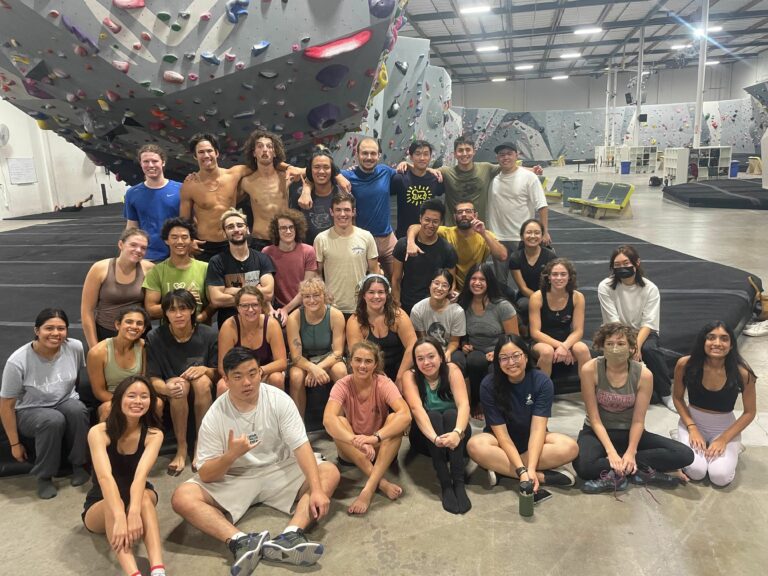
On campus, clubs and extracurricular organizations can fulfill a variety of passions and hobbies. For rock climbing lovers, they can find this in the UC Davis Climbing Club.

Members of the club practice both indoor and outdoor rock climbing. When they’re not training or hosting social events, Climbing Club members can also enter competitions to put their speed, strength, flexibility and technique to the test.

In addition to seasoned rock climbers, the club also welcomes beginners who have no prior experience with the sport and encourages them to learn alongside long-time members. These members act as coaches, providing instruction and advice to newcomers. 

Typically, the club meets up three times a week to train at a climbing gym in Sacramento called The Boulder Field. Members of the club also enjoy the opportunity to practice outdoor climbing several times throughout the quarter — including places such as Bishop, Lake Tahoe or Castle Rock in the Bay Area.

During usual indoor training sessions, members primarily practice a form of the sport called “bouldering.” This is where climbing is done close to the ground, and ropes and harnesses are replaced by soft crash pads, used as safeguards for falling. Club members also familiarize themselves with different techniques to become more proficient climbers.

“There’s a strength threshold [involved in climbing],” Ethan Pang, Climbing Club co-coach and a third-year neurology, physiology and behavior major, said. “But you’re also learning all these different tricks and skills that don’t necessarily require a ton of strength once you [have] good technique.”

Hollis Allen, president of the Climbing Club and a third-year environmental science and management major, emphasized the importance of footwork as a technique as well.

The sport requires a lot more than upper-body strength and mobility alone, according to Allen. The way you engage your feet and legs is just as crucial.  

“People when they start, they don’t think about intricacies like, ‘Where am I going to put my foot? How am I going to stand on this thing?’” Allen noted. “It’s about teaching people to use their feet and different parts of their body in ways that they haven’t really thought of.”

Each climb is considered a “problem” that needs to be “solved” over time, according to Pang. While figuring out how to navigate holds — shaped protrusions on climbing walls for people to grip — and achieve mastery over a specific wall, climbers grow mentally in the process.

Especially for people who are new to climbing, thinking out of the box and persisting is integral to becoming a skilled climber. Additionally, being strategic when approaching a climb is integral to being successful at completing it. 

As a person’s energy is limited, they need to use the most efficient methods to complete a climb. Thus, the correct movements and tricks utilized during the process could make a substantial difference.

David Kuklin, a fourth-year communications major and general member of the club spoke on this statement further.

“[Understanding] how to go about a climb [beforehand] could be night and day for being able to do it and not do it,” Kuklin said. “I always say [climbing] is like chess in that you have to set your [moves] up so that it’s not necessarily that you can do the next step, but that you can do the next, next one.”

This process itself requires a lot of trial and error, and often climbers will have to give up on certain climbs repeatedly because of a particularly difficult section of the wall.

“It does feel bad,” Kuklin admitted. “It’s like, I wish I had thought of [the solution] ahead of time.” 

Furthermore, Allen describes the disappointment and discouragement that beginners feel when attempting a new climb. 

“Frequently, [when] new people will try something new, they’ll be like, ‘Oh, this is impossible, I can’t do it,’” Allen said. In response to this type of reaction, Allen encourages people to be resourceful and think of overcoming the problem through more creative approaches, such as engaging more parts of the body and using every part of the wall to your advantage.

Additionally, climbing is more social than people may realize, particularly for the UC Davis Climbing Club.

“Everyone [here] is very friendly, no matter what skill level you are,” Pang said. “I think a lot of people either initially started climbing or continue to climb because of the social aspect [to the sport].”

 Walls associated with different difficulty levels of the sport are often connected, allowing people of all abilities to have more opportunities to mingle and connect with each other at the climbing gym.

“[Climbing] is pretty unique compared to other sports in that all skill levels can climb together,” Pang said.

Even though Kuklin is a relatively new member of the club, he also stated how he was looking forward to the social opportunities the club might offer him.

“I feel like as I explore [the club] more, I’ll have the opportunity to deepen some of the connections that [I’ve] already made,” he said.

In many ways, climbing pushes people to become better versions of themselves, whether that’s physically, mentally or socially.

“While climbing [has a very] tight-knit community, it’s primarily just a singular activity,” Allen said. “It’s a good way for me to grow as a person.”


Written by: Lynn Chen — features@theaggie.org